Offered by Tobogan Antiques
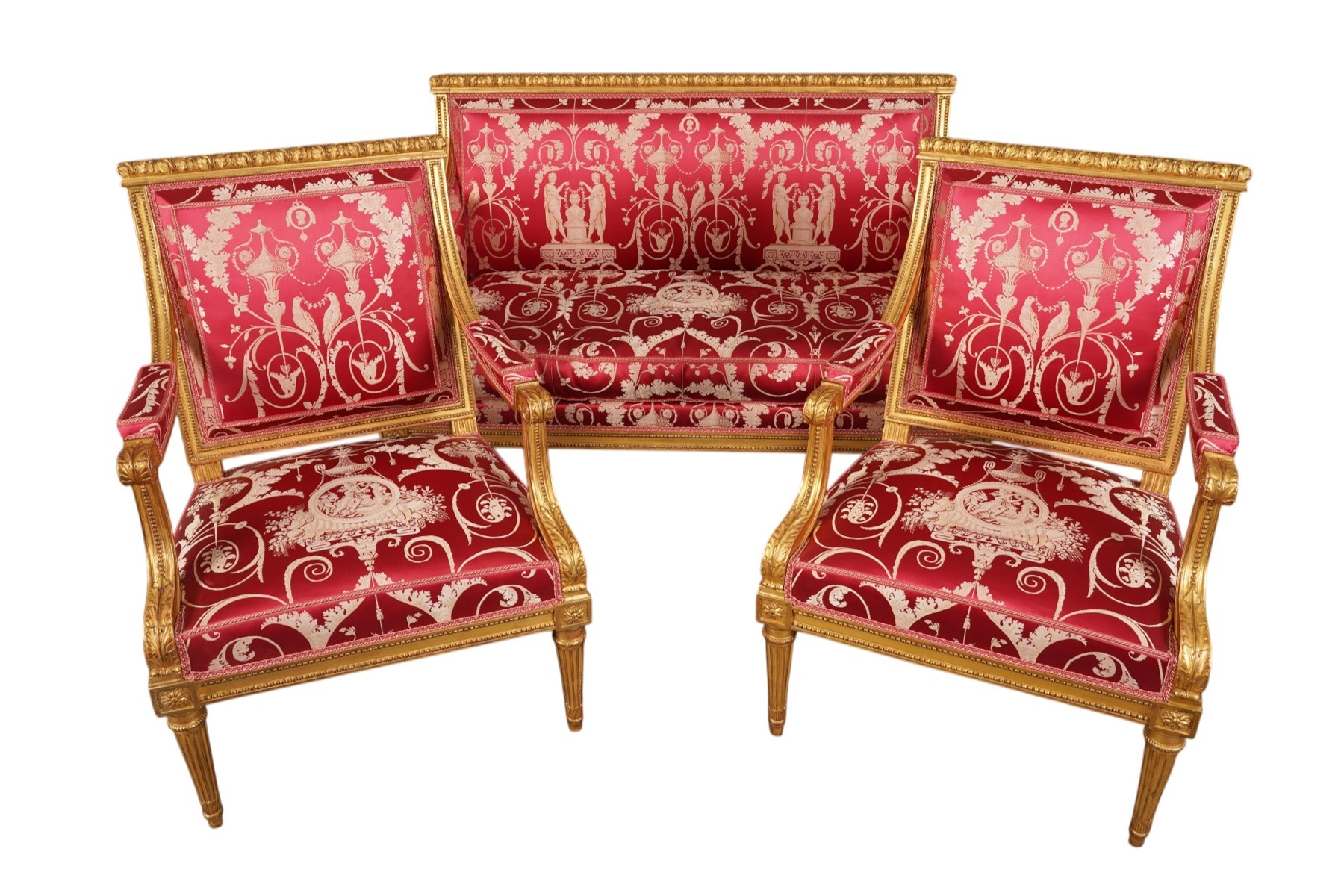
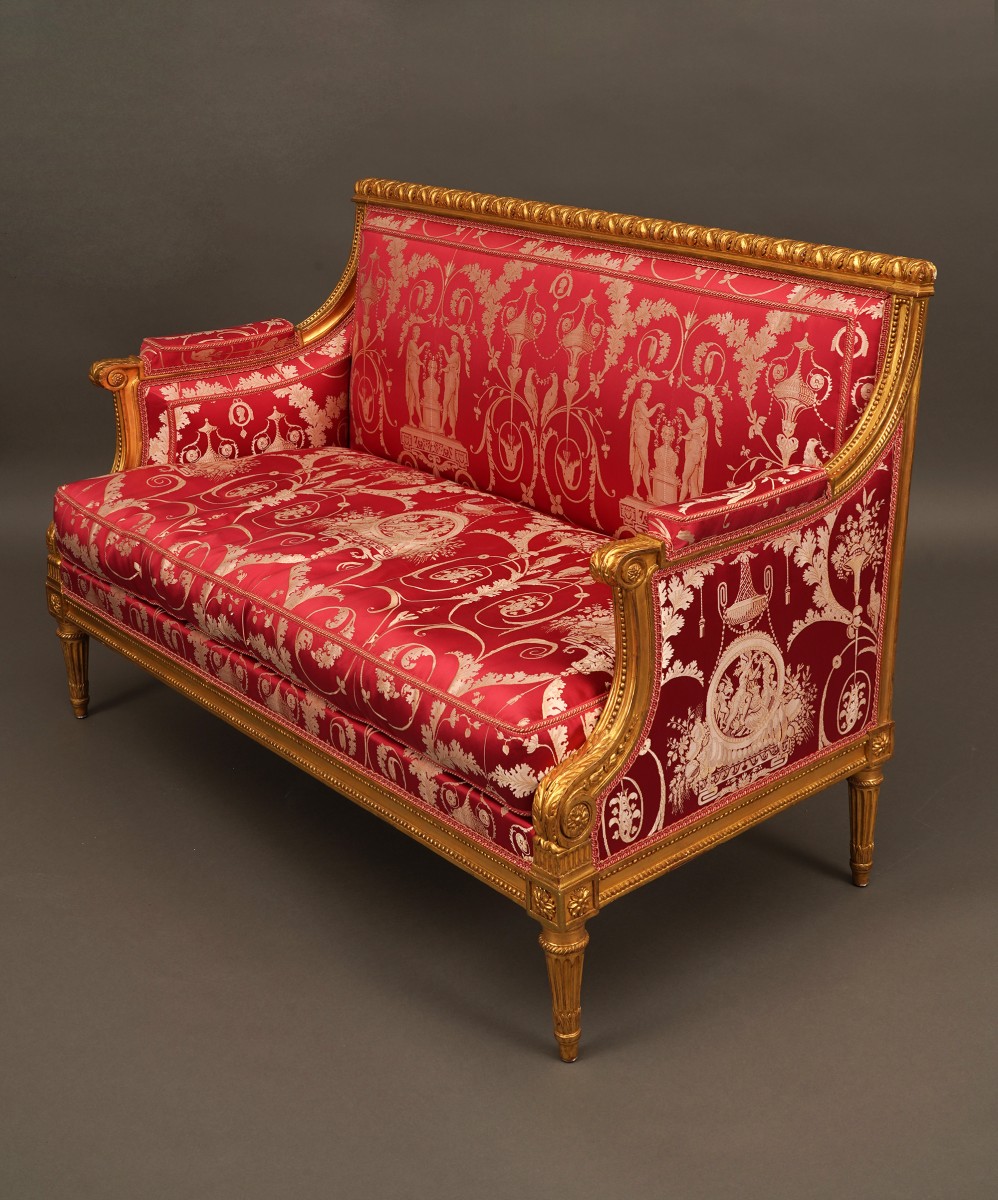
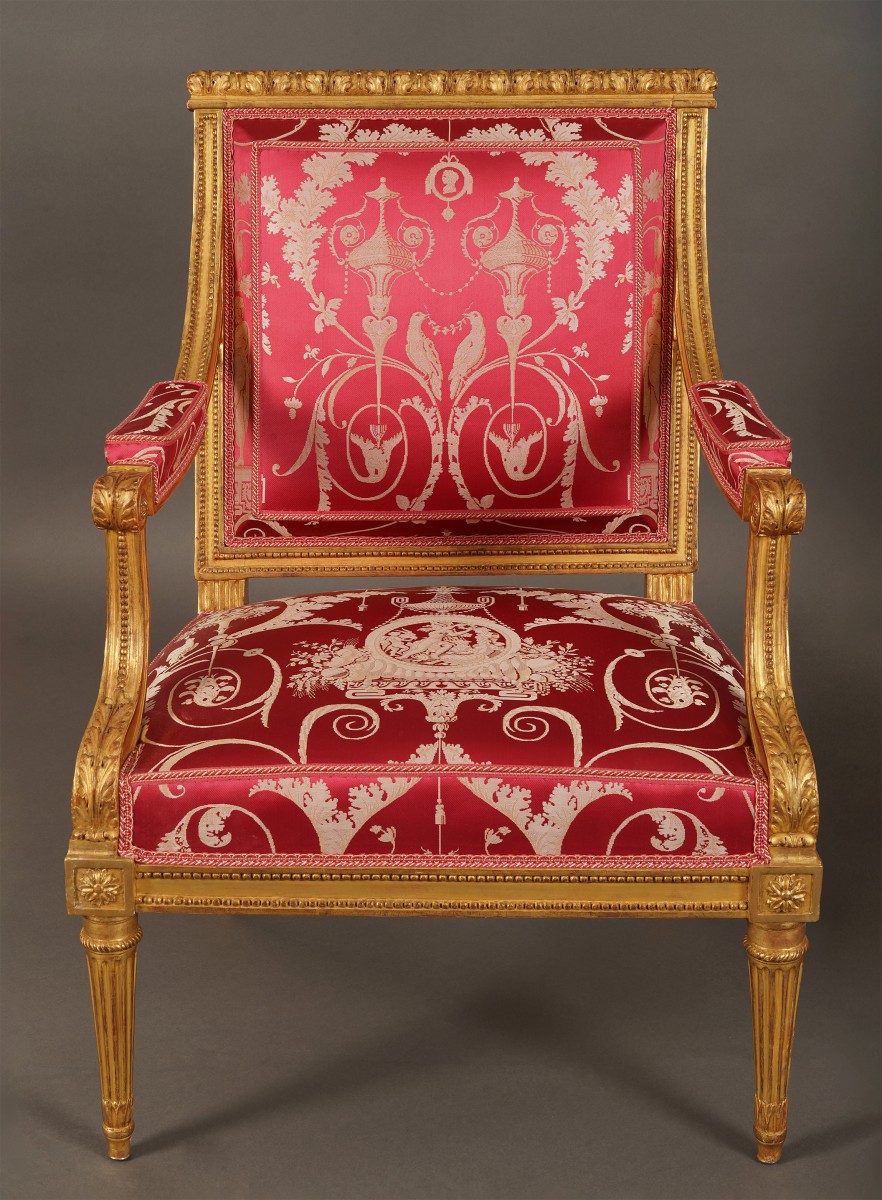
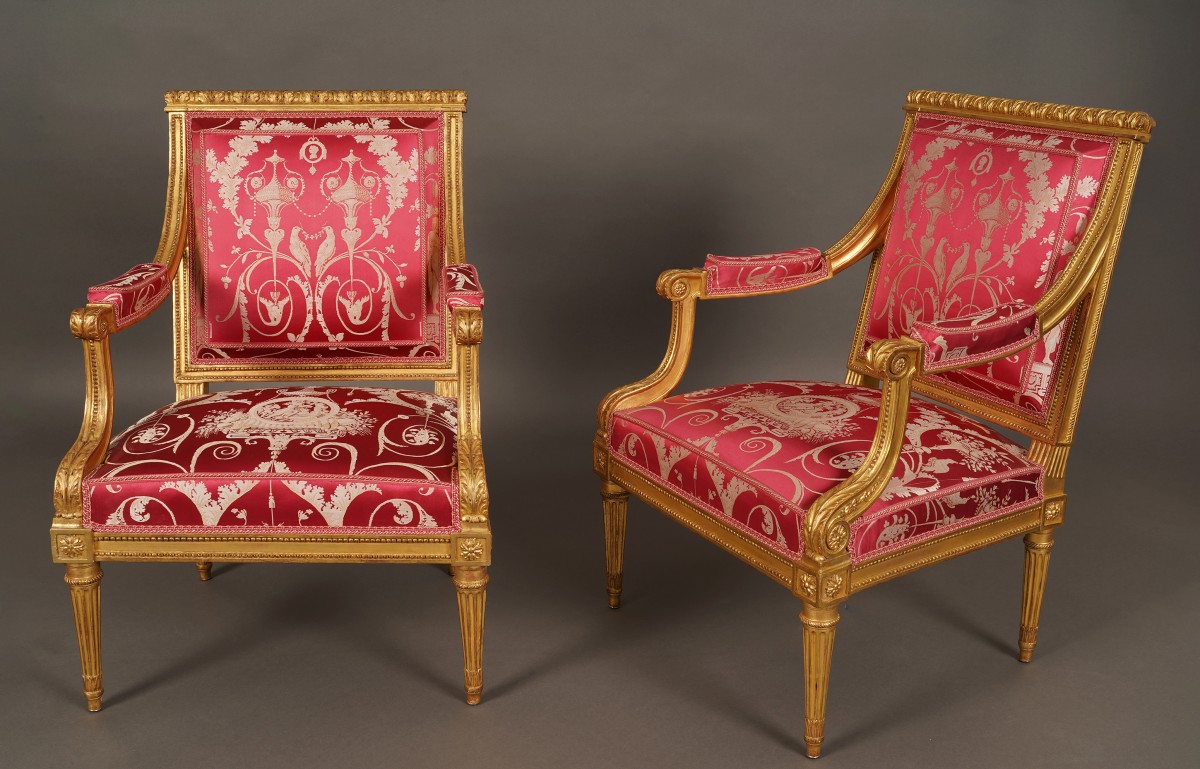

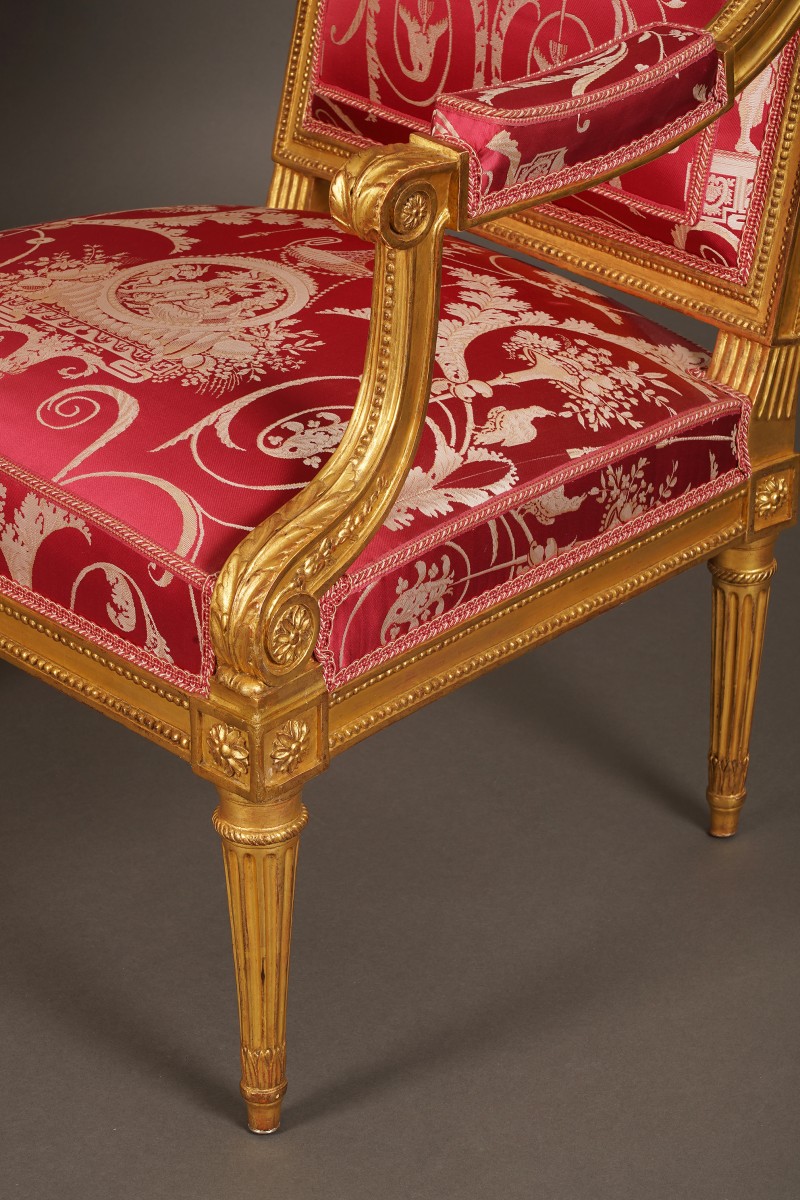
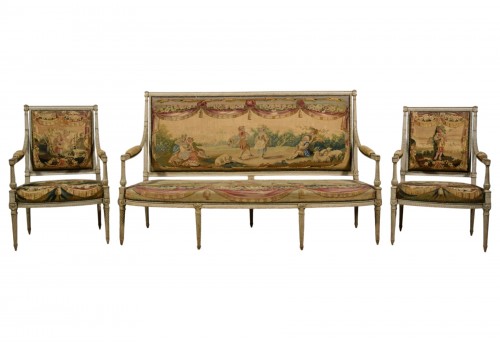
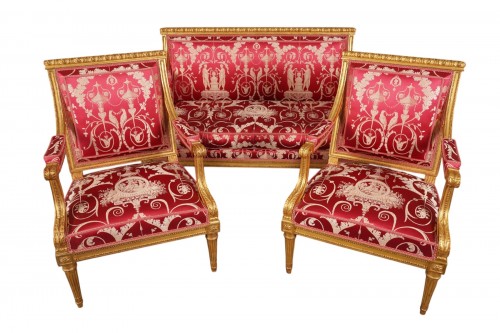
Dimensions of the armchairs - Height: 88 cm; Width: 64 cm; Depth: 54 cm
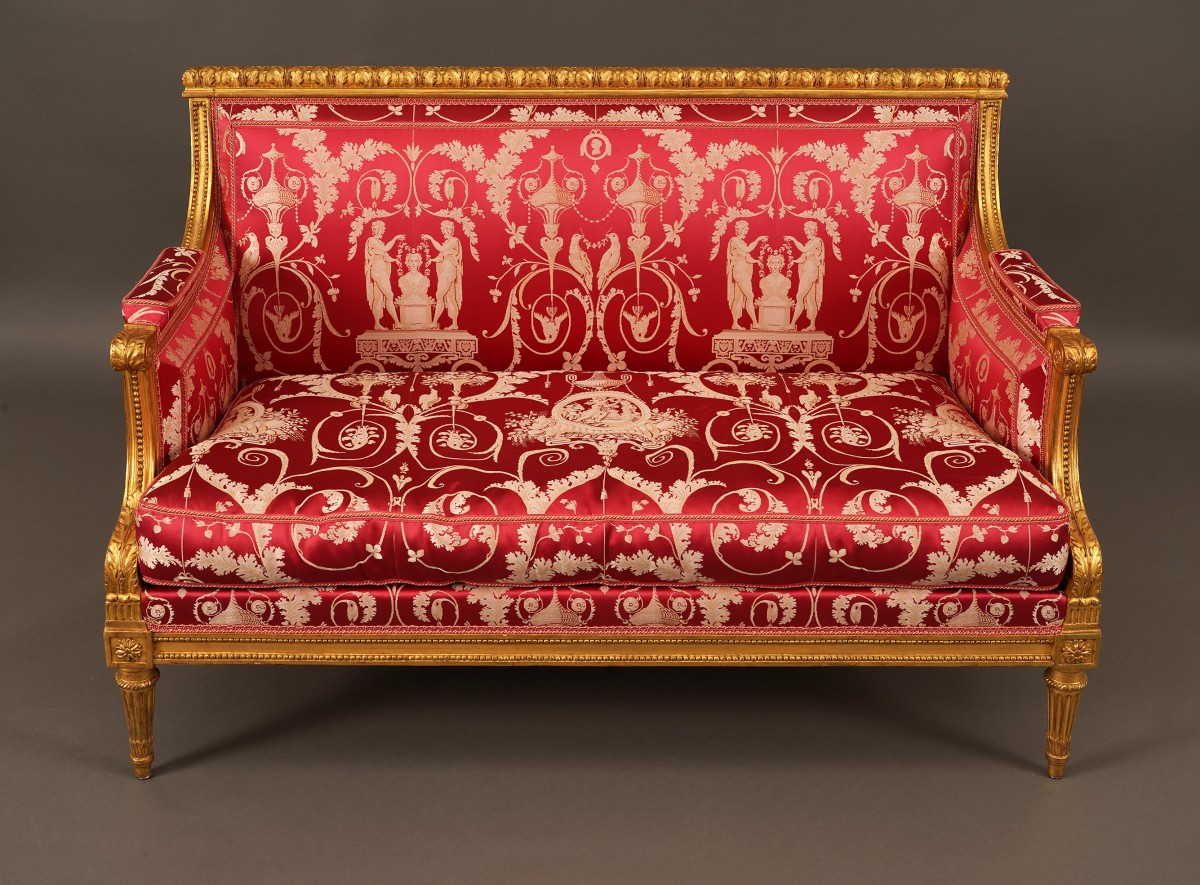
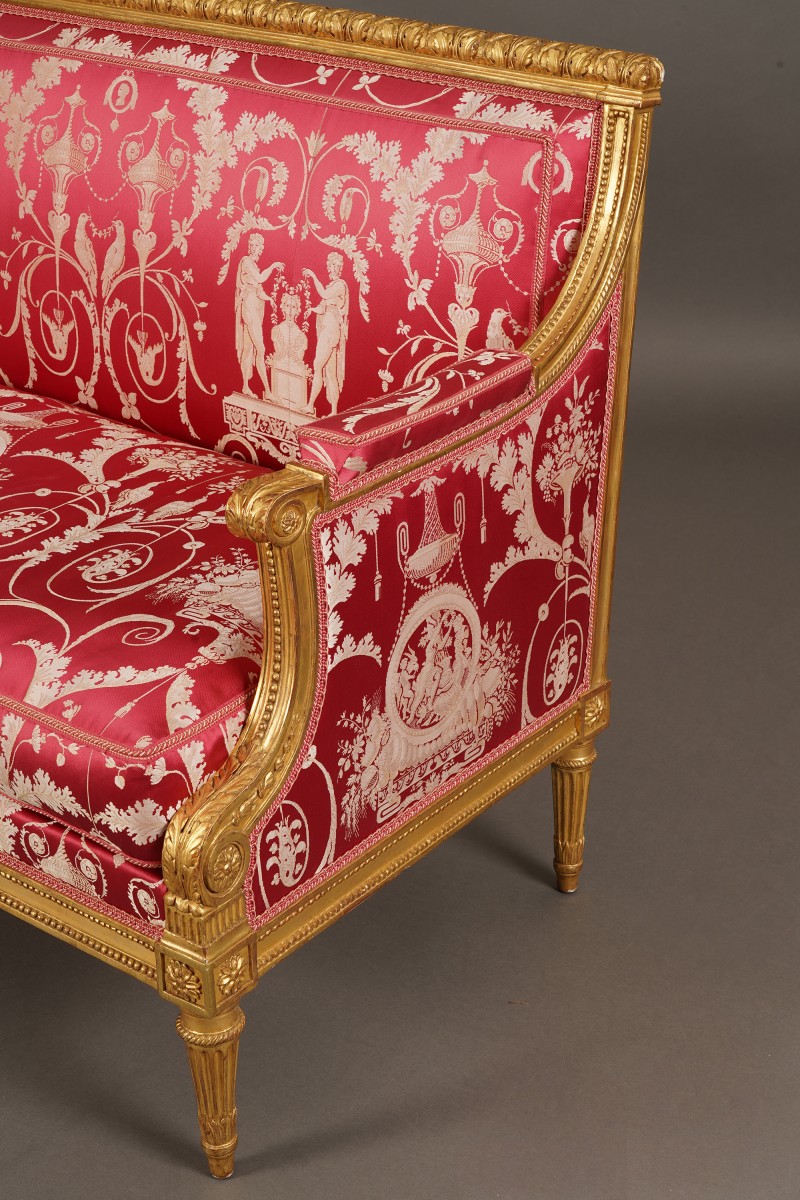
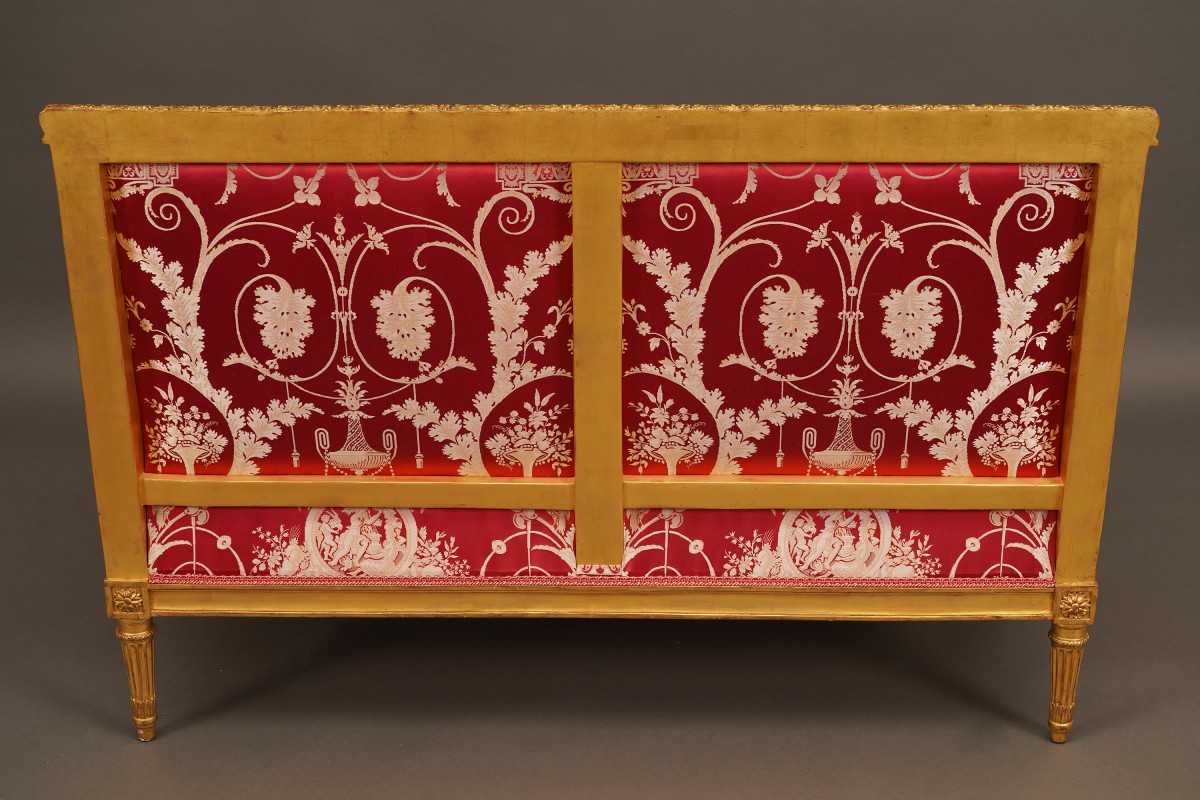
Dimensions of the sofa - Height: 84 cm; Width: 129 cm; Depth: 54 cm
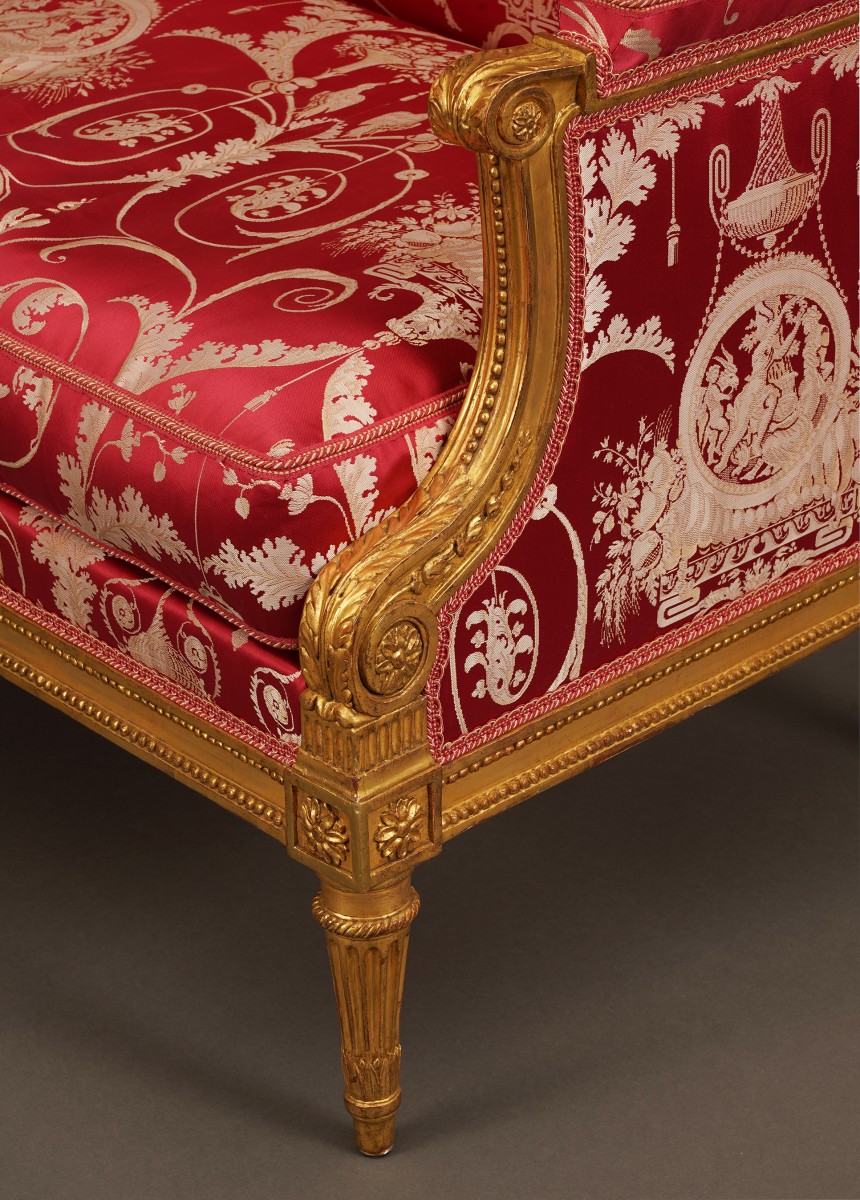
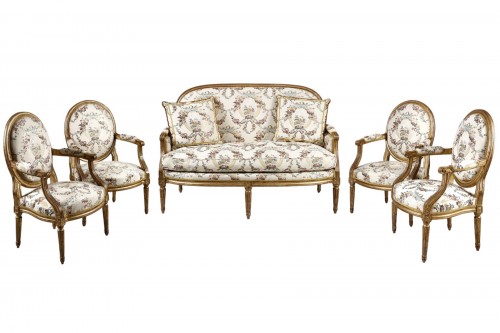
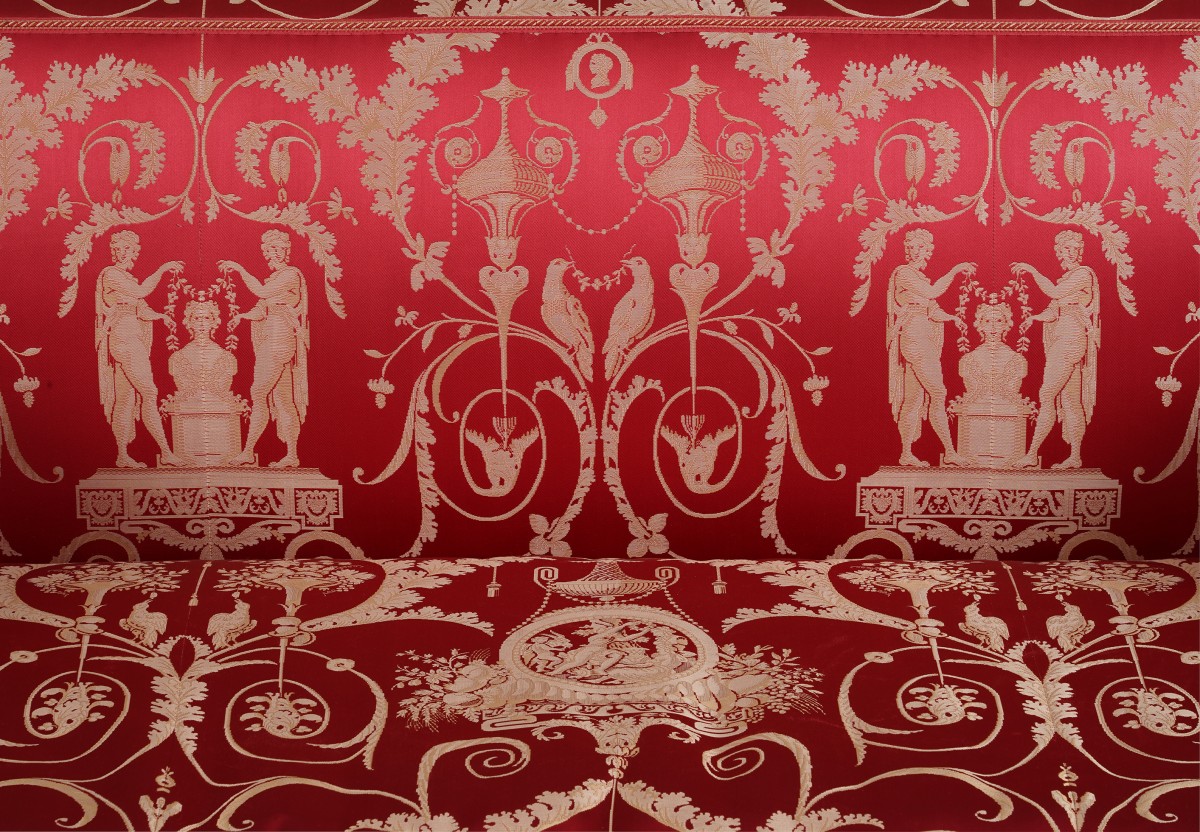
A rare suite of Louis XVI period furniture, consisting of two armchairs and a sofa in carved and gilded wood, upholstered in a gold and red silk. Each seat rests on four tapered and fluted legs, terminating in floral corner blocks. From these begin a set of seat rails decorated with beaded friezes, supporting the seat. The armrest supports feature a large acanthus leaf from which a beaded frieze extends up to the armrest. It is fitted with silk armpads and features a framed flat backrest. Finally, a frieze of carved acanthus leaves runs along the top rail of the backrests.
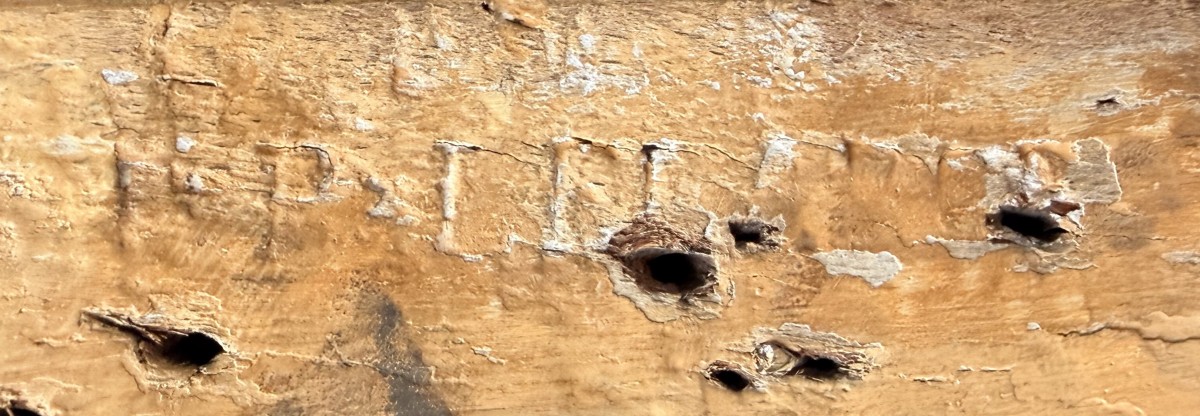
Characteristic of the French neoclassical movement that emerged at the end of the 18th century, this beautiful suite bears the stamp JB LELARGE on both armchairs. The tapered legs, the skillful arrangement of the carved decoration, and the straightness of the frame bear witness to high society's taste during the reign of Louis XVI for the purity of lines. The profusion typical of the preceding Rocaille style having fallen into disuse, joiners and cabinetmakers then drew inspiration from Louis XIV furniture for their new creations, bolstered by the newly found importance of comfort in daily life.
RELATED WORKS
Identical in its frame to ours, this armchair from the Mobilier National collection (inv. no. GMT 23236) and formerly ministry furniture, notably that of the colonies, is also stamped by J.-B. III Lelarge. In addition to the gilding, our armchairs and the marquise feature carved ornaments that are much more refined than this model.
BIOGRAPHY
Jean-Baptiste III Lelarge was one of the best seat joiners during the reign of Louis XVI. Having become a master in Paris on February 1, 1775, he took over from his father Jean-Baptiste II Lelarge and worked for a wealthy French and foreign clientele, which included the King of Portugal. The seats by Jean-Baptiste Lelarge demonstrate, for the most part, a very beautiful appearance: robust, without heaviness, rigorously constructed, and impeccably assembled, they are adorned with simple moldings or fine, sharp carvings, well distributed and without being overloaded. In Lelarge's models, there is a predominance of seats with medallion backrests, which are found in fairly large numbers today. This backrest is frequently supported by two curved uprights, carved with acanthus leaves.