Offered by Impossible Gallery - Diane Chatelet
REQUEST INFORMATION

Decorative art from 18th to 20th century
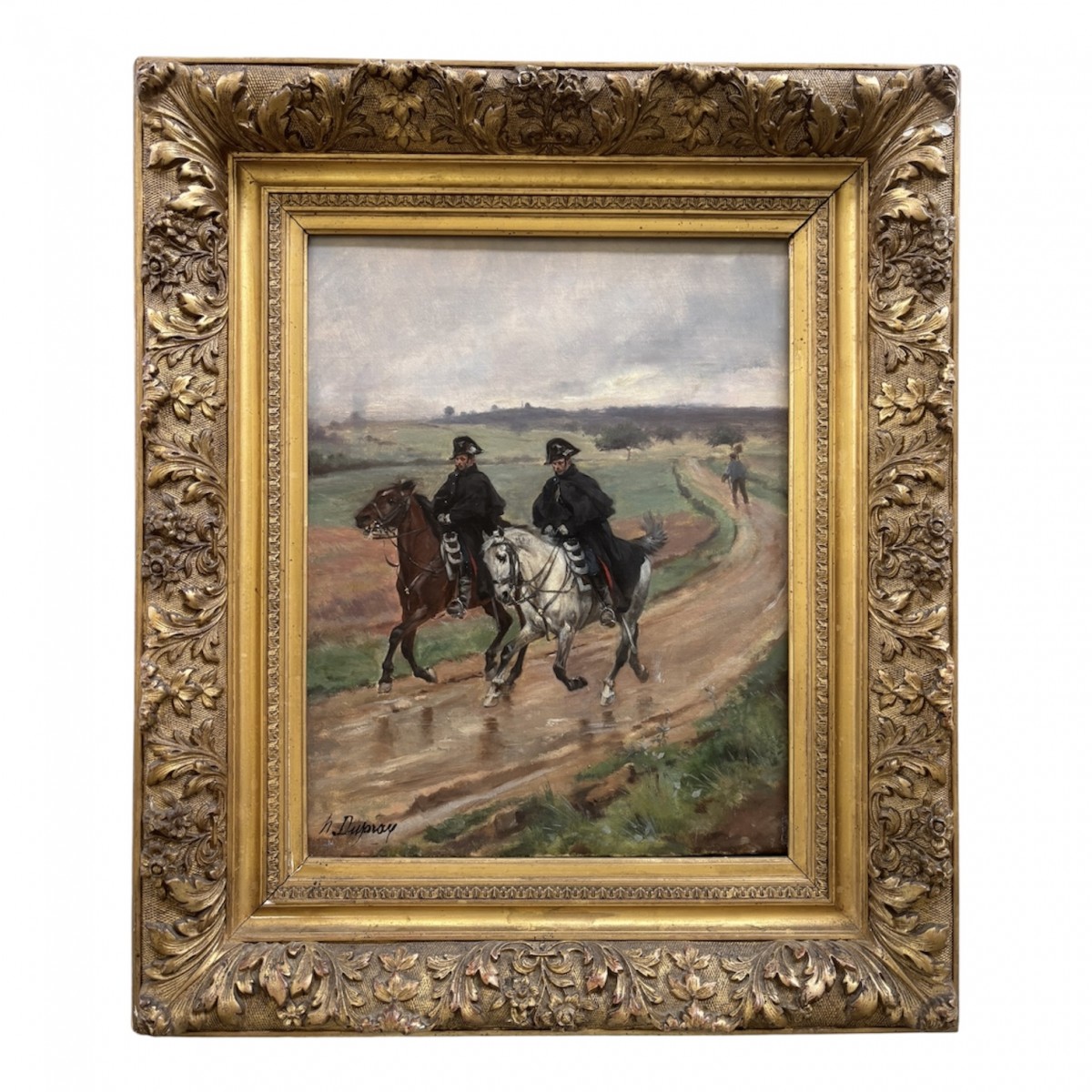
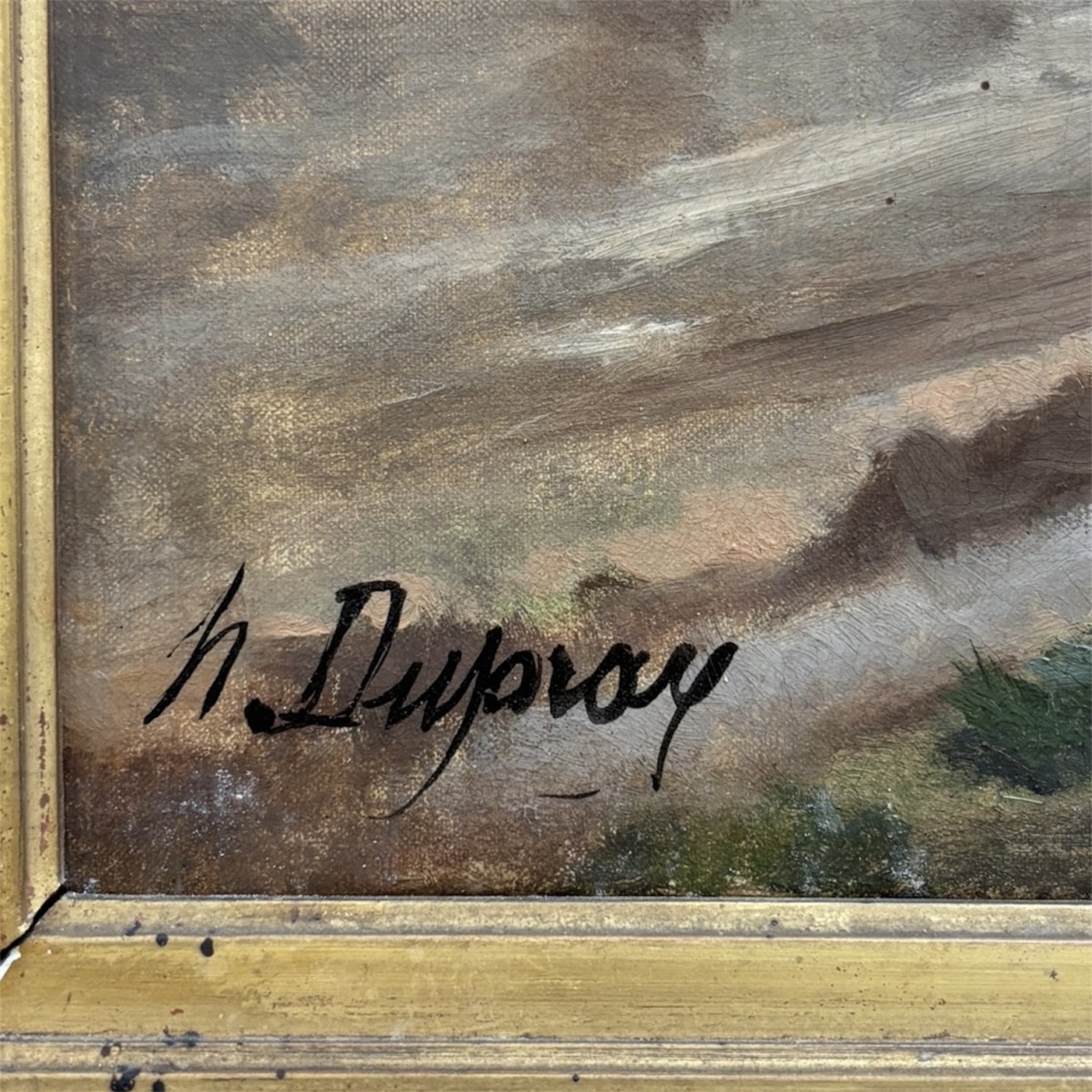
Oil on canvas, signed “h. Dupray” in the lower left corner.
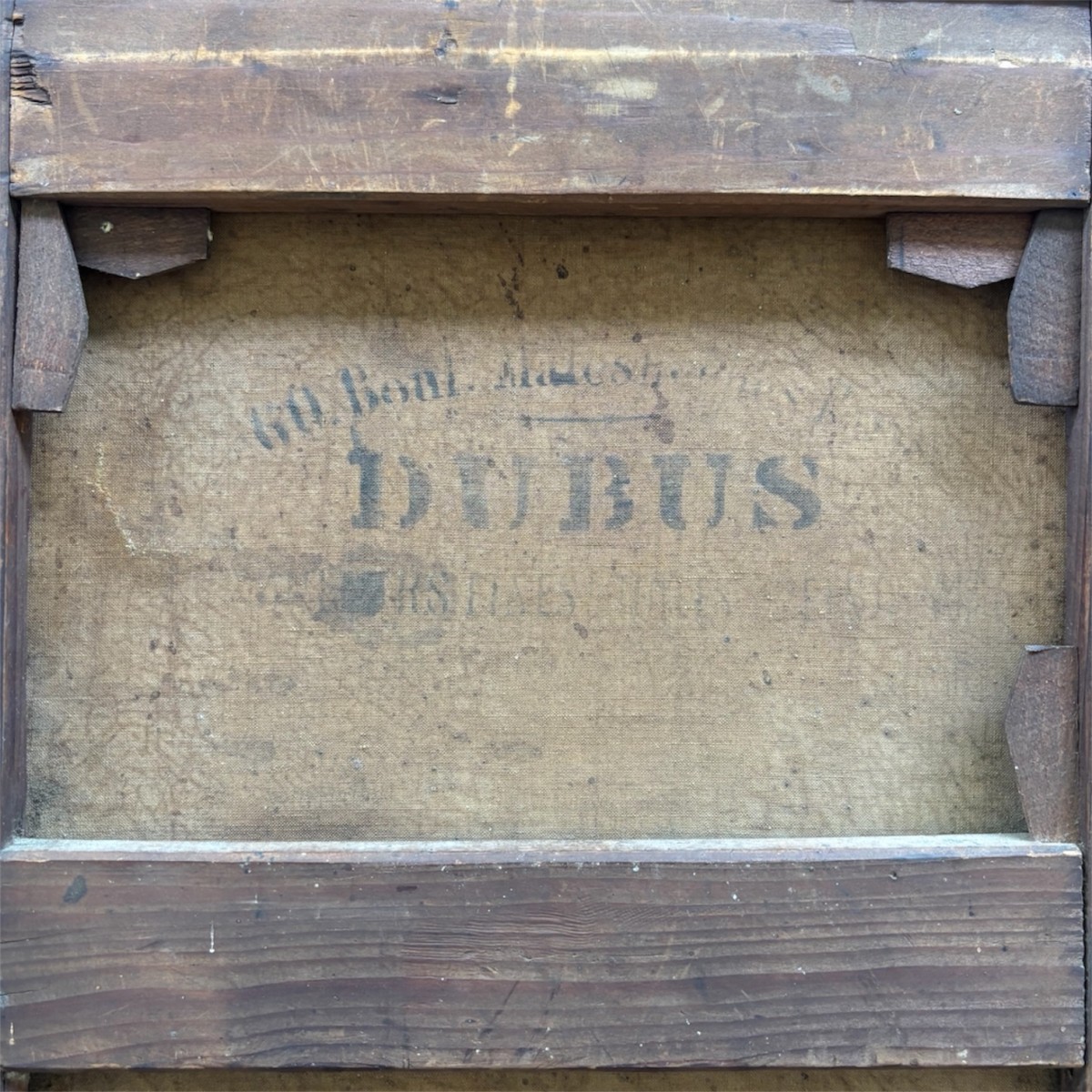
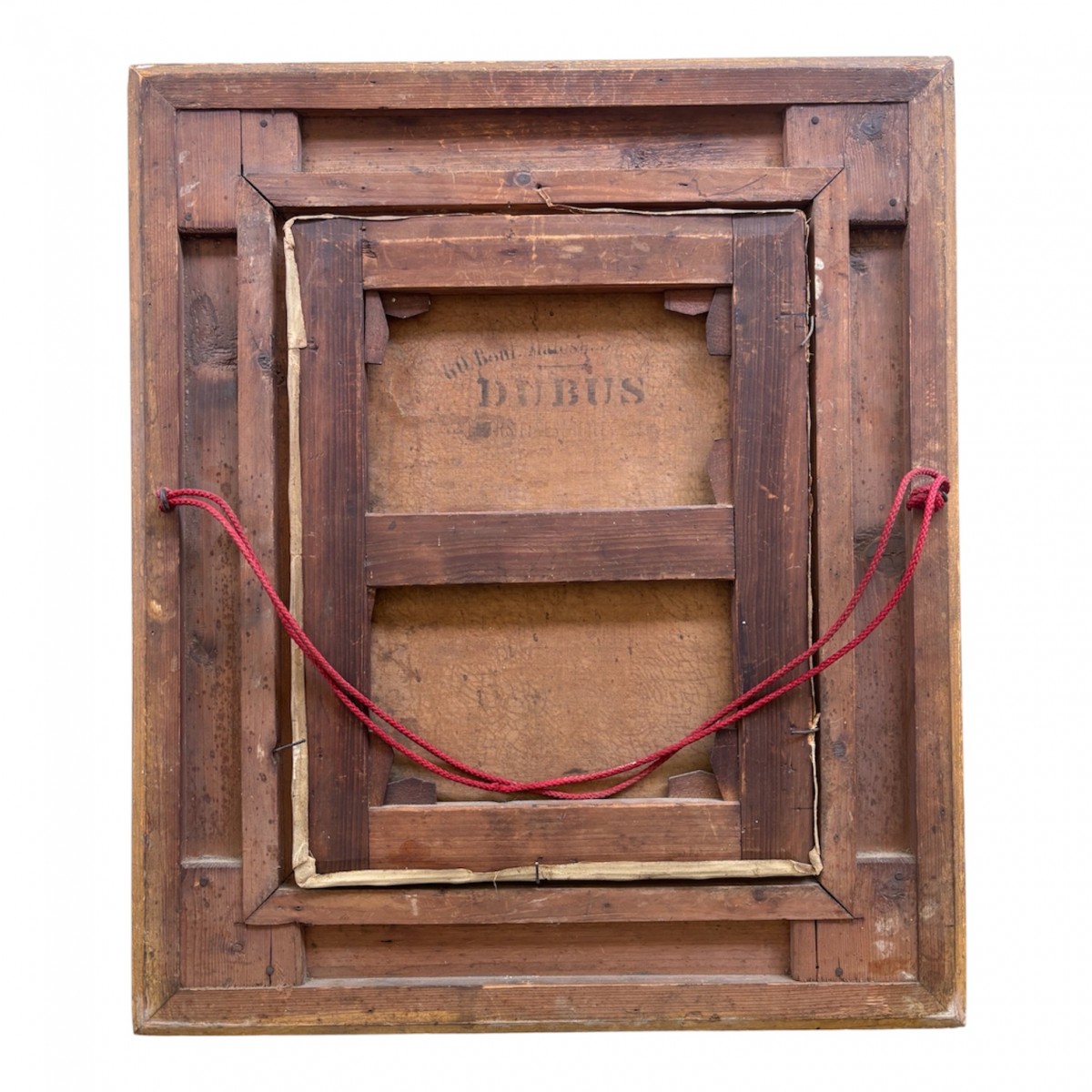
On the reverse, a stenciled mark from the art supply dealer DUBUS, 60 Boulevard Malesherbes, Paris.
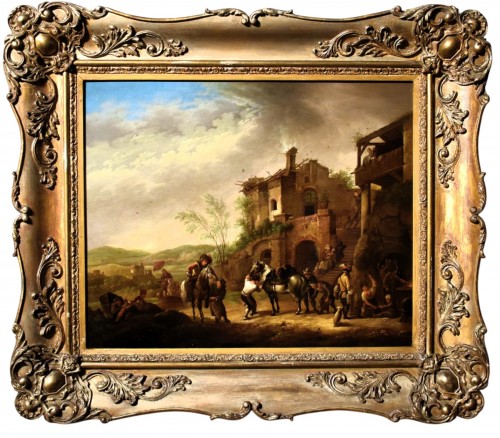
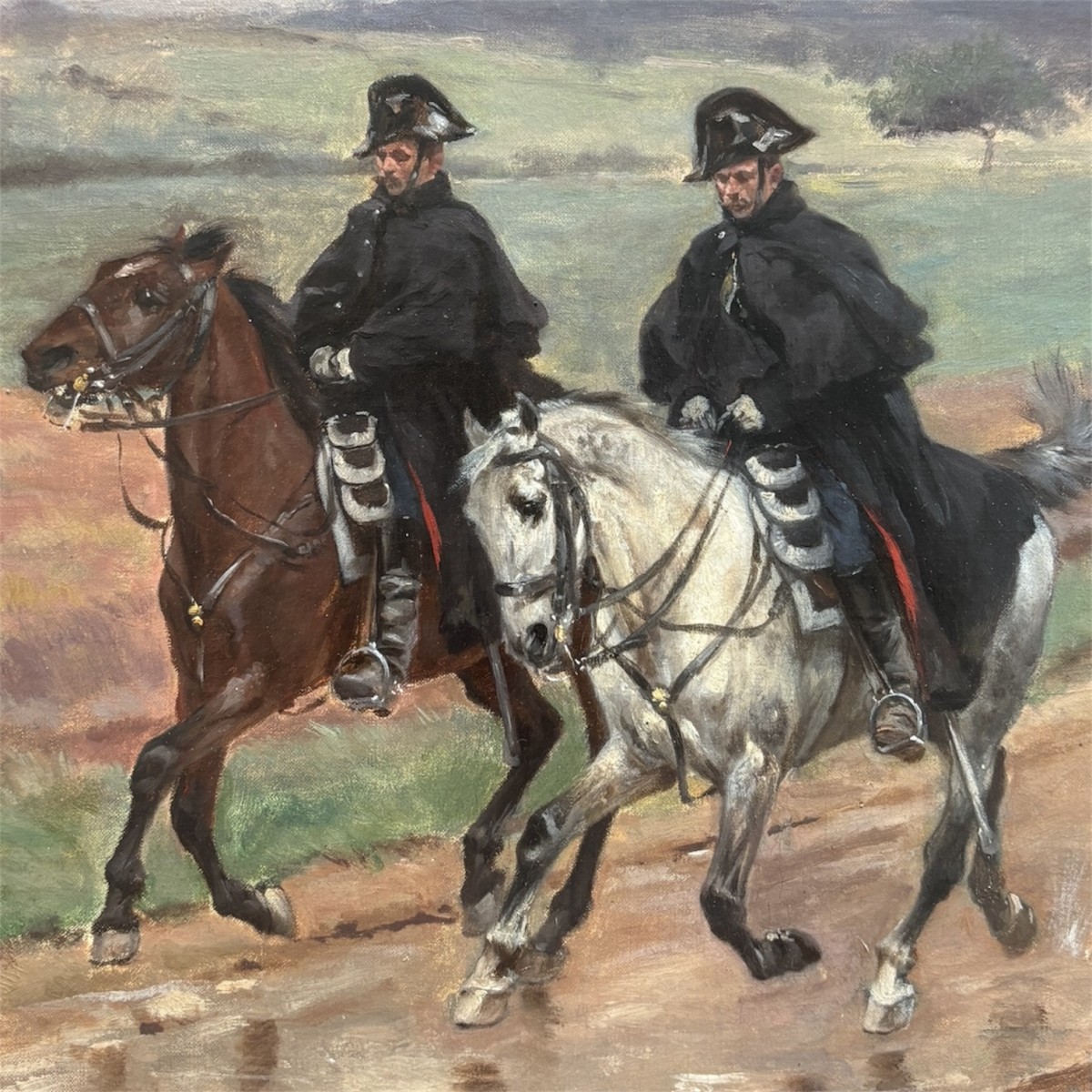
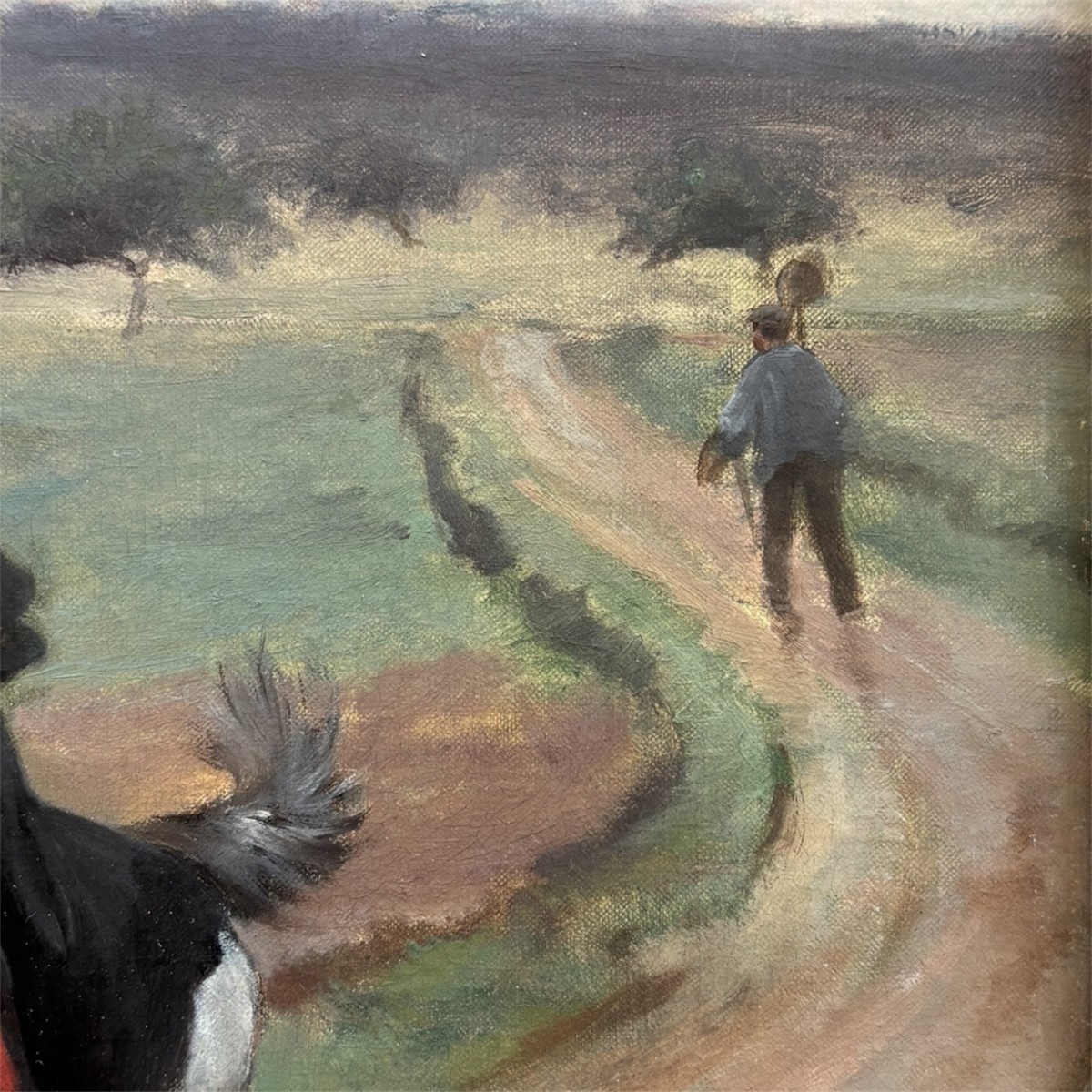
Two gendarmes on horseback ride side by side along a soggy country road. Wearing bicorne hats and wrapped in their dark coats, they ride a bay horse and a gray horse, respectively. Their silhouettes stand out against a vast rural landscape, while in the background a man carrying a tool over his shoulder walks away down the path.
The road, dotted with puddles and reflections, traces a broad curve to the right before disappearing into the countryside. The fields and meadows are rendered in a muted palette of greens, ochres, and browns, beneath a low sky in pearl-gray tones.
Presented in a large antique wooden frame with gilded stucco, decorated with foliage scrolls, acanthus leaves, and flowers in relief.
Dimensions :
Canvas : H 41 x L 32 cm
Frame : H 61,5 x L 52,5 x P 8 cm
Analysis and commentary:
Henri DUPRAY was one of the French military painters active in the second half of the 19th century. A student of Léon COGNIET and later of Isidore PILS, he exhibited at the Salon beginning in 1863 and made a name for himself with his military scenes, in which he paid particular attention to uniforms, the poses of the men, and, above all, the horses. He received several awards at the Salon and was named a Knight of the Legion of Honor in 1878.
This painting belongs to a more intimate vein of his work. Rather than depicting a battle or a heroic scene, Henri DUPRAY shows here two gendarmes performing their duties in the countryside. The title, “Gendarmes on Patrol”, recalls that gendarmes at the time—usually in pairs—would conduct “community patrols” designed to ensure a regular presence of authority in rural areas.
This everyday aspect is what makes the scene so compelling. Henri DUPRAY does not seek to glorify his subjects but rather to depict an ordinary situation: men in uniform riding on horseback through damp countryside, under conditions that were at times difficult. Military painting thus converges with genre painting and offers a poignant account of life in the rural gendarmerie at the end of the 19th century.
The reverse side of the canvas also provides valuable material evidence for dating the work. It bears the stenciled mark of the Parisian paint dealer DUBUS, located at 60 Boulevard Malesherbes. This business is documented at this address between the late 1870s and the late 1890s. This confirms that the work was created in the last quarter of the 19th century and makes a dating to circa 1880–1890particularly plausible.
Through its subject matter, its execution, and the preservation of this historic mark, the work is thus of dual interest: first, as a painting representative of the work of Henri DUPRAY, and second, as a documented account of the daily life of the French gendarmerie under the Third Republic.
Bibliography:
François ROBICHON, Peindre la guerre : les peintres militaires français, 1870-1914, Paris, Bernard Giovanangeli Éditeur, 2006;
Arnaud-Dominique HOUTE, “Monitoring Nomads in the 19th Century: The Role of the Gendarmerie,” in A Century of Registration: From “Nomads” to the Roma, from the Anthropometric Card to OSCAR, 1912–2010, conference proceedings, 2013.
Delevery information :
We take care of the packaging and shipping of the items.
Shipments are tracked and insured.
Transport costs are the responsibility of the buyer.