Offered by Segoura Fine Art
REQUEST INFORMATION
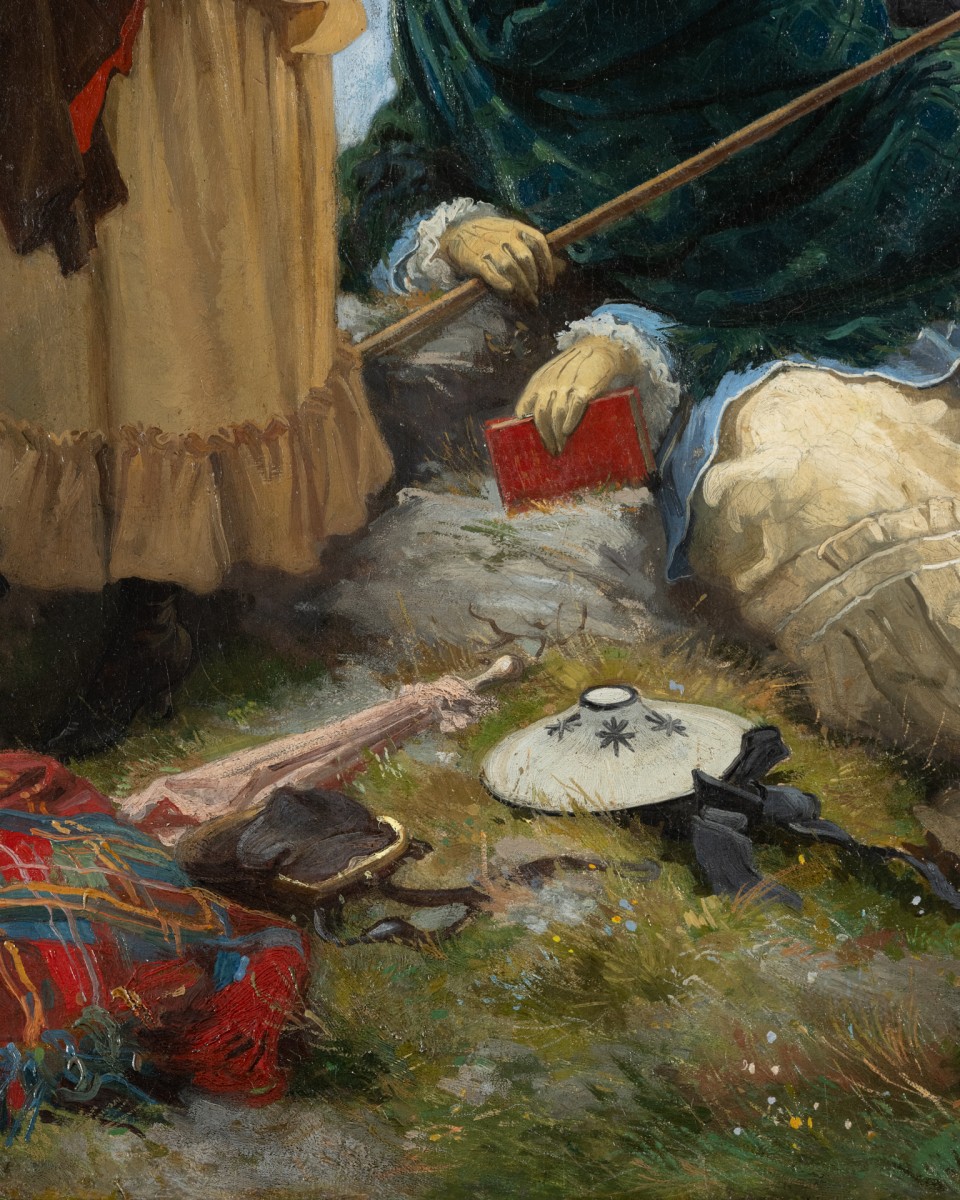

Painting, furniture and works of art from the 17th, 18th and early 19th century
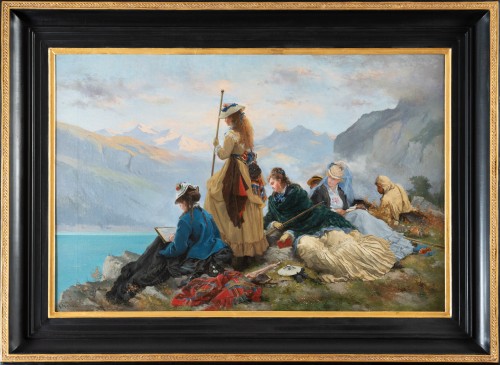
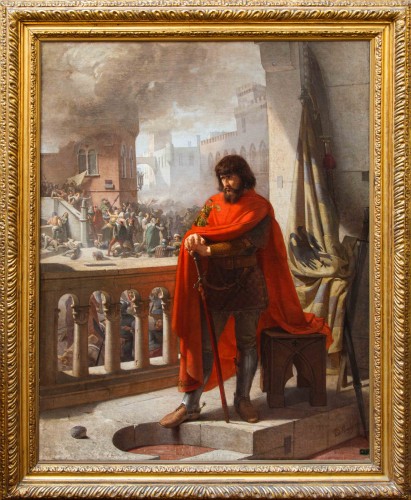
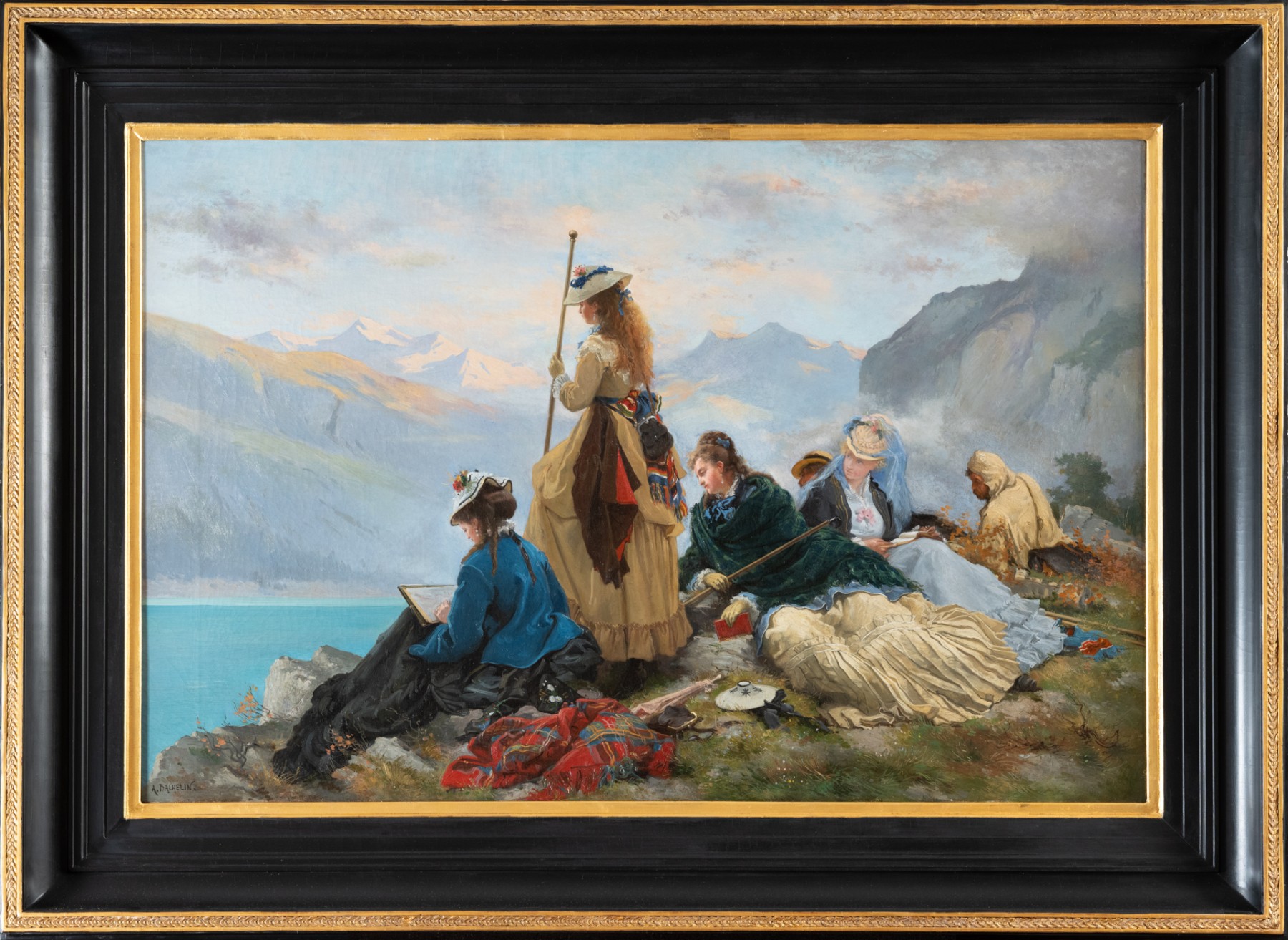
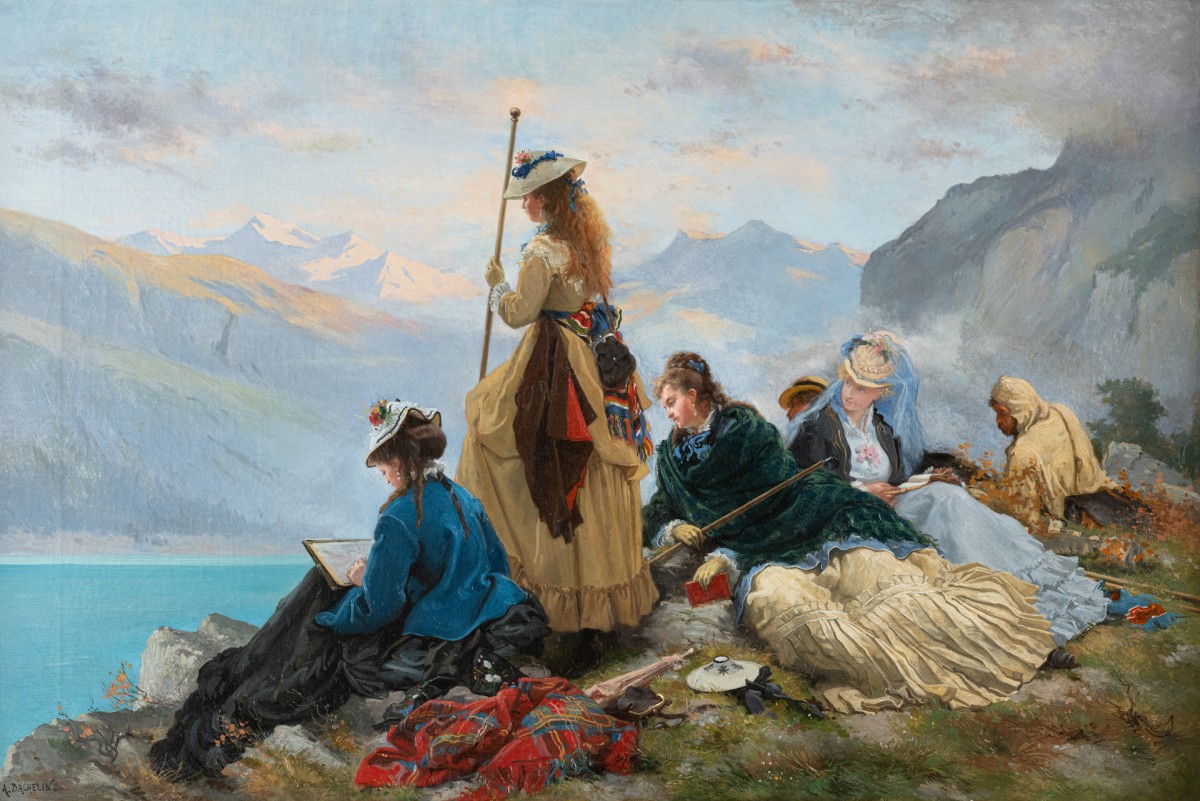
Oil on canvas, signed lower left, countersigned and titled on the reverse
79 × 117 cm (unframed)
Painter · Illustrator · Art Critic · Historian · Novelist
Auguste Bachelin was born on 30 September 1830 in Neuchâtel into a modest family; his father was a carpenter. At first glance, nothing seemed to predestine this craftsman’s son for an artistic career, except perhaps the culturally vibrant environment of the Principality of Neuchâtel, then under Prussian rule, where intellectual and cultural life was particularly active.
He began his artistic training under the painter Louis Wallingre in Saint-Blaise, where he met Albert Anker (1831–1910), with whom he formed a lifelong friendship. This encounter proved formative: the two artists shared a common interest in genre painting and Swiss Realism.
In 1850, Bachelin left Neuchâtel for Paris, where he joined the studio of the Swiss Orientalist painter Charles Gleyre (1806–1874), a major figure in Parisian artistic education. Two years later, he entered the studio of Thomas Couture (1815–1879), the renowned French history painter, whose influence was to prove decisive.
As Bachelin himself put it, he moved “from the school of drawing to that of colour.”
This transition marked a profound stylistic turning point. Bachelin gradually abandoned the rigorous linear approach inherited from Gleyre in favour of a freer and more luminous handling of paint, increasingly sensitive to chromatic effects. He worked in genre painting, landscape and portraiture.
In 1874, following his marriage to Marie-Joséphine Combe, Bachelin left Paris permanently and settled in Marin. This date marked another turning point in his life, as he gradually devoted less time to painting and increasingly pursued a wide range of intellectual, civic and literary activities.
He was a founding member of the Société d’histoire et d’archéologie du canton de Neuchâtel in 1864 and, over a period of twenty-five years, published more than two hundred articles in the Musée neuchâtelois. Together with Alfred Godet, he was instrumental in founding the Musée d’Art et d’Histoire de Neuchâtel in 1885.
In his art criticism, Bachelin championed spontaneity in the use of colour, upheld the importance of history painting, and advocated the emergence of a distinctly Swiss national school of painting. He also wrote several historical novels and scholarly studies, which earned him considerable recognition in his native region.
Auguste Bachelin died in Bern on 3 August 1890.
Museums
Musée des Beaux-Arts, La Chaux-de-Fonds
Landesmuseum Zürich
Salon de la Société des Amis des Arts de Neuchâtel
From 1851 until the end of his life, Bachelin regularly submitted works to the Neuchâtel Salon, one of the principal showcases for artists from French-speaking Switzerland. The Société des Amis des Arts, founded in 1842 by Maximilien de Meuron, organised its exhibitions at the Galeries Léopold Robert (today the Galeries de l’Histoire), built in 1864.
Official Paris Salon - Palais de l’Industrie
Bachelin exhibited at the Paris Salon on an almost continuous basis from 1857 to 1874, a period spanning seventeen years. The Salon was the most important official artistic exhibition in nineteenth-century France, organised under the auspices of the Académie des Beaux-Arts. Bachelin’s regular participation attests to his established position and recognition within the Parisian art world.