Offered by Ars Antiqua

Old Masters paintings, furniture, sculptures and modern art
Lorenzo Delleani (Pollone, 1840 – Turin, 1908)
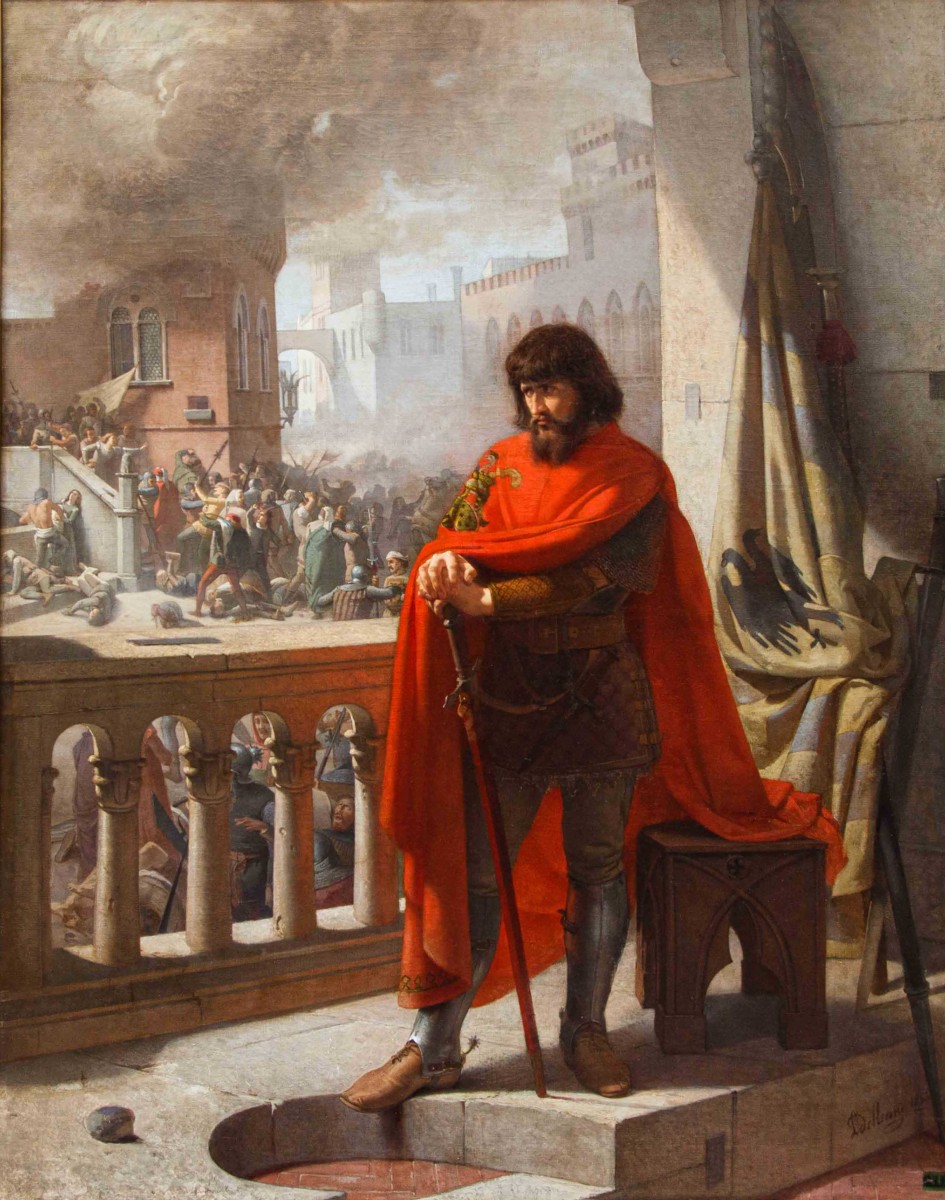
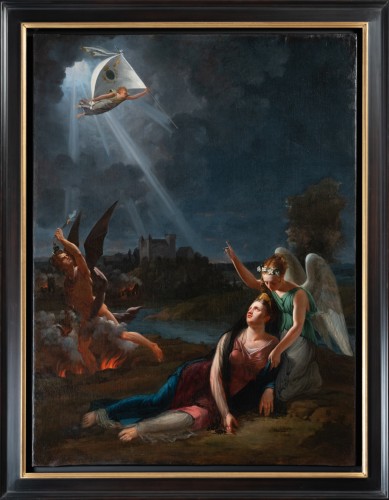
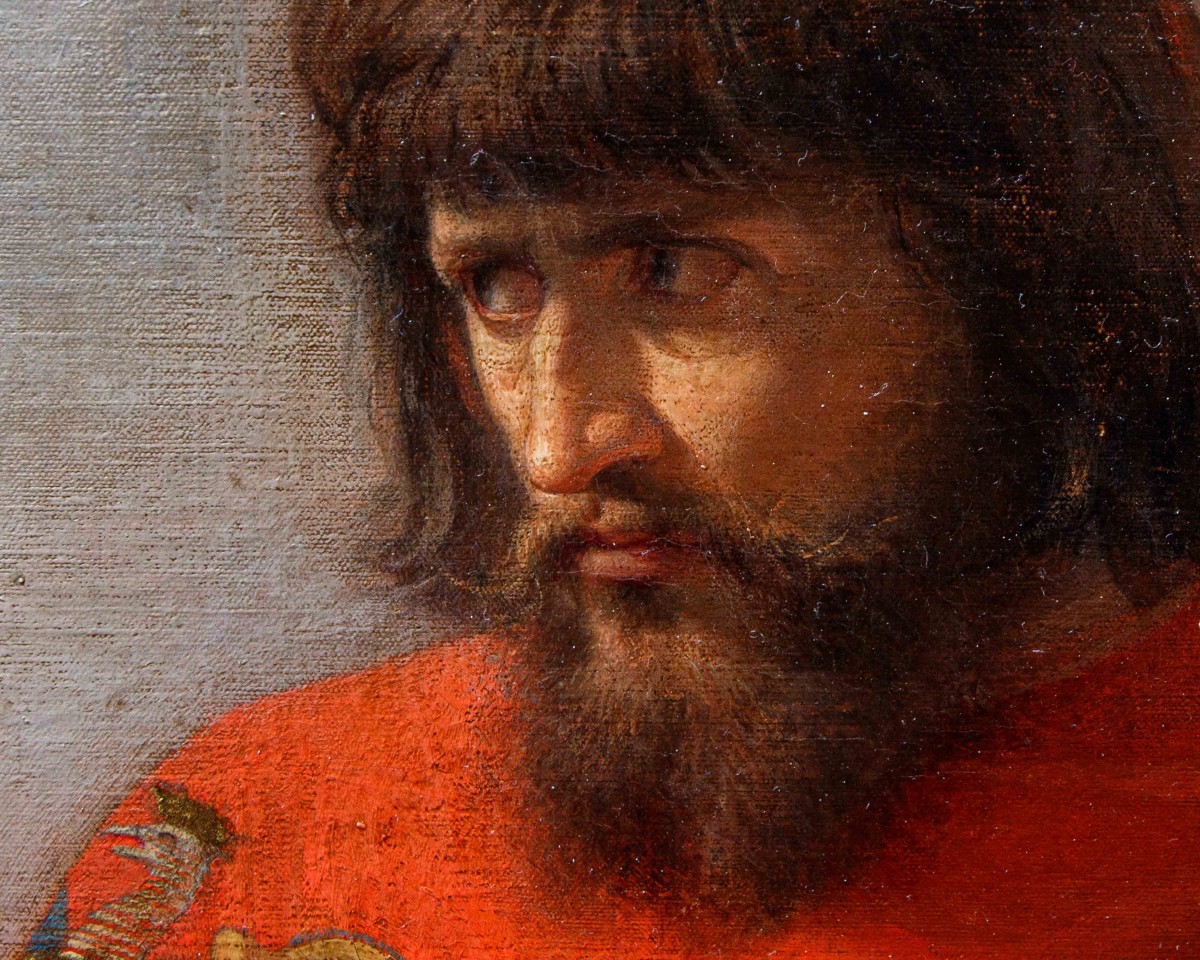
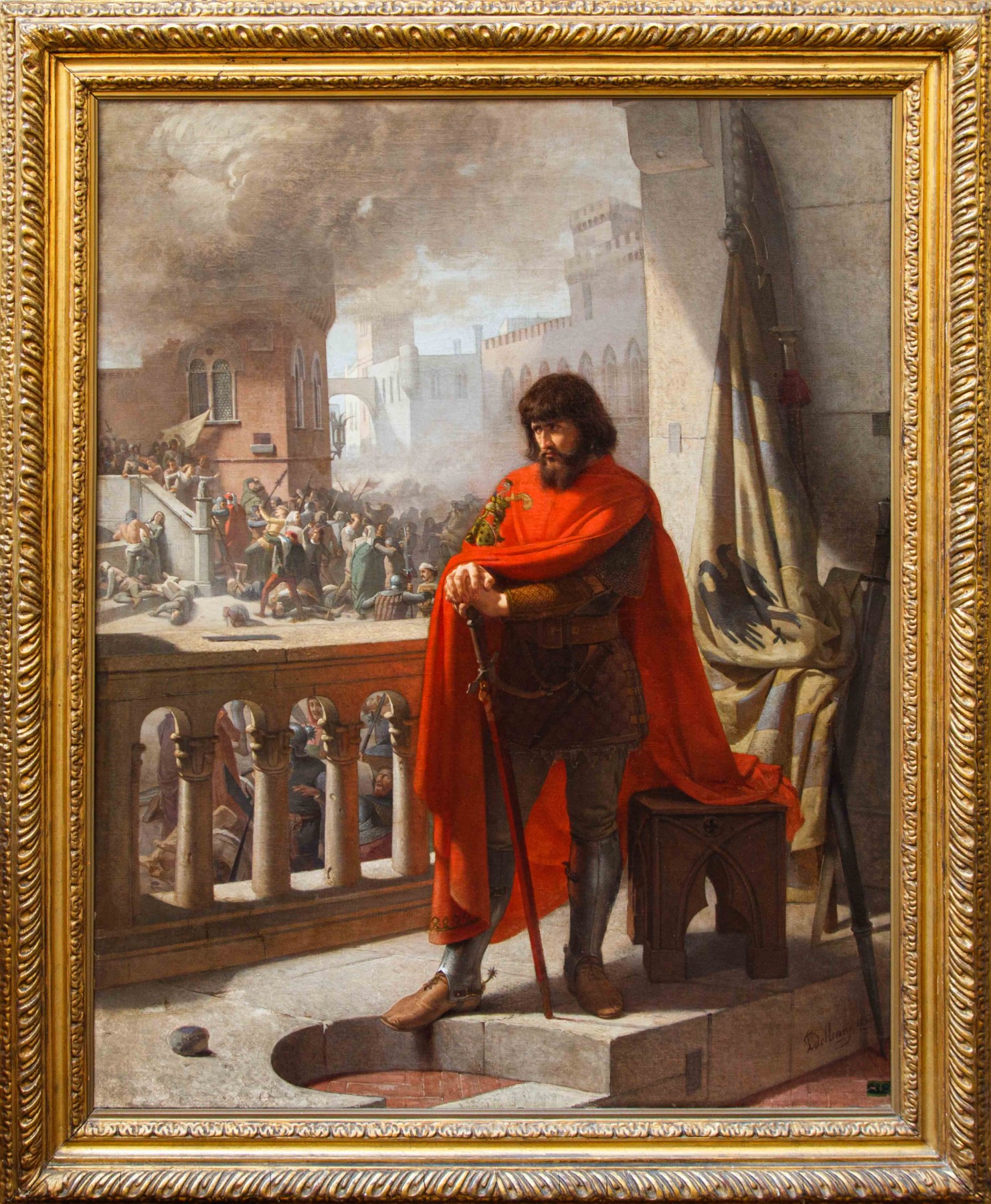
Ezzelino da Romano Contemplating the Massacre of Vicenza
Oil on canvas, 146 x 116 cm
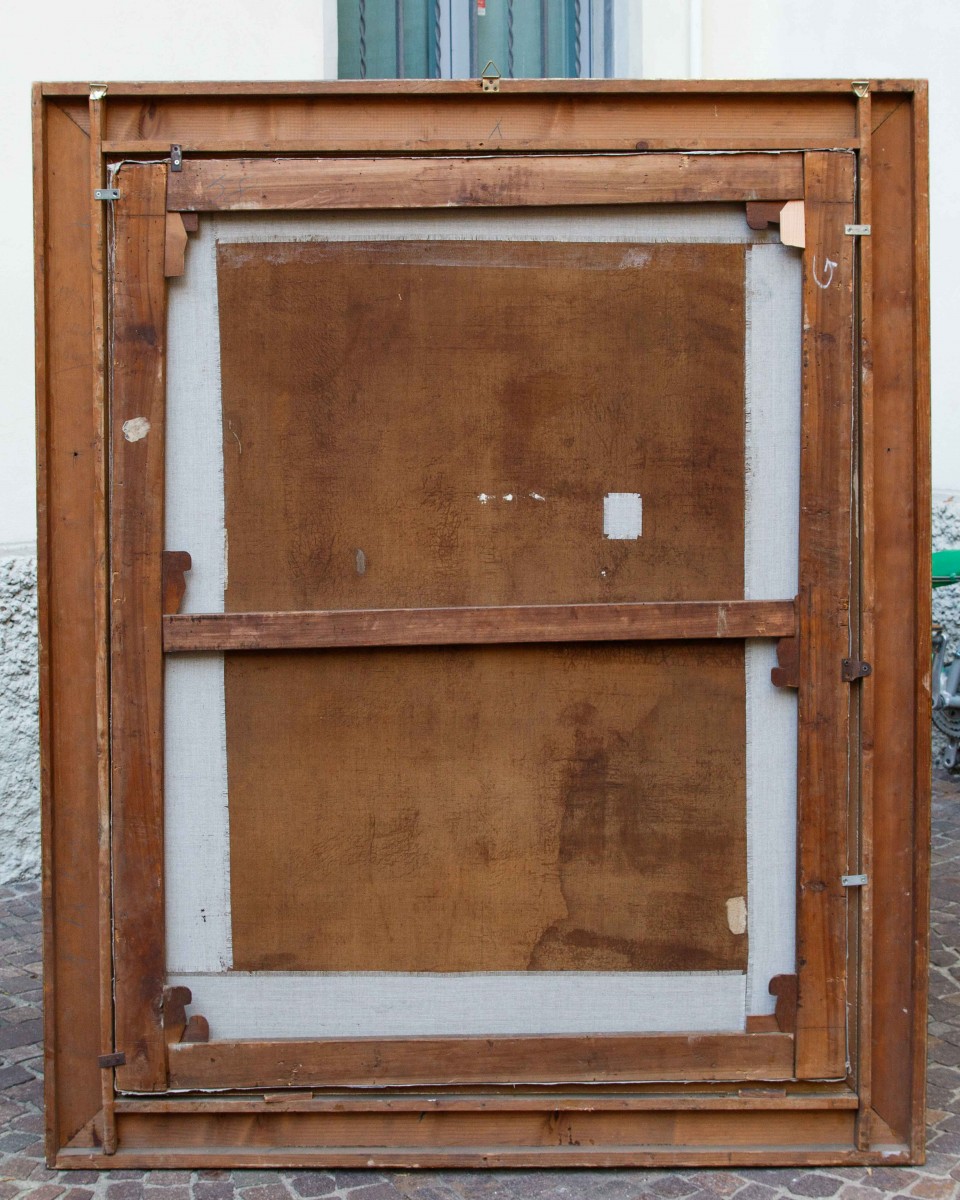
With frame, 170 x 140 cm
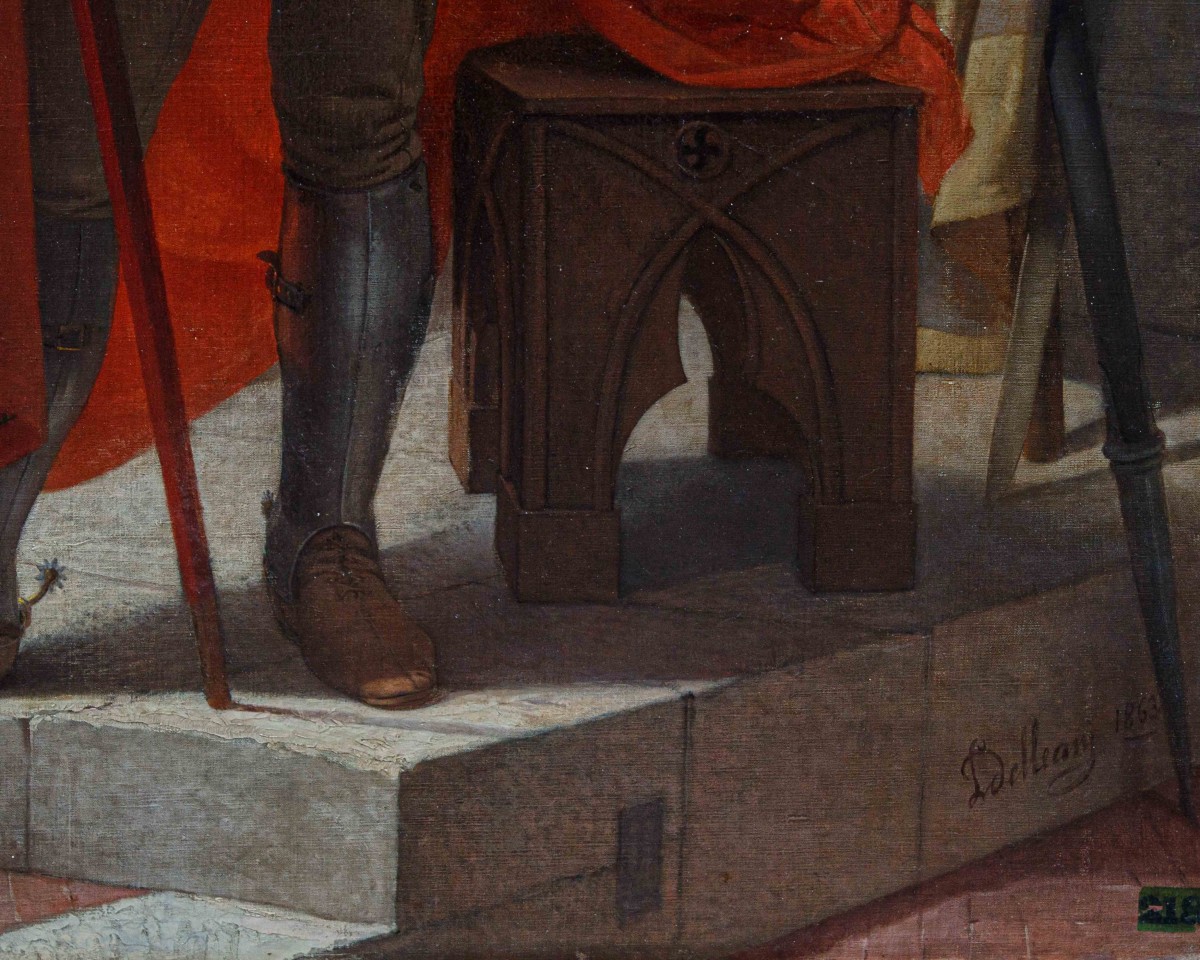
Signed and dated 1863 lower right
Bibliography:
Delleani. La vita, l'opera e il suo tempo [Delleani: His Life, Work, and Times], edited by Angelo Dragone, 1973, published with photo in Vol. II, No. 29
Born in Pollone, near Biella, on January 17, 1840, Lorenzo Delleani trained at the Accademia Albertina in Turin as a pupil of Cesare Gamba and Carlo Arienti. Initially, he joined the Romantic painters and produced historical canvases—often referencing key events of the Italian Risorgimento—earning numerous official awards.
Particularly during this first, Romantic period of his artistic career, the Piedmontese artist participated in a wide range of national and international exhibitions. Between the 1860s and 1890s, he was a regular presence at Turin’s Promotrice delle Belle Arti—one of the key cultural events of the newly formed Kingdom of Italy—presenting mainly historical subjects with a Romantic flair, including the famous Tasso, Columbus, Cromwell, Conradin of Swabia, On the Pier in Venice, and Lungarno in Florence. In 1874, he exhibited two paintings at the Paris Salon that enjoyed great public and critical acclaim in France: Veniero After Lepanto and The Vanquished.
From the late 1860s, his style evolved progressively in both technique and subject matter toward a renewed focus on working en plein air from nature, creating canvases with rich, dense hues and brilliant colors. By the early 1880s, the artist devoted himself exclusively to en plein air painting, executed with swift, thick brushstrokes of color that captured the light. His preferred subjects became views of the Piedmont region, depicted across changing seasons and lighting conditions.
Another prominent theme in Delleani's work, especially during his mature period, was religious processions and popular festivals. Drawn to the folklore and spirituality of his native Biella area, he created evocative imagery that was deeply appreciated by art historians and intellectuals of the first half of the 20th century. Notably, Emilio Cecchi and Anna Maria Brizio praised his work, with Brizio remarking that the "impetus and modeling expressiveness" of his landscape and genre painting was unmatched in 19th-century Italian painting.
In 1883, Delleani traveled to Holland to study the masterworks of the Dutch Golden Age, drawn to their vivid and opulent color palette, which brought fresh creative inspiration to his work. A testament to his Dutch stay is Amsterdam, a striking view of the capital now preserved at the GAM in Turin (inv. P/1958).
A close friend of the upper-middle-class Bricherasio family of Turin—the painter and patron Sofia Bricherasio was one of his favorite pupils, and she may be the woman depicted in GAM Turin's 1881 painting The Woman Painter—Delleani also witnessed a historic event. Emanuele Bricherasio, Sofia's brother, distinguished himself through his enterprising commitment to the emerging automotive industry. On July 1, 1899, he convened a group of prominent aristocrats and notables at his Turin residence, becoming one of the founders of an initial company that later took the name F.I.A.T. Delleani was specifically requested to depict the memorable event, creating a famous painting in which Bricherasio is portrayed signing the document appointing him vice president.
Having settled permanently in Turin at a cousin's residence on Via Alfieri, Delleani painted until his death. In 1905, he completed his last large-scale canvas, The Feast of Saint Barnabas, painted specifically to be donated to his hometown of Pollone. His very last painting, however, was executed on September 28, 1908, at Oropa. While working on The Bend, his final view of the Sanctuary of the Black Madonna, the elderly artist was portrayed by his favored pupil, Giuseppe Bozzalla. Bozzalla's painting serves as a valuable testament to Delleani's passion and lifelong dedication to painting.
Delleani's memory is honored by a fine monument erected in the square of the Collegiata in Pollone, sculpted by Leonardo Bistolfi (1859–1933), depicting the painter with the evocative silhouette of the Sanctuary of Oropa behind him (a plaster sketch of which is preserved at the Museo del Territorio Biellese in Biella).
Since the first decade of the 1900s, Delleani's work has been highly esteemed by critics and art insiders alike. The first posthumous exhibition dedicated to the artist was organized as part of Turin's Promotrice delle Belle Arti in 1909. However, the largest exhibition in honor of the Biella-born painter took place in 1940 to mark the centenary of his birth. Curated by acclaimed art historian Vittorio Viale and Delleani's favorite pupil, Giuseppe Bozzalla, the exhibition was held at the Salone della Stampa in Turin between February 10 and April 7. In under thirty days, the event welcomed over 230,000 visitors, achieving an "absolute public triumph" (La Stampa, Sunday, April 7, 1940).
In the 1940 exhibition catalogue, edited by Marziano Bernardi, Lorenzo Delleani's work is presented as the "realistic counterpart" to the constant idealization of Antonio Fontanesi and the somber, placid crepuscolarismo of Vittorio Avondo.
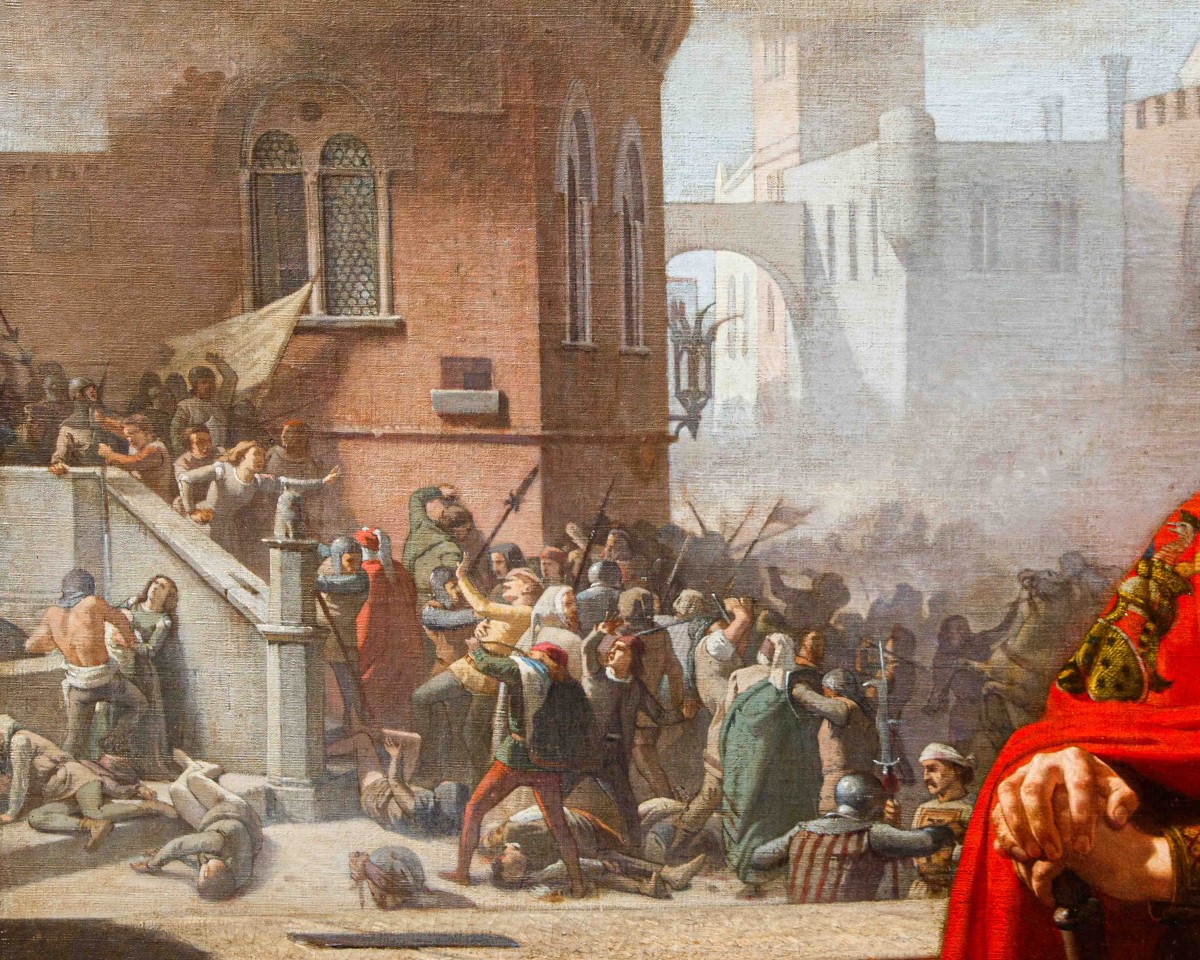
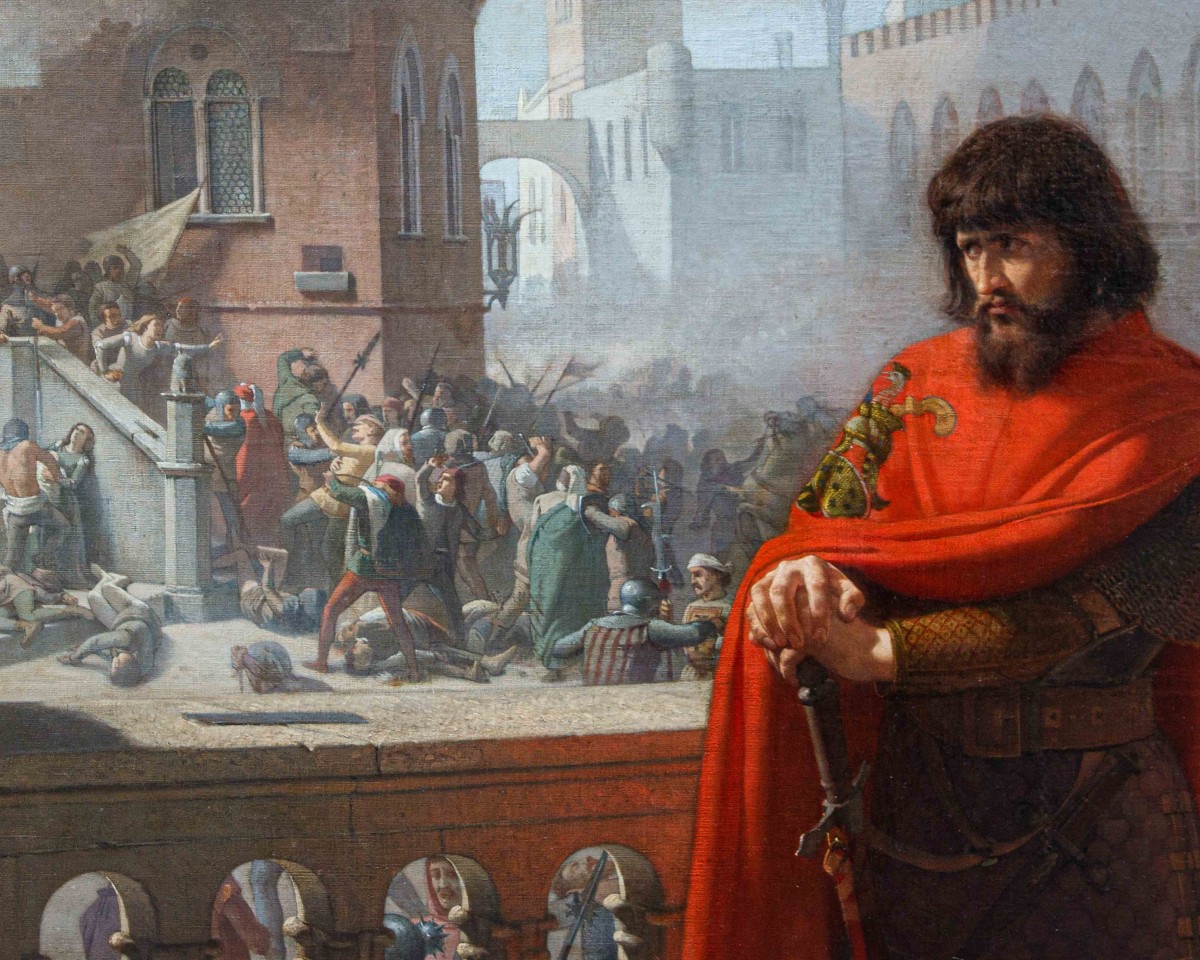
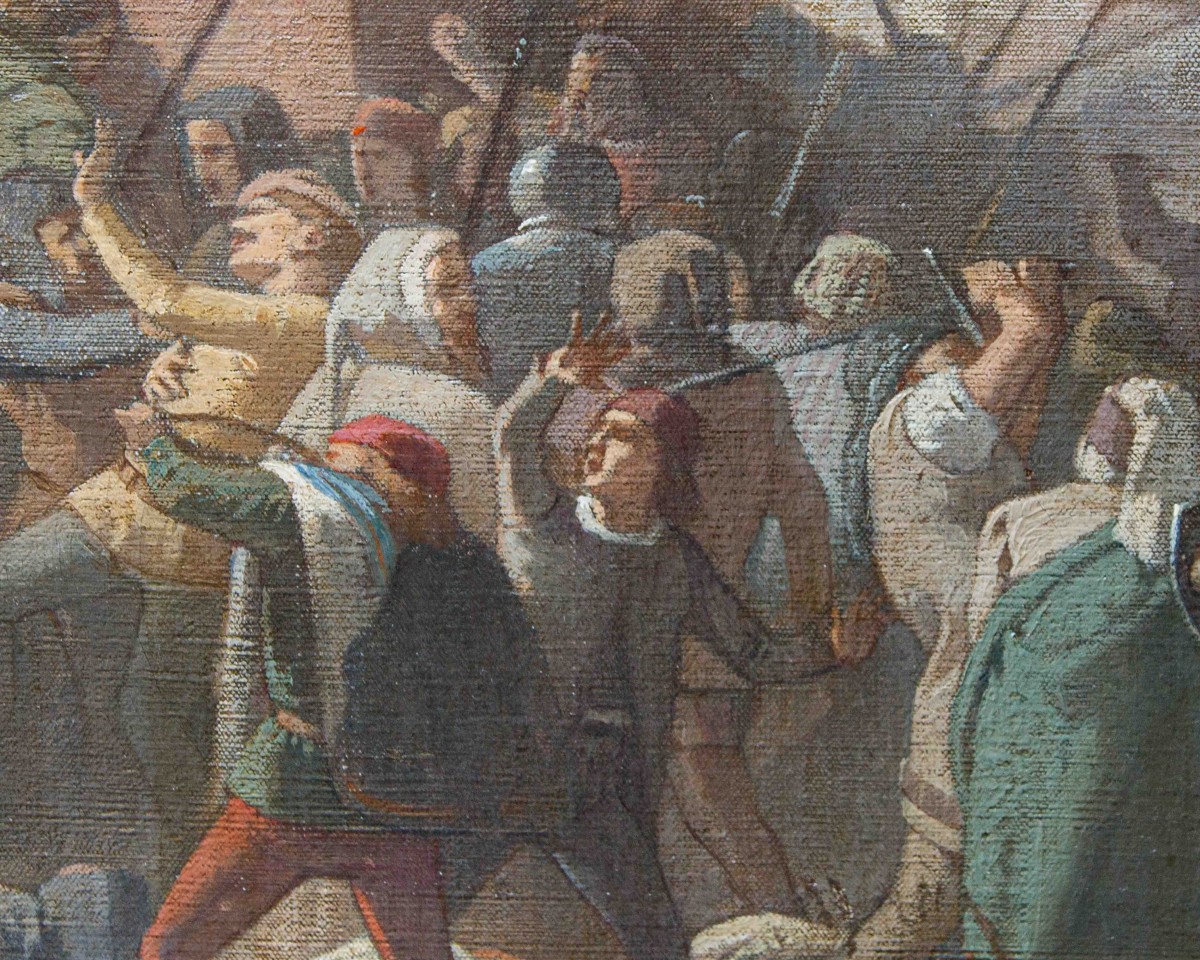
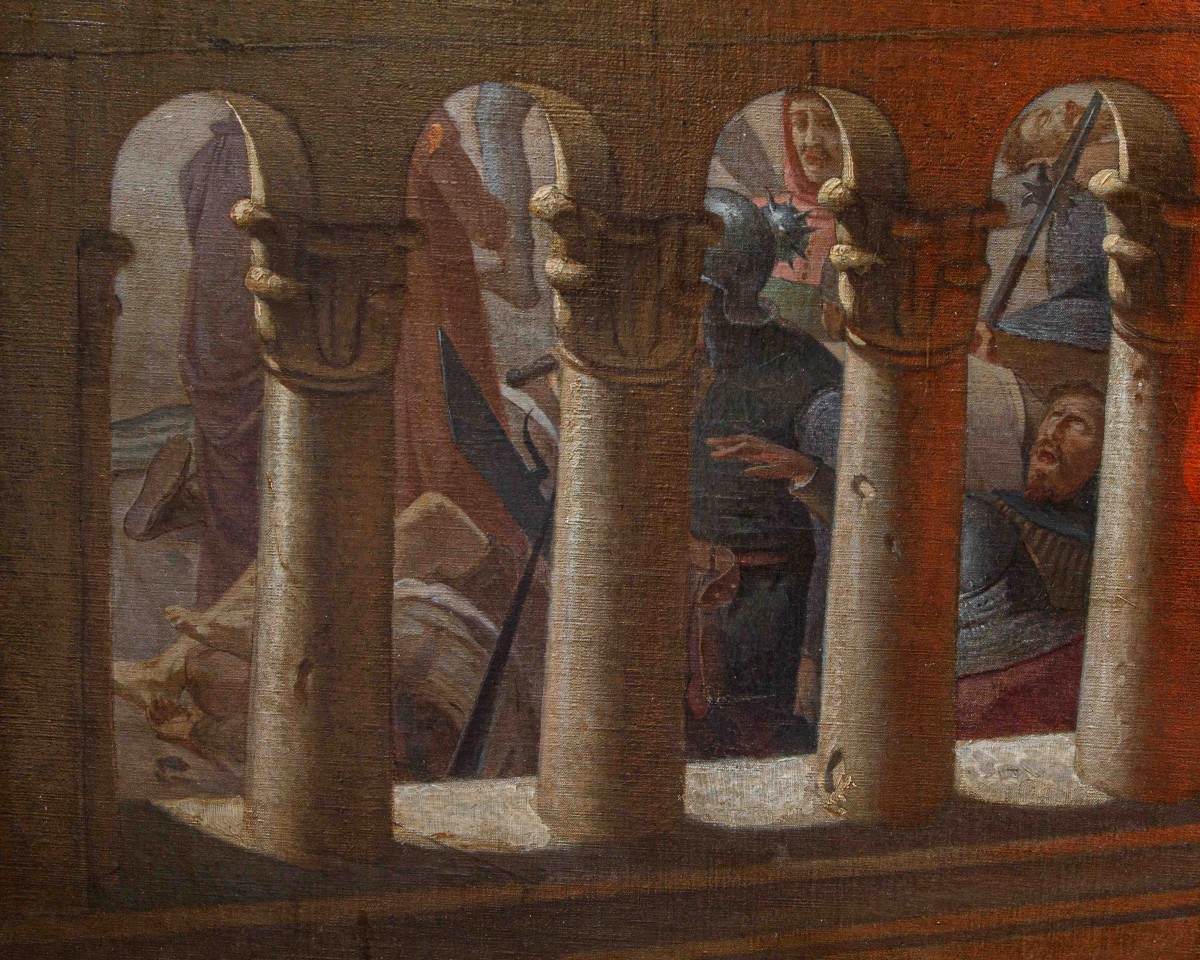
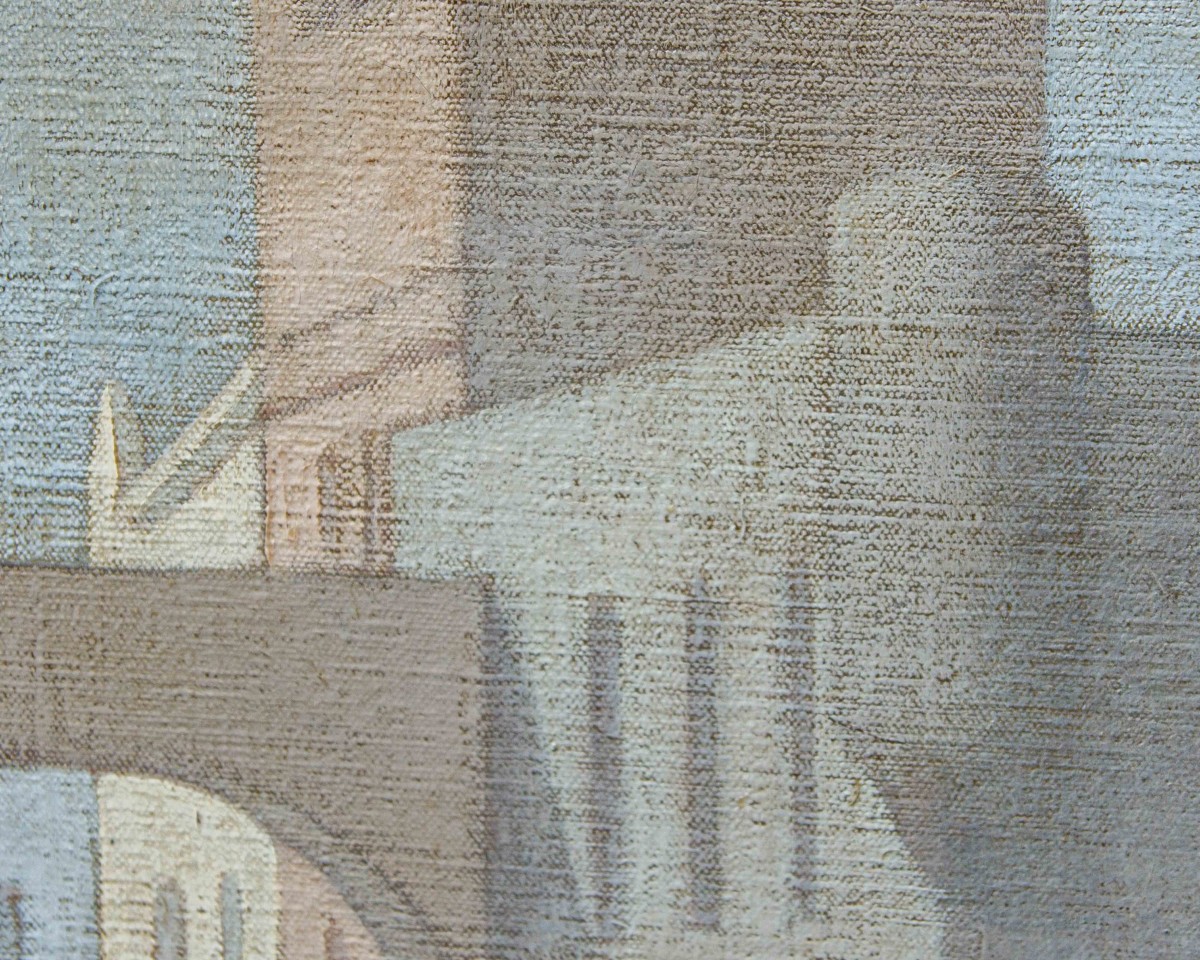
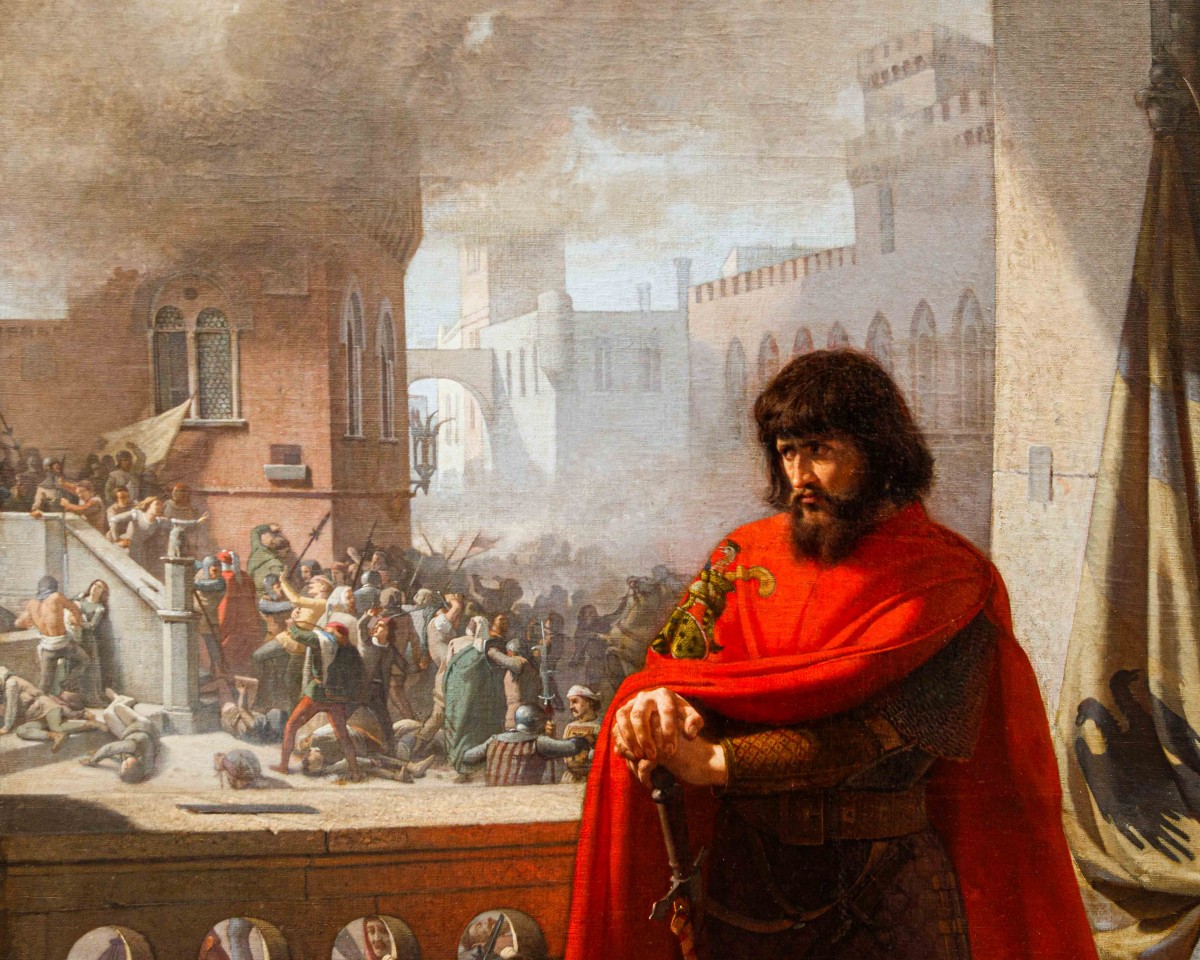
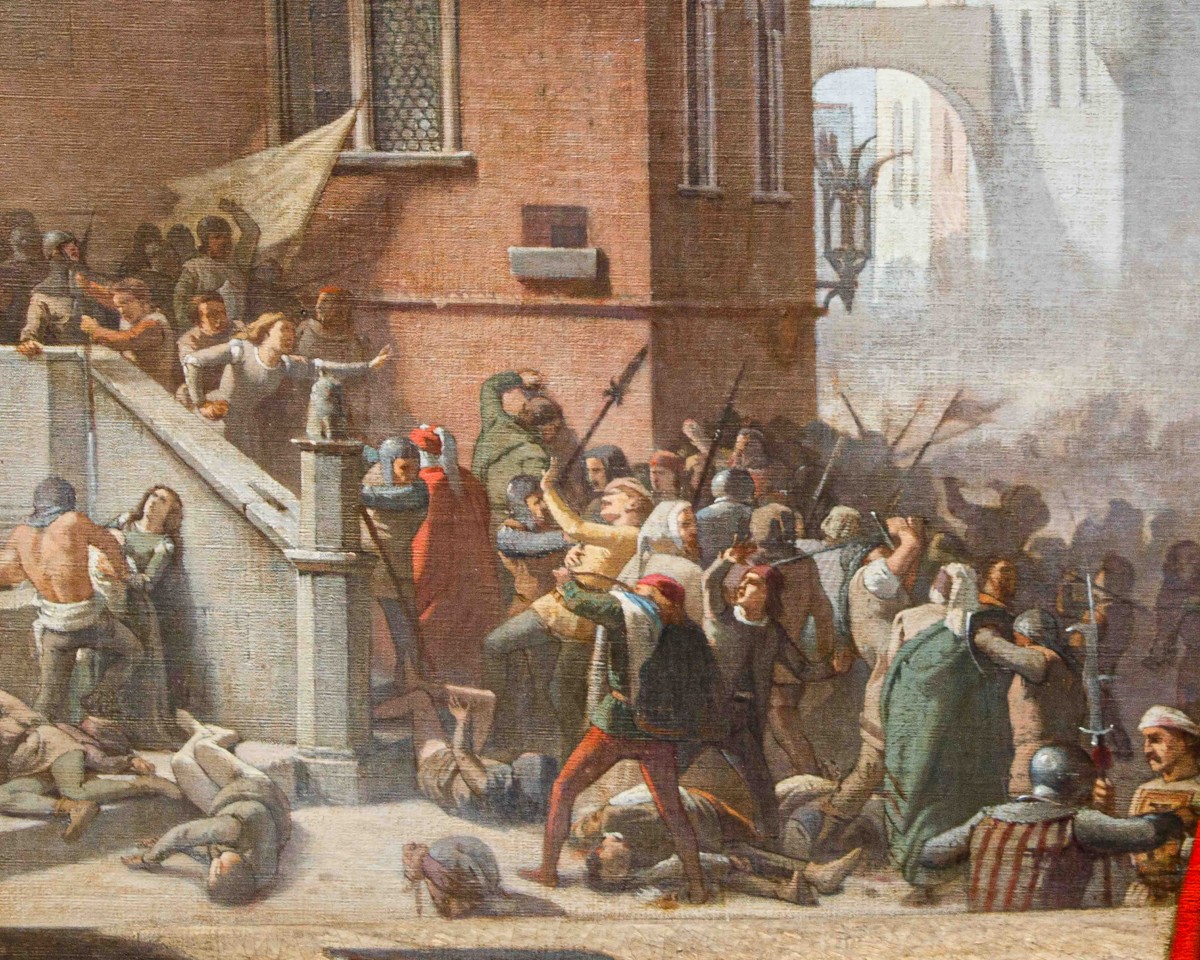
Among the 120 works presented at this major exhibition was Ezzelino da Romano Contemplates the Massacre of Vicenza. Painted in 1863 and exhibited for the first time at the Turin Promotrice that same year (bearing the original exhibition number 218, still visible in the lower right margin of the canvas), the work features an unusual iconographical theme: the destruction of the city of Vicenza at the hands of the troops of the Swabian Emperor Frederick II. The backdrop behind the figures reveals some of medieval Vicenza's most distinctive landmarks, including the Bissara Tower—the symbol of the city, erected between 1211 and 1229 by order of the noble Bissari family—the Verlato Tower, and the Loschi Tower.
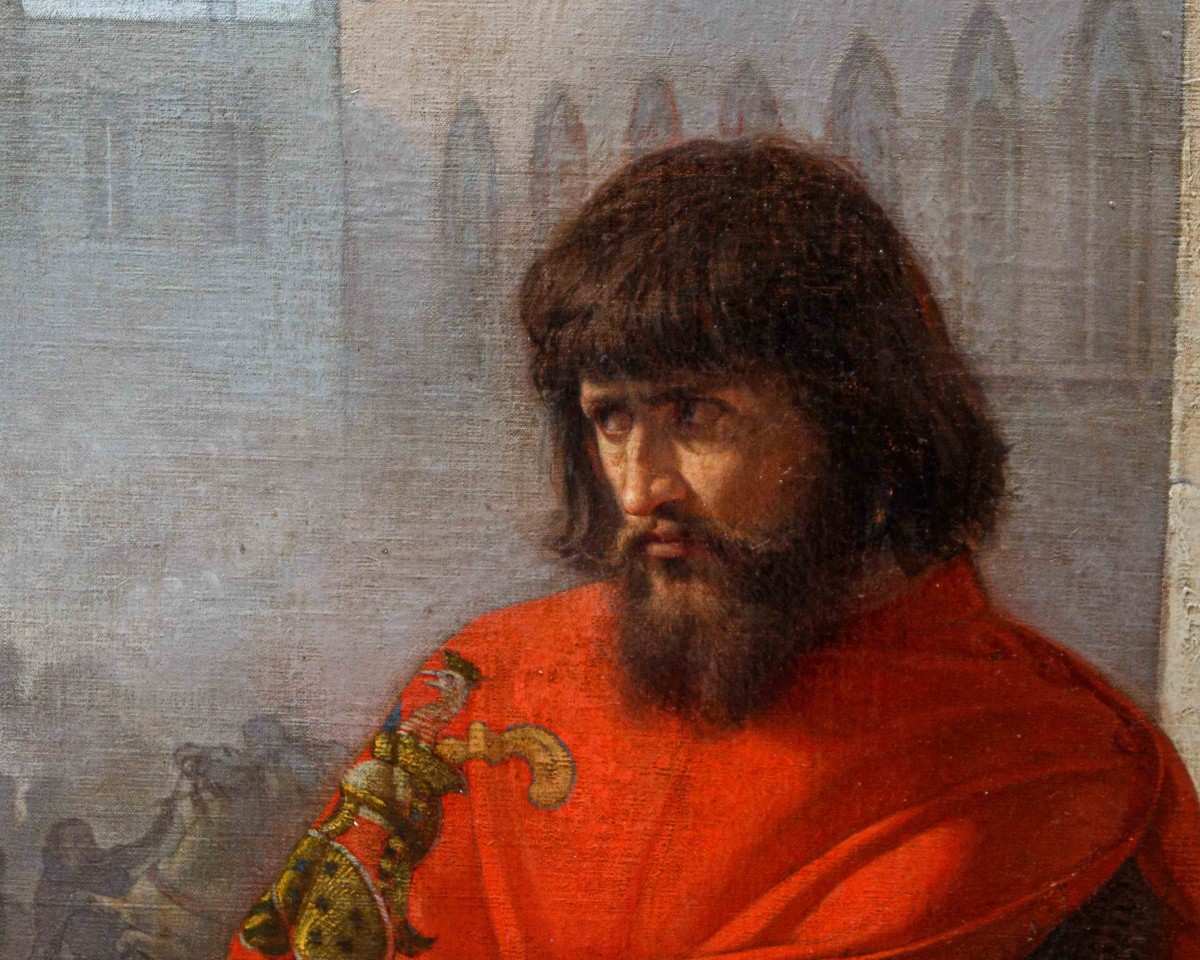
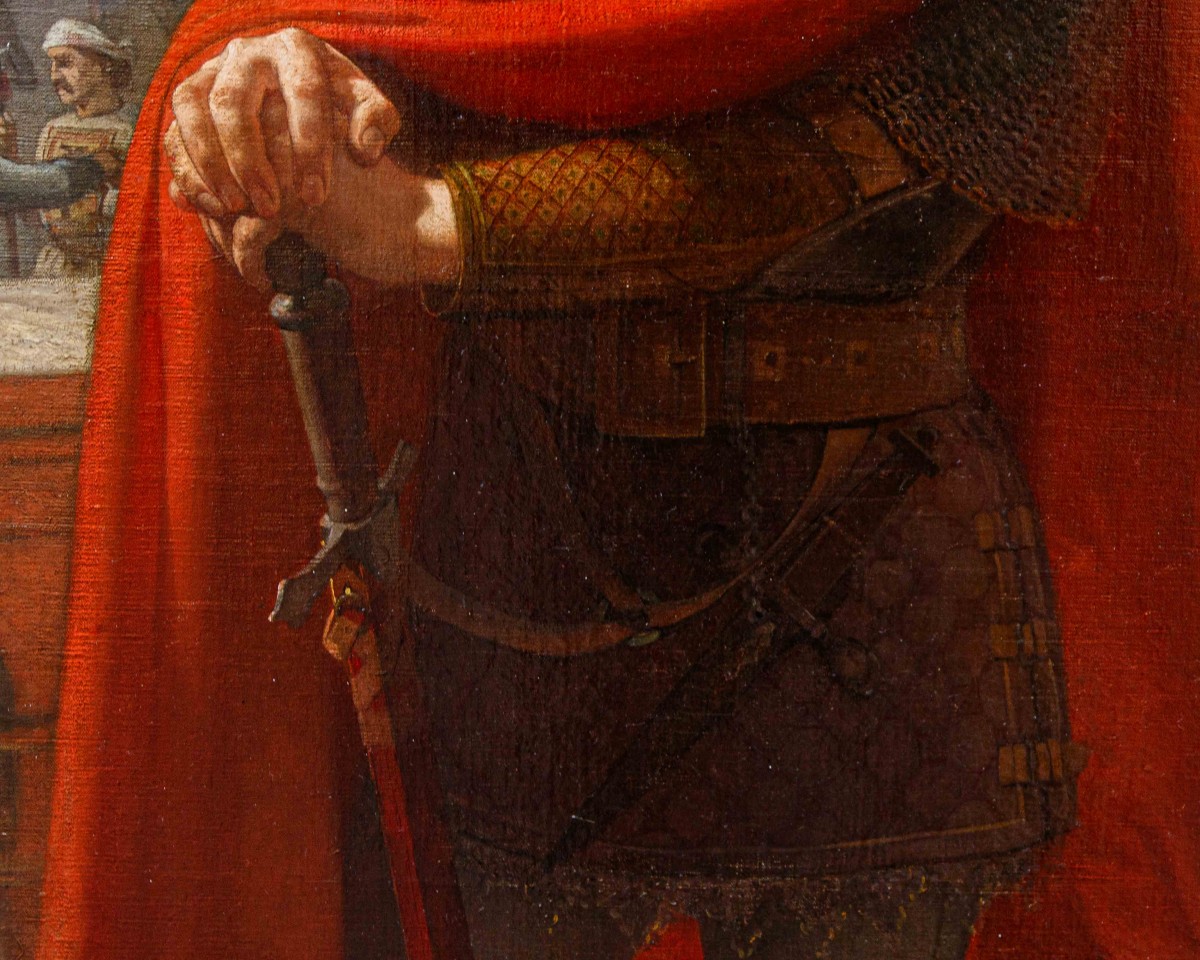
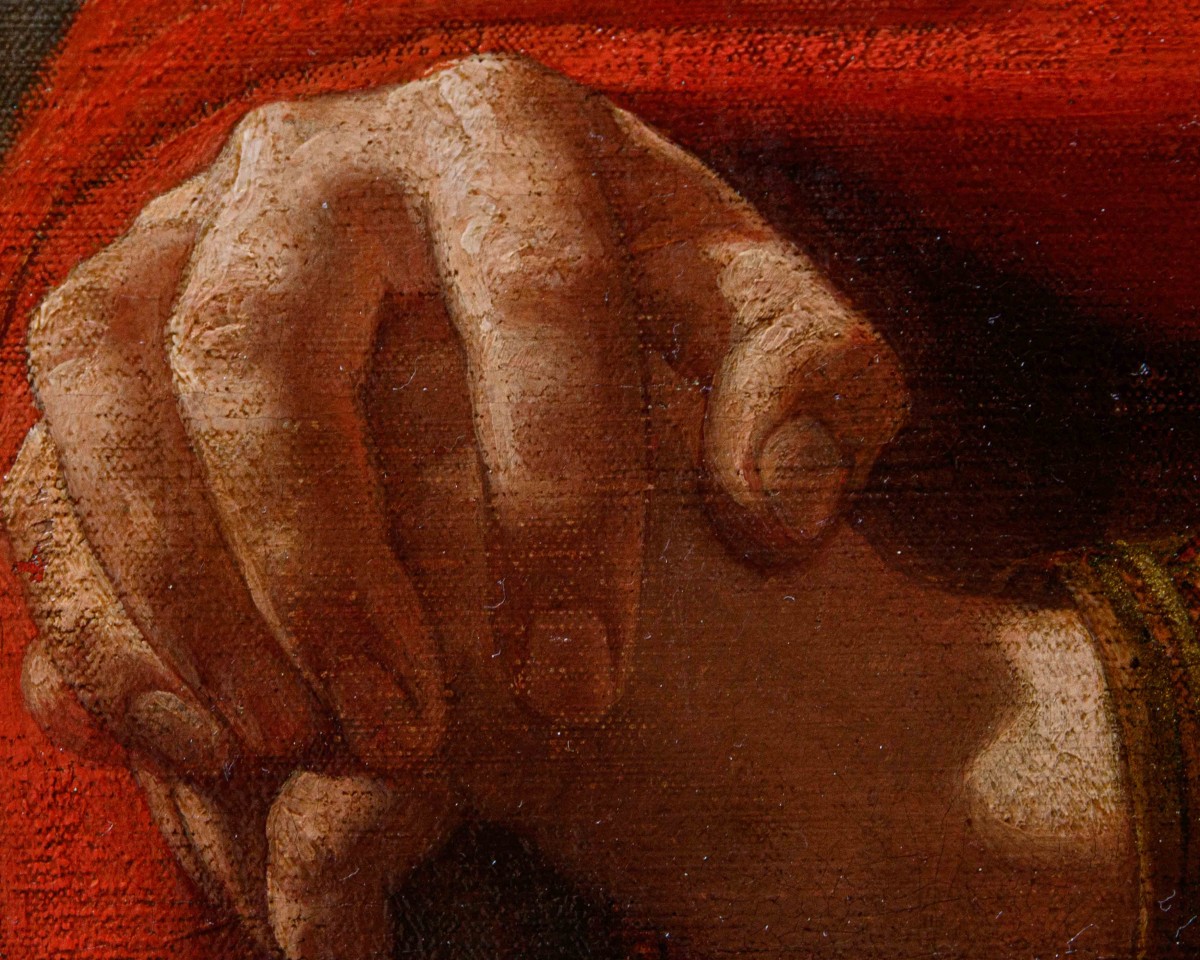
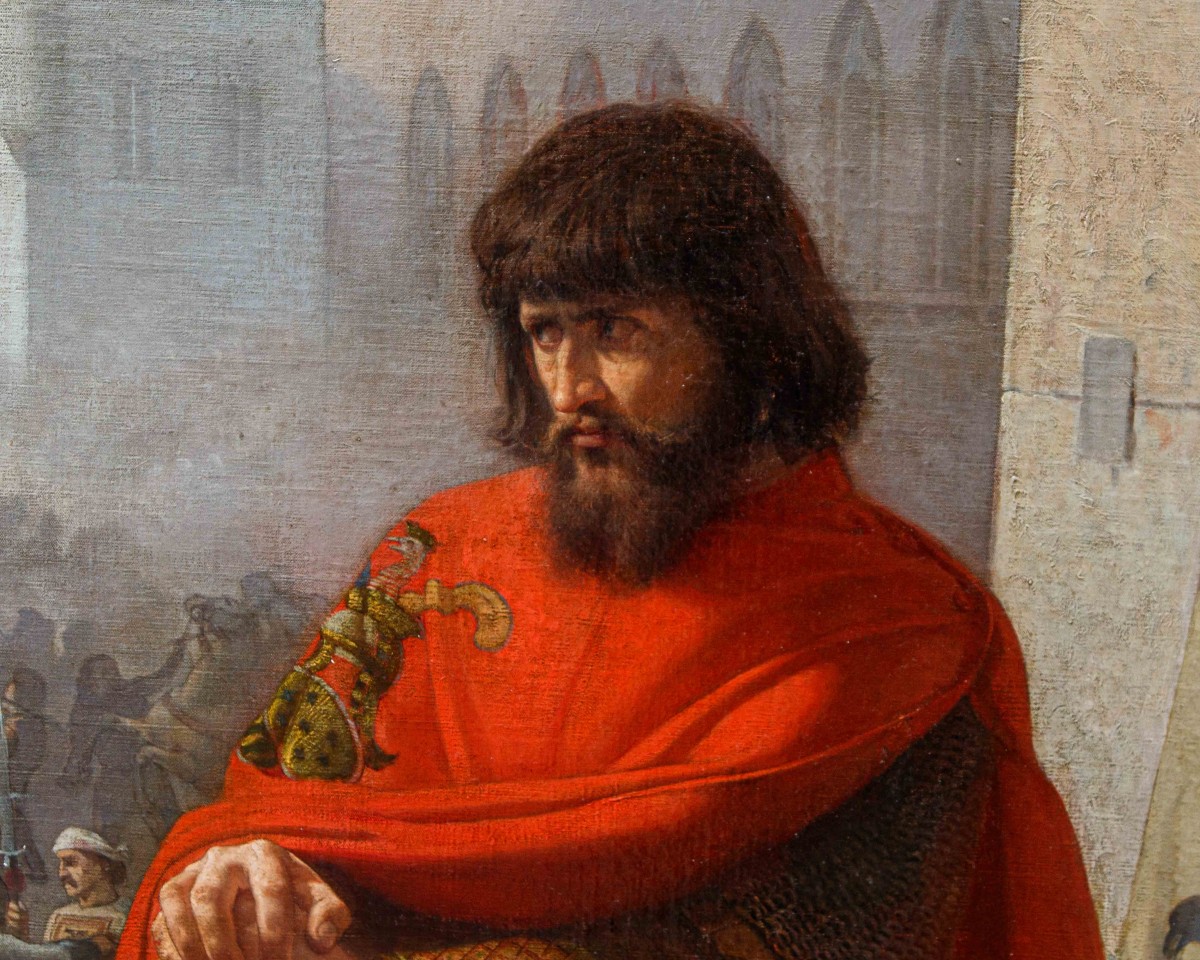
According to the pro-imperial chronicler Gerardo Maurisio, it was Ezzelino da Romano himself who urged the emperor to capture Vicenza. The fall of the city, following a violent and bloody siege that culminated on All Saints' Eve in 1236, paved the way for Ezzelino's rise to power as governor of the Venetian city on behalf of Frederick II, deposing Marquis Azzo II d'Este. For this reason, Ezzelino appears satisfied as he watches the grim spectacle beneath the Loggia del Capitanato, draped in red and clad in shining armor, marking the beginning of his ascent up the socio-political hierarchy.
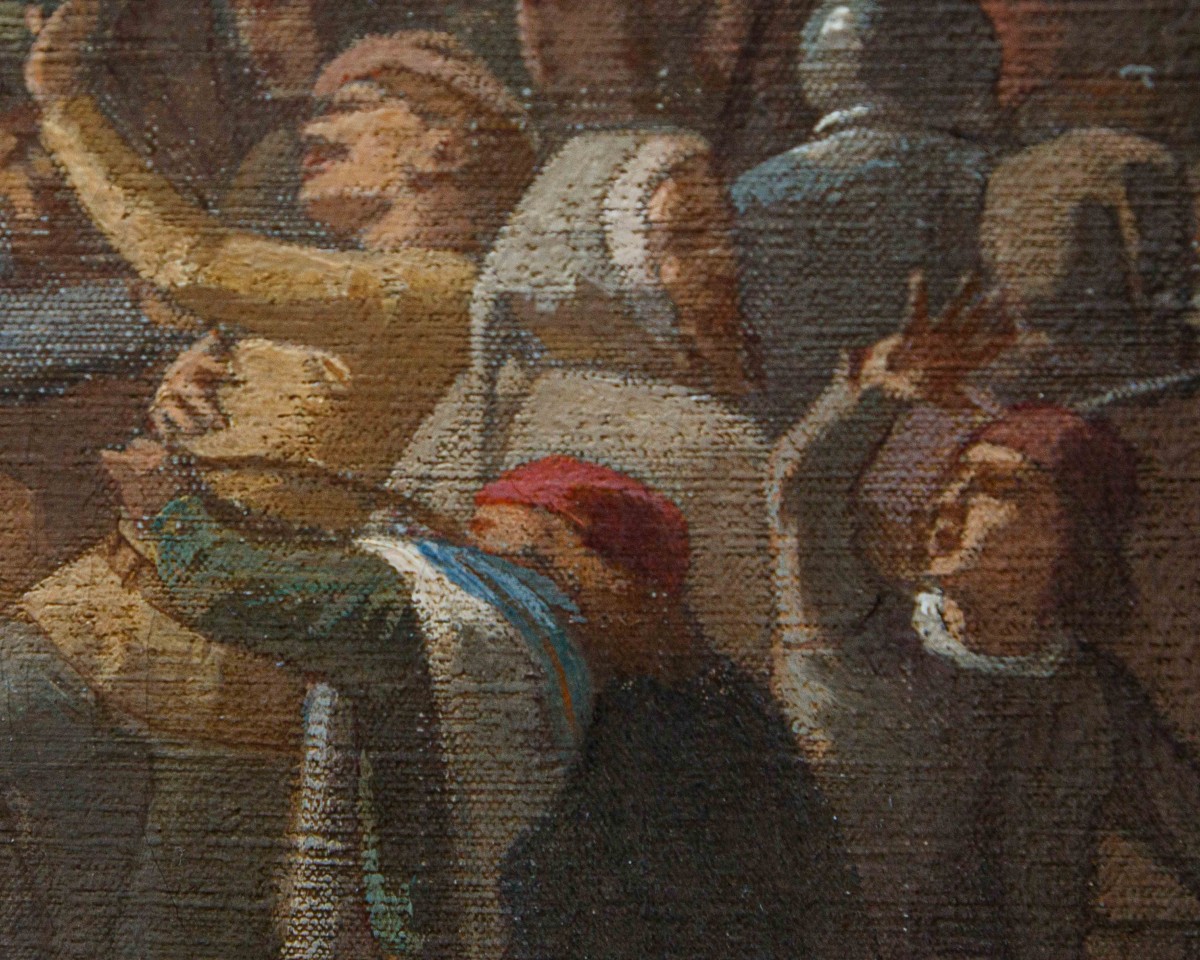
The brilliant tones of the canvas, combined with its crowded, multi-layered composition of figures, rival the works of the leading figures of Italian Romanticism, such as Francesco Hayez (1791–1882), Giuseppe Molteni (1800–1867), and Angelo Inganni (1807–1880). A work of this caliber confirms the words of Bernardi, one of the painter's foremost experts, who described Delleani as "the most instinctive and impetuous painter of modern Piedmont".
Delevery information :
Les frais d'expédition seront calculés au moment de la commande en fonction de la destination, des dimensions et du poids du tableau, ainsi que de l'assurance couvrant la valeur totale de l'œuvre.
For paintings purchased from abroad: following payment, the application process to obtain the export license (ALC - Attestato di Libera Circolazione) will be initiated. All antiques shipped abroad from Italy require this document, which is issued by the Ministry of Cultural Heritage. The procedure may take 3 to 5 weeks from the date of request; therefore, the painting will be shipped as soon as the document is obtained