Offered by Schoppmann Art and Antiques
REQUEST INFORMATION
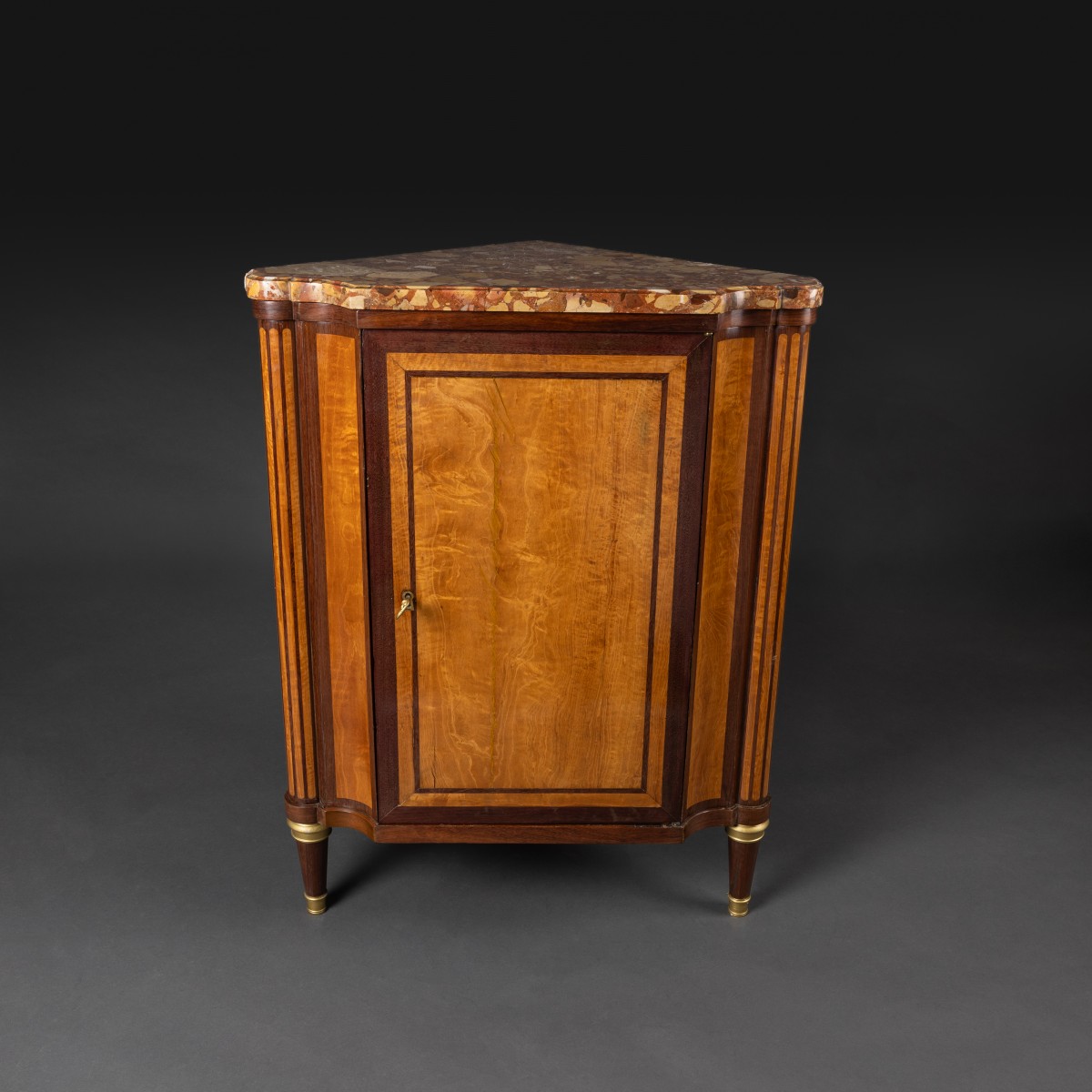
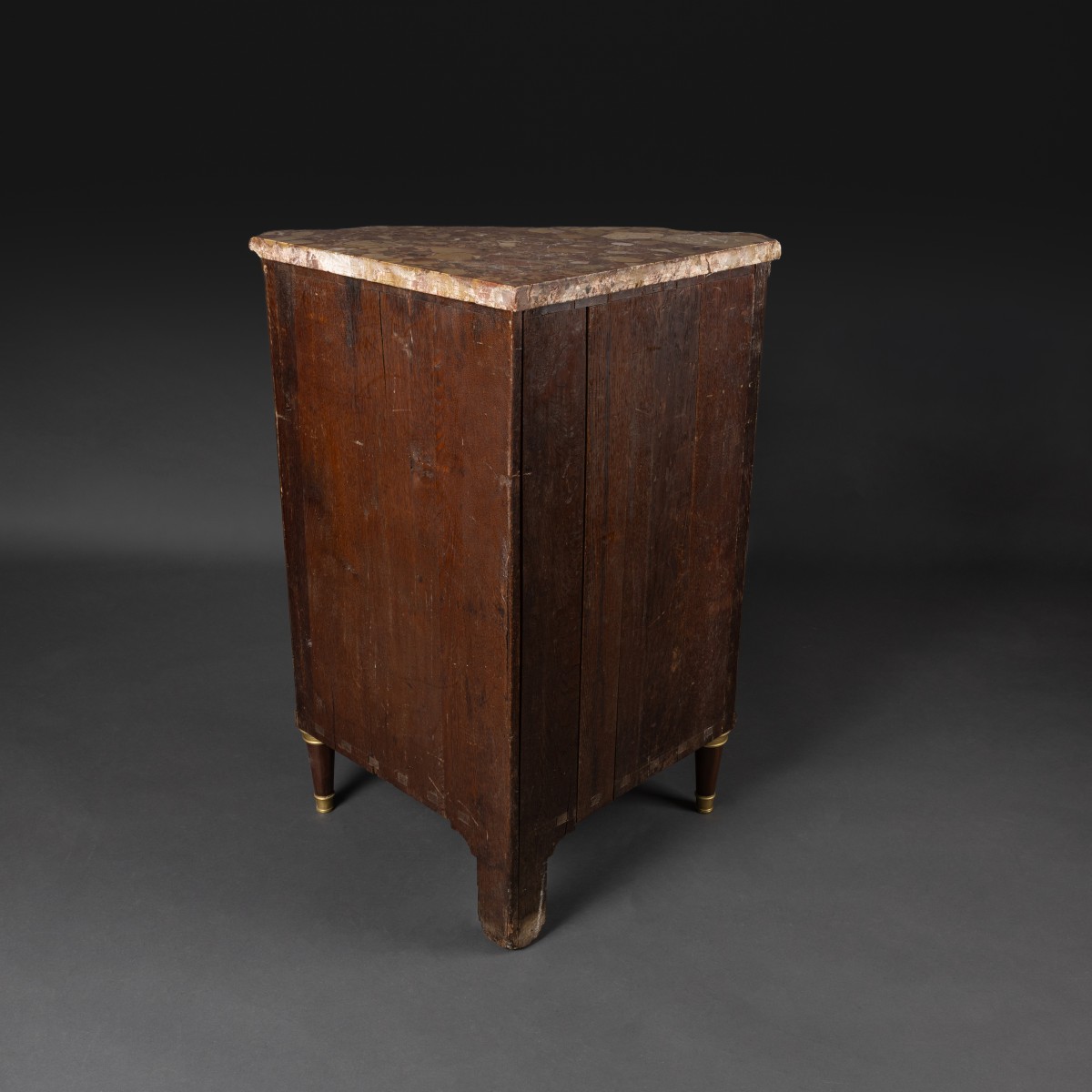
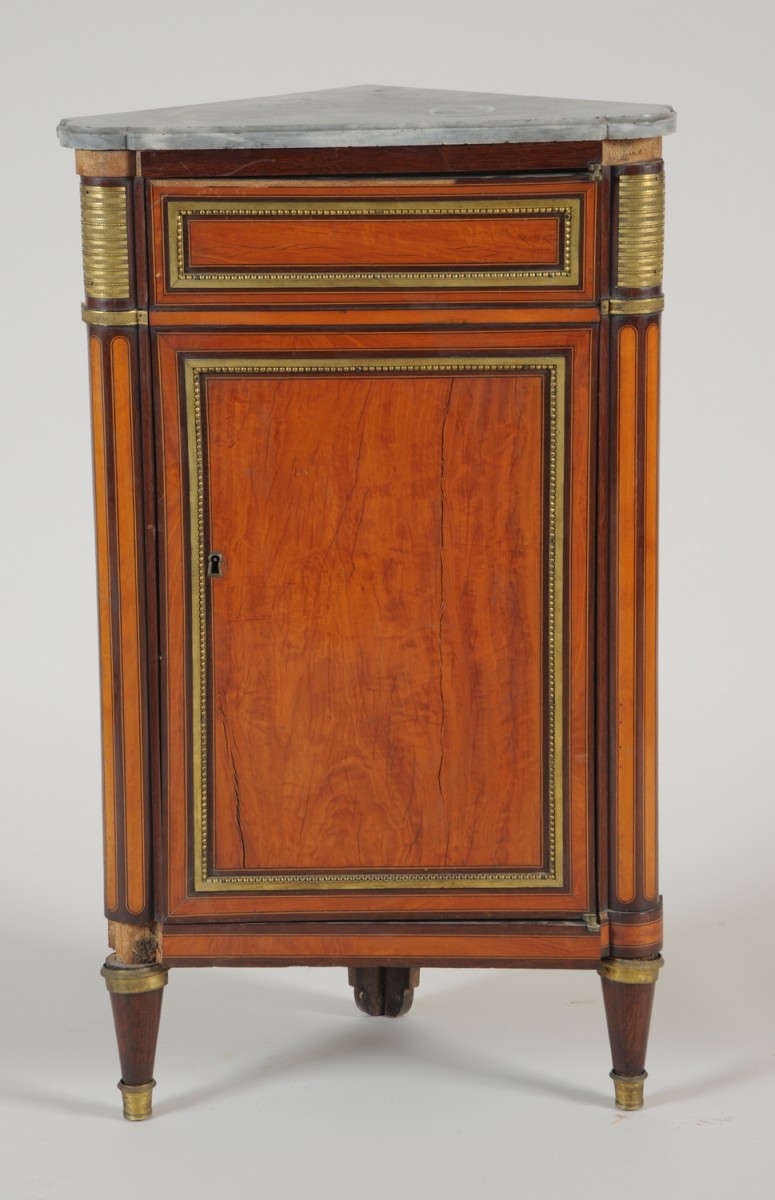

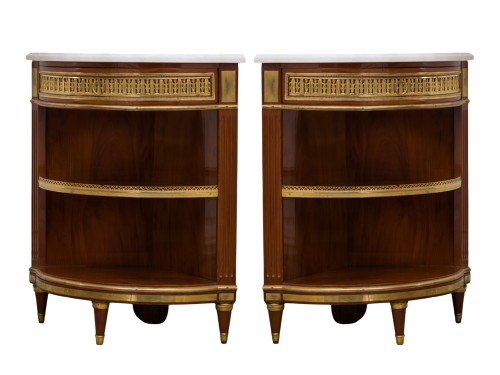
Lemonwood, mahogany, amaranth, oak frame
Unmarked, attributed to Etienne Levasseur
Dimensions: H. 88; W. 52 (cm.)
Paris, circa 1790
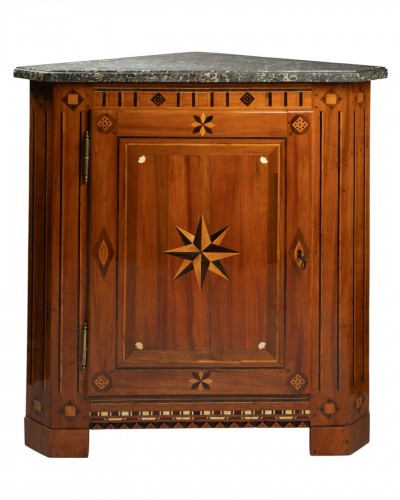
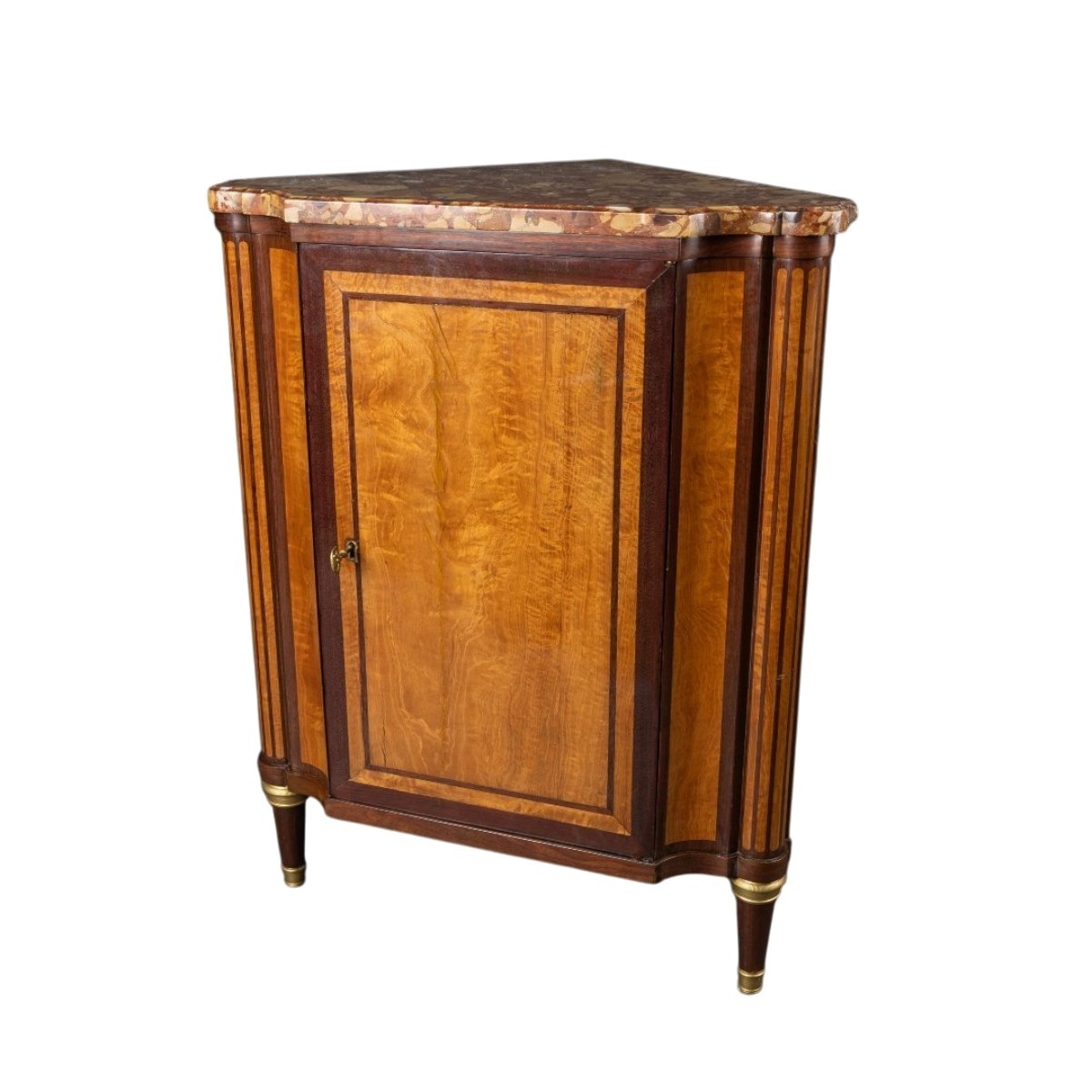
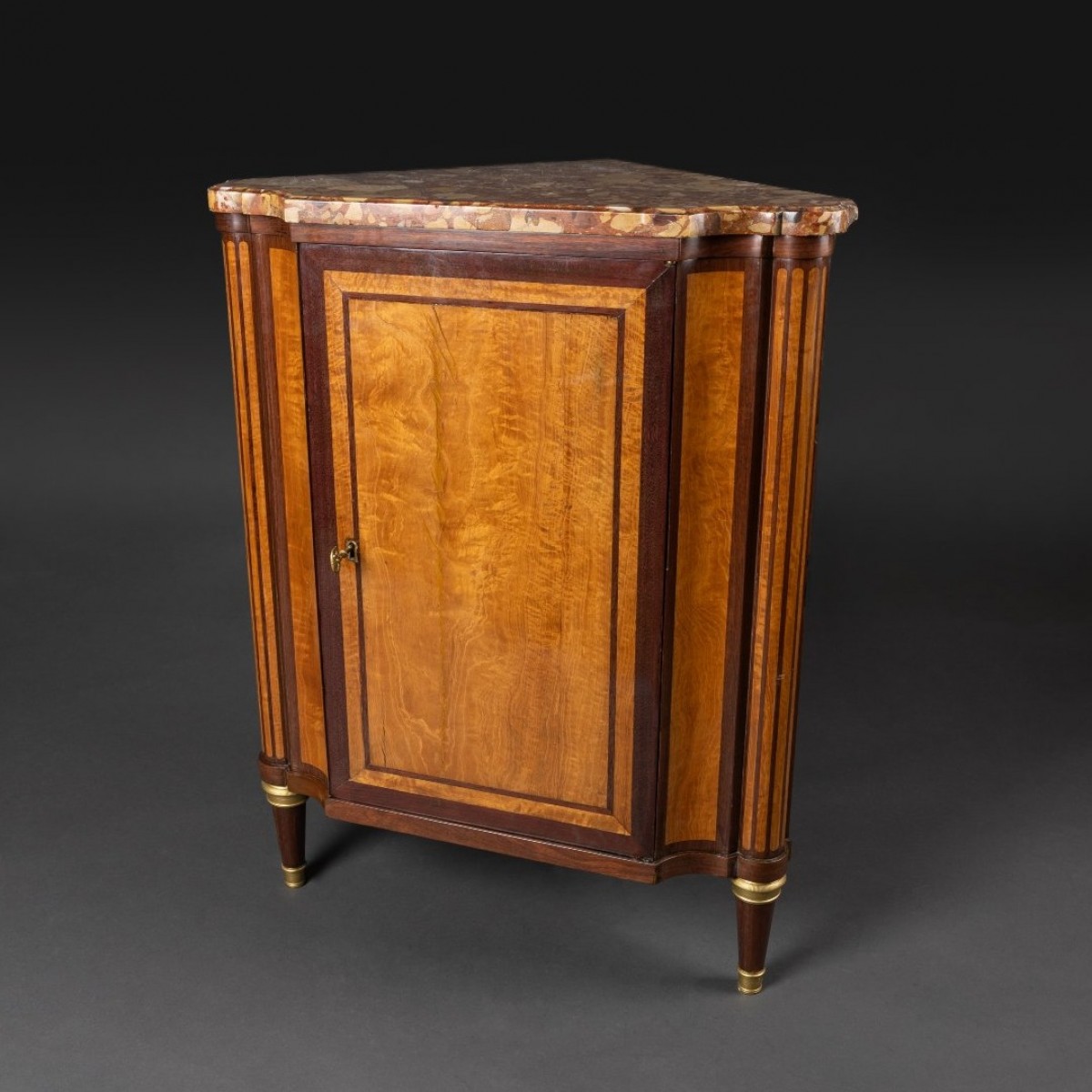
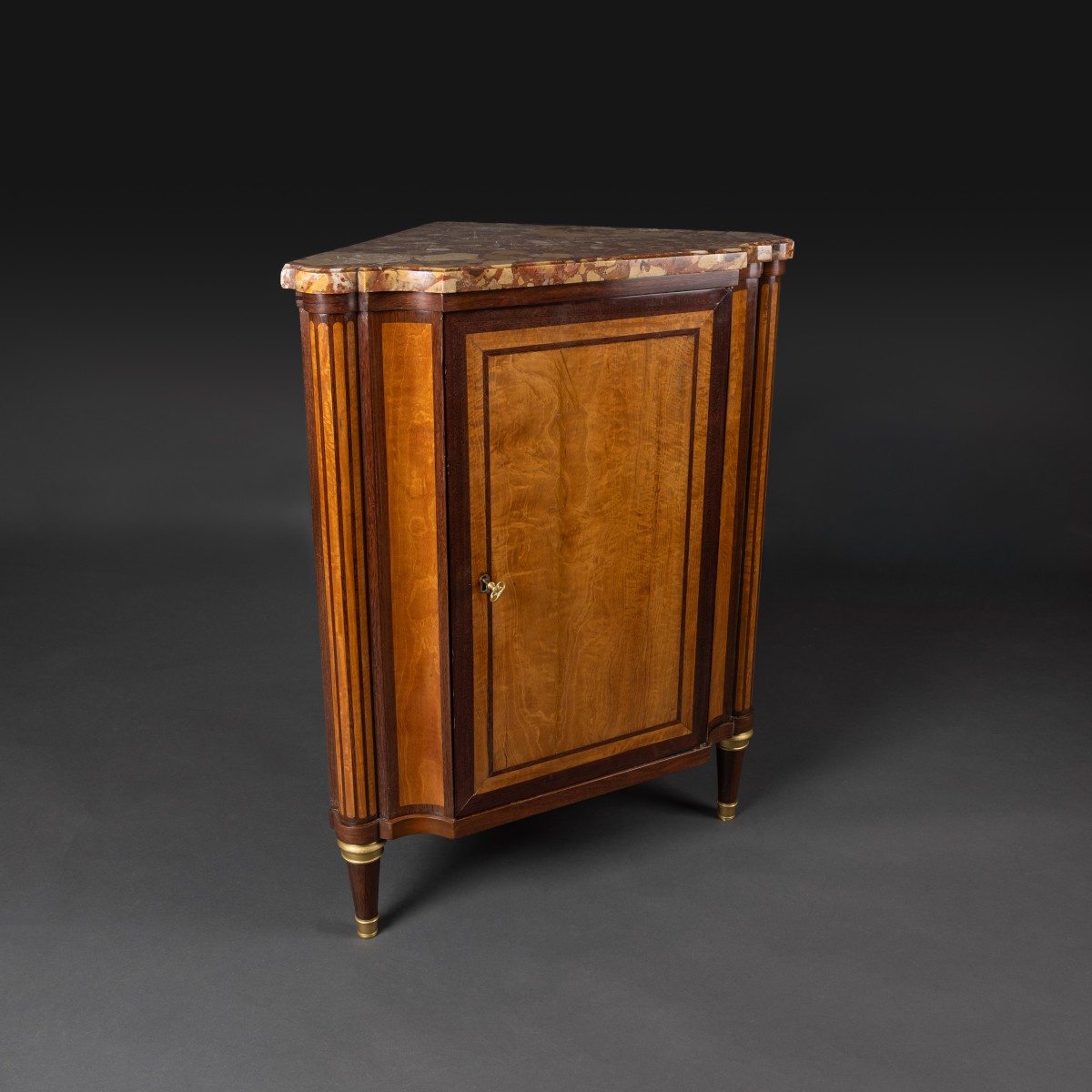
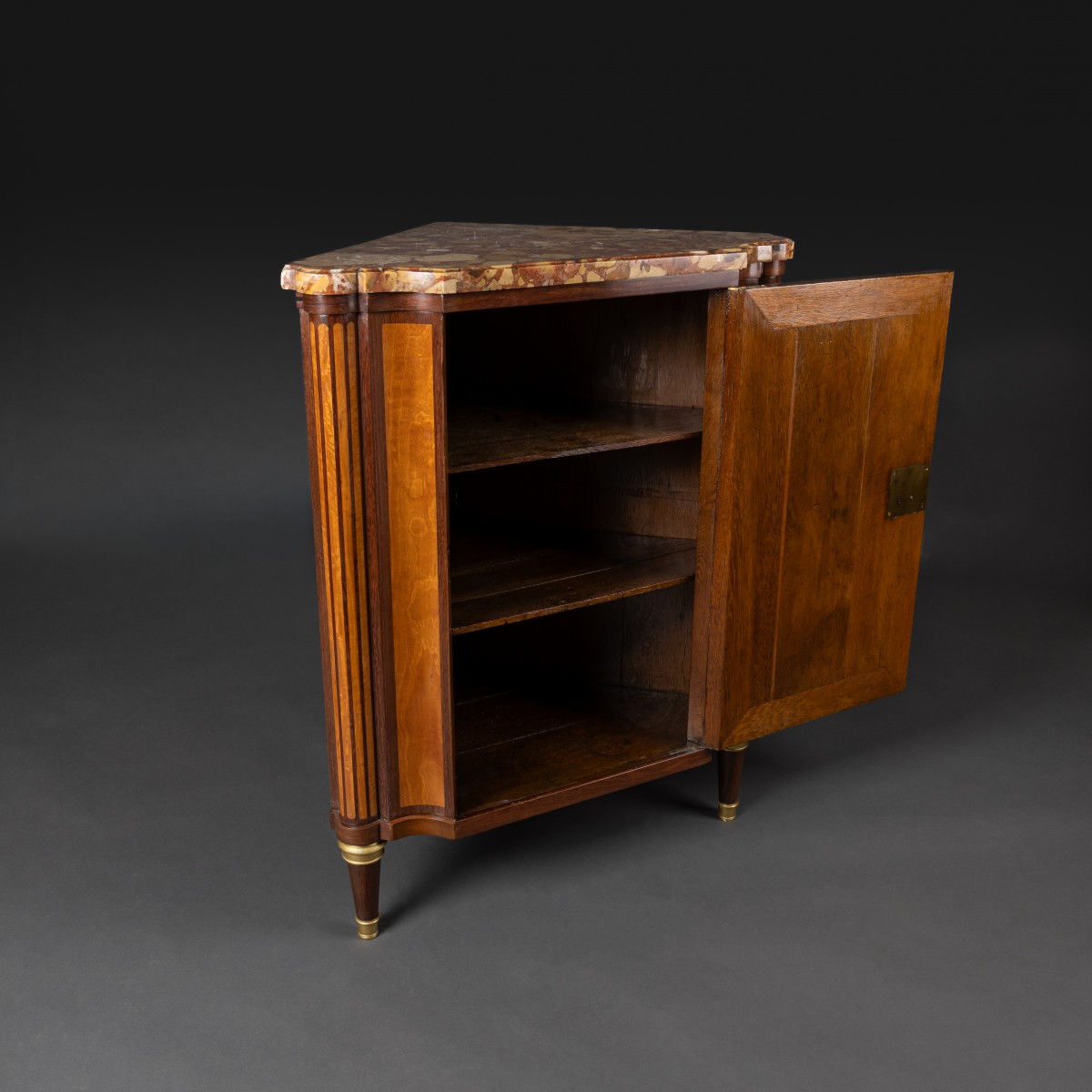
Corner cabinet opening to the right, with a single door. It rests on tapered front legs with gilded bronze rings. Smooth front framed by two integrated columns with simulated fluting. Topped with a grooved marble panel.
Parisian refinement at the end of the Ancien Régime
A strong trend, imported from England, became widespread in Paris for the production of furniture made of mottled or flamed mahogany during the 1780s. A little later, almost during the Revolutionary period, an elitist trend toward the use of lemonwood and its combination with amaranth or mahogany is also evident in a collection of chairs and furniture.
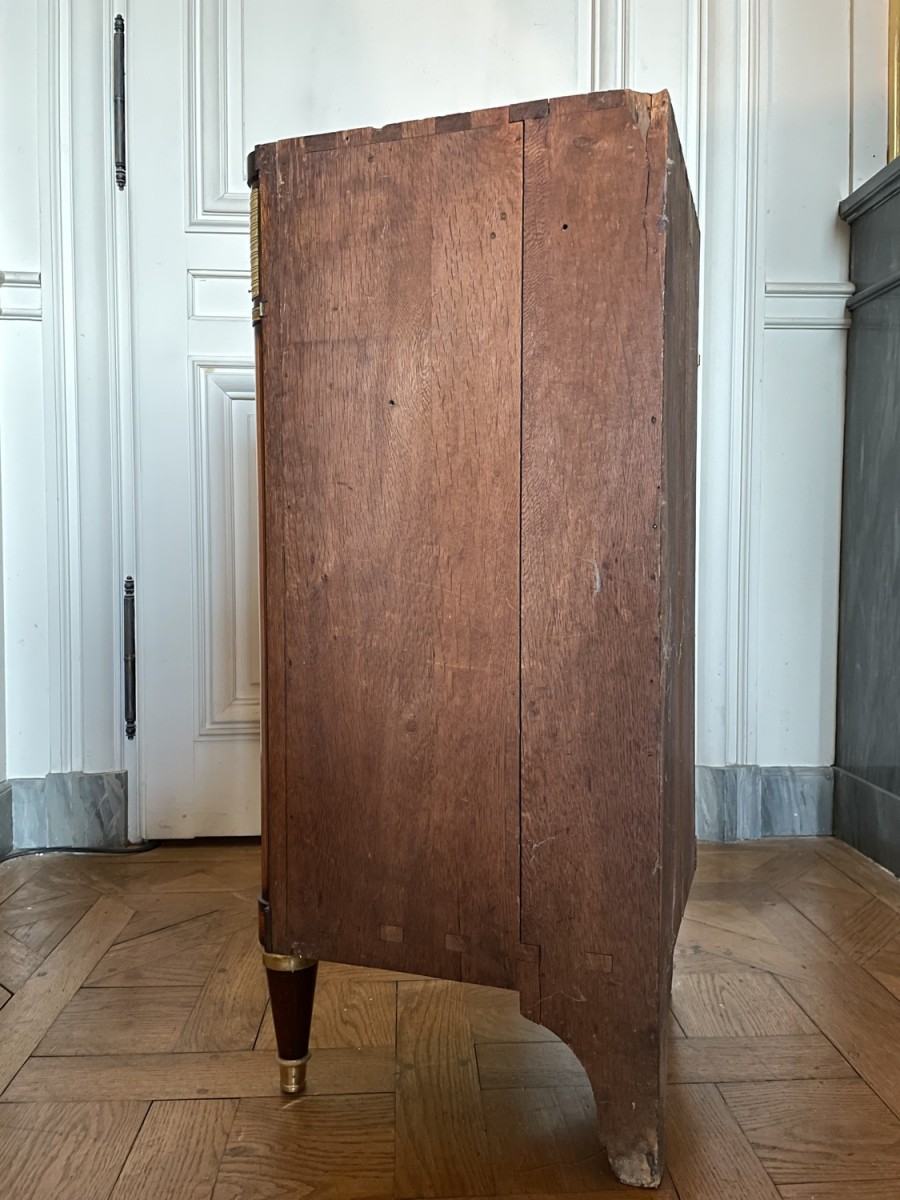
Naturally understated and light in comparison to the formal and luxurious marquetry pieces, this piece is similar to a corner cabinet currently on display at the Palace of Versailles, which was part of the furnishings of the Mesdames at Versailles or Bellevue. This piece is on loan from the Mobilier National [GME 10361], originally delivered as a pair and matching a drop-leaf secretary desk. The set was likely purchased around 1789 and seized from the haberdashers Darnault in 1794. The secretary desk and this corner cabinet have since been in public collections. It is worth noting that the construction of our piece’s frame is remarkably similar to that of the royal furniture, suggesting they were crafted in the same workshop.
We should also mention an important cylindrical secretary desk stamped “Bernard Molitor,” which was secondhand supplied by Jacob Desmalter to furnish Empress Marie-Louise’s boudoir at the Château de Saint-Cloud [Mobilier National, GME 10907].
Étienne Levasseur
Étienne Levasseur, born in 1721, specialized in Boulle marquetry. After working for one of André-Charles Boulle’s sons, he set up shop on Rue du Faubourg Saint-Antoine as a master craftsman. He became a master cabinetmaker in 1767 and subsequently worked for the Garde-Meuble de la Couronne, crafting furniture for the palaces of Versailles, Fontainebleau, and Saint-Cloud.
He is particularly renowned for his restorations and recreations of Boulle furniture, as well as for his own neoclassical pieces, notably those in mahogany. His copper and tortoiseshell furniture is often of the highest quality, featuring elegant forms and finely chiseled bronze work. Some of his works are housed at the Palace of Versailles and Windsor Castle.
His workshop was later taken over by his son Pierre-Étienne, and then by his grandson Levasseur Jeune, who carried on his craftsmanship and the workshop’s traditions.
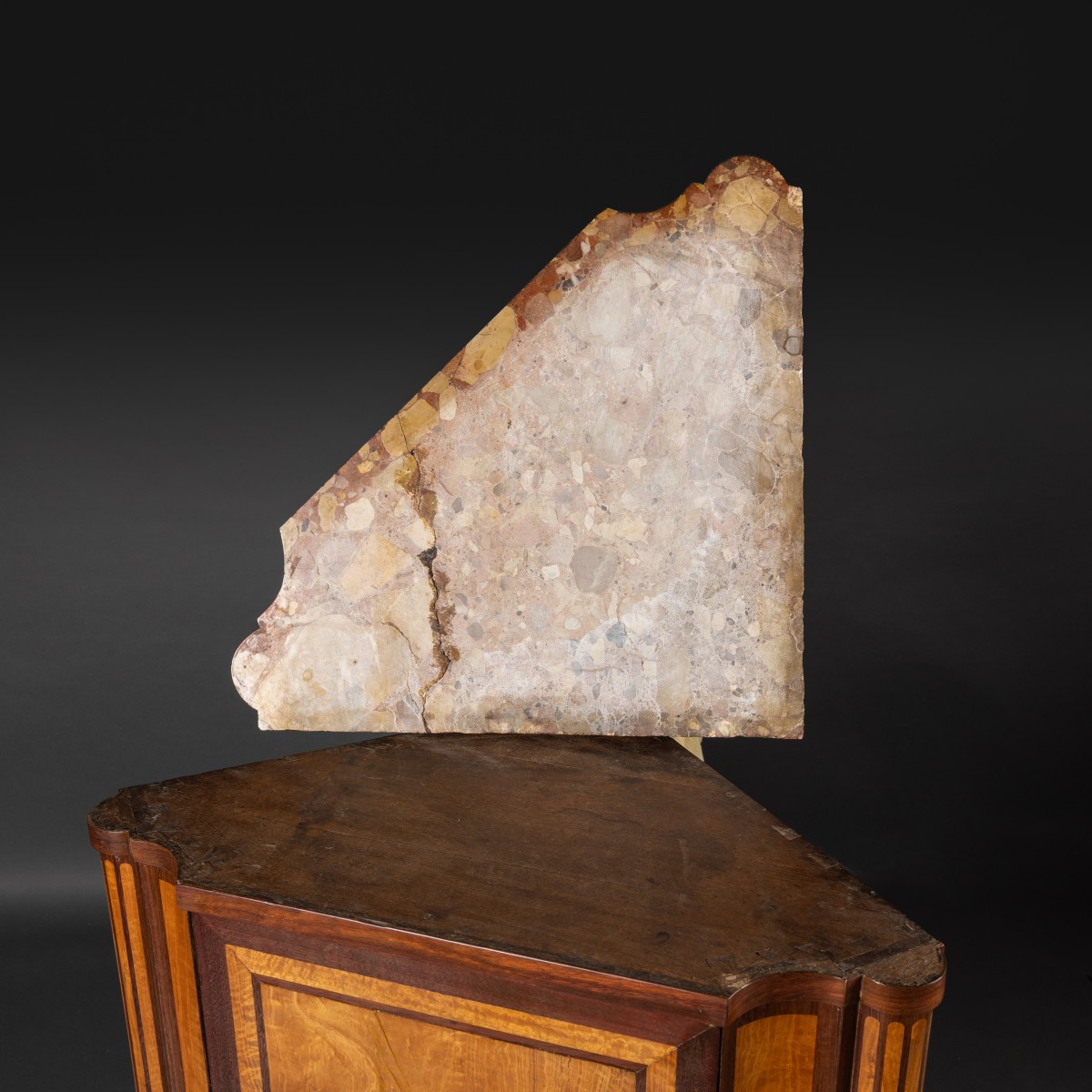
Condition report: Fully restored by our workshops, with a filled-and-waxed finish. An earlier restoration to the marble top.
Delevery information :
All our objects are visible in Paris. Worldwide delivery by DHL.