Offered by Antichità Castelbarco

Stefano Magnasco (Genoa, 1635–1673) Workshop
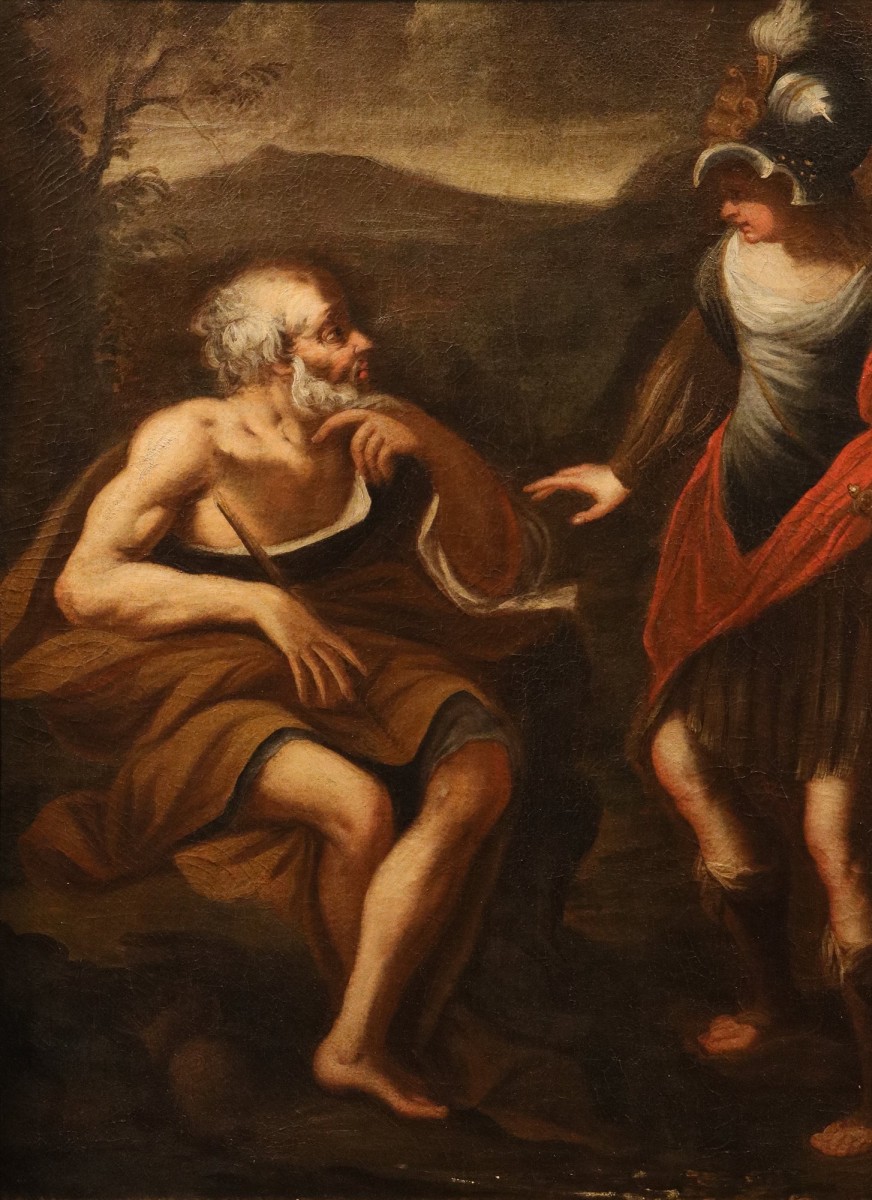
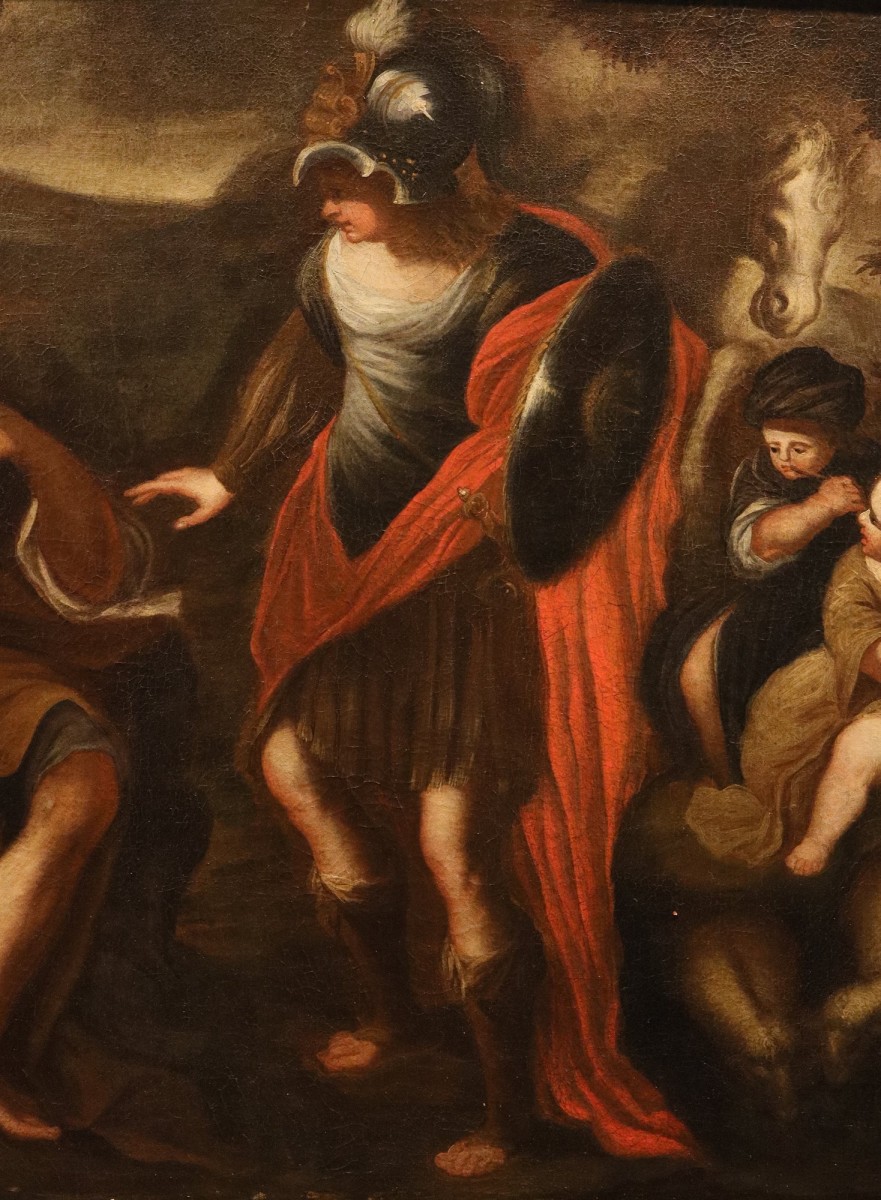
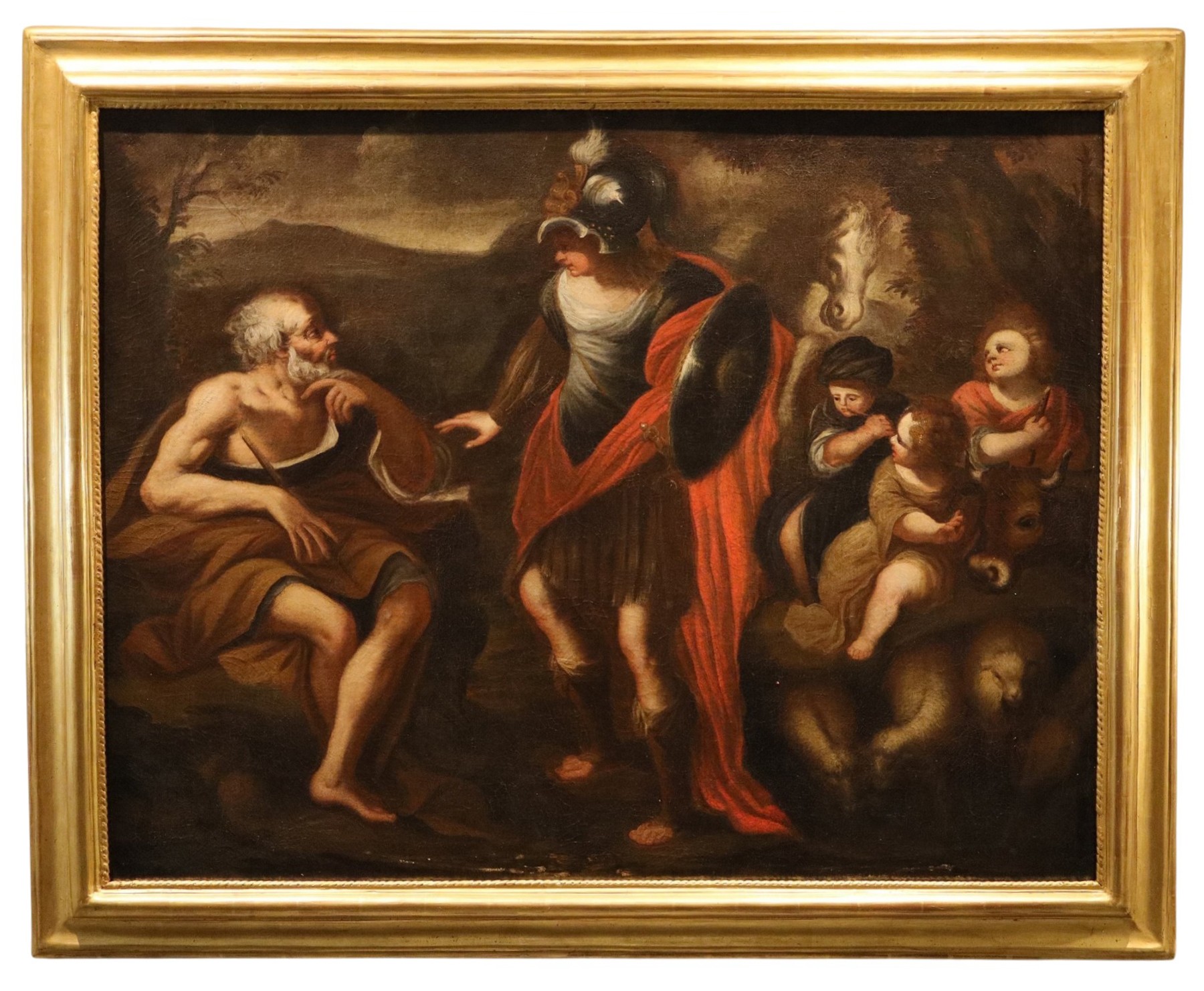
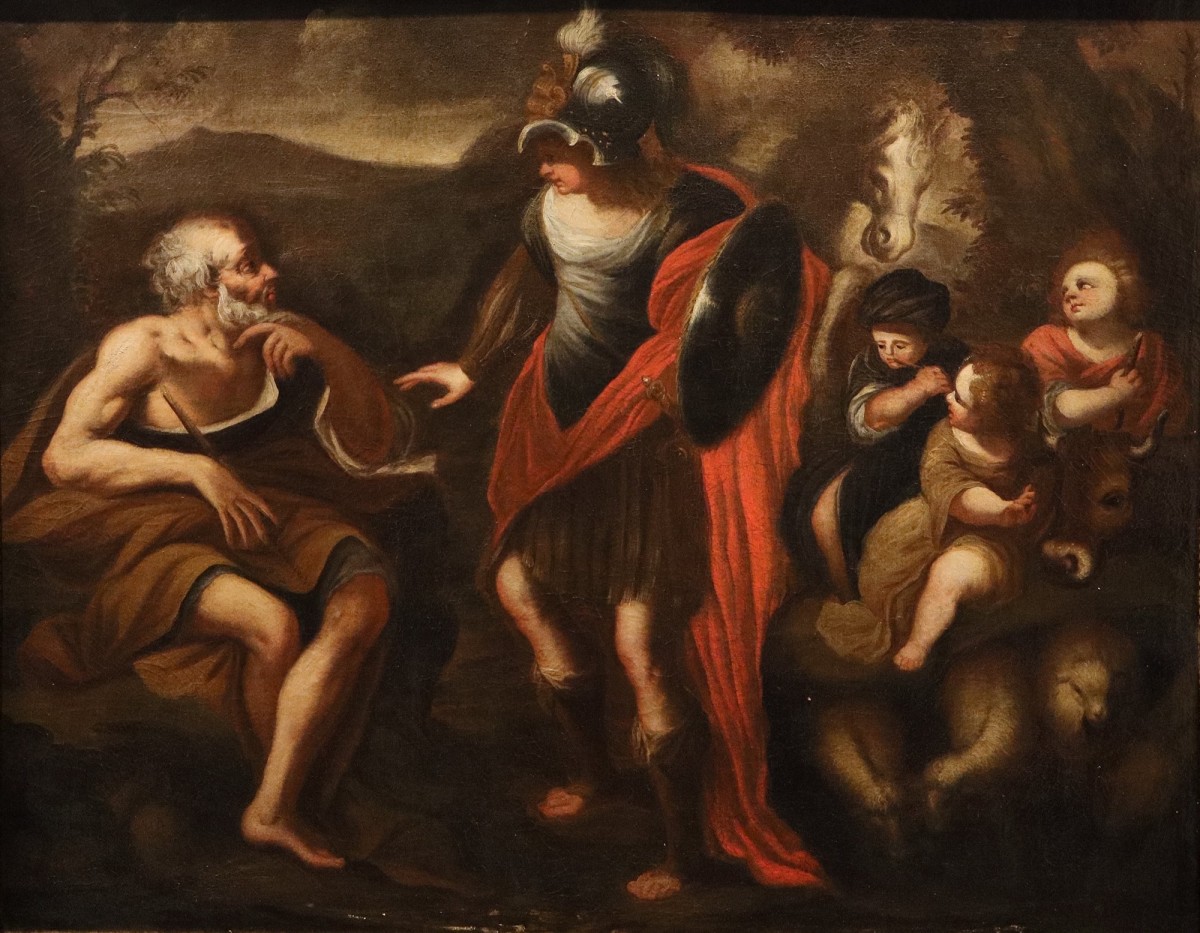
Erminia Among the Shepherds
Oil on canvas 97 x 122 cm. Framed: 113 x 137 cm.
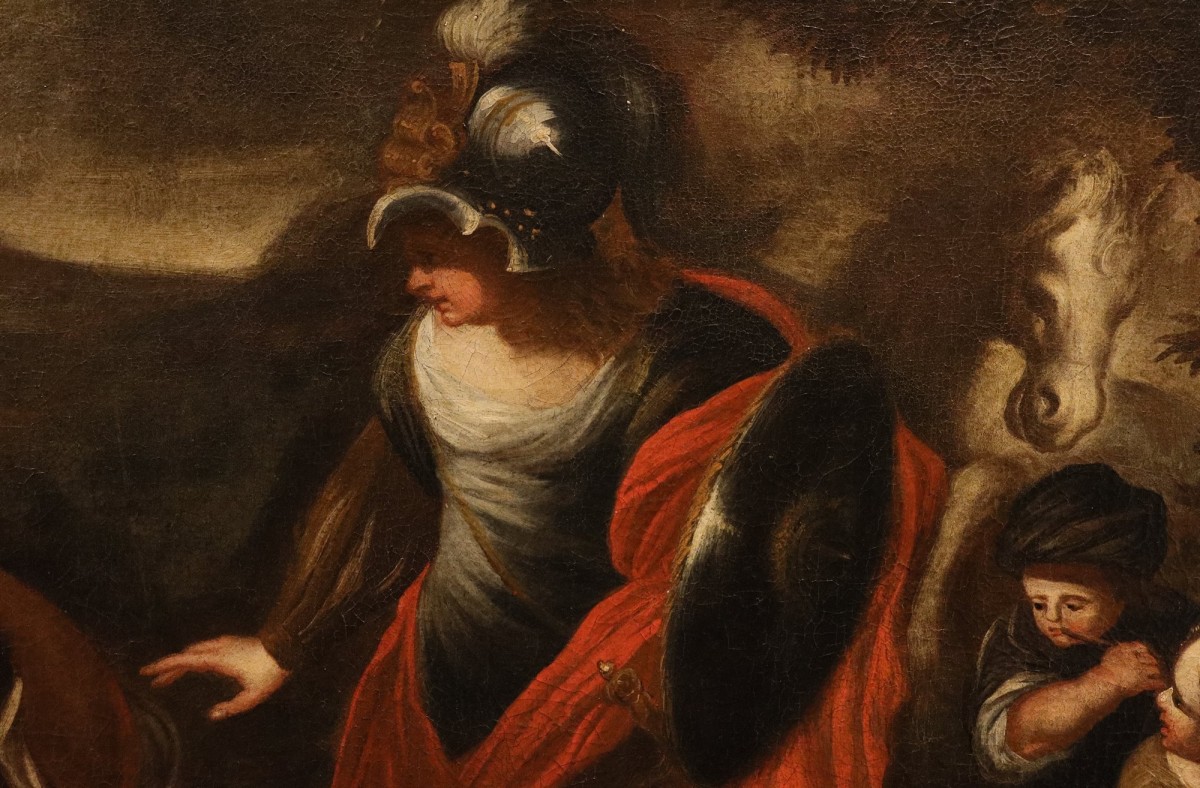
The painting depicted here illustrates the episode of Erminia Among the Shepherds, one of the most famous themes in Baroque art, taken from Canto VII of Torquato Tasso’s poem *Jerusalem Delivered* (VII, 1–22).
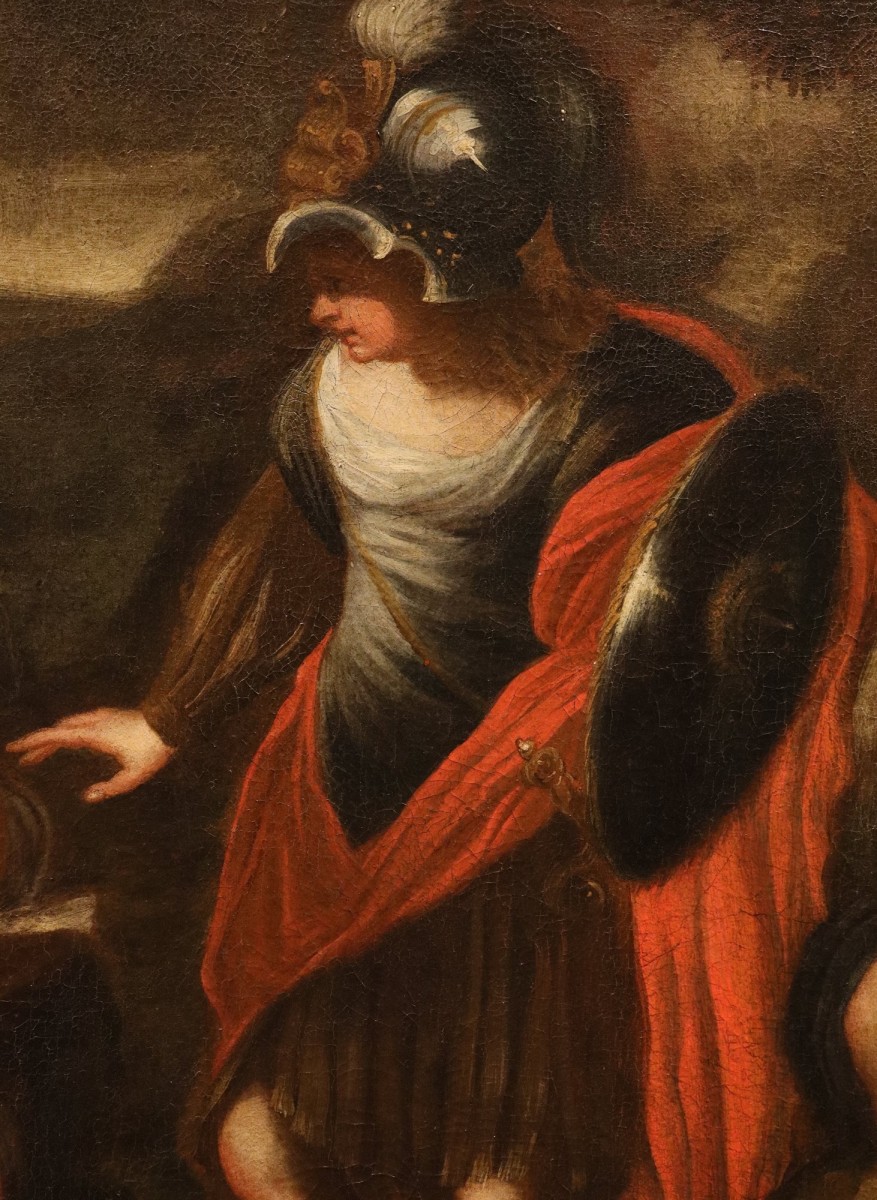
In the passage cited, Erminia, Princess of Antioch, who is secretly in love with the Christian hero Tancredi, witnesses her beloved being wounded in a duel. Driven by love, she dons the armor of the warrior Clorinda, her close friend, to reach him at night and tend to his wounds.
But at the Christian camp, a ray of moonlight illuminates her, and, mistaken for the fearsome Clorinda by the sentries, she is forced to make a hasty escape: She thus arrives at a village on the banks of the Jordan River, inhabited by shepherds who live far from the war in an idyllic and serene atmosphere, while all around the war between Christians and Muslims rages.
There, she asks to be taken in for a while in the vain hope of forgetting her ill-fated love.
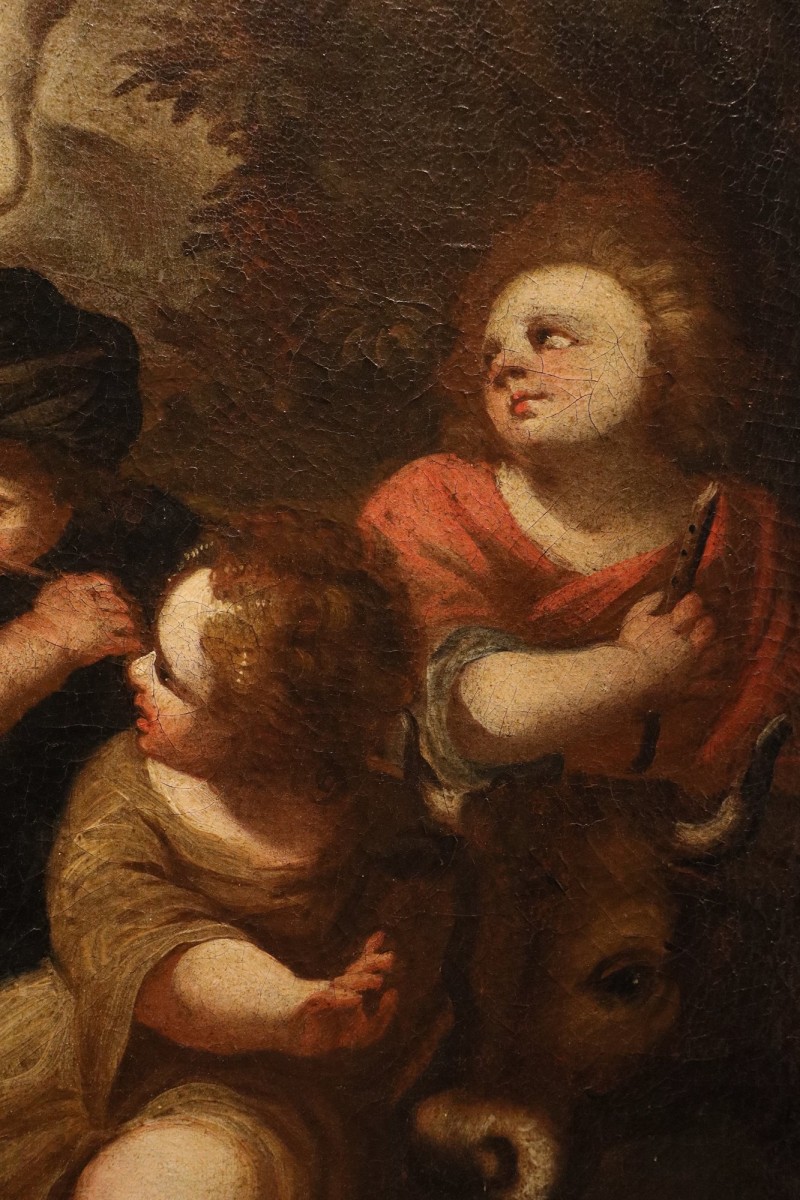
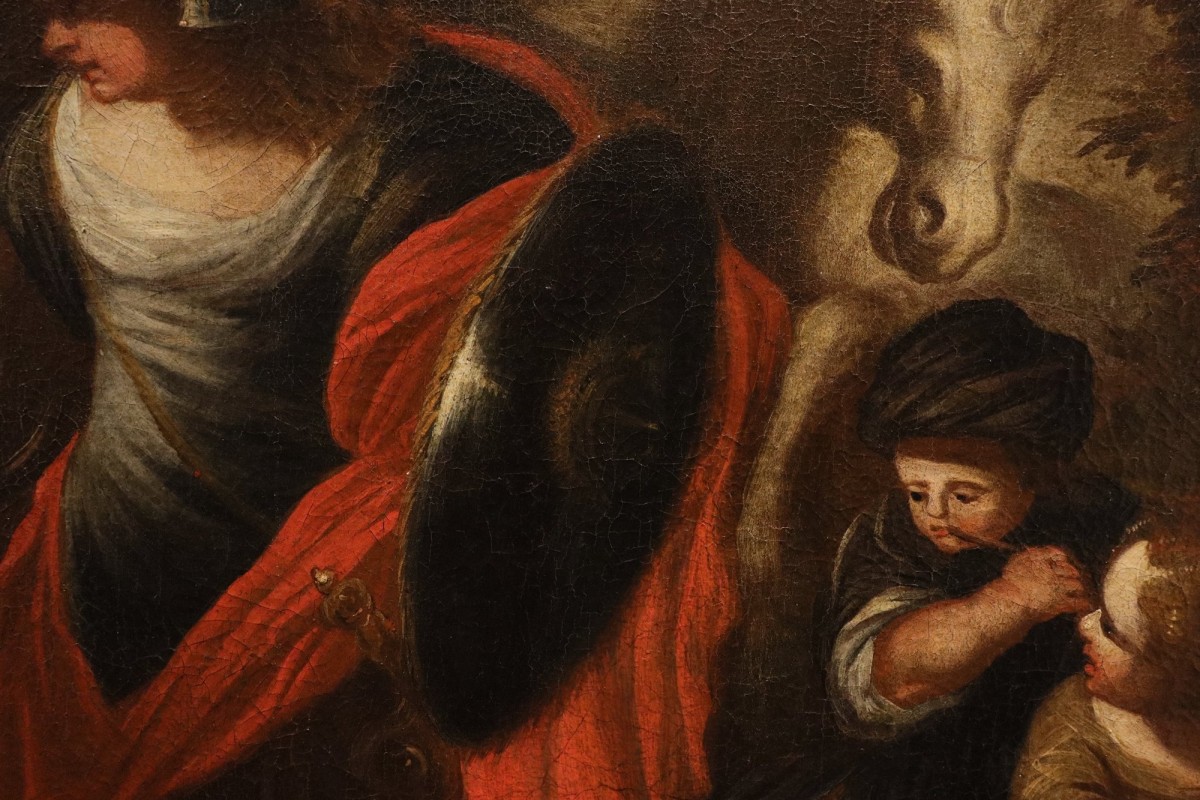
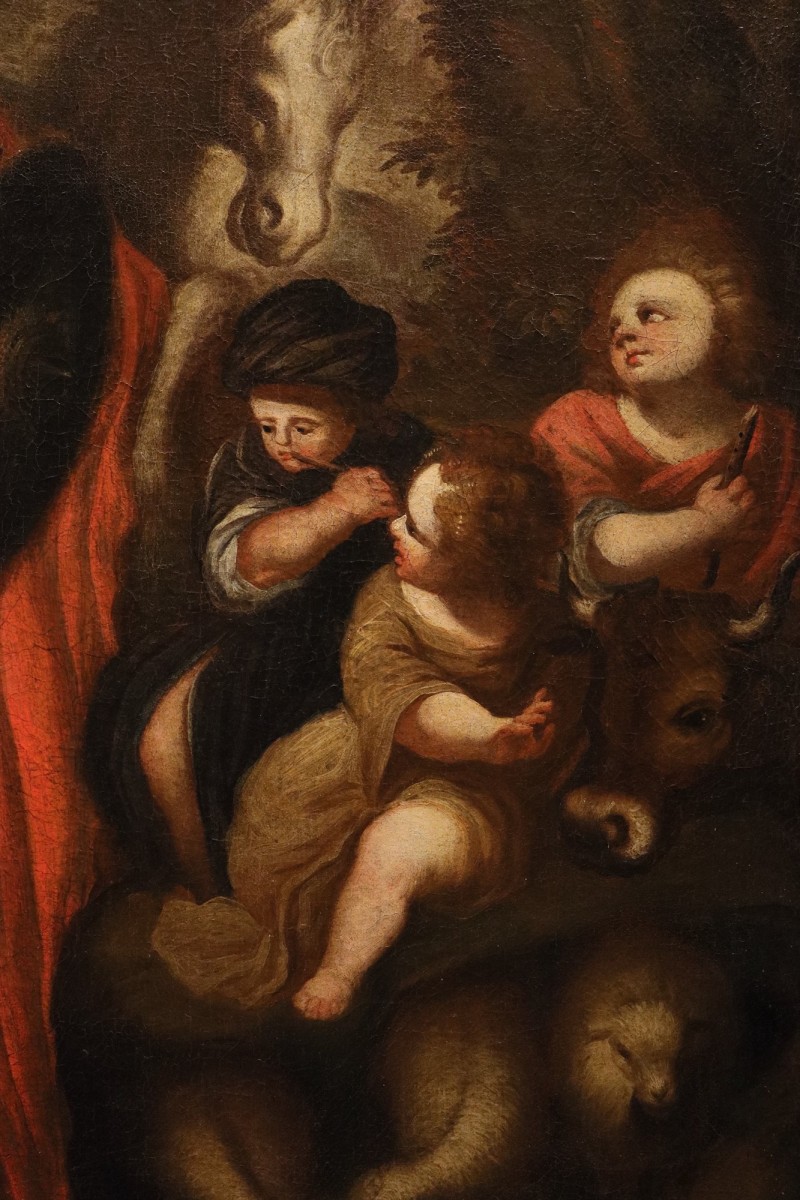
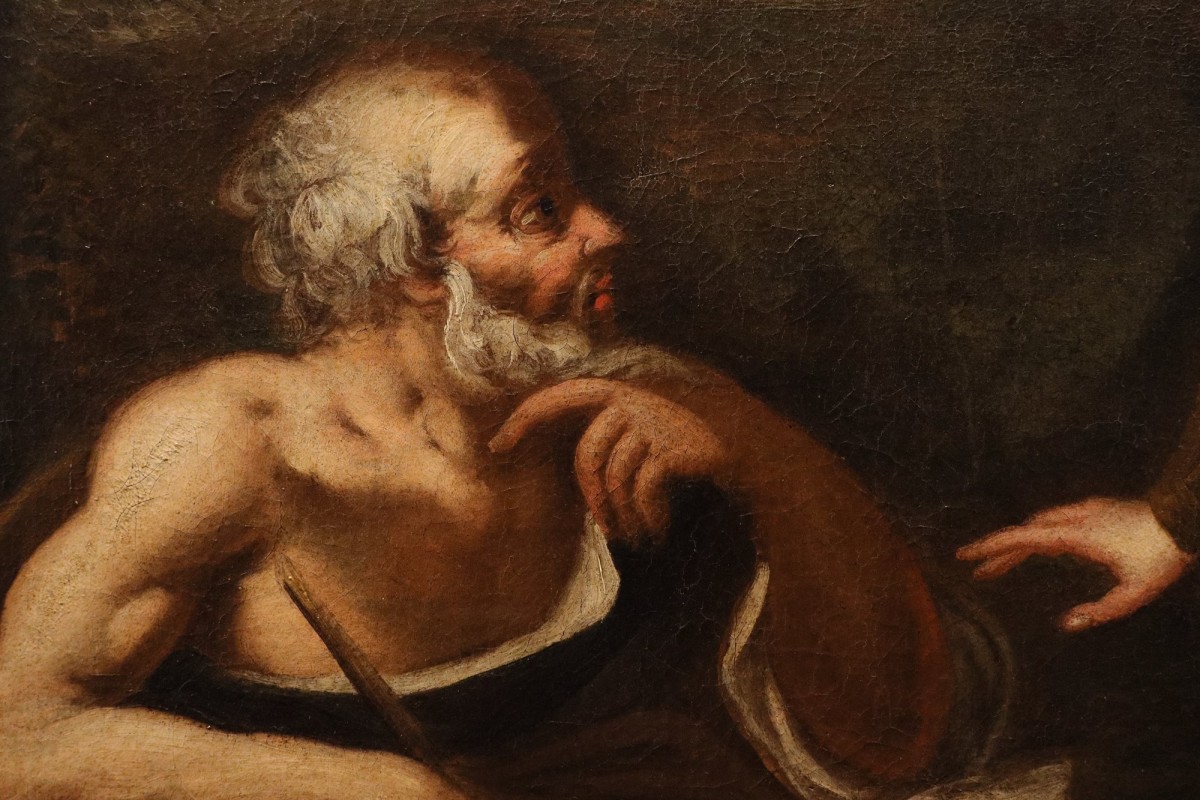
Here we see her portrayed in the company of an elderly shepherd listening to the music of his three sons, who confides in her that he had lived for a long time at the lavish court of Memphis in his youth, but had abandoned it to escape the intrigues and corruption, taking refuge in that poor but utterly serene life.
This passage is one of the most famous in the poem because it introduces the theme of the pastoral idyll: the old man explains to her how a simple life, in touch with nature and free of ambition, protects him from the horrors and destructive passions of the war raging not far away.
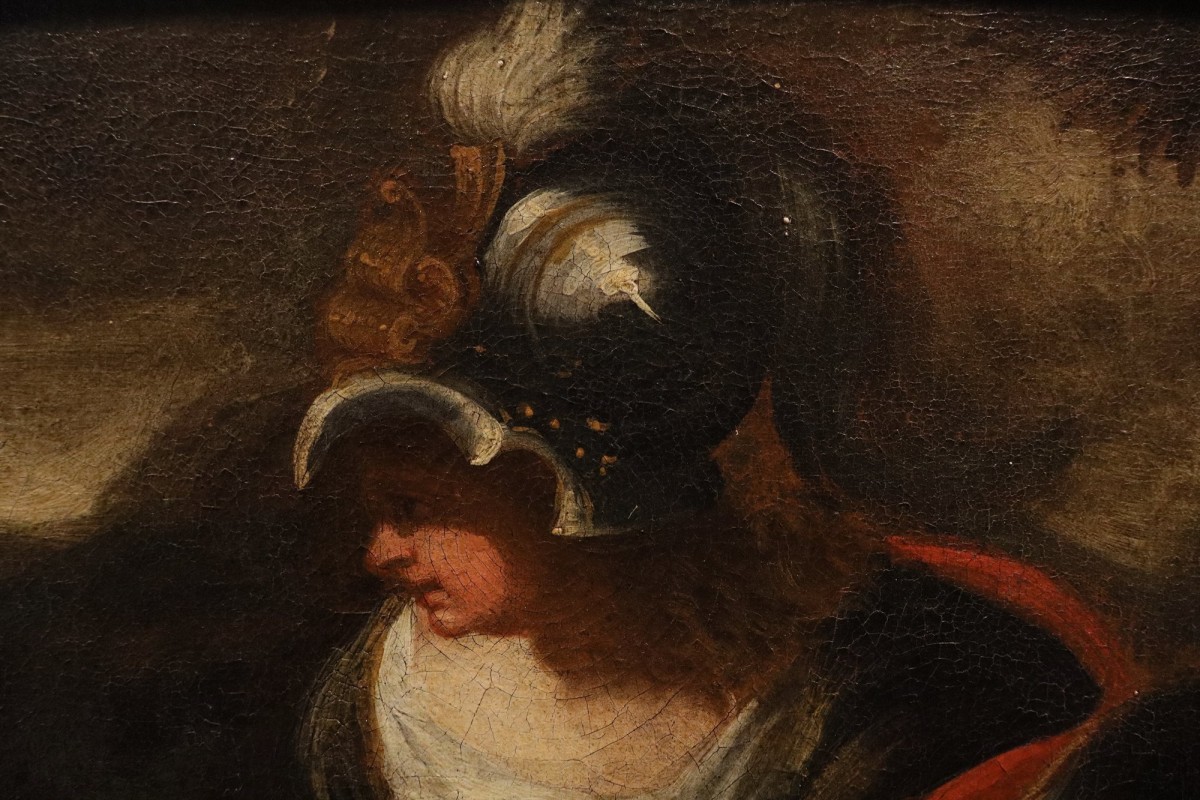
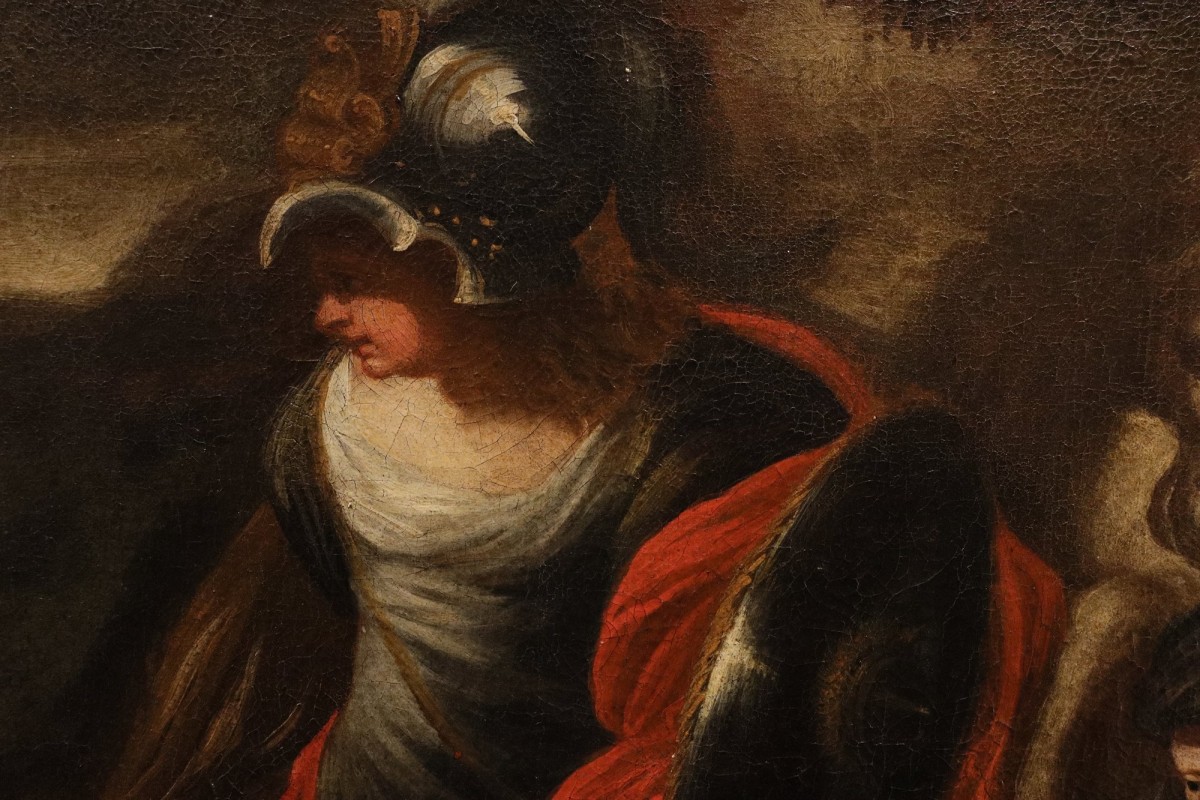
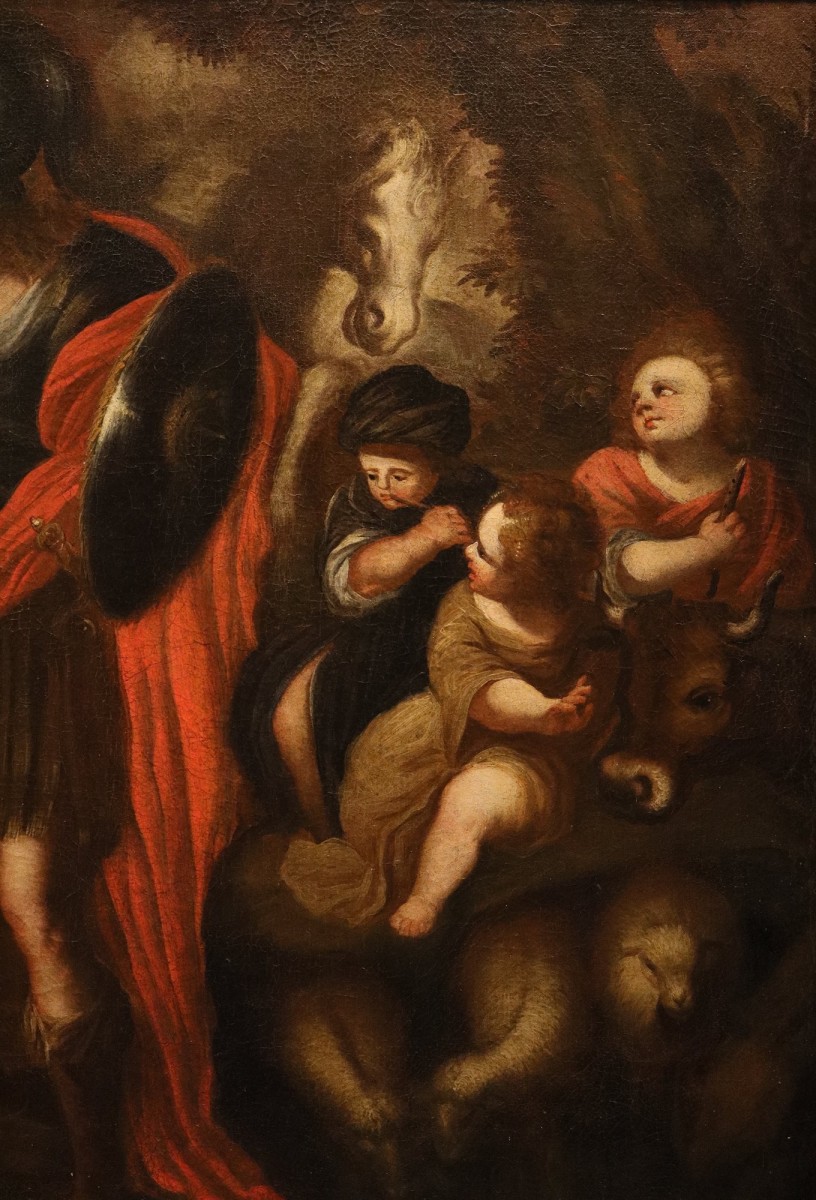
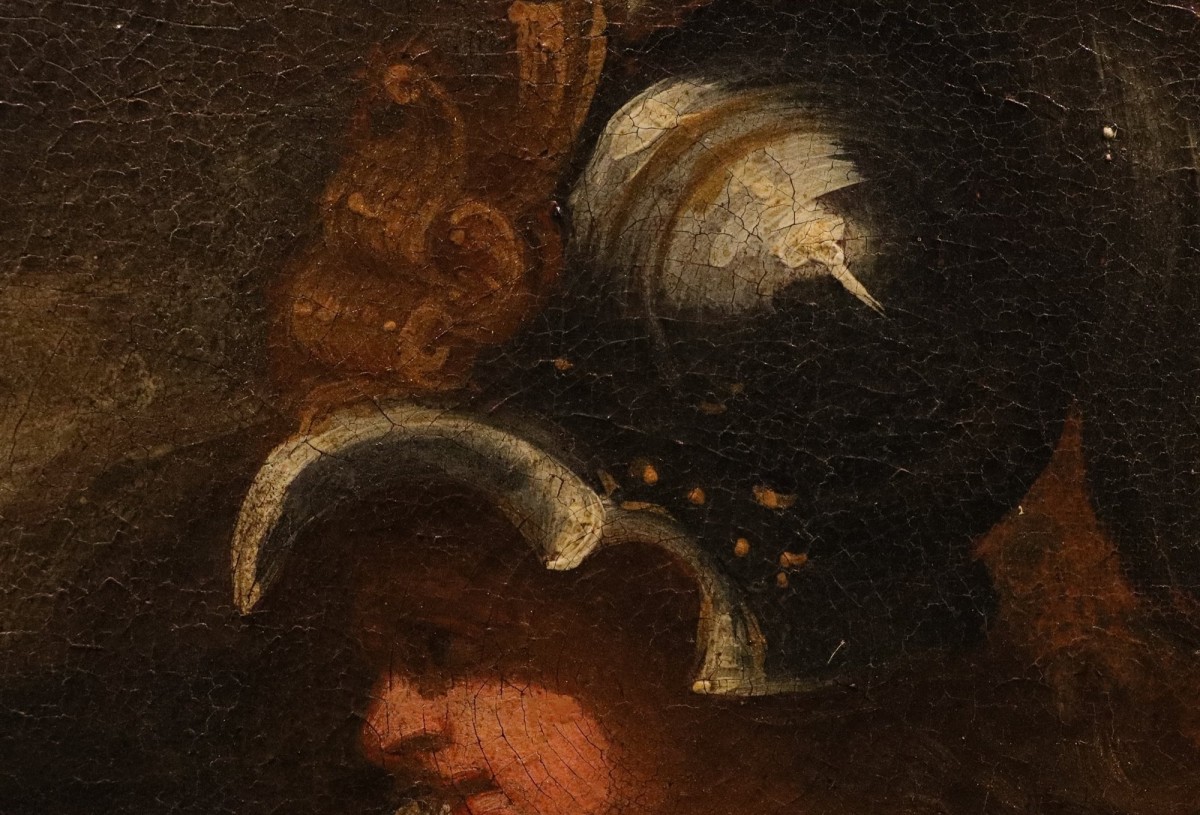
The composition is based on a clear visual and emotional antithesis, faithful to the structure of Tasso’s poem: Erminia wears armor and a magnificent helmet; yet her face expresses no aggression, but rather a regal grace that shines through despite her disguise.
Our painting depicts the moment when the young woman, captivated by this way of life, decides to stay and choose the path of peace, carving the name of her beloved Tancredi and the story of her ill-fated love into the bark of the trees.
The work, of pleasing pictorial quality, displays a vibrant and luminous brushstroke, fitting seamlessly into the mid-17th-century Genoese milieu: it is specifically a canvas attributable to the Baroque painter Stefano Magnasco (Genoa, 1635–1674), or to an artist from his workshop—an important exponent of the Genoese Baroque school and father of the famous Alessandro Magnasco (known as “il Lissandrino”).
Clearly influenced by masters such as Valerio Castello, whose student he was, and Domenico Piola, Magnasco’s paintings are distinguished by their strong chiaroscuro contrast, the theatrical expressiveness of the figures, and the rich colors of the drapery: the use of bright red color fields, for example, which we see here in the cloak enveloping the figure of Erminia, was a distinctive trait employed by the painter to create drama in his epic scenes.
Specifically, the painting perfectly illustrates the stylistic characteristics of his work, which—although he trained in Castello’s workshop—is strongly influenced by the Flemish masters who had worked in Genoa; his fluid and luminous brushstrokes, in fact, blend the Genoese tradition with the theatrical compositions and color choices introduced by Rubens and Van Dyck in Genoa.
Delevery information :
We take care of and organise the transport of the purchased works, both for Italy and abroad, through professional and insured carriers.
We take great care We personally take care of the packaging, to which we devote a great deal of care: each work is carefully packed, first with arti- cle material, then with a custom-made wooden box.
Should you have the desire to see this or other works in person, we would be happy to welcome you to our gallery in Riva del Garda, Viale Giuseppe Canella 18, we are always open by appointment only.