Offered by Antichità di Alina
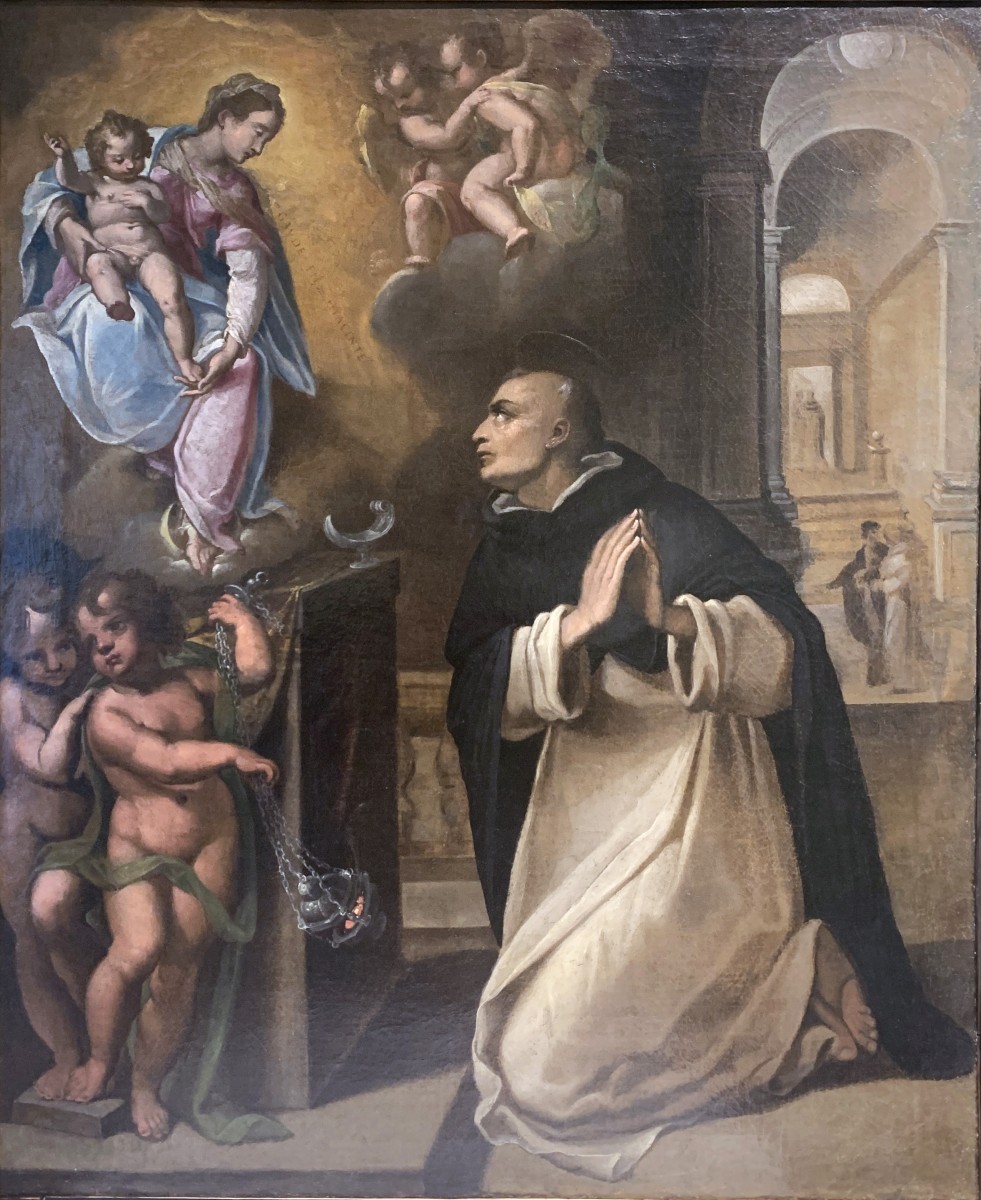
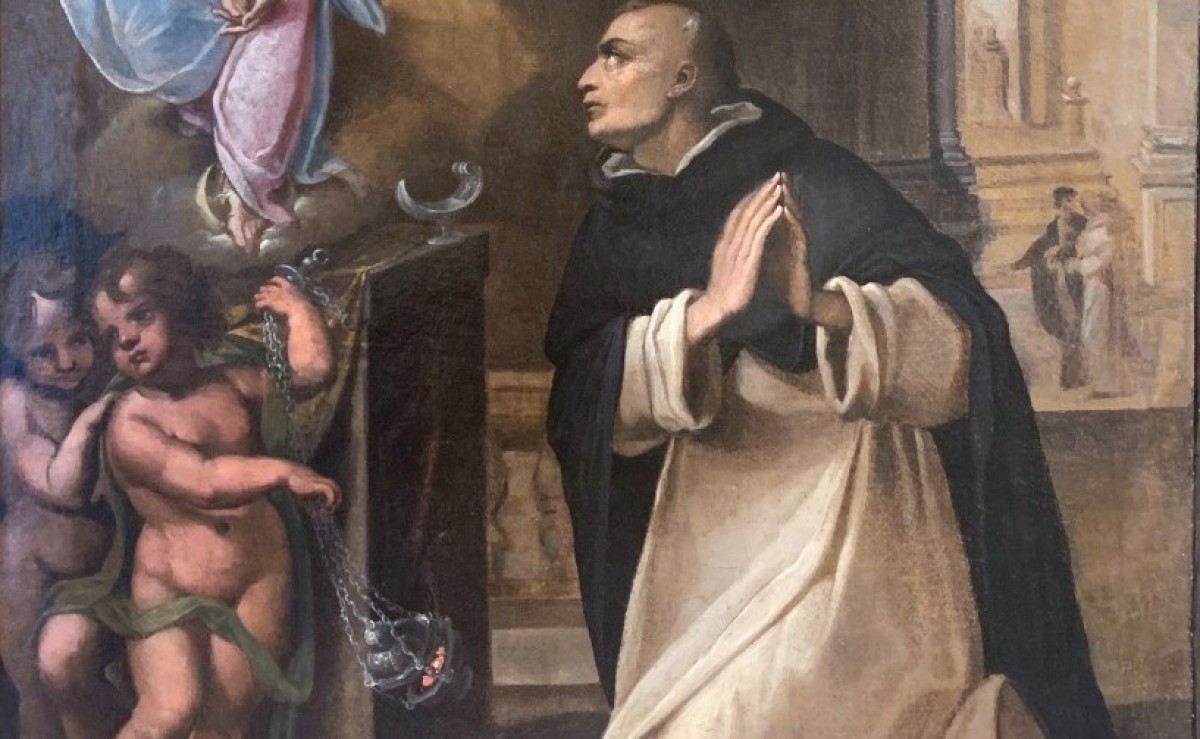
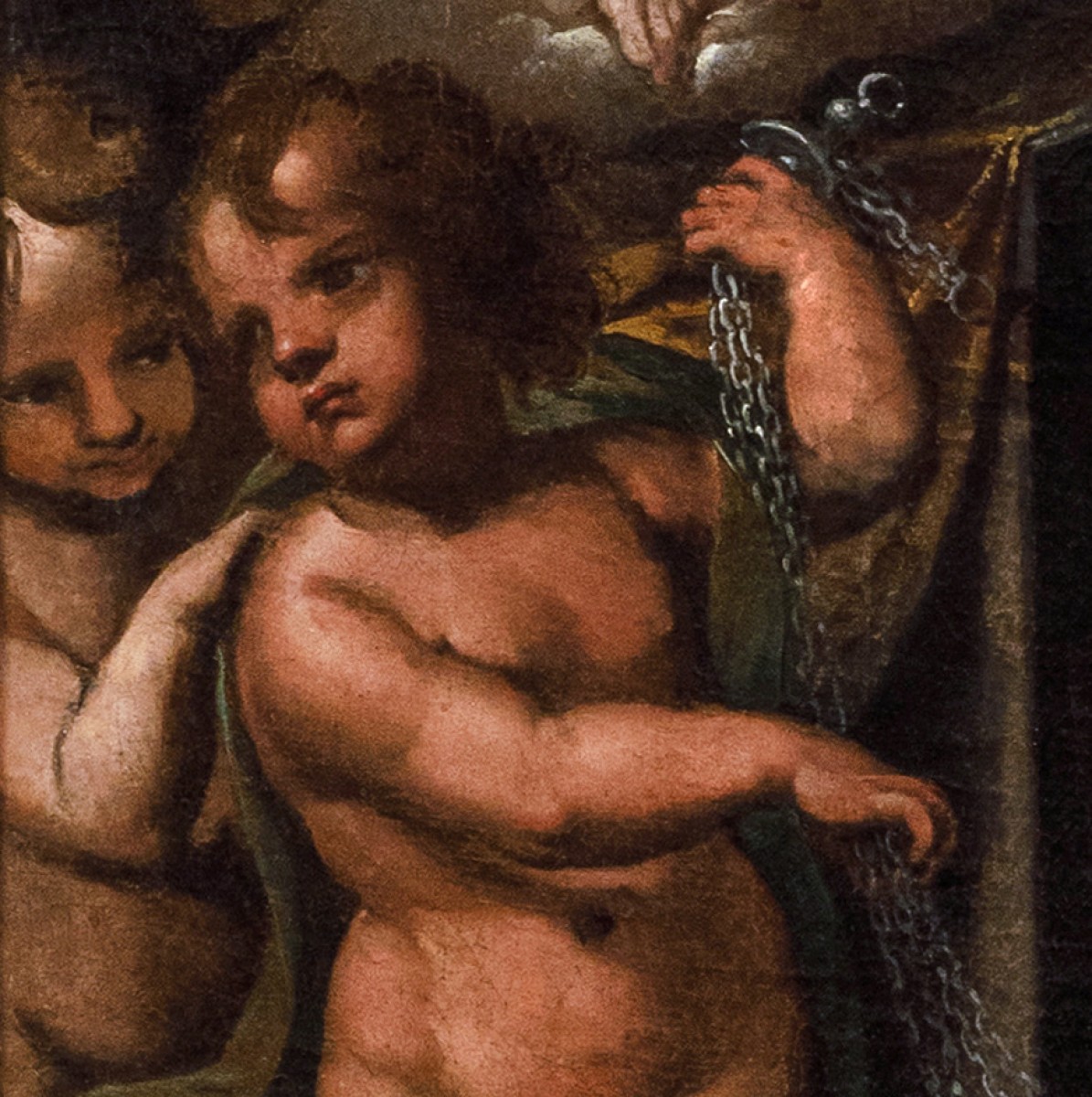
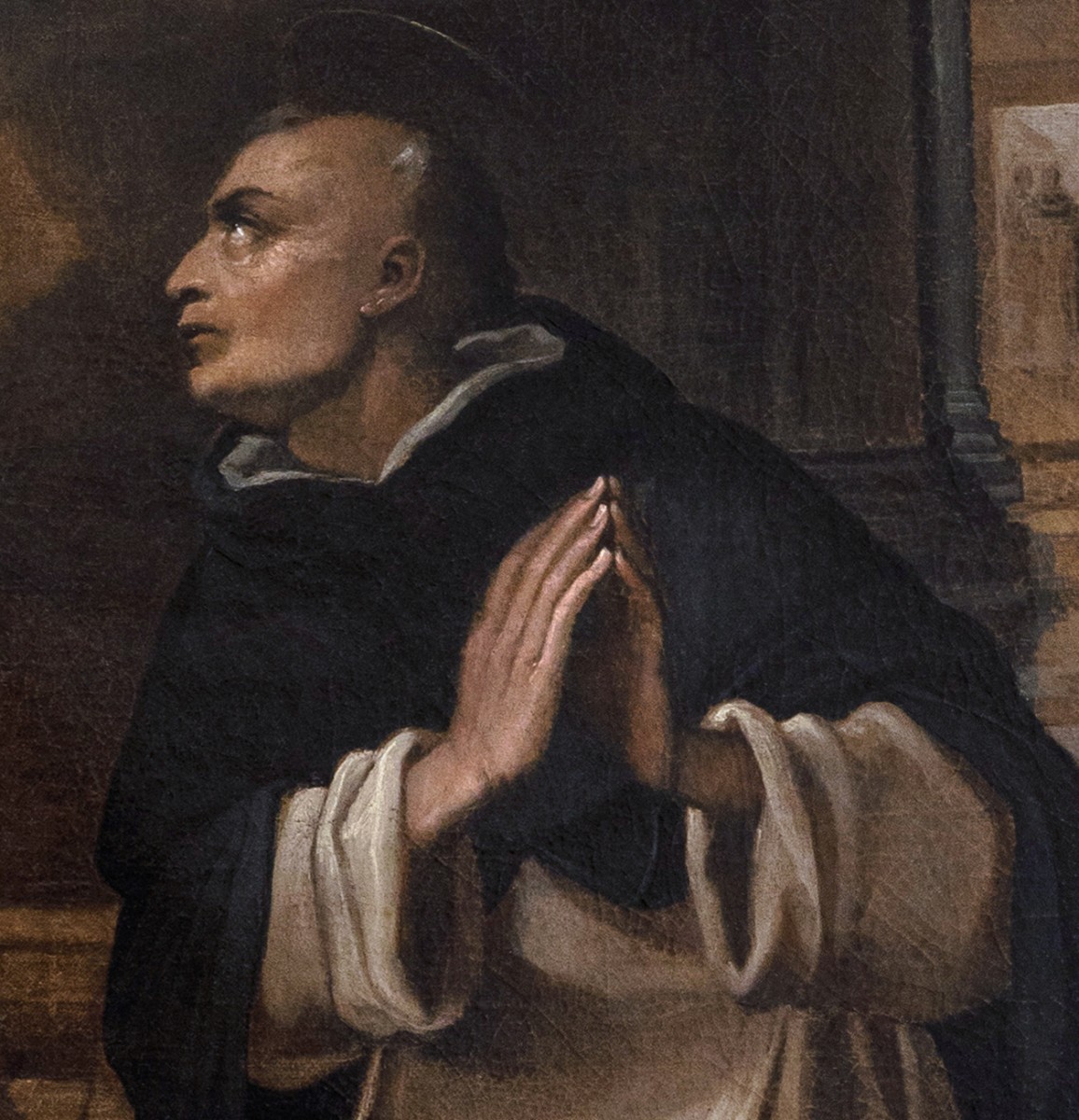
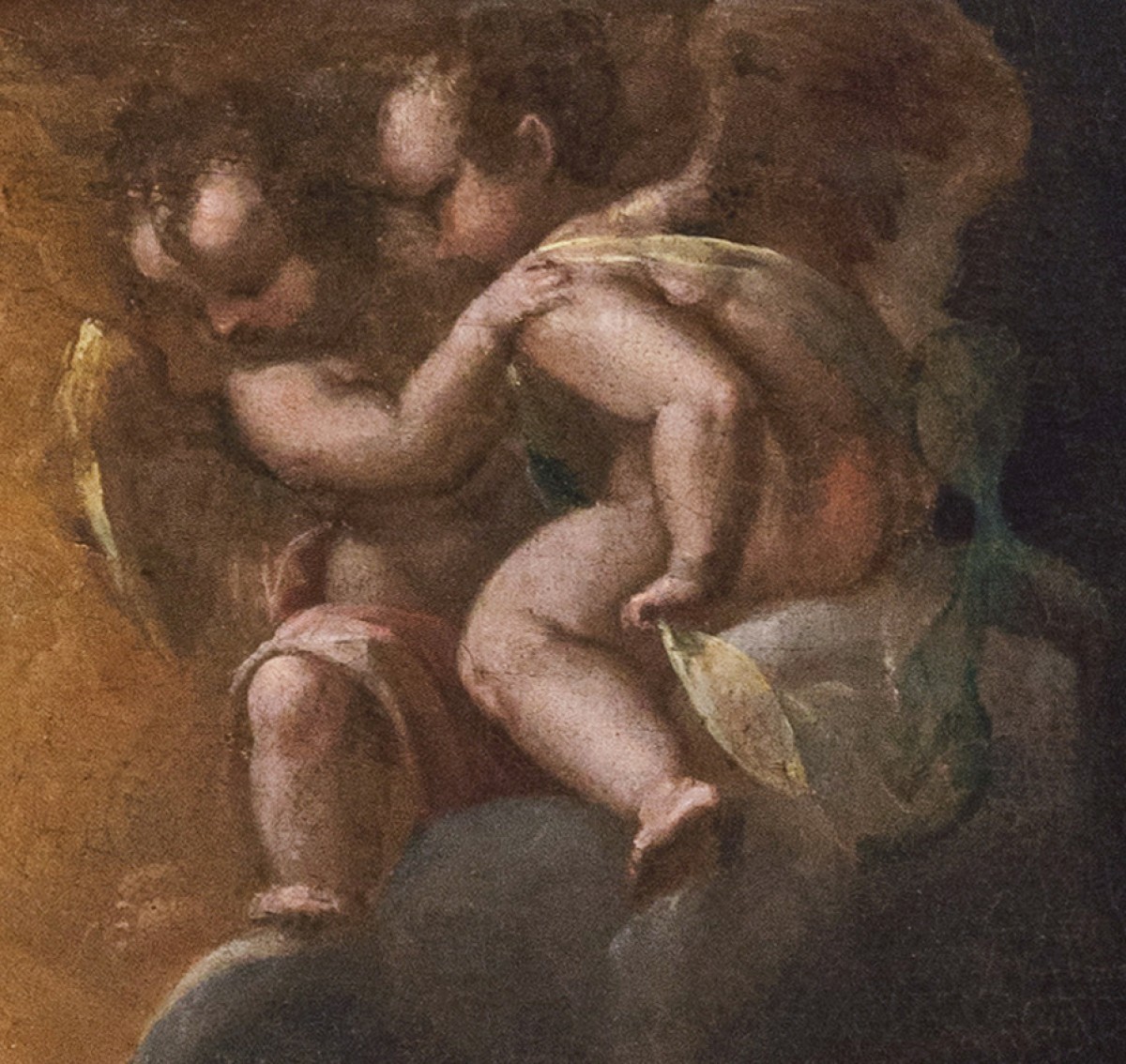

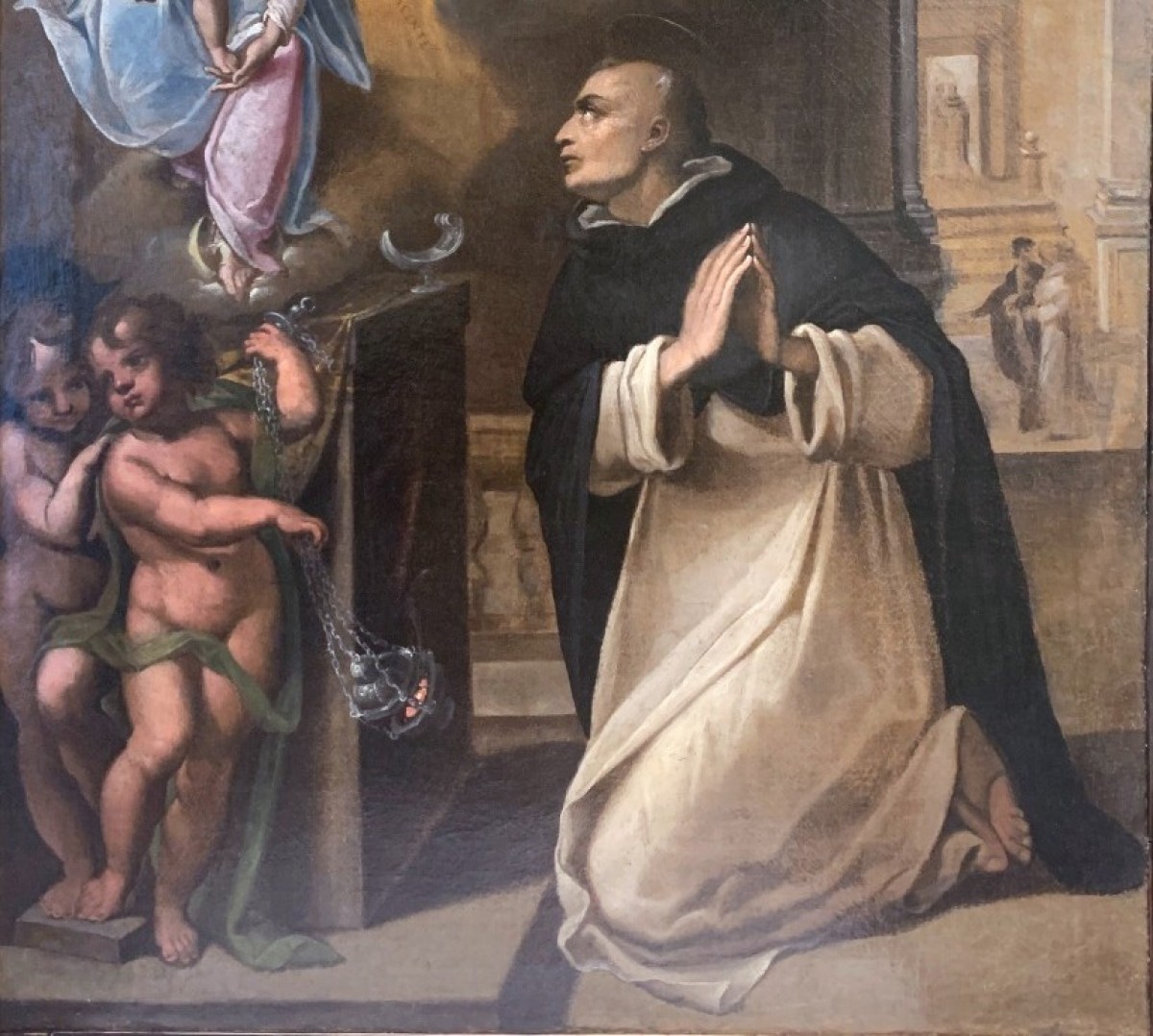
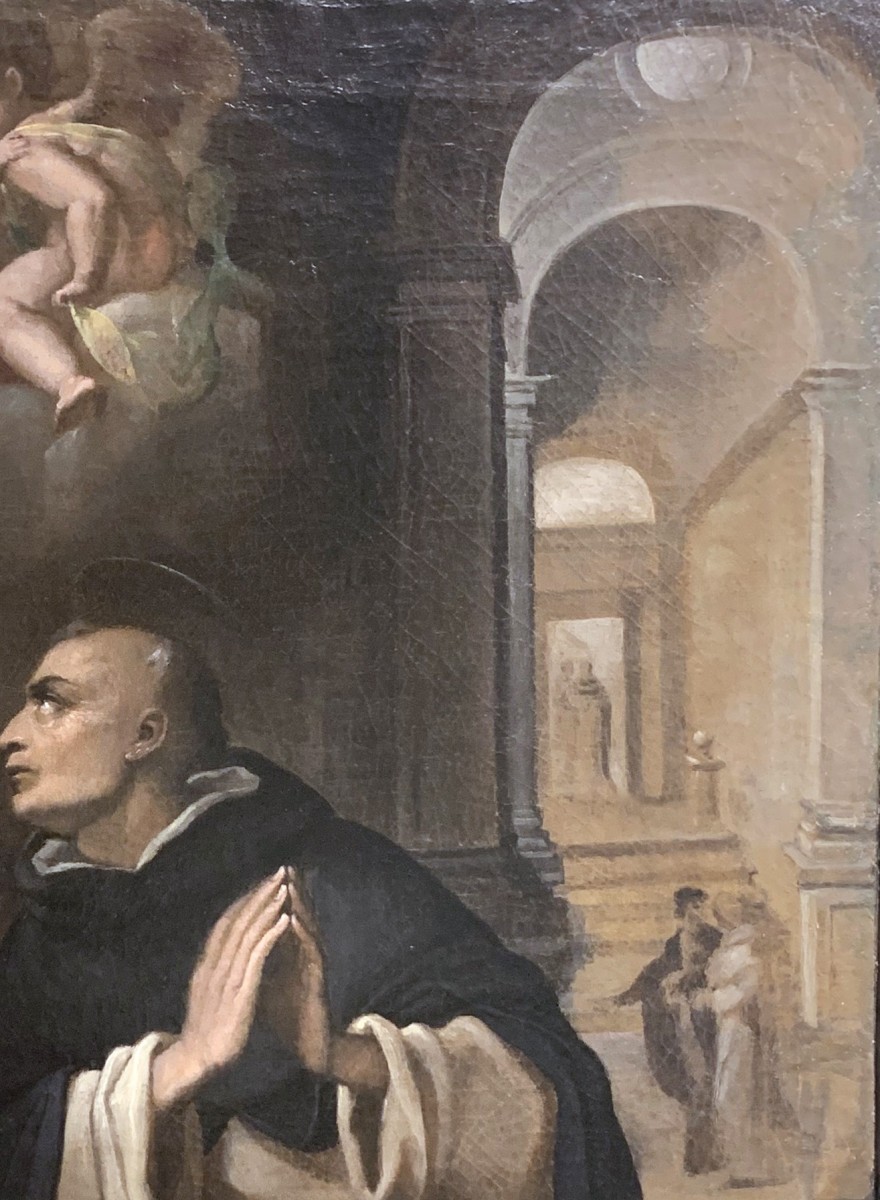
Saint Hyacinth, Dominican Friar, and the Vision of the Virgin in Kiev, oil on canvas, c. 1600
Oil on canvas, relined
113 × 93 cm
Tuscan School, circa 1600
The painting depicts Saint Hyacinth Odrow?? (1183–1257)**, a Polish Dominican friar and one of the leading figures in the early expansion of the Order throughout Central and Eastern Europe, canonised on 17 April 1594 by Pope Clement VIII Aldobrandini.
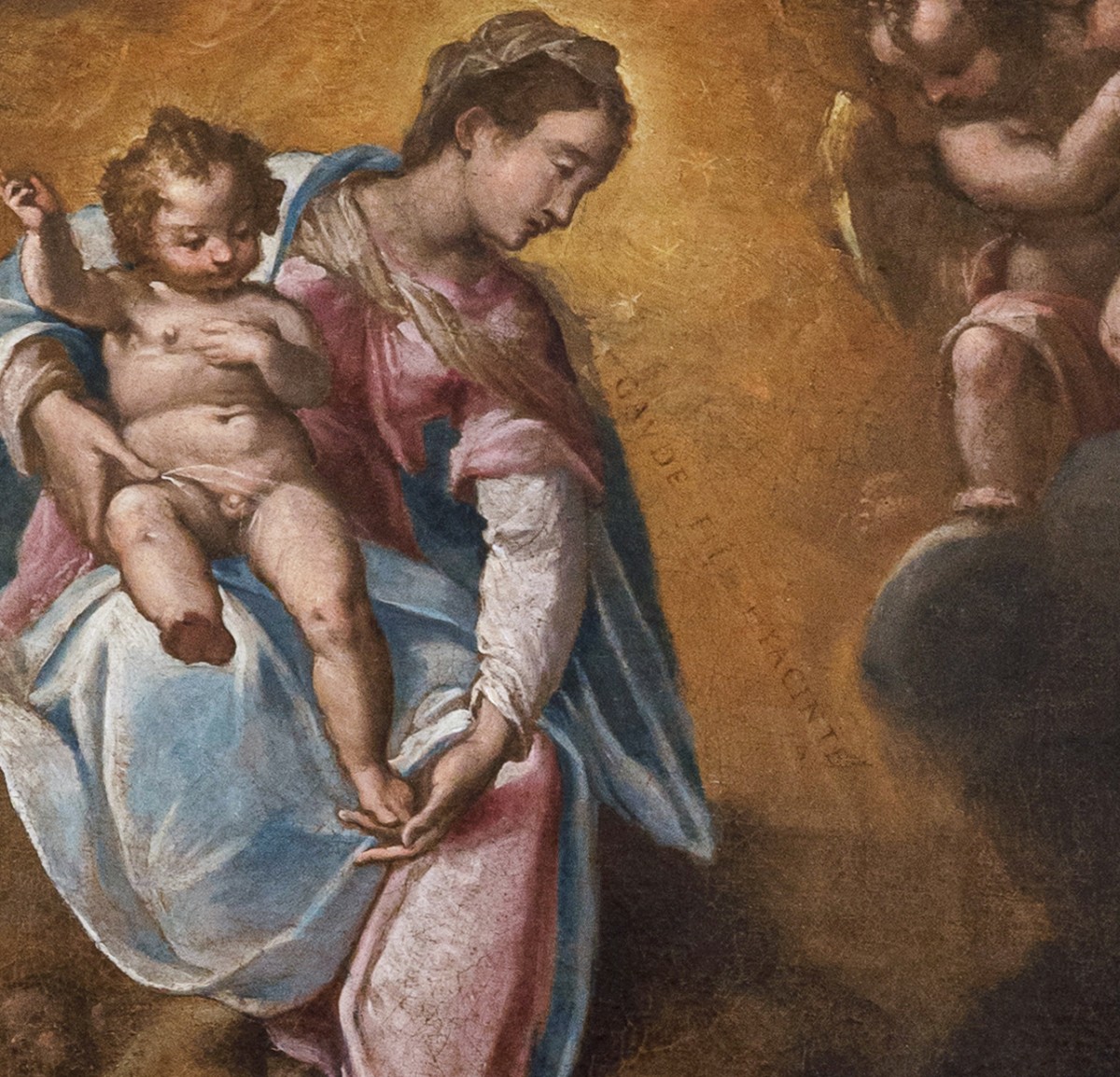
The episode represented is connected with the tradition surrounding the saint’s mission in Kiev. During the advance of the Tartars, as Hyacinth prepared to carry the Blessed Sacrament to safety, the Virgin appeared to him and urged him not to abandon her image. According to the hagiographical account, the Dominican was then able to flee carrying both the Eucharist and the statue of the Virgin, which miraculously became light enough for him to bear.
From this episode derive his most characteristic iconographic attributes: the Eucharist and the image of the Virgin, united in the figure of the saint as symbols of fidelity to Christ and of the special protection of Mary. Within the religious climate of the Counter-Reformation, this iconography acquired a particularly powerful meaning, bringing together two central aspects of Catholic spirituality: the real presence of Christ in the Eucharist and the intercession of the Virgin.
The presence of the halo, together with an already fully developed iconography of the saint, suggests that the canvas was painted in the years following his canonisation in 1594, most probably around 1600, when devotion to Saint Hyacinth was experiencing renewed diffusion in Italy.
From a stylistic point of view, the work reveals an interesting convergence between Tuscan culture and knowledge of Venetian painting.
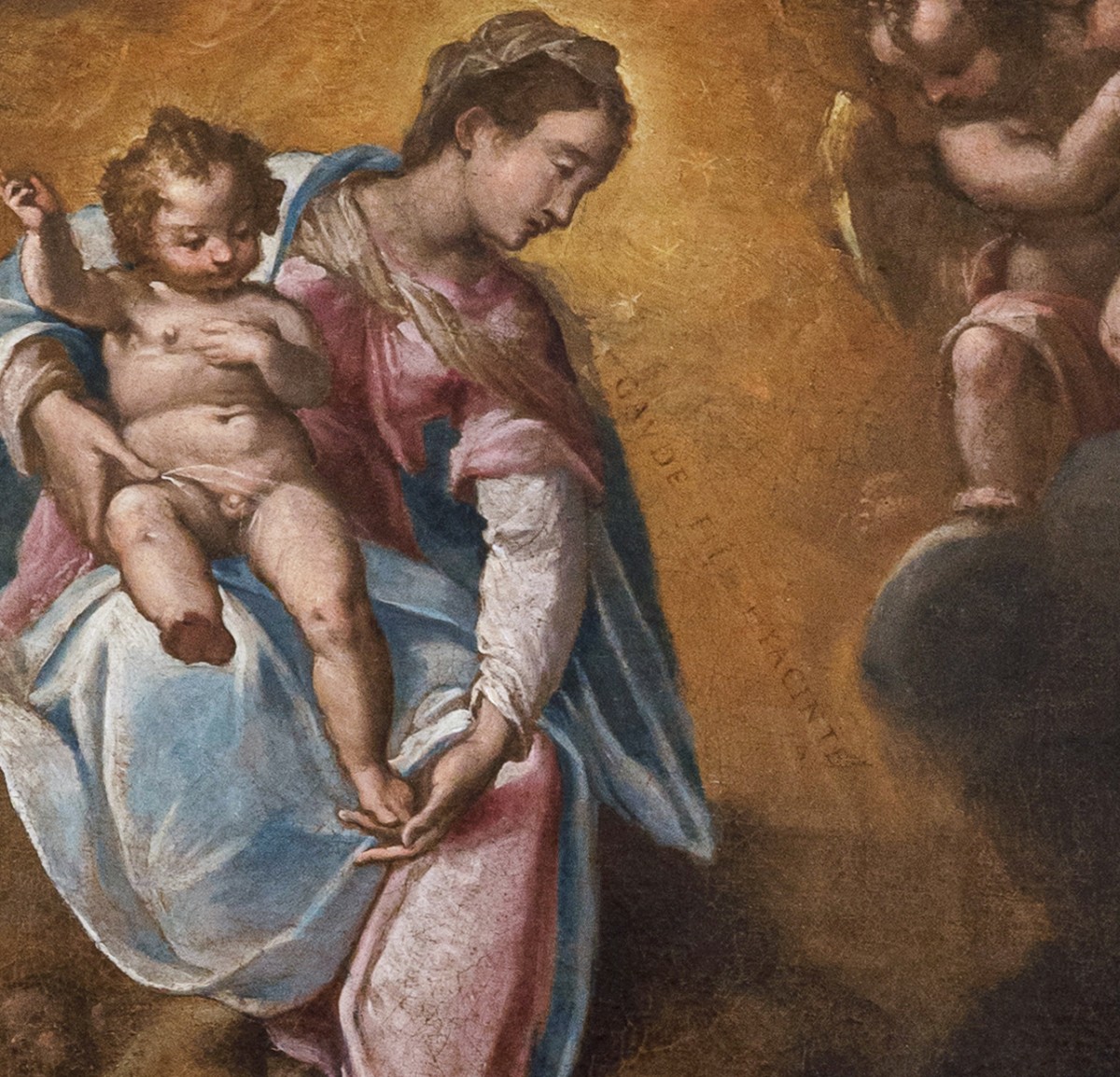
The figure of the Virgin, particularly in its colouring, the softness of the transitions and the painterly handling, reveals a sensitivity that appears to presuppose familiarity with the Venetian tradition of the second half of the sixteenth century, with echoes especially of Jacopo Bassano and Tintoretto. The handling of colour introduces into the composition a freer and more atmospheric quality than that generally associated with the more rigorously draughtsmanship-based Florentine tradition.
The construction of the setting, by contrast, is profoundly Tuscan. The architecture is sober and geometric, articulated by elements in pietra serena, according to a vocabulary characteristic of Florence in the second half of the sixteenth century. The measured proportions, clarity of the surfaces and contrast between plastered walls and grey stone recall the architectural culture of the age of **Giorgio Vasari**, the great Medicean building projects, and the residences of the Florentine aristocracy associated with the Grand Ducal court.
This should not, of course, be understood as a reference to one specific building, but rather as an architectural vocabulary immediately recognisable as Tuscan, developed during the same decades in which the construction of the Uffizi and the transformation of numerous Florentine residences contributed to defining a new, sober and rigorous language.
It is precisely this coexistence that constitutes one of the most interesting aspects of the painting: a spatial and compositional structure still rooted in late Tuscan Mannerism is combined with a chromatic sensitivity open to Venetian painting. The work can therefore be situated within that transitional phase around 1600, when Florentine painting was beginning to move away from the more abstract formulas of sixteenth-century Mannerism towards a greater naturalism in figures, light and colour.
The canvas has been relined, as part of an earlier conservation treatment.
Attribution hypothesis: with due caution, certain characteristics of the work suggest that the name of Simone Ferri da Poggibonsi may be considered as a possible avenue for further research. Ferri was active in the Florentine artistic milieu between the late sixteenth and early seventeenth centuries and was connected with the pictorial culture of Alessandro Allori and Santi di Tito. This reference should nevertheless be regarded solely as a working hypothesis requiring further study; at present, it appears more appropriate to retain the attribution to the Tuscan School, circa 1600.