Offered by Antichità di Alina
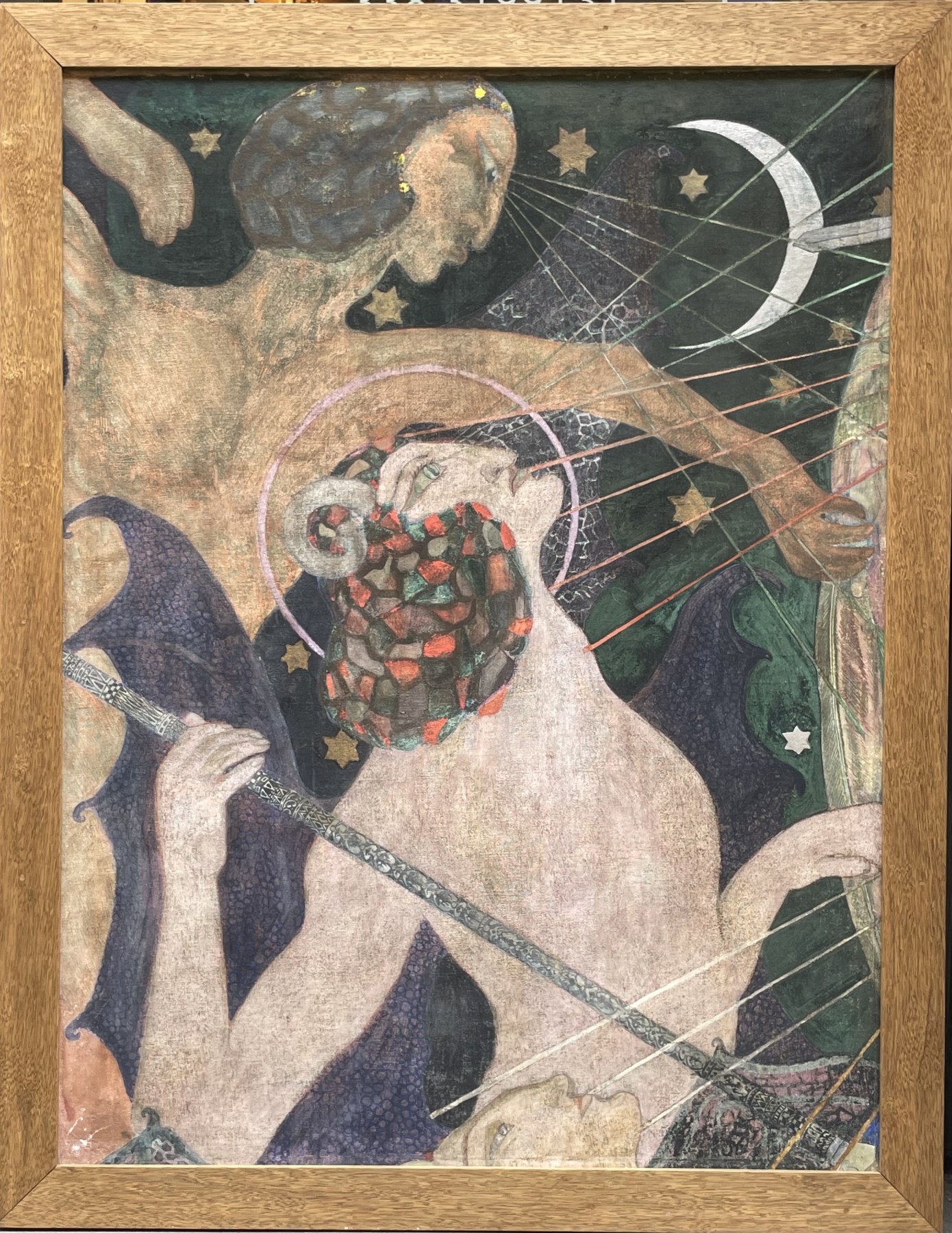
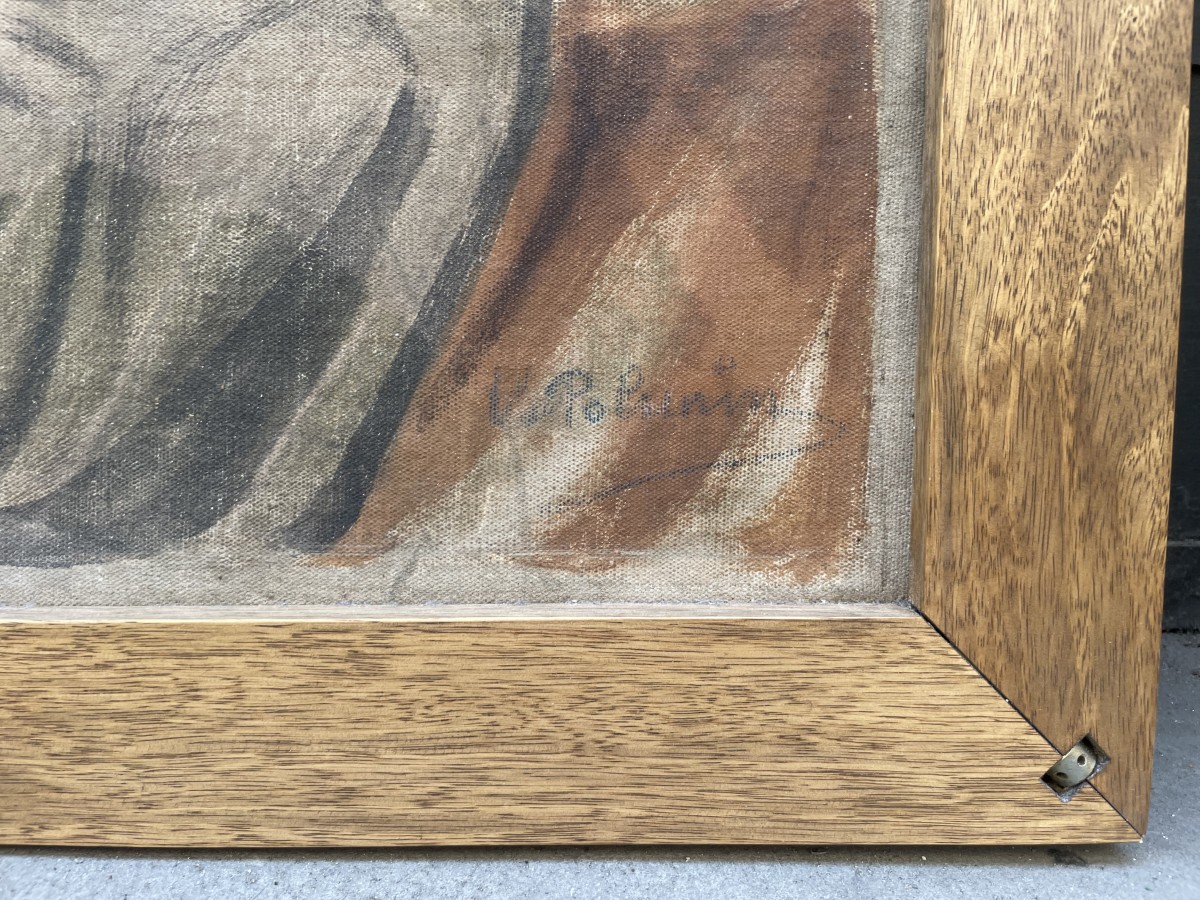
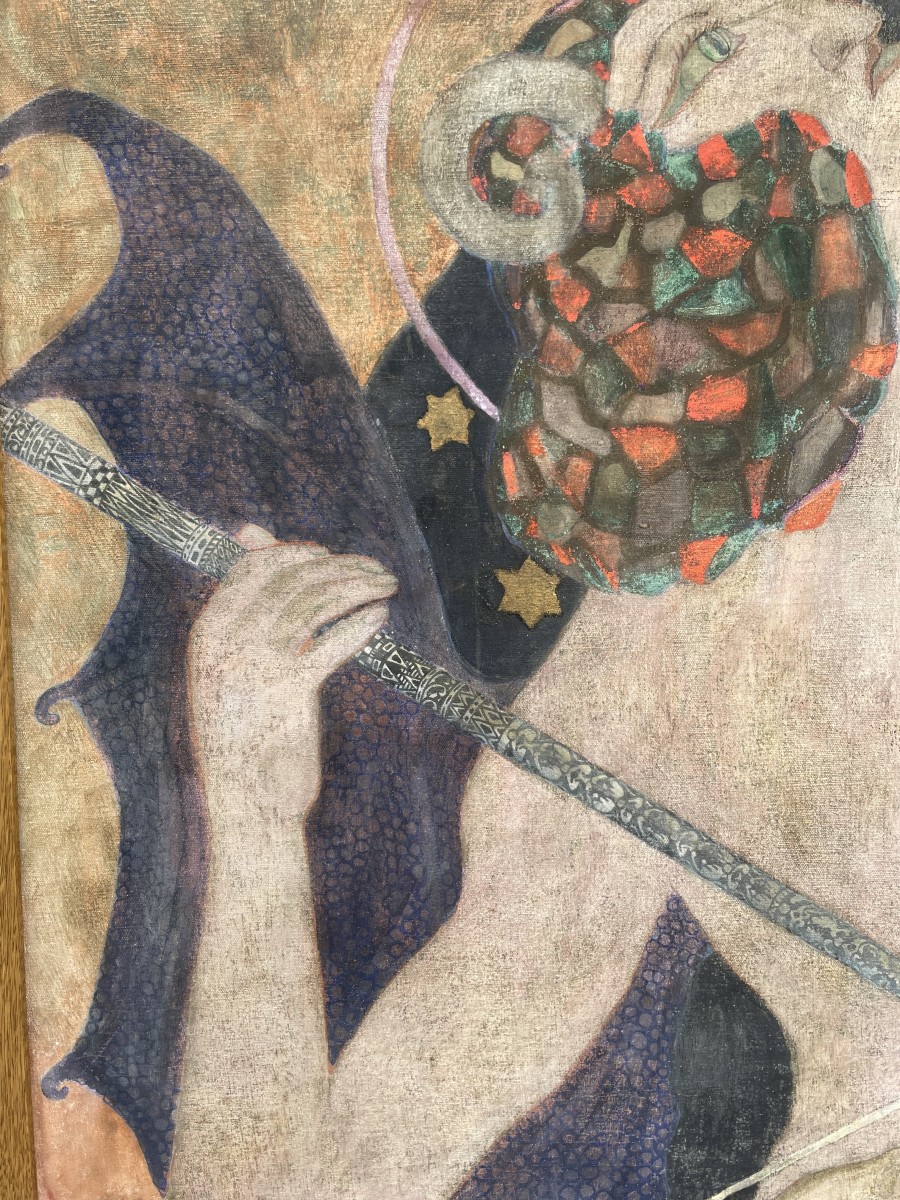
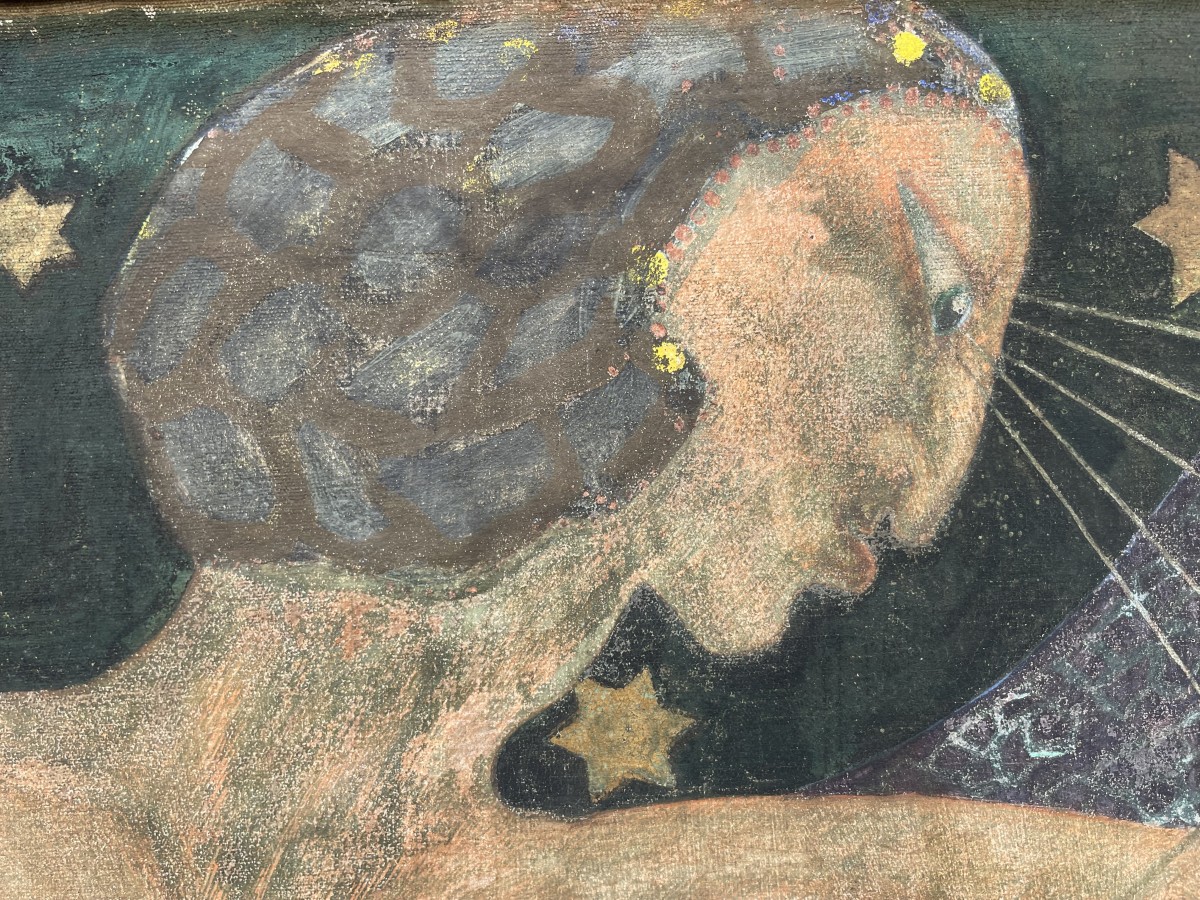

Vladimir Polunin – Theatre Set Fragment and Female Figure, Two-Sided
Painted on both sides.
Tempera colours on canvas.
Dimensions: 137 × 107 cm framed; 123 × 92.5 cm canvas.
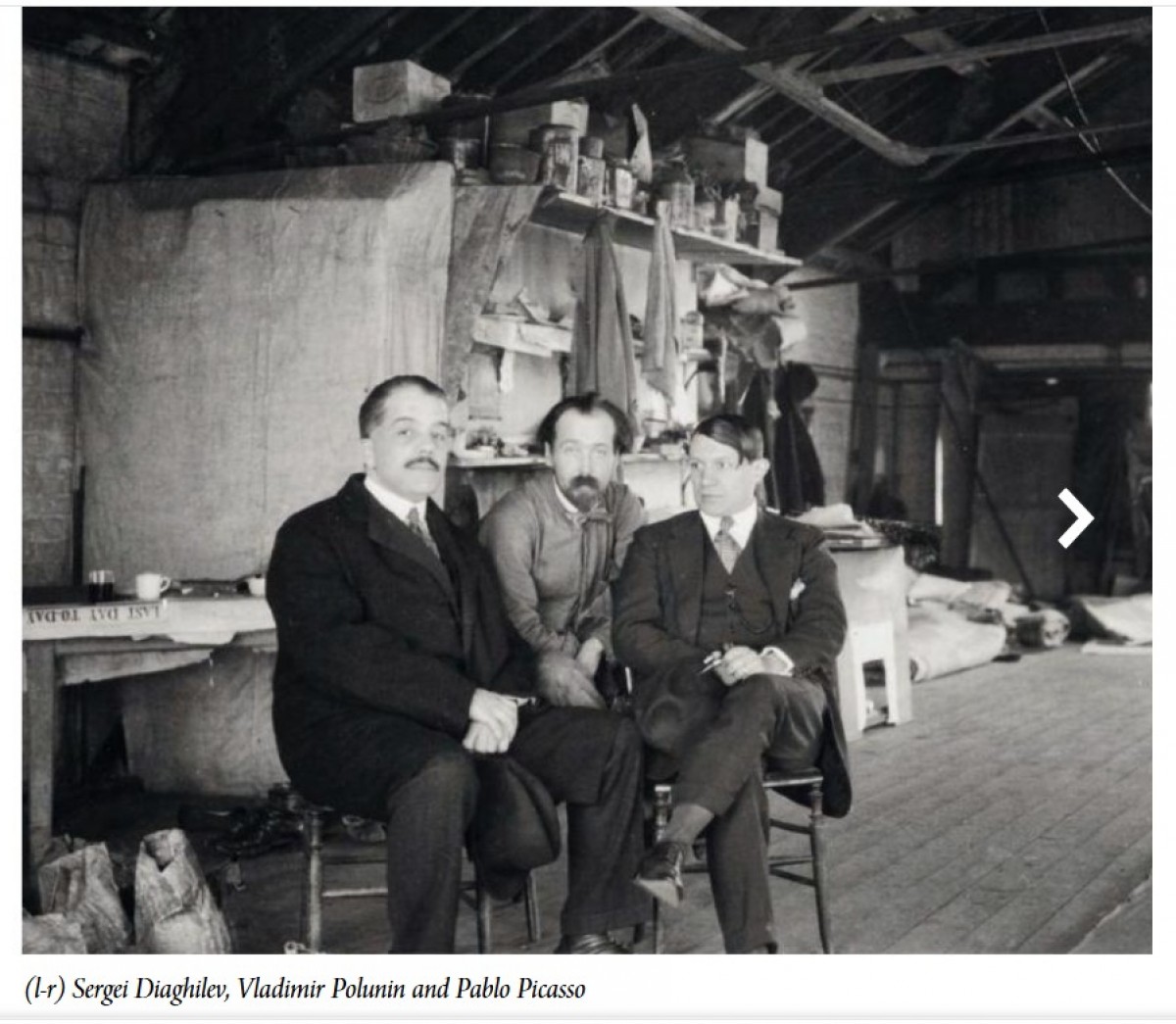
Vladimir Polunin (Moscow, 1880 – Godalming, near London, 11 March 1957) received his initial artistic training in Russia before continuing his studies in Munich. After settling in England, he collaborated with Sergei Diaghilev and the Ballets Russes, executing sets for some of the most important theatrical productions of his time. Alongside this activity, he pursued a career as a painter and exhibited regularly in London; in 1931, he also took part in an exhibition held at Prince Galitzine’s gallery, an important meeting place for the Russian émigré artistic community.
One of the leading theatrical scene painters of his generation, Vladimir Polunin transferred to a large scale the designs of Léon Bakst, Natalia Goncharova, Mikhail Larionov, Pablo Picasso, Boris Anisfeld, Alexandre Benois, André Derain and other major figures of the European avant-garde. In an article published in Vogue in 1923, Aldous Huxley also mentioned Polunin’s decorative commissions in London, including an overdoor painted for Eric Kennington, murals for the Gorgone restaurant, the Phoenix Theatre and several theatres belonging to the Granada group. Polunin also taught scene painting at the Slade School of Fine Art.
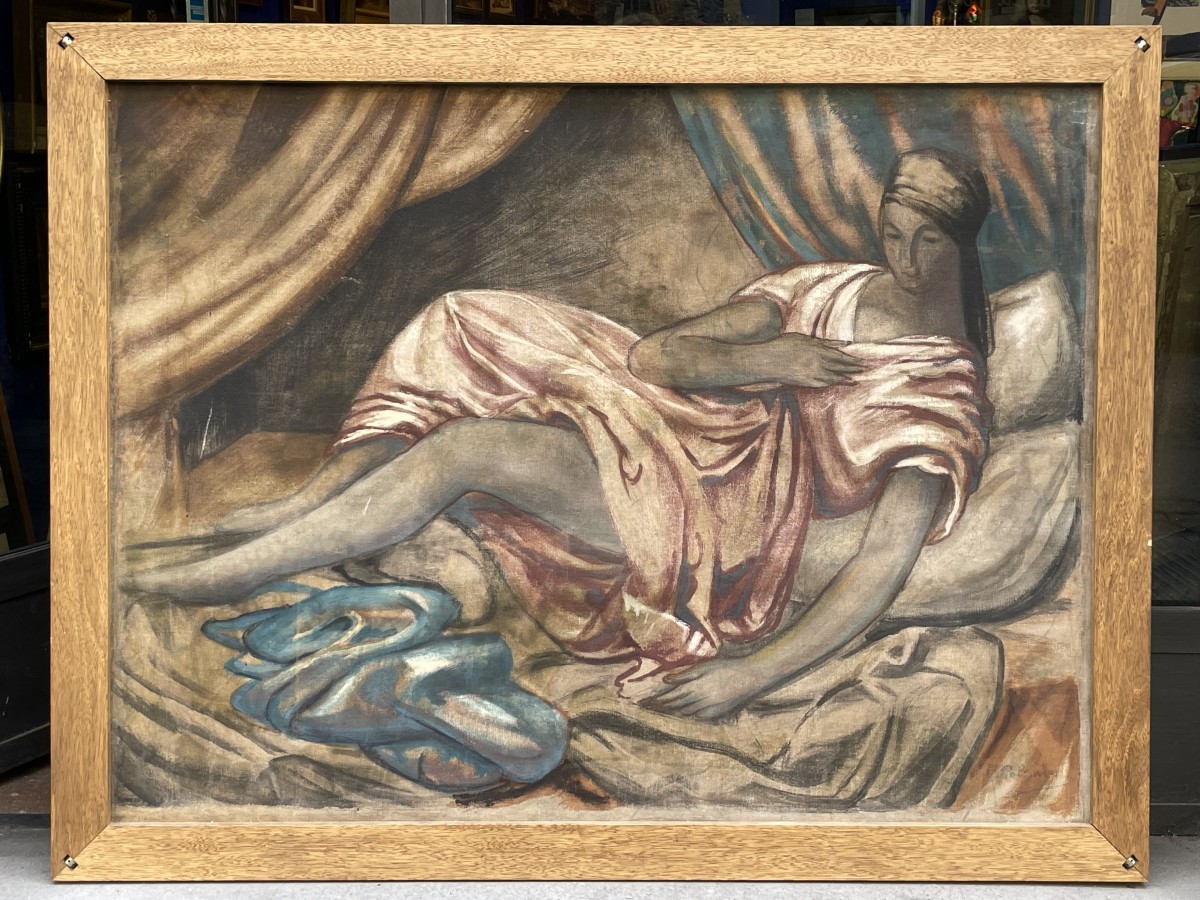
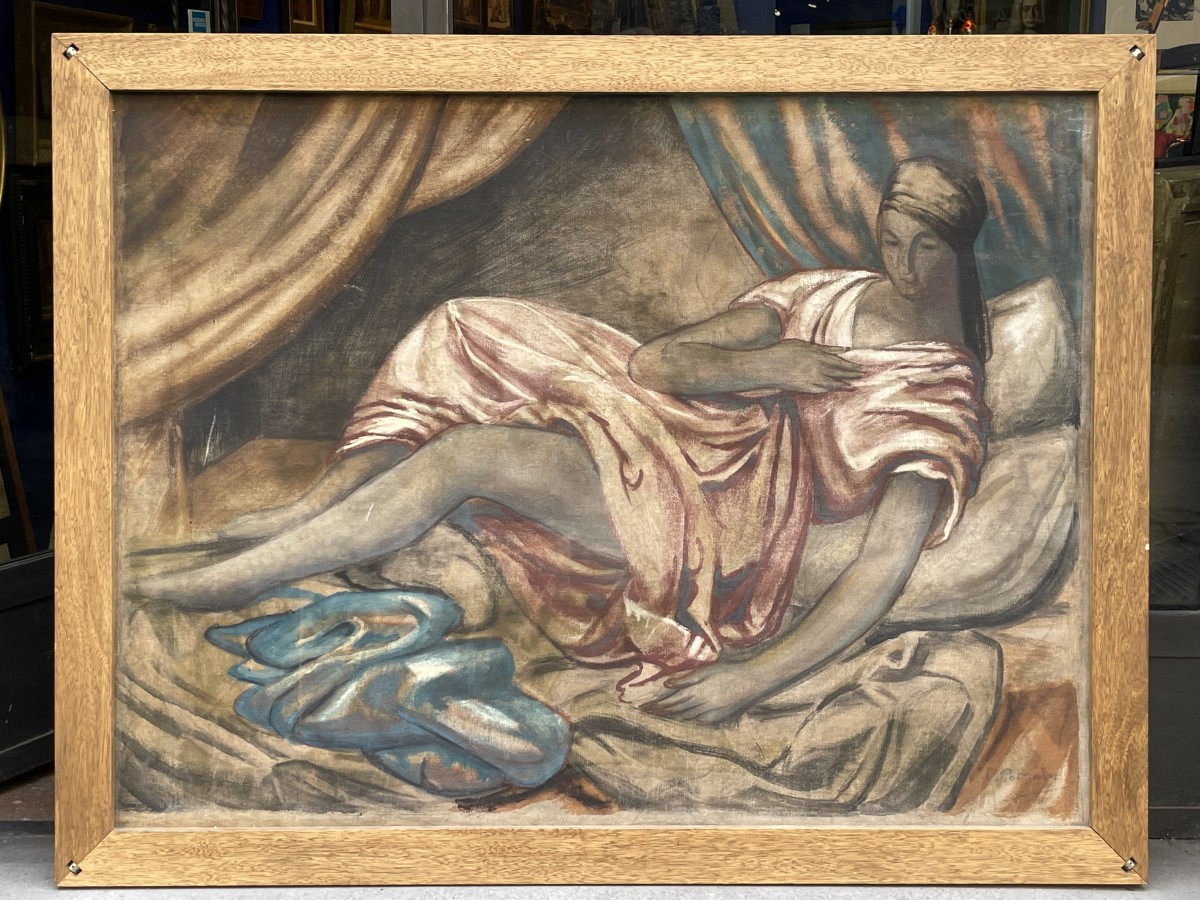
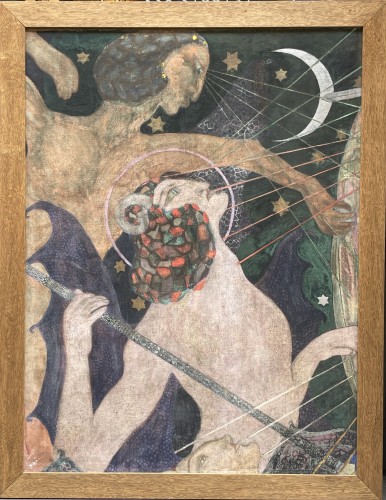
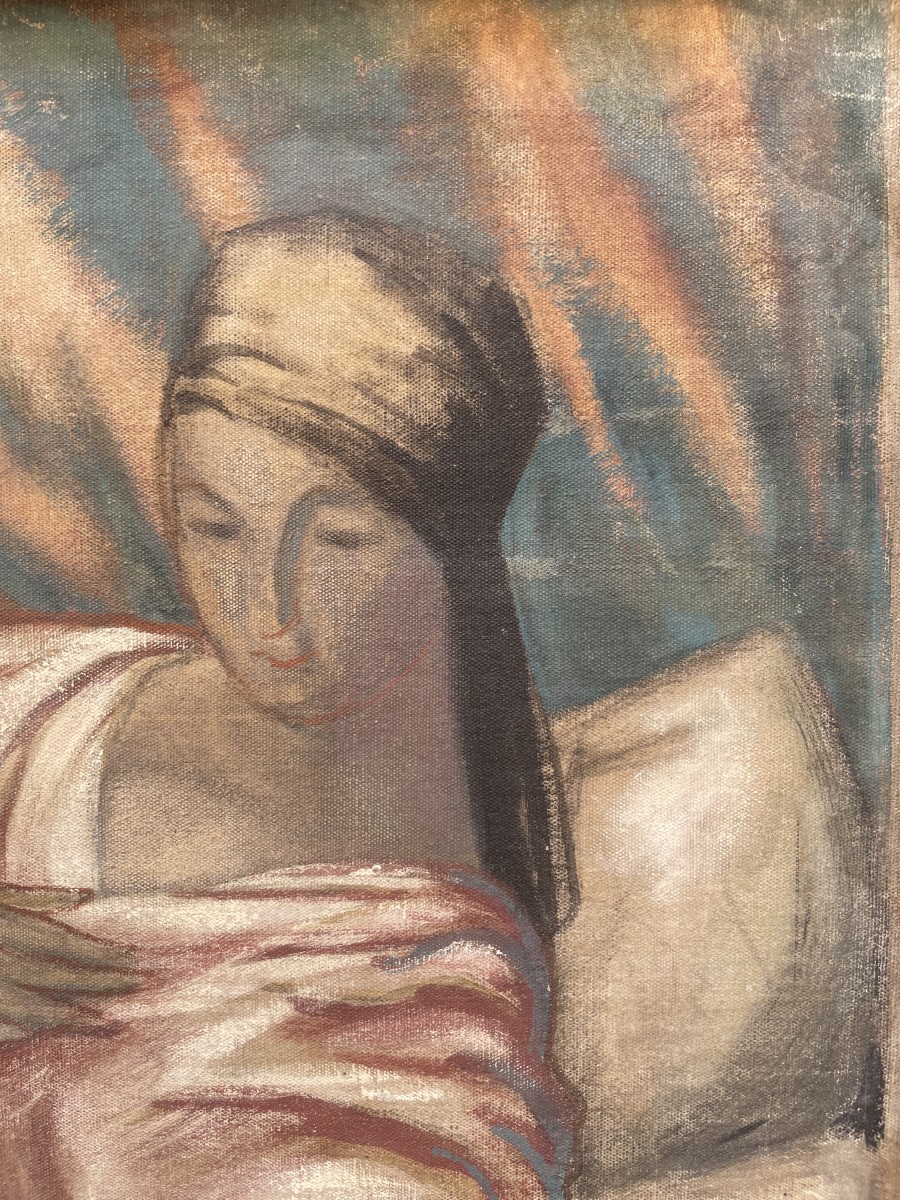
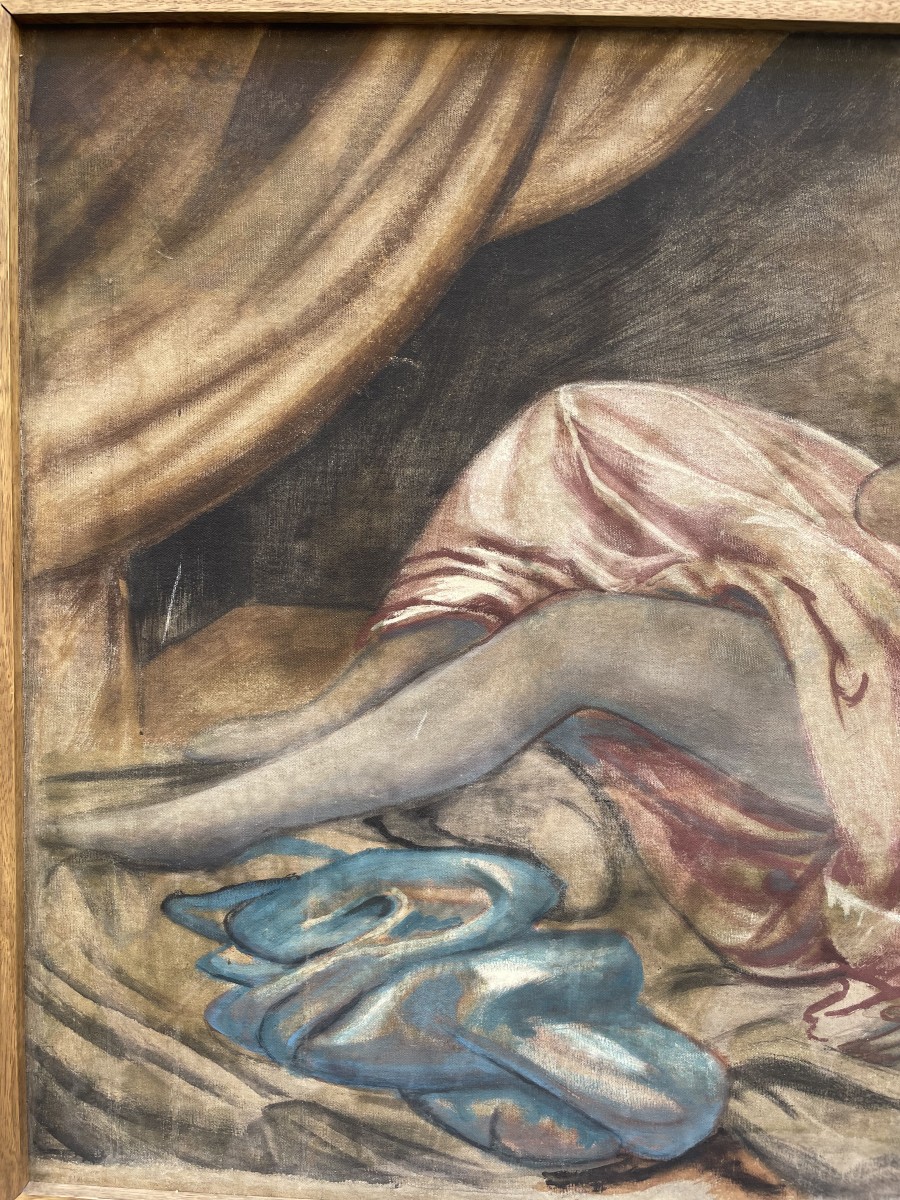
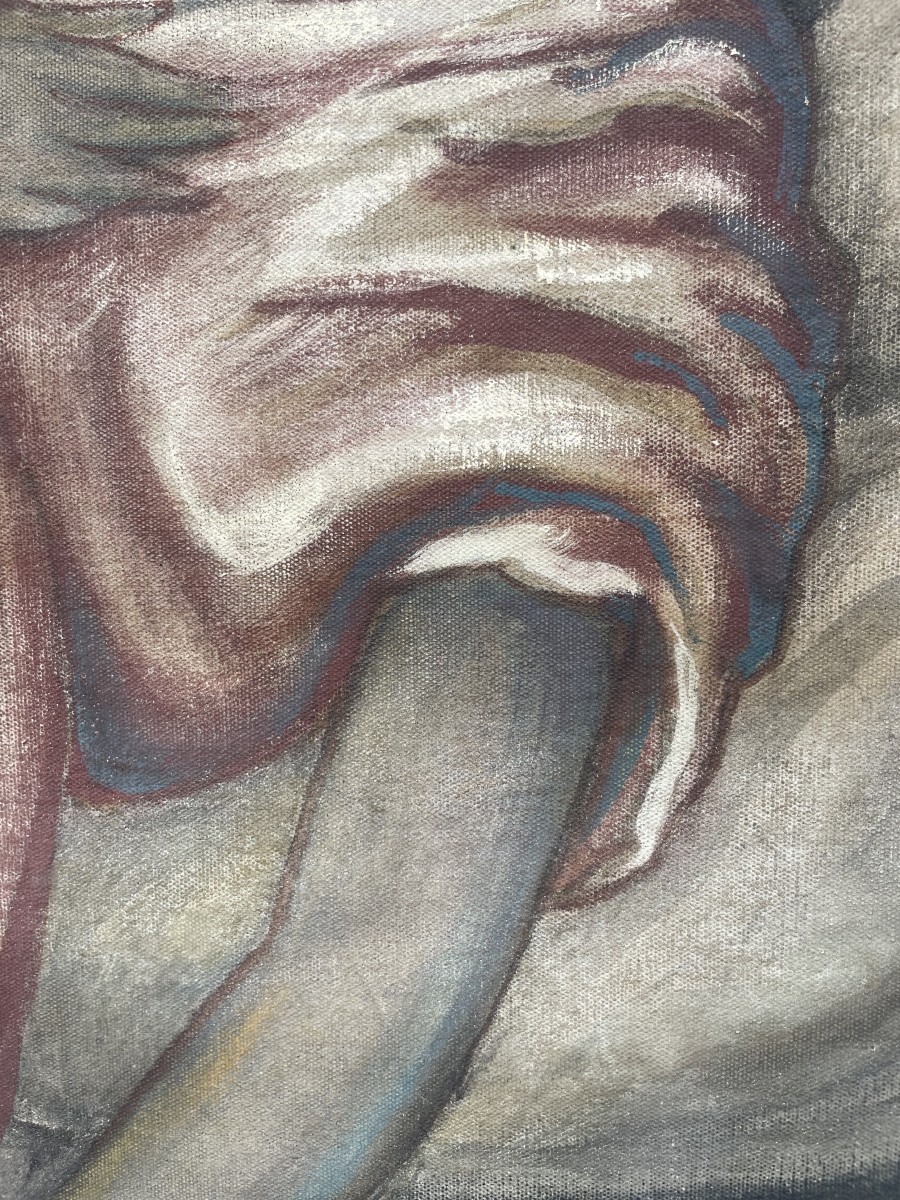
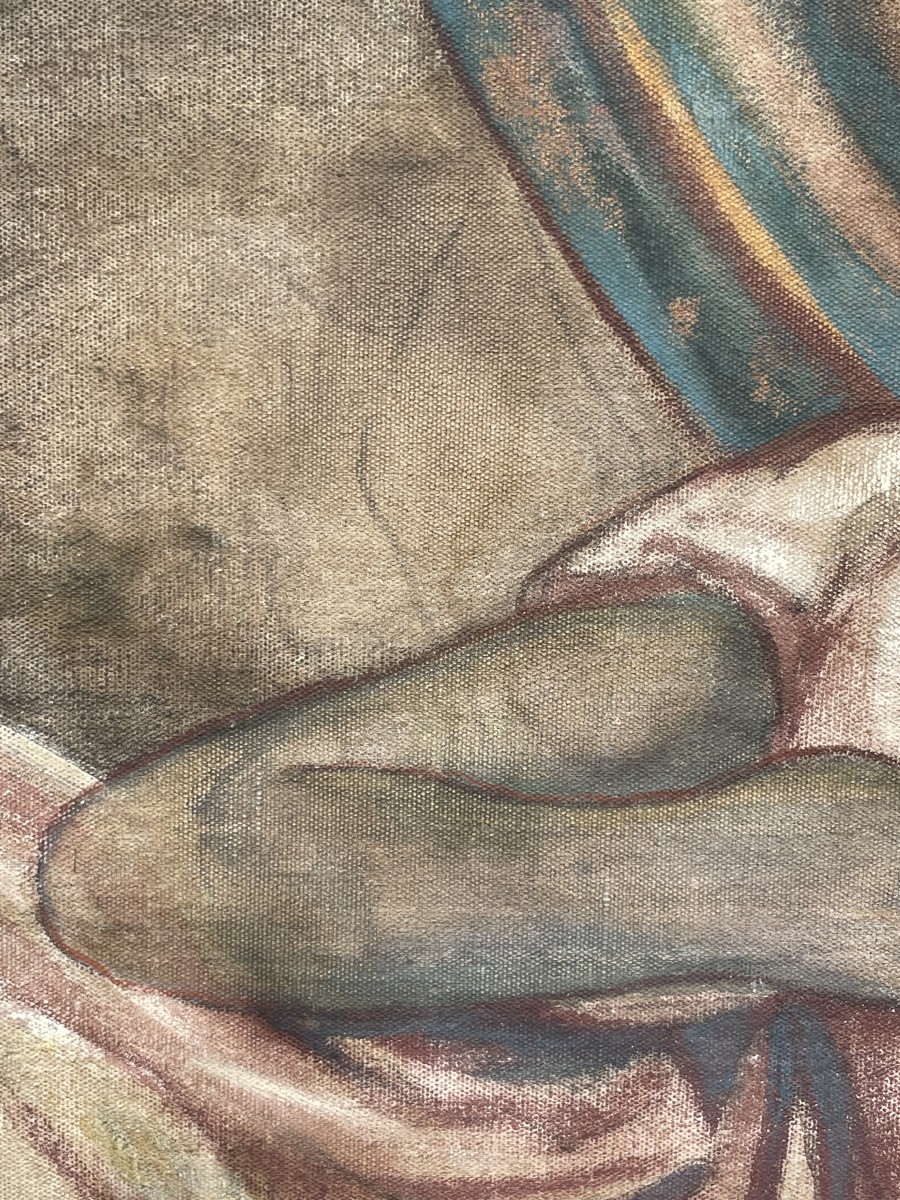
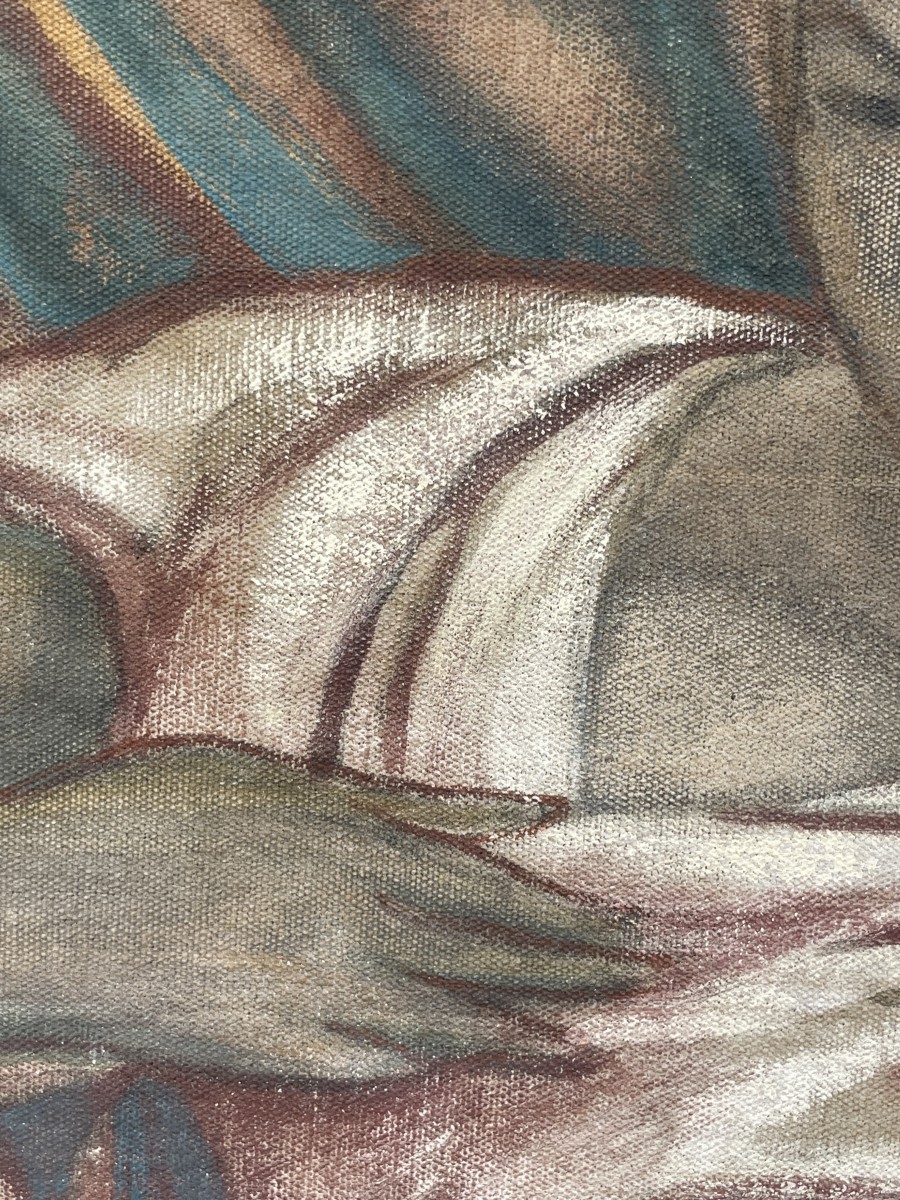
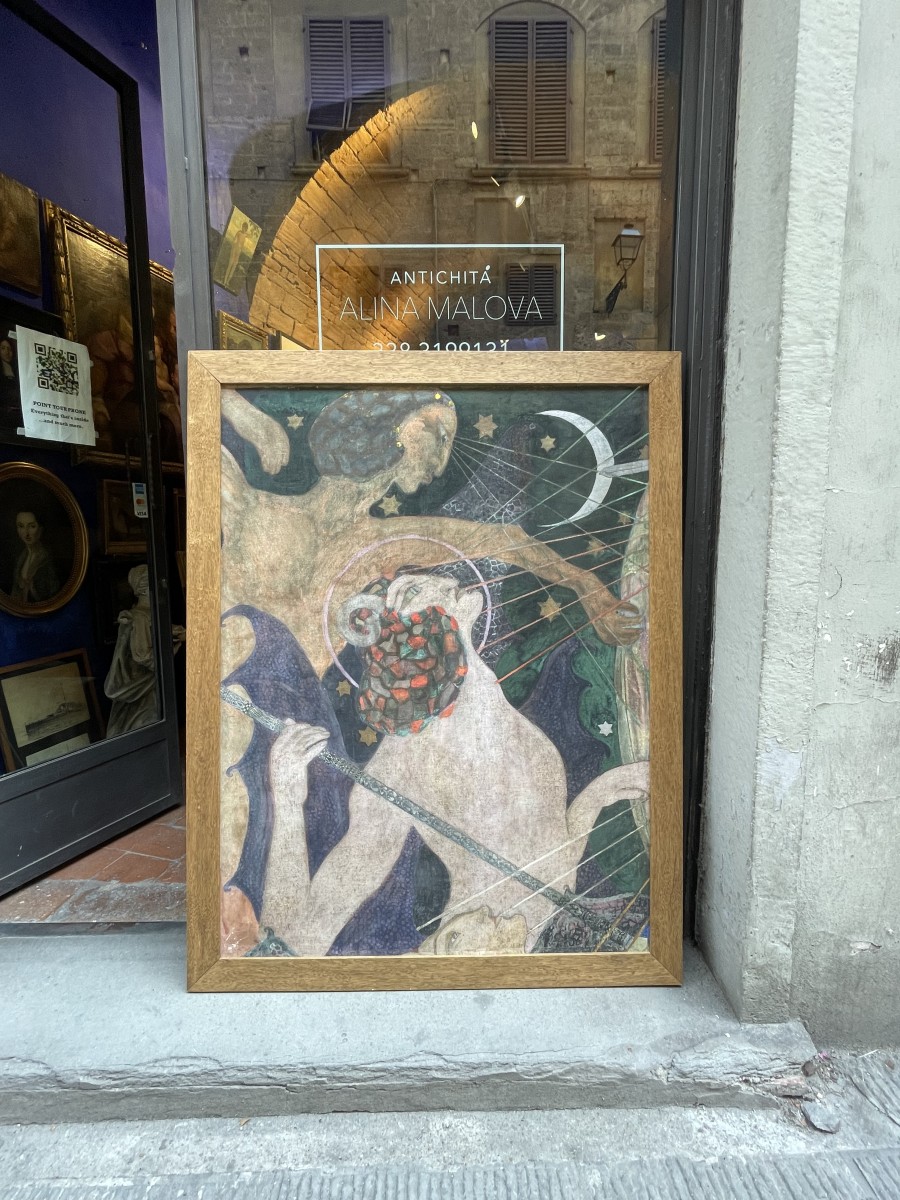
This canvas preserves two distinct aspects of his activity. On the recto is a female figure wearing a tjubetejka, conceived as an independent painting. On the reverse survives a substantial fragment of an earlier theatrical set, subsequently reused by the artist as a support.
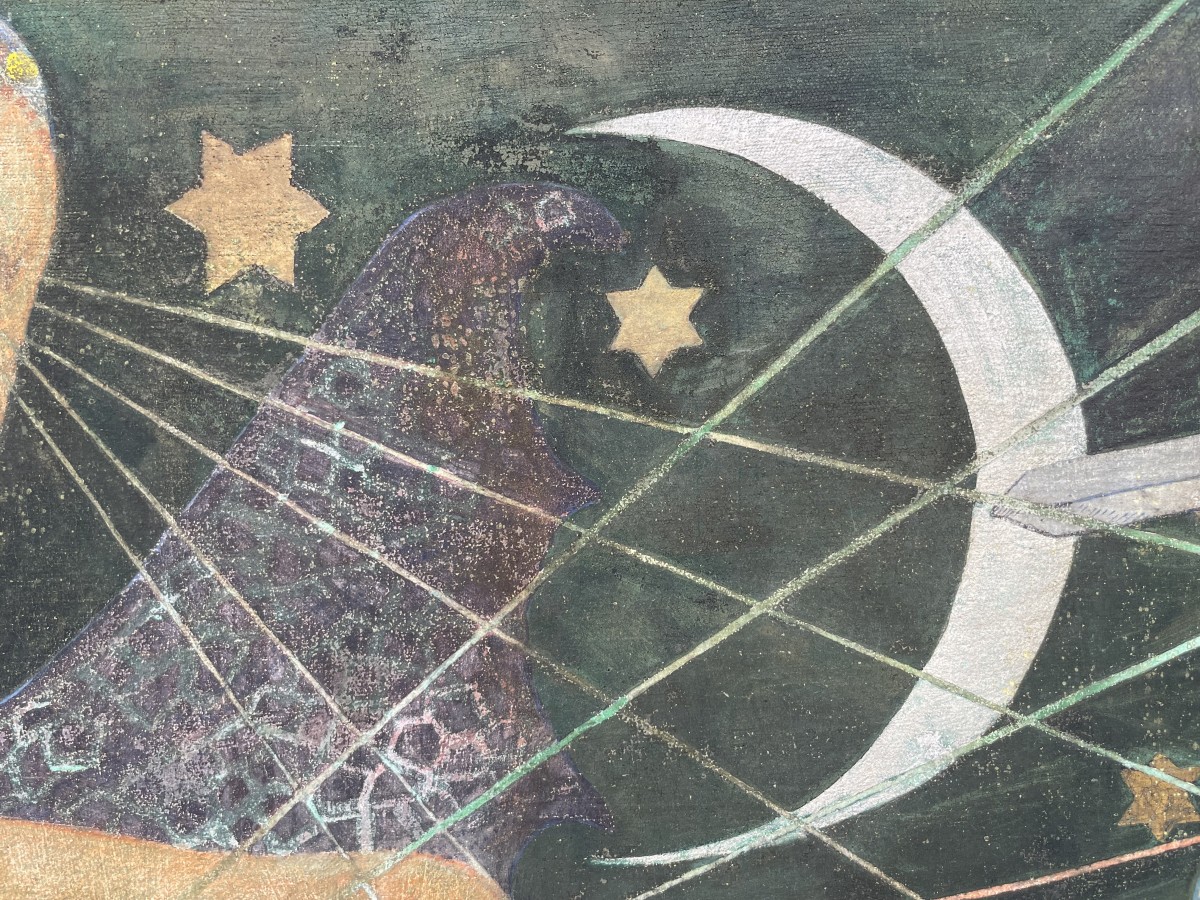
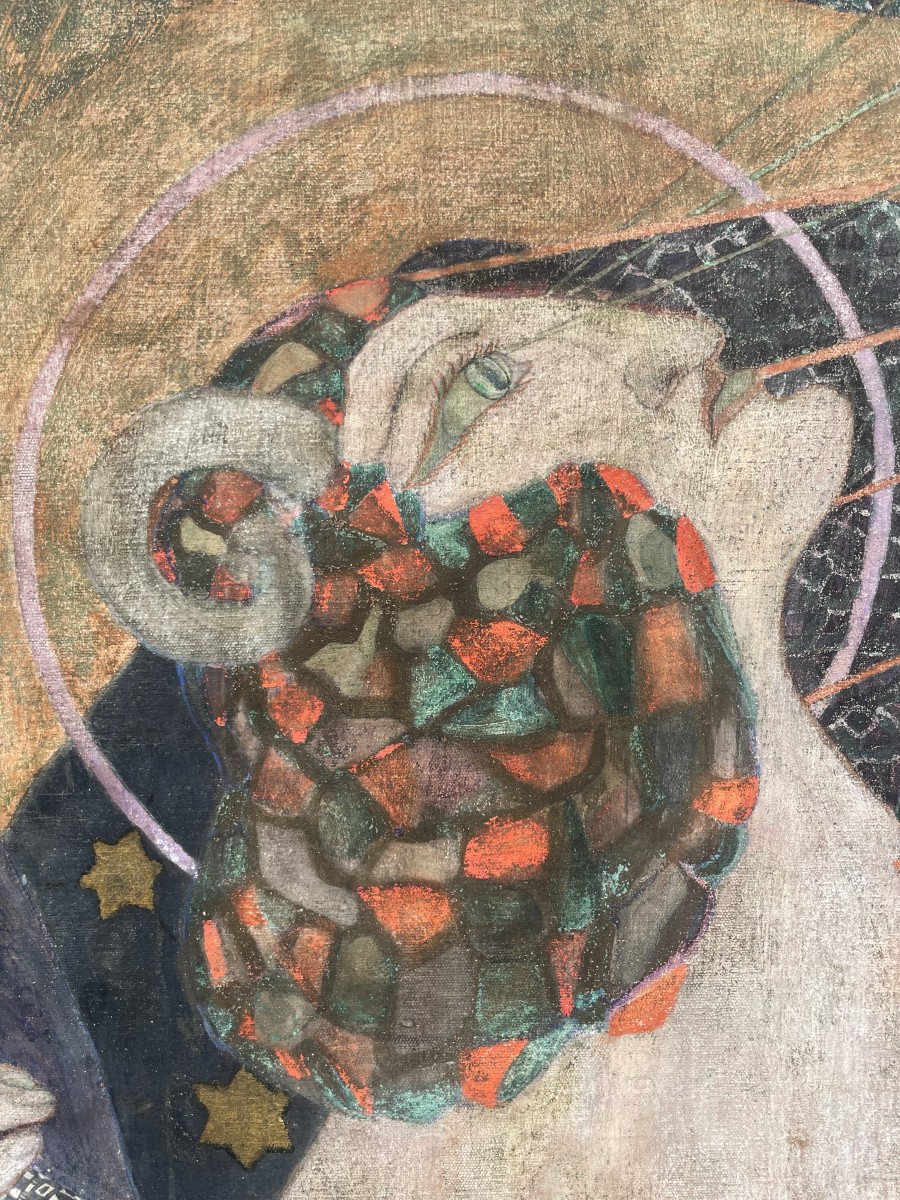
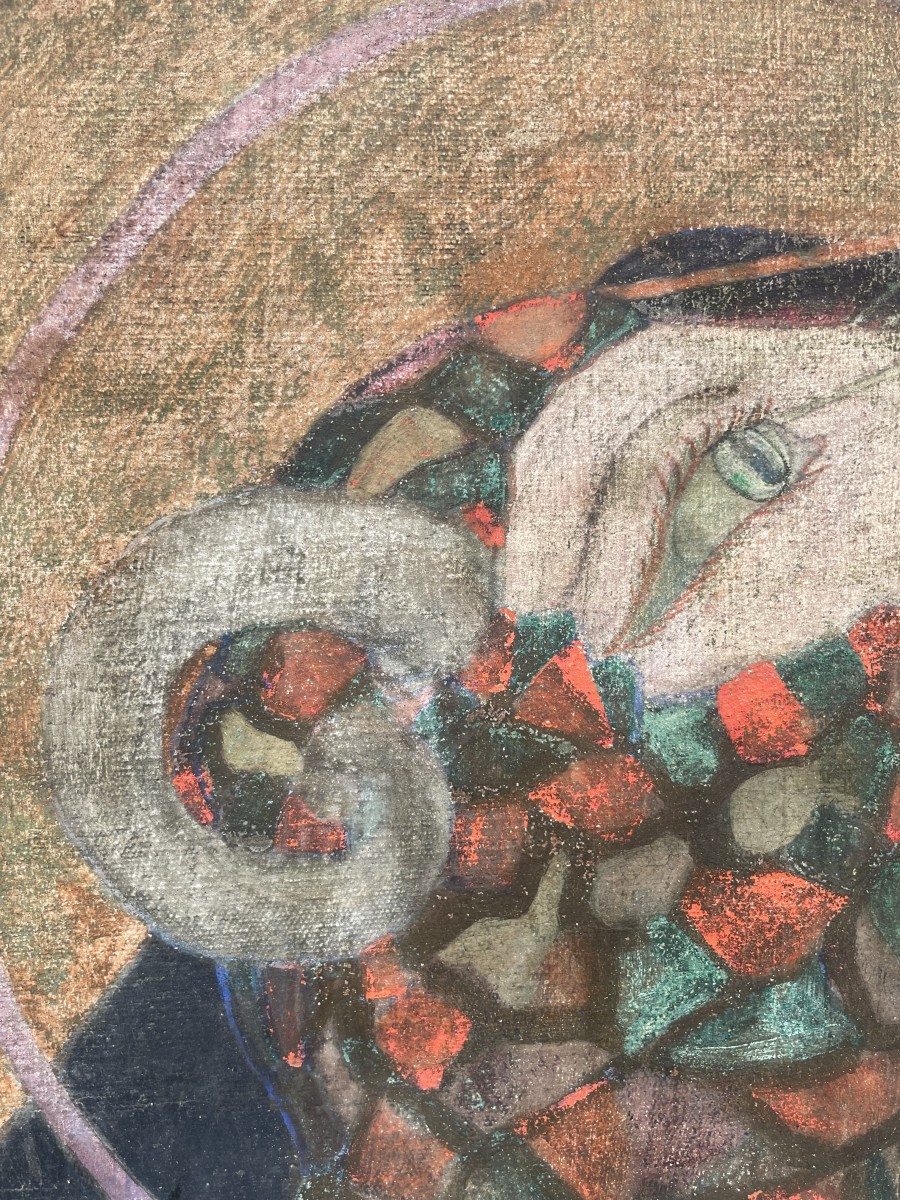
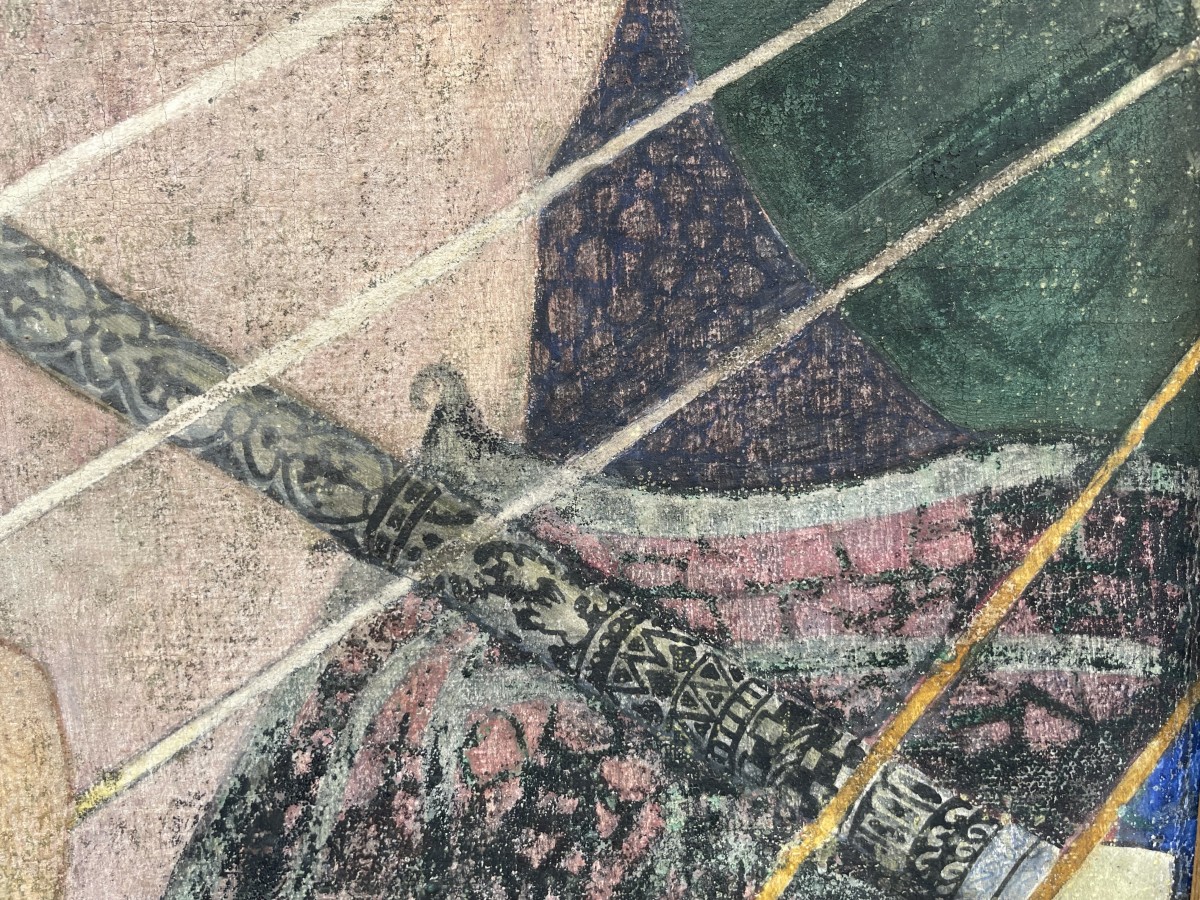
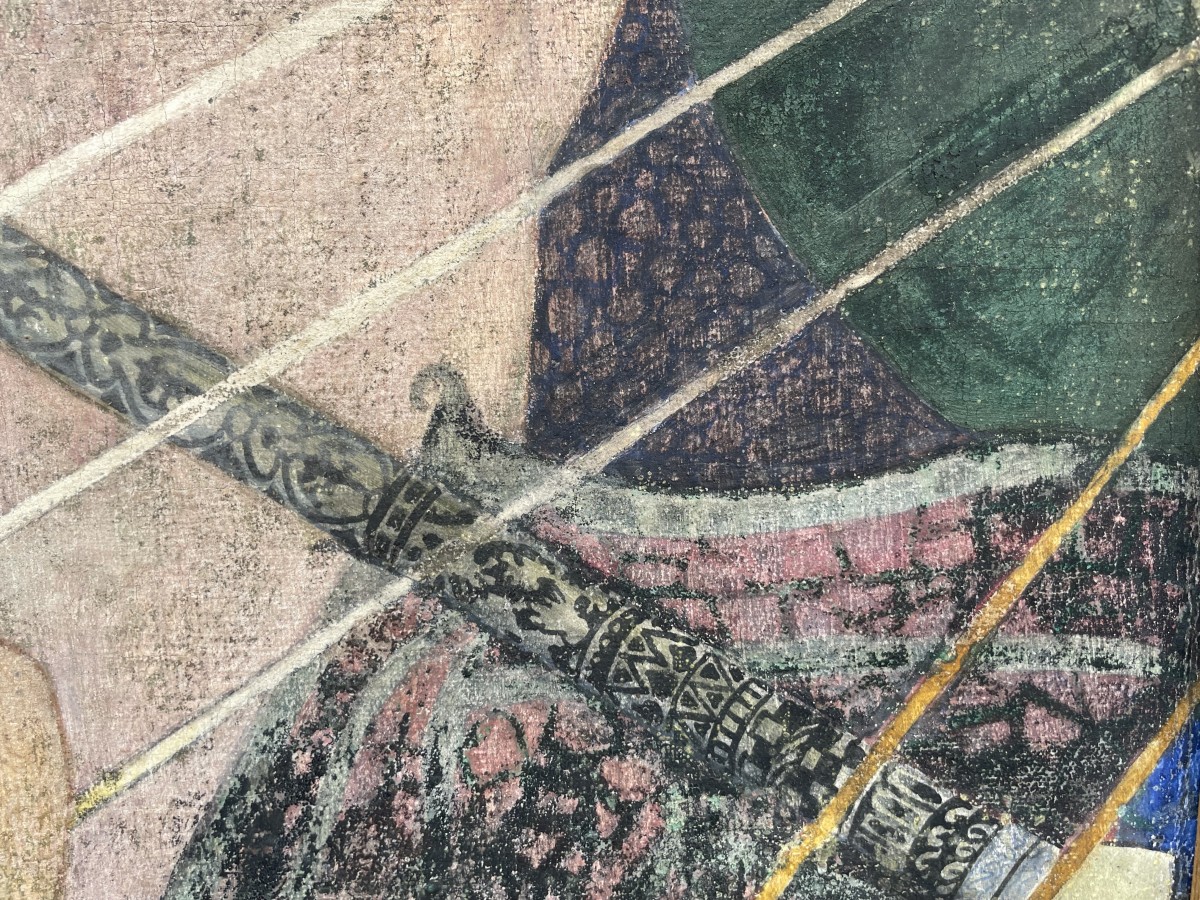
The composition is dominated by a large radiant star, a mysterious horned being with a star on its forehead and an extensive network of luminous rays. It formed part of a large-scale theatrical set, later reused by Polunin as the support for the painting on the recto.
Another fragment belonging to the same theatrical set appeared on the English art market several years ago at Duke’s Auctioneers. It depicts a haloed archangel holding a sword, confirming that the two canvases originally formed part of the same scenic composition, now dispersed.
During the research undertaken to identify the theatrical production for which this set was created, an interesting comparison emerged with the project for Liturgie, one of the most audacious productions conceived within the circle of the Ballets Russes, although it was never brought to the stage. Despite remaining unrealised, Liturgie is of particular interest because it documents one of the most radical lines of experimentation developed within the Ballets Russes. Conceived in seven scenes devoted to a religious subject, it explored a new theatrical language based on the rhythm of movement, the stylisation of gesture and a conception of dance far removed from naturalism.
During his career, Polunin collaborated on productions including Le Coq d’Or, Sumurun, The Miracle, The Merchant of Venice, The Tempest, The Blue Bird and The Way of the World. Although the original production to which this fragment belonged has not yet been identified, the canvas constitutes a rare document of Vladimir Polunin’s activity as a theatrical scene painter. Further research may eventually make it possible to identify the production for which this set was created.