Offered by Ars Antiqua

Old Masters paintings, furniture, sculptures and modern art
Giuseppe Picano (Sant'Elia Fiumerapido, 1732 – c. 1810)
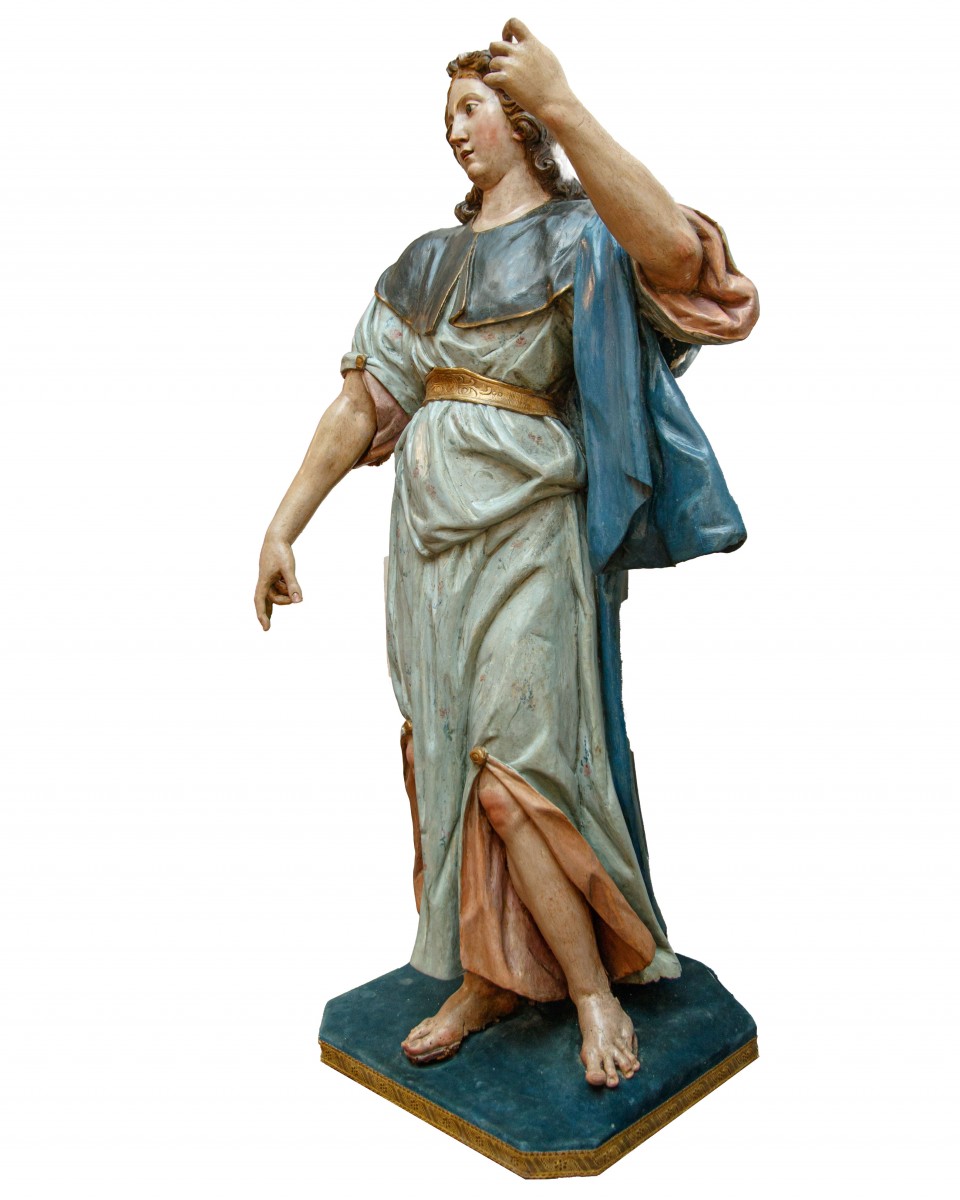
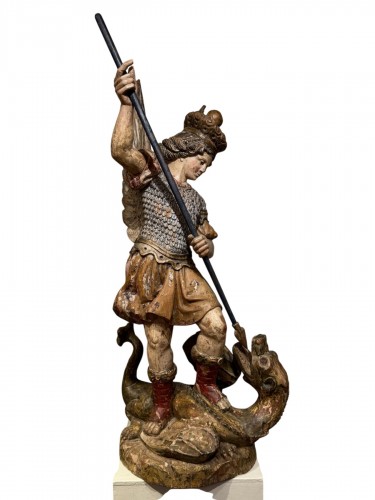
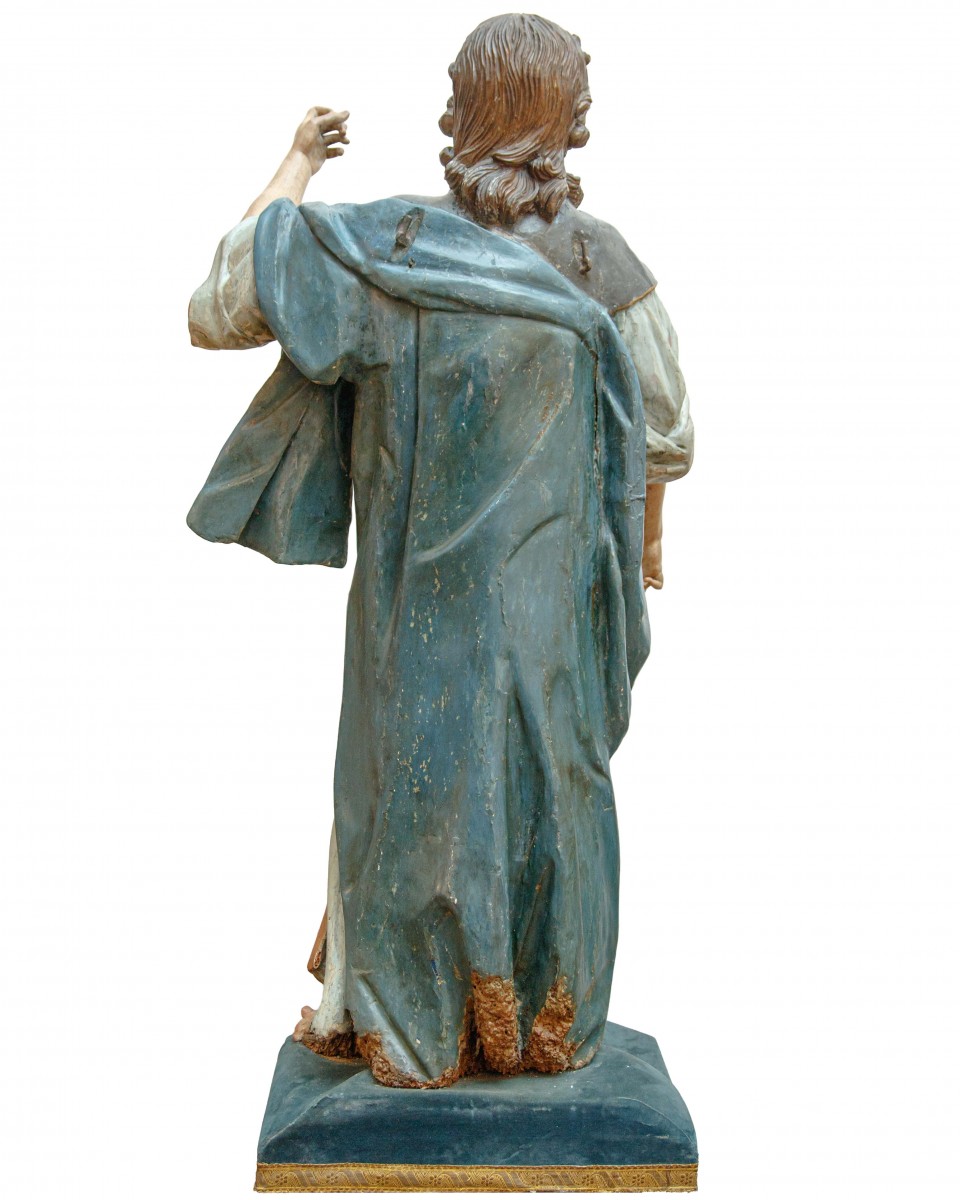
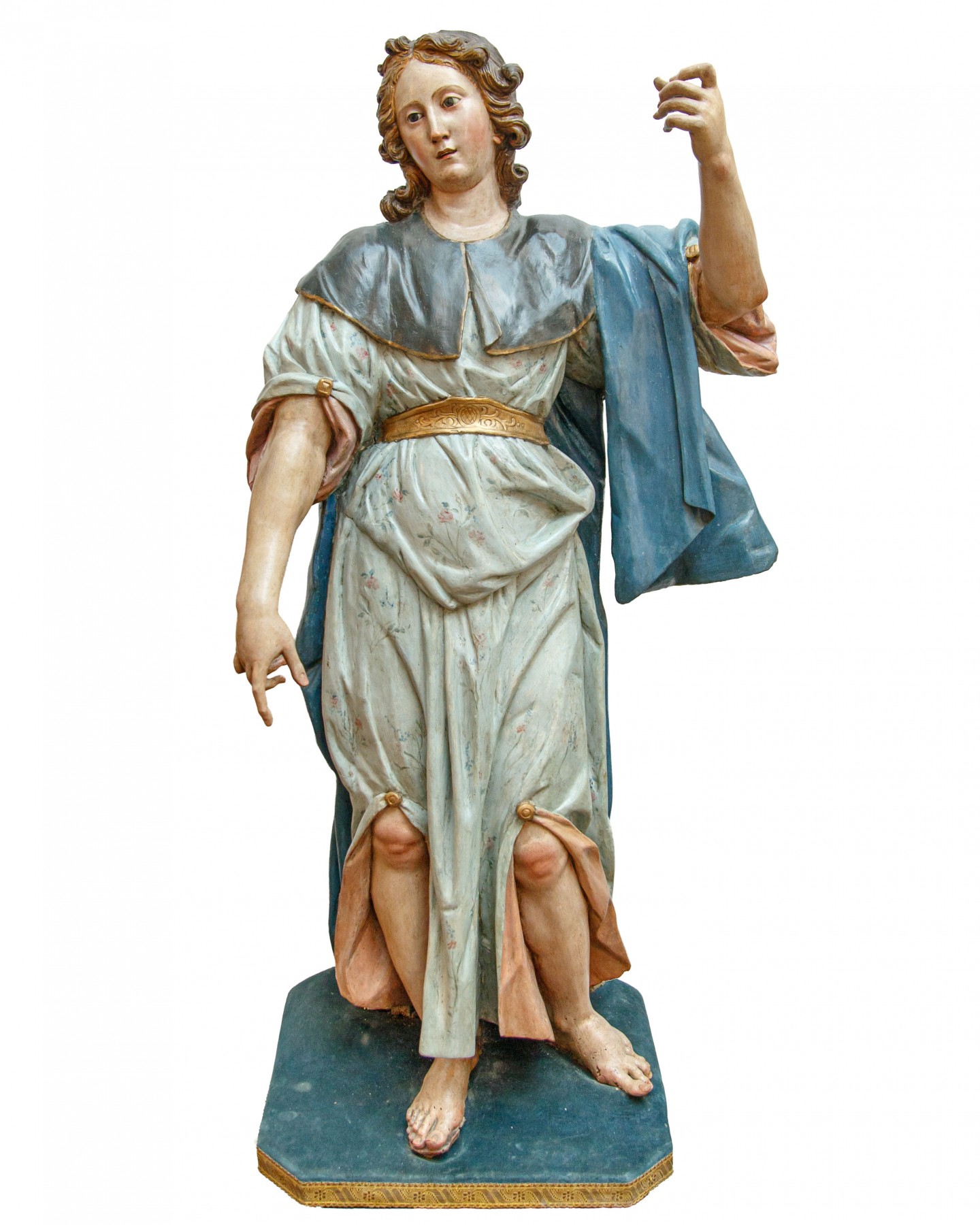
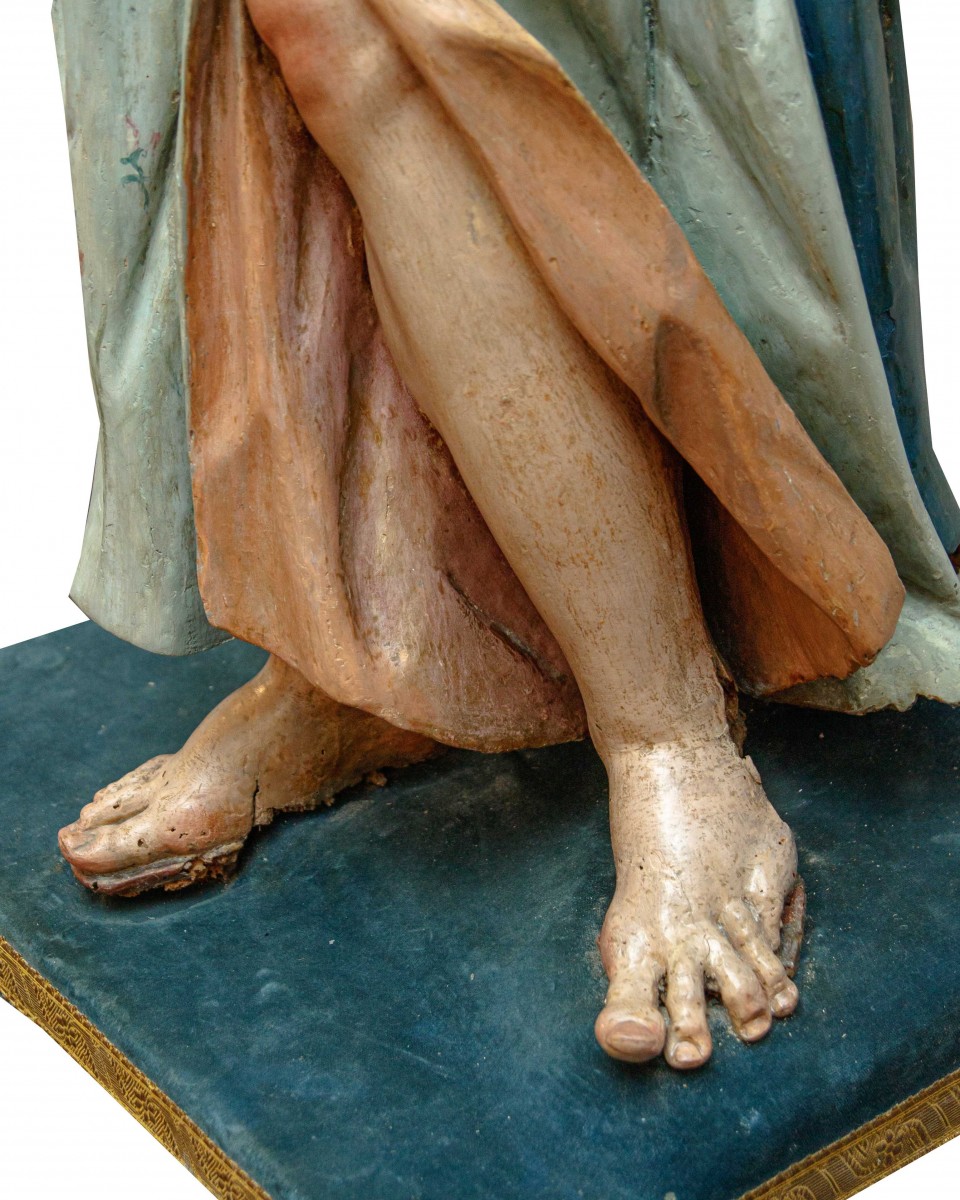
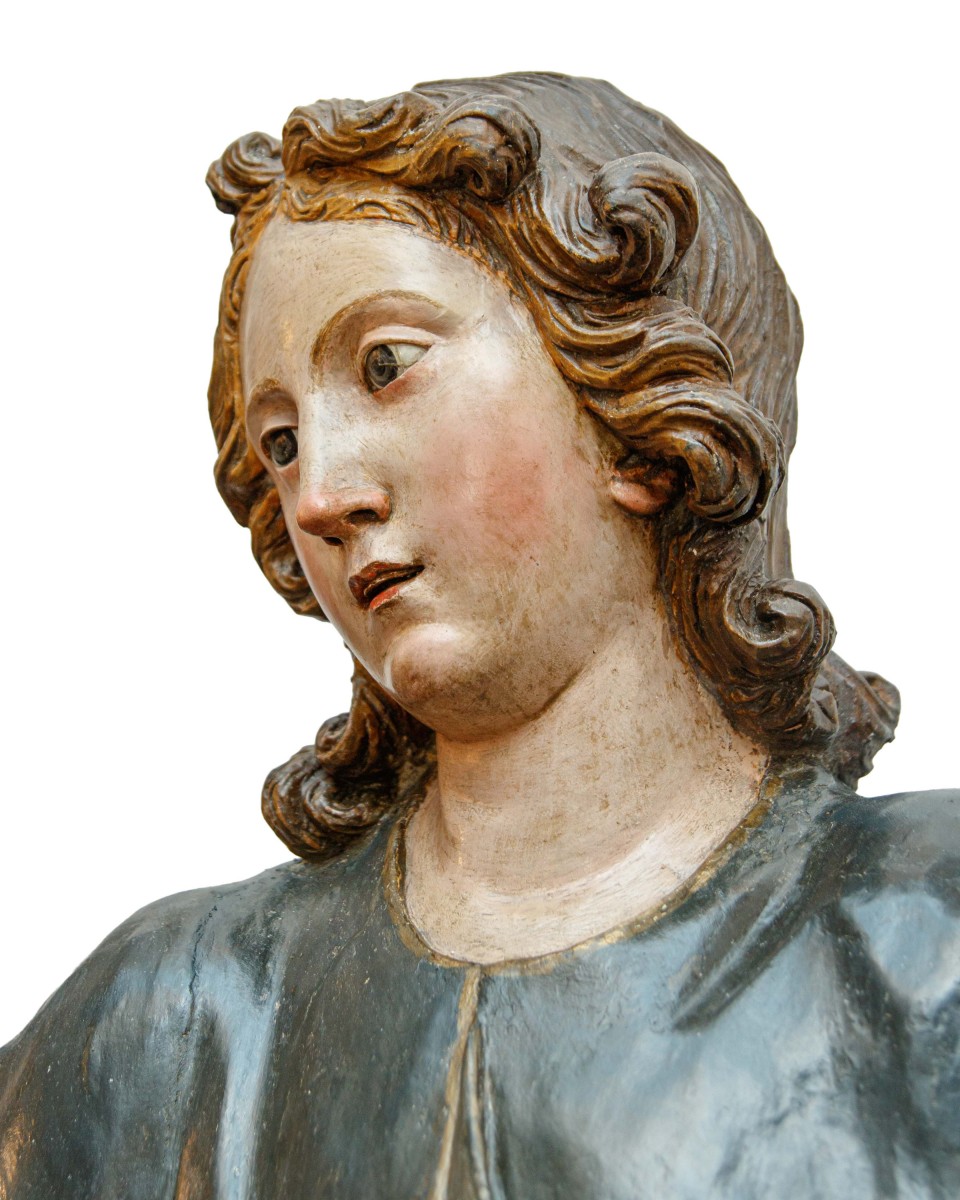
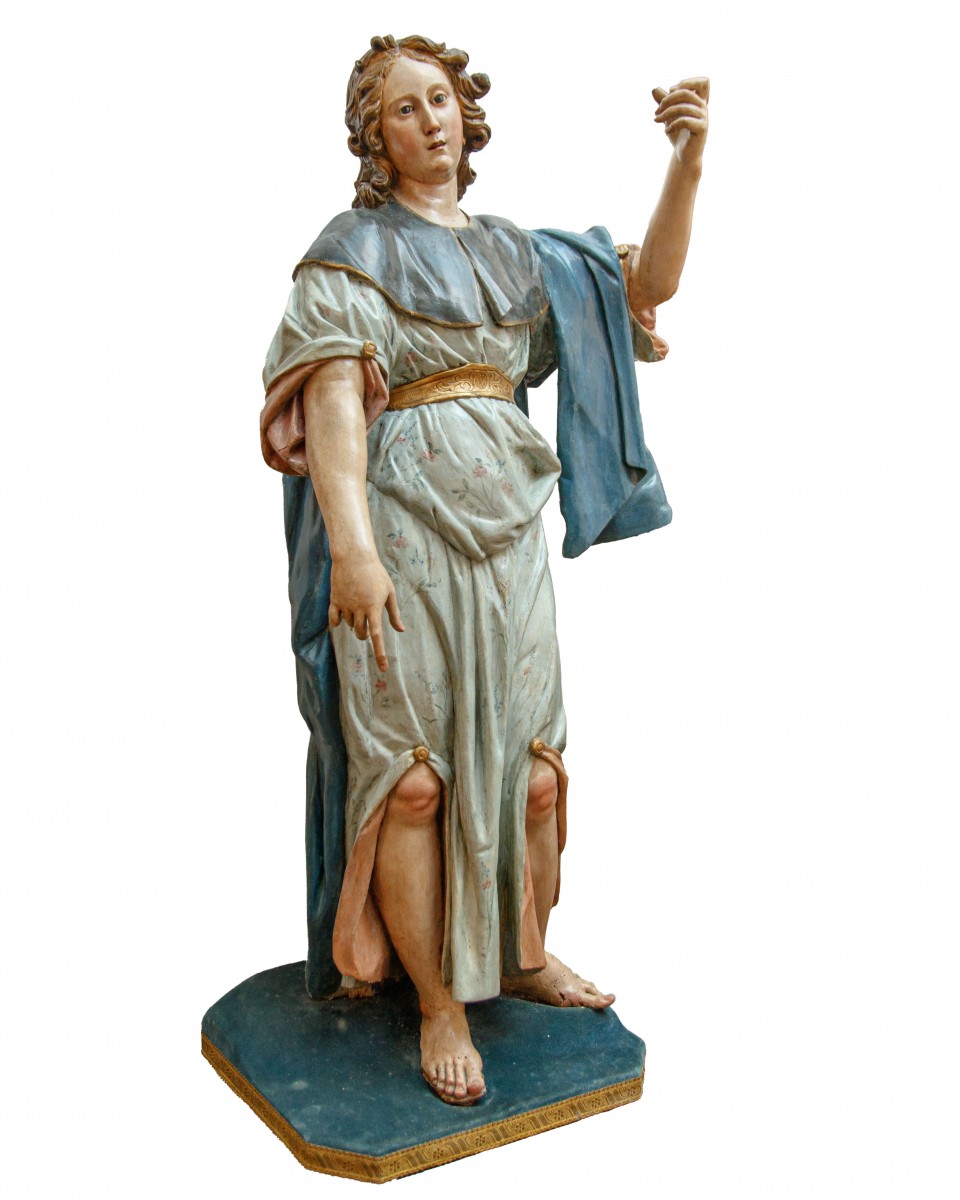
Archangel Raphael
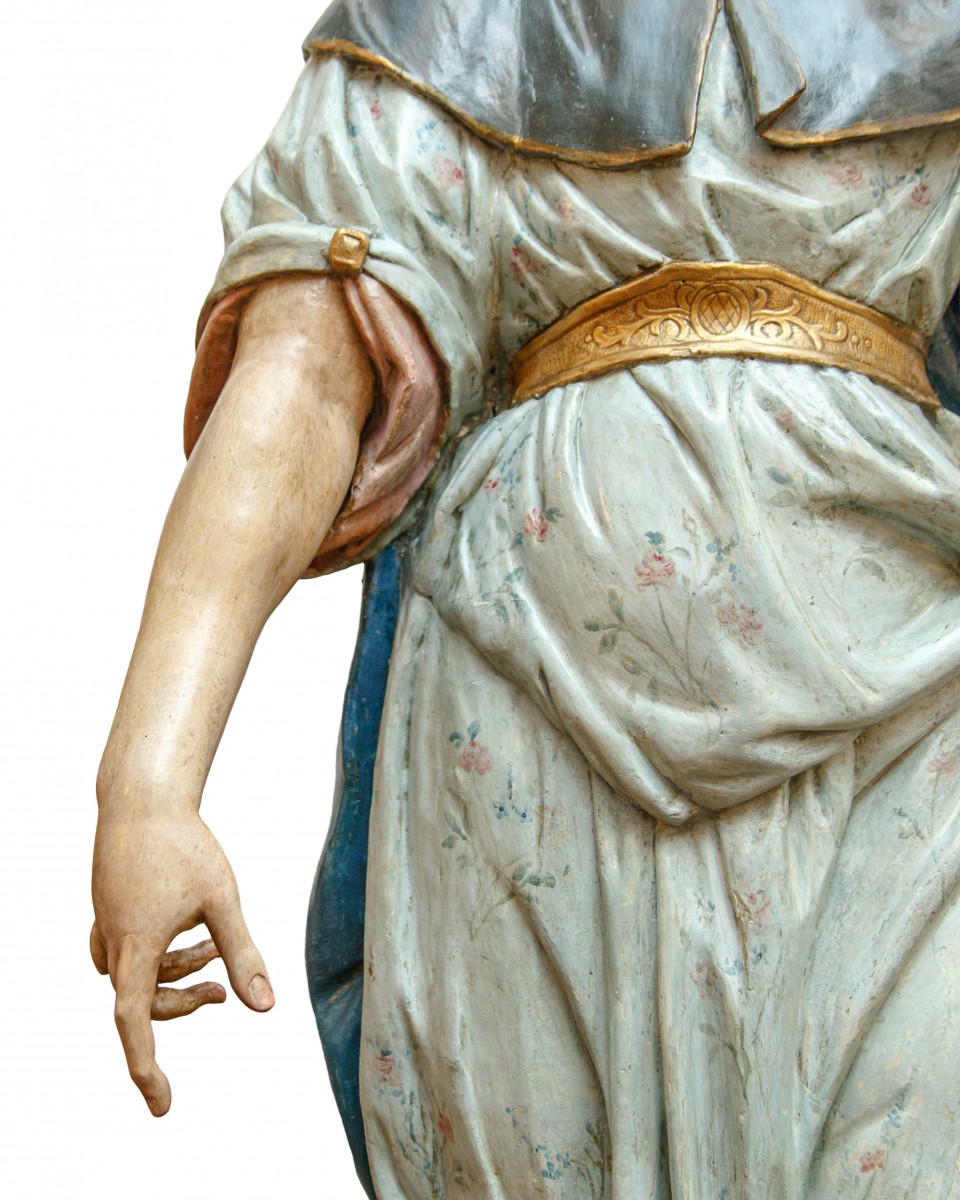
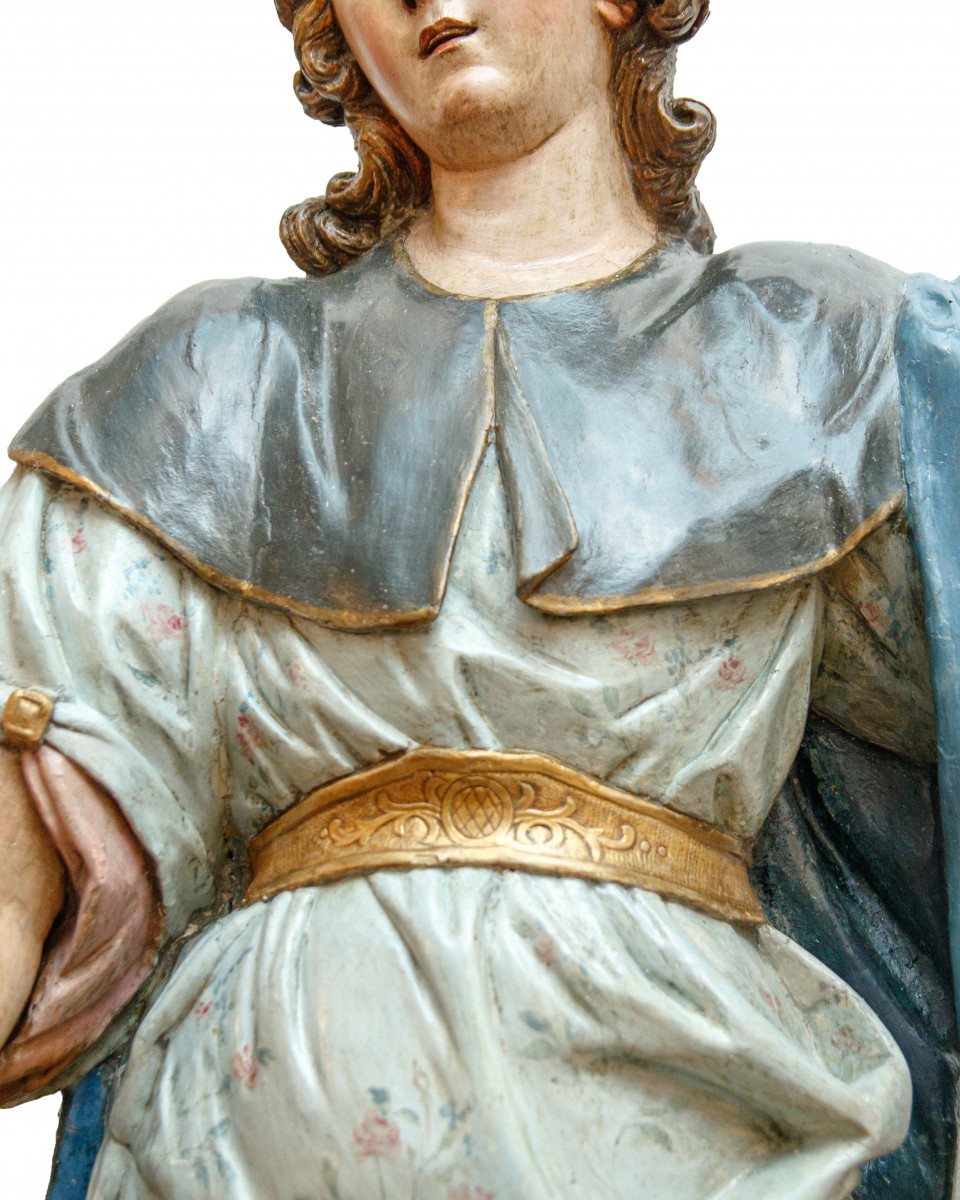
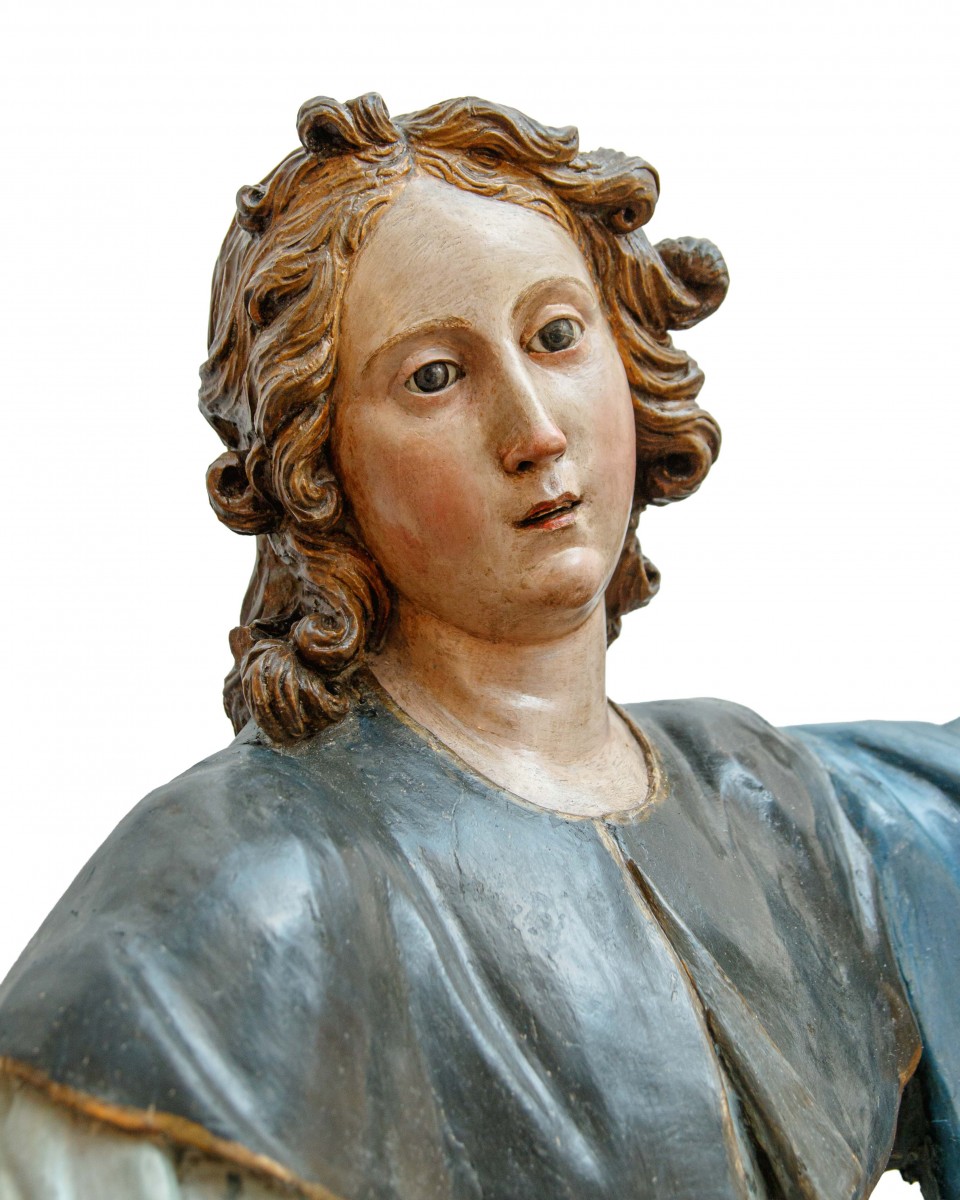
Polychrome wood and glass eyes, h 139 x 60 x 40 cm
Critical entry by Prof. Giuseppe Sava
Considered one of the most fascinating figures of 18th-century Naples, Giuseppe Picano distinguished himself as a supreme master of wooden sculpture, capable of instilling in wood the same softness and emotional intensity as stone. Born into an artistic family—his father Francesco Antonio was himself a sculptor—in Sant'Elia Fiumerapido (in the present-day province of Frosinone) in 1732, and later active in Naples until the early 19th century (he died around 1810), Picano trained at the vibrant heart of the mature Neapolitan Baroque. He refined his artistic disposition under the guidance and patronage of the Neapolitan masters Luigi Vanvitelli and his son Carlo, later becoming the principal collaborator and close follower of Giuseppe Sanmartino—creator of the famous Veiled Christ (now in the Sansevero Chapel in Naples)—and of Giacomo Colombo.
A notable result of this fruitful synergy was the extraordinary 1740 Nativity group preserved in the Church of Santa Maria in Portico in Naples: a unique monumental complex comprising 24 life-size figures that can still be admired in their original setting today. Although operating mainly between Naples and Campania and favoring wood for his sacred subjects, Picano demonstrated extraordinary versatility, successfully trying his hand at marble, terracotta, stucco, and papier-mâché. His stylistic hallmark is defined by a vibrant realism, evident in expressively rendered faces and complex chiaroscuro drapery that imparts dynamism to his figures, as seen in the statues of saints and sacred figures within the Church of the Santissima Annunciata in Naples. His fame led to the dissemination of his works throughout the Kingdom, leaving highly valuable testimonies in Calabria as well, in addition to the numerous saints and Nativity figures that still adorn the altars of multiple Neapolitan churches today, confirming his status as a key bridge between the theatricality of the mature Baroque and the restraint of the emerging Neoclassical taste.
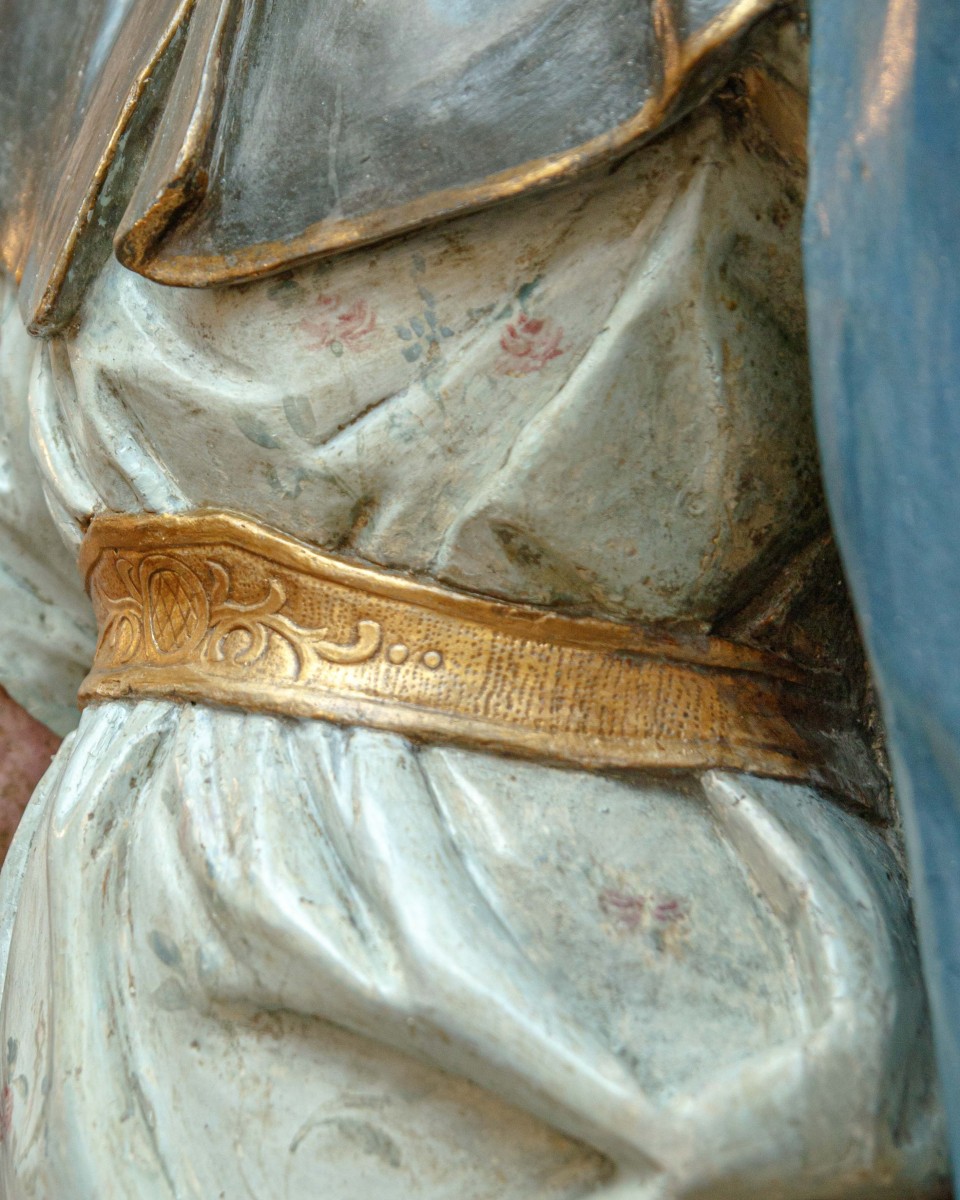
From a technical standpoint, after carving the wood—typically softwoods such as linden or poplar—Picano applied a thin linen or hemp canvas soaked in glue, useful for concealing the grain and joints of the material. Over this base, he laid down numerous layers of gesso and animal glue, which were meticulously polished until a smooth, silky surface resembling porcelain was achieved. This preparation was essential for the rendering of flesh tones: the artist did not merely paint the surface, but created an artificial "skin" capable of reacting naturally to light. Paint application was carried out using successive oil glazes, with a palette ranging from pearlescent tones for Madonnas to browner, more weathered hues for hermit saints or prophets. To heighten realism, Picano employed the technique of "flushing" (rossori): applying rosy or vermilion shadings on knuckles, elbows, cheeks, and around the eyelids, simulating the blood flow of a living body. A distinctive technical detail, inherited from the great Neapolitan Nativity tradition, was the insertion of back-painted crystal or glass eyes, as in the case of the Archangel Raphael under consideration: these were inserted from inside the skull or fitted with extreme precision into the orbits, conferring a supernatural depth of gaze upon the statue. Finally, the application of a varnish—often mastic or amber-based—provided that subtle luster that mimicked the natural moisture of skin and eyes, rendering his sculptures fascinating in their lifelike verisimilitude.
Delevery information :
Les frais d'expédition seront calculés au moment de la commande en fonction de la destination, des dimensions et du poids du tableau, ainsi que de l'assurance couvrant la valeur totale de l'œuvre.
For paintings purchased from abroad: following payment, the application process to obtain the export license (ALC - Attestato di Libera Circolazione) will be initiated. All antiques shipped abroad from Italy require this document, which is issued by the Ministry of Cultural Heritage. The procedure may take 3 to 5 weeks from the date of request; therefore, the painting will be shipped as soon as the document is obtained