Offered by Galerie Gilles Linossier
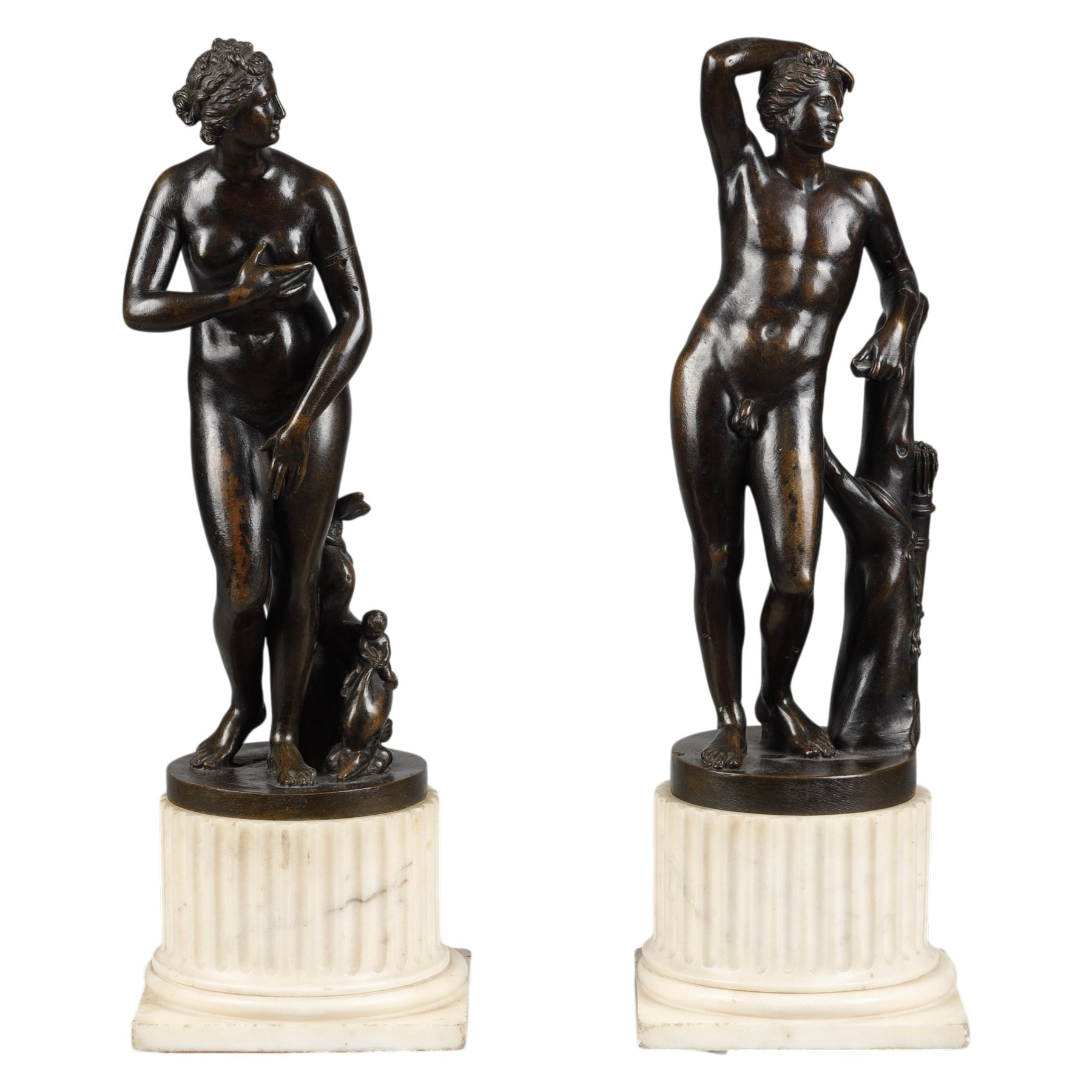
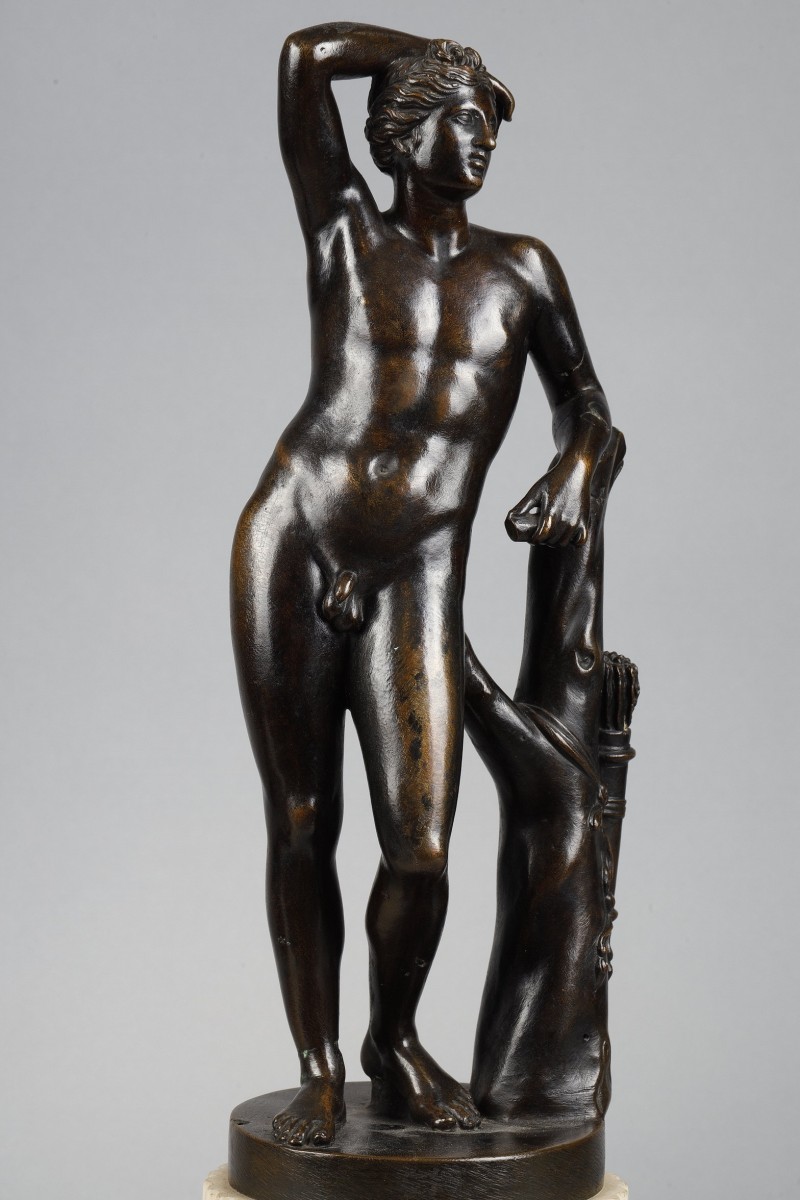
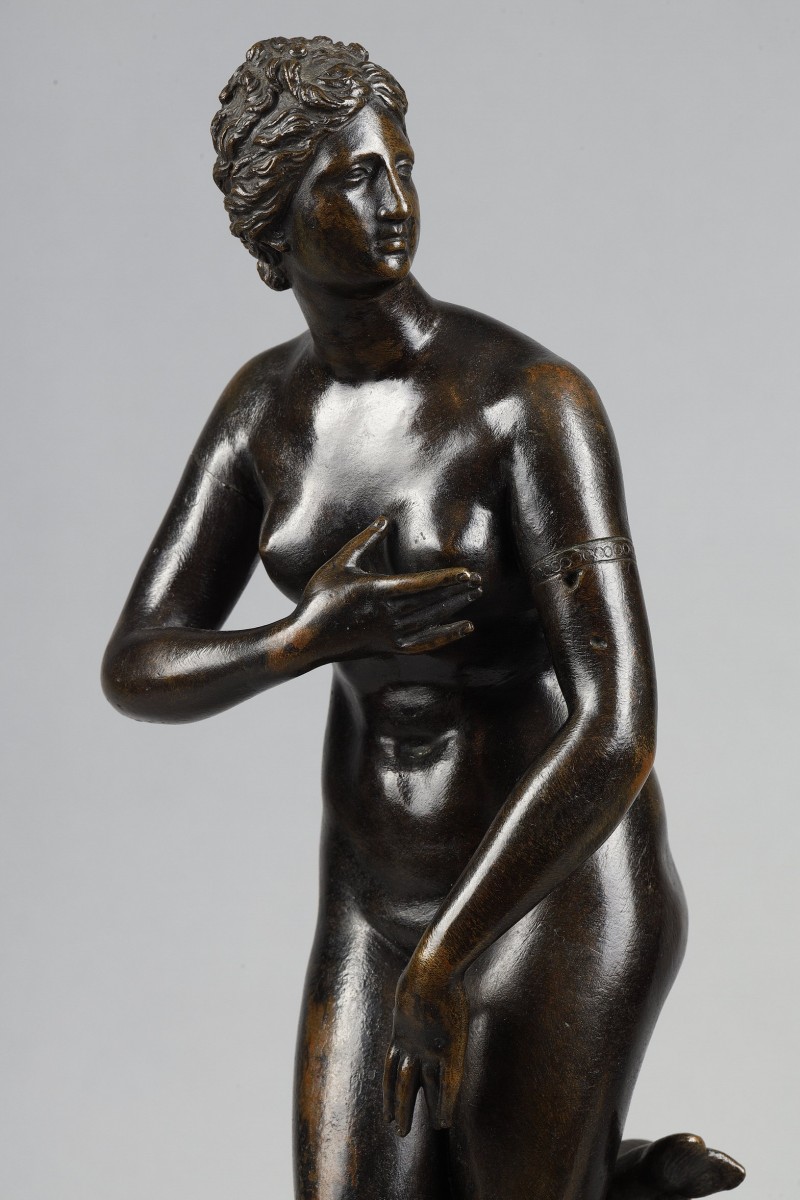
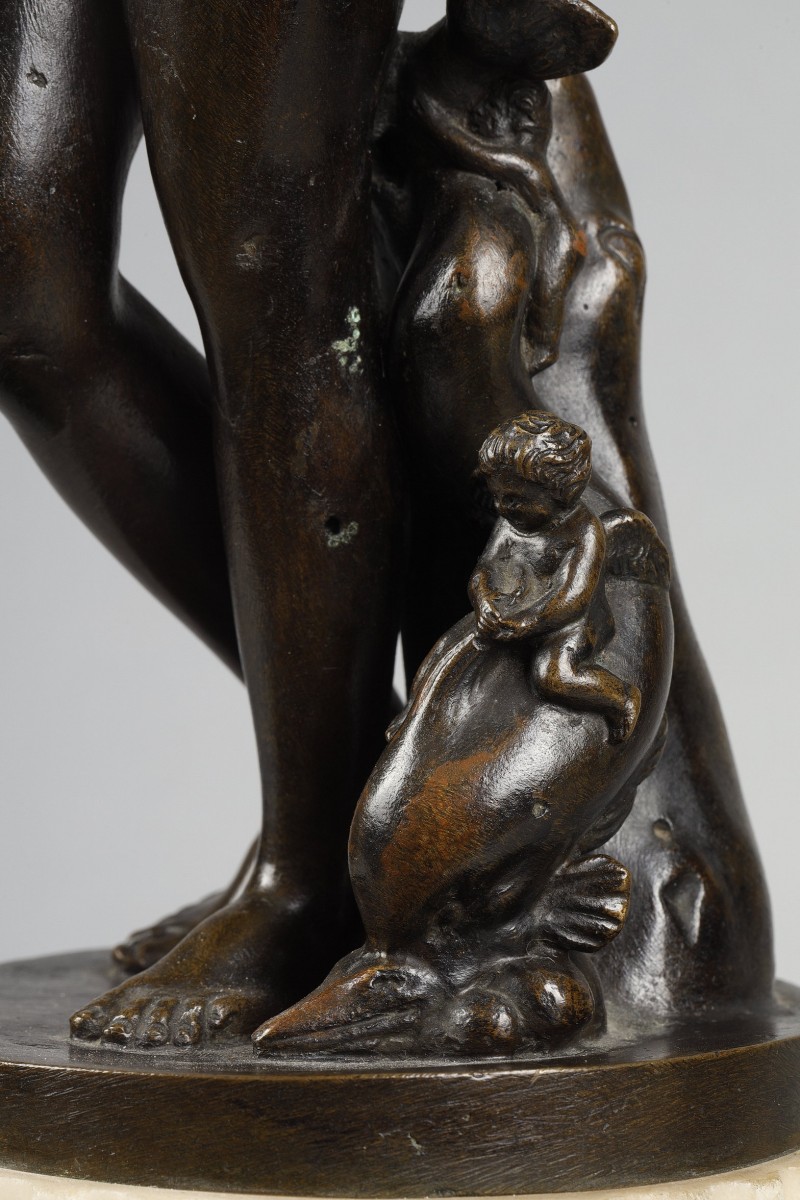
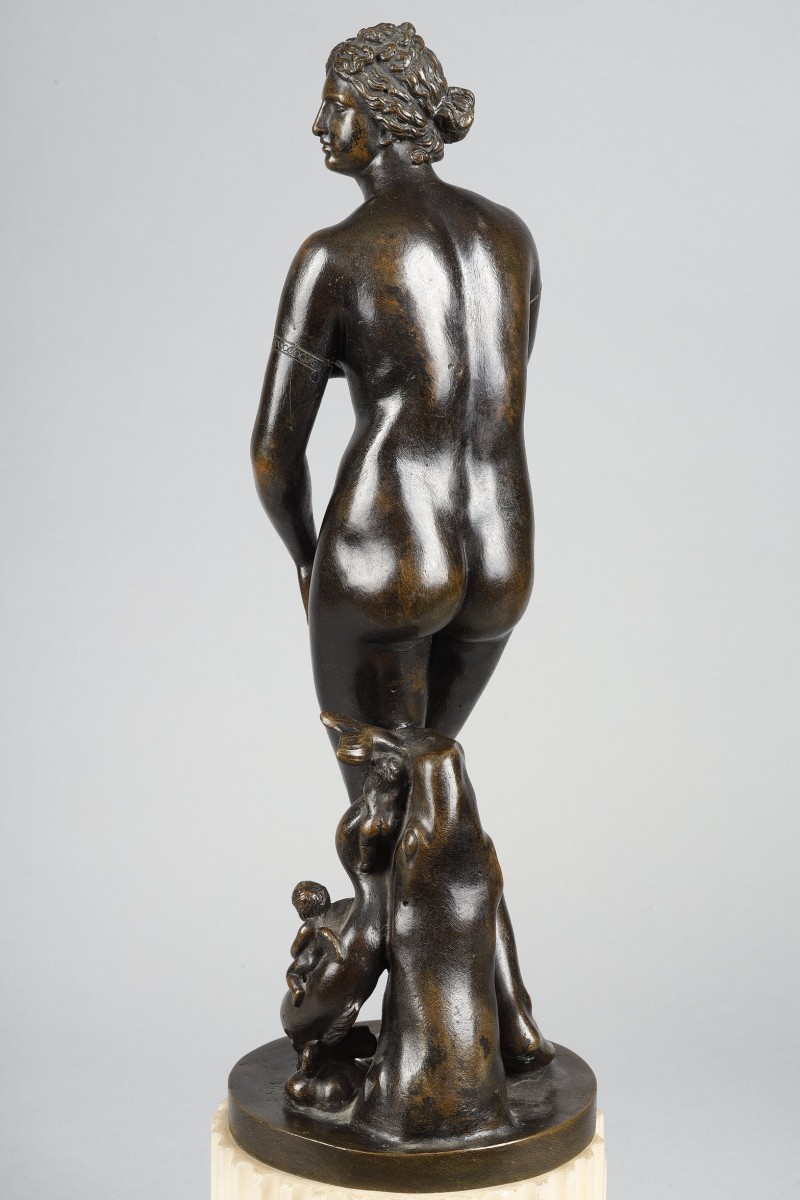

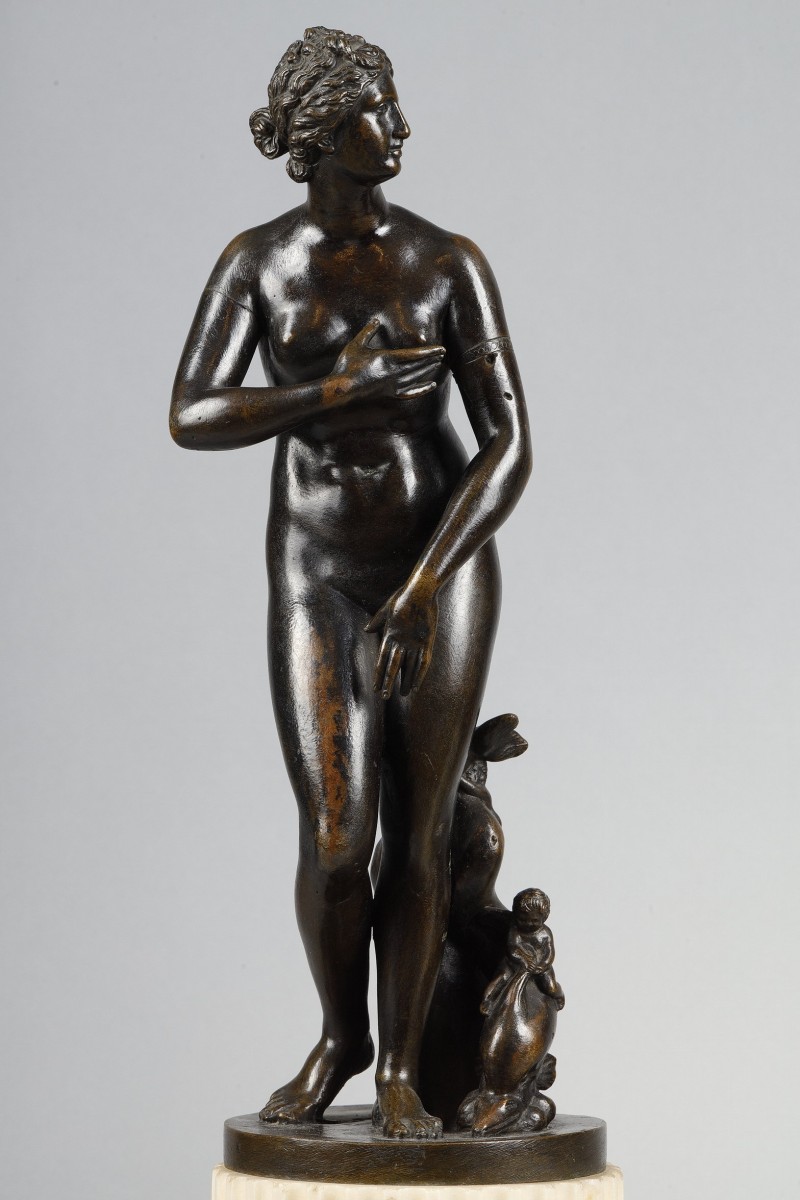
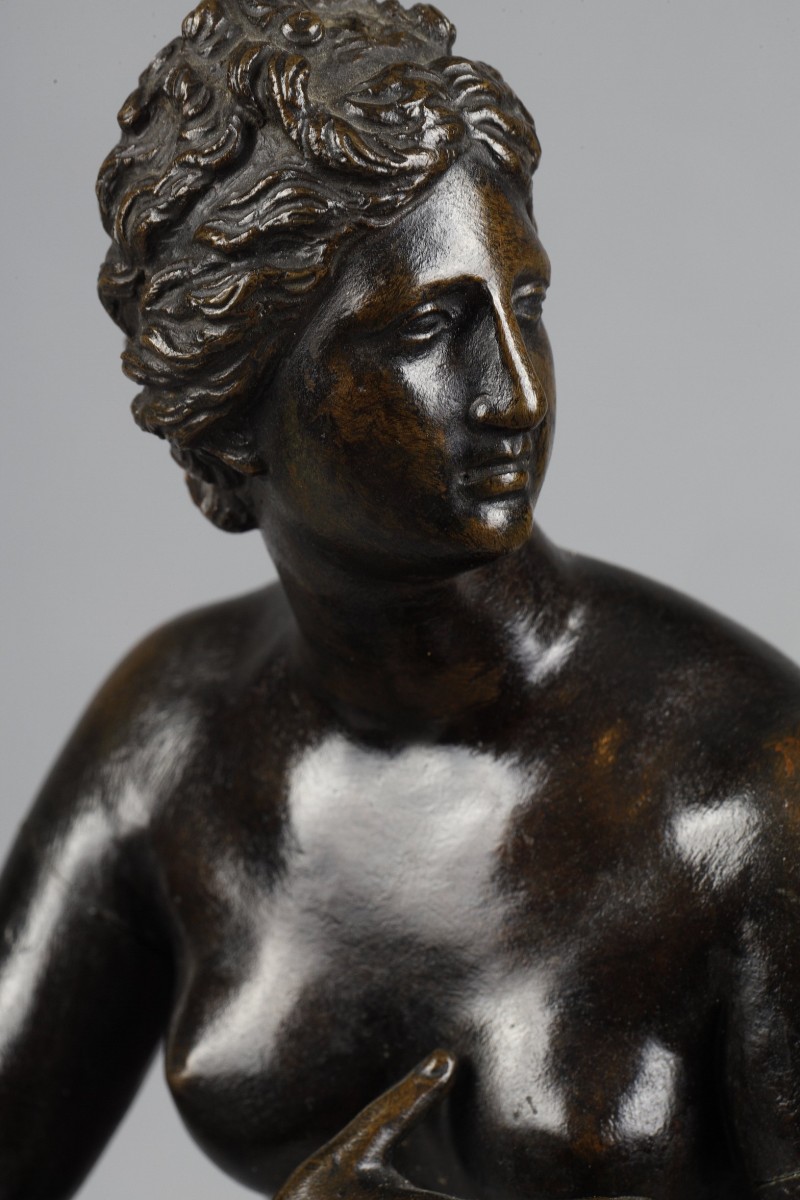
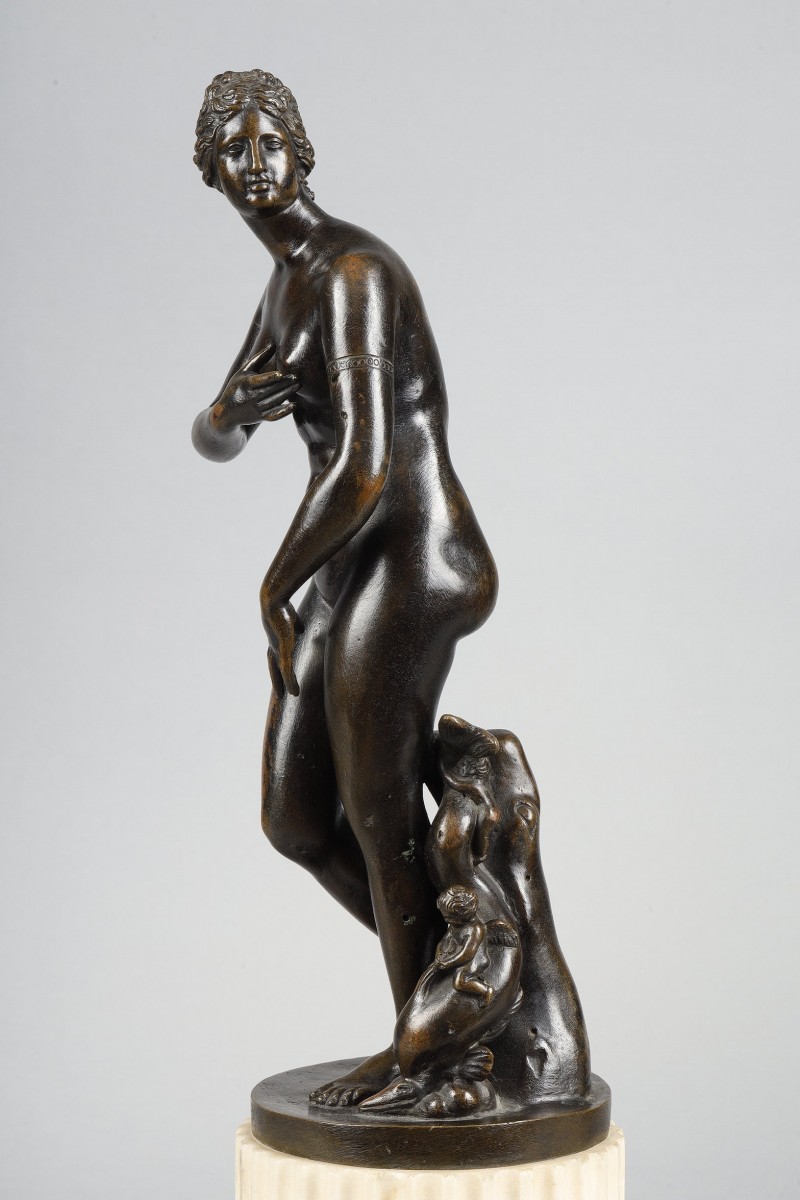
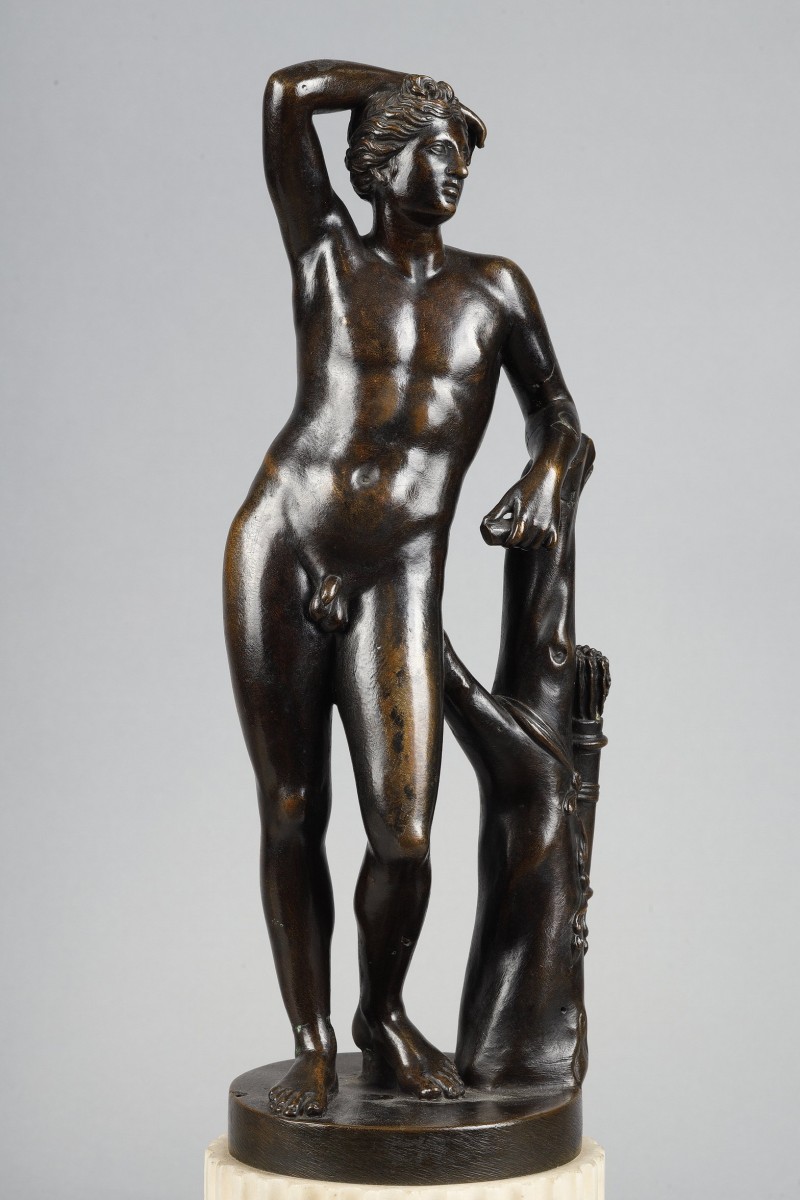
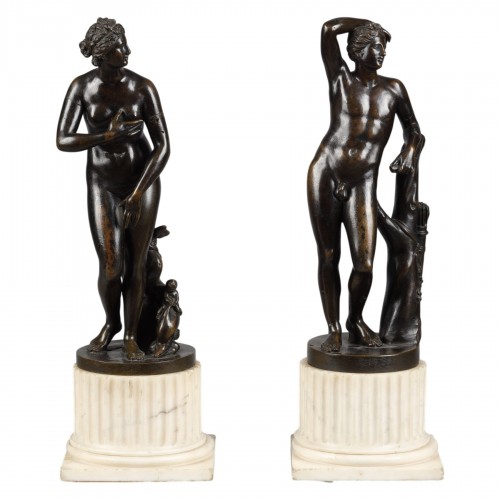
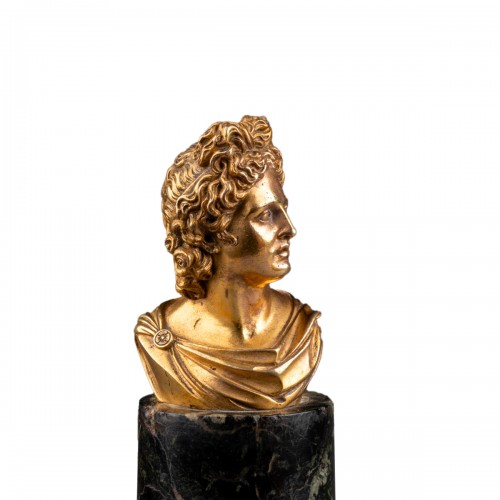
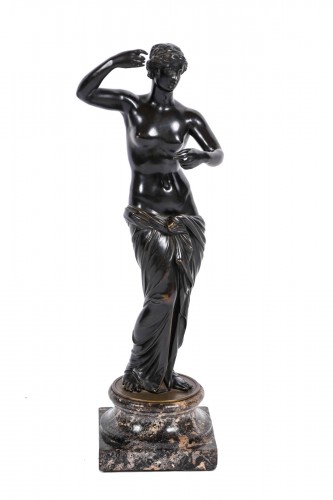
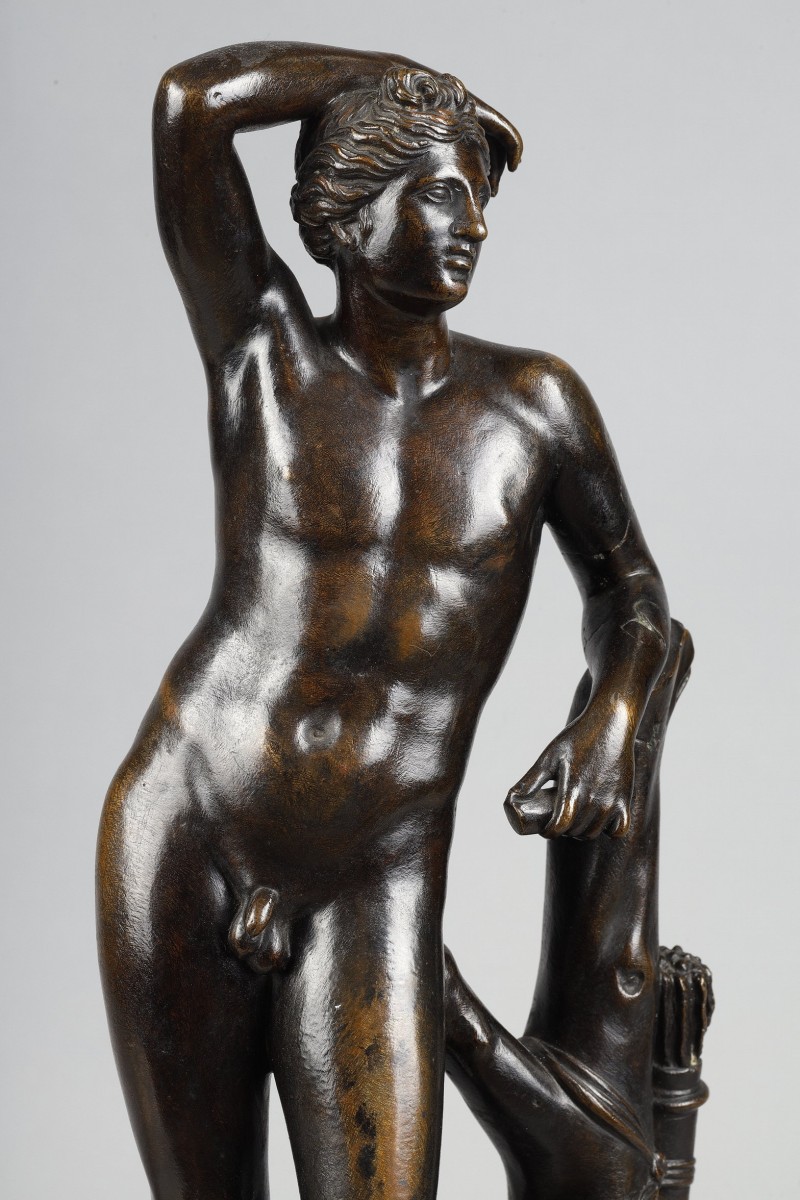
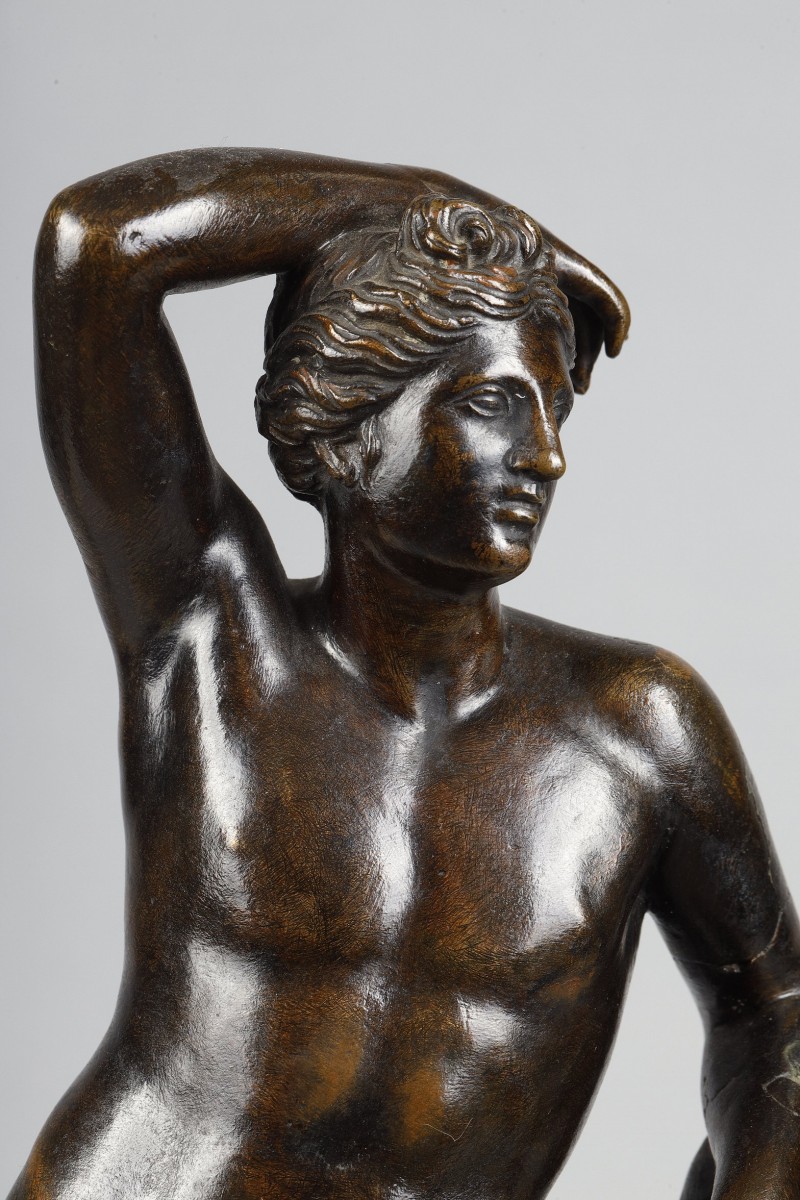
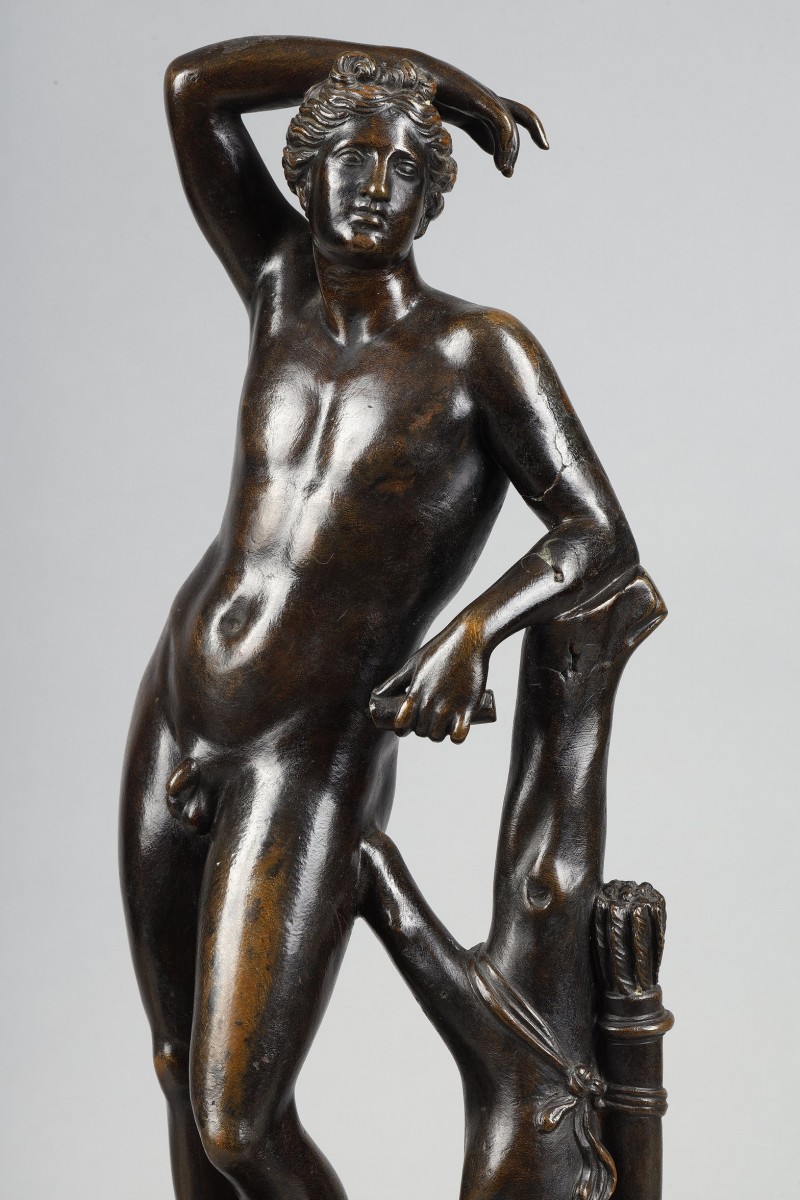
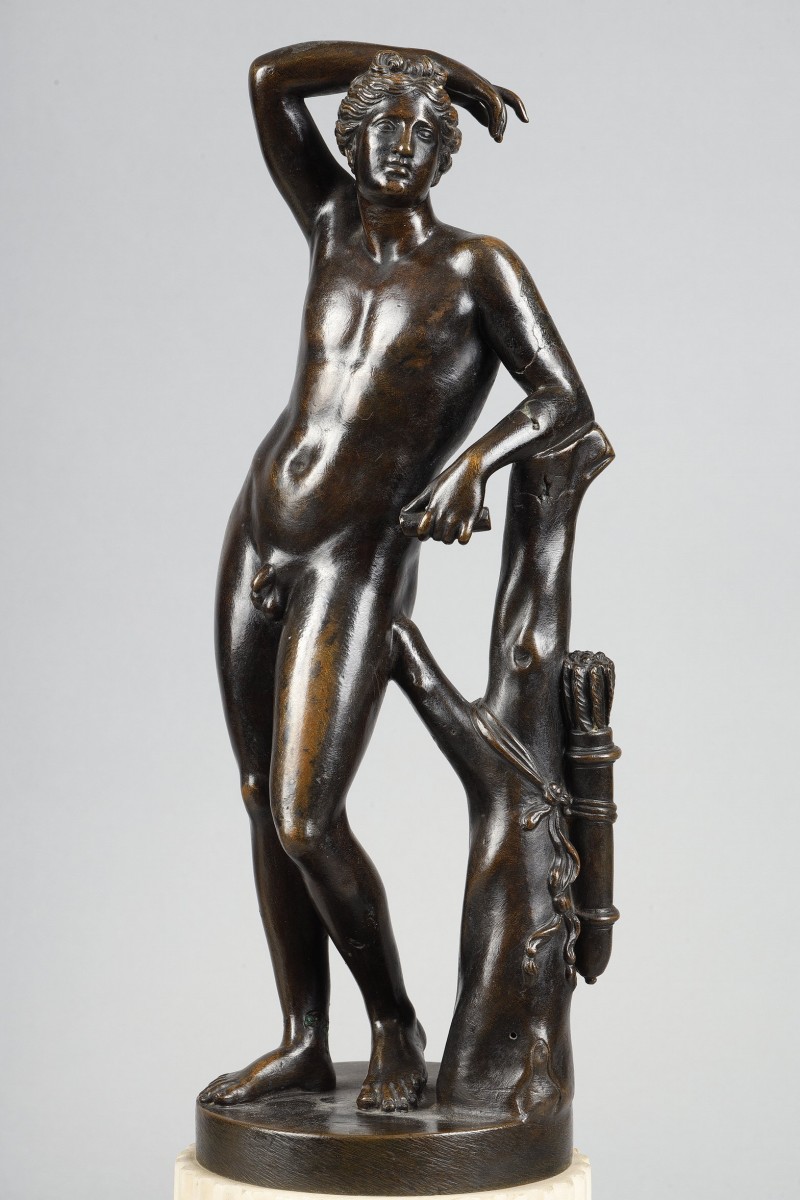
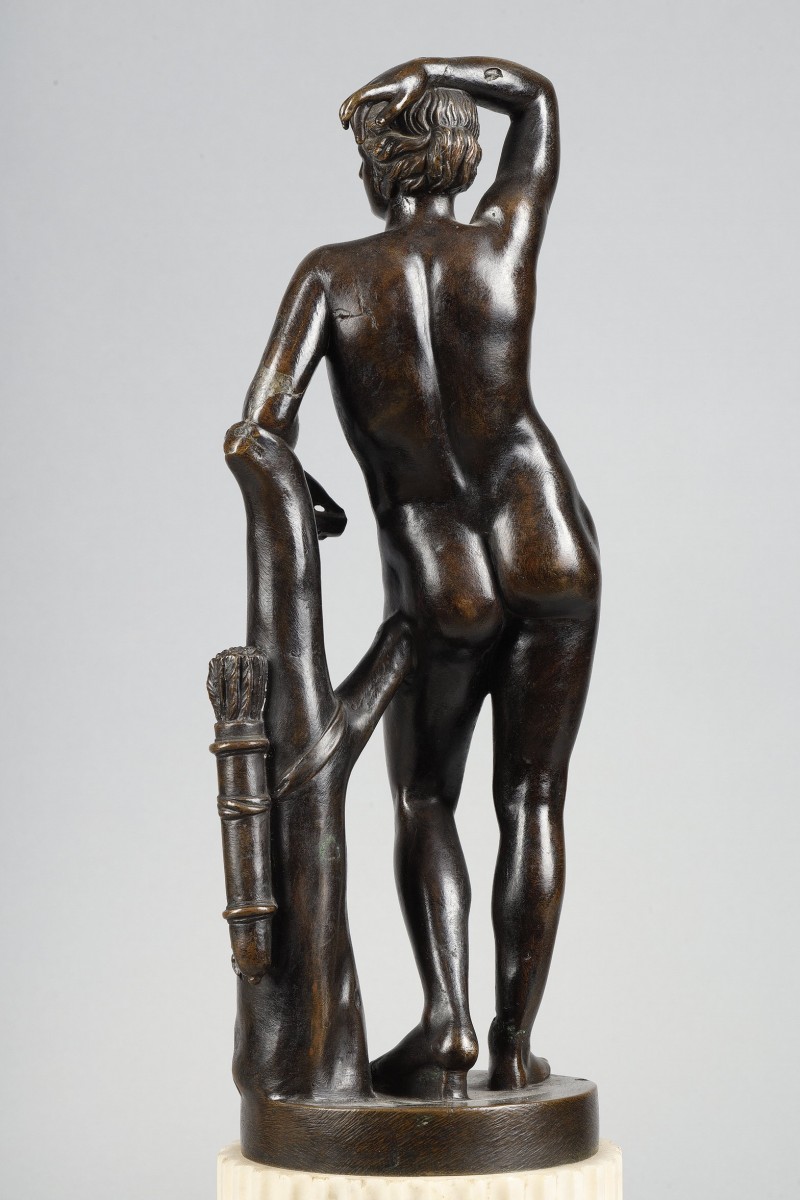
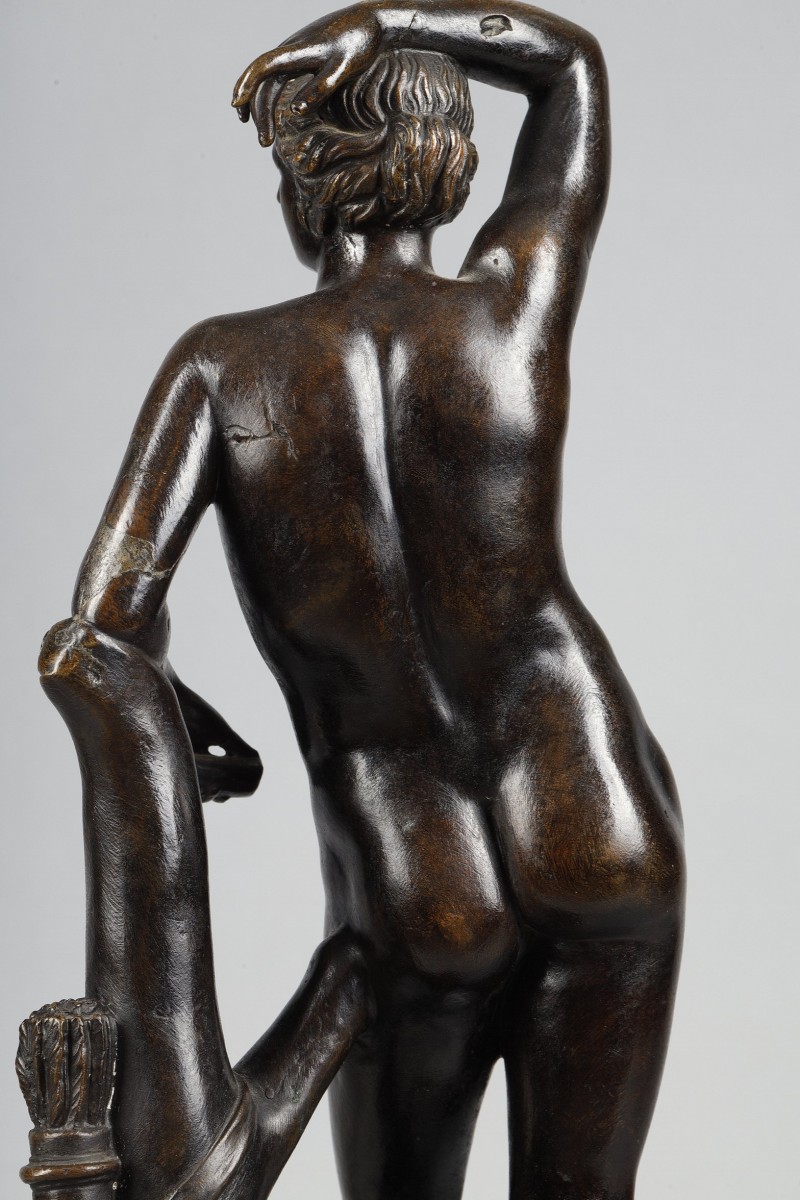
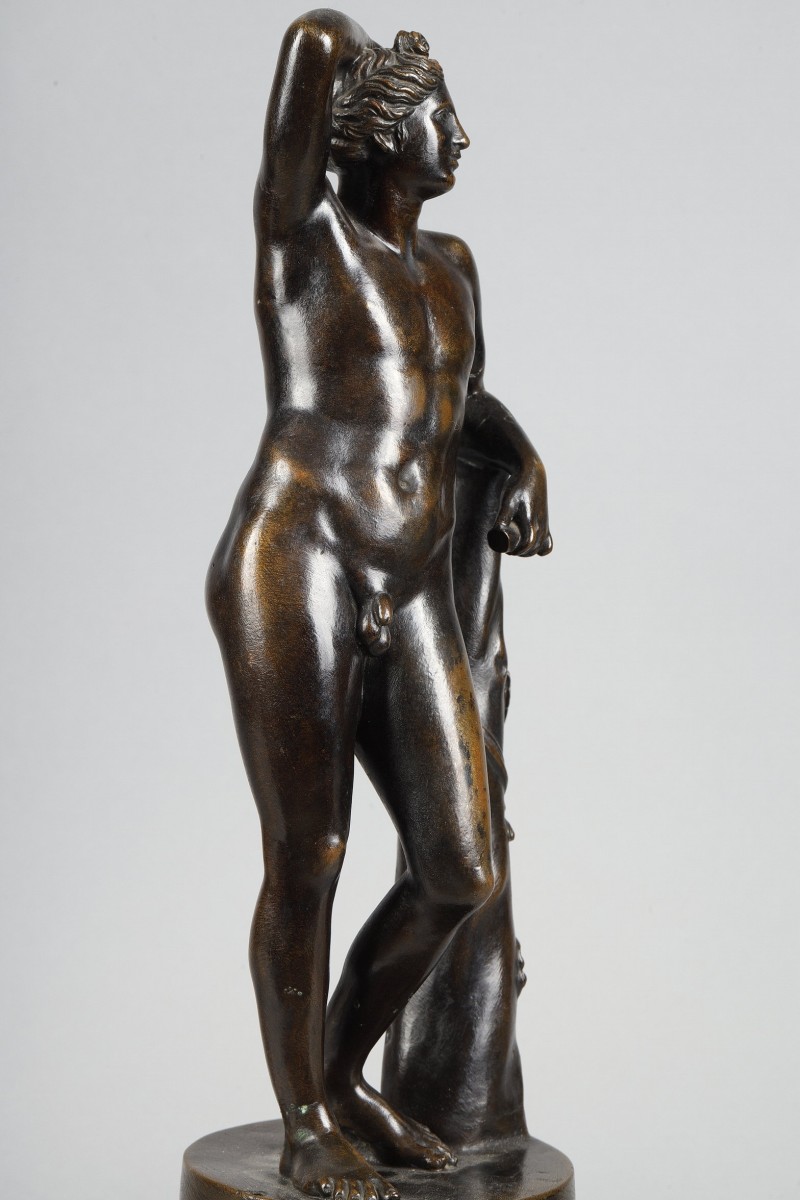
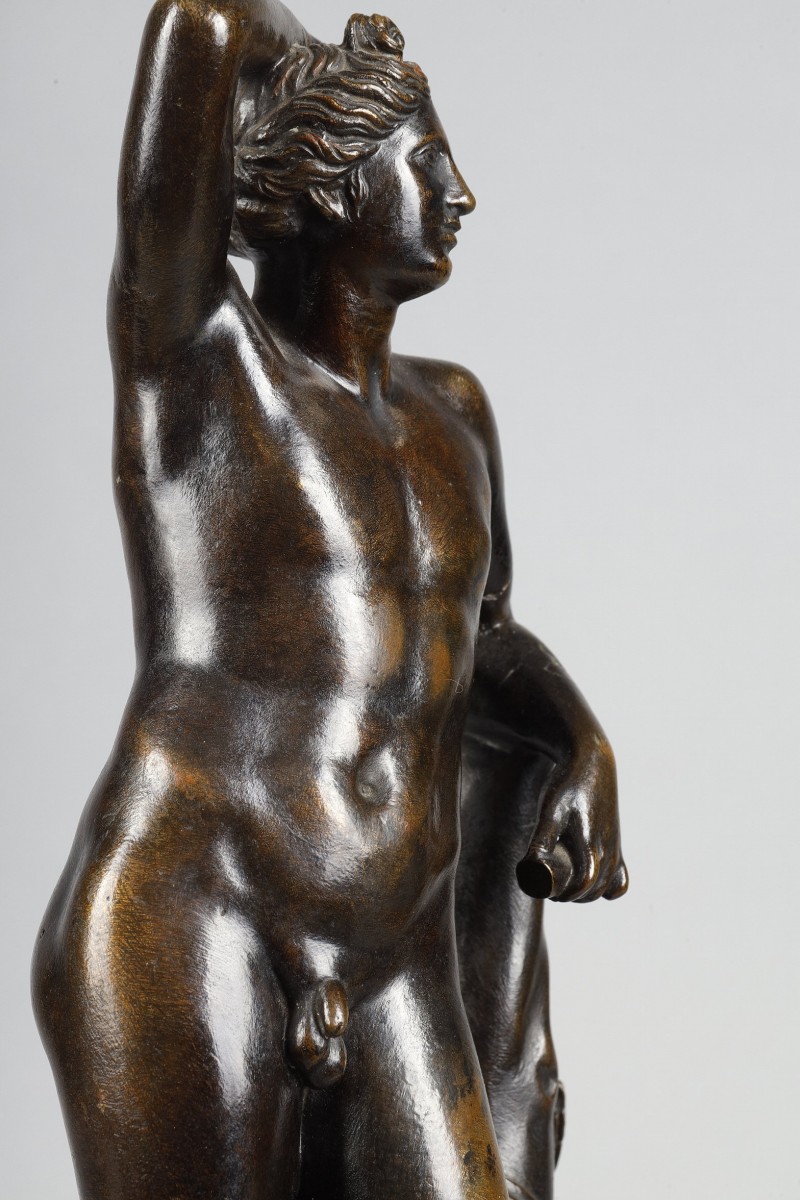
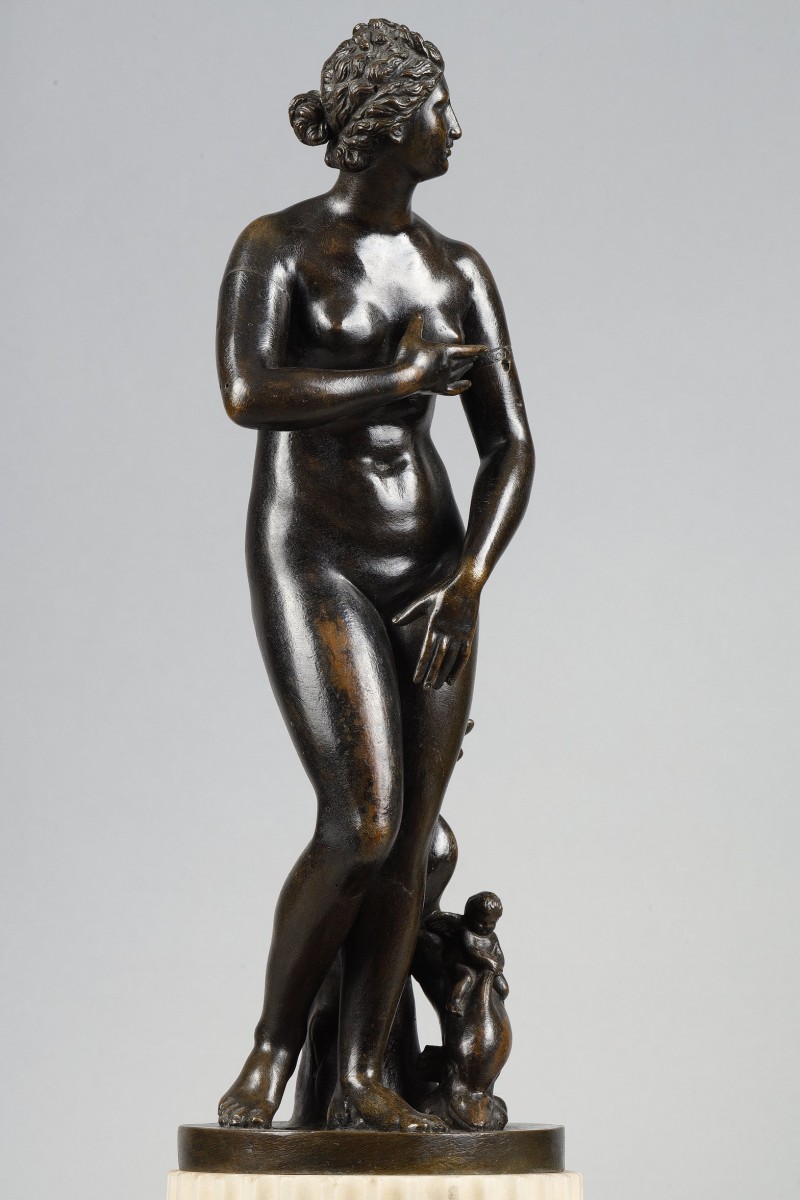
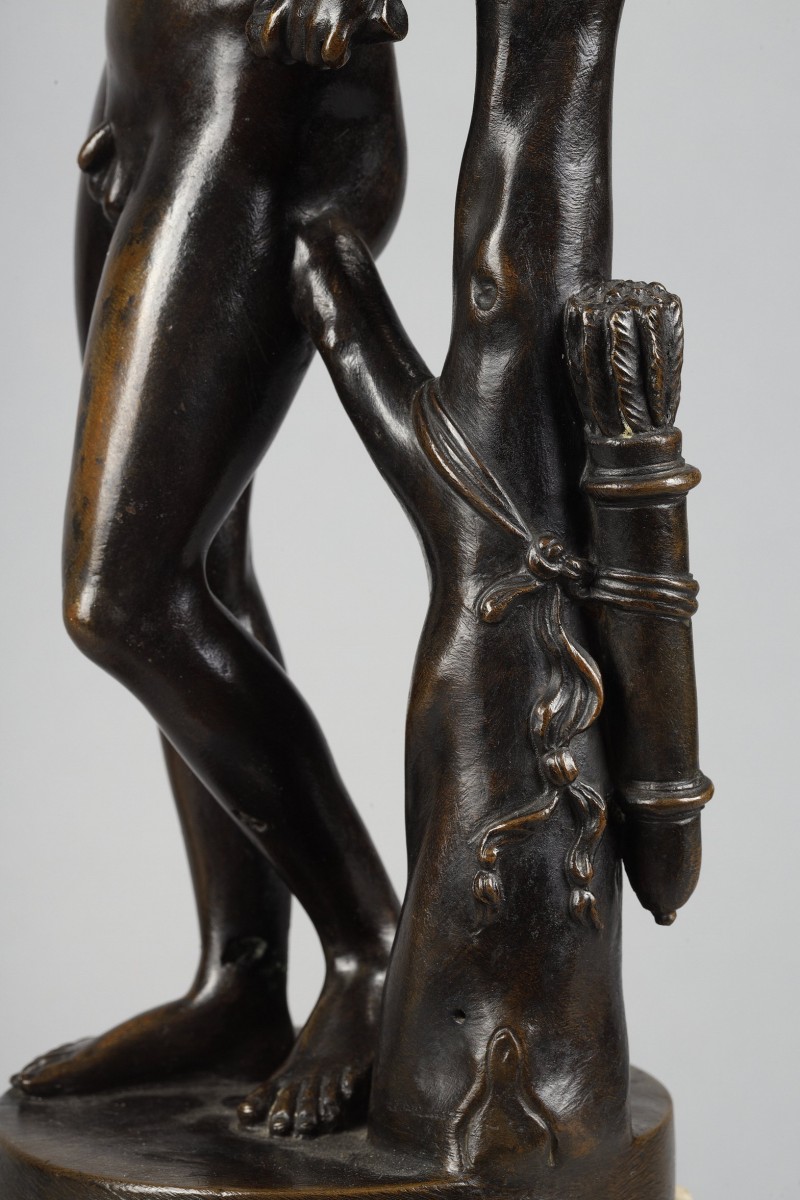
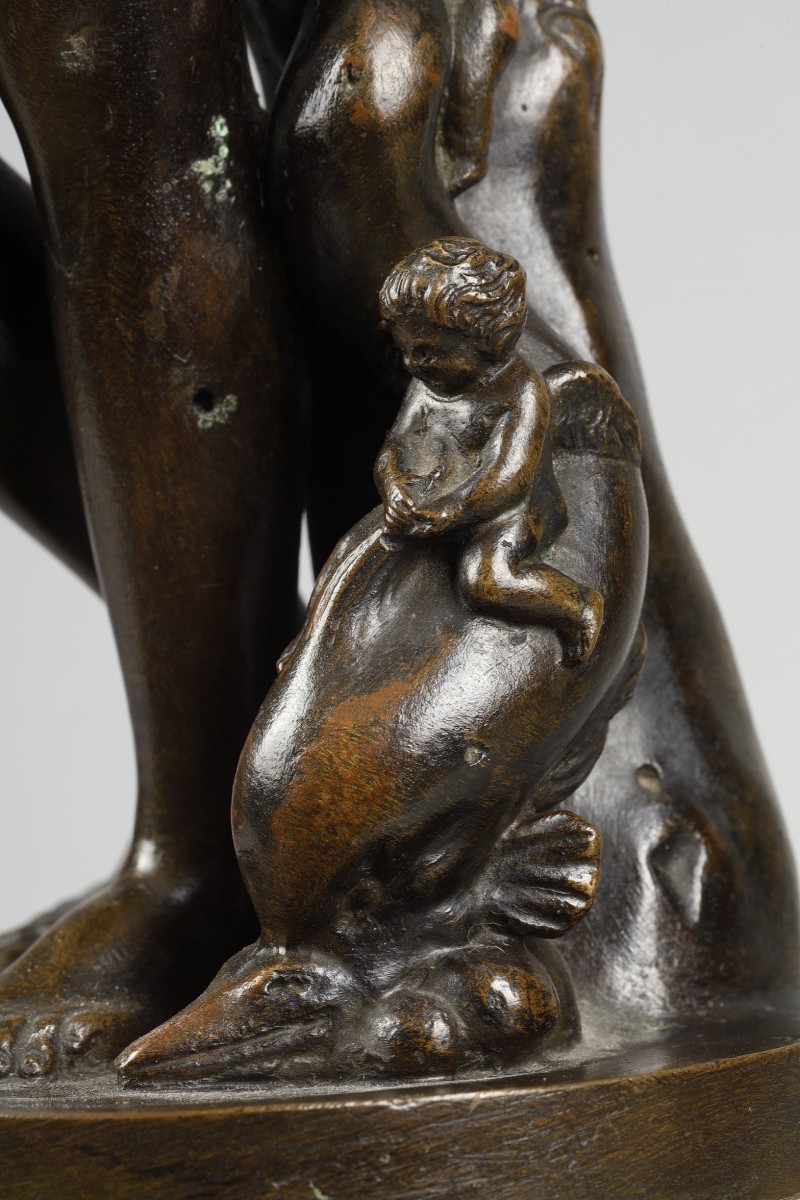
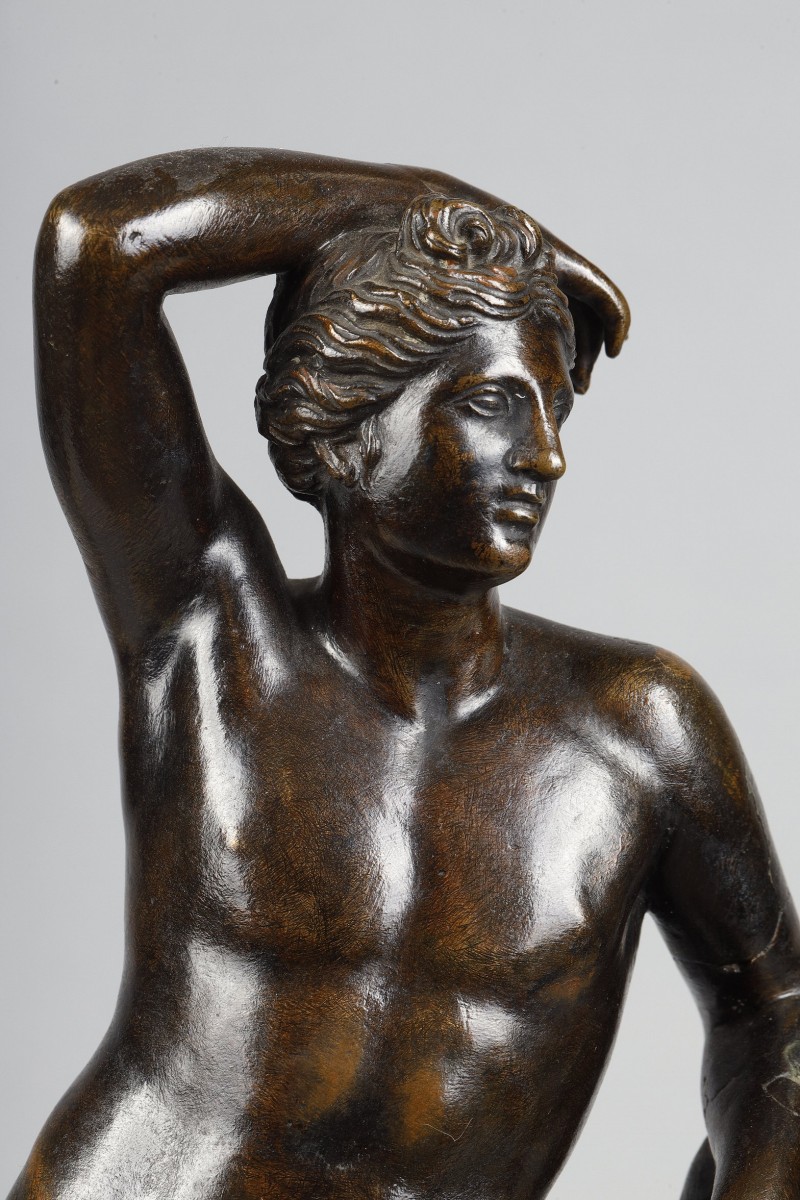
This remarkable and elegant pair of late 18th-century bronzes depicts two of the most iconic models of classical sculpture: the Venus de Medici—the ideal embodiment of female beauty—and Apollo, the god of light, music, the arts, and harmony.
Inspired by famous ancient marble statues held in major European collections, these sculptures reflect the passionate interest in Antiquity that characterized the second half of the 18th century.
The finely chased figures feature a beautiful original brown patina and rest on circular bases. They are mounted on fluted white marble plinths, characteristic of the Louis XVI style.
The Venus de Medici is based on an original Greek sculpture from the 4th century BC, traditionally attributed to the circle of Praxiteles. Rediscovered during the Renaissance and housed in the Uffizi Gallery in Florence, it became one of the most admired ancient sculptures in Europe. Its dissemination—particularly in the form of bronze reductions—paralleled the growing taste for Antiquity and the Grand Tour.
Alongside her, the figure of Apollo also draws upon an ancient model that was widely popular in the 18th century. He is depicted in an elegant, relaxed pose, likewise evoking the ideals of youth, perfection, and balance that defined the aesthetics of the era. Paired with the Venus de Medici, he forms a harmonious counterpart representing the ideal of beauty.
Created in the late 18th century, these small decorative sculptures were intended for a cultivated clientele with an appreciation for archaeological discoveries and the revival of classical antiquity.
French work, late 18th century.
Dimensions: H 43 cm x W 14 cm x D 14 cm