Offered by Galerie Gilles Linossier
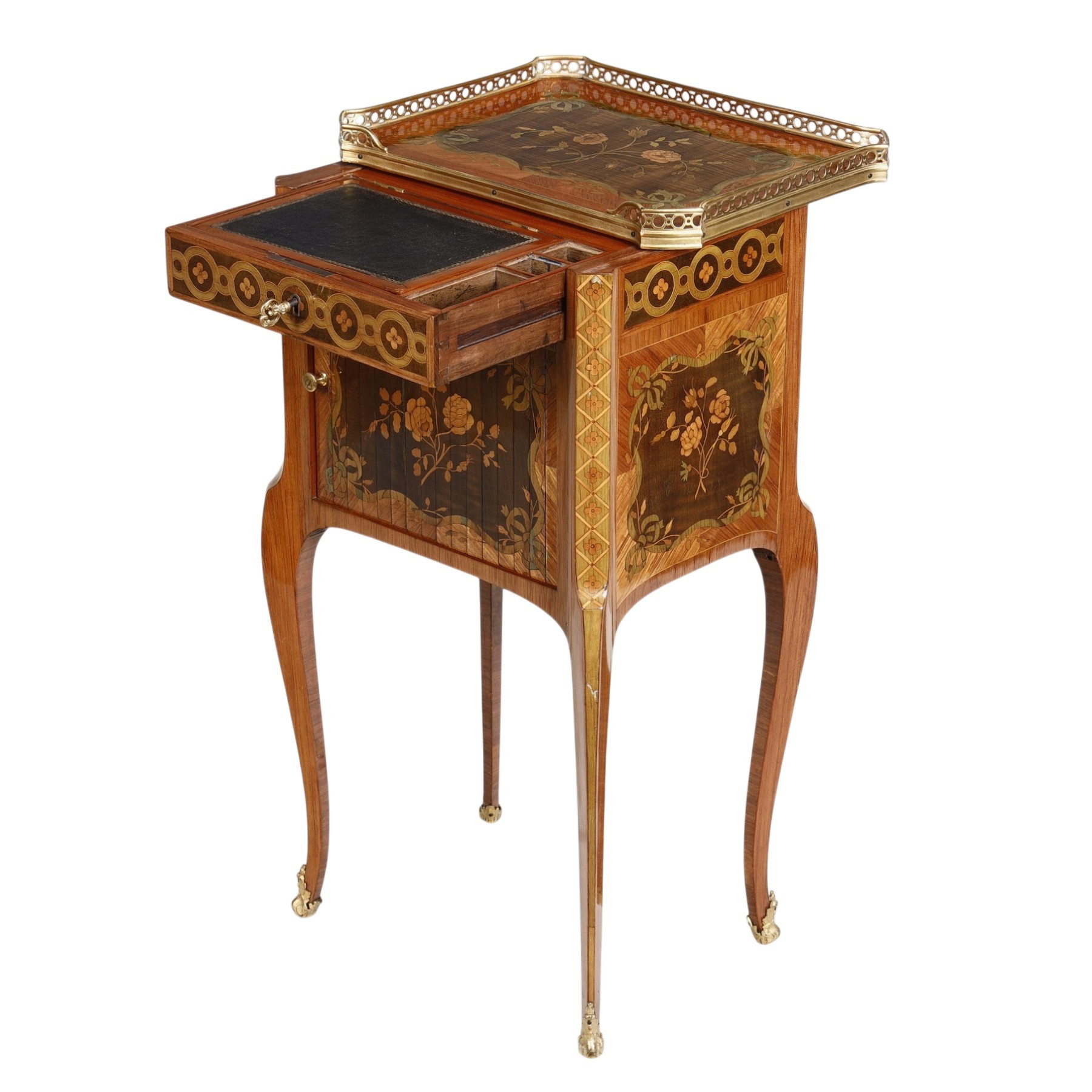
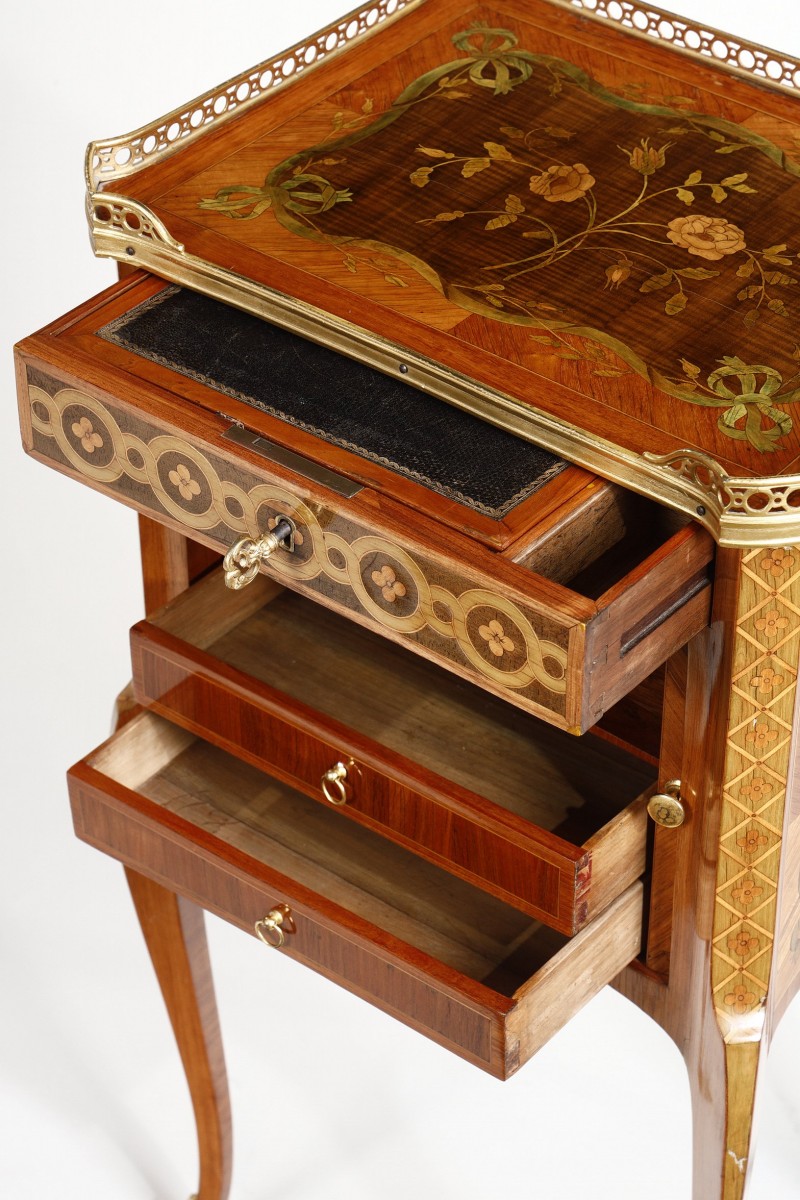
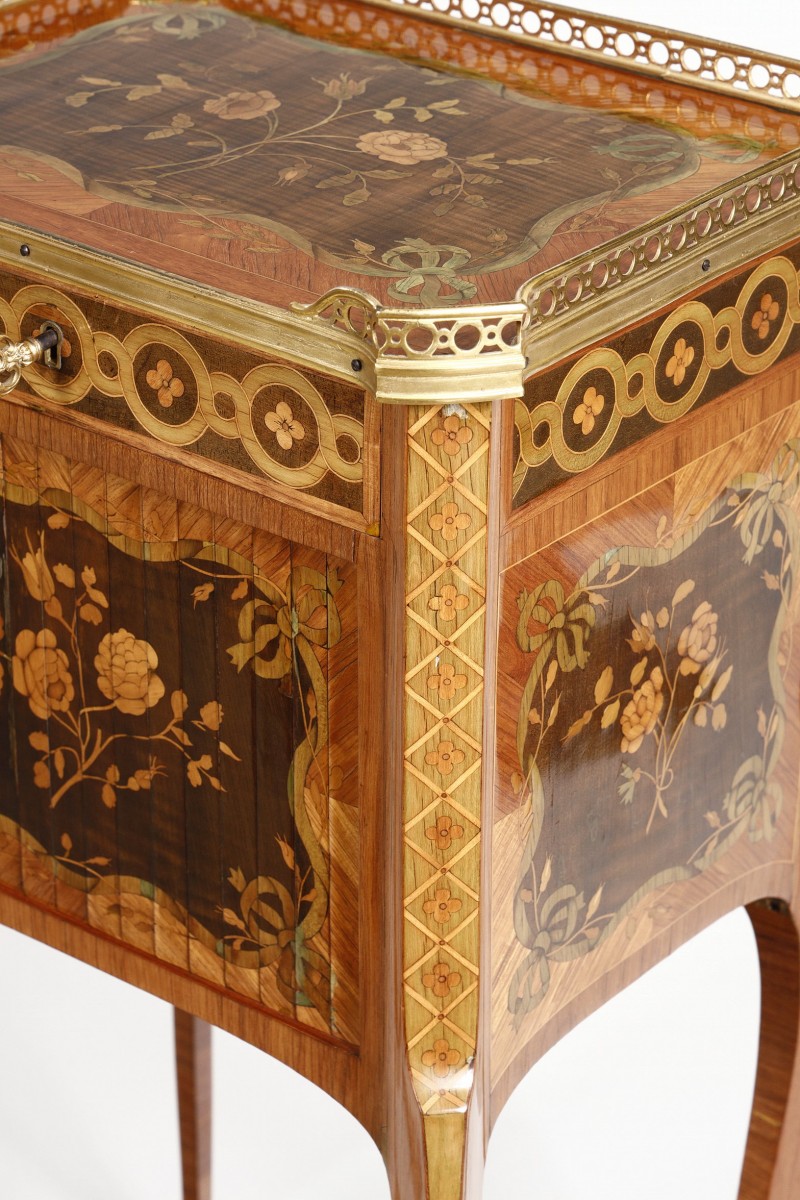

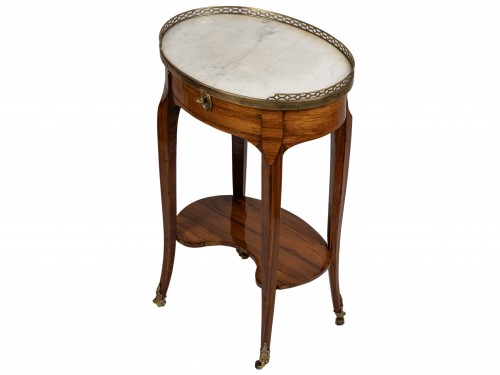
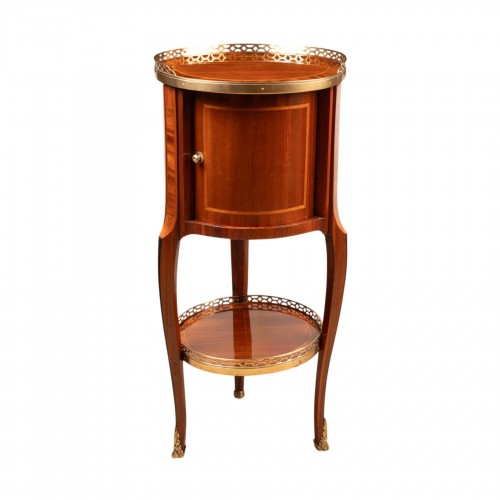
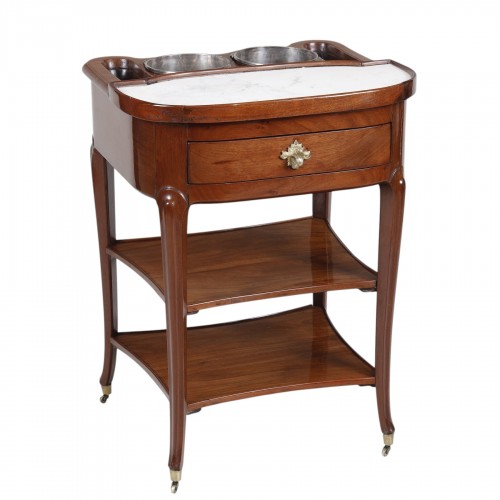
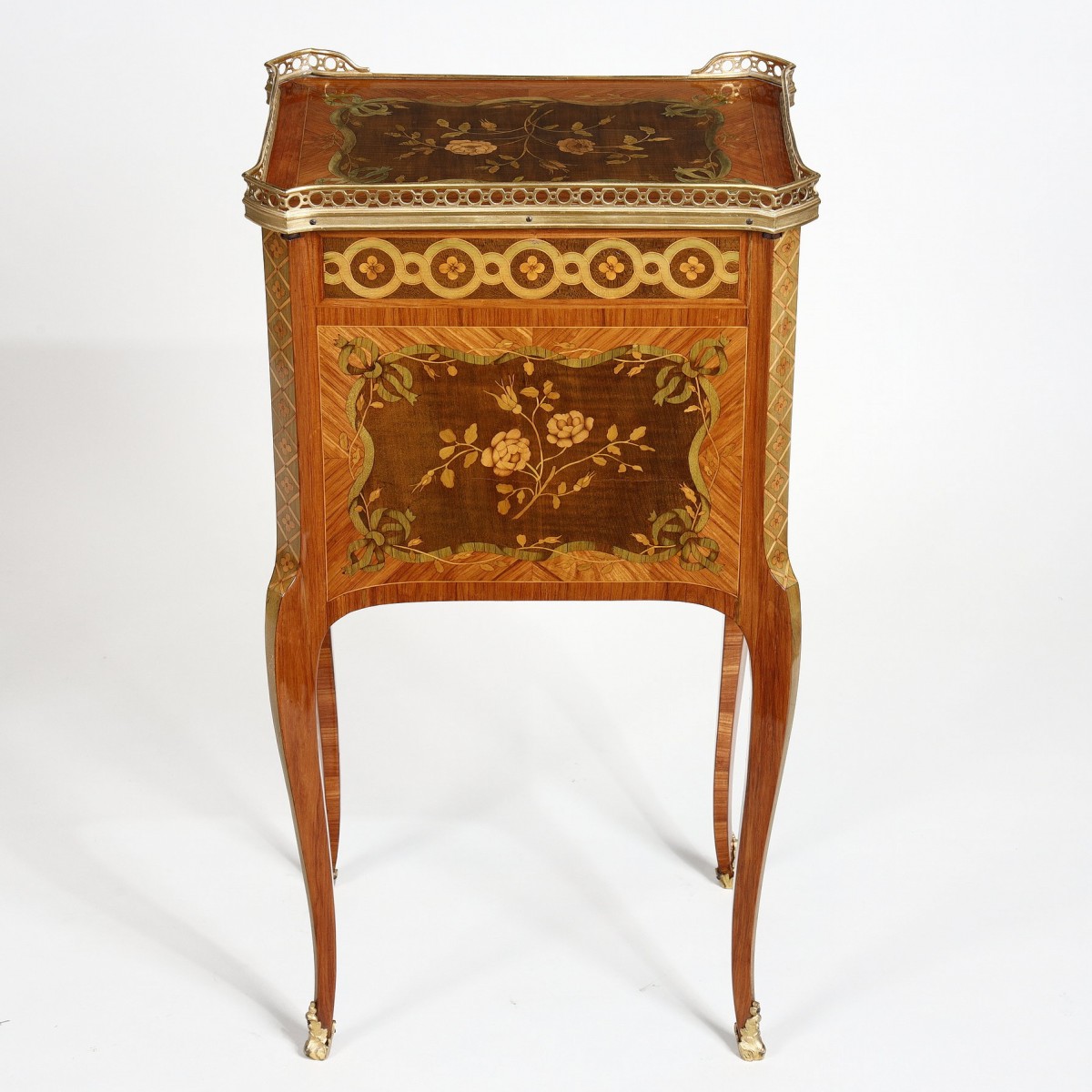
A small *chiffonnière* table from the Transition period.
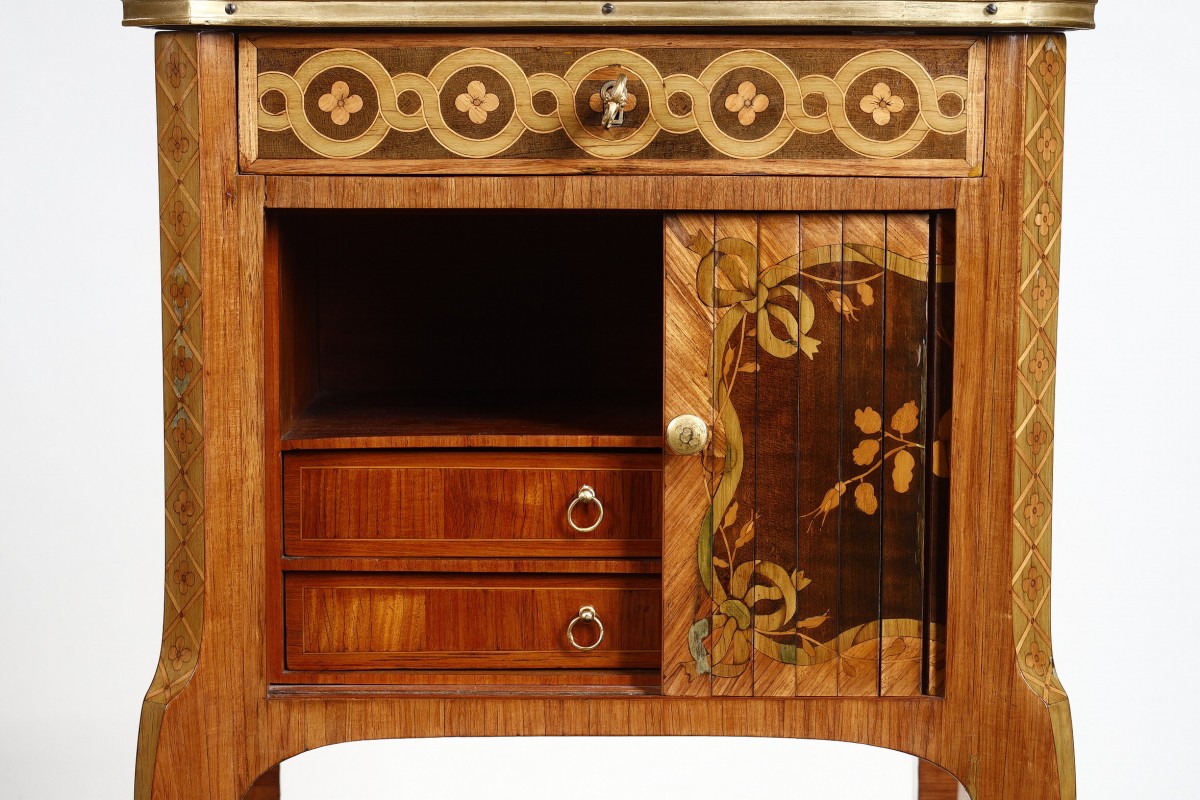
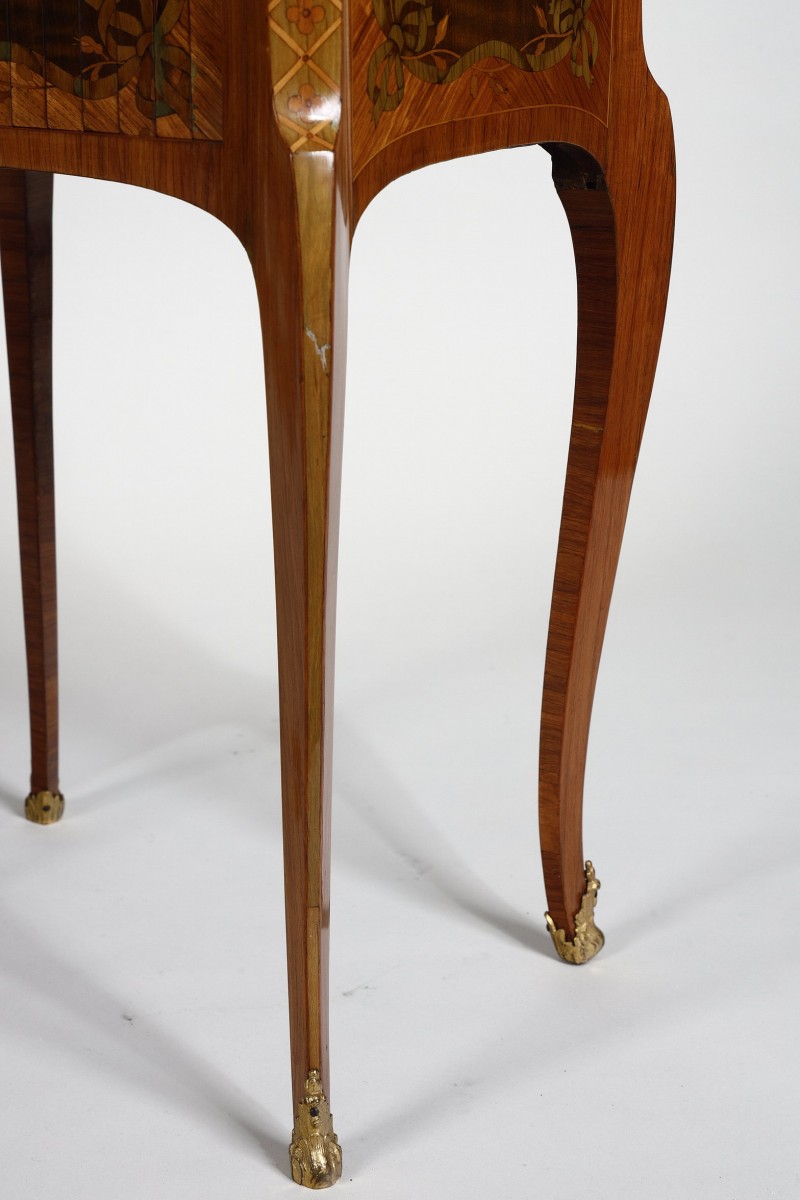
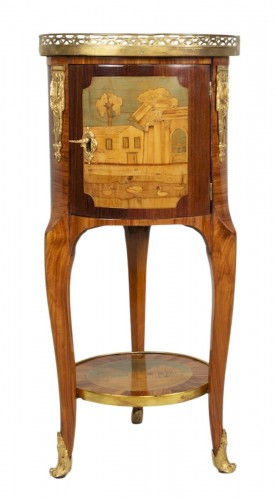
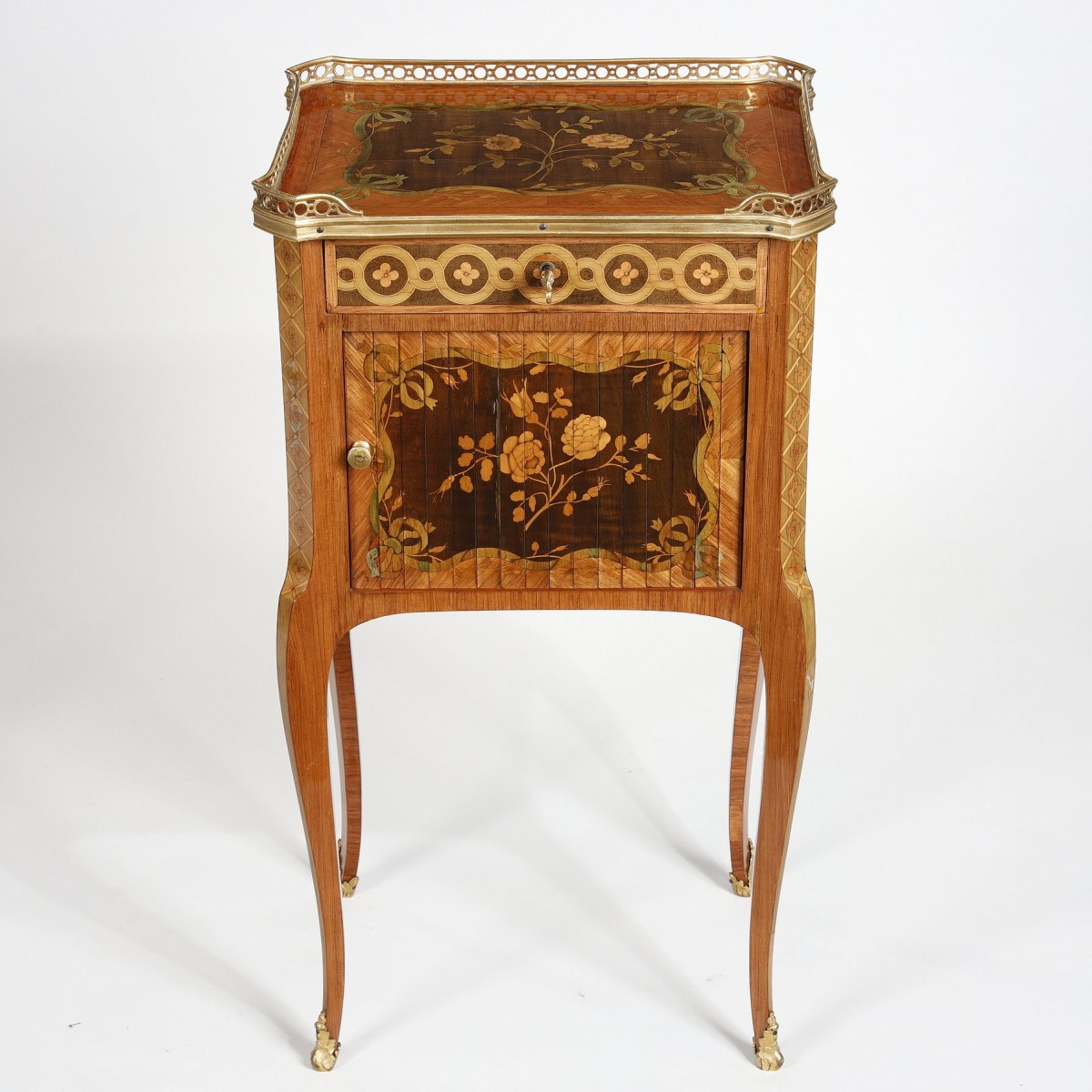
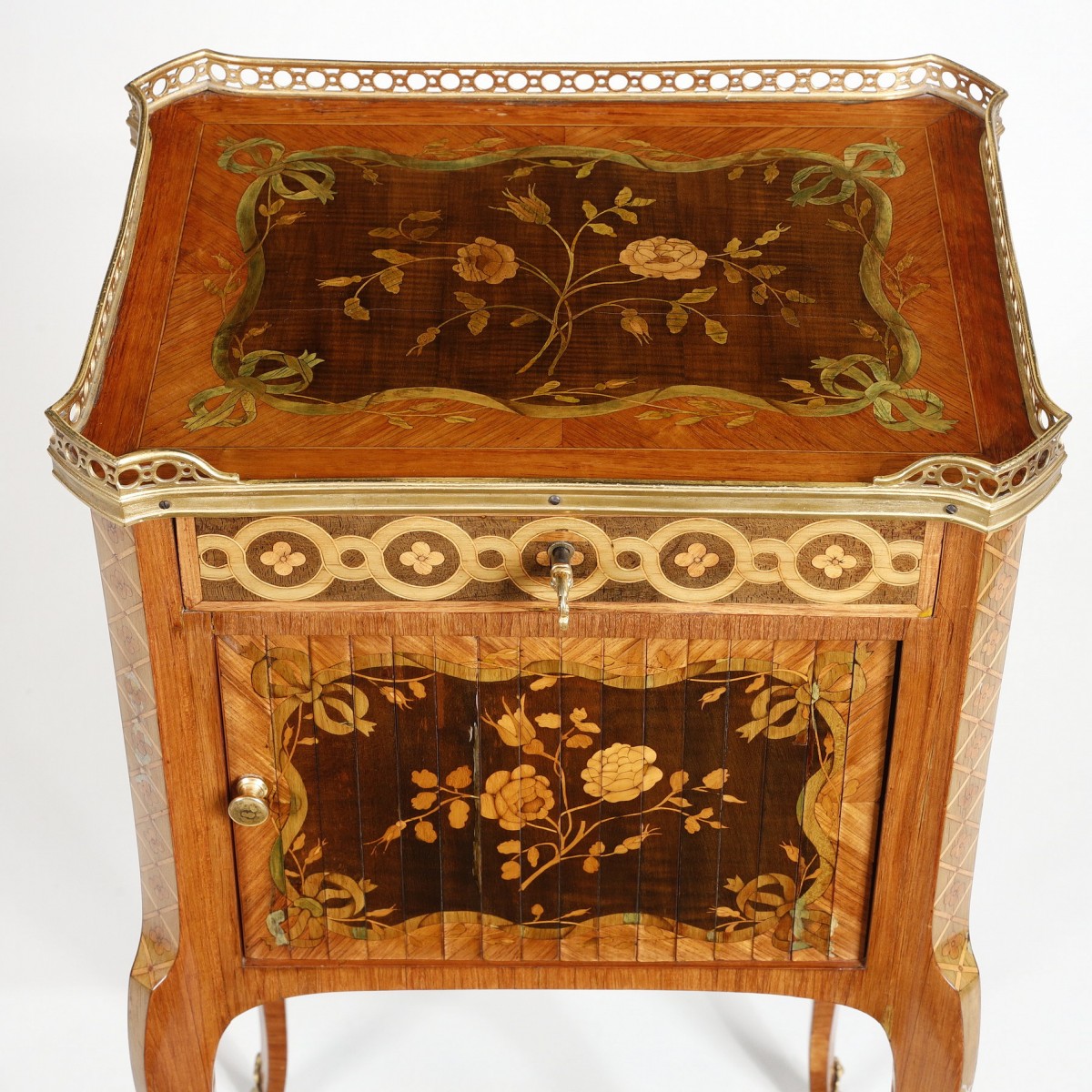
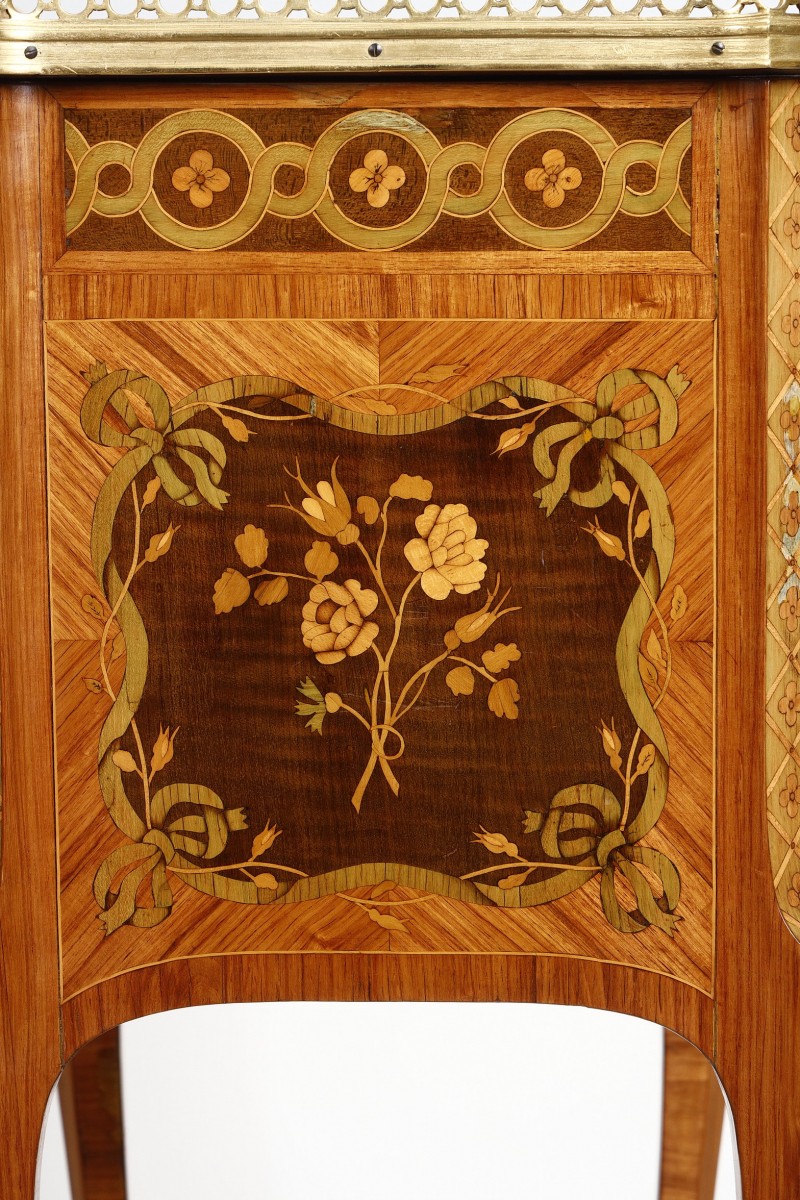
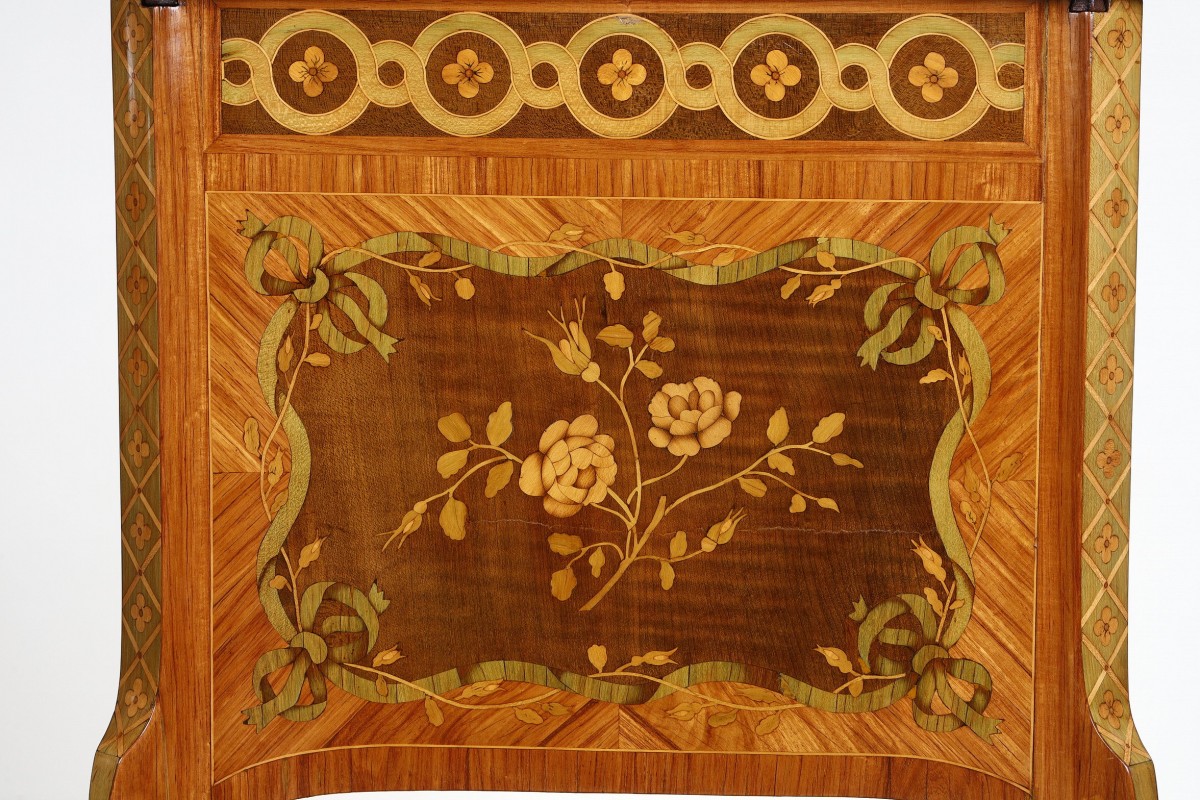
Crafted from fruitwood, stained sycamore, and rosewood, the table features slightly cabriole legs. These slender legs terminate in delicate, wrap-around gilt-bronze sabots shaped like foliage. The uprights feature a fine trellis pattern, with small, meticulously crafted four-petaled flowers set within the intersections.
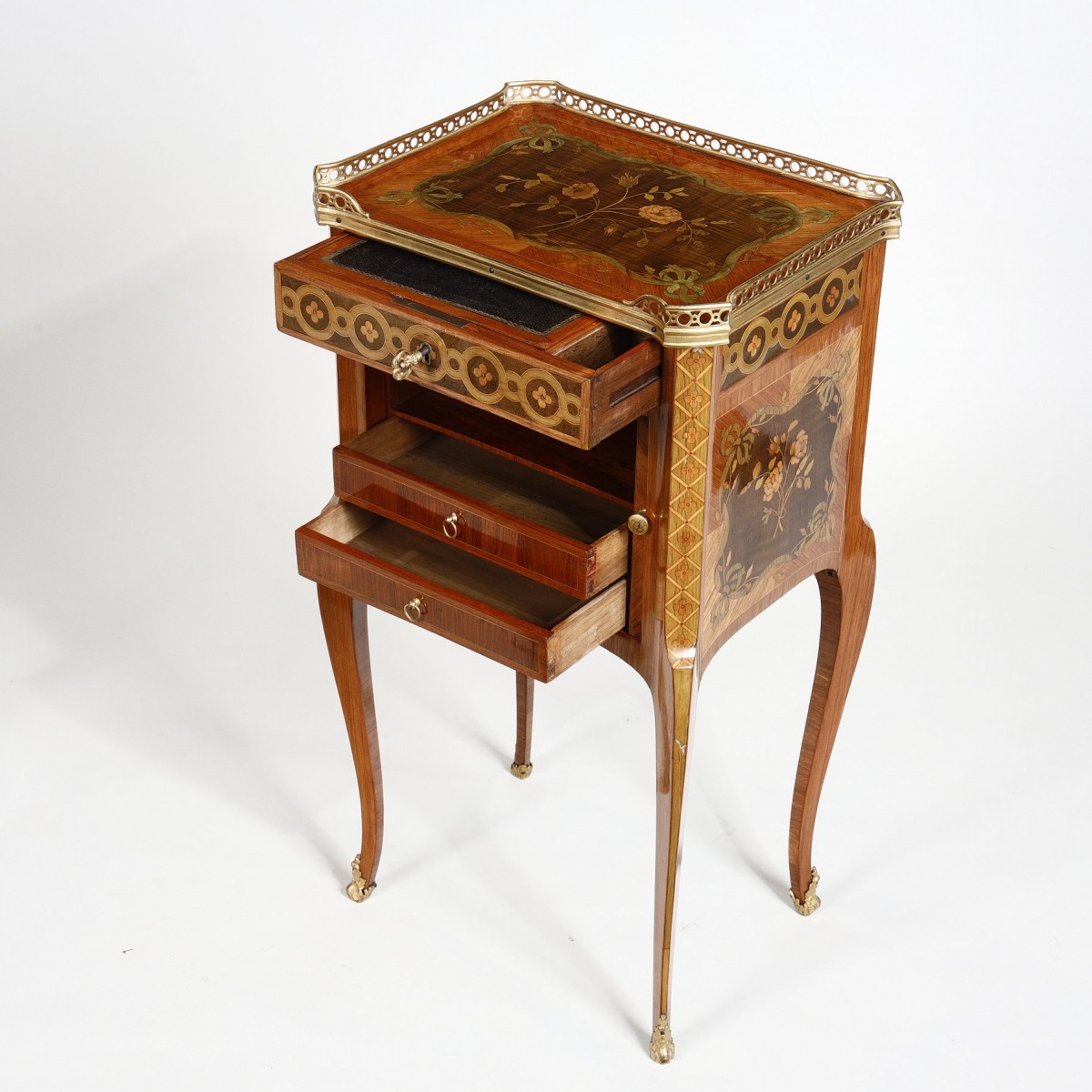
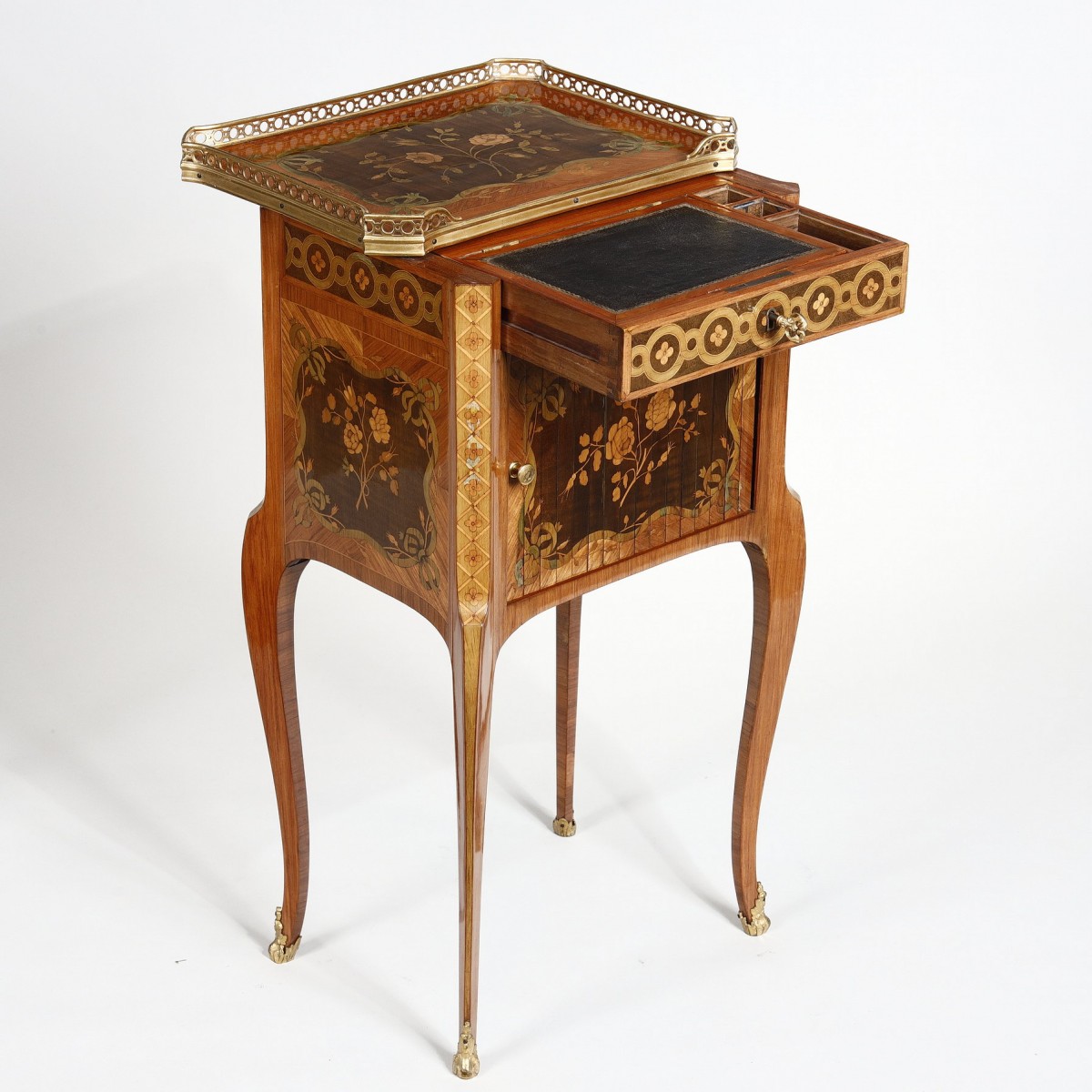
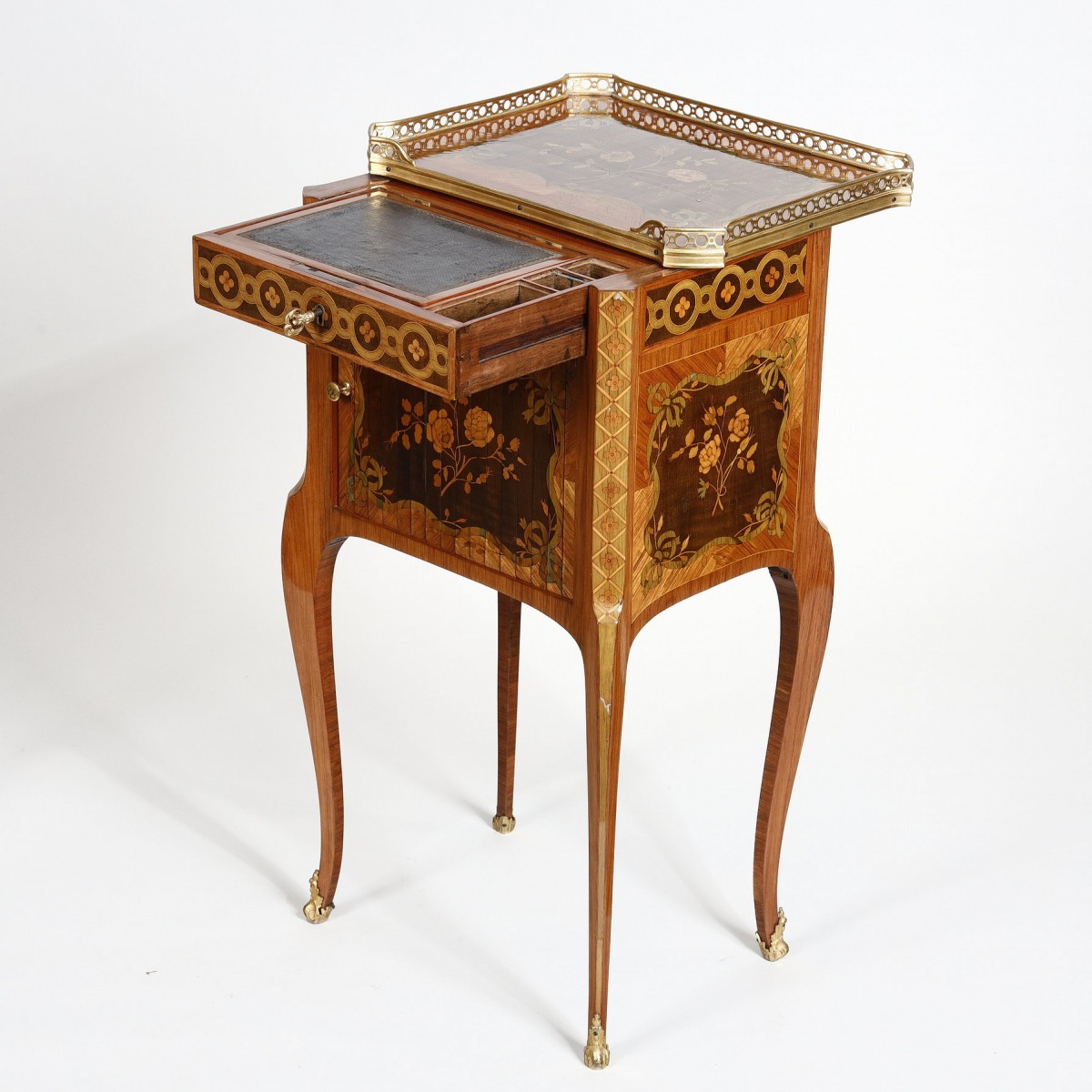
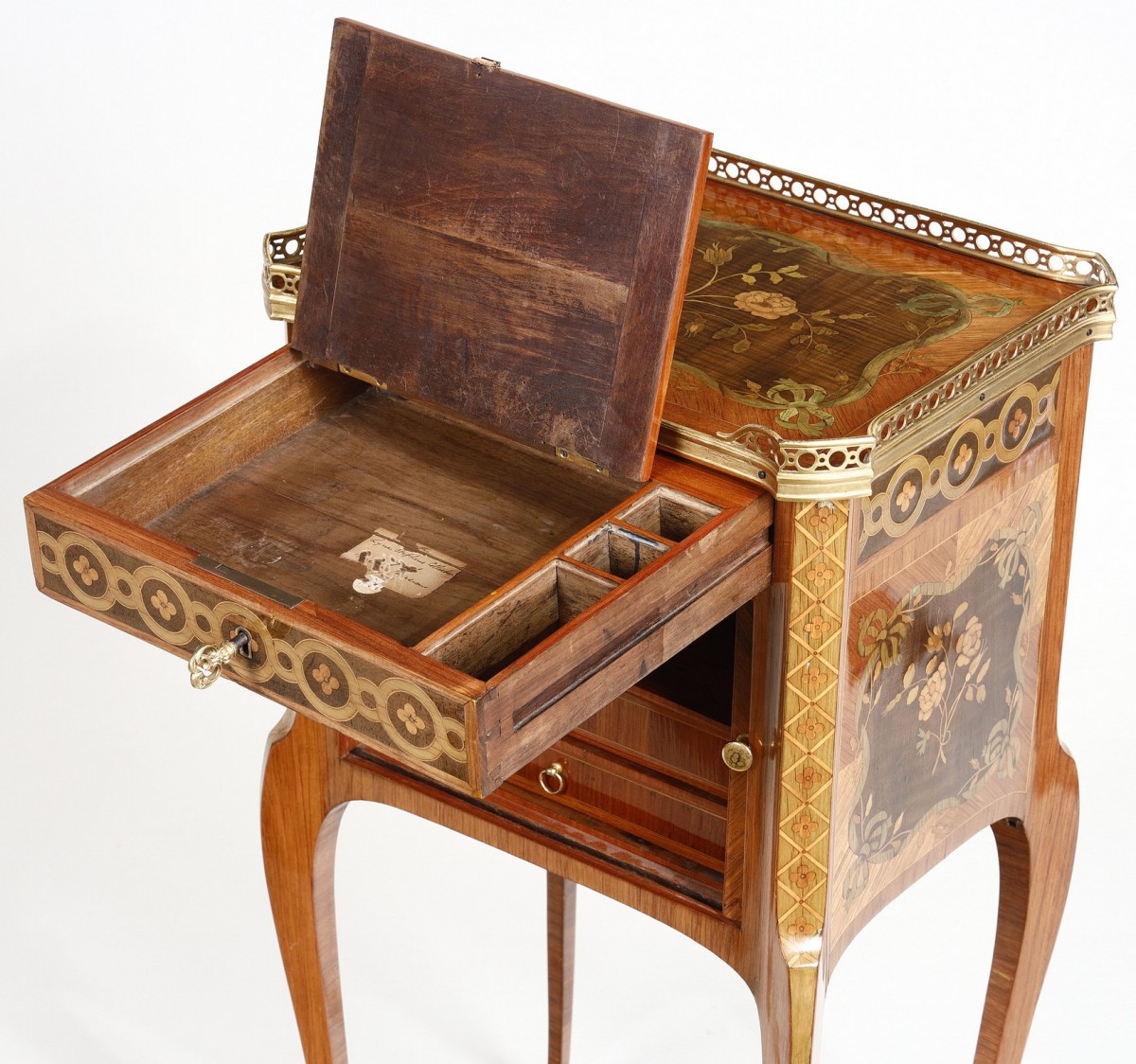
The table has a sliding top that reveals a drawer containing a leather-lined writing surface which can be lifted; to the right, small compartments provide storage for ink and writing implements.
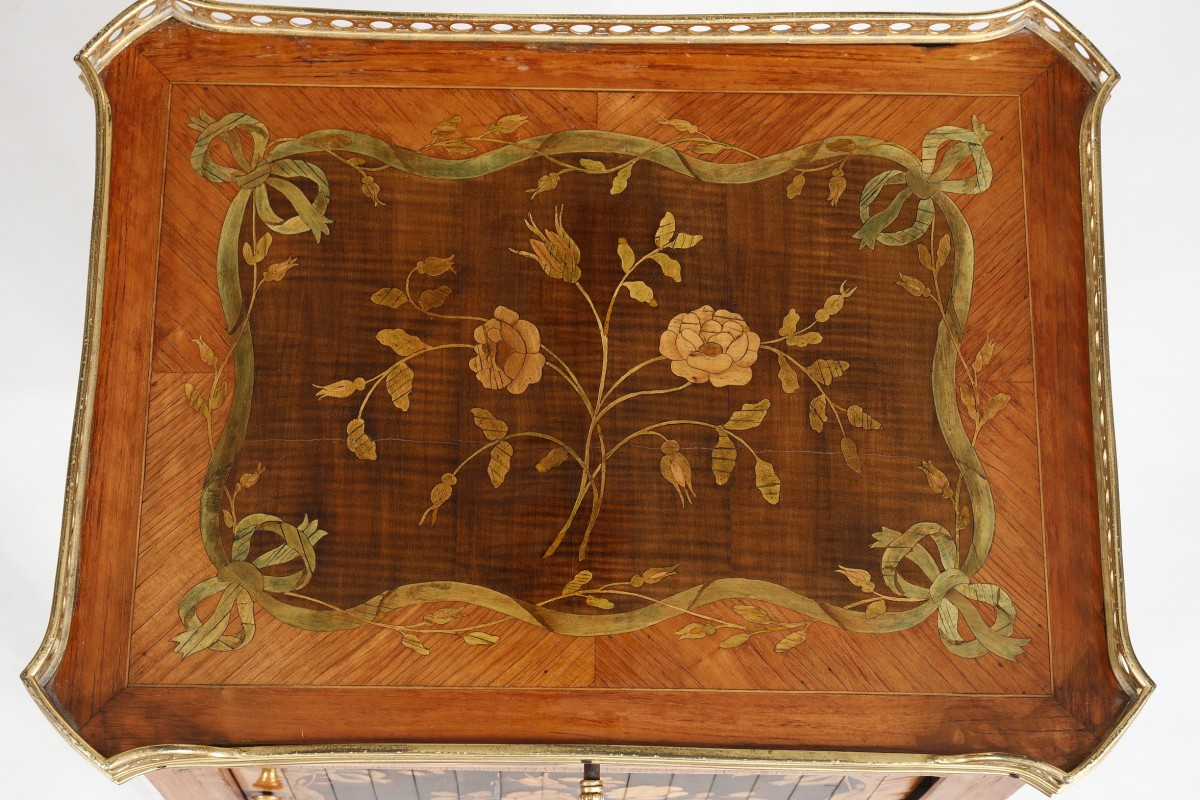
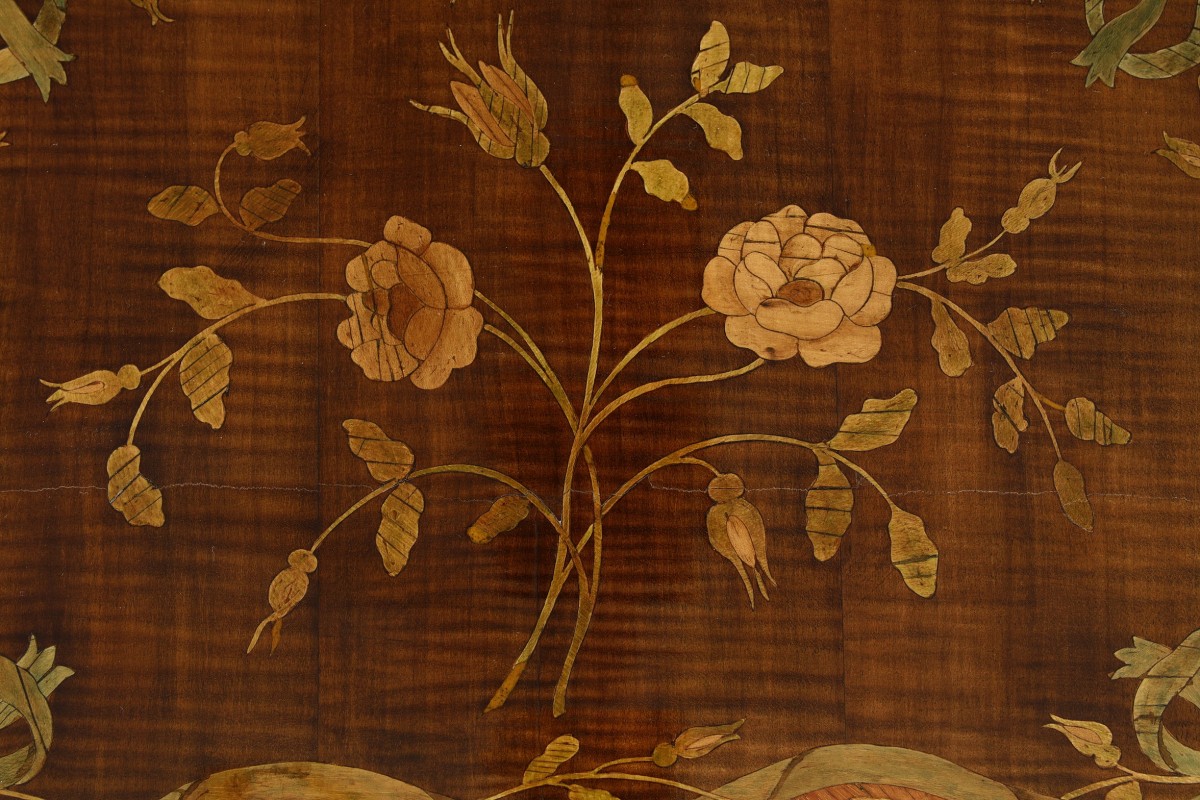
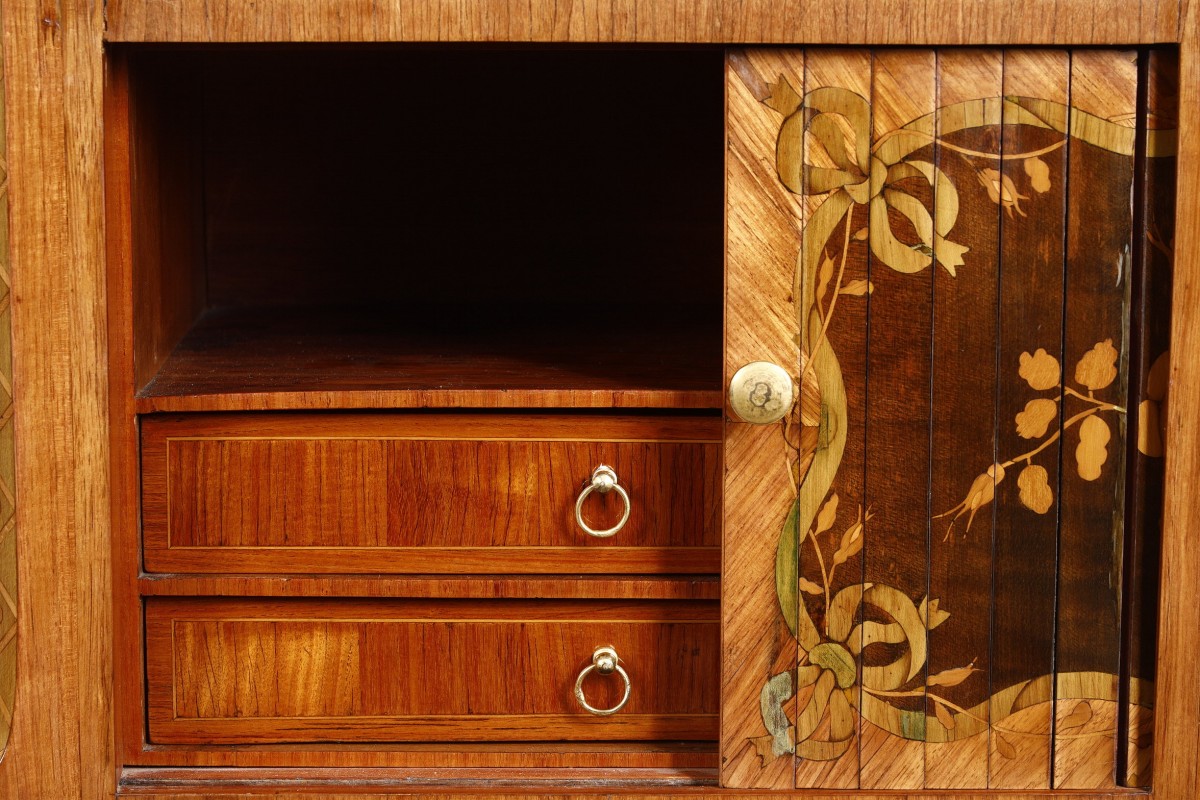
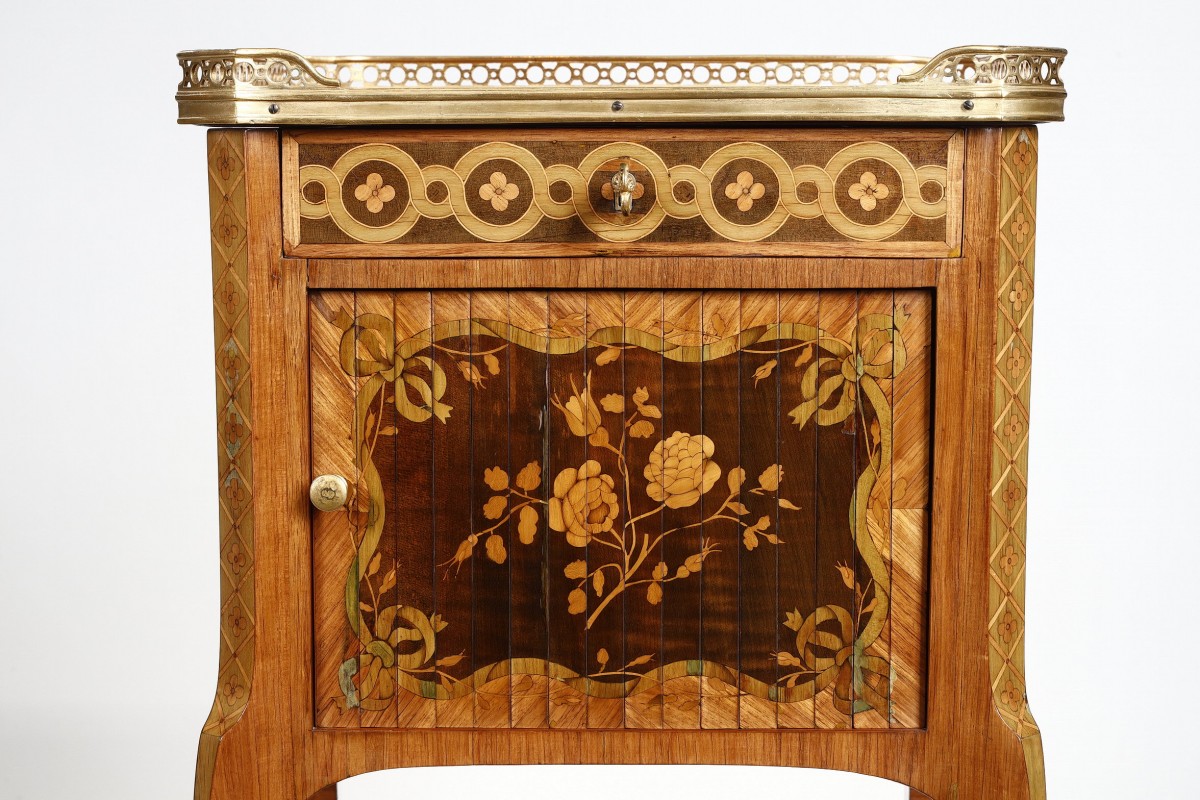
The front features an apron drawer that opens via a lock and serves as a writing desk. Its decoration consists of a frieze of circles in two sizes, adorned with small floral motifs. Below this, a tambour shutter conceals an open compartment and two stacked drawers, accessible via small ring-shaped pulls. The shutter is decorated with bouquets of branches bearing leaves, blossoms, and buds; the precision of the craftsmanship allows for the identification of rose and oak motifs. This design is framed by interlacing ribbons that form elegant bows at each corner, with additional branches winding through them.
This same decorative motif is executed in marquetry on all sides as well as on the tabletop.
The tabletop is framed by a finely pierced gilt-bronze gallery featuring a circle motif that echoes the one found on the upper section of each side—a detail that highlights the piece's meticulous design. The interplay of colors further enhances the decorative appeal of this lovely item of furniture.
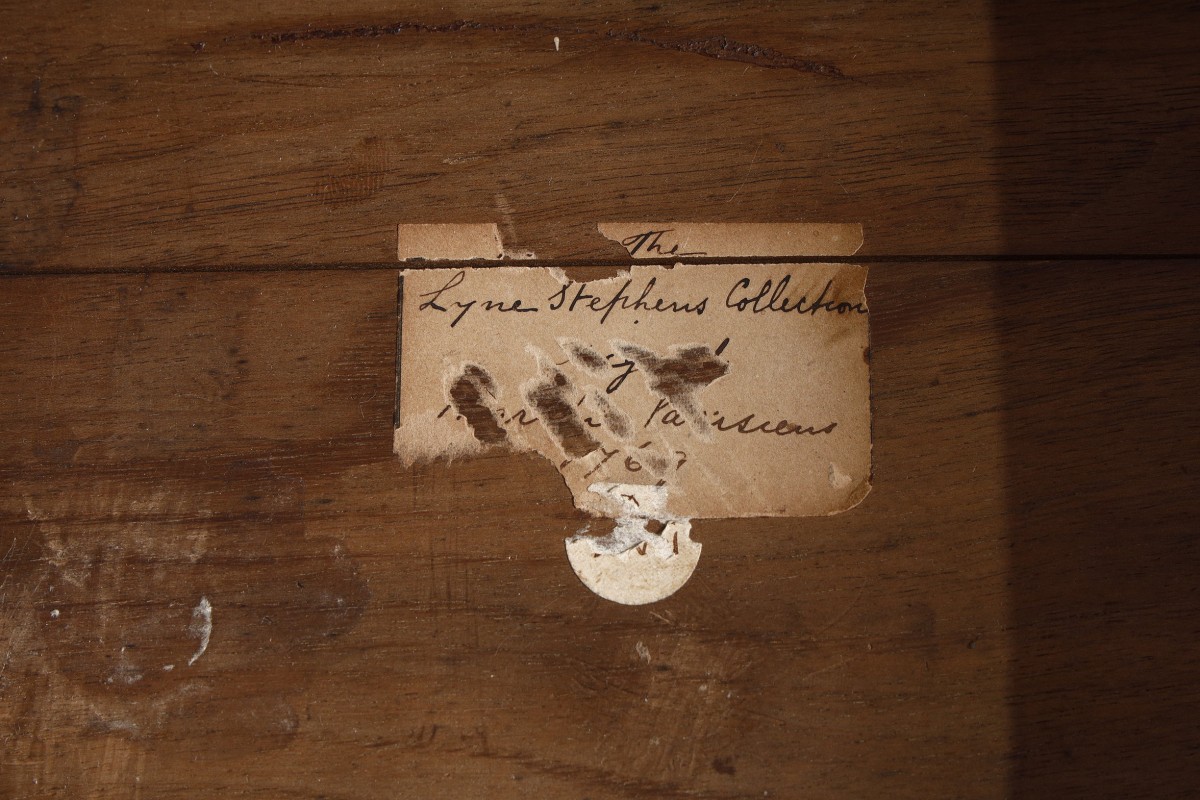
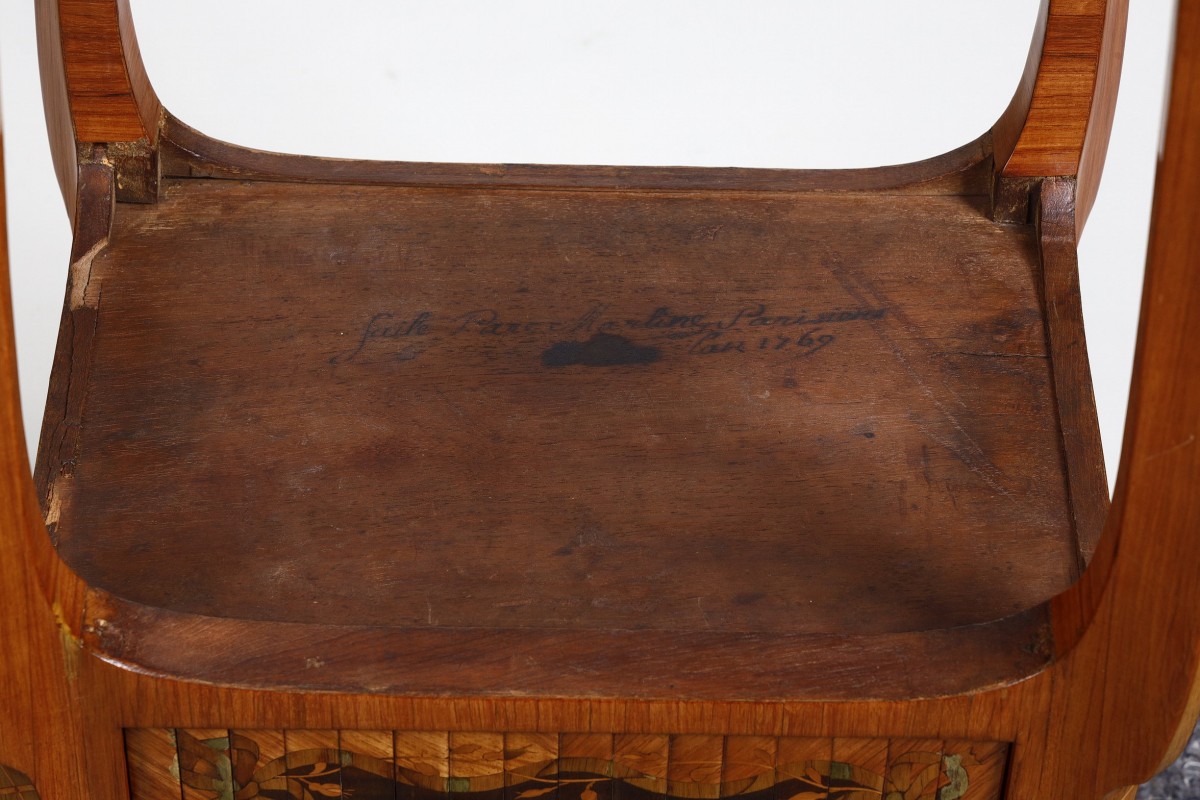
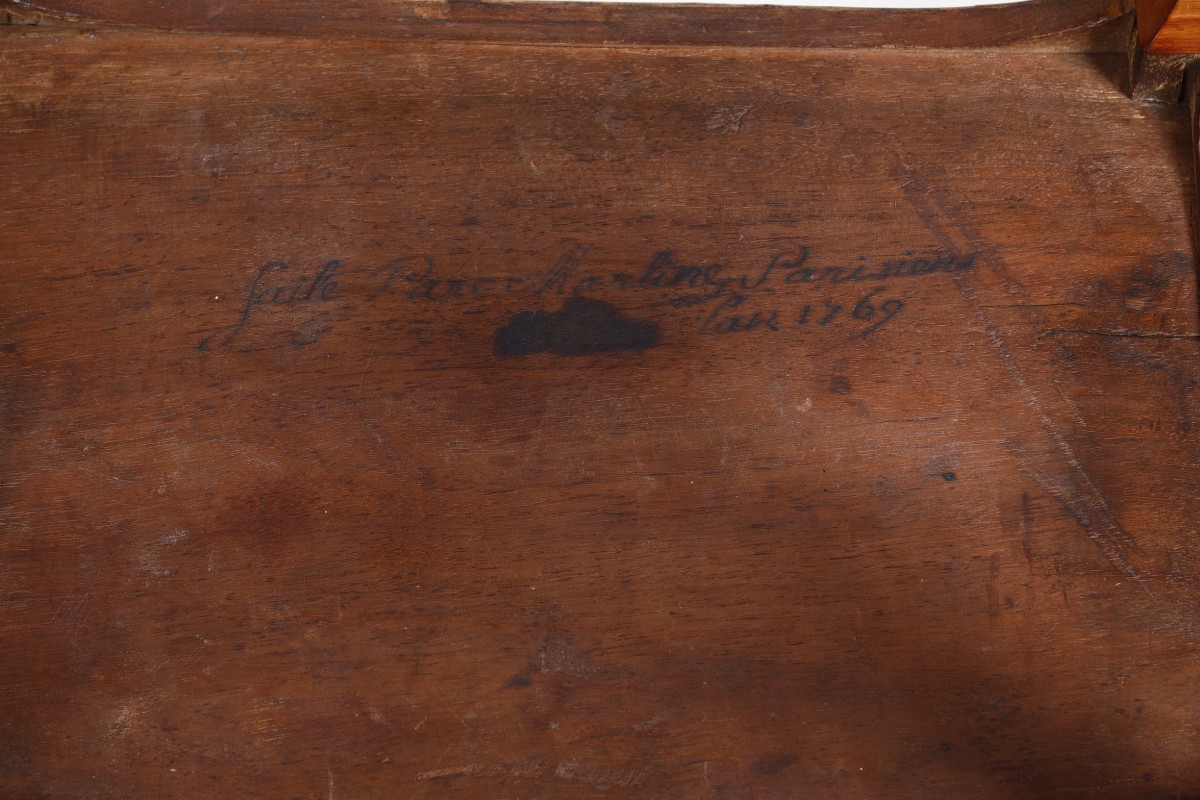
Lifting the writing surface concealed beneath the sliding top reveals an old, partially preserved label with a handwritten ink inscription: "The Lyne Stephens Collection...1769." An old inscription, also handwritten in ink, can be found beneath the table: "faite par Martine Parisien l'an 1769" (made by Martine, a Parisian, in the year 1769).
A photograph of this table appears in *Le Mobilier français du XVIIIe siècle: Dictionnaire des ébénistes et des menuisiers* by Pierre Kjellberg (Éditions de l'Amateur, 2008, pp. 599–600).
This authoritative reference work mentions the obscure master named in the inscription—Martine—whose other known works include a Louis XVI commode.
This table was part of the collection of Yolande Lyne-Stephens—also known as Yolande Marie-Louise Duvernay (or de Varnay)—a celebrated French dancer (1812–1894) who performed at prestigious venues such as the Paris Opera.
Her collection was one of the most significant Old Master collections of the era.
Although at one point destined for national museums, the collection was ultimately dispersed at a Christie’s sale in 1895.
However, some of her paintings can be found at the National Gallery in London—including Watteau’s *La Gamme d’amour*—and the museum has published an article detailing her inventory.
Dimensions: H 73 cm x W 40 cm x D 28 cm