Offered by Poncelin de Raucourt Fine Arts

Paintings and drawings, from 16th to 19th century
Richard Caton Woodville, Junior
British, 1856–1927
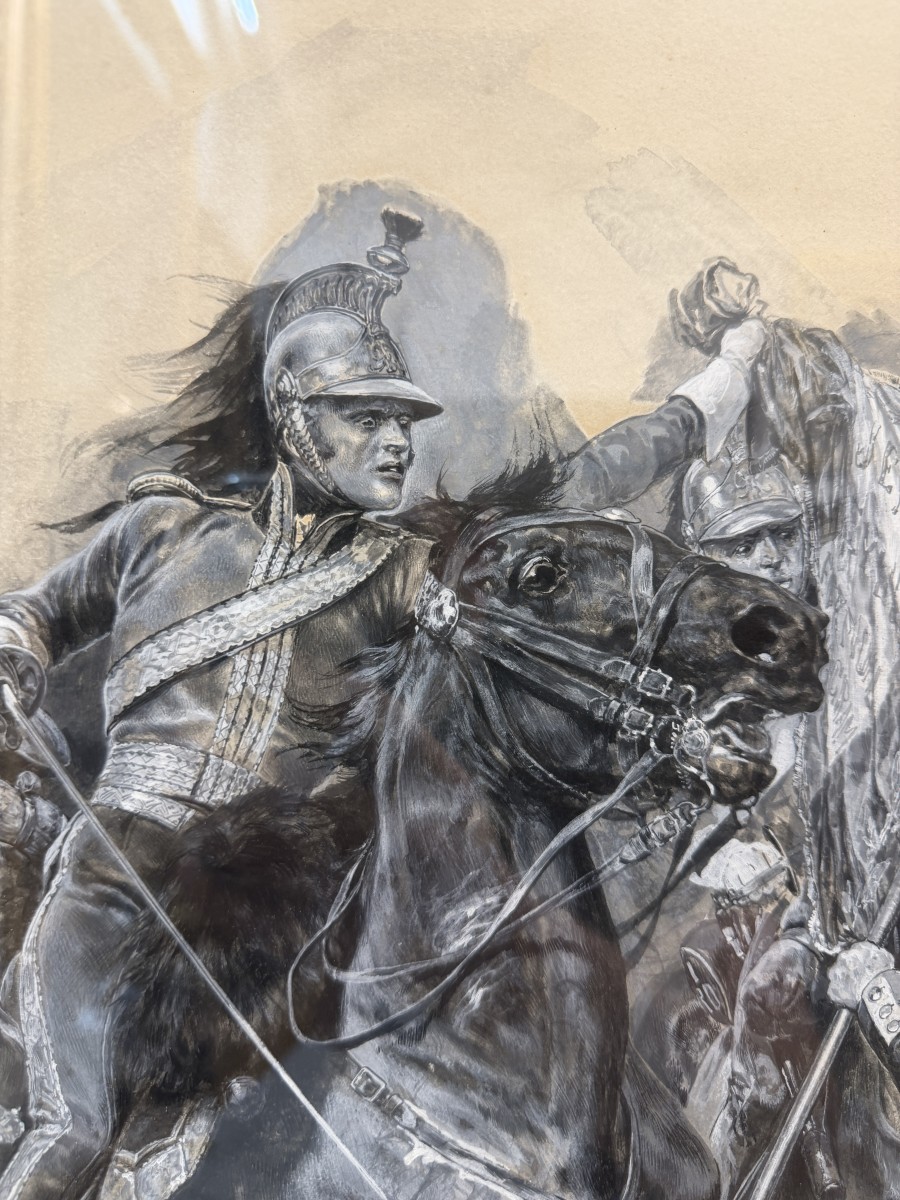
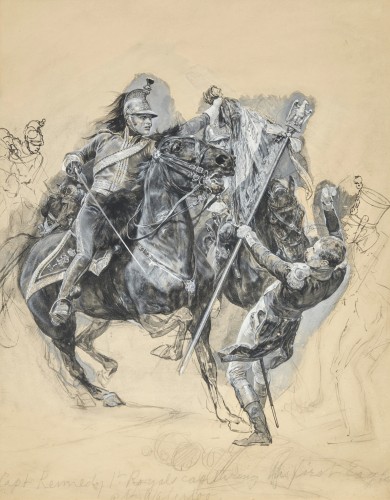
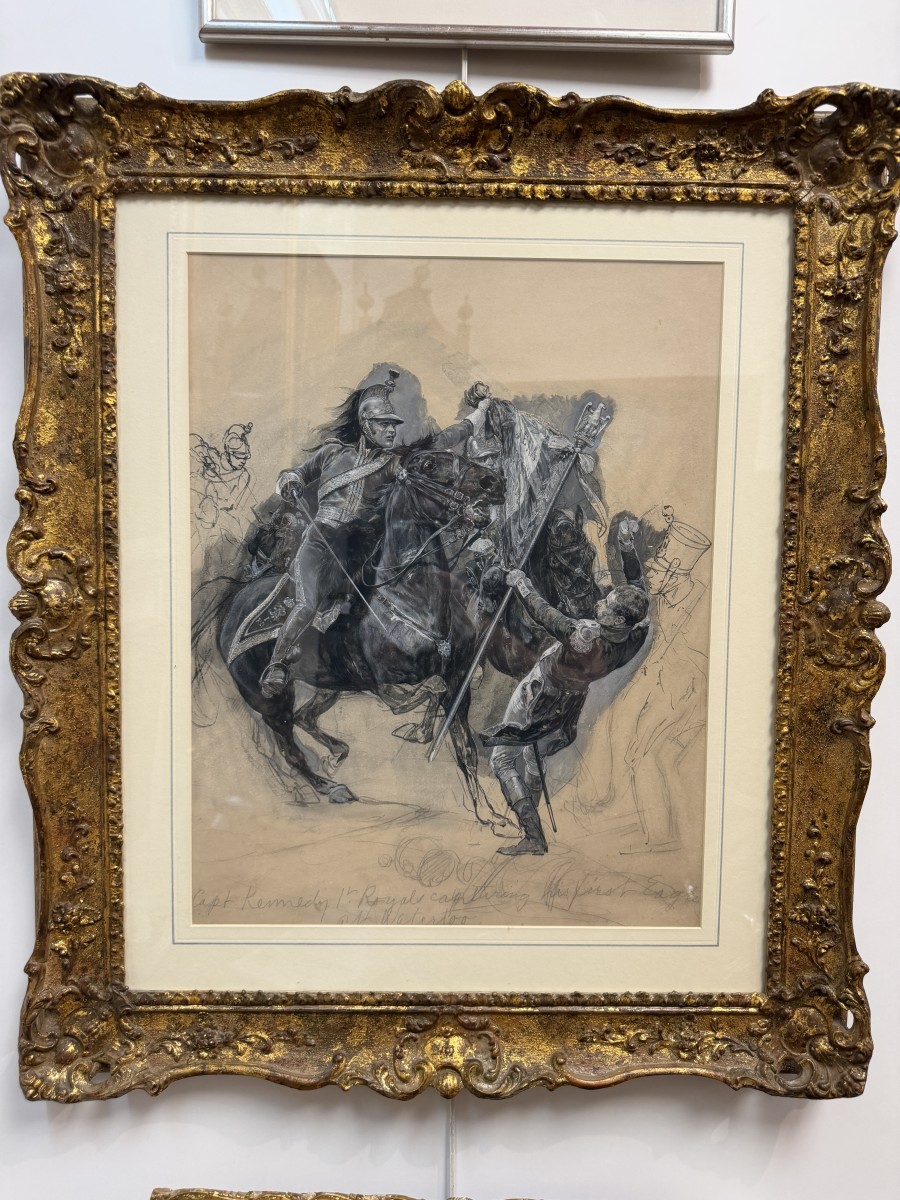
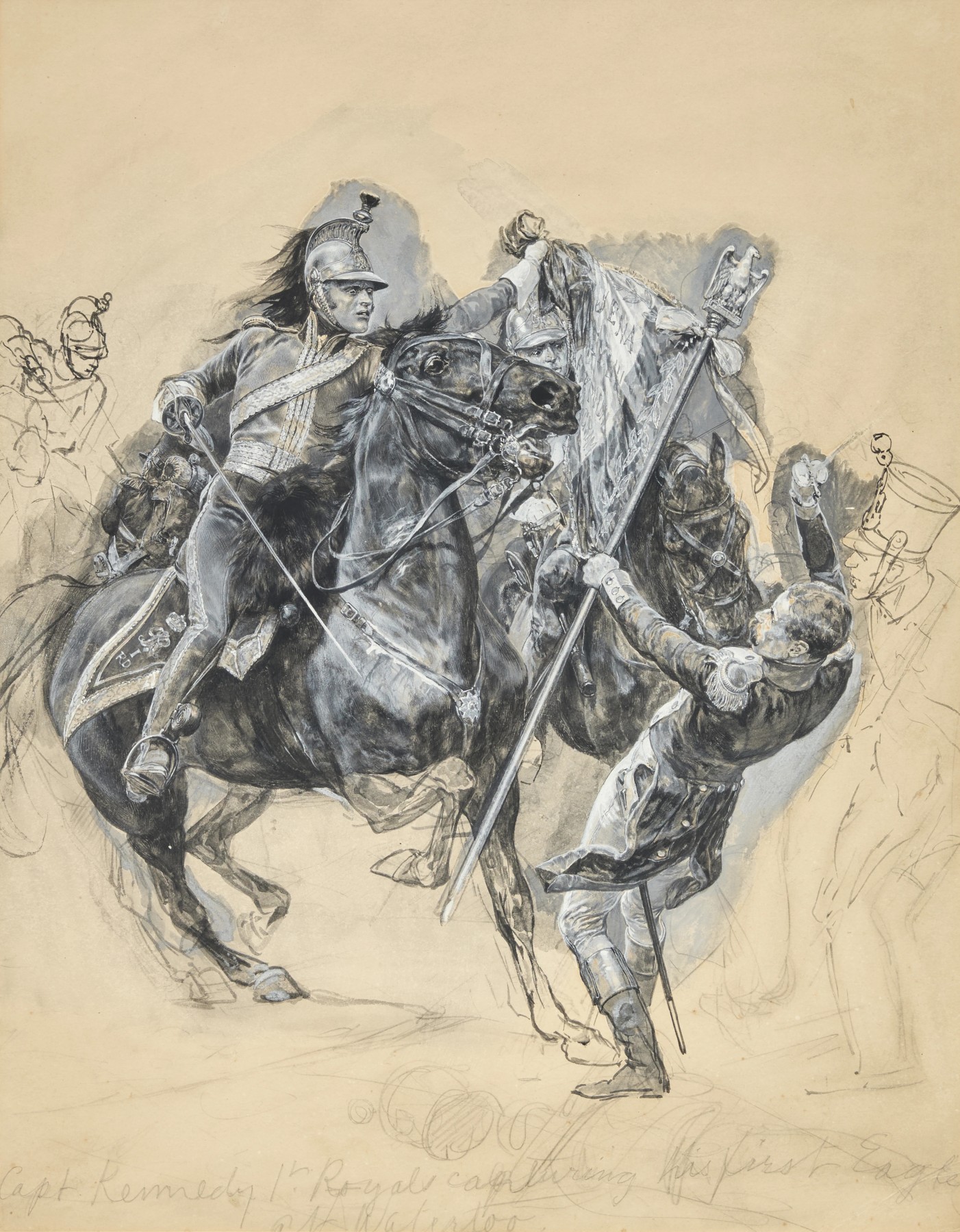
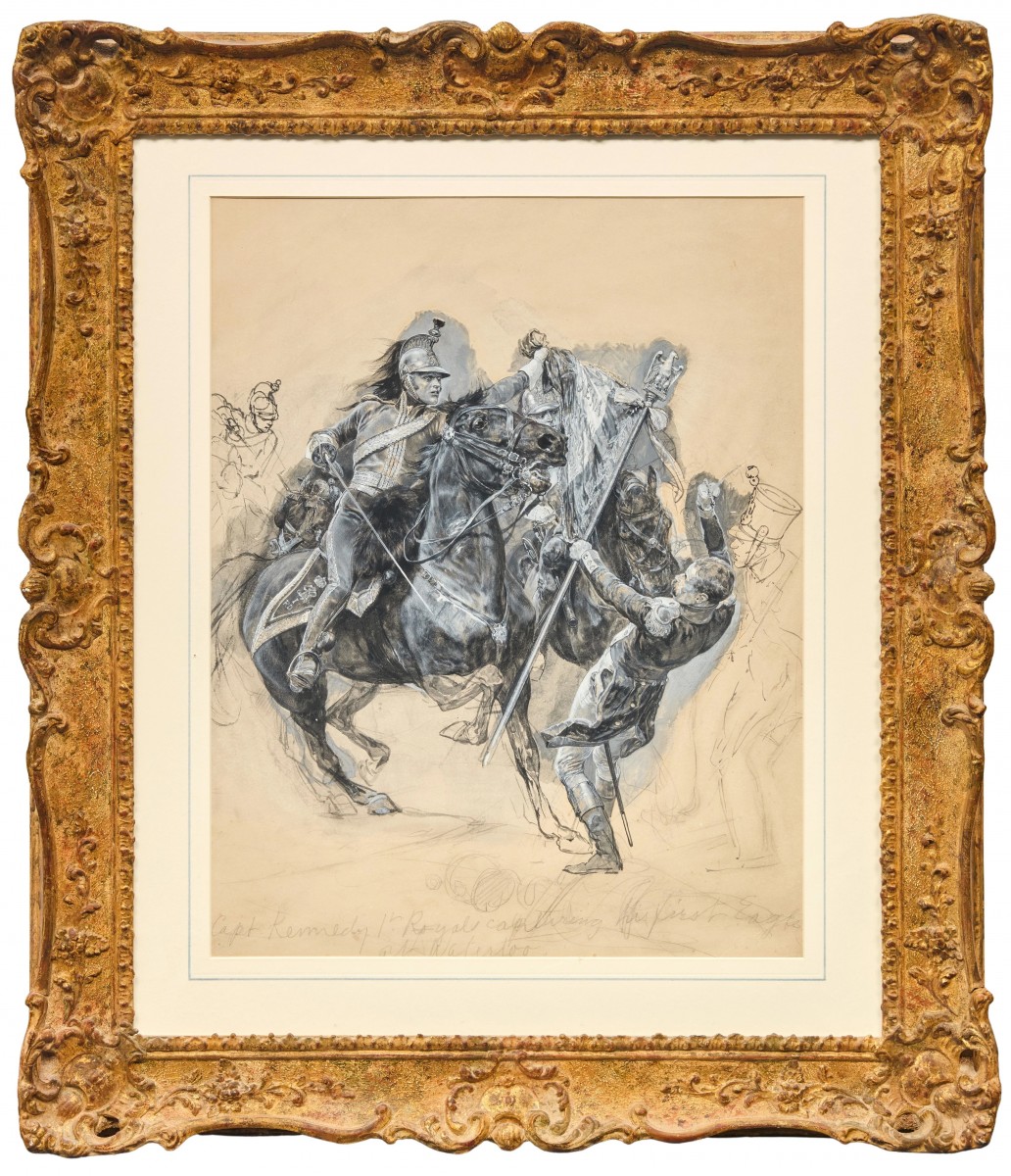
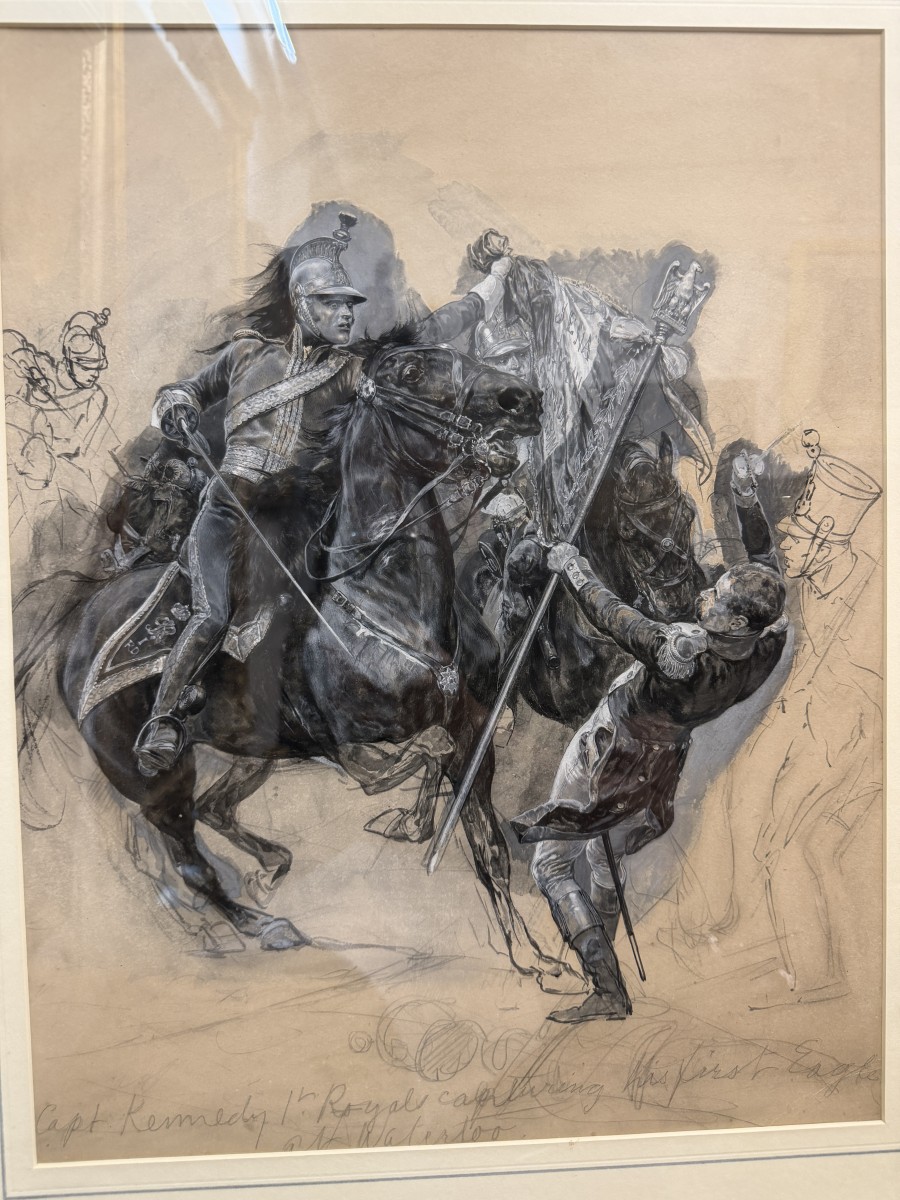
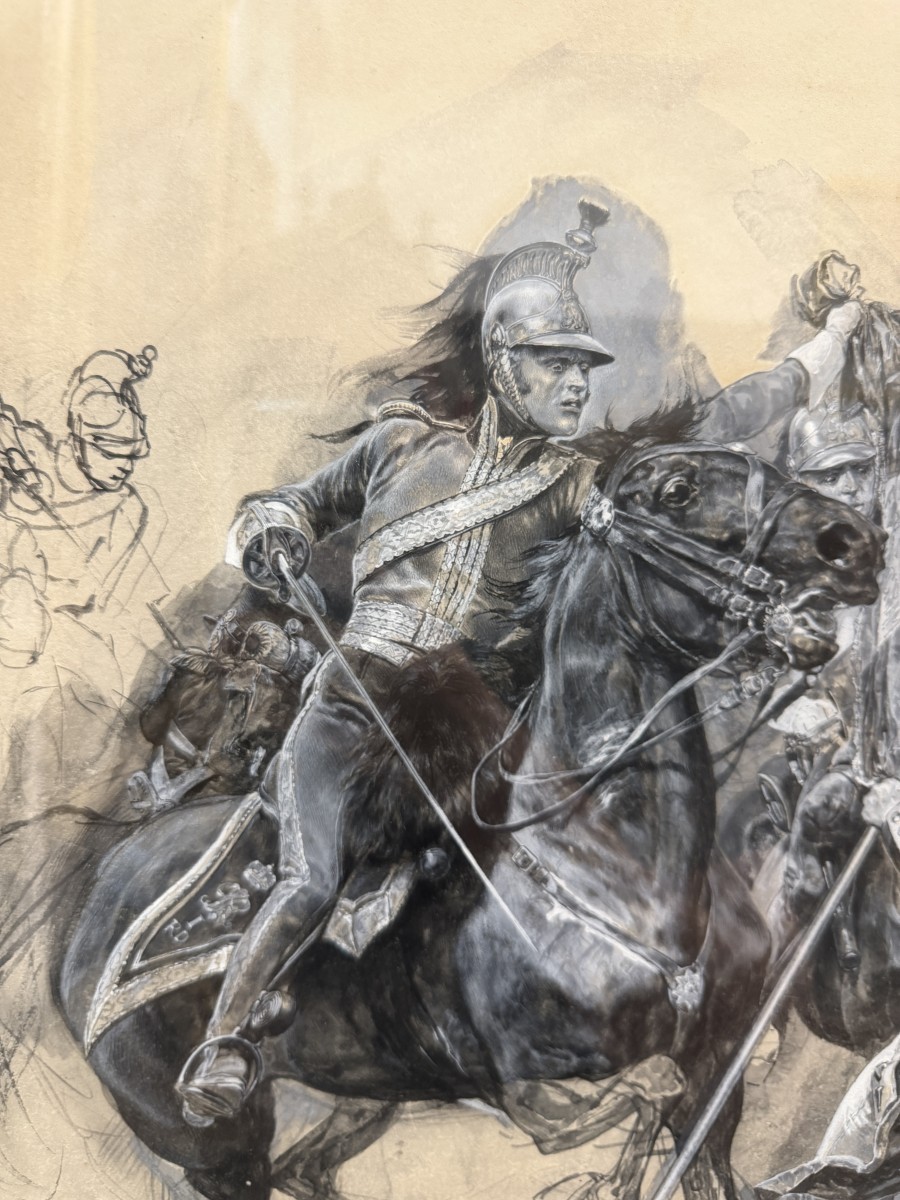
Captain Kennedy, 1st Royal, Capturing his First Eagle at Waterloo
Pencil, watercolour and bodycolour heightened with white on paper
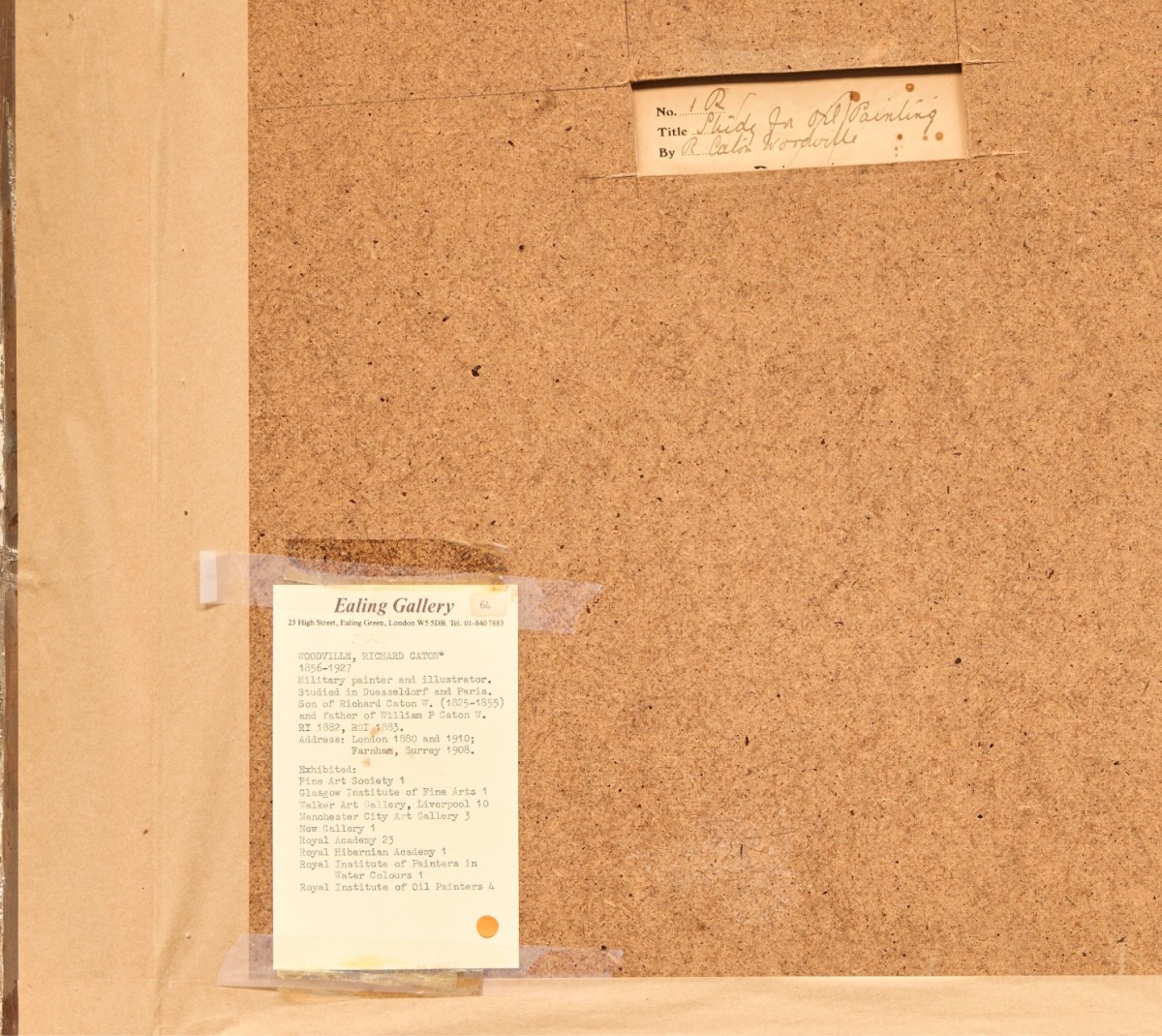
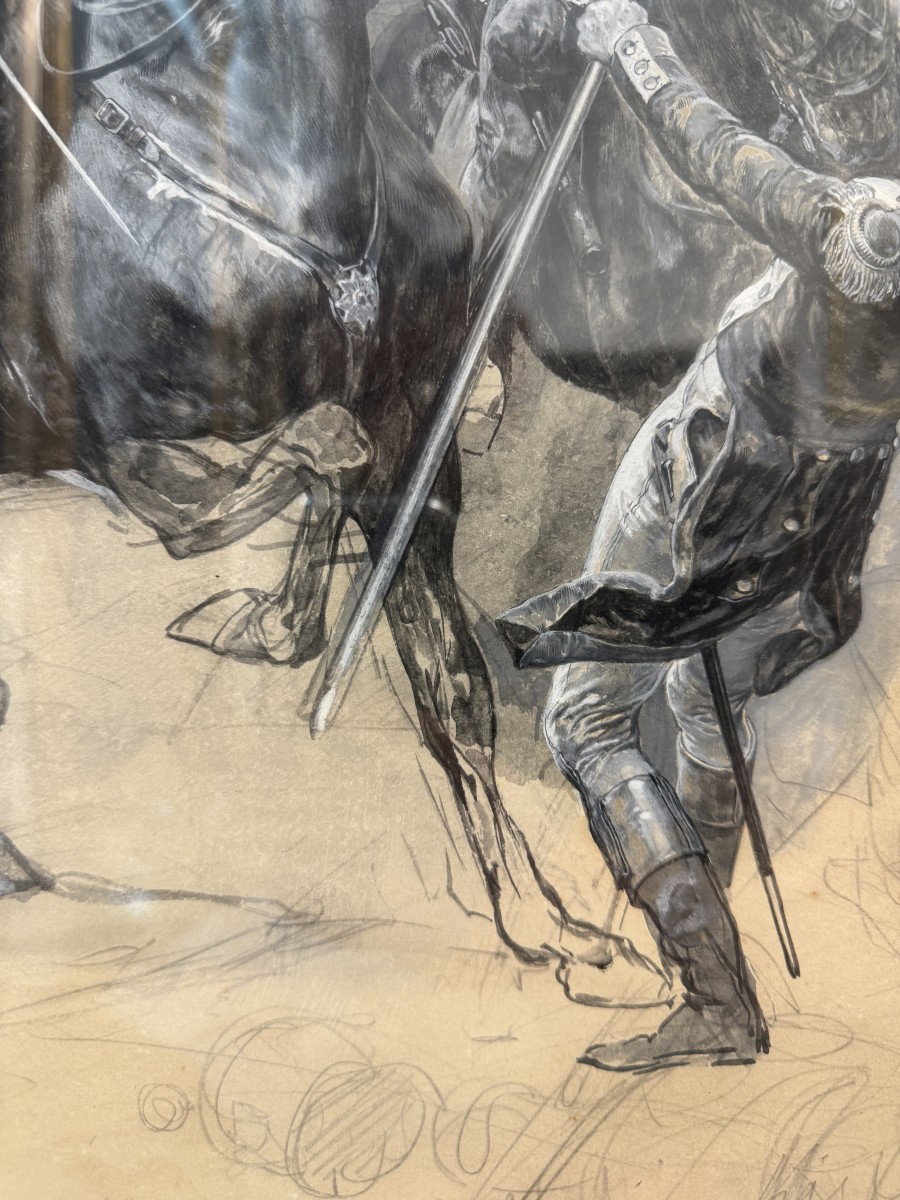
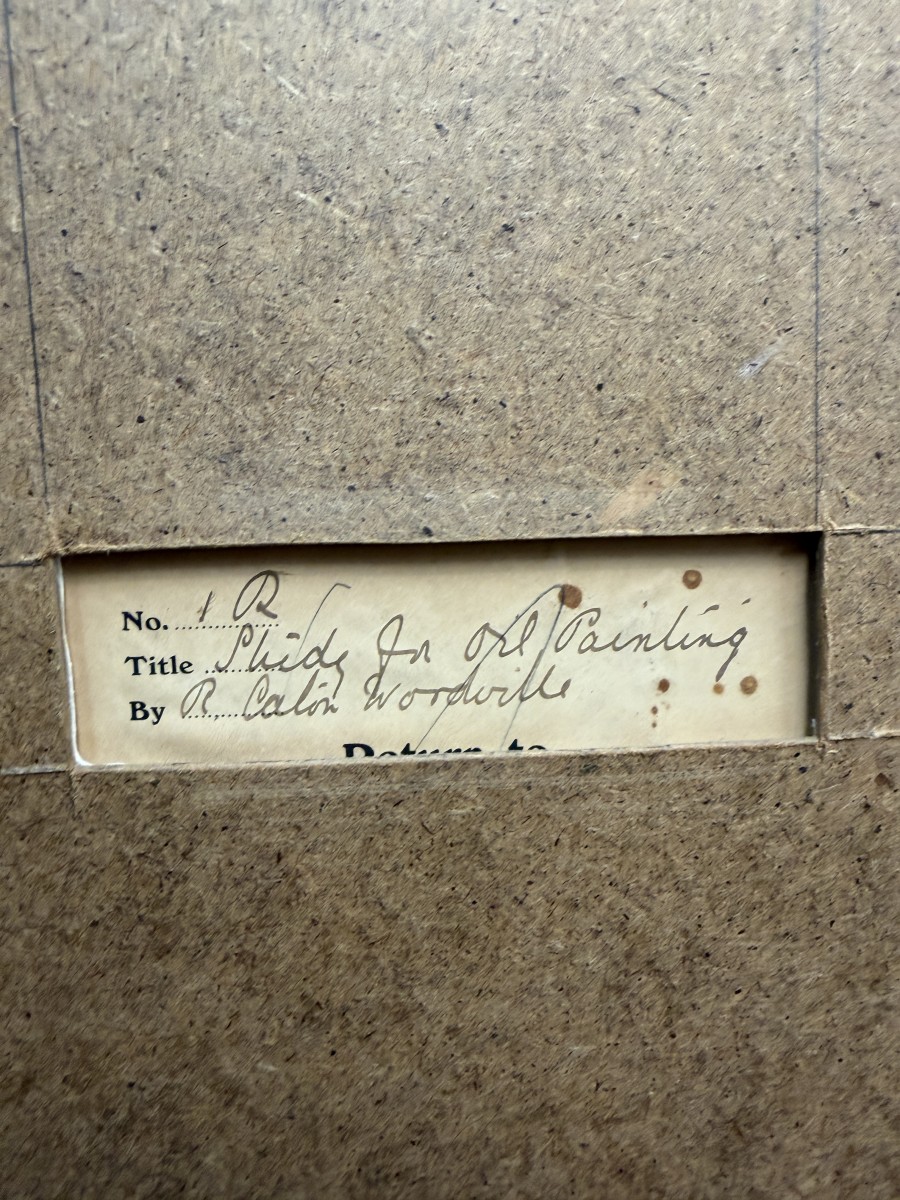
Bears old inscribed label verso; with pencilled inscription along the lower margin
50 × 39 cm
Executed probably in the late nineteenth century
Provenance
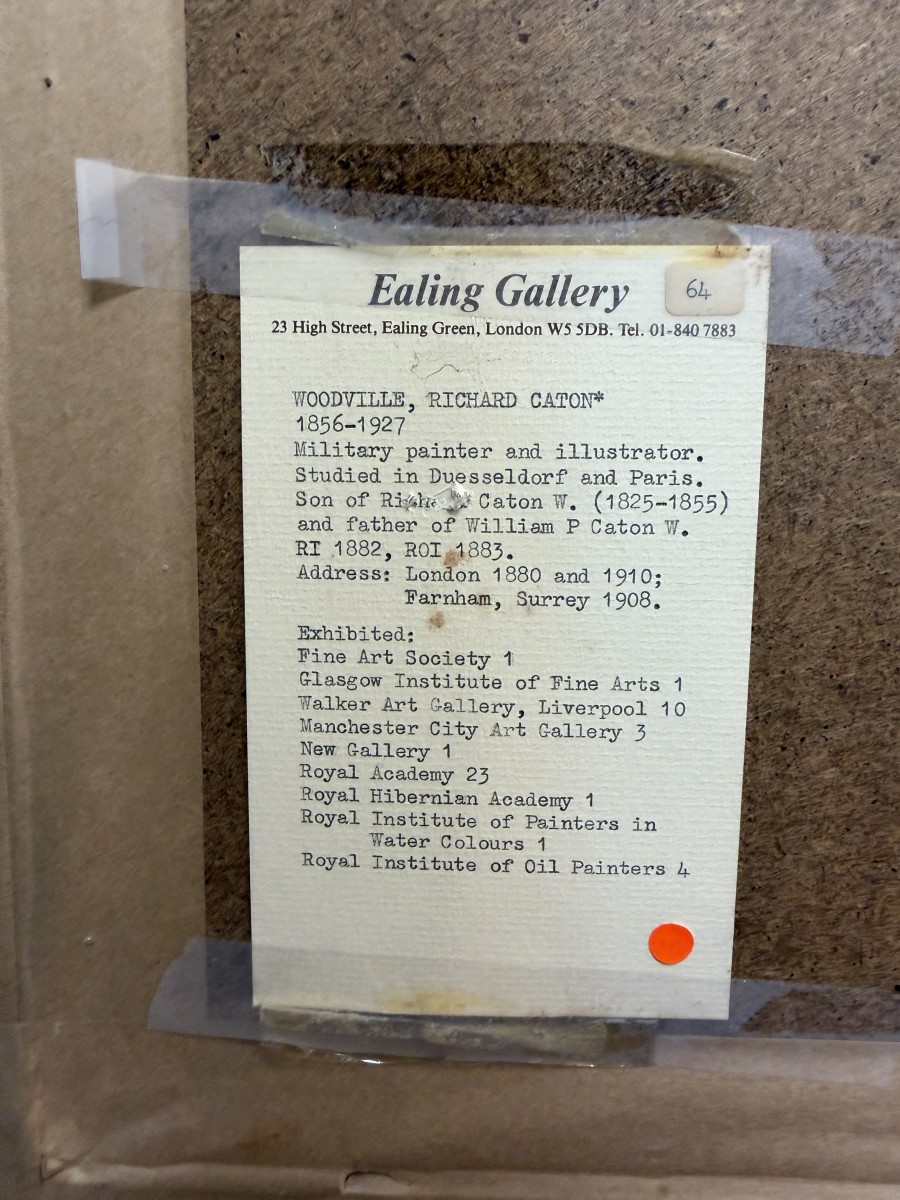
with the Ealing Gallery, London;
Private Collection, United Kingdom.
Richard Caton Woodville Junior was one of the most celebrated British military painters of the late nineteenth and early twentieth century. Trained in Düsseldorf and Paris, and closely associated with the Illustrated London News, he developed a pictorial language in which historical accuracy, theatrical immediacy and extraordinary technical finish are brought together with rare effectiveness. His finest works do not merely illustrate military episodes; they transform them into concentrated moments of drama, movement and national memory.
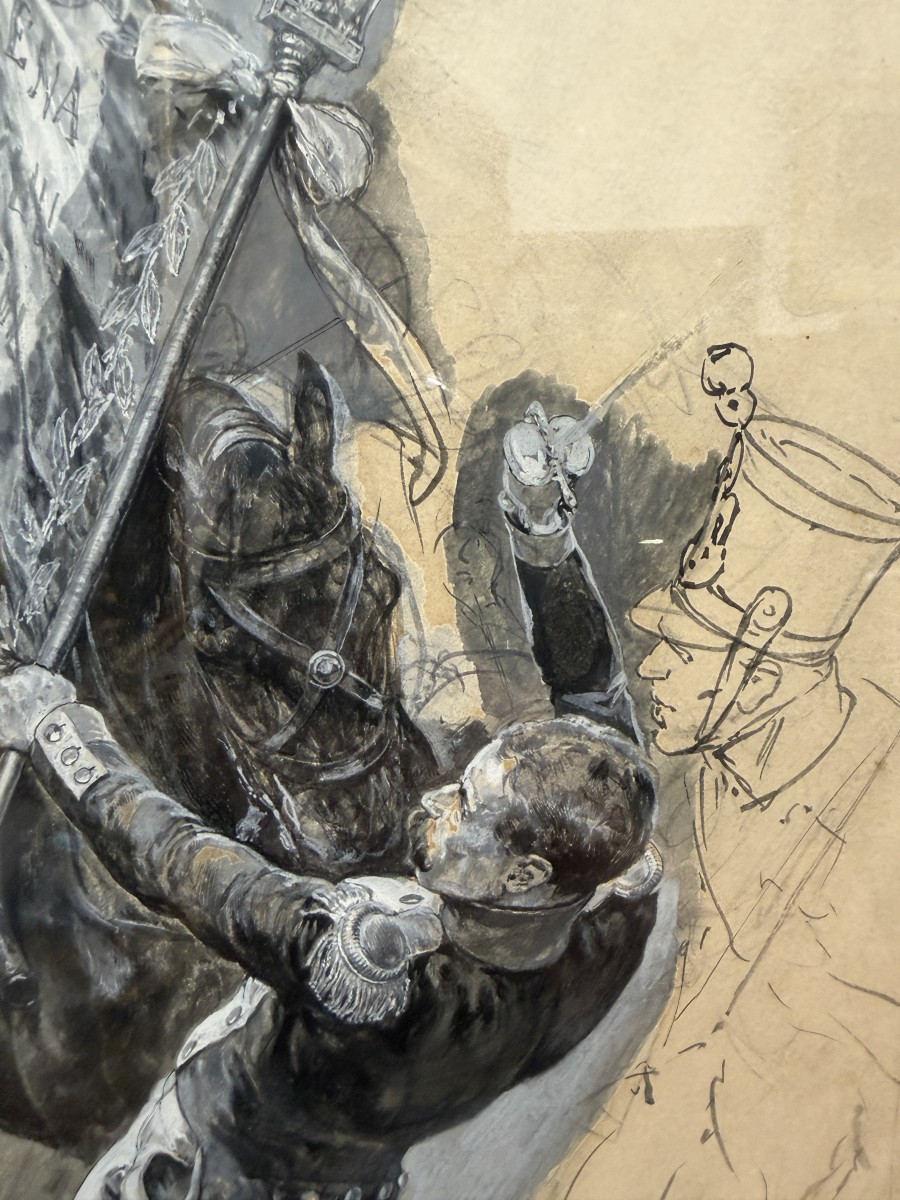
The present sheet is an exceptionally accomplished preparatory study for an oil painting, and represents one of the most charged episodes of the Battle of Waterloo: the capture of a French Imperial Eagle by the 1st, or Royal, Dragoons. The French Eagle, mounted above the tricolour standard, was not a simple military trophy. It was the visible emblem of Napoleon’s army, the rallying sign of the regiment, and a symbol of Imperial honour. To seize such an object in battle was therefore an act of enormous symbolic importance, and one of the most celebrated forms of victory over the Napoleonic forces.
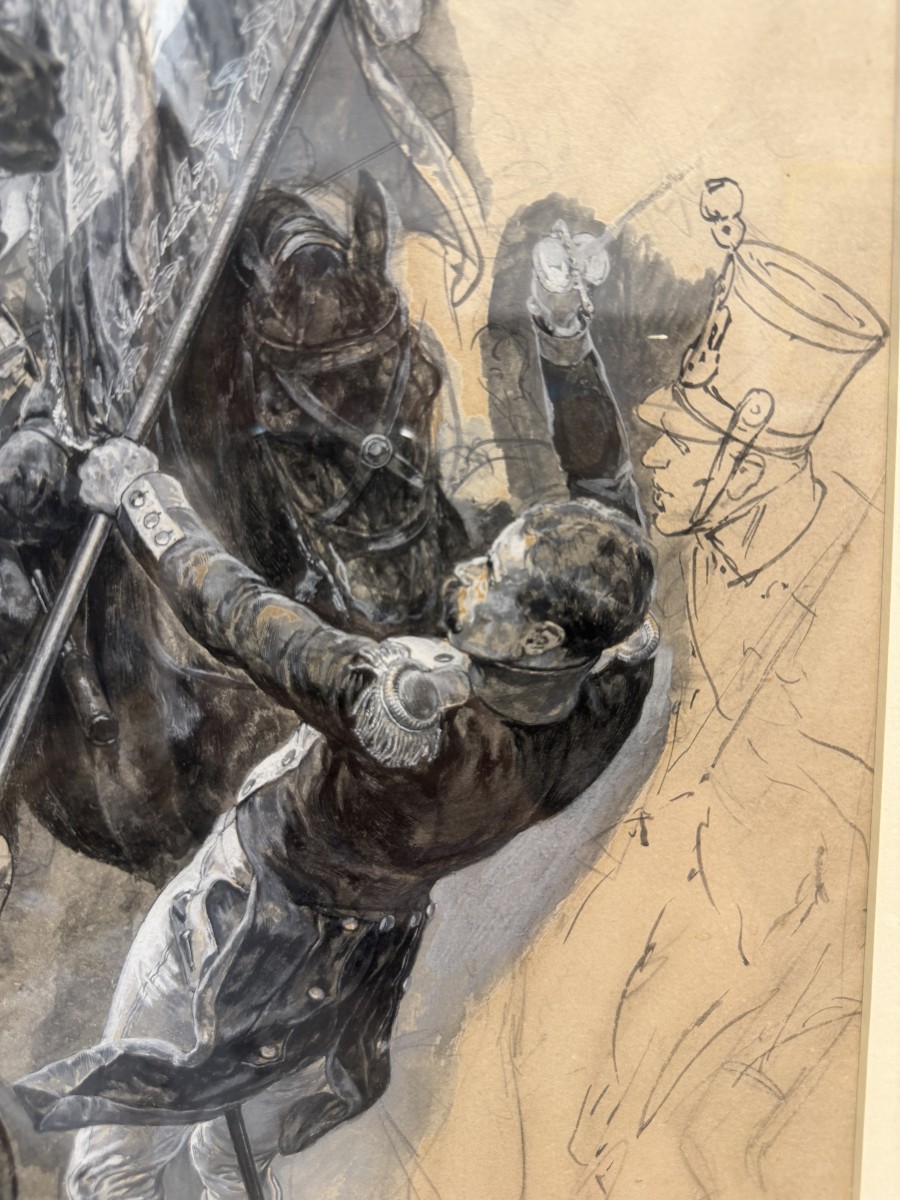
Woodville has chosen the decisive instant. Captain Kennedy Clark rises in the saddle, arm extended, while the dark mass of his horse dominates the centre of the composition. Opposite him, the French standard-bearer is shown struggling to retain the Eagle, his body pulled backwards by the force of the encounter. The composition is built on a powerful network of diagonals: the sword, the rearing movement of the horse, the thrust of the standard, and the falling body of the French soldier all combine to create an image of exceptional energy.
The quality of execution is remarkable. The surrounding soldiers are left in rapid, nervous pencil, giving the impression of the battlefield surging around the central action. By contrast, the main group is brought to an extraordinary degree of finish. The horse is modelled with rich, dark washes and brilliant touches of white; the polished helmet, sword, bridles and military accoutrements are described with dazzling precision; and the captured standard itself is rendered with a subtle play of folds, highlights and translucent greys. The result is not a mere working study, but a highly resolved sheet, almost pictorial in its own right.
Particularly striking is Woodville’s command of dramatic contrast. The black horse, thrust forward into the foreground, becomes the visual anchor of the composition, while the pale standard and flashes of white bodycolour draw the eye towards the symbolic heart of the subject: the captured Eagle. This use of bodycolour heightening gives the drawing a powerful chiaroscuro and an almost metallic brilliance, especially in the treatment of armour, harness and weaponry.
The old label on the reverse, identifying the work as a study for an oil painting, is significant. The sheet preserves both the immediacy of the first conception and the finish of a carefully developed final design. It allows us to see Woodville’s process at its most compelling: the rapid establishment of movement and battlefield confusion, followed by the precise and highly polished execution of the principal episode.
The subject also carries considerable historical resonance. The capture of the Eagle of the French 105th Line Infantry Regiment at Waterloo became one of the great trophies of the British cavalry charge. The episode was later associated with both Captain Alexander Kennedy Clark and Corporal Francis Stiles, or Styles, whose respective roles in the capture became the subject of regimental memory and discussion. This tension between fact, heroism and legend gives the image added depth. Woodville is not simply recording an event; he is shaping one of the emblematic moments through which Waterloo was remembered in Britain.
The importance of the present drawing lies in this rare union of subject, scale and execution. As a work on paper, it is of exceptional quality, with a level of finish seldom encountered in preparatory military studies. As an historical image, it represents one of the most symbolic acts of the Battle of Waterloo: the seizure of a Napoleonic Eagle, the emblem of Imperial France, at the very moment of its defeat. It is therefore both a brilliant example of Woodville’s draughtsmanship and a powerful image of British military history.