Offered by Galerie Sismann
REQUEST INFORMATION

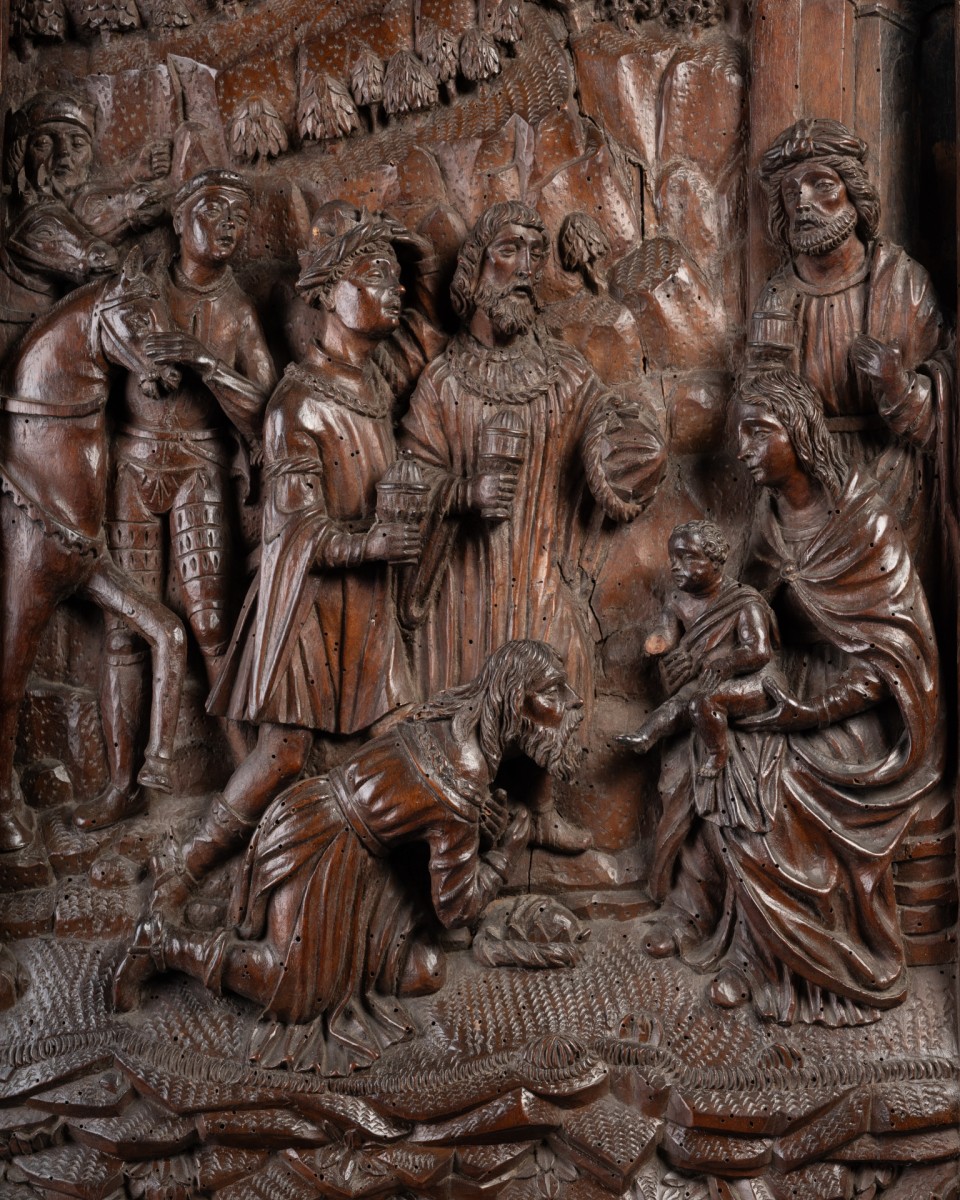
From the mid-15th century to the early 16th century, Lombardy was under the rule of the Sforza family. Milan, the capital of the duchy, became a major artistic centre and attracted leading artists such as Bramante and Leonardo da Vinci, who lived there from 1478 to 1499 and from 1482 to 1499 respectively. Local sculptural works drew inspiration from these visits and from the Lombard artistic identity, which was characterised by late Gothic style and the tradition of woodcarving. Giacomo del Maiano (before 1469 - 1503 or 1505) epitomised this, as he was commissioned to design and carve the framework for the Altarpiece of the Immaculate Conception between 1480 and 1482, the central panel of which was Leonardo da Vinci’s The Virgin of the Rocks. Furthermore, between the late 15th and early 16th centuries, the De Donati brothers , of Lombard origin, headed a major woodcarving workshop, thus confirming the importance of woodcarving within the Lombard artistic landscape.
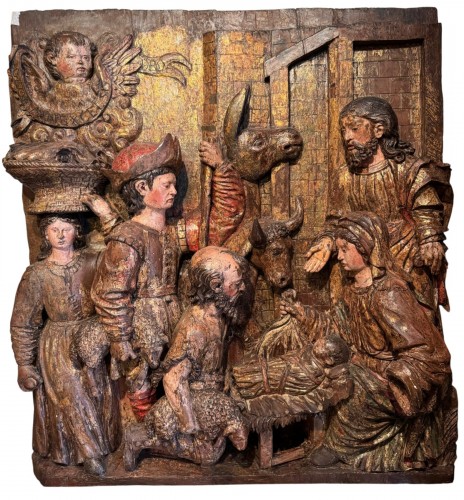
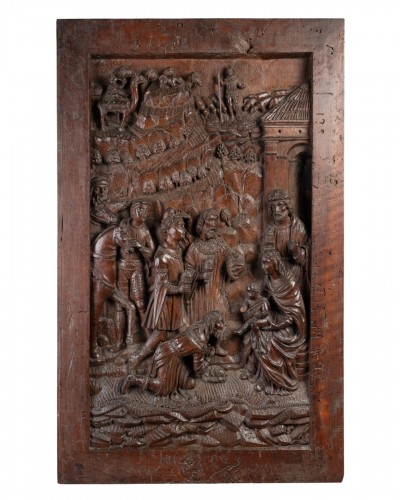
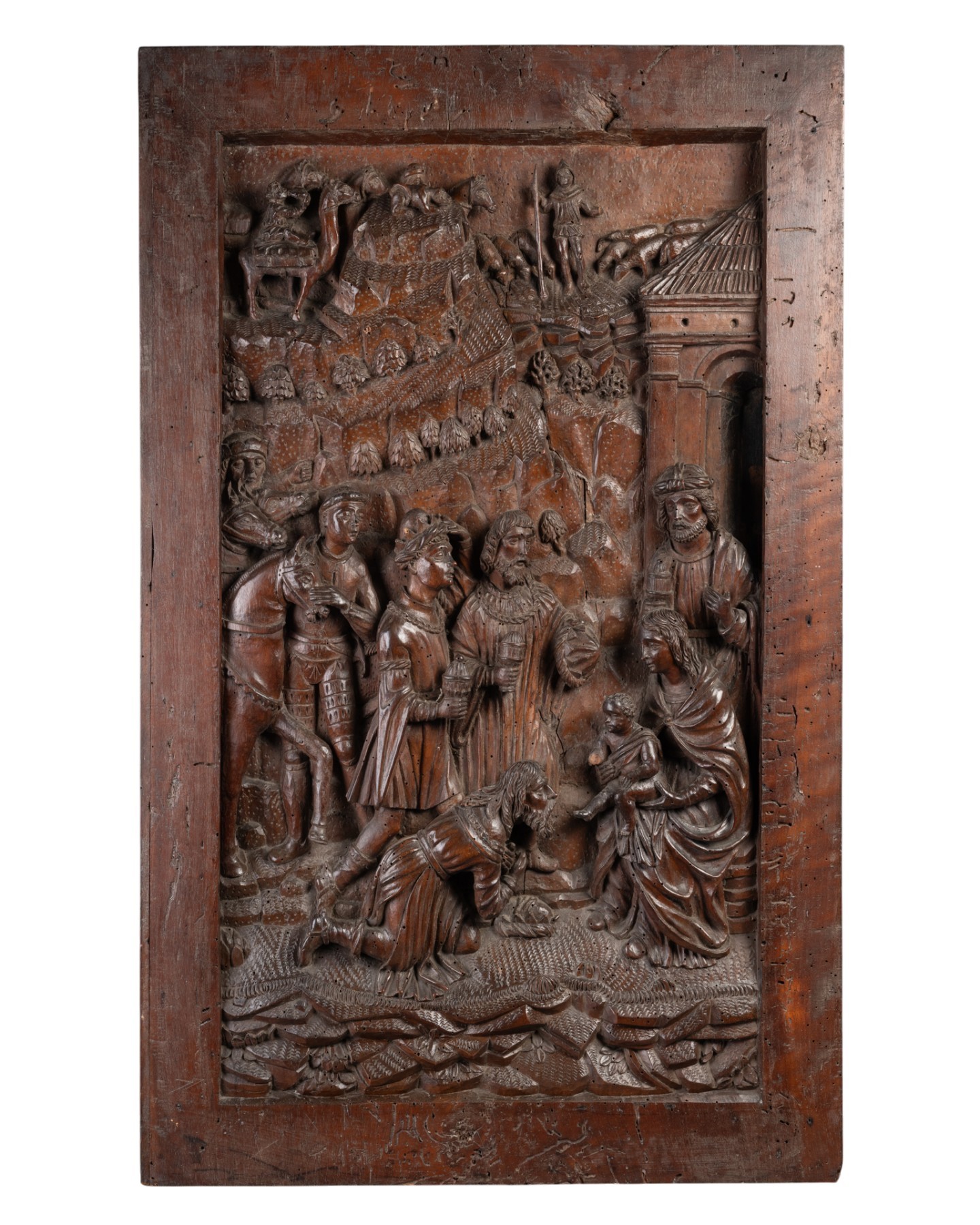
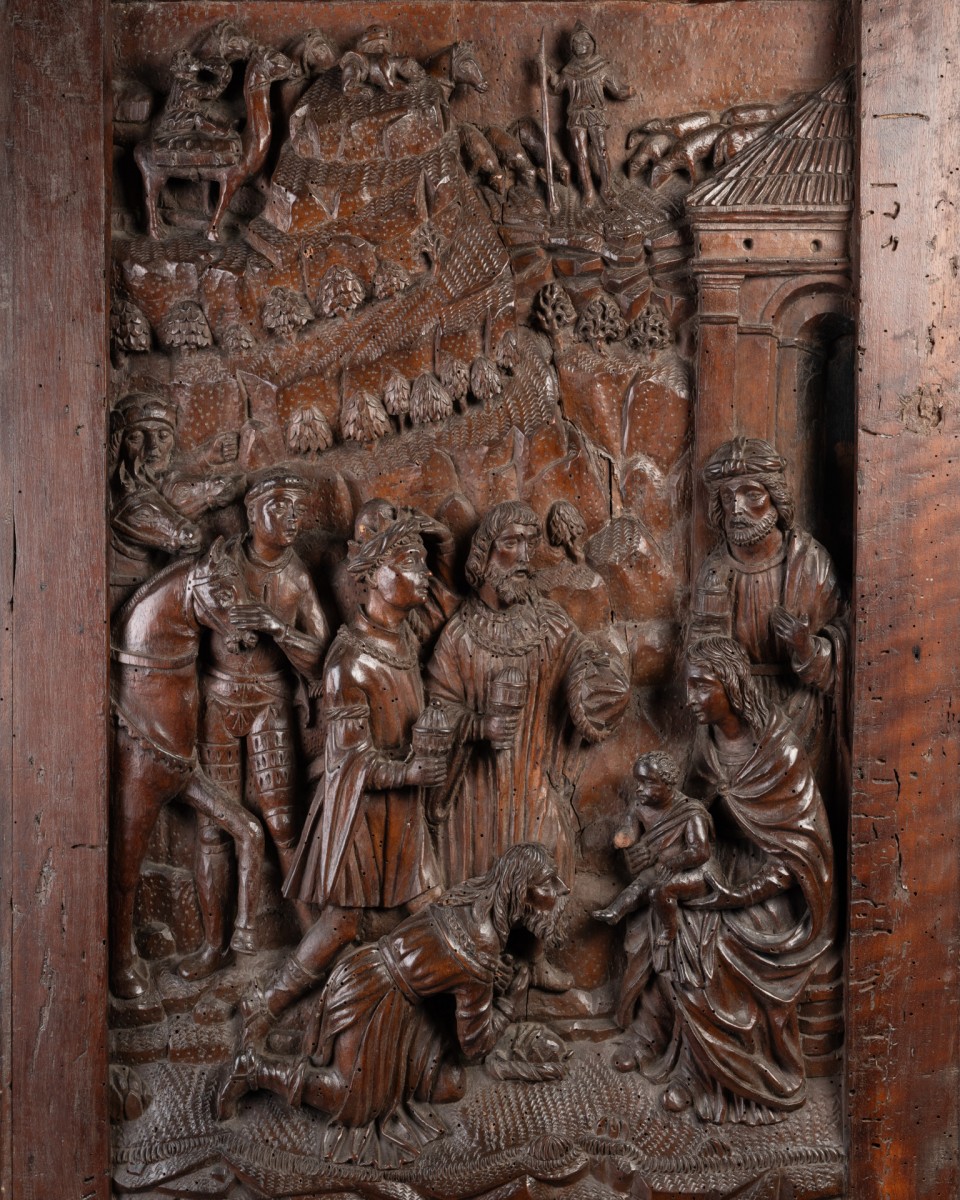
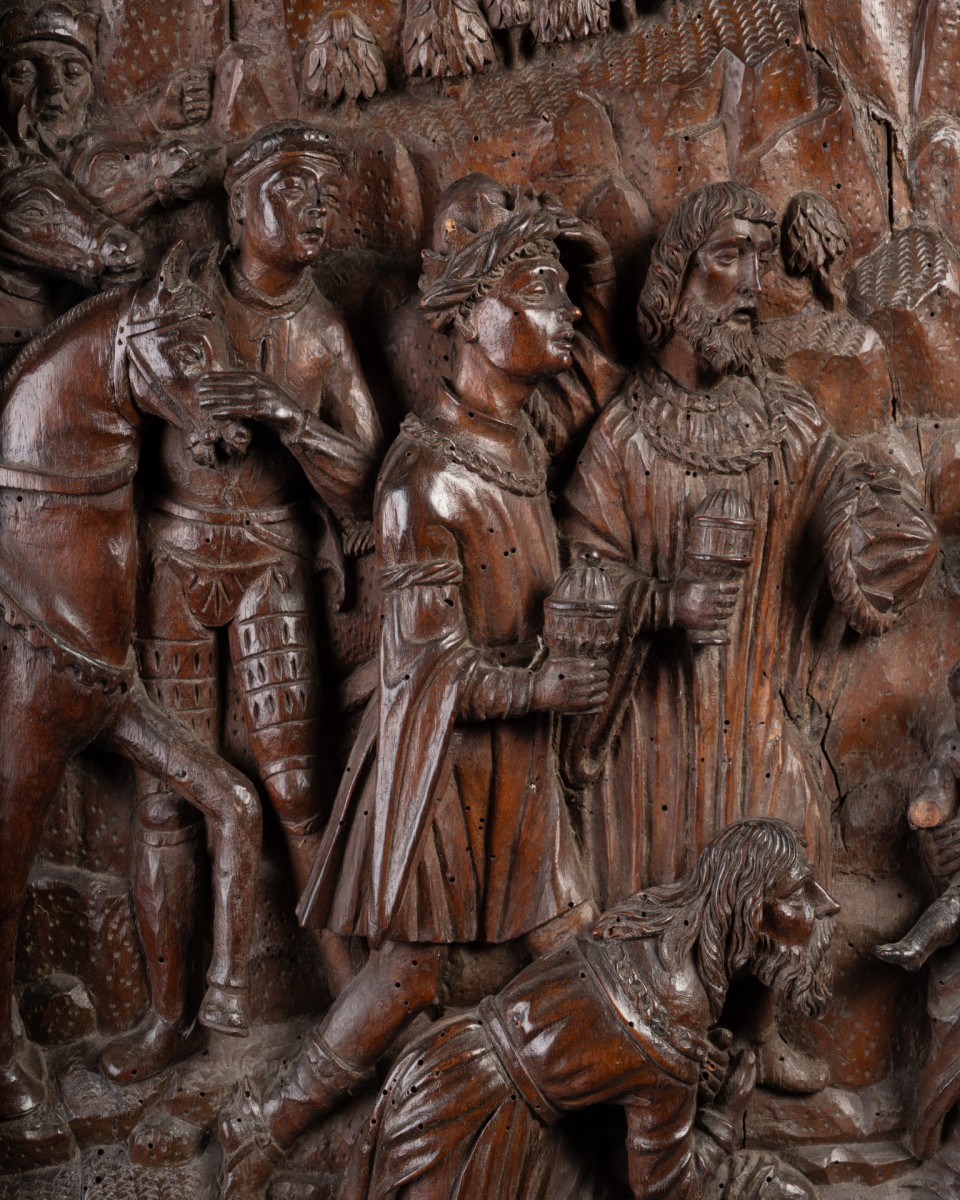
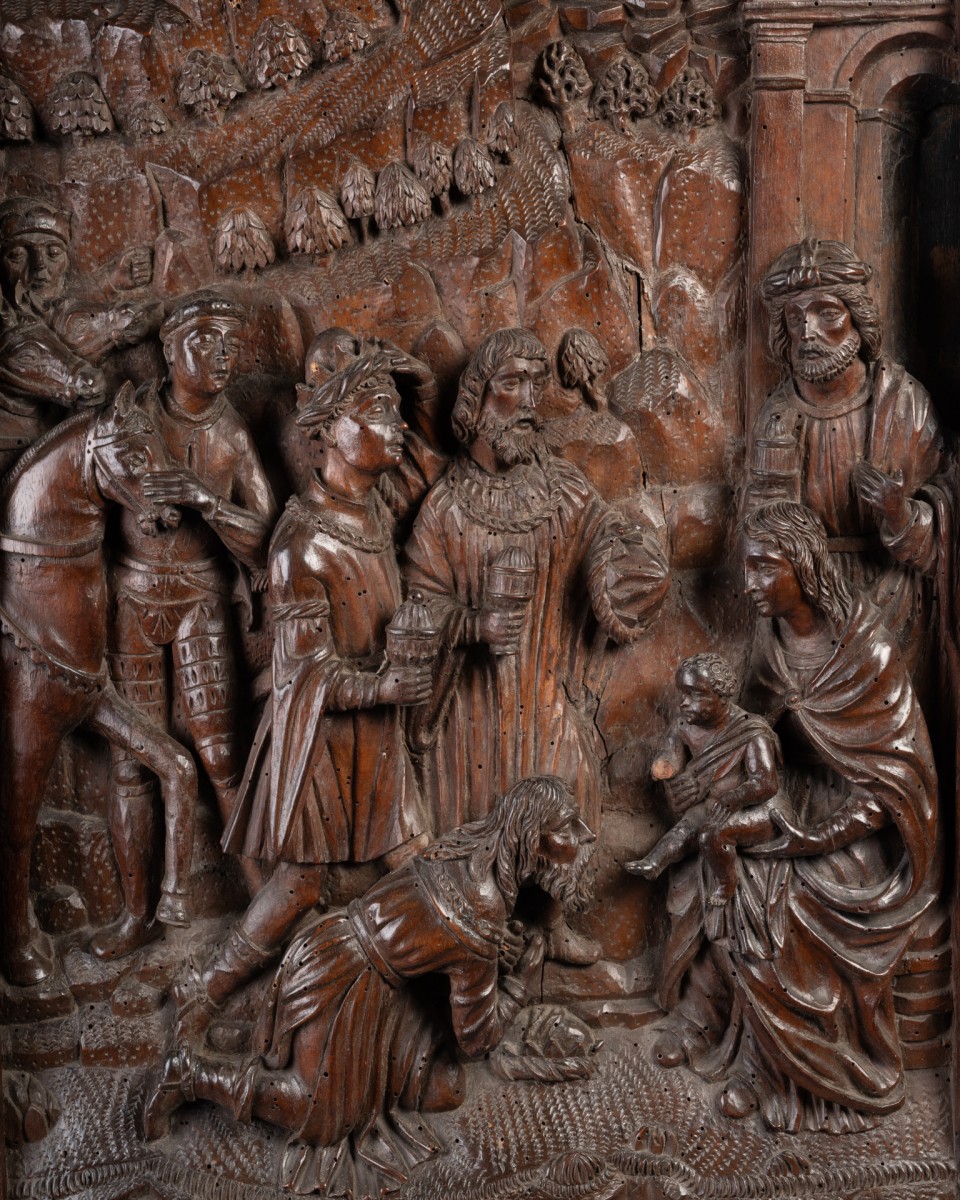
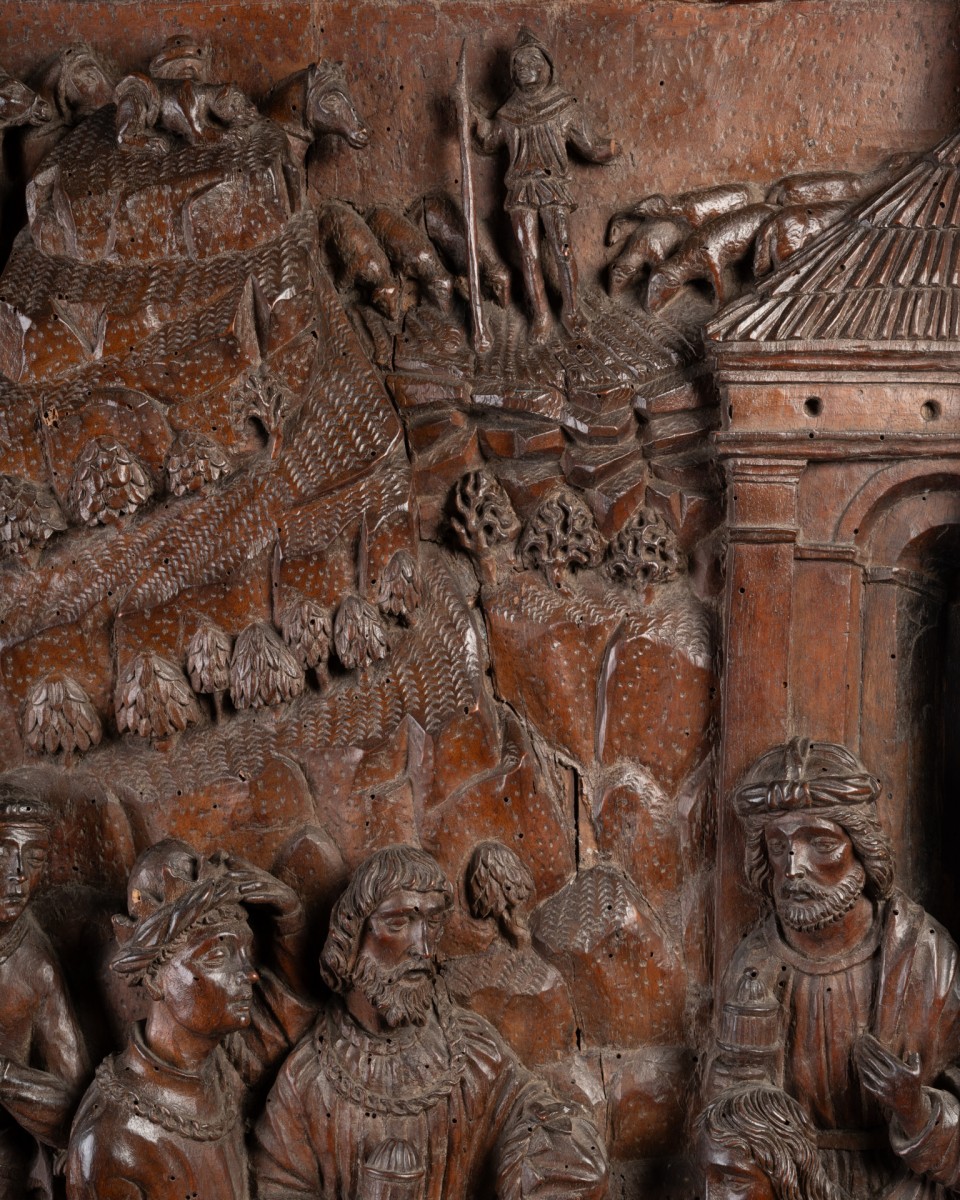
It was therefore under the guidance of Giacomo del Maiano and within the circle of the Donati brothers that this panel was created. Originally, it adorned the lower section of an altarpiece. Here, a scene depicting the Adoration of the Magi unfolds. The Virgin, in the foreground on the right, holds the Christ Child on her lap whilst one of the Magi kneels at her feet, his crown laid on the ground. The other two Magi stand behind her, one having already removed his crown and the other preparing to do so, unfolding the narrative. The procession of the Magi comprises soldiers, horses and camels descending from the mountain depicted in the background. This narrative approach, which unfolds across several planes, is also evident in the panel depicting the Adoration of the Magi by the Donati brothers, held at the V&A in London (fig. 2). As for the depiction of the mountain, it is reminiscent of that in del Maiano’s Entombment (fig. 1), where one also finds steep rocks and shrubs on the mountainside. Other elements enrich the narrative of our panel, notably the shepherd and his flock; this motif is also visible in a Nativity scene housed at the Castello Sforzesco and attributed to the Master of Trognano (fig. 4).
This panel, through its treatment of relief and the narrative development of its composition, is a perfect example of Lombard sculpture at the beginning of the 16th century. Indeed, the relief is barely pronounced in the background but becomes much more pronounced in the foreground, thereby unfolding the narrative. Drawing on the teachings of Lombard masters such as Giacomo del Maiano and the Donati brothers, this relief is of great artistic and narrative quality.