Offered by Galerie Sismann
REQUEST INFORMATION
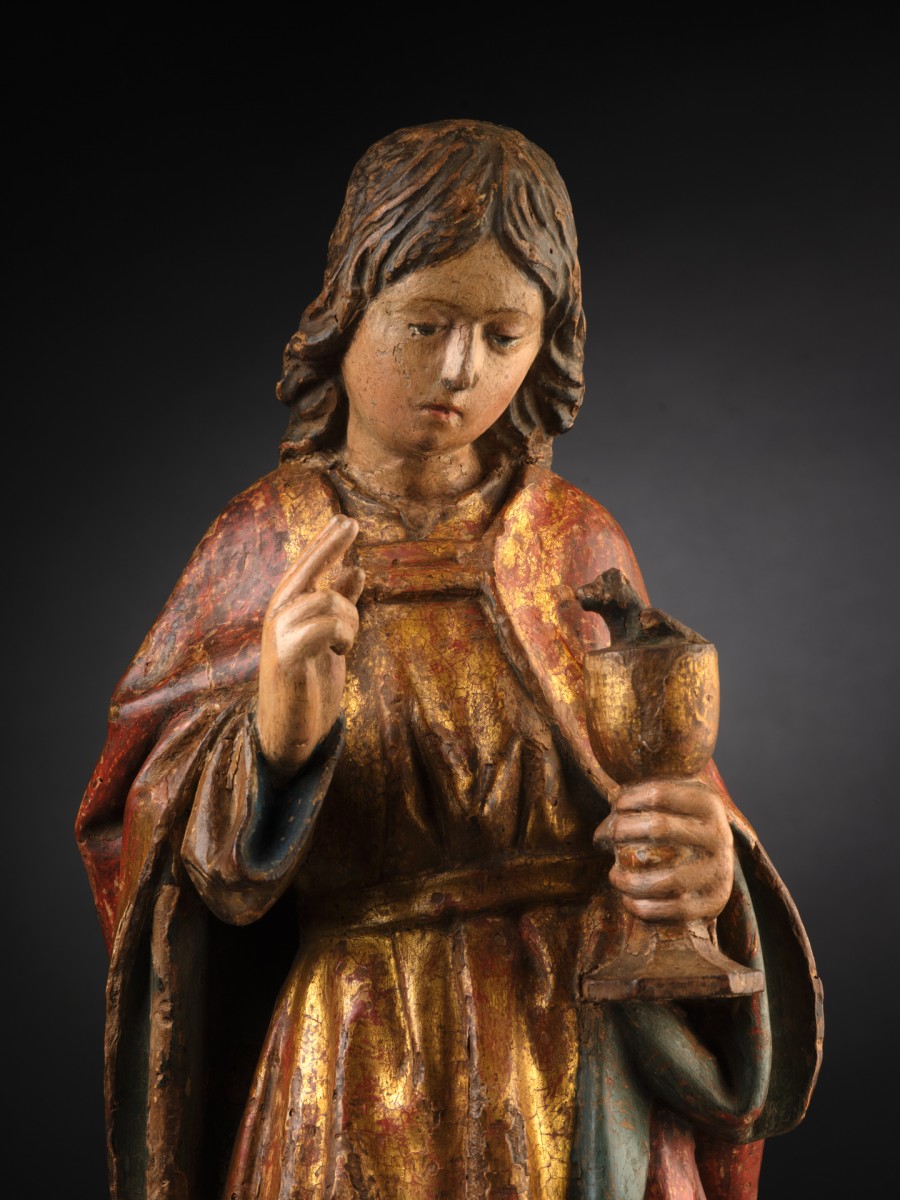
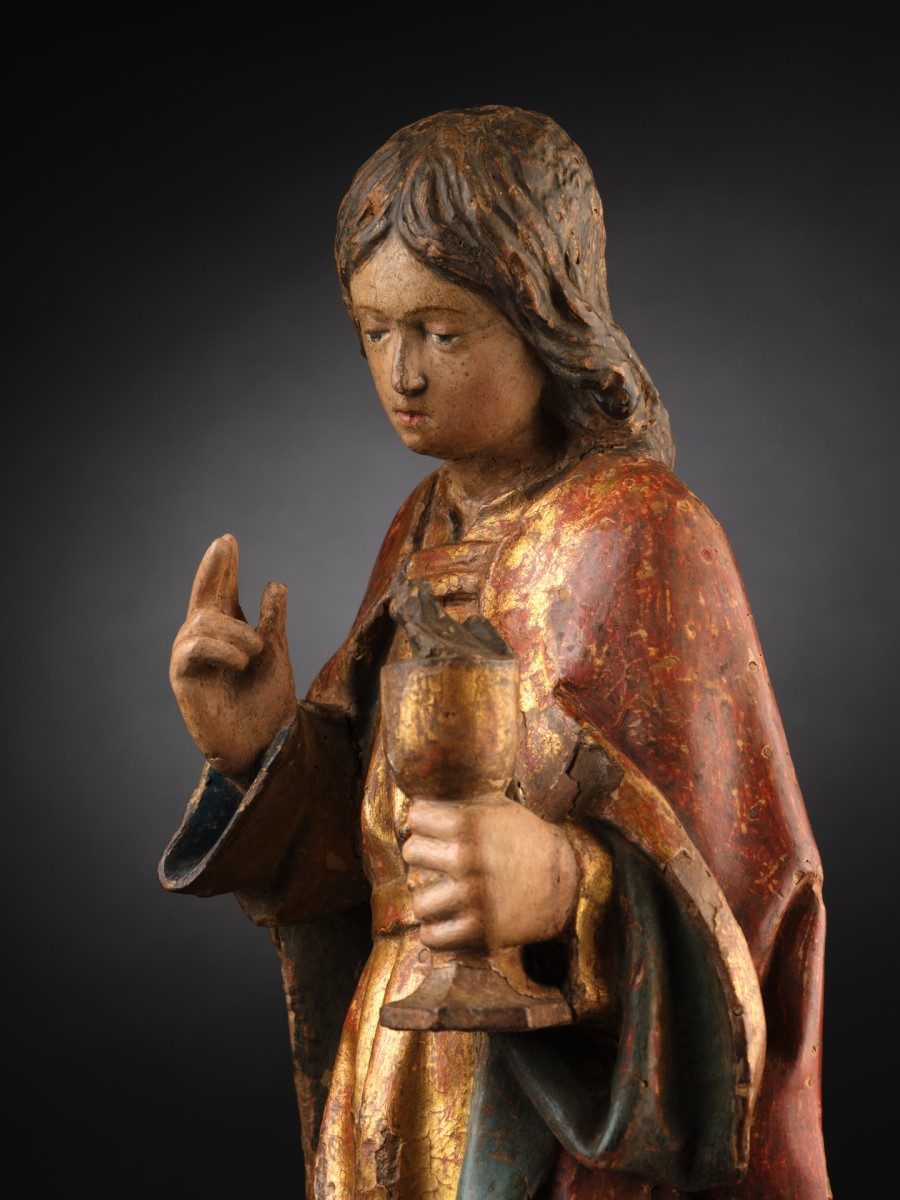
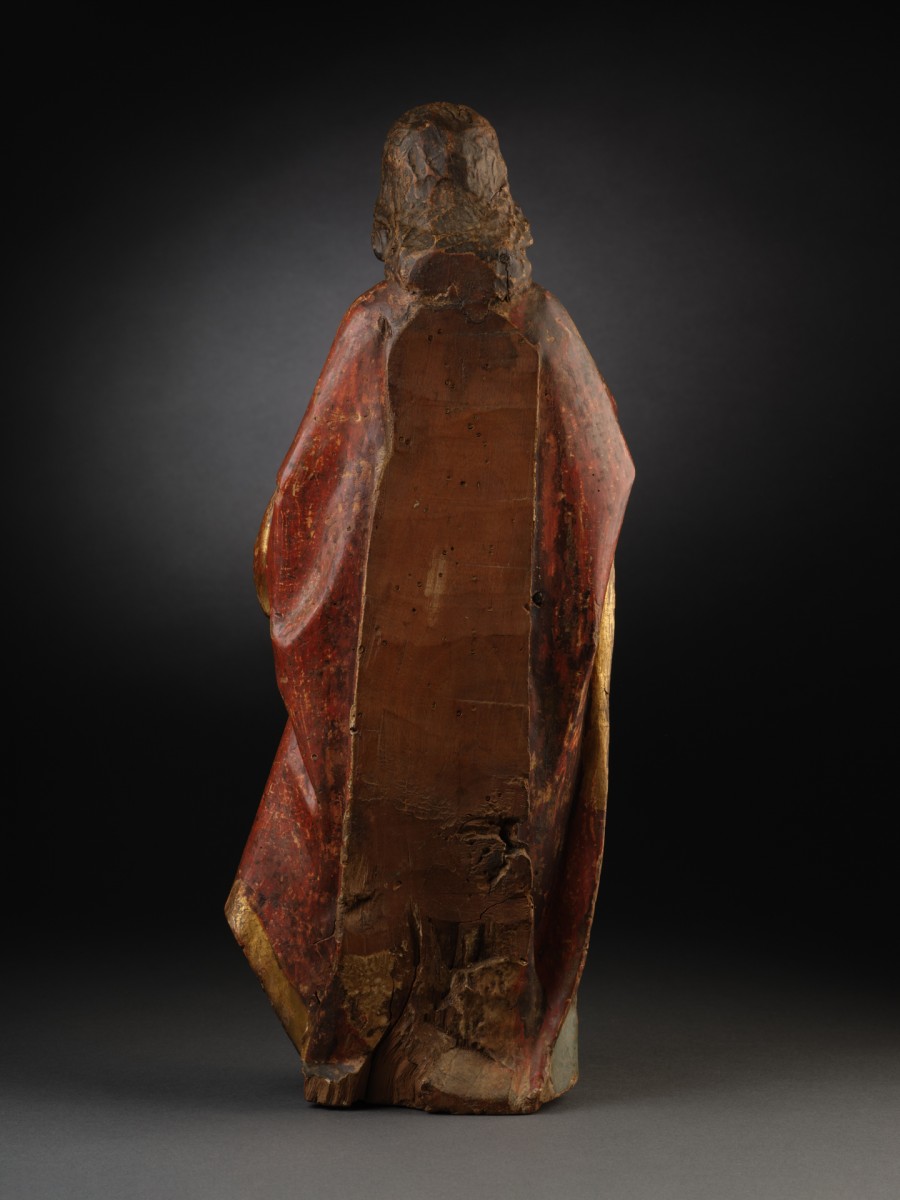

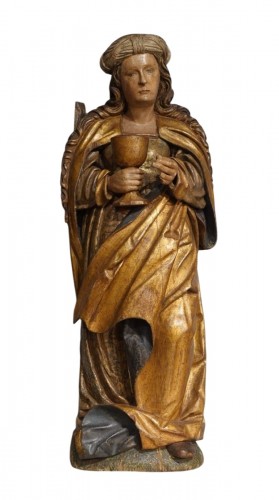
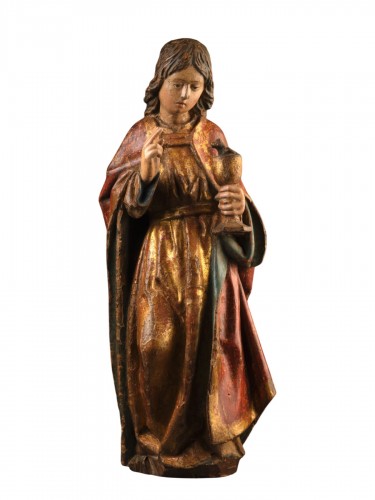
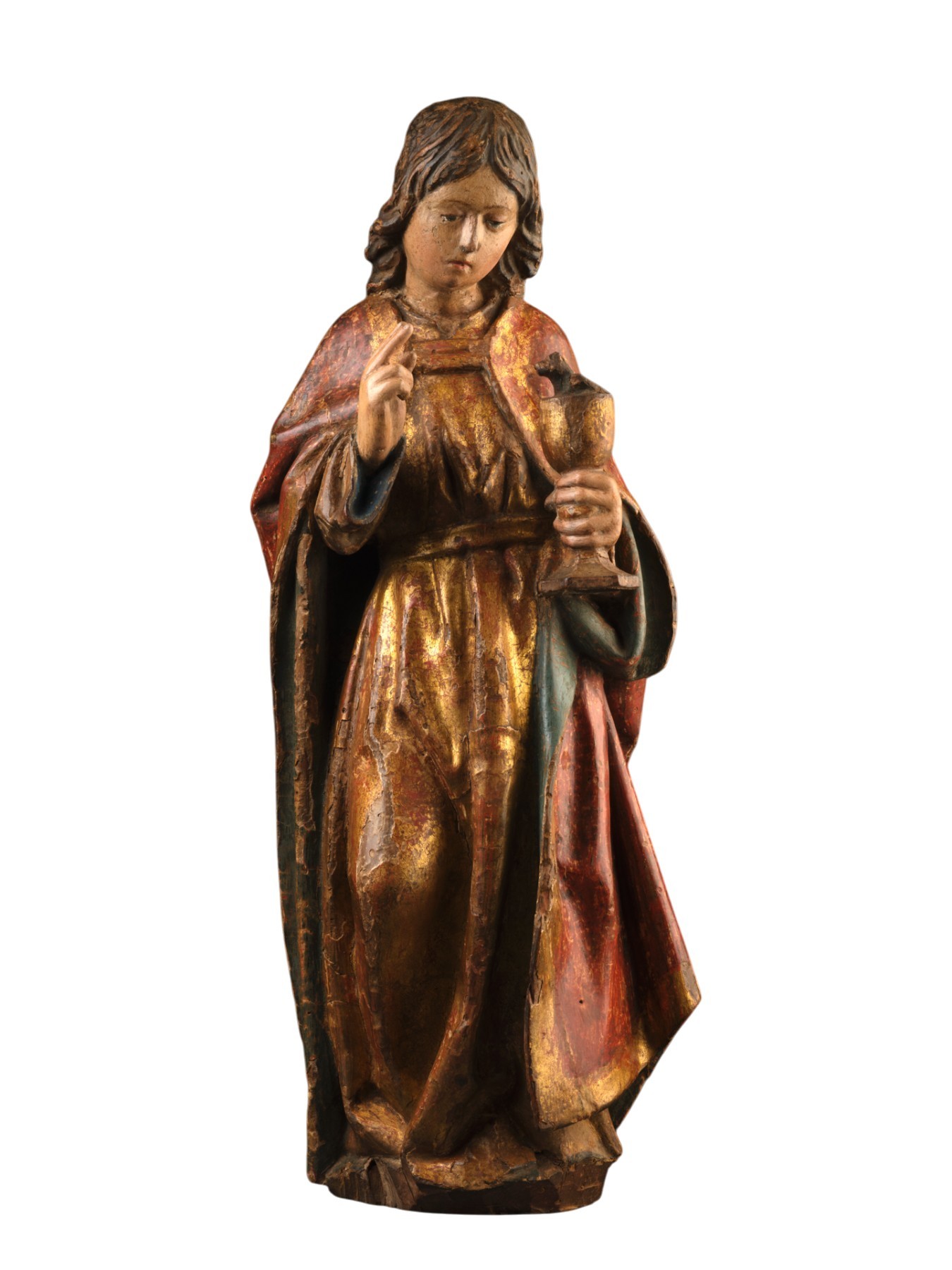
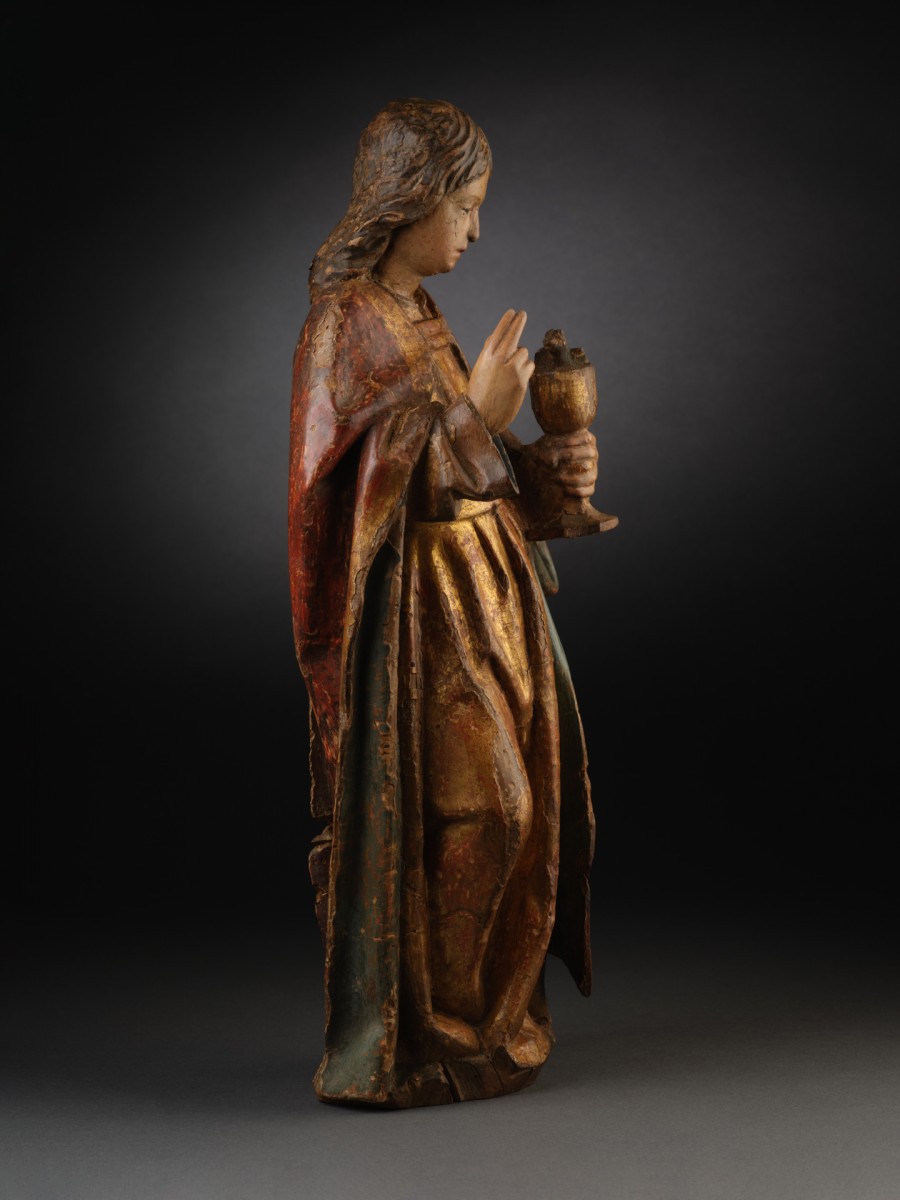
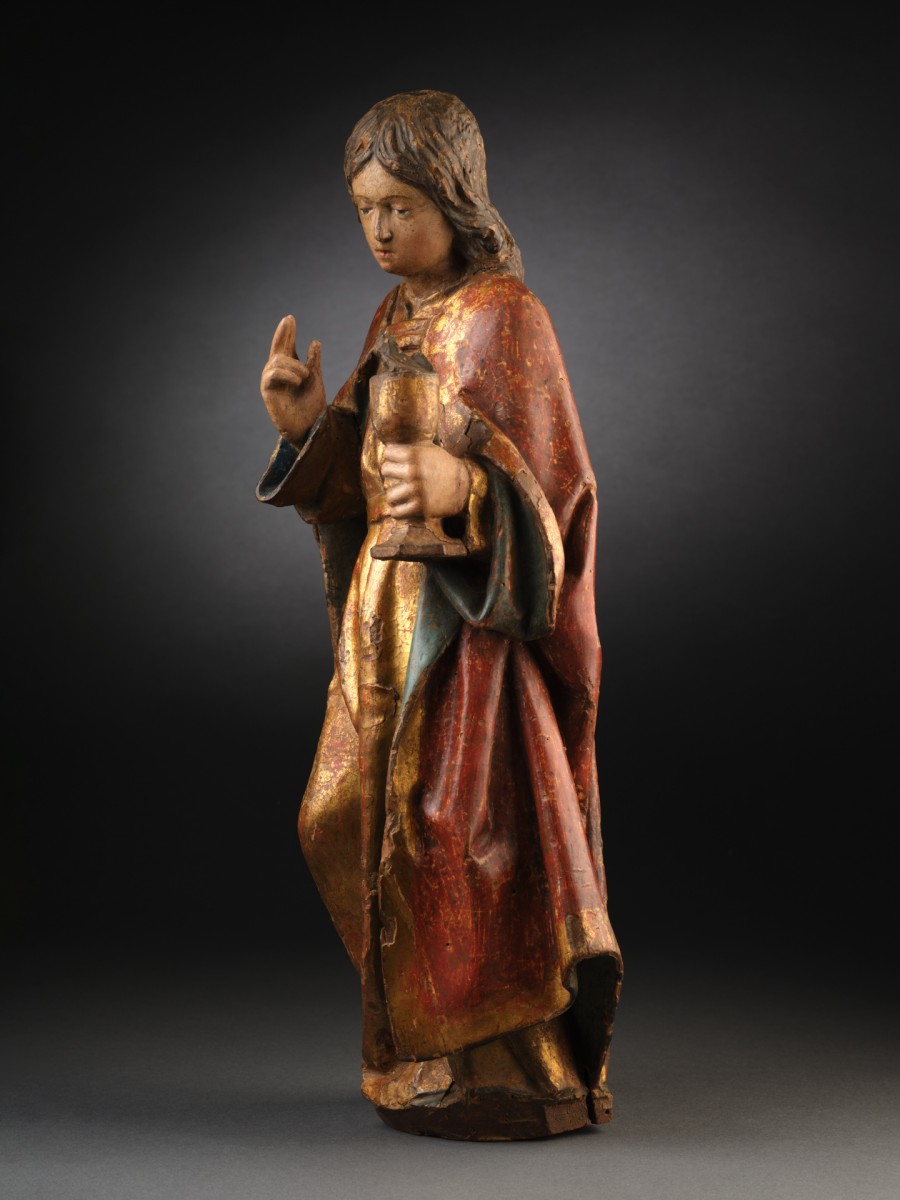
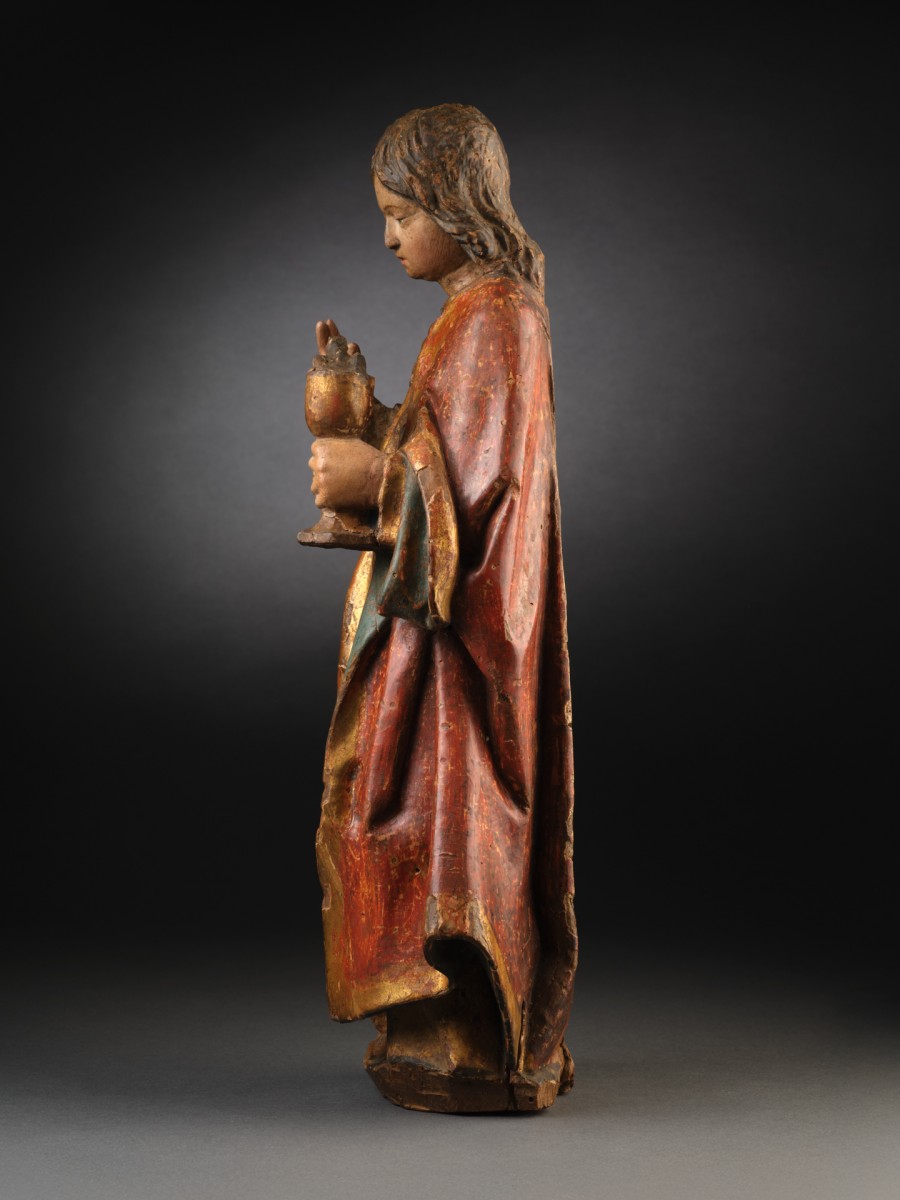
Crafted in Spain, it retains its original polychromy. Its style, marked by Flemish influence, suggests it may be the work of an artist from Flanders active in Spain. Indeed, Flemish models were spread by the artists themselves. The carefully sculpted and painted drapery – rendered in red and gold – draws direct inspiration from those depicted in the works of widely circulated European masters such as Jan van Eyck and Hugo van der Goes. At the end of the 15th century, Spain and Flanders were closely linked by dynastic and commercial alliances, fostering the movement of artisans and stylistic models between these regions.
The introspective, almost tense expression of Saint John conveys the character’s inner depth, a deliberate choice by the artist. With his head gently tilted forward, the saint makes a blessing gesture over the poisoned cup. This episode, popularized by Jacobus de Voragine’s Légende Dorée, takes place when John, accused of sorcery, is exiled to the island of Patmos by Emperor Domitian. Upon returning to Ephesus after his exile, Saint John is challenged by the high priest of the Temple of Diana: to prove the power of his god, he must drink from a poisoned cup. Here, the poison emerges in the form of a dragon, allowing John to drink the potion – a proof that his God is the true one.