Offered by Galerie Sismann
REQUEST INFORMATION
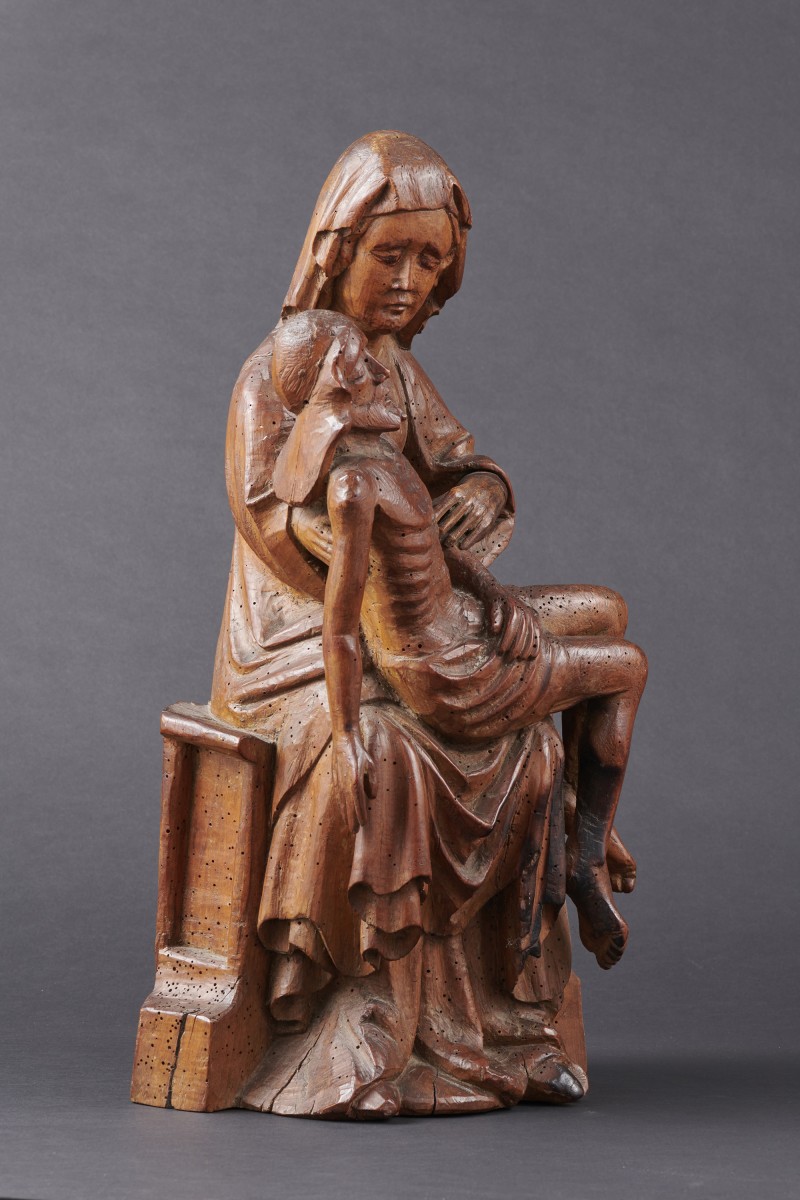
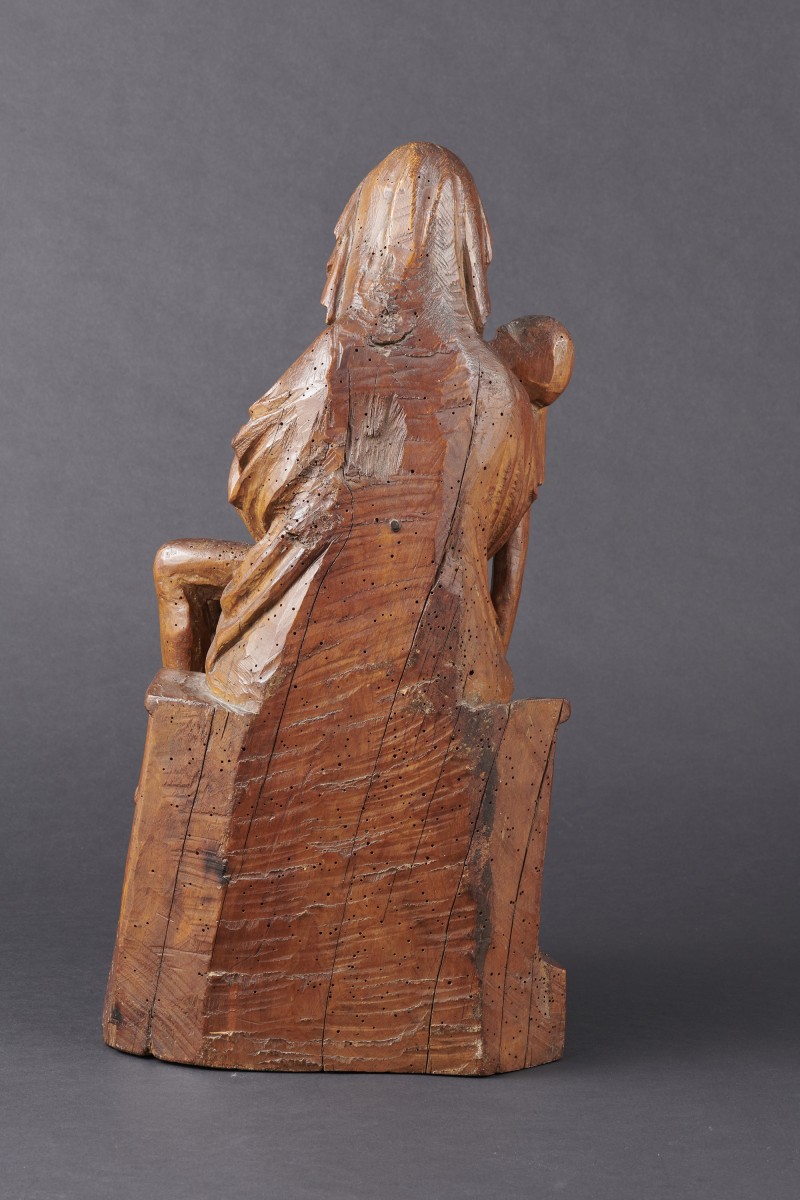

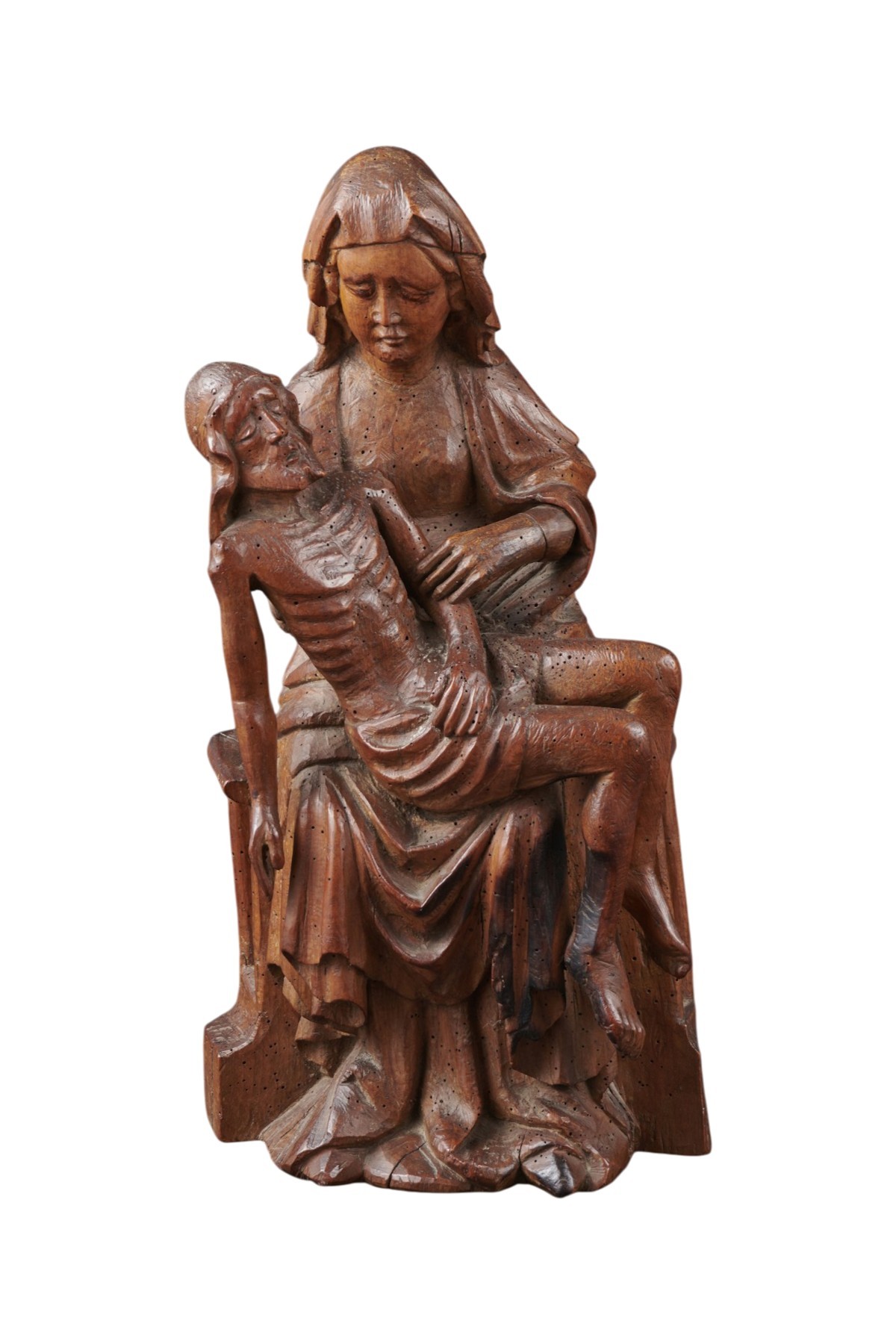
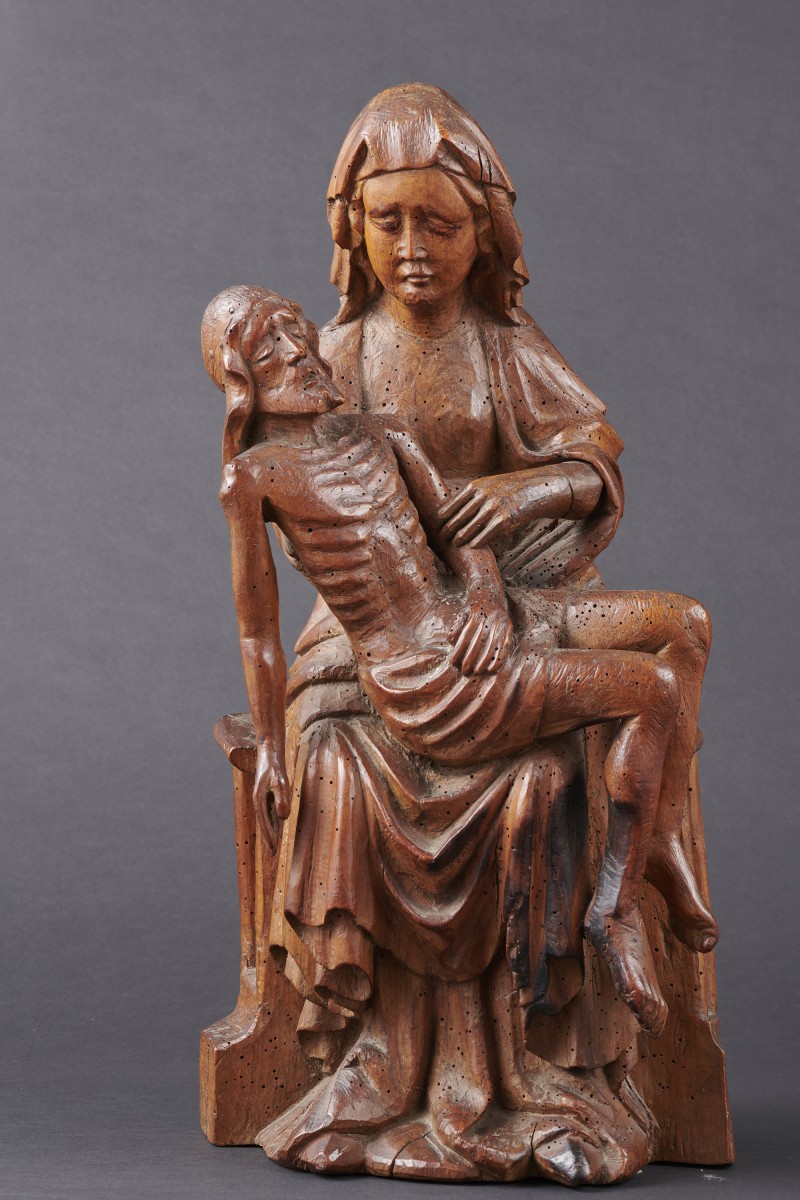
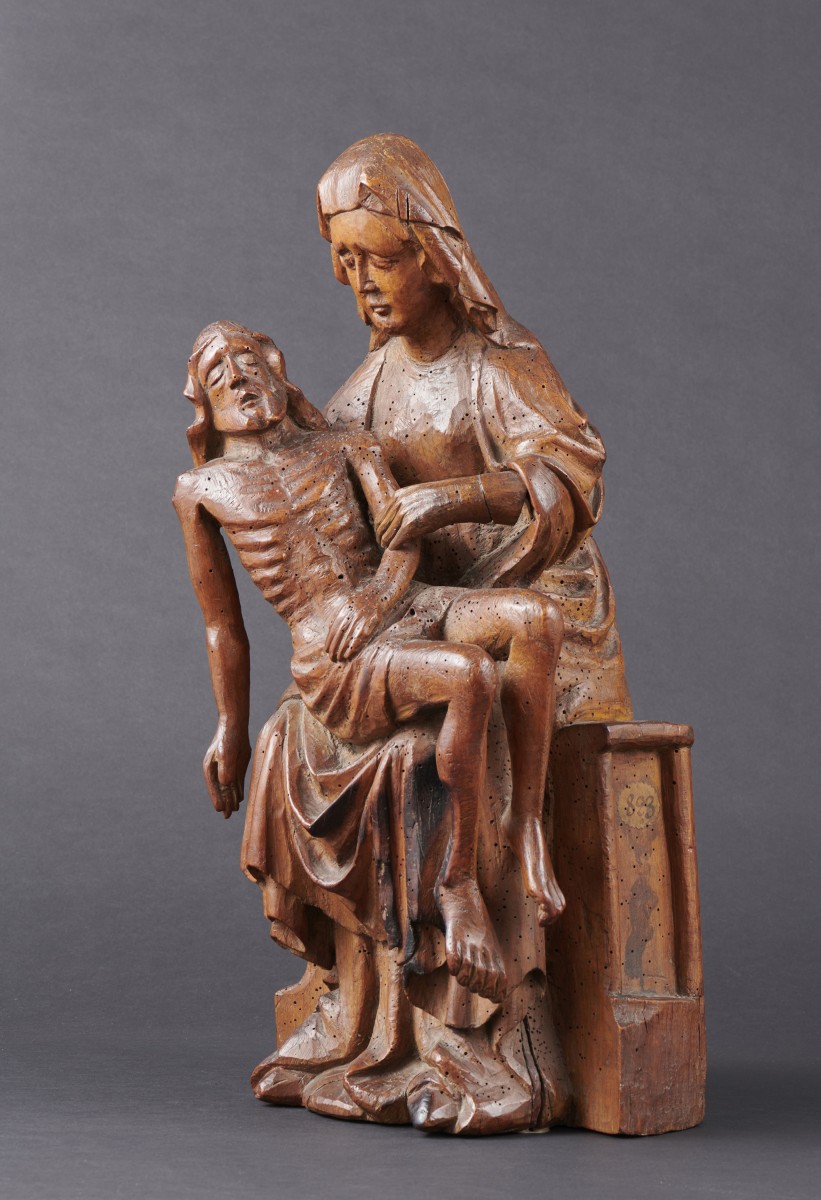
This moving Pietà depicts the Virgin Mary carrying the lifeless body of her son on her lap. Like many other devotional images produced in southern Germany and Austria in the 15th century, this sculpture encourages the faithful to contemplate the sufferings of Christ and the Virgin and to empathize with them. It is thus part of the Devotio moderna phenomenon, a vast movement of spiritual renewal that, in the late Middle Ages, developed and advocated a more affective vision of the Christian life. From a formal point of view, our work can be linked to the corpus of Pietas produced in Salzburg in the years 1420-1430. The dramatic power infused into our group, as well as its refined character, are echoed in an Austrian Pietà dated around 1420, now in the Harvard Art Museum (59.95 BR). The rendering of Christ's skeletal, dolorous anatomy is very similar to that of our sculpture, as are the abundant, flowing draperies that cascade down the Virgin's legs, curling in on themselves. The same system is applied to the veil around Mary's face, showing the mother's inner distress as she bears the inert body of her son. This is perfectly echoed in a Salzburg pietà sold at Sotheby's on December 21, 2005, comparable in every way to our sculpture. The stylistic characteristics outlined above represent the Bohemian and Germanic version of the international Gothic art that was flourishing in European courts at the time.