Offered by Galerie Philippe Guegan
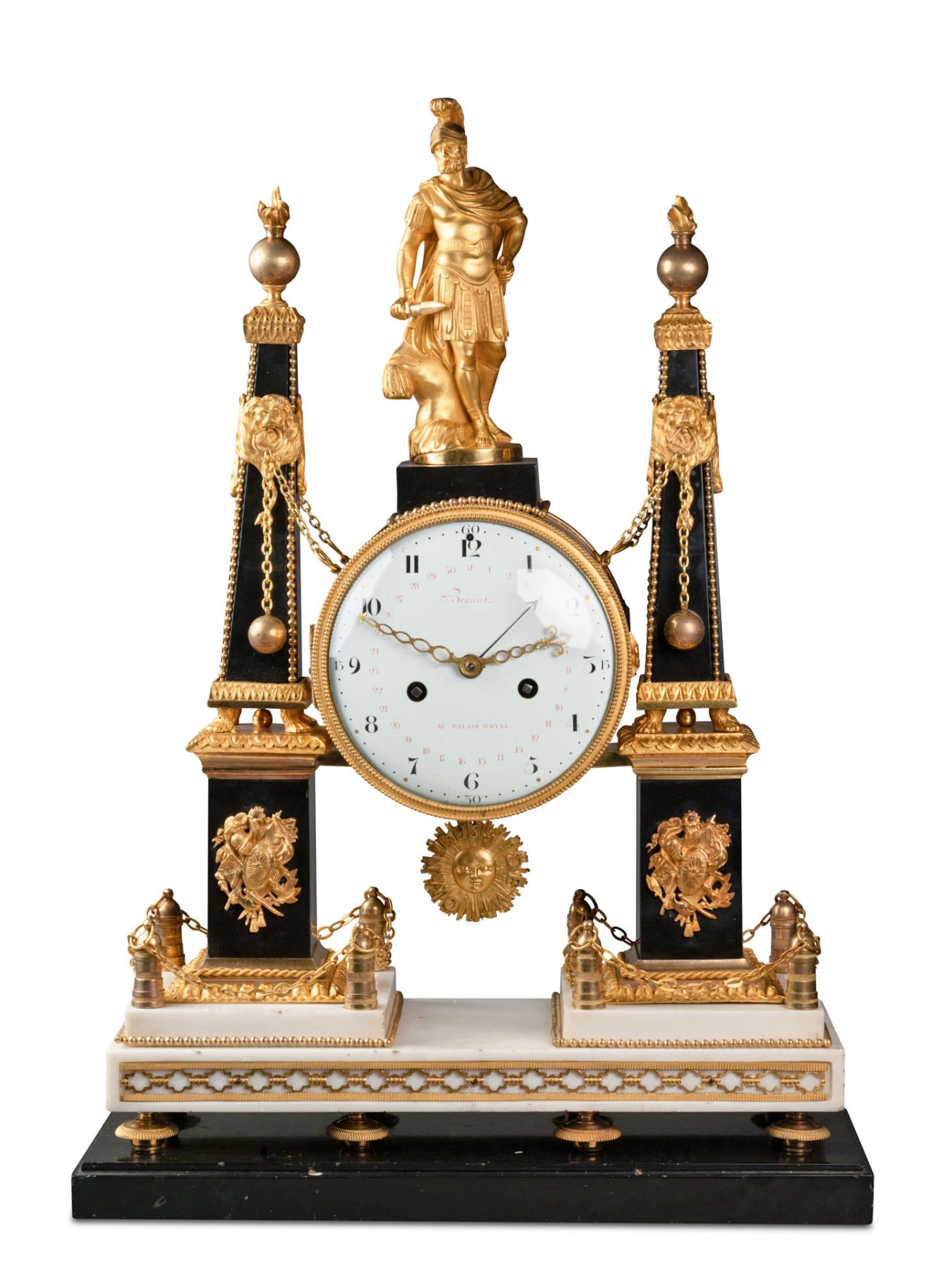

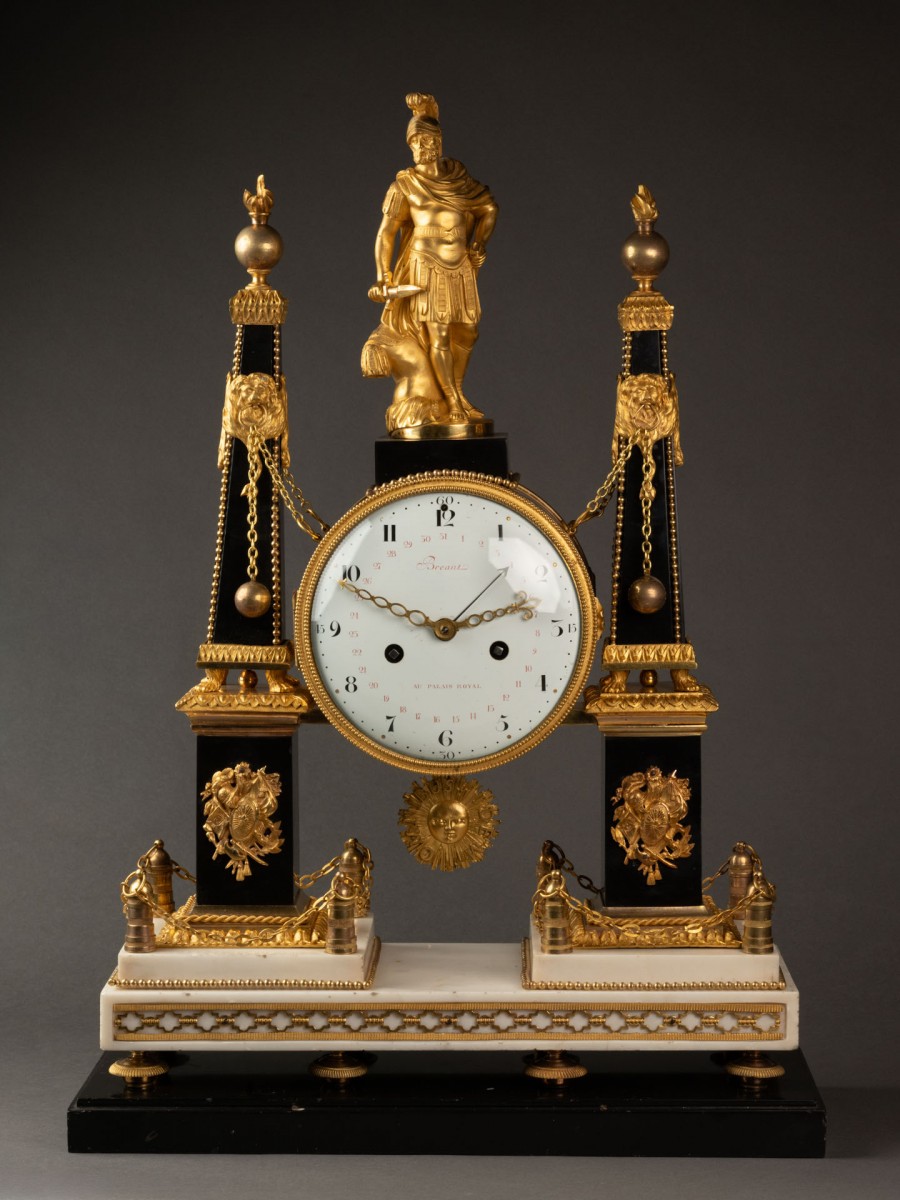
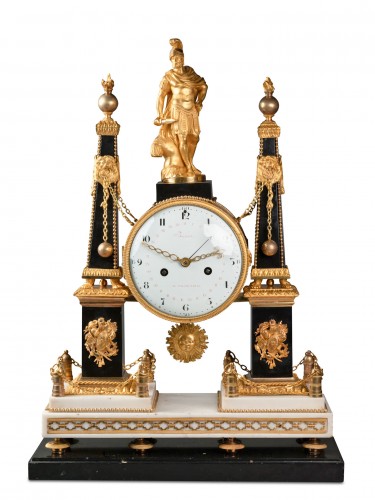
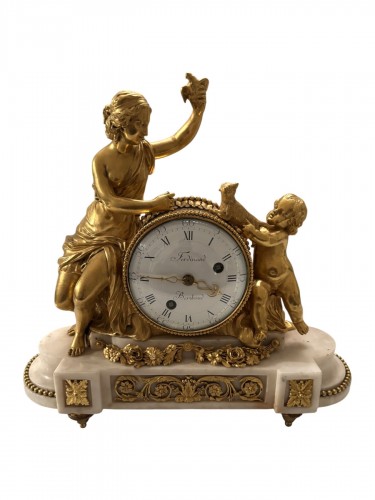
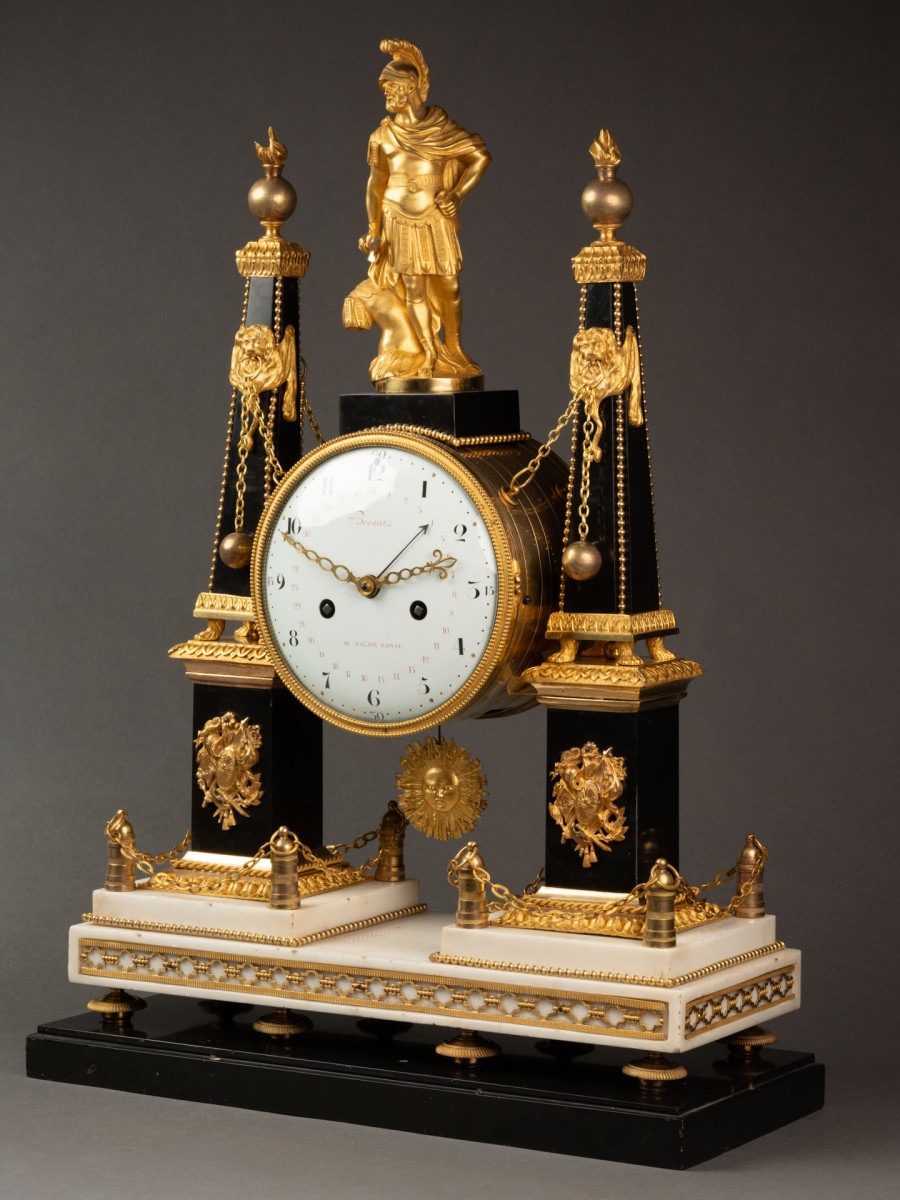
A Louis XVI ormolu mounted obelisks portico clock
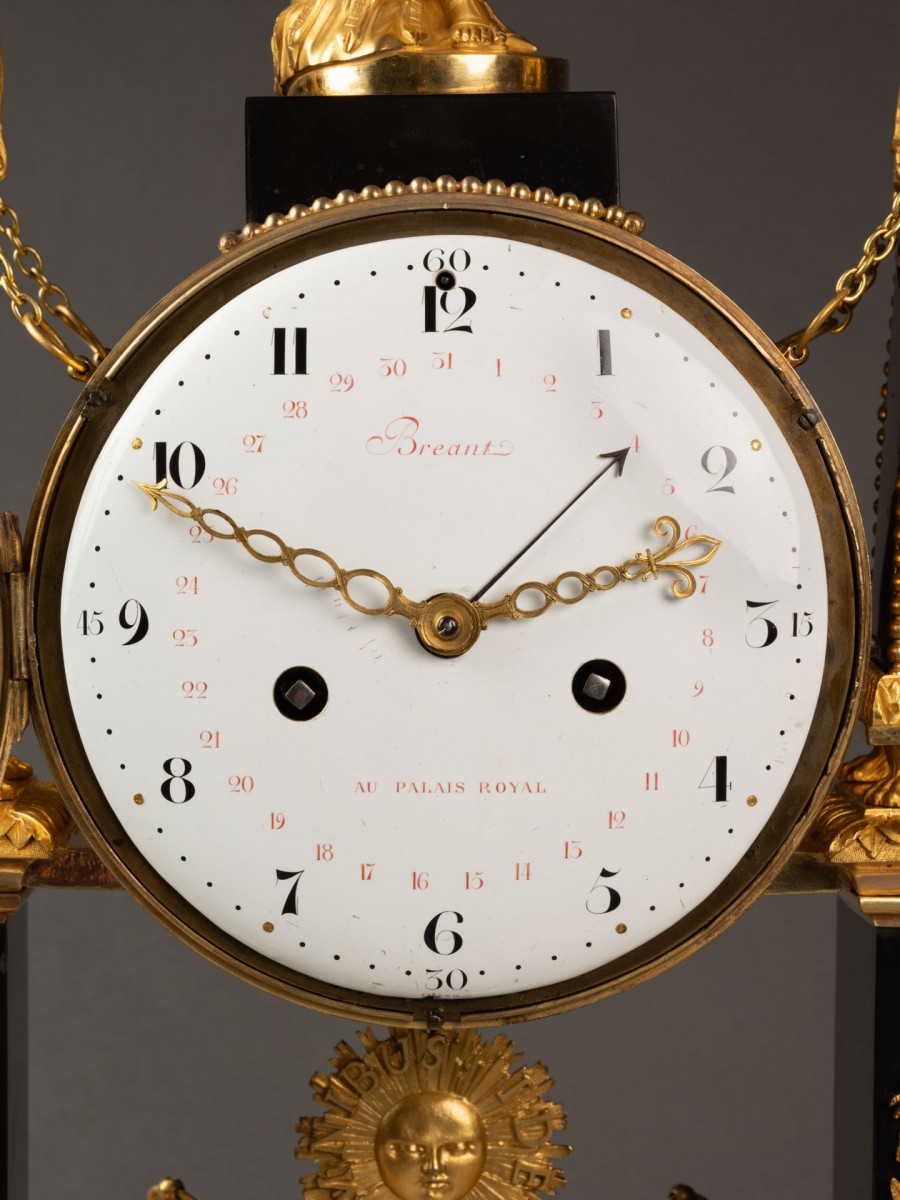
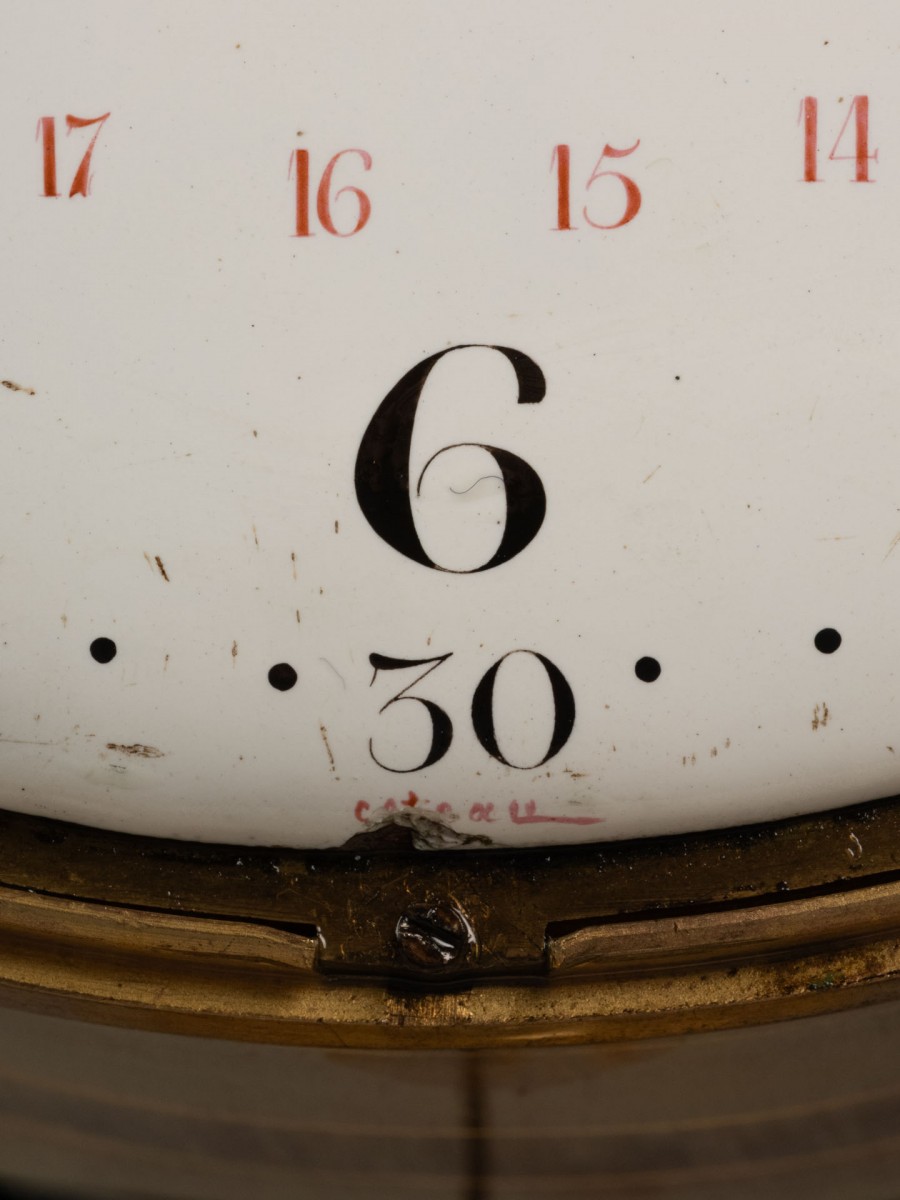
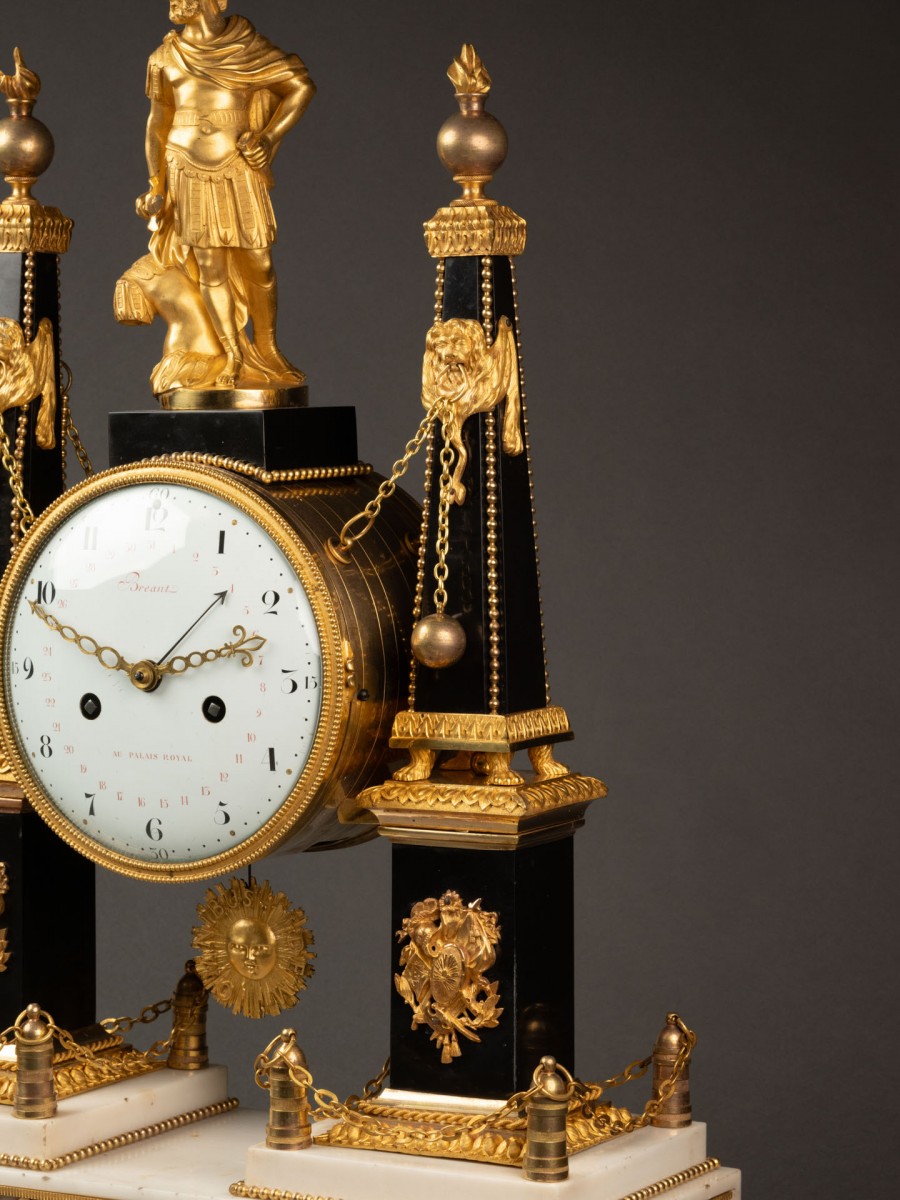
Dial signed “BREANT AU PALAIS ROYAL” and “COTEAU”, indicating the date, hours and minutes
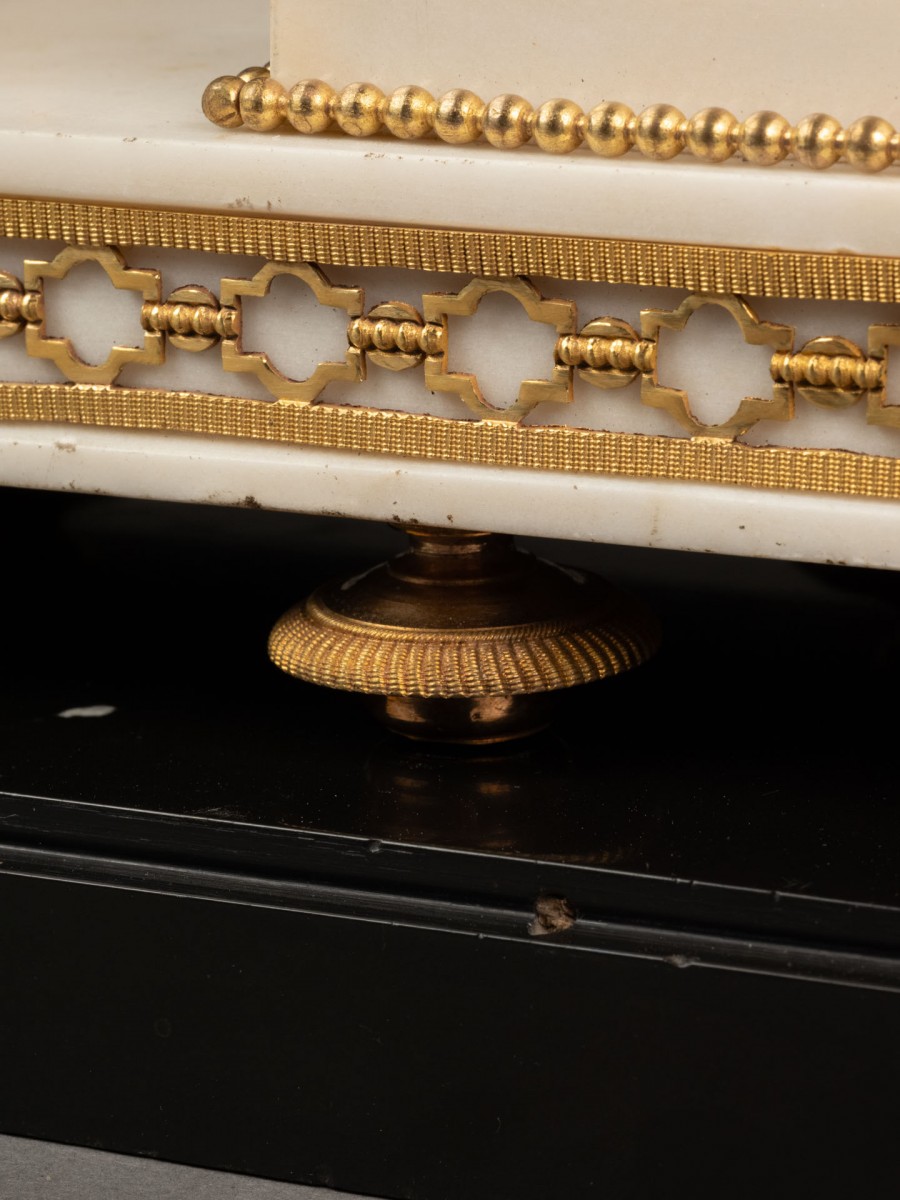
Black marble, white Carrara marble and chased gilt bronze
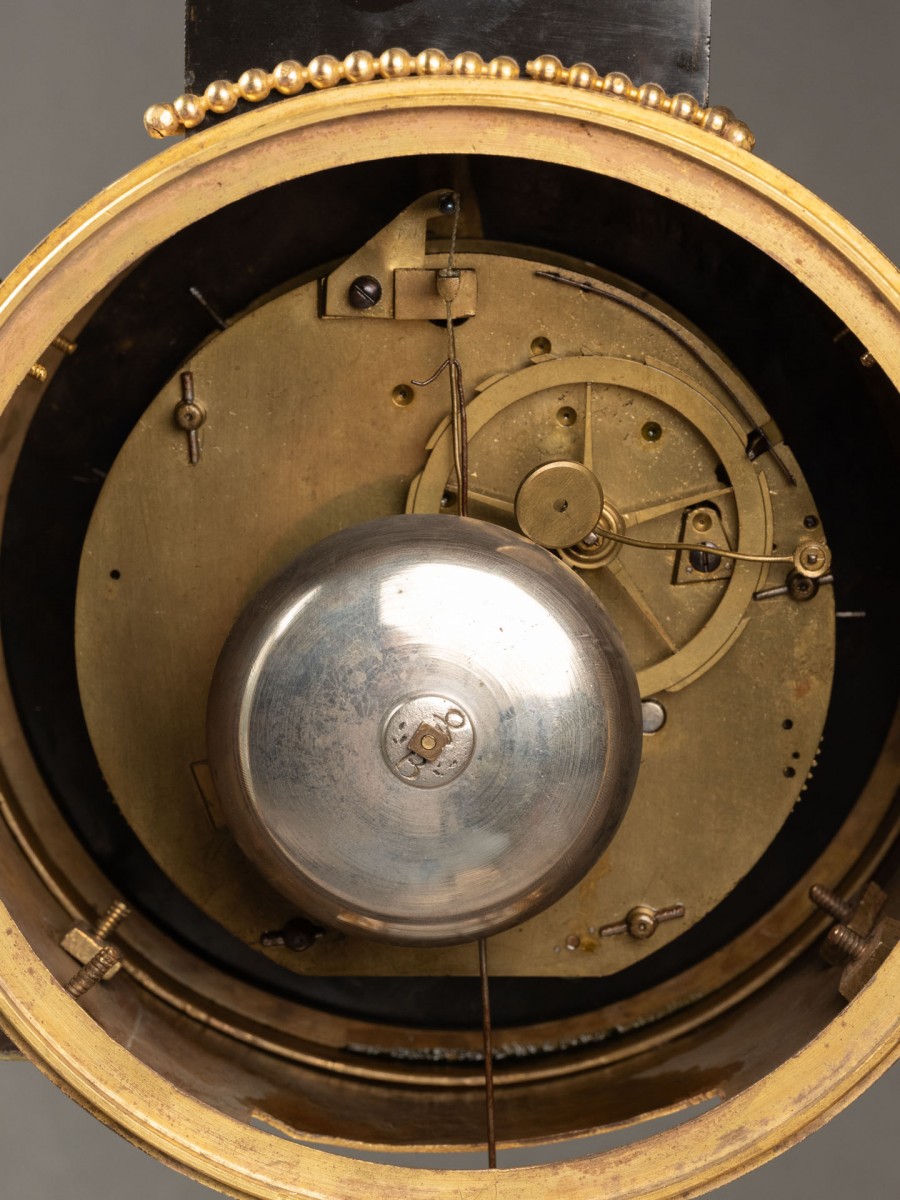
Hour and half-hour striking movement, with silk-thread suspension
Jacques Thomas Bréant (1753–1807), master clockmaker from 1783
Joseph Coteau (1740–1801), Geneva-born enameller, active in Paris from 1773
Paris, circa 1785
Bibliography: Pierre Kjellberg, Encyclopédie de la pendule française, fig. G, p. 205, Éditions de l’Amateur, 1997. An identical model is illustrated with a movement by Thomas.
Designed in the form of a triumphal arch, this portico clock is composed of two black marble obelisks from which the movement is suspended by four chains. The enamel dial displays the date from 1 to 31, painted in red on the inner chapter ring, the hours in Arabic numerals and the minutes on the outer chapter ring, divided into fifteen-minute intervals.
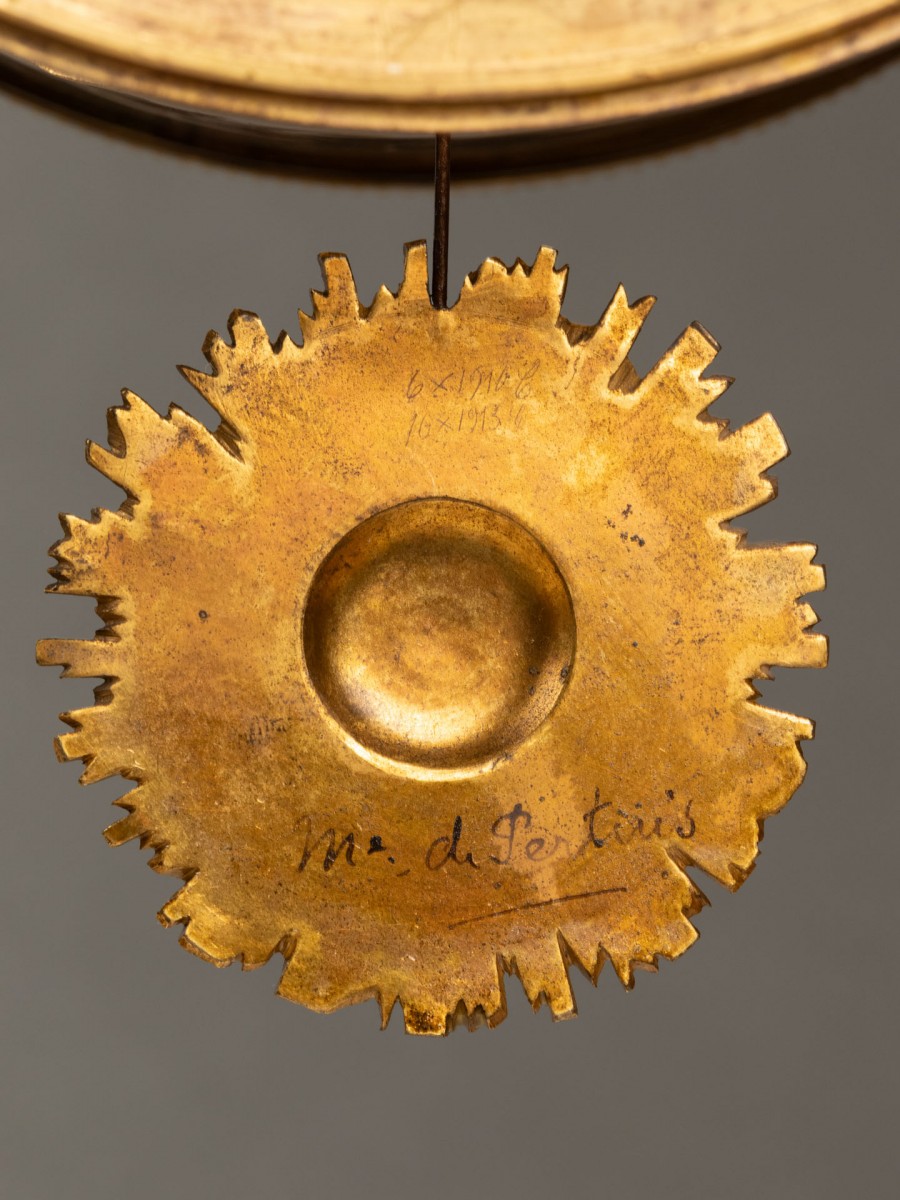
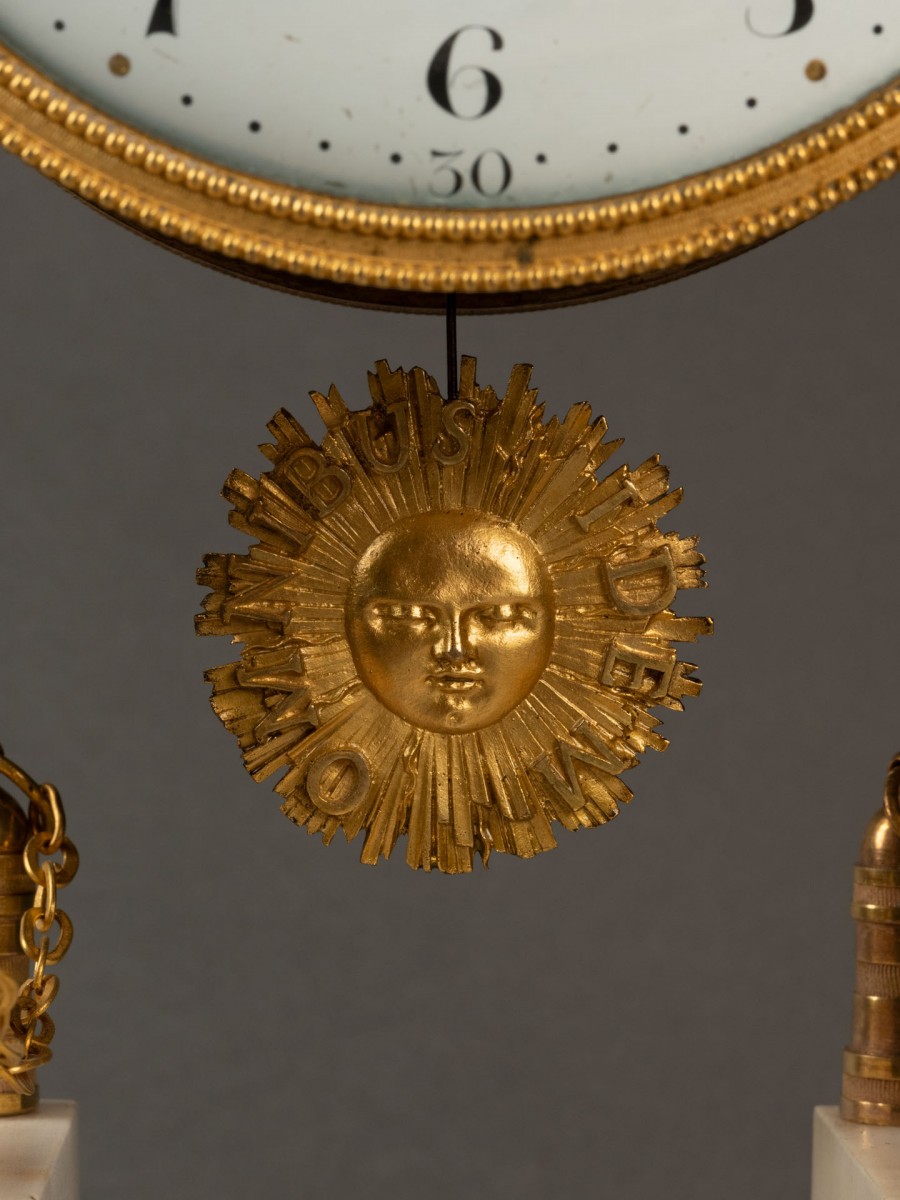
The pendulum bob is ornamented with a Rhodian sun depicting the mask of Apollo surrounded by radiating rays and bearing the Latin motto OMNIBUS IDEM (“the same for all”). The movement strikes the hours and half-hours on a silvered bell.
The double signature “Coteau” and “Bréant au Palais-Royal” brings together the enameller Joseph Coteau (1740–1801), celebrated under the reign of Louis XVI for the exceptional quality of his enamel dials and plaques, and the clockmaker Jacques Thomas Bréant (1753–1807), first established as a free craftsman before being received as master clockmaker in 1783. His workshops were located on Rue Saint-Martin, while his shop occupied premises in the galleries of the Palais-Royal.
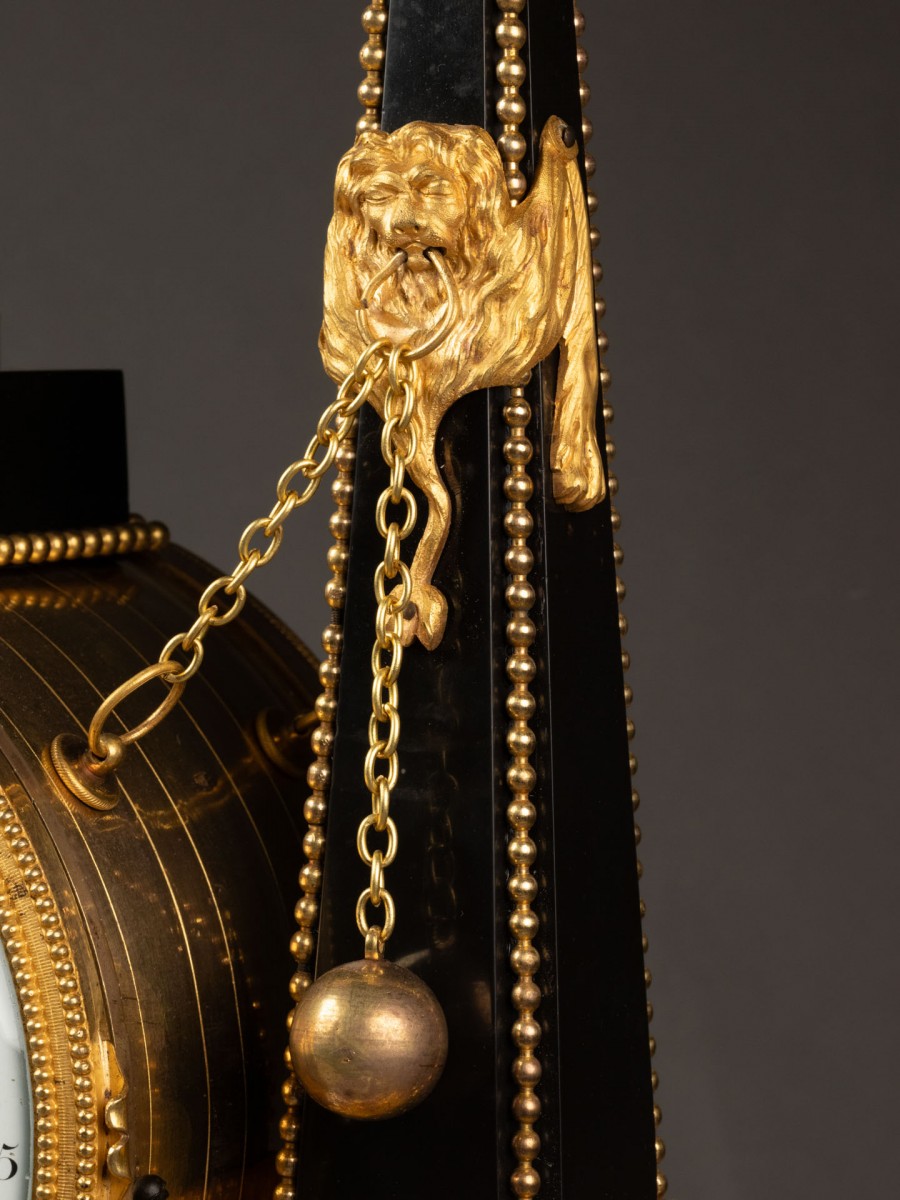
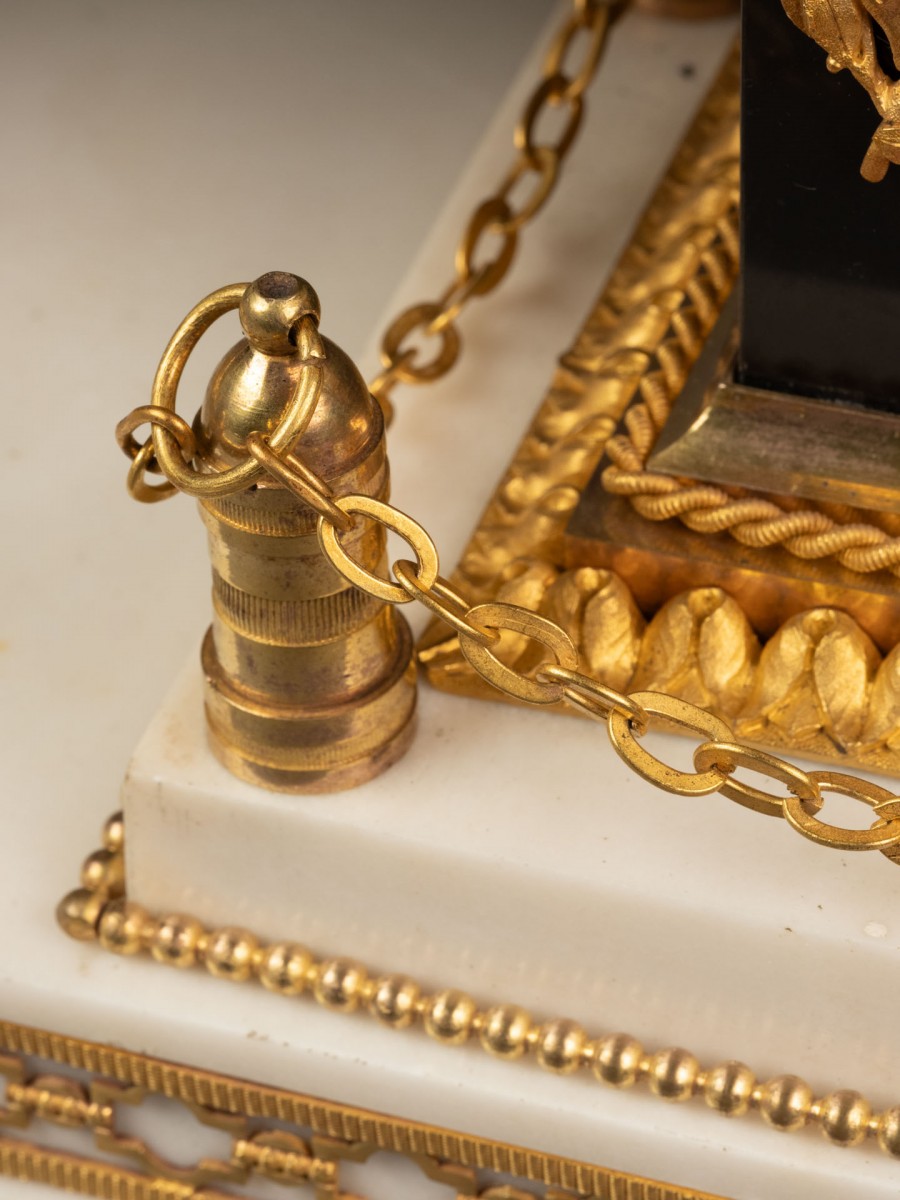
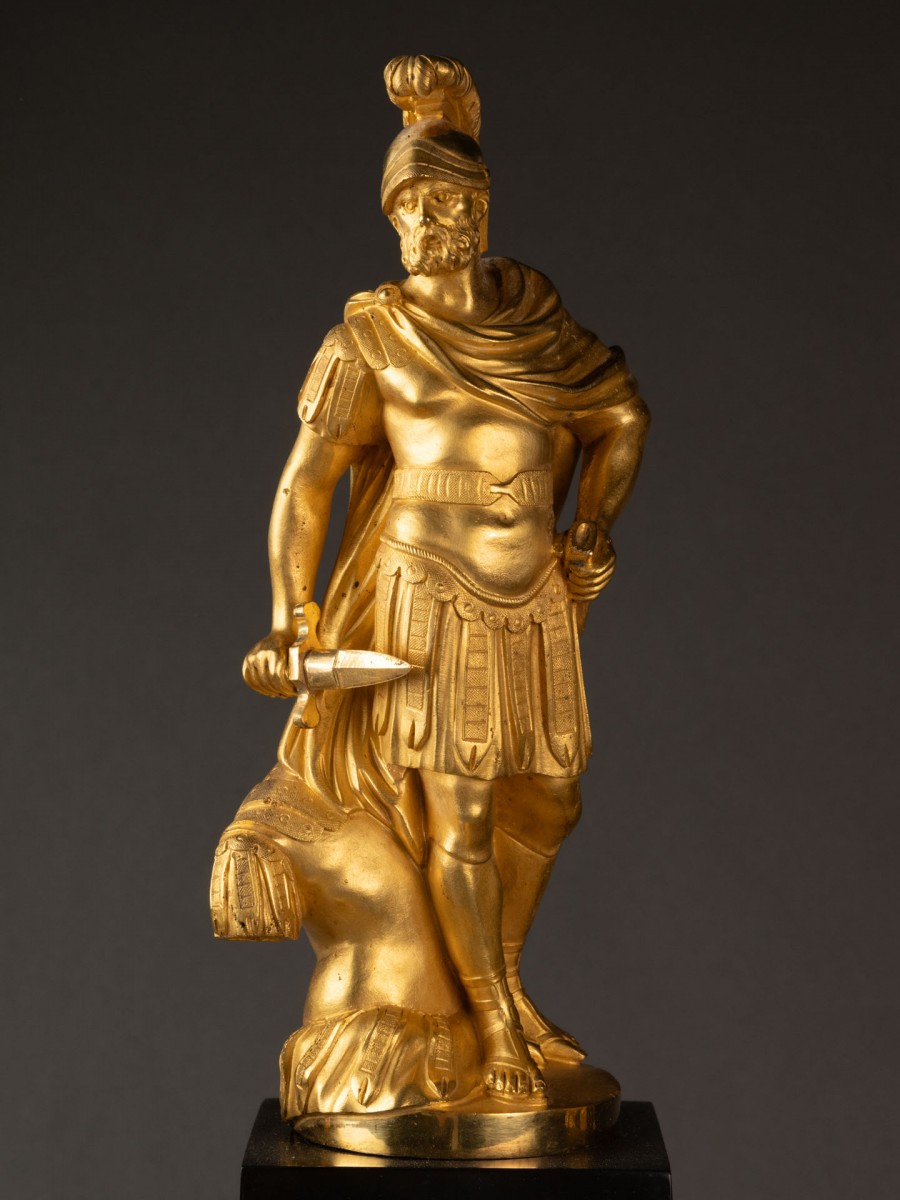
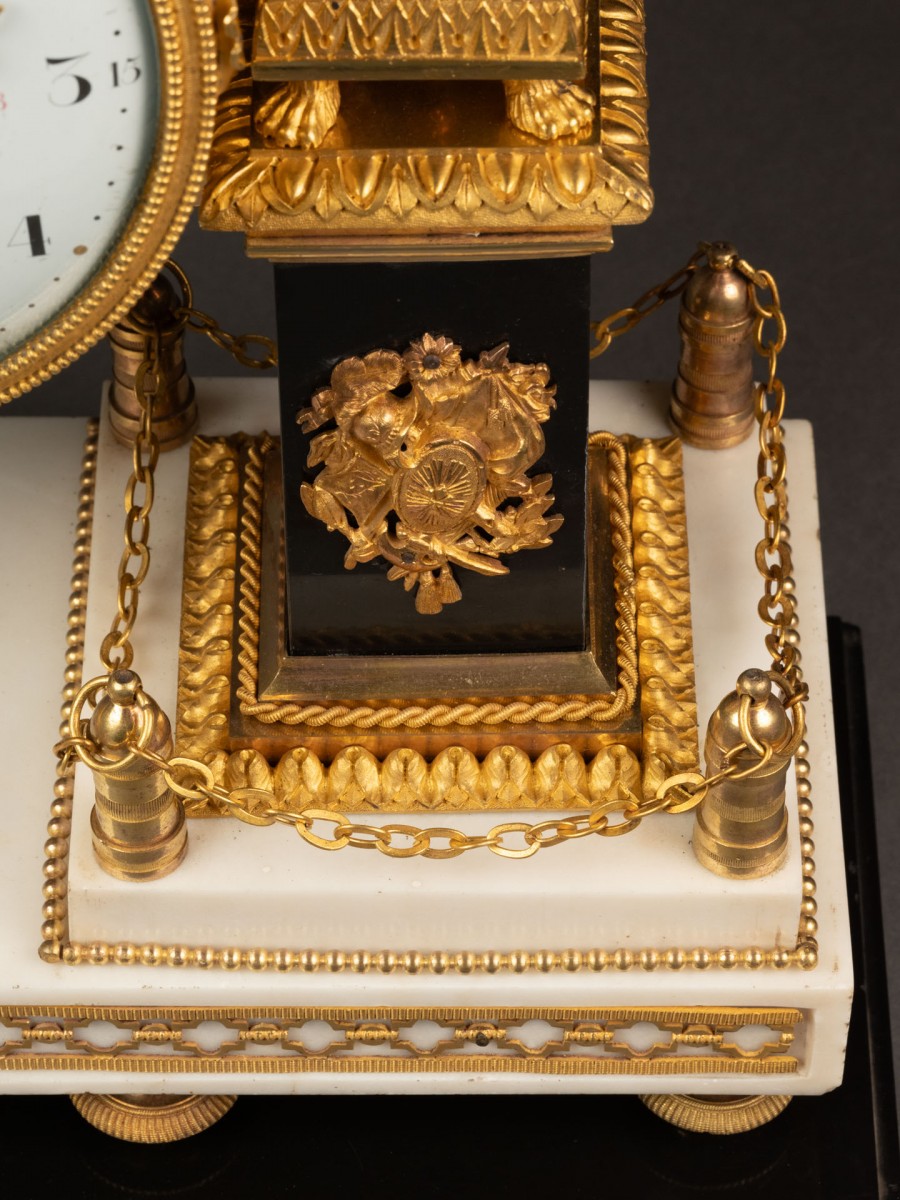
The decorative vocabulary combines references to ancient triumphal architecture with symbols of military victory. Four boundary posts linked by chains encircle each obelisk, reinforcing the monumentality of the composition. The crowning section of the clock is surmounted by a figure of Mars, the god of war, wearing a helmet. The chains supporting the movement terminate in bar shot, or chain shot, a type of naval ammunition used to dismast enemy vessels. The obelisks are crowned with flaming grenades and adorned with fleur-de-lys military trophies and lion skins. These evoke both the Nemean Lion of Greek mythology, slain by Hercules during his First Labour, and a symbolic allusion to the defeated British Lion.
This type of portico clock, with obelisks decorated with military trophies, enjoyed considerable popularity in France during the 1780s, in the context of French naval victories over Great Britain during the American War of Independence. These victories contributed to the success of the American insurgents and culminated in the signing of the Peace of Versailles in 1783 between Great Britain, France, Spain and the Dutch Republic, together with the Treaty of Paris, signed on the same day between Great Britain and the thirteen American colonies. The Battle of the Chesapeake, won in September 1781 by Admiral de Grasse, played a particularly important role in the dissemination of this decorative repertoire celebrating French maritime triumph.
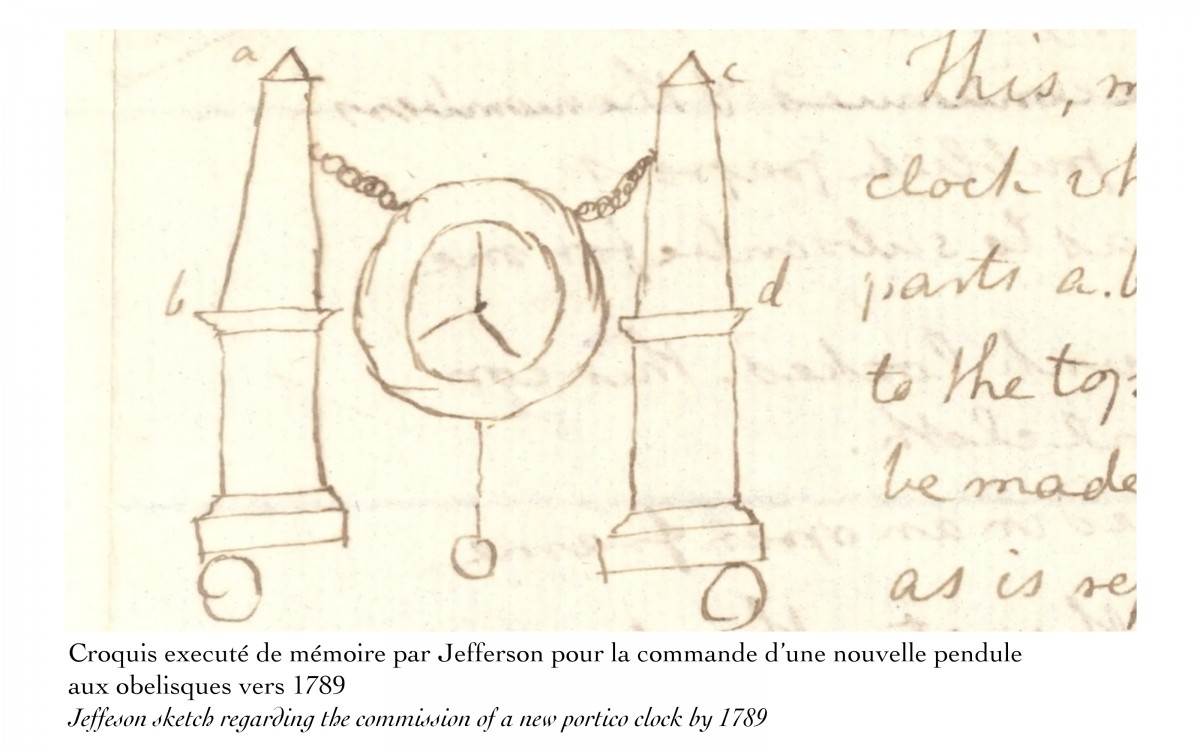
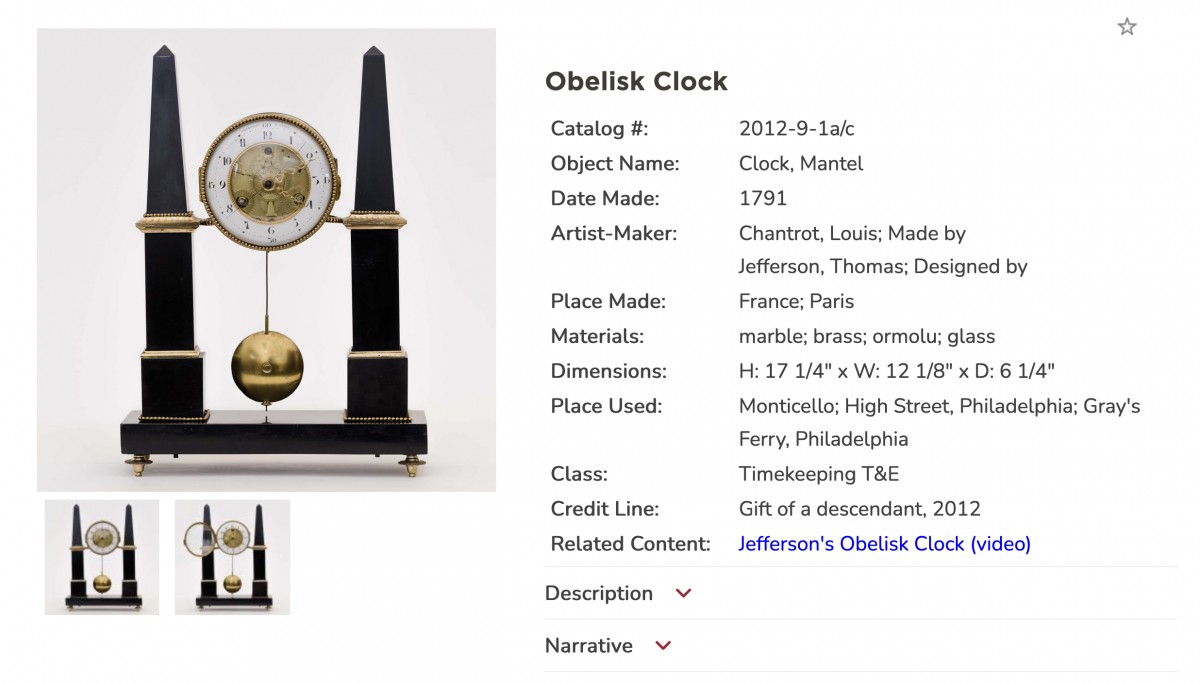
Thomas Jefferson (1743–1826), United States Minister to France from 1785 to 1789, owned a clock of closely related design which was stolen from his Paris study. Upon his return to Virginia, he commissioned a simplified version based on his own design. Executed in black marble and without gilt-bronze mounts, it was made by Chaintrot and delivered to Monticello in 1791, where it remains preserved today.
Delevery information :
Please contact us upon this matter. For delivery abroad, we will ask door to door transportation to be quoted by independant shipping companies,