Offered by Poncelin de Raucourt Fine Arts
REQUEST INFORMATION

Paintings and drawings, from 16th to 19th century
Jean-Baptiste GREUZE (Tournus, 1725 - 1805, Paris)
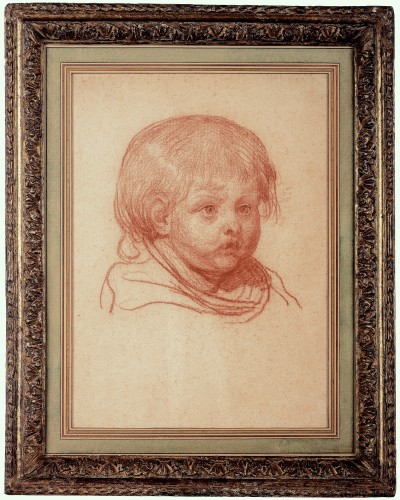
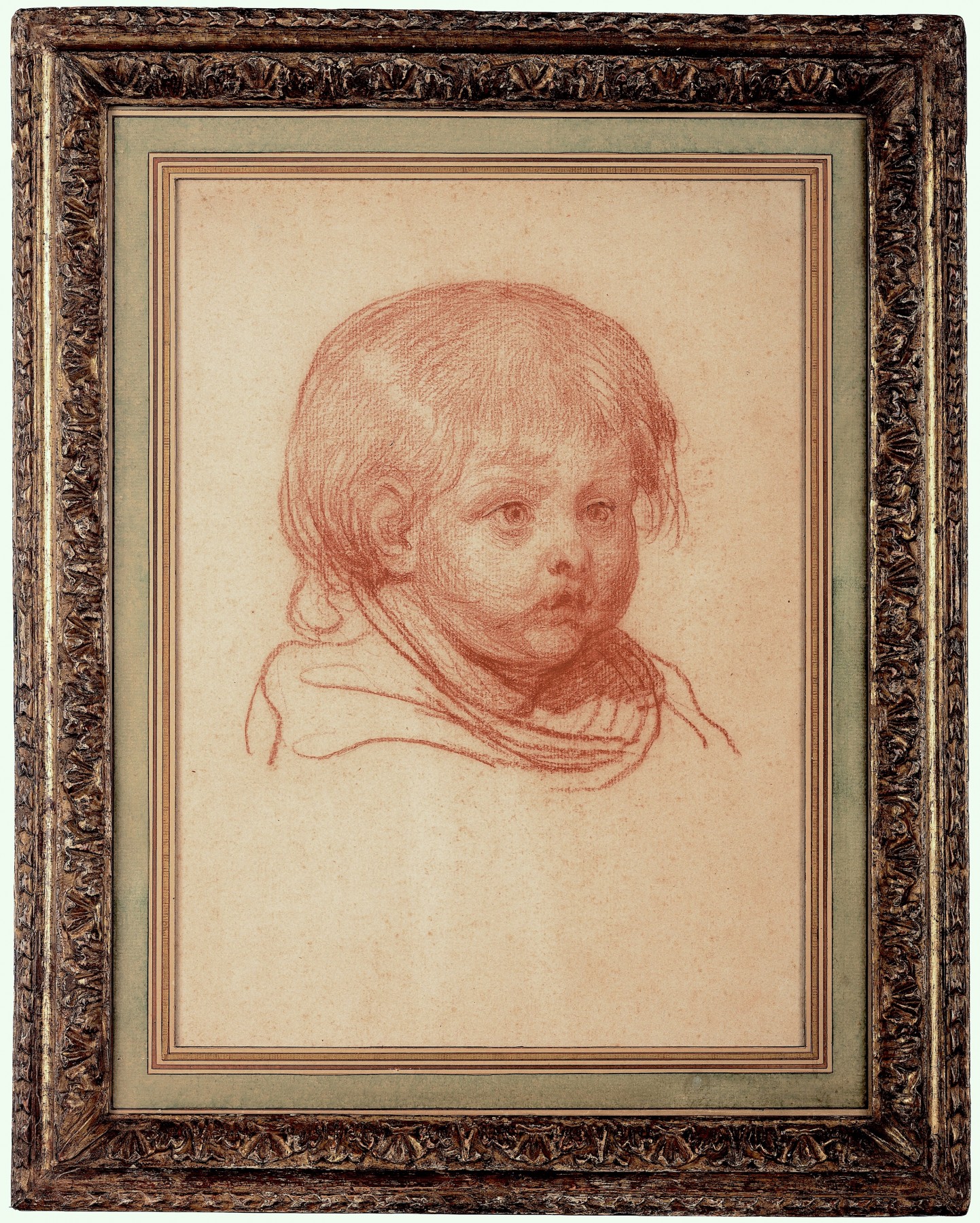
Study for the Head of a Child
Red chalk on paper
16 7/8 x 11 3/4 in
43 x 29.7 cm
The drawing has been incised with a metal point for the engraving process. The verso bears a light layer of red chalk, presumably applied in preparation for engraving.
Provenance
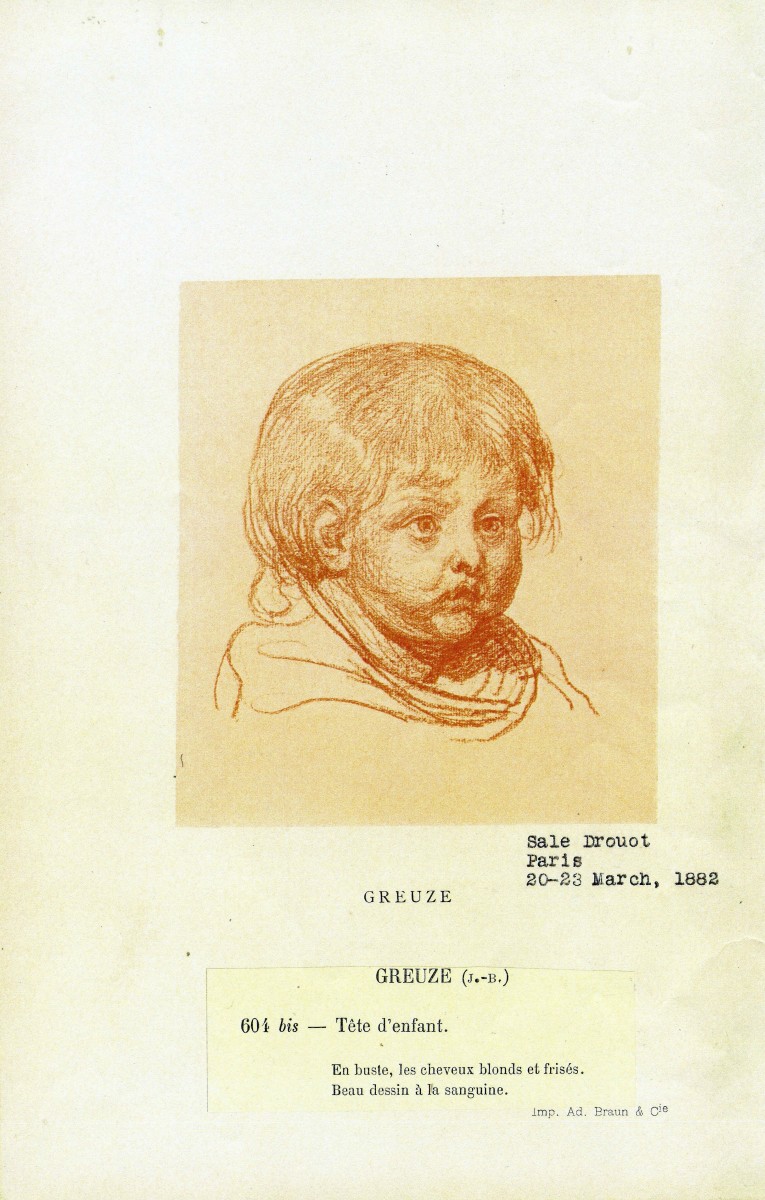
Jean Gigoux Collection, sale in Paris, 20–23 March 1882, no. 604 bis, reproduced as a red chalk drawing.
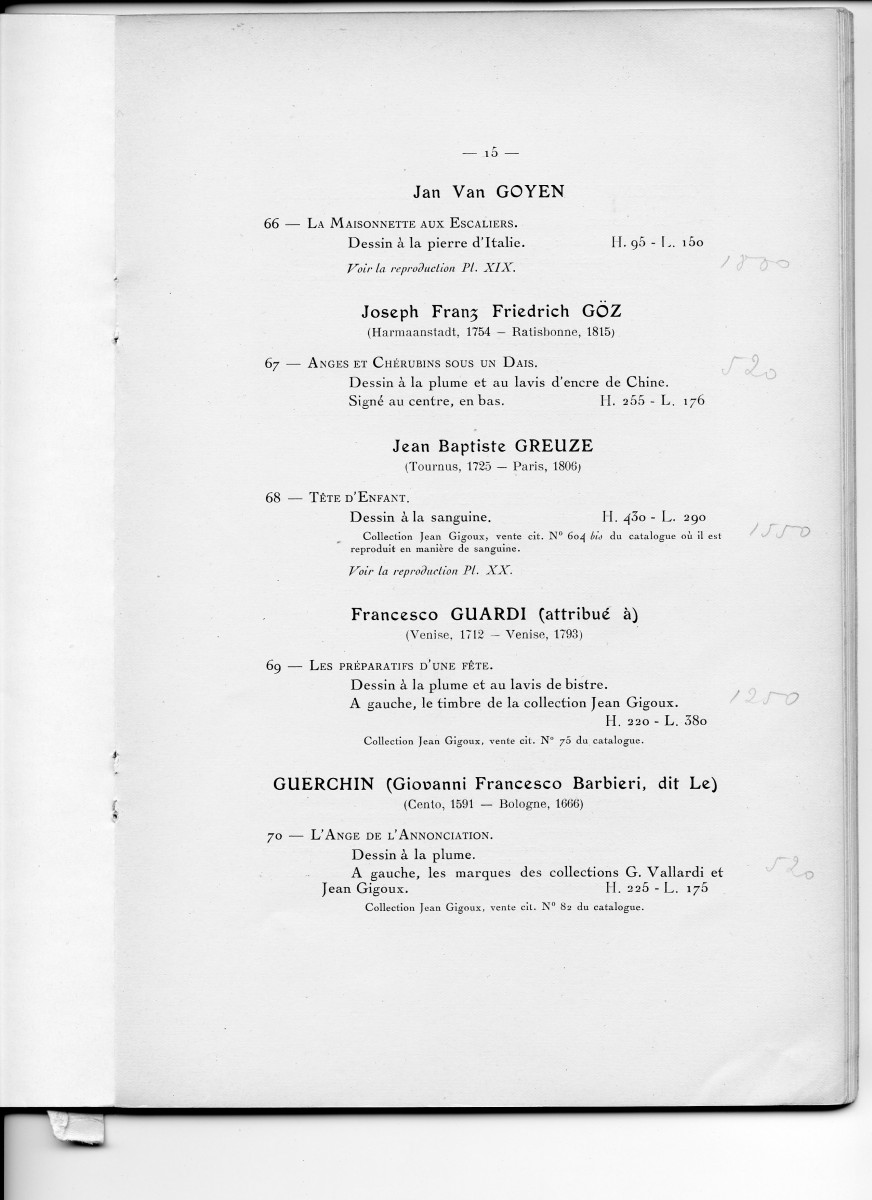
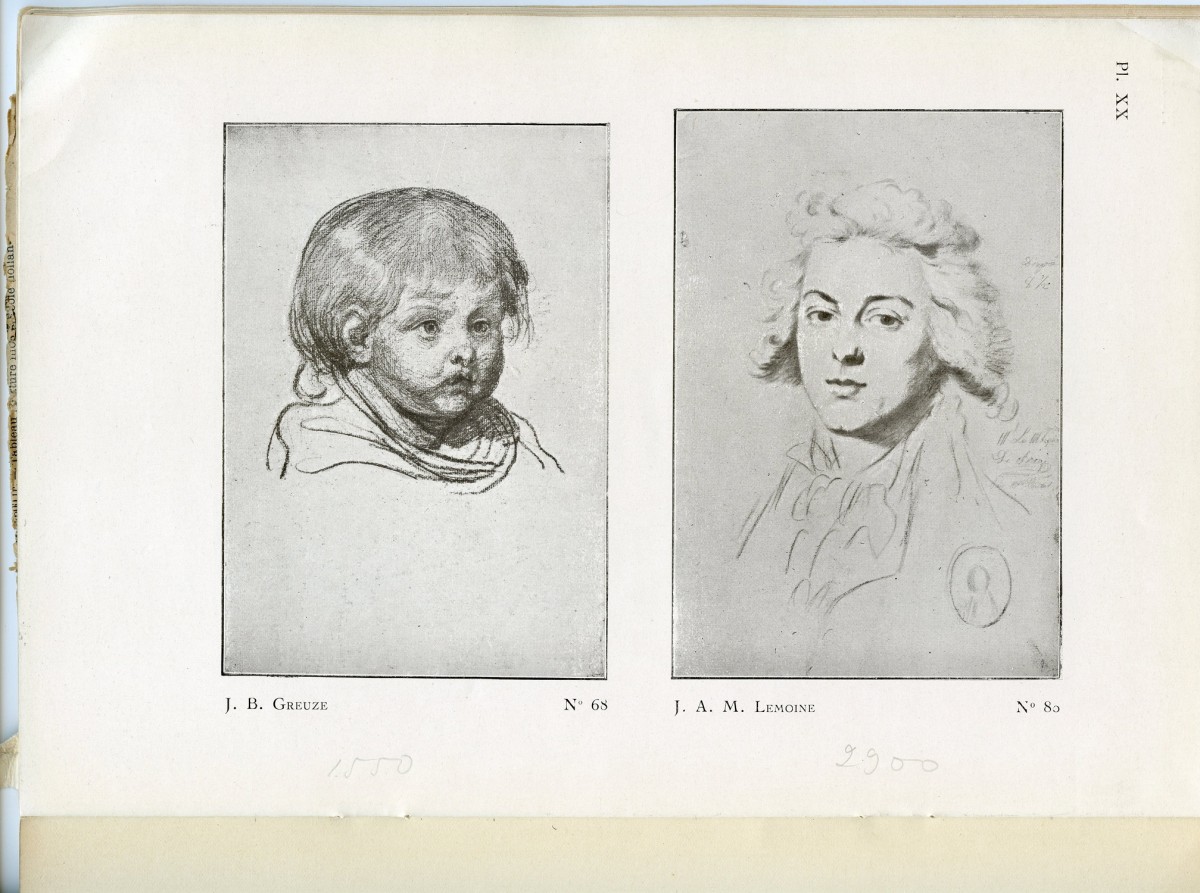
Collection of Madame X…, sale held on 23 May 1928, Paris, Hôtel Drouot, Salle 10, Me F. Lair Dubreuil. Experts: Louis Godefroy and Lucien Huteau, lot 68, reproduced plate XX.
Literature
J. Martin, Catalogue raisonné de l’œuvre peint et dessiné de J.-B. Greuze, 1908, no. 1794, listed among the drawings as Child, red chalk, with blond curly hair, sale J. Gigoux, 23 March 1882, 270 francs.
This tender and remarkably evocative drawing by Jean-Baptiste Greuze perfectly encapsulates the artist’s unique ability to transform a simple study from life into an image of profound emotional presence. Executed in delicate red chalk, the child’s face emerges with extraordinary softness and immediacy: the attentive gaze, rounded cheeks and slightly dishevelled hair conveying that mixture of innocence and gravity so characteristic of Greuze’s finest works on paper.
Known through prestigious nineteenth and early twentieth-century collections, notably that of the celebrated painter and collector Jean Gigoux, the drawing is documented in the artist’s catalogue raisonné and was twice reproduced in important sale catalogues, evidence of the esteem in which it was long held. Particularly fascinating are the technical traces preserved on the sheet itself: the drawing was carefully incised for the engraving process, while the verso retains a light application of red chalk used for transfer, rare testimony to the reproductive practices surrounding admired drawings in the nineteenth century.
Still preserved in what is likely its mid nineteenth-century mount, possibly associated with the Gigoux collection itself, this beautifully preserved sheet offers not only an intimate encounter with Greuze’s draughtsmanship, but also a tangible connection to the great Parisian collections of the nineteenth century.