Offered by Franck Baptiste Paris
REQUEST INFORMATION
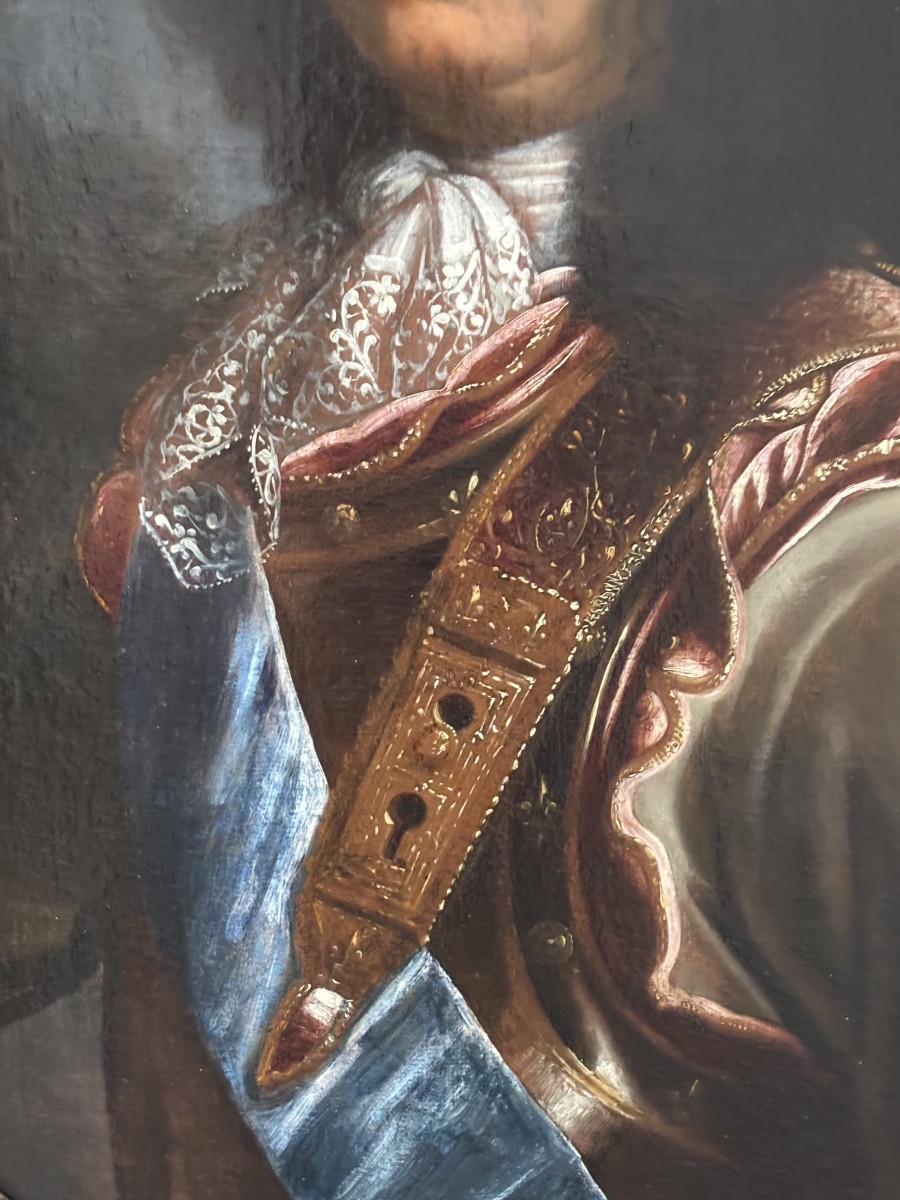
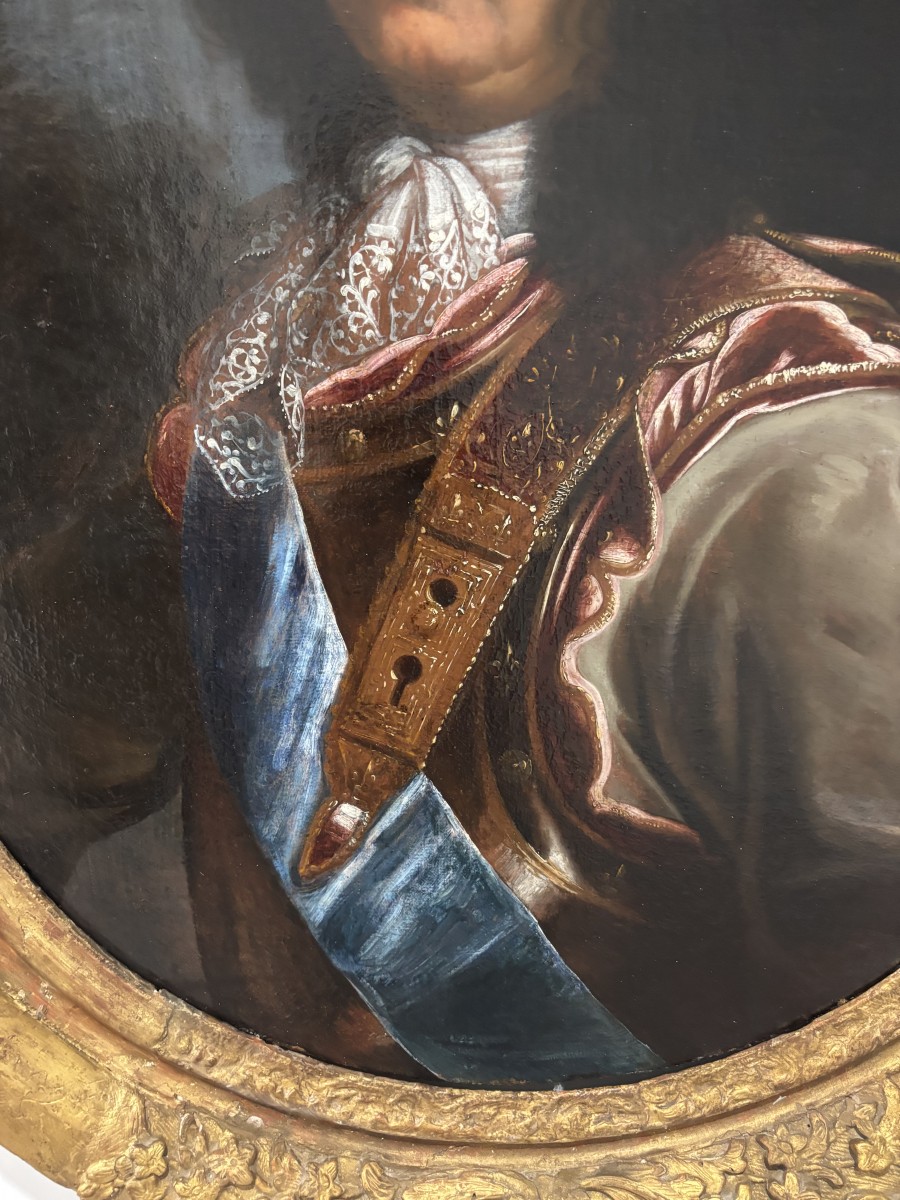
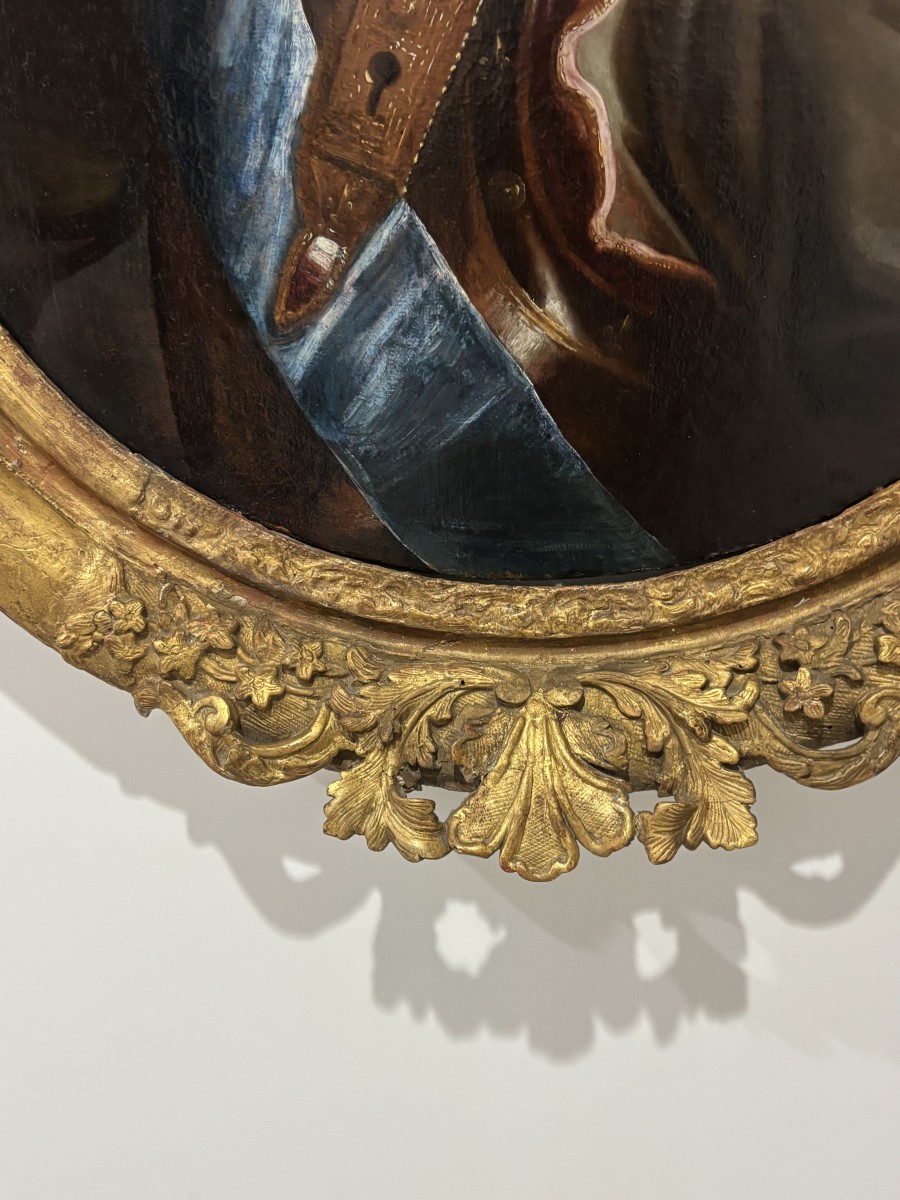

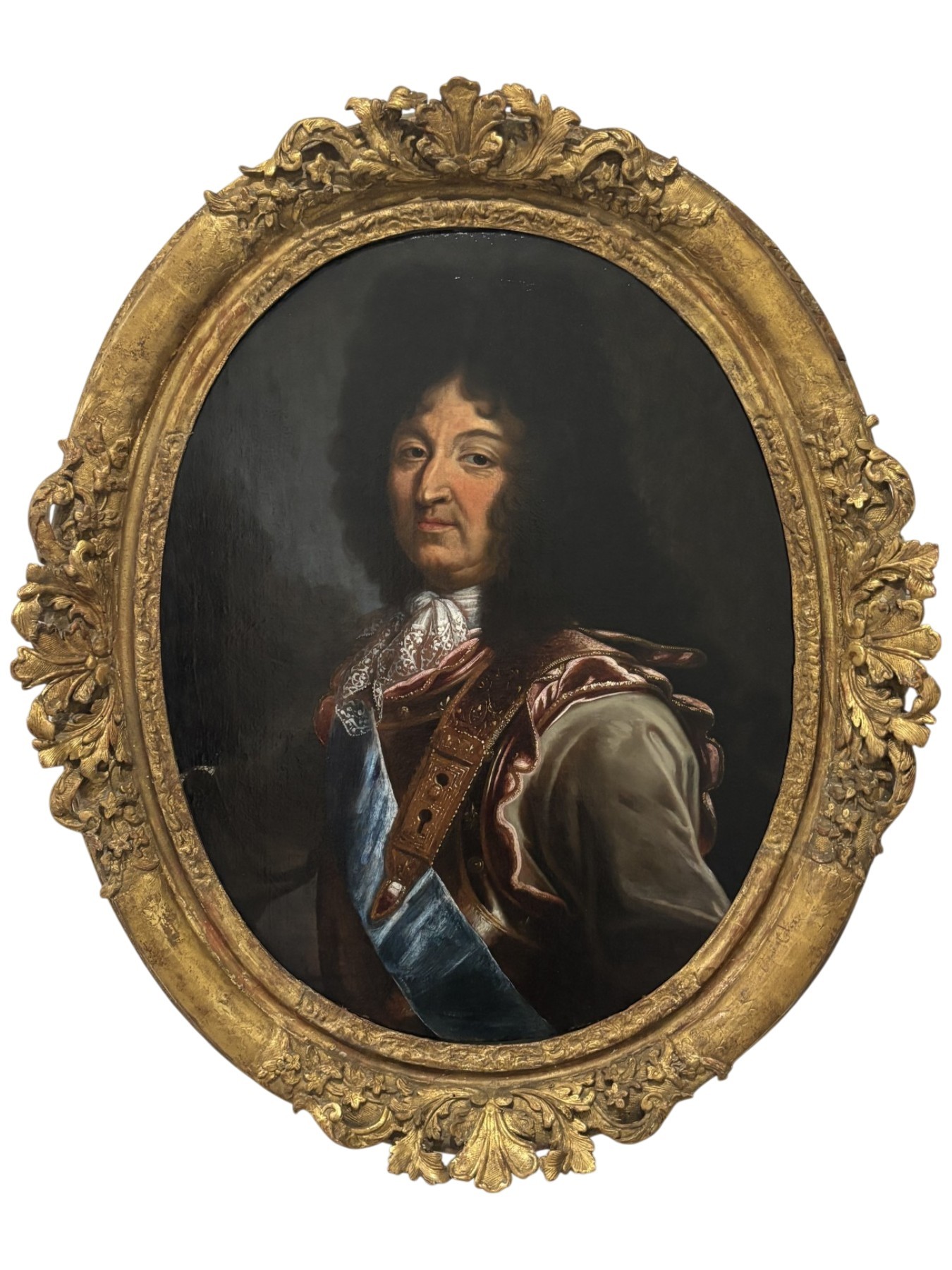
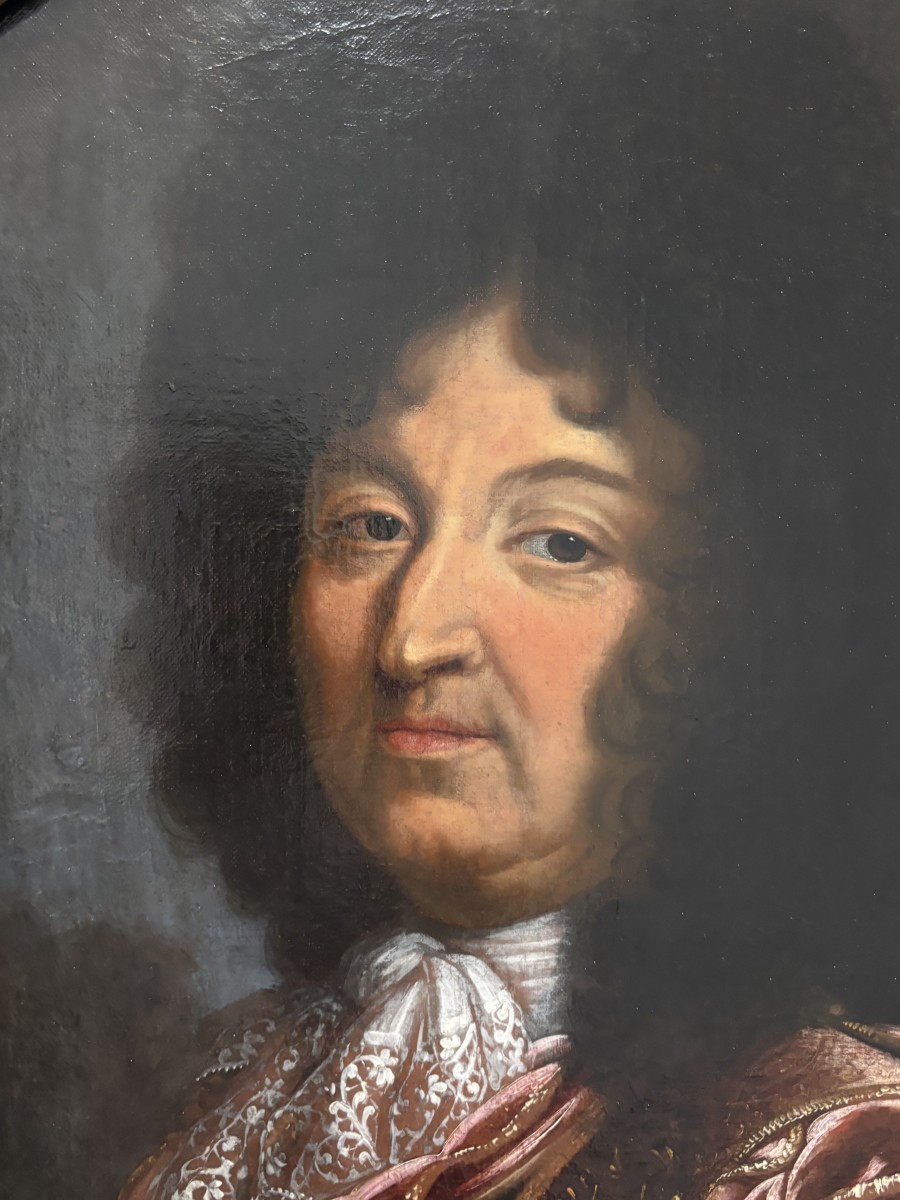
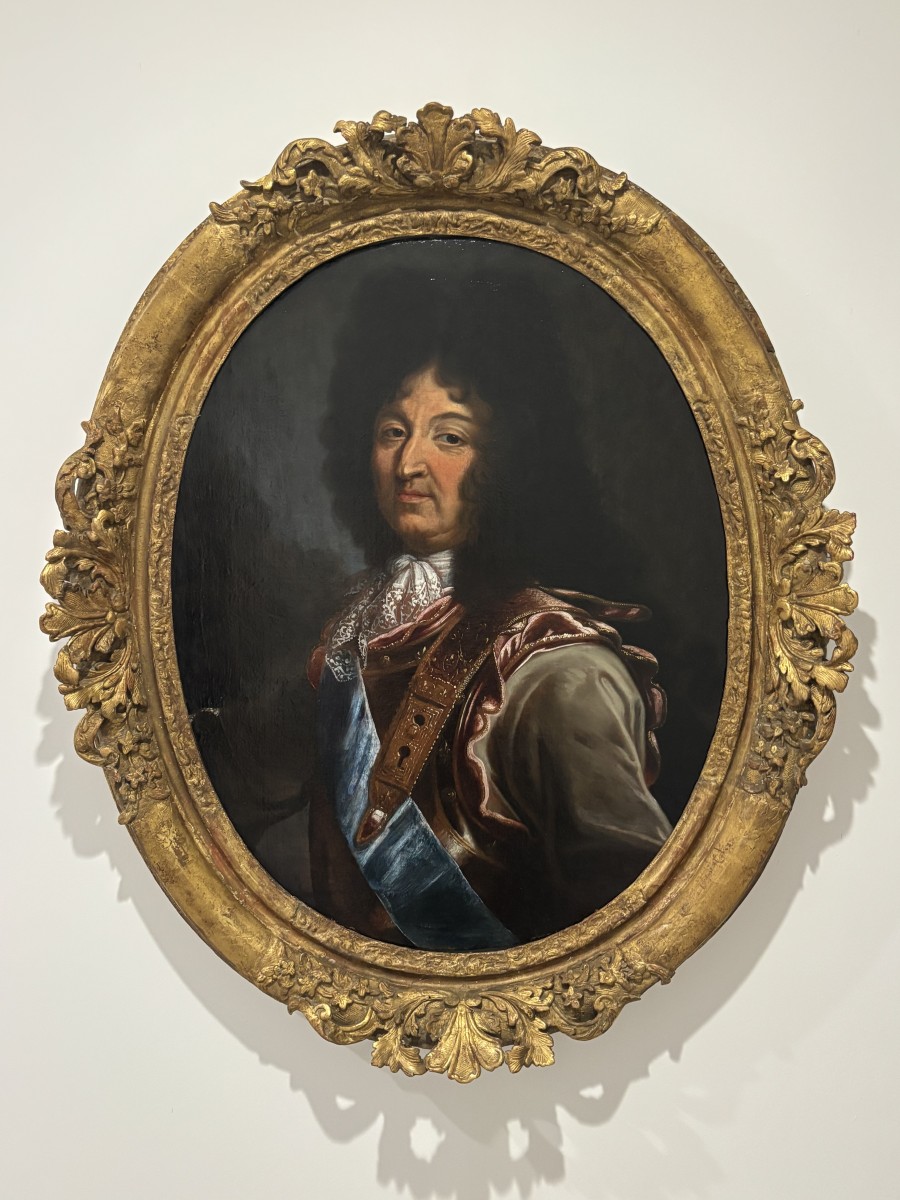
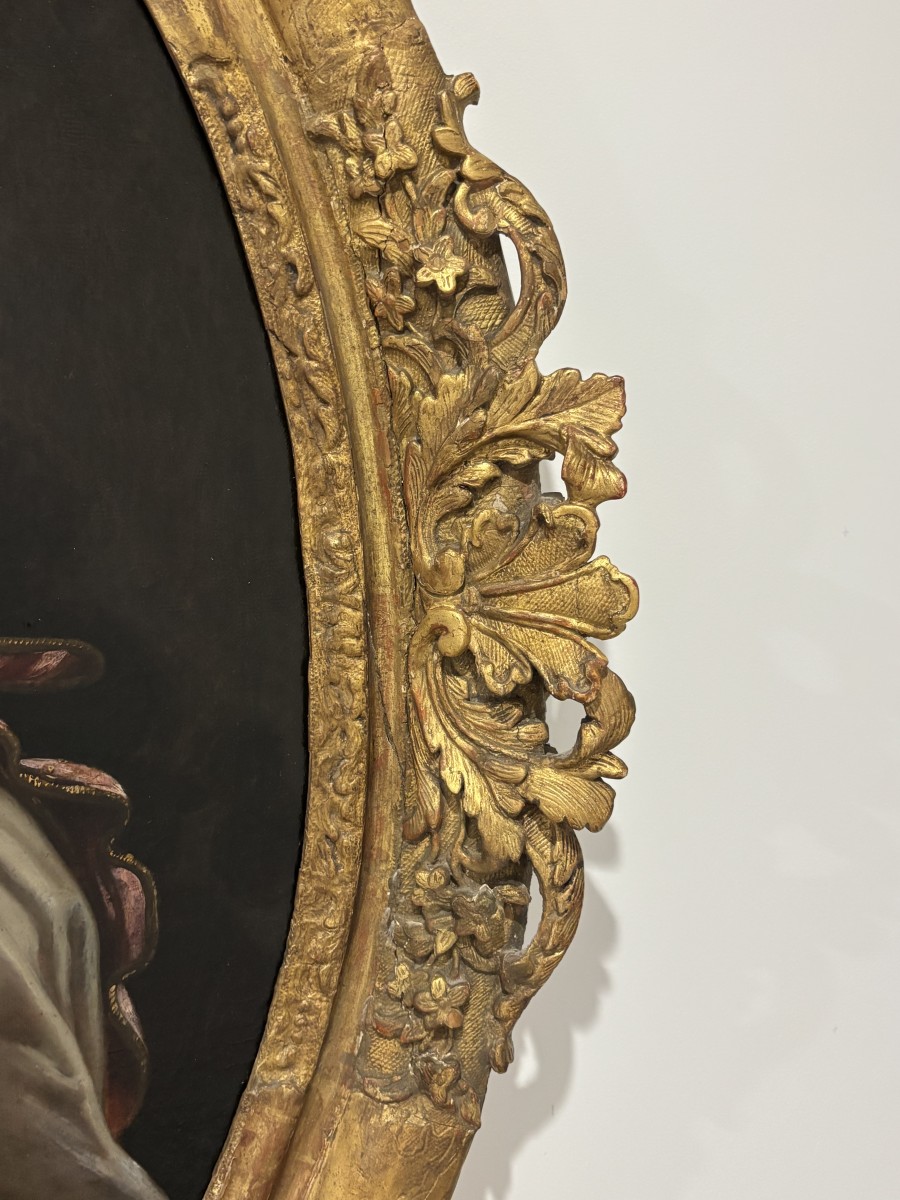
Rare bust portrait of Louis XIV in armor. The king, aged 54, is depicted in three-quarter view, looking directly at the viewer. He sports a voluminous mane of long, curly hair with small locks framing his forehead. He is richly dressed in a doublet trimmed with braid and a lace jabot, a cuirass studded with fleur-de-lis, and a blue baldric. His right arm appears outstretched, while his left arm is held close to his body. Oil on canvas, original canvas, original gilt oak frame. In excellent condition. French work, workshop of Hyacinthe Rigaud, between 1694 and 1701. Dimensions: Frame: H: 105 cm; Width: 86 cm; Canvas: H: 81 cm Width: 62 cm. Our opinion: While the portrait of Louis XIV in his coronation robes is undoubtedly the most famous representation of the Sun King, it is not the only portrait of the king painted by Hyacinthe Rigaud. Indeed, during his long and fruitful career, the Catalan artist depicted the king three times. The first portrait, showing the king half-length and in armor, was probably painted in 1694. Although absent from the artist's account books, which are a rich source of information on Rigaud's work, the painting is primarily known through the numerous copies made from 1694 onwards by the artist's workshop. The most faithful copy appears to be the one held at the Herzog Anton Ulrich-Museum in Brunswick (Inv. No. 523. Former collection, Cat. 1737). Among the many collaborators who worked on the copy, we can mention some of the great names of 18th-century French painting, such as Nattier, who was paid 21 livres for a complete copy; Parrocel, who received 70 livres for a background "for the King and another for Mr. De La Brosse"; and Jean Ranc, who was paid 100 livres for a full-length copy, 36 livres for two bust-length copies, 30 livres for a copy of the king in armor, and 40 livres for two other copies. These studio copies, which could cost up to 600 livres, exhibit a certain degree of artistic license compared to Rigaud's original. This is particularly evident in the king's clothing: while he wears full armor in the original, many copies depict the sovereign wearing only his breastplate, which makes his doublet more visible. This is the case for our portrait, as well as the one kept at the Château de Chambord (Inv. CNMHS. Inv. NE 259), the one in the Kunsthistorisches Museum in Copenhagen (Inv. KMSsp706) or the one in the Dulwich Picture Gallery (Inv. DPG 85). In this first portrait of the king by Rigaud, and especially in its many versions which will widely disseminate the model, we can glimpse the scheme which the master will reuse in 1701 in the second portrait of Louis XIV in coronation costume: an absolute sovereign who can do without his military assets. It was, in fact, to replace this portrait of the king in his coronation robes, which was intended for the King of Spain, that Rigaud painted his third portrait of the Sun King: a full-length portrait in which the sovereign poses in full armor before the Siege of Namur in 1692. This portrait, now in the Prado Museum in Madrid, reprises the composition of the first portrait from 1694 to present the new King of Spain with the vision of a warrior sovereign personally leading his armies to victory. This portrait of his great-grandfather greatly pleased Philip V, as well as the Spanish court, which preferred this vision of the Sun King to the almost spiritual grandiloquence of the coronation robe portrait.