Offered by Franck Baptiste Paris
REQUEST INFORMATION
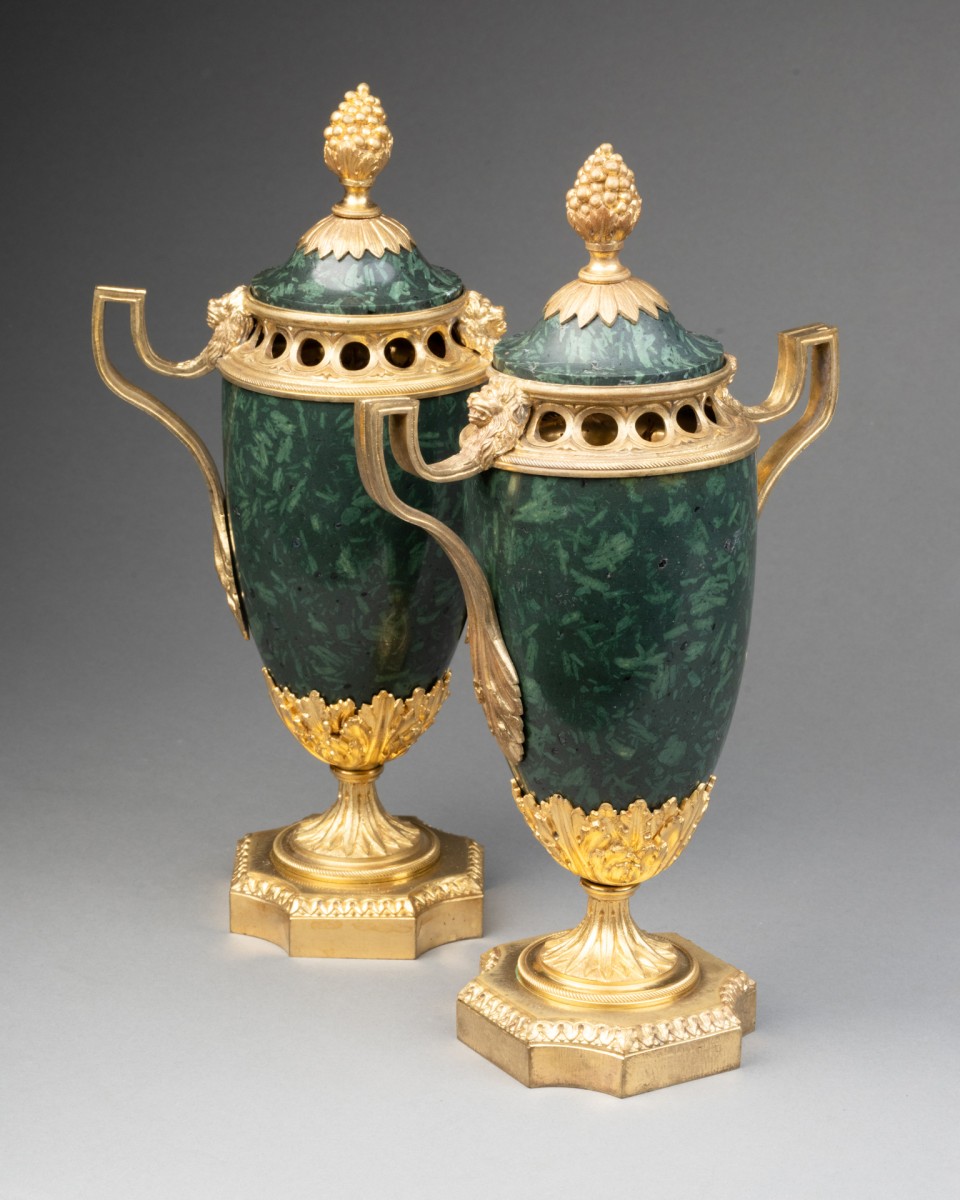
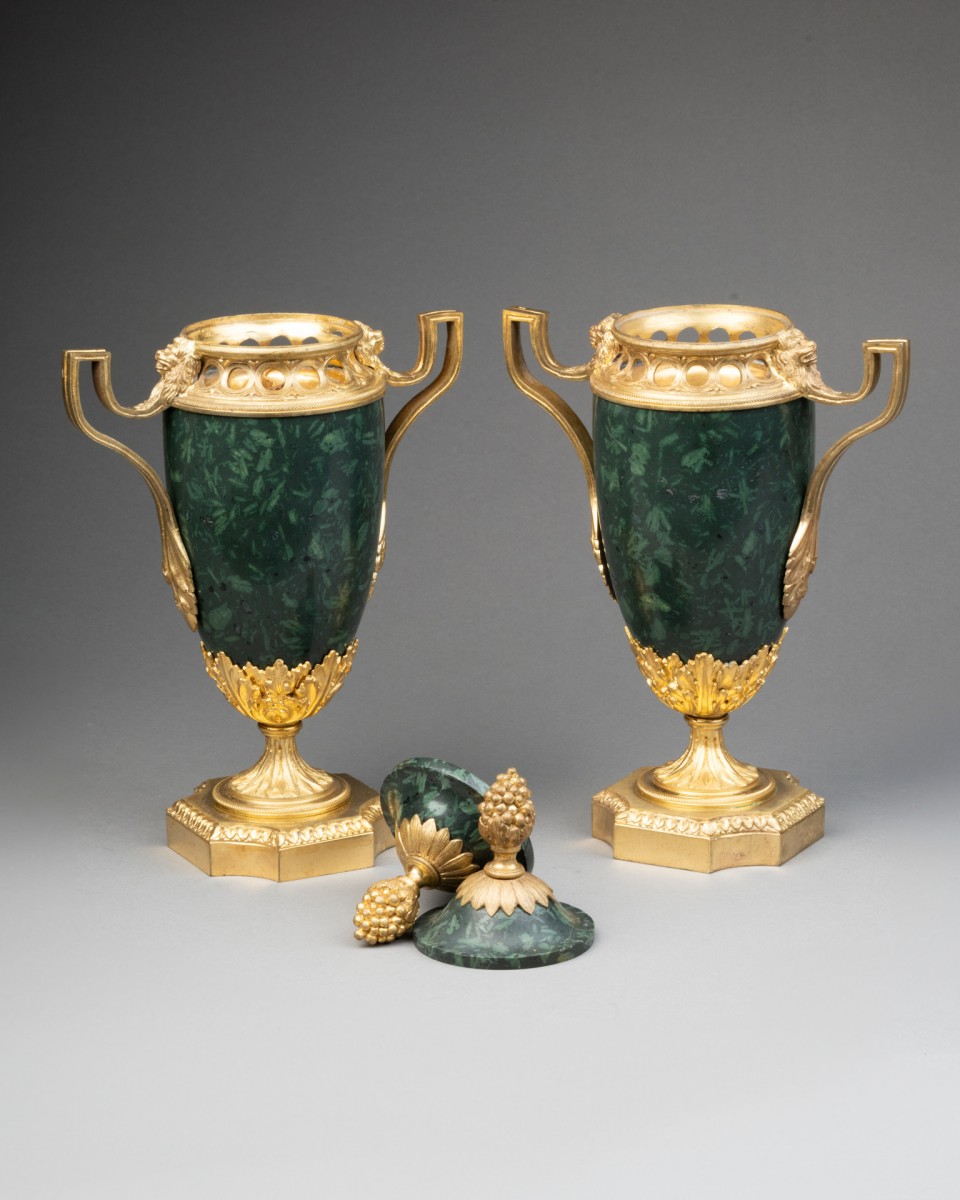

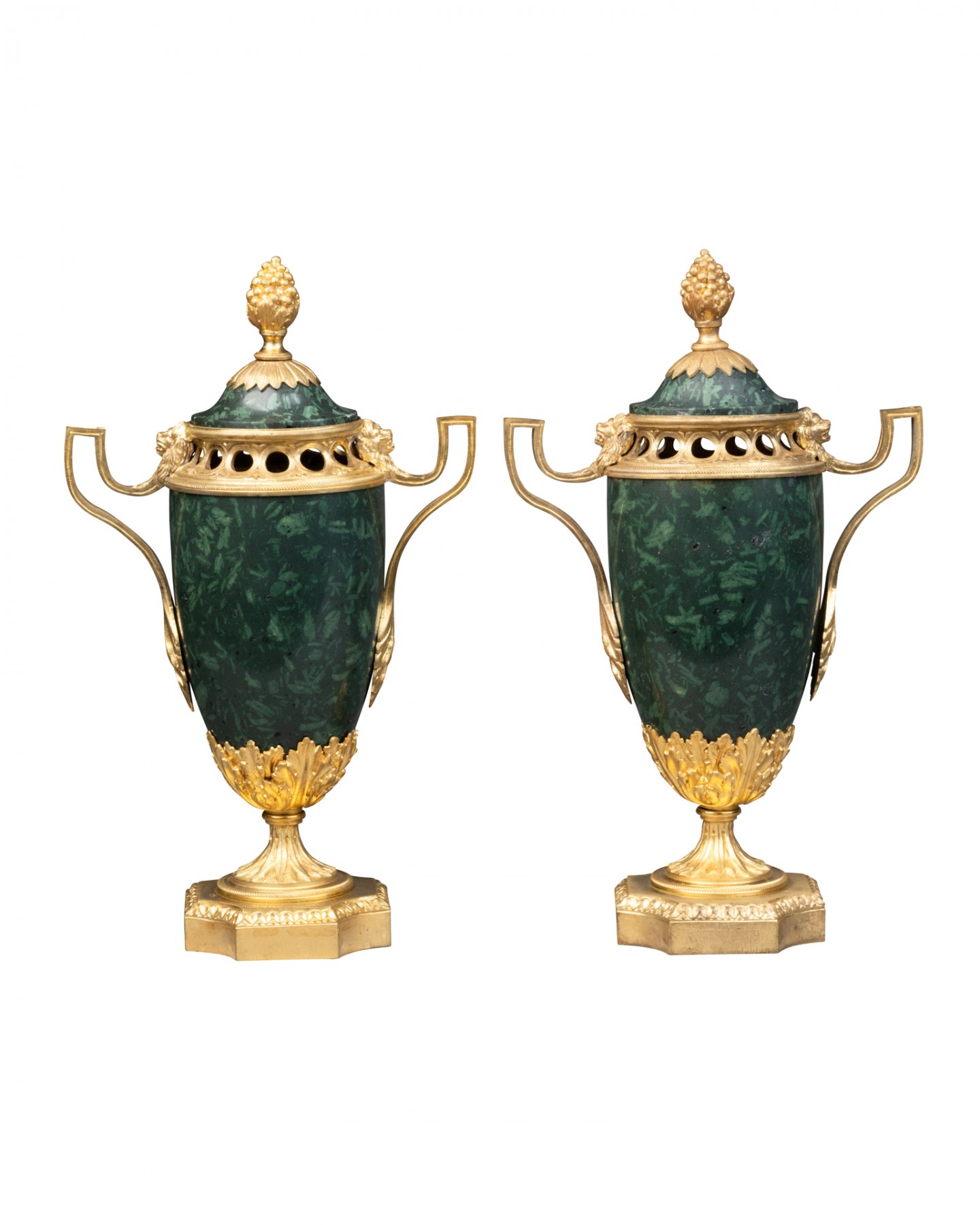
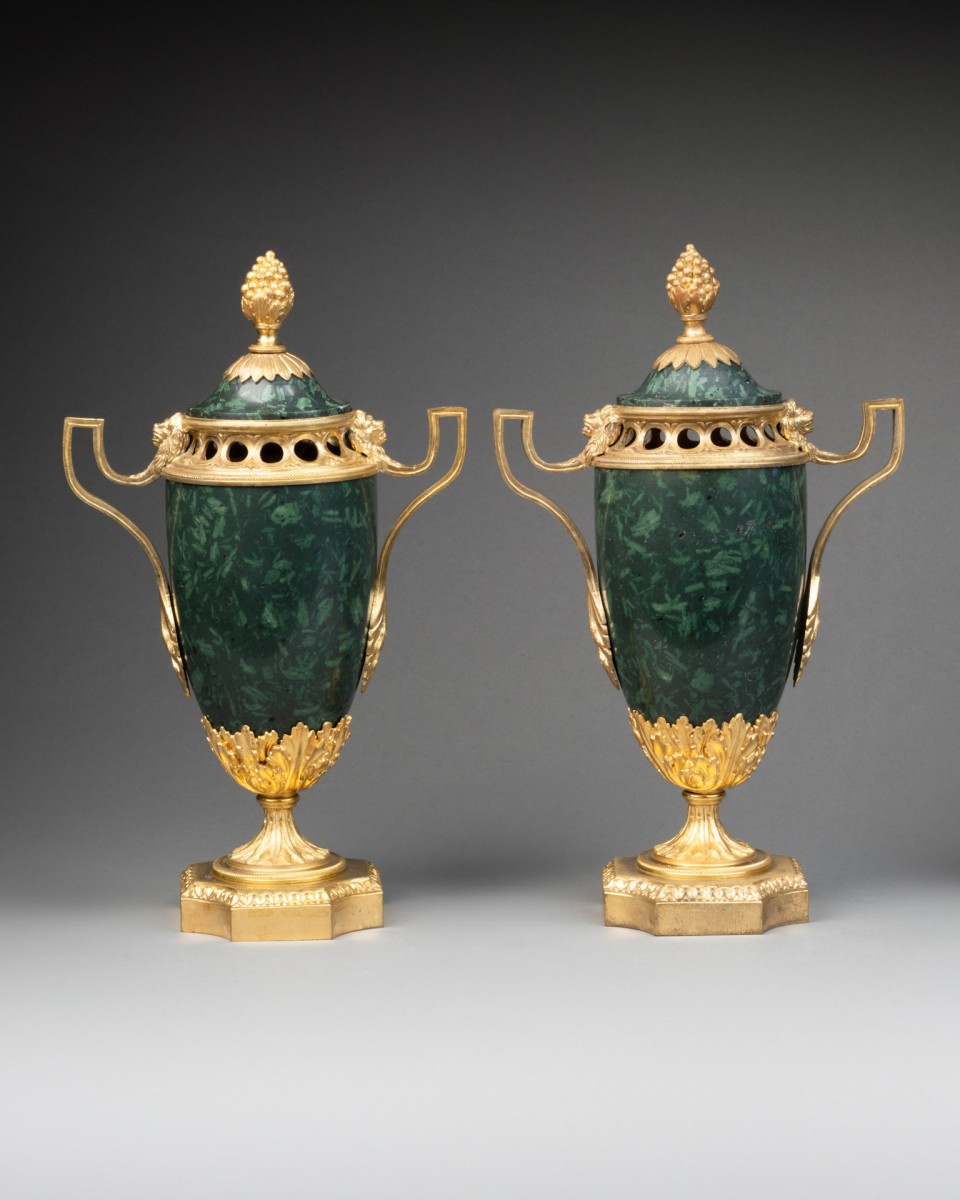
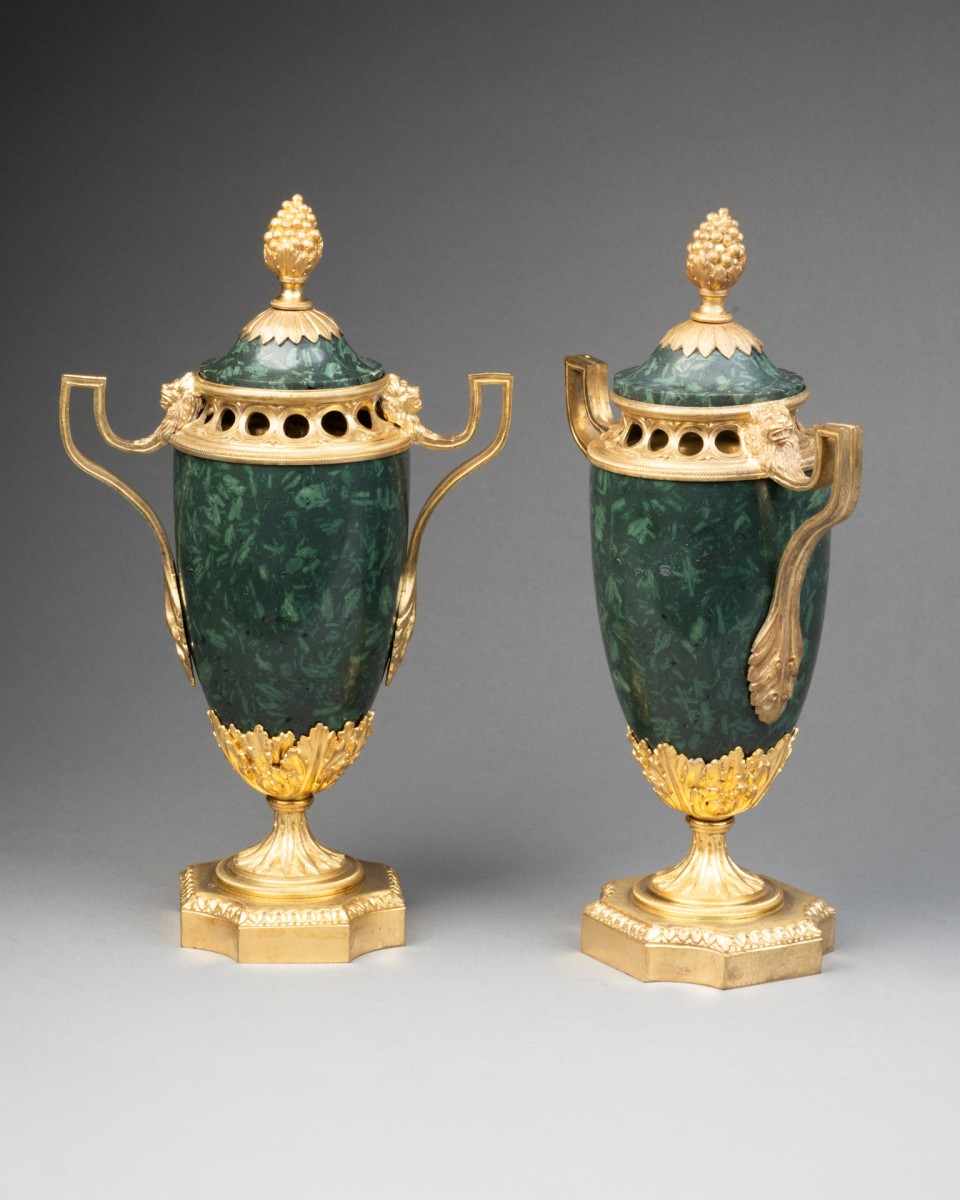
A rare pair of covered vases used as potpourri containers, crafted from green porphyry from Greece and mounted in finely chased and mercury-gilded bronze.
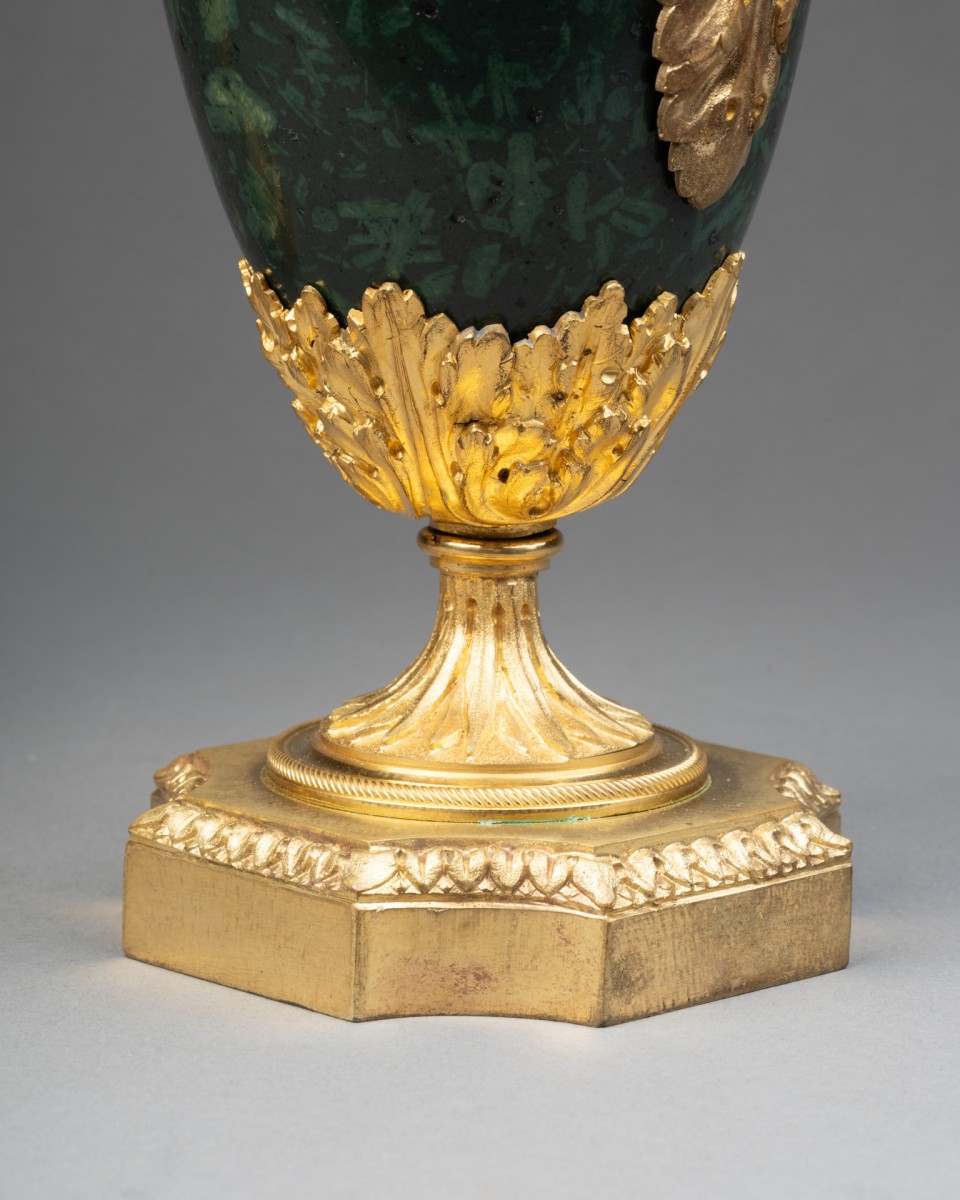
The vases are ovoid in shape, resting on a square base with stepped corners and a frieze of heart-shaped motifs.
They are surmounted by a foot decorated with radiating motifs and a base adorned with acanthus leaves.
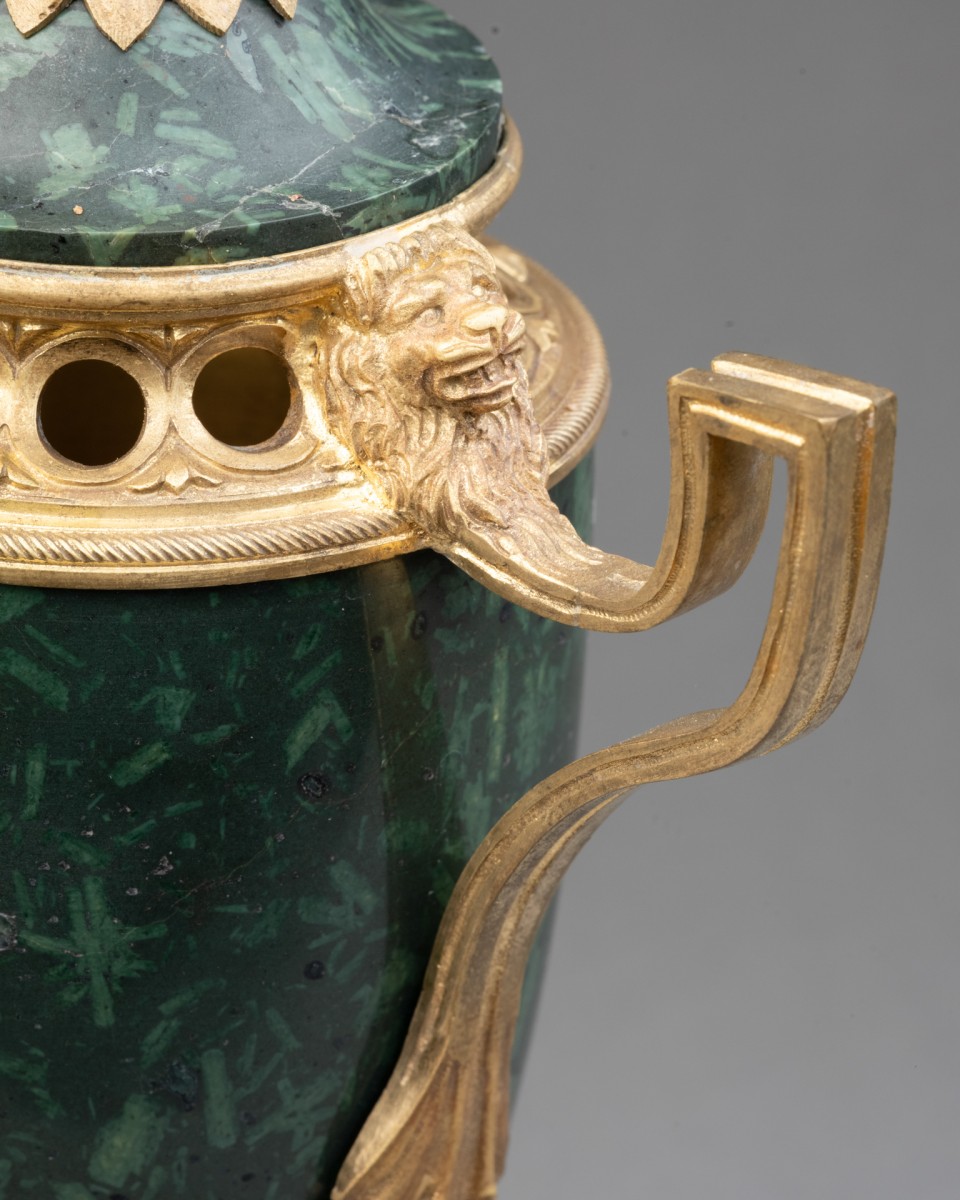
The upper part of the vase features an openwork border with a frieze of circles, framed by two Greek-style handles terminating in lion heads at the top and acanthus leaves at the bottom.
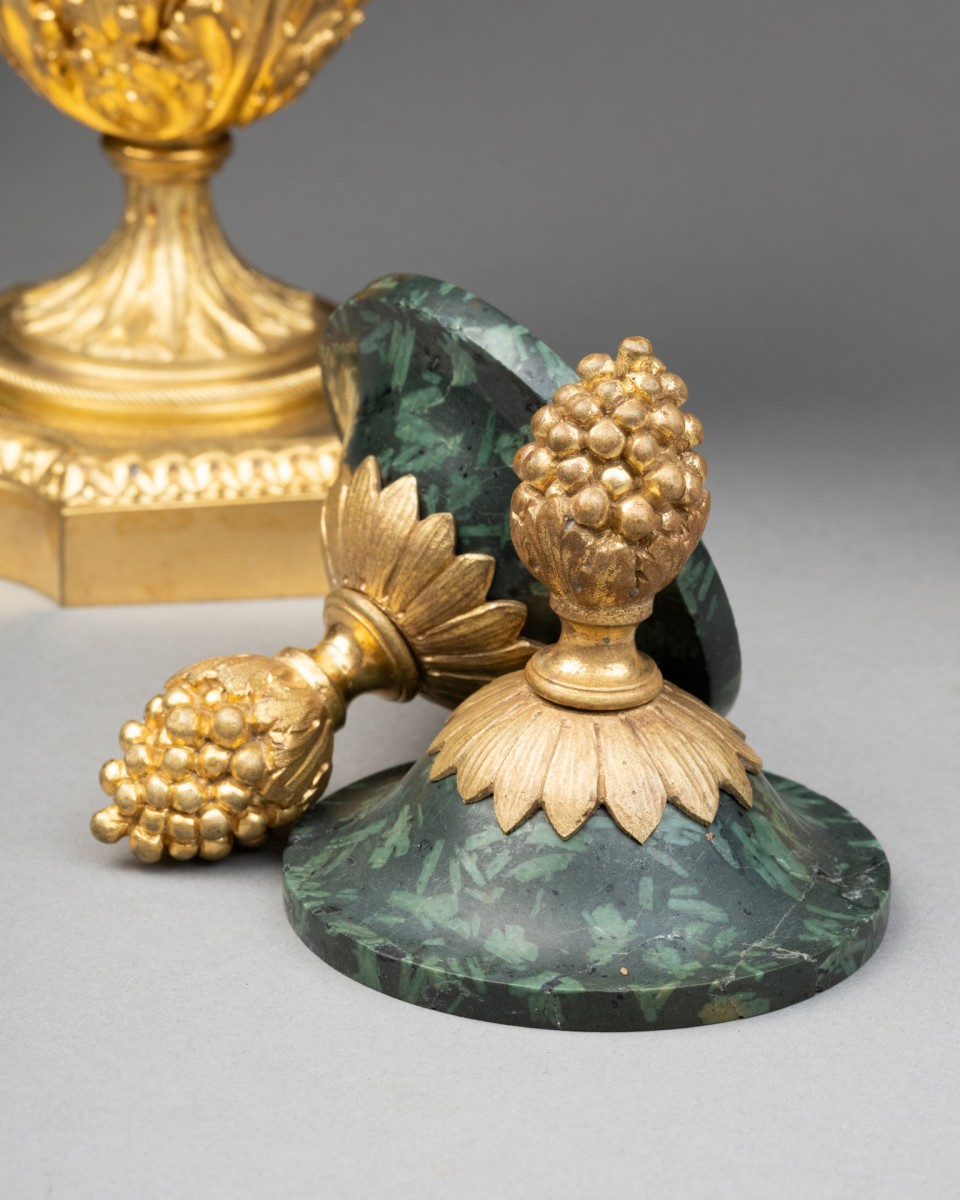
They are topped with a domed porphyry stopper, finished with a base of palmettes and a pinecone-shaped finial. The interior reveals a circular gilt bronze vessel.
Very fine quality green porphyry from Greece; original mercury gilding.
In good condition, with natural wear to the gilding and a small restored chip on the rim of one lid.
Roman work from the Neoclassical period, green porphyry, 1820-1830.
Dimensions:
Height: 26 cm; Width: 16 cm; Depth: 8.5 cm
Our opinion:
Our pair of potpourri dishes is made of remarkable green porphyry, an imperial stone highly prized during Roman Antiquity. Quarried for emperors, this extremely hard rock was extracted by the Romans from very deep quarries in northern Greece, which were quickly exhausted, probably as early as the 5th century.
Due to the difficulty of extraction and the small size of the blocks from ancient quarries, this material was considered even rarer than the purple porphyry of Egypt and therefore reserved for strictly imperial use, particularly for the cladding and pavements of major Roman monuments, such as the Pantheon, the Baths of Caracalla, and Hadrian's Villa.
The stone used for our pair belongs to the finest variety of this green porphyry, characterized by a deep, dark green hue enlivened by star-shaped crystalline inclusions of feldspar. These spectacular natural patterns result from the slow cooling of the volcanic rock and constitute one of the most sought-after hallmarks of materials from ancient quarries. Furthermore, the combination of potpourri and sacred fire with an ancient imperial stone is one of the major inspirations for the Neoclassical taste that followed the revival of Antiquity. Through these forms inspired by ancient incense burners and censels, artists of the late 18th century sought to recreate the majesty and refinement of the Roman world.