Offered by Franck Baptiste Provence
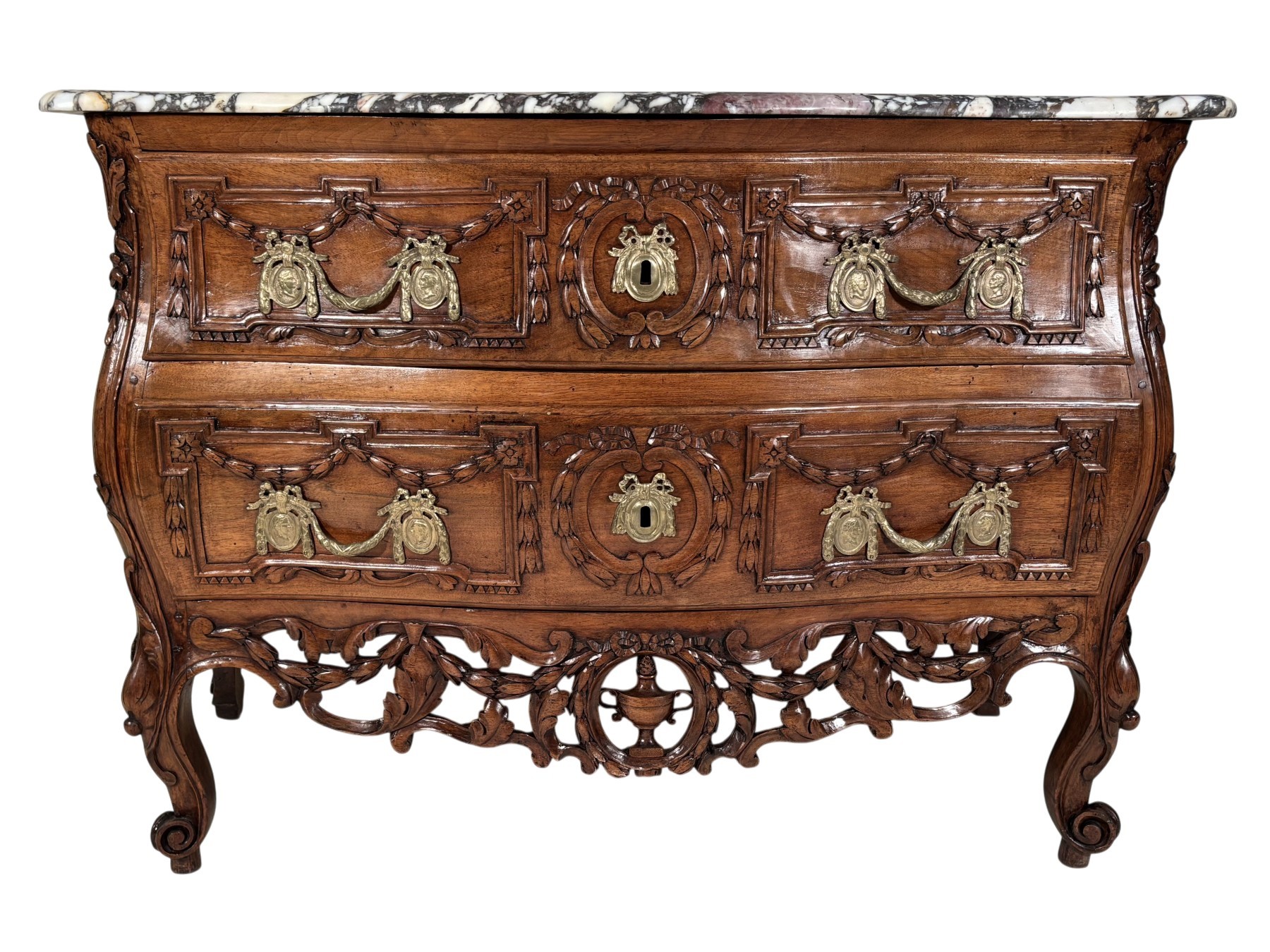
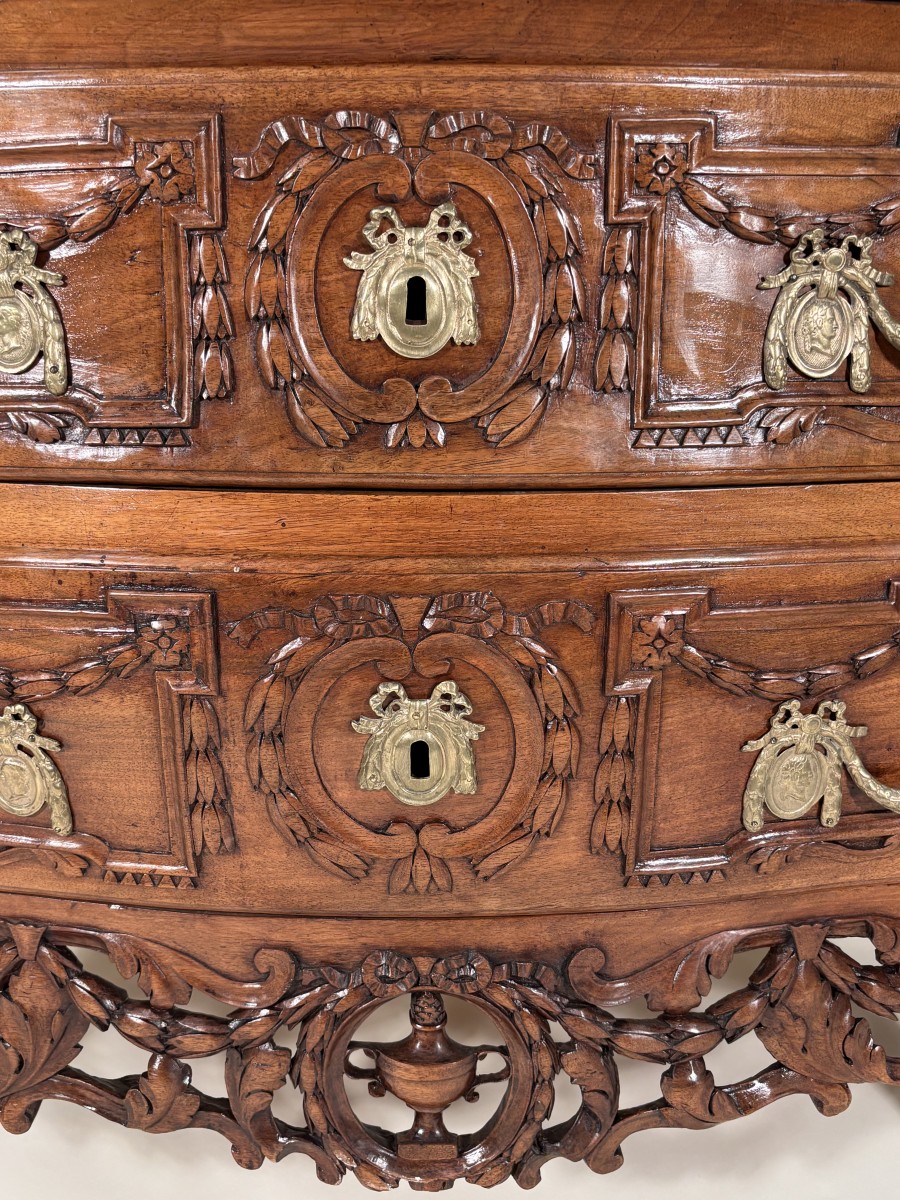
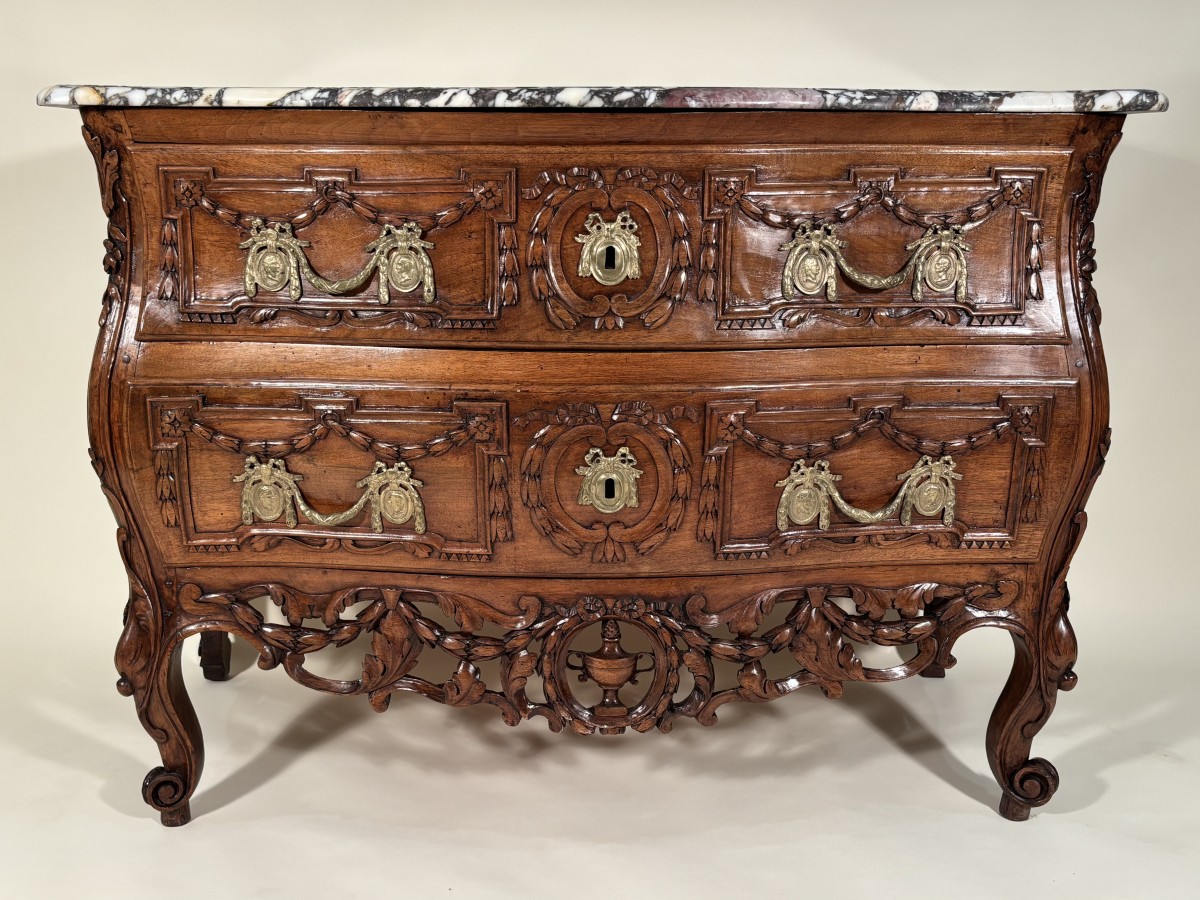

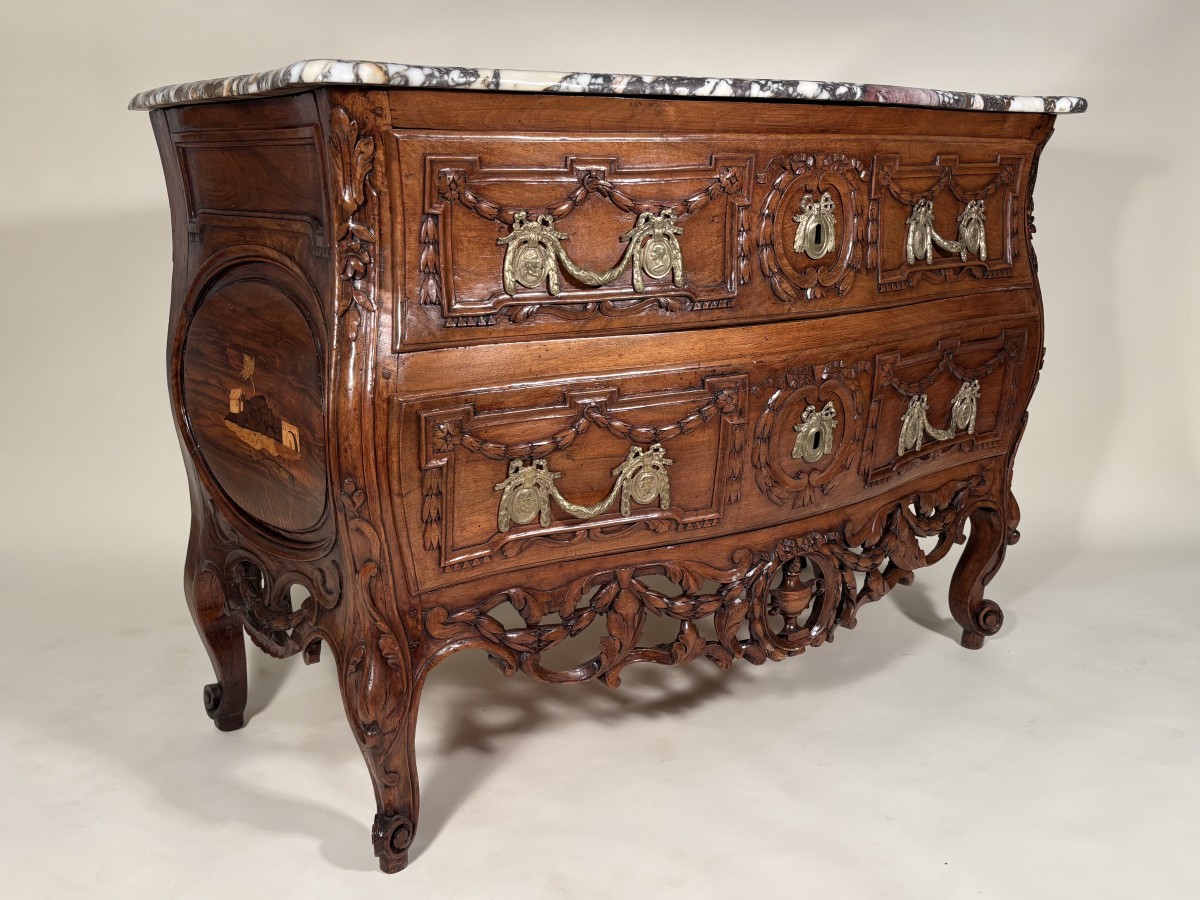
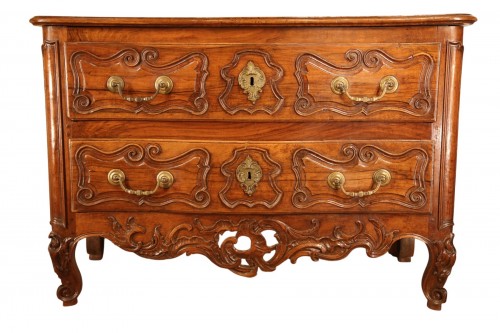
A solid walnut commode with two drawers in the front. The commode is curved in both plan and elevation on all sides.
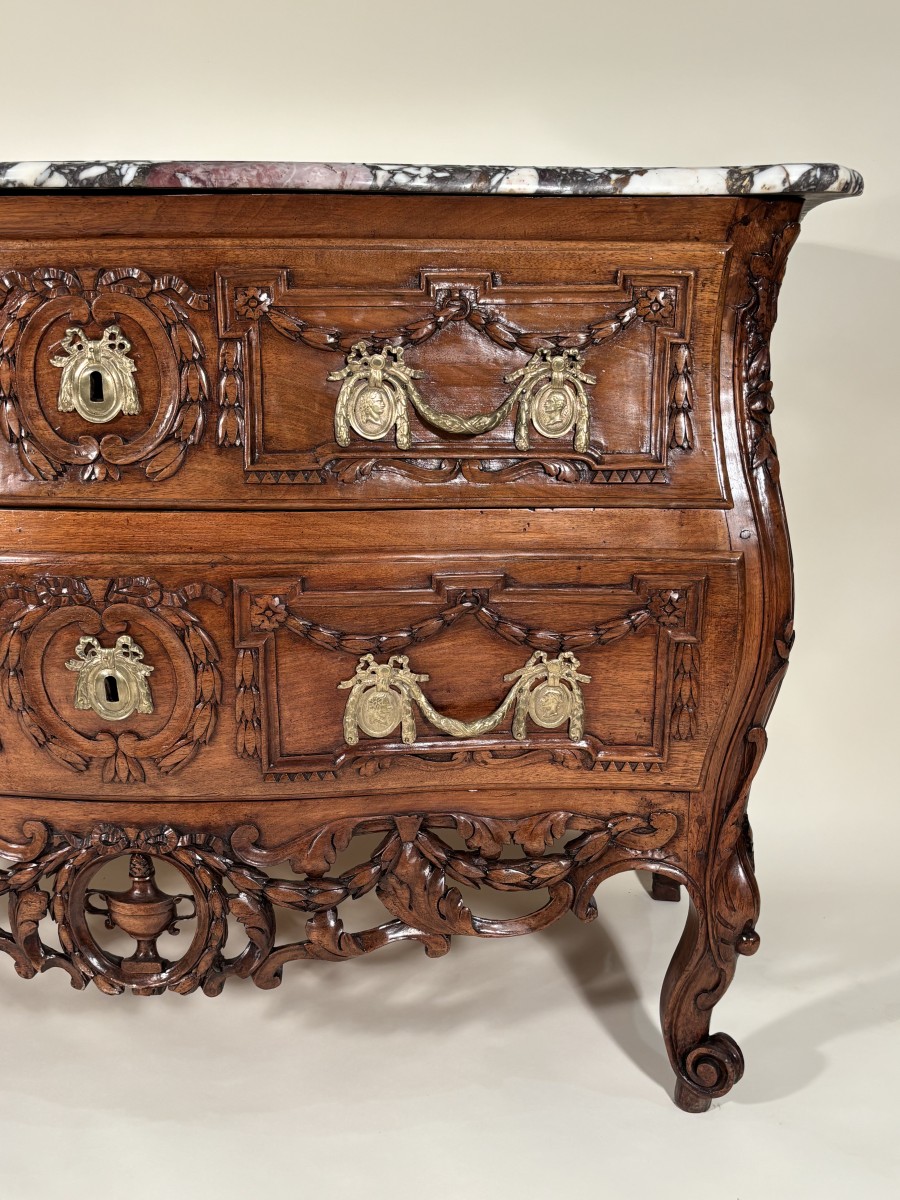
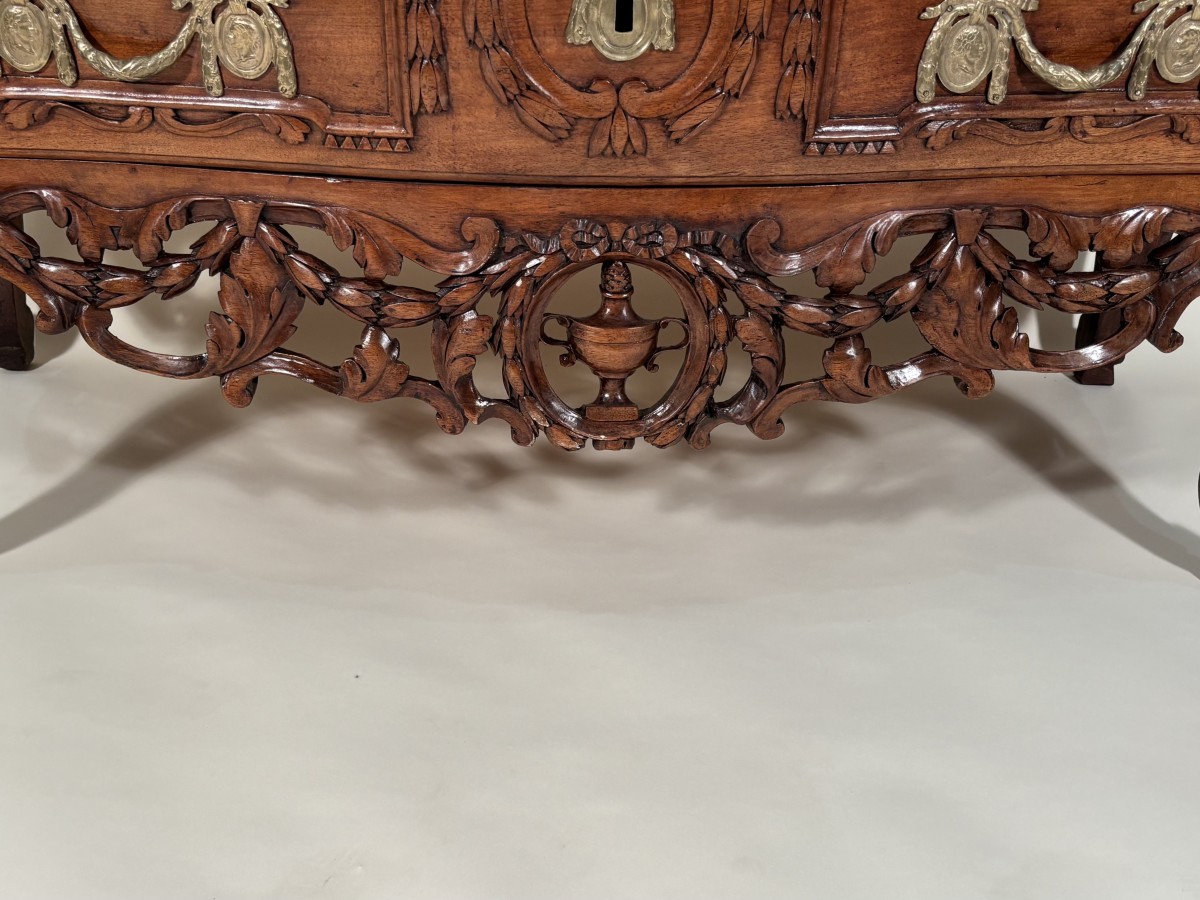
The entire commode features rich and delicate carving, with Greek-style reserves adorned with draperies separated by pearl medallions framed by laurel leaf garlands for the drawers, and a richly decorated openwork stretcher of acanthus scrolls, laurel garlands, oak branches, and an antique-style censer.
The front uprights, decorated with acanthus leaves, terminate in four intricately carved snail feet.
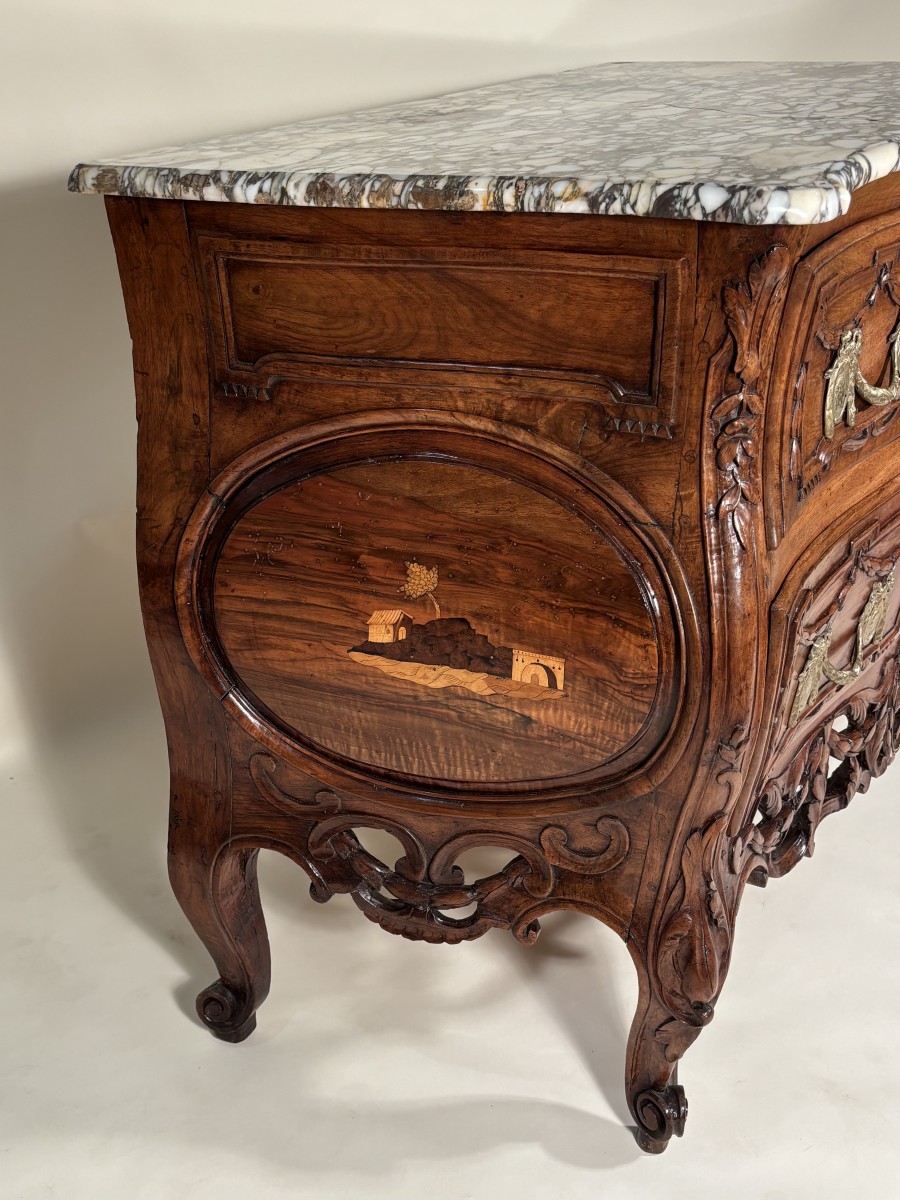
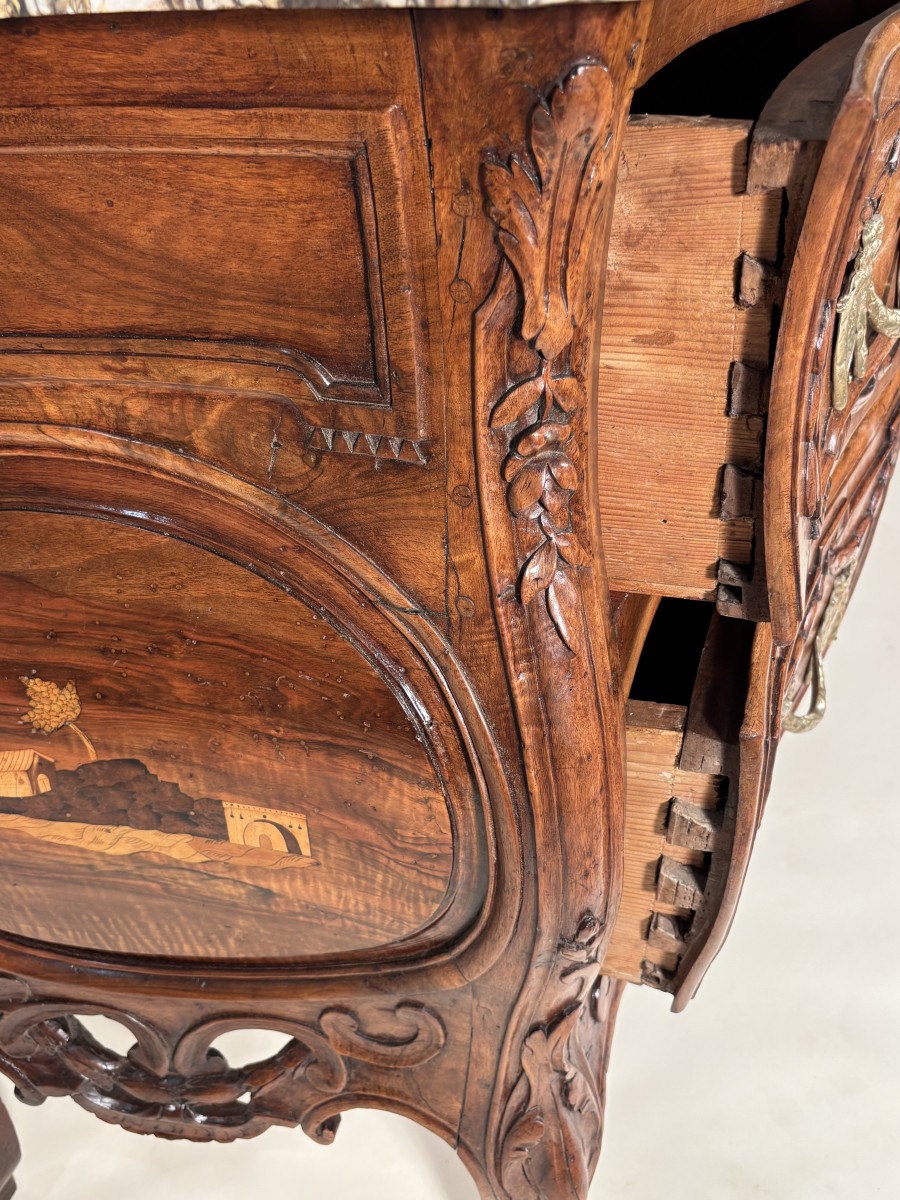
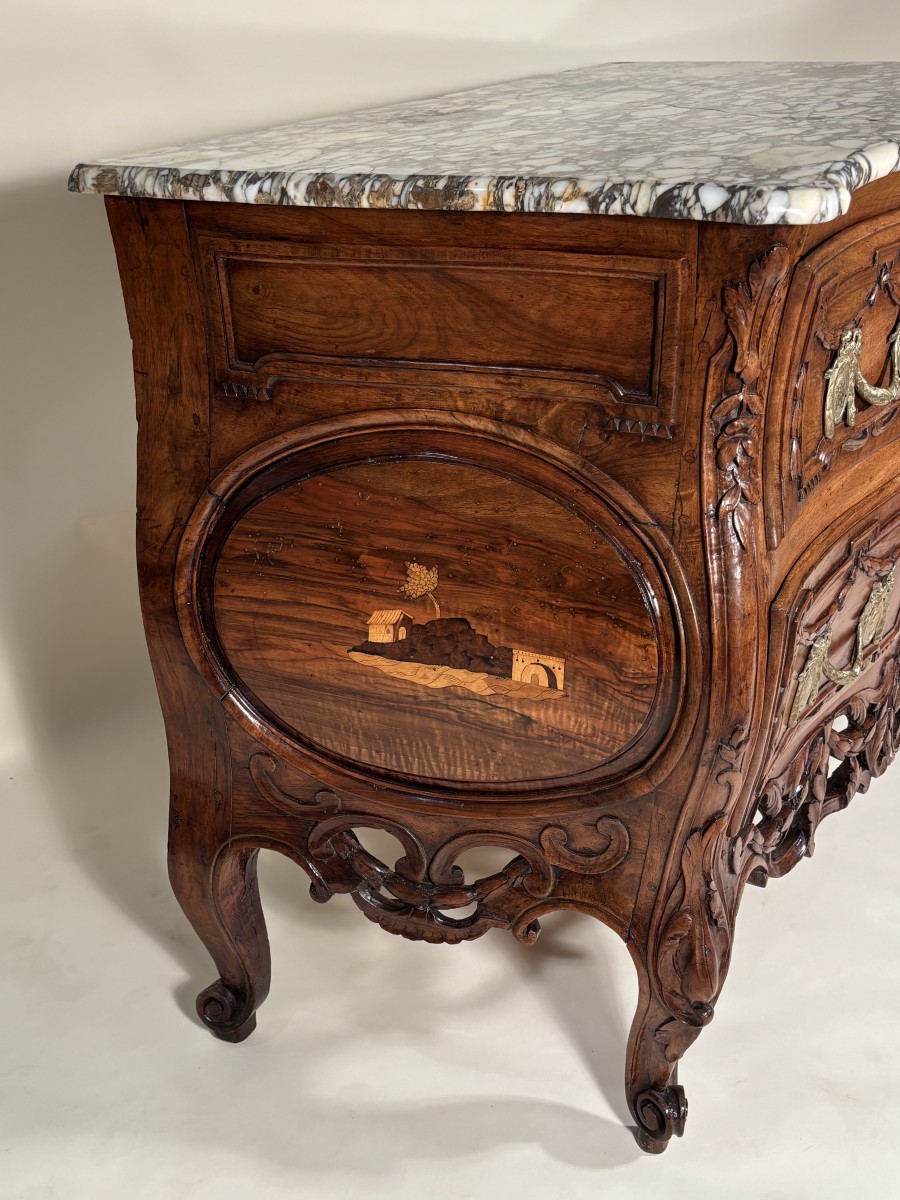
The sides, with their openwork stretchers, are surmounted by two panels: a reserve with an oval medallion and a rectangular molding with triglyph drops.
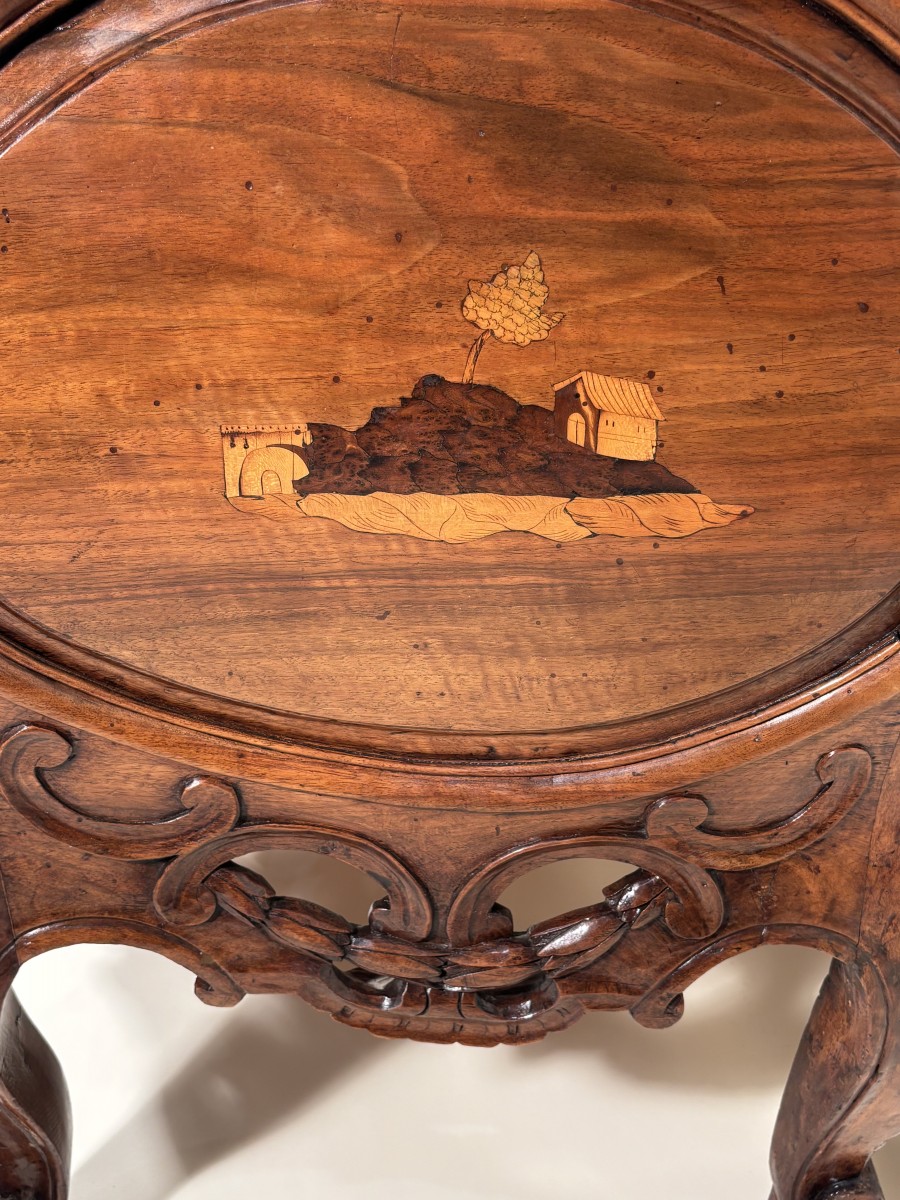
The medallions are adorned with small inlaid decorations of native woods depicting houses on a rocky mound.
Bronze drawer pulls and keyhole escutcheons feature the profiles of emperors.
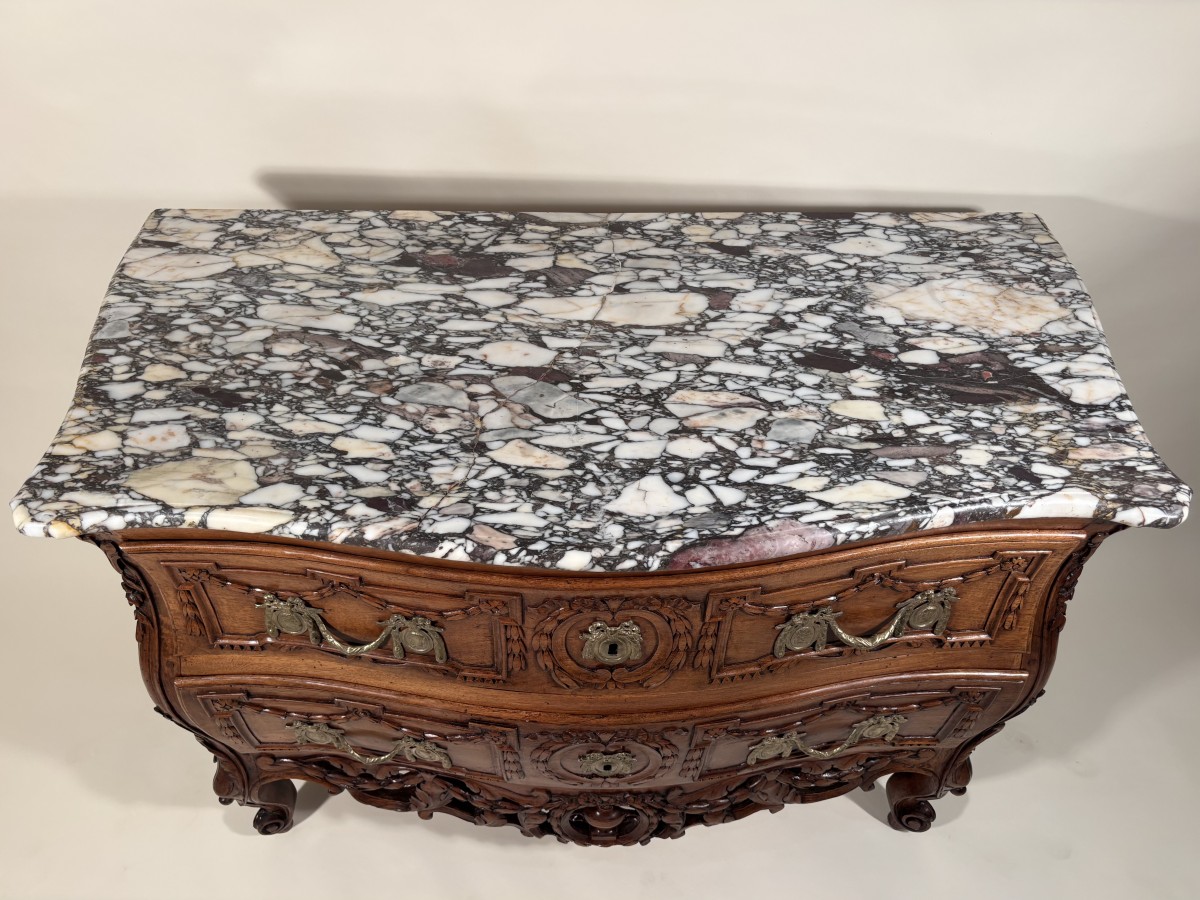
The commode is topped with its original Medici breccia marble slab. (Restorations)
In very good condition, crafted from fine, tightly grained walnut.
A Nîmes piece attributable to Pierre Pillot, dating from the transition between the Louis XV and Louis XVI periods, circa 1770-1780.
Dimensions:
Width: 122 cm; Depth: 63 cm; Height: 89 cm
Our opinion:
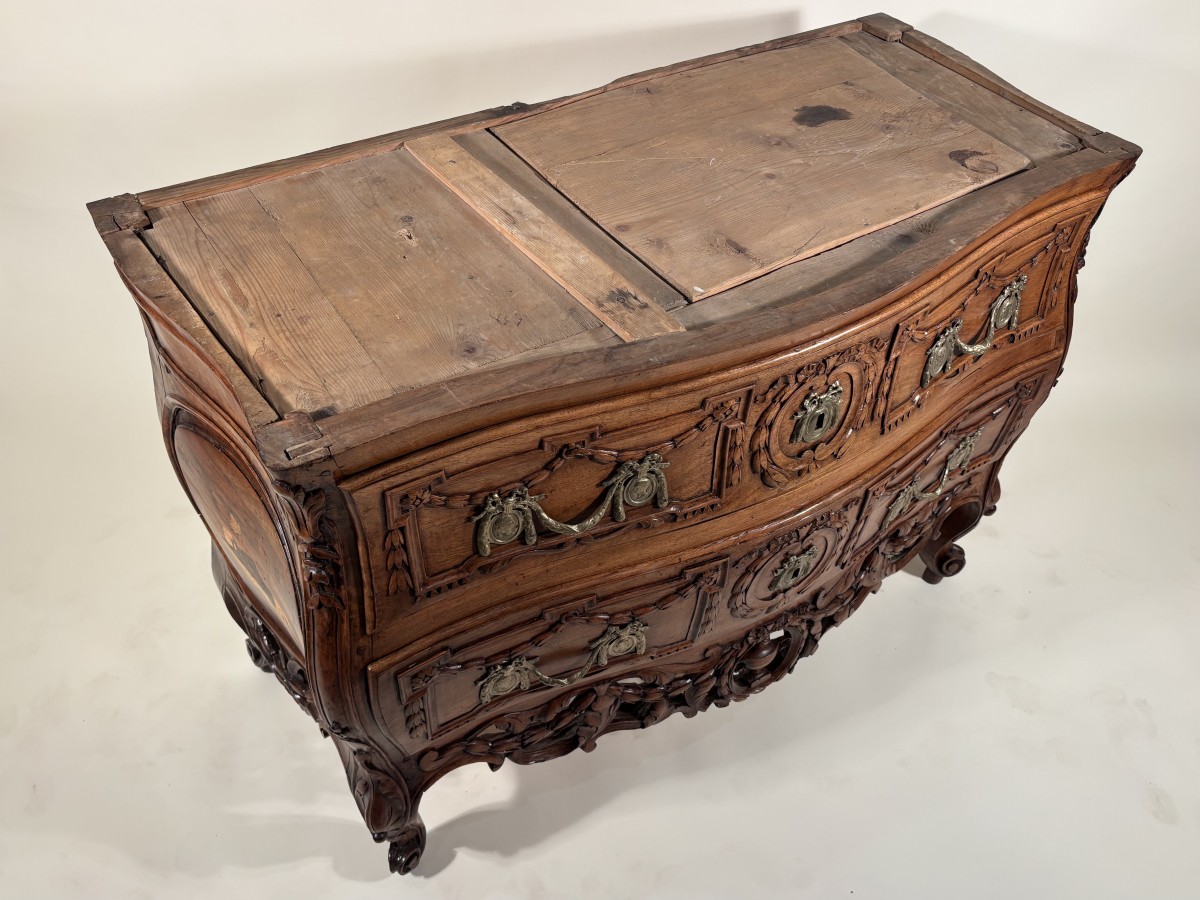
With its "antique" decorative style and its lace-like crossbar, the commode we are presenting can be confidently attributed to the cabinetmaker Pierre Pillot. The exceptional breadth of the curves, the quality of the deeply detailed carving, and the presence of antique-inspired decoration with garlands, medallions, and trophies are all characteristics found in his work, notably on an identical stamped commode that was formerly in our collection. The presence of figurative inlays on the sides, as well as a luxurious Italian marble top from a now-exhausted quarry, are, however, much more unusual in regional production. These features attest to a commission of the highest caliber, intended for a wealthy urban clientele eager to follow the latest tastes disseminated from Paris. The decoration of antique ruins thus reflects the vogue for "antique-style furniture," which was then enjoying great success in the capital and foreshadowed the shift in taste towards Neoclassicism. An examination of the construction also reveals particularly significant elements. The presence of the original underside of the top, as well as the absence of any trace of pegs or modifications to the upper rails, demonstrates that the commode was designed from the outset to accommodate a marble top. Similarly, the considerable thickness of the side inlays, applied to highly curved surfaces, suggests a particularly complex and costly execution. These various manufacturing details are all indications of a prestigious urban commission, executed without technical or economic compromise for a client likely belonging to the Nîmes elite of its time.
Through the ambition of its design, the richness of its sculpted decoration, the exceptional quality of its execution, and the particularly luxurious nature of its materials, this commode occupies a unique place in the oeuvre of Pierre Pillot. It can be considered one of the cabinetmaker's masterpieces and is undoubtedly among the two or three finest examples of his work known today.
Pierre Pillot was a cabinetmaker active in Nîmes between 1770 and 1822. Coming from a Parisian cabinetmaking family, he apprenticed with Mathieu Bauve before settling in Nîmes around 1770, near the market square, where he worked until 1822. Quickly gaining a great reputation, he crafted most of the large woodwork ensembles for the châteaux of Provence. While beds, sofas, armchairs, chairs, and other wall-mounted consoles came from his workshop, he also produced furniture such as wardrobes and chests of drawers, thus circumventing the Parisian guild law that reserved this type of work for cabinetmakers. We know of several chests of drawers by his hand, two of which were previously exhibited in our gallery. Inspired by the Roman monuments of the Gard region, he offers us here a perfectly balanced design, combining the fluid lines reminiscent of Louis XV with the refined elegance of a decoration in the purest neoclassical style.
This subtle blend allows him to achieve, in a single piece of furniture, all the elements so dear to the Provençal people: the opulence of form with preserved curves, as well as the presence of attributes symbolizing Provence and love. Our commode, which corresponds to Pierre Pillot's very first productions, represents, in our eyes, the quintessence of his work and marks the beginning of a style that would last until the mid-19th century.