Offered by Antichità di Alina
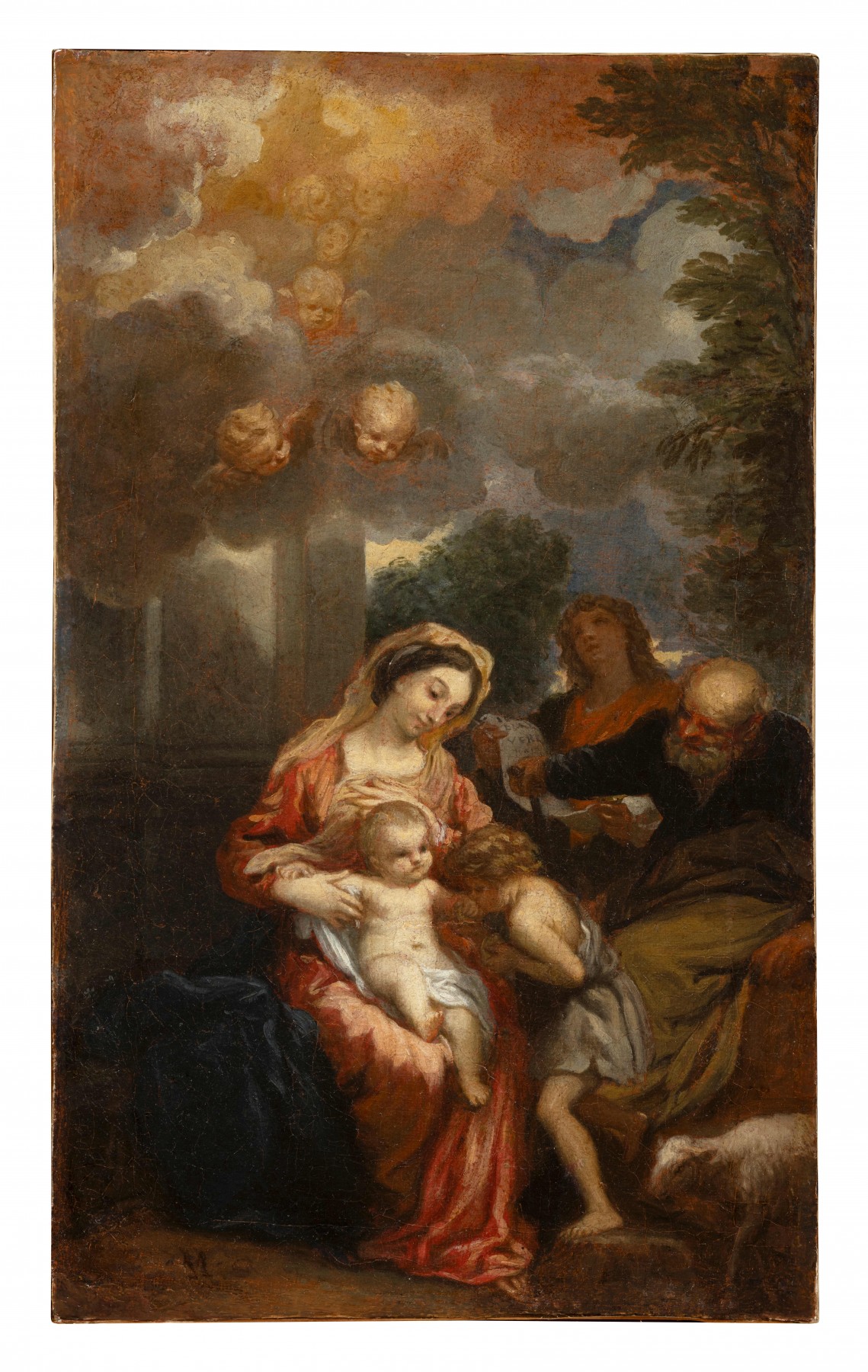
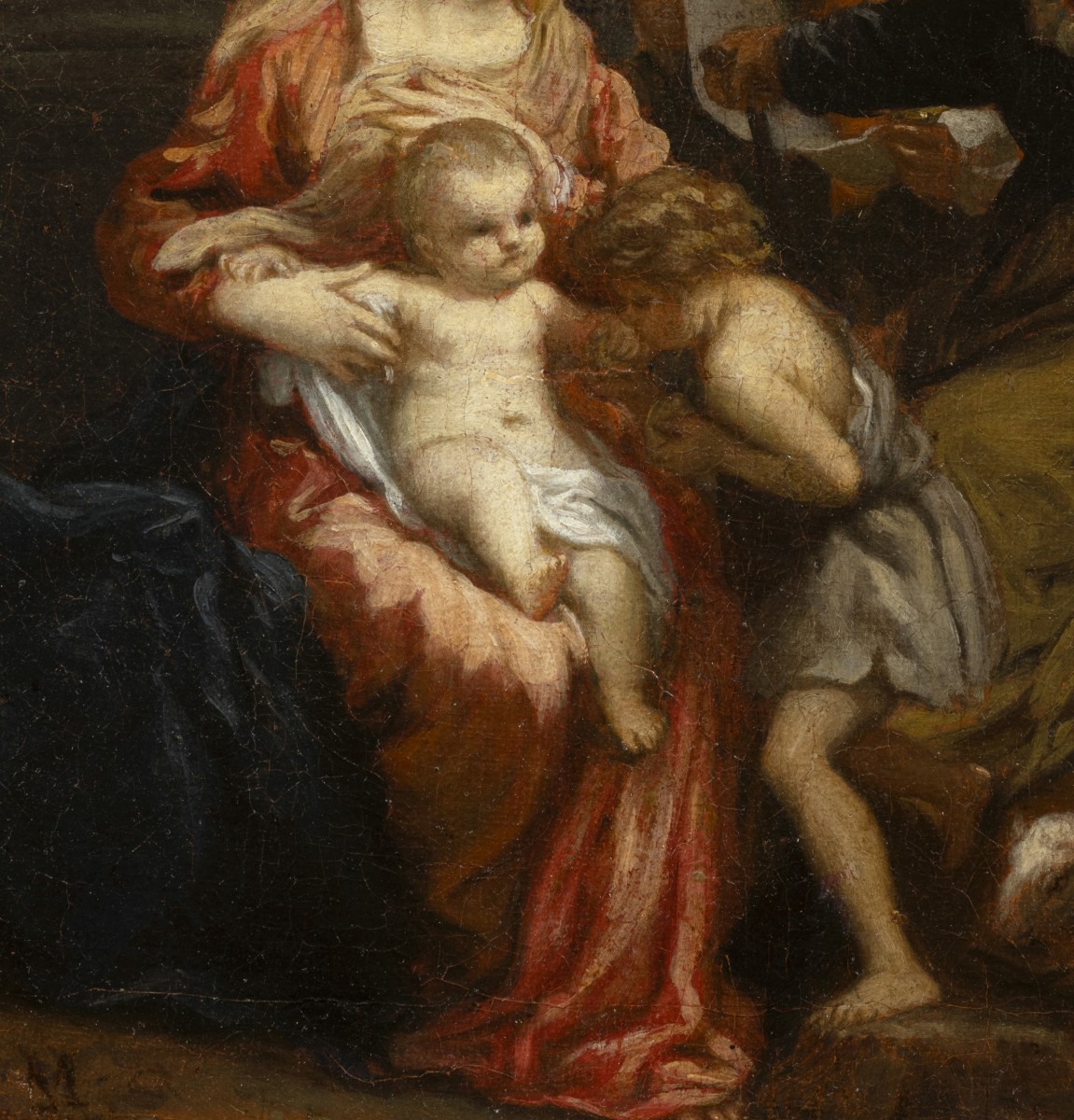

Livio Mehus (Oudenaarde 1627 c. - Firenze 1691)
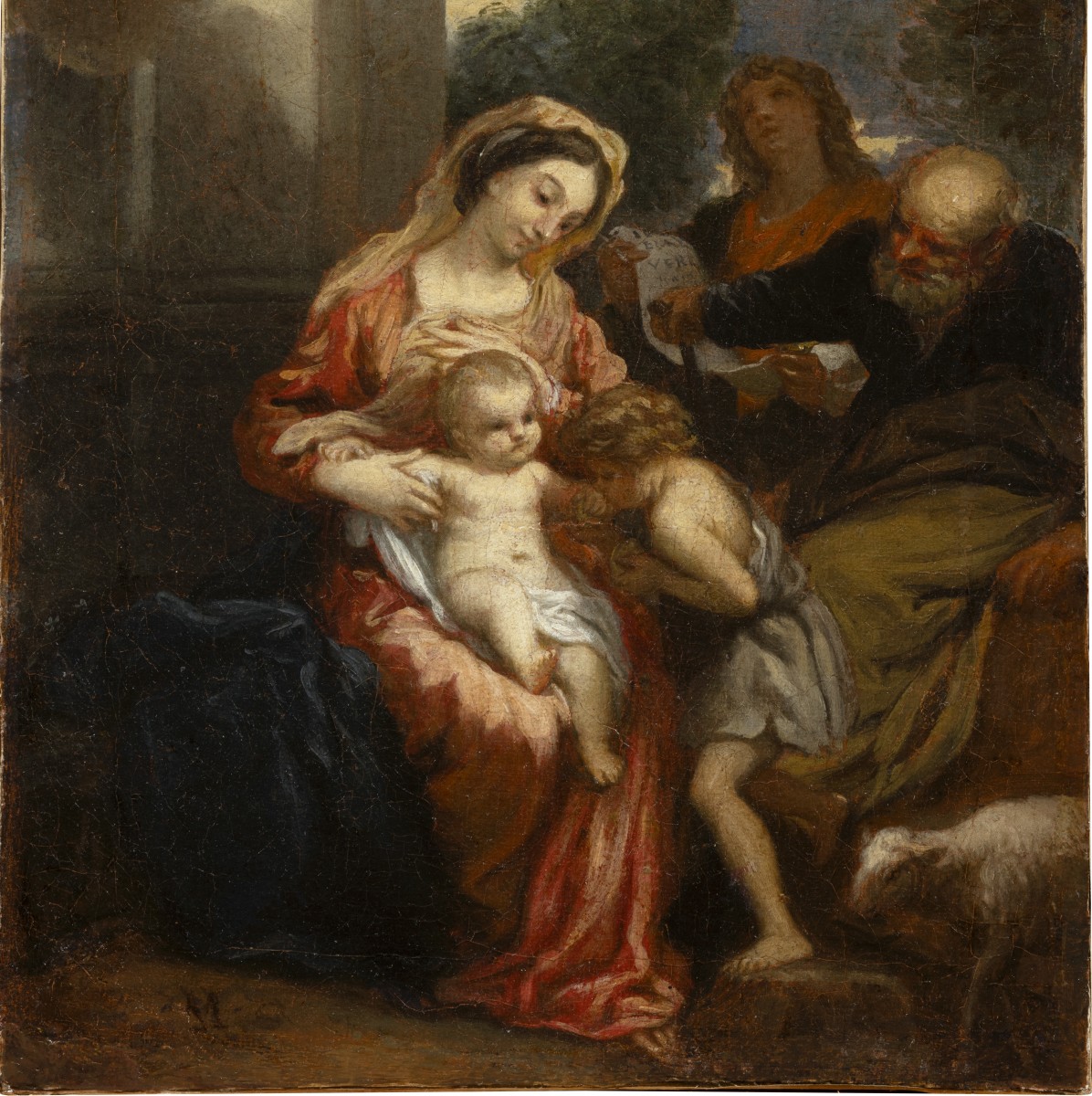
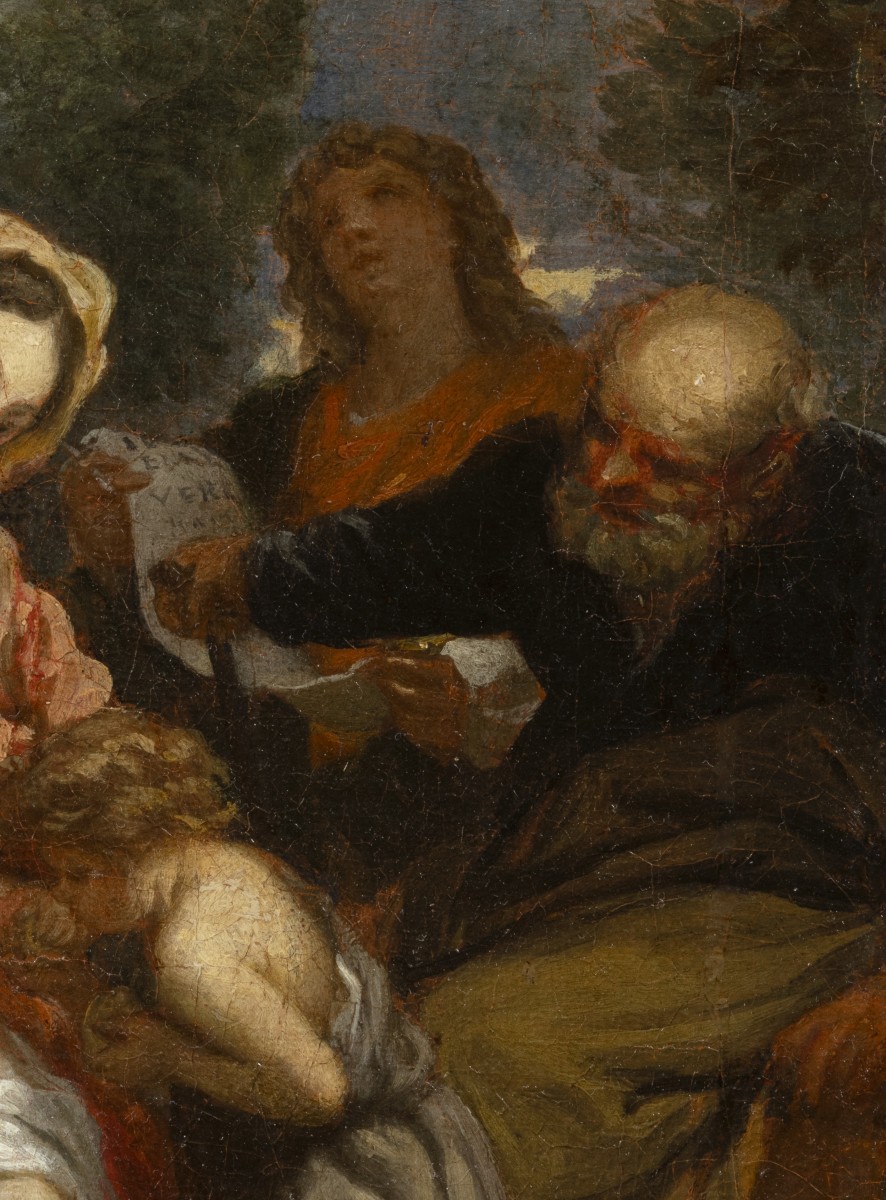
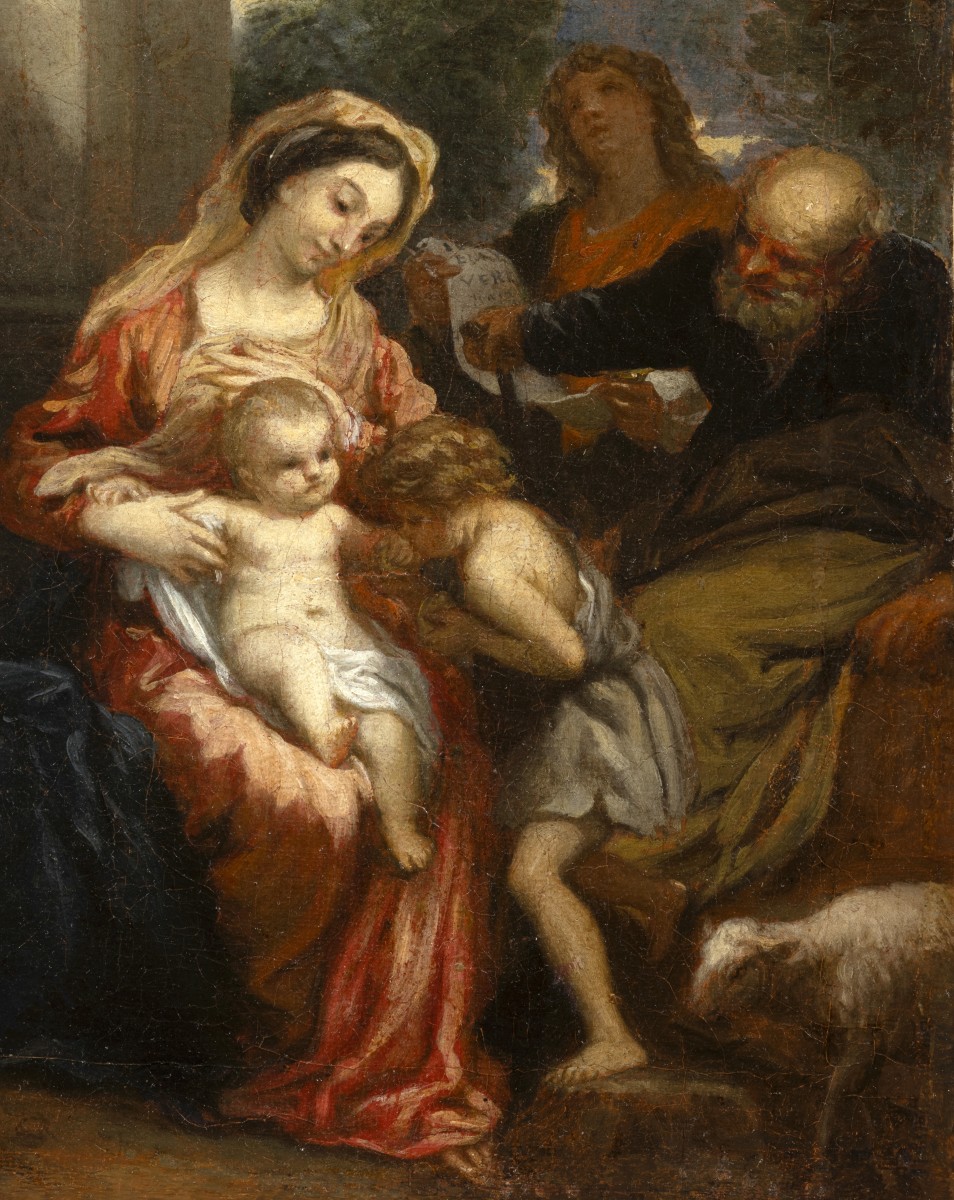
Holy Family with Saint John the Baptist and Saint John the Evangelist (Preparatory Study).
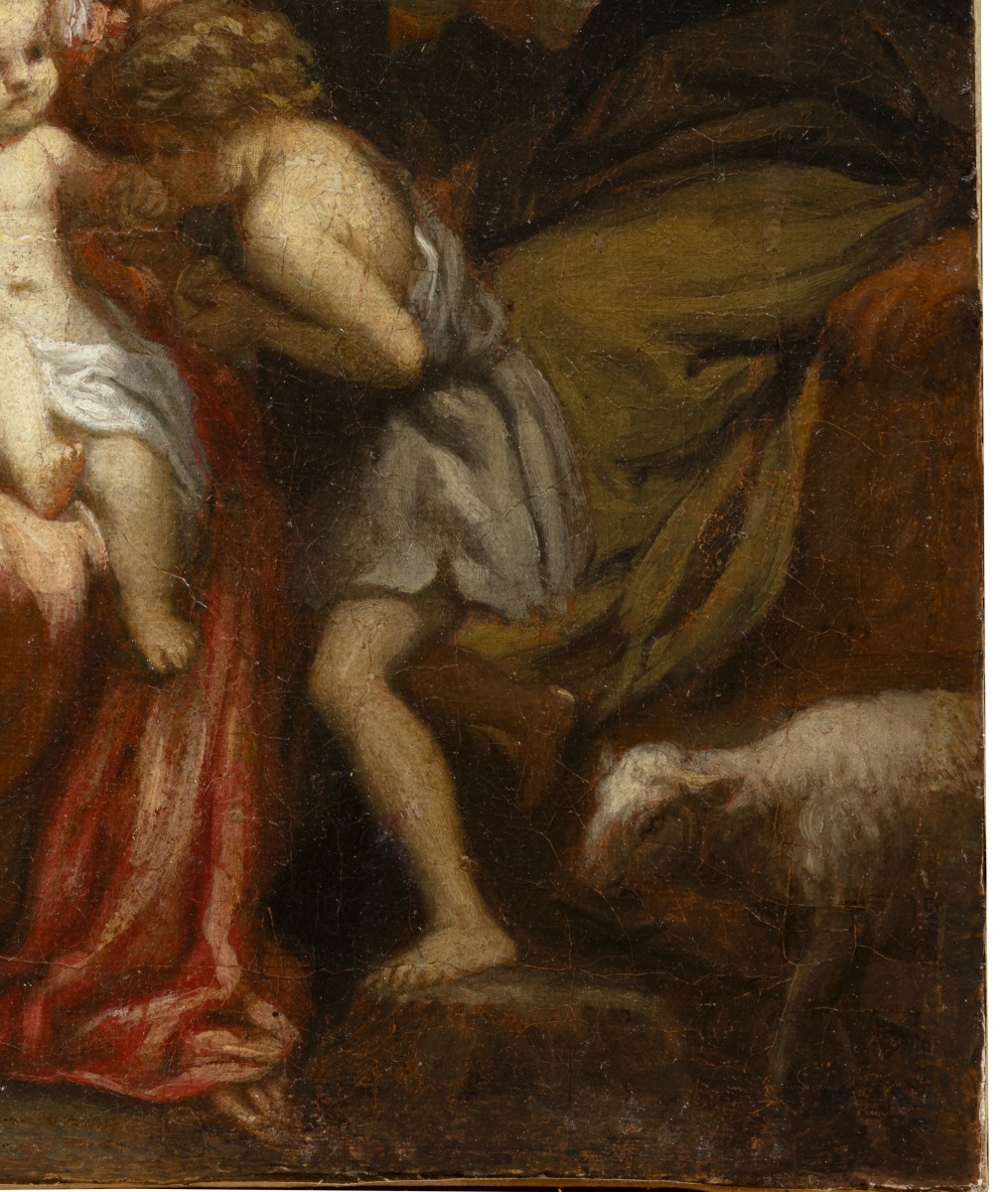
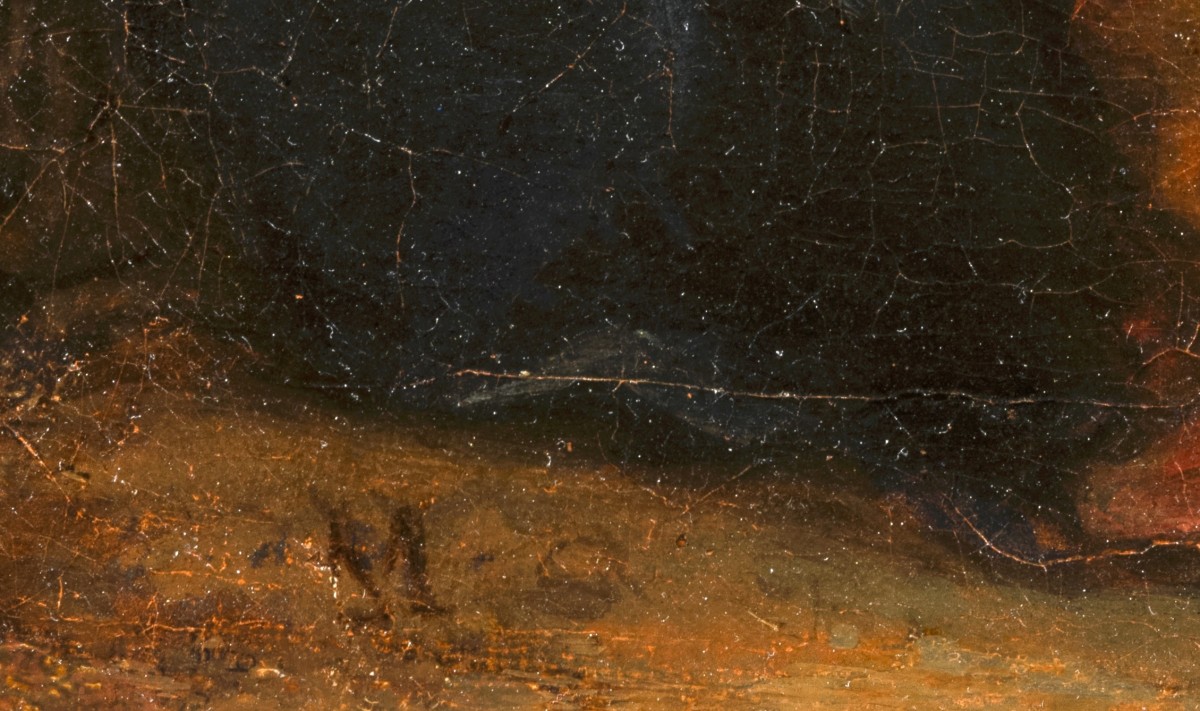
Monogrammed with Initials lower left: “M” [“S”?]
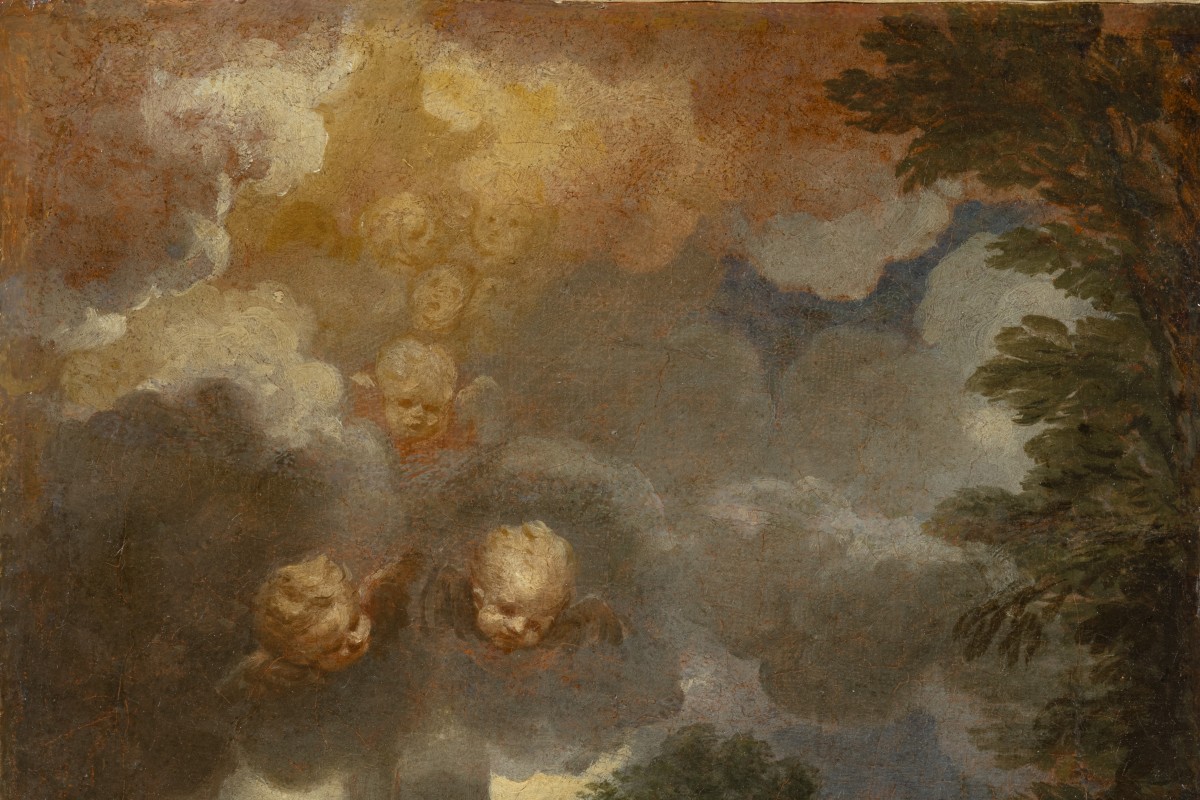
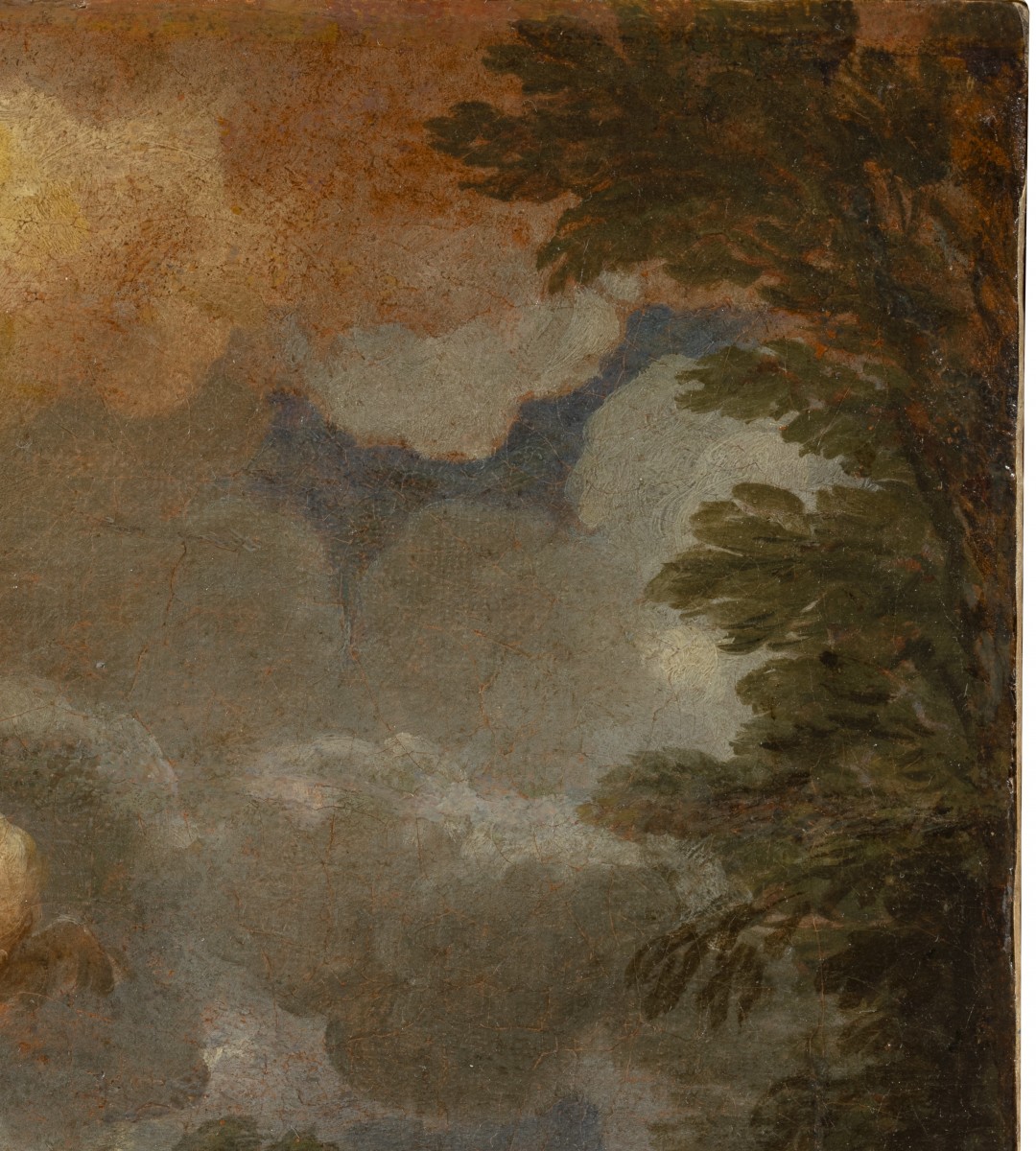
The initials subtly incorporated into the vegetation of the foreground
Circa 1670
Oil on canvas
47.2 x 28.5 cm
Relined
Livio Mehus (Oudenaarde 1627 – Florence 1691), a Flemish painter welcomed at the Medici court and one of the most original figures of Florentine Baroque painting, created this sketch around 1670 for the altarpiece intended for the church of the Madonna del Giglio in Prato.
The finished altarpiece remained in its original church until 1783, when the Leopoldine suppressions led to its transfer to the church of San Bartolomeo, also in Prato.
Thanks to the study by Federico Berti, it is now possible to reconstruct the different stages of the composition, from the preparatory drawing in the National Gallery of Scotland, Edinburgh, to the large altarpiece still preserved in the church of San Bartolomeo in Prato.
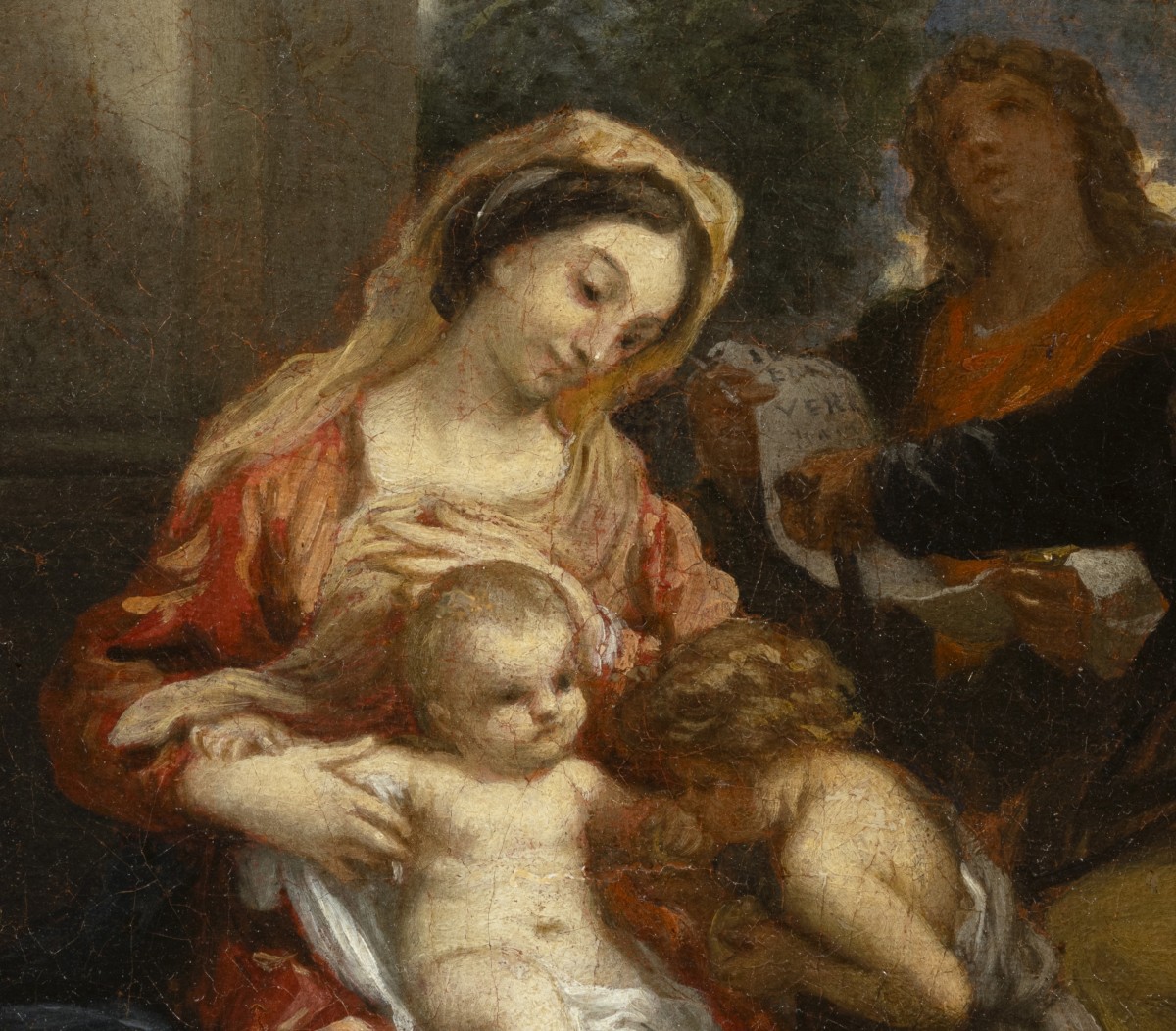
This painting occupies an intermediate position within the artist’s creative process. Compared with the Scottish drawing, Saint John the Evangelist is already present, together with a first definition of the architectural setting, while several elements of the final version are still absent or in progress. The eagle, the traditional attribute of the Evangelist, has not yet appeared, nor has the monumental arrangement of columns that will characterize the completed altarpiece.
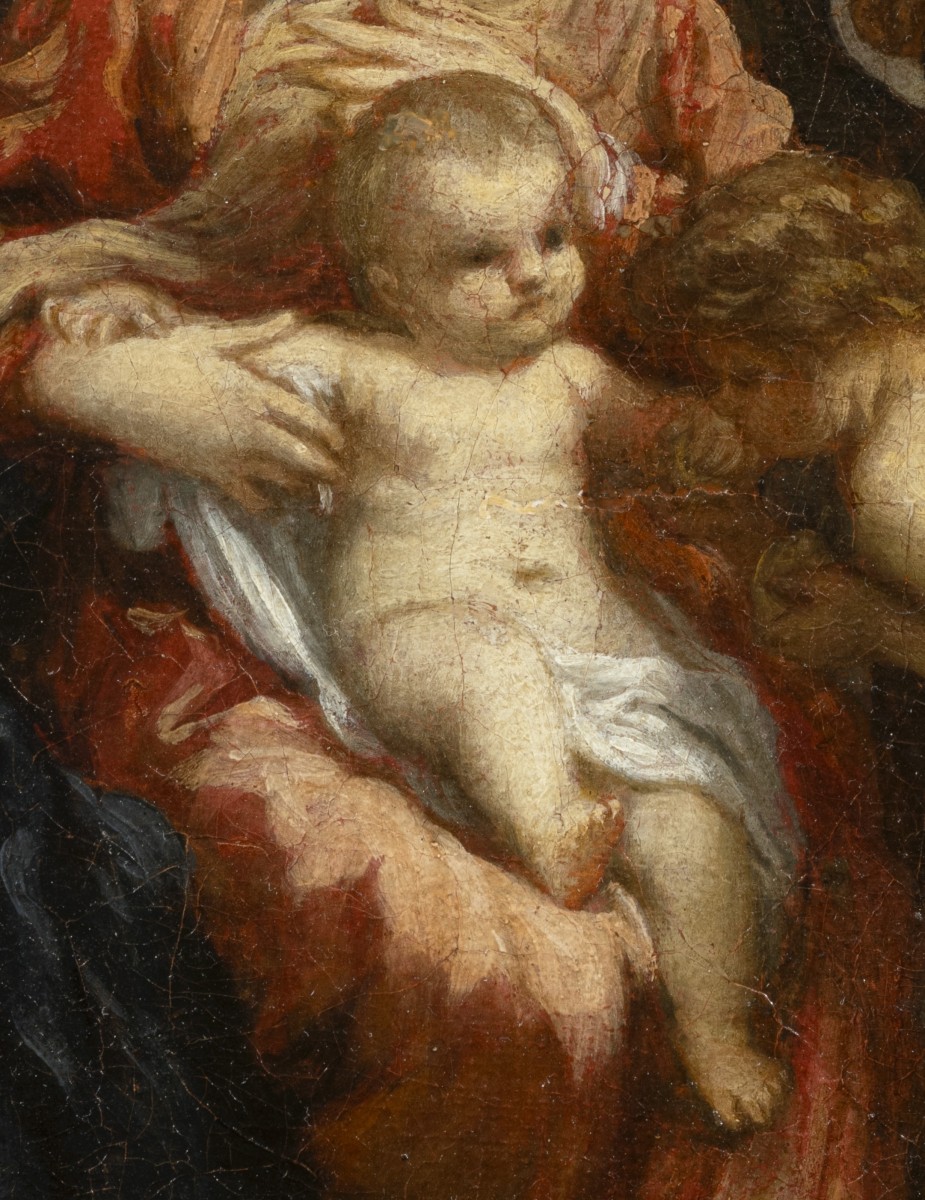
The composition belongs to one of the most accomplished moments of Mehus’s maturity. The figure of the Virgin, gathered in a gesture of tender intimacy with the Child, finds parallels in other works by the artist devoted to the theme of the Holy Family.
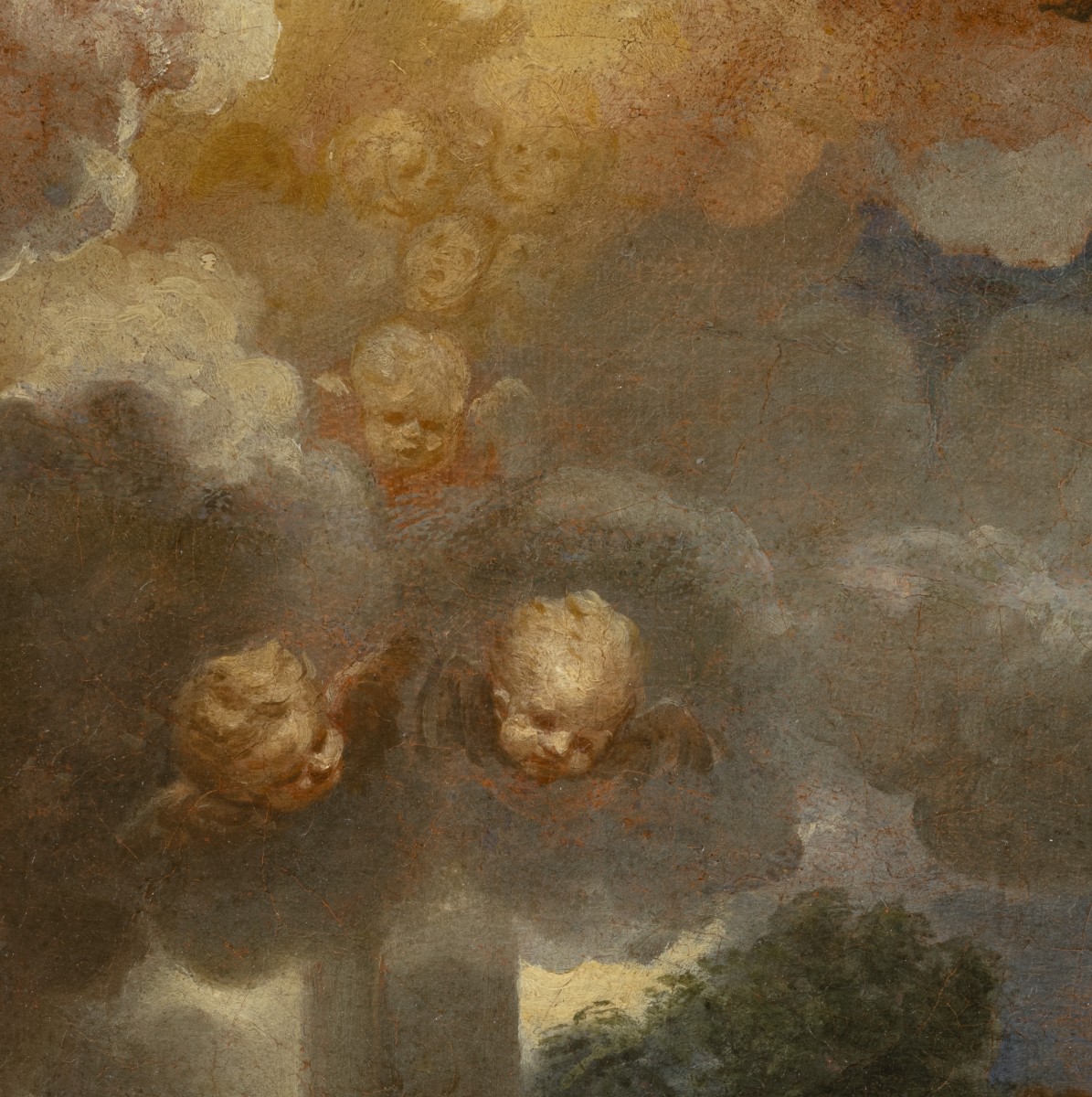
The suspended atmosphere, the cherub-filled clouds and the twilight tones also recall the celebrated Rest on the Flight into Egypt in the Nelson-Atkins Museum of Art, Kansas City, one of the closest works to this sketch in mood and pictorial language.
Born in Flanders but trained between Rome and Florence, Mehus developed a highly personal style in which northern culture, Roman experience and memories of sixteenth-century Venetian painting converge.
Protected by Mattias de’ Medici and close to Salvator Rosa, he occupies a distinctive place in seventeenth-century Italian painting. Art historian Mina Gregori described him as a “tormented and dark visionary”, underlining the meditative and deeply poetic quality that marks his religious compositions.
A rare autograph oil study directly connected to a documented and dated altarpiece, this work allows us to enter the artist’s studio and follow the gradual birth of a composition intended for the altar, offering a particularly valuable testimony to the working method of one of the most compelling painters of the Florentine Seicento.