Offered by Gérardin et Cie

17th & 18th centuries Furniture and Statuary
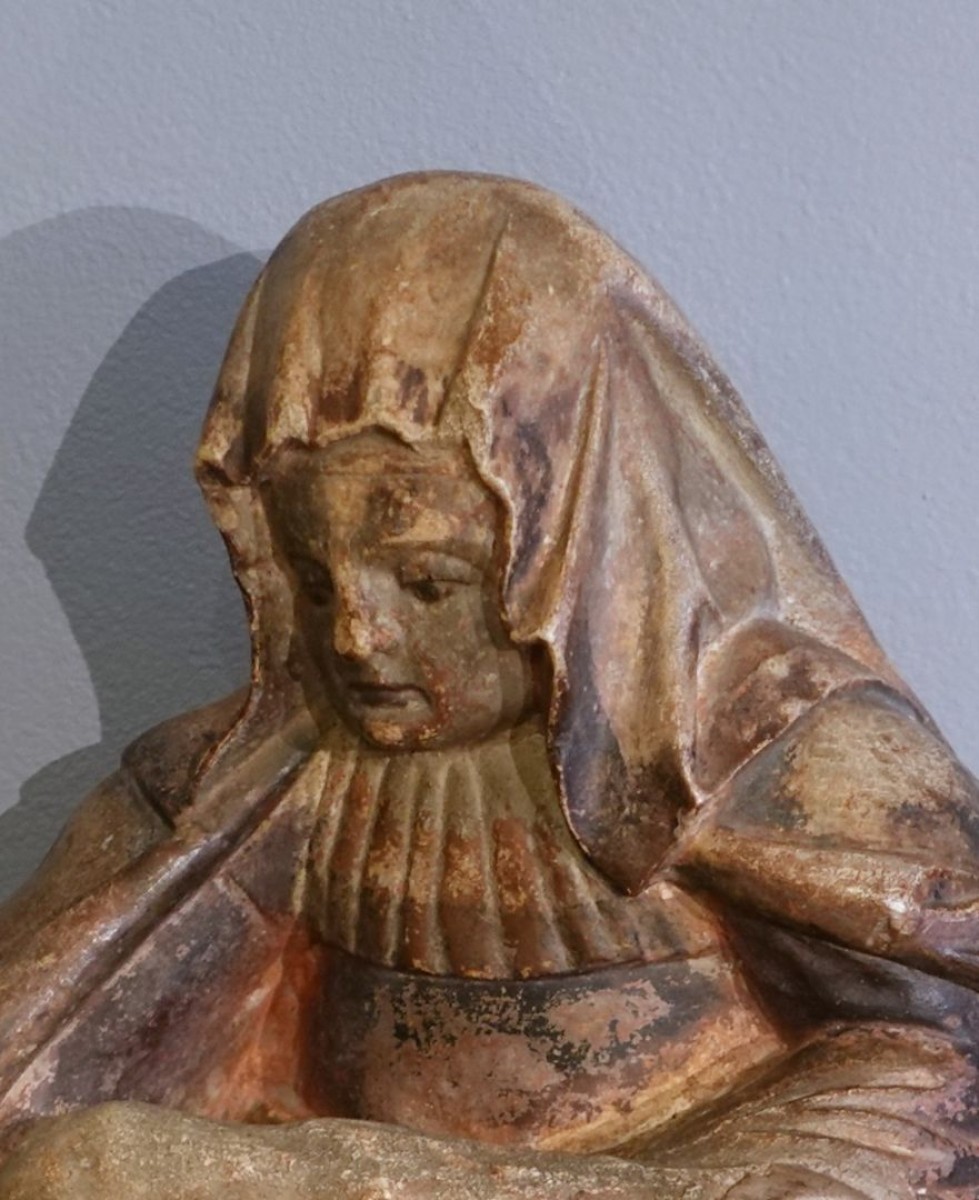
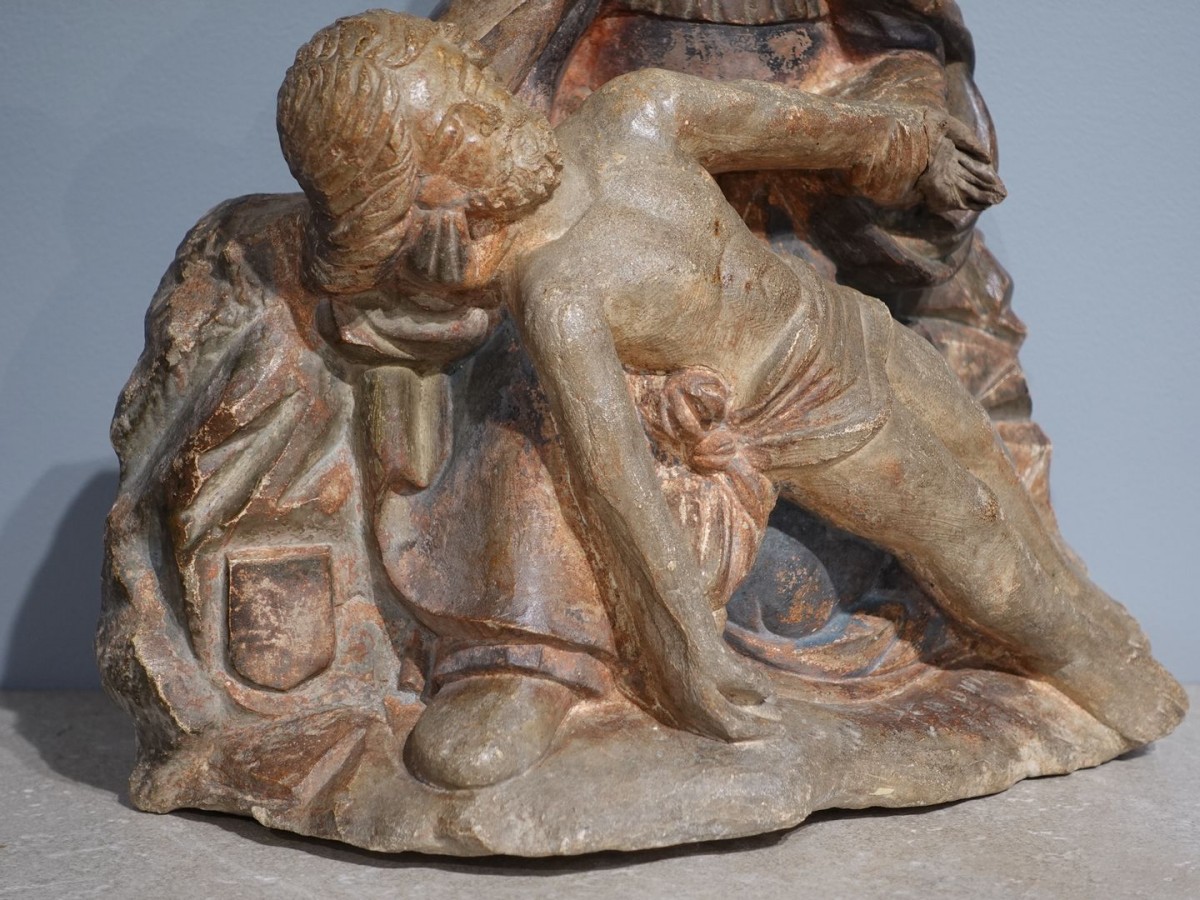
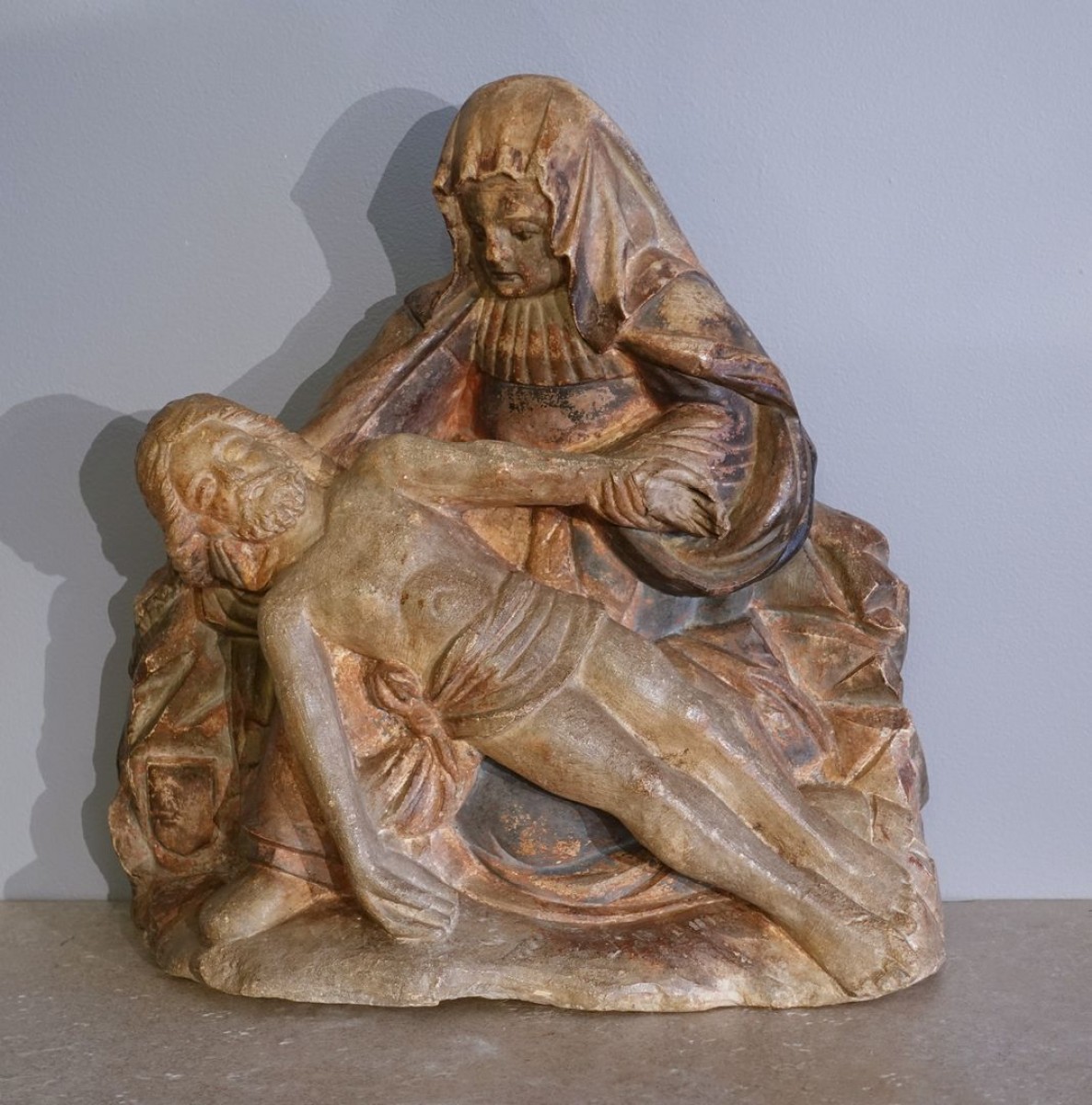
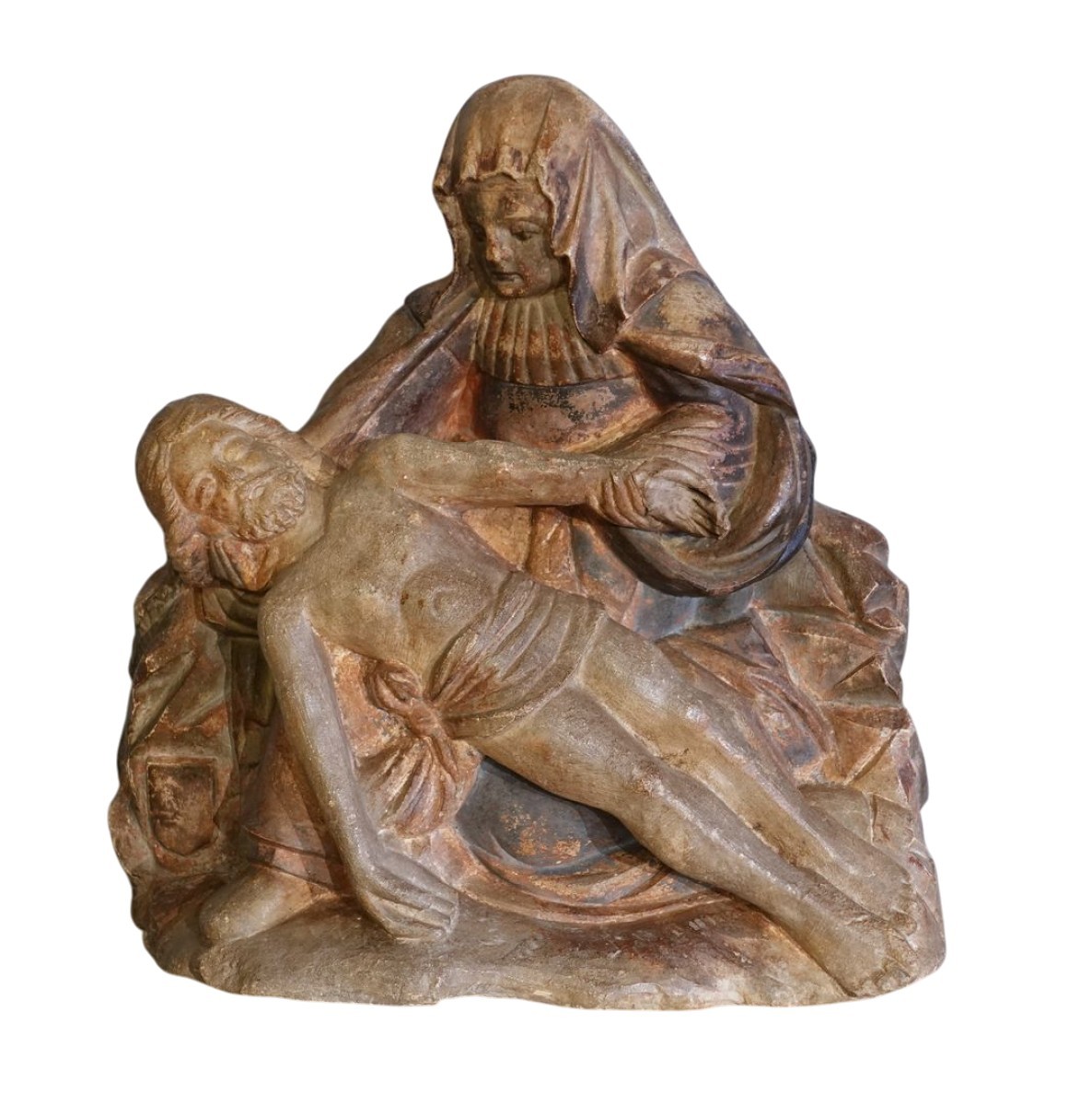
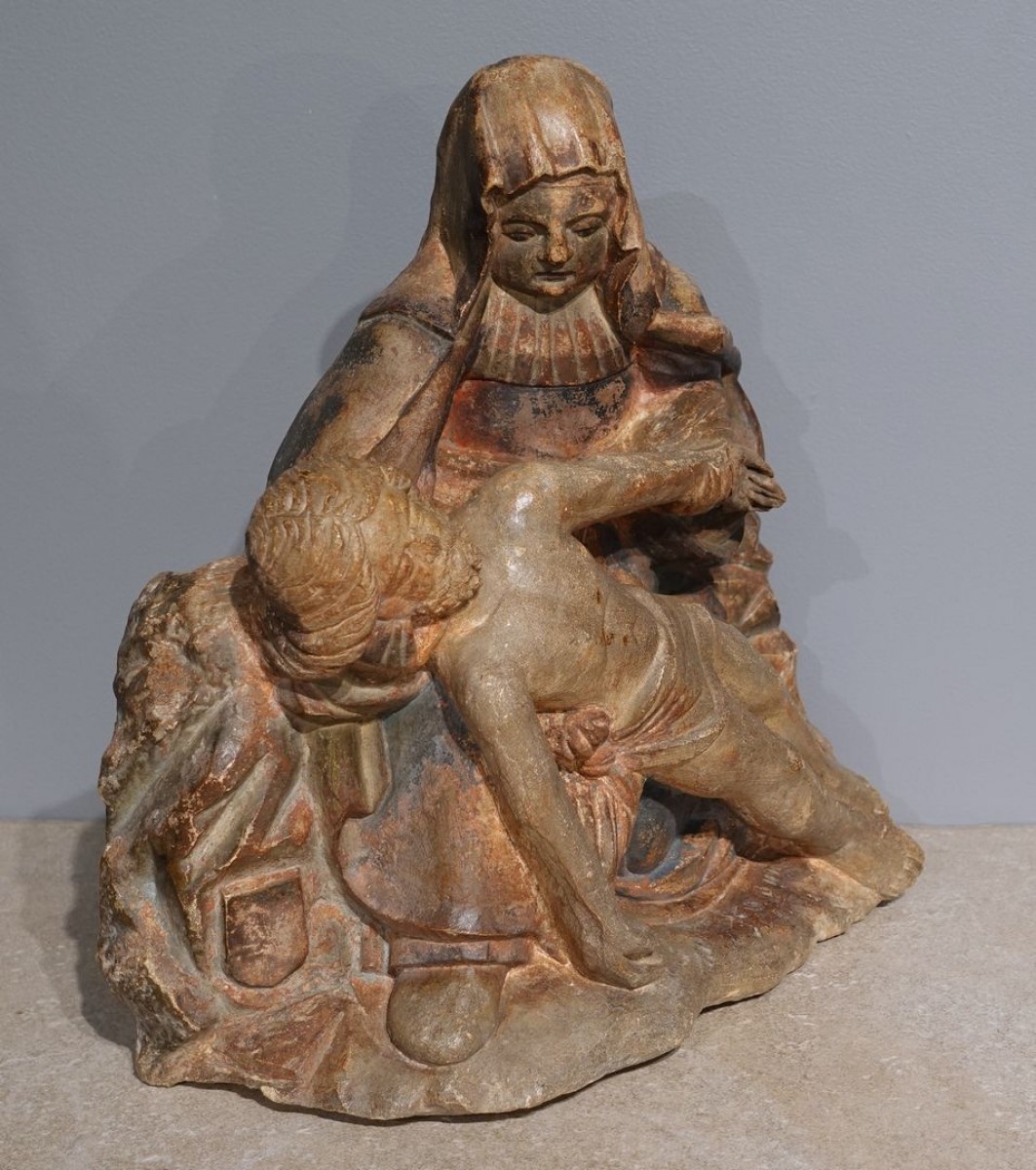
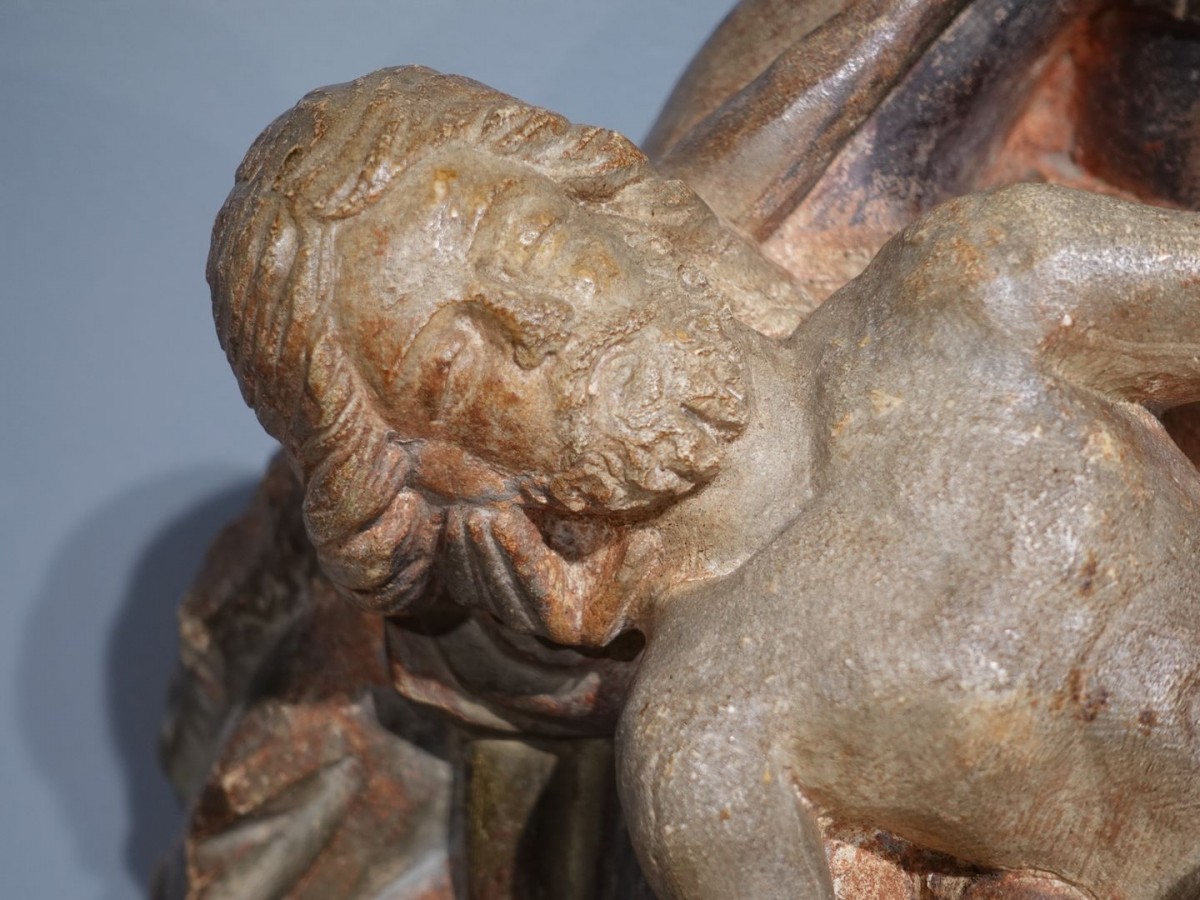
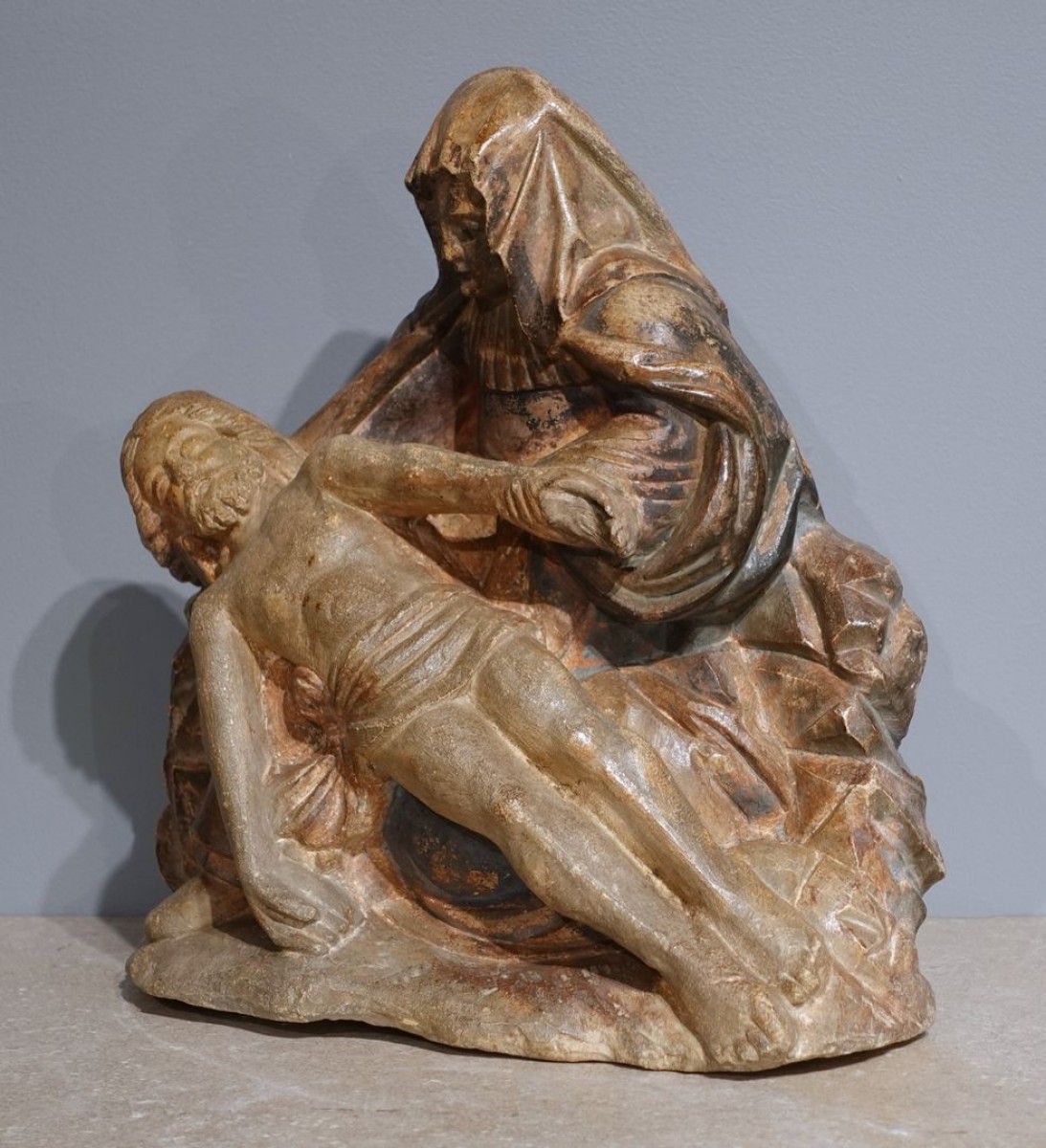
A moving Pietà, or "Virgin of Pity," carved in polychrome limestone in the 15th century.
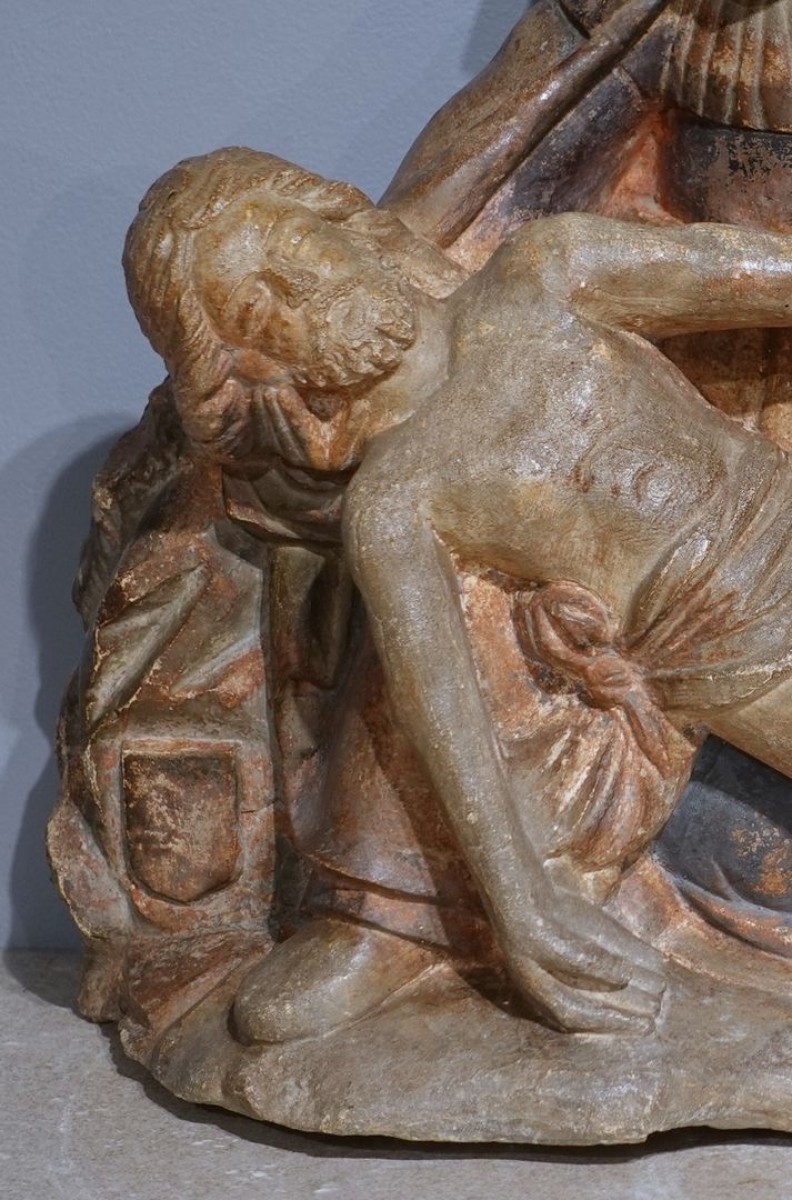
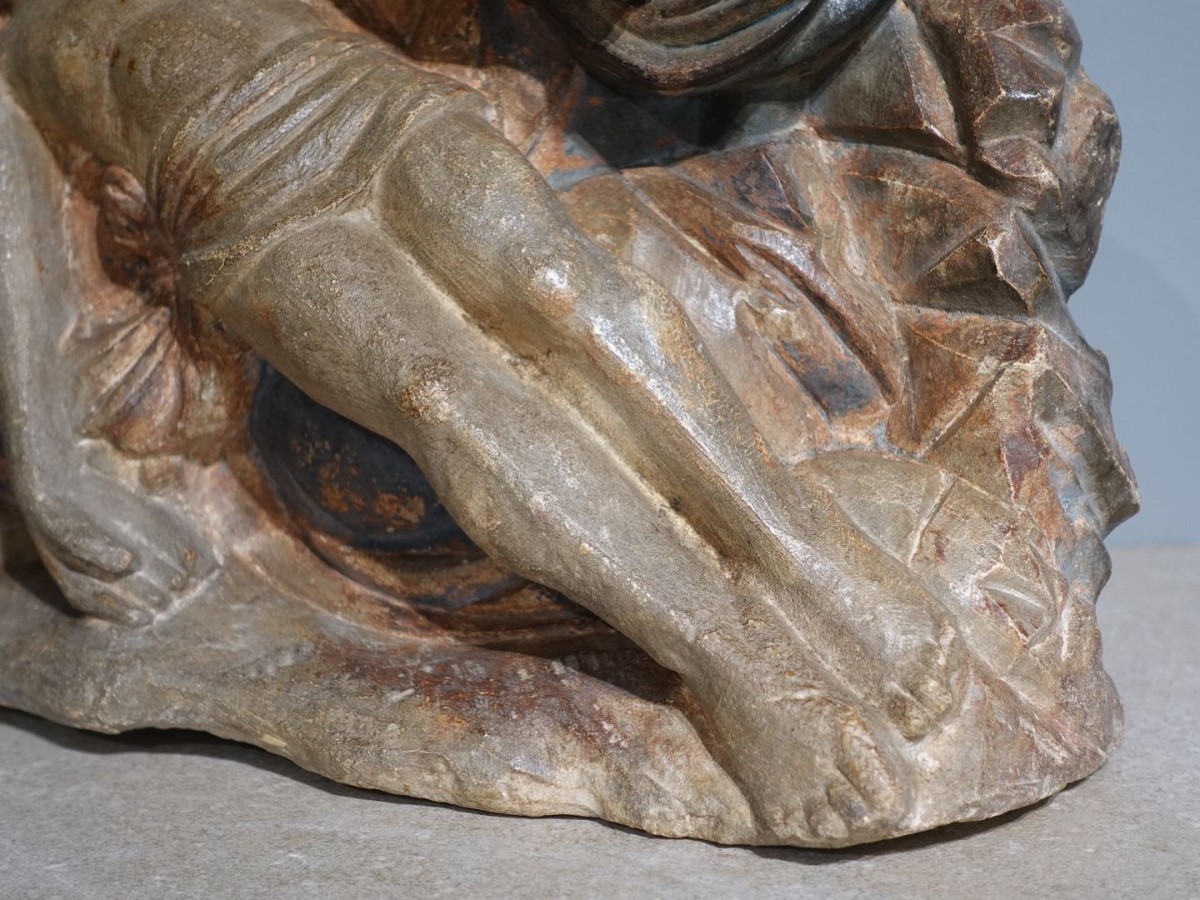
The group is arranged in an original triangular composition in which Christ is depicted obliquely with his legs outstretched and rigid.
The Virgin wears a light veil. A pleated wimple (or piped wimple) covers the upper part of her chest.
The ample drape of the mantle, as well as the pleated loincloth tied like a scarf, contrasts with the purity of Christ's pose.
Mary's emotion is expressed by the gravity of her face: pronounced brow ridges, a flat nose, and pursed lips. Meanwhile, Christ's face is imbued with a gentle serenity. The iconographic theme of the Pietà appeared in the 14th century in Germanic countries, specifically within women's monasteries where the suffering Christ and his mother, the Virgin of Mercy, were venerated. It subsequently spread throughout Europe, becoming one of the major subjects of European sculpture from the 15th century onward.
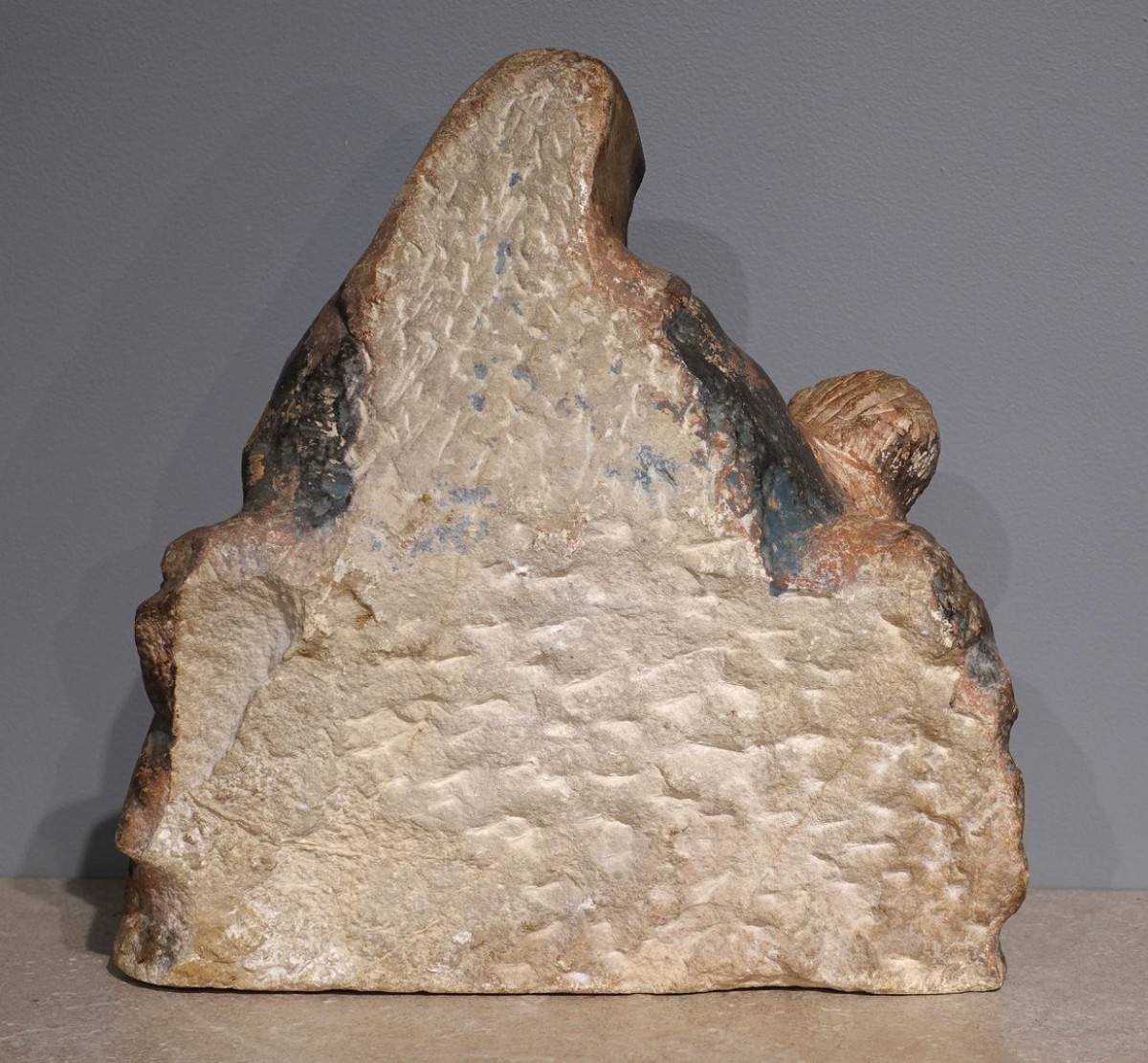
The composition of this group is inscribed within an isosceles triangle, reflecting a still-dominant medieval influence.
On the left side of the base of the composition, a coat of arms can be seen, on which a silhouette representing Saint Michael is discernible (council coat of arms, religious monument, or family crest ?)
Dimensions
H. 35 cm x W. 34 cm x D. 17 cm
France - Burgundy
Limestone
Traces of polychromy
15th century
Delevery information :
We deliver in France and abroad, either ourselves or through qualified carriers and freight forwarders.