Offered by Franck Baptiste Paris
REQUEST INFORMATION
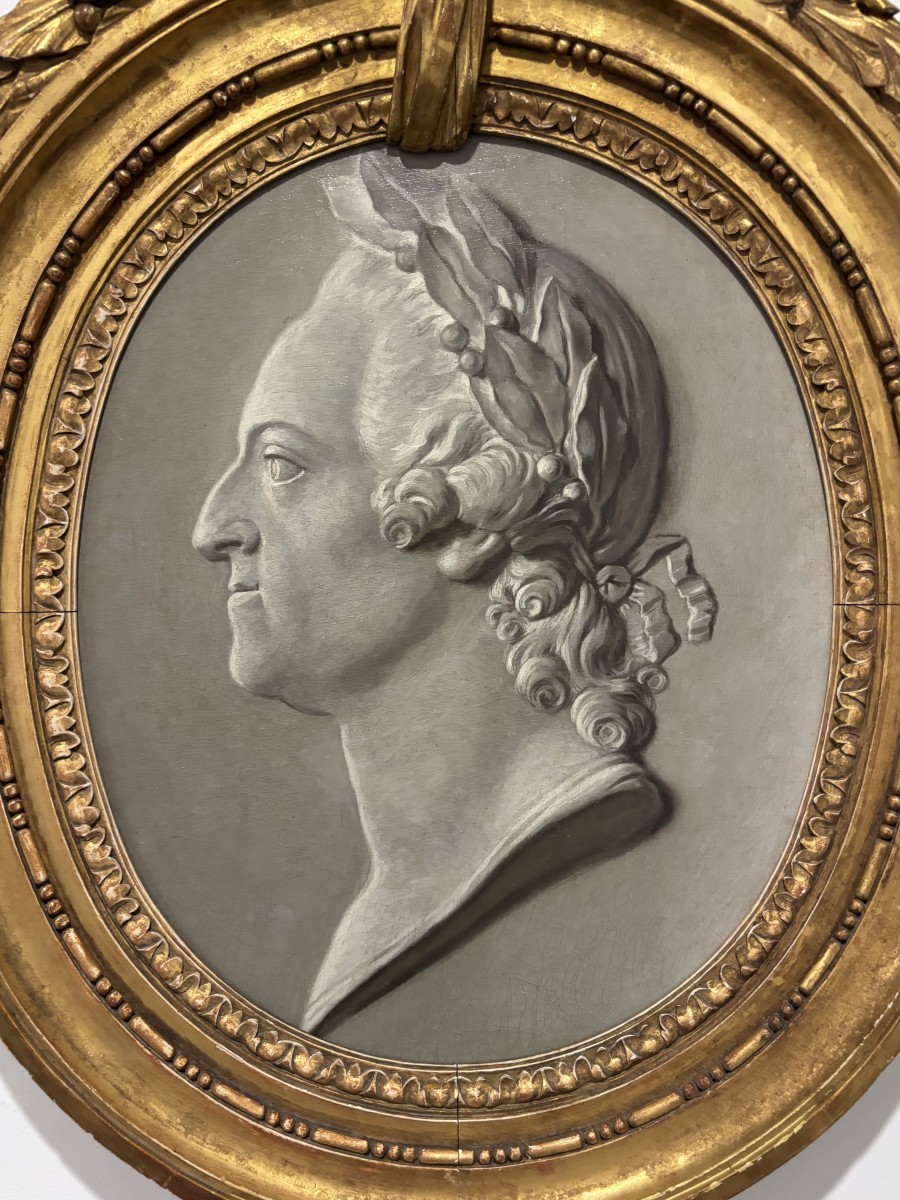
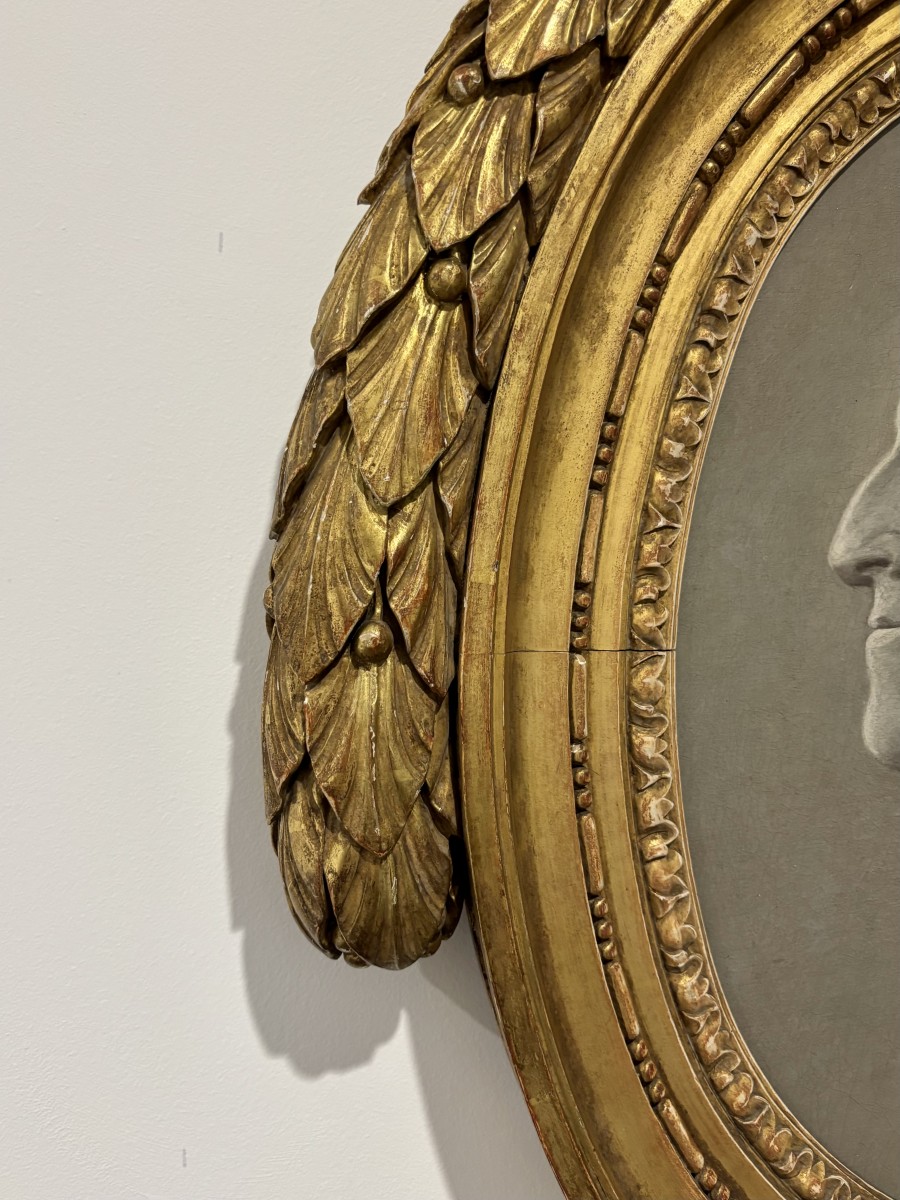
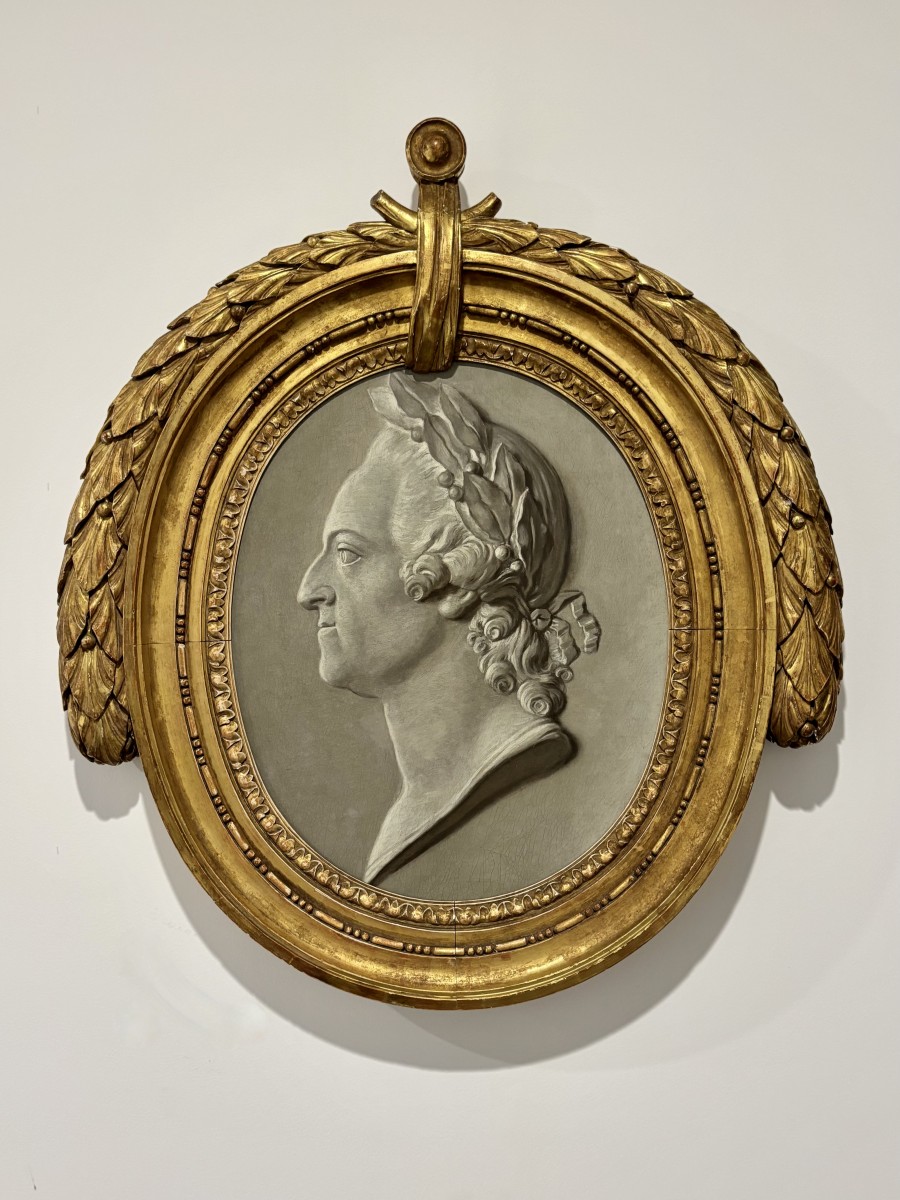

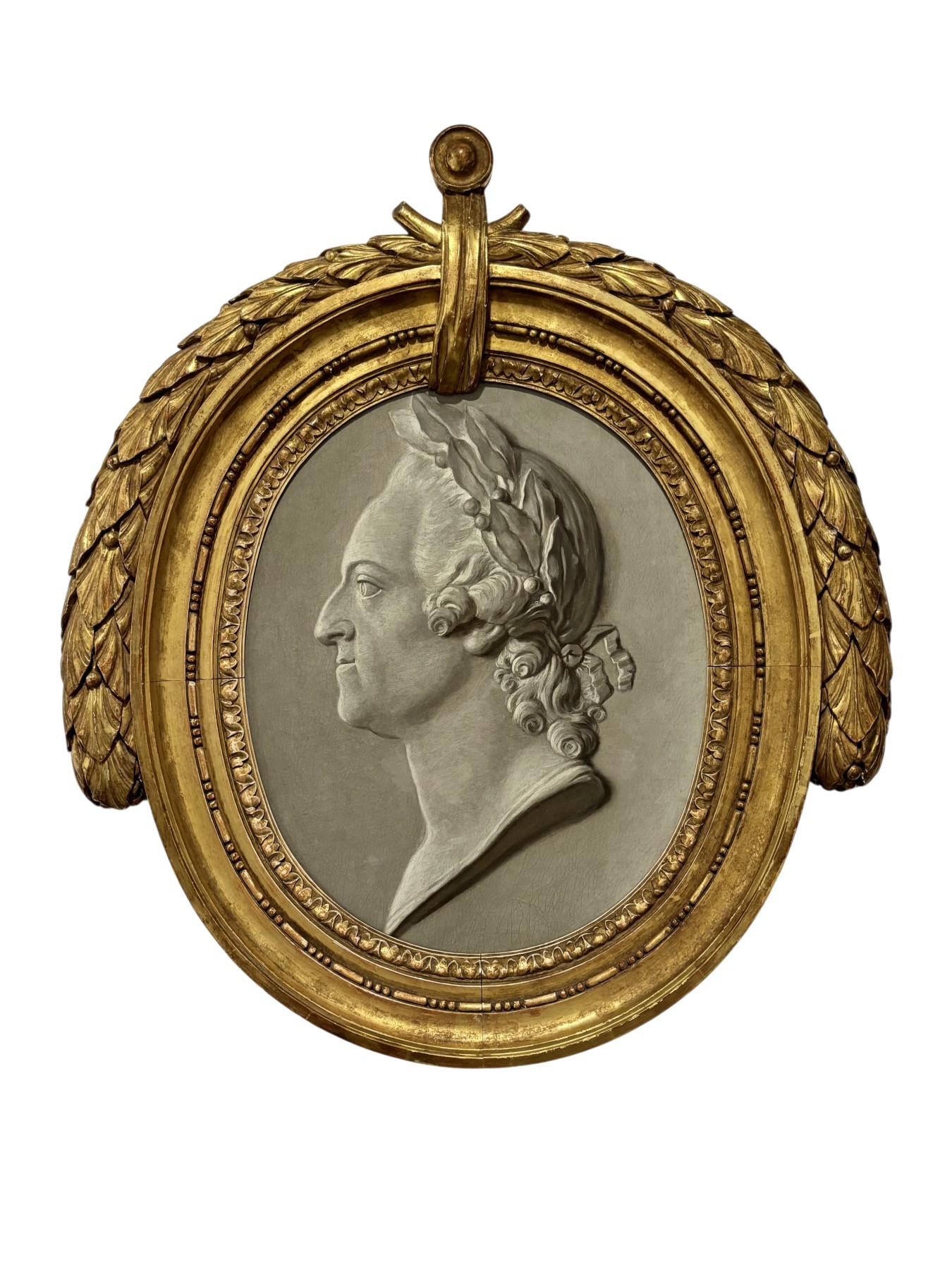
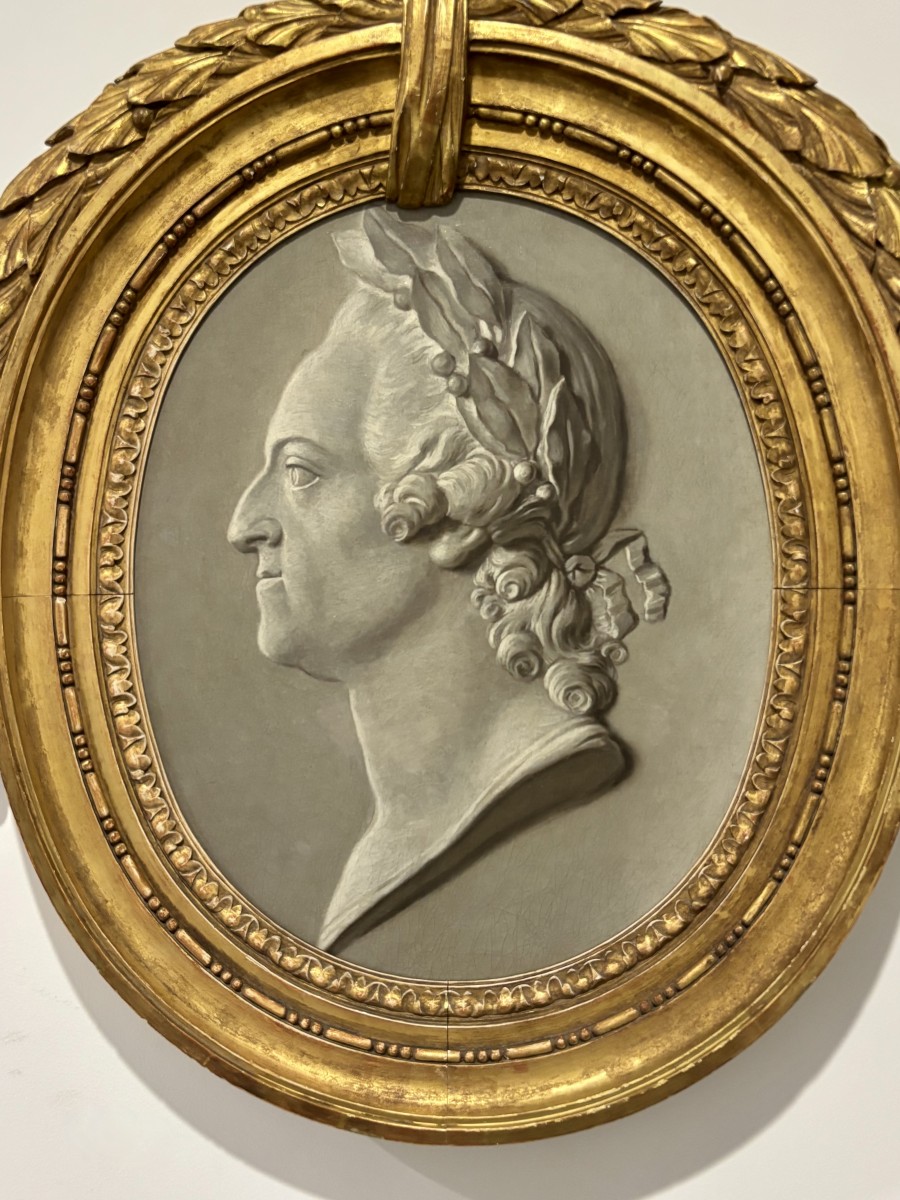
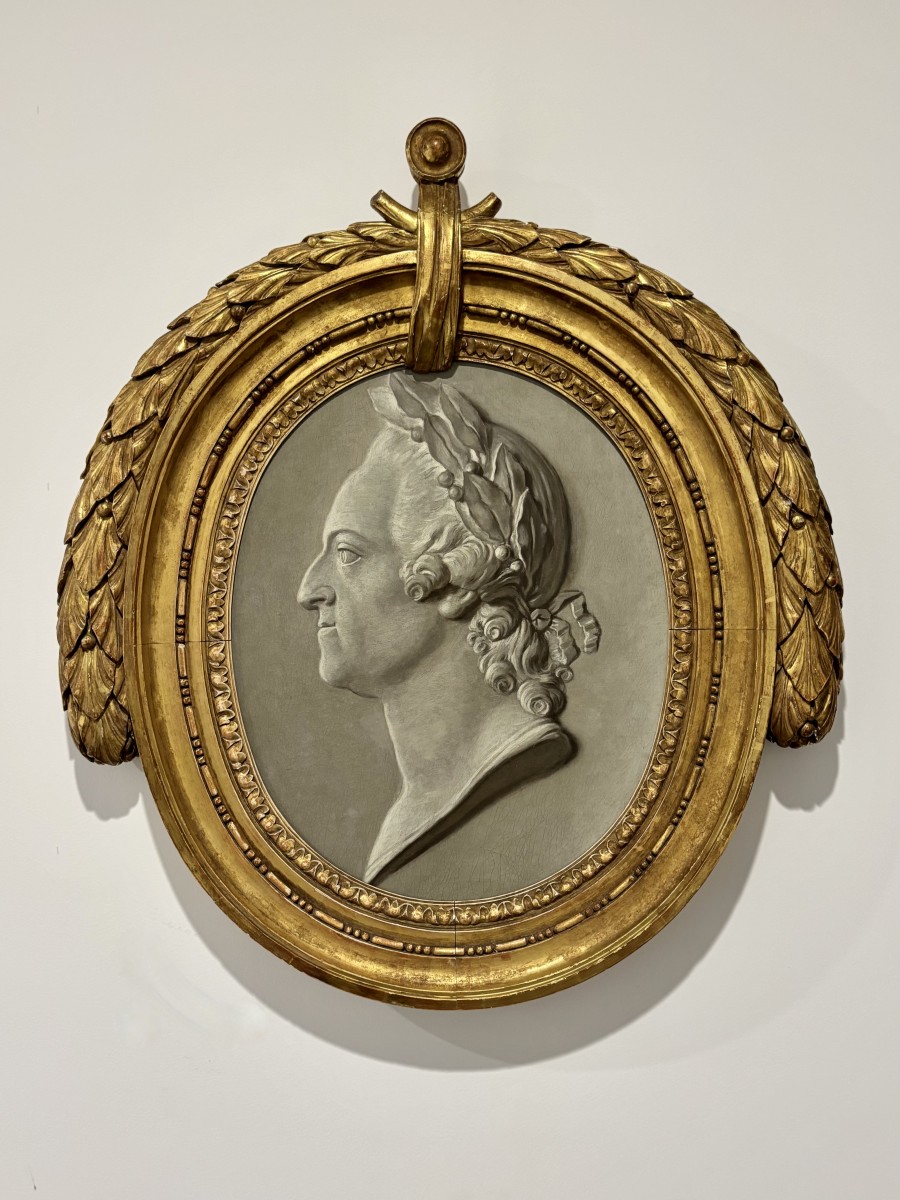
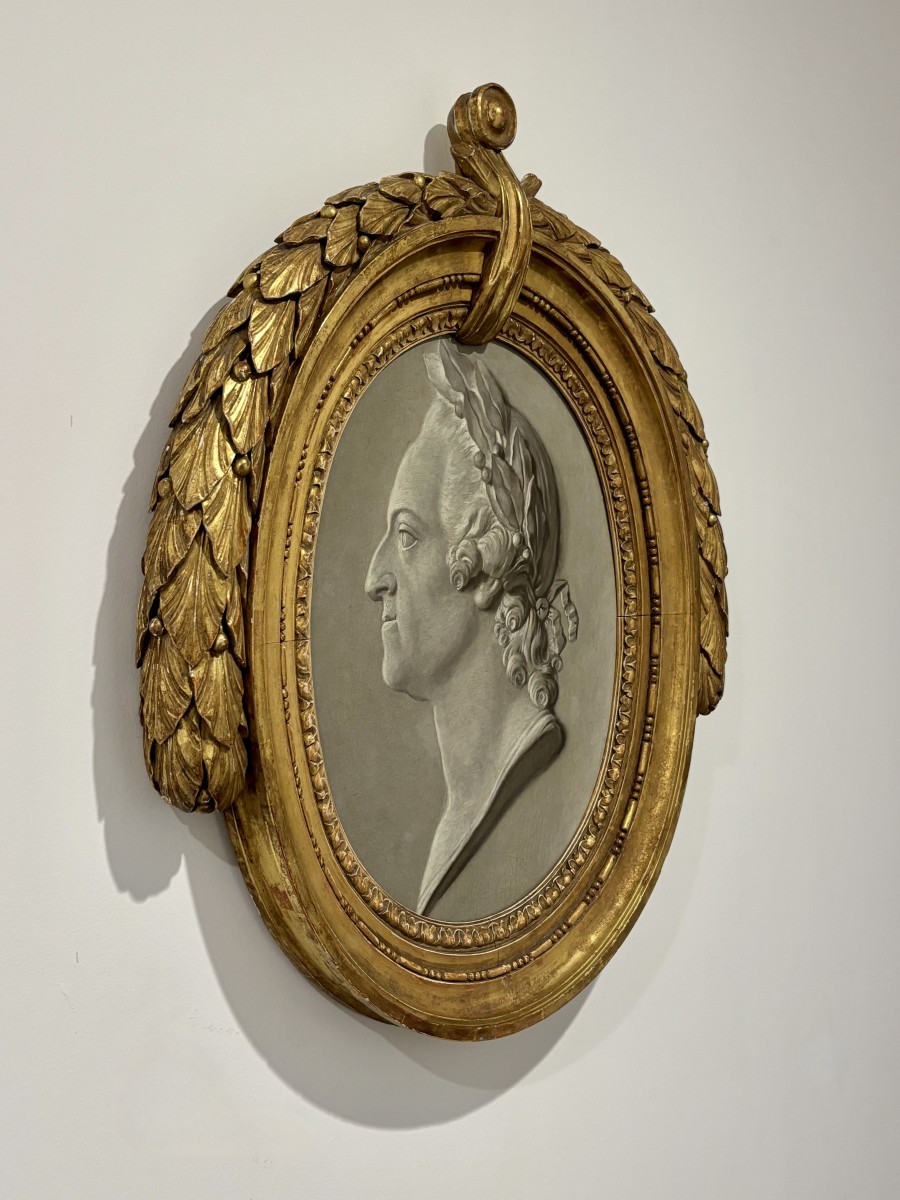
A rare grisaille portrait of King Louis XV, imitating marble medallions.
The king is depicted in the antique style, in profile, wearing a laurel wreath.
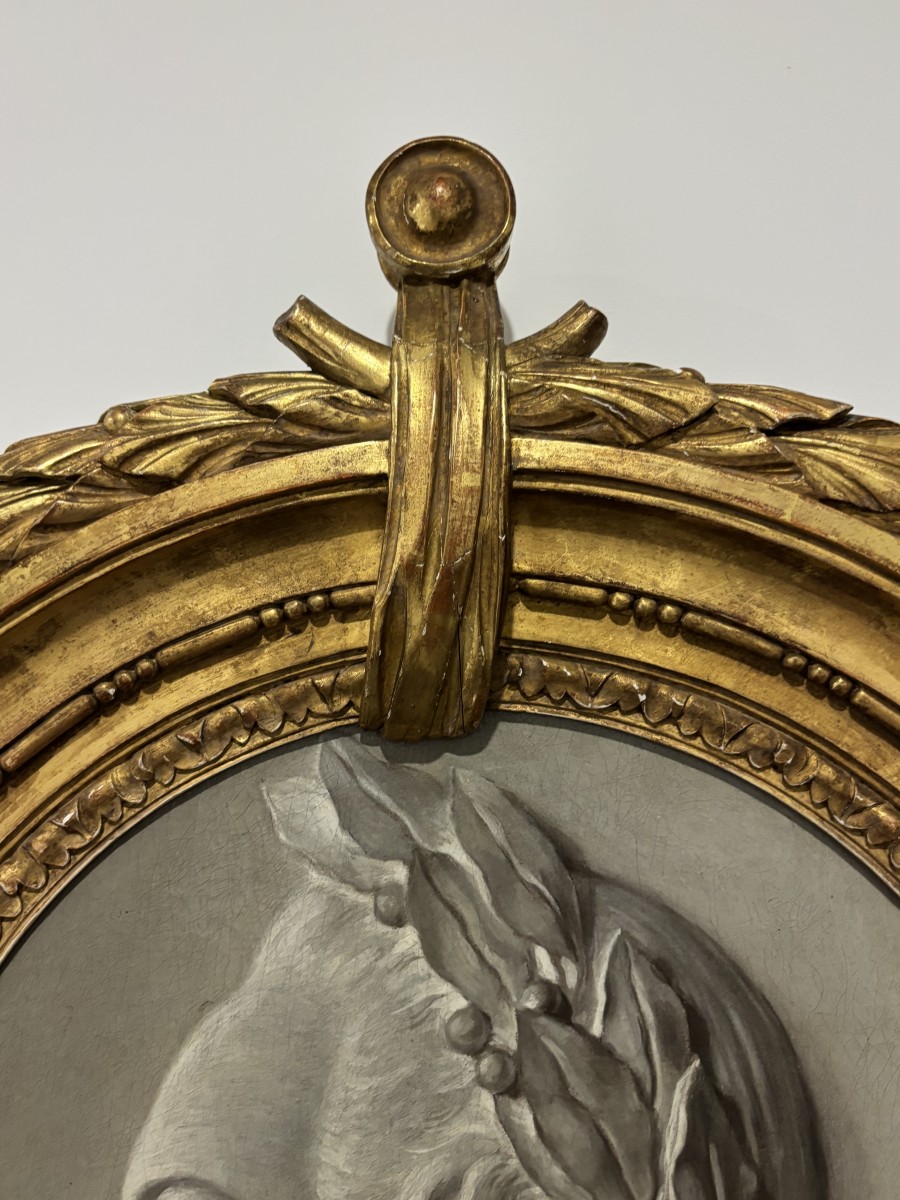
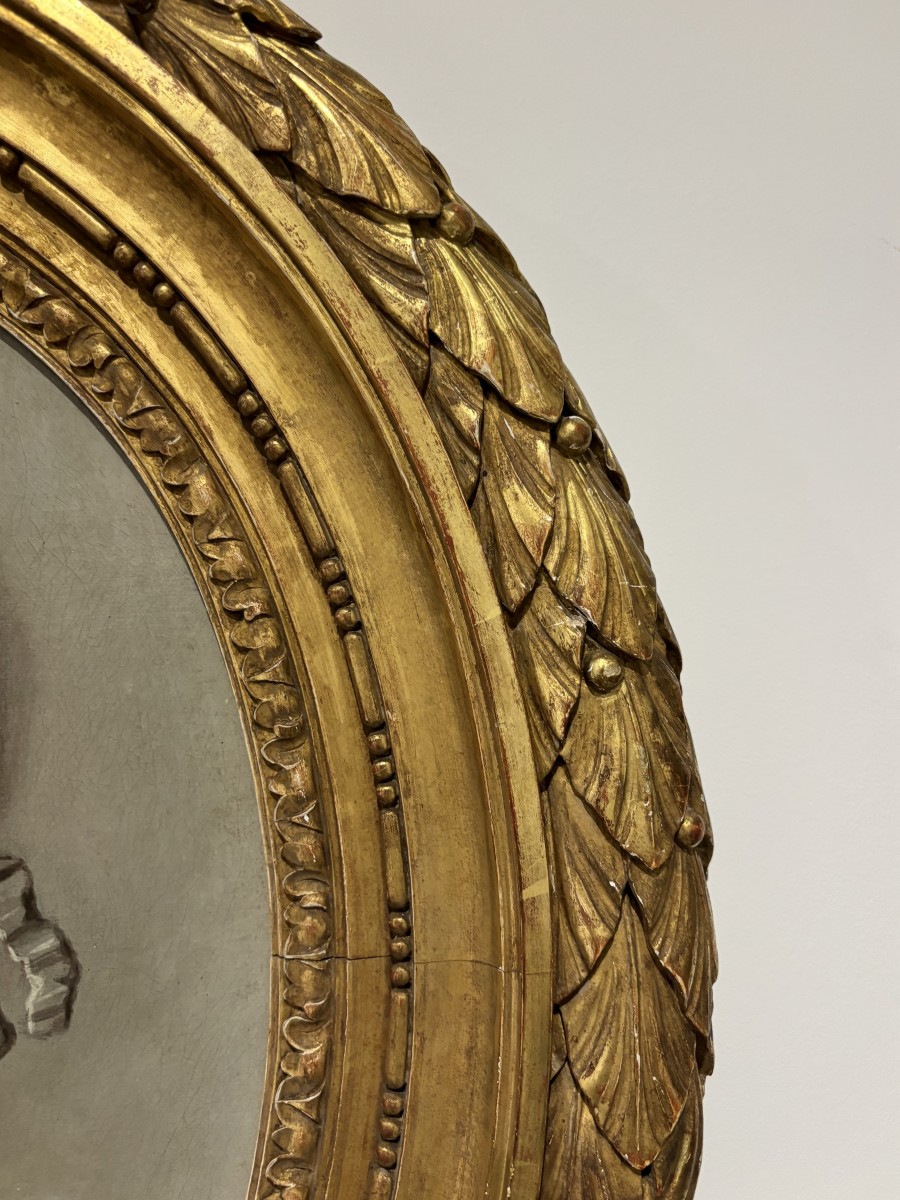
The carved and gilded oak frame is adorned with a large laurel wreath, an emblematic motif of virtue and triumph.
It likely dates from the Restoration period, around 1820.
Oil on canvas mounted on oak panel.
In excellent condition.
French School, circa 1775, comparable to the works of the painter Piat-Joseph Sauvage.
Dimensions:
Frame: Height: 69.5 cm; Width: 62 cm; Canvas: Height: 47 cm; Width: 38.5 cm
Provenance:
Collection of the ailing Nelia Barletta de Cates, her sale at Christie’s Paris, March 18, 2003, lot 369. (€10,575)
Our opinion:
The iconography of our portrait is directly inspired by the official medals of Louis XV, and more specifically by the famous portrait of the sovereign crowned with laurel, engraved by Jean-Charles Roëttiers. Rendered in a decidedly neoclassical style, the king's profile, rendered in grisaille in the manner of a cameo or an antique bas-relief, exalts the image of the monarch as a Roman emperor.
This work can be compared to Joseph Piat's early productions, around 1775. Its presentation in an oval frame with a prominent laurel wreath reflects the renewed interest in Antiquity that emerged in the 1770s. Created shortly after the death of Louis XV in 1774, it could thus constitute a posthumous tribute to the deceased sovereign, celebrated in a heroic iconography inspired by ancient Rome.
Joseph Sauvage Piat (1744-1818)
Joseph Sauvage Piat was a Flemish painter best known for his decorative painting, grisaille, and trompe-l'oeil in monochrome, influenced by the work of Jacob de Wit. He specialized in imitations of bas-reliefs sculpted in stone and marble, but also in patinated bronze, terracotta, and stucco. He created grisaille paintings and trompe-l'oeil overdoors in his hometown (works in the museum) as well as for royal residences (the Palaces of Versailles, Fontainebleau, and Compiègne), and for provincial churches (Trois Anges, Orléans Museum). His favorite themes for his bas-reliefs included classical scenes with draped figures, still lifes, allegories, and bacchanalian scenes with putti playing with garlands of flowers and animals.
Sauvage worked in the family business (his father, Antoine Sauvage, was a glazier) until the age of seventeen, while also receiving technical training at the School of Drawing. He then furthered his artistic education at the Antwerp Academy under the tutelage of the history and grisaille painter Martin-Joseph Geeraerts.
He settled in Paris in 1774 and became a member of the Academy of Saint Luke. In 1783, he was admitted to the Royal Academy of Painting and Sculpture, which led to his appointment as First Painter to Louis-Joseph de Bourbon, Prince of Condé, and later to King Louis XVI. In this capacity, he painted portraits and medallions of the French royal family and portraits of famous men.
During Napoleon's reign, he received a significant number of commissions, some of which were for grisaille portraits of the Emperor. He painted the ceiling of the chapel at the Château de Saint-Cloud and decorated the Chantilly theater (which was demolished during the Revolution). From 1804 to 1807, he worked as a figure painter on porcelain at the renowned Sèvres Manufactory.
It is represented in various French museums, notably in Bordeaux (Homage to Pan) as well as at the Metropolitan Museum (Venus and Cupid, the Triumph of Bacchus) and at the Louvre (Frieze of Young Children).