Offered by Impossible Gallery - Diane Chatelet
REQUEST INFORMATION

Decorative art from 18th to 20th century
Roger CAPRON (1922-2006),
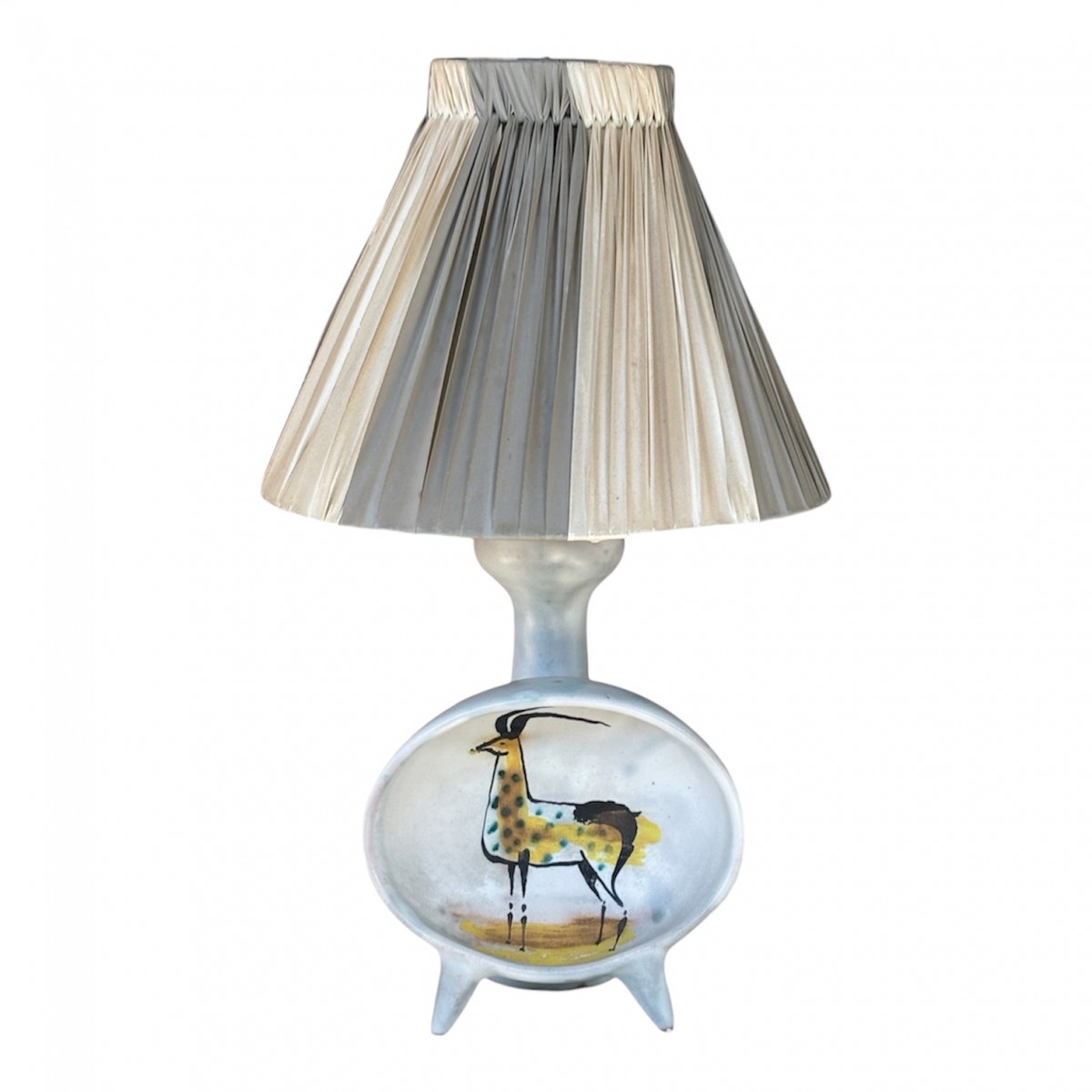
Zoomorphic table lamp, circa 1955
Polychrome glazed ceramic and original electrical elements.
Dimensions:
With the lampshade: H 32 x D 20
Without the lampshade: H 21 x W 13 x D 9.5 cm
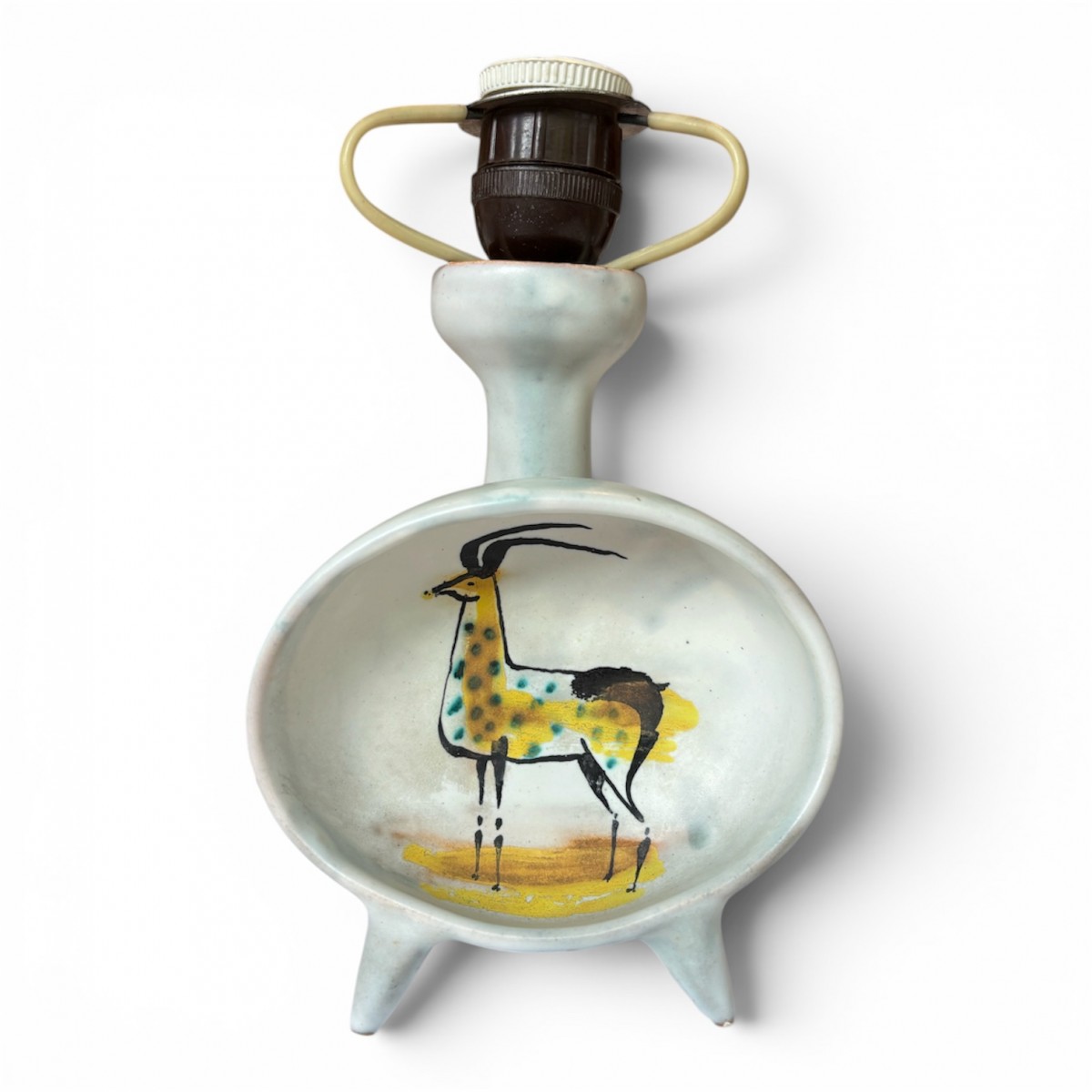
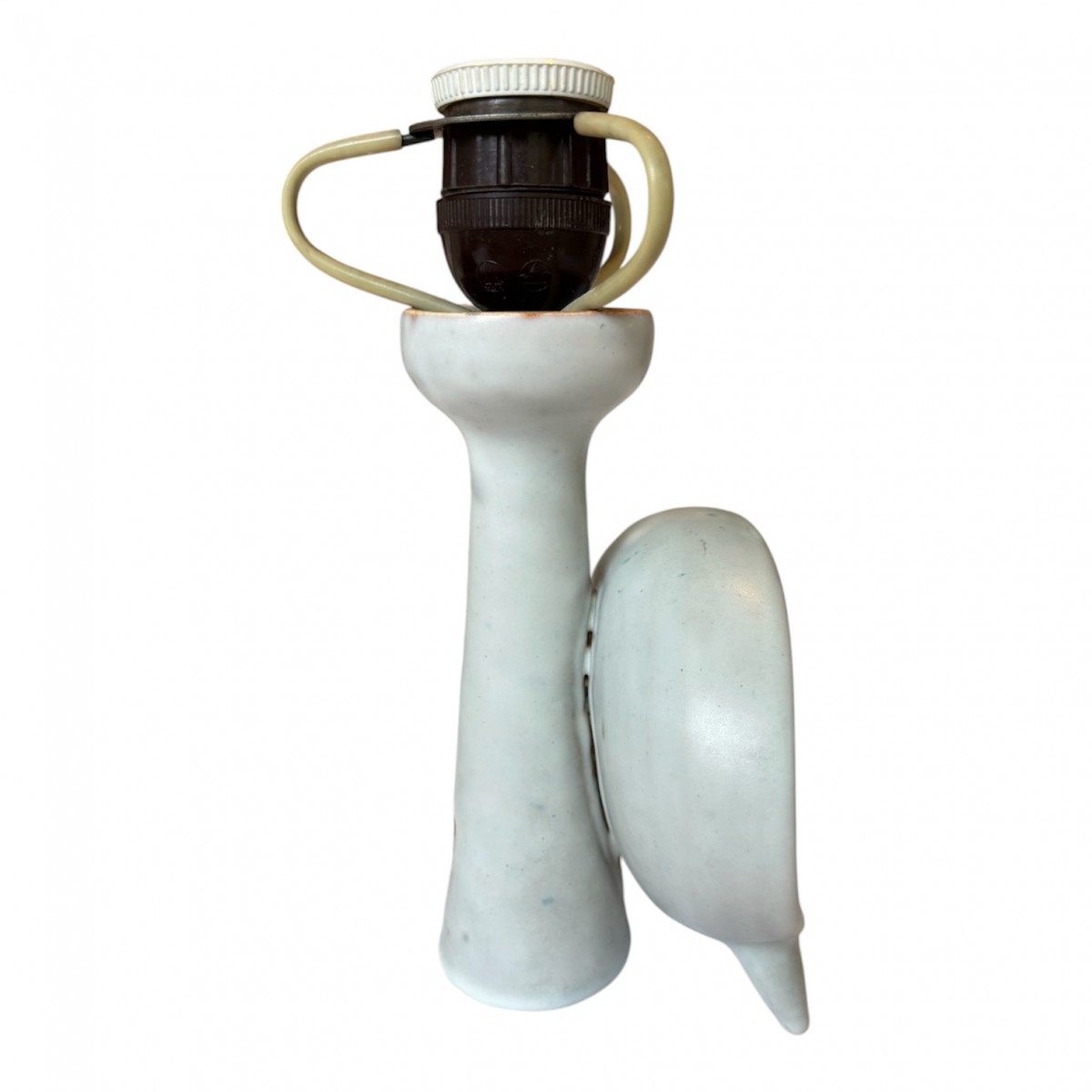
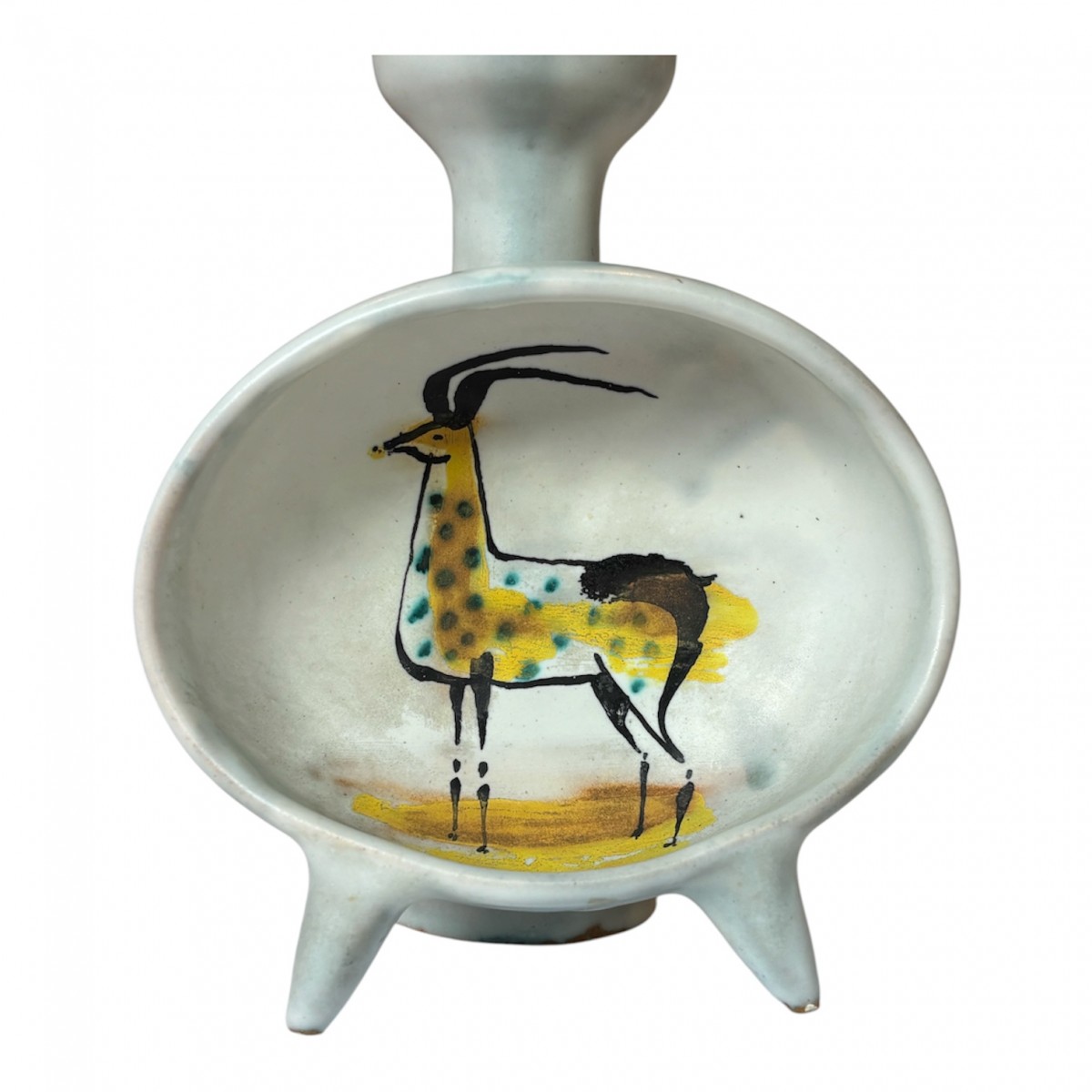
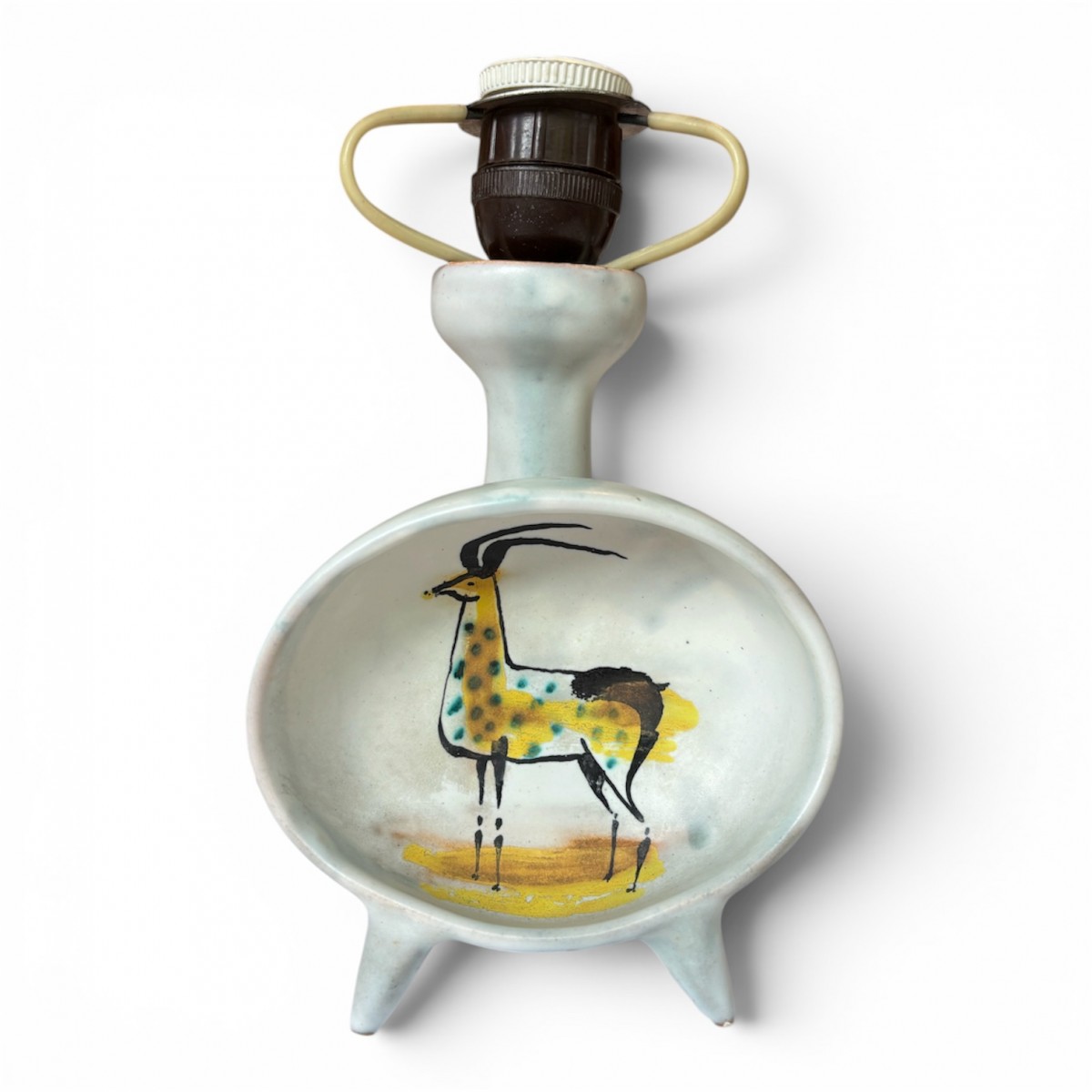
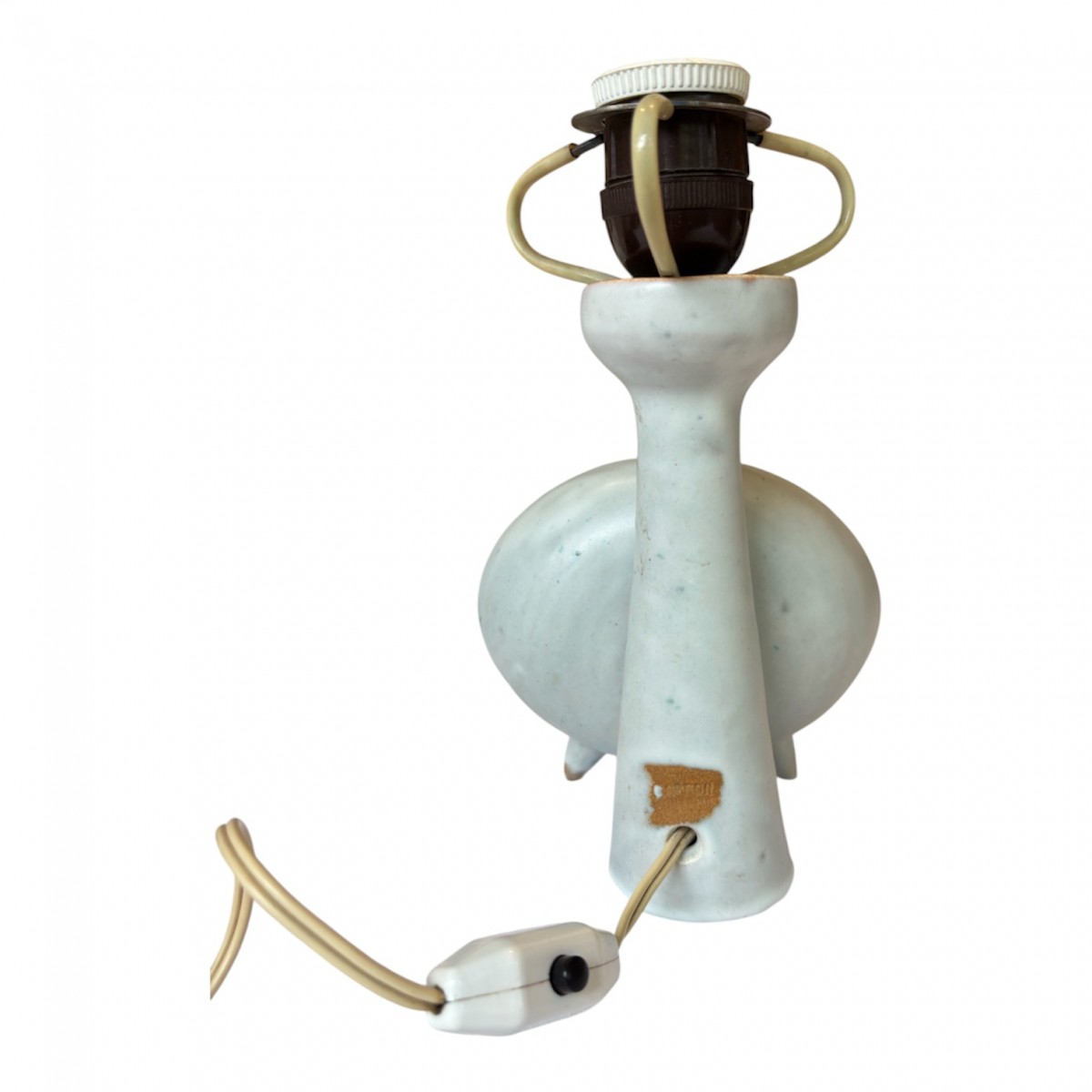
Table lamp in glazed ceramic with a sculptural shape, consisting of an ovoid body resting on three conical legs and extended by a cylindrical stem forming the luminaire’s shaft.
The body is decorated on one side with a stylized antelope treated in a palette of yellow, brown, black and turquoise on a shaded blue white background. The animal is depicted in profile, with long arched horns and a deliberately simplified silhouette.
The whole receives a white satin enamel with subtle variations of firing.
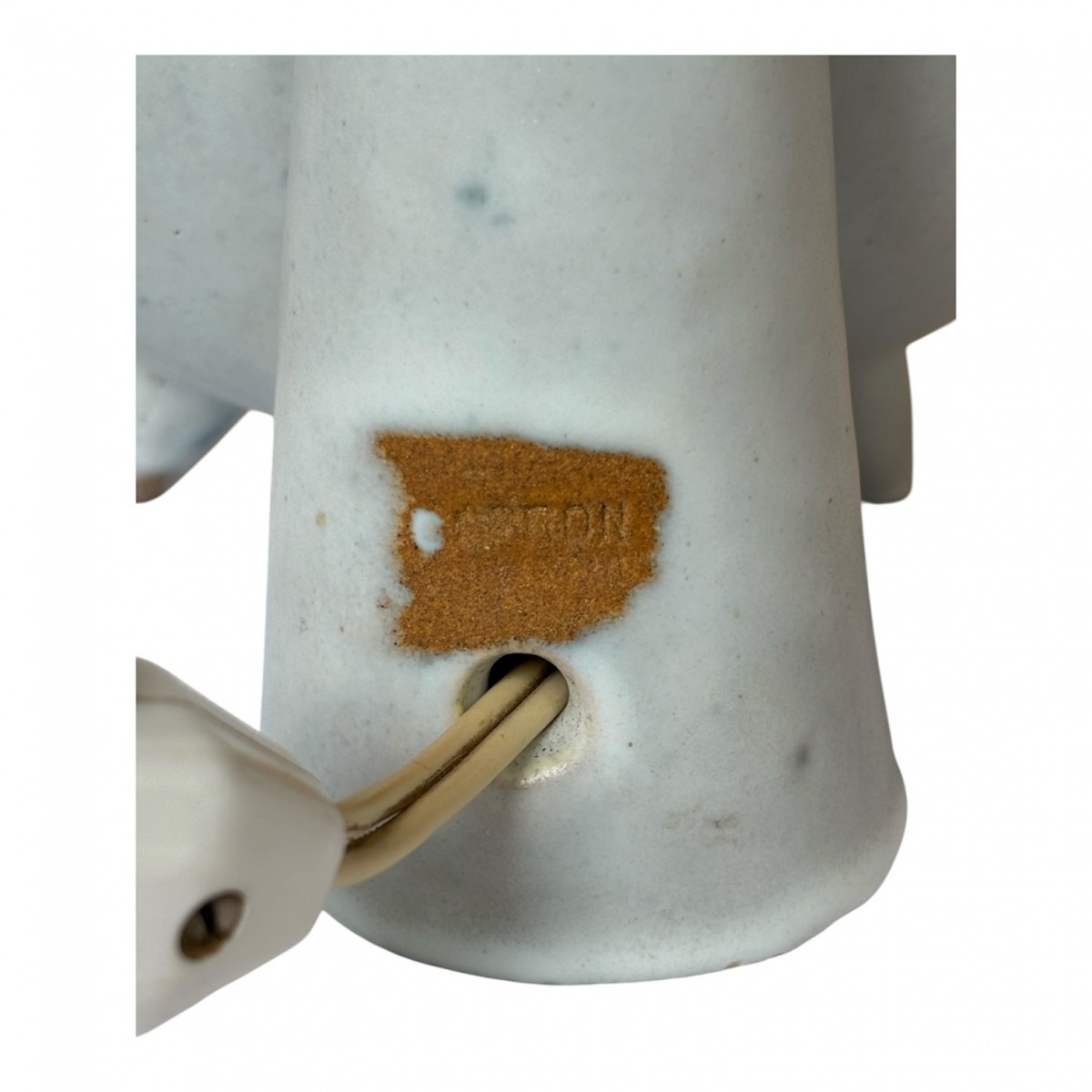
The old electrical system is preserved, with brown bakelite socket and original switch on the cord. The lampshade is also original.
This lamp belongs to the freest and most inventive period of Roger CAPRON, when the artist developed in Vallauris a decorative vocabulary directly inspired by primitive arts, imaginary bestiaries and modern painting.
During the 1950s, he actively participated in the renewal of French ceramics by rejecting the traditional separation between utilitarian object and artistic creation. His lighting is one of the most sought-after aspects of his production, precisely because they combine sculpture, painted decor and domestic function in the same work.
The motif of the antelope, treated with a few rapid strokes and a remarkable economy of means, testifies to the influence exerted by African art, cave paintings and some graphic research in the post-war period. The animal is not depicted in a naturalistic way but synthesized into an immediately legible decorative sign.
The general silhouette of the lamp contributes to this same research. The organic volumes, the streamlined legs and the slender shaft create an object that is as much a sculpture as it is a luminaire. This approach is fully in the spirit of Vallauris where, around Roger CAPRON, many ceramists then seek to reinvent the forms of furniture and decorative arts.
The figurative lamps of this period appear today much more rarely than the tiles or the artist’s tables. They are among the most personal productions of his workshop and illustrate particularly well the singular place that Roger CAPRON occupies in the history of French ceramics of the Thirty Glorious.
Bibliography:
Pierre Staudenmeyer, Les Céramistes de Vallauris, Paris, Éditions du Regard, 1993;
Pierre Staudenmeyer, Roger Capron, Ceramist, Paris, Éditions de l'Amateur, 2003;
Alain Capron, Roger Capron, le génie des formes, Paris, Norma Éditions, 2020.
Delevery information :
We take care of the packaging and shipping of the items.
Shipments are tracked and insured.
Transport costs are the responsibility of the buyer.