Offered by L'Egide Antiques
REQUEST INFORMATION

Porcelain, Scuptures, paintings and european Fine Arts, 18th and 19th century
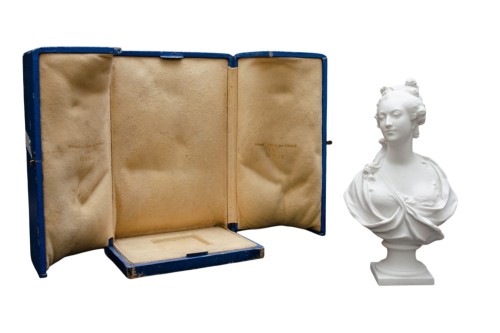
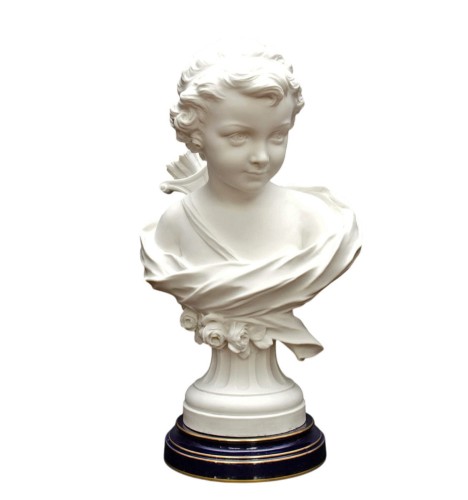
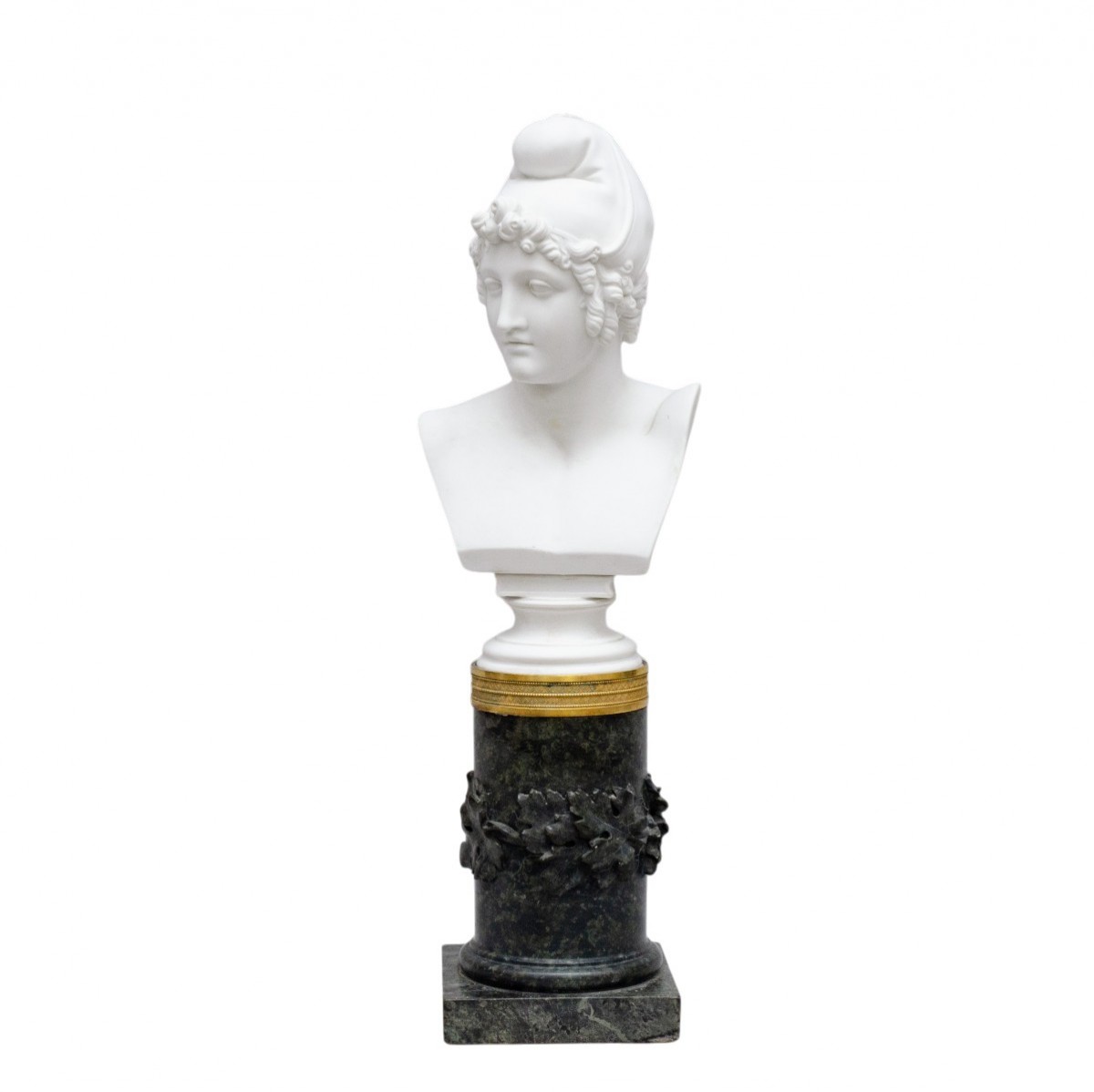
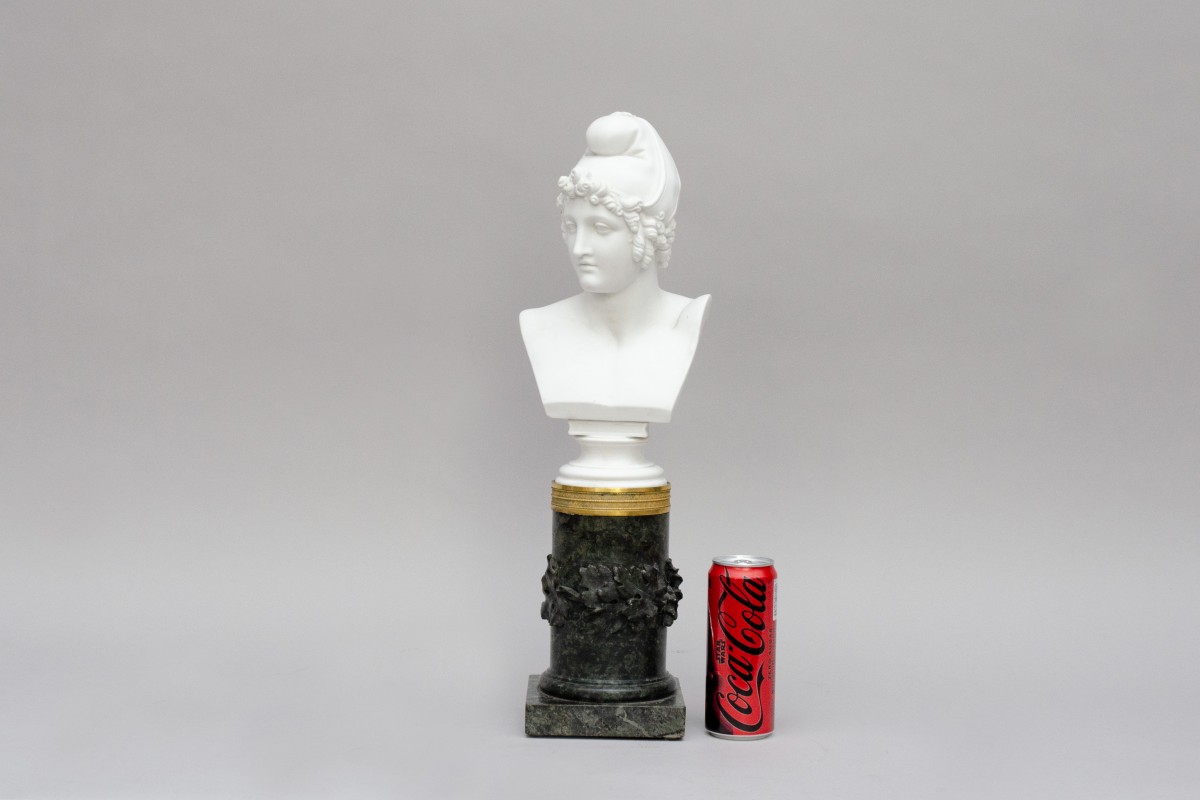
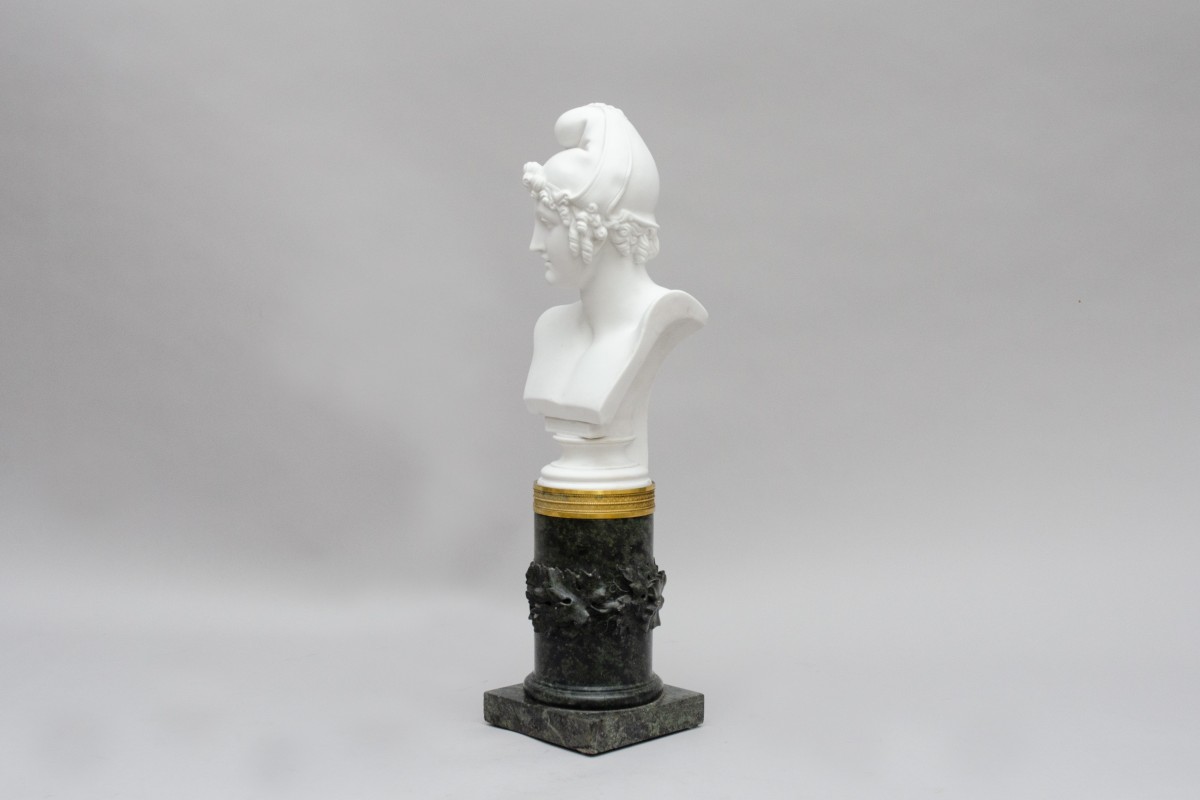
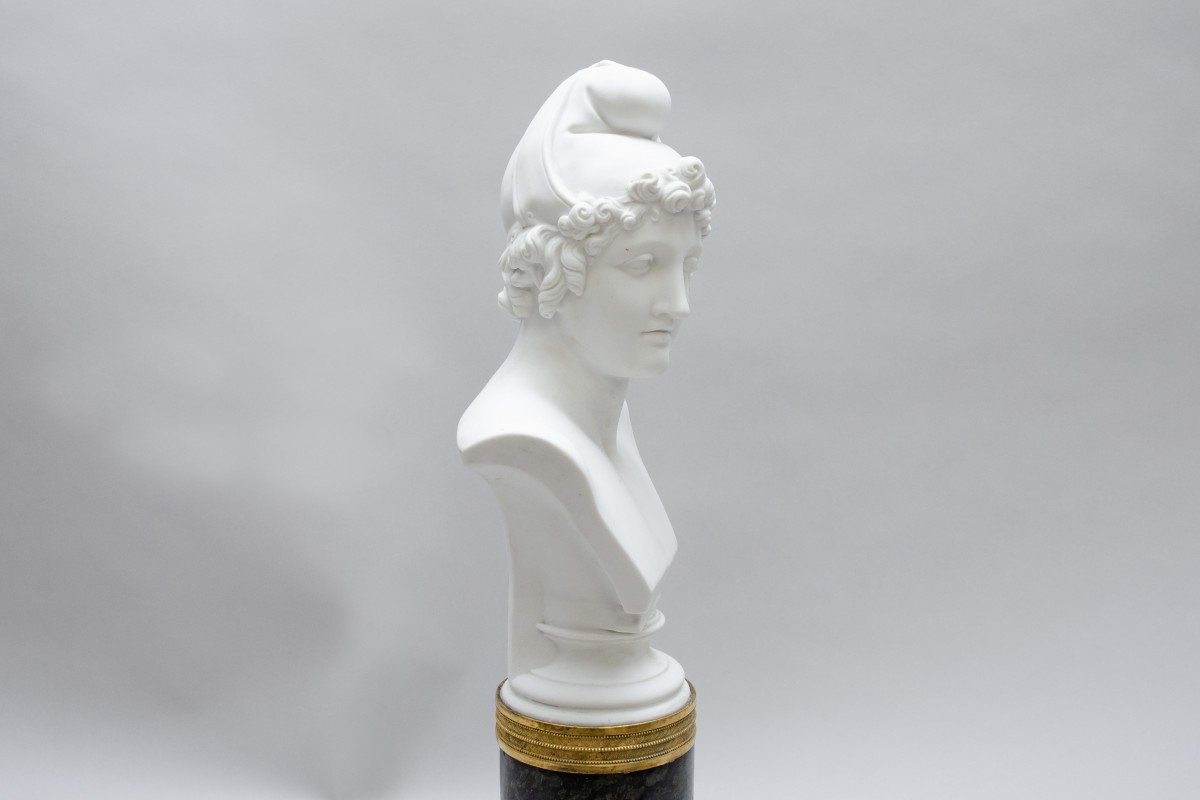
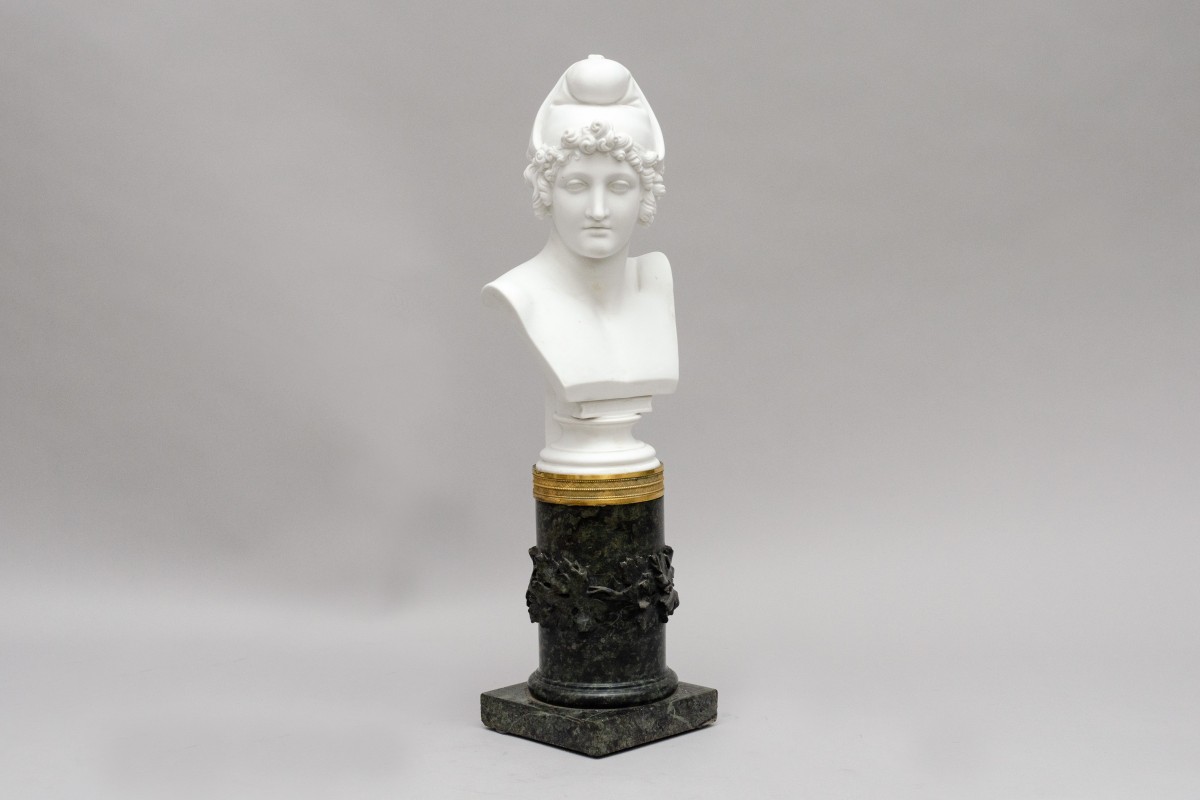
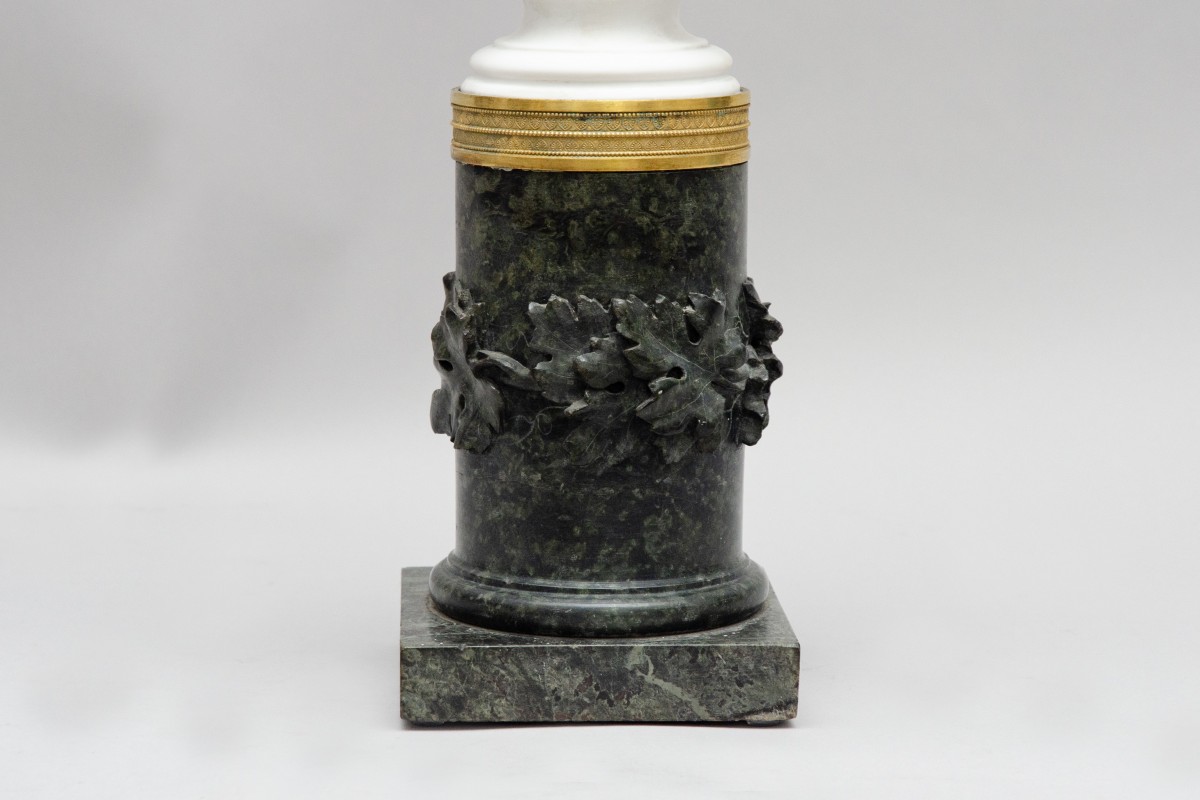
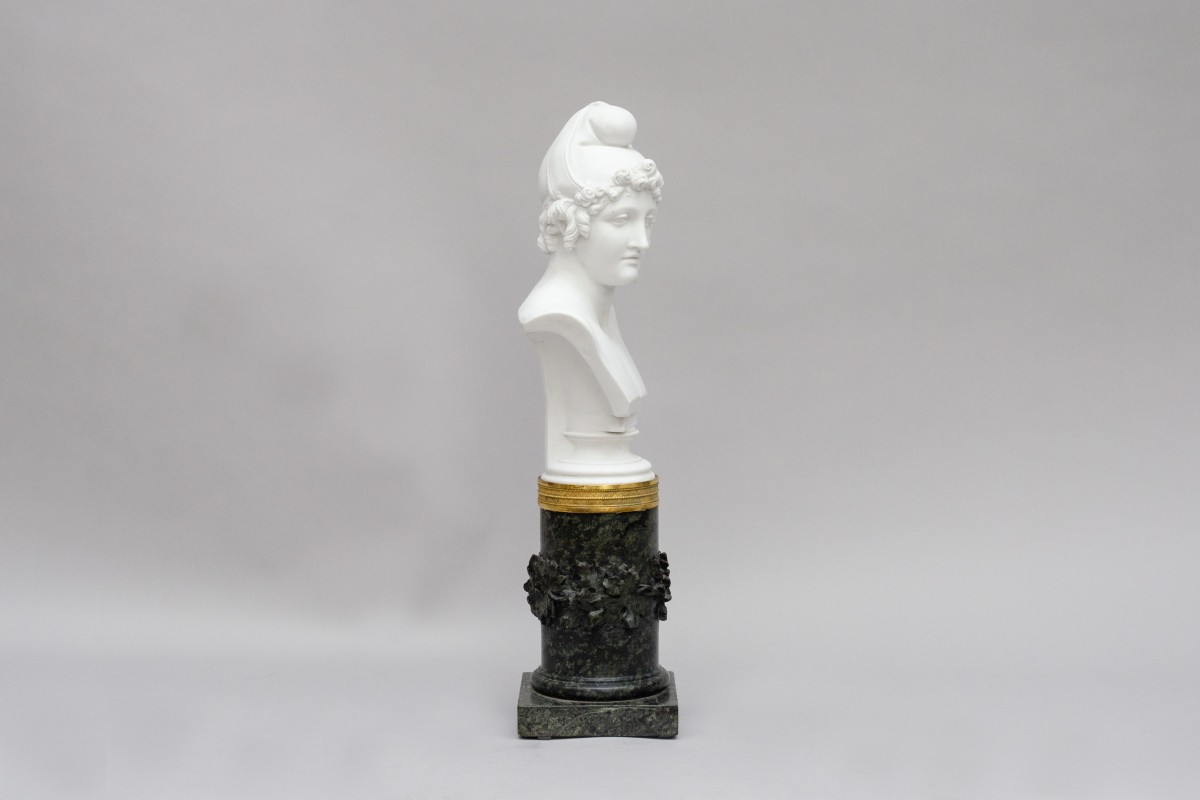
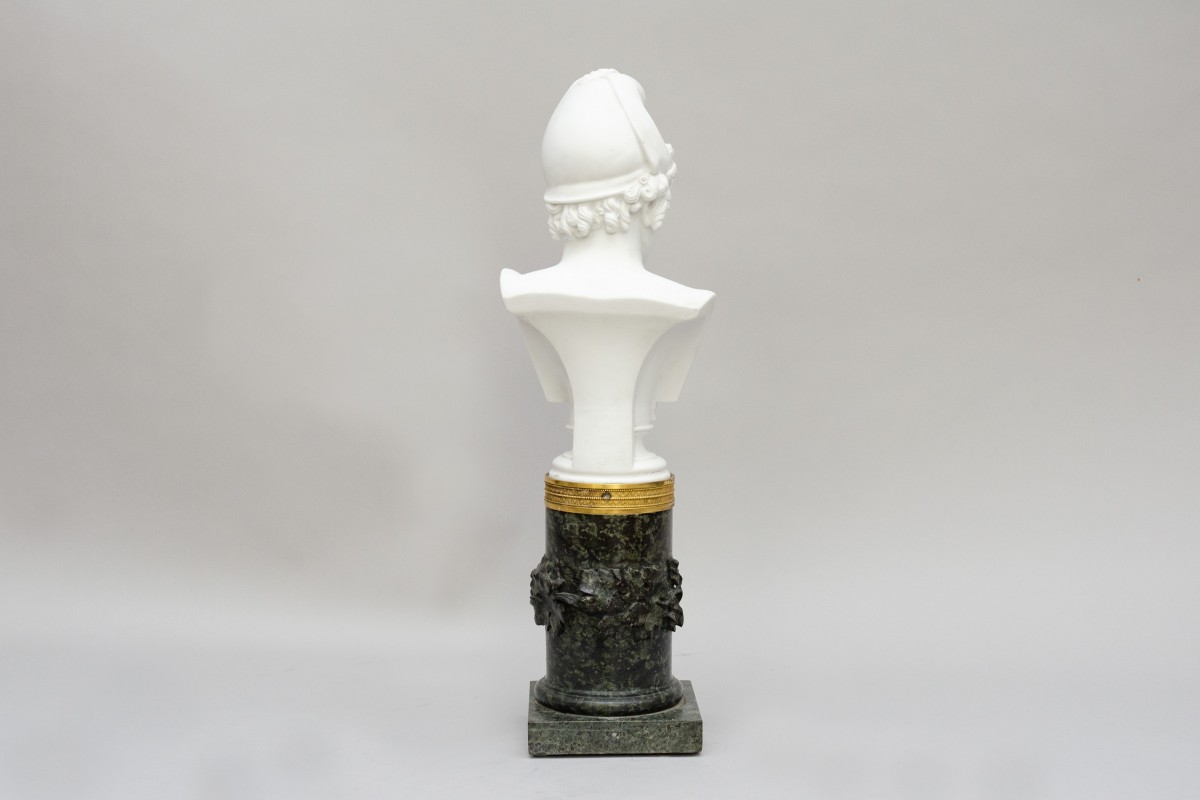
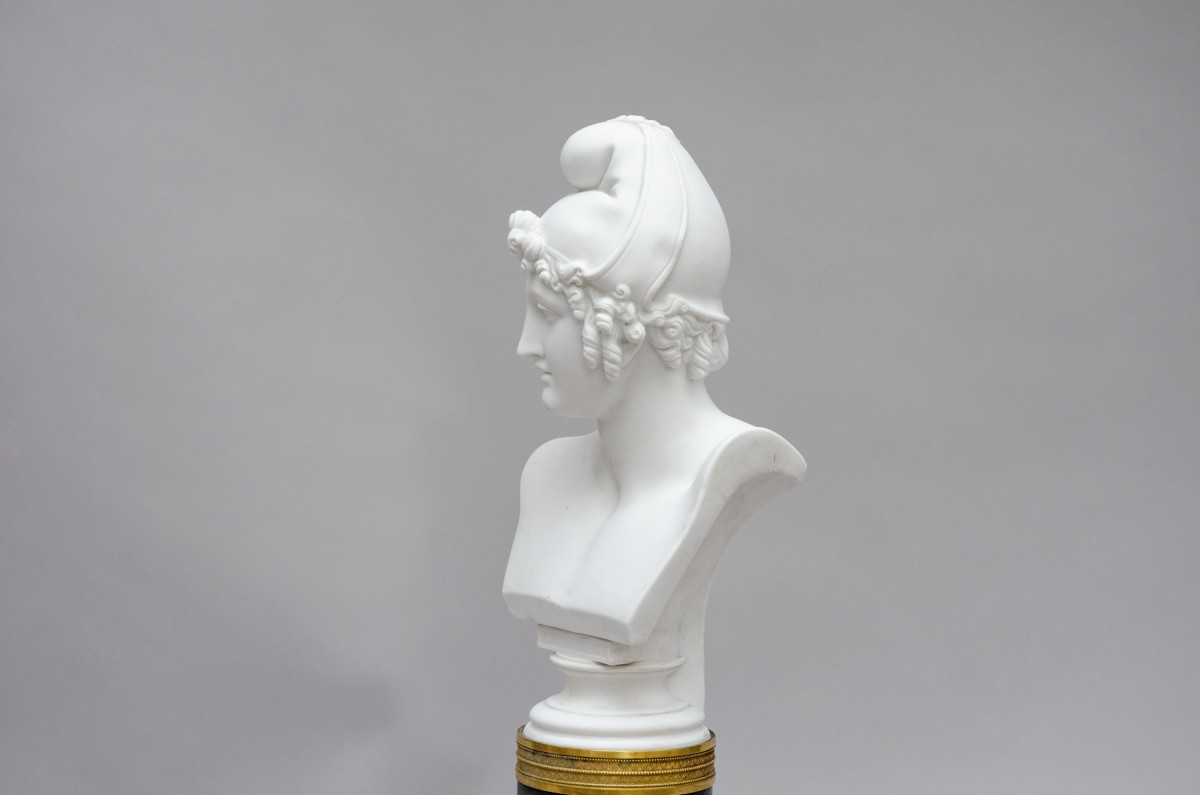
A reduced-scale version of Canova’s large marble work, this bisque bust depicts Paris as a beardless young man, his head tilted slightly to the right and turned with a gentleness characteristic of Canova’s sculpture. The oval face, with its idealised features, conveys a serene melancholy: lowered eyelids, a full mouth and finely chiselled nostrils. The hair, rendered in supple, irregular strands, falls in curls over the forehead and the neck, leaving the neckline exposed. This ‘Hermes’-style bust is cut vertically at chest level, in the manner of the cabinet-sized models produced by Canova’s workshop and his followers. The bisque, with its matt, unglazed surface, recreates the velvety whiteness and apparent translucency of Canovian marble. The rendering of the strands of hair and the modelling of the flesh are executed with finesse, lending the whole work the tactile purity of a genuine sculpture. The gaze, with its unpupillated eye, is an aesthetic choice inherited from Canova’s neoclassical doctrine, in which the irisless eye invites ideal contemplation. The darker green marble plinth forms an elegant chromatic contrast with the whiteness of the biscuit. It is adorned with a vine carved in bas-relief on the sides, an antique motif evoking the Valley of Gaul or the Palace of Priam. The vine, a symbol of Dionysus and abundance, echoes the youth and seductiveness of Paris.
Size: H 51.5 cm – marble plinth H 20.5 cm, W 13 x D 13 cm
French school, second quarter of the 19th century. No mark.
Lit: Antonio Canova’s “Paris” is one of the absolute masterpieces of Italian Neoclassical sculpture. The first marble version was commissioned by Empress Joséphine de Beauharnais, then a great art lover and patron of the arts, who wished to adorn the gallery of her château at Malmaison with a mythological sculpture. Canova, already recognised as the greatest European sculptor of his time, worked on the piece between 1808 and 1812, initially based on a plaster model finalised as early as 1807. The subject, drawn from Greek mythology ; Paris, son of Priam, King of Troy, a shepherd on Mount Ida before abducting Helen; is a poetic and nostalgic choice, contrasting the Napoleonic ‘martial hero’ with the youthful and almost feminine beauty of a mythological adolescent. The marble sculpture was completed in November 1812 and arrived at Malmaison in 1813, just one year before Josephine’s death. A second version, created at the same time for Crown Prince Louis of Bavaria (the future Louis I), a great collector of Canova’s works, is now housed in the Glyptothek in Munich. Following Josephine’s death, the first version entered the Russian collections via Tsar Alexander I, who acquired it for the Hermitage: it is now housed in the Hermitage Museum in Saint Petersburg. Canova’s Paris immediately became a model for cabinet-sized replicas: herms, statuettes and smaller-scale replicas were distributed throughout Europe until the end of the 19th century. Miniatures of this model were produced from 1813 to 1825, mainly for English, French and German collectors. This bust is part of that legacy.
Delevery information :
to be agreed with the customer depending on the object and the place of destination.