Offered by Antichità Castelbarco

Workshop of Giovanni Francesco Barbieri, Il Guercino (1591–1666)
Attributed to Ercole Gennari (Cento, 1597–Bologna, 1658)
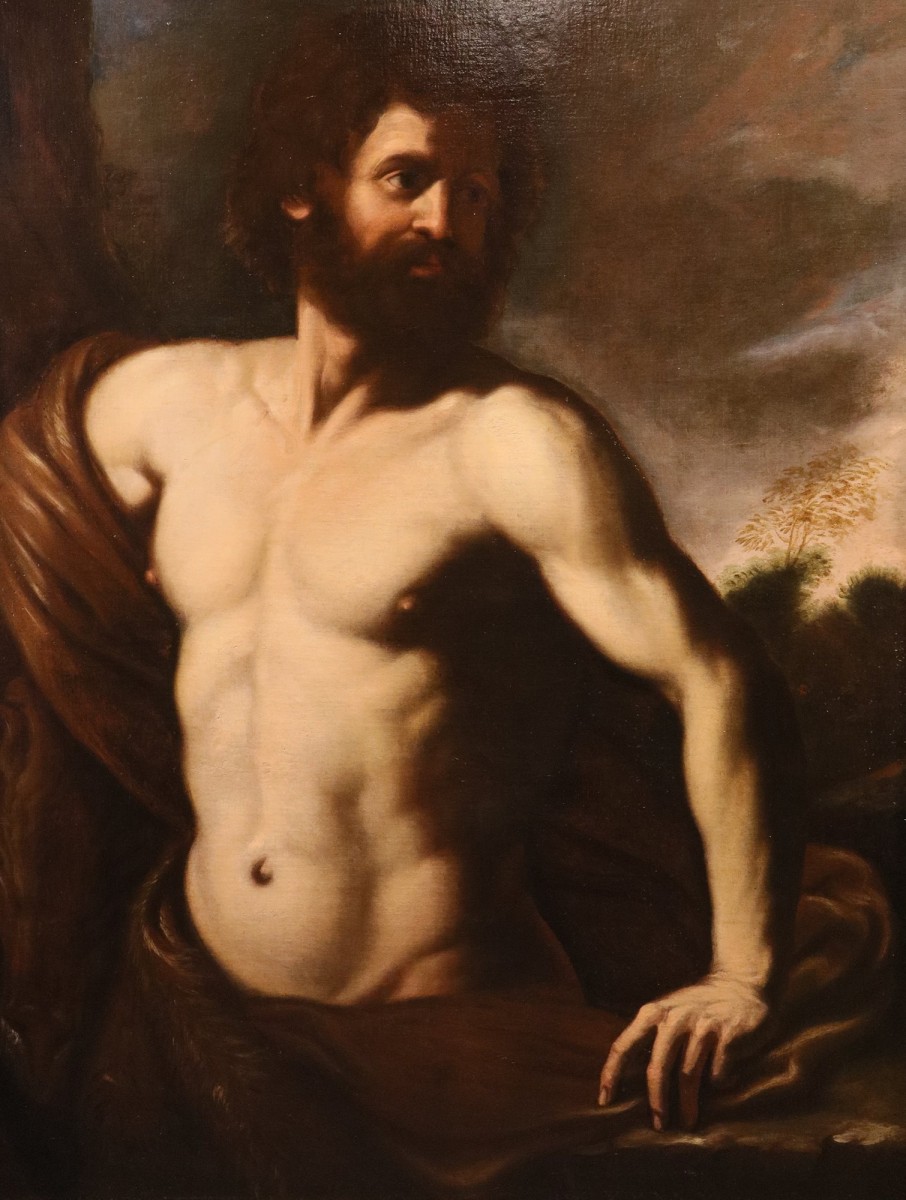
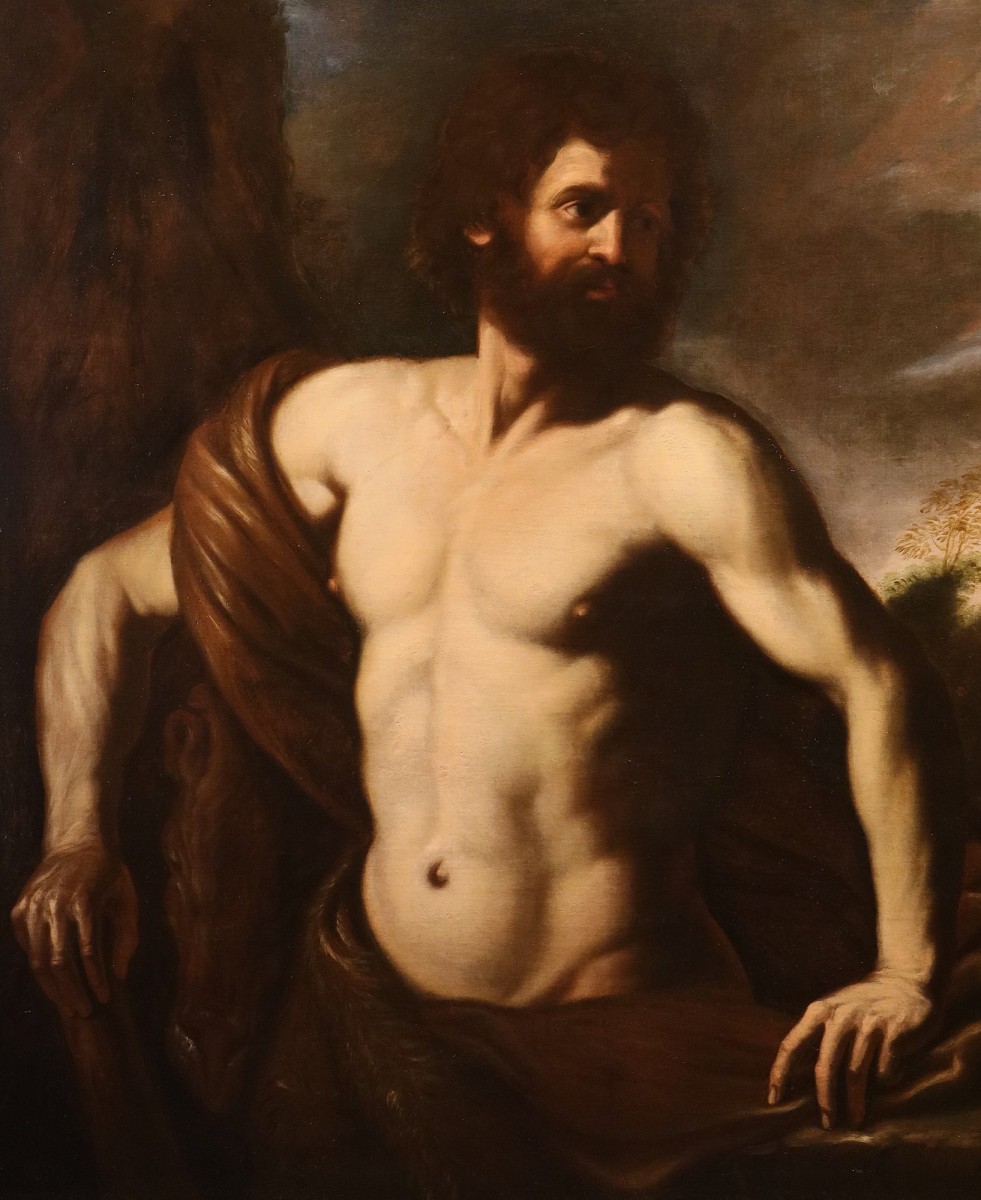
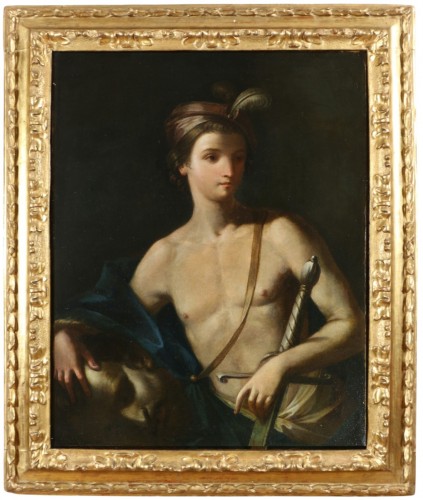
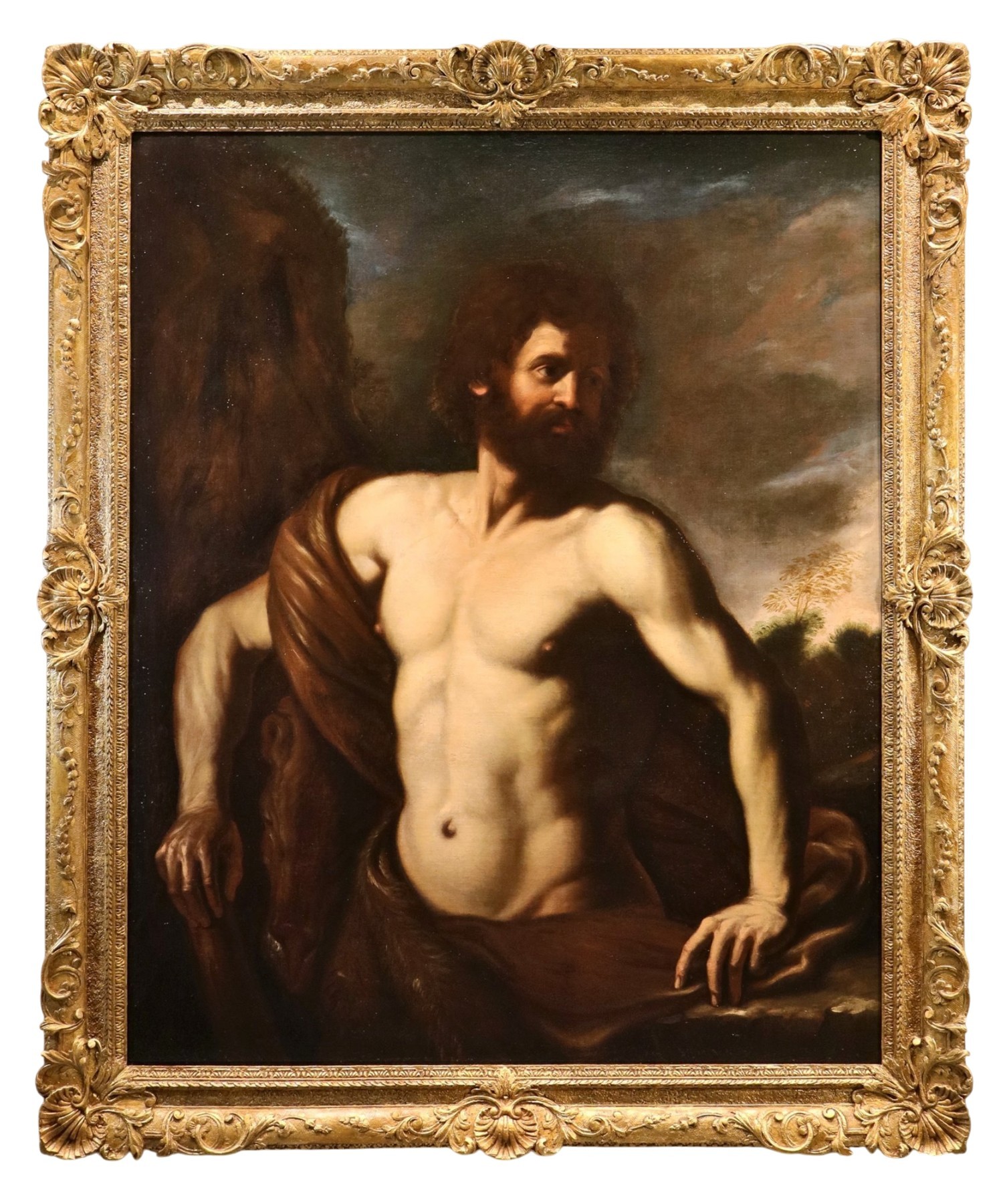
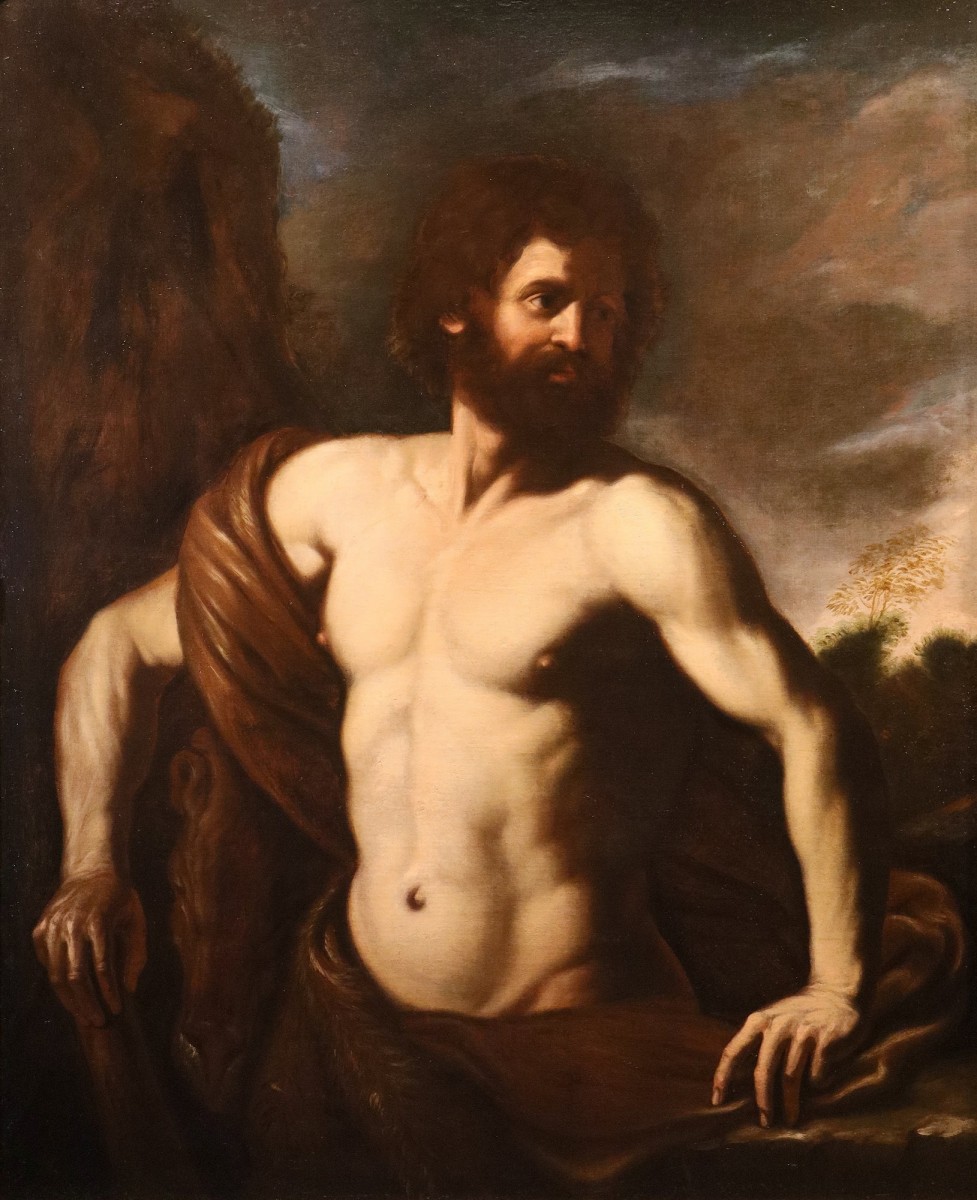
Victorious Hercules
oil on canvas 136 x 112 cm. In frame (Louis XV period) 156 x 130 cm.
Work accompanied by a critical study by Prof. Emilio Negro (Bologna, 2026)
Reference bibliography: Luigi Salerno, I dipinti del Guercino, Rome, Ugo Bozzi Editore, 1988, p. 404. Nicholas Turner, The Paintings of Guercino. A Revised and Expanded Catalogue Raisonné, Rome, Silvana Editoriale, 2017, pp. 571 (no. 281), 605 (no. 316).
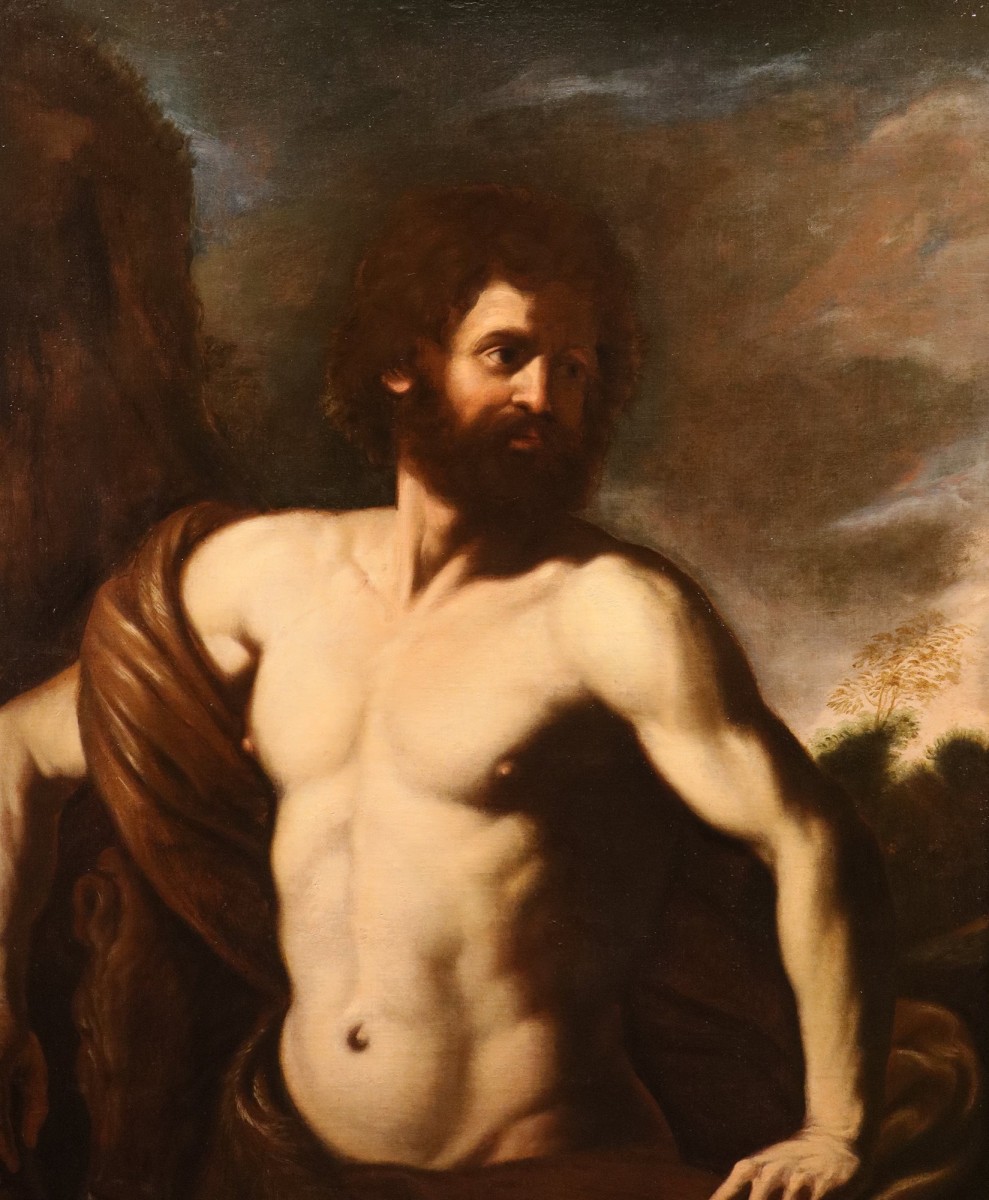
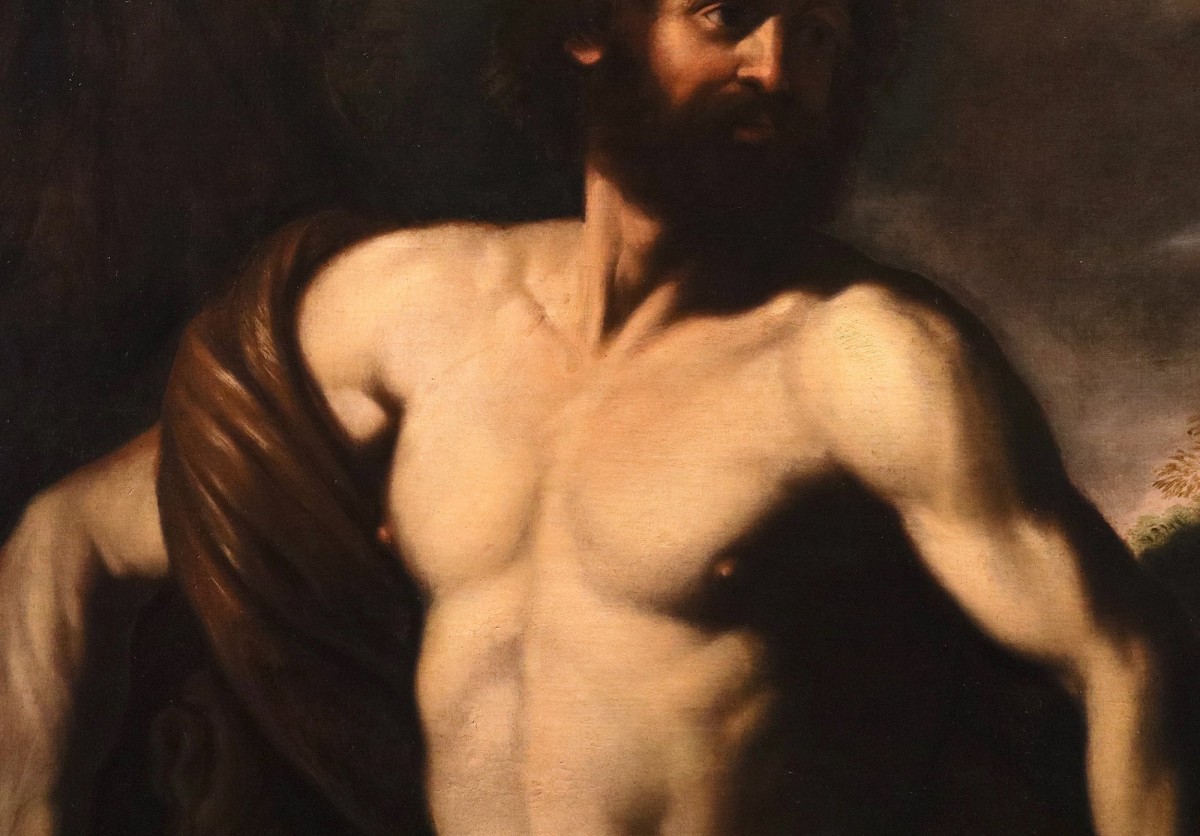
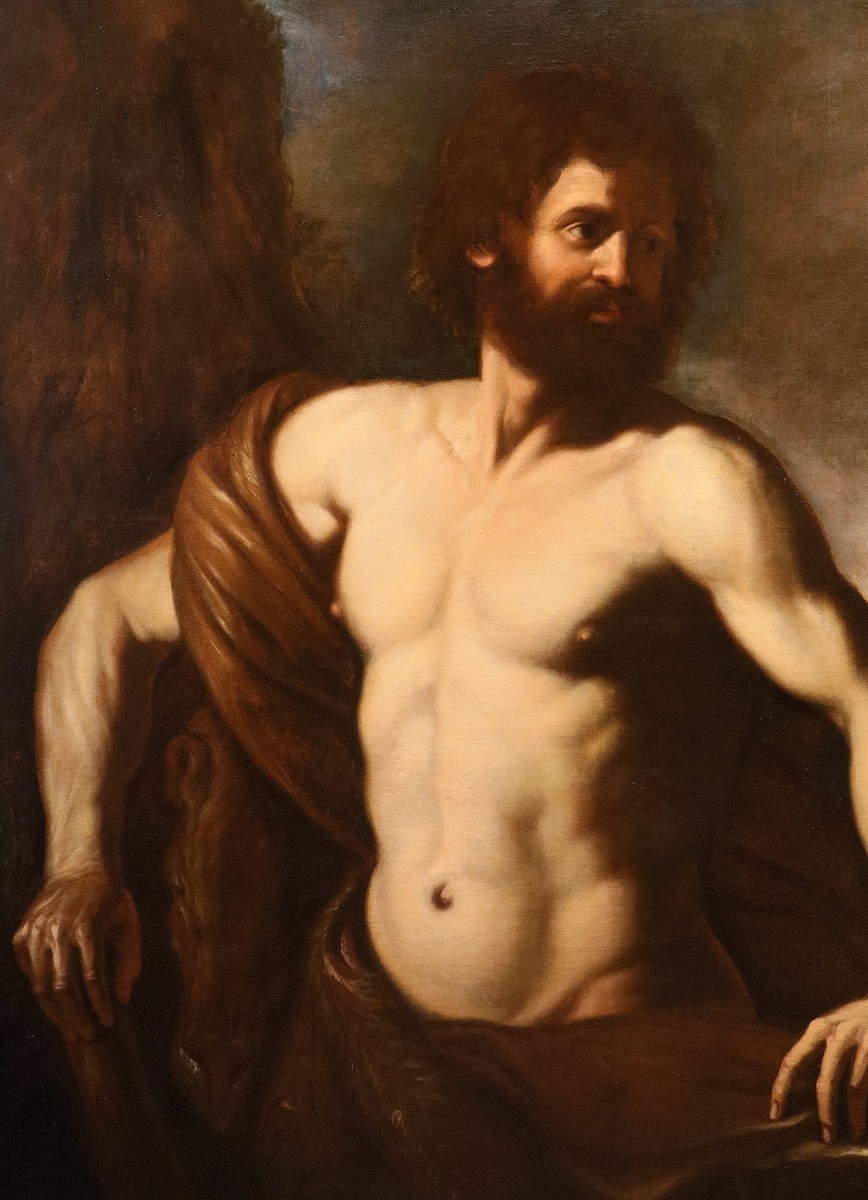
The painting depicts Hercules, naked to the waist, captured in a pose of steady balance and calm resolve, portrayed with his powerful musculature.
The hero is depicted holding the club in his right hand, whilst his left rests resolutely on a surface as he holds a flap of the Nemean lion’s skin, which falls over his body like a cloak, wrapping around his torso and draping over his belly.
He thus displays the symbols of his first labour and his superhuman strength: having killed the invulnerable lion with his bare hands or with the club, he wore its skin as invincible armour.
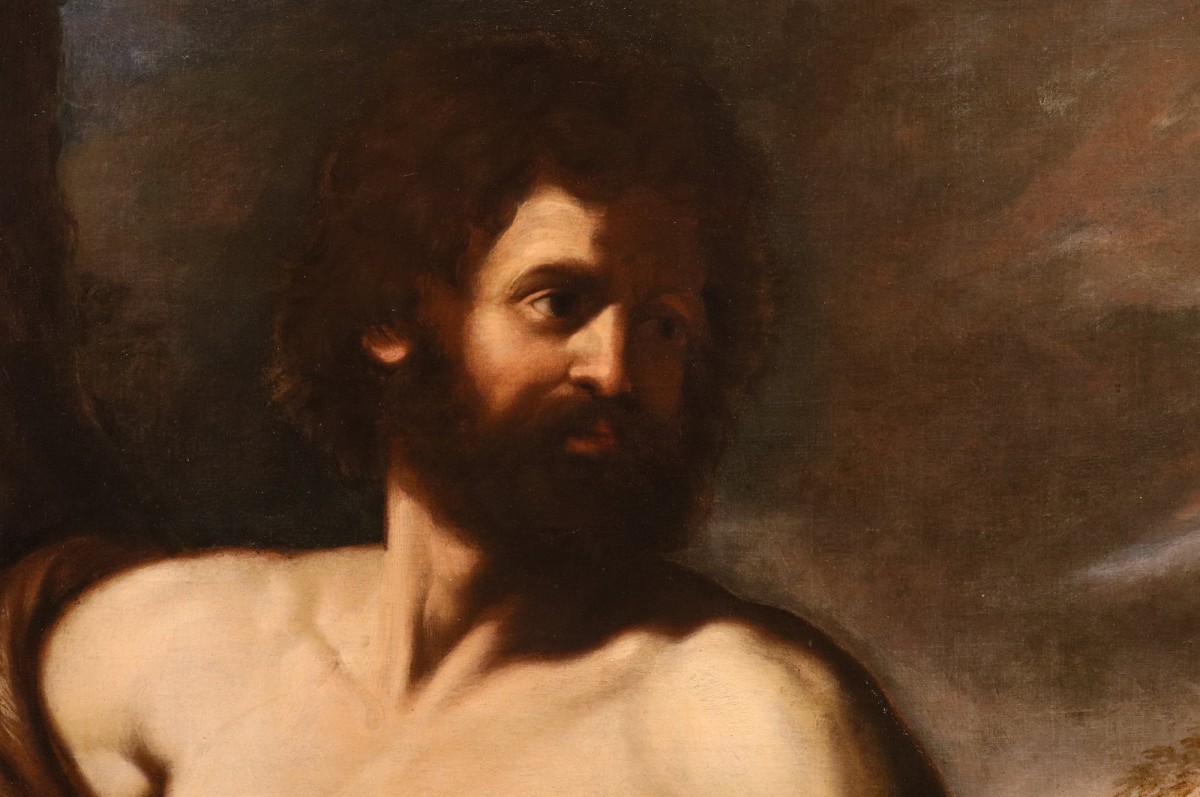
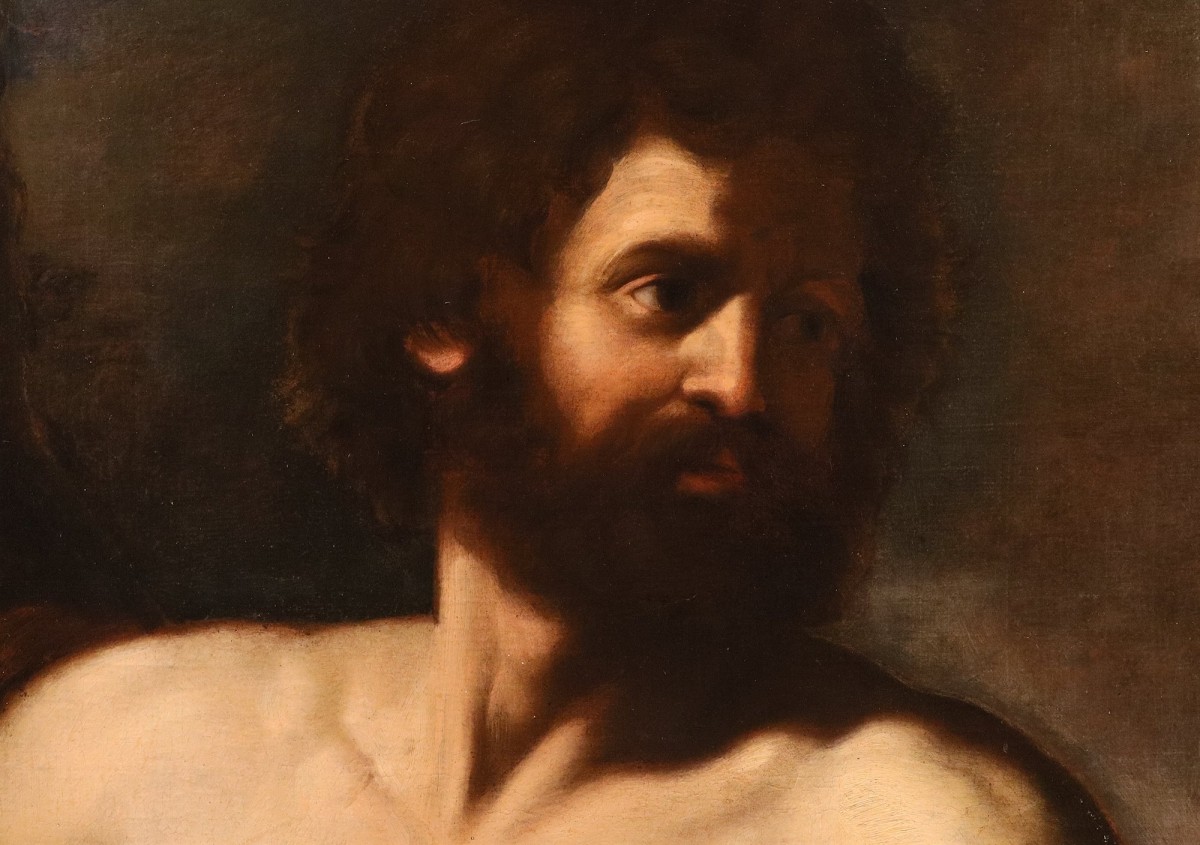
The face, framed by a thick beard and bristly hair, has marked and intensely human features; the hero’s expression, far removed from classical heroism, has been interpreted as imbued with a pensive and melancholic air.
He is depicted not in action but in a restrained pose, which accentuates the monumental and ‘statue-like’ character of the figure.
For the patrons of the time, the mythological hero must have held symbolic significance, alluding to ‘virtues or attributes in which to recognise oneself or project one’s aspirations’.
The work presented here, of great pictorial vigour, stands out for its energetic rendering and a stylistic approach that allows it to be attributed to the flourishing workshop of Giovanni Francesco Barbieri (1591–1666).
This subject recurs in several works produced by the master during his career, appearing in different versions in terms of posture, gesture and spatial composition, focusing on the figure of the mythical hero with a Baroque approach, characterised by strong plasticity, intense chiaroscuro and particular attention to musculature.
Among the best-known versions are: - Hercules with the Club and the Lion’s Skin, Guercino, c. 1642, Koelliker Collection, Milan
Hercules with the club and the lion’s skin, Guercino, c. 1645, Villa Medicea di Cerreto Guidi, Florence
Hercules brandishing the club, Guercino, Private collection, Milan https://commons.wikimedia.org/wiki/File:Guercino,_ercole_che_brandisce_la_clava,_01.jpg
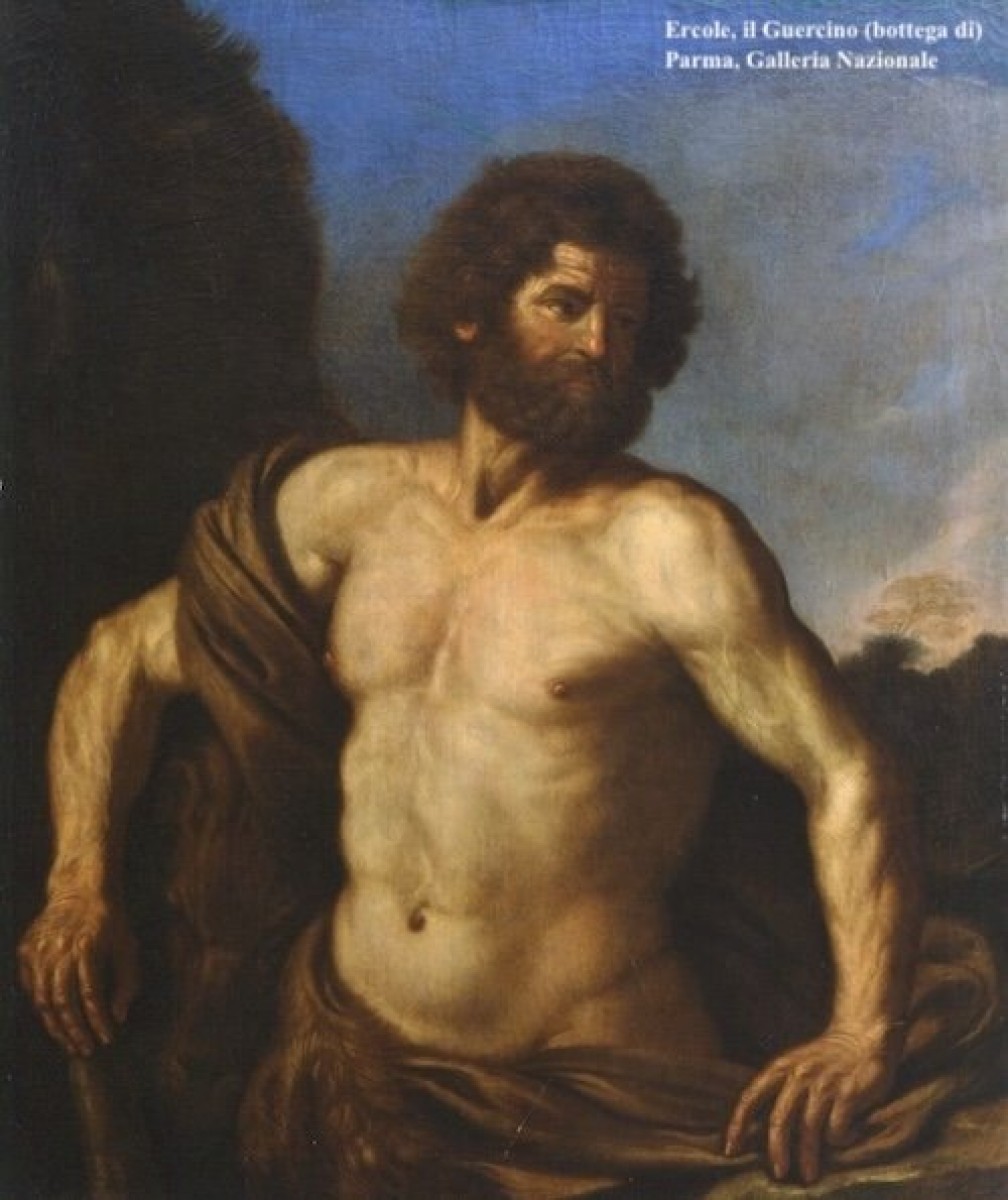
Among the possible comparisons, the closest is undoubtedly that with the Hercules now in the National Gallery of Parmaformerly in the Sanvitale collection, which features a composition similar in composition and iconography.
There appear to be no other versions of this composition, depicting the hero—recognisable by the club resting in his right hand and the fur belt around his waist—in a landscape at sunset
This Hercules deliberately departs from the classicist models that tended to reconcile heroic strength with an ideal of beauty, proposing instead an earthly and anti-classical image, in which the hero appears more like a labourer than an exemplary demigod, emphasising the rough physicality of his body.
The work under consideration here is distinguished by an excellent expressive rendering of the face, executed with a pictorial quality that suggests the possible involvement of the master himself, whilst likely forming part of a collaborative effort within his workshop.
Delving into the details of the painting’s authorship, as noted in Prof. Emilo Negro’s study, the pictorial quality and stylistic characteristics allow us to recognise the hand of Ercole Gennari (Cento, 1597–Bologna, 1658), Guercino’s brother-in-law, pupil and close collaborator.
It is well known that Ercole devoted himself to producing copies and variations on his famous brother-in-law’s compositions, always adhering to his compositional forms and technique.
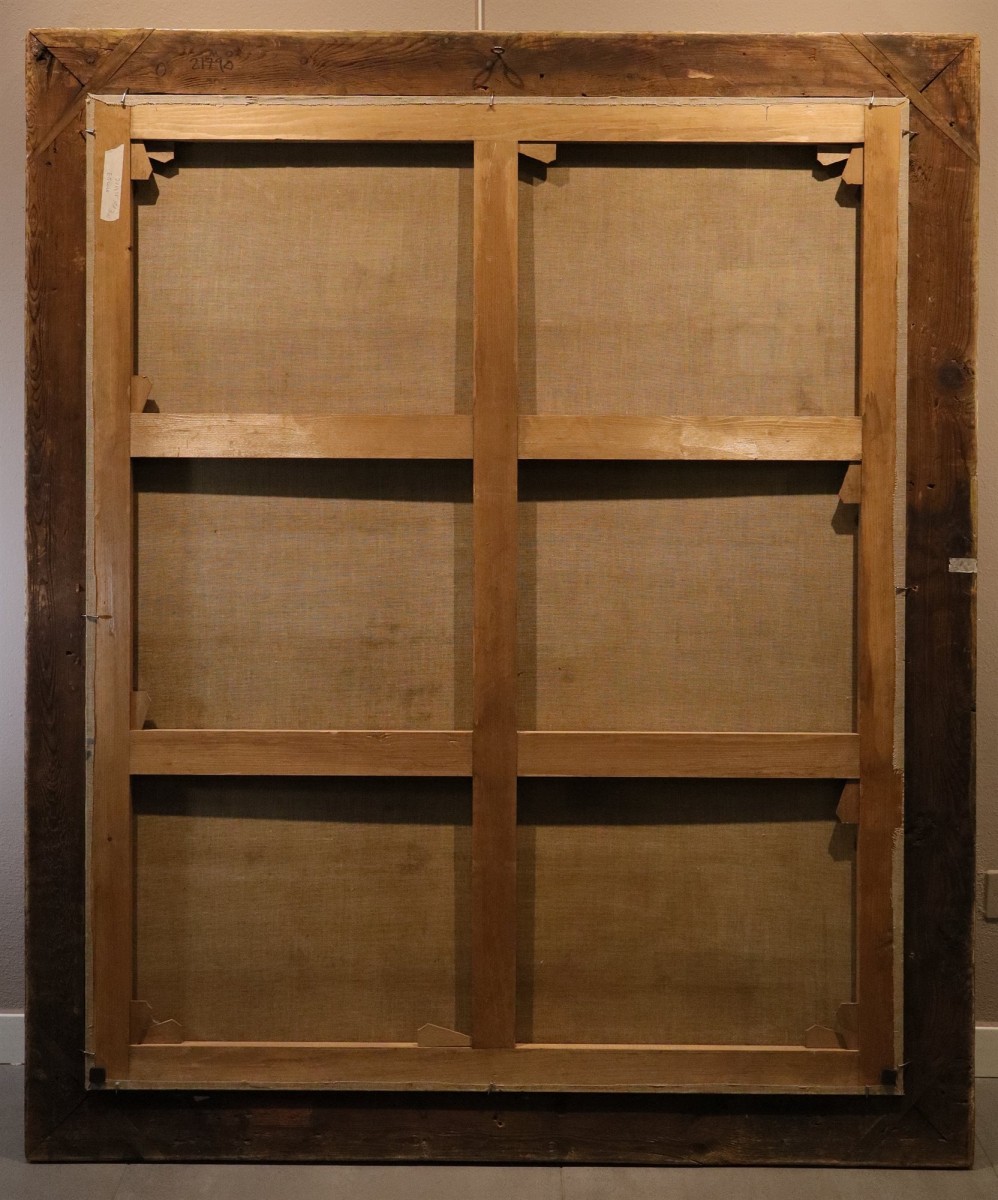
Excellent condition, with some restoration. Recently relined. Gilded wooden frame with floral and rocaille motifs, Louis XV period (in good condition with some losses and restoration). * Ercole, Giovanni Francesco Barbieri, Guercino (workshop of) Parma, National Gallery 1630–1640, Oil on canvas, 128 x 107 cm
Delevery information :
We take care of and organise the transport of the purchased works, both for Italy and abroad, through professional and insured carriers.
We take great care We personally take care of the packaging, to which we devote a great deal of care: each work is carefully packed, first with arti- cle material, then with a custom-made wooden box.
Should you have the desire to see this or other works in person, we would be happy to welcome you to our gallery in Riva del Garda, Viale Giuseppe Canella 18, we are always open by appointment only.