Offered by Desmet Galerie
REQUEST INFORMATION
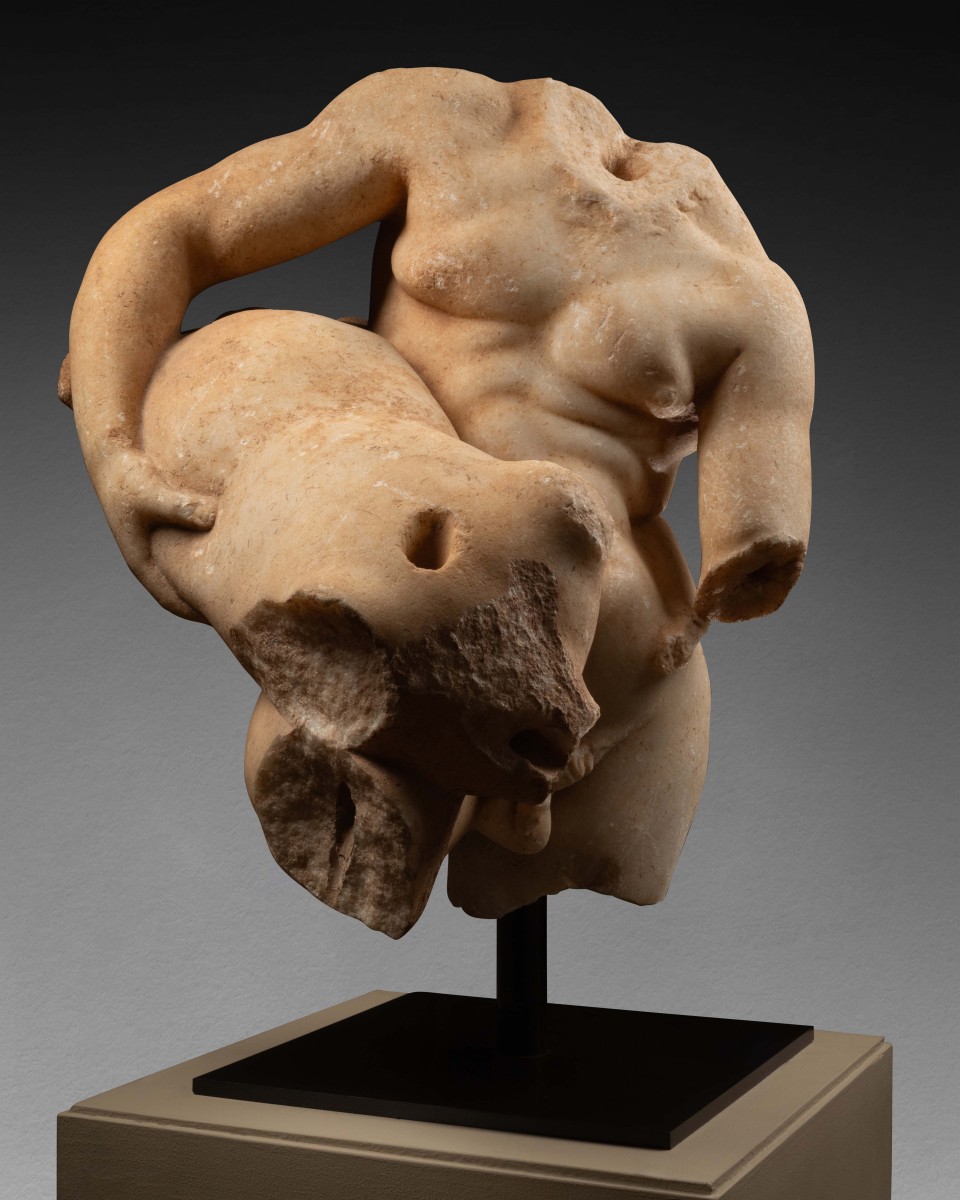
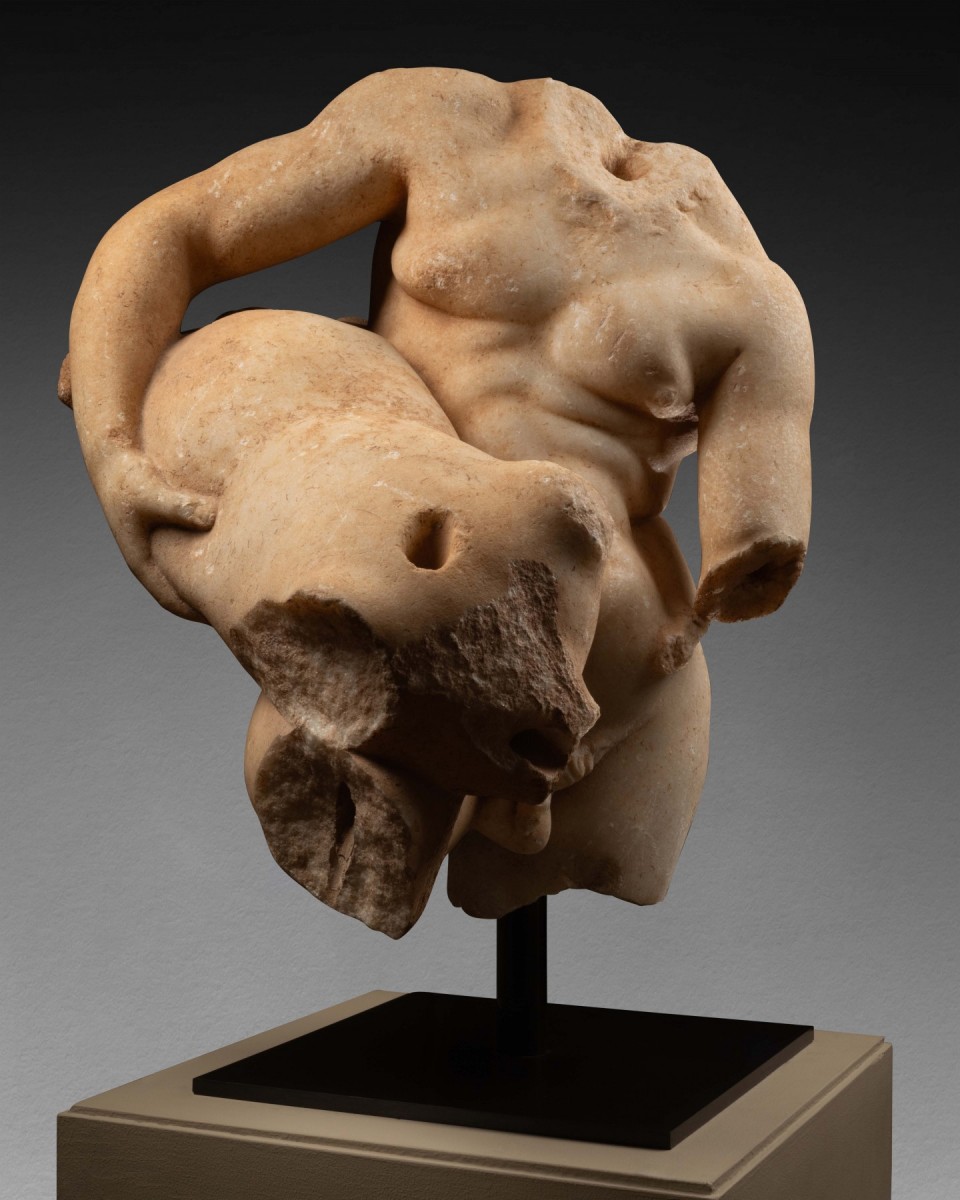

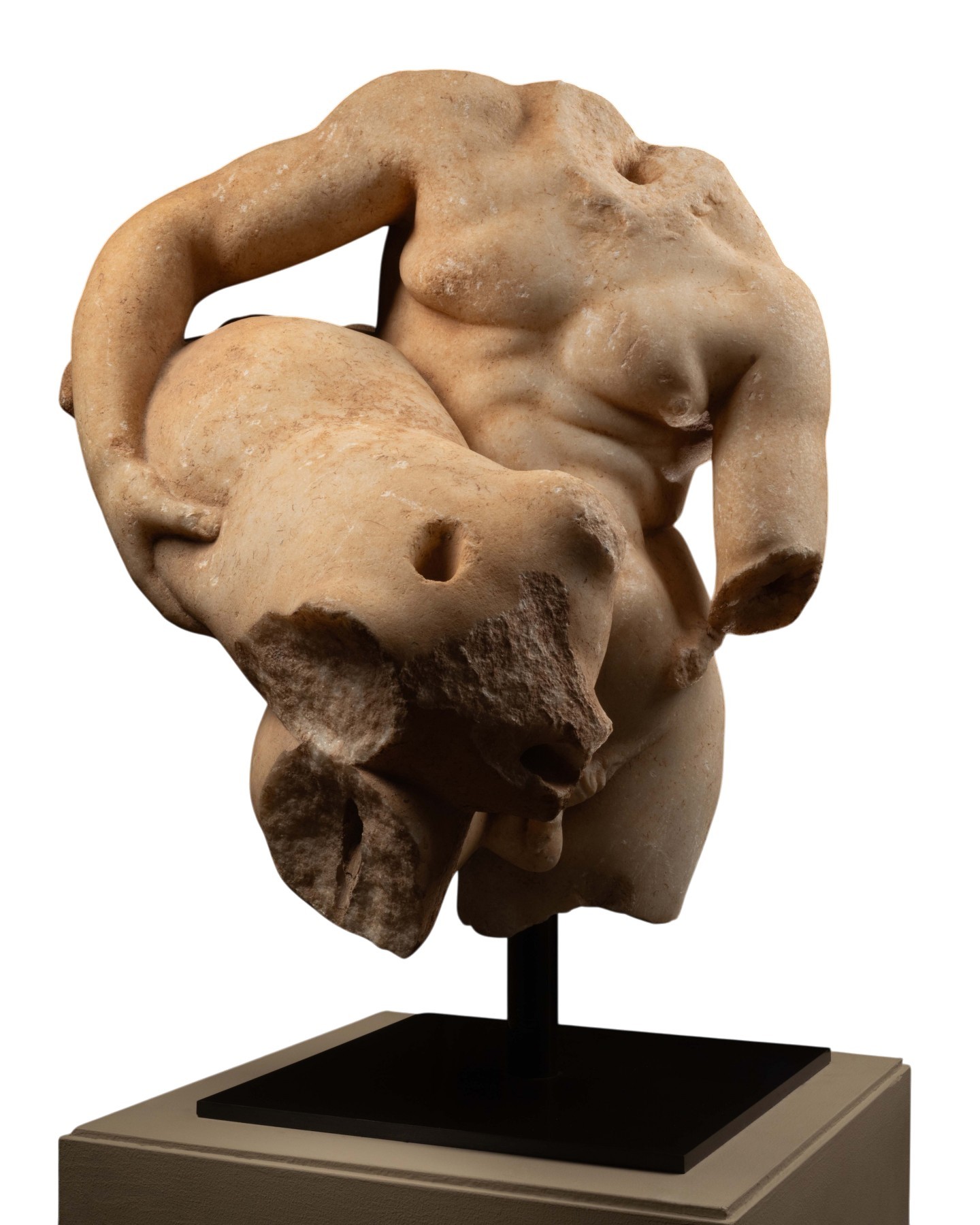
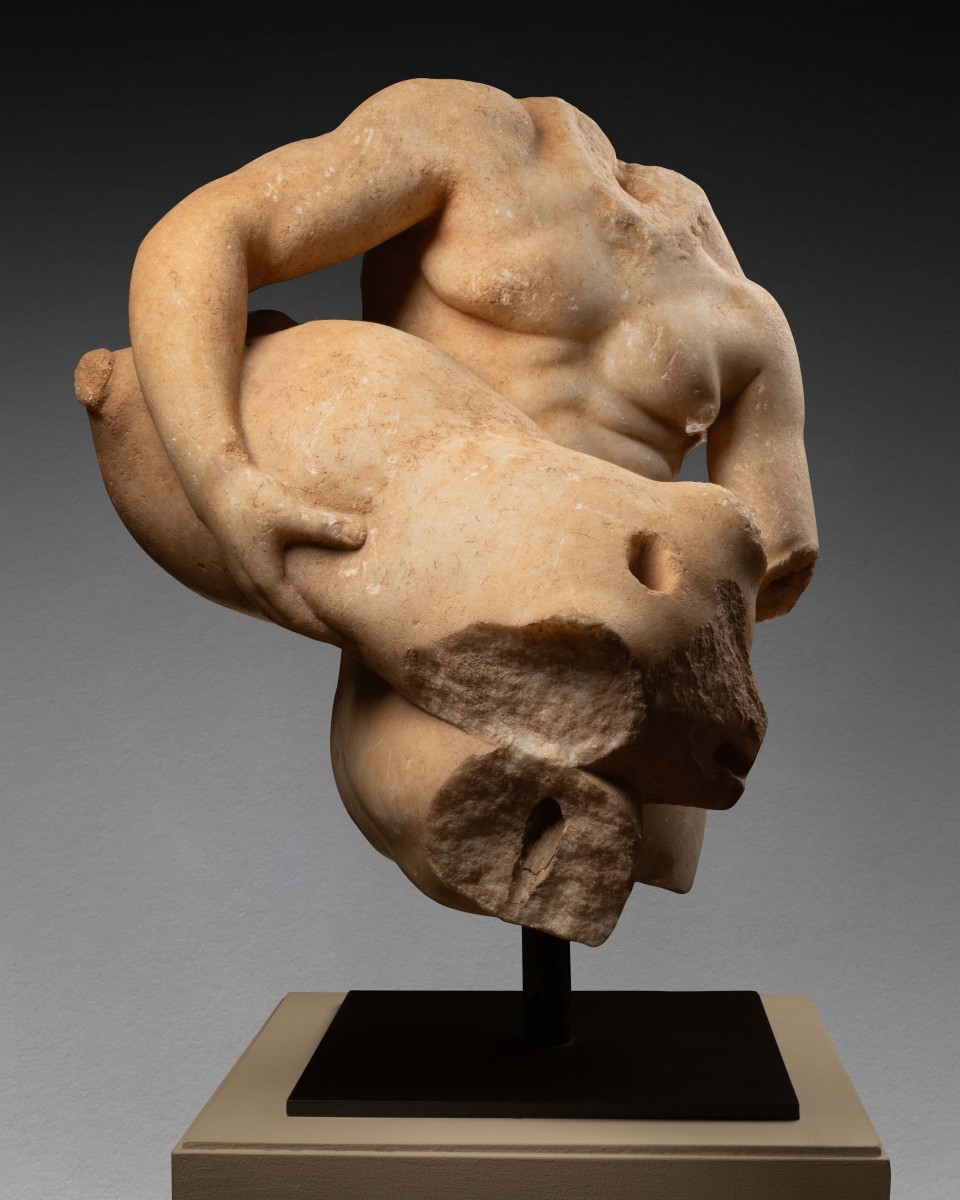
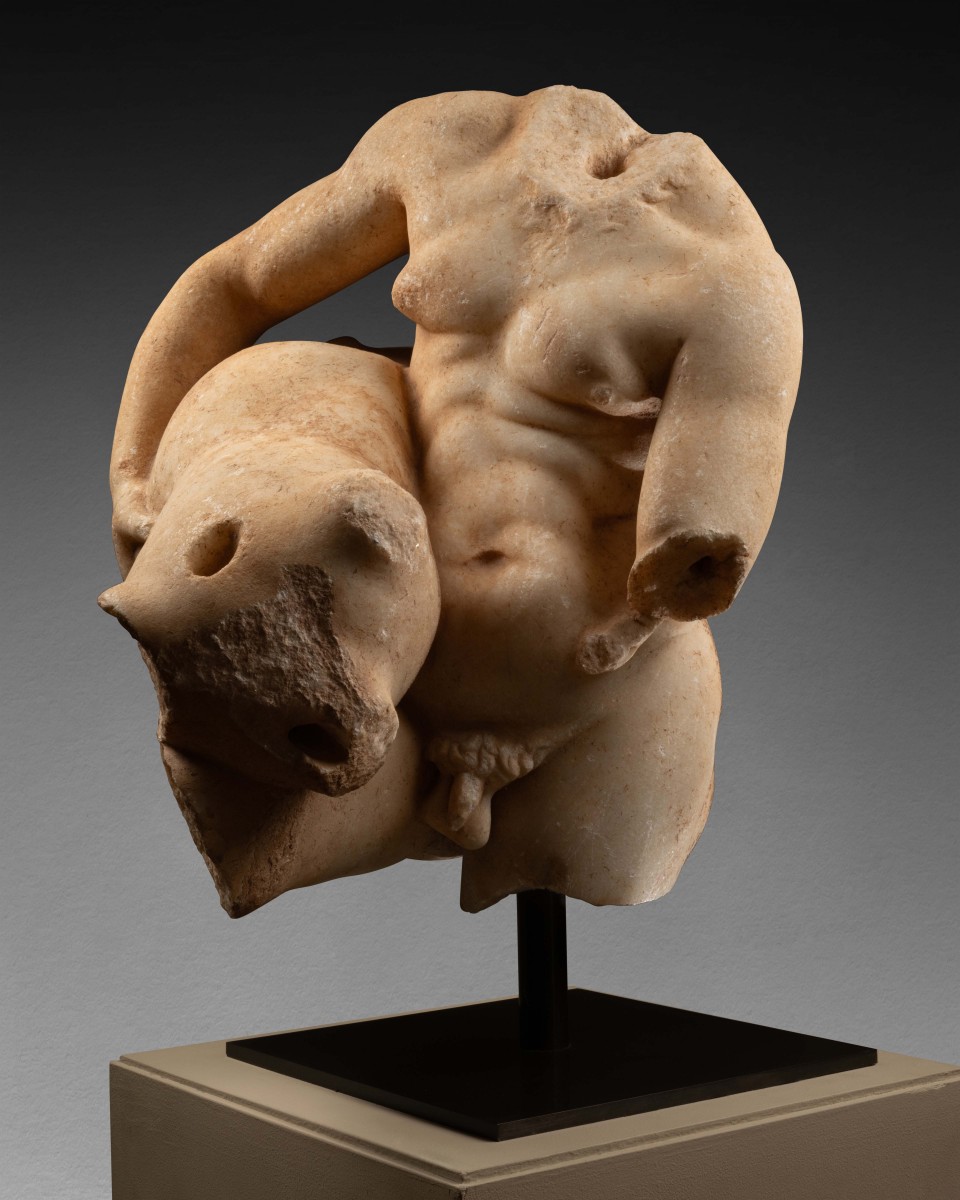
The torso before us represents one of the most prevalent and favoured sculptural motifs among the wealthy families of the Roman ruling class. The depiction of Silenus with a wineskin—commonly referred to as culleus in Latin—directly references sculptures associated with the Dionysian sphere, a well-recognised and esteemed theme in the imperial world. Although carved from Greek white marble, it cannot be ruled out that the statue may have been crafted in a workshop in Rome itself.
According to mythological tradition, Silenus was the principal mentor and guardian of the young Dionysus, entrusted to him by the god Hermes . From this point forward, Silenus remained inextricably linked to the god of wine and the mysteries associated with him. One of the most renowned myths surrounding Silenus involves King Midas. During Dionysus' return from India, the perpetually inebriated Silenus strayed from the jubilant procession and became lost in the rose gardens of the Phrygian king.
King Midas, after taking him in, cared for the elderly, rotund mentor for several days until Silenus was reunited with the procession from which he had inadvertently strayed . The figure of Silenus is symbolically associated with the wisdom that emerges through intoxication, further accentuated in his animalistic traits when transformed into Papposilenus—a variant marked by obesity and pronounced hirsuteness.
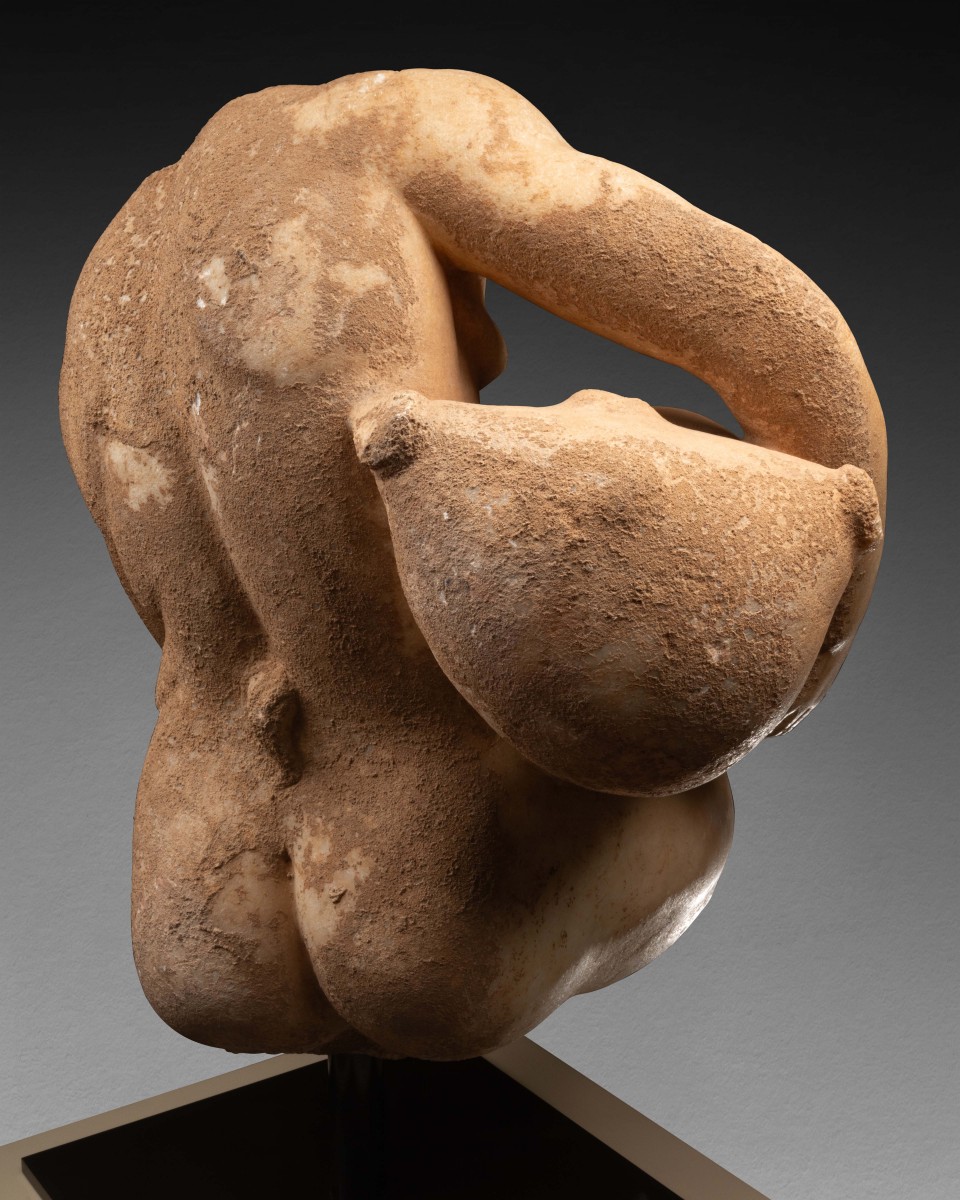
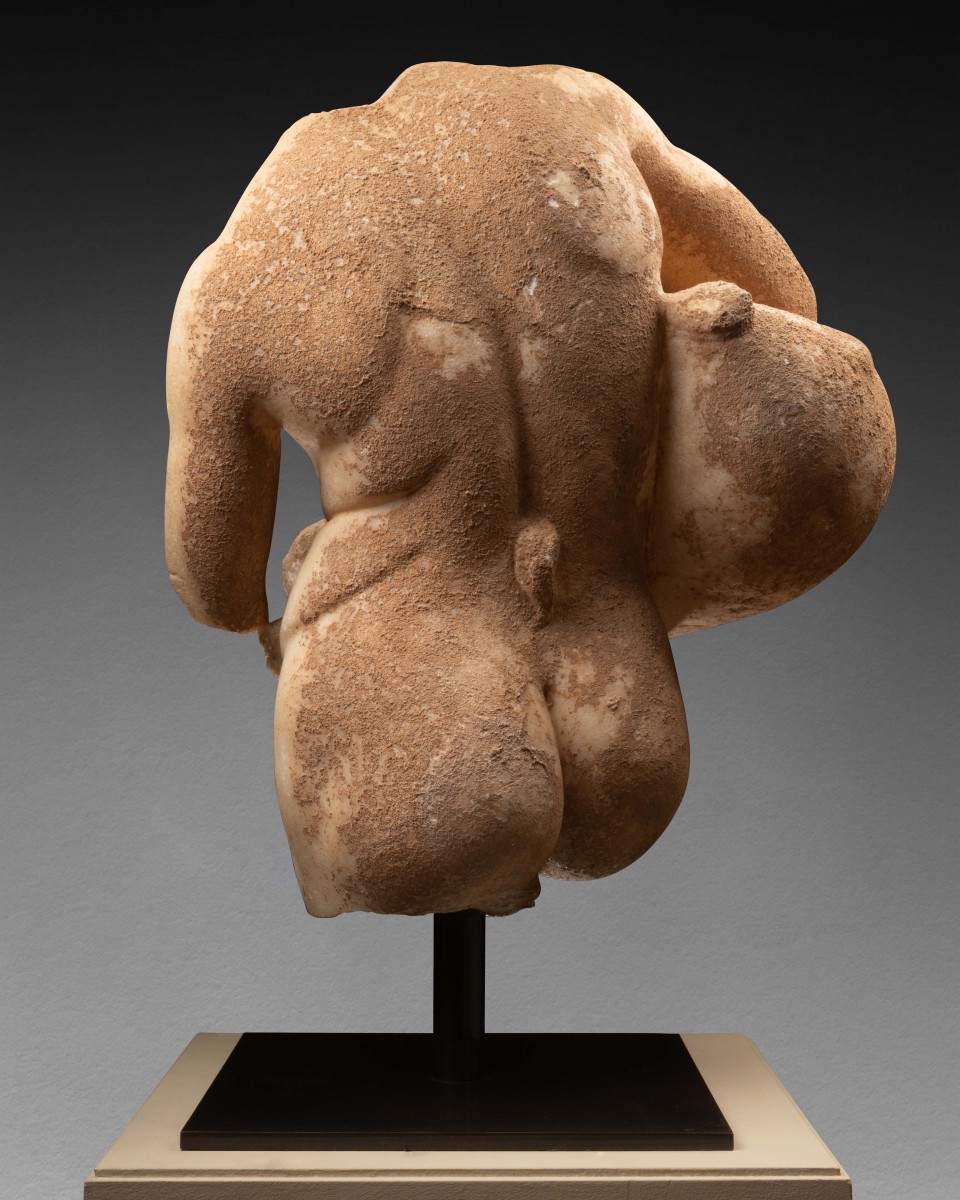
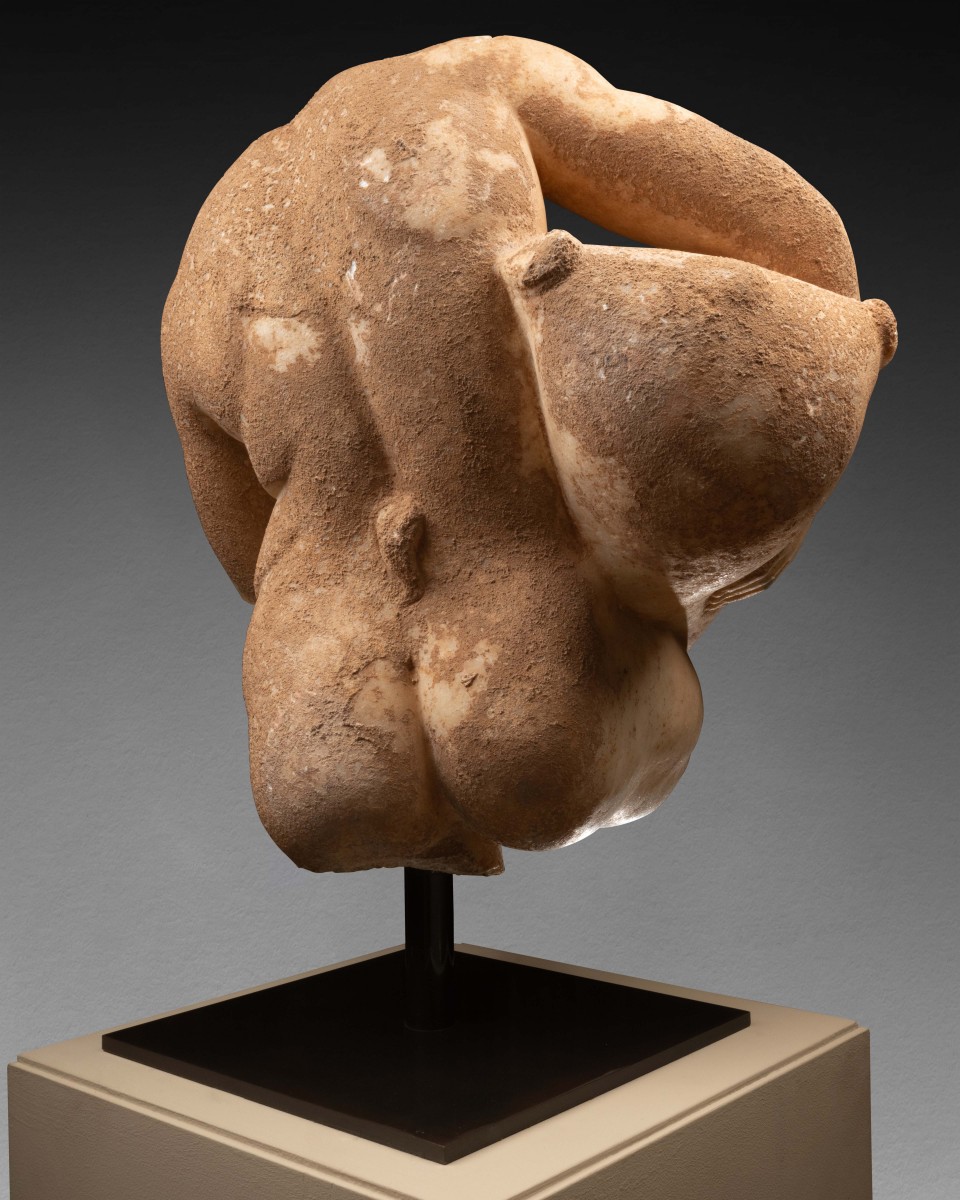
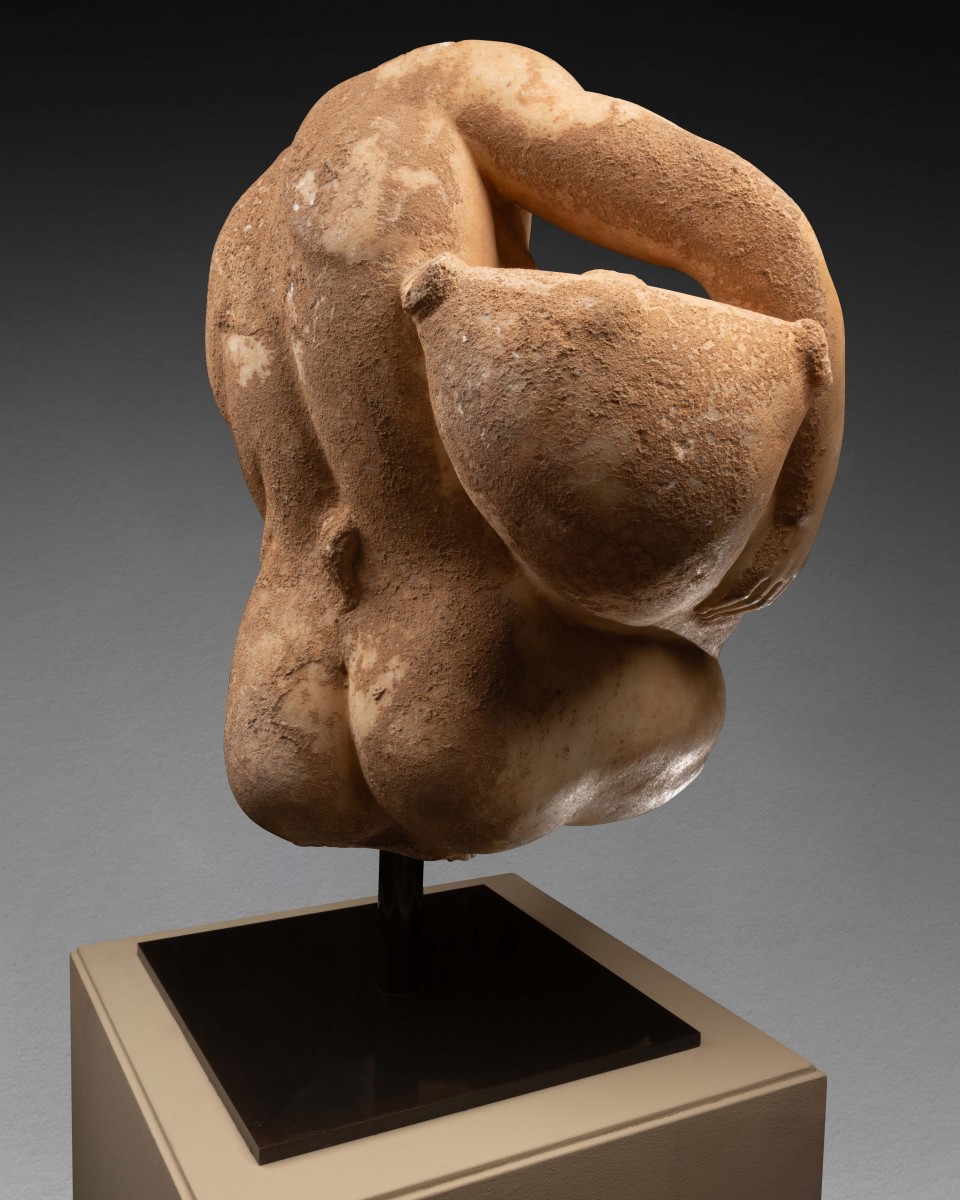
The piece before us was most likely employed as a decorative element in a private estate during the imperial period, while in the Renaissance it was repurposed to adorn a garden, evidently with aquatic features. The back of the Silenus—where a small goat’s tail is also visible—exhibits numerous calcareous encrustations, suggesting its placement near a fountain or, more plausibly, within a nymphaeum, where the statue may have been displayed in a niche.
Numerous examples of such re-use can be cited, including Villa Doria Pamphilj, Villa Albani, Villa Torlonia, Villa Borghese, Palazzo Caffarelli, Newby Hall, and the Staatliche Kunstsammlungen Dresden, to name a few. The presence of multiple holes in the sculpture indicates subsequent modifications, likely for the insertion of iron rods to secure additional elements. These could represent either ancient or more modern restorations, reflecting a practice not uncommon in both late antiquity and the Renaissance.
The model that has come down to us closely resembles the renowned “Cesi” type, part of the Torlonia collection, which originally belonged to the Giustiniani family. It is therefore plausible to suggest that this sculptural type draws stylistically from models by Lysippus and workshops of the Hellenistic period. A comparable example is the Silenus from Villa Albani, which, unlike the “Cesi” type, does not rest on a modern base featuring a panther.
The wineskin of goatskin that Silenus carries not only references Dionysian rituals and the uninterrupted flow of wine during sacred processions and rites but also reflects the material culture of ancient Greek daily life. This object holds a prominent place in Homeric literature and is frequently mentioned in the Odyssey .
It is noteworthy that statues of Papposilenoi from the Theatre of Dionysus in Athens were later copied and adapted in Hellenistic and Roman contexts, closely aligning with the model under examination. In the original setting, these figures functioned as telamons supporting parts of the structure—a role they retained in subsequent examples, such as the cup borne by three Sileni in the Vatican Museums. In later contexts, rather than supporting the skene (stage), they are depicted carrying overflowing cullei on their shoulders. This can be observed in emblematic examples from Villa Borghese and Palazzo Caffarelli.
Delevery information :
We can arrange shipping.