Offered by Dei Bardi Art
REQUEST INFORMATION

Sculptures and works of art from the Middle Ages and the Renaissance
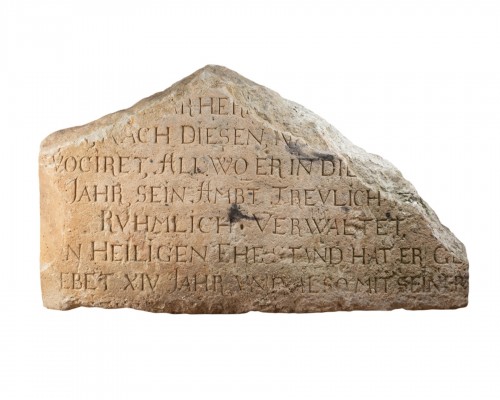
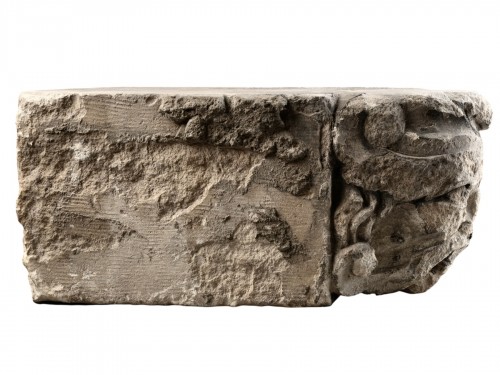
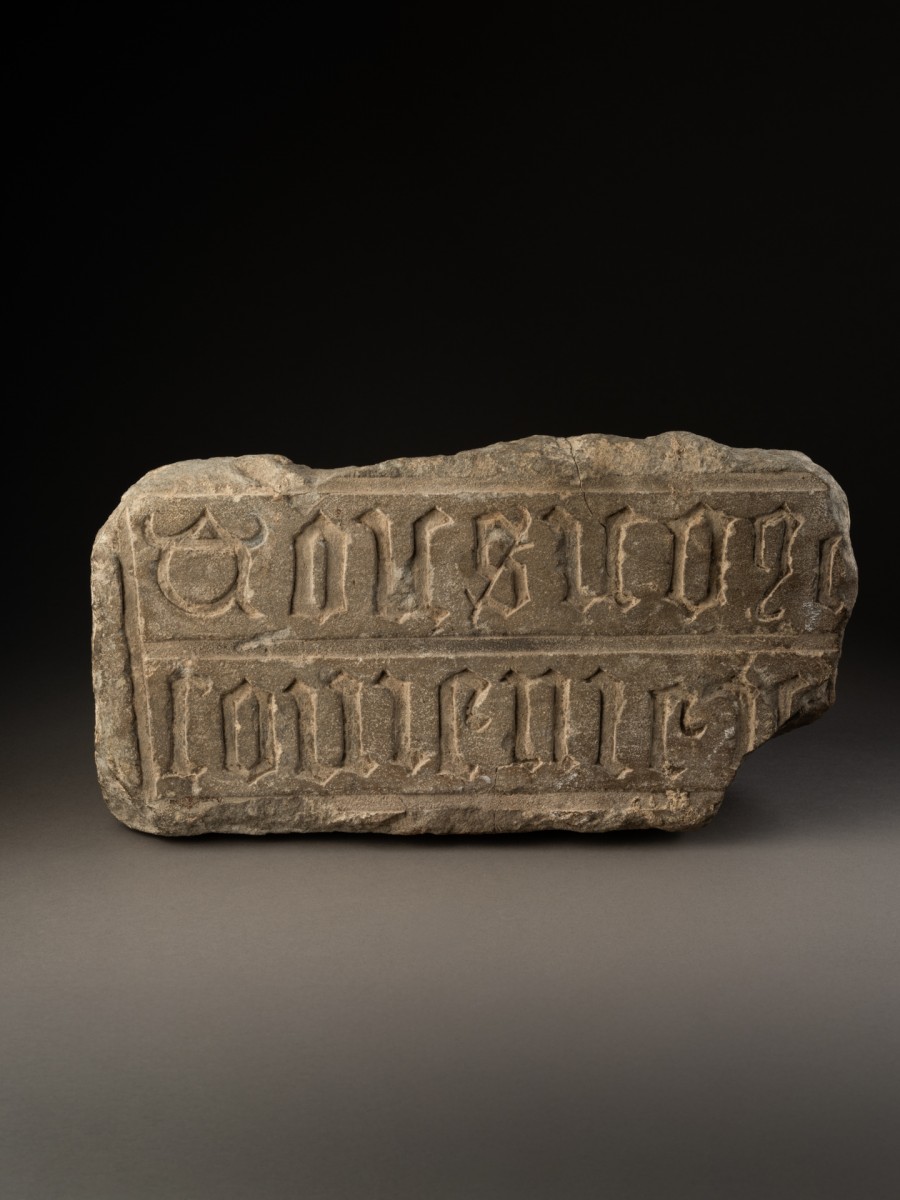
Fragment of a Gothic Inscription
Limestone · France · 15th century ·
H. 15 cm; W. 28 cm
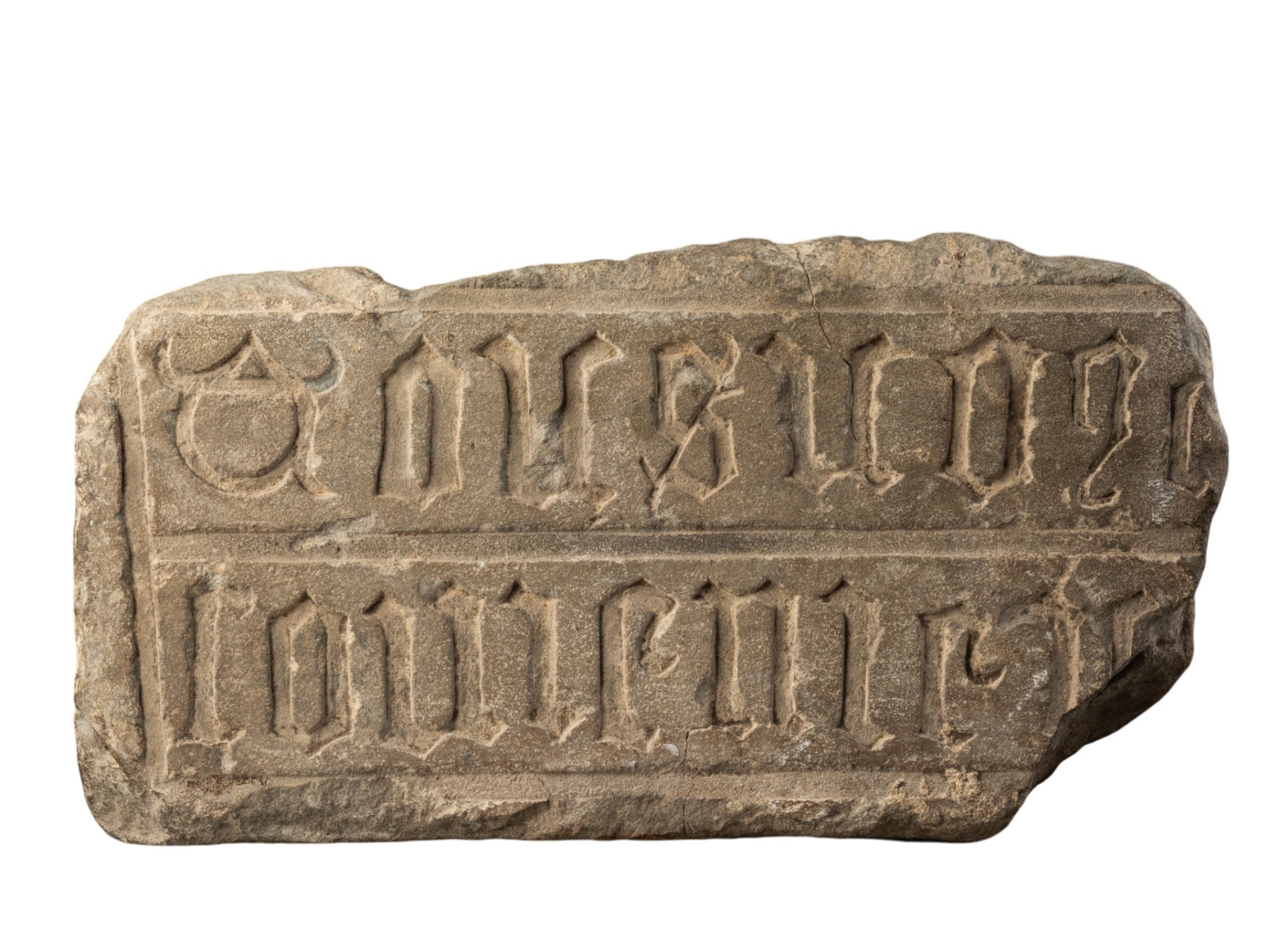
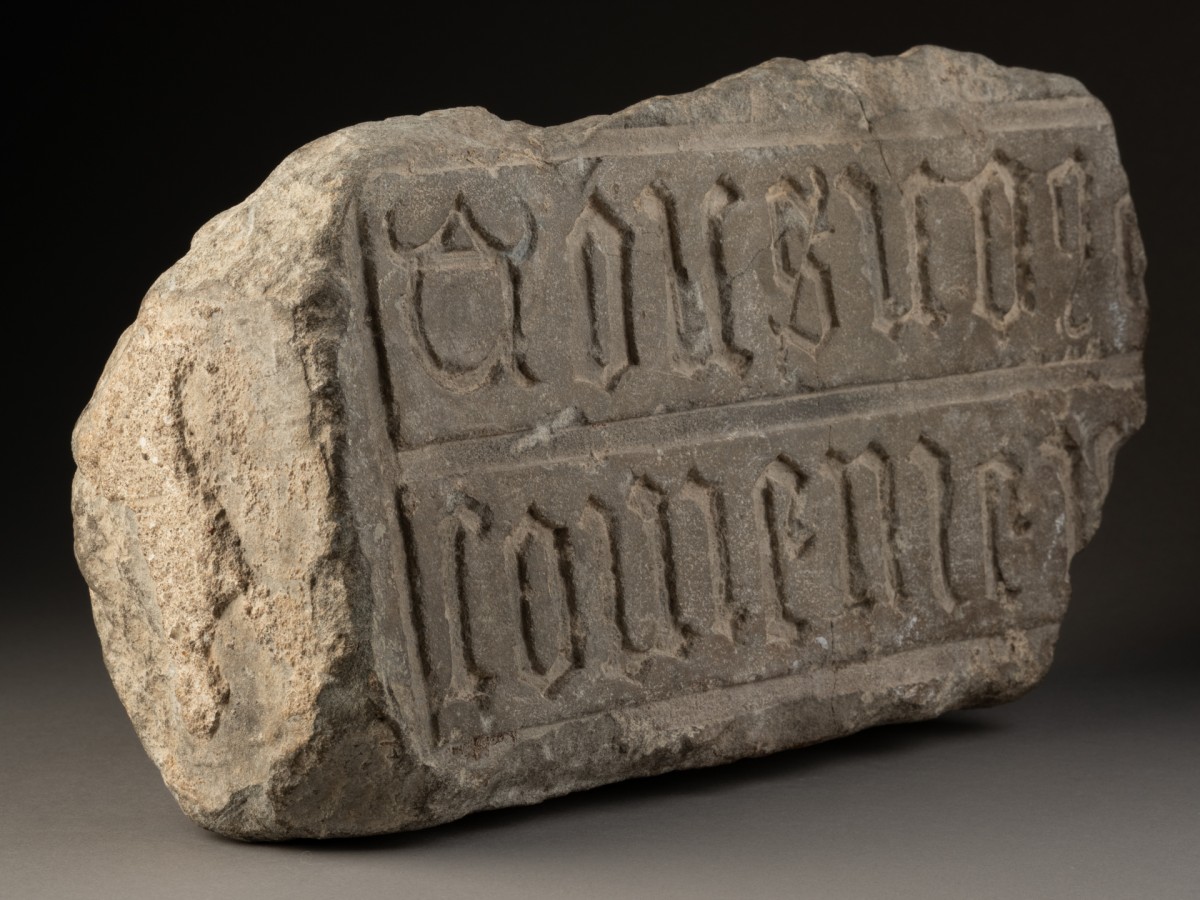
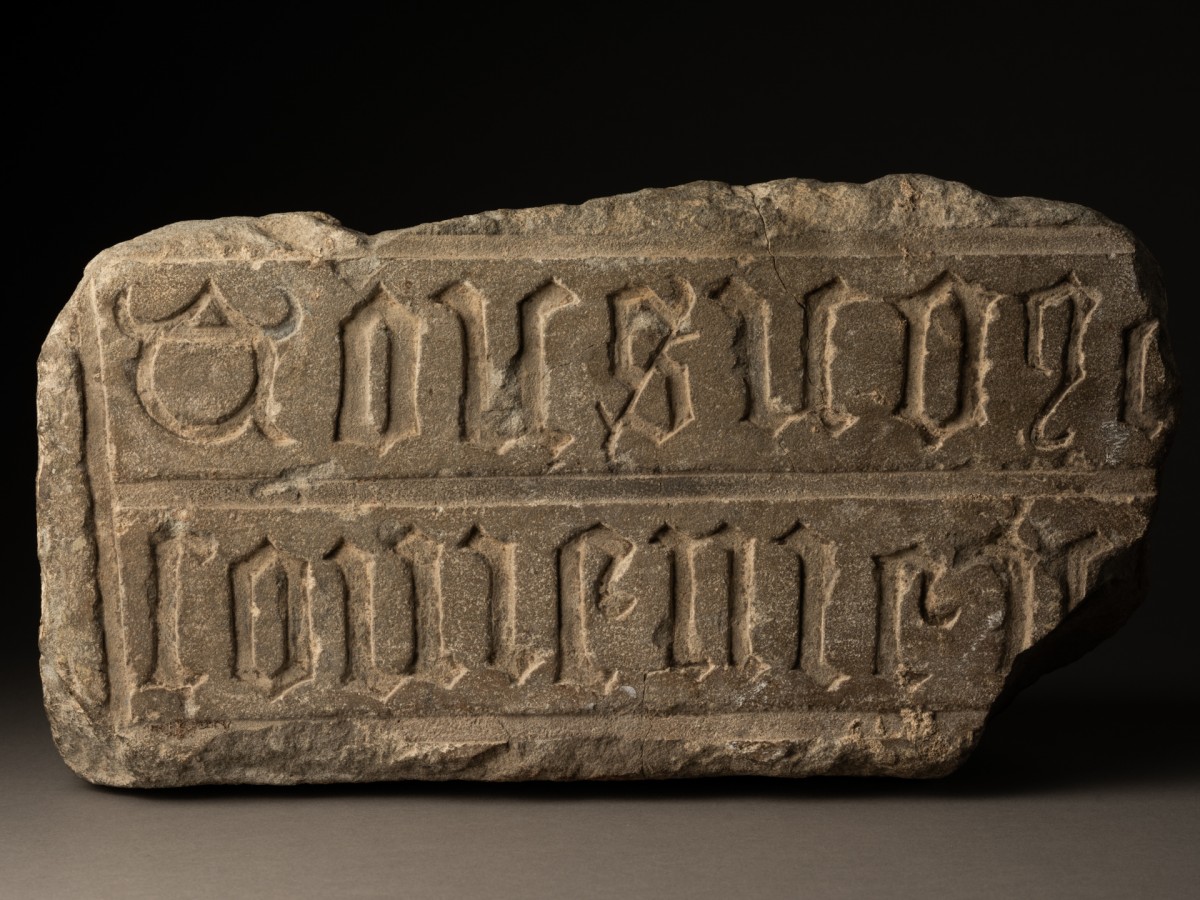
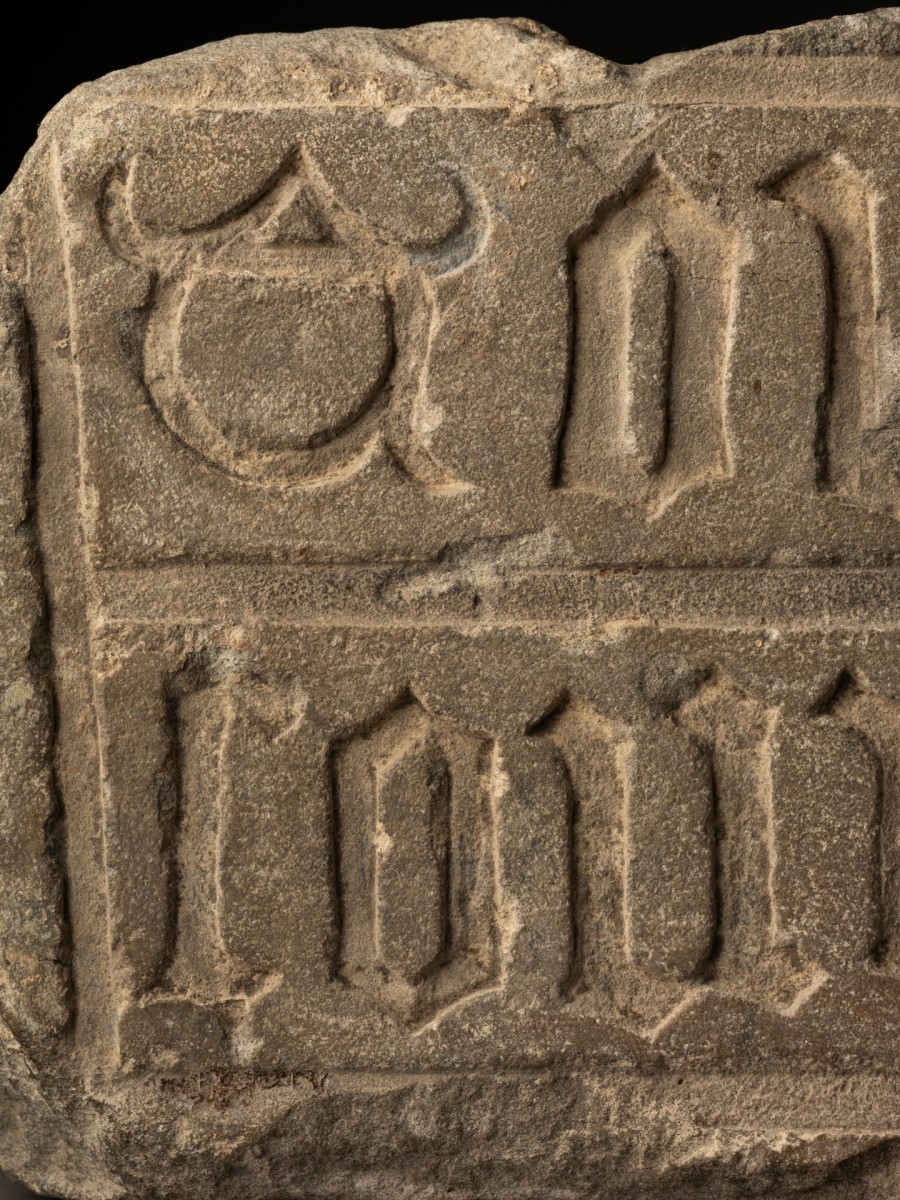
This rectangular fragment of calcitic limestone presents two epigraphic registers separated by an incised horizontal moulding and framed by a double raised border.
The inscription is carved in Gothic textura across two registers separated by a horizontal moulding. Drawing on the palaeographical conventions of French Gothic epigraphy of the 15th century, the most plausible reading is:
Line 1: […] m e s · u o z (or […] m e s b o z)
Line 2: i o u s e m i e s (or i o u s e n i e s)
Taking into account the standard formulae of Middle French funerary epigraphy, a tentative reconstruction would be: "[Ci gist…] mes[sire…] / [j]ovsenie[s]". The surname Jouvenie / Jouveniez is documented in 15th-century France.
The depth of the carving — incised with a straight-section chisel — is regular and skilled, pointing to a professional stone-cutter.
The script is epigraphic Gothic textura (or littera textualis), a form adapted from manuscript calligraphy for use in stone. Textura is the most strictly Gothic of all medieval scripts: it employs only straight strokes and produces the characteristically dense vertical texture from which it takes its name. In its lapidary form, it is recognisable by several distinctive features.
The vertical shafts carry bifid feet (small inverted 'v'-shaped serifs). Rounded letters — o, b, d, p — are not traced as smooth curves but composed of two angular half-ovals, broken in accordance with the fundamental principle of Gothic letter-forms. The module is wide, with close letter-spacing that reinforces the texture effect. Abbreviation marks (tilde, point) were probably present in the lost sections, a common device for saving space in funerary inscriptions.
This script is characteristic of the second half of the 15th century in France, the period at which epigraphic textura reaches its maturity before being progressively displaced by humanistic forms in the early 16th century. The use of the French vernacular — rather than Latin — provides a second consistent chronological indicator: in France, the vernacular definitively supplants Latin in epitaphs at the turn of the 14th and 15th centuries.