Offered by Antichità Castelbarco

Galizia Fede (Milan c. 1578 – c. 1630) Circle
Victorious Judith
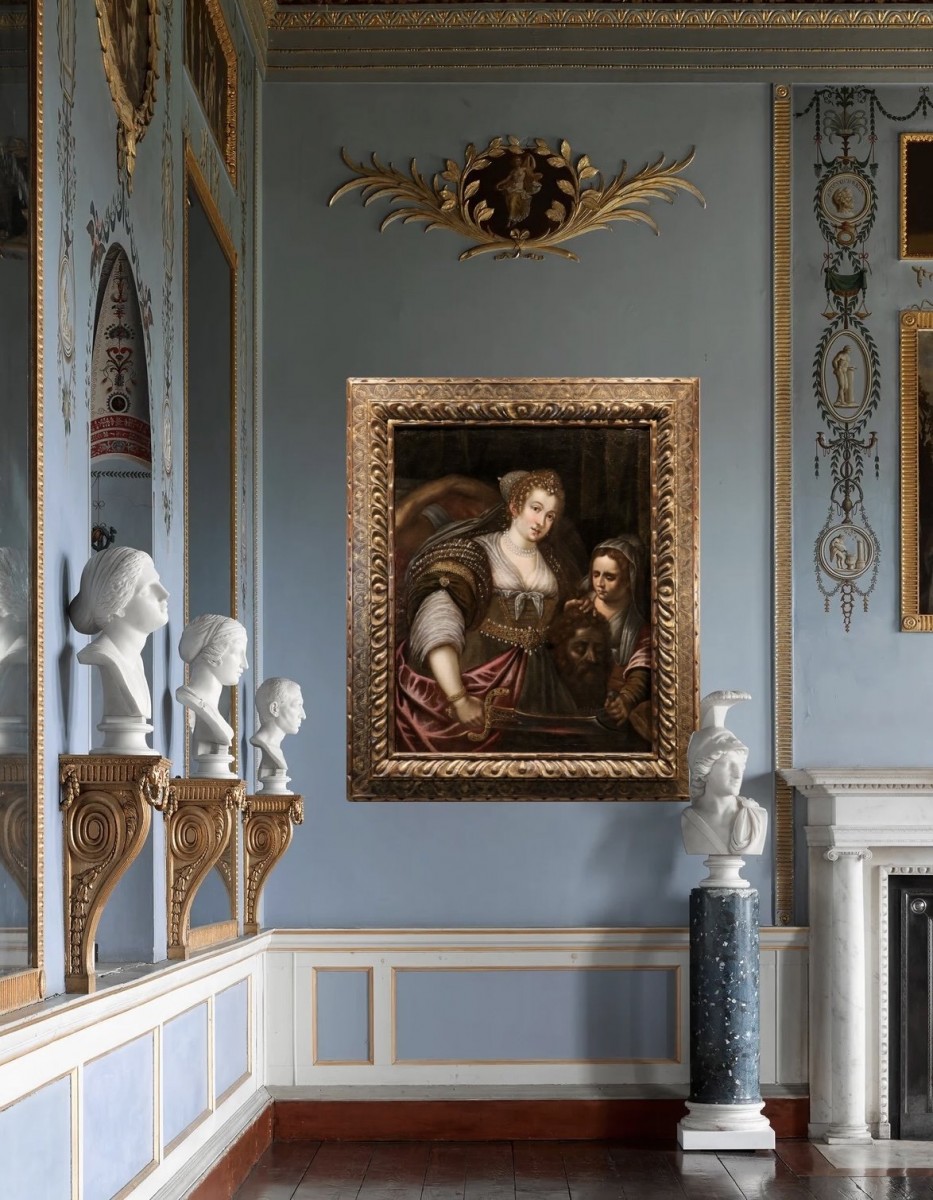
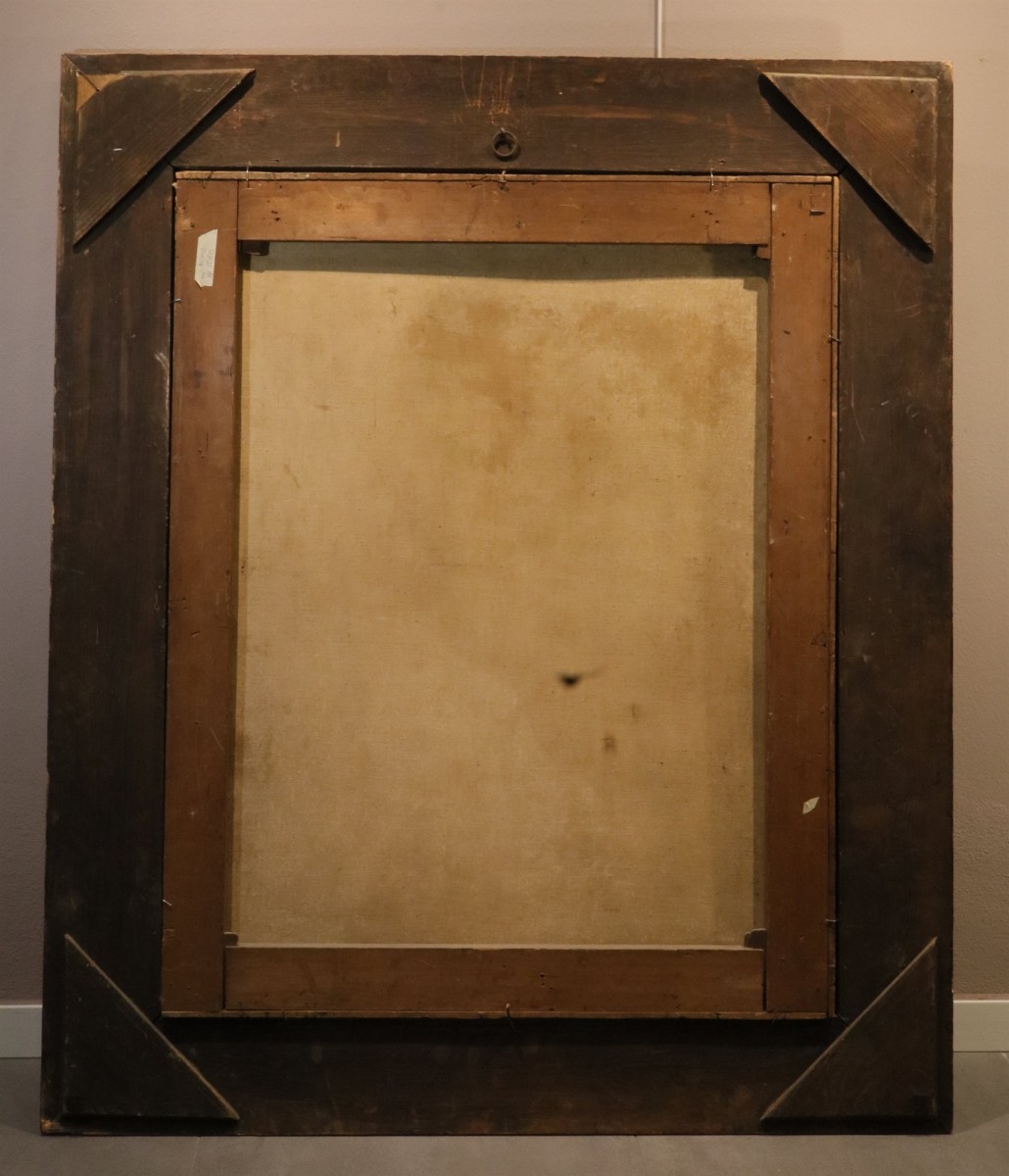
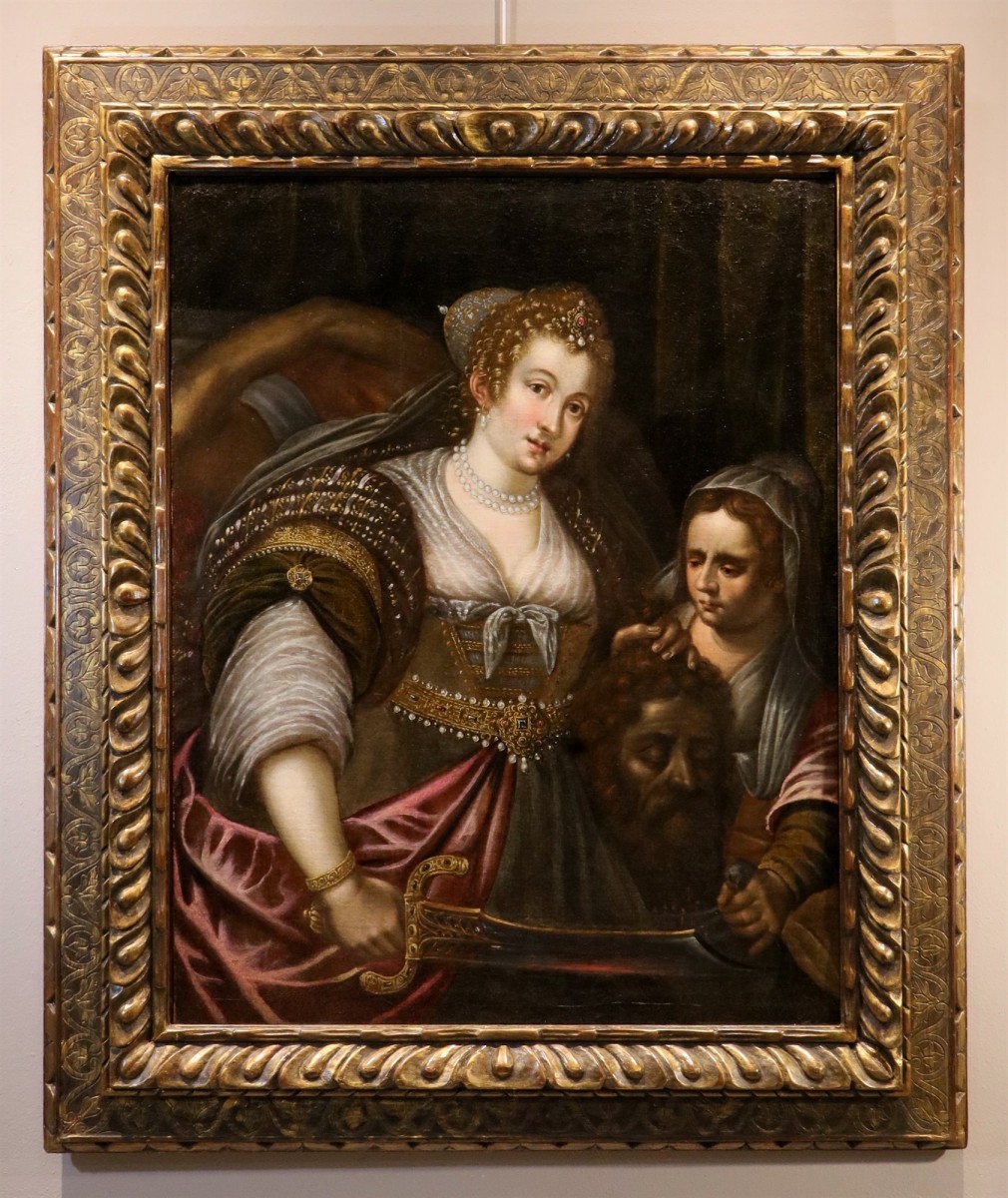
Oil on canvas 116 x 91 cm. – In an antique frame 149 x 125 cm.
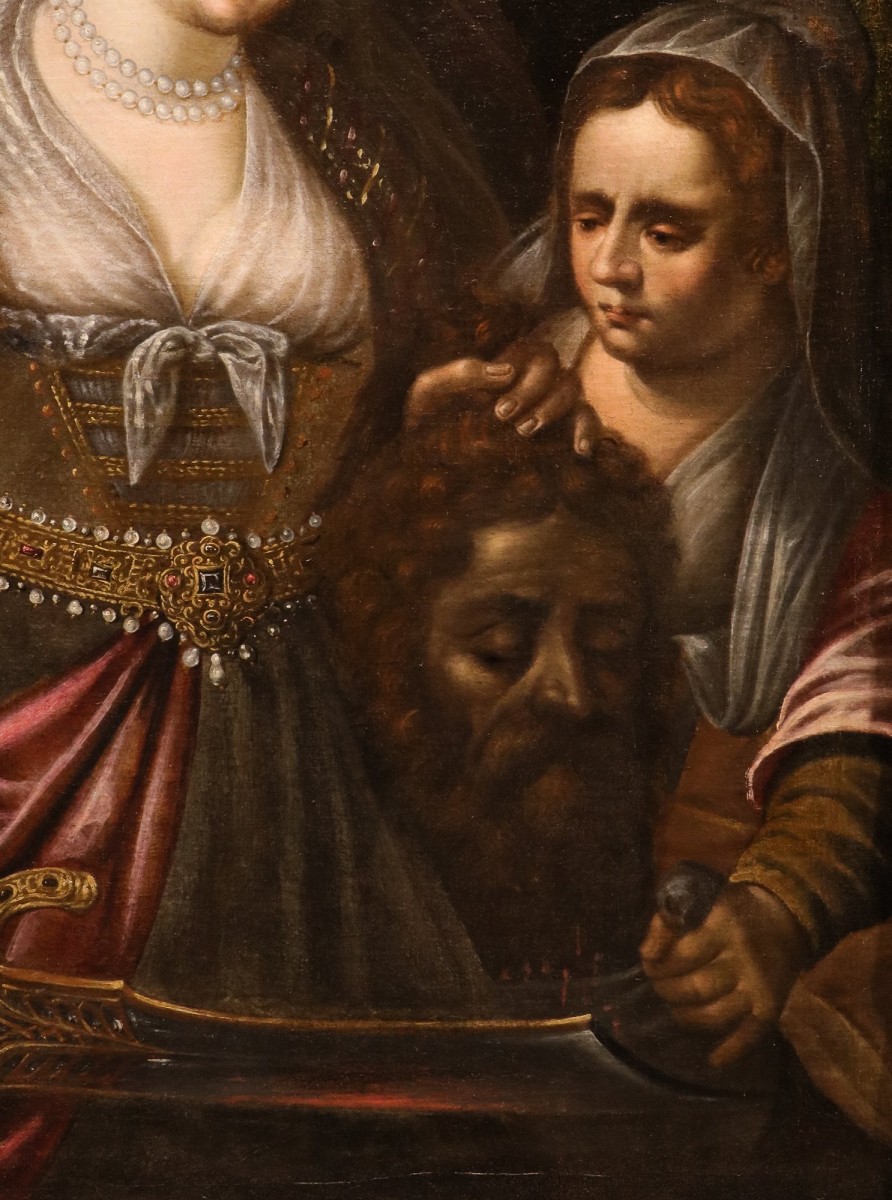
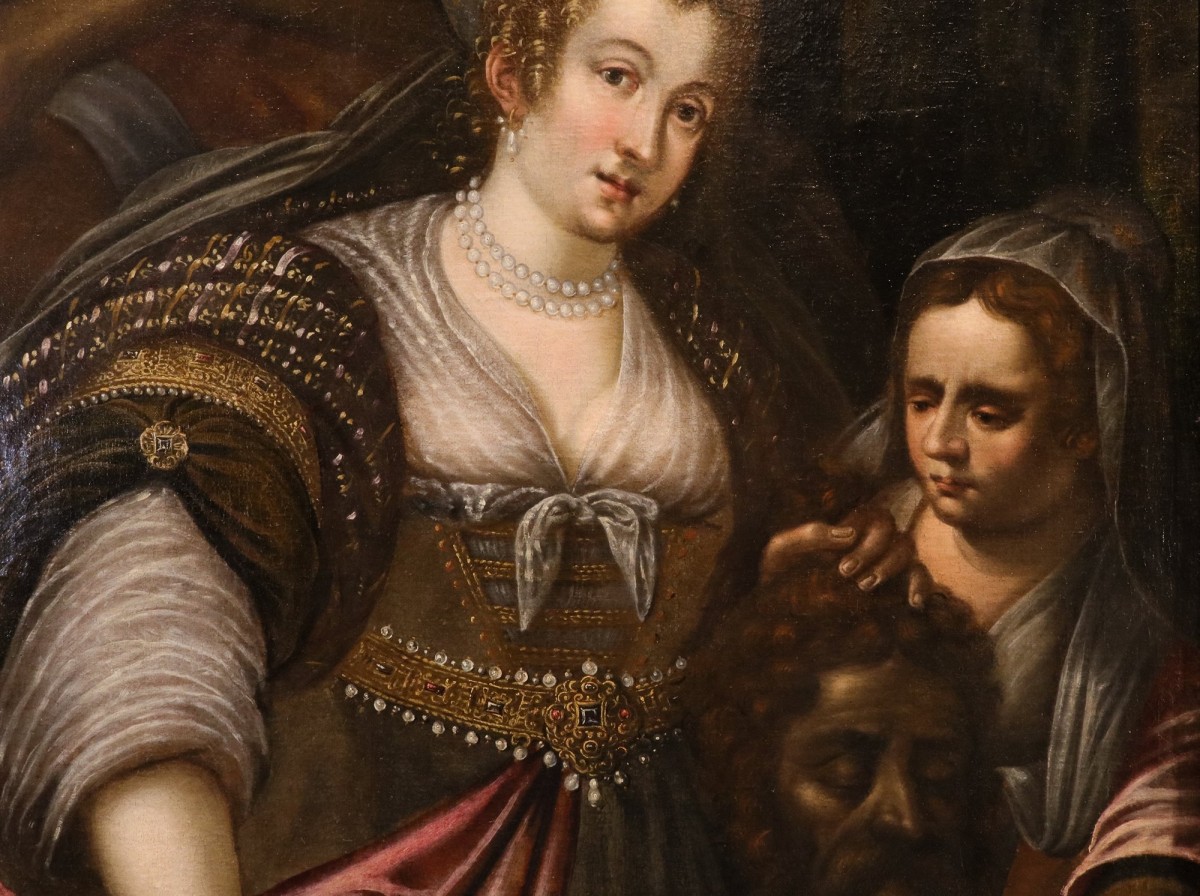
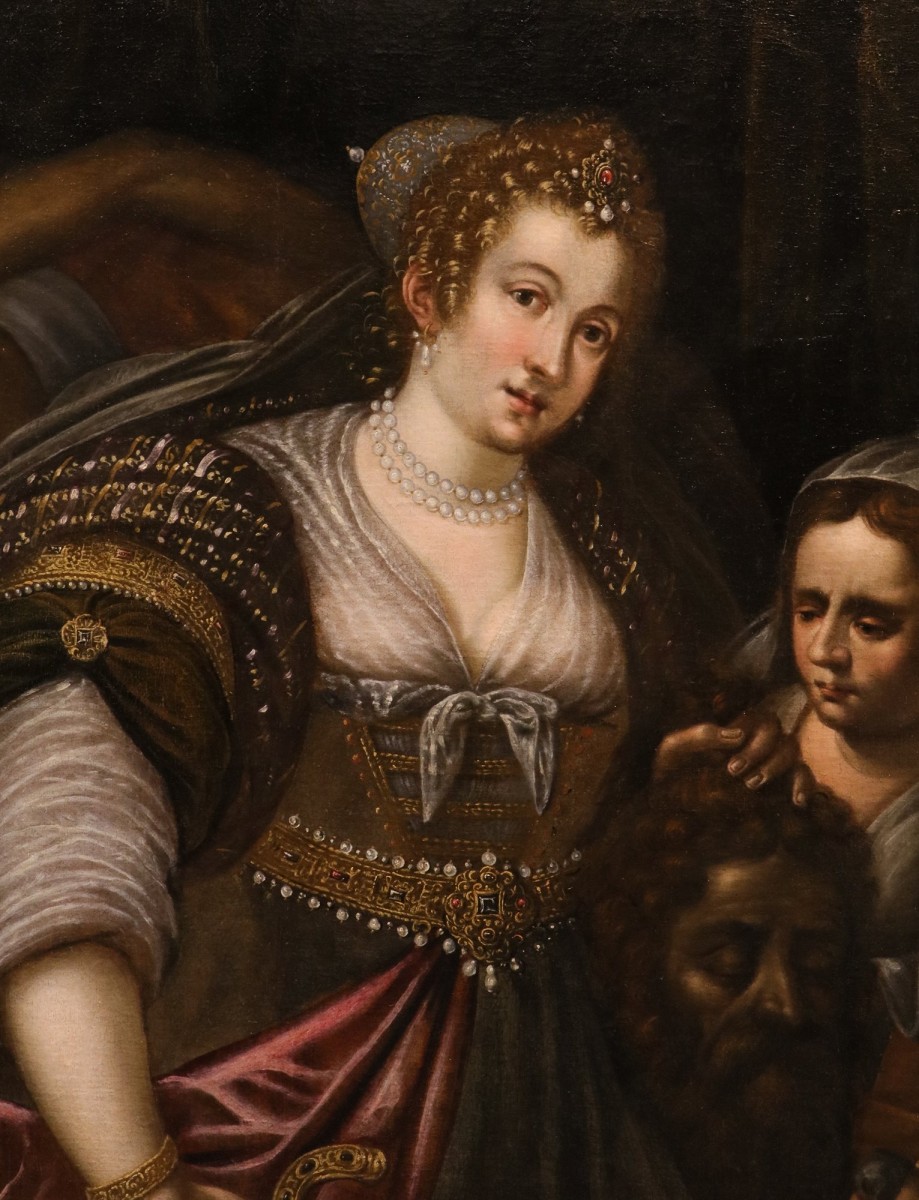
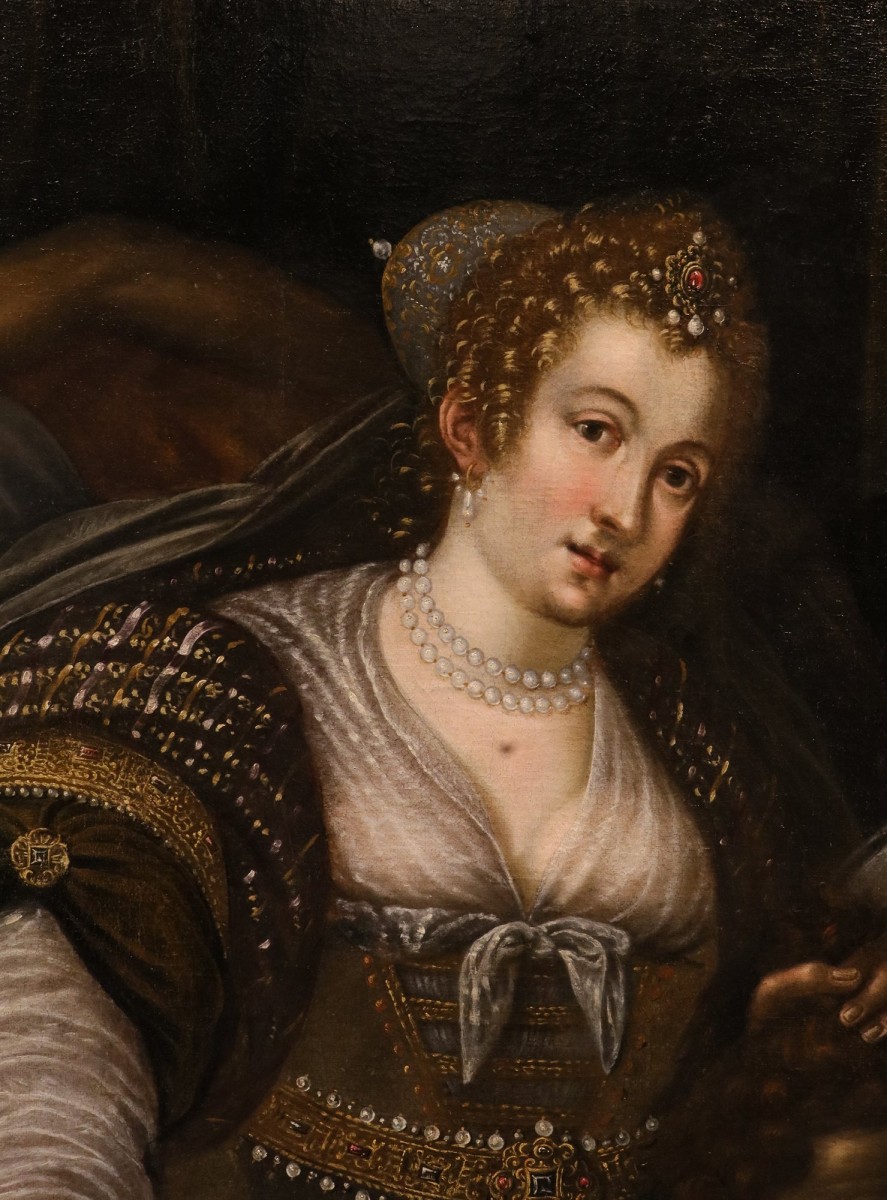
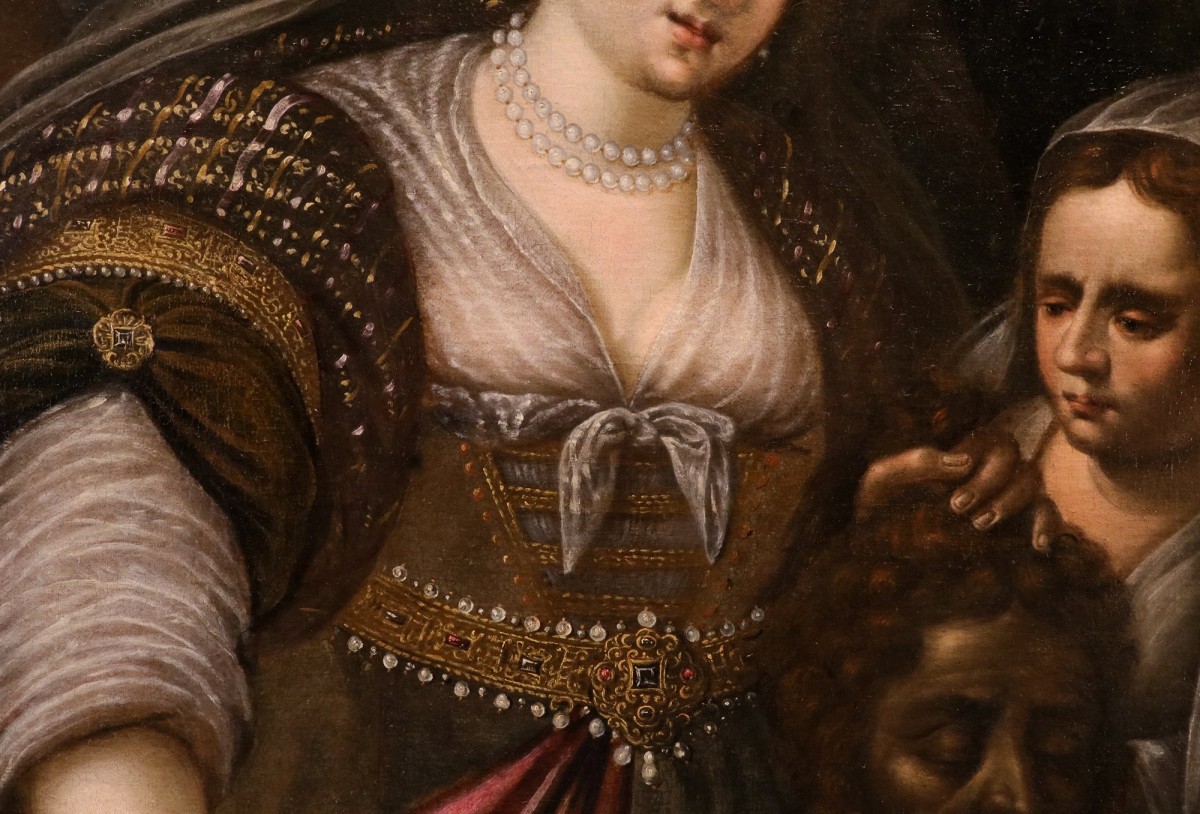
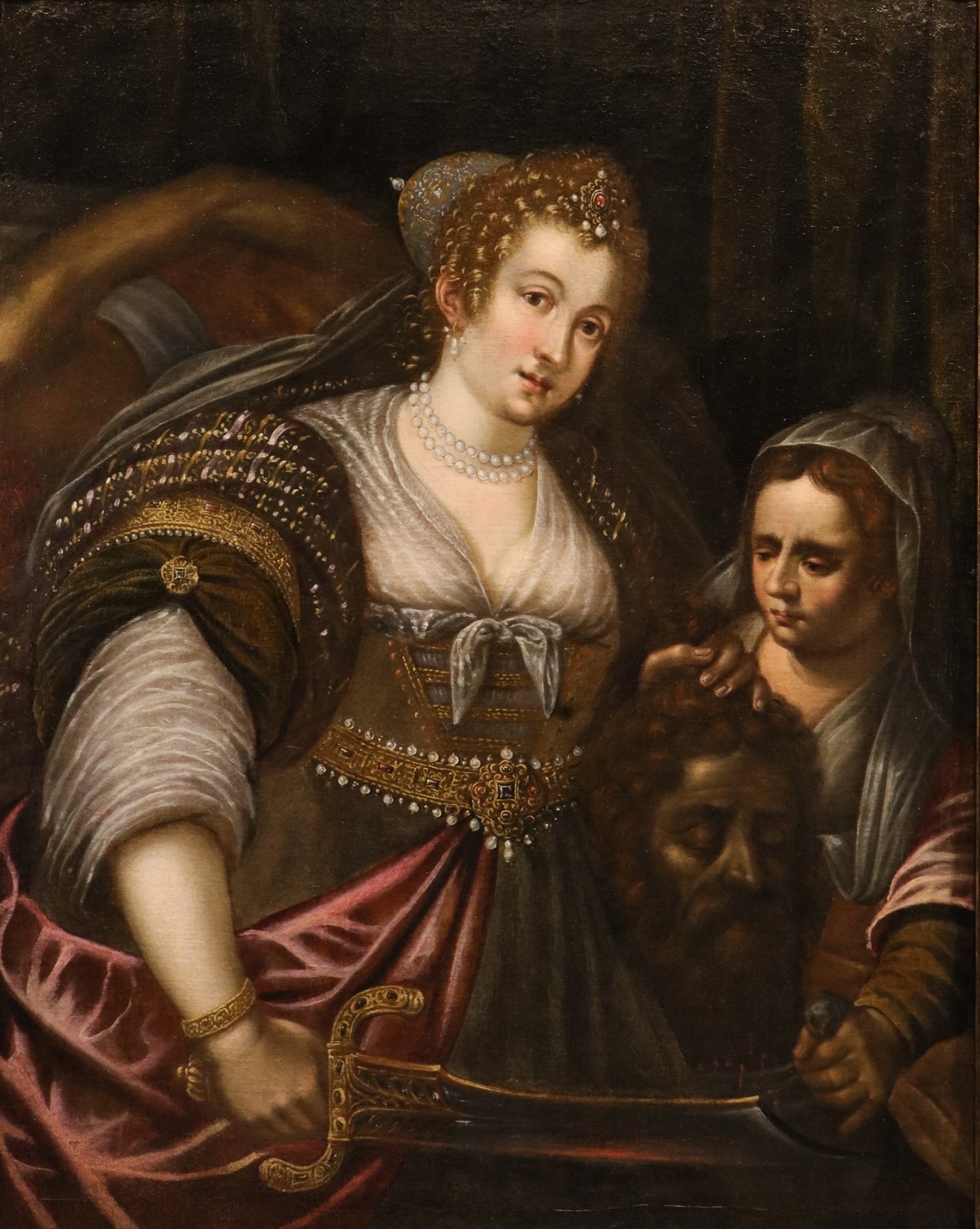
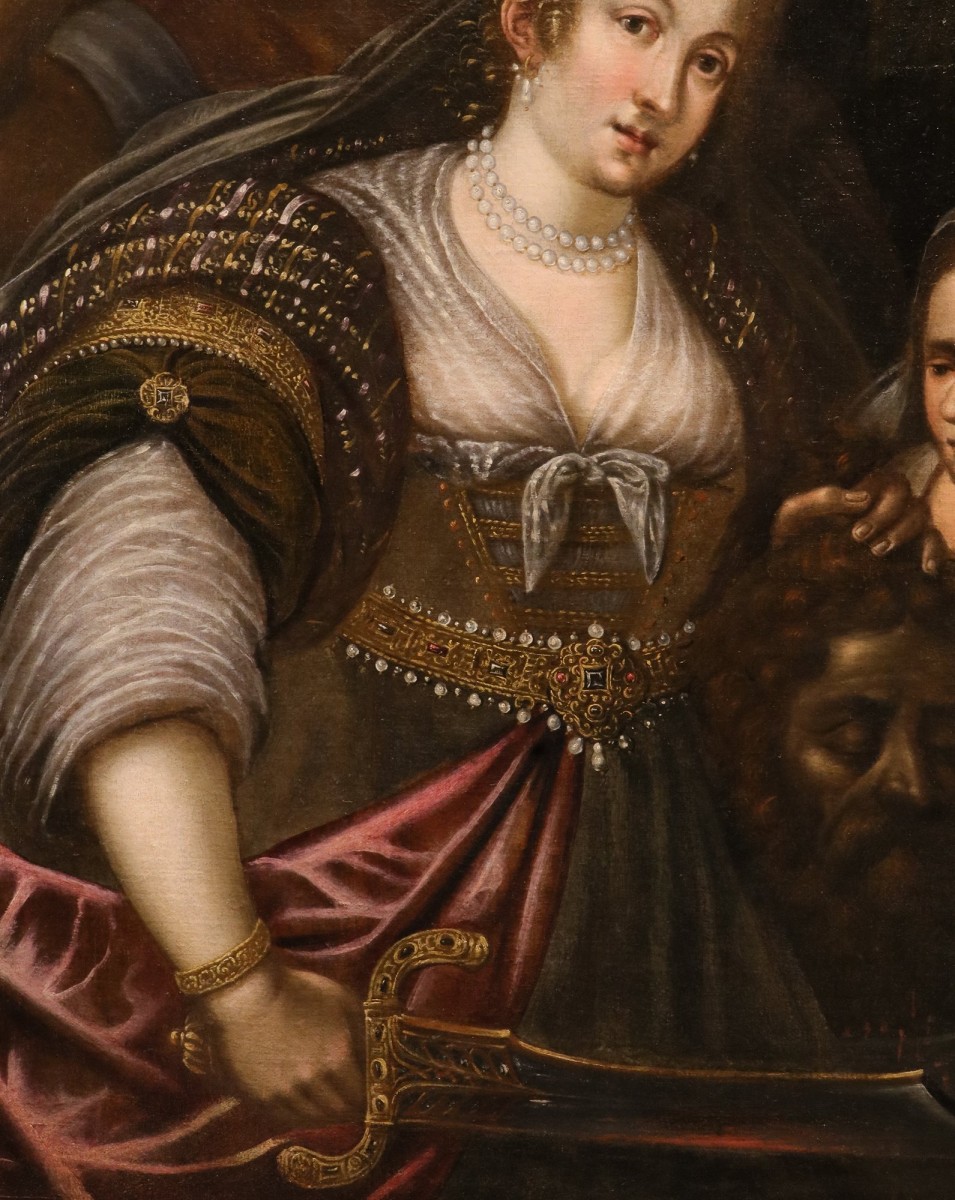
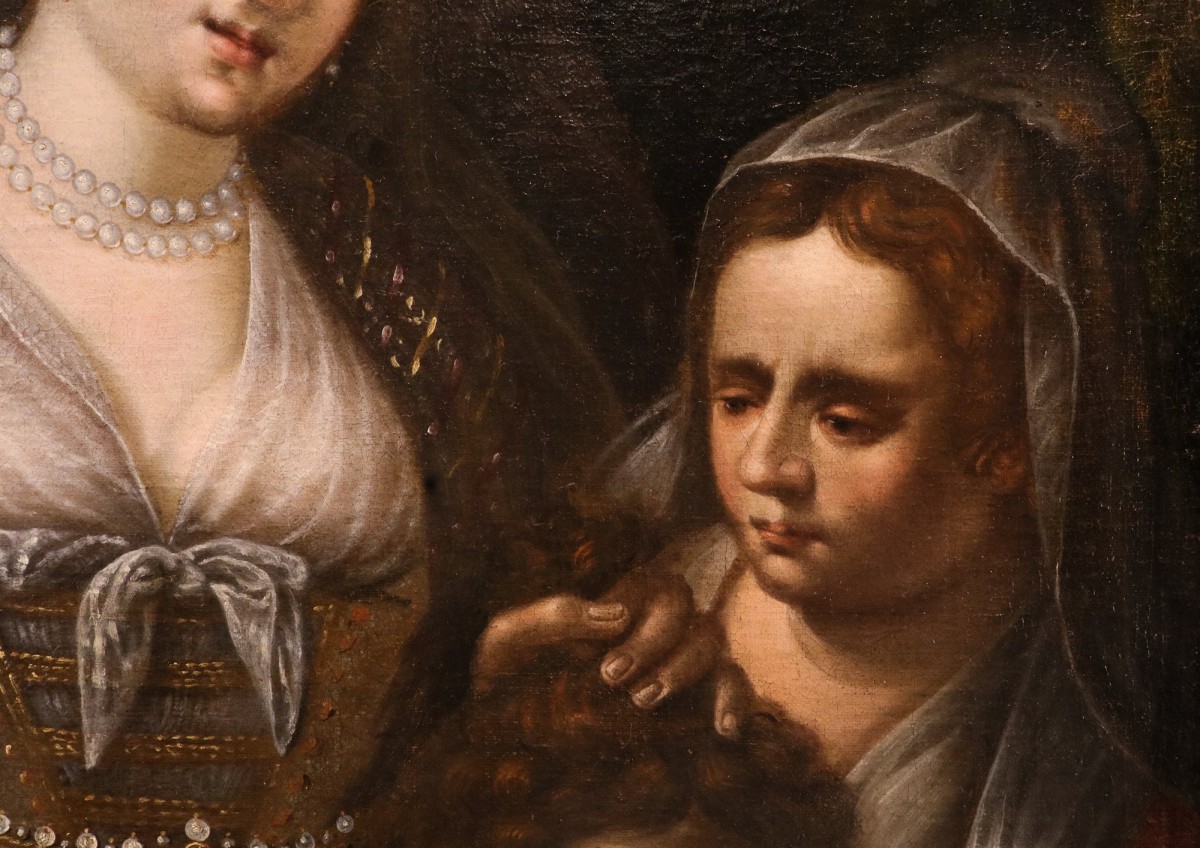
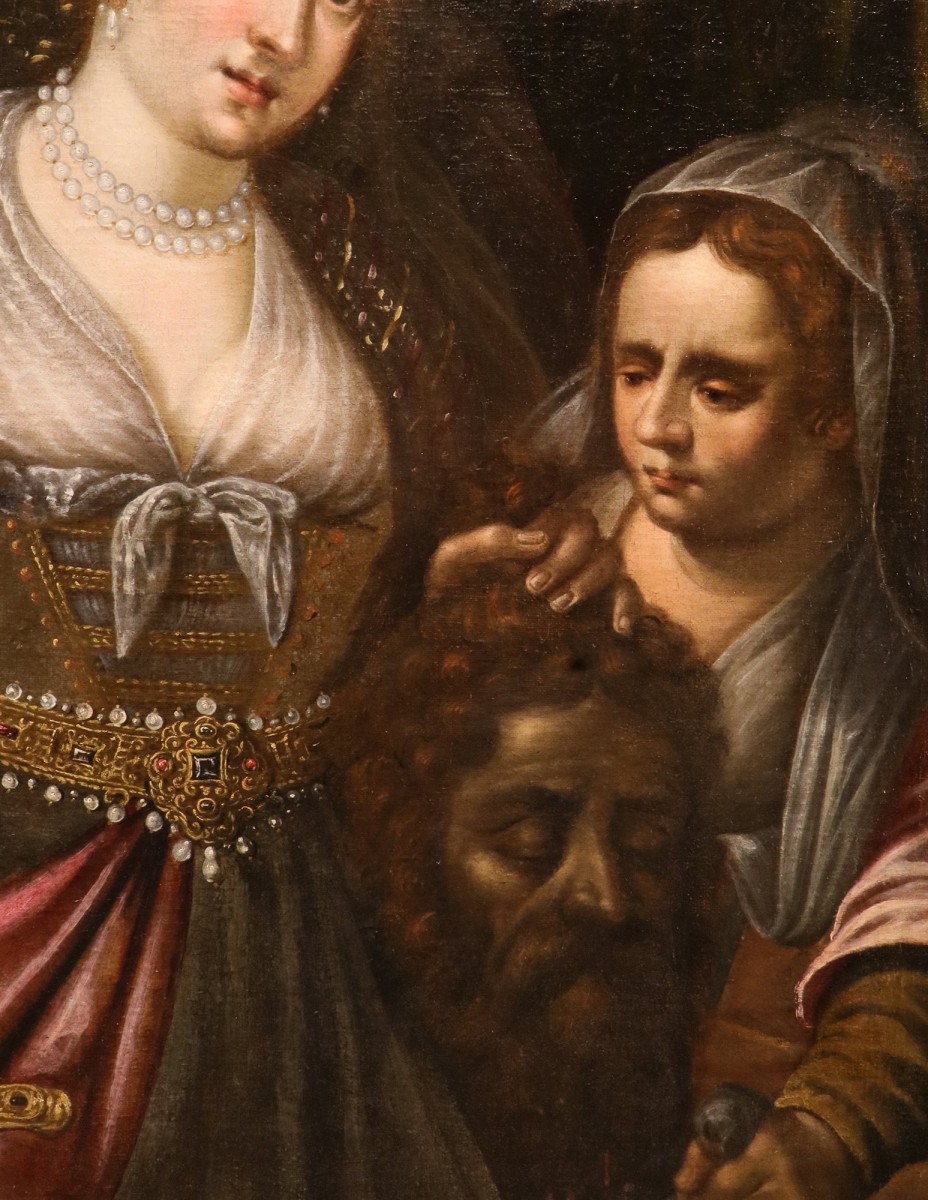
The work depicts a captivating portrait of the heroine Judith: victorious, at the centre of the painting, the woman is portrayed in her regal attire, adorned with precious ornaments and jewellery, the sword still clenched fiercely in one hand and the head of Holofernes held aloft in the other.
This iconographic subject was much loved during the Renaissance, as it suited the taste of the time for the depiction of strong, often fatal passions, whilst at the same time embodying great moral values.
Specifically, it depicts the biblical episode of the killing of the Babylonian general Holofernes by the beautiful and courageous Jewish widow Judith, who had devised a cunning plan to free her people from foreign domination.
The woman waited until the end of a lavish banquet organised in honour of Holofernes and, after seducing him, waited for the man to fall asleep before killing him. Here we see her depicted immediately after her feat, with the elderly servant Abra witnessing the scene.
There is a clear contrast between the smug composure born of her success and the grace and calm of the woman with her head in the foreground: the artist has in fact chosen to emphasise the heroine rather than the act itself, directing our gaze towards Judith’s virtues, through which she managed to defeat evil by her courage.
The depiction therefore has profound symbolic value: despite the atrocious act in which she is the protagonist, Judith embodies great moral values. Presented as a symbol of the salvation that God offers to the Jewish people, she also rises to become an emblem of the Church itself and its salvific role, emphasised by the ethereal white of the woman’s complexion, which evokes purity.
Worthy of mention are the details with which the jewellery she wears has been rendered, which highlight her beauty, such as the belt encircling her waist, or the garments covered with precious stones and pearls, as well as the hairpin set in her hair, and even the hilt of the sword, finished with great skill.
This is a work of great merit, painted between the late 17th and early 18th centuries, still in the 16th-century style and with unmistakable Lombard stylistic features, which immediately bring to mind the name of Fede Galizia (Milan, 1578 –1630), a Baroque painter known primarily for her still lifes, although she also produced portraits and religious scenes.
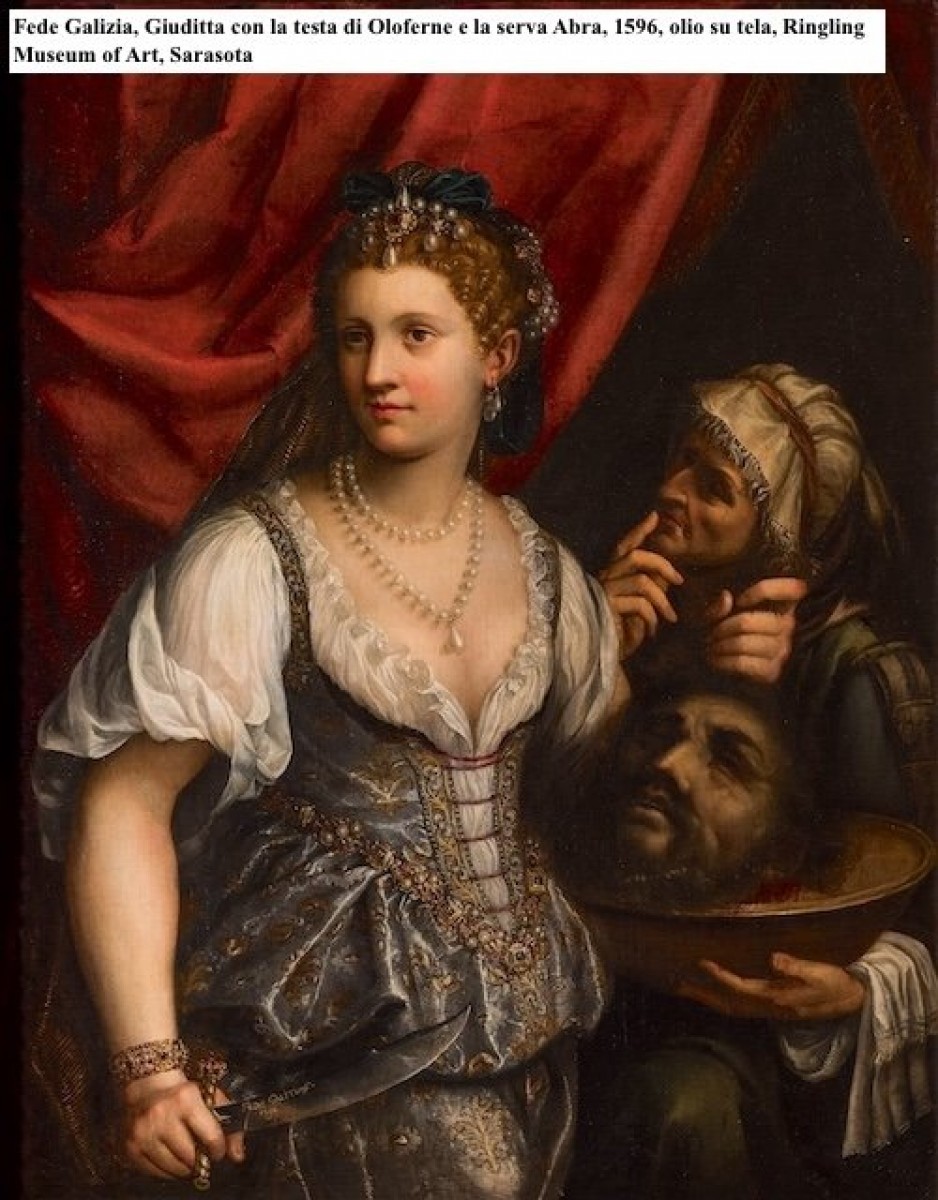
The artist tackled this subject on numerous occasions; for example, our painting bears a resemblance, albeit a reinterpreted one, to the ‘Judith with the Head of Holofernes’ in the Galleria Borghese in Rome, or to the painting of the same subject, signed and dated 1596, in the Ringling Museum of Art in Sarasota (**).
Indeed, in the painting just mentioned, as in the work in question, the artist’s focus is not on the dramatic aspect of the scene, but rather on the portrait of Judith, on the perfect rendering of the garments, fabrics and jewellery.
We know, in fact, regarding the refinement with which Fede Galizia rendered such details, that the painter benefited from the reputation achieved by her father Nunzio Galizia’s workshop, which specialised both in the production of paintings and miniatures, and in the creation of splendid ceremonial robes and theatrical costumes.
**Judith with the Head of Holofernes - Fede Galizia (Milan c. 1578 – c. 1630) 1596, oil on canvas, 120 × 94 cm. Ringling Museum of Art, Sarasota
Delevery information :
We take care of and organise the transport of the purchased works, both for Italy and abroad, through professional and insured carriers.
We take great care We personally take care of the packaging, to which we devote a great deal of care: each work is carefully packed, first with arti- cle material, then with a custom-made wooden box.
Should you have the desire to see this or other works in person, we would be happy to welcome you to our gallery in Riva del Garda, Viale Giuseppe Canella 18, we are always open by appointment only.