Offered by Galerie Léage
REQUEST INFORMATION

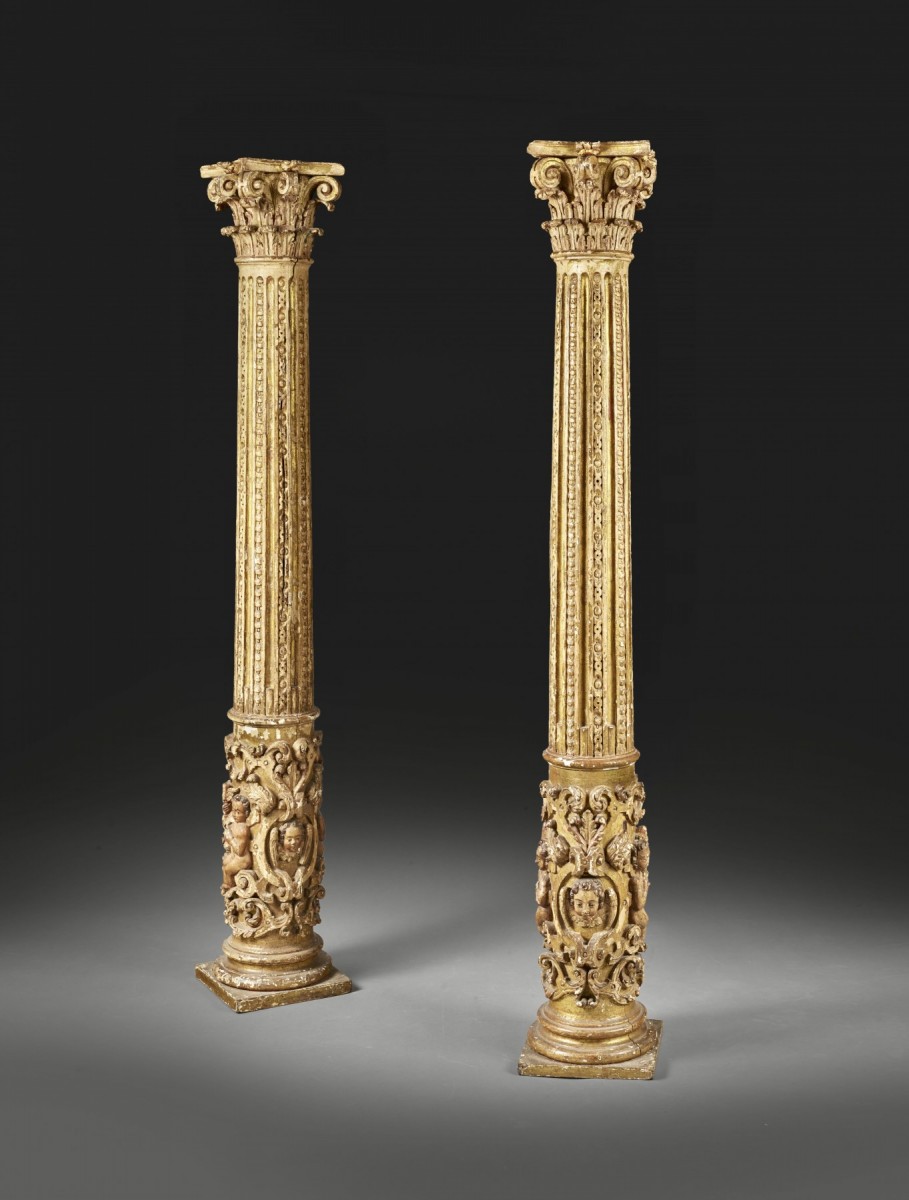
Spain or Italy, late 17th century
Carved, gilded and painted wood
Comparable examples:
- Arrietkatúa estate, Motrico, Basque Country, Spain, home of Doña Mercedes de Curruca, countess of Motrico
- Castillo de Batres, Madrid, Spain
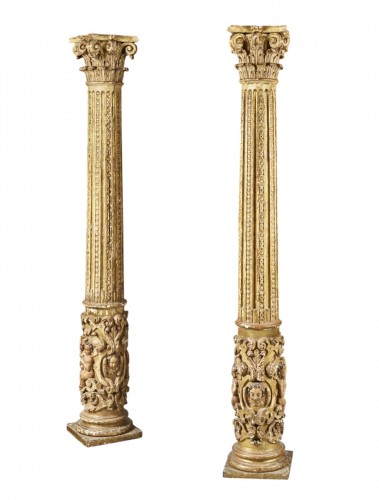
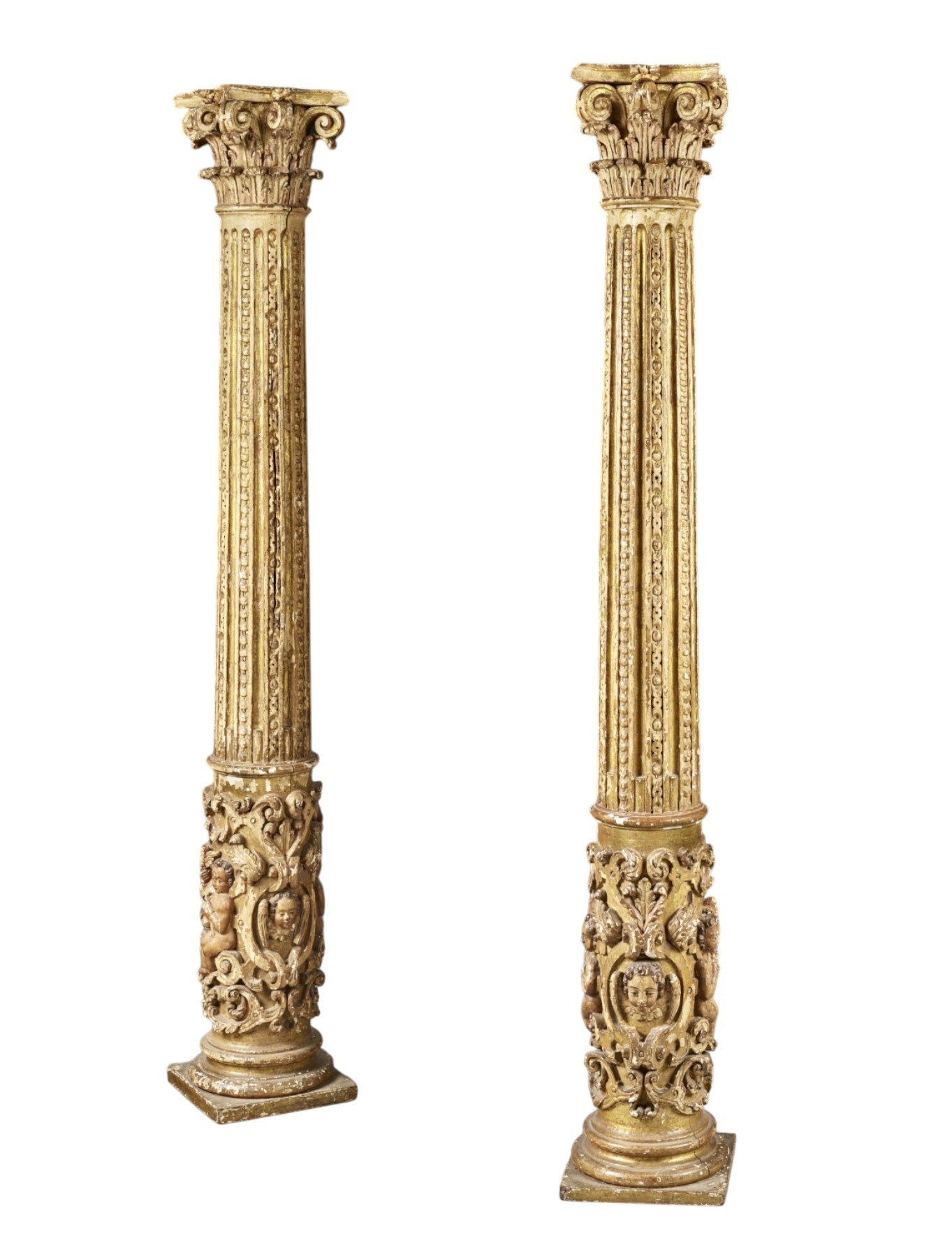
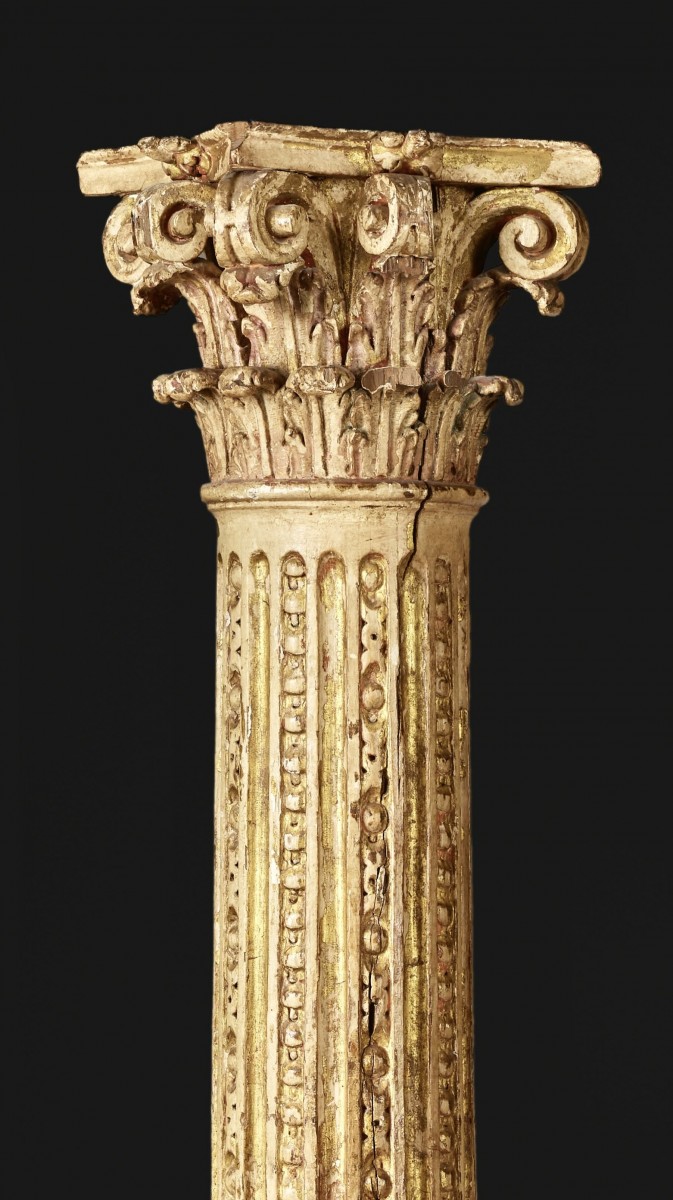
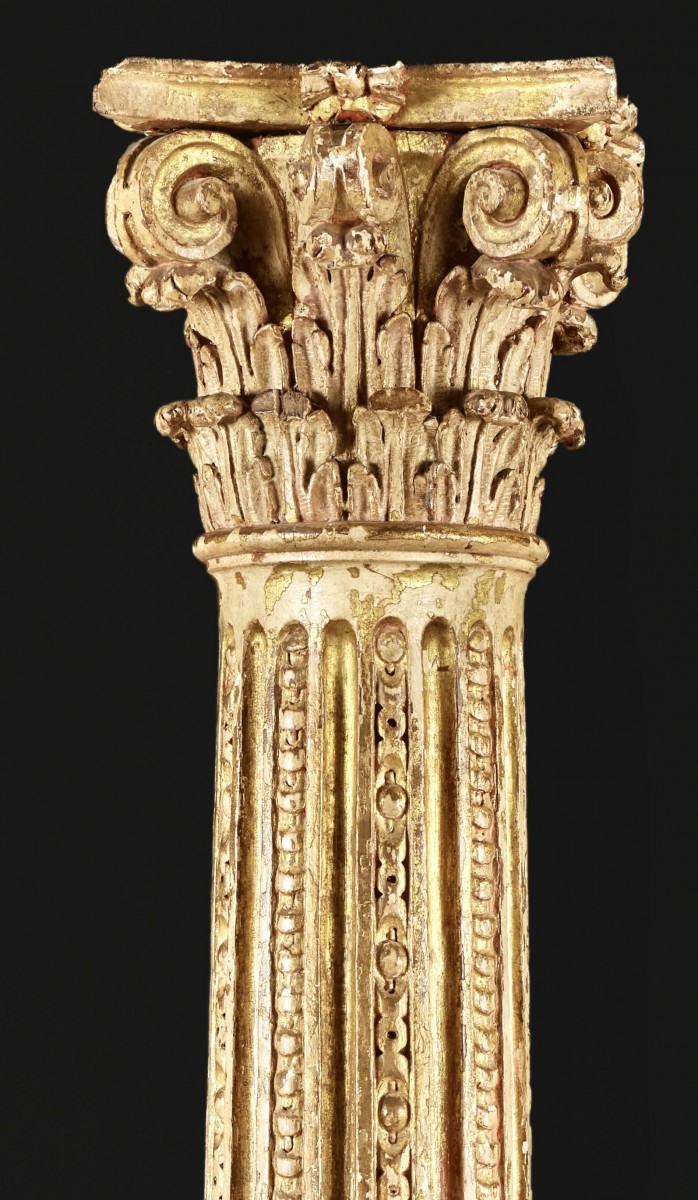
This pair of carved, gilded and painted wood columns features Corinthian capitals, resting on fluted shafts.
The fluting of the latter alternates with oval friezes, piaster friezes and filleted flutes.
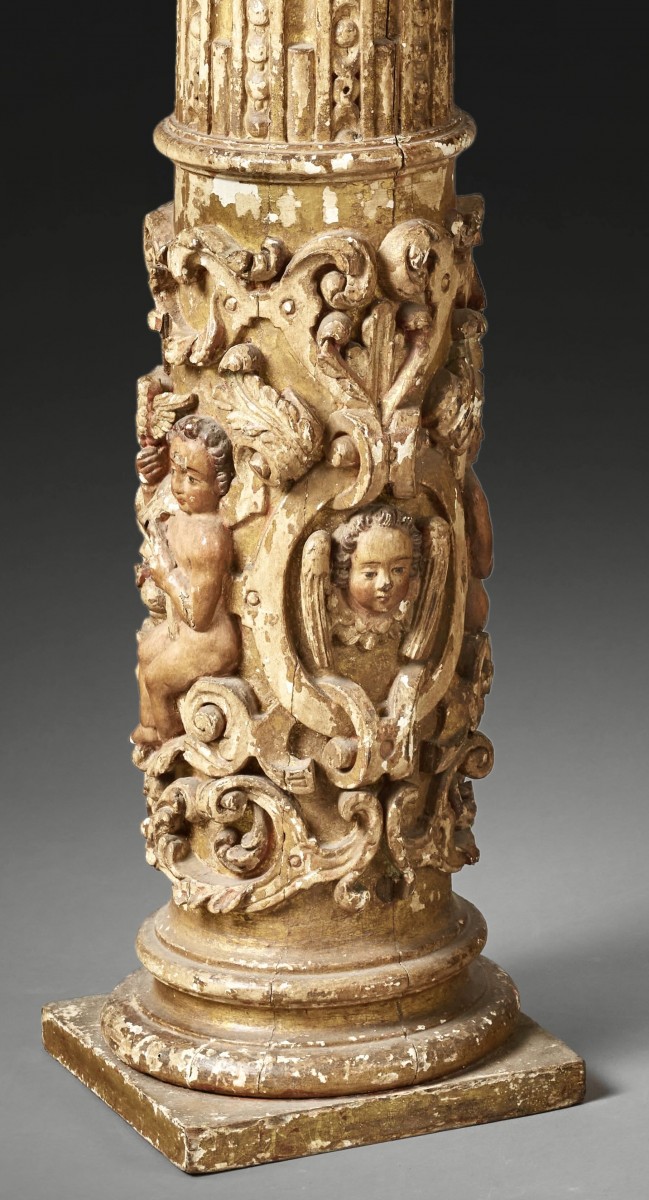
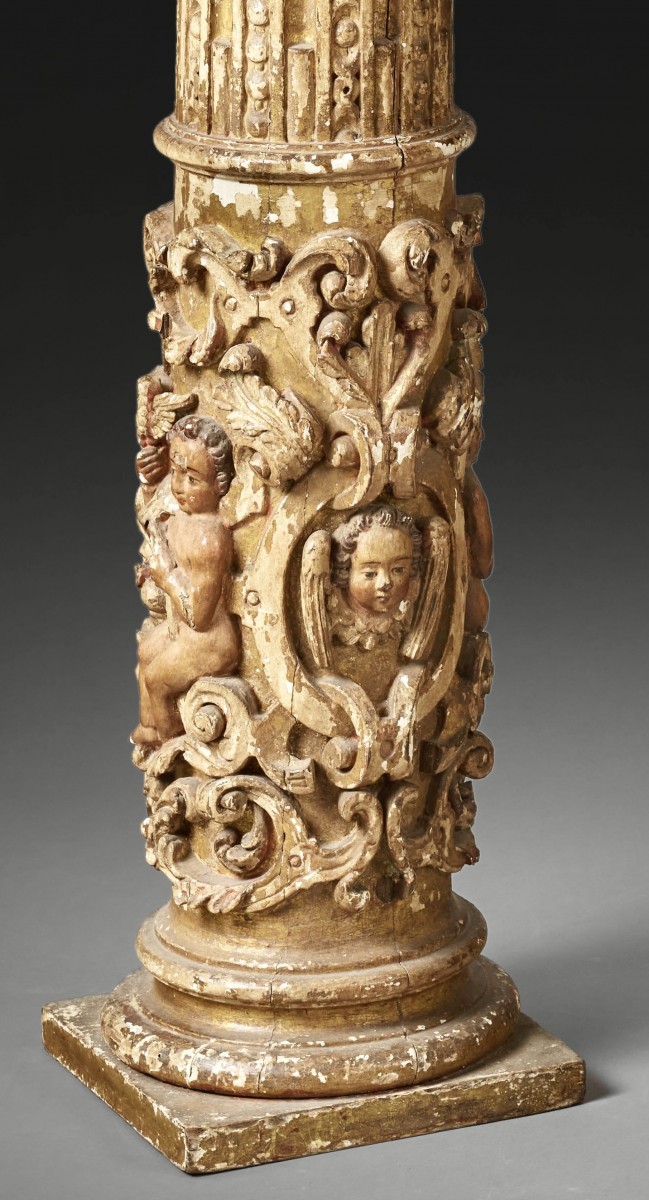
The lower third of these columns is adorned with alternating putti and angel heads. Each of the latter is set within an ovoid cartouche of wide scrolls. The putti on either side also overlap large scrolls, which continue the motif around the column. Upright acanthus leaves alternating with scrolls complete the decoration in the upper part.
The lower part of the column is adorned with S and C scrolls.
A pair of late 17th-century columns
A recurring architectural element since the Ancient Times, columns are also a feature of some interior designs. Made of stone, marble or gilt bronze, they can also be extended to gilded wood, particularly in the 16th and 17th century Spanish and Italian interiors, where they form door frames or decorative elements.
The use here of Corinthian capitals, belonging to one of the three orders of architecture defined by the ancient Greeks, illustrates the desire to preserve a faithful reference to the Antique model. However, the lower third of these columns features a rich decoration that departs from the antique model, combining large scrolls, derivatives of the “cut-out leathers” that appeared during the Renaissance, winged angel heads and twisted putti. Rich multicolored highlights heighten the sculpted effects, particularly the angels' faces, and reinforce their attractive decorative effects.
Bibliography :
-Juan José Junquera Y Mato, Grandes Demeures d’Espagne, Arthaud, Paris, 1992