Offered by Galerie PhC

European paintings from the 17th, 18th and 19th centuries.
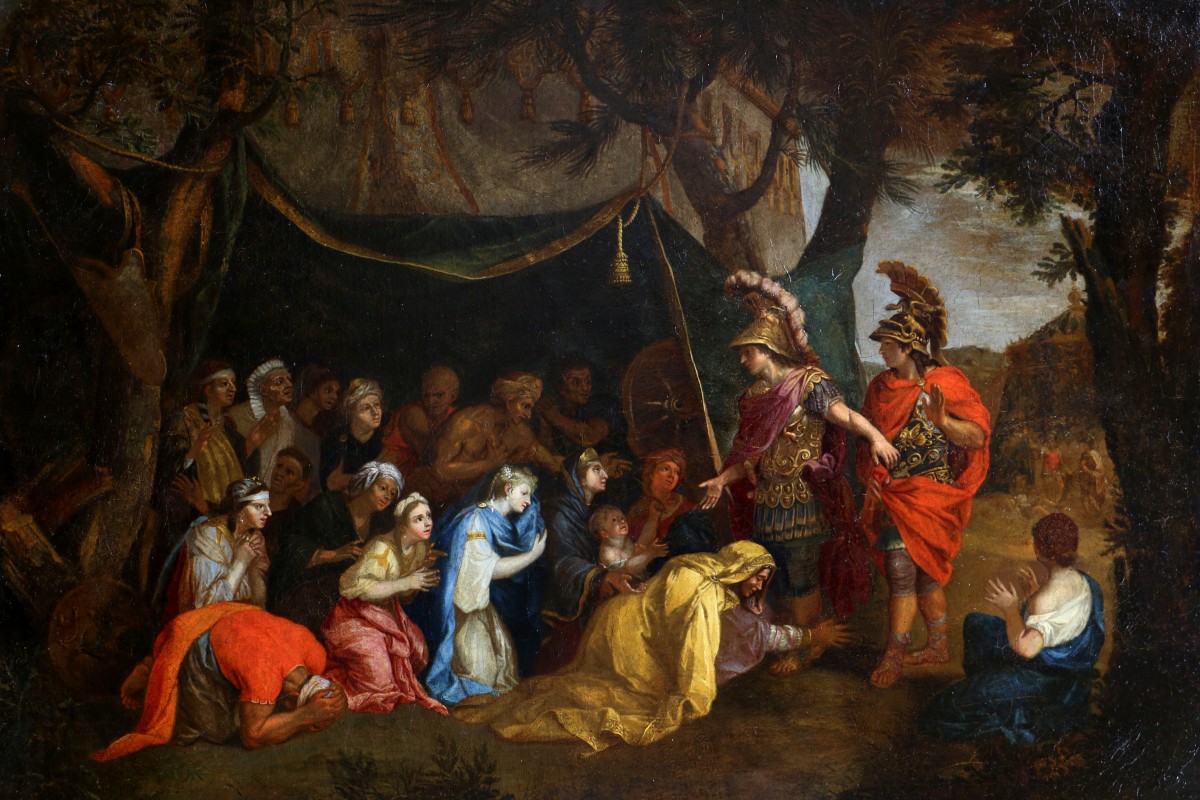
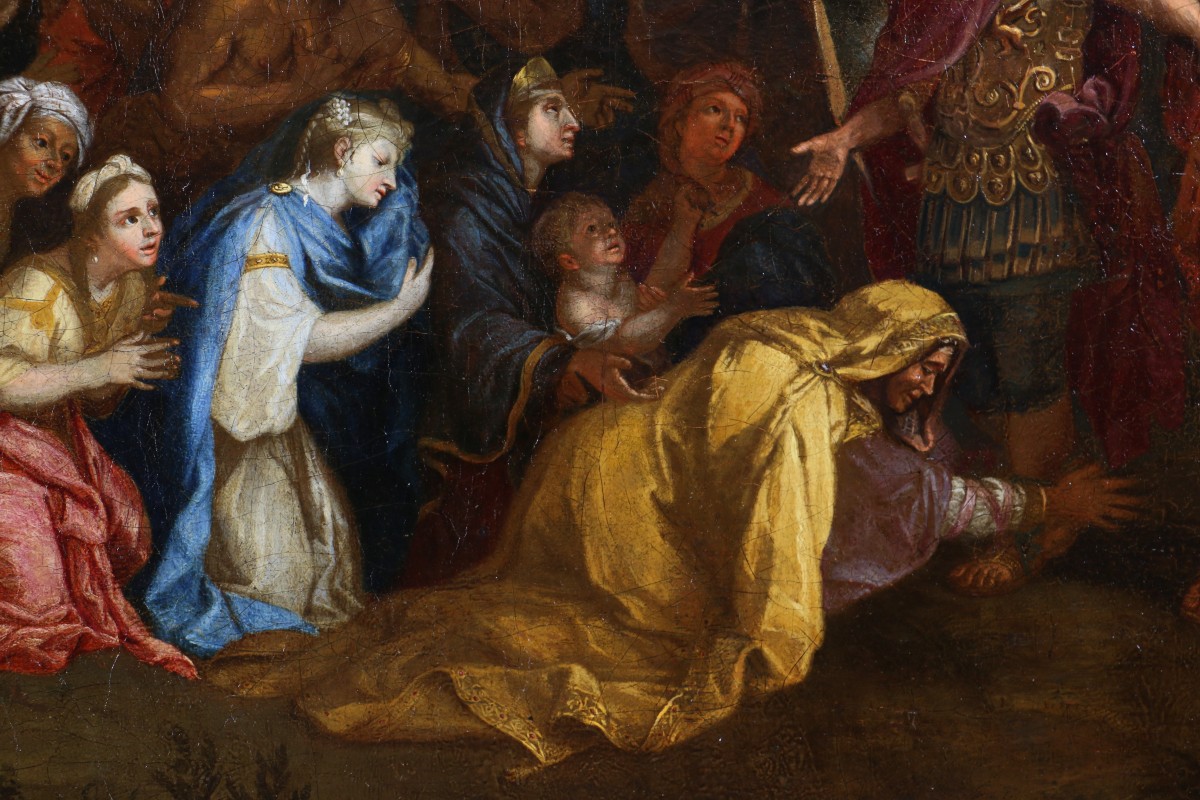
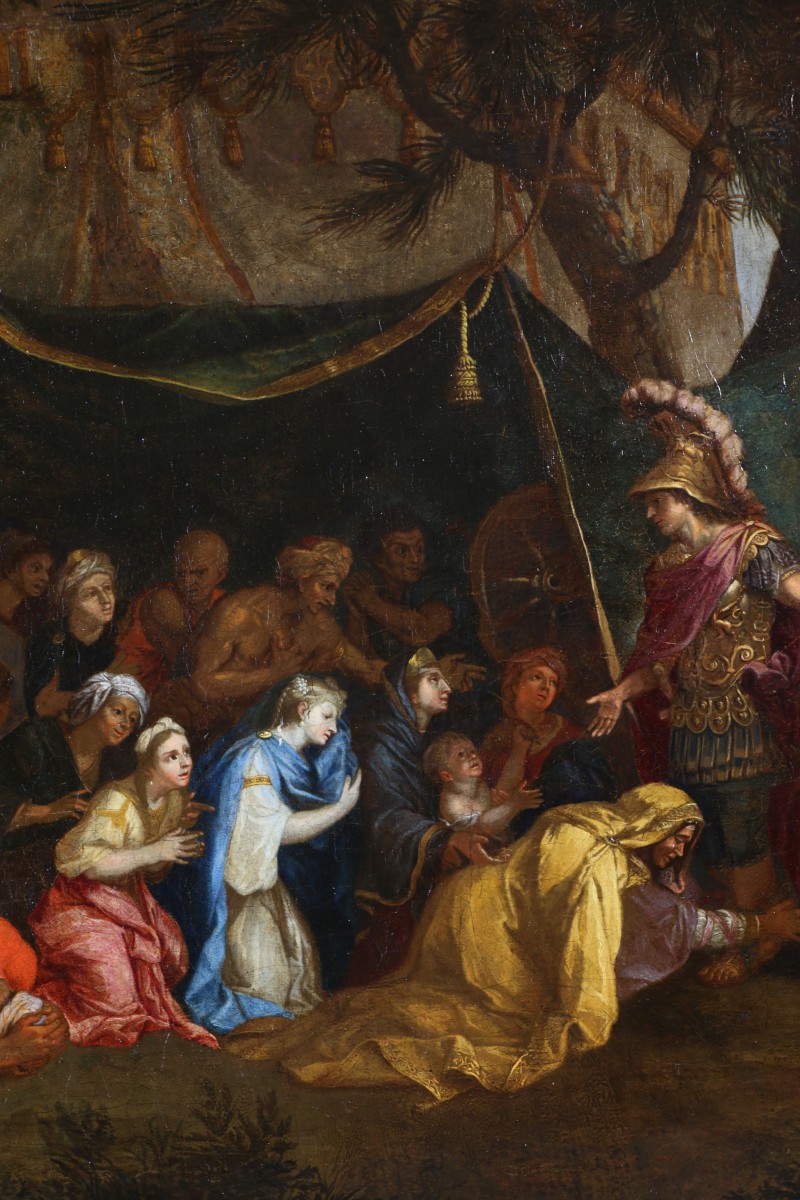
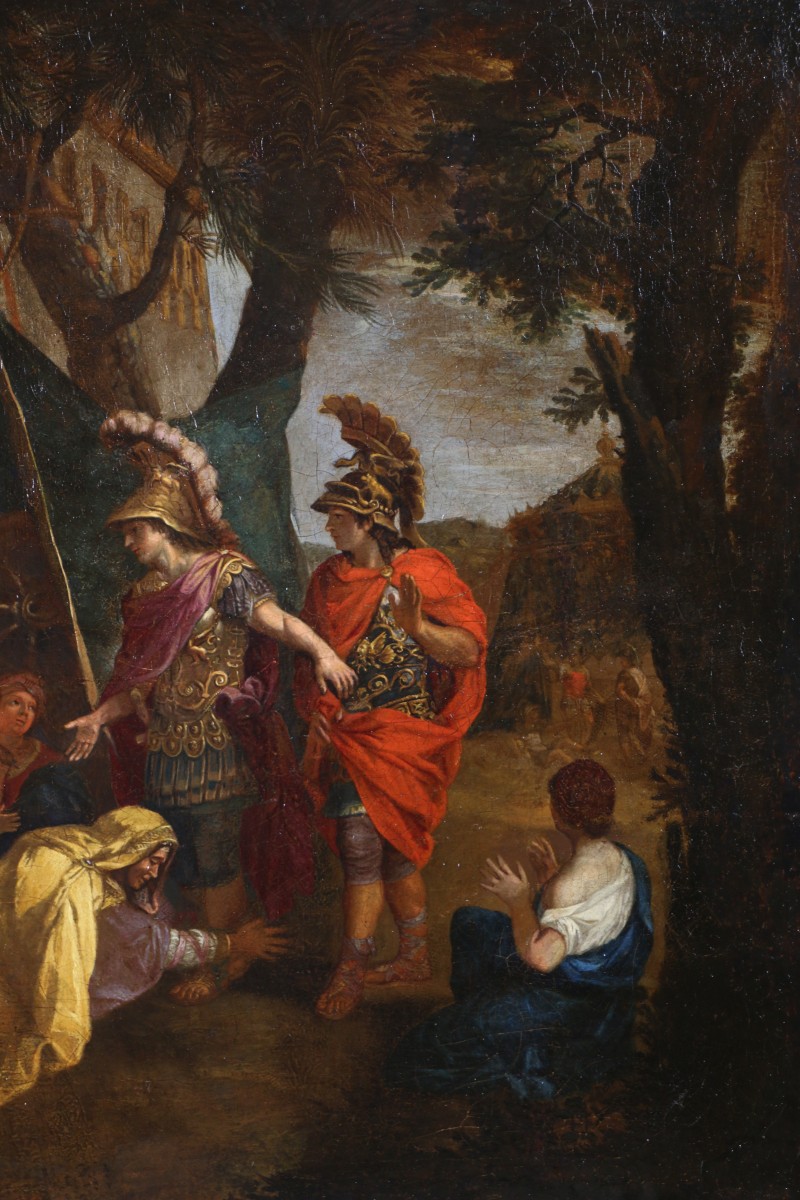
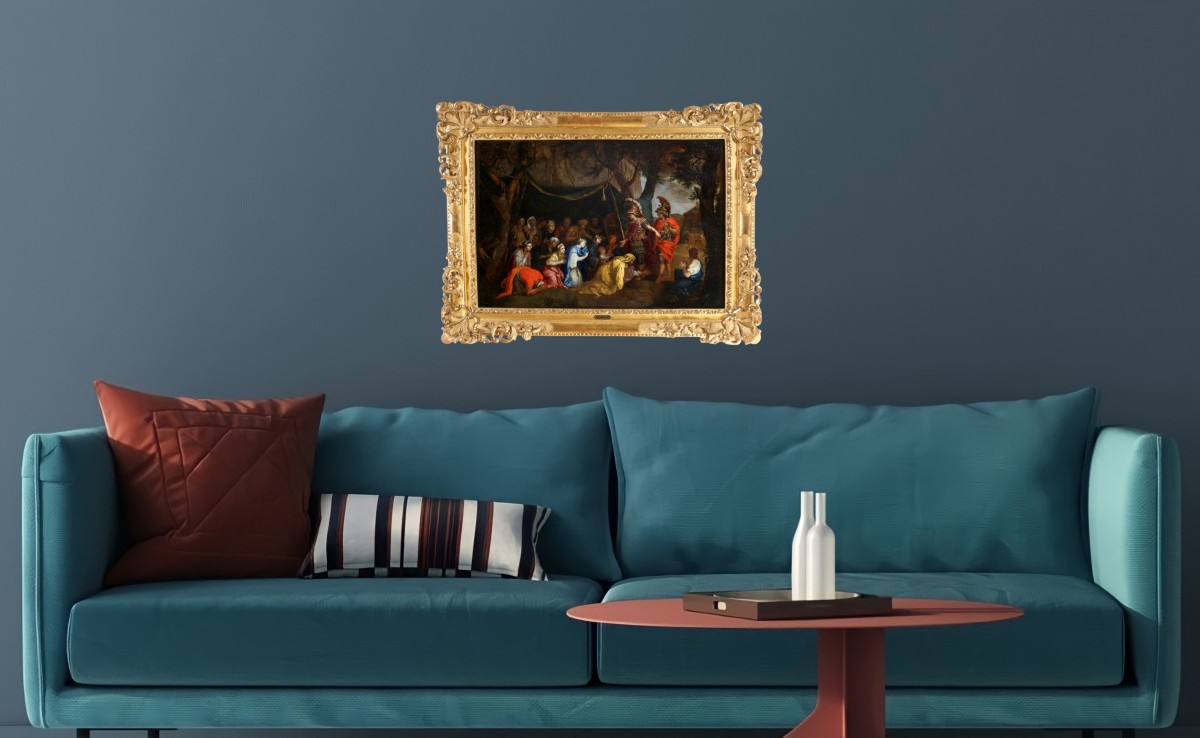
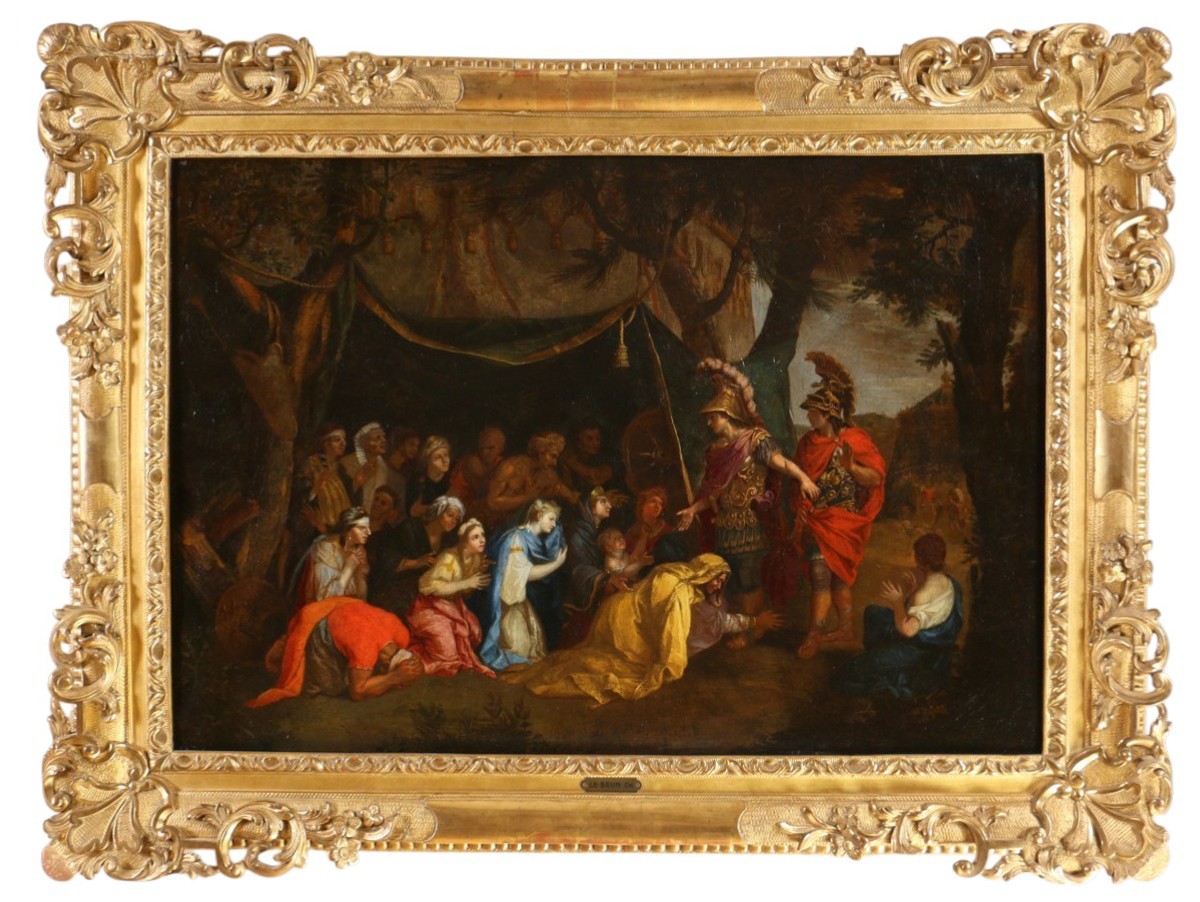
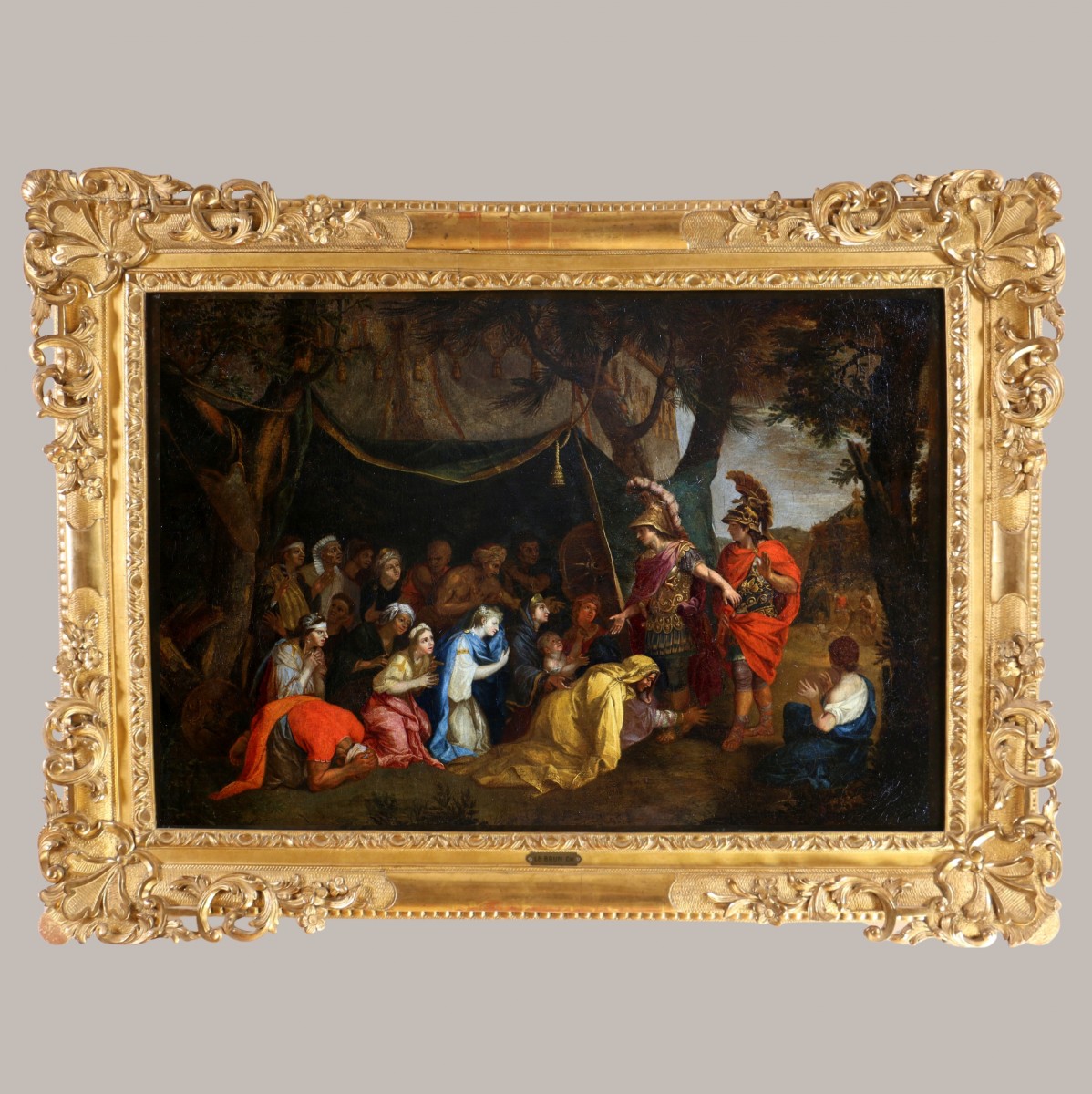
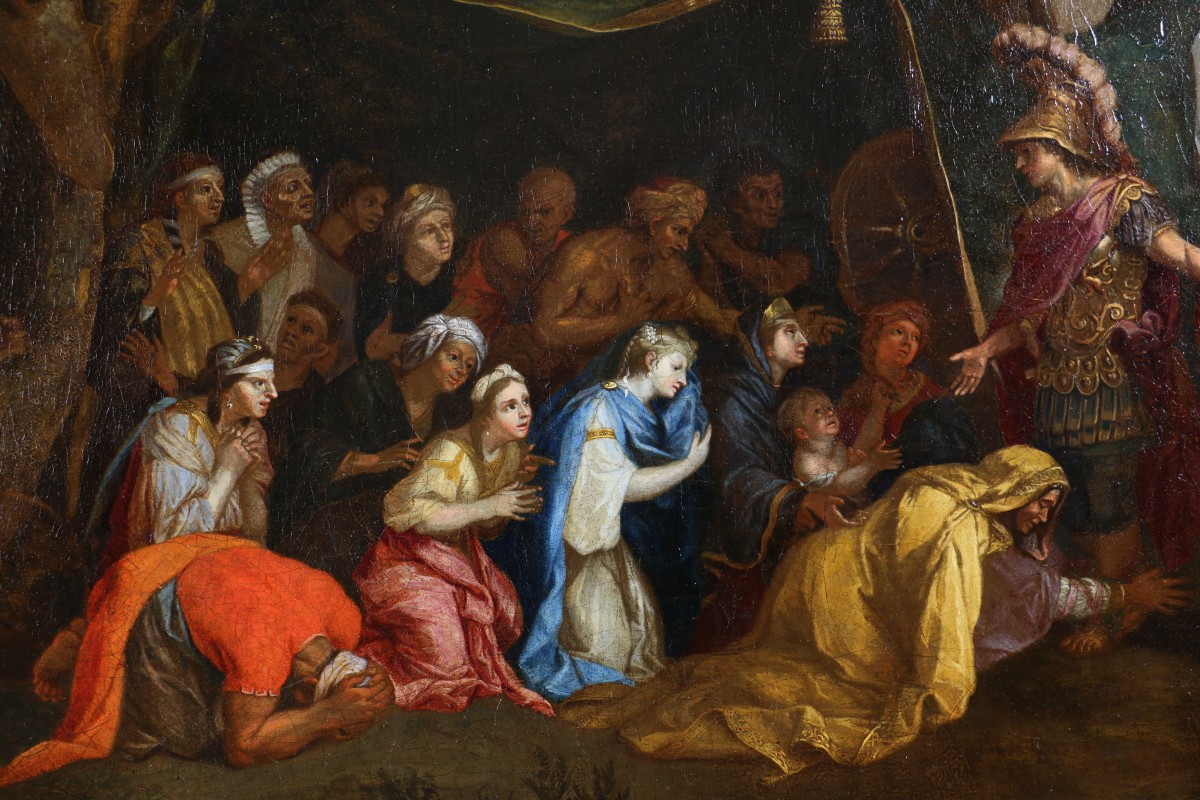
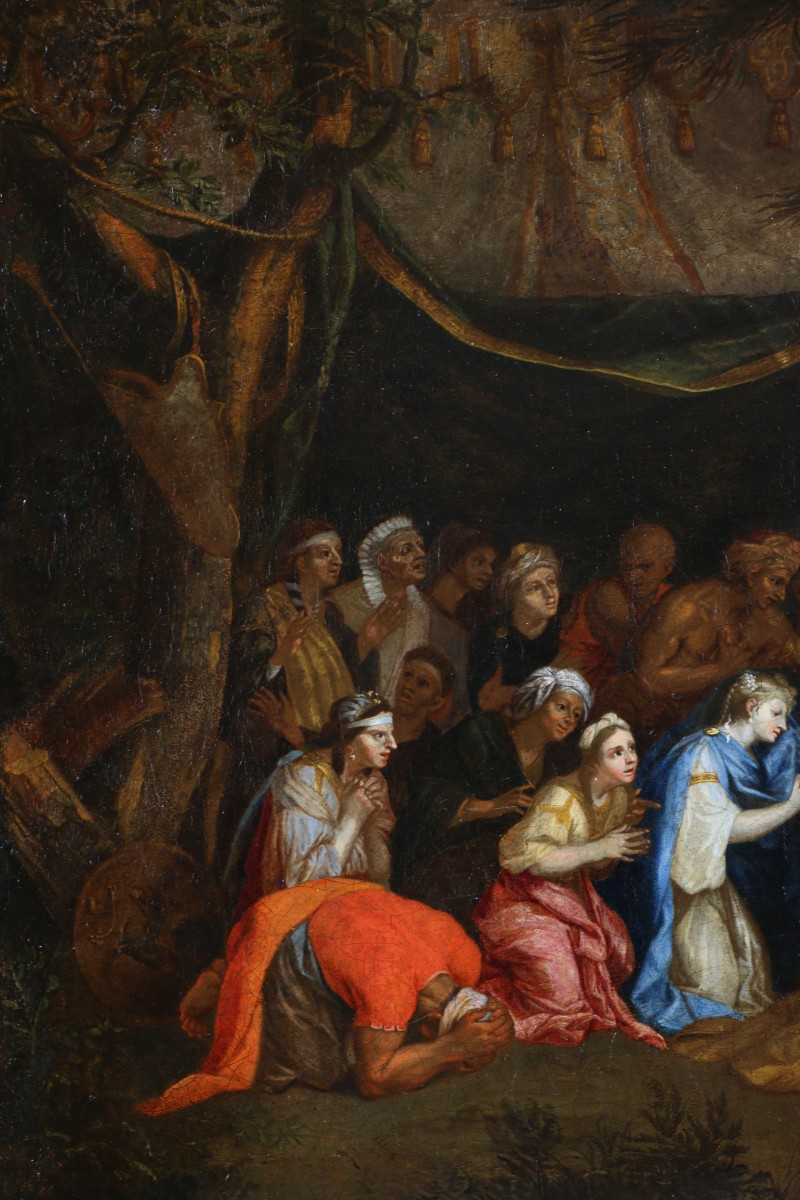
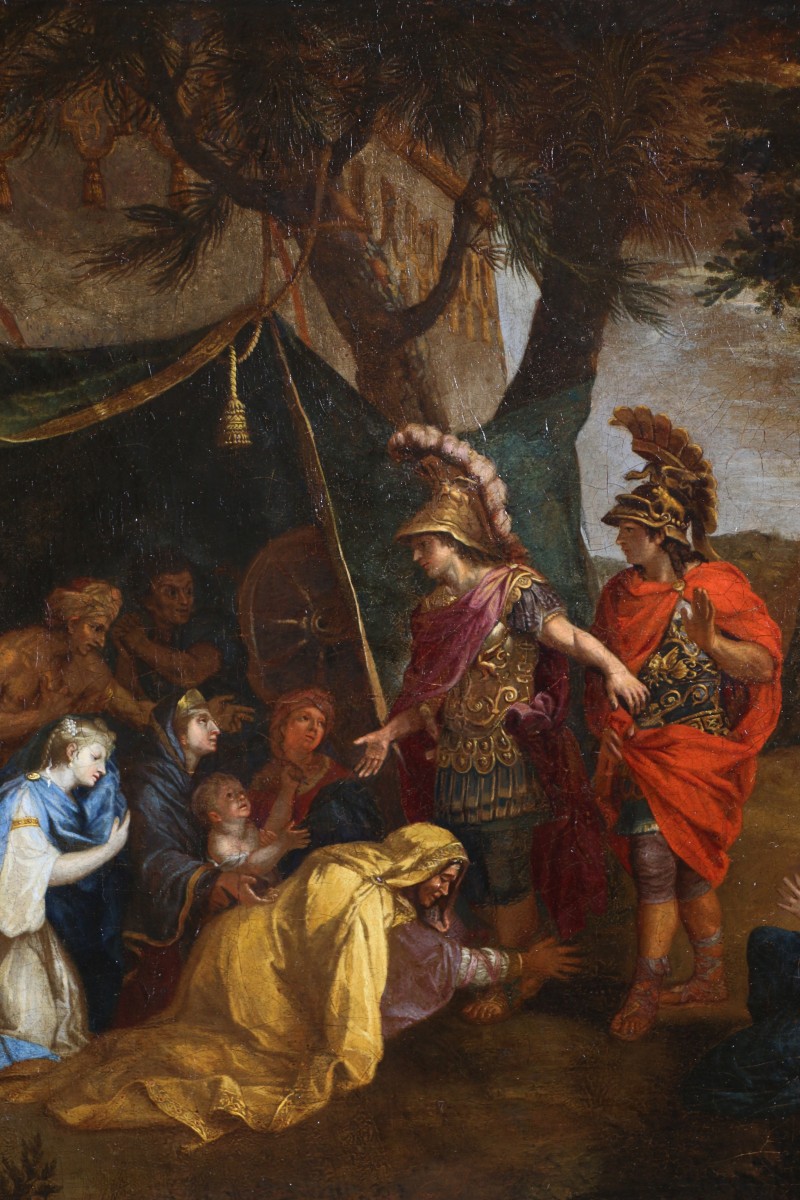
This elegant composition is inspired by one of the mostmost emblematic models of the Grand Siècle, the famous Tente de Darius byby Le Brun, painter to Louis XIV. The subject, taken from the story of Alexander the GreatGreat, celebrates the conqueror's clemency towards the family of Darius III.Produced towards the end of the 17th century, this worktestifies to the exceptional diffusion of Le Brun's model, thanks in particular toengravings by Gérard Edelinck. Here, the artist offers a sensitivethe expressiveness of the female figures and the richness of the drapery.the richness of the drapery.The quality of its execution and the accuracy of its compositioncomposition, this painting perfectly illustrates the output of Parisian paintersParisian painters trained at the Académie Royale. It is a refinedrefined testimony to French classical taste at the end of the 17th century.
The original by Charles Lebrun at the Châteaude Versailles:
The Tent of Darius, painted around 1660-1661 byCharles Le Brun, is one of the most important works of French paintingFrench painting of the 17th century. Produced under the reign of Louis XIV, it is part of a vastpart of a vast artistic program designed to assert the grandeur of royal power.royal power. Le Brun, then First Painter to the King and Director of the Académie Royaleof Painting and Sculpture, played a decisive role in developing a visual languagevisual language in the service of the monarchy.The subject of the painting is taken from ancient historyand depicts a famous episode in the life of Alexander the Great. After hisvictory over the Persian king Darius III at the Battle of Issos, Alexanderreceived the defeated king's family. Darius' mother, believing she was addressing the kingking, prostrates herself before Hephaestion, her companion. Alexander relieves herand forgives her for her mistake. The scene thus illustrates an essential virtueof the ideal sovereign: clemency in victory.Through this ancient subject, Le Brun develops a veritablepolitical allegory. Alexander becomes an exemplary figureLouis XIV can recognize himself in: a powerful king, but also a just and magnanimous one.and magnanimous. The work thus contributes to the construction of the image of the absolute monarchmonarch, by associating him with the great heroes of Antiquity.But the importance of The Tent of Darius goes far beyondpolitical content. The painting is also a masterlymasterly demonstration of Le Brun's aesthetic theories, in particular hisexpression of the passions. Each character embodies a specific emotionemotion: fear, supplication, surprise, compassion or nobility of soul.nobility of soul. Faces, gestures and attitudes are carefullyto make the scene immediately legible and intelligible. Thisapproach, taught at the Académie, became a cornerstone of classicalhistory painting in France.The composition itself is exemplary in its clarityclarity and balance. The group of supplicant women unfolds on the left,while Alexander and his soldiers occupy the right. In the center, the meetingthe dramatic tension. Thisrigorous construction, combined with great expressive richness, made thea model for artists of the period.The work enjoyed considerable popularity thanks to theGobelins tapestries and engravings, notably those by Gérard Edelinck.These reproductions enabled the composition to circulate widely in Europeand was studied, copied and adapted by numerous painters. It thus becameteaching tool and a prototype for academic history painting.painting.With its ambition, narrative clarity and expressive powerexpressive power, La Tente de Darius stands out as a manifesto of FrenchFrench classicism. It synthesizes the artistic, political and theoreticalof the reign of Louis XIV, while exerting a lasting influence on severalseveral generations of artists. The numerous copies and variantstestify to its success and central role in the formation of academic taste.academic taste
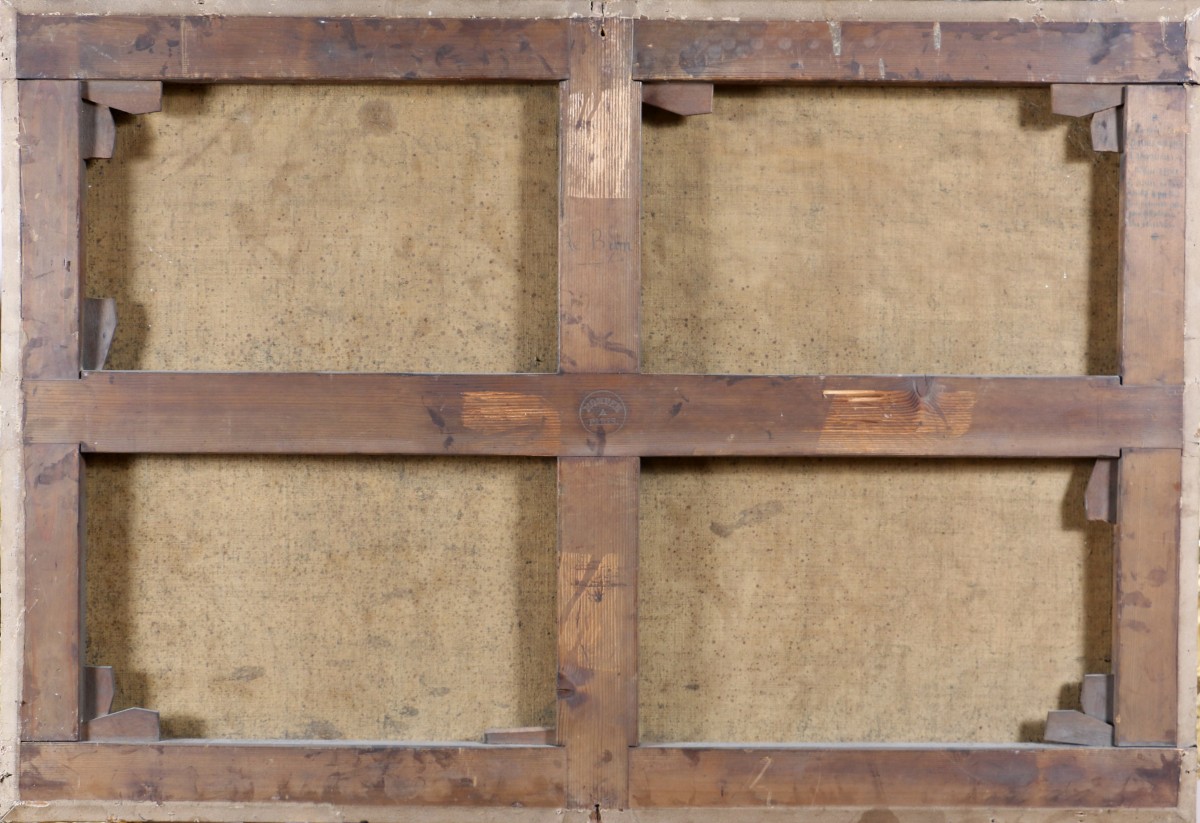
Relined canvas, 92 cm by 63 cm.
Antique frame 113 cm by 85 cm.
Delevery information :
All our paintings benefit from careful and secure packaging. No geographic restrictions.