Offered by Galerie PhC

European paintings from the 17th, 18th and 19th centuries.
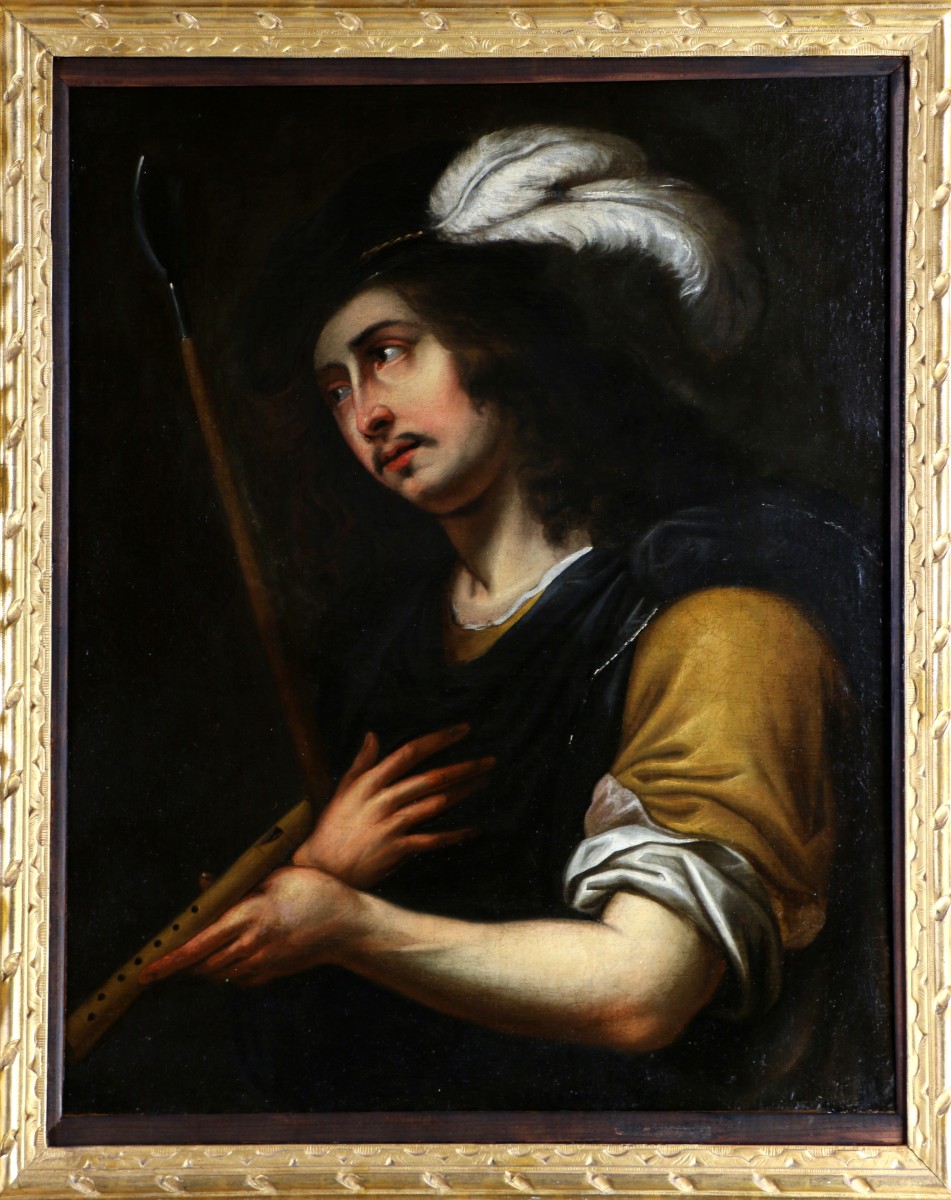
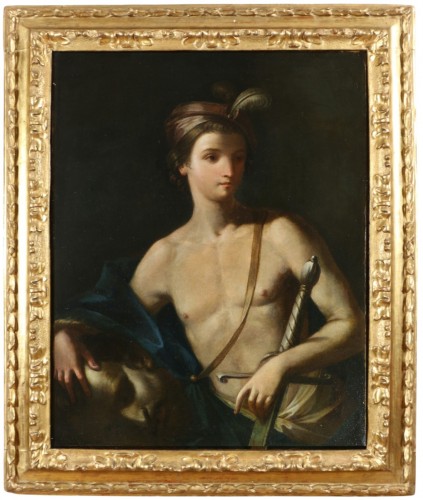
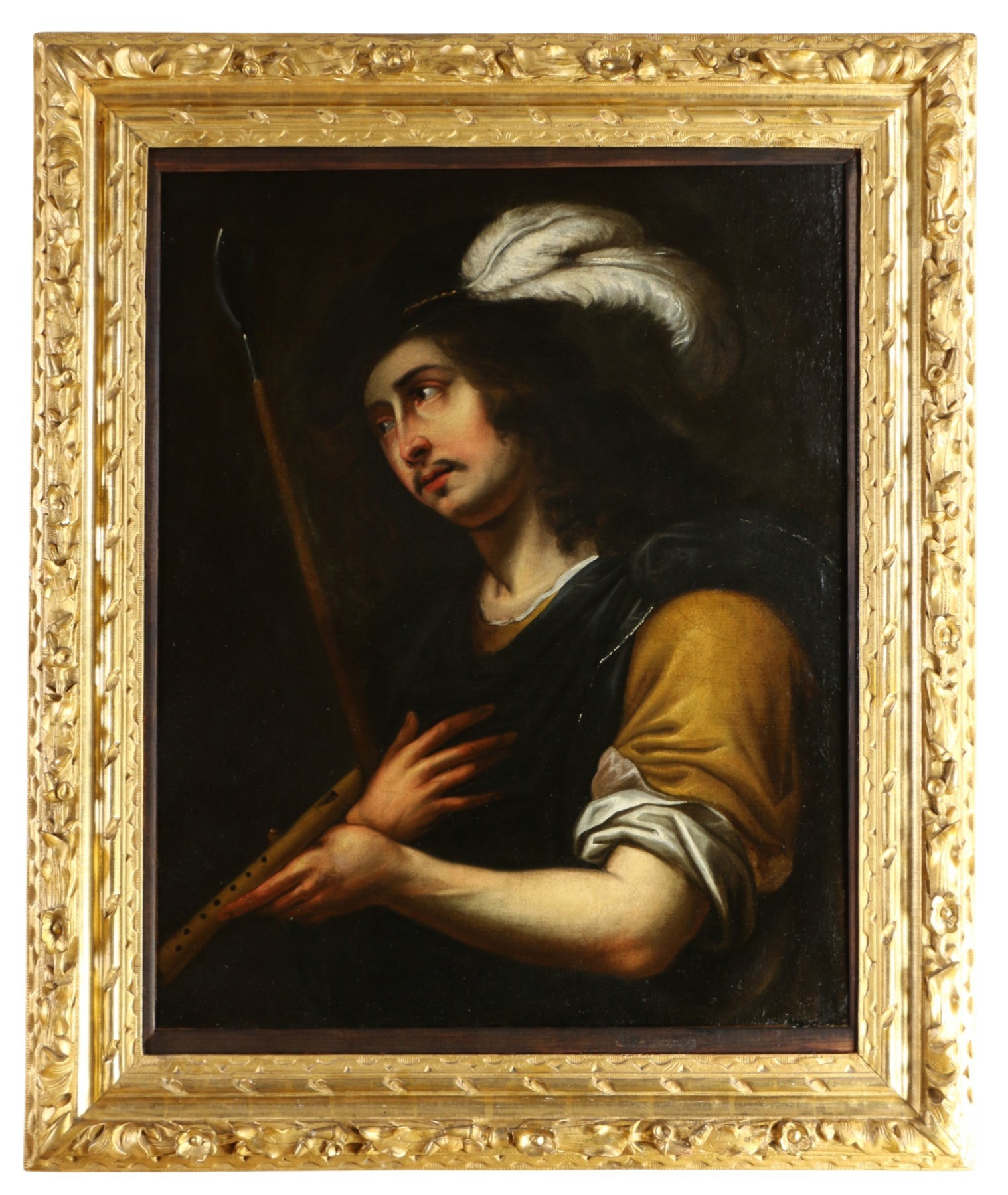
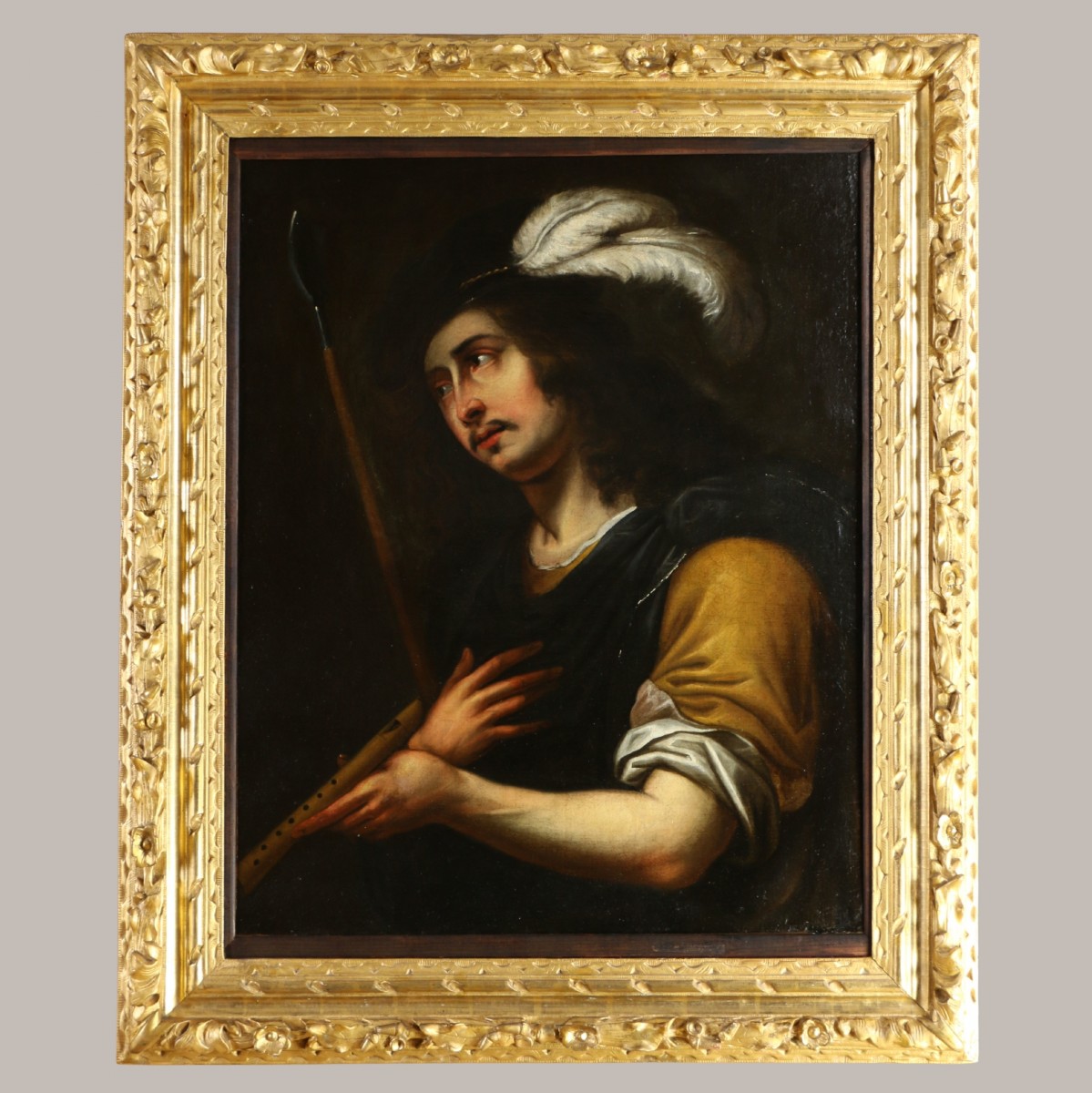
Attributed to Guido Cagnacci (1601–1663), with characteristics of his early period (circa 1625–1635).
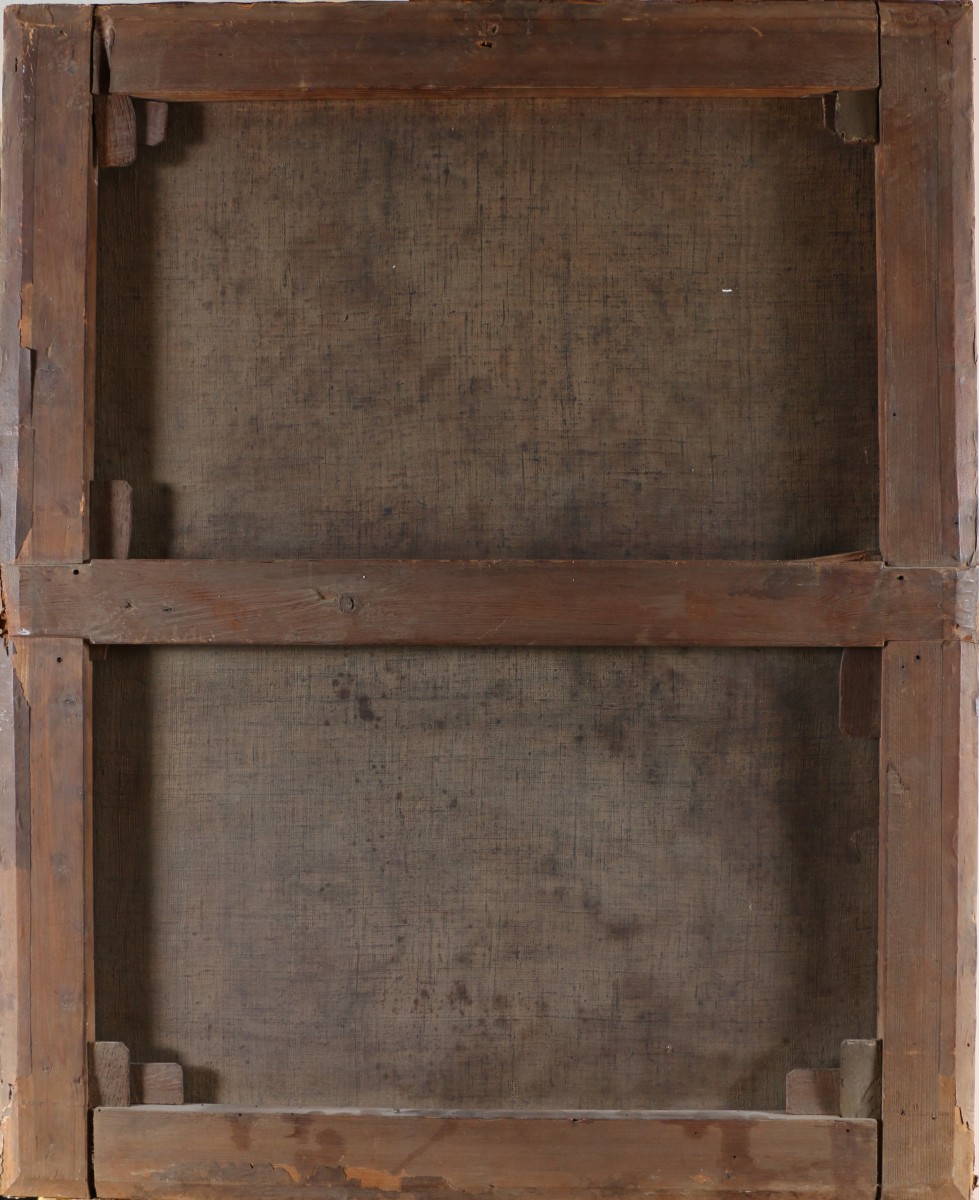
Relined canvas, 84.5 cm x 68 cm.
Important antique frame, 107 cm x 89 cm.
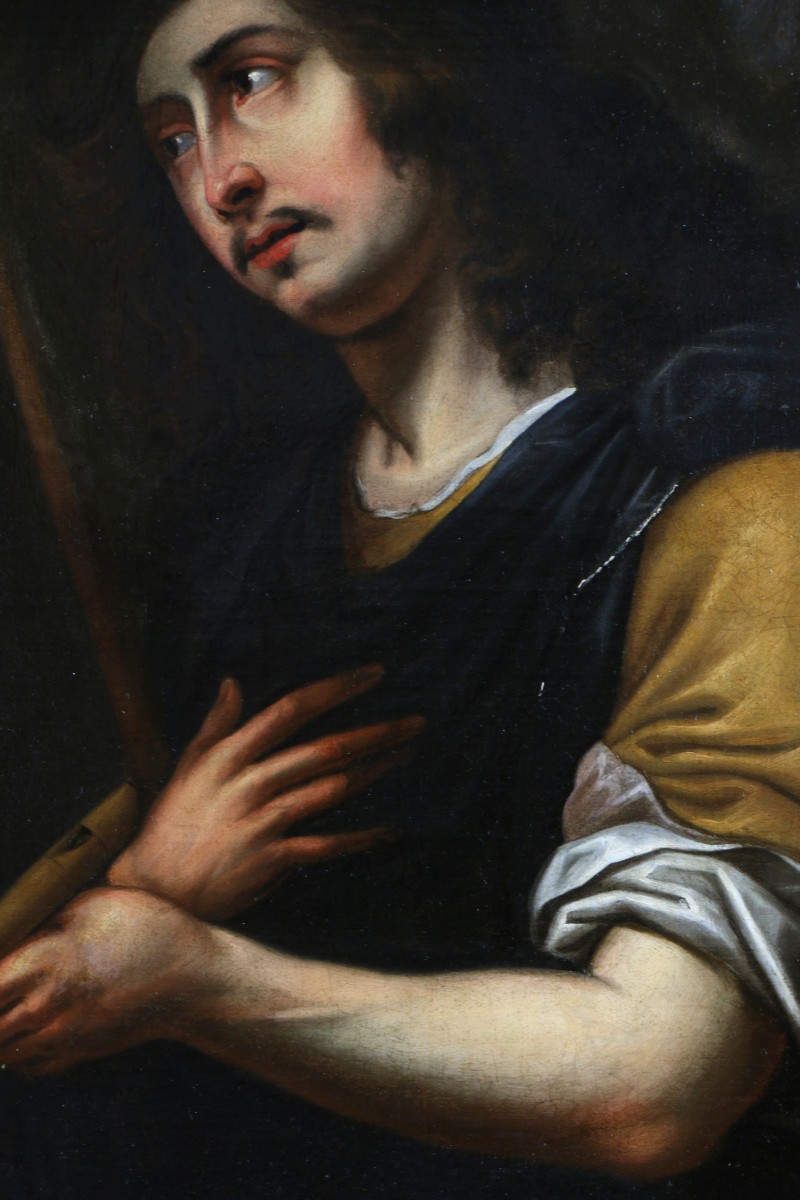
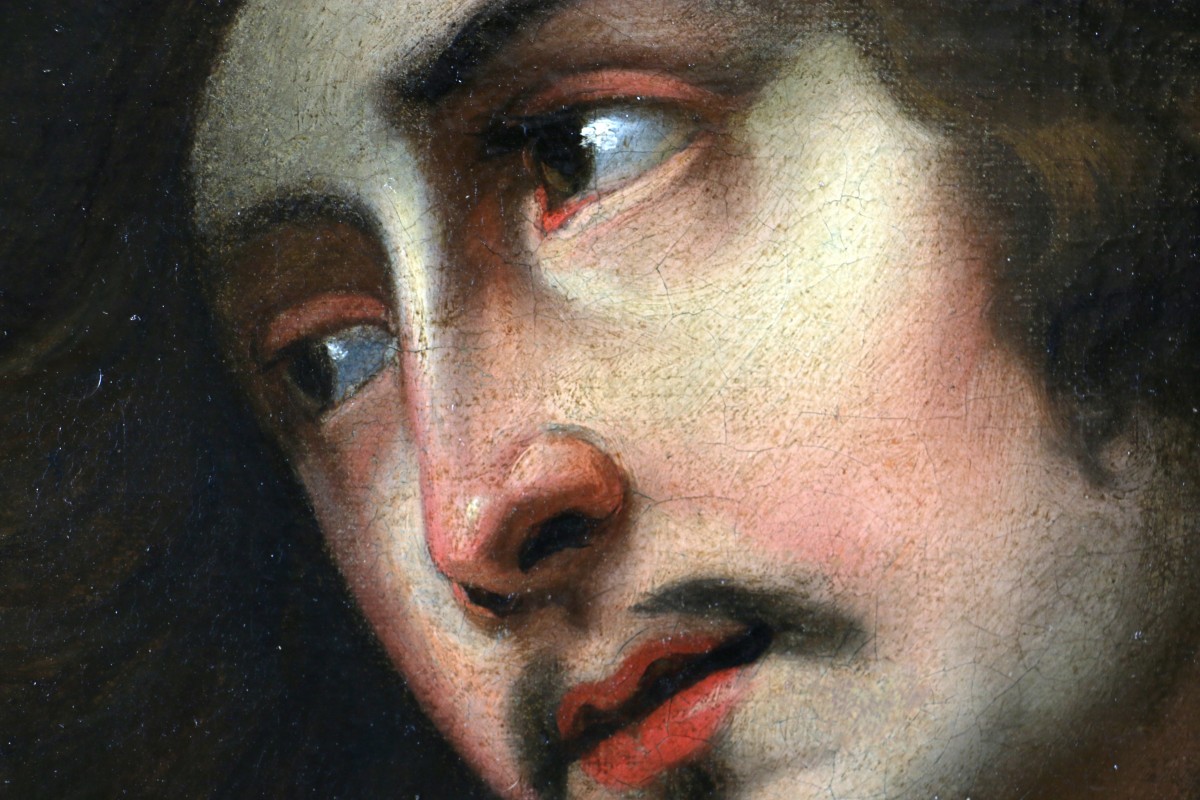
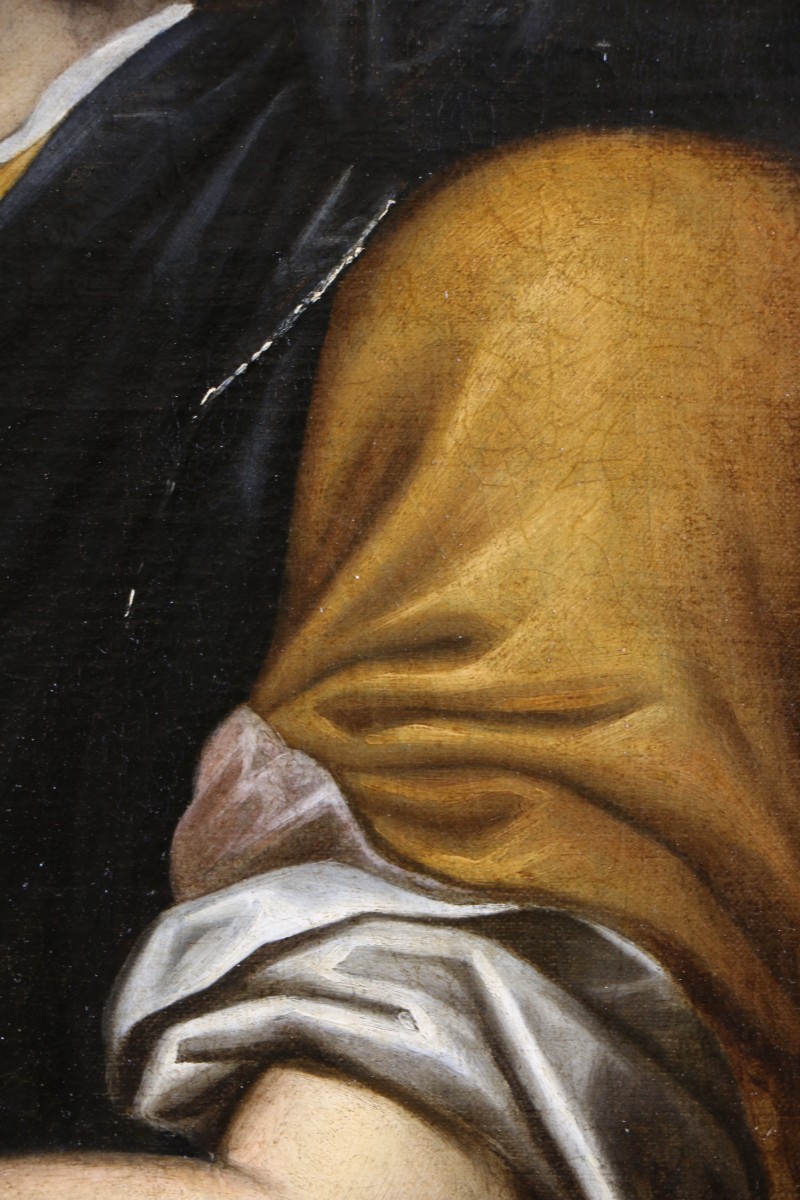
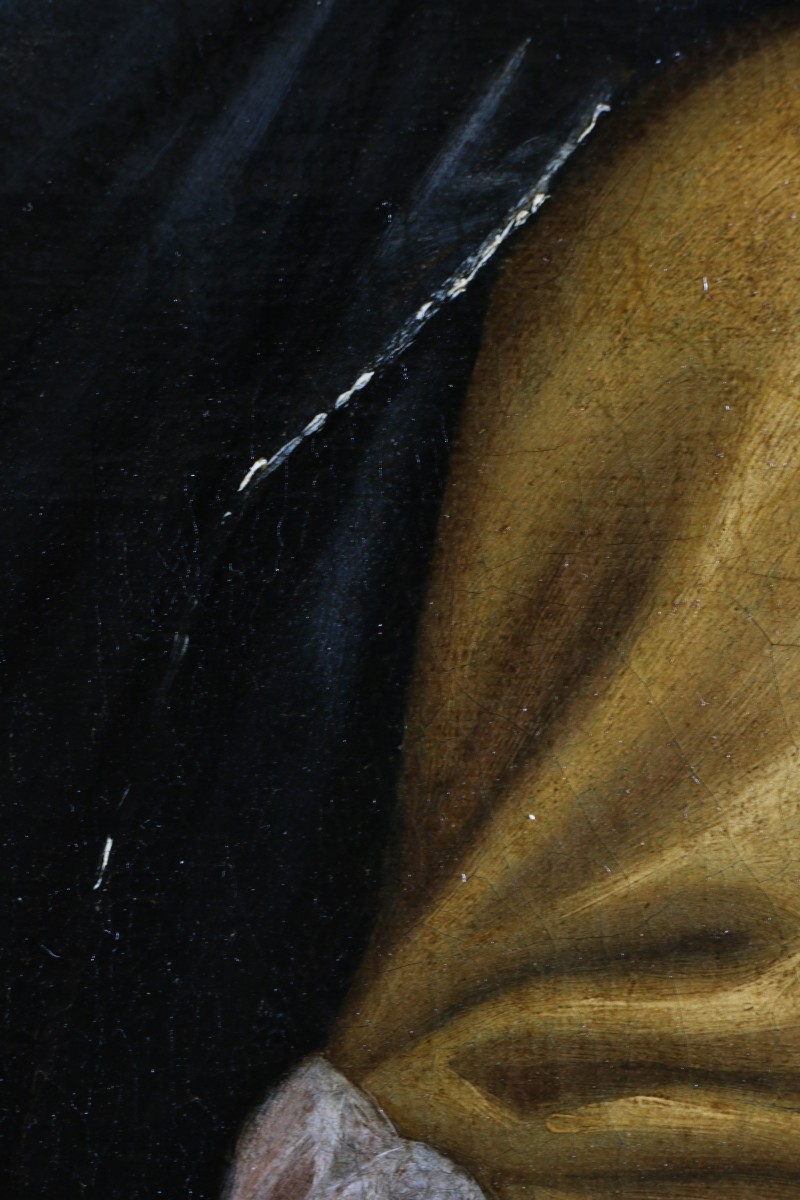
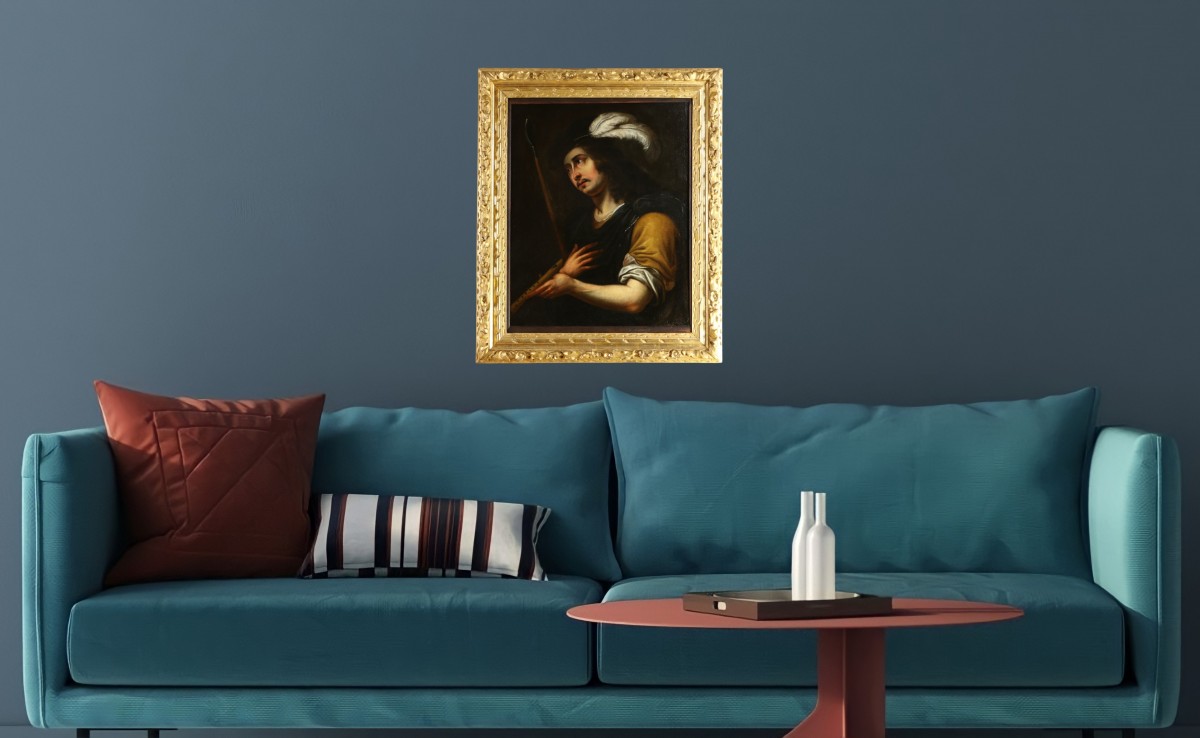
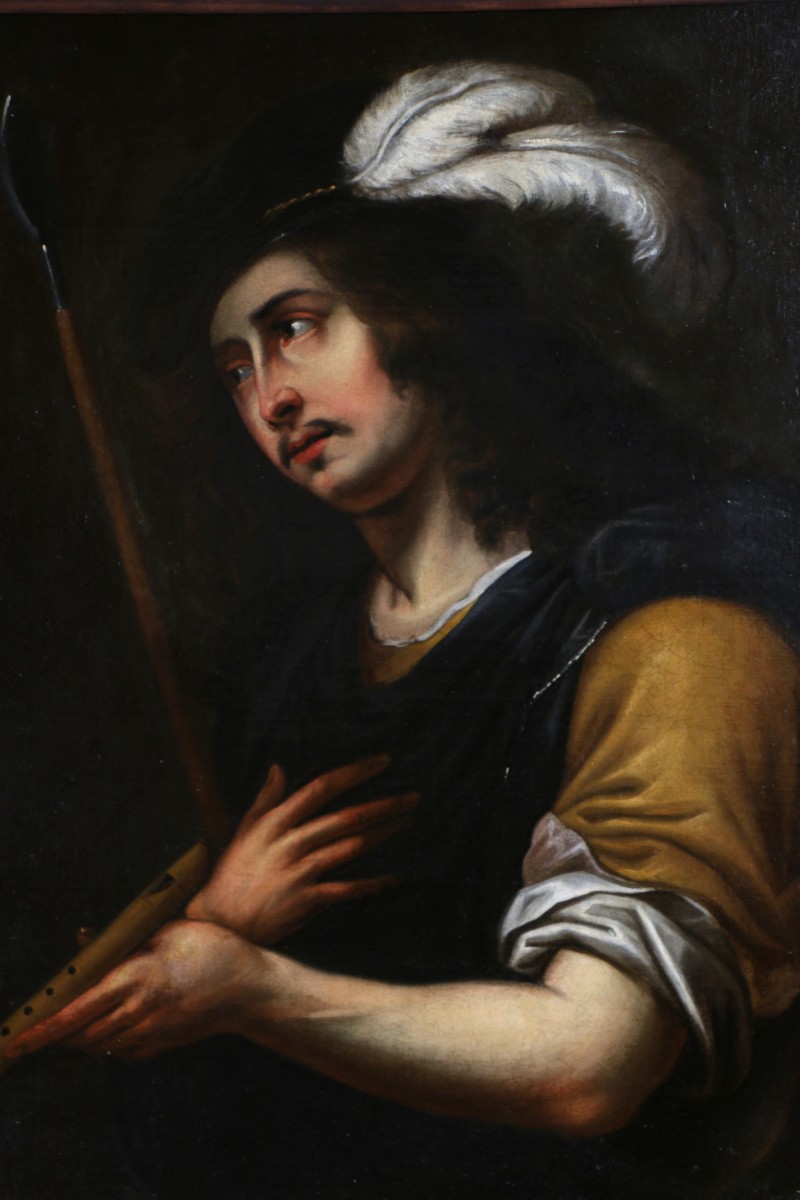
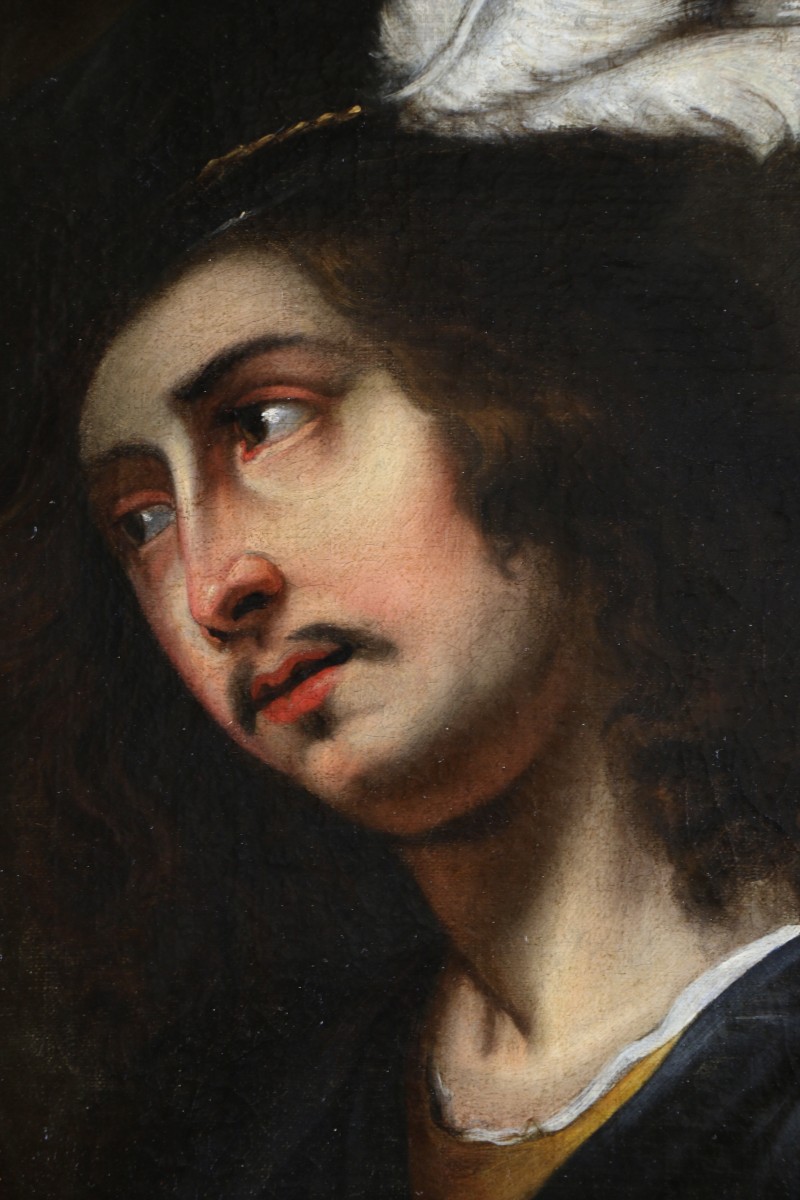
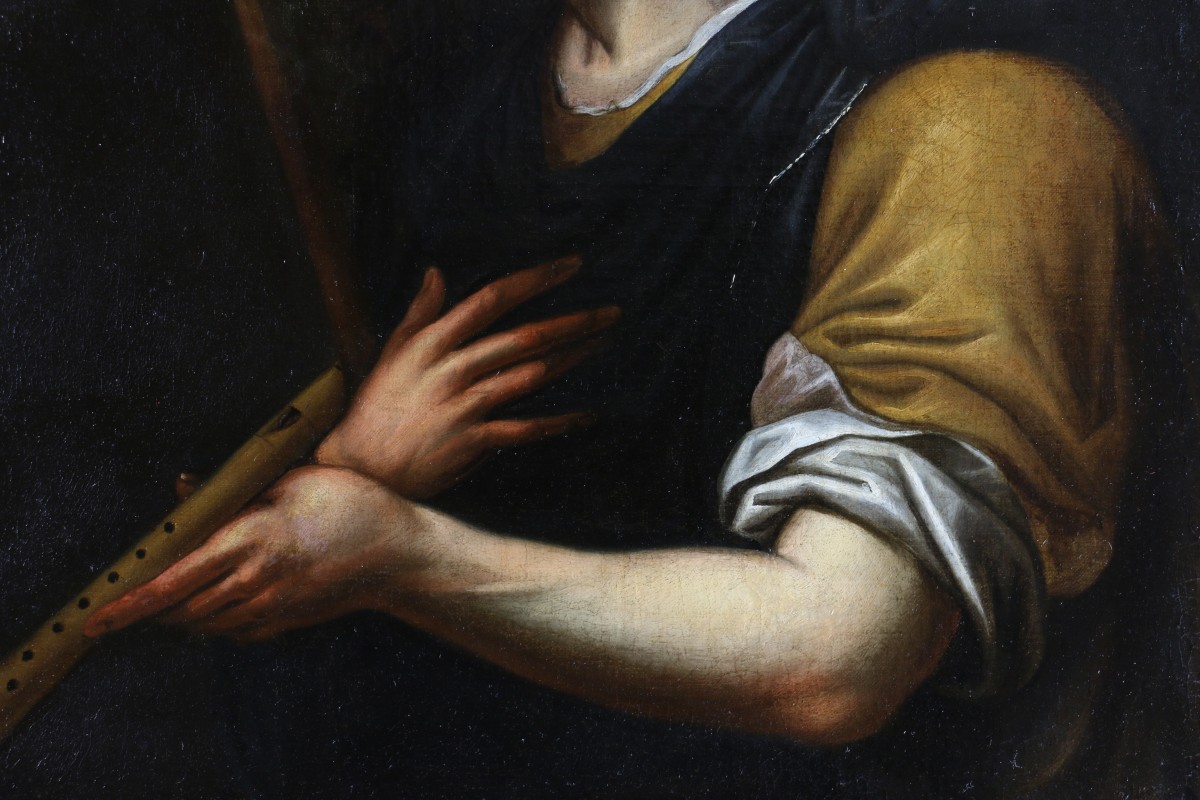
The work depicts a young musician, shown half-length, against a dark background in a tightly composed style typical of Baroque chiaroscuro. The sitter is shown in three-quarter view, his face slightly inclined, his gaze directed towards the viewer with an expression of gentleness and melancholy. He wears a wide beret adorned with a white feather, the lightness of which contrasts with the overall simplicity of the scene. His costume, consisting of a dark garment with rolled-up sleeves revealing a white shirt, is enlivened by an ochre-yellow sleeve whose soft folds delicately capture the light. The figure holds a recorder and an iron-tipped crook, elements that evoke a pastoral world and suggest an identity as a shepherd-musician or a figure inspired by the bucolic. These attributes, rendered with a concern for understated realism, help to anchor the scene in a dimension that is both everyday and poetic. The painting is distinguished by the great softness of the modeling of the flesh, particularly visible in the face, whose complexions are nuanced with pinkish tones and slightly greenish hues in the shadows. The transitions are blended, almost imperceptible, giving the figure a delicate presence. The eyes, subtly highlighted with red at the inner corners, appear moist and contribute to the emotional intensity of the expression. The lips, delicately drawn and outlined with a light, dark line, are slightly parted. The light, coming from the side, gently envelops the forms, subtly modeling the volumes and highlighting the texture of the fabrics as well as the softness of the skin. The overall effect is an intimate and tranquil atmosphere, where the naturalism of the subject blends with a certain idealization. Through its simple composition, economy of means, and expressive intensity, the work belongs to the Caravaggesque tradition while also displaying a gentler, more introspective sensibility characteristic of 17th-century Emilia-Romagna painting.
Guido Cagnacci (1601–1663)
Guido Cagnacci was a 17th-century Italian painter, born in Santarcangelo di Romagna, near Rimini. Trained in the artistic context of Emilia-Romagna, he was influenced by the great Bolognese masters, notably Guido Reni, as well as by the Caravaggesque naturalism prevalent in central Italy. His early works, still marked by strong chiaroscuro and a certain roughness in the modeling, reflect a search for balance between naturalism and idealization. Throughout his career, Cagnacci developed a highly personal style, characterized by an extremely blended treatment of flesh tones, a great softness of transitions, and a particular attention to the psychological expression of his figures. Settling successively in Rimini, Forlì, Bologna, then Venice and Vienna, he led an itinerant and sometimes difficult career, marked by tumultuous biographical episodes. Despite this, he managed to establish himself as an original painter, particularly through his depictions of female figures: the Penitent Magdalene, Cleopatra, Lucretia, imbued with a restrained sensuality and profound emotional intensity. His work is distinguished by the almost tactile quality of the flesh tones, the subtle use of glazes, and a soft light that envelops the forms without hardening them. This approach lends his figures a presence that is both intimate and unsettling, setting him apart from the painters of his time. Long overlooked in art history, Guido Cagnacci was rediscovered in the 20th century and is now recognized as one of the singular figures of Italian Baroque painting.
Attribution Note:
An examination of the morphological and technical elements, particularly the highly blended modeling of the flesh, the nuanced flesh tones with pinkish and greenish hues, the moist rendering of the eyes with an emphasis on the inner red, and the characteristic drawing of the lips underlined by a distinctive dark line, has allowed the painting to be linked to the Emilian school of the 17th century. Comparison with the works of Guido Cagnacci, among many other Caravaggesque artists, has proven particularly convincing. Indeed, the painting displays recurring characteristics of this artist: extremely soft transitions, restrained sensuality of expression, specific treatment of the lips (particularly the pronounced black line) and eyes, as well as a satiny finish to the drapery. However, certain simplifications in the treatment of the hands and a lesser intensity in the modulation of the flesh tones suggest a work of a slightly lower caliber than the painter's most accomplished productions. These elements find coherence in the hypothesis of an early creation, corresponding to the artist's first style (around 1625–1635), a period during which his style was still in formation.
Delevery information :
All our paintings benefit from careful and secure packaging. No geographic restrictions.