Offered by Poncelin de Raucourt Fine Arts
REQUEST INFORMATION

Paintings and drawings, from 16th to 19th century
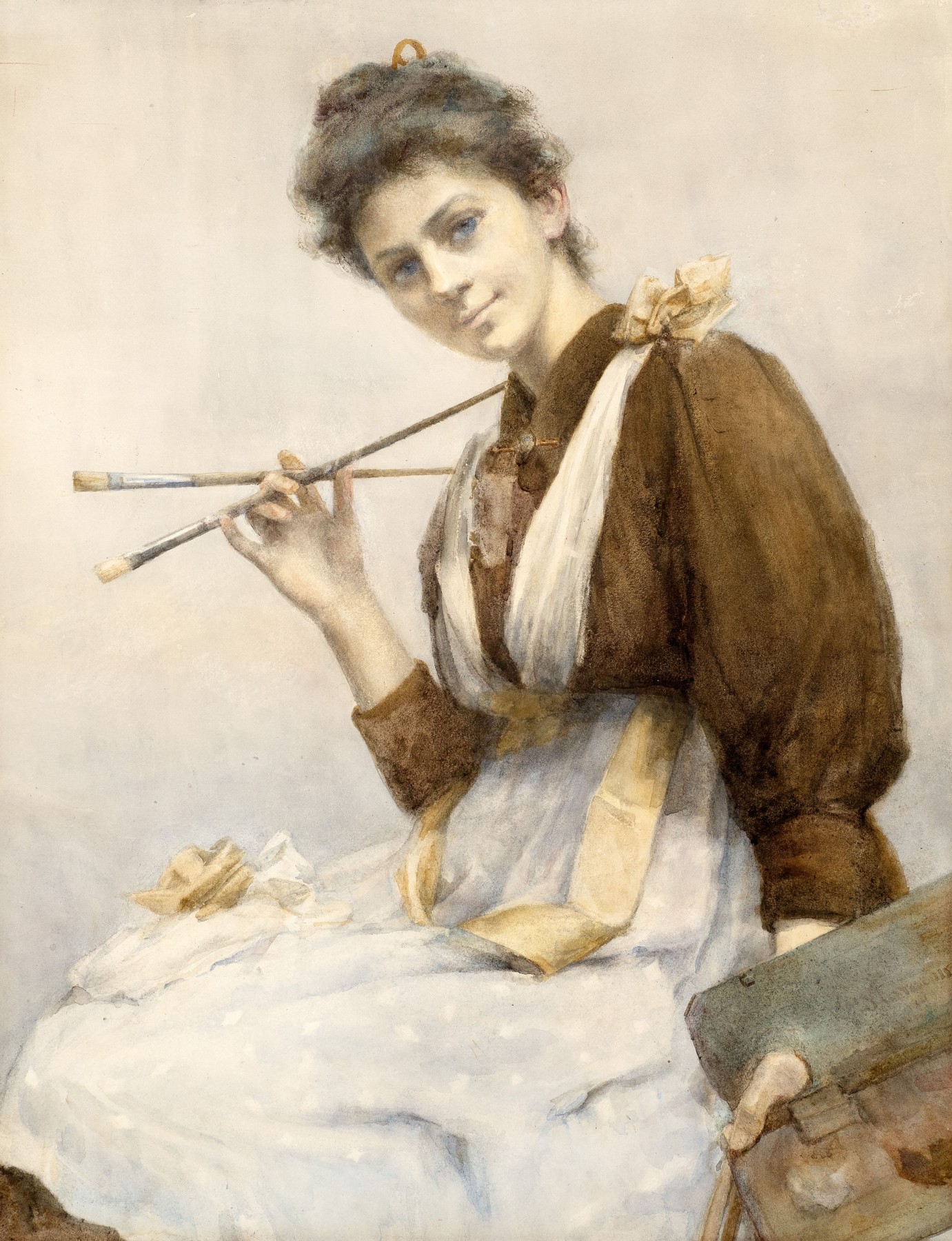
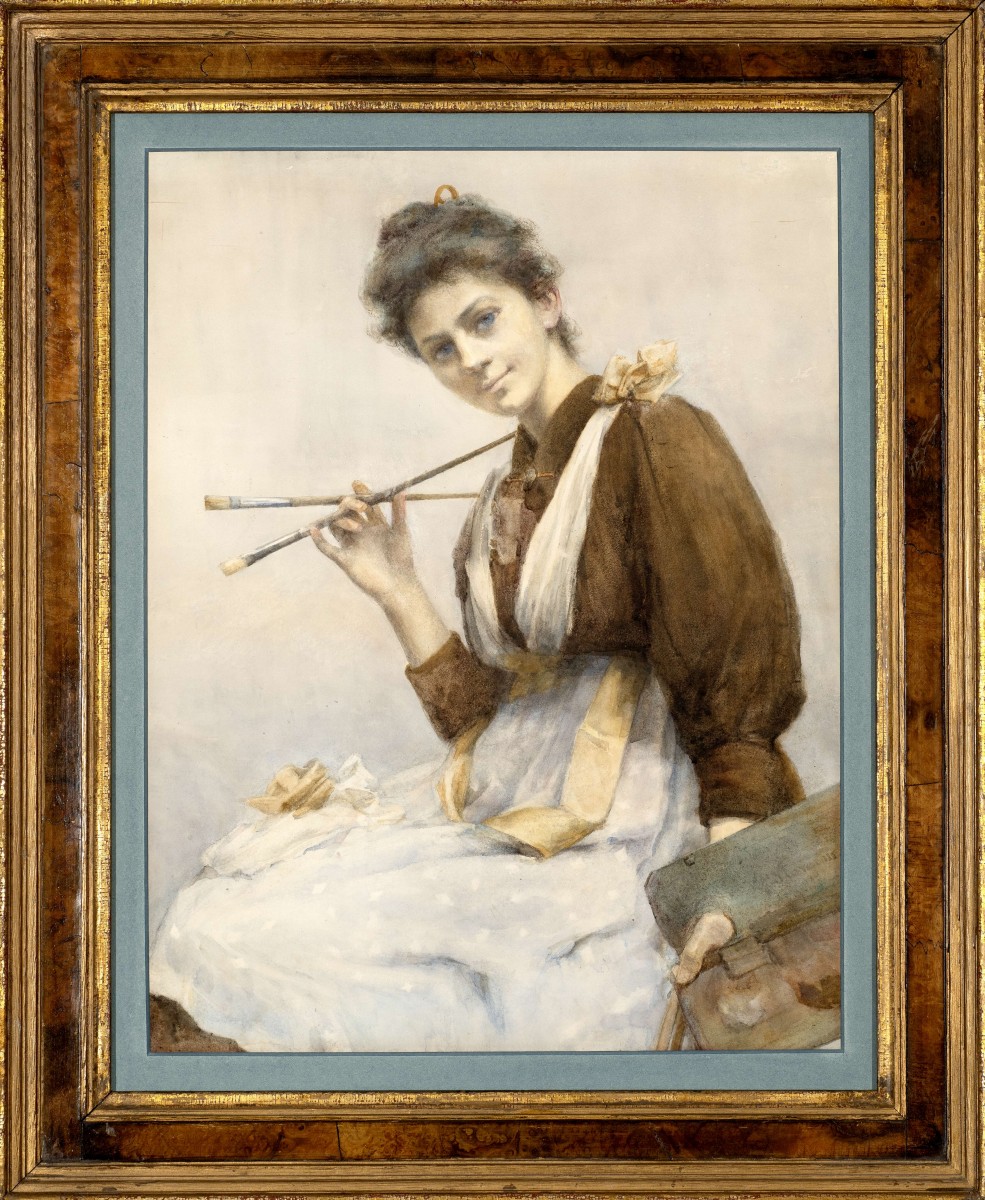
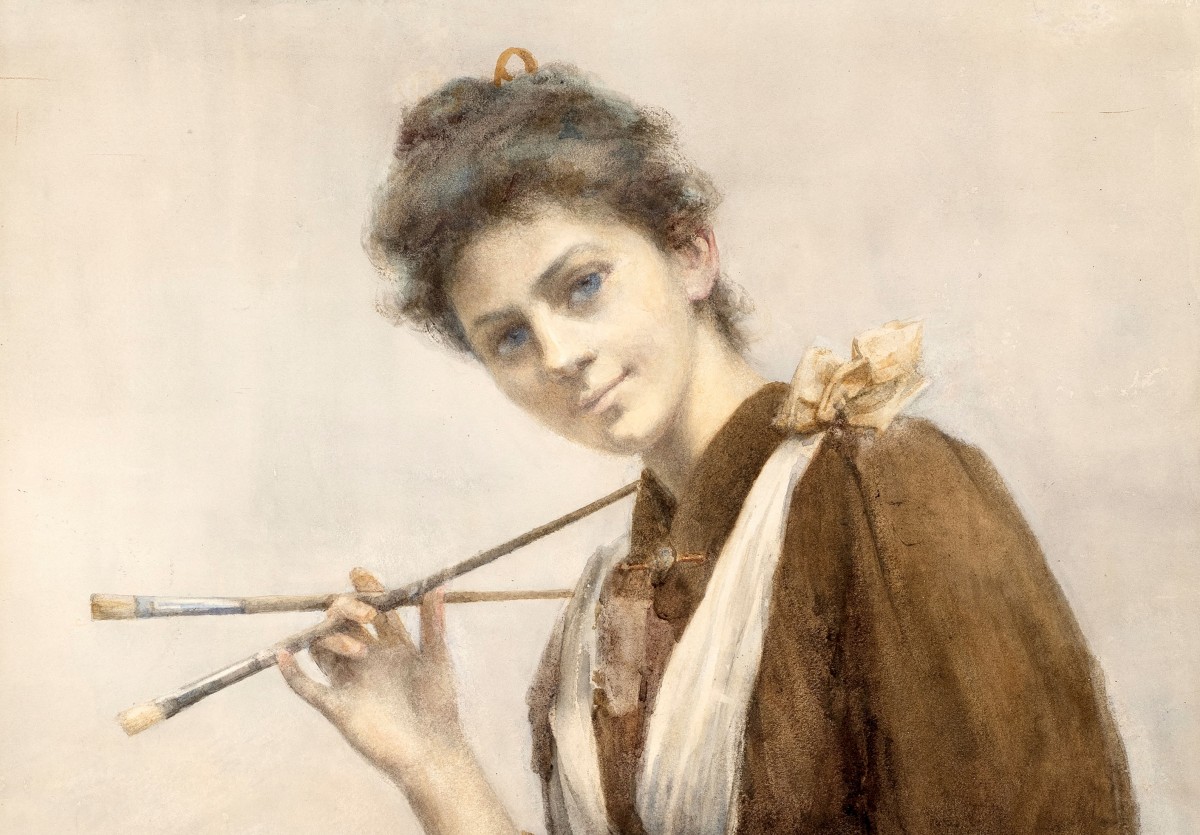
English School, c. 1895
Portrait of an Artist Holding Her Brushes
Indistinctly signed, lower right
Watercolour on paper
52.5 x 40 cm (21 x 15 3/4 in.)
Provenance:
Private Collection, UK, until 2024.
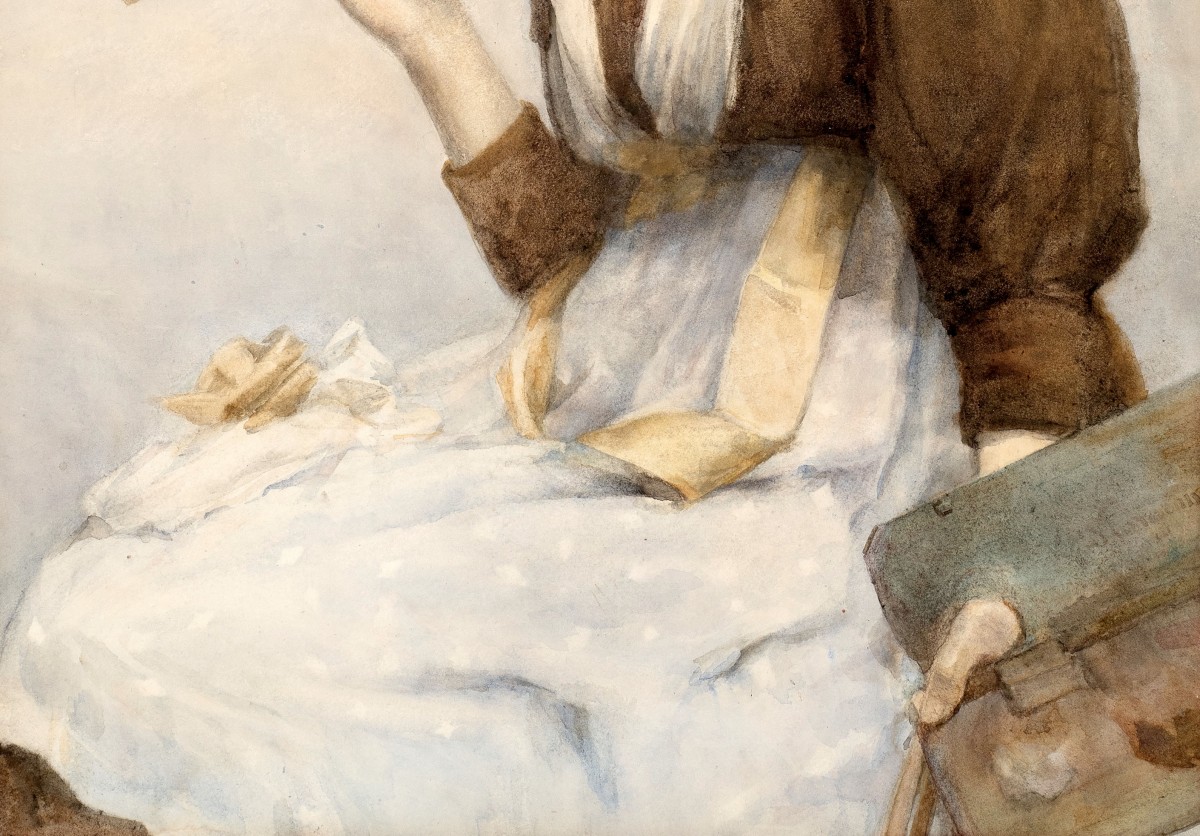
With quiet assurance, the young sitter turns towards the viewer, her brushes balanced lightly in her right hand and her palette resting at her side. Dressed in an artist’s smock adorned with soft golden ribbons, she is presented not as a casual amateur, but as a professional painter, conscious of her skill and status. The delicacy of the watercolour technique, visible in the transparent treatment of the white dress, the warm brown tones of the bodice, and the subtle modelling of the face, lends the composition both freshness and elegance.
For a woman artist in late nineteenth-century Britain, such an image would have carried particular significance. Female painters still faced deeply entrenched prejudice and were often denied the same seriousness accorded to their male contemporaries. By the end of the century, however, new opportunities for formal training had begun to transform the artistic landscape, especially through institutions such as the Slade School of Art, founded in 1871, where women were admitted on equal terms with men. By the 1890s, women formed a remarkable proportion of its student body, and a new generation of artists emerged: ambitious, modern, and increasingly confident in asserting their professional identity.
Seen in this context, the present work may plausibly depict a Slade-trained artist, or at the very least participate in that broader cultural moment. Watercolour was an important part of academic training, and many female students distinguished themselves in the medium, among them figures such as Gwen John, Ursula Tyrwhitt, and Ida Nettleship, whose features have been noted as bearing a certain resemblance to the present sitter. The direct gaze, poised posture, and understated elegance of the composition together create a compelling image of the late Victorian woman artist: self-possessed, accomplished, and fully aware of her place within a changing artistic world. Although the signature remains difficult to decipher, further research may yet clarify both the authorship of the work and the identity of the sitter.