Offered by Stéphane Renard Fine Art
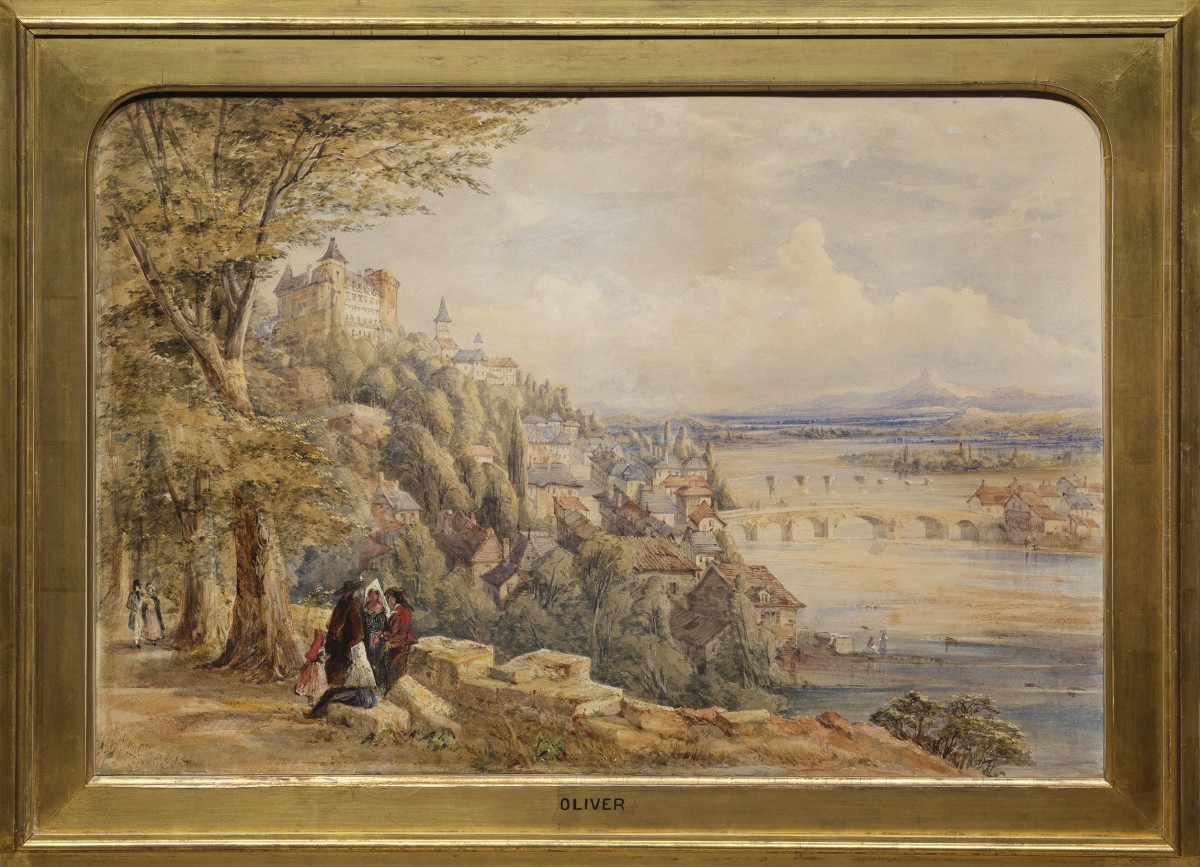
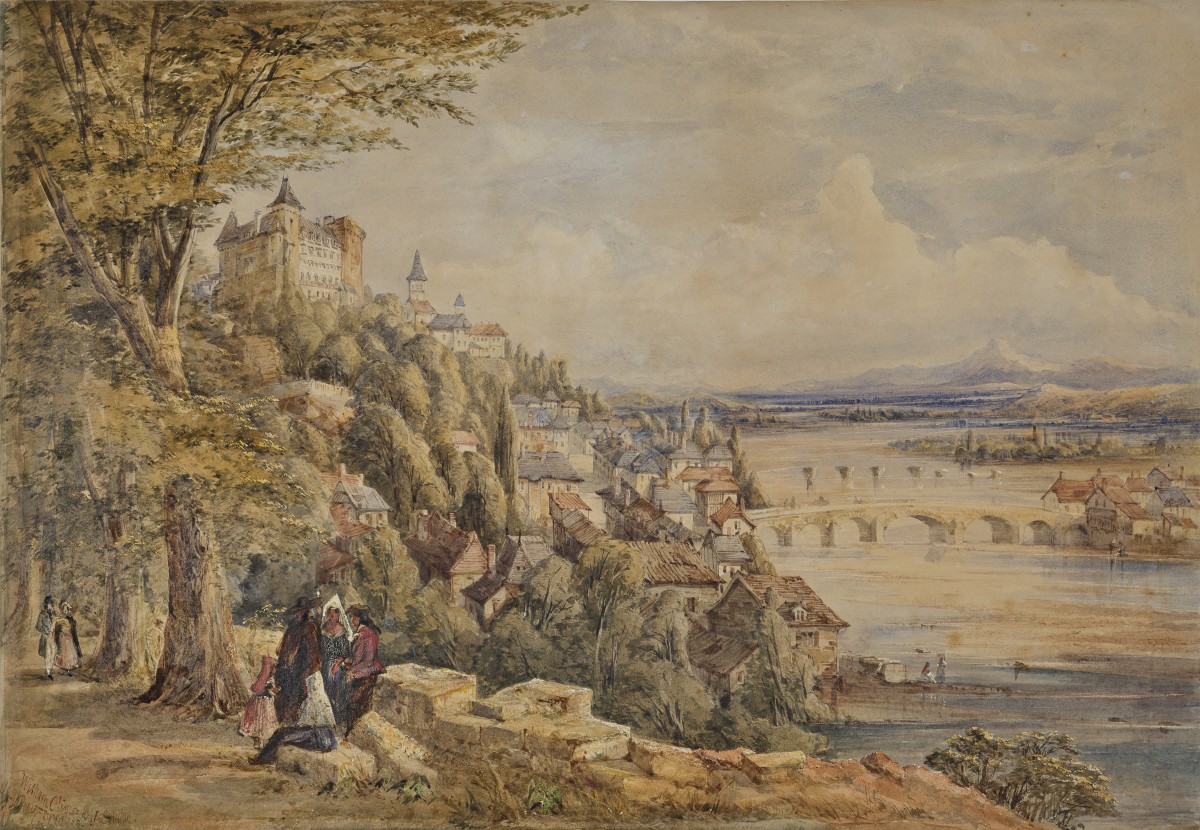
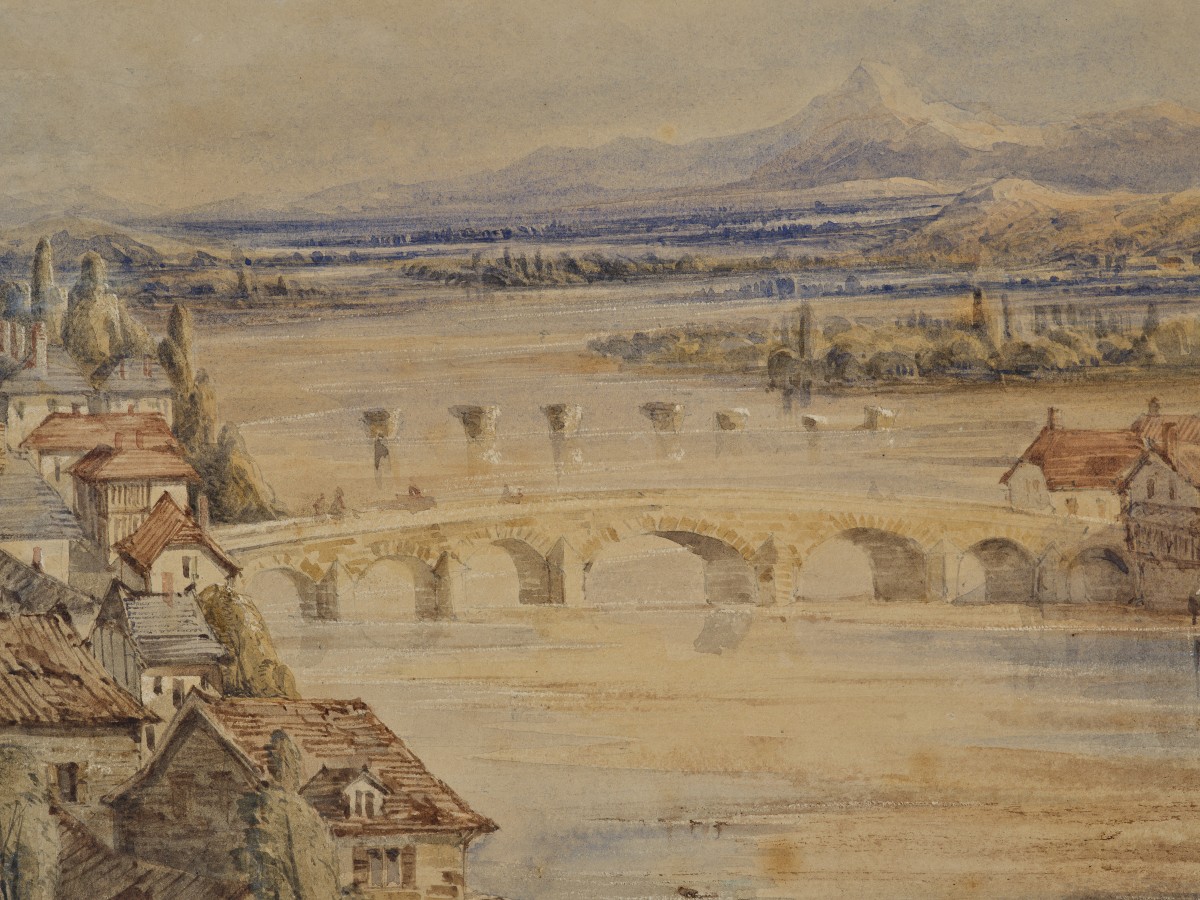
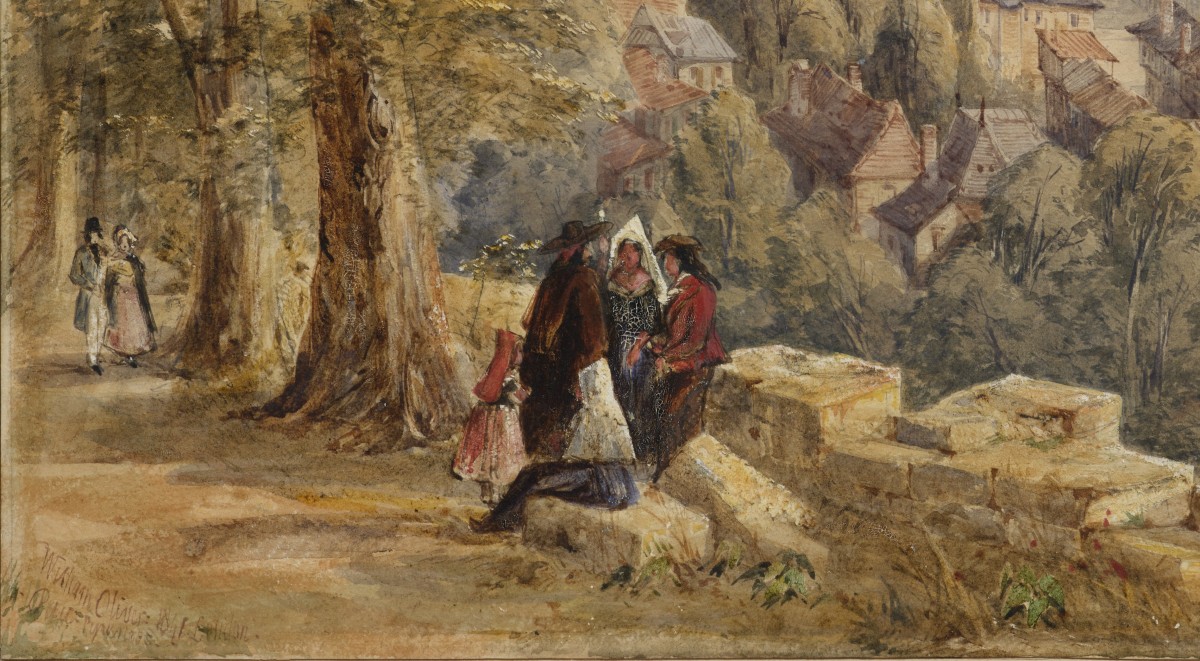

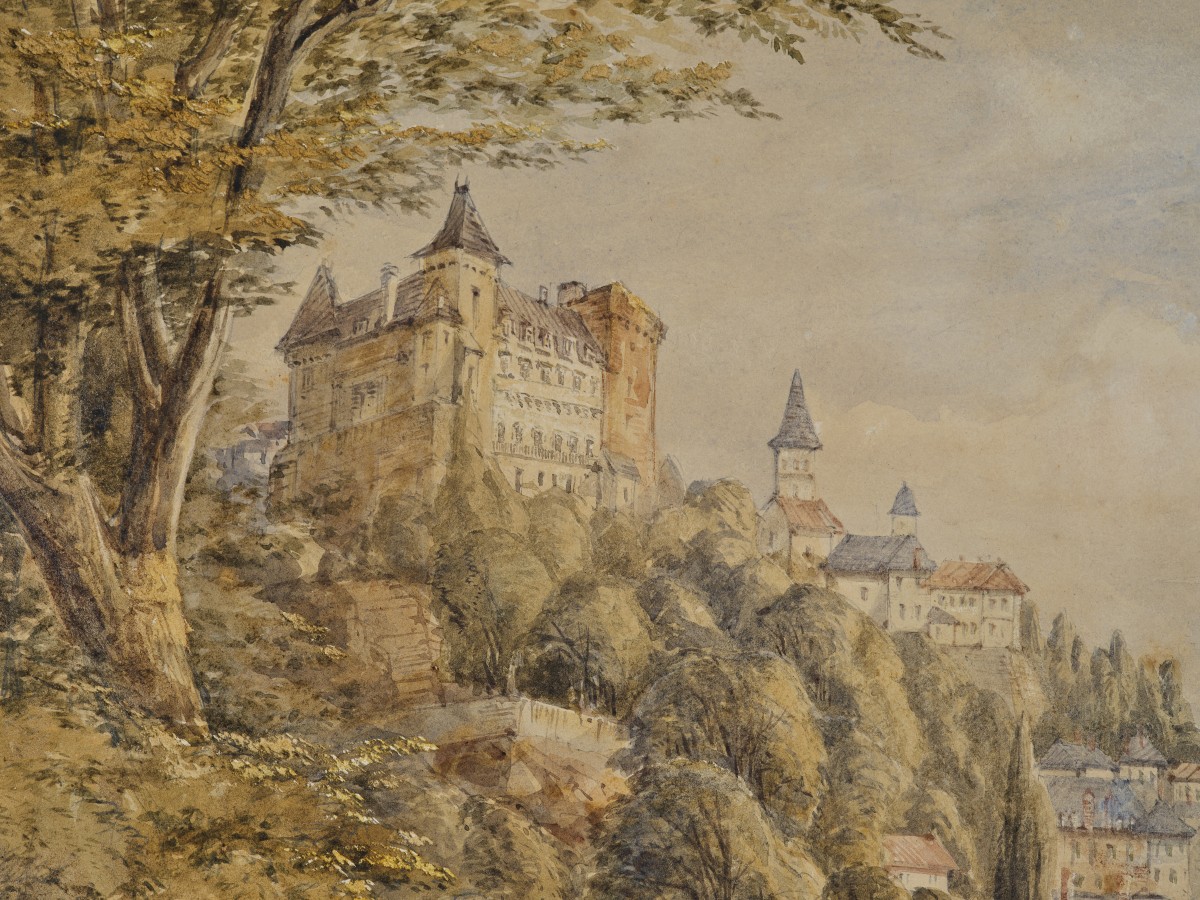
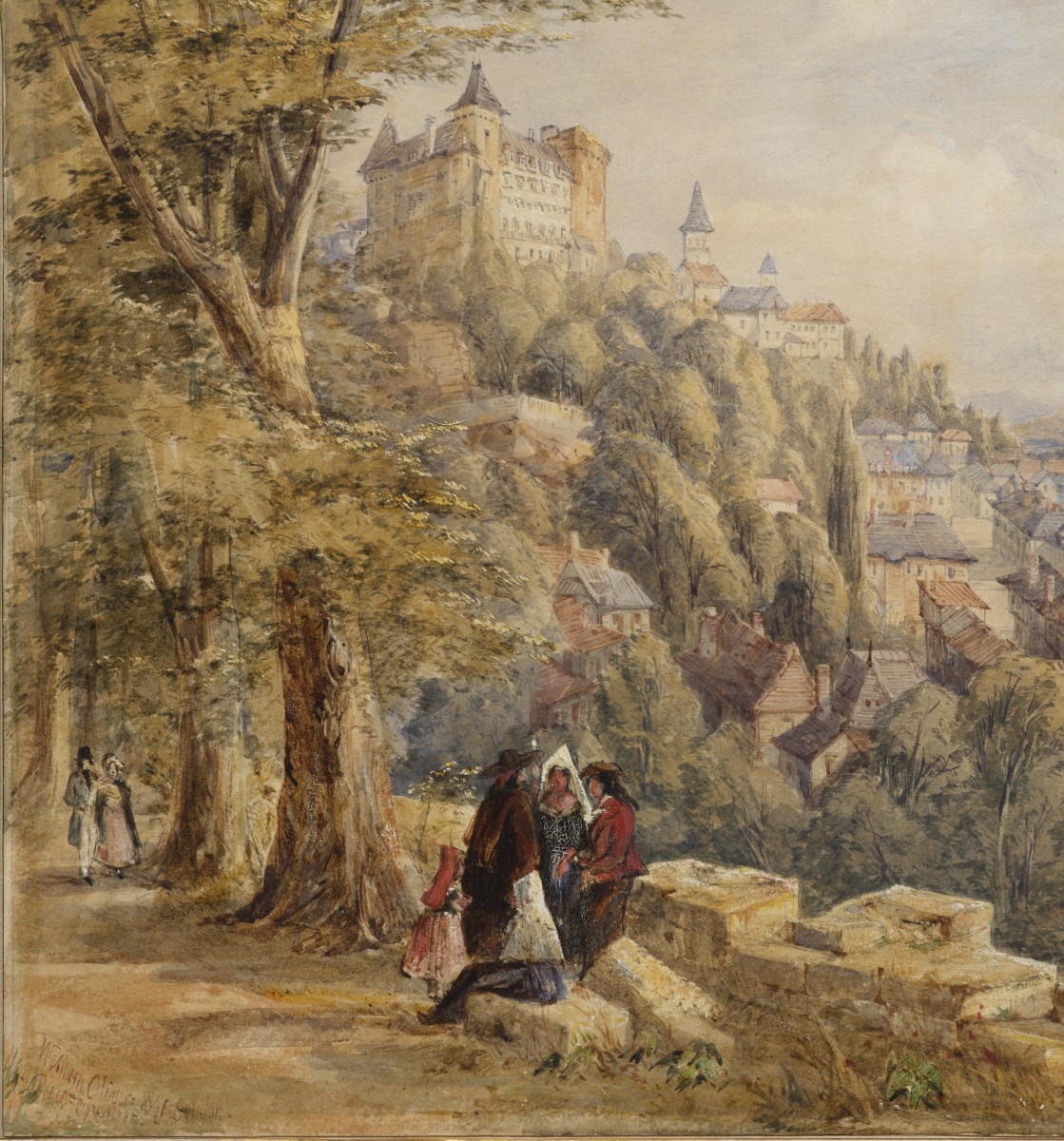
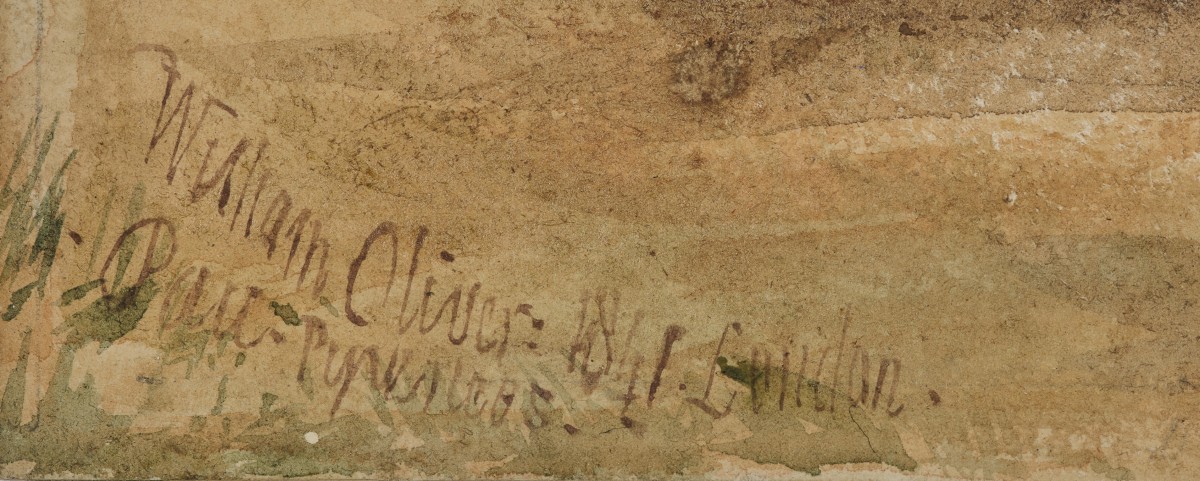
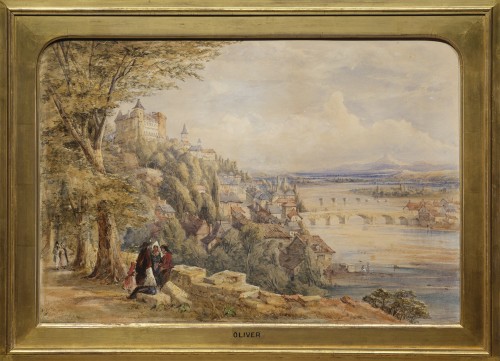
This charming watercolor (signed and dated by the artist) presents a view of the castle and the city of Pau taken from the former park of the Kings of Navarre. It was created in the artist’s London studio in 1841, while William Oliver, having returned from his journey through the Pyrenees, was overseeing the preparation of the lithographs for his book Scenery of the Pyrenees (published in 1842). In fact, this book includes another version of the same landscape, one that is less romantic and closer to reality. With the soft, golden tones of the watercolor evoking the warm light of a late afternoon, this magnificent composition bears witness to this English landscape painter’s passion for the Pyrenees and serves as a moving memento of his time in Pau.
1. William Oliver : a passion for the Pyrenees
William Oliver (1804–1853) was an English landscape painter who worked primarily in watercolor, though he also occasionally painted in oil. As a landscape artist, he depicted scenes from England, France, Spain, Italy, Switzerland, Germany, and Tyrol, but he had a particular fondness for the French Pyrenees. He was not related to the painter William Oliver Williams (1823–1901), also known as William Oliver.
William Oliver was born around 1804 in Sudbury, Suffolk. He began exhibiting in 1829 at the Society of British Artists (now the Royal Society of British Artists) and continued to participate in its exhibitions regularly until the end of his life. In 1834, he was elected a full member of the New Society (now known as the Royal Institute) of Painters in Water-Colours, where he also exhibited regularly throughout his life. He also exhibited at the British Institution beginning in 1835 and at the Royal Academy, alternating periods of travel with the creation of his artworks in his London studio based on the sketches made during those trips. These landscapes were popular in his time, as evidenced by the purchase, during his lifetime, of several of his works by the Victoria and Albert Museum and by the Tate Gallery.
In 1842, he published a folio-sized album titled Scenery of the Pyrenees, comprising 26 lithographs, which was reissued under the title View of the French Pyrenees in 1845. The English enthusiasm for the Pyrenees is said to have stemmed from the stay in Béarn and the Basque Country undertaken by the future Duke of Wellington (to whom Oliver’s book was dedicated) following his Spanish campaign, during the winter of 1813–1814. This campaign was also immortalized in a book illustrated by Batty and published in 1823 , which is one of the first English illustrated books on the Pyrenees.
In 1840, William Oliver married his former pupil Emma Sophia Eburne (1820–1885), and they had two children. He died on November 2, 1853, at Langley Mill House, Halstead, Essex, of “cardiac hypertrophy.” His wife, who was also an artist, continued to paint after her husband’s death until her own passing in 1885.
2. William Oliver, illustrator of the Pyrenees
While it is generally accepted that the future Duke of Wellington’s stay introduced the English to the western part of the Pyrenees, this coincided with the 1813 publication, by a certain Gold, of the first English translation of Ramond’s Observations on the Pyrenees. This publication established the Pyrenees as an additional destination on the traditional Grand Tour to Italy via the Alps.
The album Scenery of the Pyrenees is not the first English book to feature views of the Pyrenees, as Madeleine Coslton had already published 27 views of the Pyrenees in her Journal of a Tour in France, Switzerland, and Italy in 1822. Following in her footsteps, a certain Joseph Hardy published A Picturesque and Descriptive Tour in the Mountains of the High Pyrenees in 1825, a delightful work illustrated with 24 tiny monochrome engravings, which was followed by works by Wilkinson (in 1838) and Crocker and Barker (1839) on the Basque provinces of Spain.
Oliver’s book, published in 1842, stands out, however, both for its geographical scope (26 views covering the main Pyrenean sites between Pau and Toulouse) and, above all, for its lavishness, virtually unmatched in Pyrenean albums: all the plates, systematically colored in the finest copies, are printed in a folio format that has no equivalent except Melling’s Voyage Pittoresque, published in 1826–1830 (though its 72 plates, of uneven quality, are very rarely in color).
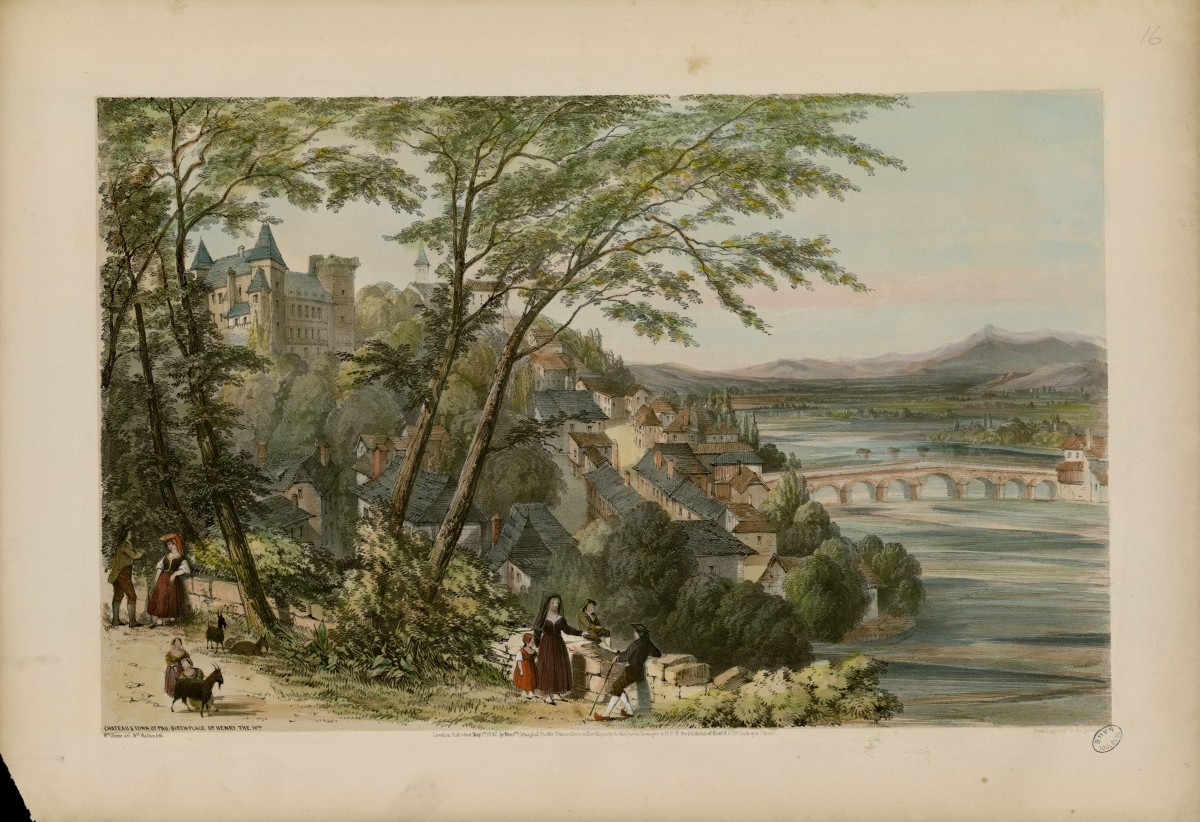
The view of the castle and the city of Pau (which, it should be noted, was the birthplace of Henry IV) is the sixteenth in this volume and depicts a landscape slightly different from that of our watercolor (9th photo in the gallery).
This viewpoint, which has often inspired artists, is taken from the Haute-Plante, the former park of the castle of the Kings of Navarre and offers a view of both the southern facade of the castle and the lower part of the town clustered in front of the bridge crossing the Gave. The landscape depicted in this print seems to us much closer to reality than that of our watercolor. The latter, which is indicated to have been created in London in 1841 (while the artist was supervising the work of the lithographers), presents a distinctly more picturesque view: the trees that enlivened the foreground have disappeared, reinforcing the impression of looking down upon the town, while the castle, viewed from below, appears isolated on a rocky outcrop as if it were a burg from the Rhine Valley!
The group of figures in the foreground is also different, alternating between a group of Pyreneans whose traditional costumes are directly inspired by those of the Ossau Valley , and an elegant couple of strollers reminiscent of the first British tourists.
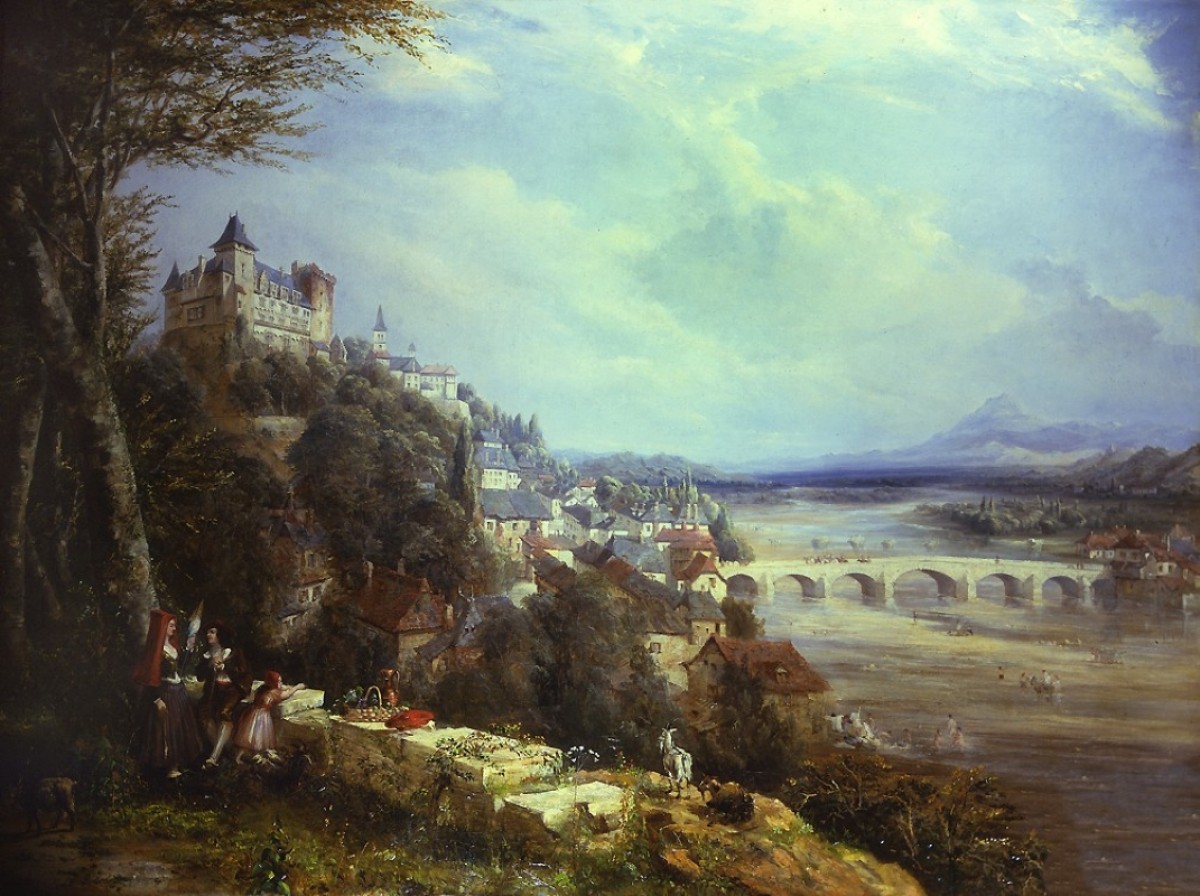
This modification of the image appears to us to be a step toward Oliver’s preparation of a large canvas that reappeared on the American market a few years ago (10th photo in the gallery). Unfortunately, this canvas demonstrates the artist’s limitations outside his preferred medium, watercolor, and offers us a somewhat grandiose and caricatured view of this site, which he had rendered so charmingly in the version we present here.
3. An original technique
Our watercolor features a highly original blend of techniques that we find worth detailing. While the white of the headdresses appears to have been enhanced with oil painting, the clothing of the Pyrenean figures has been coated with gum arabic, as was customary for lithographs enhanced with watercolor, giving them a glossy appearance. Also worth noting are a few highlights applied in oil painting to the tree leaves, which create a rather unexpected three-dimensional effect.
Our watercolor is presented in a gilded, molded English wooden frame with rounded upper corners, bearing the artist’s name inscribed at the bottom. This frame is most probably its original frame.
Main bibliographic reference:
Claude Dendaletche – Pyrénées: Guide bibliographique illustré 1545–1955 – Aubéron 2005
Delevery information :
The prices indicated are the prices for purchases at the gallery.
Depending on the price of the object, its size and the location of the buyer we are able to offer the best transport solution which will be invoiced separately and carried out under the buyer's responsibility.