Offered by Poncelin de Raucourt Fine Arts
REQUEST INFORMATION

Paintings and drawings, from 16th to 19th century
Giovanni Benedetto Castiglione, called Il Grechetto (Genoa 1609 – 1664 Mantua)
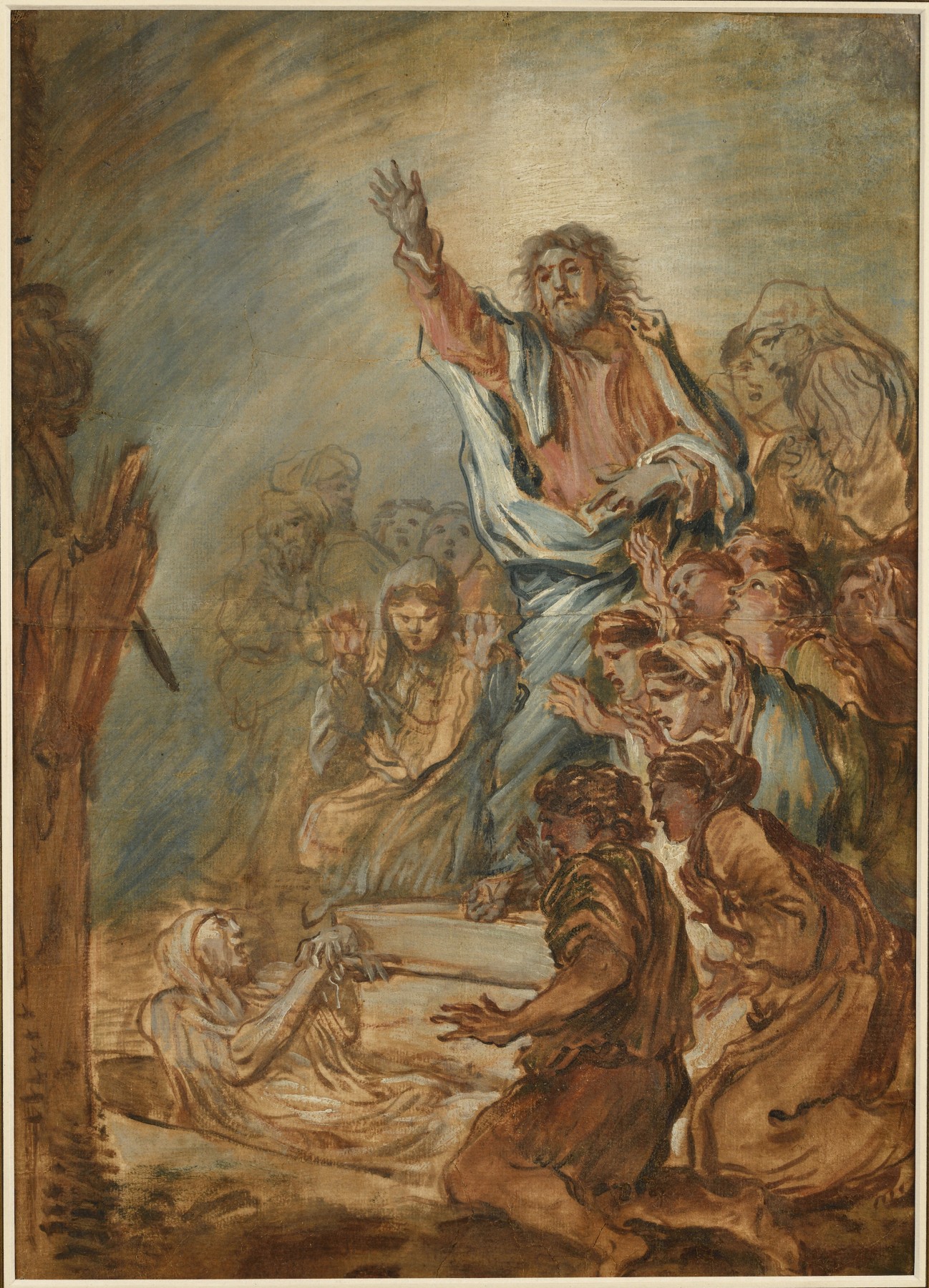
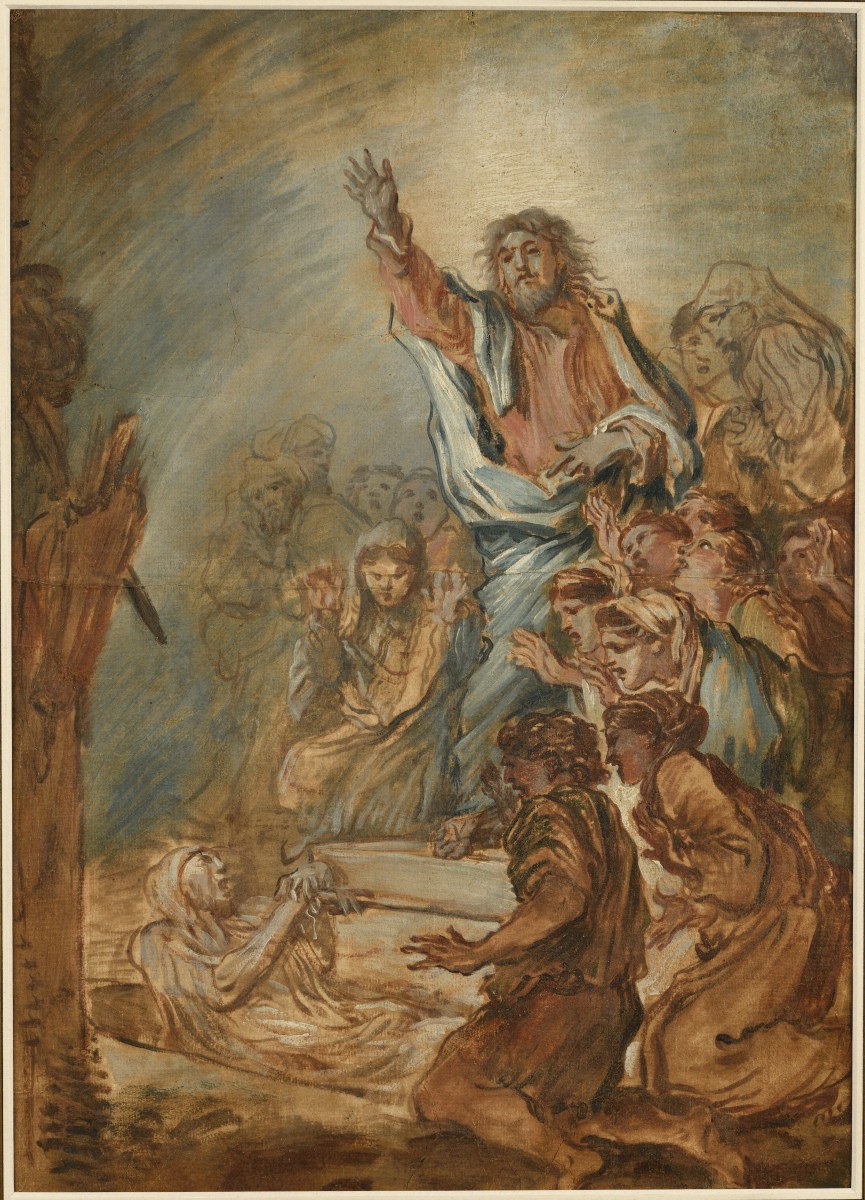
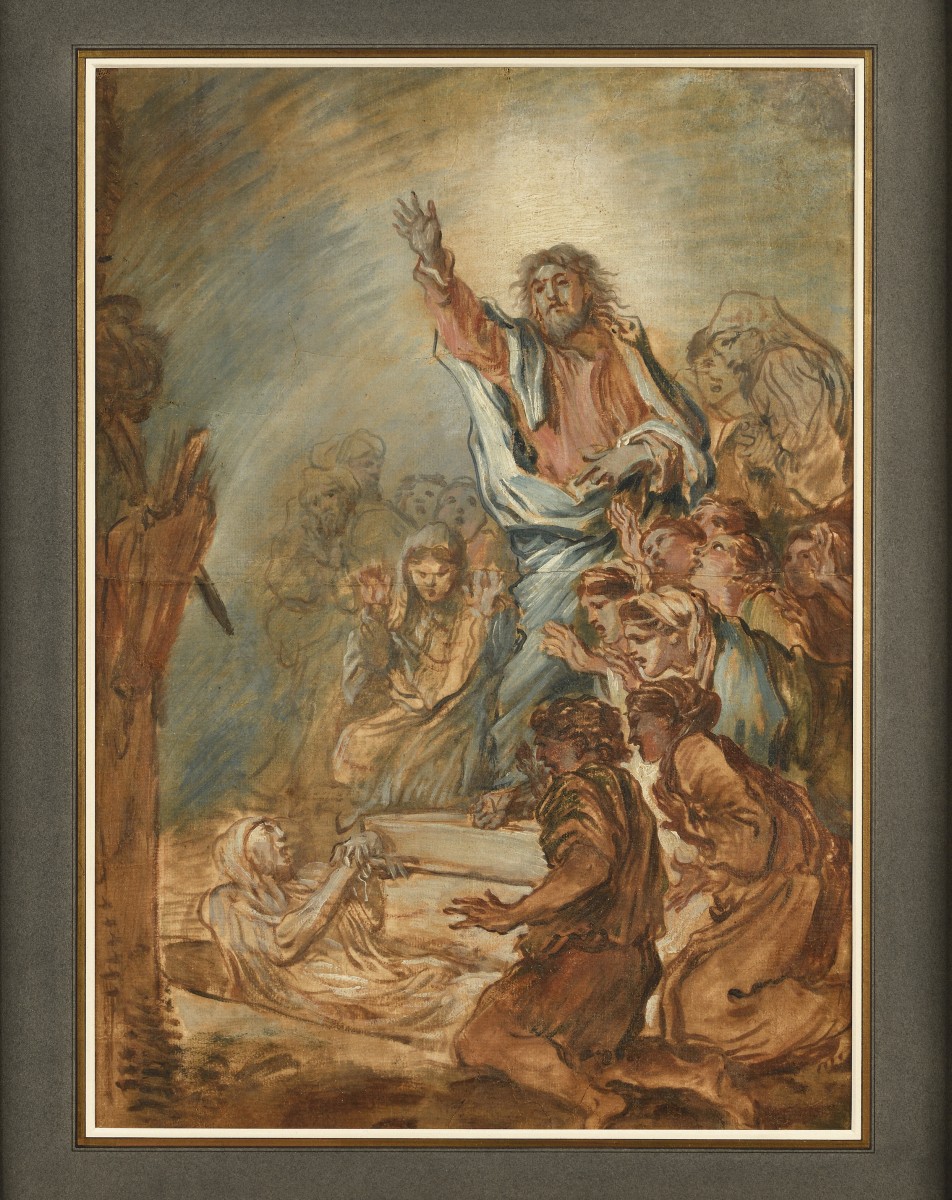
The Raising of Lazarus
Oil on paper, laid on paper
54.5 × 39 cm
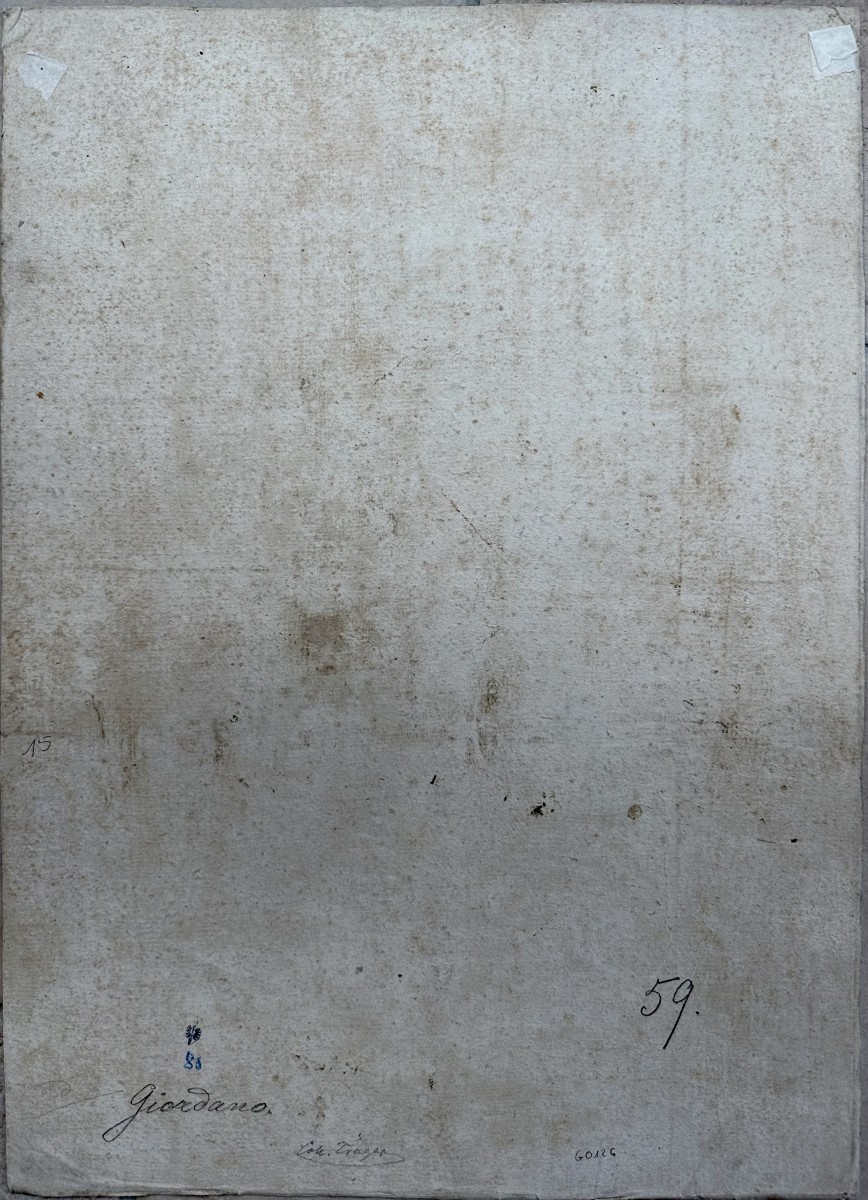
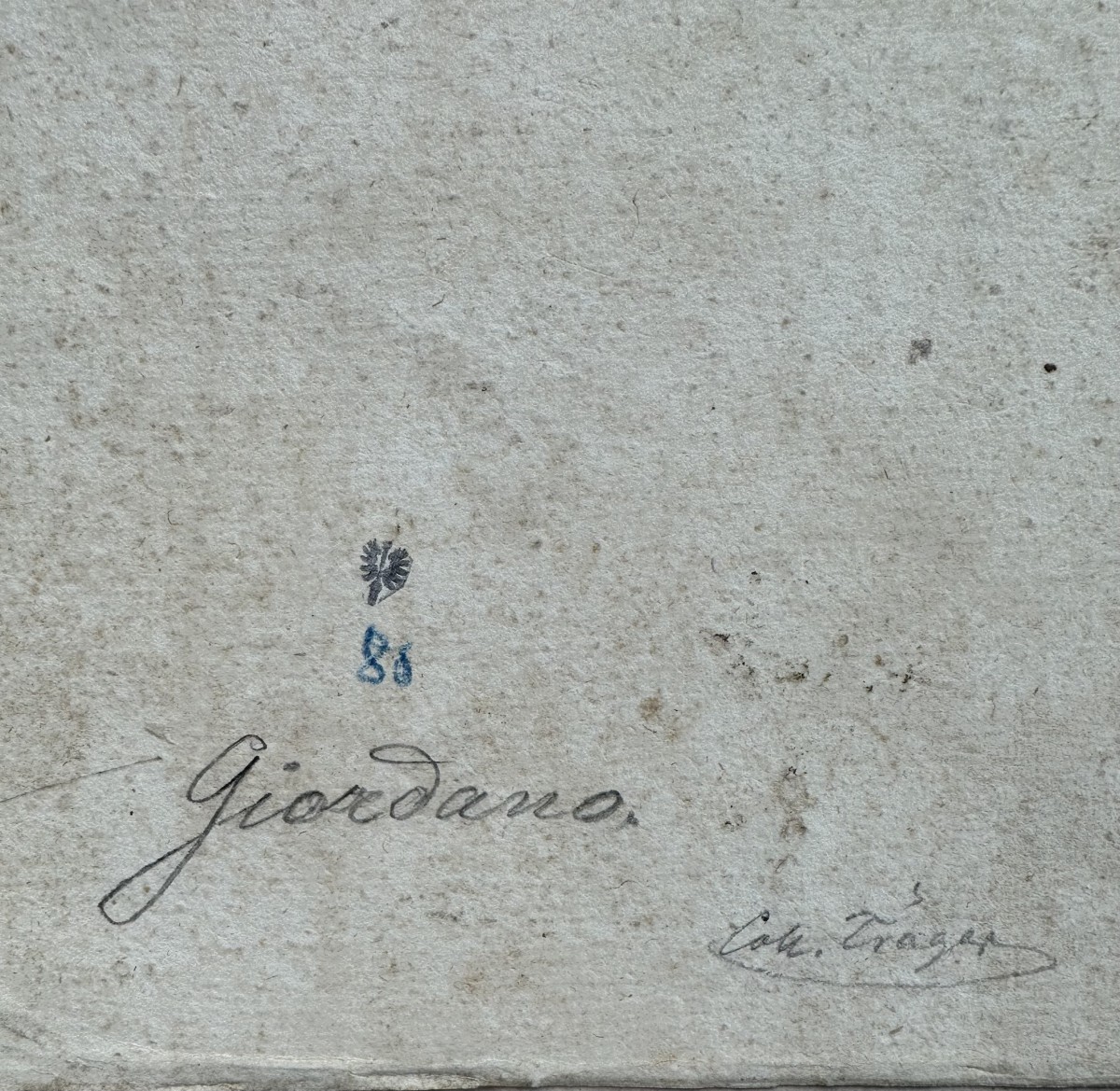
Bears on the verso the collector’s mark of Baron Adalbert von Lanna (Lugt L. 2773), and the numbers 59 and 85
Provenance
Consul Joseph Smith (1674–1770), Venice
Adalbert Freiherr von Lanna (1836–1909), Prague (Lugt L. 2773)
Rudolph Lepke, Berlin, Collection of Baron Adalbert von Lanna, Prague (Vol. 4), 22 May 1911, lot 59 (as “Luca Giordano”)
Austrian private collection
Private collection, France
One of the most original and inventive artists of the Italian Seicento, Giovanni Benedetto Castiglione occupies a singular place in the history of European drawing. A brilliant painter, printmaker and draftsman, he was among the first artists to elevate the oil sketch on paper to an autonomous and expressive medium, anticipating practices that would only fully flourish in the eighteenth century. His work stands at the crossroads of Genoese naturalism, Venetian colorism and Roman Baroque drama.
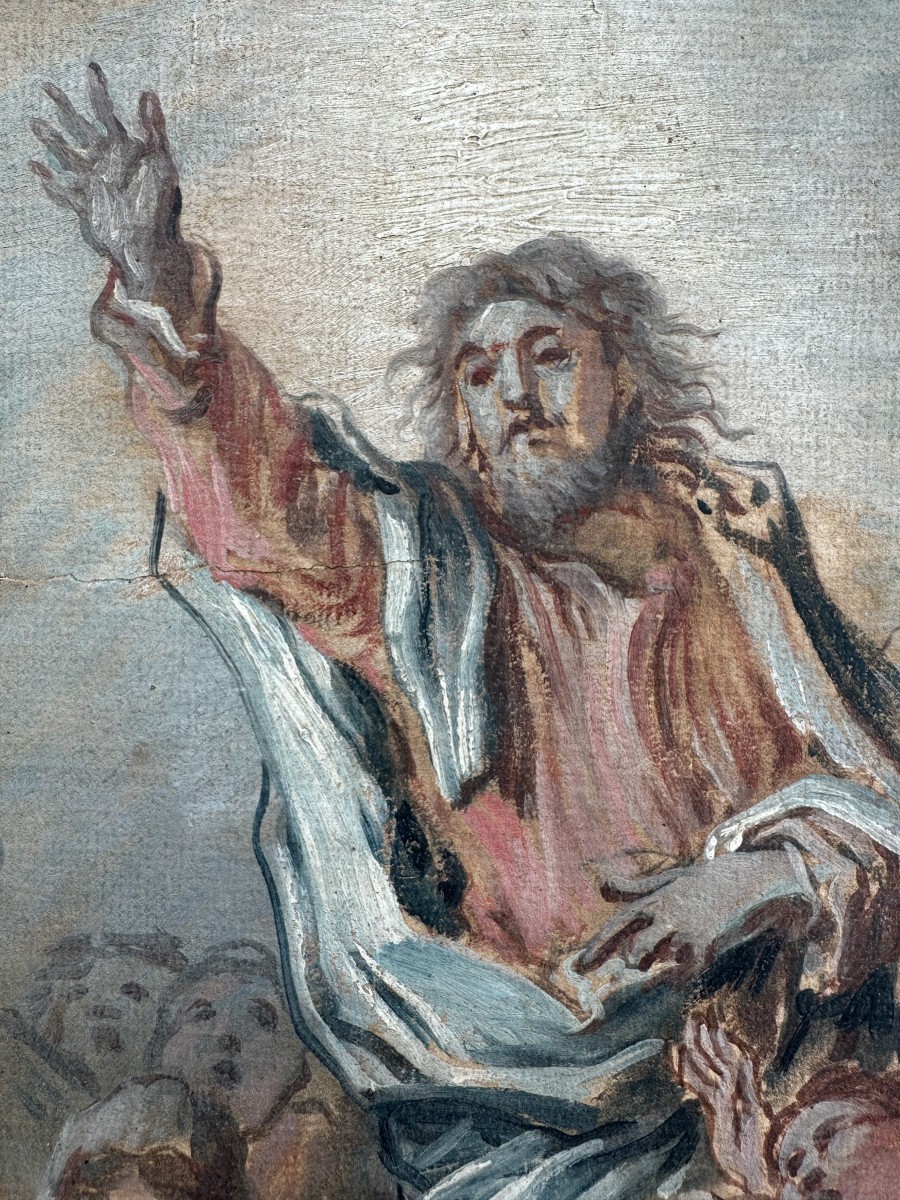
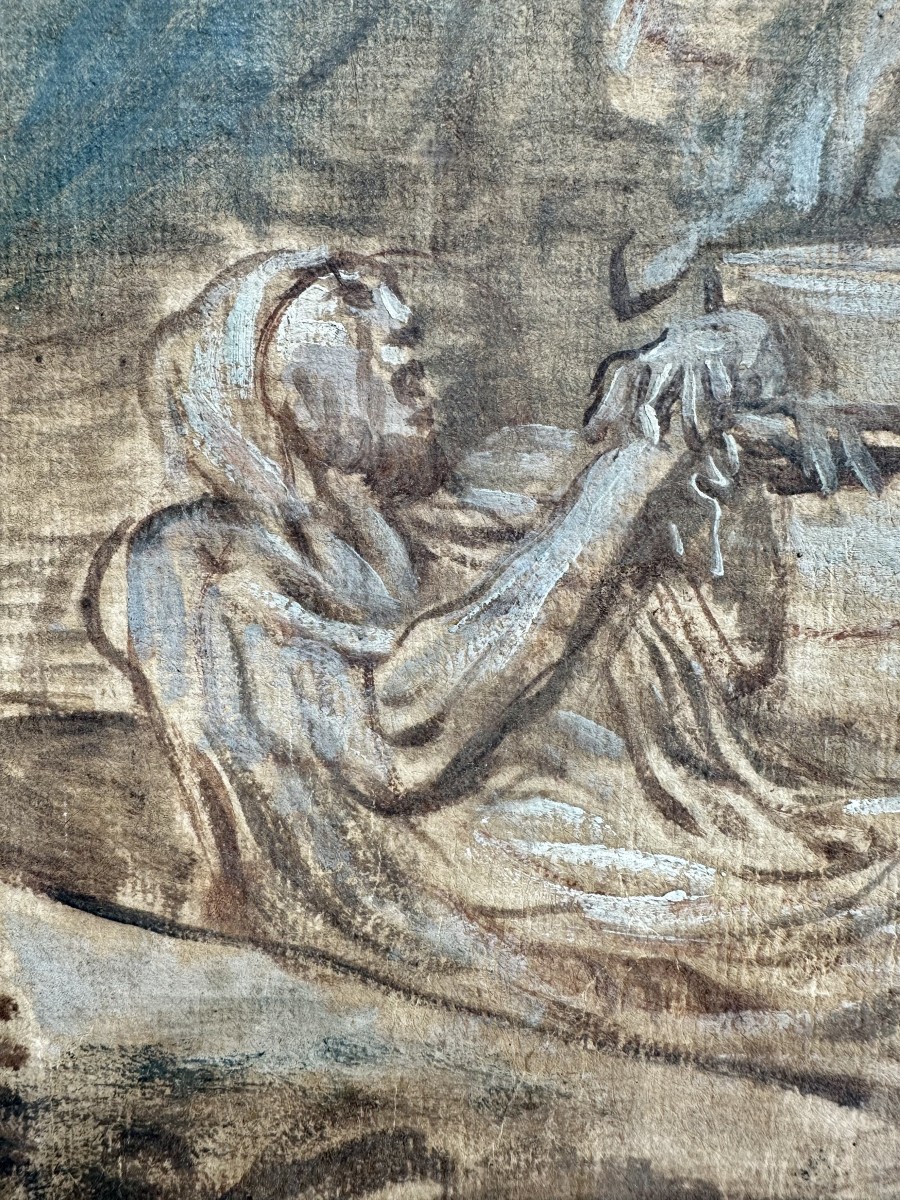
This newly rediscovered drawing of The Raising of Lazarus is a compelling and powerful addition to Castiglione’s corpus. The dramatic orchestration of the scene, the fluid yet forcefully abbreviated construction of the figures, the expressively deformed physiognomies, and the confident shorthand of the background characters are entirely characteristic of Castiglione’s mature language.
Above all, the extraordinary variety, rhythm and organization of the brushwork place the sheet firmly alongside his most ambitious oil drawings on paper, such as God Appearing to Jonah (The Metropolitan Museum of Art), The Pagan Sacrifice (Art Institute of Chicago), the Immacolata (Royal Collection, Windsor), and the celebrated Virgin and Child in Glory from the Suida-Manning Collection.
Long obscured by an early misattribution to Luca Giordano and by the complexity of Castiglione’s artistic milieu—crowded with imitators, followers and later interpreters—this work now re-emerges as a fully autograph creation by Giovanni Benedetto himself. Its scale, finish and compositional ambition underscore the central role of drawing in Castiglione’s creative process, not as a preparatory exercise, but as a fully resolved work of art.
We are deeply grateful to Jonathan Bober, who has accepted the attribution without reservation and generously advised on the present notice. We also thank Catherine Loisel and Anna Orlando, both of whom expressed positive opinions regarding the attribution.
A discovery of the first order, and a significant contribution to our understanding of one of the great masters of the Italian Baroque.