Offered by Antichità San Felice
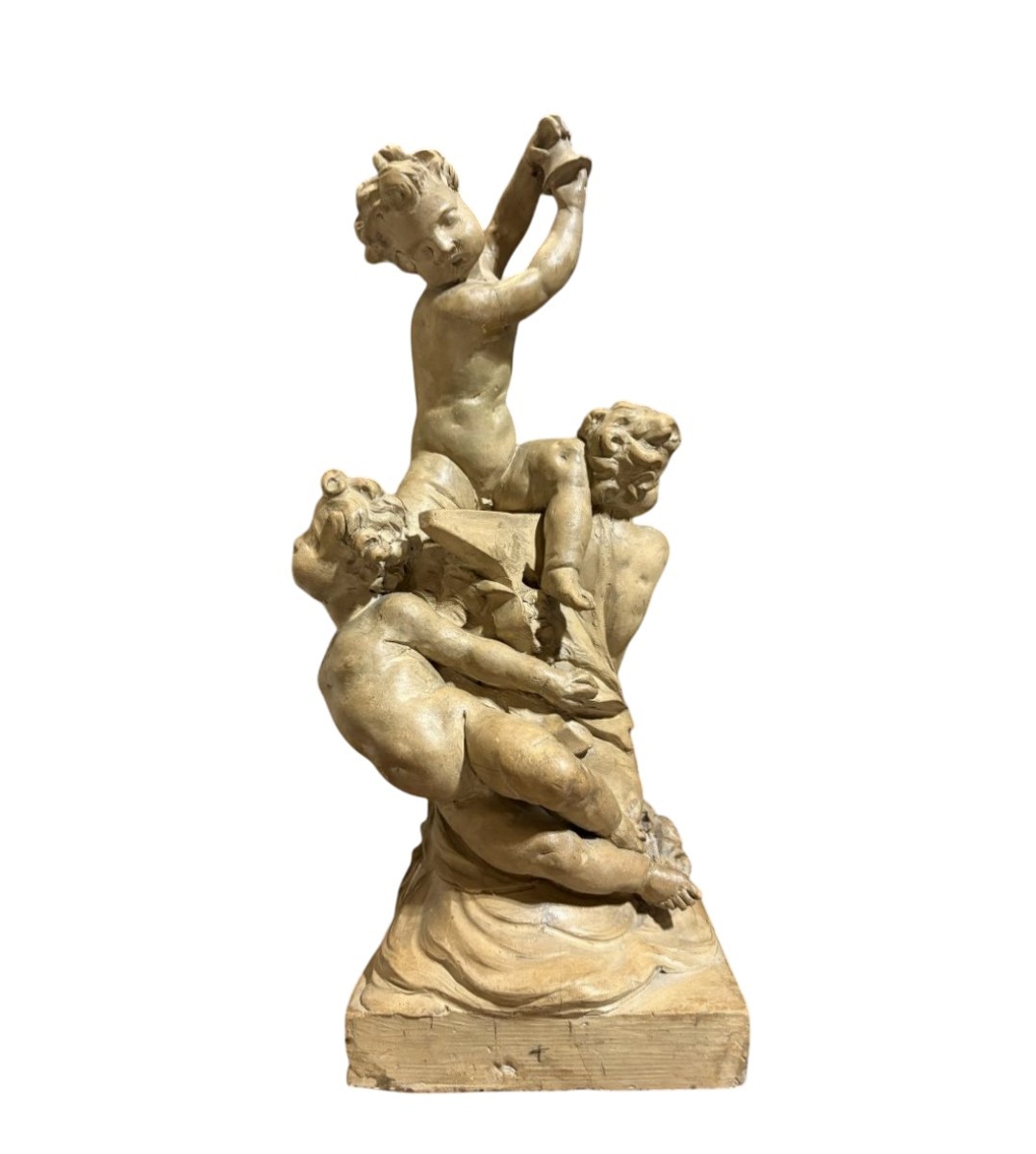
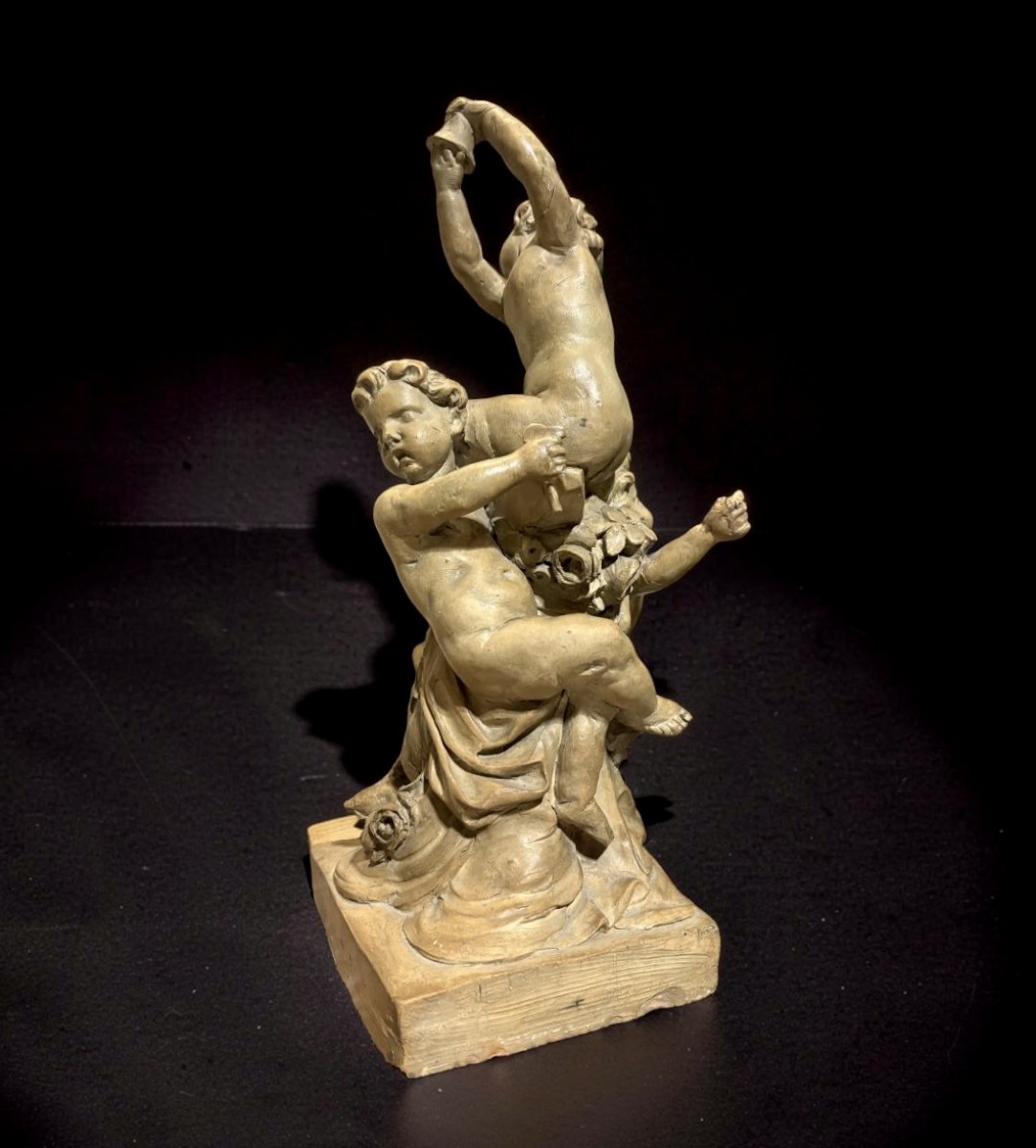
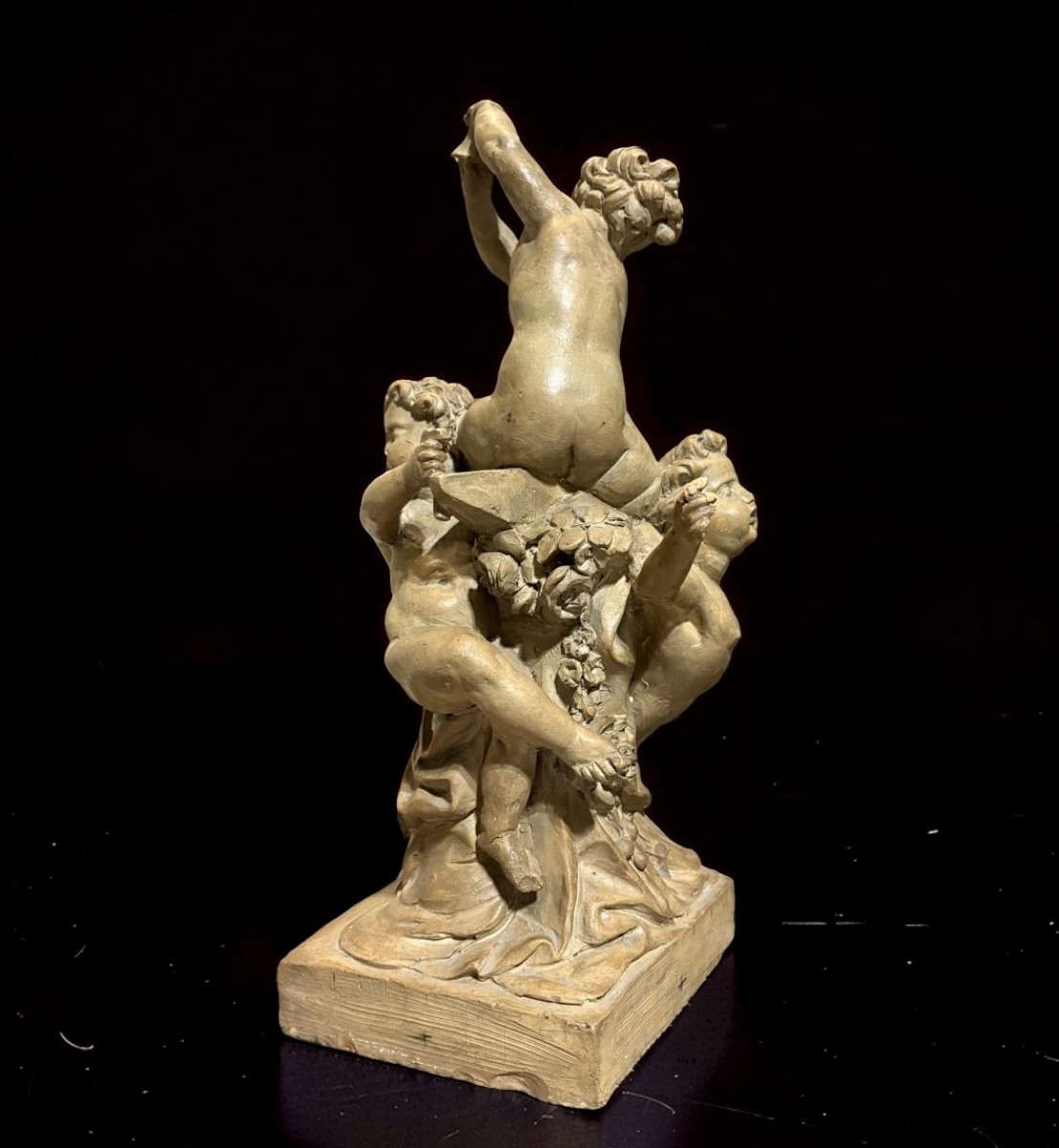
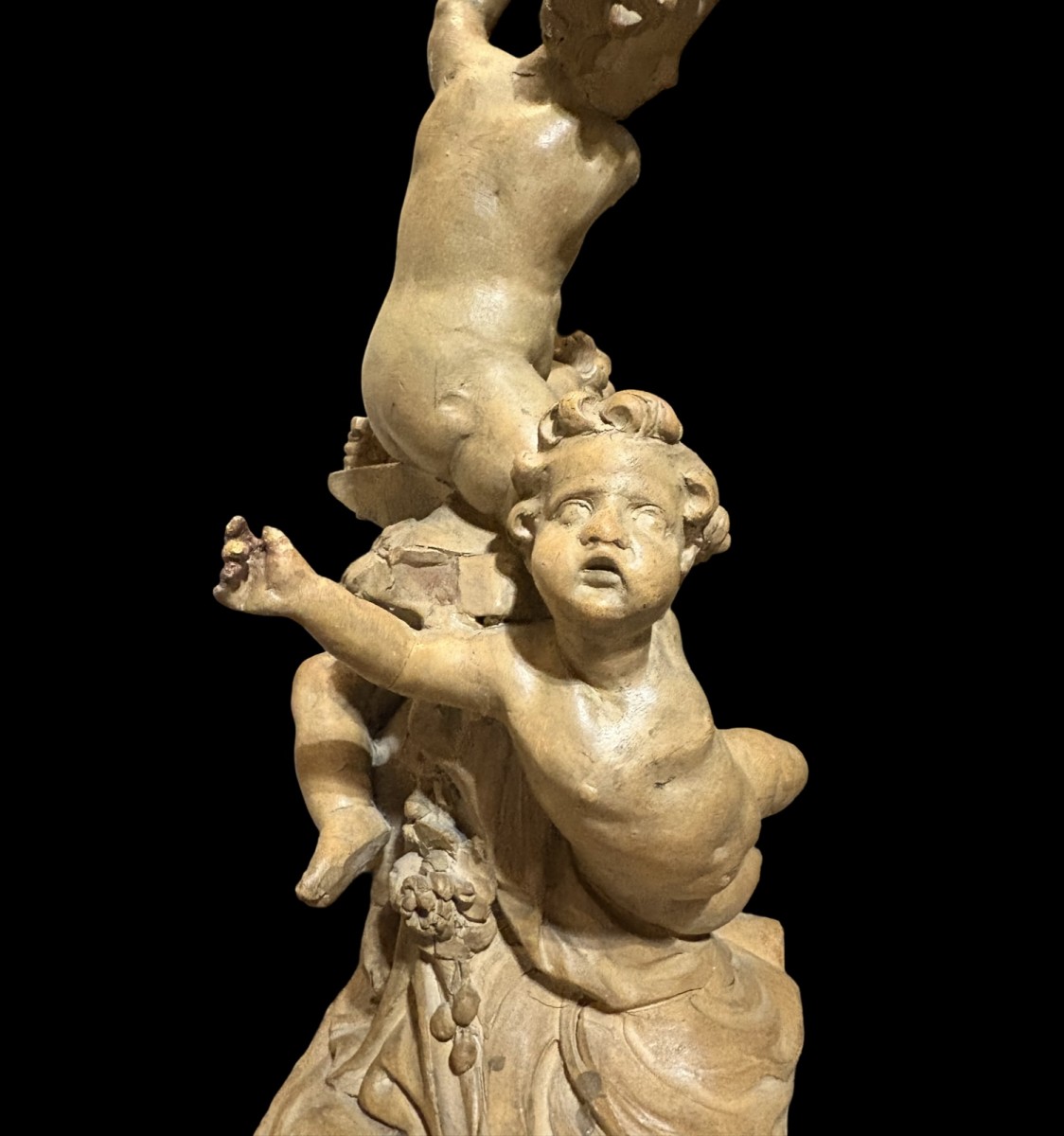

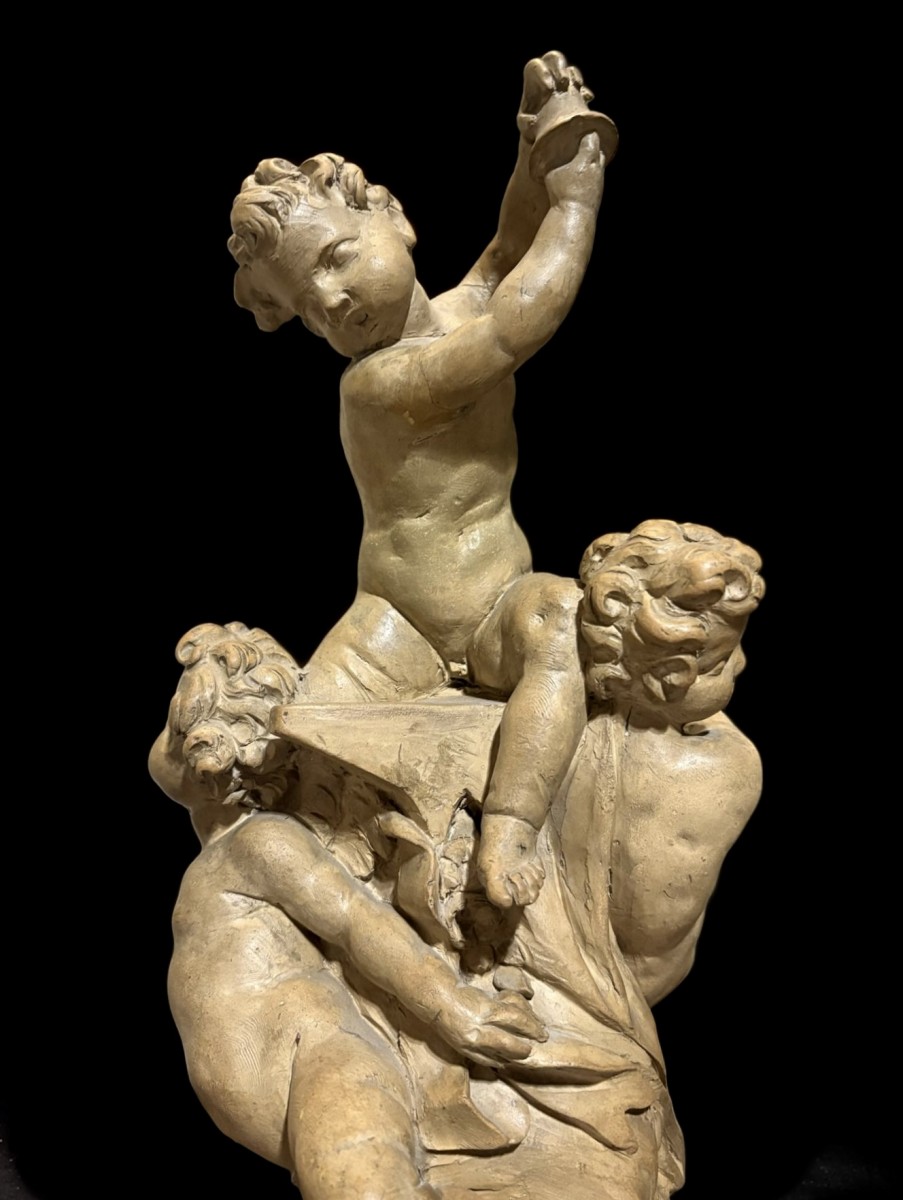
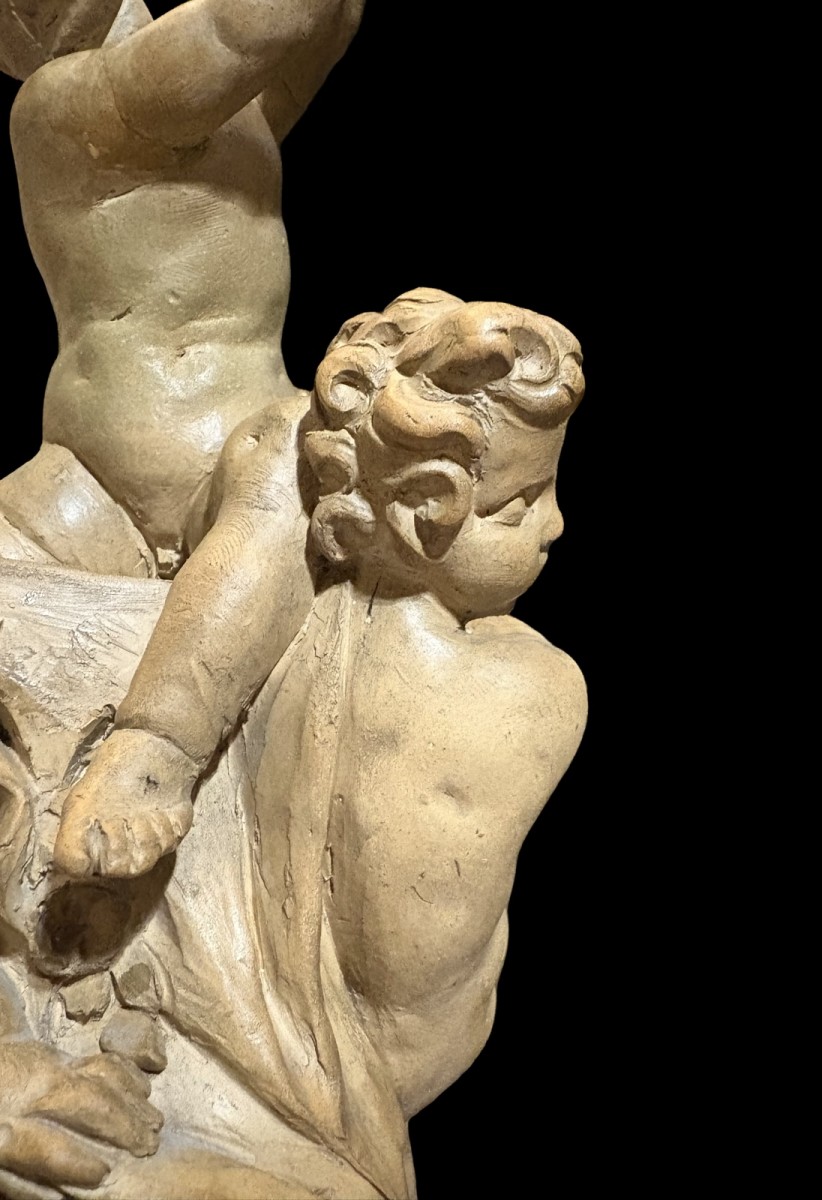
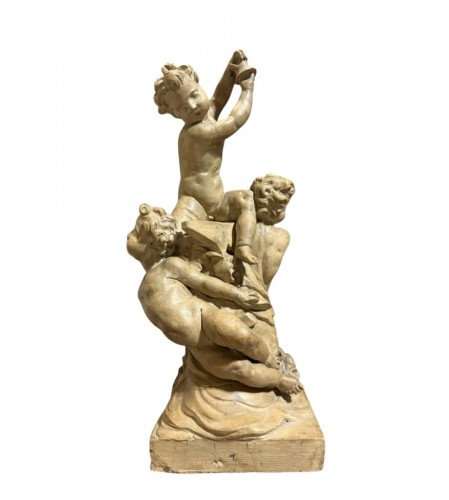
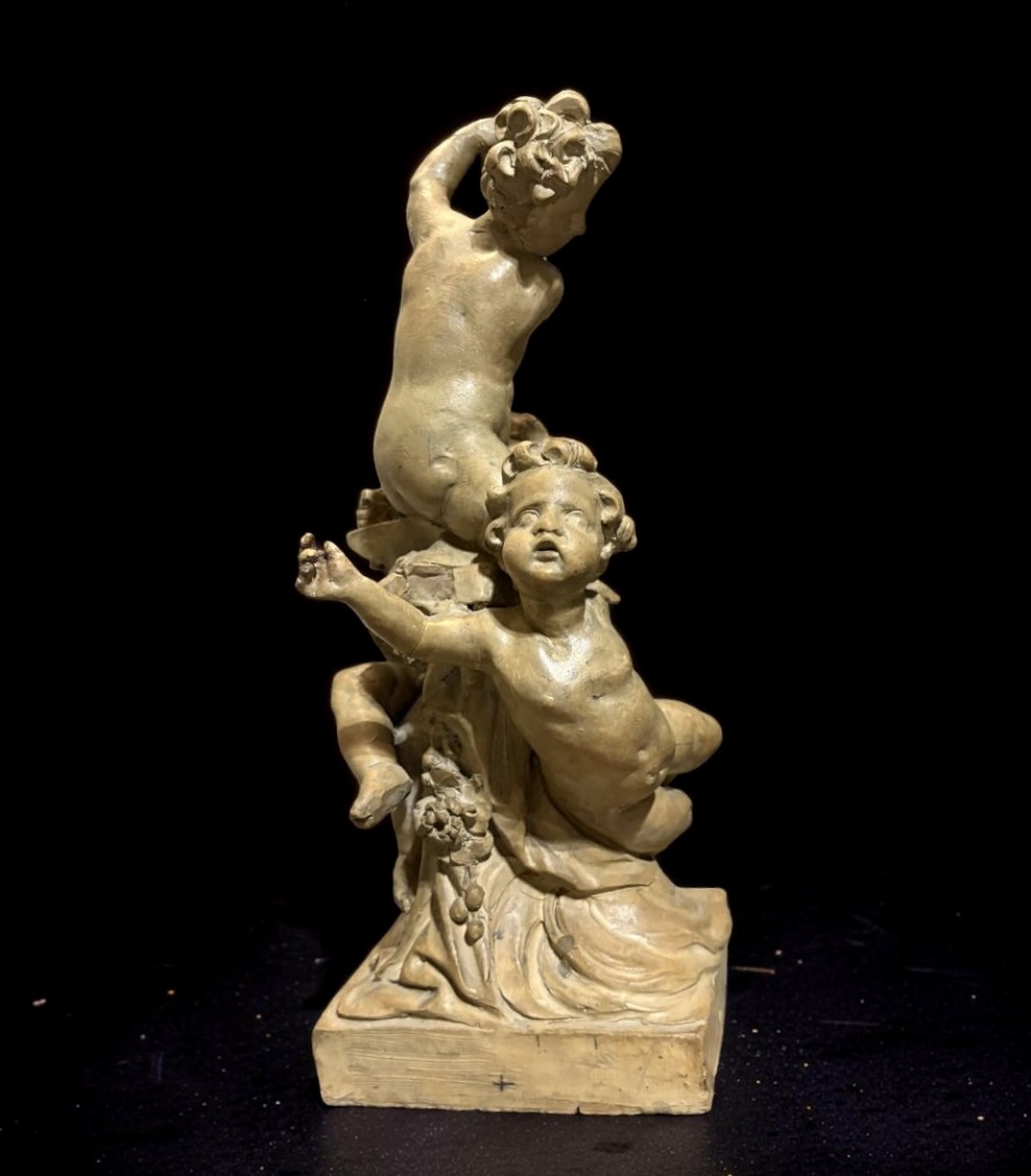
Terracotta model depicting the allegory of Music attributed to the Venetian sculptor Giovanni Giuliani, a naturalized Austrian. First quarter of the 18th century.
Giovanni Giuliani, sometimes also cited as Giovanni Pietro Giuliani (Venice, April 29, 1664 – Heiligenkreuz, September 5, 1744), was an Italian sculptor and woodcarver, a citizen of the Republic of Venice and a naturalized Austrian. Giovanni Giuliani was born in Venice and apprenticed in various studios in Bologna, Venice, Tyrol, and Munich. Among his best-known teachers were Giuseppe Maria Mazza and Andreas Faistenberger. He moved permanently to Austria in 1690, where he was one of the Italian artists who introduced the style of Italian Baroque sculpture. He gained recognition for his participation in the decoration of the Winter Palace of Prince Eugene of Savoy, designed by Fischer von Erlach, and of the palaces of Prince Johann Adam I of Liechtenstein, the Summer Palace designed by Domenico Egidio Rossi, and the City Palace designed by Domenico Martinelli. He also created numerous statues for the stables of Lednice Castle for Fischer von Erlach, and for Martinelli he sculpted a series of statues for the gardens of Kaunitz Castle in Slavkov. These are now almost completely lost, but some terracotta models of some mentioned in documents remain in Heiligenkreuz.
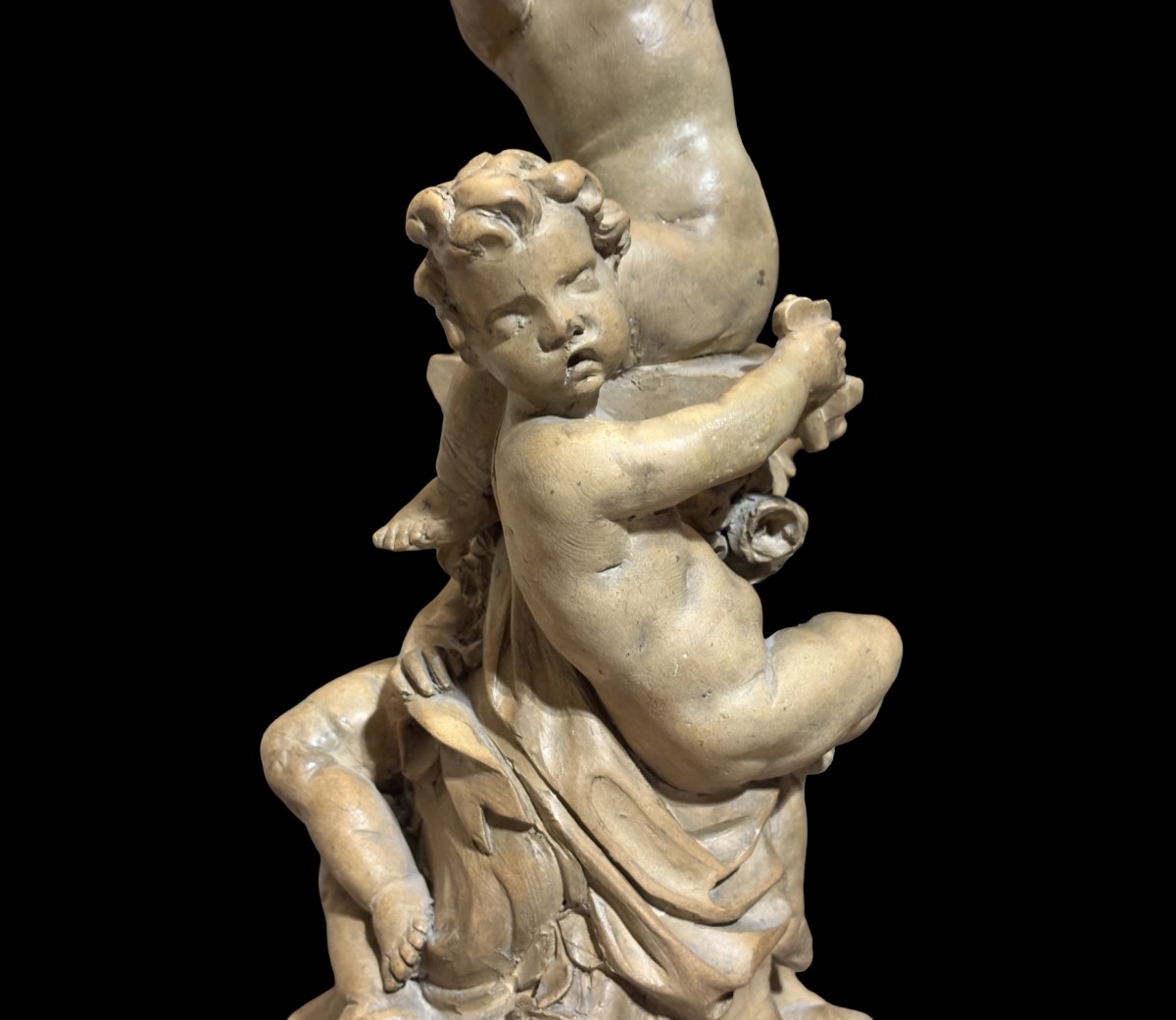
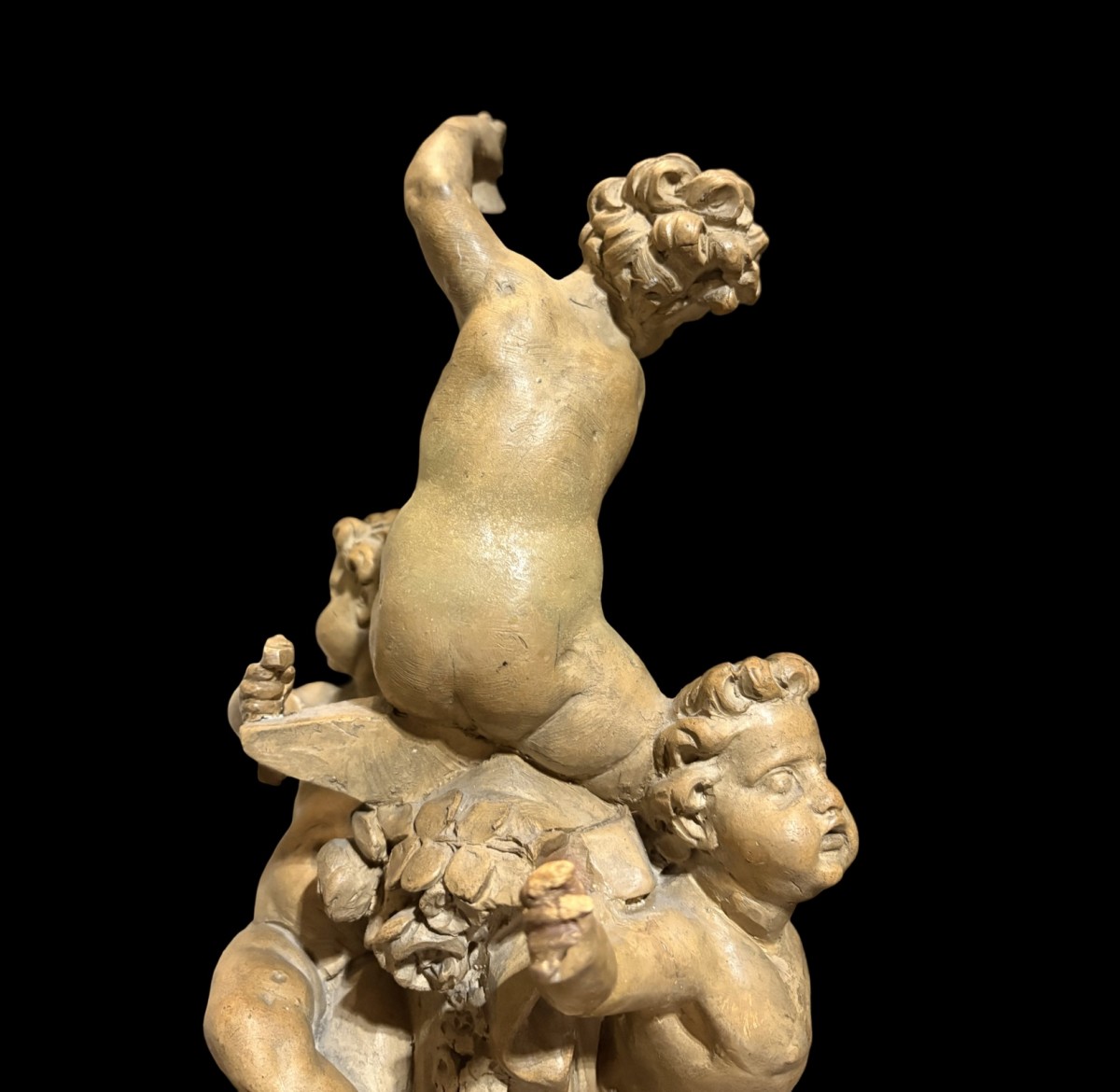
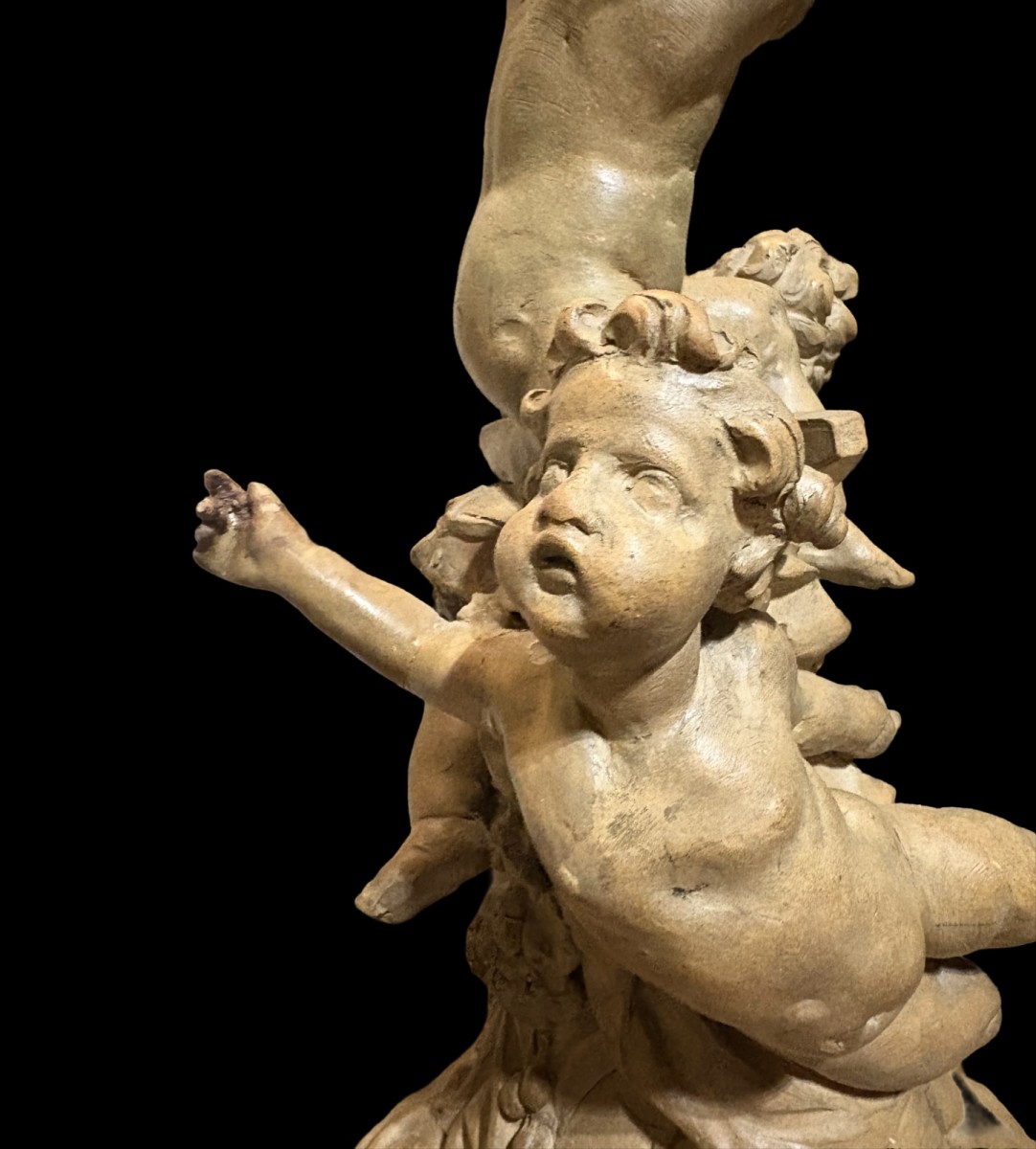
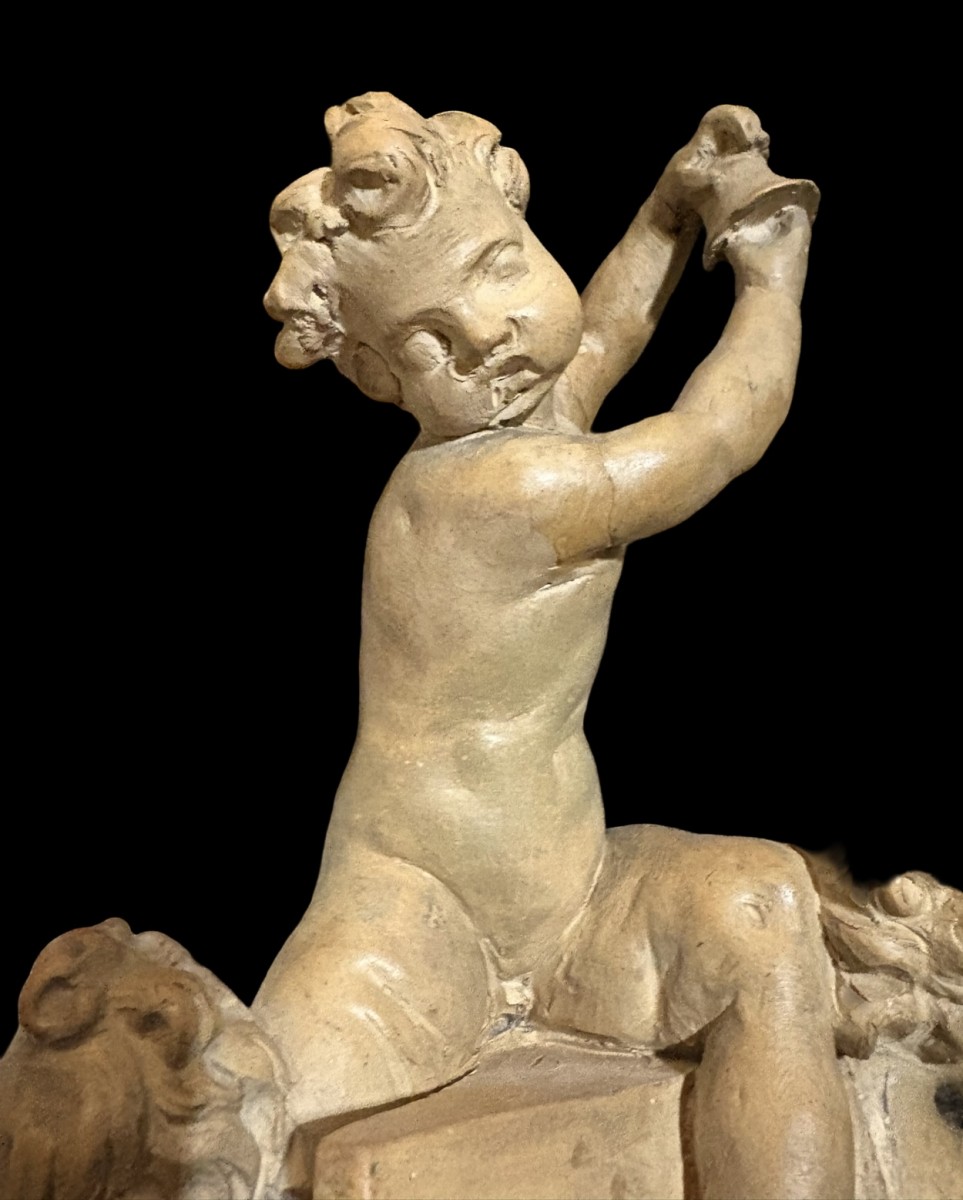
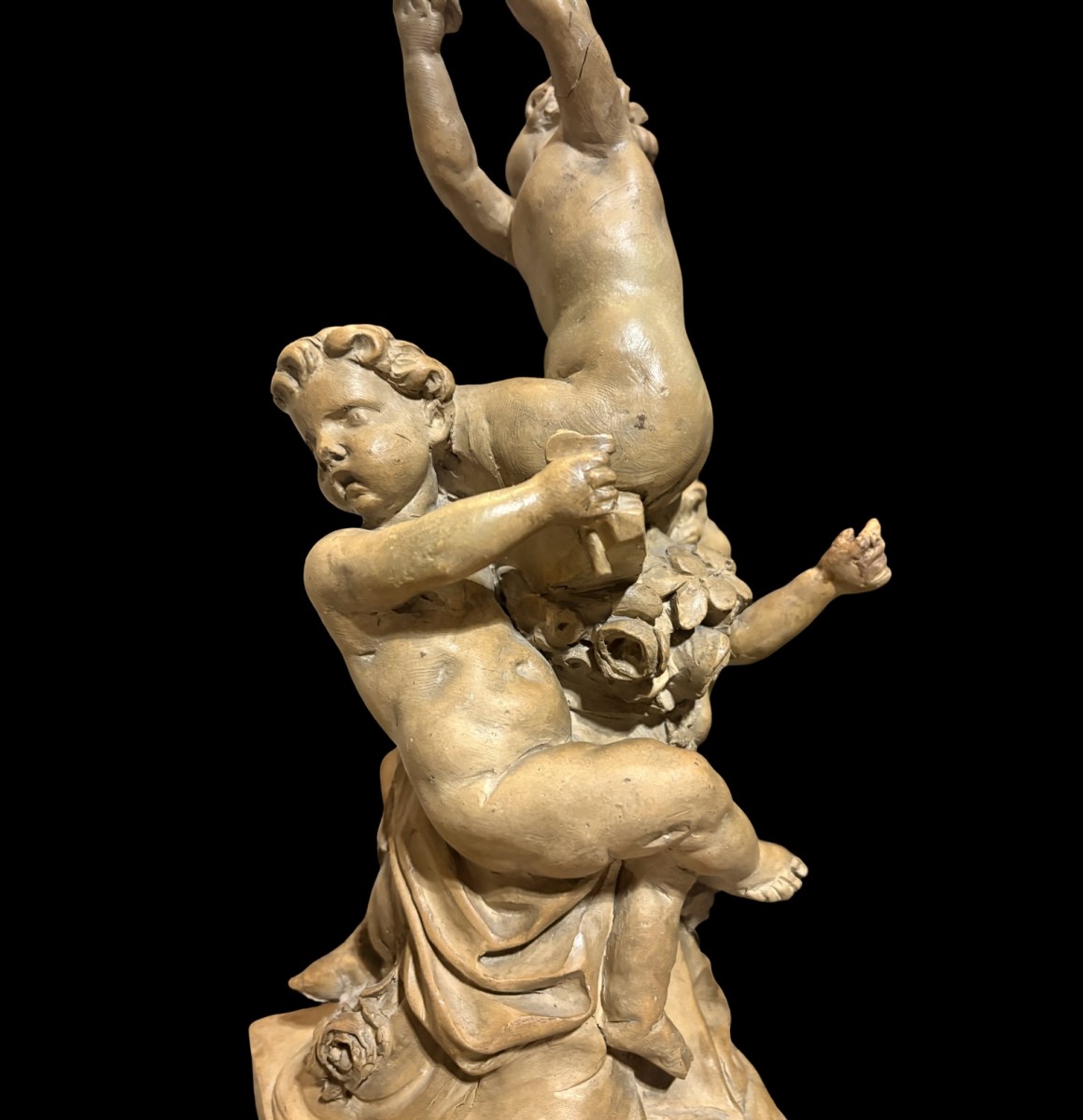
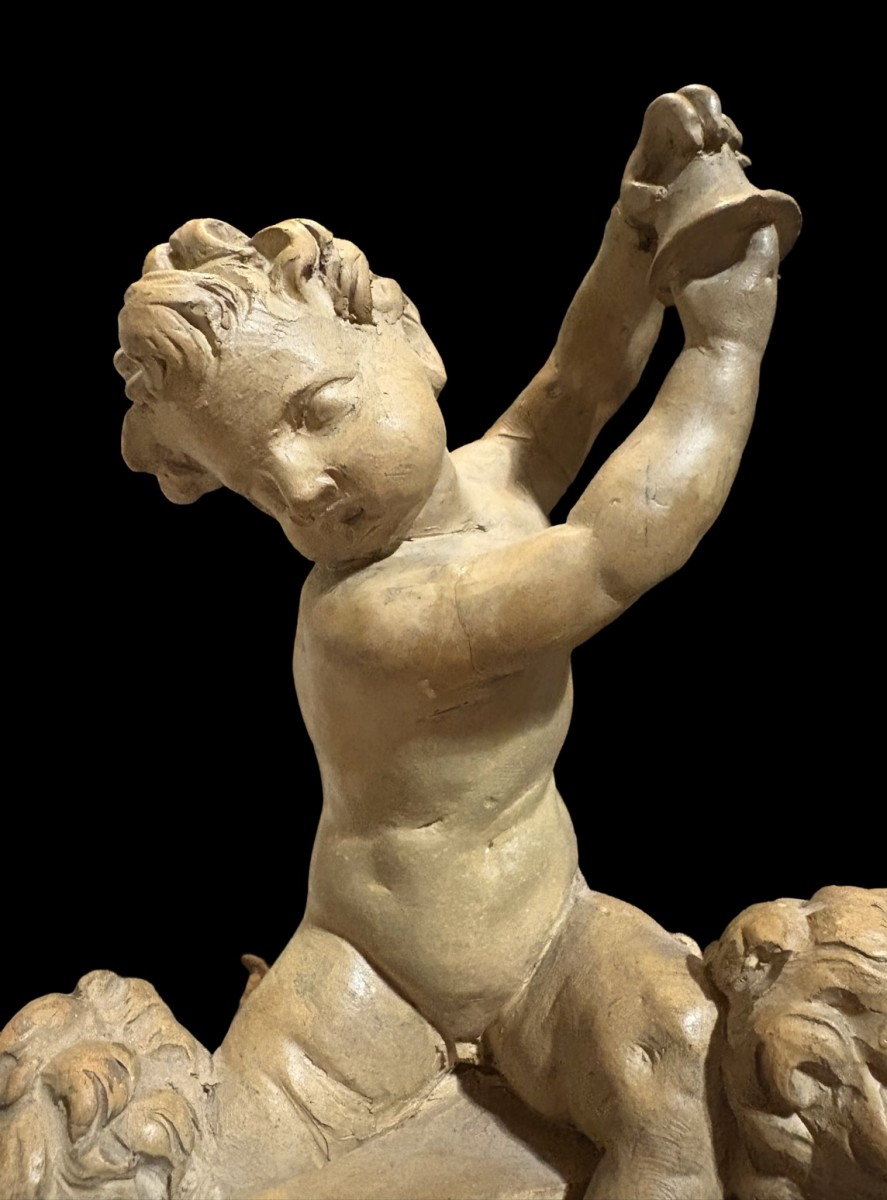
His work reflected the decorative language widespread in northern Italy in the 17th century, combined with a typically Venetian vivacity that appealed to popular taste and earned him a large following, especially among the decorators of monasteries in the Vienna area. Giuliani created numerous sculptures, working primarily in wood and terracotta, but also in stone, marble, and bronze. He used terracotta in particular to create numerous sketches, many of which are now housed at the Liechtenstein Museum in Vienna. Our sketch depicts an allegorical subject, presumably the allegory of Music: the group of three cherubs, modeled with exceptional mastery, features figures stacked one on top of the other in an ascending formation; the three, in dynamic poses, hold three key elements: an anvil, a hammer, and a bell. According to legend, Pythagoras discovered musical consonances while passing by a blacksmith's workshop and noticing that hammers of different weights produced harmonious sounds when striking the anvil. The bell, on the other hand, symbolizes the spreading sound.
The sculpture evolving upward, with an ascending movement of multiple figures in dynamic poses, is typical of Giovanni Giuliani: there are numerous examples of this genre, such as the groups "Zephyr and Flora" and "Jupiter and Ganymede" in the park of Austerlitz Castle in Brno, to name a few. The highly distinctive modeling of the "putto" subject can also be seen in numerous sculptures preserved in Liechtenstein Castle in Vienna: for example, the four putti adorning the main staircase, and in particular the putto with the swan, whose dreamy, open-mouthed expression perfectly mirrors that of the putto leaning out from our group. The modeling of the hair, with its thick mane of soft curls, the modeling of the plump body, and the dynamism of the movement also point to an attribution to Giuliani.
Terracotta, this "poor" material derived from clay, initially relegated to the model, has over time freed itself of its humility: the charm of this moist material, molded under the sculptor's hands, remains. Over the centuries, it has brought us not only the beauty of seeing the work flow from the artist's hands but also of still being able to read his fingerprints on it, like a signature.
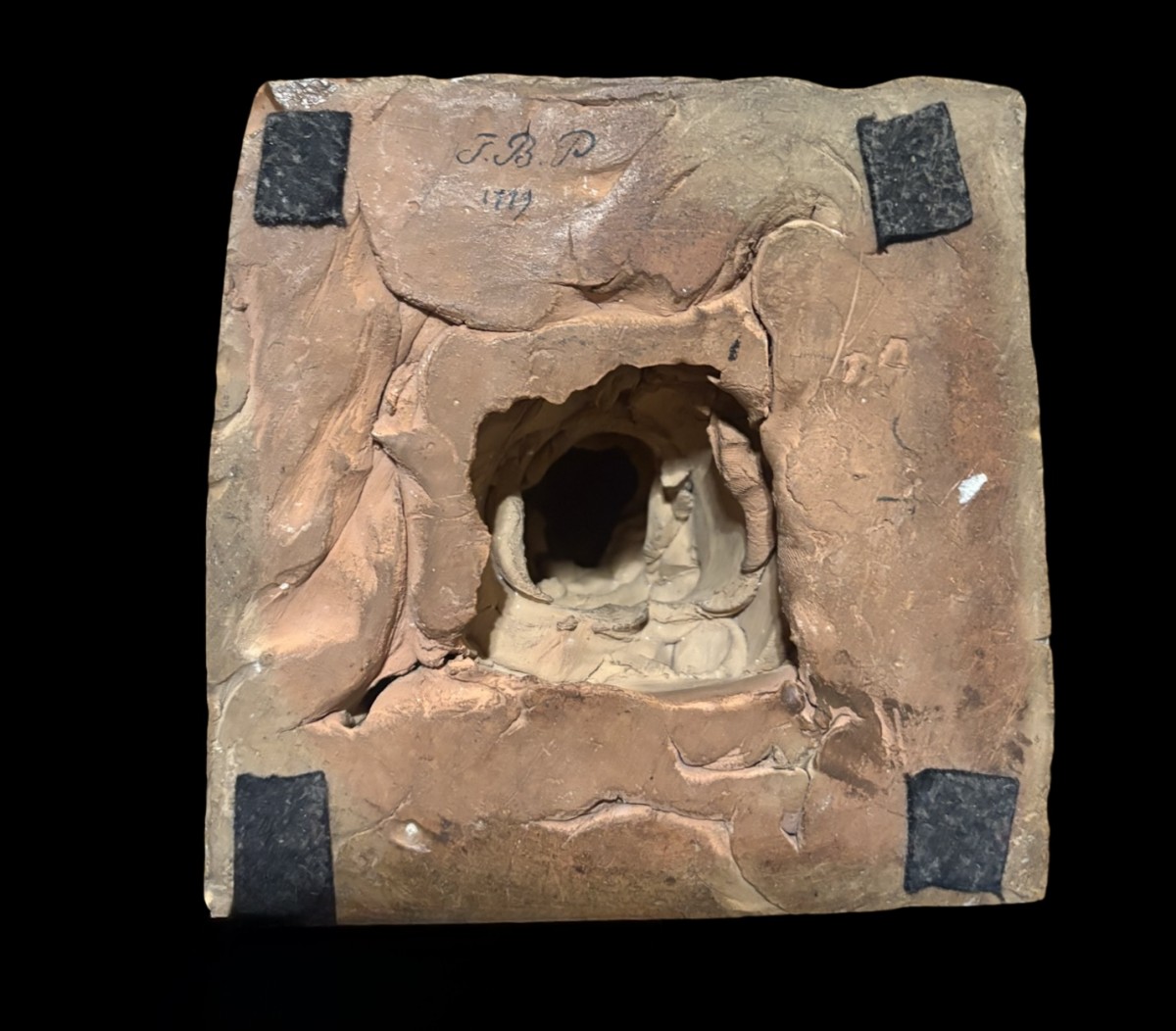
The model is in very good condition. Below, a monogram with the date "JBP 1789" can be read, which could mistakenly suggest the French sculptor Jean-Baptiste Pigalle, whose neoclassical style also has nothing to do with Giuliani's Baroque style. It could instead be the inventory of a collection or the name of the collector himself. Bibliography: Luigi A. Ronzoni, Giovanni Giuliani (1664-1744), Munich, Prestel, 2005.
Measurements
H 35 cm
Base 14 x 13 cm
Delevery information :
Antichità San Felice takes care of organizing the packaging, home delivery and all the administrative formalities related to the shipment.
Antichità San Felice works with several service providers selected for their professionalism, in order to ensure delivery of works of art in the best conditions.
For the packaging of the goods, we involve craftsmen who were responsible for the construction of custom-made wooden crates.
For transport, depending on the case, we involve the most suitable service provider.
All shipments from Antichità San Felice are covered by value insurance. It is important to note that the Customer must indicate on the dispatch note any reservations upon receipt of the object, in order to be able to bring the insurance into play.
Payments accepted:
bank transfer
online bank card
paypal (+3.4% Europe +5% rest of the world)