Offered by Antichità San Felice
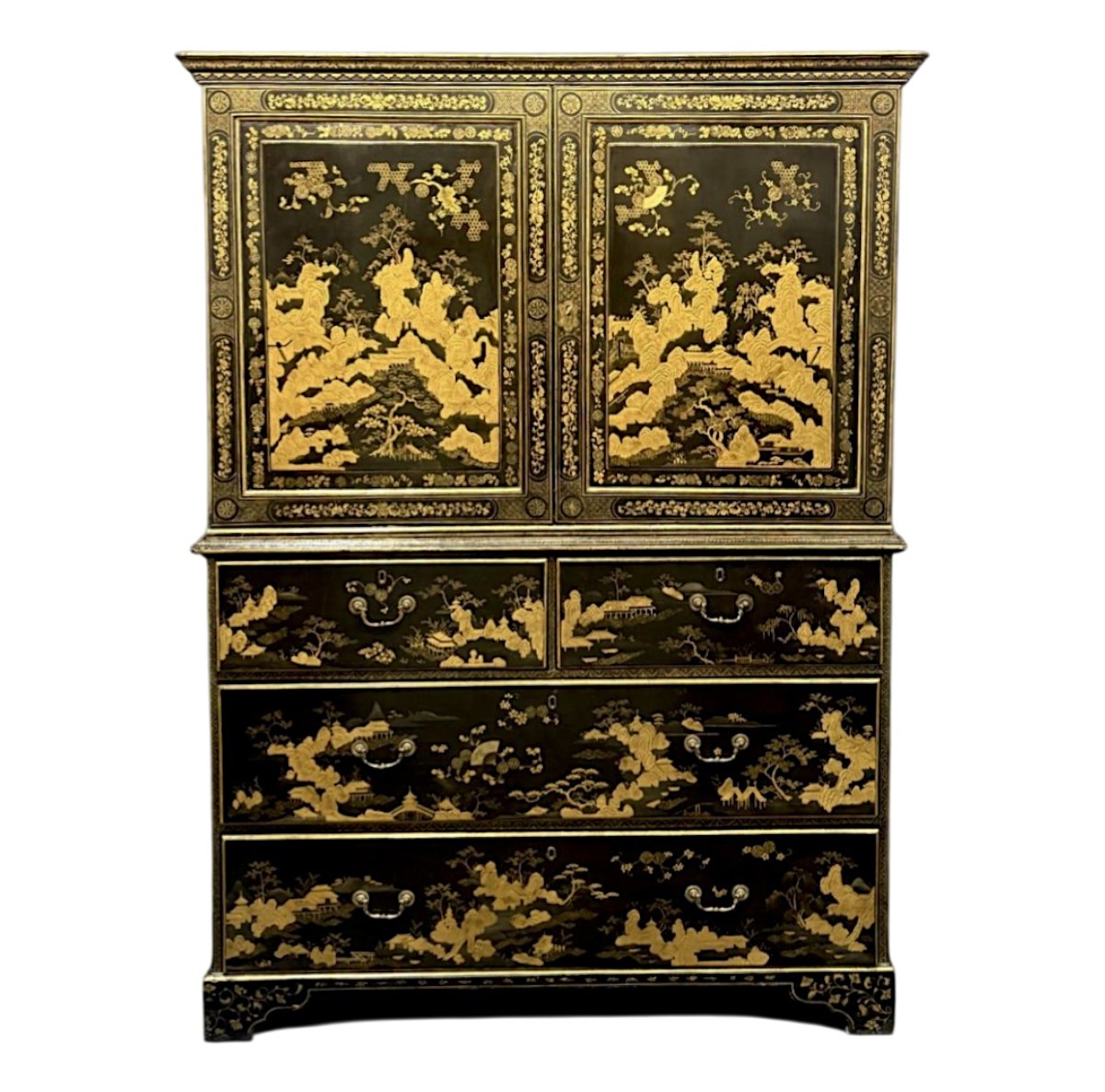
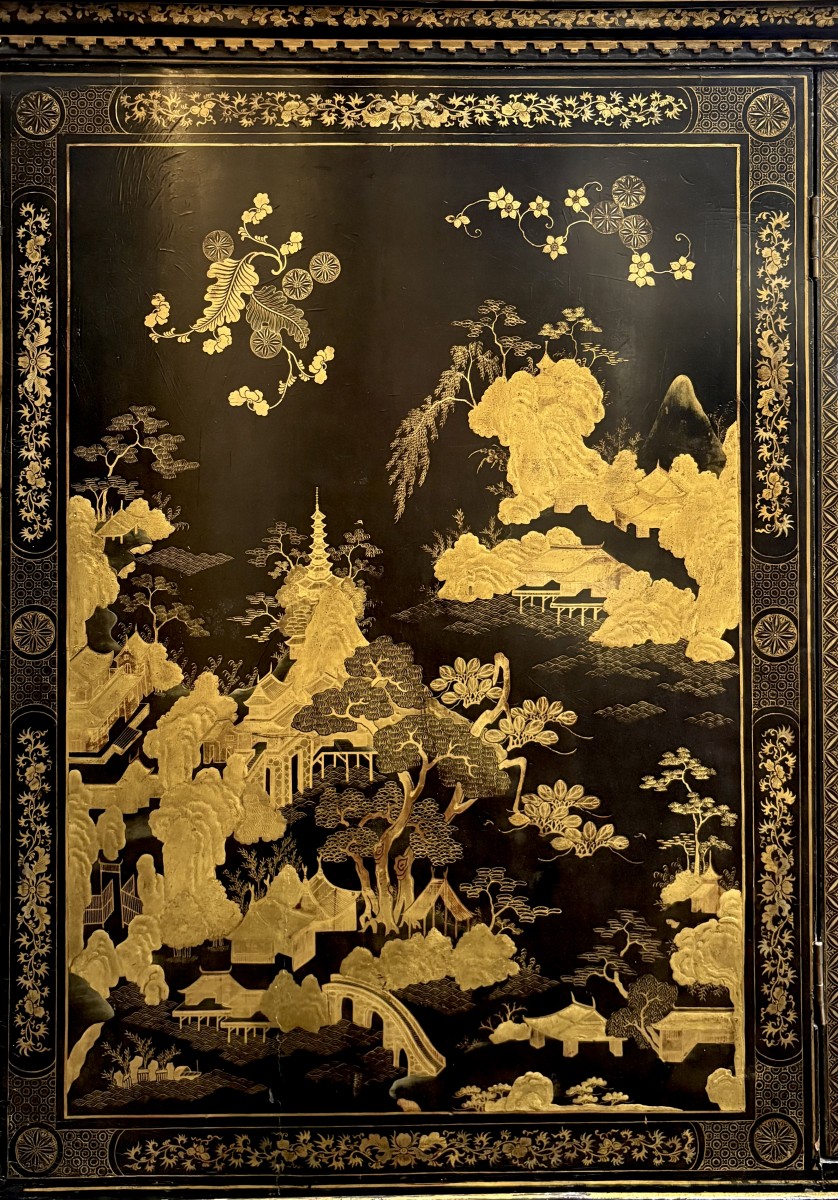
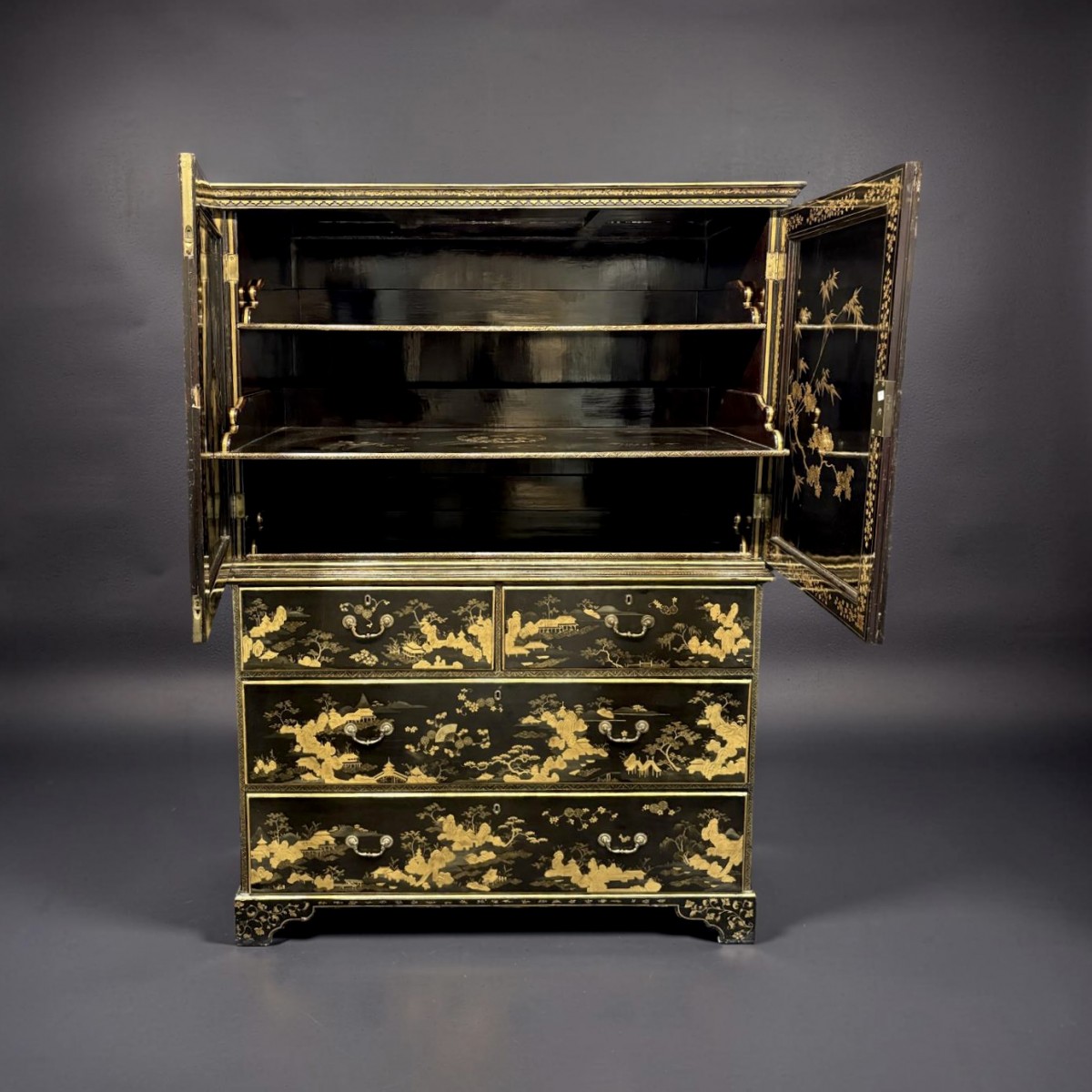
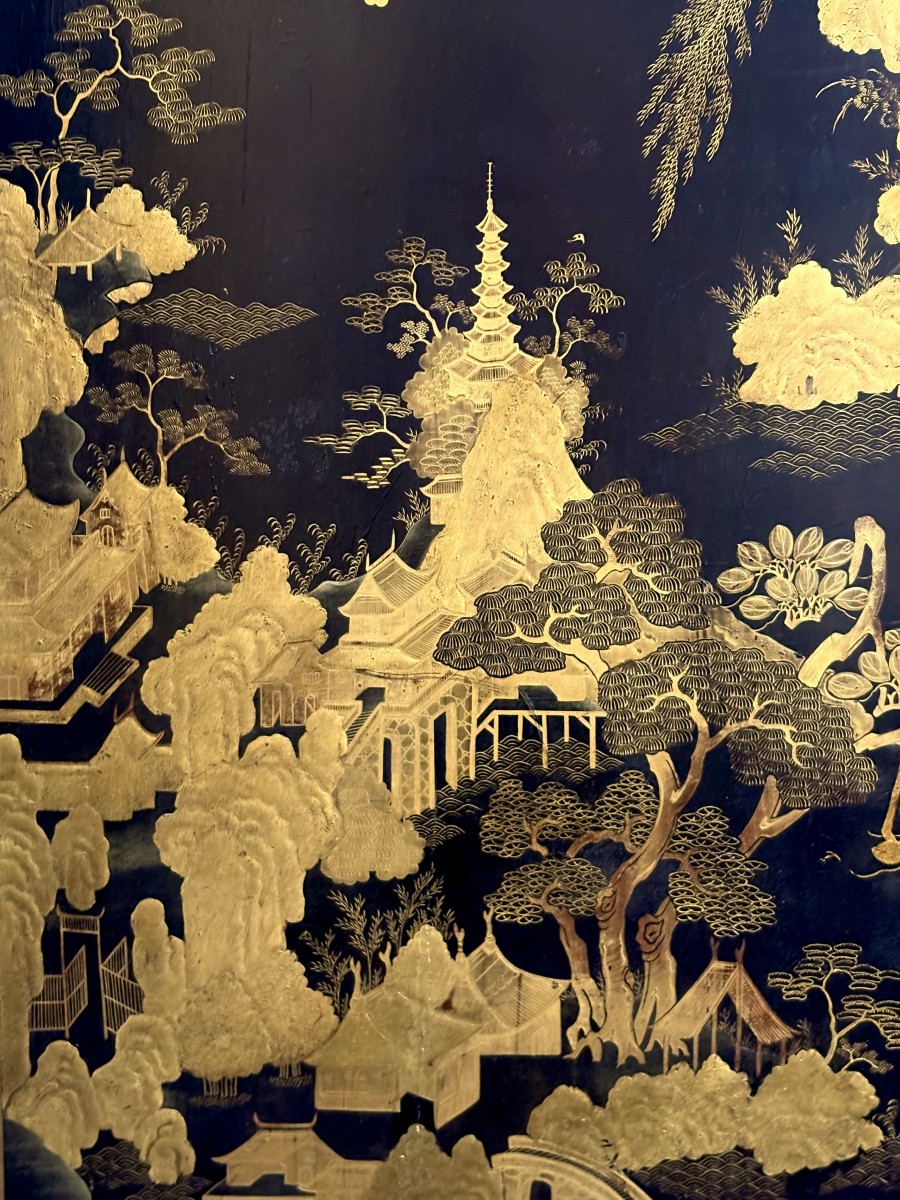
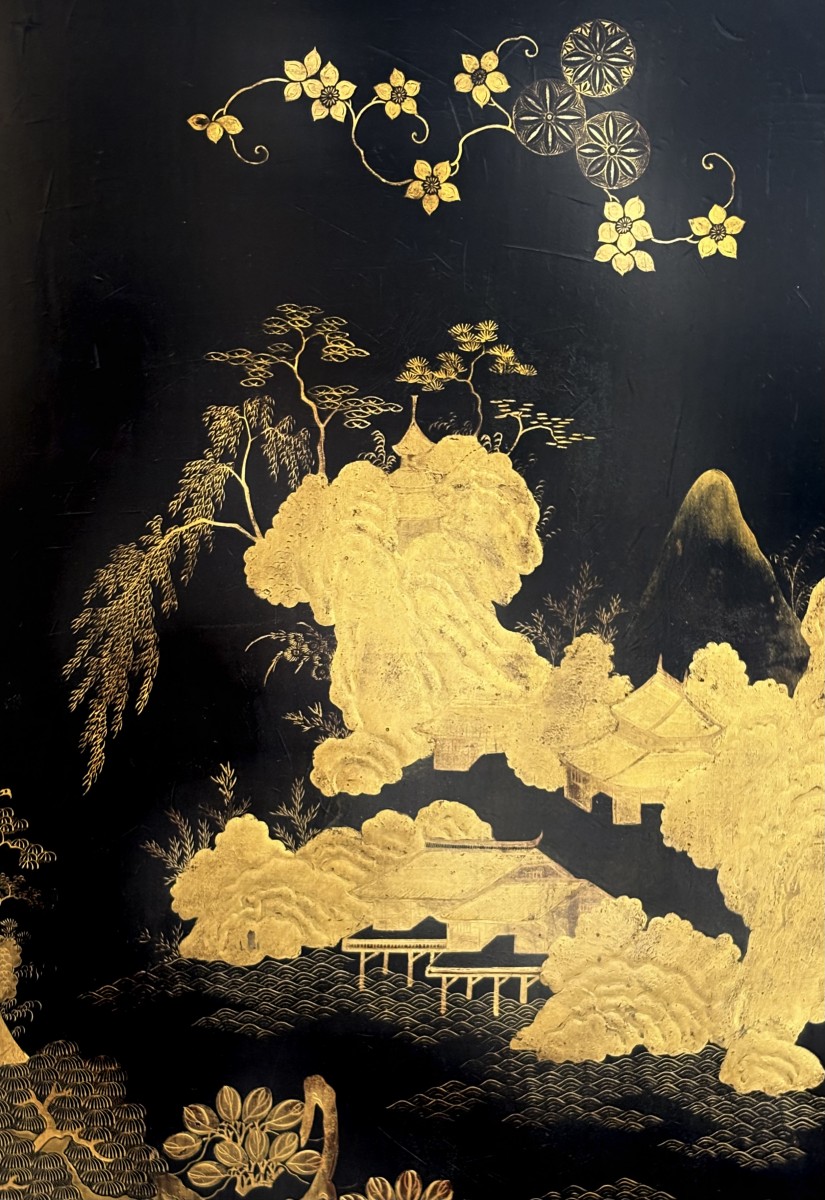

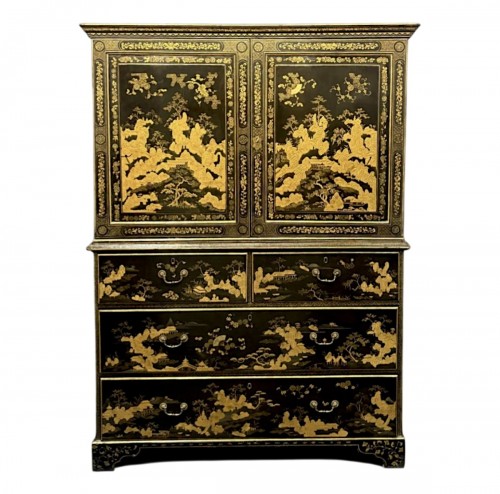
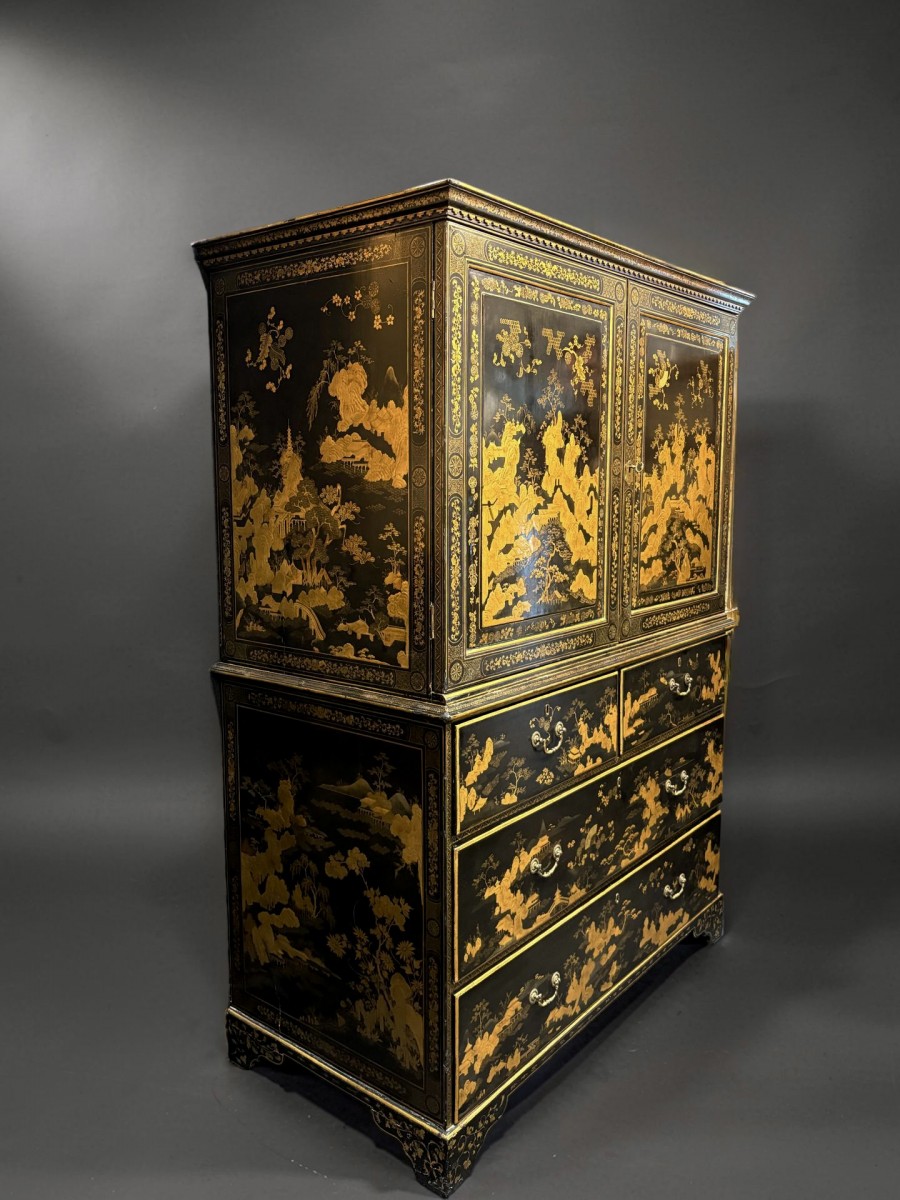
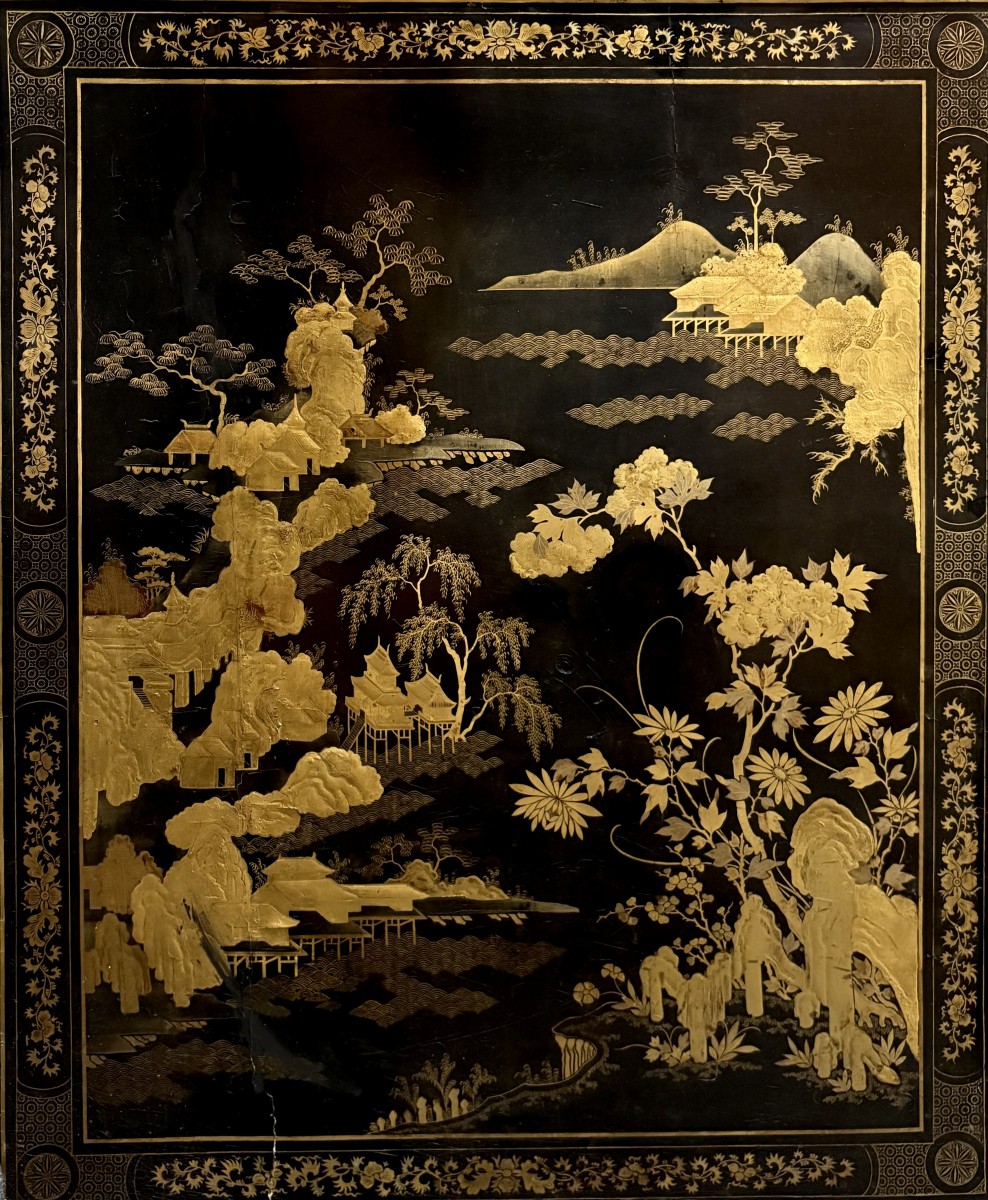
Japanese-decorated cabinet after Frederick Crace, England, Regency period, circa 1810.
This two-tier cabinet is an icon of the Regency style and one of the magnificent examples of a style pioneered in England by Frederick Crace. Similar pieces are found in important collections, including the Victoria and Albert Museum, renowned for its fine English Regency and lacquer furniture.
Frederick Crace (June 3, 1779 – September 18, 1859) was an English interior decorator who worked for George IV when he was Prince of Wales, for whom he created the Chinoiserie-style interiors of the Royal Pavilion in Brighton. The Royal Pavilion was built by George IV starting in 1787, initially as a classical villa, then, fascinated by the oriental prints of the time, starting in 1802 in the Chinese and Mughal style. The Royal Pavilion was designed to evoke the beauty of the Orient and showcase it to the West: the interiors were entirely decorated in chinoiserie, from the walls to the furnishings, from the furniture, porcelain, and chandeliers. The prince, after all, loved the social life and regularly hosted parties to impress his guests. It was during this decade that Regency furniture reached its peak, coveted by the English aristocracy who frequented the Prince of Wales.
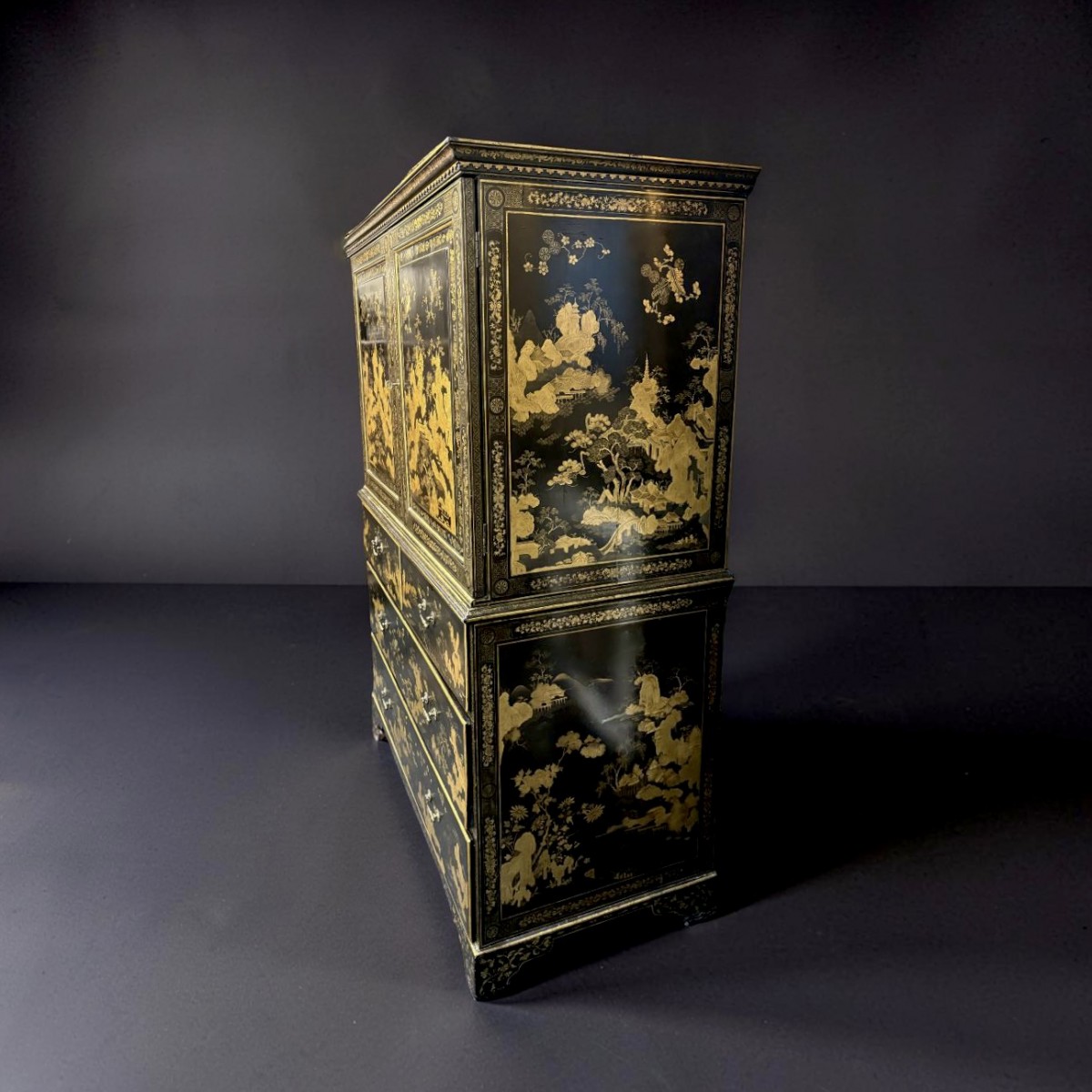
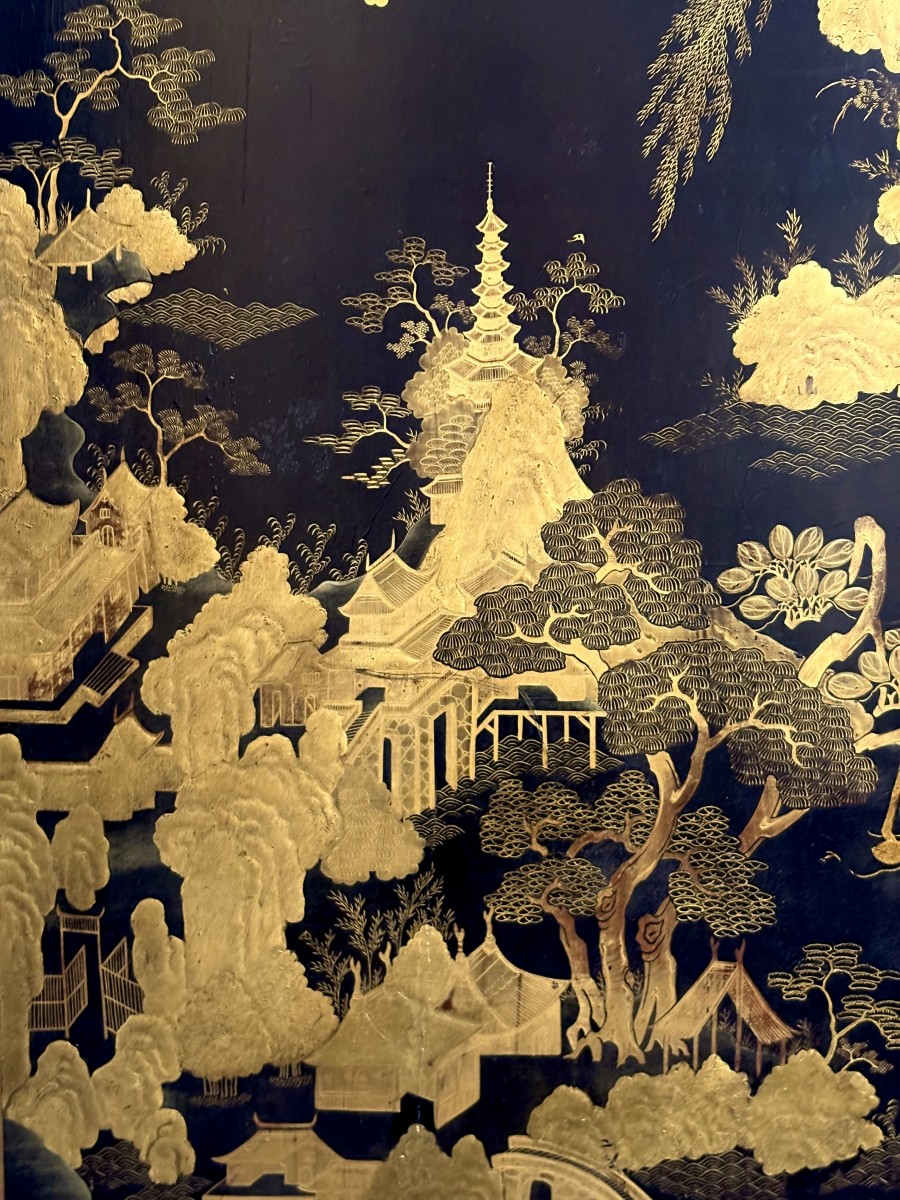
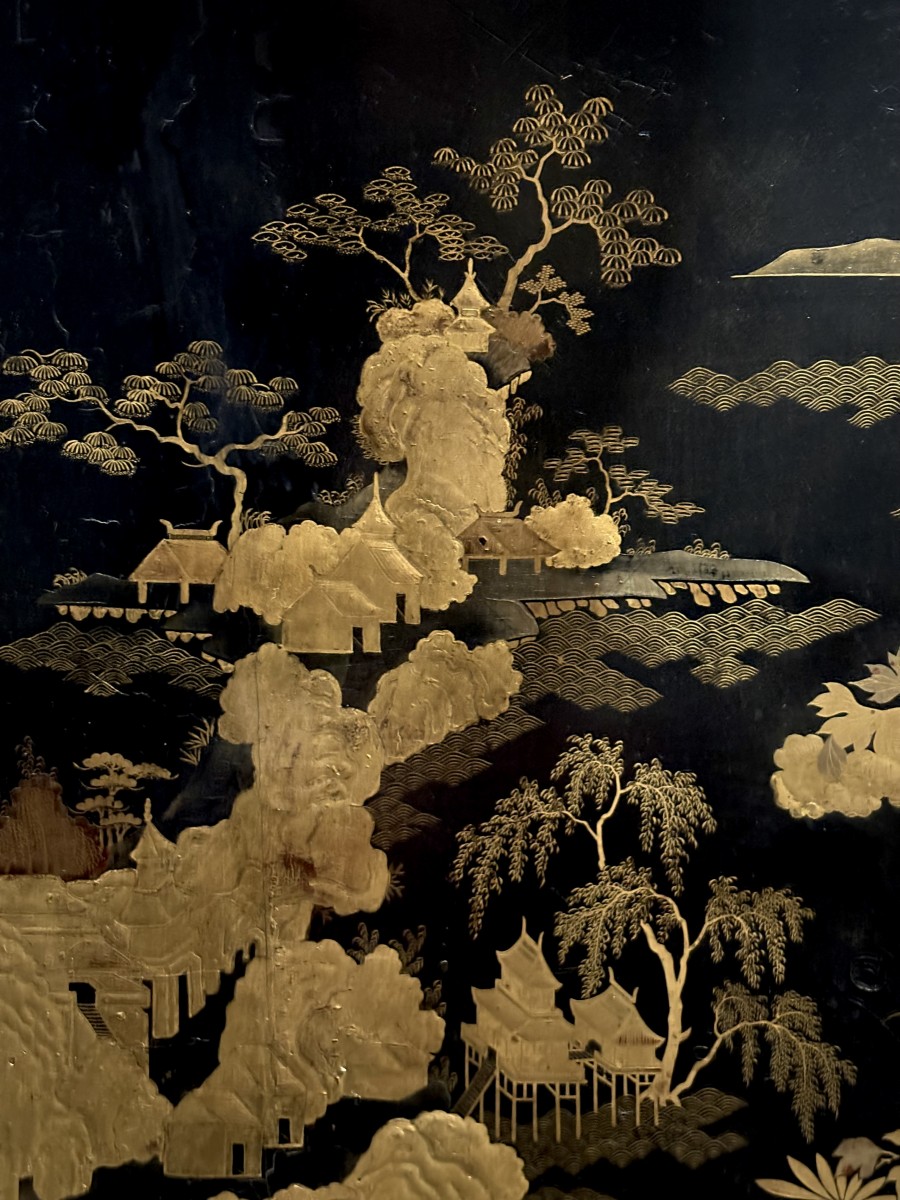
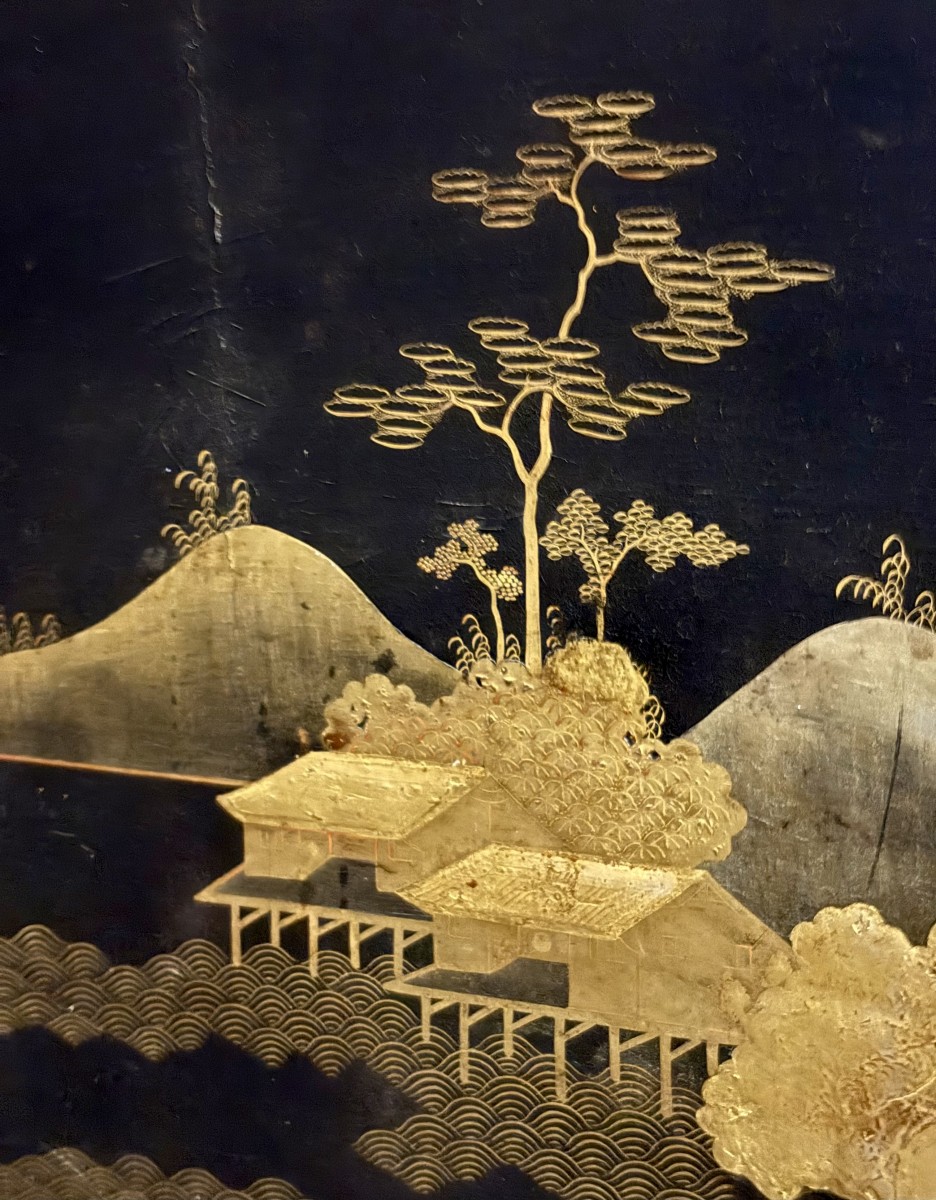
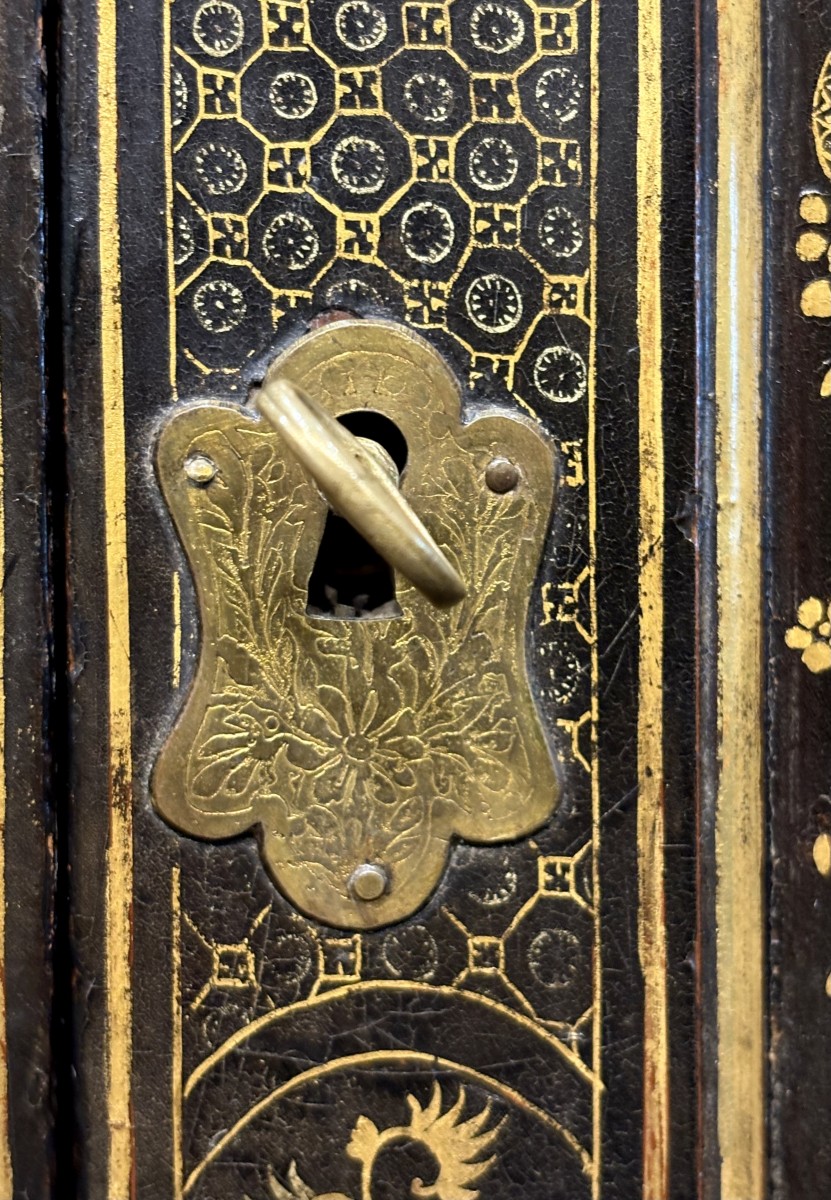
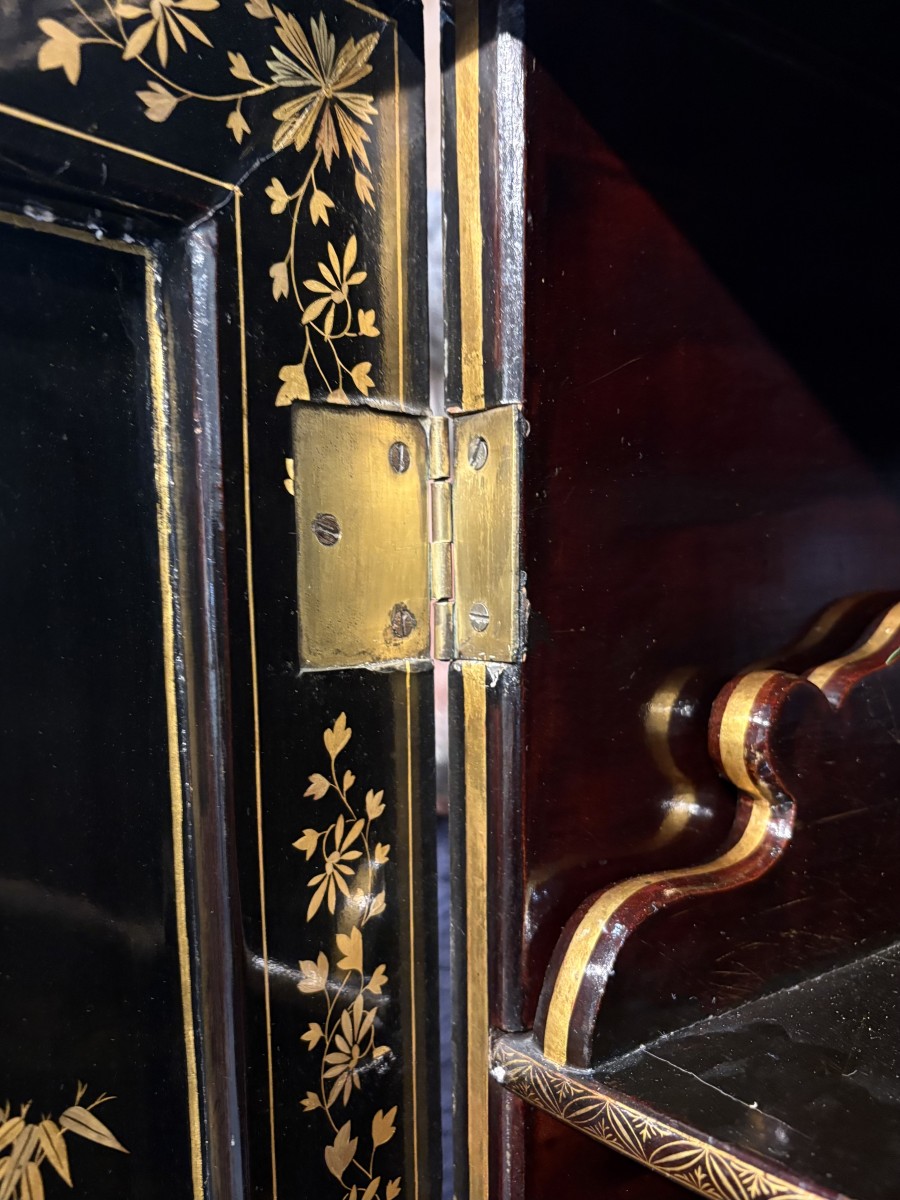
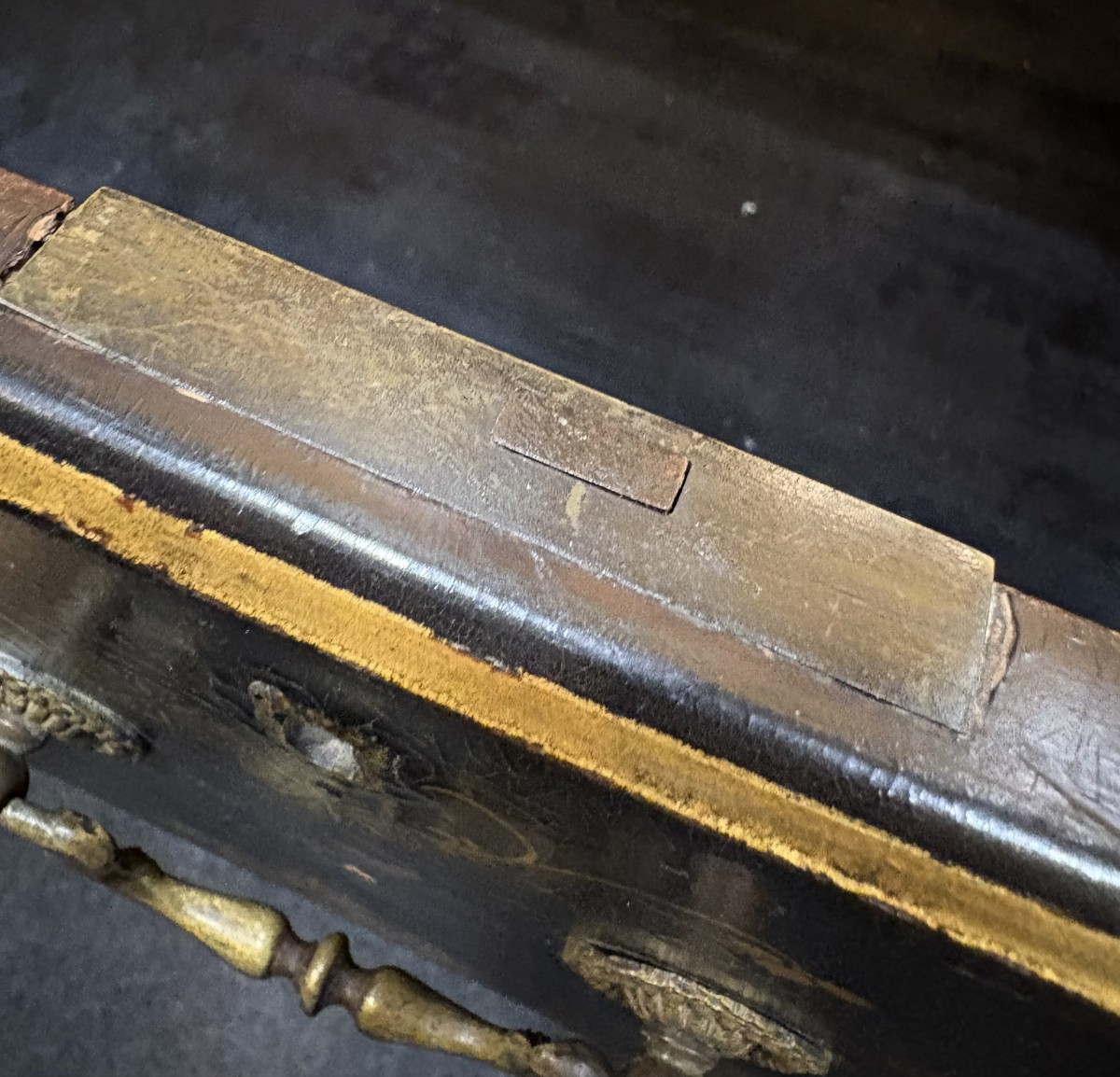
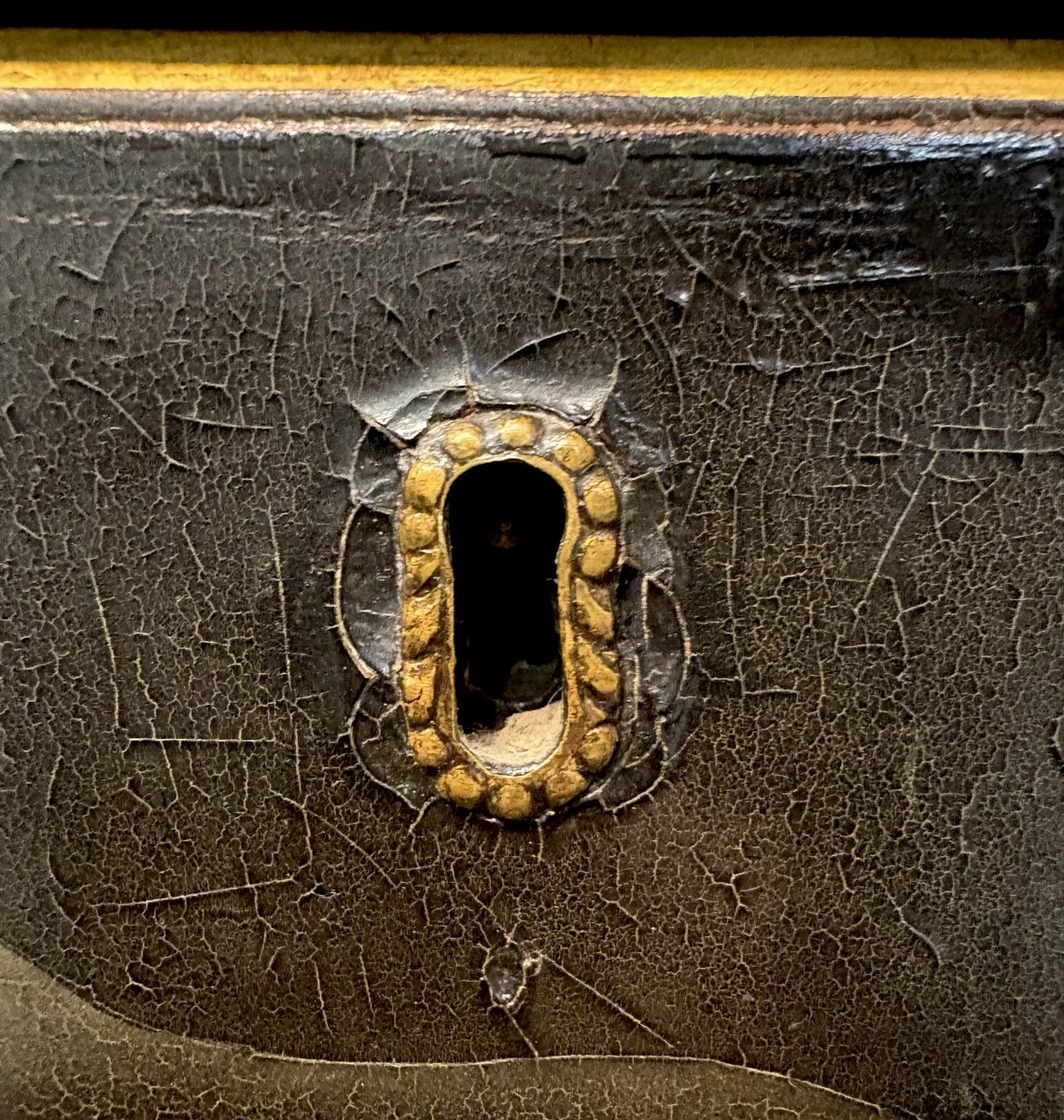
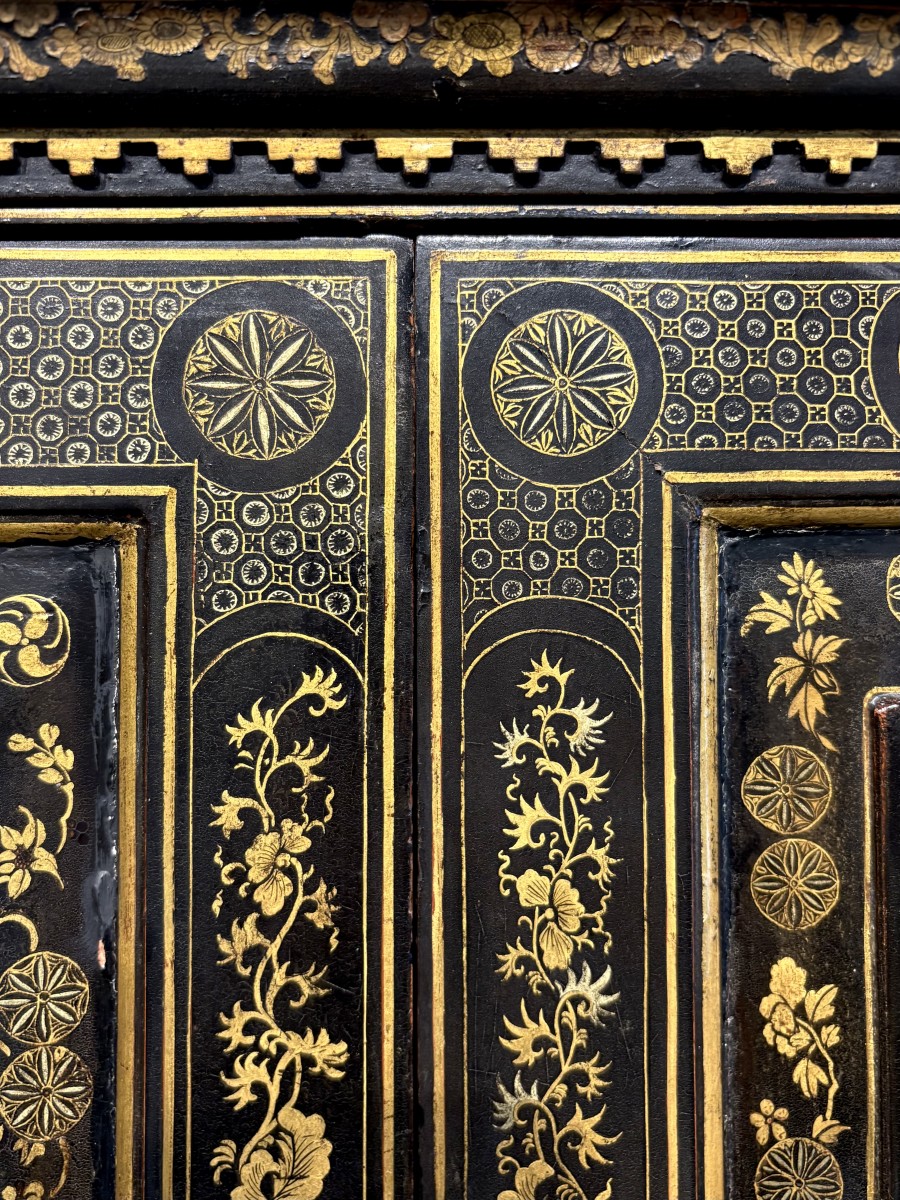
The decorative scheme features a black lacquer background, against which stands out the hand-painted pure gold decoration in relief, featuring landscapes reminiscent of the Orient. The decoration is found on all three sides of the cabinet, but simpler decorations also appear on hidden areas, such as the top shelf and the surface on which the upper cabinet rests. The upper section, with two doors, also lacquered on the inside, has three shelves that slide outward; the lower section has four drawers, two small and two large. The piece retains all its original hardware. In excellent condition, it has never undergone restoration or modification.
The magnificence of these pieces, crafted in London by specialized cabinetmakers and not to be confused with furniture produced in China for export, stems from the incredible work required to create the lacquer: the lacquer is of the highest quality, the decoration is intricate, and gold is used lavishly, regardless of expense. This is, after all, an era characterized by great cultural, social, and social splendor, but also by aristocratic excess. Precisely because these were extremely expensive furnishings intended for the aristocracy, their production was limited, and today, given the vulnerability of the material, few remain, especially in such good condition.
Measurements
W 126 cm
H 176.5 cm
D 65 cm
Delevery information :
Antichità San Felice takes care of organizing the packaging, home delivery and all the administrative formalities related to the shipment.
Antichità San Felice works with several service providers selected for their professionalism, in order to ensure delivery of works of art in the best conditions.
For the packaging of the goods, we involve craftsmen who were responsible for the construction of custom-made wooden crates.
For transport, depending on the case, we involve the most suitable service provider.
All shipments from Antichità San Felice are covered by value insurance. It is important to note that the Customer must indicate on the dispatch note any reservations upon receipt of the object, in order to be able to bring the insurance into play.
Payments accepted:
bank transfer
online bank card
paypal (+3.4% Europe +5% rest of the world)