Offered by Finch and Co
REQUEST INFORMATION
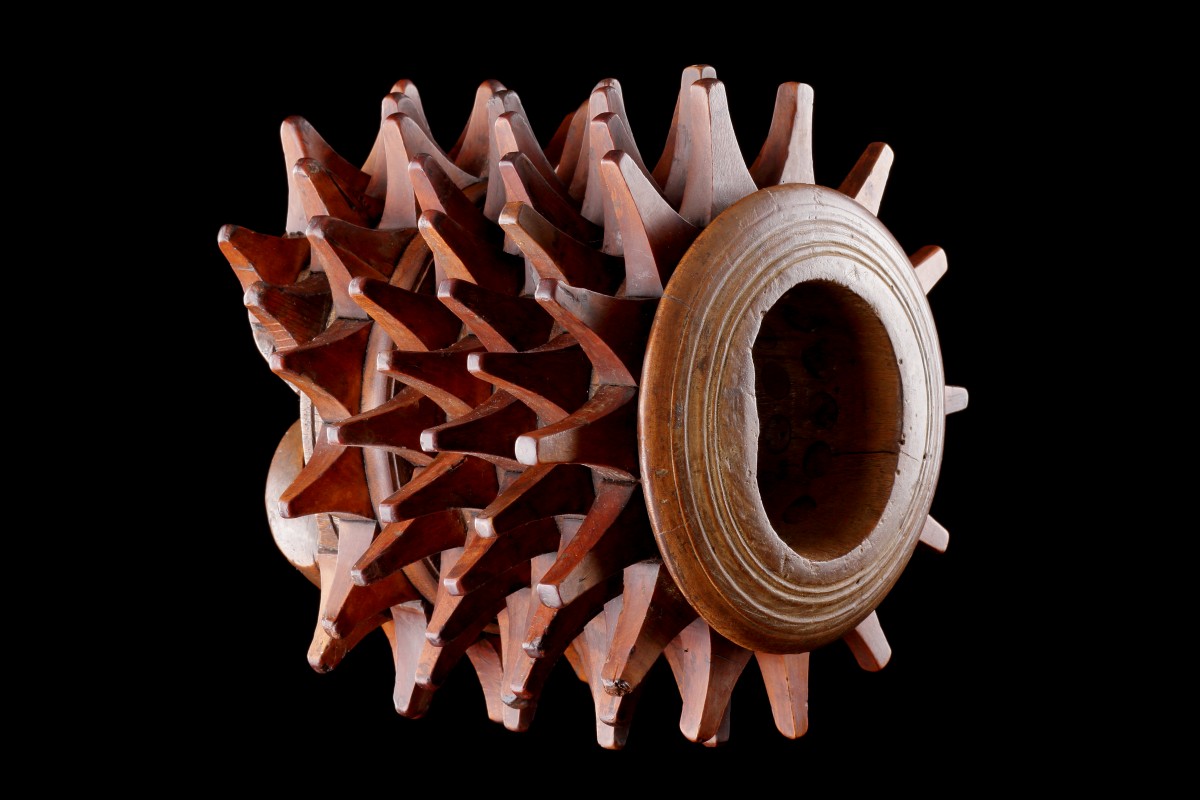
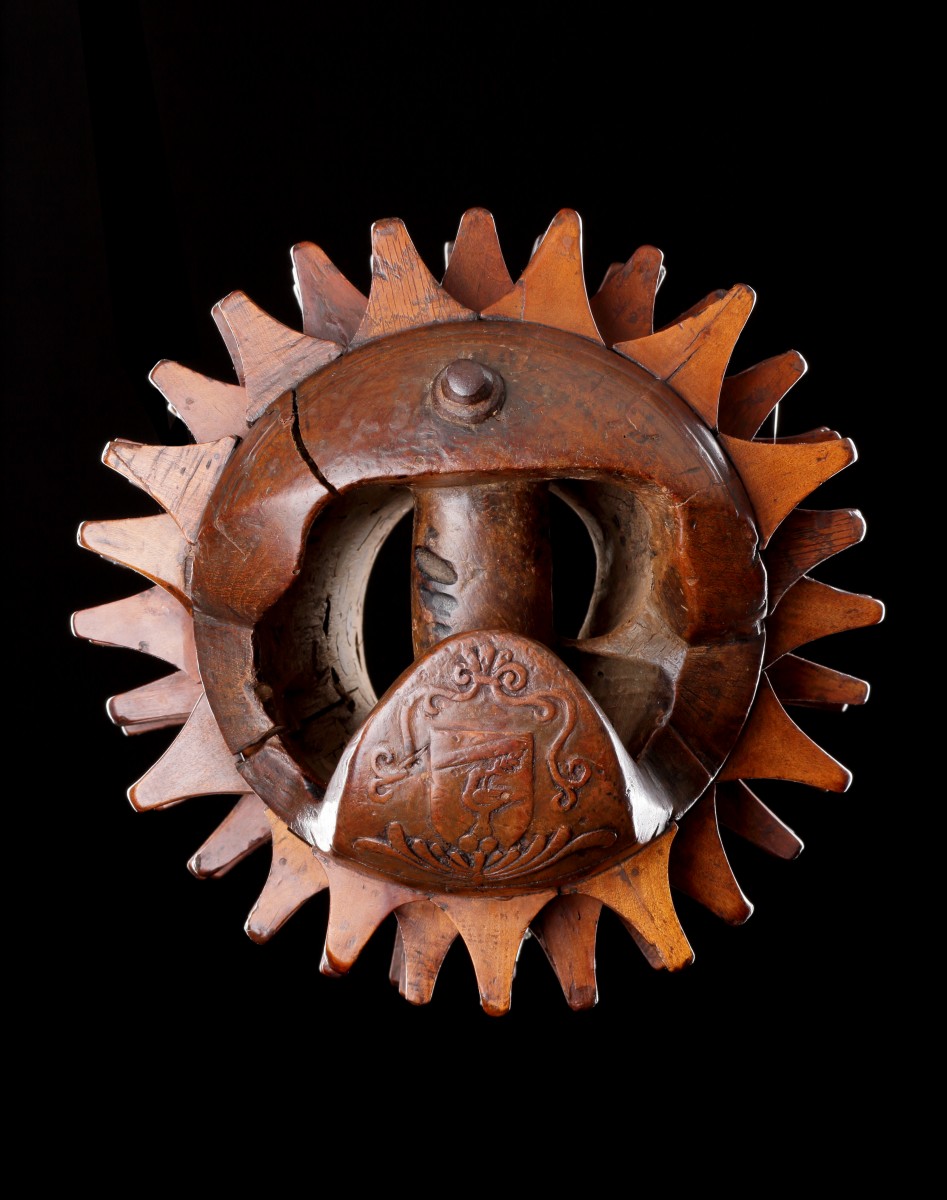
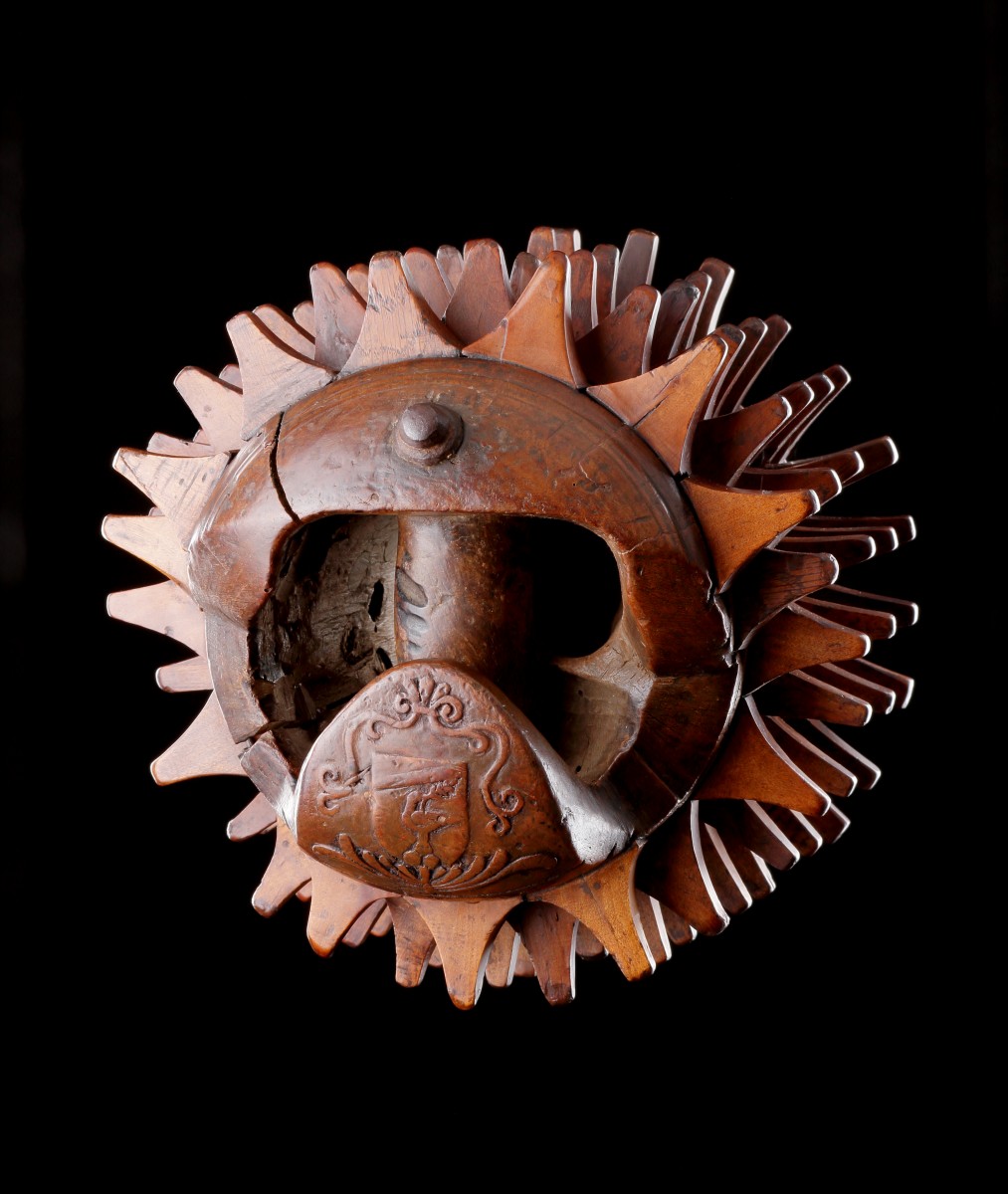

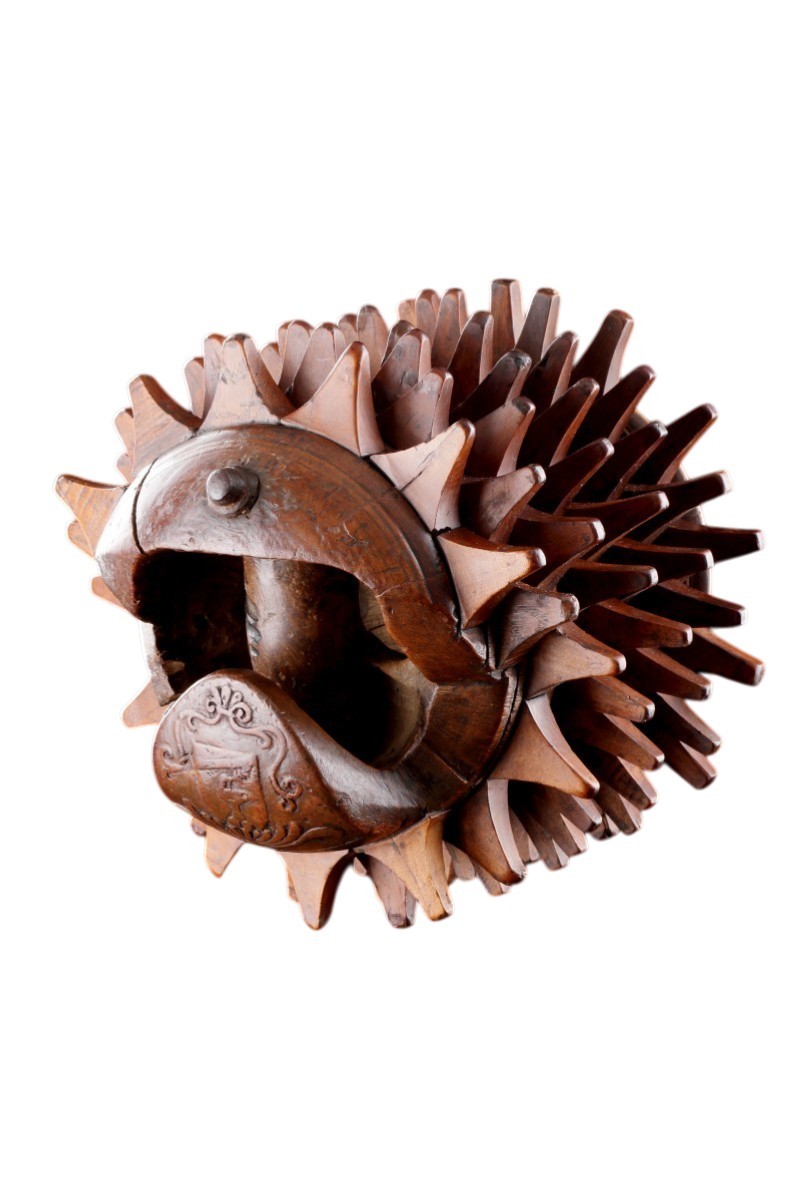
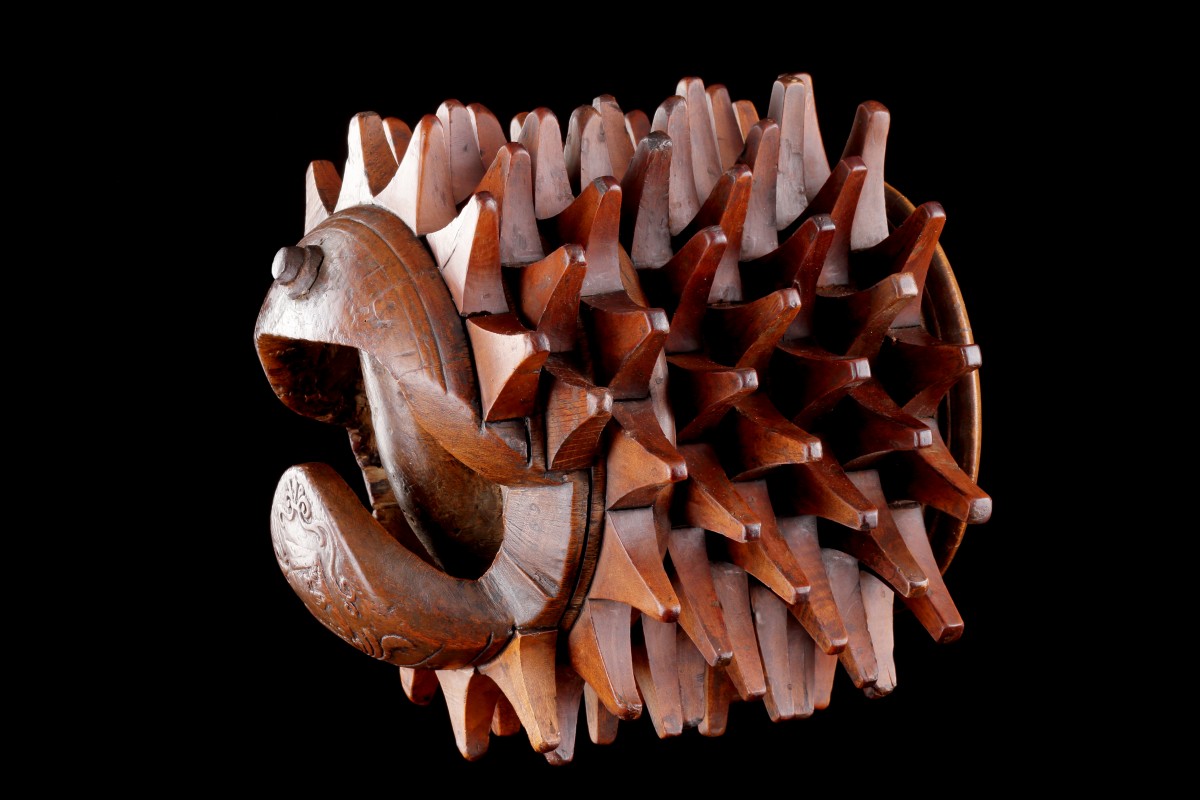
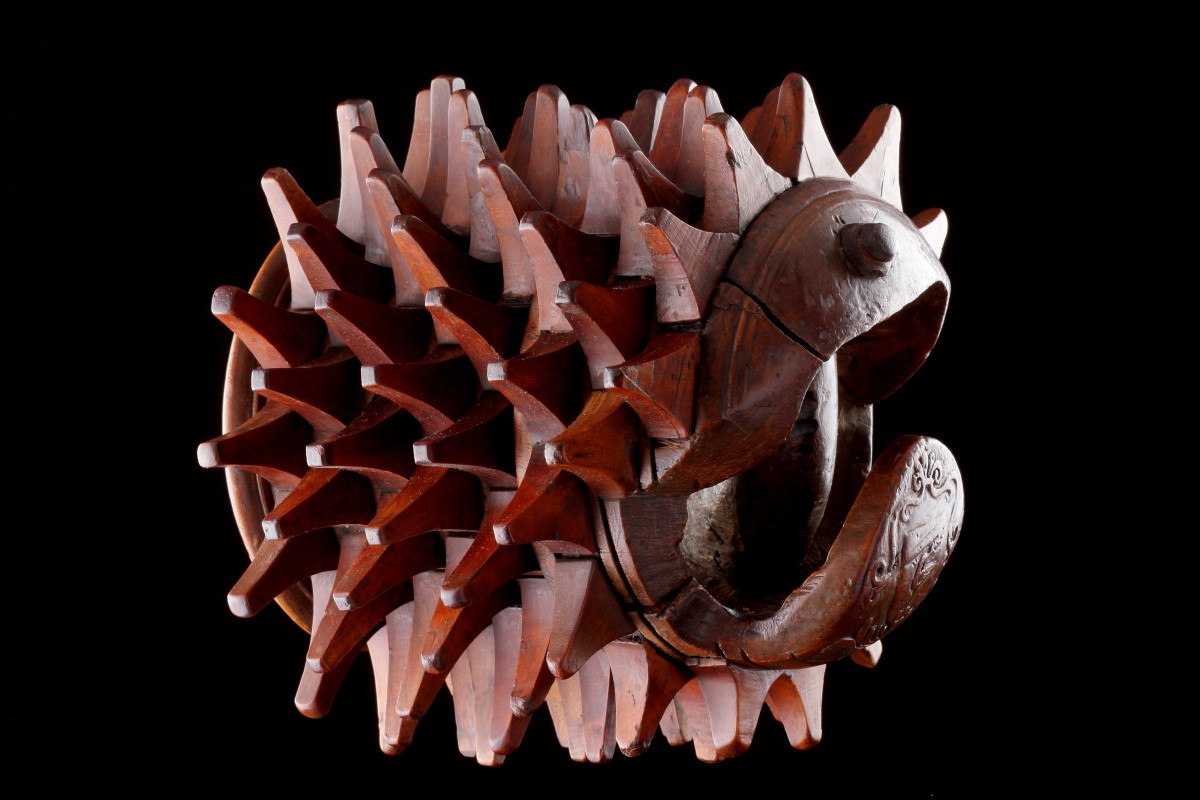
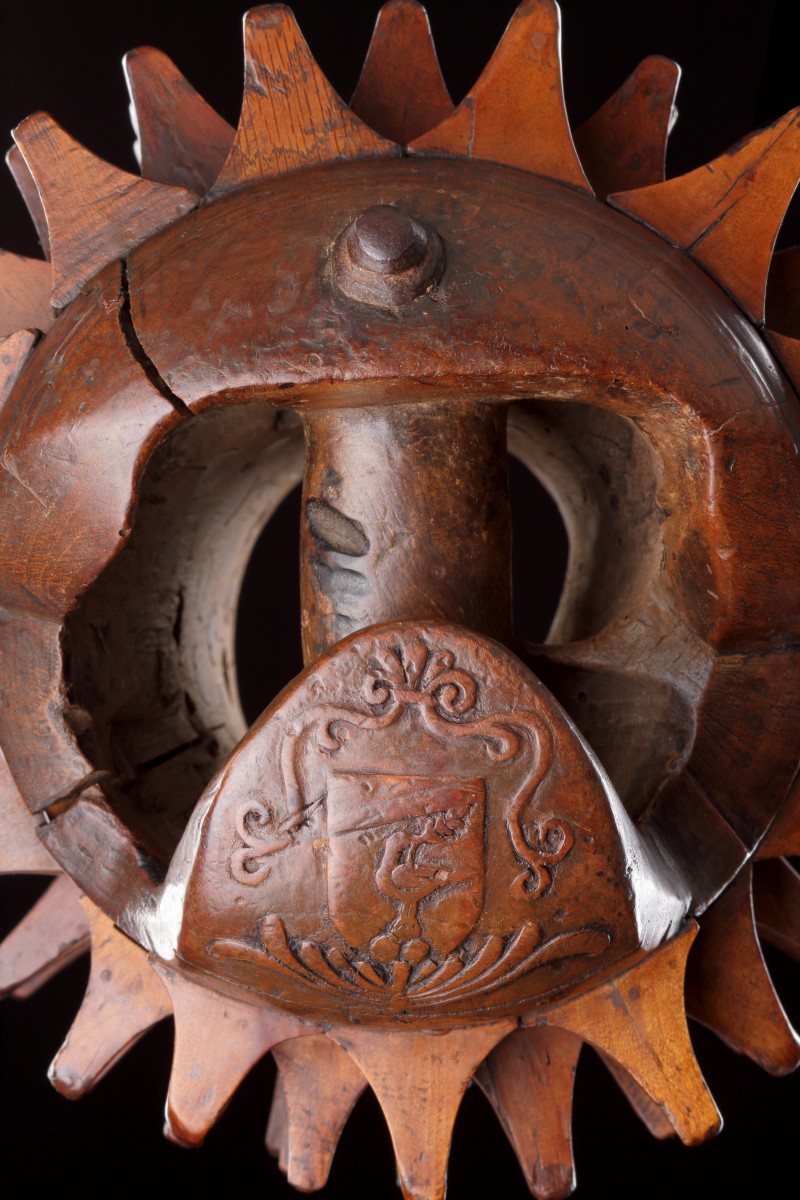
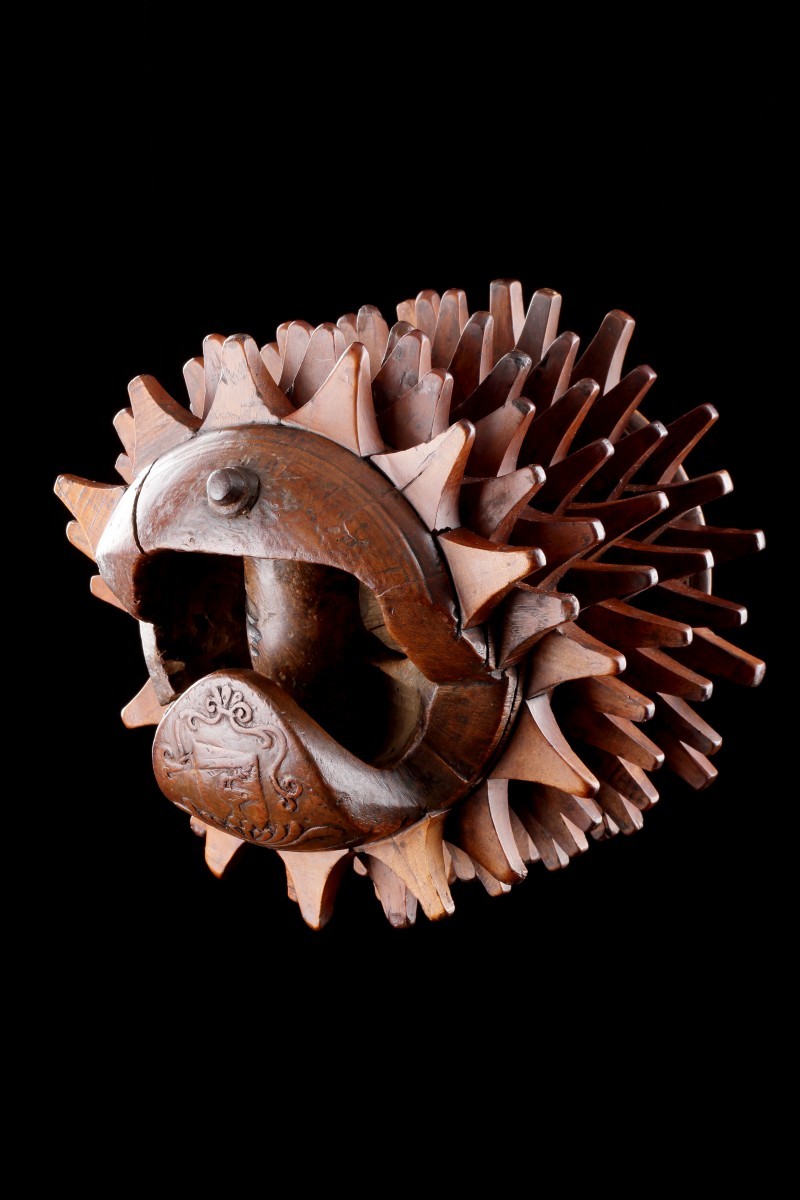
A Rare Example of a Tuscan Carved Walnut ‘Bracciale’ used for ‘Pallone Col Bracciale’ a traditional team game played with a hollow spiked glove gripped on the inside and worn on the forearm
The protruding wedge shaped blunted spikes known as ‘Bischeri’
An armorial of the owner or team carved to the fist guard
Wood, Metal
Italy
Late 17th / Early 18th Century
Size: 21cm high, 20cm dia. - 8½ ins high, 8 ins dia.
Provenance:
Ex Private Italian collection
Ex Private European collection
See:
for other examples, Finch and Co item no. 73, catalogue number 16, 2010, item no. 42, catalogue number 28, Summer 2017 and item no. 39, catalogue number 29, Winter 2017.
Also a Veneto Istrian marble sculpture depicting a player of the Renaissance game wearing a ‘Spiked’ wooden ‘Bracciale’, item no. 38, catalogue number 29, Winter 2017
From the mid-16th century, when Antonio Scaino of Salÿ formulated the first official regulations, ‘Pallone con bracciale’ emerged as a prominent street sport. Participants engaged in this activity using heavy, spiked hollow walnut cylinders, which were worn over the right or left forearm. These cylinders were employed to strike inflated balls back and forth on courts that were frequently established in town squares or streets. A designated server, known as a ‘mandarino’, initiated the game by placing the ball in play. However, each receiving player retained the right to reject any serve. The scoring system, akin to tennis, employed fifteens and tens, with the team securing 12 games emerging victorious in the match. Weighing up to two kilograms, the ‘bracciale’ posed a significant risk of causing severe injuries among players. It is reported that the 16th-century Renaissance artist Veronese was temporarily exiled from Verona for inflicting an eye injury on another player through an ill-judged swing.
Delevery information :
Please email for details
Shipping can be arranged worldwide