Offered by Antichità San Felice
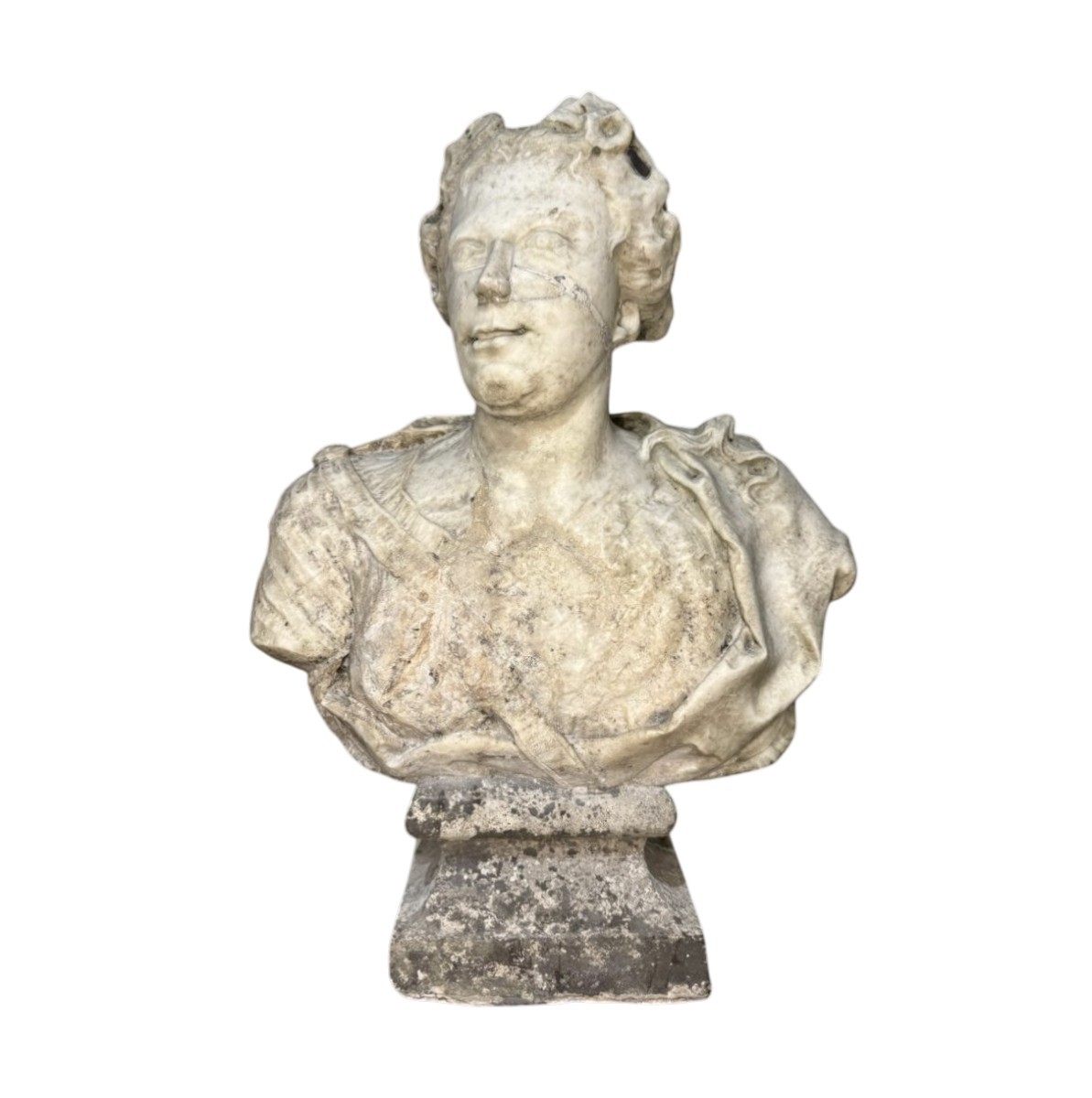
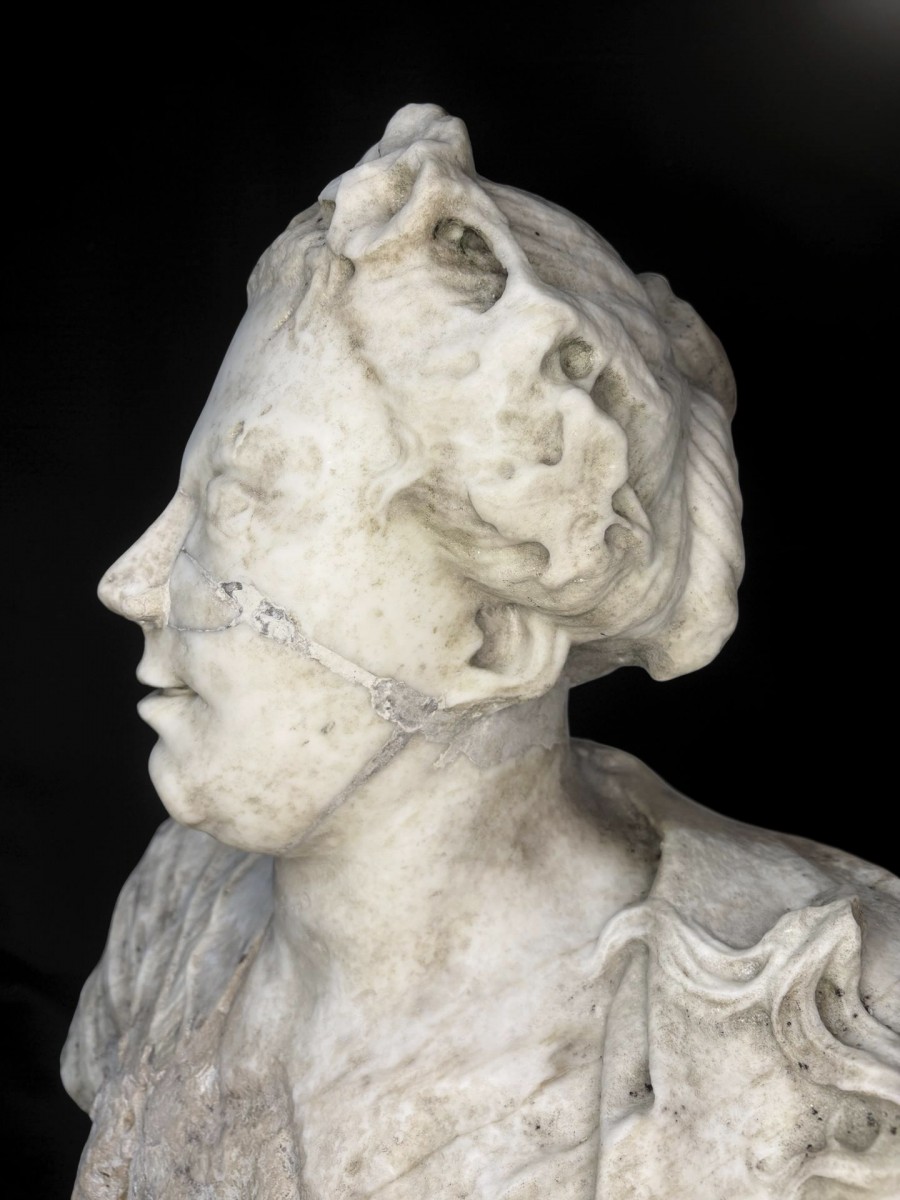
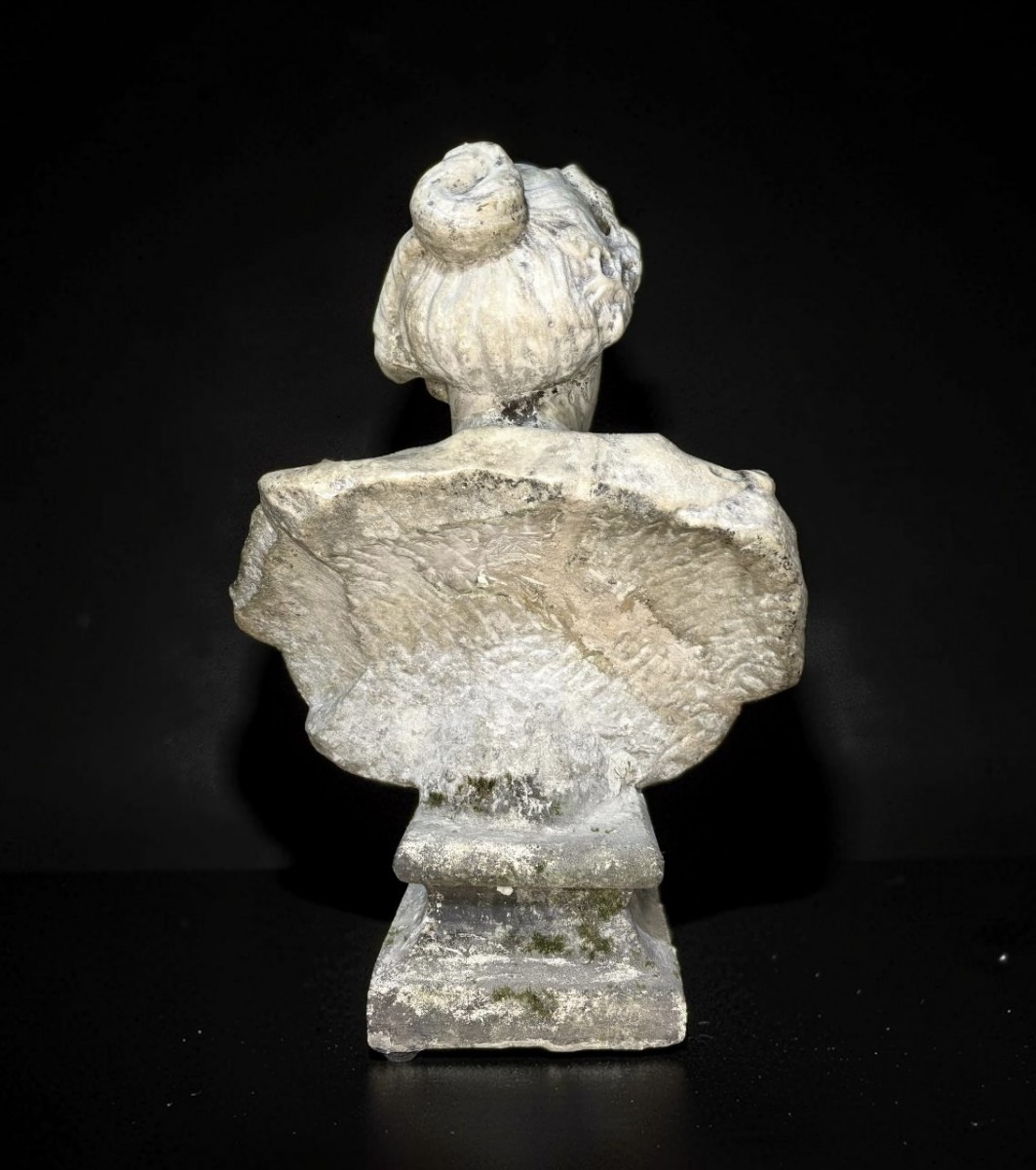
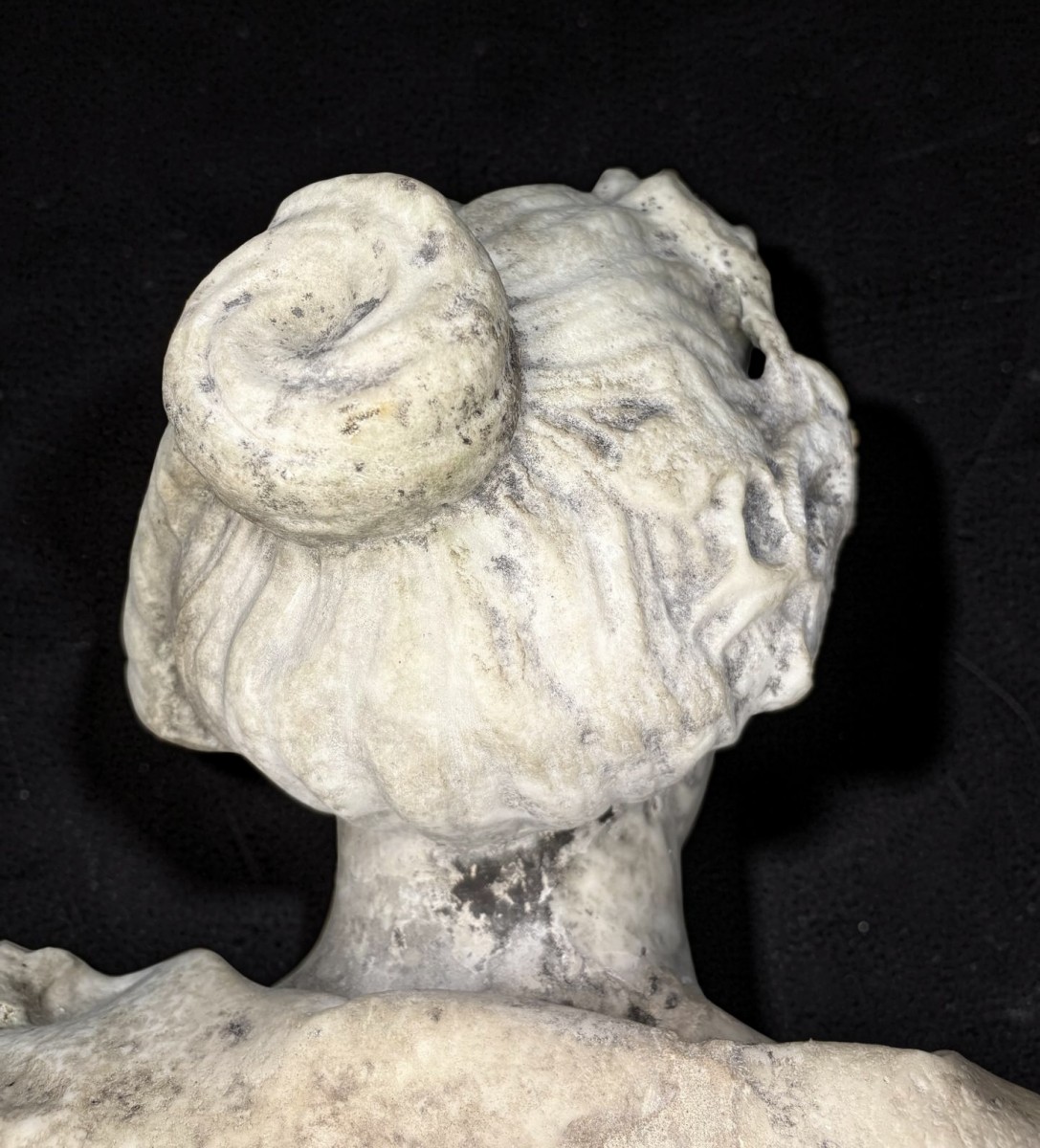
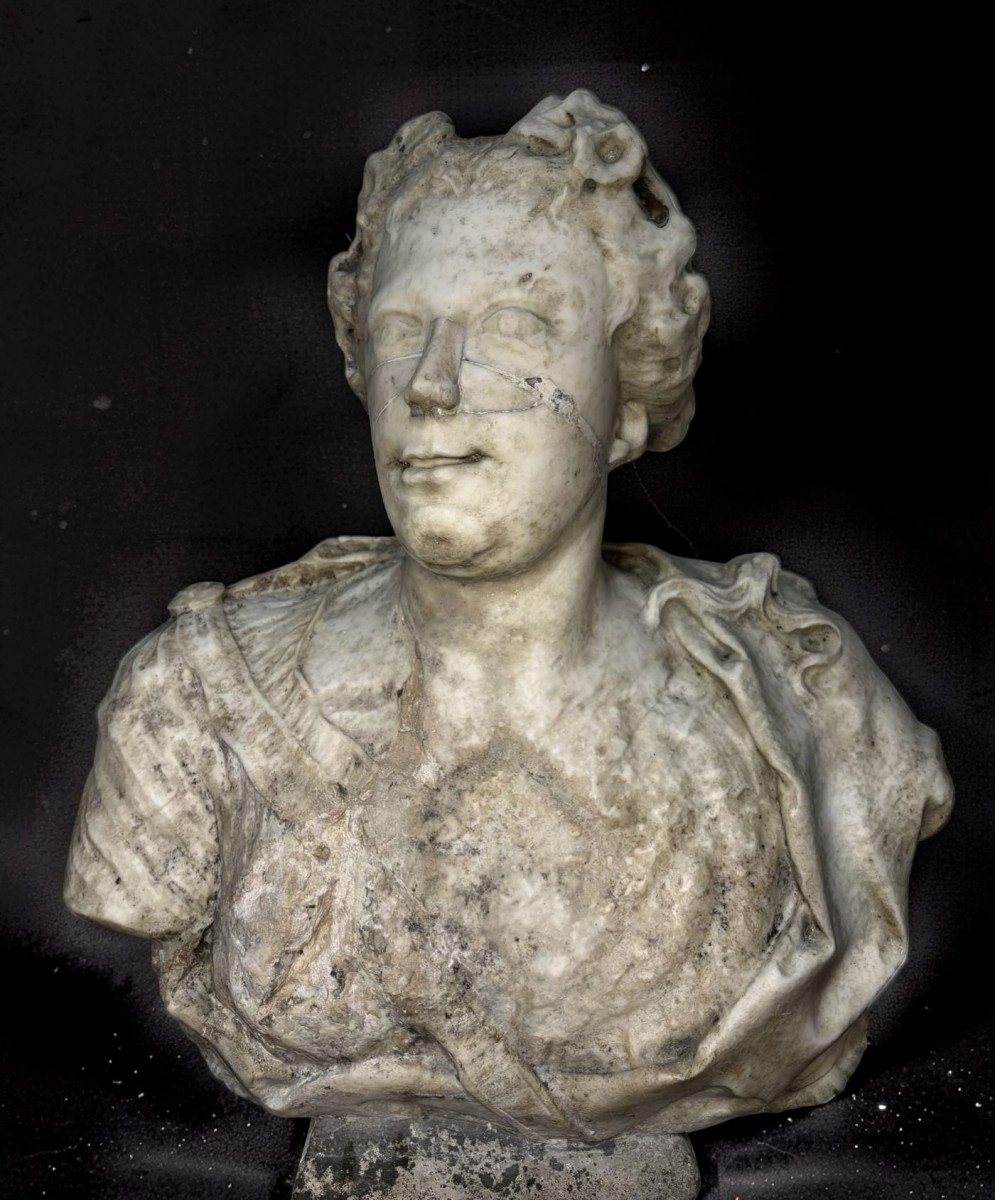

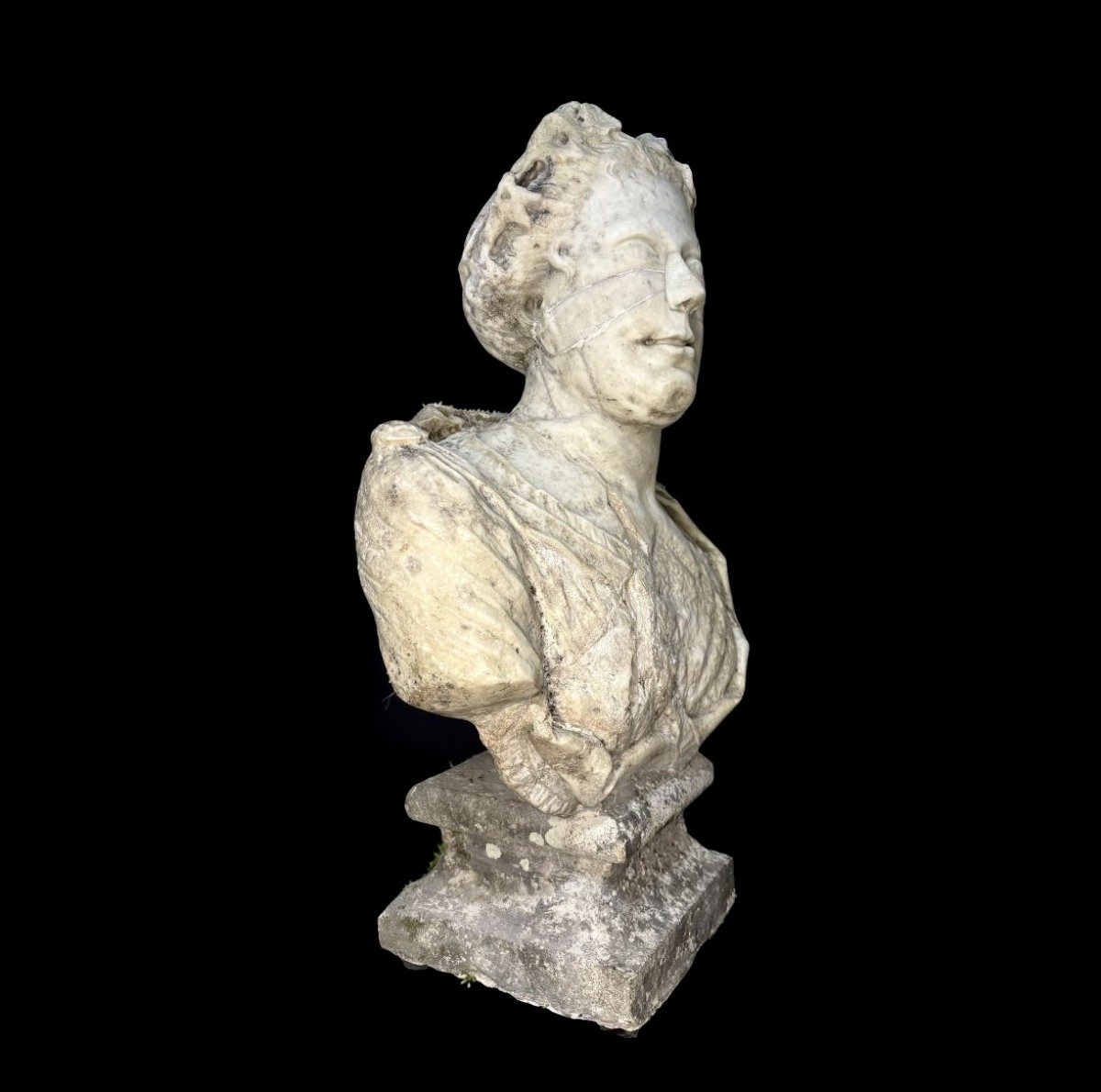
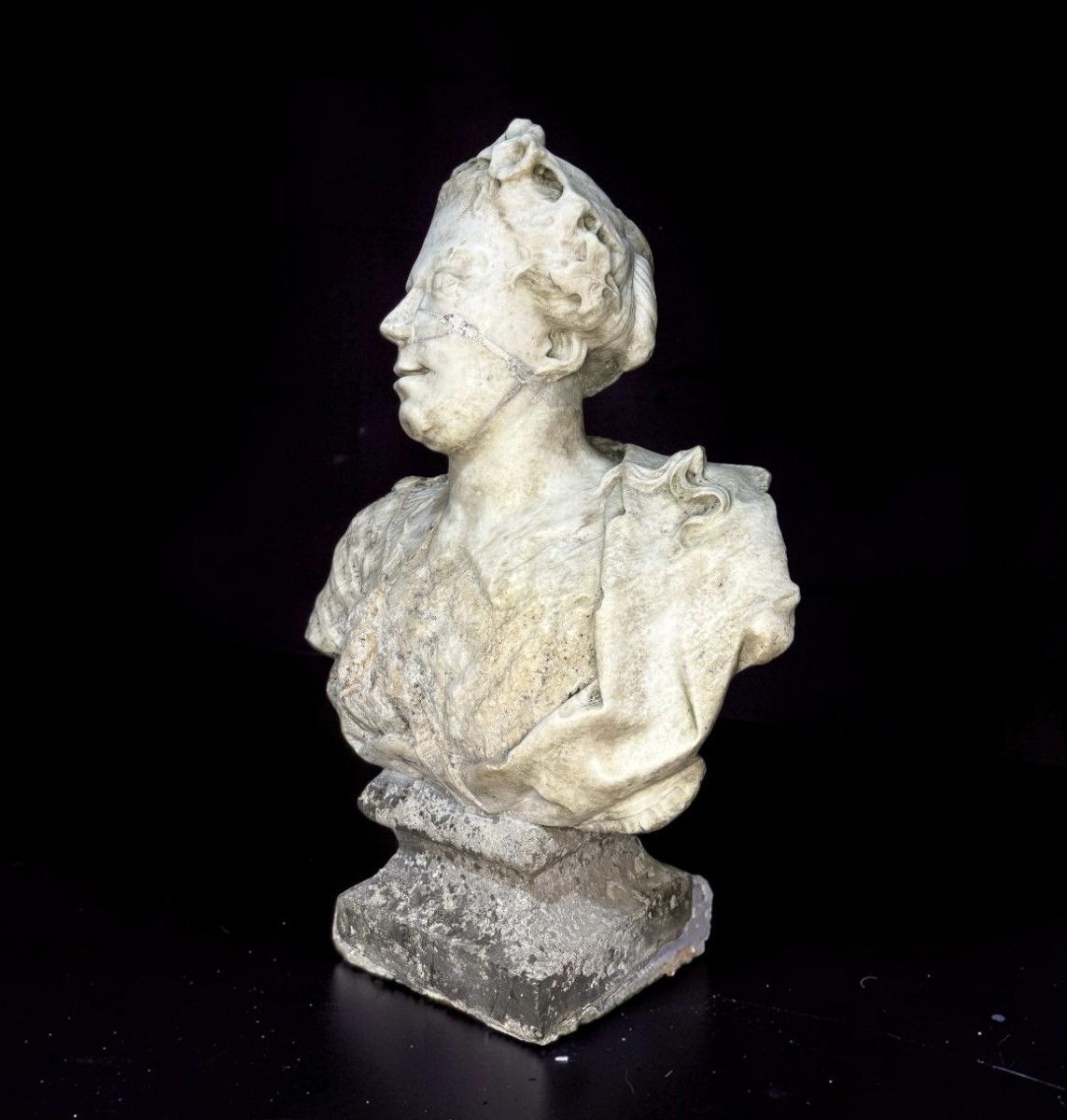
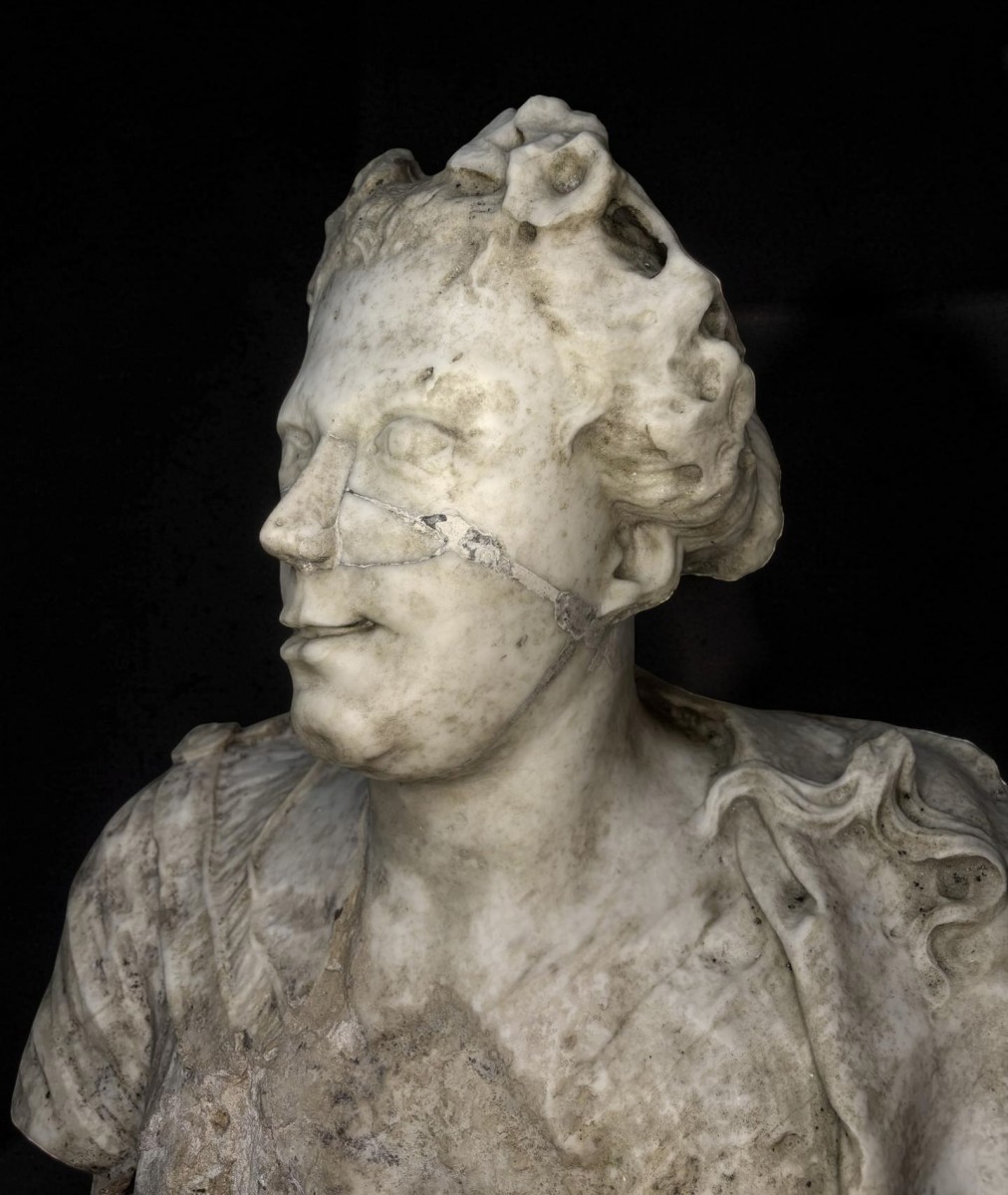
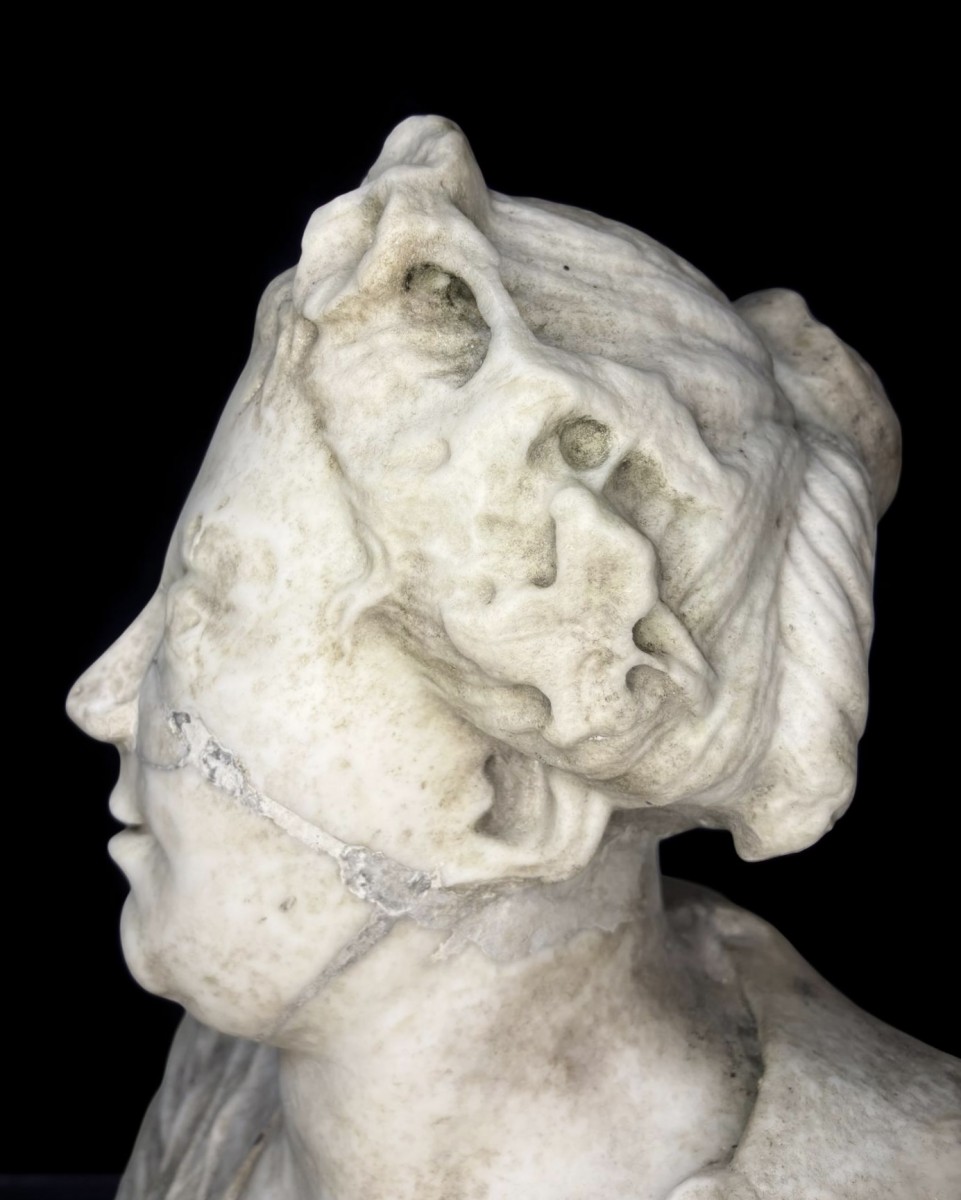
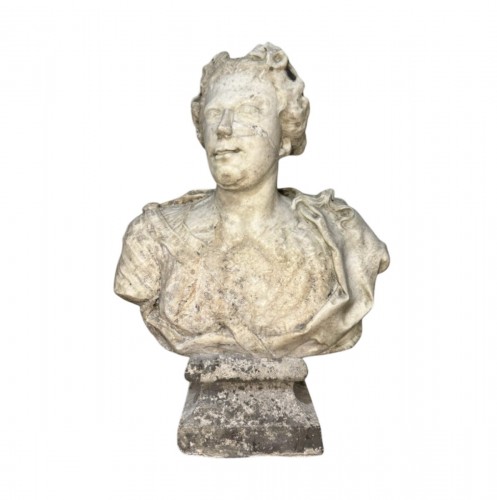
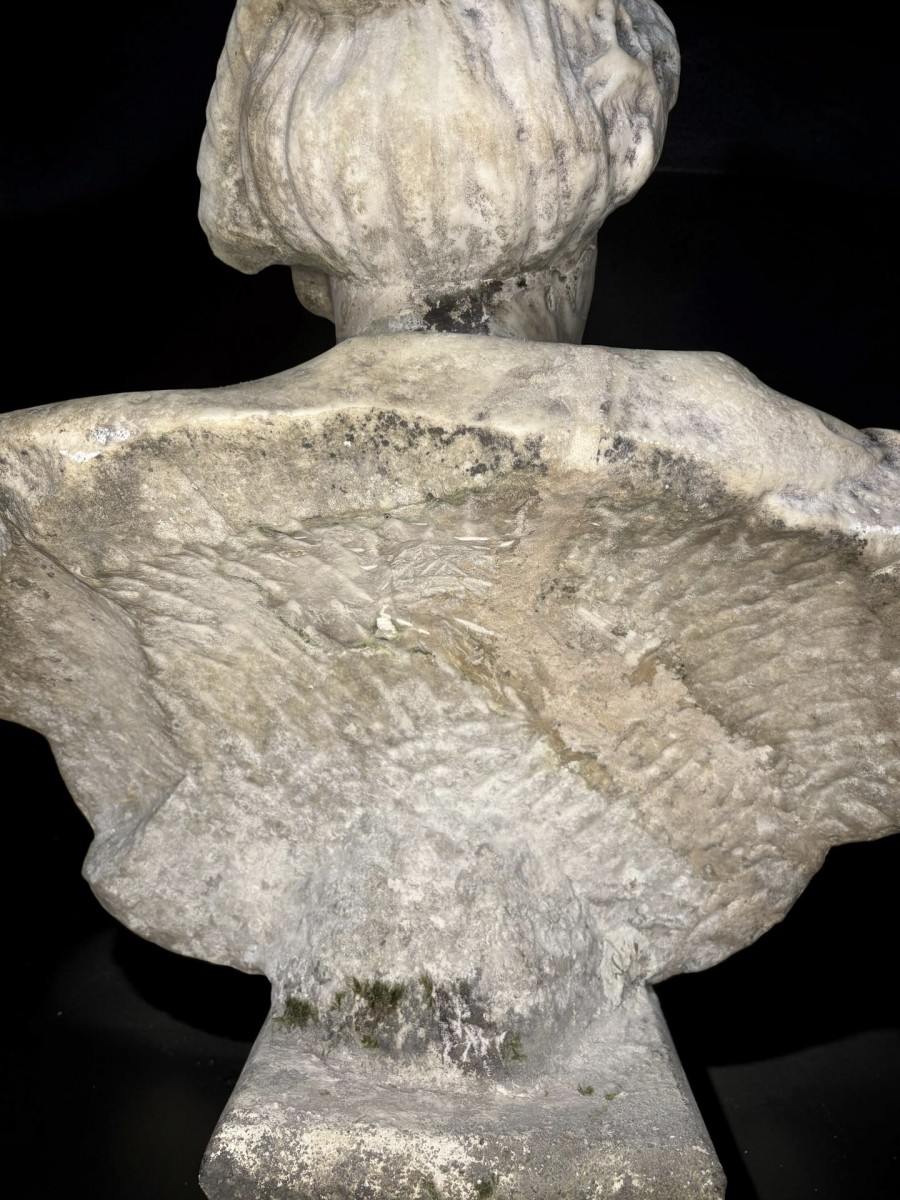
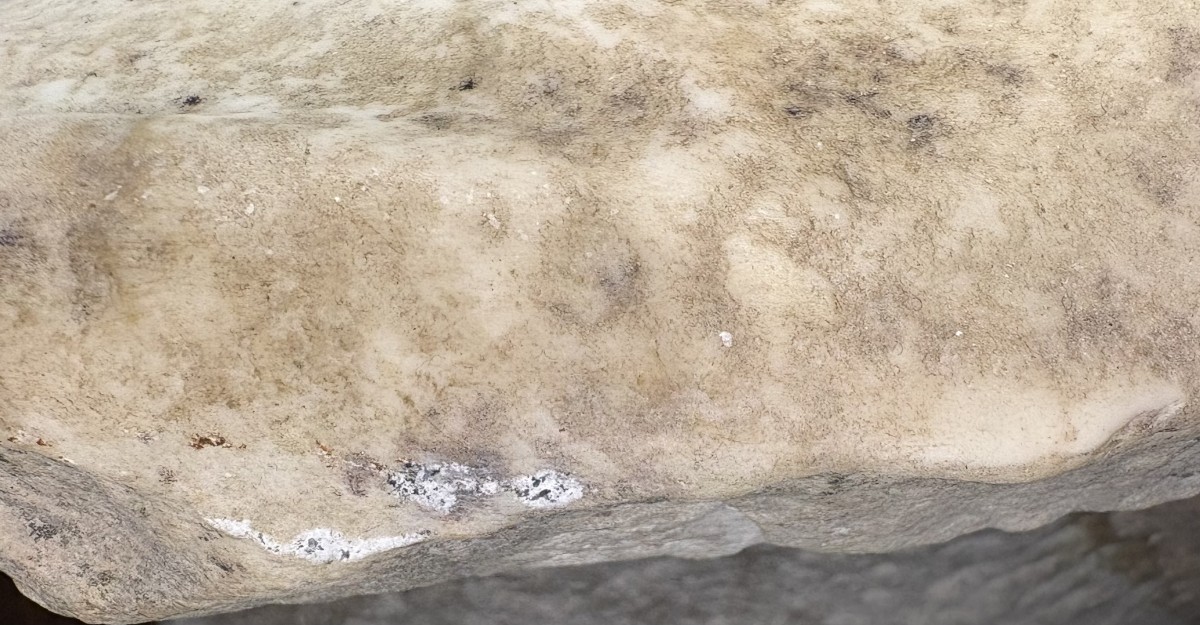
Impressive Carrara marble bust of Flora, attributed to the Venetian sculptor Orazio Marinali (1643-1720). Traces of a monogram behind the left shoulder: O....
Orazio Marinali was among the most significant exponents of Venetian sculpture between the 17th and 18th centuries. Together with his brothers and his prolific workshop, he left numerous sacred and secular works, from single busts to complex statuary cycles for churches, palaces, and gardens in the Veneto region.
Marinali lived and worked in a particular historical moment, when Venetian sculpture was in turmoil, coming into contact with prominent figures such as the Flemish Giusto Le Court, the German Heinrich Meyring, the Hungarian Michele Fabris, but also Angelo De Putti and Francesco Pozzo, decorators and innovators from the Solda Valley, whose tumultuous compositions complemented the works of traditional sculptors. But there was another element to consider: the role that the villa, and especially its garden, assumed at that time. The emphasis on the allure of villa life, a status symbol and symbol of its owners' prestige, saw a progressive expansion of the role of statuary, no longer merely an accessory decoration of plants and aquatic fantasies, but increasingly a protagonist, to the point of becoming "a silent and complicit population of stone figures, now warmed by the sun, now frozen by the cold or washed by the rain, as if protected by a soft robe of moss." Sources of inspiration inevitably change, with a progressive rediscovery of the values ??and stories embodied by the classical world, with its symbolic impact, harbinger of diverse messages. And Marinali fully grasped its spirit: after his beginnings in Venice with religious statuary and interior decoration, he embarked on garden sculpture. His garden production gradually expanded, so much so that Orazio Marinali's full artistic maturity can be considered to have been expressed with garden sculpture from the mid-1680s until his death in 1720. Marinali's workshop and school were both a practice, at a time when family life was a habit and a necessity, as many workers were needed to meet the many work commitments. Led by Orazio, the workshop included his two brothers, Francesco and Angelo, as well as his son-in-law Giacomo Cassetti, Angelo de Putti, and Lorenzo Mattielli. Orazio's modeling is never stereotypical: nervous, fragmented, with a visual impact of clearly defined faces and postures, capable of covering a range of expressiveness from menacing to frowning, from comical to grotesque, with sly and amused allegories to female figures with mischievous or capricious smiles, from the detached pride of some deities to agitation and compassion, capable of capturing the viewer's gaze.
Our bust comes from a private collection. The modeling of this Flora, like the workmanship of the hair, the particular rendering of the ears, mouth, and chin, and the type of drapery, lead us to Marinali's workshop. The remains of the monogram O.M., as Orazio Marinali signed himself, further confirm this.
Measurements
H 68 cm
W 52 cm
Base 22 x 22 cm
Delevery information :
Antichità San Felice takes care of organizing the packaging, home delivery and all the administrative formalities related to the shipment.
Antichità San Felice works with several service providers selected for their professionalism, in order to ensure delivery of works of art in the best conditions.
For the packaging of the goods, we involve craftsmen who were responsible for the construction of custom-made wooden crates.
For transport, depending on the case, we involve the most suitable service provider.
All shipments from Antichità San Felice are covered by value insurance. It is important to note that the Customer must indicate on the dispatch note any reservations upon receipt of the object, in order to be able to bring the insurance into play.
Payments accepted:
bank transfer
online bank card
paypal (+3.4% Europe +5% rest of the world)