Offered by Galerie Sismann
REQUEST INFORMATION
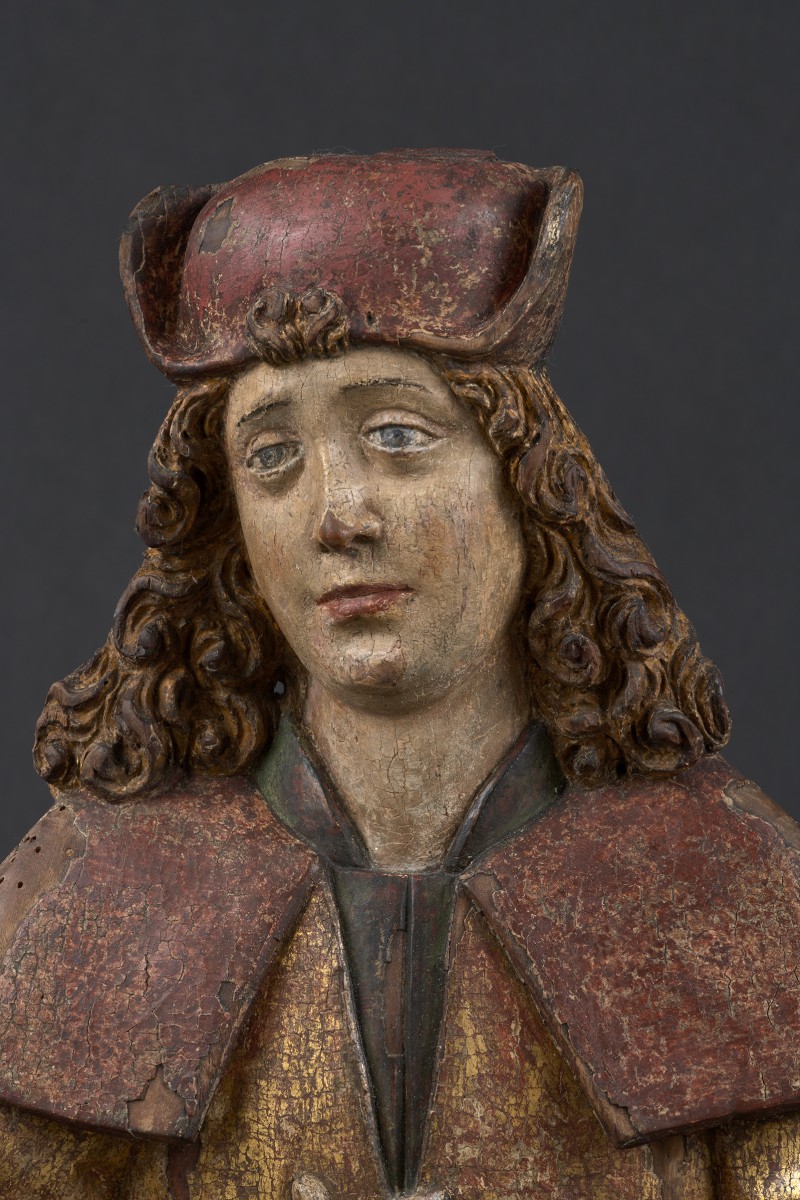

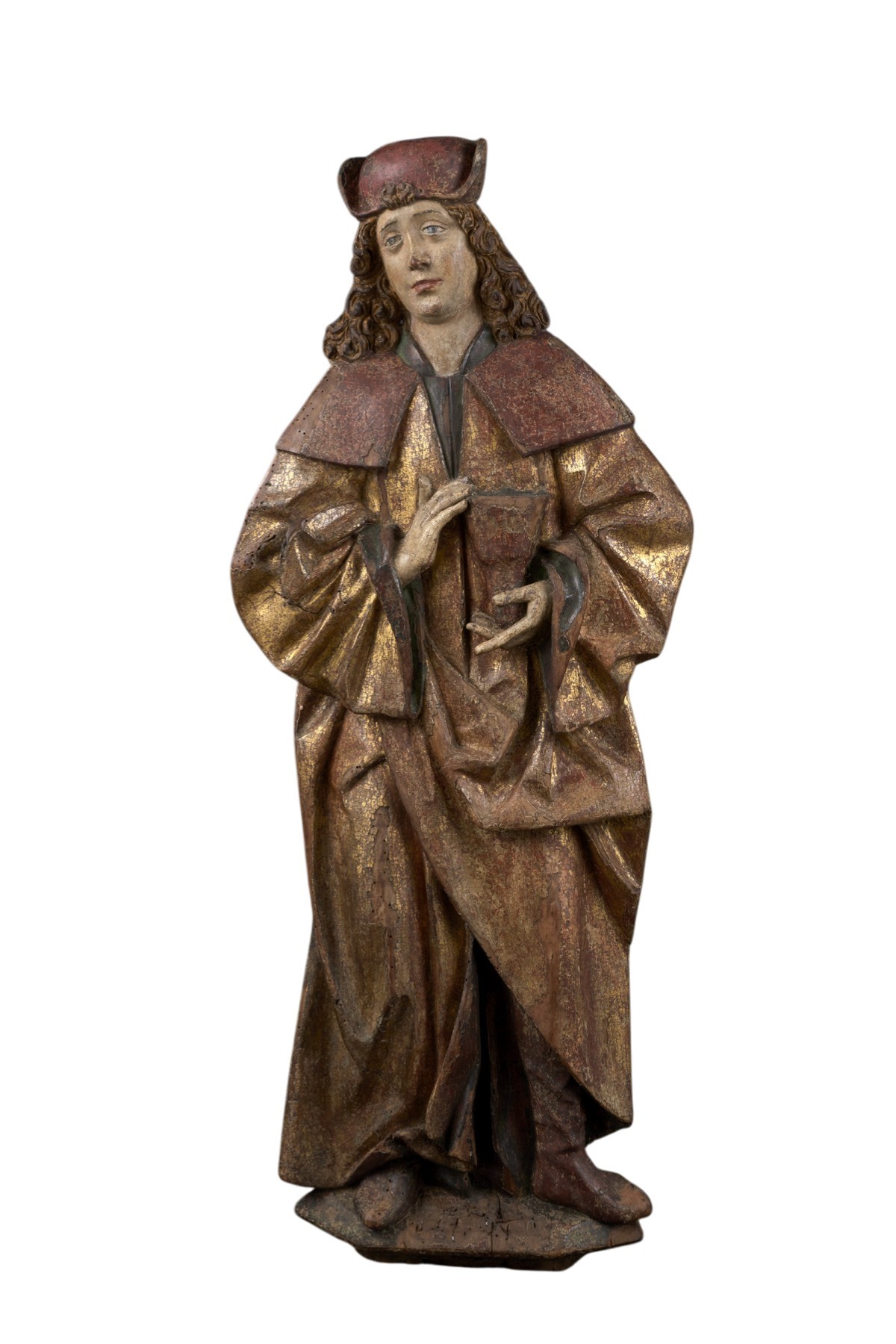
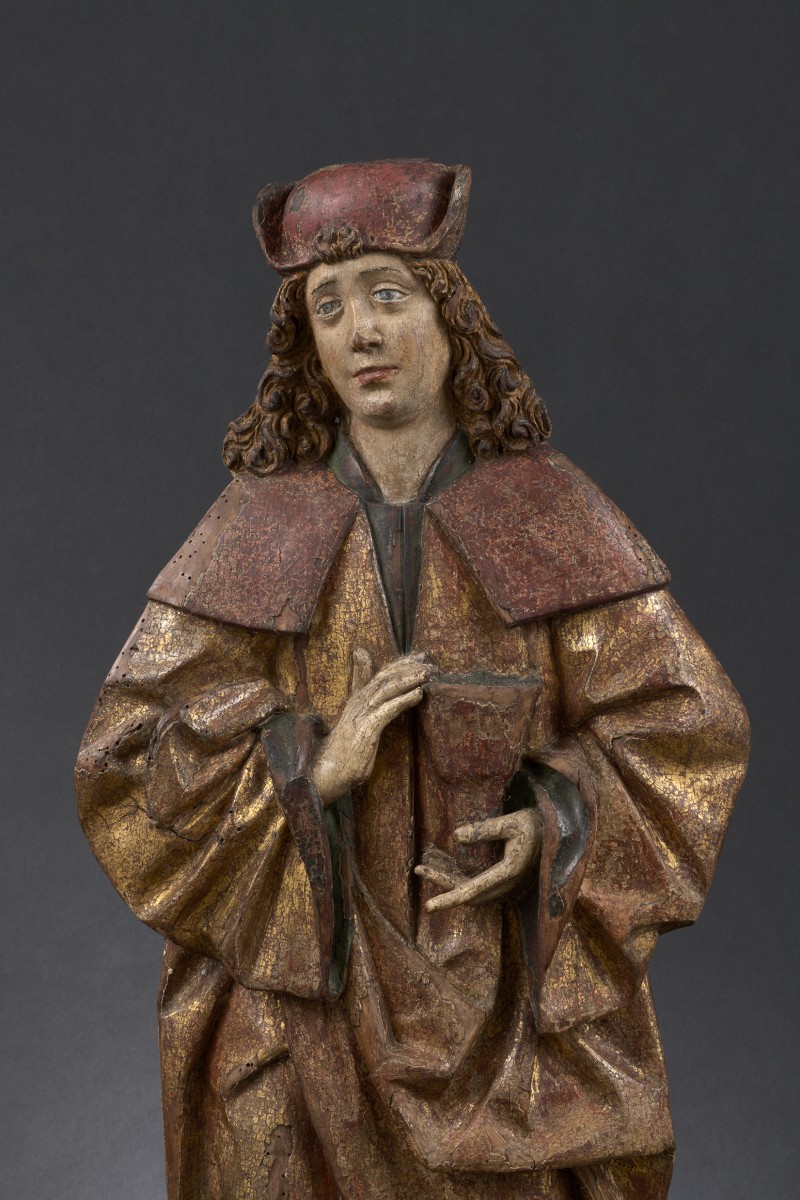
This beautiful polychrome and gilded limewood relief depicts a saintly figure wearing a cap with upturned edges - typical of the years 1500-1510 - holding a conical glass ampoule in his hands. This singular attribute allows us to identify the figure as Saint Guy, also known as Saint Vitus, a famous Christian martyr of the 4th century. The son of a wealthy pagan from Sicily, the young Saint Guy was converted to Christianity by his tutor, Modestus, and his nurse, Crescentia. Soon after, he began performing miracles. In an attempt to make him renounce his faith, his father subjected him to numerous temptations and deprivations, none of which diminished the young man’s devotion. As depicted in our relief, with eyes filled with tears, he continued to place his trust in God. One day, his father discovered him in his room bathed in a miraculous celestial light, illuminated by twelve flaming lamps. As divine punishment, his father was immediately struck blind and had to humble himself before his son to be healed. It is this episode to which the oil lamp, an attribute held by our saint, refers. Although the lamp is also found in the hands of Saint Vitus in a sculpture from the Memmingen workshops attributed to Hans Herlin - now preserved in the Landesmuseum of Württemberg - the saint is more systematically represented in Swabia with a cauldron. The cauldron refers to his martyrdom and the torment of boiling pitch inflicted upon him by the Emperor Diocletian. The lamp, however, is more commonly favored in works from Tyrol, Bavaria, and Austria.