Offered by Galerie Sismann
REQUEST INFORMATION

At the turn of the fifteenth and sixteenth centuries, Franconia emerged as one of the major centres of German sculpture, driven by an intense production of devotional images intended to foster the faithful’s personal meditation. In this region of south-central Germany, profoundly shaped by the rise of the Devotio moderna, religious art favoured a sensitive and empathetic approach to the sacred. Dominating this artistic landscape, the seminal figure of the sculptor Tilman Riemenschneider exerted a decisive influence, his stylistic language spreading widely through his workshop and the many followers who carried it throughout southern Germany.
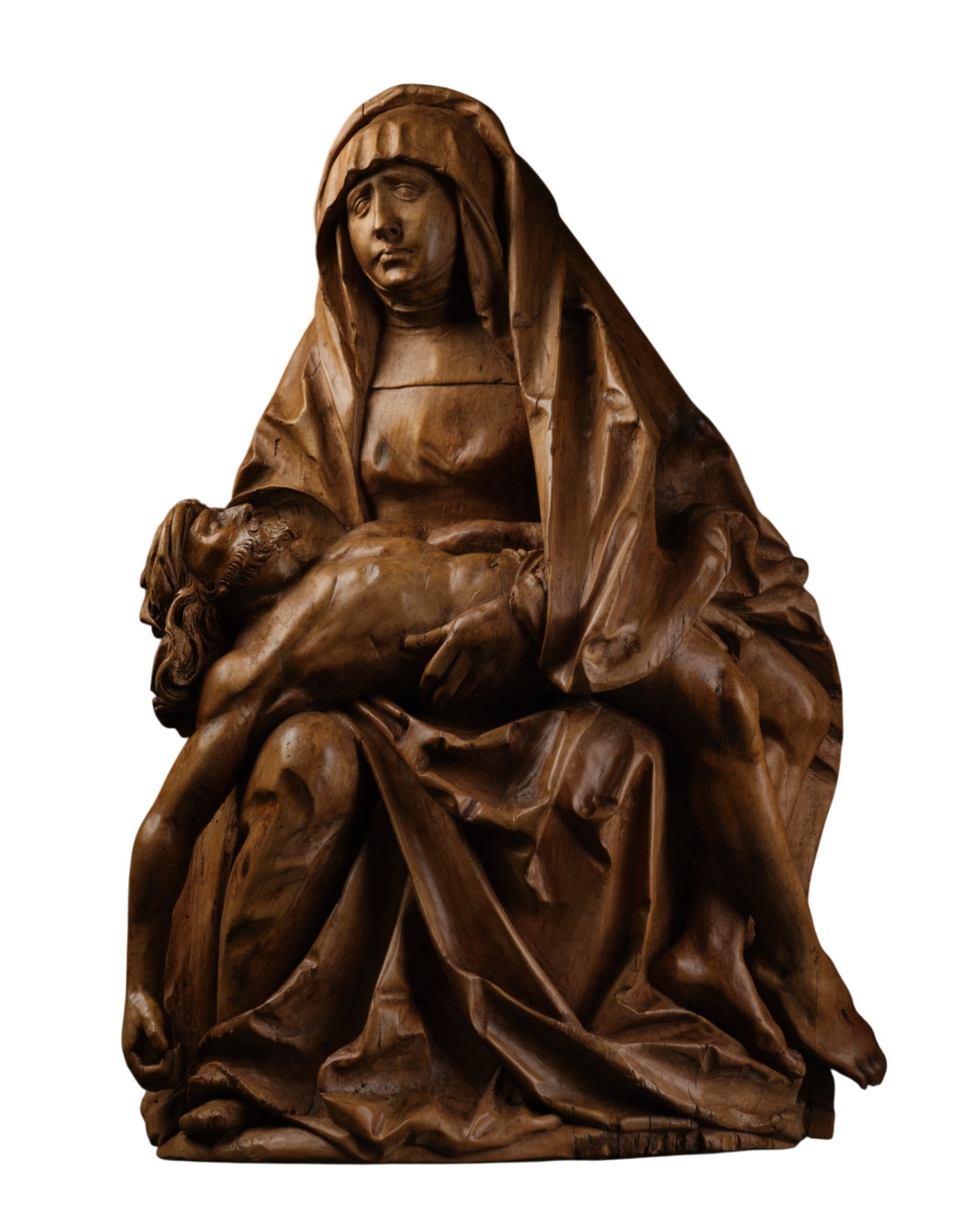
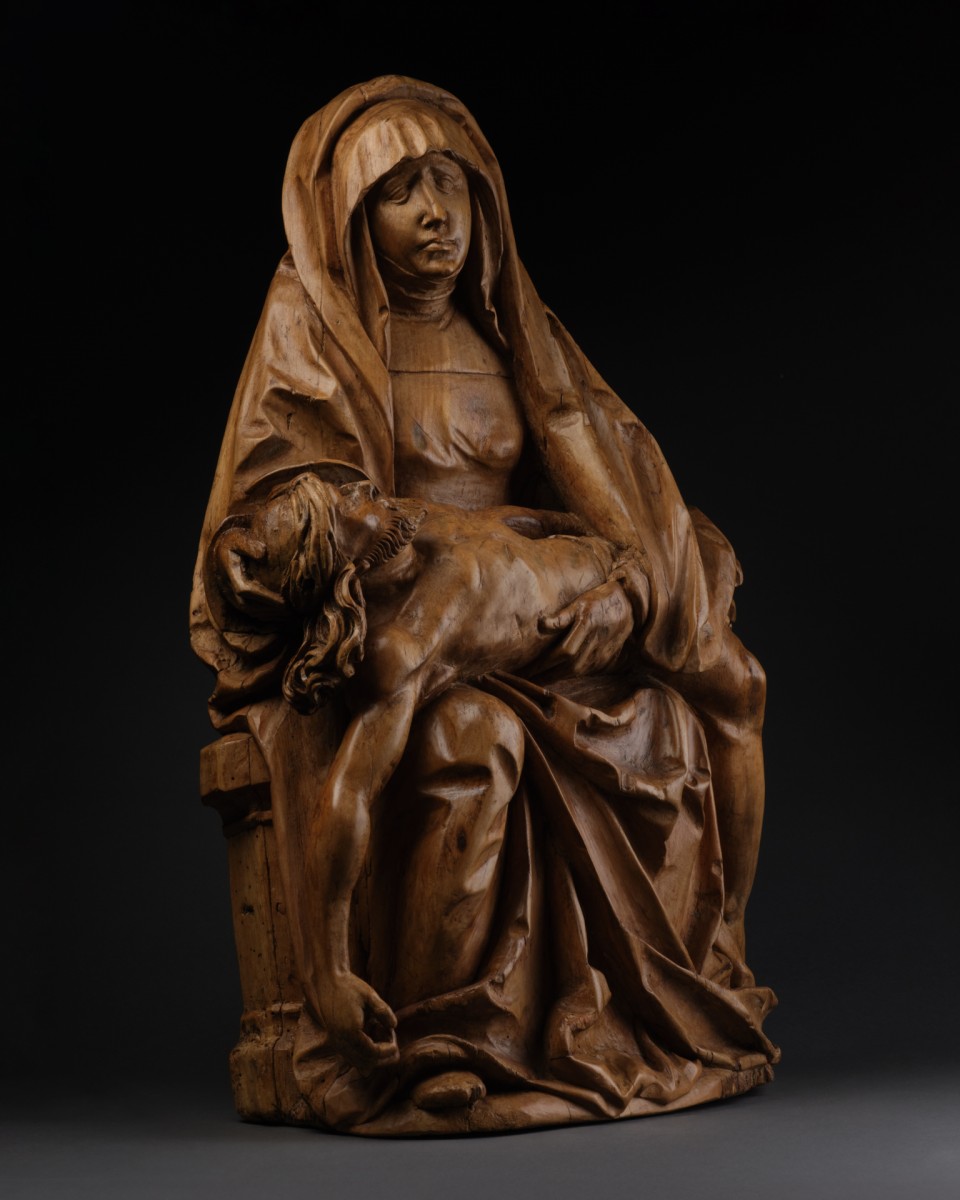
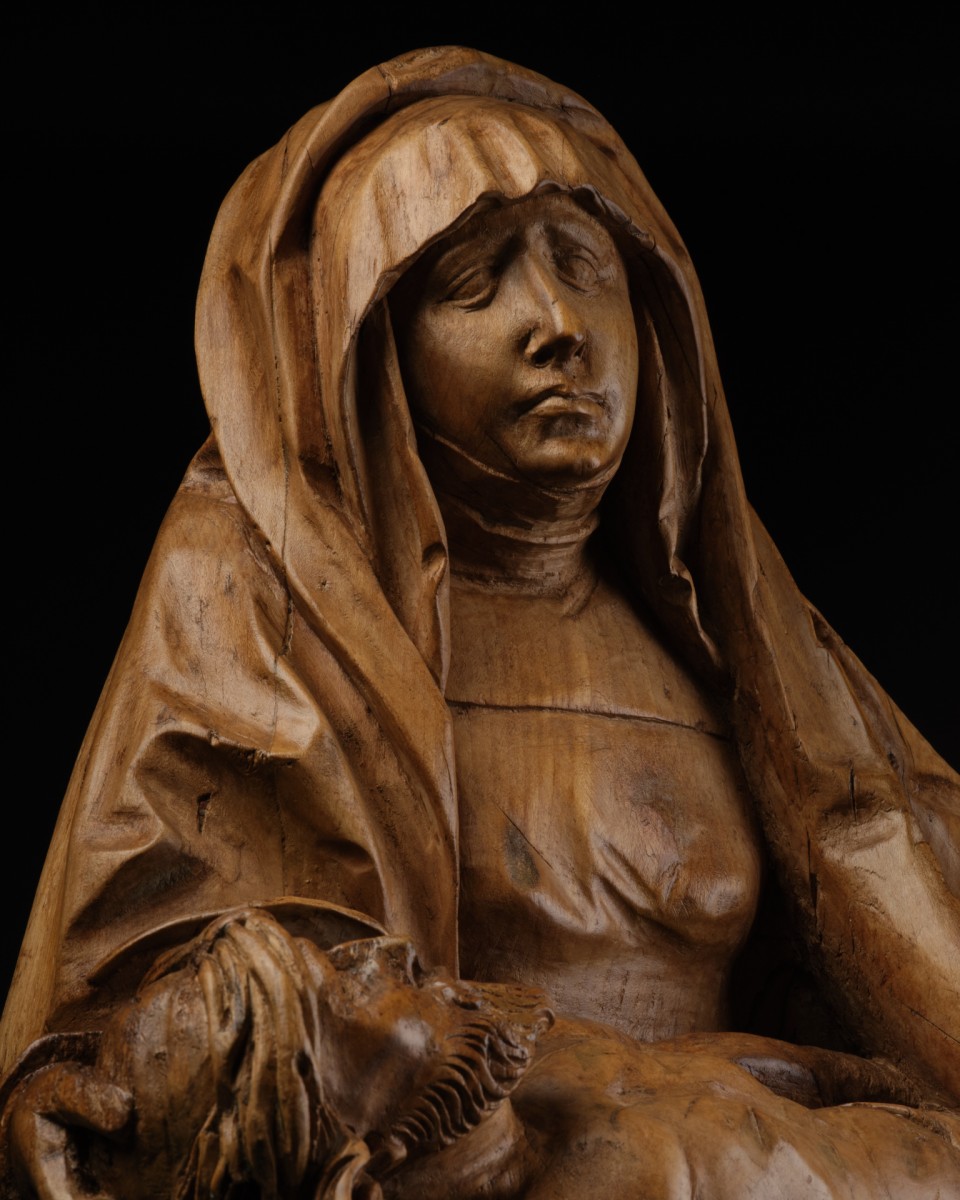
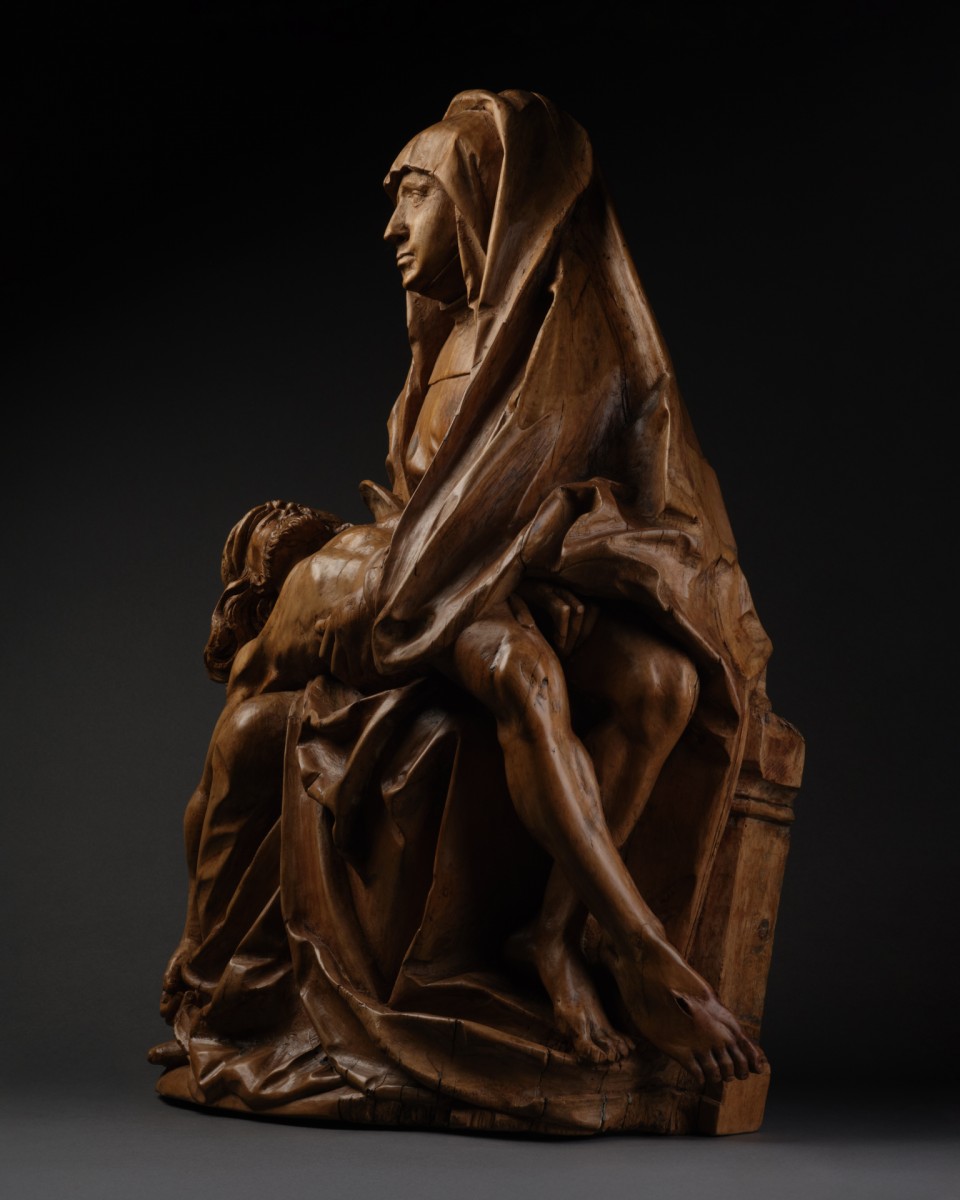
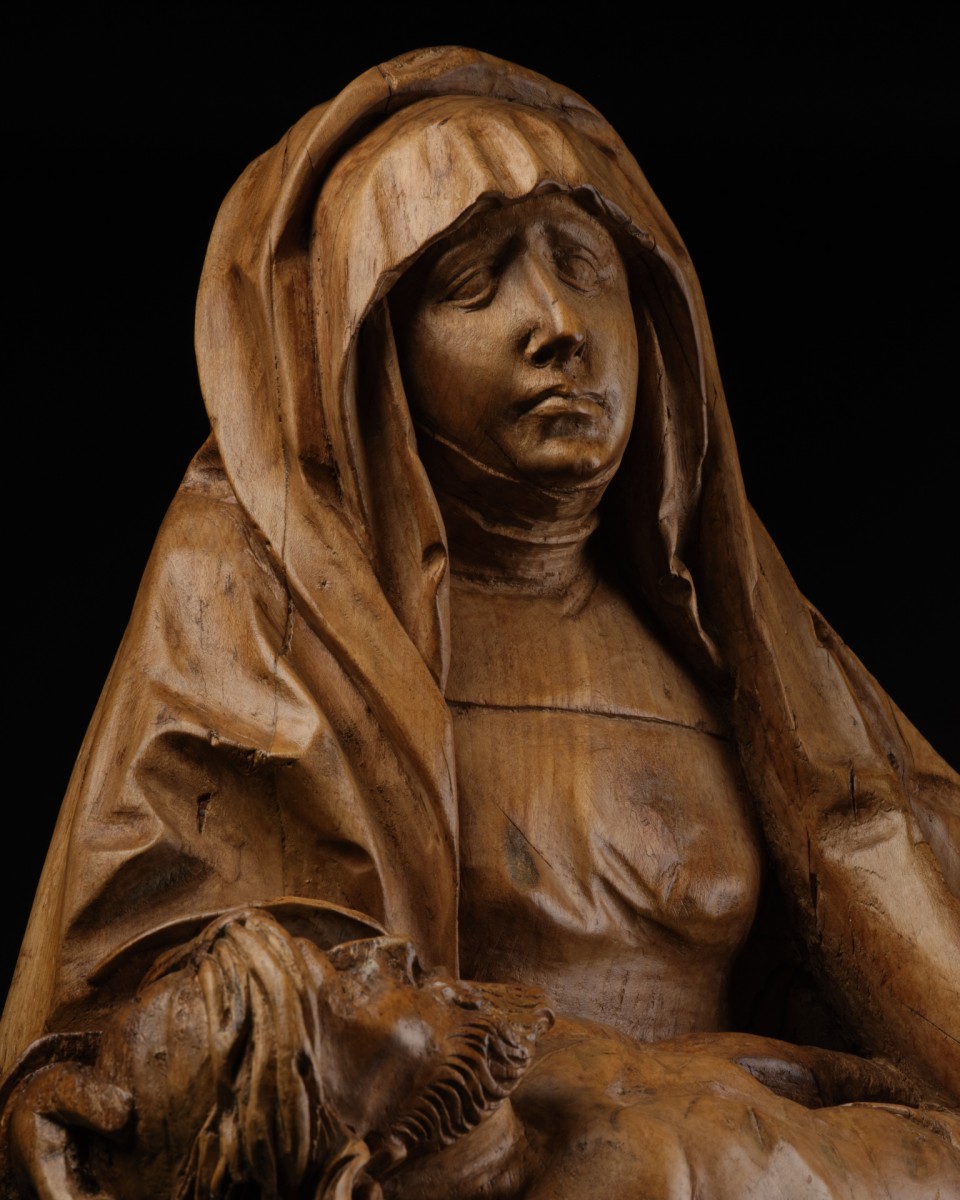
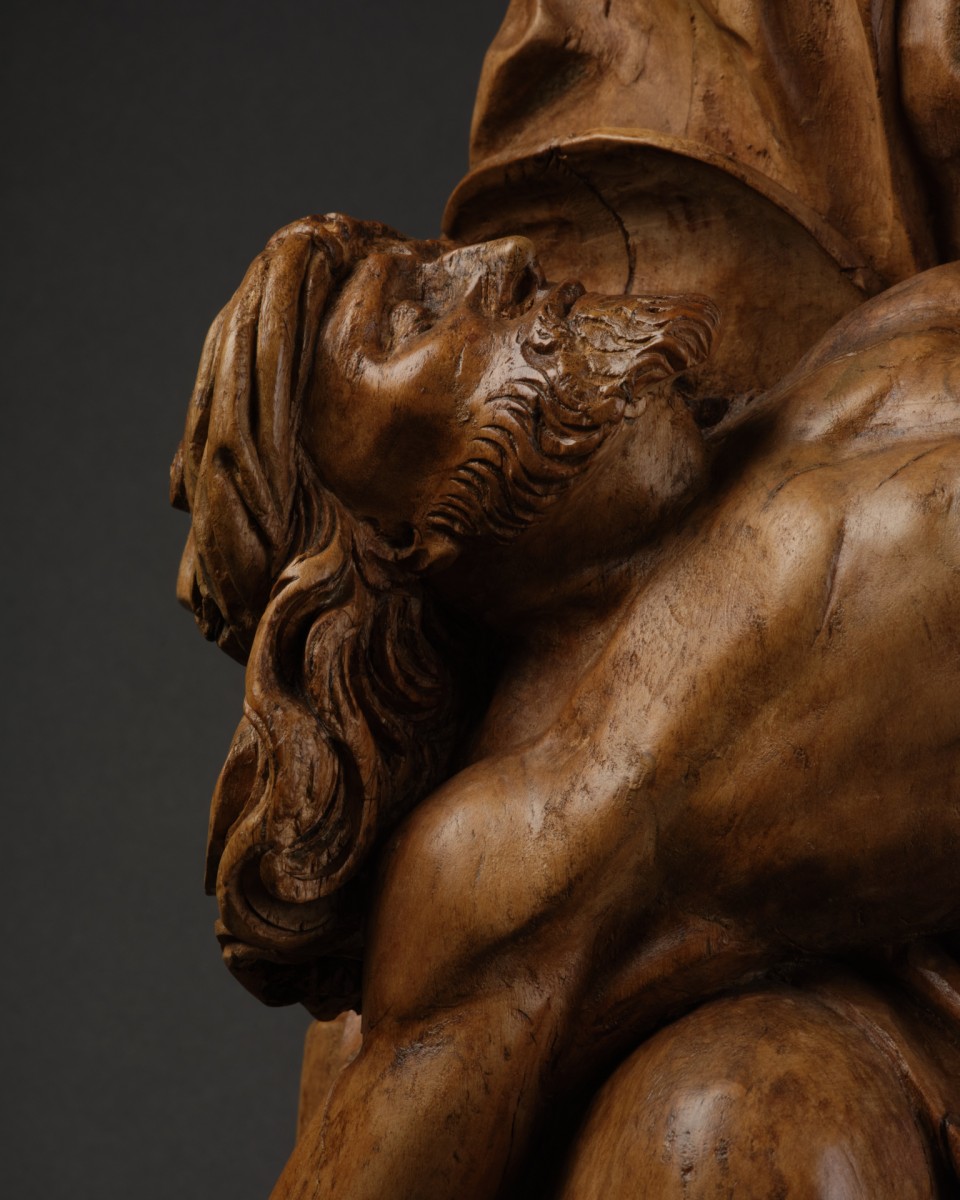
This Pietà, probably carved in Franconia, fully belongs to this context. It displays close stylistic affinities with the Pietà of Laufach, attributed to the workshop of Tilman Riemenschneider, which provides an essential point of comparison. Both works share a similar balance between dramatic intensity and expressive restraint, evident in the disposition of Christ’s body, abandoned to a silent heaviness, as well as in the treatment of the Virgin’s face. In each case, her features are defined by heavy, drooping eyelids, half-closed eyes and full lips, conveying an inward-turned sorrow devoid of overt pathos. This physiognomic type also finds a particularly compelling parallel in a late-fifteenth-century Franconian Virgin from a Calvary group, exhibited at the Blumka Gallery in New York in 2000, which displays the same softly modelled features and restrained, melancholic gravity characteristic of Franconian sculpture of the period.
This expressive vocabulary extends into the treatment of the drapery, a fundamental element of the composition. The Virgin’s ample mantle is carved with deeply undercut folds and sharply broken ridges, powerfully structuring the group while animating the surface with vigorous graphic rhythms. These angular, almost nervous draperies gather in the lower part of the garment in abrupt, forceful breaks, lending the sculpture a monumental stability and a formal tension characteristic of Franconian production at the end of the fifteenth century.
The overall composition also finds a close parallel in a late-fifteenth-century Pietà broadly attributed to southern Germany and now preserved in the Landesmuseum in Stuttgart. As in the present work, the scene is built upon a stable, monumental structure, tempered by the agitation of the drapery, creating a subtle balance between dramatic intensity and formal clarity.
Beyond these stylistic comparisons, this Pietà fully belongs to the tradition of the Vesperbilder, devotional images intended to accompany evening prayer and private meditation. In the spirit of the Devotio moderna, it promotes an intimate relationship with the sacred, grounded in empathy and silent contemplation. Through the restrained power of its expression, the quality of its execution, and its deep roots in the Franconian tradition shaped by the influence of Tilman Riemenschneider, this work stands as a compelling example of the highest achievements of southern German devotional sculpture at the close of the Middle Ages.