Offered by Poncelin de Raucourt Fine Arts
REQUEST INFORMATION

Paintings and drawings, from 16th to 19th century
Italian School, 16th century
Virgin and Child
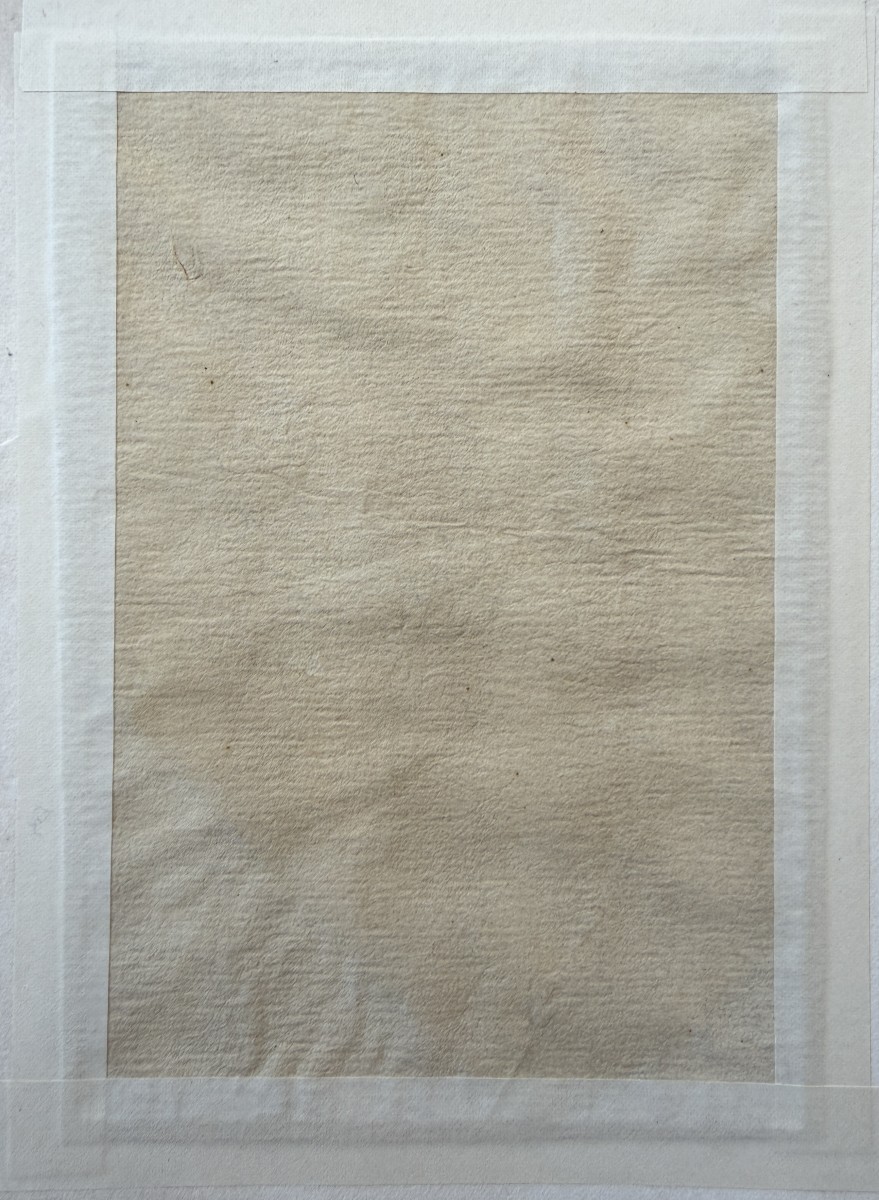
Pen, brown ink and white heightening on paper
16.5 x 11 cm
Provenance:
Private collection
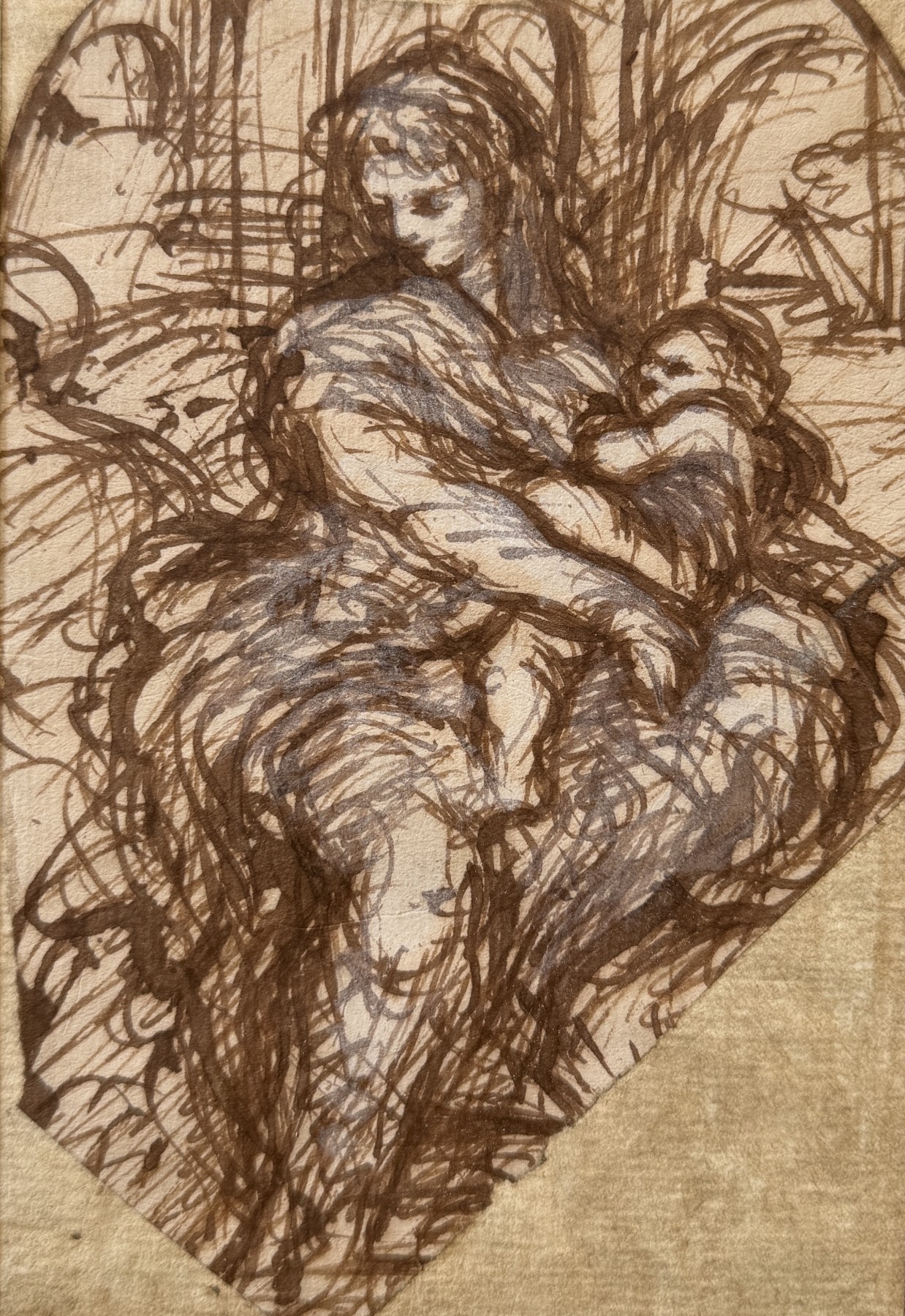
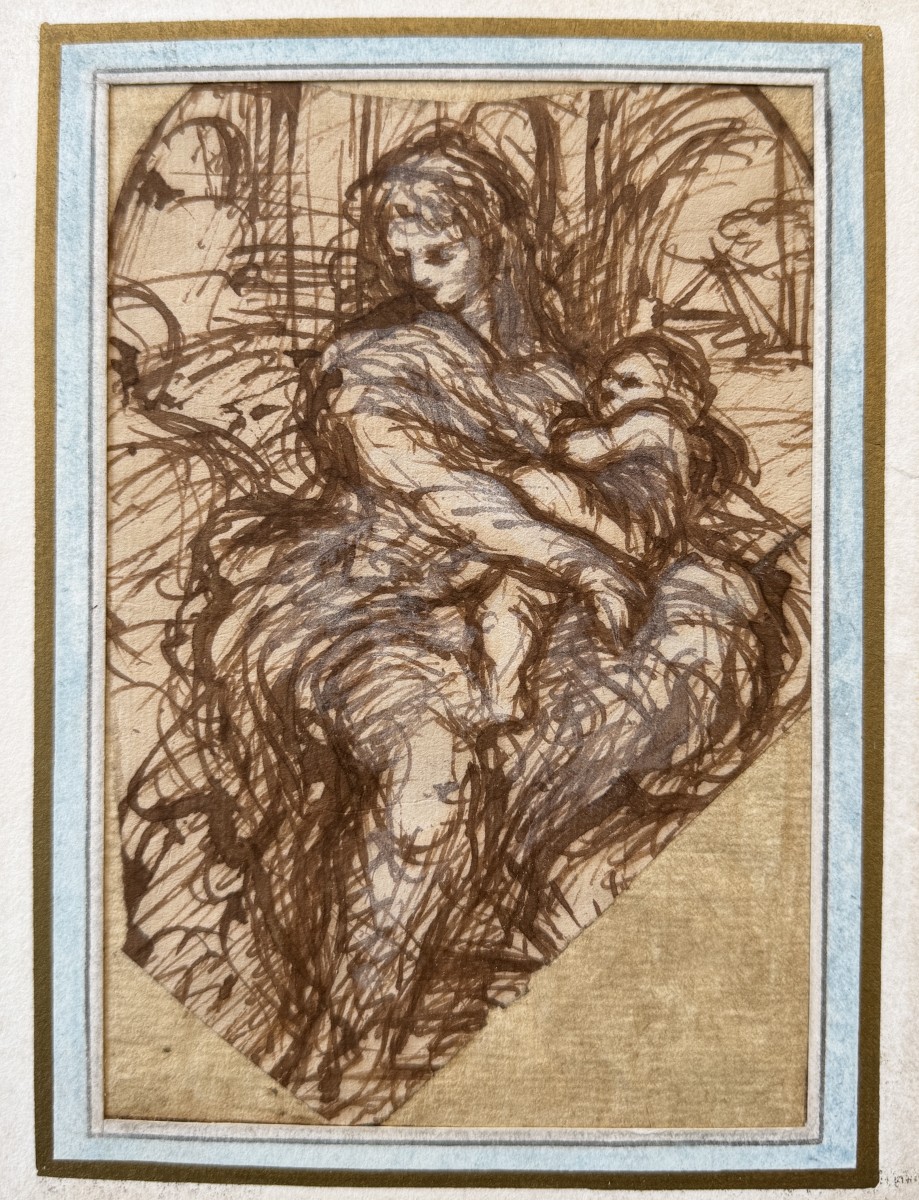
This sheet, attributed to the Italian school of the 16th century, powerfully illustrates the central theme of the Virgin and Child, here conceived within a spandrel format designed to fit into an architectural corner. The triangular composition, adapted to this spatial constraint, immediately suggests its likely function: a preparatory study for a painted or sculpted decoration, perhaps intended for a lunette, an altarpiece, or the angle of a vaulted ceiling.
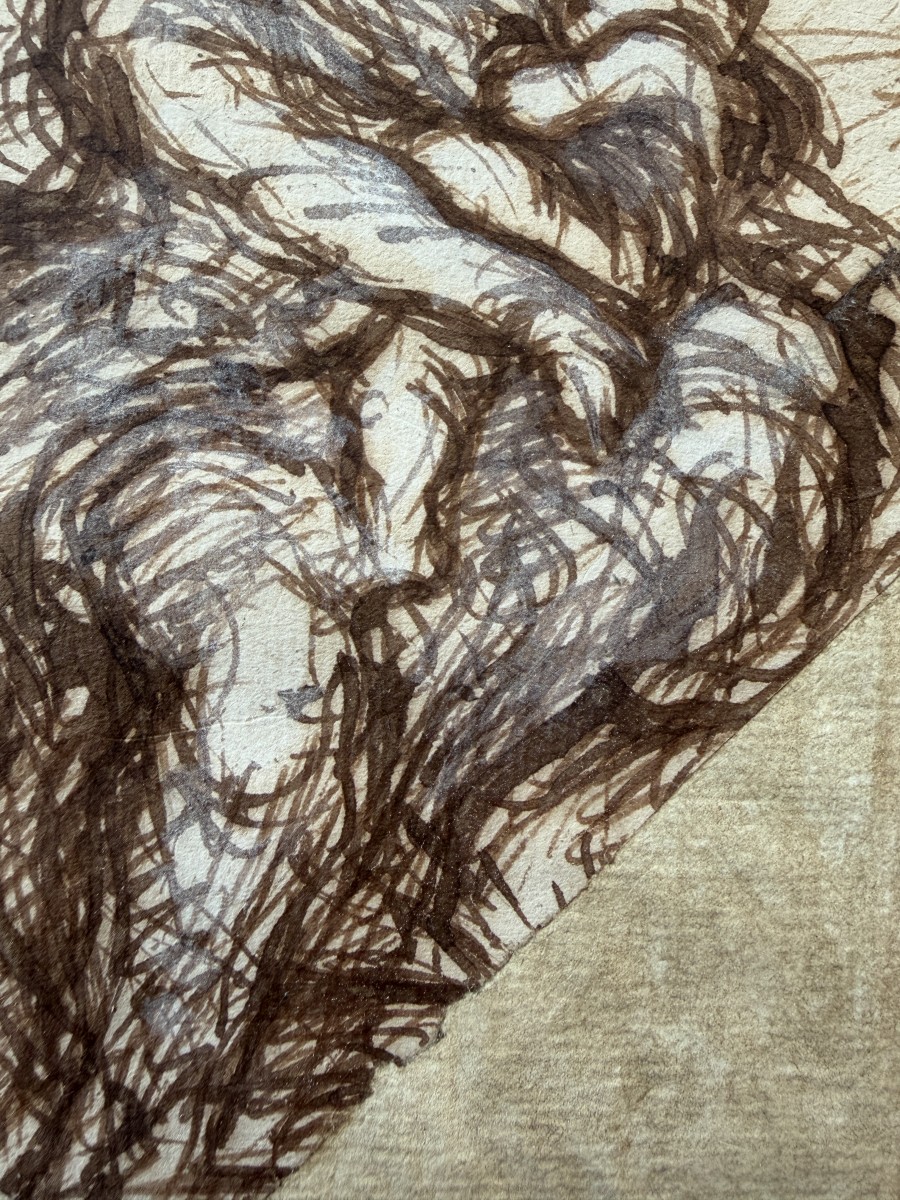
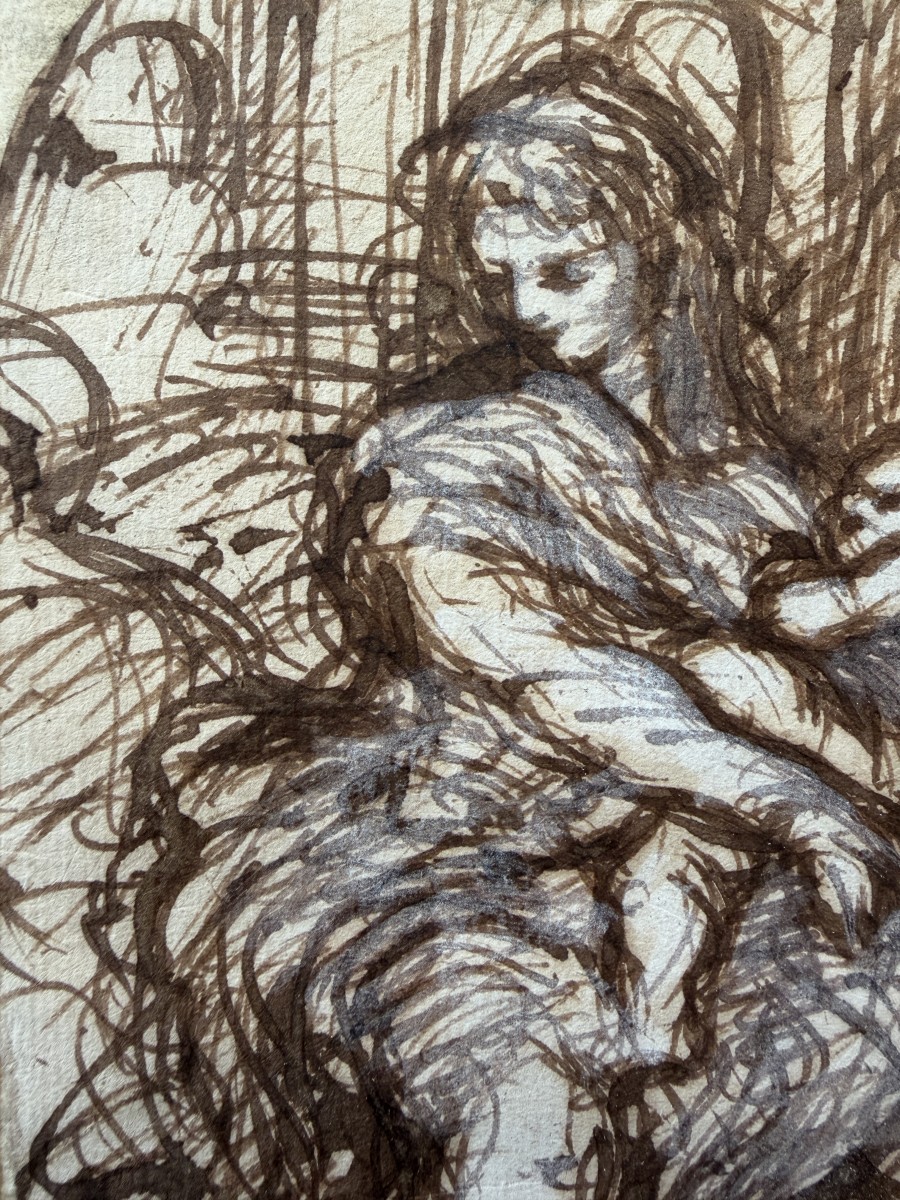
The Virgin, seated within a landscape sketched in nervous, animated lines, gently inclines her head toward the Child resting on her lap. Christ, in a supple and slightly twisting pose, turns toward her in an intimate gesture of maternal closeness. The drawing is distinguished by remarkable graphic energy: rapid, at times almost swirling strokes construct the forms through dense hatching and repeated lines. The delicate white highlights enliven the flesh tones and enhance the effects of light, lending the scene a subtle vibrancy.
This visual language recalls the culture of Italian Mannerism, in which drawing held a central role in the development of artistic thought. In Florence and Rome, in the wake of the High Renaissance, artists cultivated elongated figures, complex poses, and heightened expressiveness. The influence of masters such as Parmigianino or Giulio Romano can be sensed in the freedom of line and in the search for an inner movement that transcends mere naturalistic description.
Despite its small scale, the work conveys considerable emotional intensity. The Virgin’s downcast gaze, imbued with meditative tenderness, contrasts with the lively network of lines surrounding her, creating a balance between contemplation and dynamism. The landscape, only lightly suggested, provides an atmospheric setting without distracting from the essential focus: the silent dialogue between mother and child.
Although the sheet has been cut and laid down for conservation, it retains its full expressive strength. It stands as a valuable testament to the virtuosity and spontaneity characteristic of 16th-century Italian drawing, where the graphic act itself becomes the privileged site of invention and emotion.