Offered by Antichità Castelbarco

Pier Dandini (Florence, 1646 – 1712)
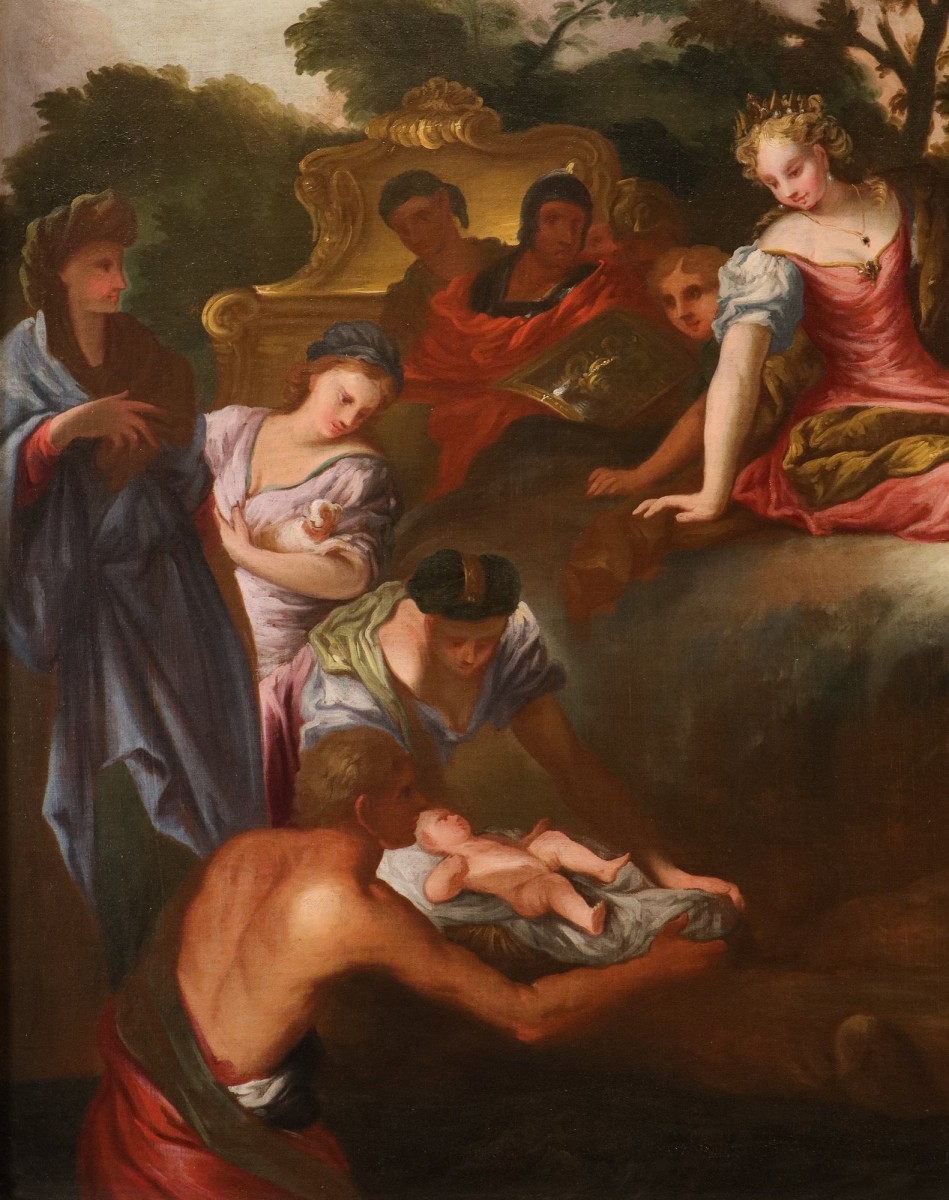
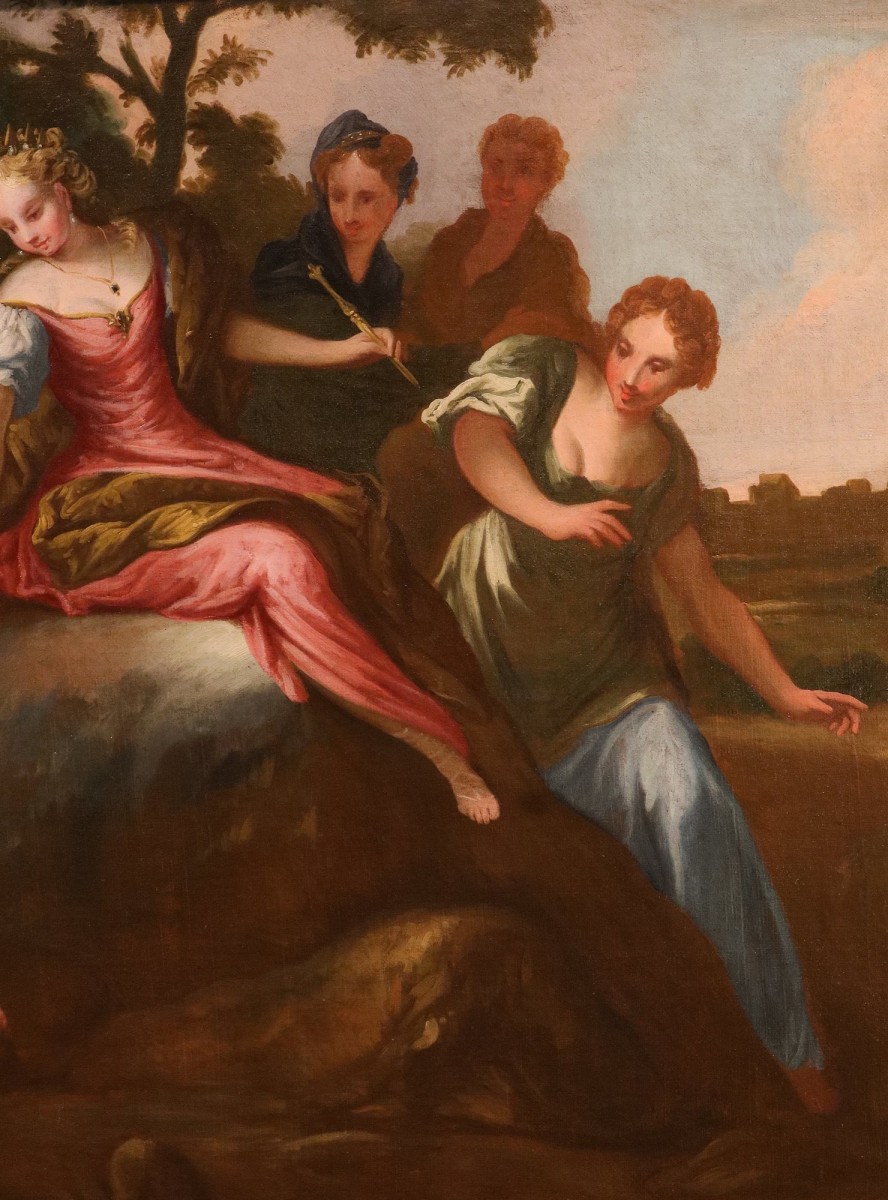
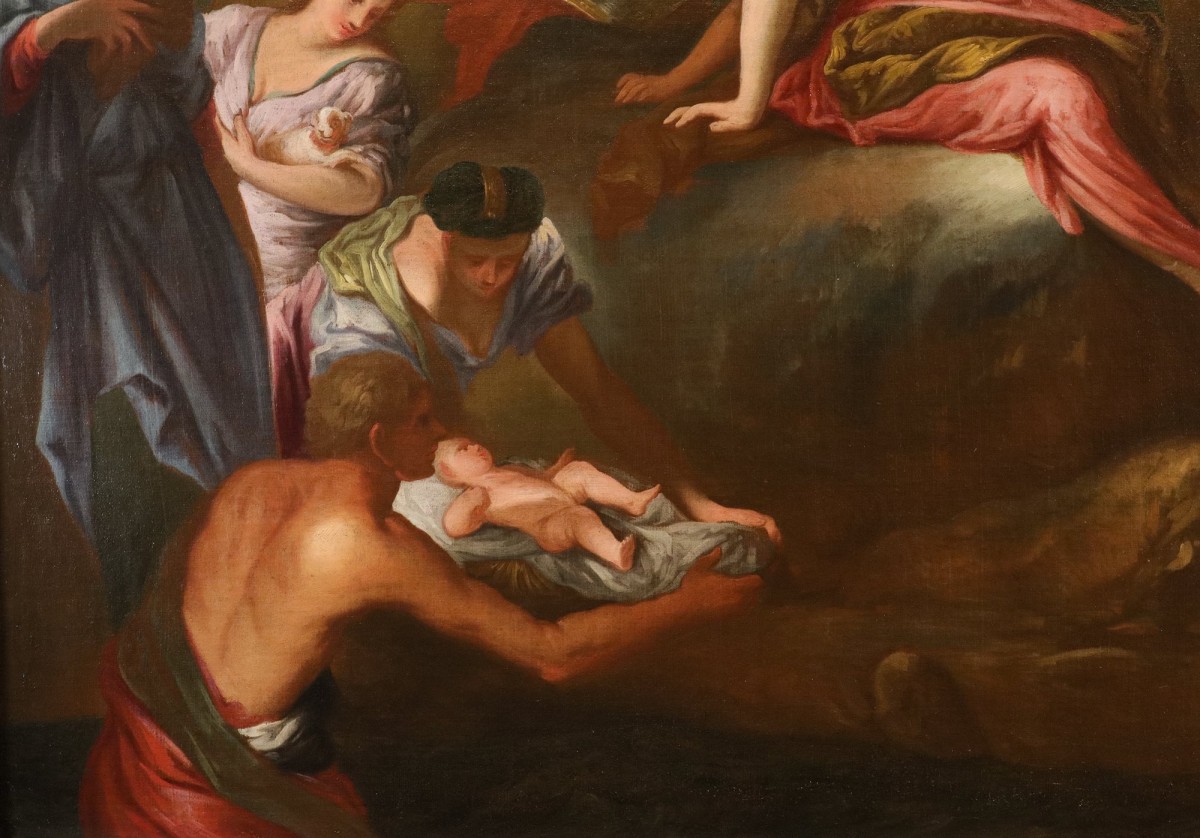
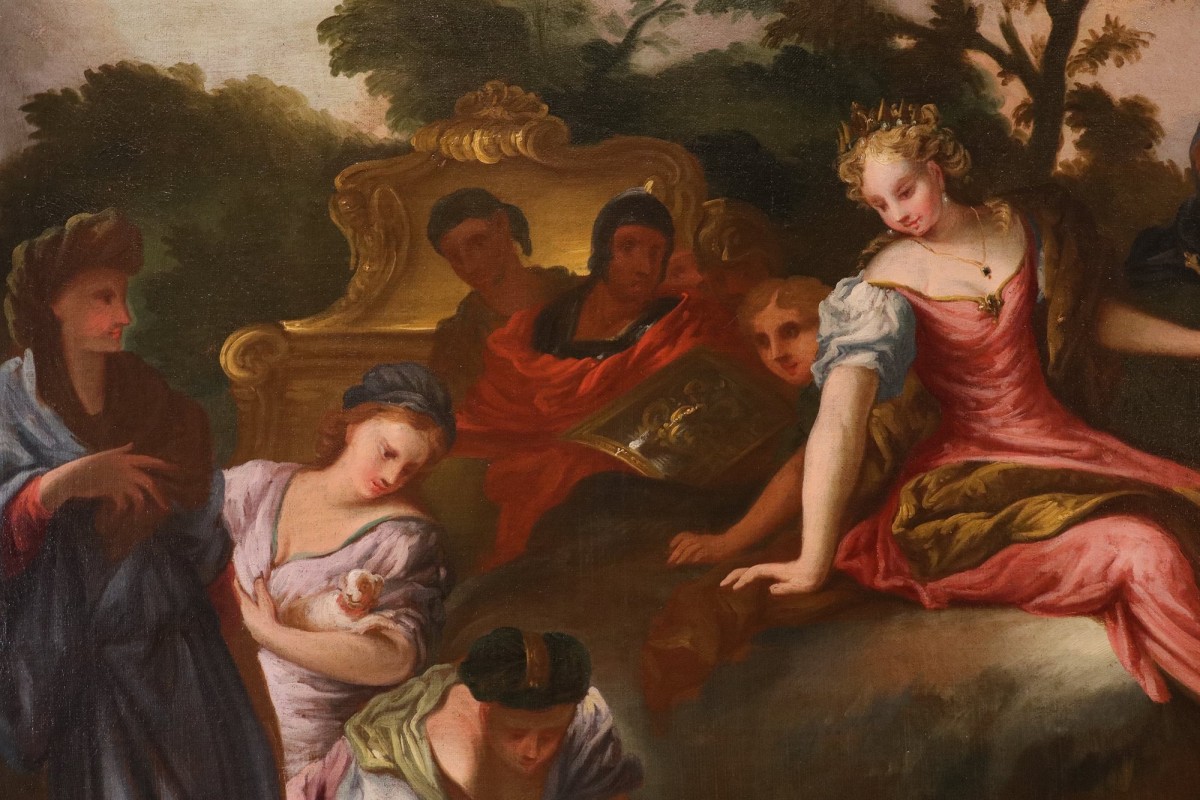
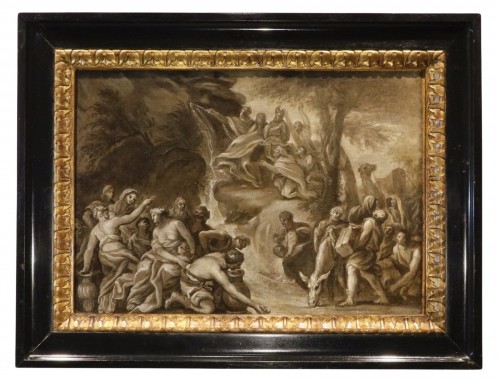
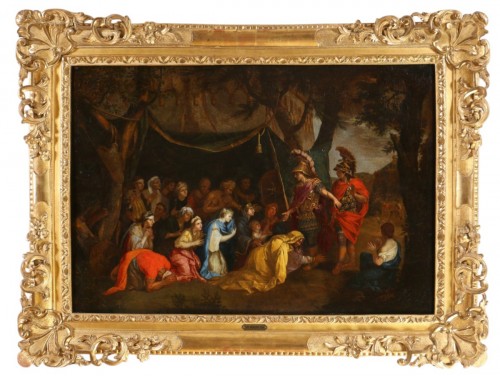
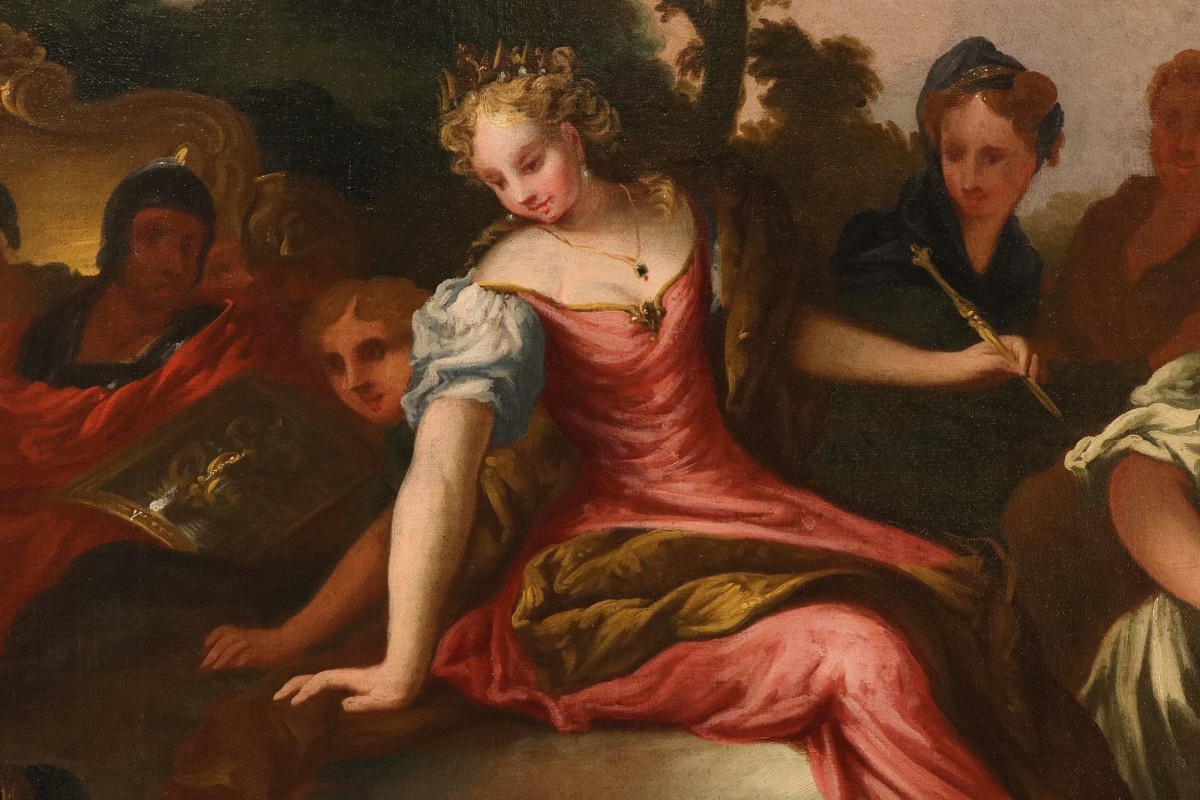
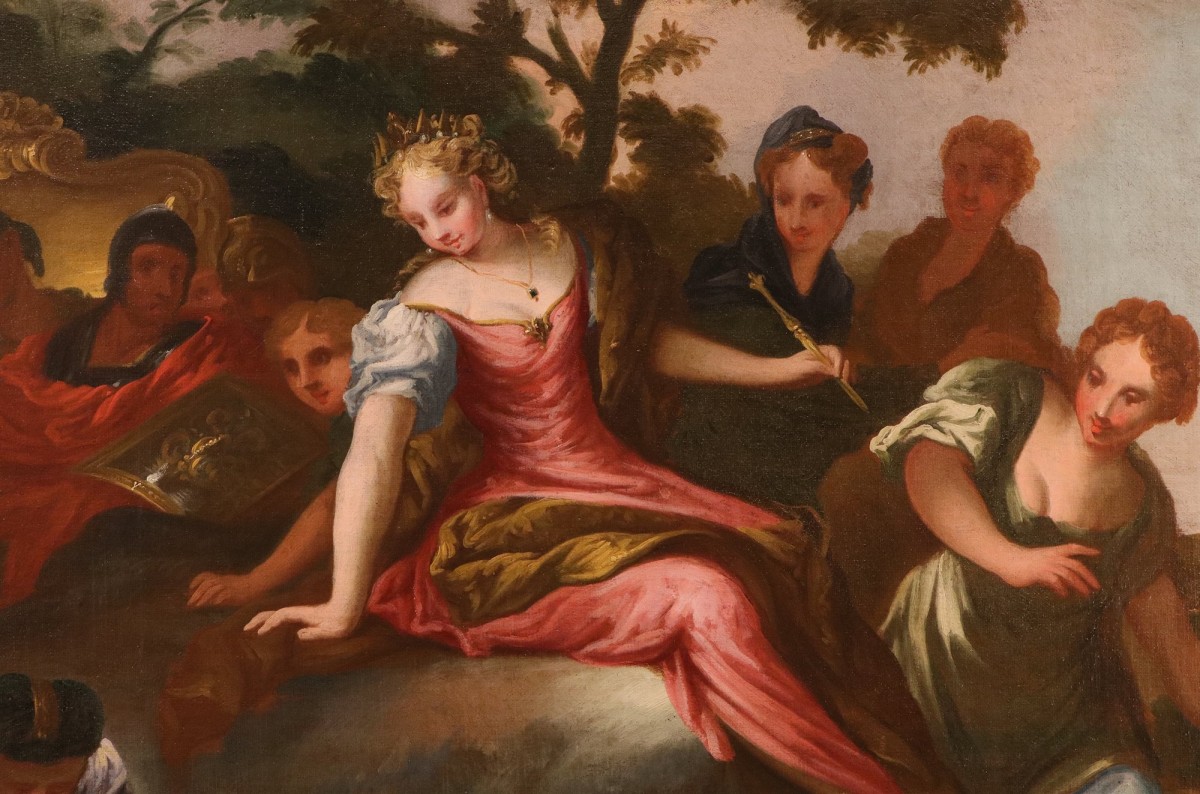
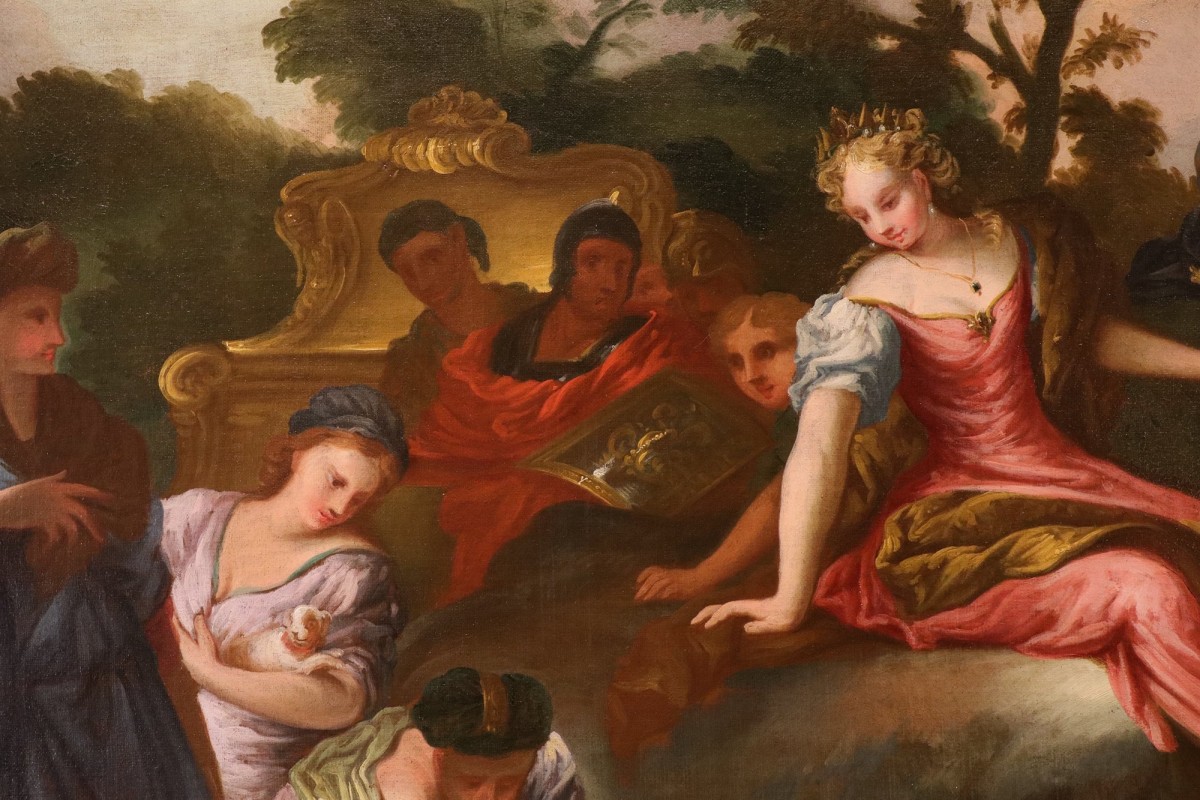
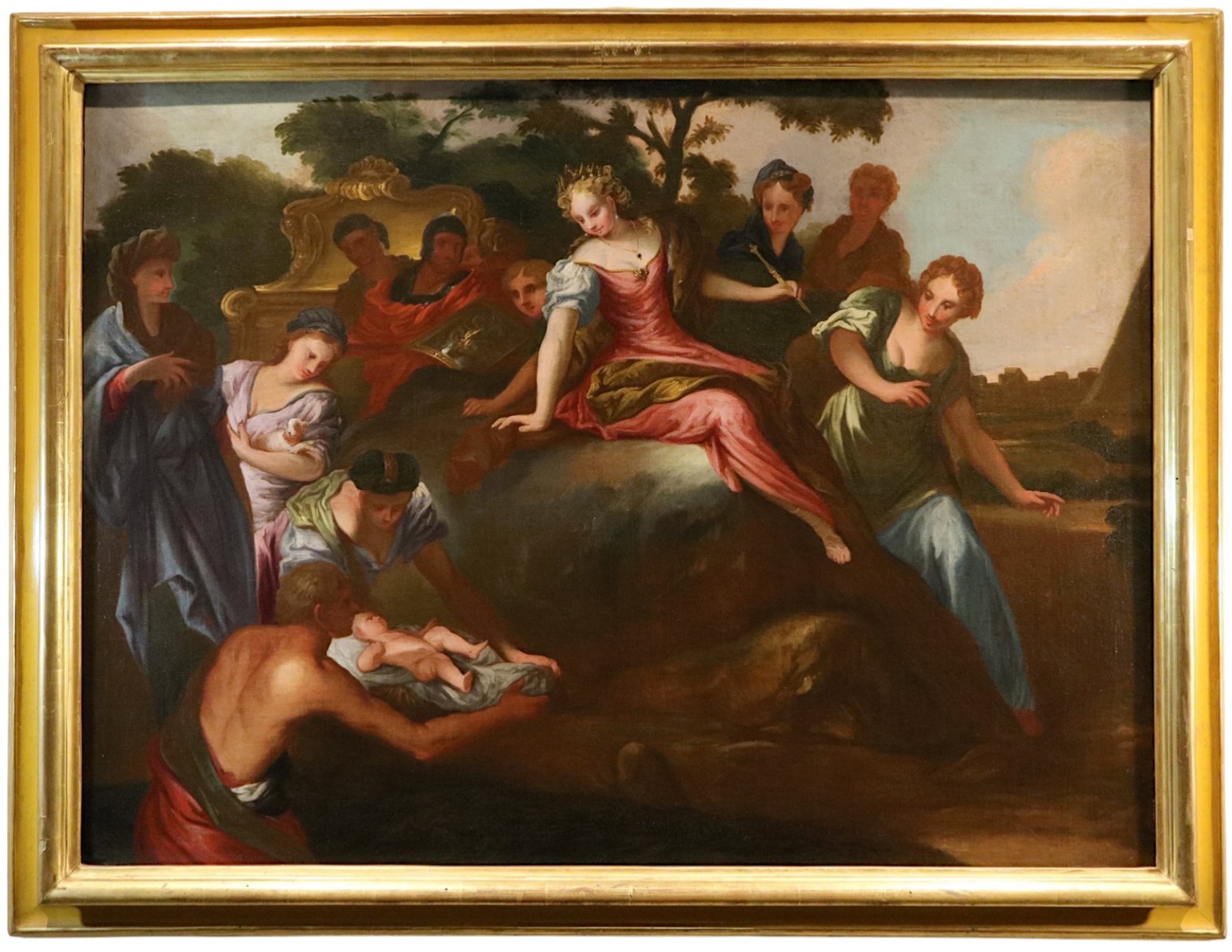
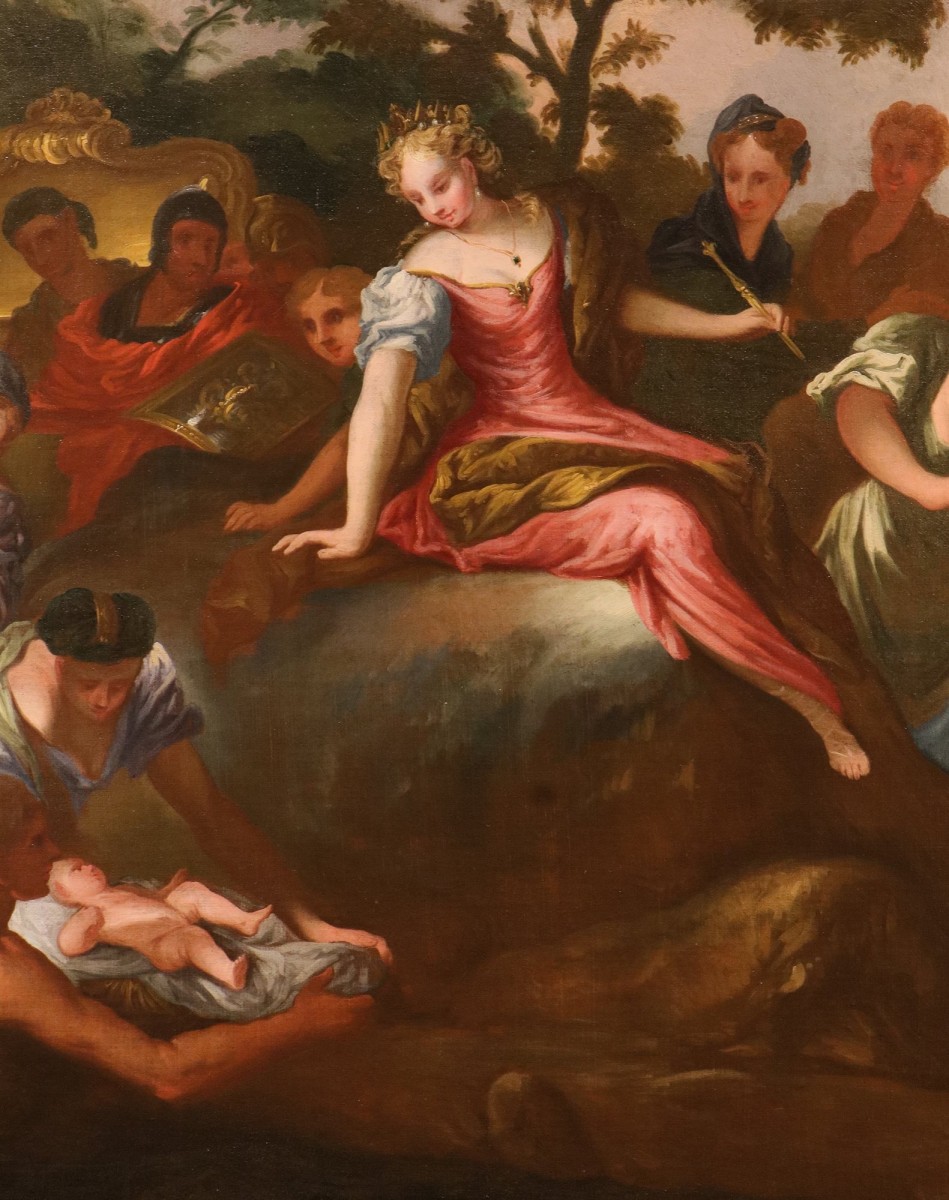
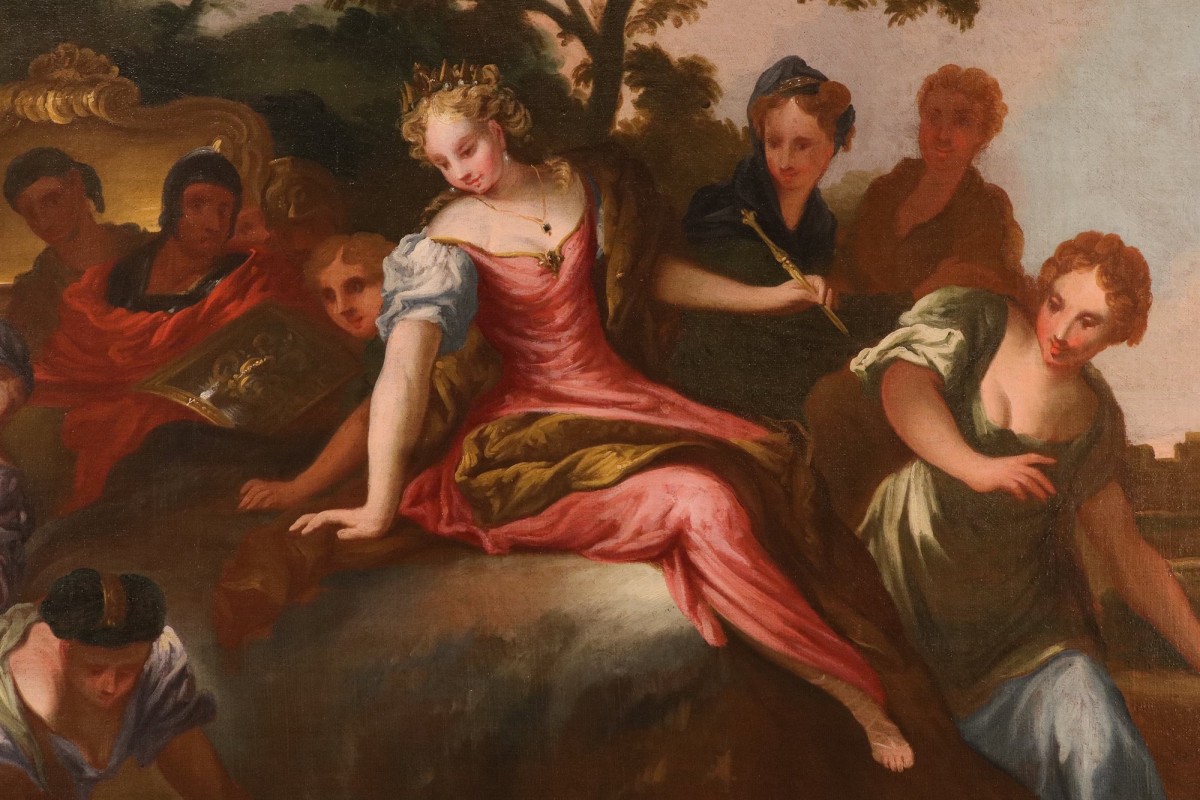
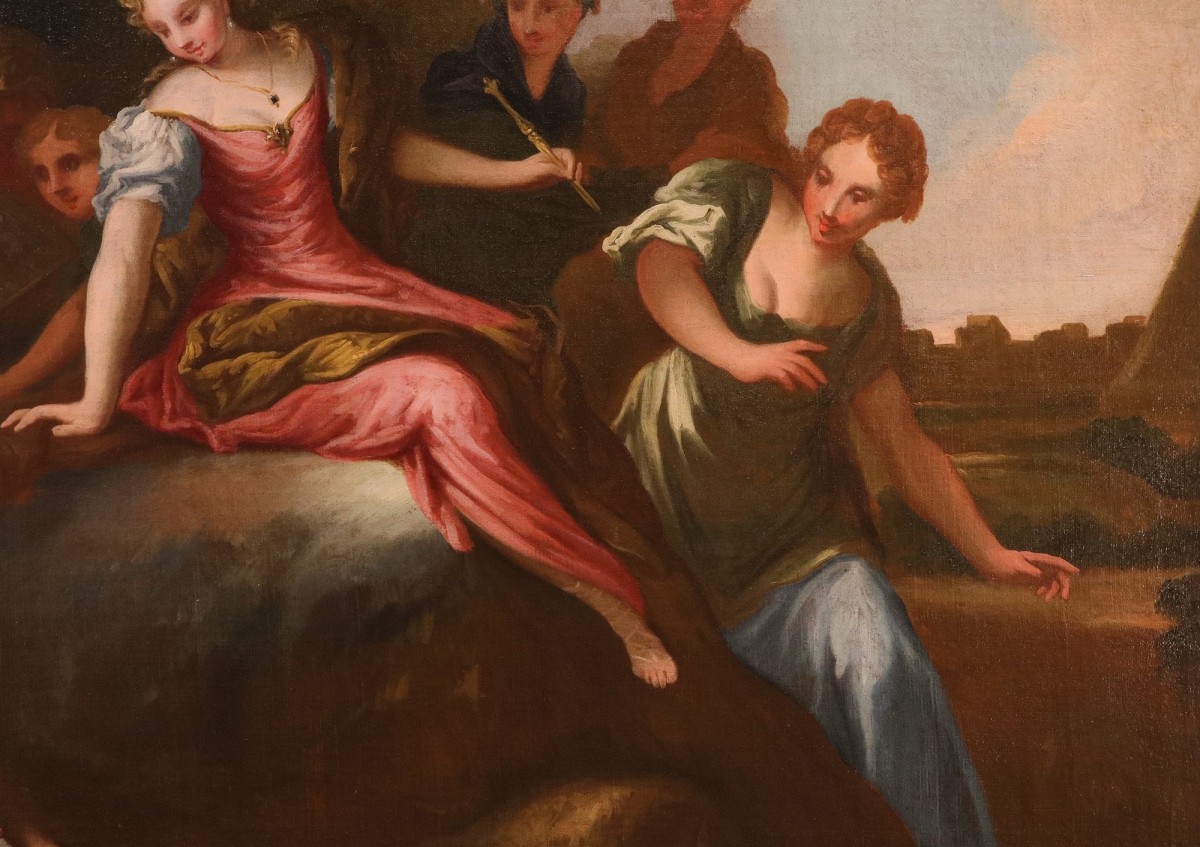
The Finding of Moses
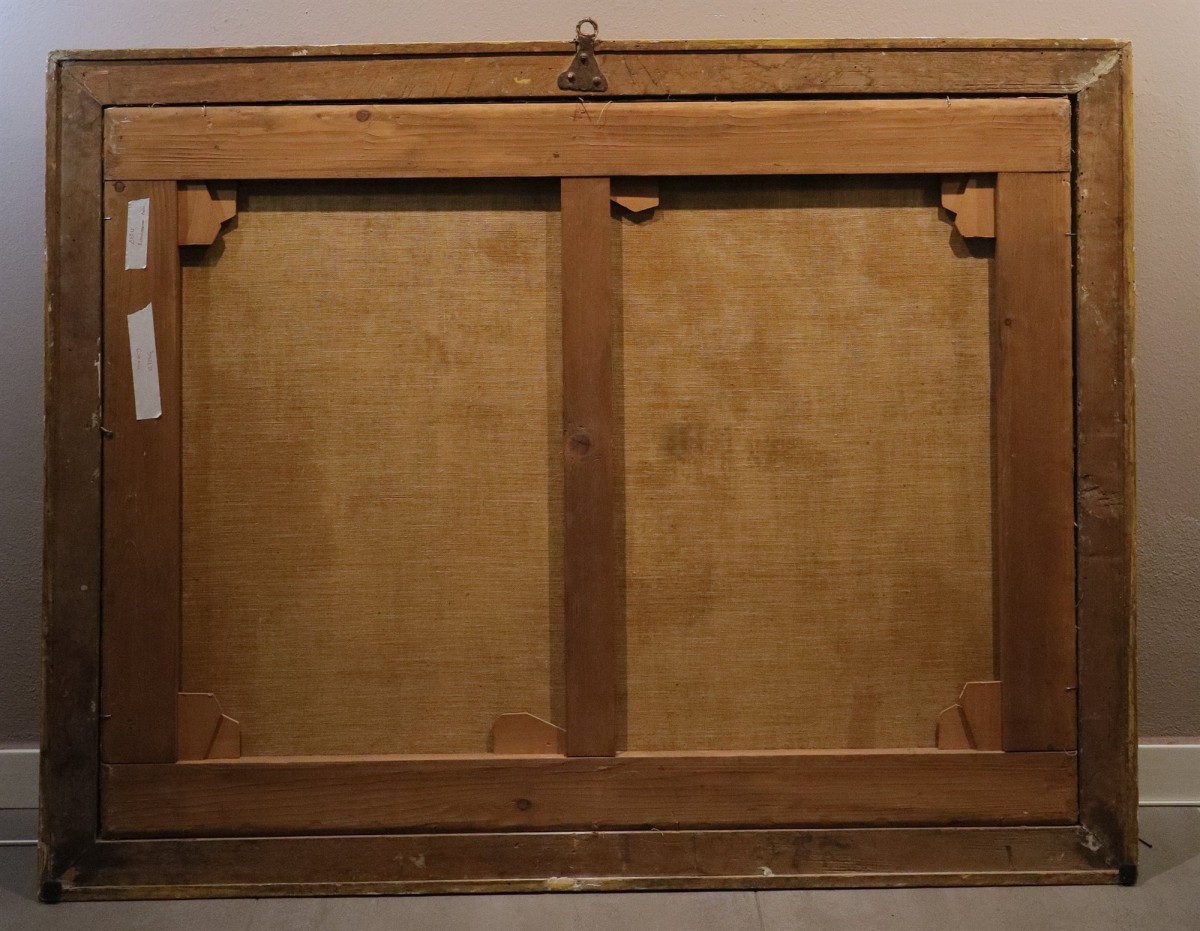
Oil on canvas 87 x 118 cm In frame, 102 x 132 cm
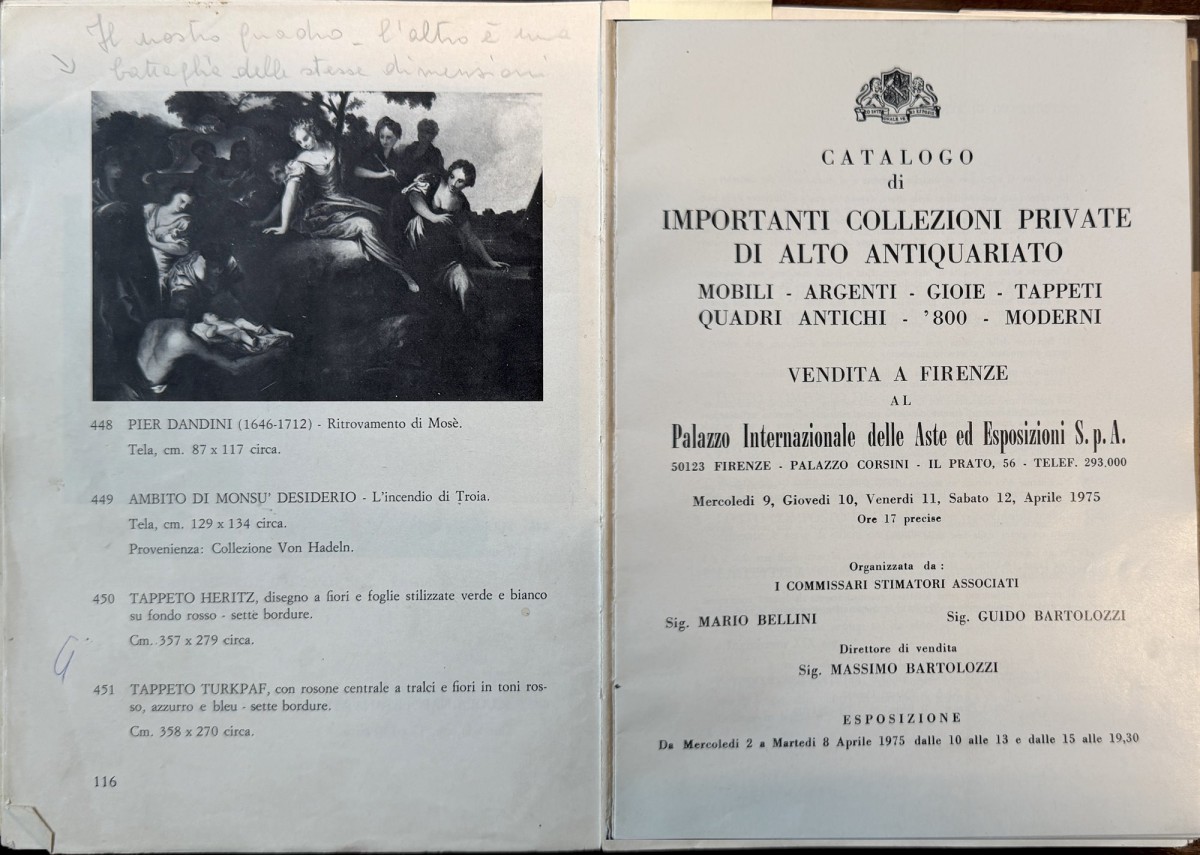
Provenance: International Auction and Exhibition Hall – Sale of Important Private Collections of Fine Antiques – Florence, Palazzo Corsini, lot 448 (11 April 1975)
The Finding of Moses is one of the most iconographic and studied biblical subjects in art history, particularly beloved since the Renaissance as one of the most emblematic examples of Divine Providence. taken from a passage in Exodus (2:1-10), it illustrates the episode in which the daughter of the Pharaoh of Egypt saves the baby Moses from the waters of the Nile, then cares for him and raises him as a prince of Egypt, saving him from the infanticide of the firstborn Hebrews ordered by her father.
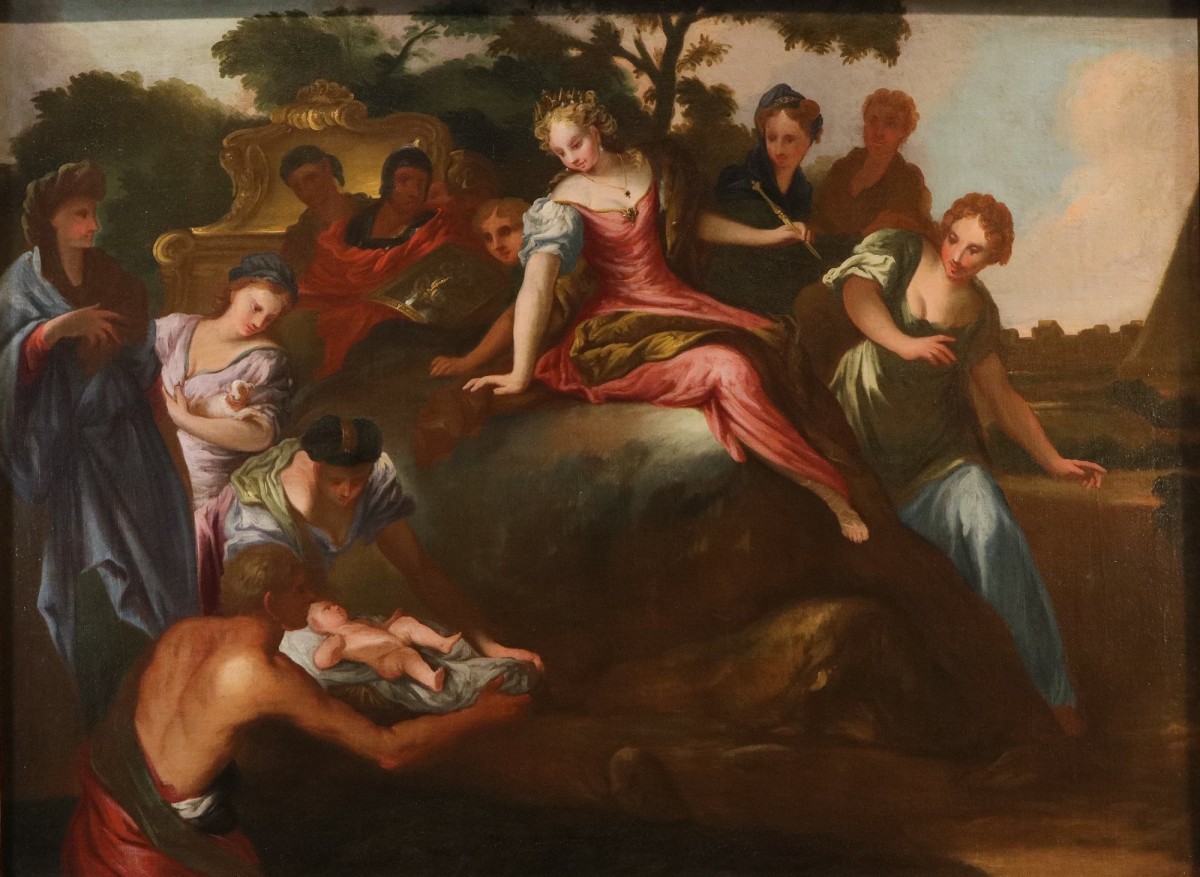
At the centre of the scene is the beautiful princess (often identified as Bithiah) in royal robes and jewels, accompanied by her handmaids and royal guards: we see her here immortalised at the moment when they show her the child and she, moved by great compassion, decides without hesitation to take him with her.
The story is permeated with a subtle divine irony: the one who was to be killed by Egyptian order is miraculously saved and welcomed into the Pharaoh's court, destined to become the leader of Israel and liberator of his people from Egyptian slavery.
The work presented here belonged to a historic Florentine collection, offered at a high-end antiques auction in April 1975 held at Palazzo Corsini in Florence. Given the particular stylistic and typological characteristics of the figures, the work is traditionally attributed to Pietro Dandini (Florence, 1646-1712), a refined painter of the late Tuscan Baroque, known for his theatrical and elegant style, who played an important role in the Florentine art scene in the second half of the 17th century.
A prolific and refined painter, he was able to blend the Florentine tradition with the influences he gathered during his formative travels in northern Italy, including Venice, Modena, Parma and Bologna, establishing himself as one of the most appreciated interpreters of Tuscan Baroque.
The lively colouring and the dynamic, free composition of the figures, together with the physiognomy and soft rendering of the fabrics, allow us to recognise stylistic aspects that can be attributed to his work.
As can easily be seen in this beautiful painting, his art is distinguished by a sophisticated elegance and a profound, often dramatic spiritualism, intelligently integrating the influences of Pietro da Cortona and Luca Giordano in an energetic language characterised by a luminous use of colour, dynamic compositions and a theatricality that was well suited to the needs of religious and aristocratic patrons.
He was particularly active for the nobility of the time and in Florence Dandini quickly became one of the most sought-after artists, thanks in part to the patronage of the Medici family, in particular Prince Ferdinando and Grand Duke Cosimo III.
He also worked for the most important noble families, including the Ginori, Orlandini, Feroni and Corsini, who were particularly fond of his sacred and mythological scenes, animated by elegant and lively figures, which embody a balanced Baroque style, capable of blending devotion and spectacle.
Delevery information :
We take care of and organise the transport of the purchased works, both for Italy and abroad, through professional and insured carriers.
We take great care We personally take care of the packaging, to which we devote a great deal of care: each work is carefully packed, first with arti- cle material, then with a custom-made wooden box.
Should you have the desire to see this or other works in person, we would be happy to welcome you to our gallery in Riva del Garda, Viale Giuseppe Canella 18, we are always open by appointment only.