Offered by Antichità Castelbarco
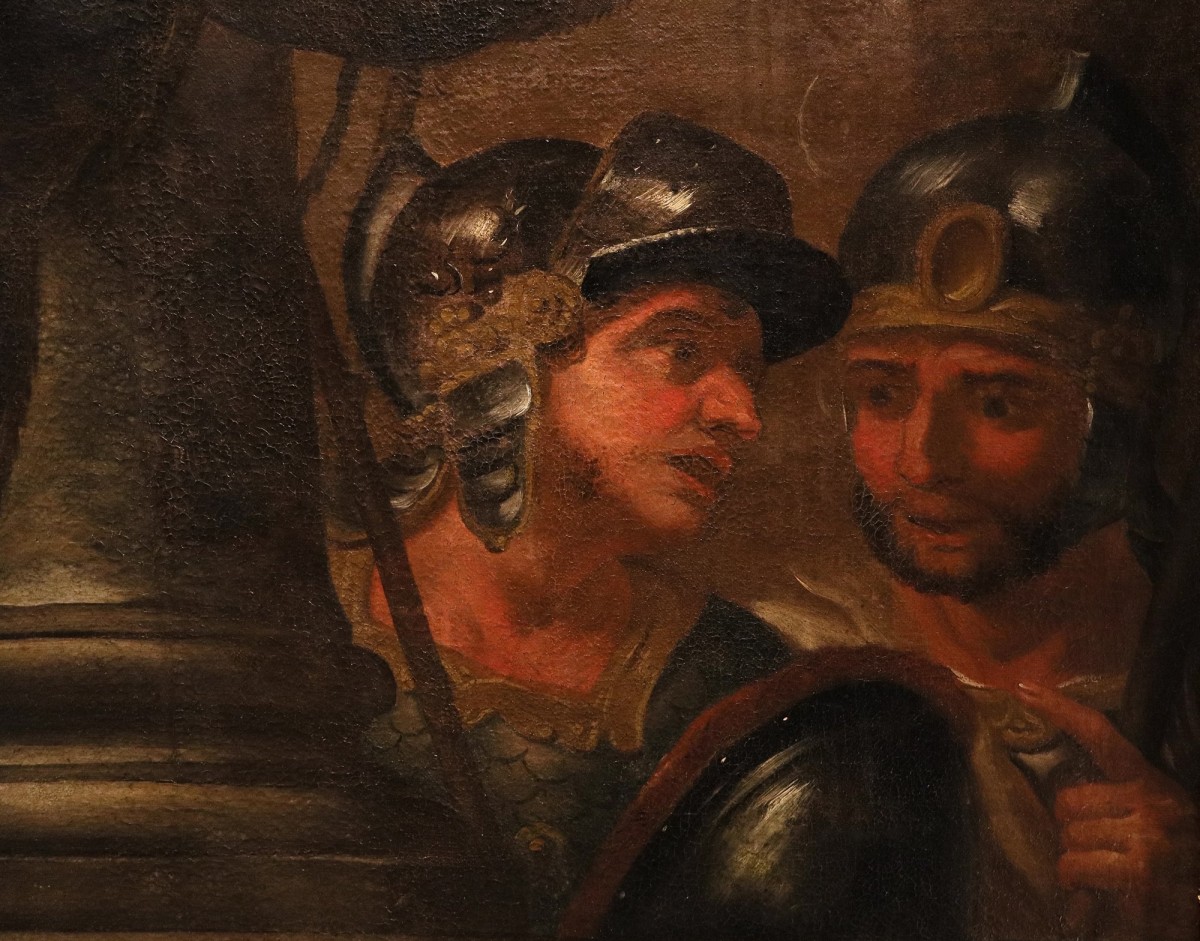

Antonio Molinari (Venice, 1655–1704) Attributed to
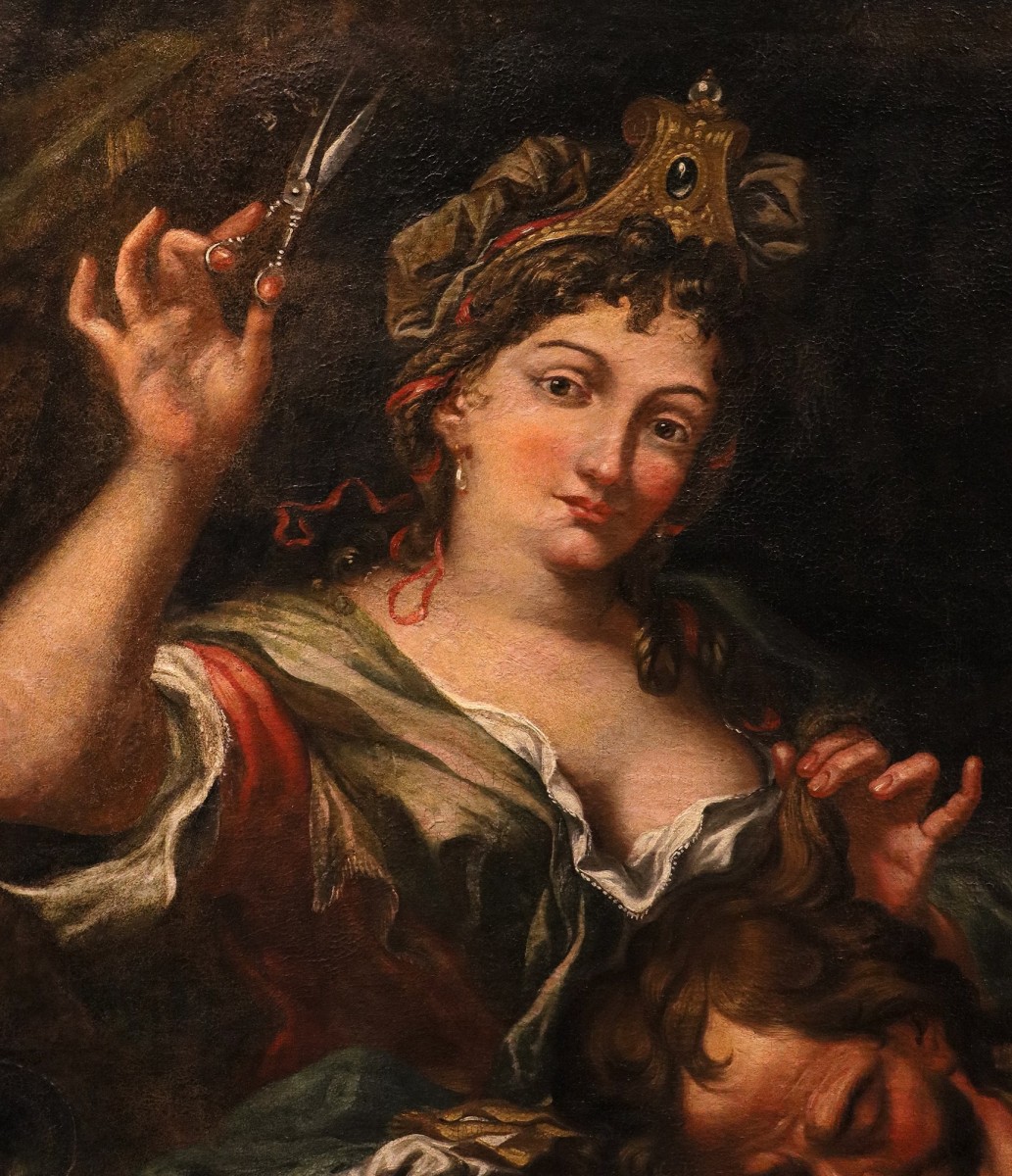
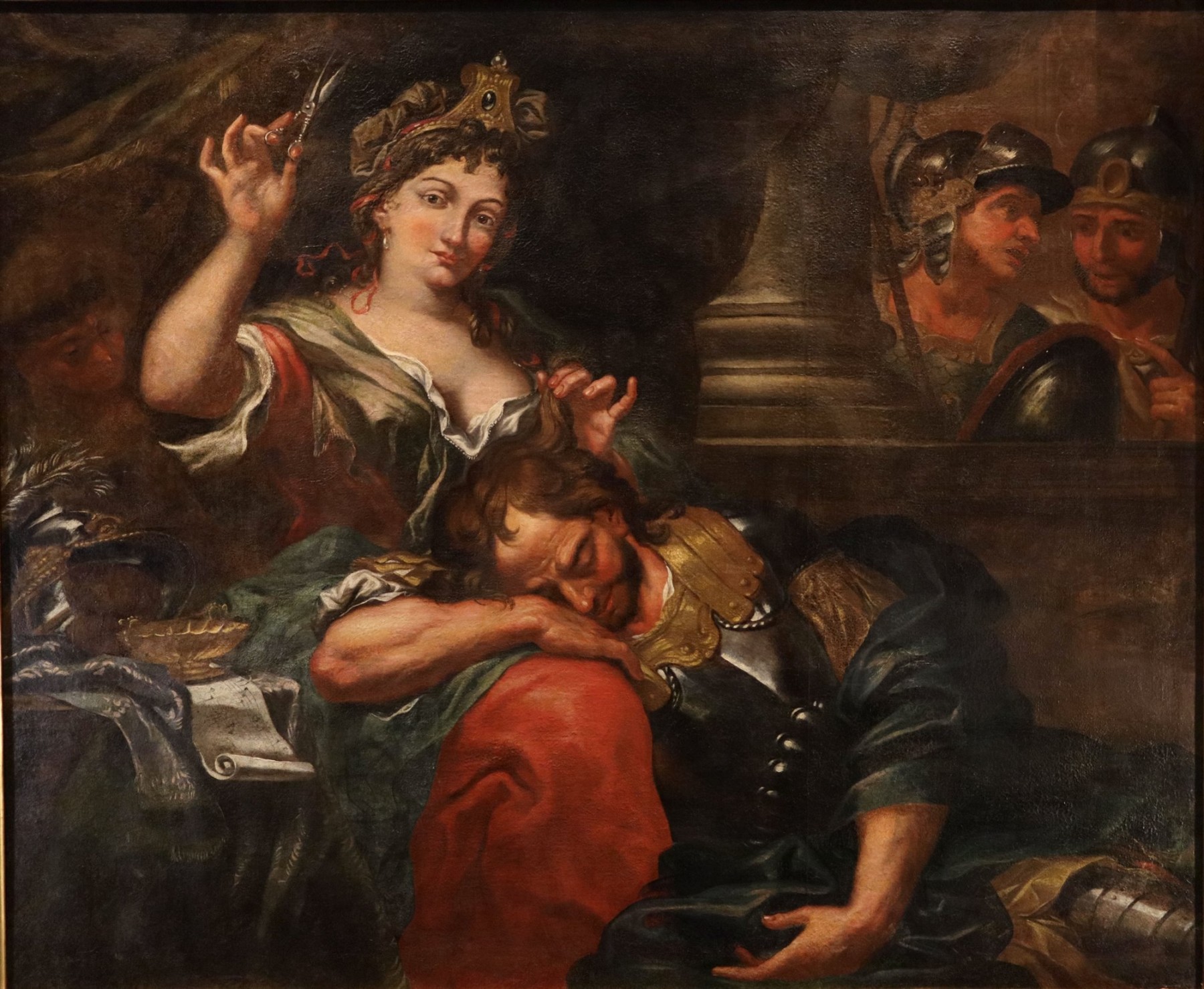
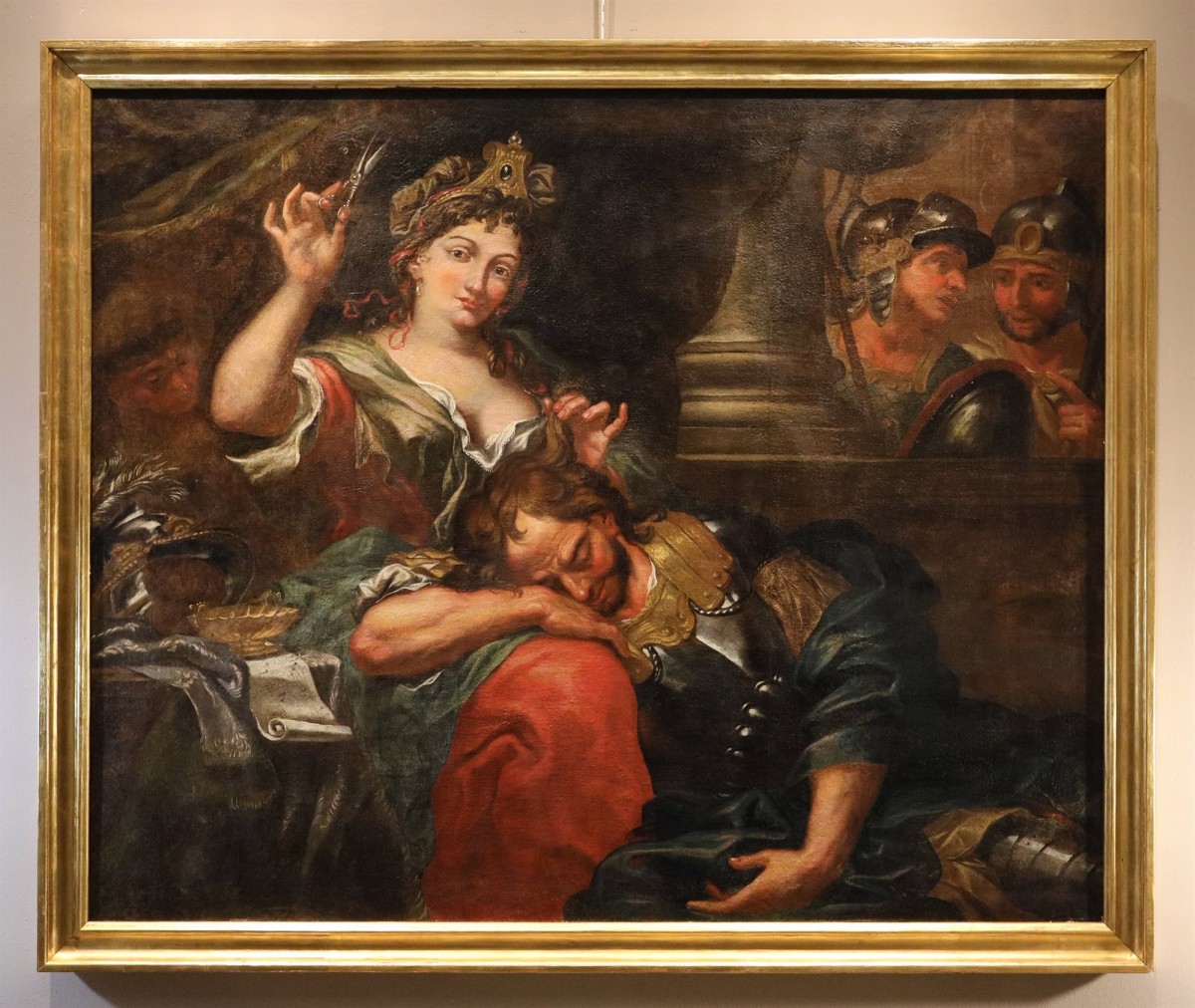
Samson and Delilah
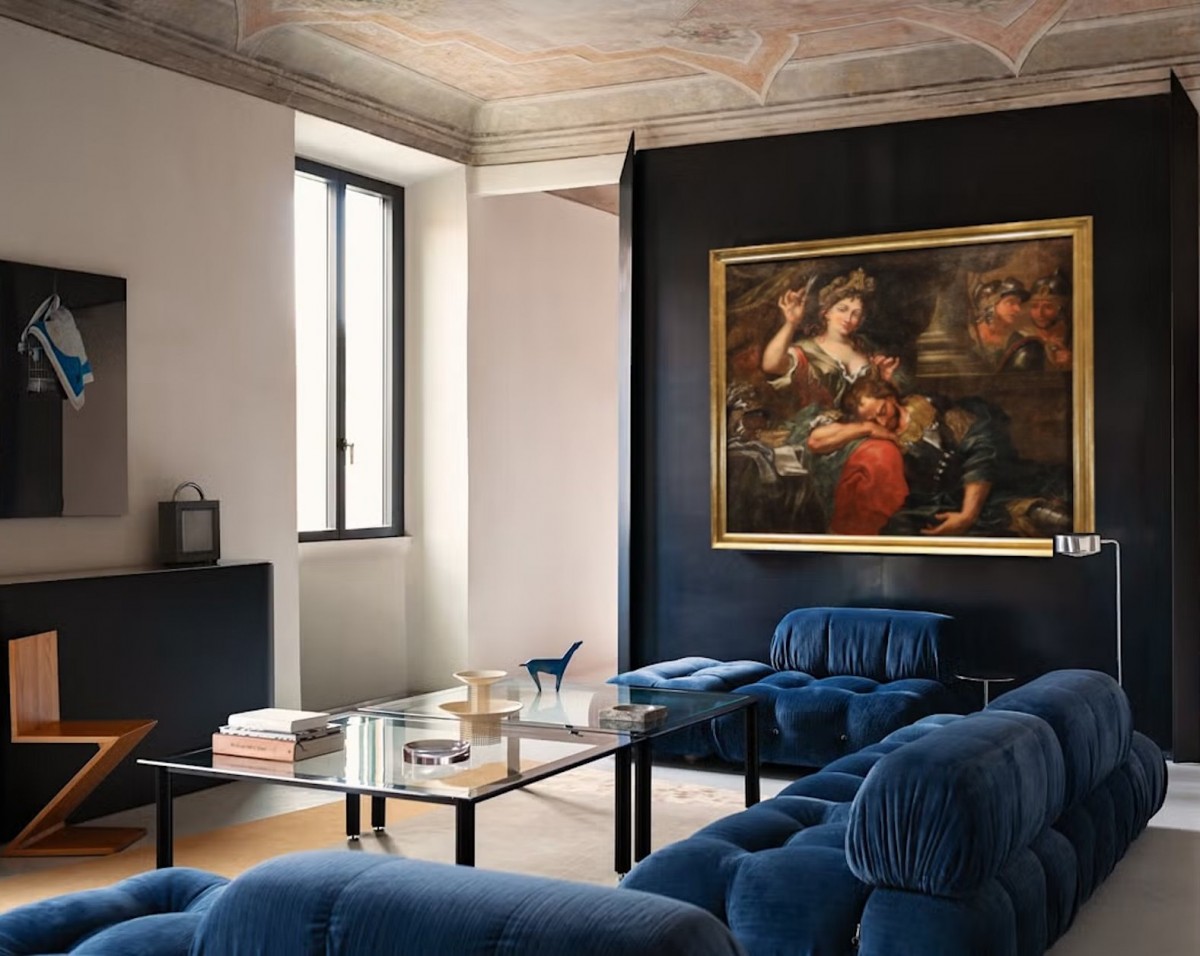
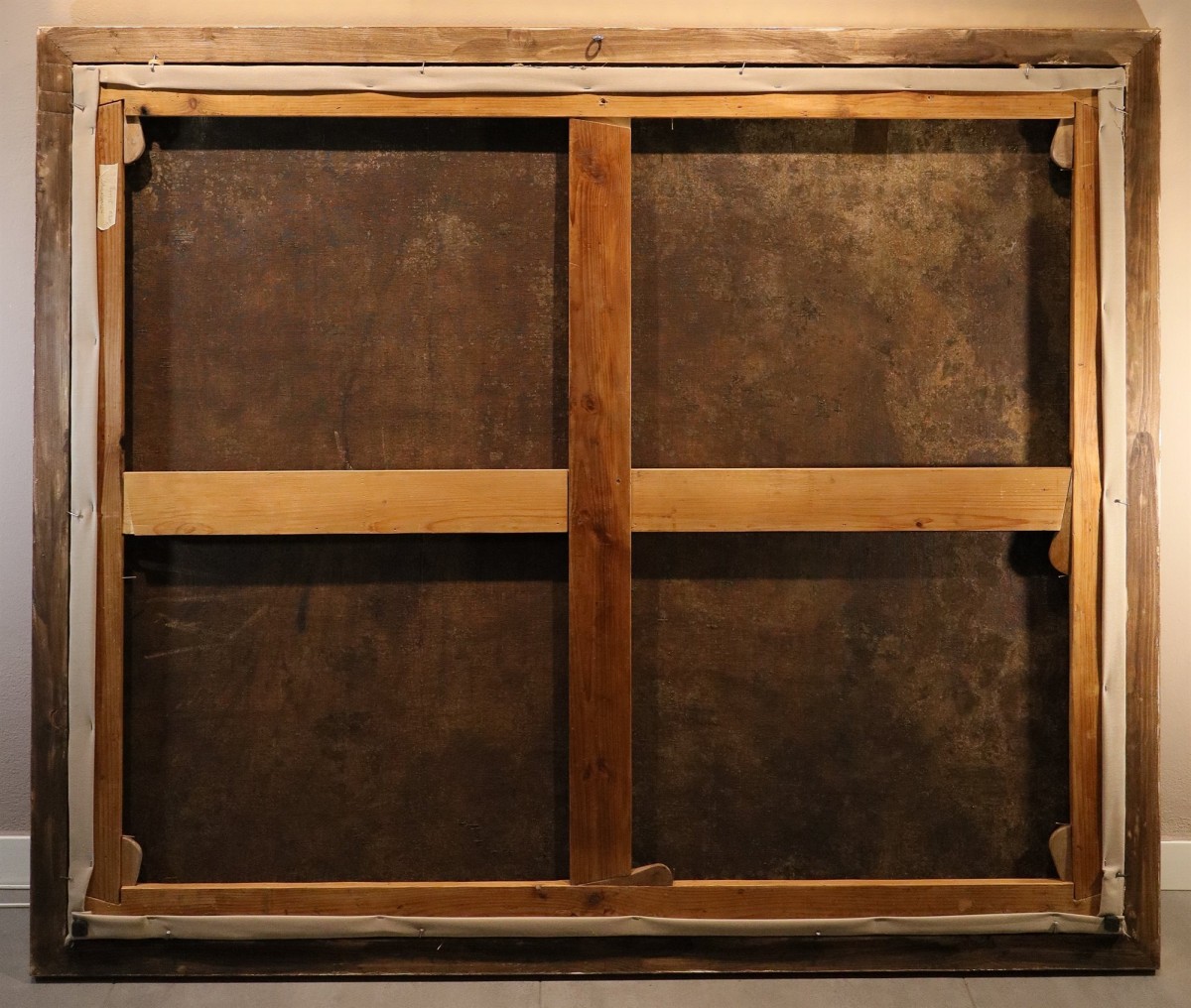
Oil on canvas 122 x 148 cm. - Framed 135 x 160 cm.
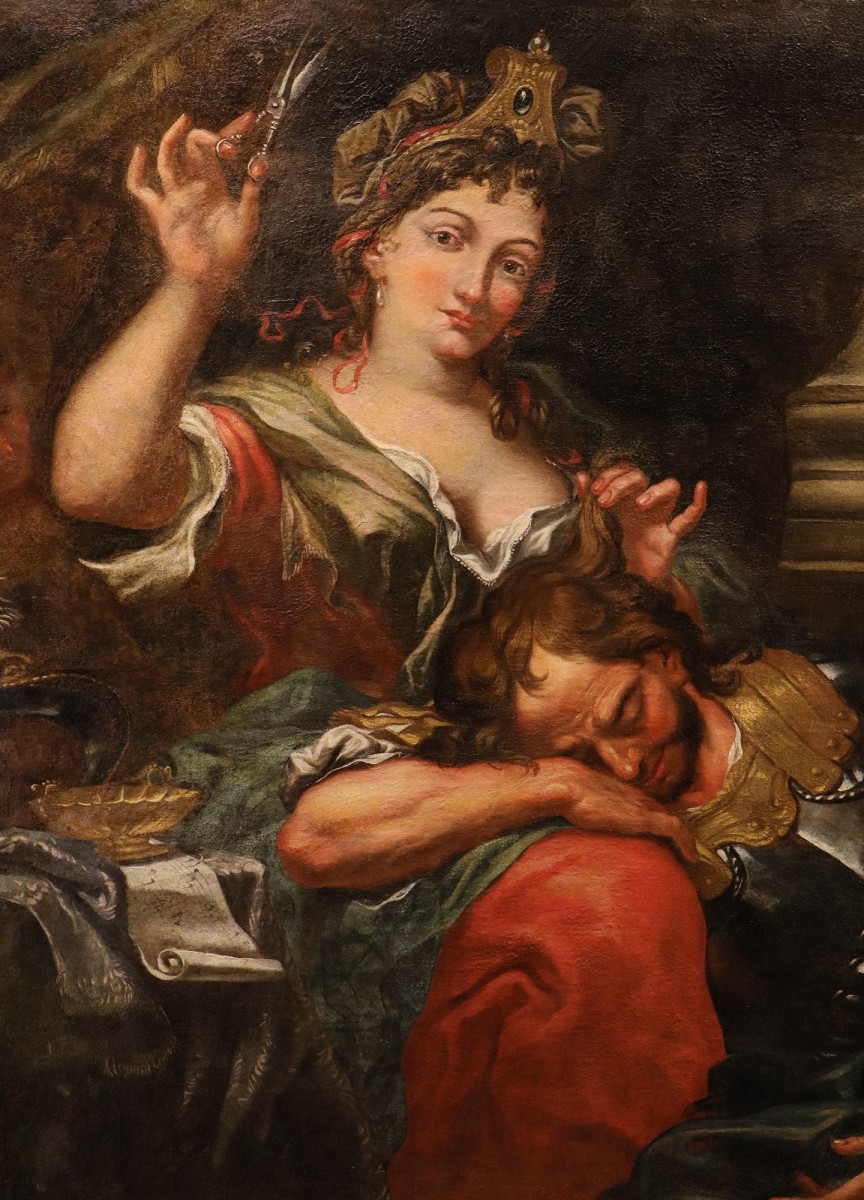
The subject of this fine work is recounted in the Bible, specifically in the Book of Judges (16:4–20): it depicts the story of Samson and Delilah, an iconographic theme much beloved during the Baroque period, as it resonated with the era’s taste for the depiction of intense, conflicting, and often fatal passions.
The story tells of Samson, one of the judges of the Old Testament, an Israelite hero endowed with prodigious strength granted directly by God; he is known for his struggle against the Philistines to free the people of Israel but, despite himself, also for his tendency to succumb to feminine charms.
Fatal for him, in fact, will be the beautiful Delilah, a Philistine girl who makes him fall in love with her and to whom he reveals that the source of his strength lies in his hair, never cut since birth, unwittingly revealing his only weakness to her.
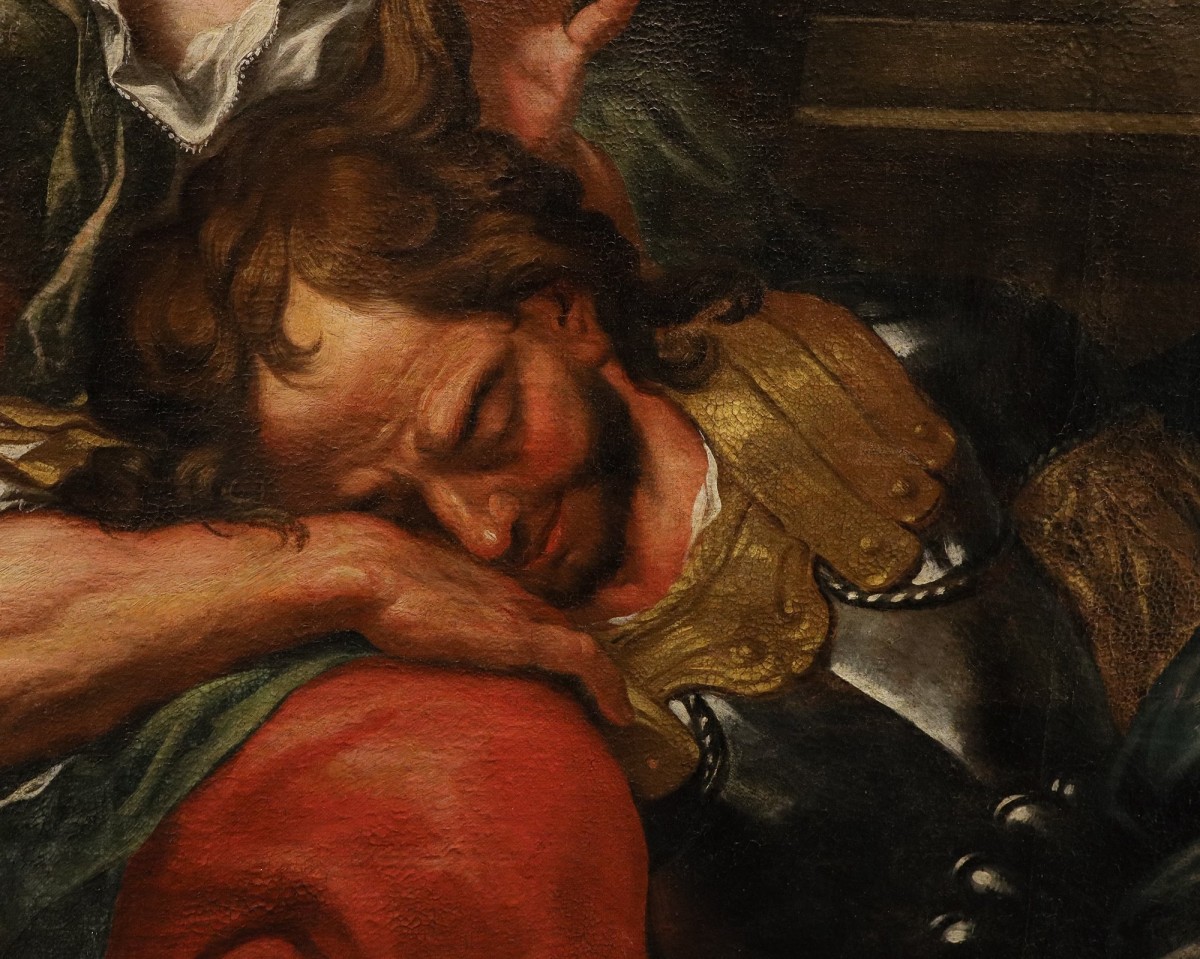
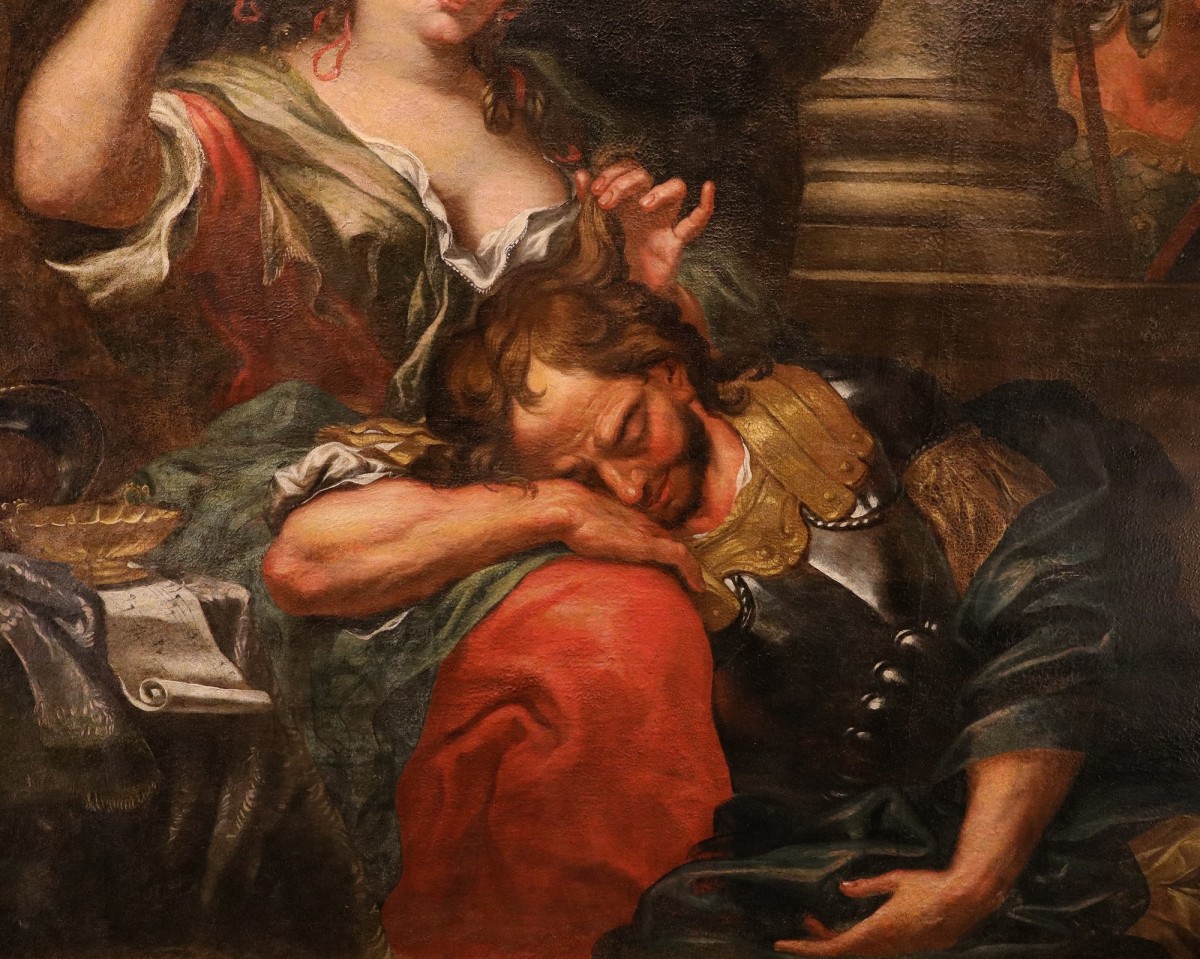
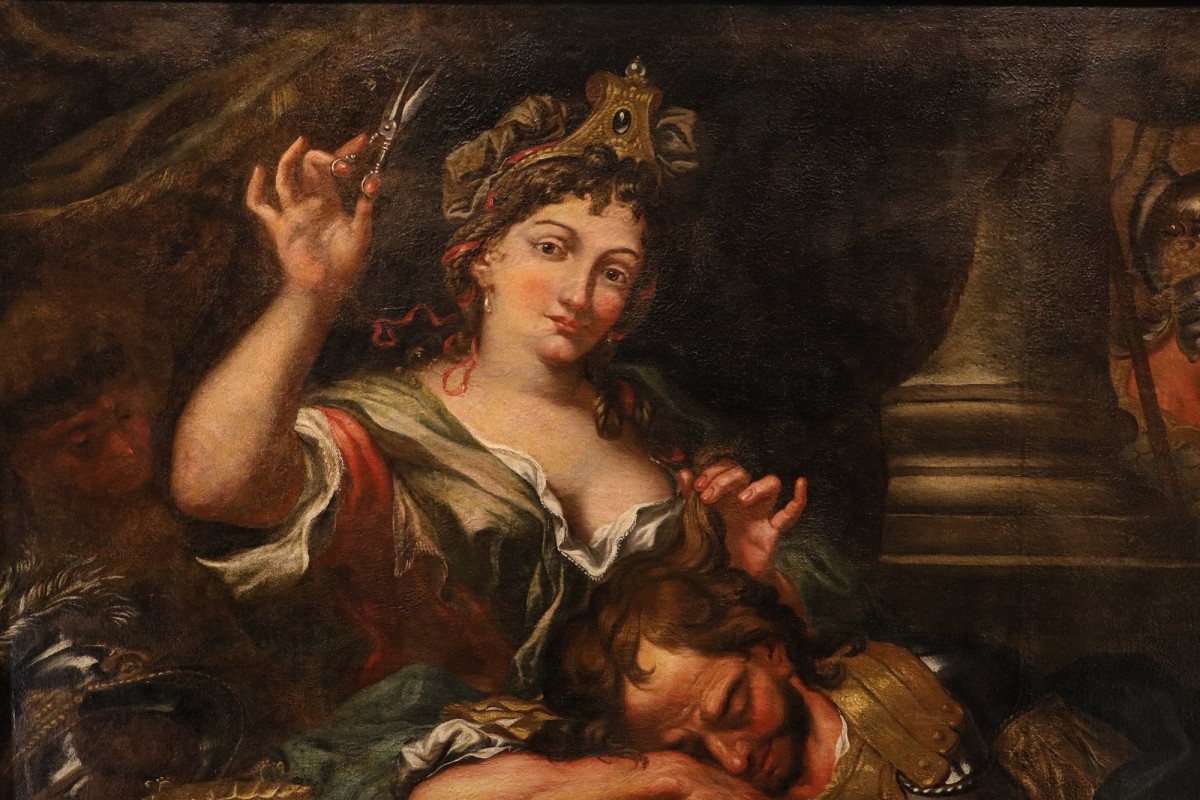
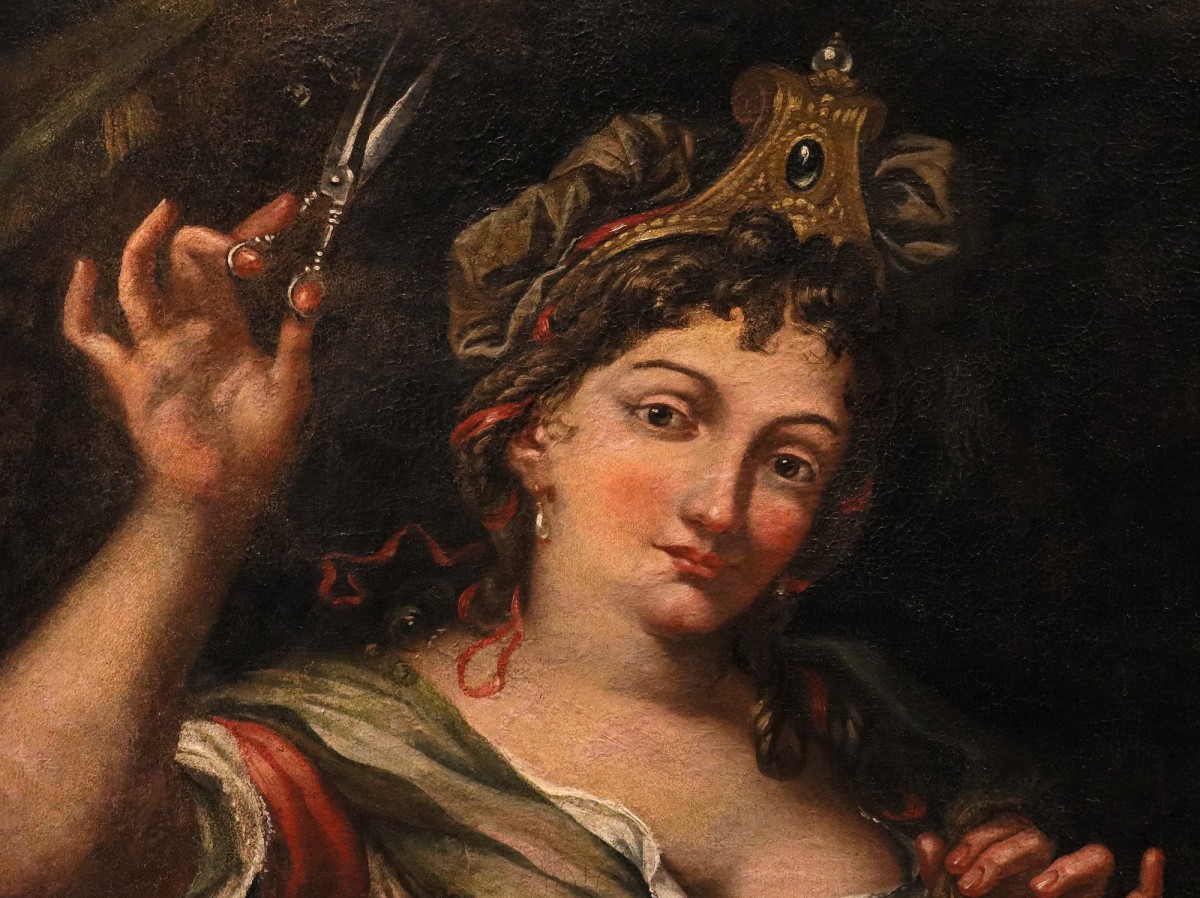
In the painting, we see the climactic moment of the story, with the hero of superhuman strength lying asleep and vulnerable on Delilah’s lap; the woman, after seducing him, is about to deprive him of his divine power with a calm and precise gesture, cutting off a lock of his hair.
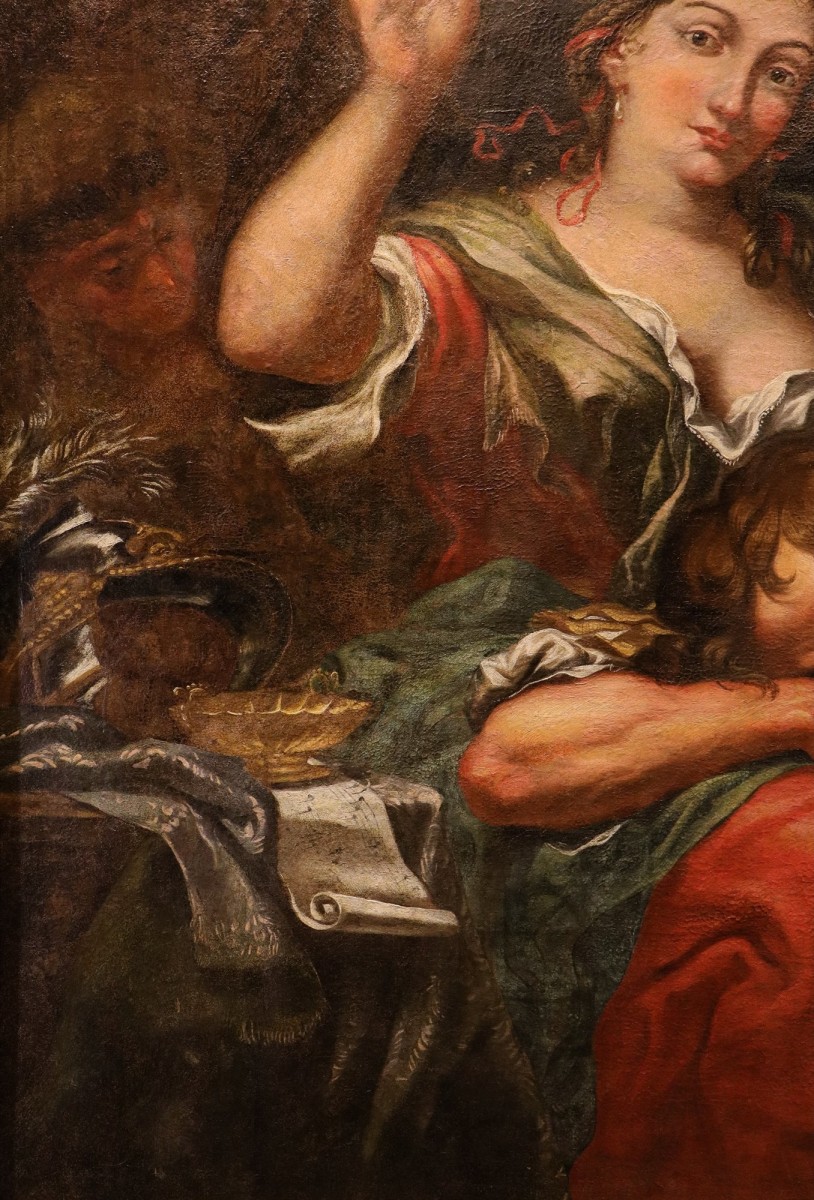
Hidden behind a column, two Philistine soldiers, thanks to the woman’s complicity, are waiting to capture him. Extremely widespread in the history of painting, also due to its sensual and symbolic power, the story represents the temptation that blinds the intellect, and is therefore often used for moralistic purposes, emphasizing how passion can dominate reason and strength.
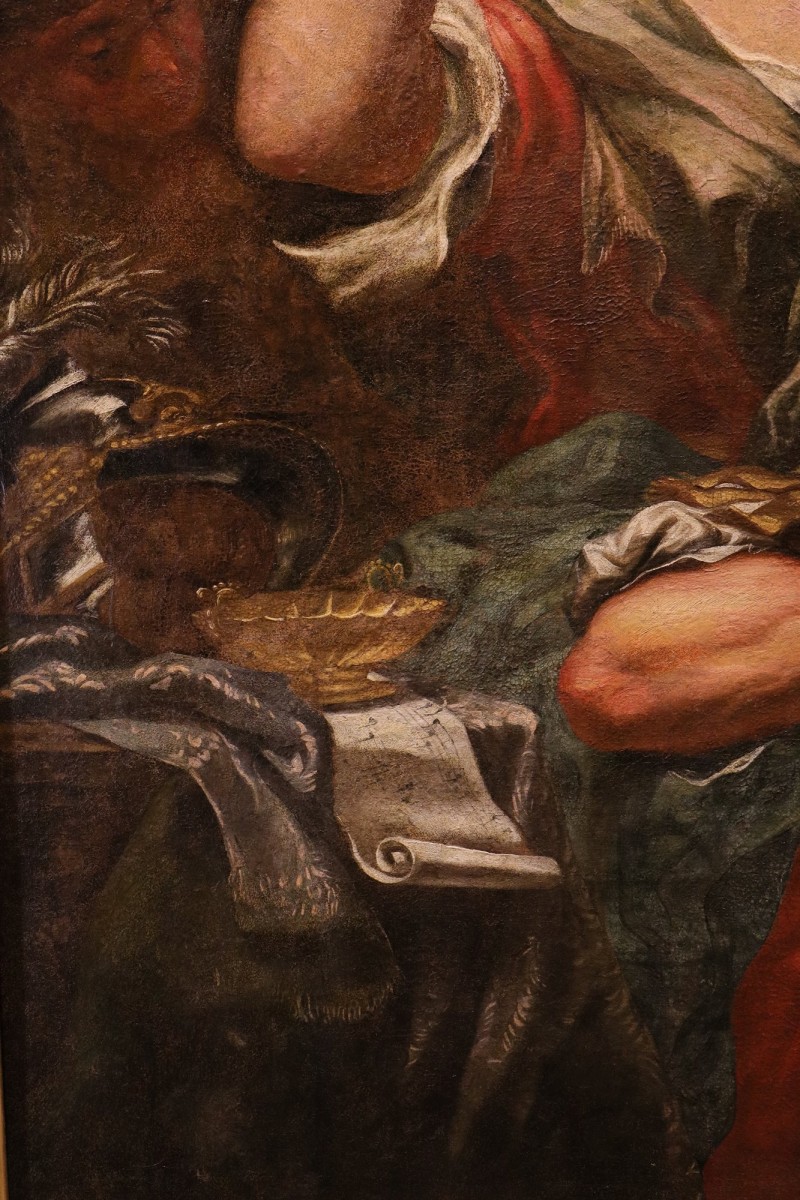
The scene, as in many Baroque depictions of this theme, is set in a highly evocative nocturnal interior where elements such as musical instruments—in this case, a sheet of music—are often included to symbolize the “seduction of the senses” that led to the hero’s downfall. In our opinion, this is a significant work by Antonio Molinari (Venice, 1655–1704), one of the most authoritative figures in Venetian painting at the turn of the 17th and 18th centuries, who here displays his excellent painterly skill.
It is, in fact, a refined example of the artist’s talent for interior paintings, where, through a grandiose composition with a moral intent, he stages an episode in which the figures stand out for their sumptuous, theatrical poses, highlighted by the richness of detail and characterized by vibrant colors, expansive forms, and a soft, sensual brushstroke.
A key figure in the Venetian art scene between the 17th and 18th centuries, he stands precisely as an artist of transition between Baroque tenebrism—inherited from his master Antonio Zanchi—and the early luminous forms of the Rococo.
By way of comparison, we may mention: - “Berenice and Ptolemy III Euergetes,” sold at Sotheby’s, New York (January 9, 1980, no. 199) - fig. 1 - “Nero and Agrippina,” from the Staatliche Gemäldegalerie in Kassel, Germany - fig. 2 - “Sofonisba,” Van Ham Fine Art Auctions, November 19, 2020, Lot 1122 - image 3 - “Queen Ipsicrate, wife of Mithridates” (private collection) - image 4 - “Porcia and Marcus Brutus” (private collection) - image 5 - “The Continence of Scipio” (private collection) - image 6
Delevery information :
We take care of and organise the transport of the purchased works, both for Italy and abroad, through professional and insured carriers.
We take great care We personally take care of the packaging, to which we devote a great deal of care: each work is carefully packed, first with arti- cle material, then with a custom-made wooden box.
Should you have the desire to see this or other works in person, we would be happy to welcome you to our gallery in Riva del Garda, Viale Giuseppe Canella 18, we are always open by appointment only.