Offered by Bergmans Scott Fine Arts
REQUEST INFORMATION

Specialising in Tribal Art, decorative art, and objects of curiosity
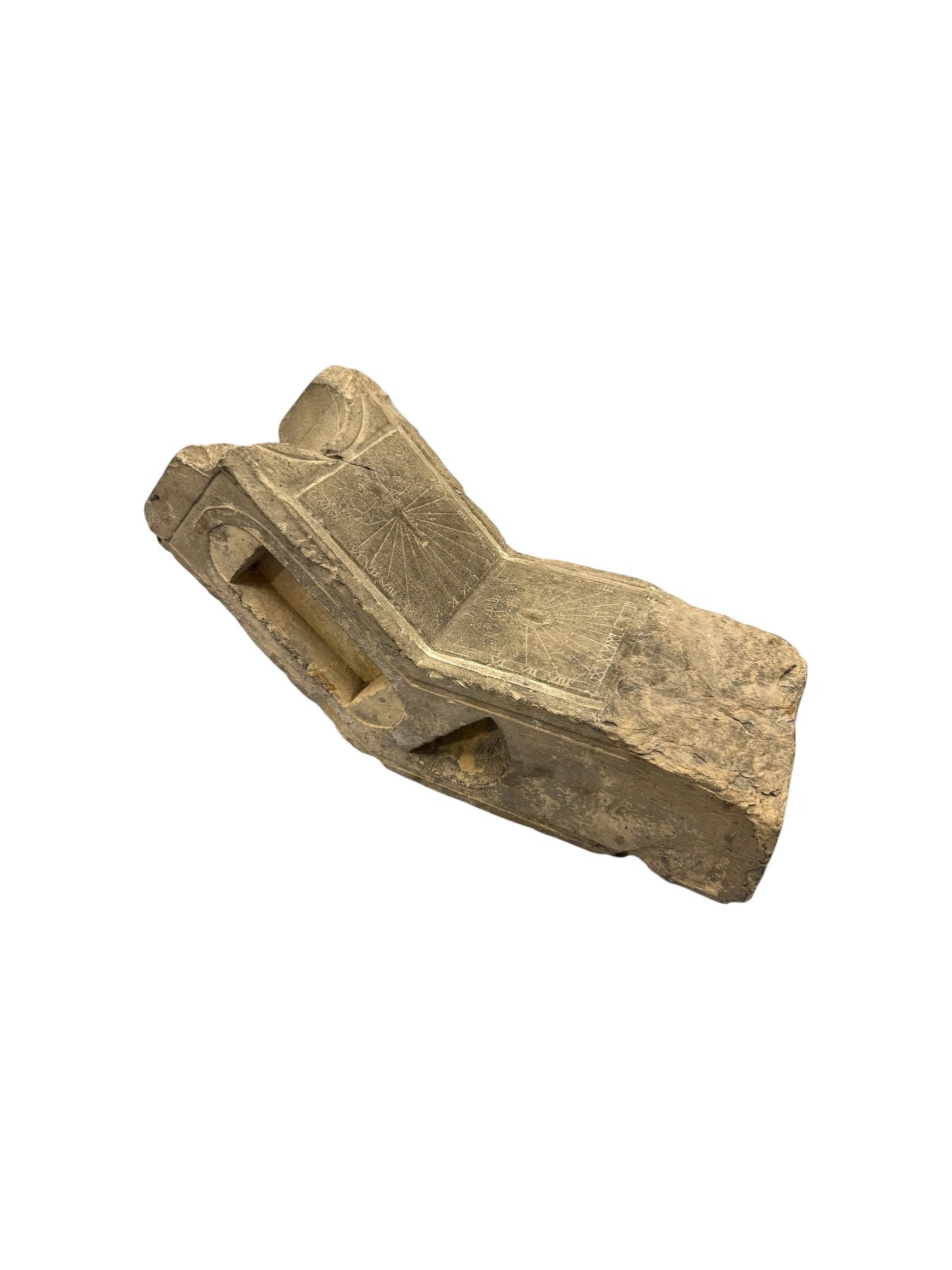
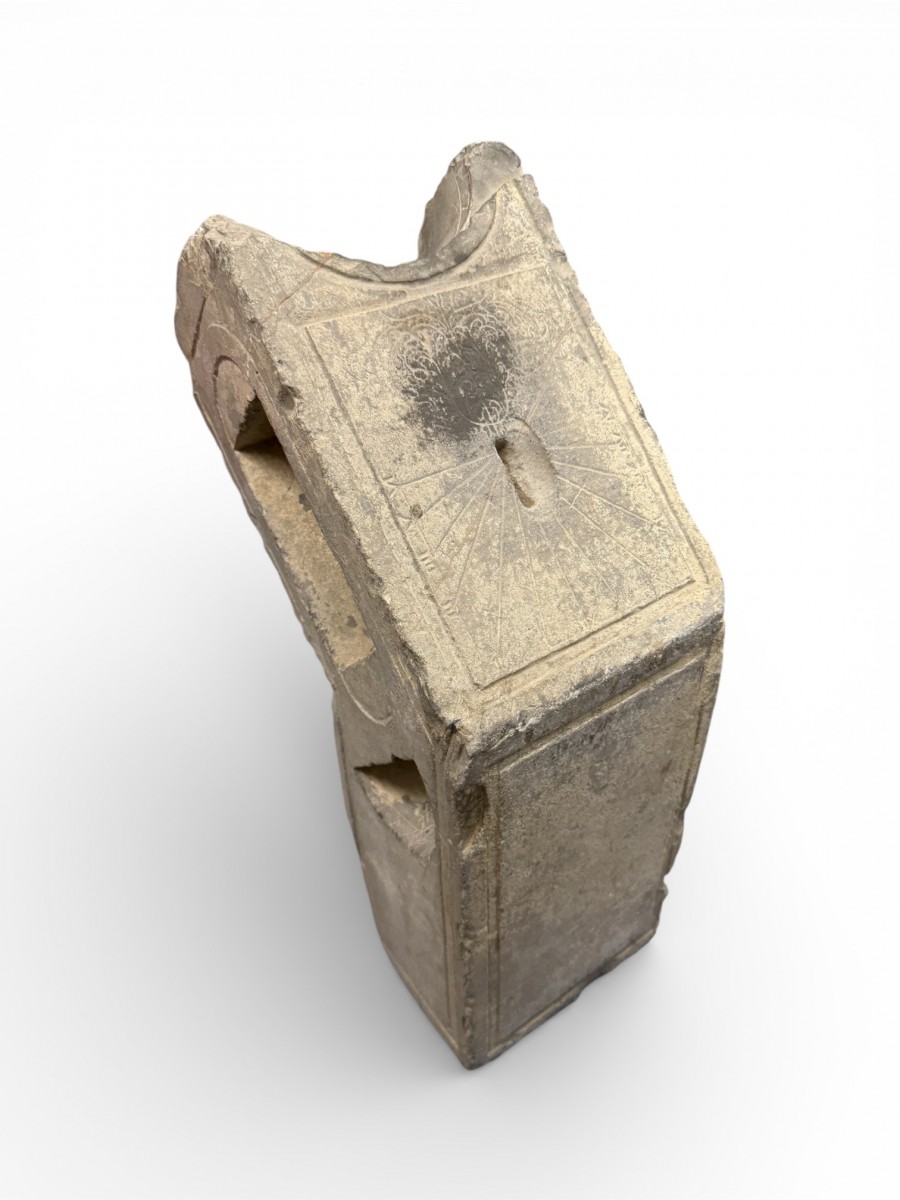
Based on its dimensions, this is a table sundial, easily movable. It is neither dated nor signed and bears no specific inscriptions.
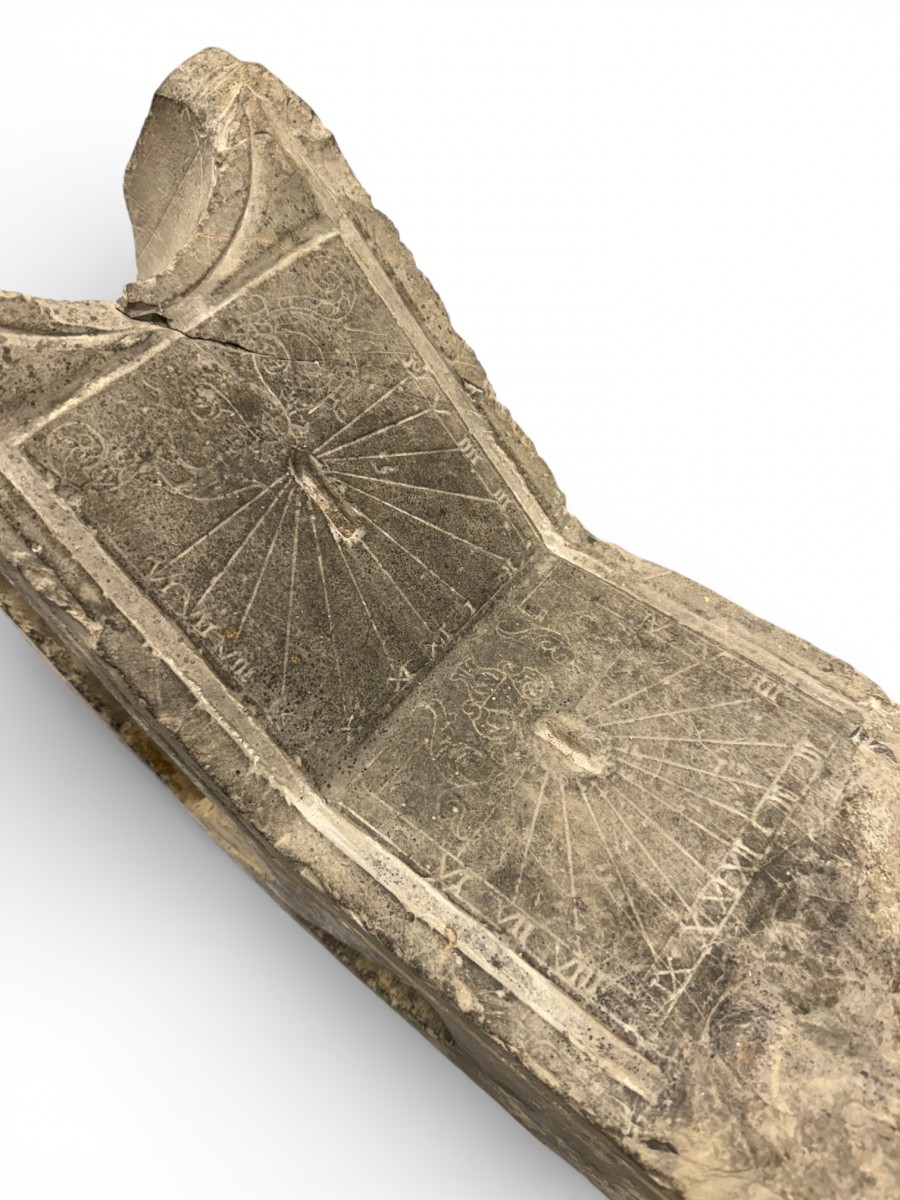
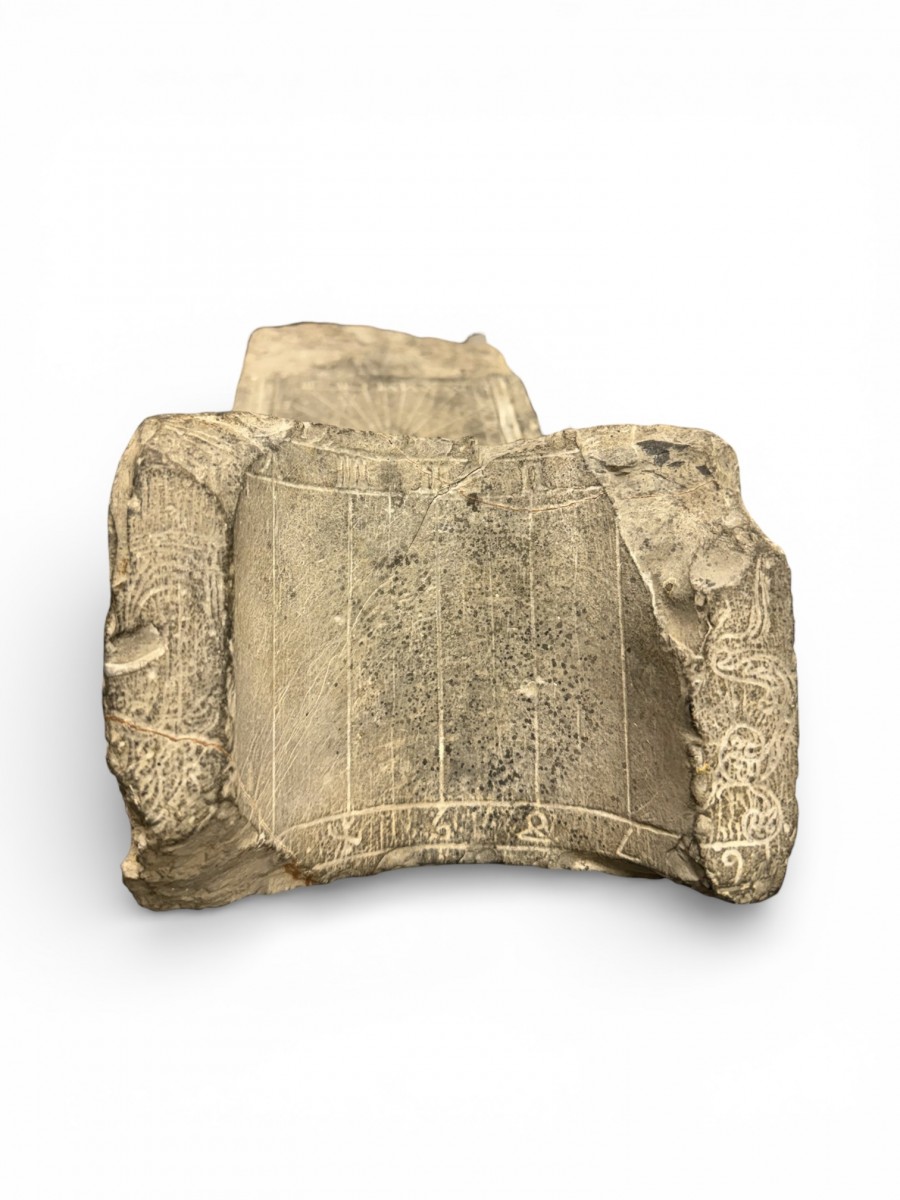
The form of the Arabic numerals used to mark the morning hour lines on the hemicylindrical dial suggests a dating to the 17th century or the early 18th century. Finely engraved decorative motifs are visible but provide no further specific historical information. This type of multi-faced dial reflects designs commonly produced in the 17th century, particularly in Scotland, England, Germany, and Holland. Such sundials traditionally adorned the parks and gardens of castles, monasteries, and bourgeois residences.
General Configuration
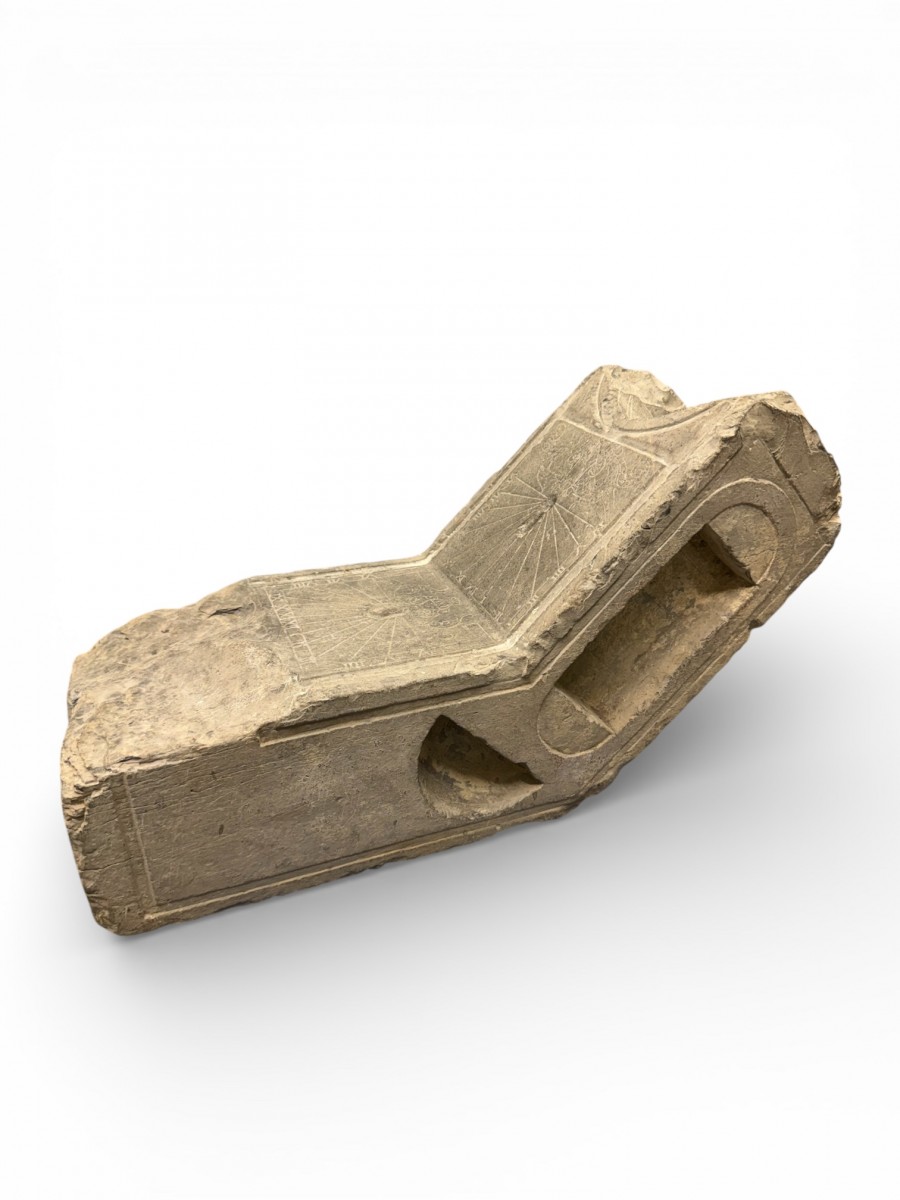
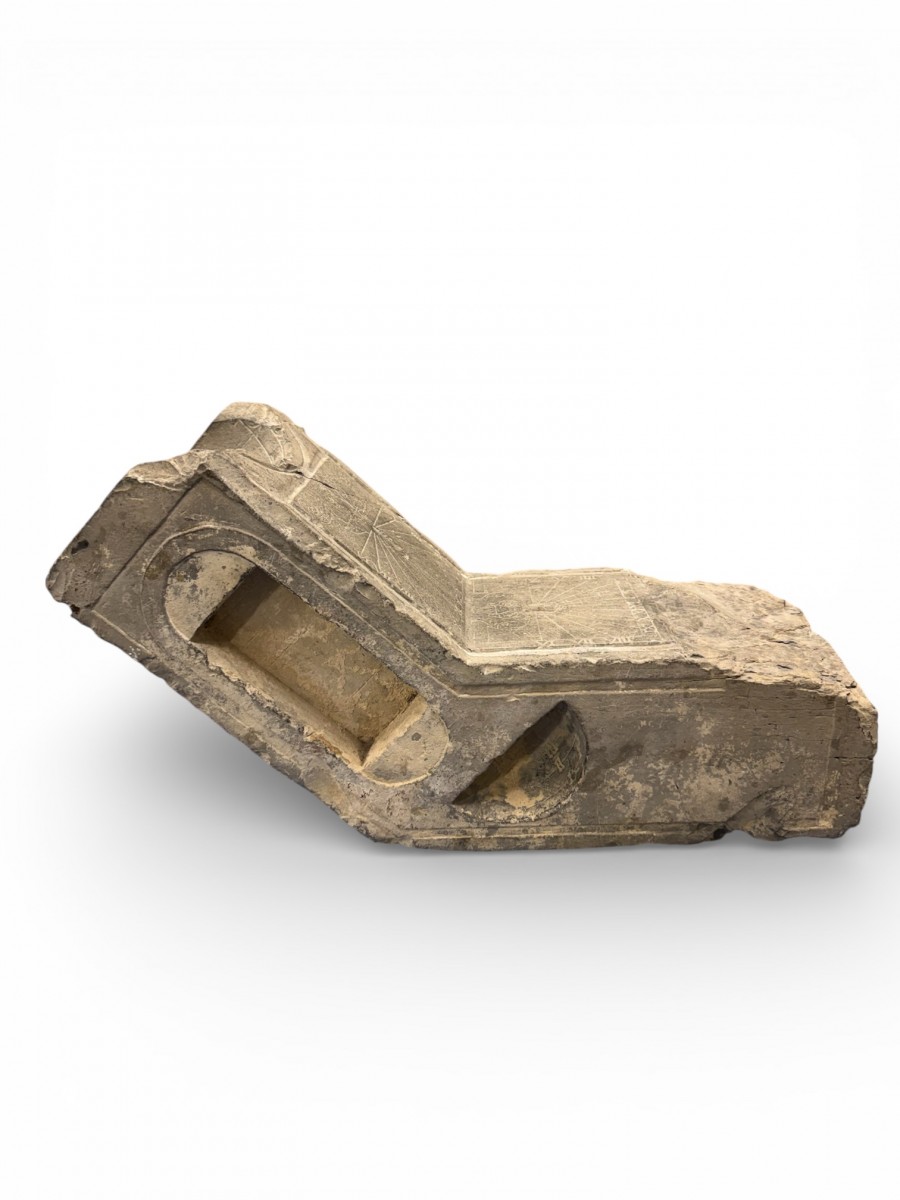
The block contains eight distinct sundials:
• 3 flat dials
• 5 concave dials:
• 2 parallelepiped trough-shaped dials
• 1 hemicylindrical dial
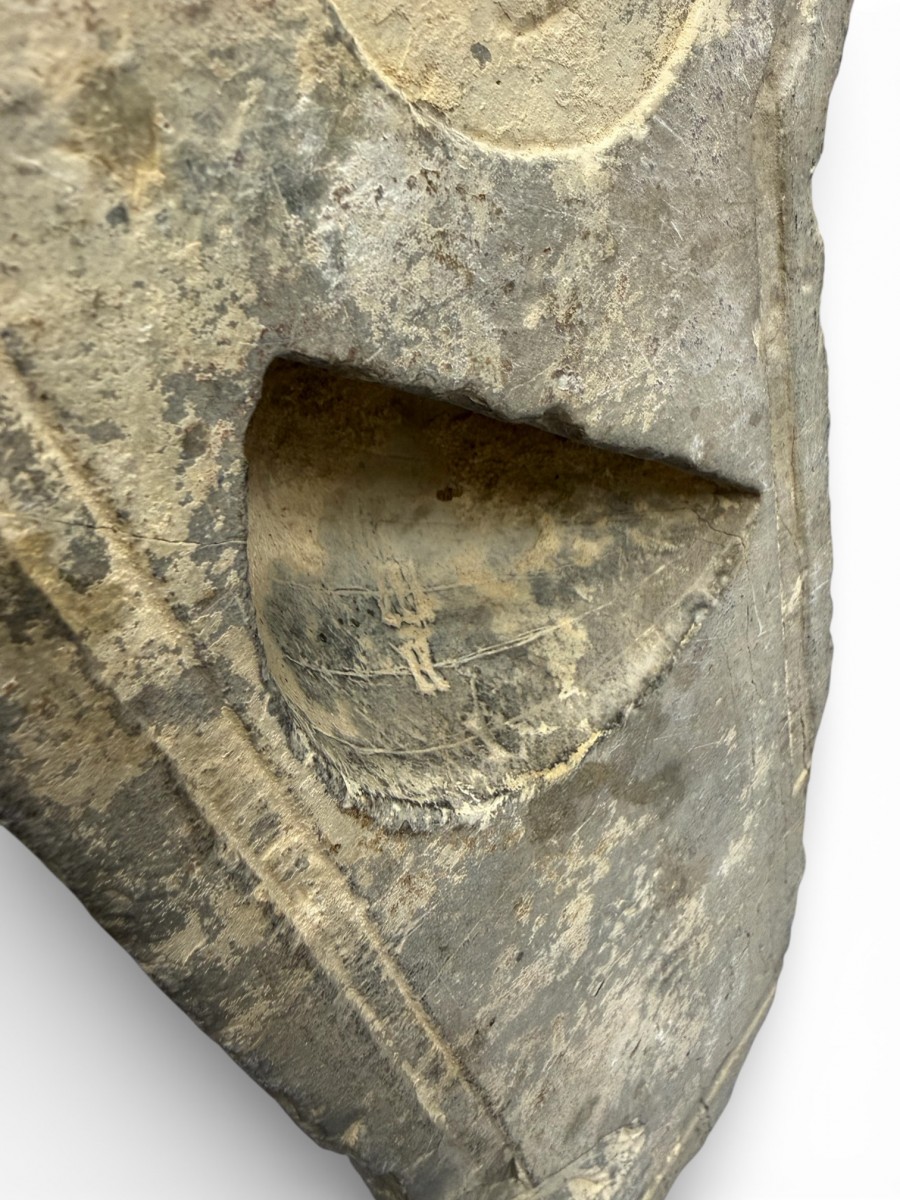
• 2 hemispherical (“half-moon”) dials
The engraved lines correspond to the Earth’s polar axis (North–South).
The block includes a surface inclined at 45°, suggesting that it was calculated for the latitude of Noyers-sur-Jabron.
When the block is correctly oriented, all dials indicate the same local solar time.
Description by Face
Northern Face (Upper Surface)
1. Horizontal dial
2. Equatorial dial (upper or northern face, directed toward the sky)
The hours are numbered in reverse order, which raises the question of whether this is an error or an intentional feature. These dials should normally display at least the hour lines from V (5 a.m.) to VII (7 p.m.).
?
Southern Face (Upper Surface)
Hemicylindrical dial
The edges of the half-cylinder serve as the shadow-casting style.
Arabic numerals indicate morning hours; Roman numerals indicate afternoon hours.
The exact moment of noon is difficult to determine, as neither edge casts a shadow inside the cylinder at that precise moment.
Equatorial dial (lower or southern face, directed toward the ground)
Eastern Lateral Face – 2 Dials
These indicate the morning hours, numbered from VI to XI.
Oriental concave dial, trough-shaped (parallelepiped form)
The hour lines are parallel to the upper edge, which serves as the shadow-casting style.
Oriental concave dial, hemispherical (“half-moon” form)
The edge acts as the style; the hour lines curve to follow the spherical base.
Numbered from VI to XI.
Western Lateral Face – 2 Dials
These indicate the afternoon hours, numbered from I (13) to VI (18).
This face is symmetrical to the eastern face and shares the same characteristics.
Occidental concave dial, hemispherical (“half-moon” form)
Curved hour lines following the spherical base.
Occidental concave dial, trough-shaped (parallelepiped form)
Hour lines parallel to the upper shadow-casting edge.
Summary
This is a rare example of a compact, multi-faceted architectural sundial block incorporating eight distinct dial types within a single stone. Its design reflects sophisticated 17th-century dialling knowledge and demonstrates precise geometric adaptation to latitude.
A remarkable scientific and decorative object combining functionality, craftsmanship, and architectural presence.
Delevery information :
Small objects are always carefully packed and shipped fully tracked and insured via FedEx, UPS, or DHL Express.
For larger items, specialized transport can be arranged by mutual agreement.