Offered by Franck Baptiste Provence
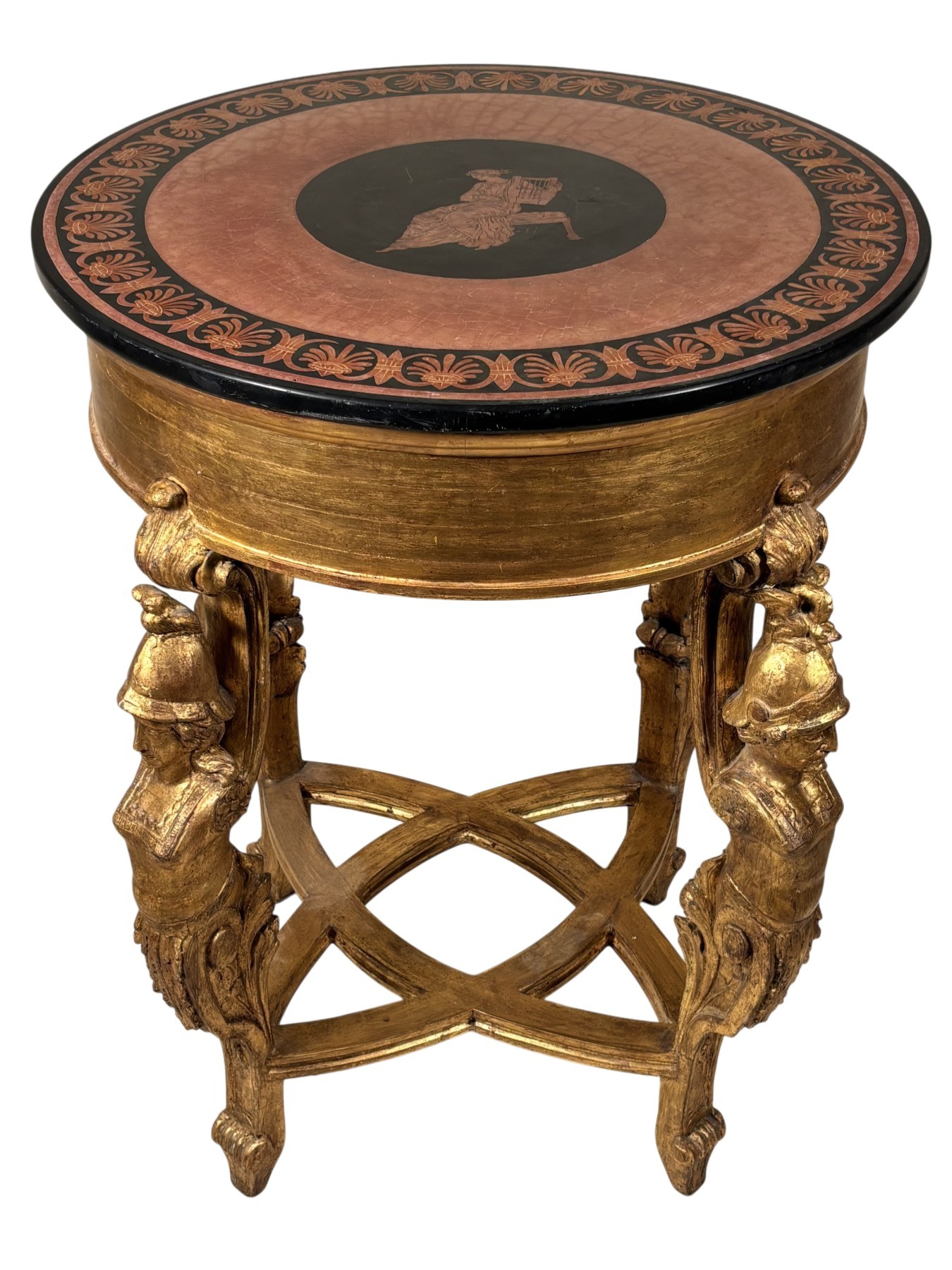
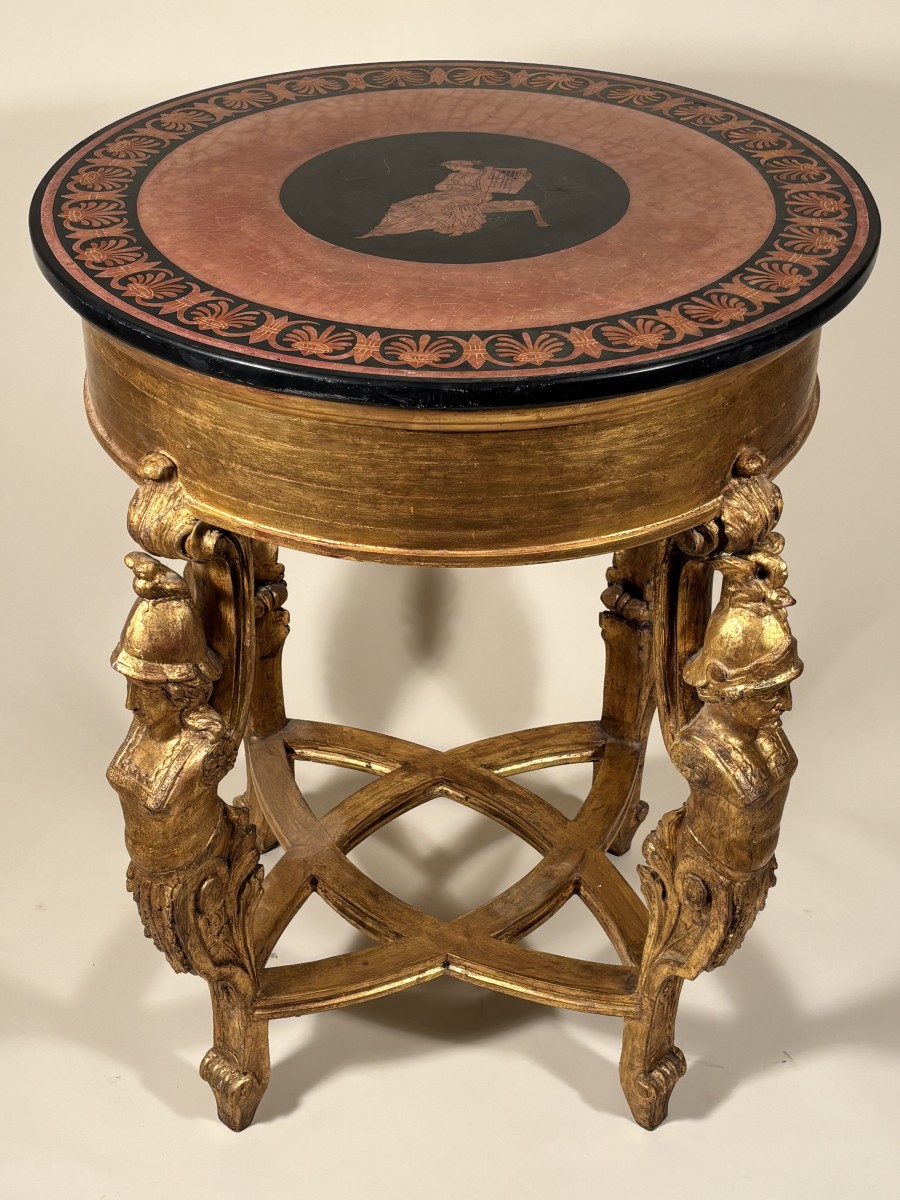
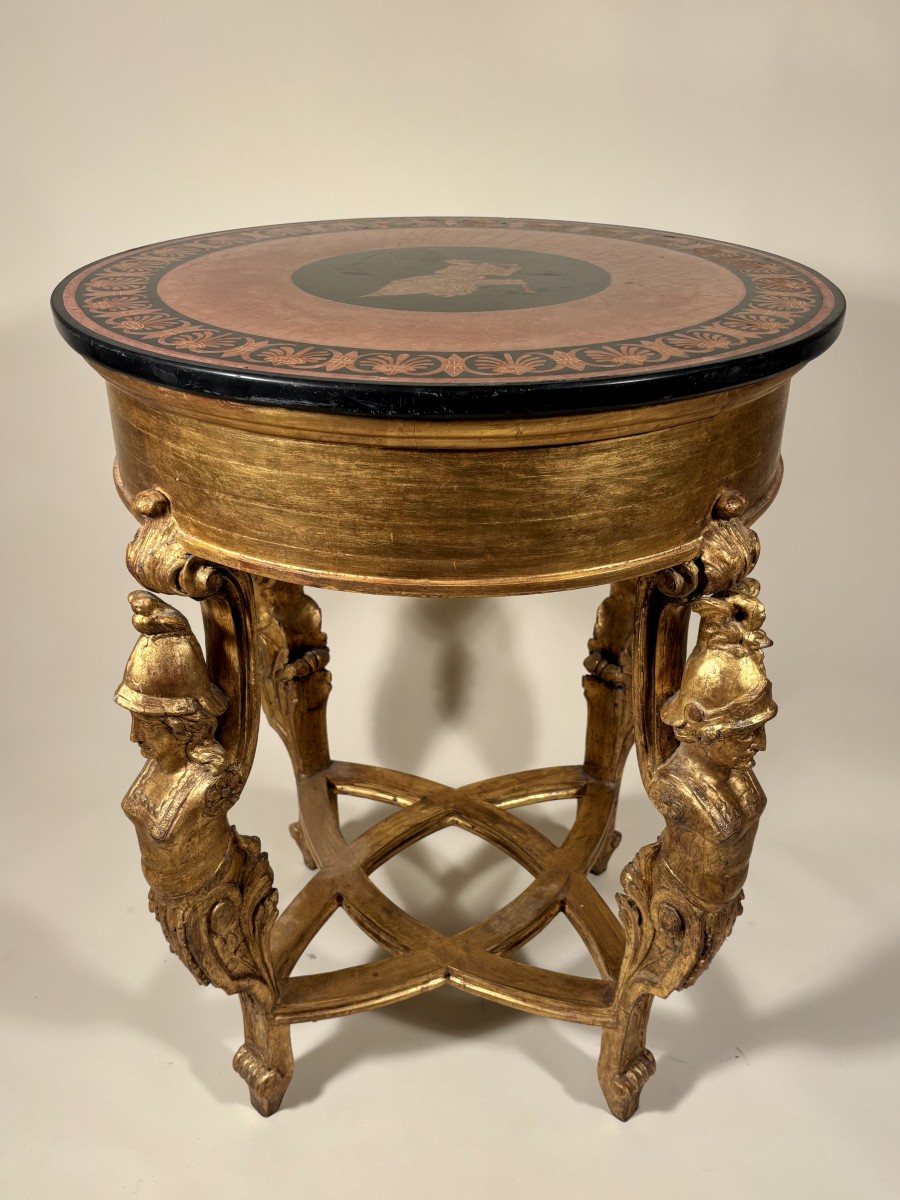
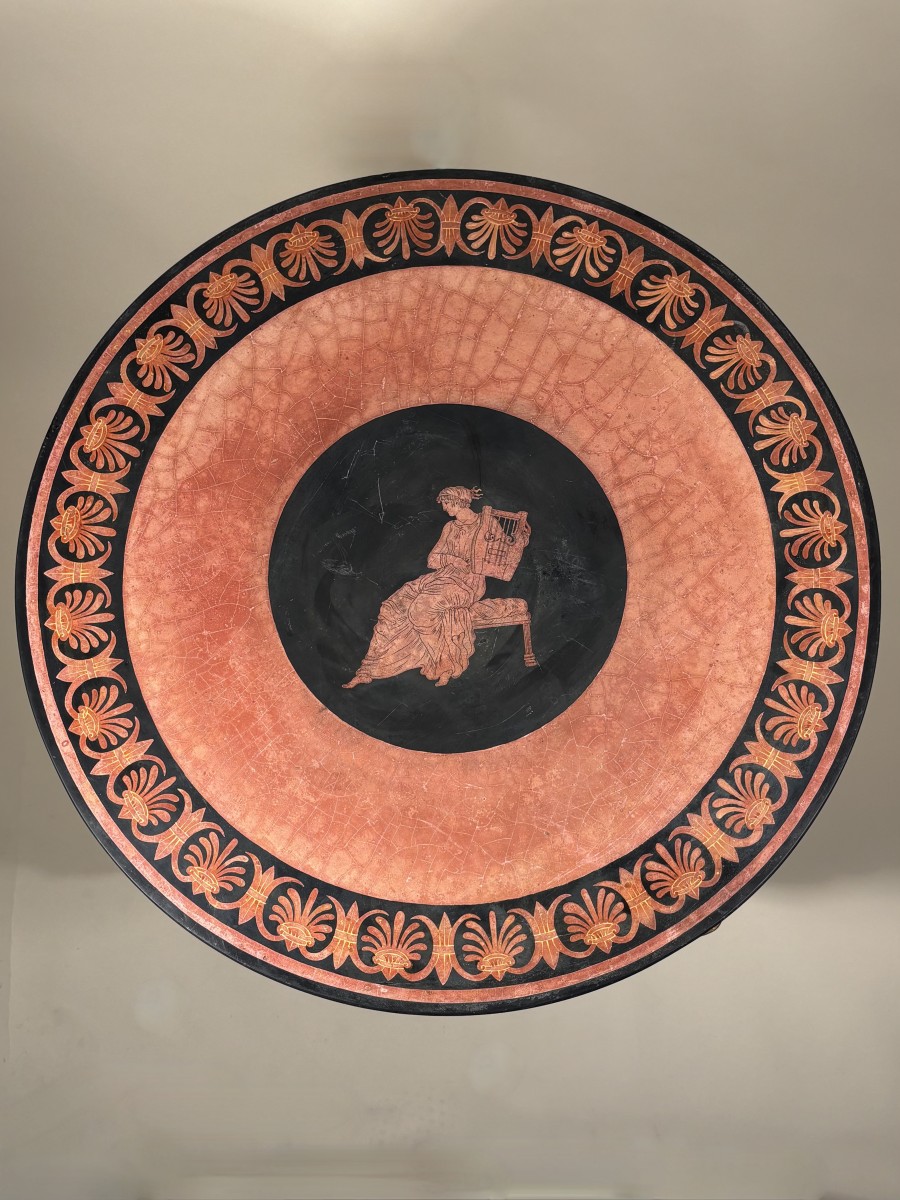

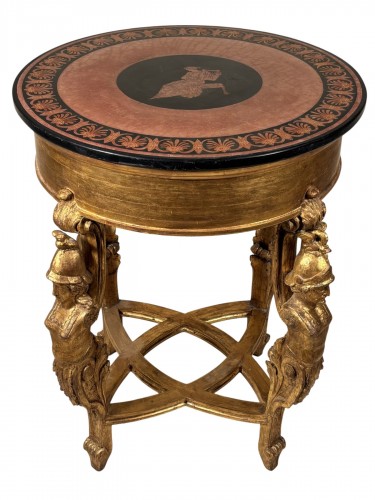
Pedestal Table with the Gods of War, Italy, circa 1840-50
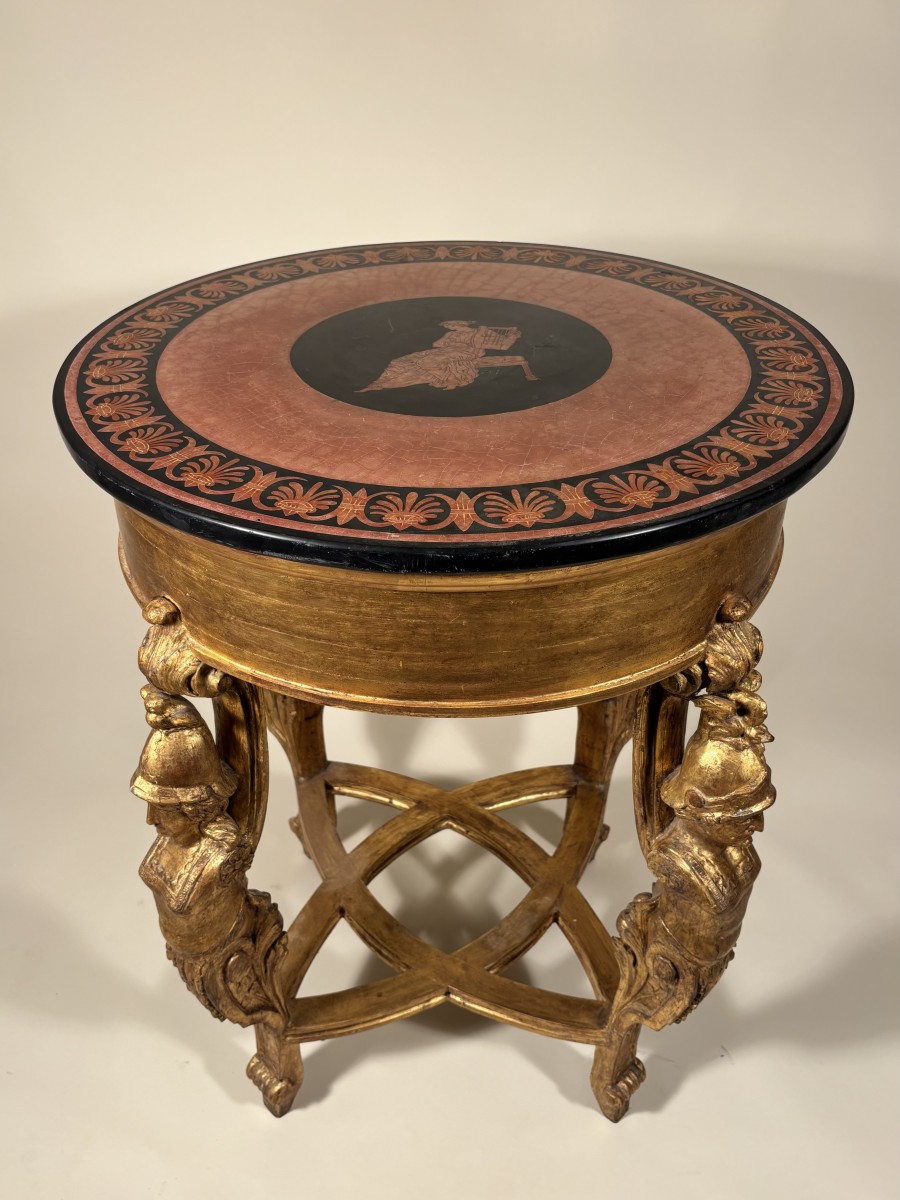
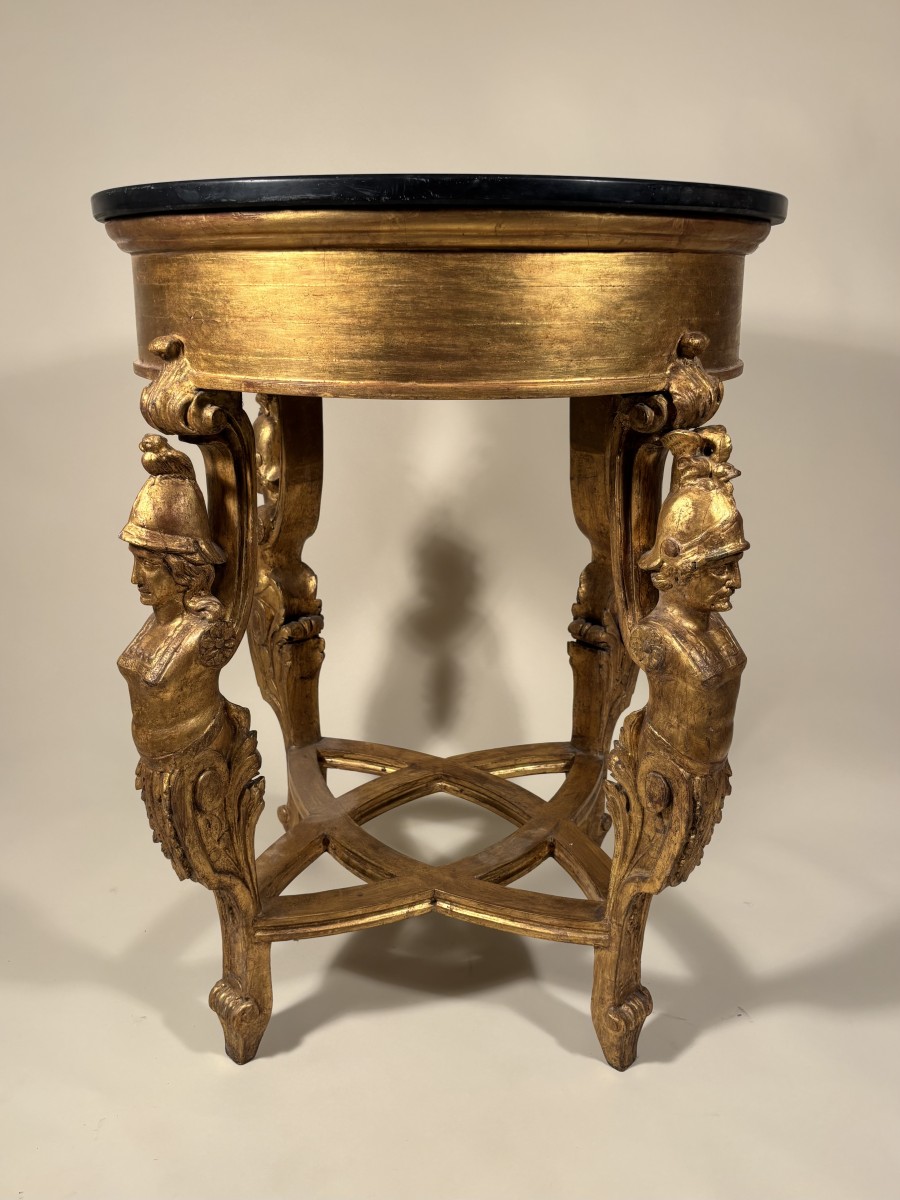
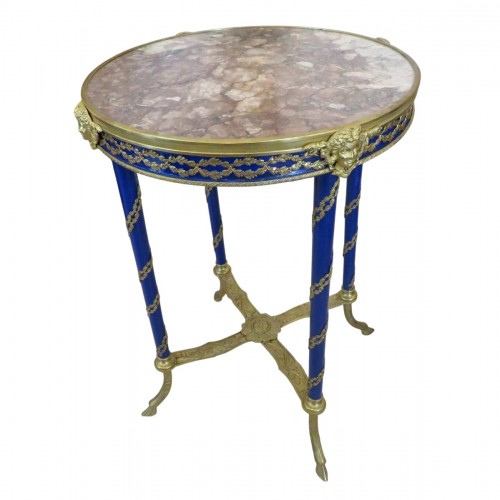
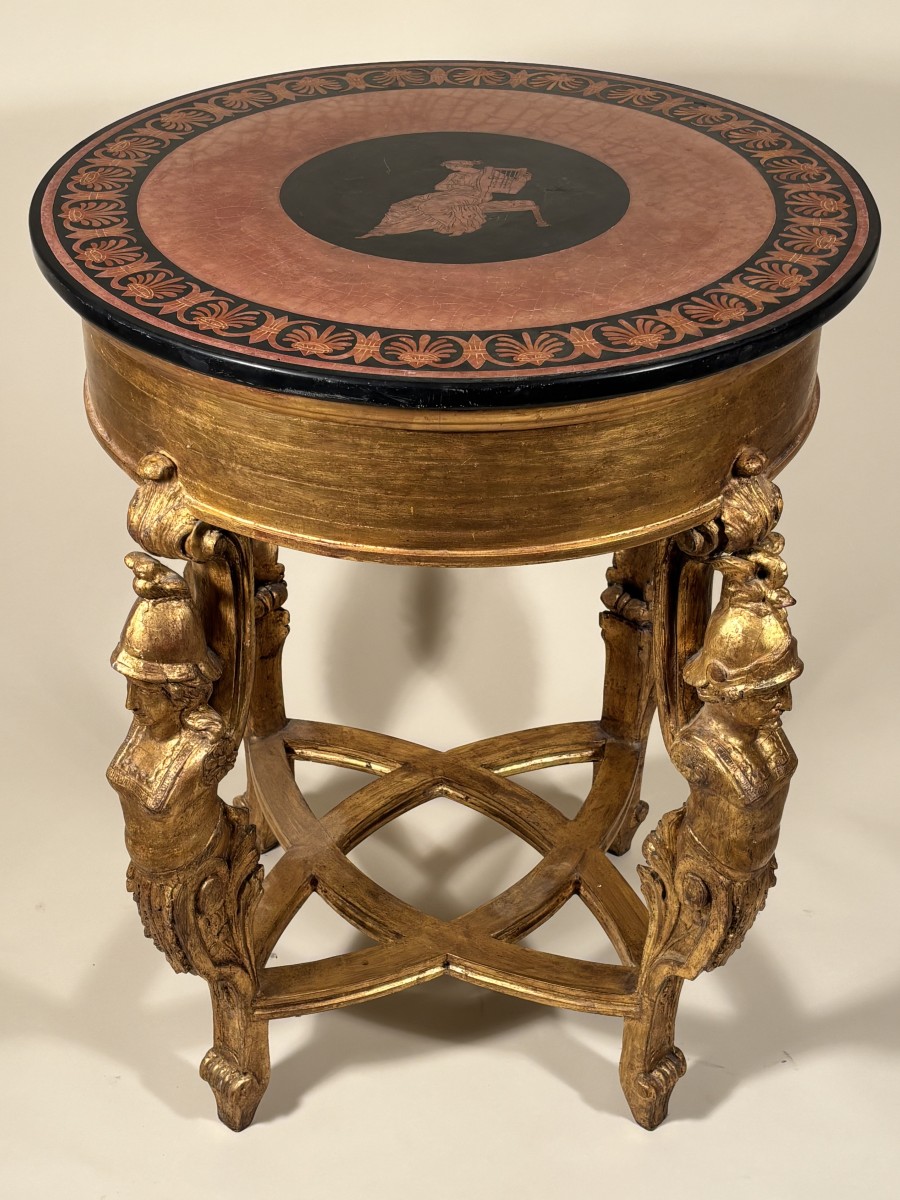
Rare circular pedestal table in gilt linden wood.
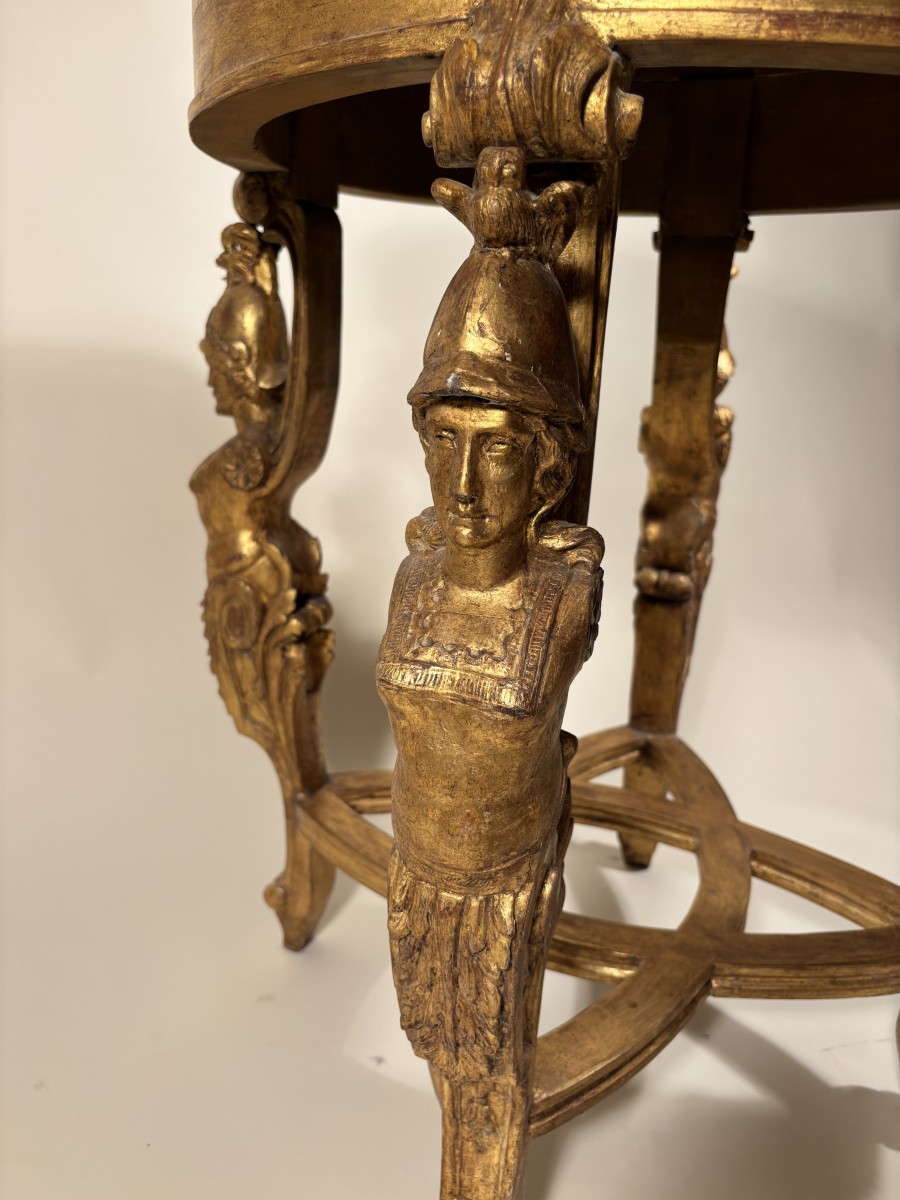
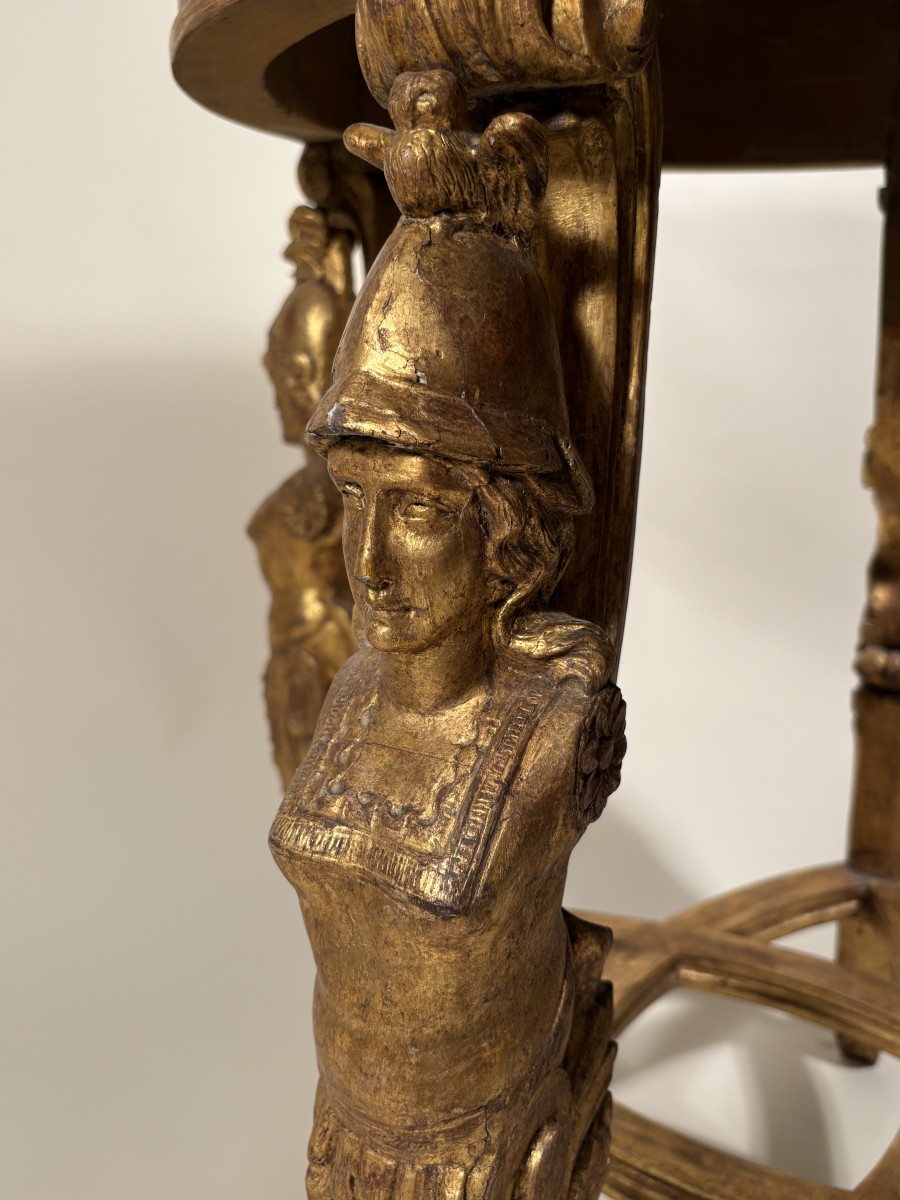
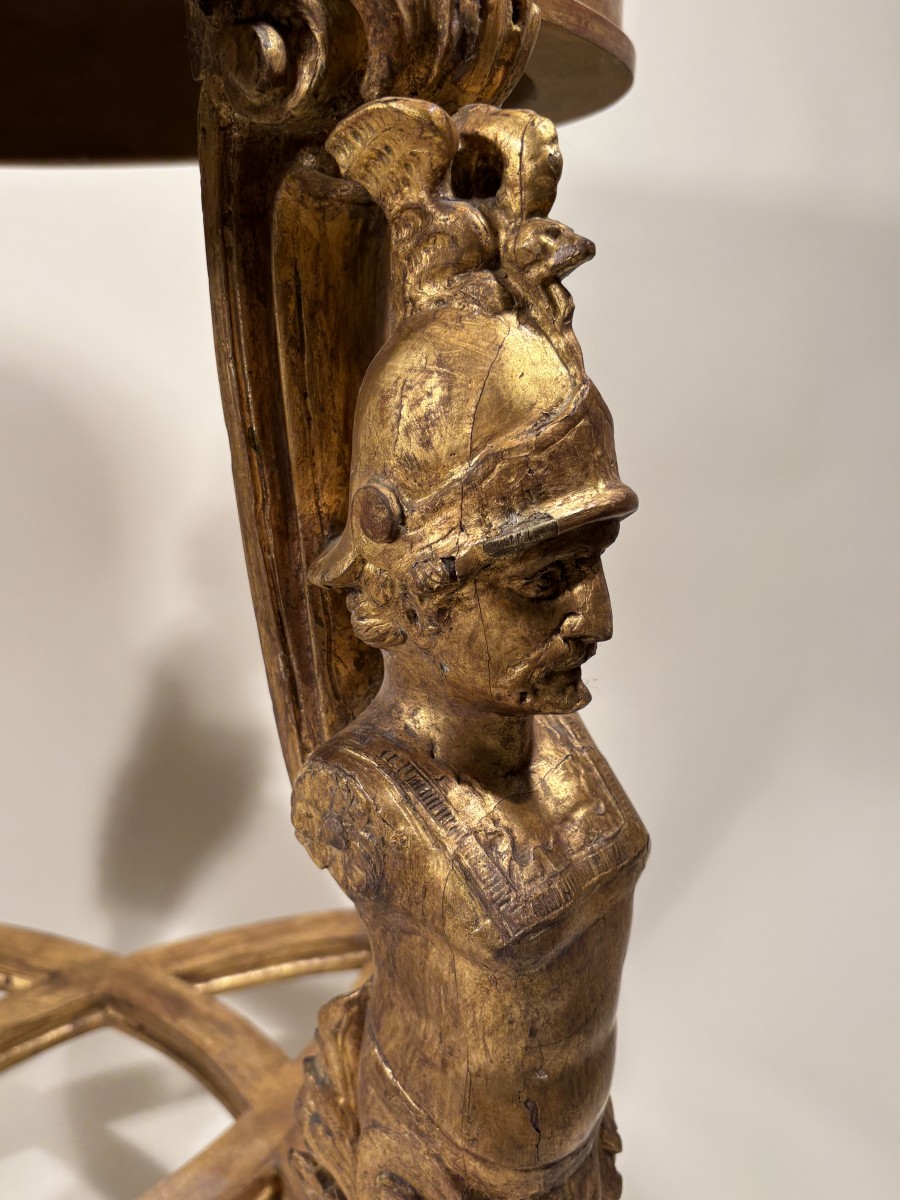
The base is composed of four helmeted figures, alternating between two busts of the goddess Minerva wearing a helmet surmounted by an owl and two figures of the god Mars.
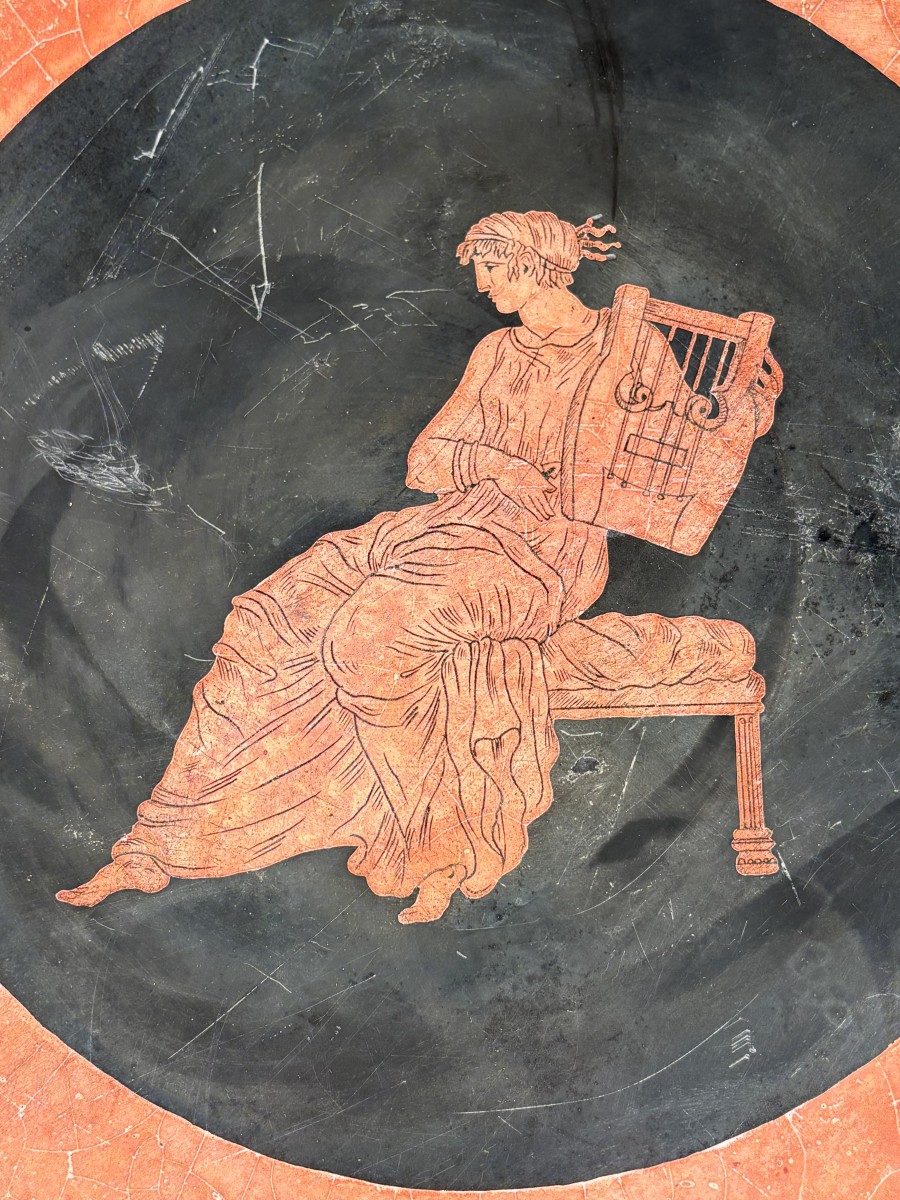
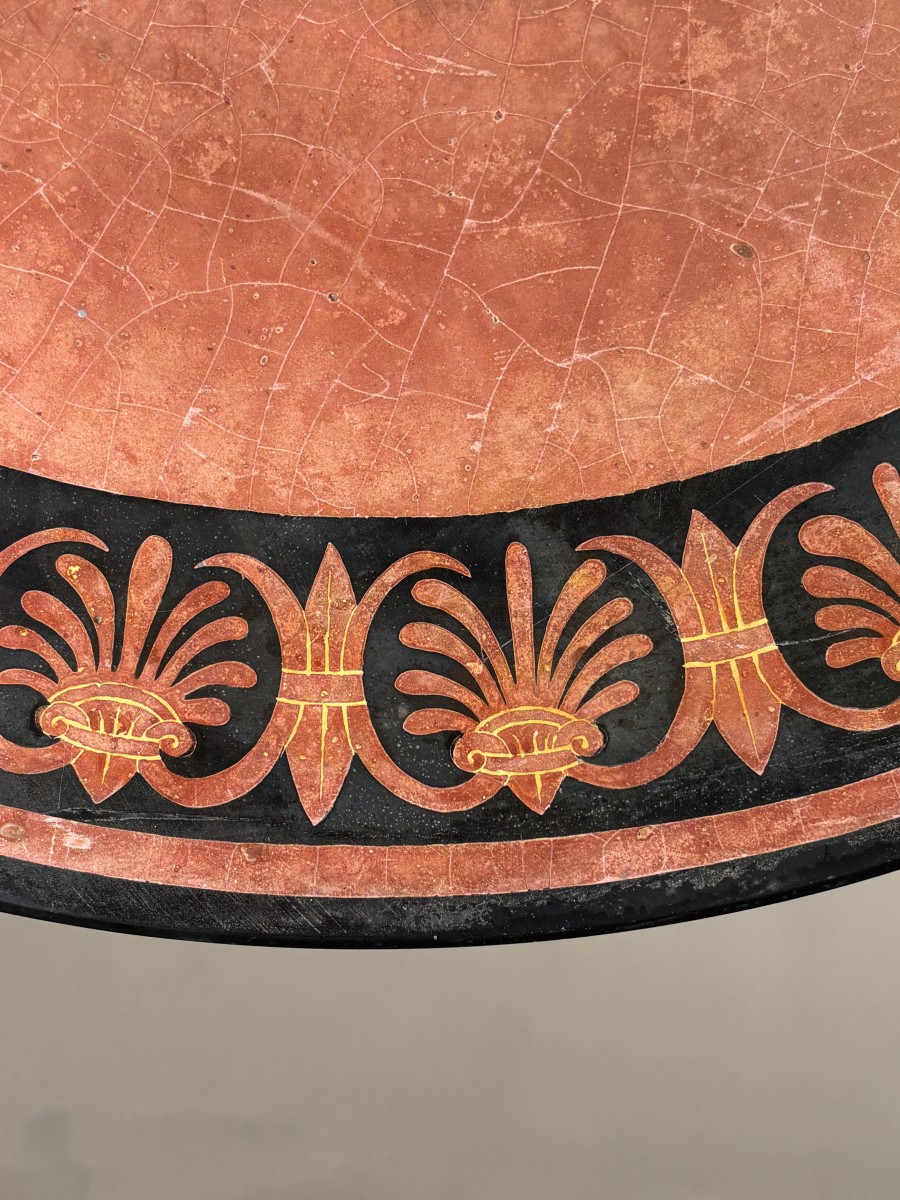
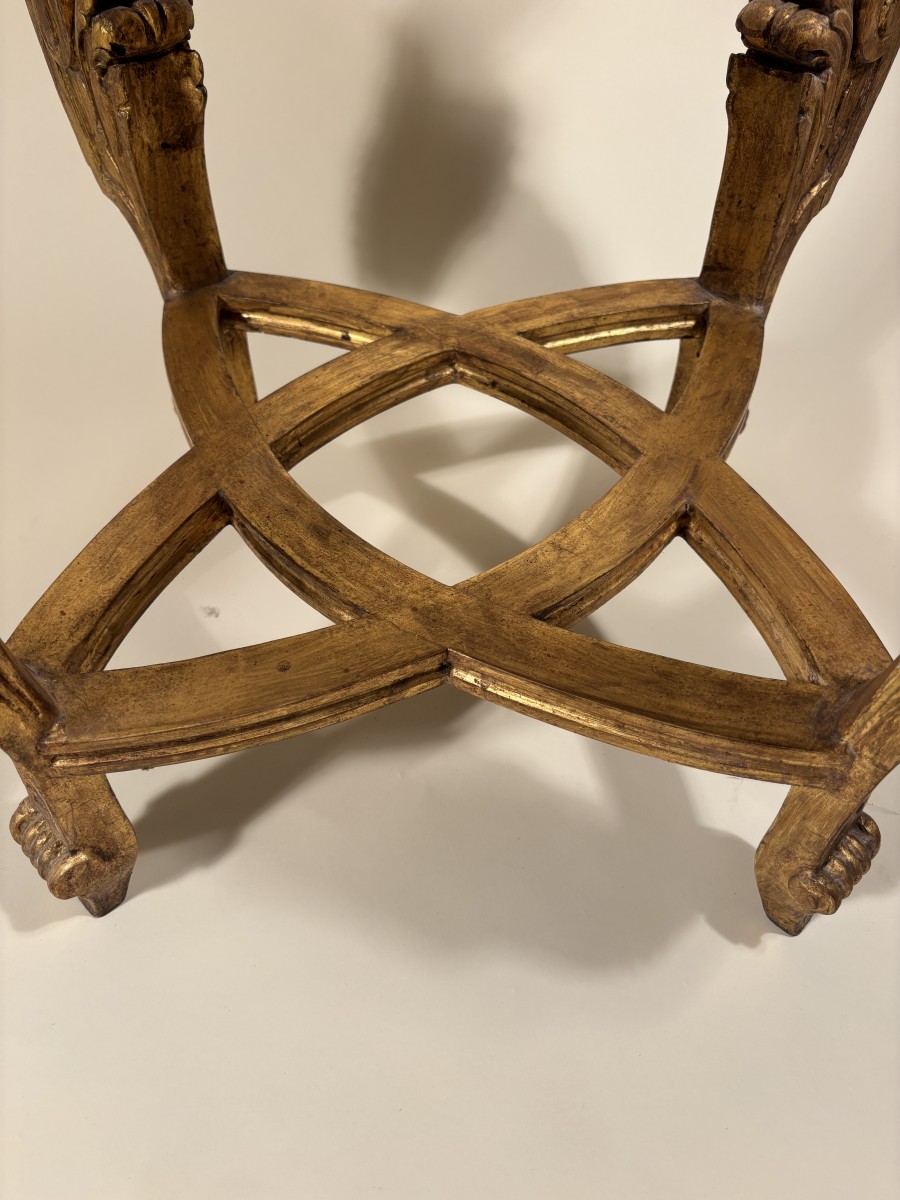
The four legs are connected by a star-shaped stretcher and support a wide drum-shaped band which holds a beautiful circular scagliola* top, decorated in the neoclassical style with a frieze of palmettes and a cithara player on a red ground, imitating antique vases*.
In excellent condition.
Italian work from the mid-19th century.
Dimensions:
Height: 78 cm; Diameter: 60 cm
*Scagliola (from the Italian word scaglia, meaning "scale" or "marble splinter") was widely used during the Renaissance by Italian artisans as a substitute for rare and expensive marbles.
This spectacular decorative technique, already used by the Egyptians, Greeks, and Romans, imitates marble and hardstone marquetry so perfectly that it can fool specialists; its smooth, glossy appearance rivals the most prestigious marbles.
Its creation involves a mixture of gypsum, glue, and pigments which, once kneaded, forms a colored stucco paste. After hardening and before polishing, the design is drypoint engraved to bring out the details.
Highly fashionable throughout Europe from the 17th to the 19th centuries, it was used in architecture to create columns, pilasters, wall decorations, and magnificent floors, as well as in furniture making with the creation of highly ornate tops to adorn consoles, tables, pedestals, and various other pieces of furniture.
* Antique Vases: The decoration of our pedestal tabletop is directly inspired by Attic vases known as "red-figure" pottery.
Red-figure pottery is a type of ancient Greek pottery in which the design is painted in red on a black background. It developed in Athens and its surrounding region from 530 BC.
Although this technique is primarily Athenian, it spread from Greece to Magna Graecia, where the pioneer was the Pisticci Painter, who initiated the production of Lucanian red-figure pottery. This is referred to as Italic pottery, a term that designates all red-figure pottery produced in the Greek colonies of southern Italy (Apulia, Campania, Lucania, and Paestum). Red-figure pottery from Apulia flourished between 430 and 300 BC. Red-figure pottery is also found in Etruria and later in Rome.