Offered by Franck Anelli Fine Art
REQUEST INFORMATION

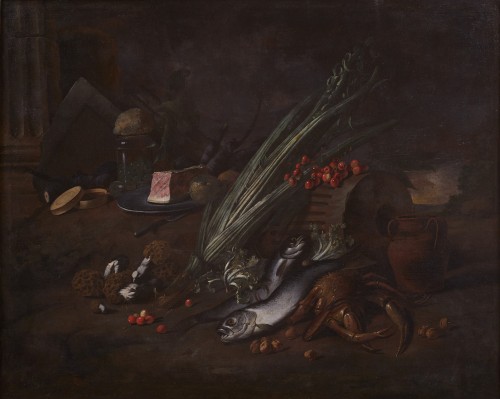
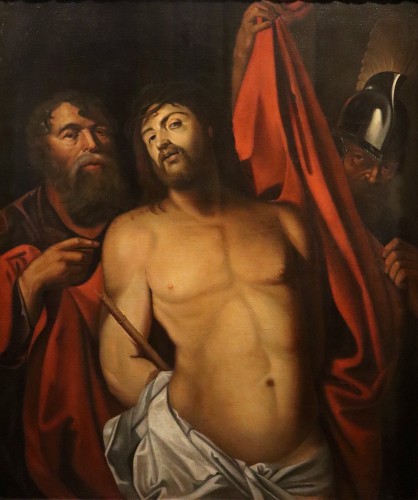
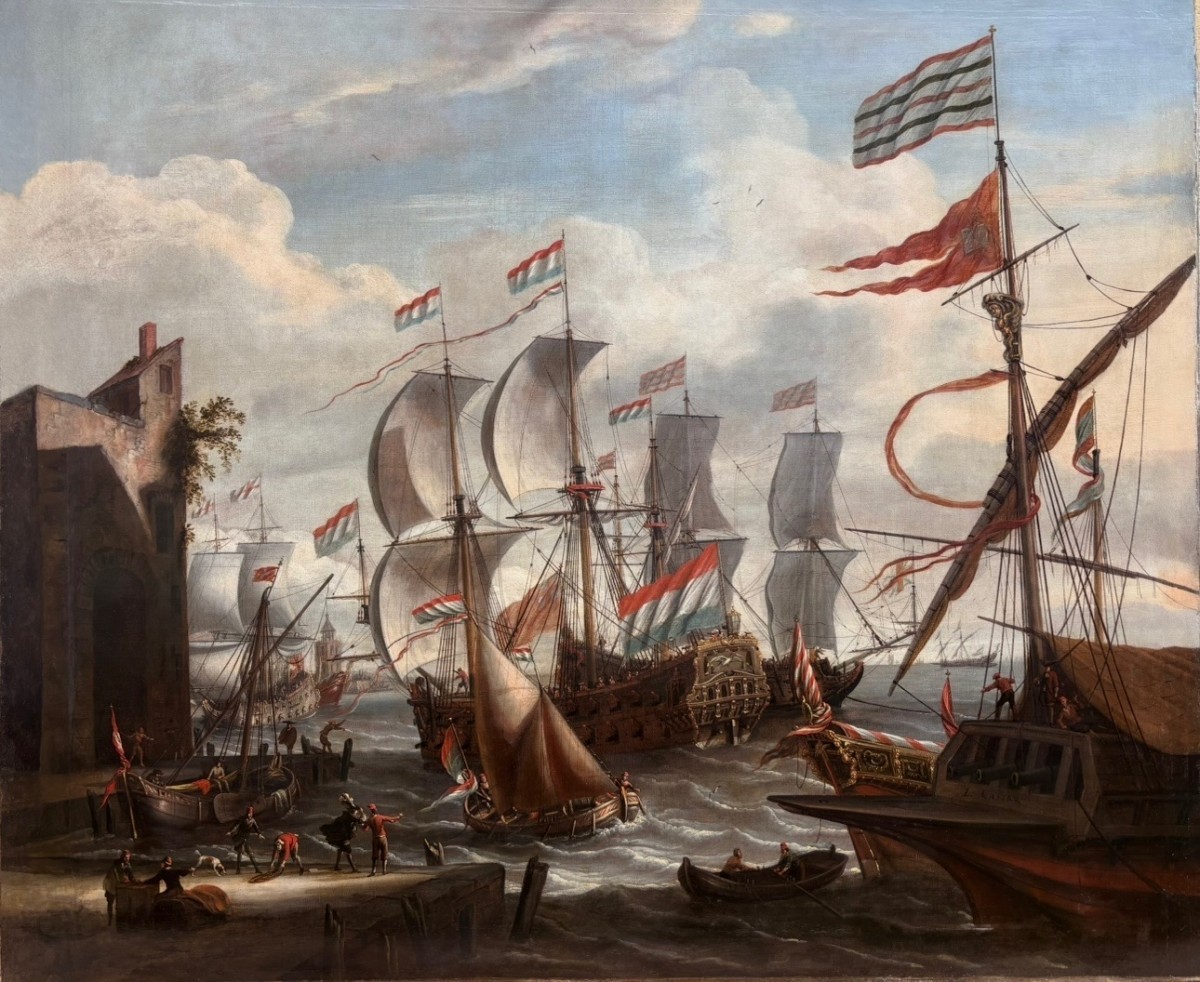
Oil on canvas, 121 x 140 cm
Laureys a Castro or Lorenzo a Castro is a Flemish painter. He is best known for his seascapes painted in the last quarter of the 17th century, where he ranks among the finest painters of the genre in England.
Biography:
Few details are known about his life and training. He is believed to have been the son of the Flemish marine painter Sebastian Castro (es) and his second wife, Anna Wuijlens. It has been suggested that his family was of Portuguese (or possibly Spanish) origin and settled in Antwerp, probably as a result of persecutions against Jews during the Portuguese Inquisition in the early 1600s. If the speculation about the family’s Jewish roots is correct, the family must have converted to Catholicism, as Laureys was baptized in the parish of Saint George in Antwerp on March 20, 1644.
Specialists hypothesize that Castro was trained by his father. He is registered as a wijnmeester, that is, the son of a master, with the Guild of Saint Luke in Antwerp in 1664–1665. Judging by the subjects of his paintings, it is likely that Castro traveled and observed several ports of the Mediterranean Sea.
Around 1670–1672, he settled in England, where he executed seascapes and portraits on commission. A number of commissions were given to him around 1670, notably six paintings for the actor-manager William Cartwright. These paintings became part of Cartwright’s collection, which he bequeathed to Dulwich College upon his death in 1686. These works formed the nucleus of the Dulwich Picture Gallery, the first public art gallery-museum in England. The date and place of his death are unknown. No paintings are attributed to him after the end of the 17th century. A record from 1695 bearing the name “Lawrence Castro” residing on Whitecross Street in London, as well as various works signed by an artist of the same name in English collections, suggest that Castro was still working in England at that time.
Works:
Lorenzo Castro is active either from 1664 to 1700, or from 1672 to 1686. This second period is calculated using only the dates of his attributed works. Although Castro is primarily known for his seascapes, he also painted portraits and religious scenes. Several of his canvases are part of private and public collections in England, including those of the Dulwich Picture Gallery and the National Maritime Museum.
His seascapes cover the full range of subjects typically addressed by 17th-century painters, such as sailing ships, galleys stopping in ports, harbor scenes, capriccios in Mediterranean havens, ships in distress, storms at sea, and naval battles. His marine compositions demonstrate his familiarity with the Flemish and Dutch traditions of the genre. His maritime scenes express great liveliness through his choice of colors, while some naval battle scenes instead convey serenity. Castro produced several naval battle scenes, the first of which dates to 1672, in which he presents a personal interpretation of the Battle of Actium. He painted a panoramic view of the Battle of Lepanto. This canvas may have been inspired by a 1590 engraving by the Flemish artist Jan van der Straet. This painting, which shows the defeat of the Turkish fleet by the European coalition in 1571, is undated but is thought to have been painted around 1683, the year the Turks laid siege to Vienna in Austria. It is likely that the Turkish failure brought general relief among the European population, which may have prompted Castro to paint this canvas. Castro also depicted contemporary naval battles, such as A Sea Battle Against the Barbary Pirates, which shows the Barbary corsairs in action. Castro regularly painted capriccios of Mediterranean ports, suggesting that he observed the ports of Lisbon, Genoa, Malta, and Sicily. However, the ports cannot always be identified. For example, his canvas A Mediterranean Port with Maltese, Spanish, and Dutch Warships depicts a frigate sailing toward a Mediterranean port where a Dutch man-of-war, two or three Spanish vessels, and a Maltese galley are already moored along a quay. The men on land are rendered with sufficient clarity to unmistakably identify a Maltese knight. Castro is also believed to have painted religious scenes, judging by the canvas Mary, the Christ Child, Saint John, and Cherubs in the Museum of Fine Arts in Ghent, Belgium. He also demonstrated talent in portraiture, notably in a full-length portrait of the Lord Mayor of London, Robert Clayton, dressed in ceremonial robes.