Offered by Bergmans Scott Fine Arts
REQUEST INFORMATION

Specialising in Tribal Art, decorative art, and objects of curiosity
Technique
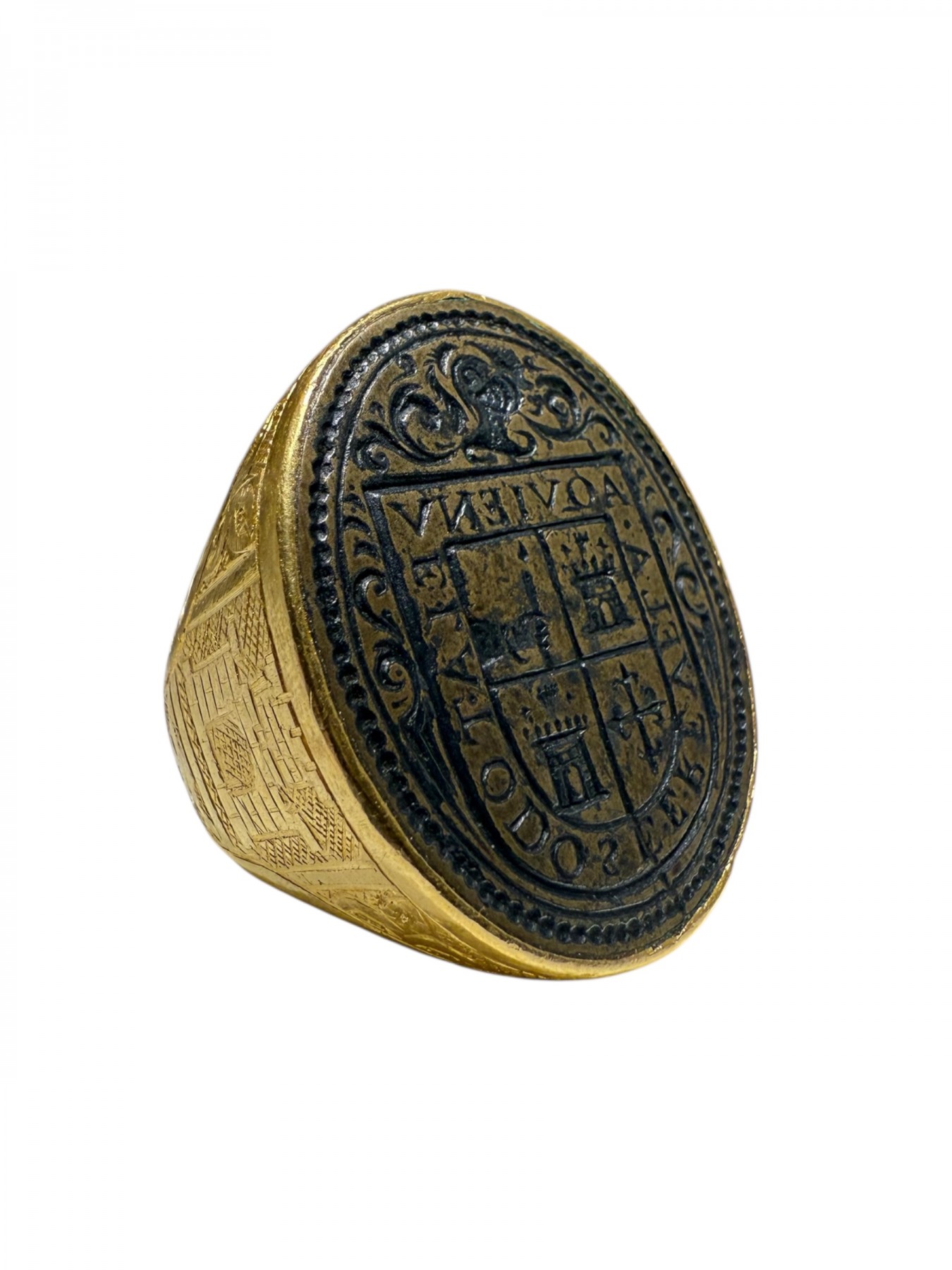
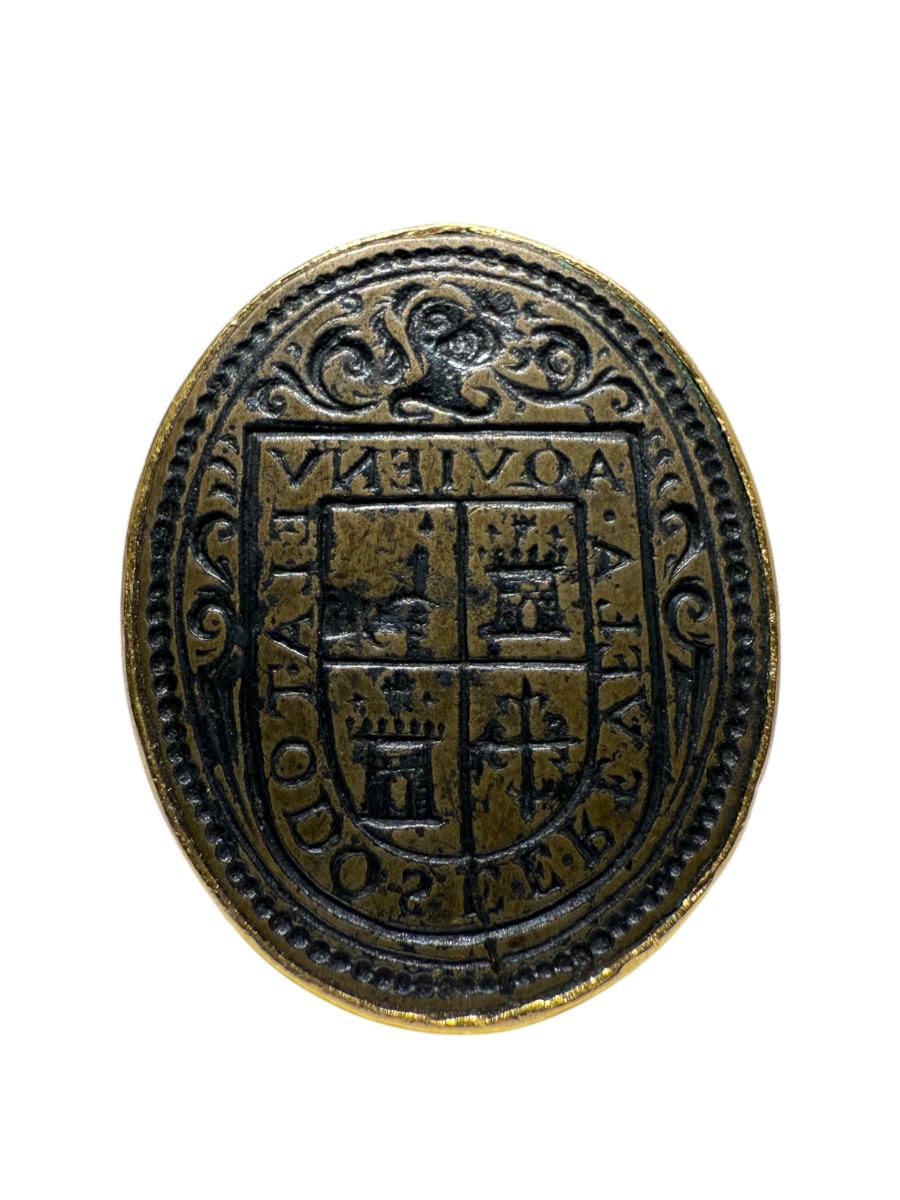
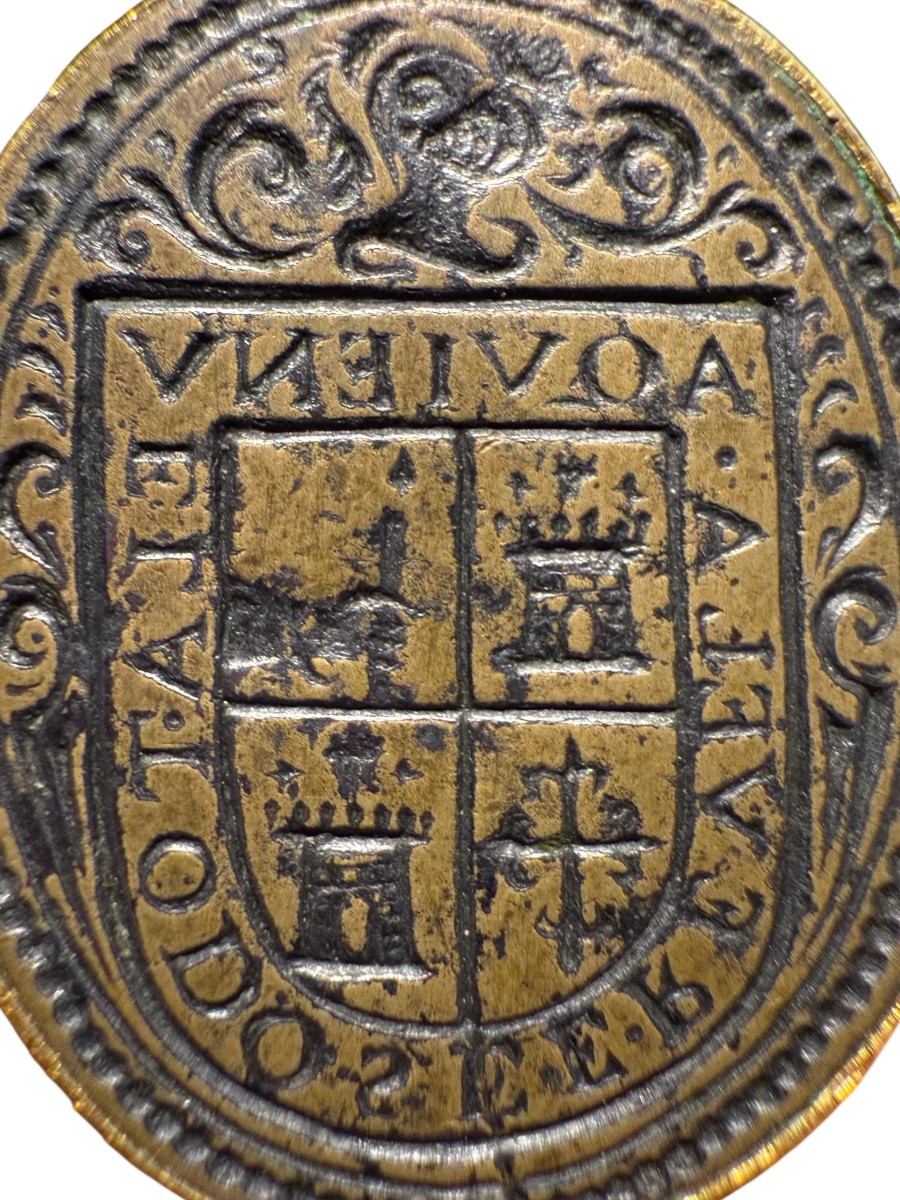
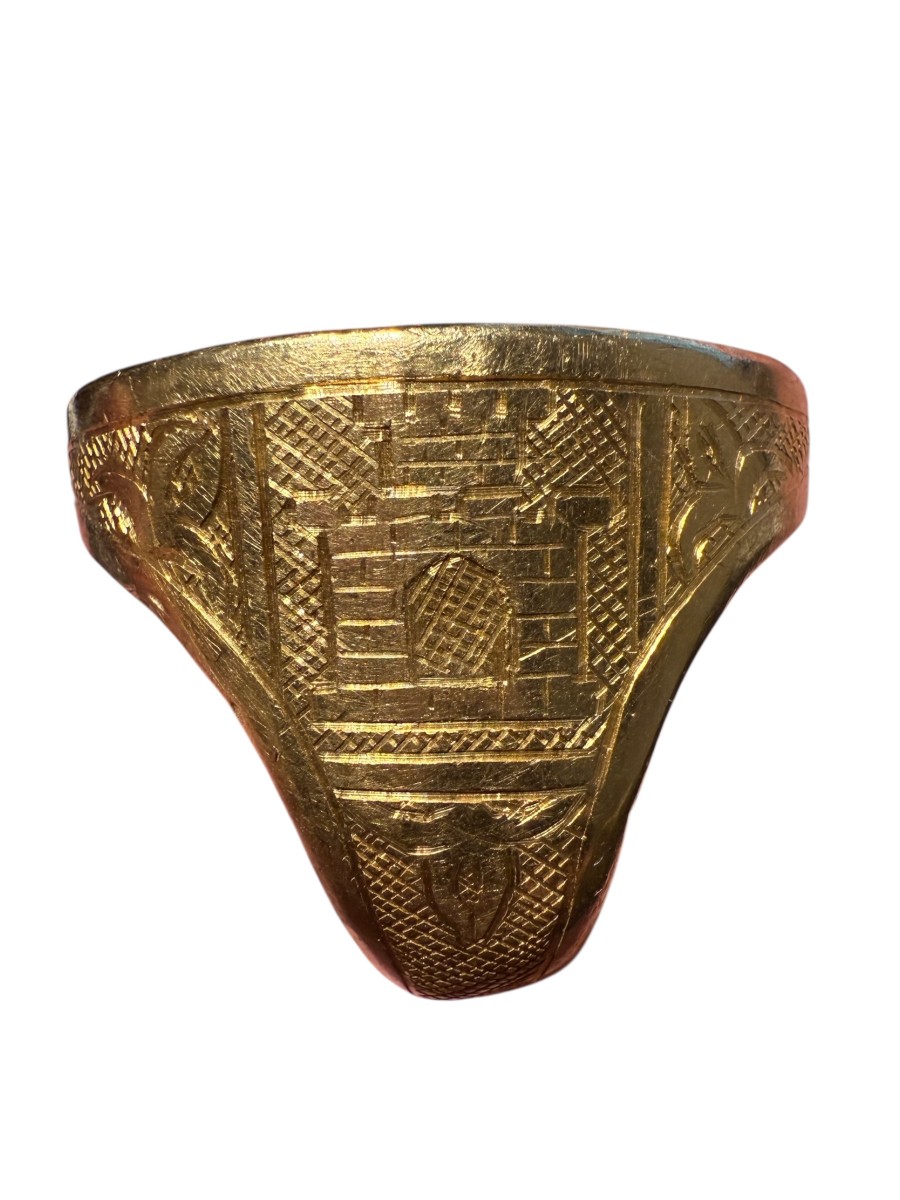
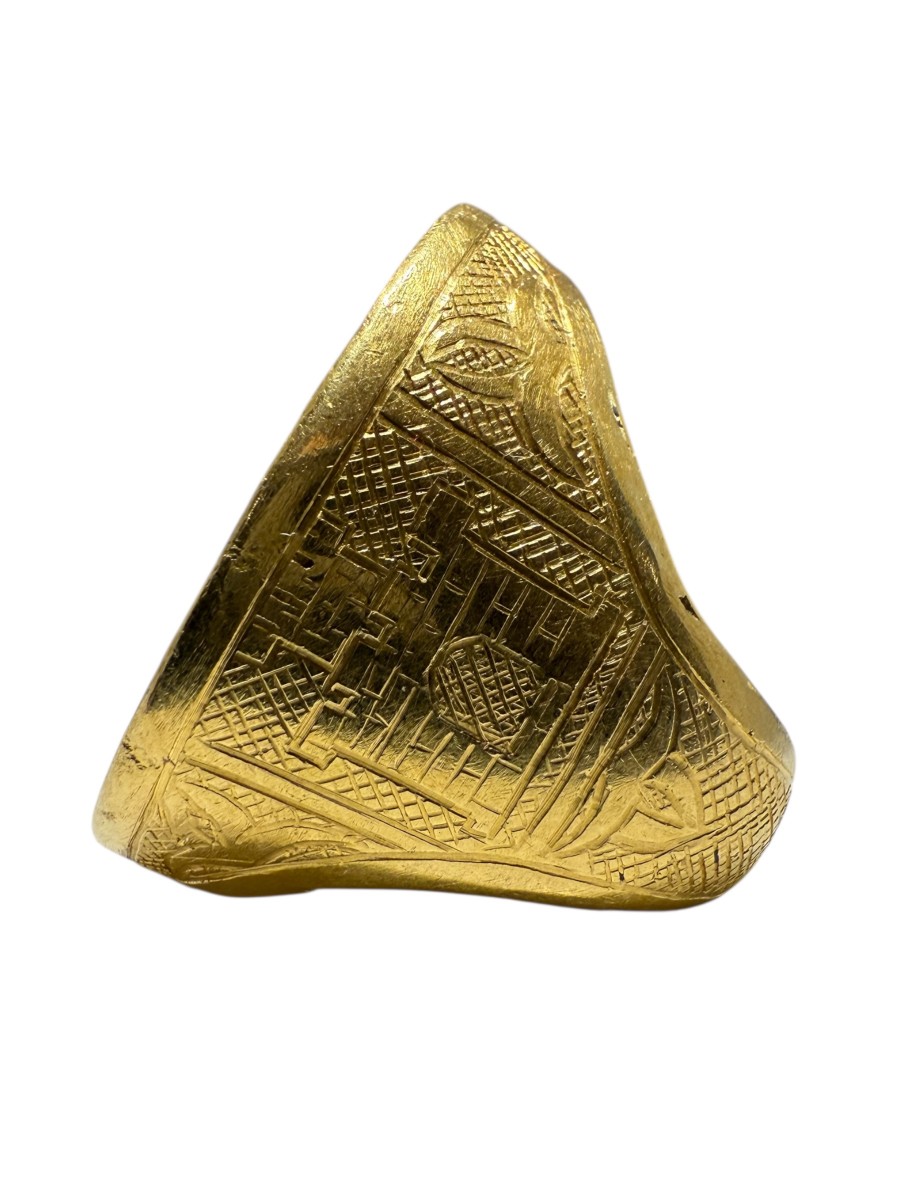
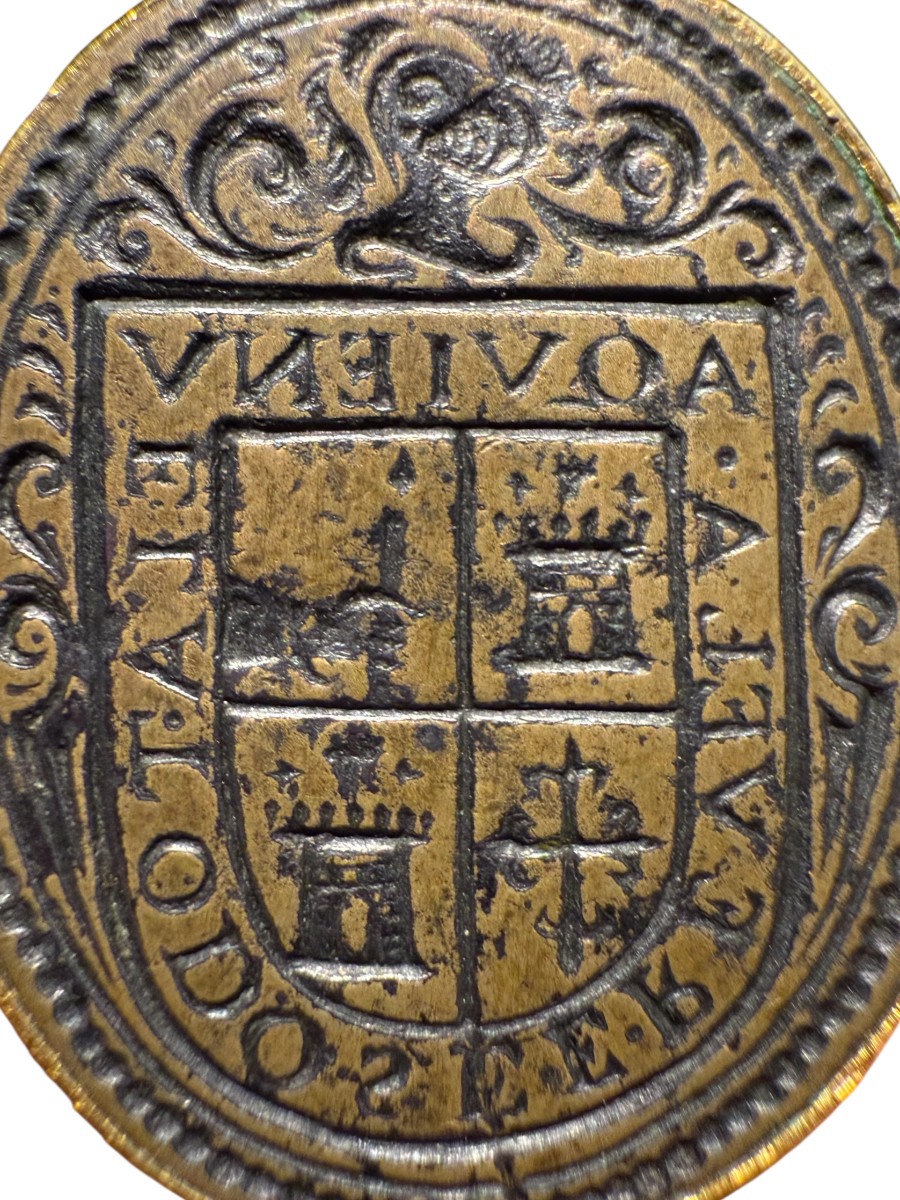
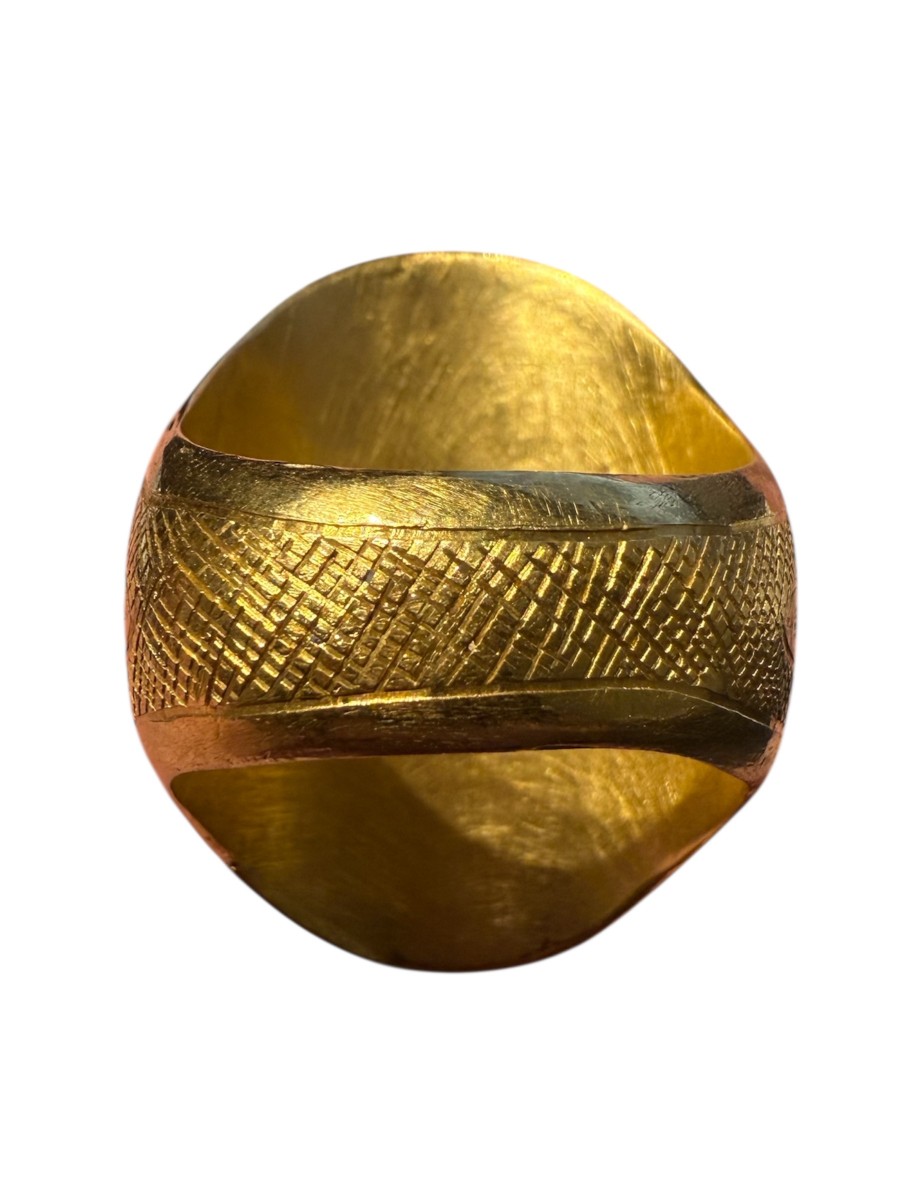
Hand engraving: coat of arms in intaglio, border inscription, engraved shoulders and shank.
Images are provided for documentation purposes; the conclusions below are formulated as historical working hypotheses based on stylistic and epigraphic characteristics.
1. Border inscription: transcription, archaic spelling, and meaning
Diplomatic reading (as engraved, according to your magnified observation and detail photographs):
VEI IVOA · ELA TODOS EEREVELA · DEUS
Normalized reading (modern word separation and spelling):
VEI IVOA · ELA TODOS SE REVELA · DEUS
Key point
The group EEREVELA can be understood as an archaic spelling in which the enclitic or separately written form SE (“itself”) is rendered phonetically/epigraphically as EE, followed by REVELA (“reveals”). Such variation is characteristic of the period before full standardization of Portuguese spelling.
Translation (semantic meaning)
“God reveals Himself to all.”
The formula functions as a short devotional statement: universal in scope (“todos”), counter-Reformation in tone (revelation/truth), and suitable as a public expression of authority.
Epigraphic note (on the archaic spelling)
On precious-metal inscriptions from the 16th and early 17th centuries, word boundaries are often implicit and sounds are sometimes rendered with doubled vowels. This has practical causes (limited space on the rim, legibility at small scale, and engraving conventions) and also reflects the fact that vernacular spelling had not yet been fully standardized. Within this context, EEREVELA is a plausible epigraphic spelling for SE REVELA.
2. The coat of arms: heraldic analysis and relationship to the inscription
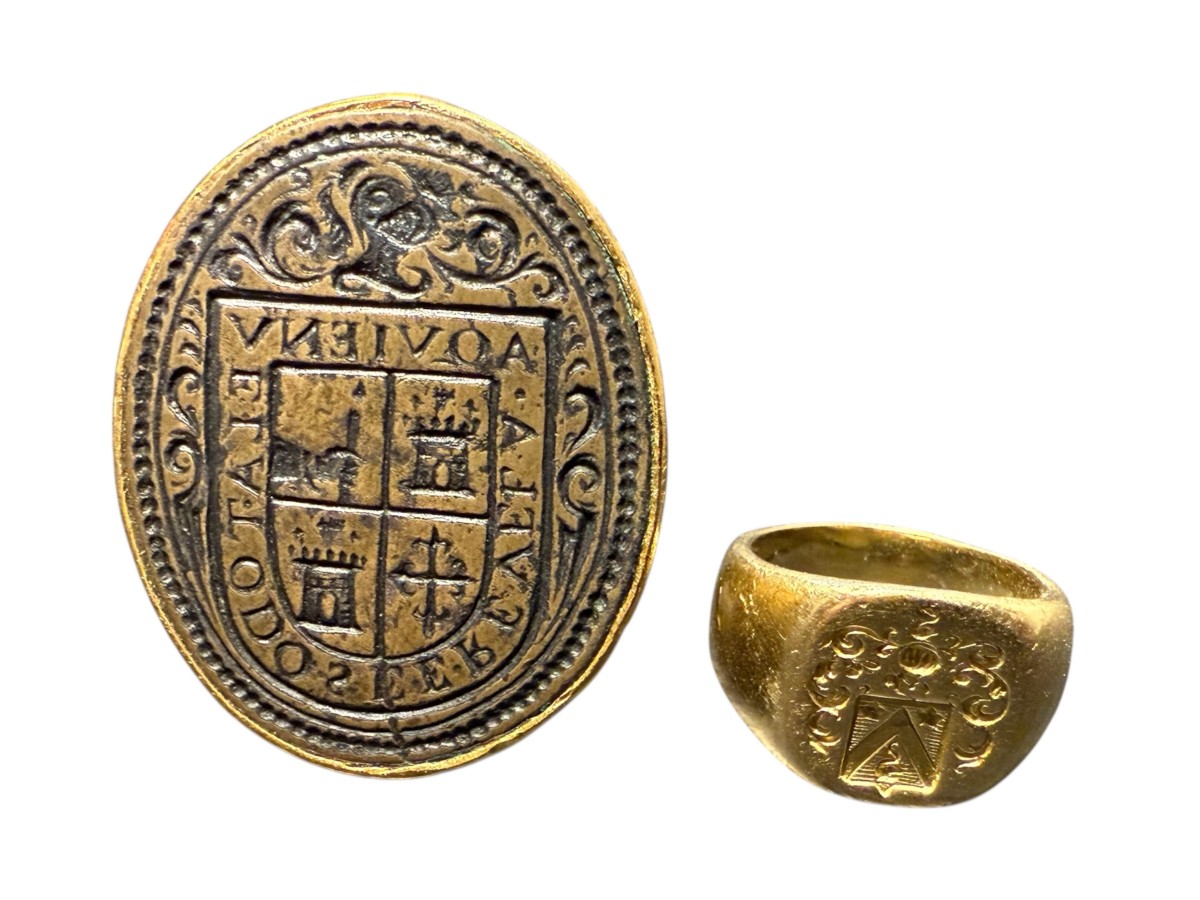
The seal bezel displays an oval shield with a quarterly division. Within the shield, three principal motifs can be identified: a lion, castles, and a cross. Above the shield is a stylized knight’s helmet with simplified mantling (lambrequins).
Quarters (descriptive, based on photographs)
• Lion: a lion rampant, symbol of noble power and courage.
• Castles: one or more castle or tower motifs, characteristic of Iberian heraldic tradition and often associated with Castilian heritage or Reconquista symbolism.
• Cross: a simple Latin cross as an explicit devotional element.
Helmet above the shield:
The presence of a helmet crest is heraldically significant. On seals and signet rings, a (simplified) knight’s helmet generally indicates secular noble status. Ecclesiastical heraldry (bishops/abbots) typically employs a galero, mitre, and/or crozier instead; a helmet does not belong to that tradition. In this sense, the helmet supports the interpretation of a secular, knightly wearer.
Decoration of the ring: technique, style, and dating
The shank and shoulders are richly engraved with symmetrical motifs: hatching, panels, and architecturally inspired frames. This type of decoration serves a dual function:
(1) it enhances the visual impact of the object in ceremonial use (overglove wear), and
(2) it creates a coherent framework around the seal bezel, emphasizing the coat of arms as the central sign of authority.
Stylistically, the ornamentation corresponds to a late-Renaissance to early-Baroque idiom, common in the Iberian world (and more broadly in Europe) during the 16th and early 17th centuries. The engraving is deep and consistent, indicating high-quality workshop craftsmanship.
3.1. Overglove format and use
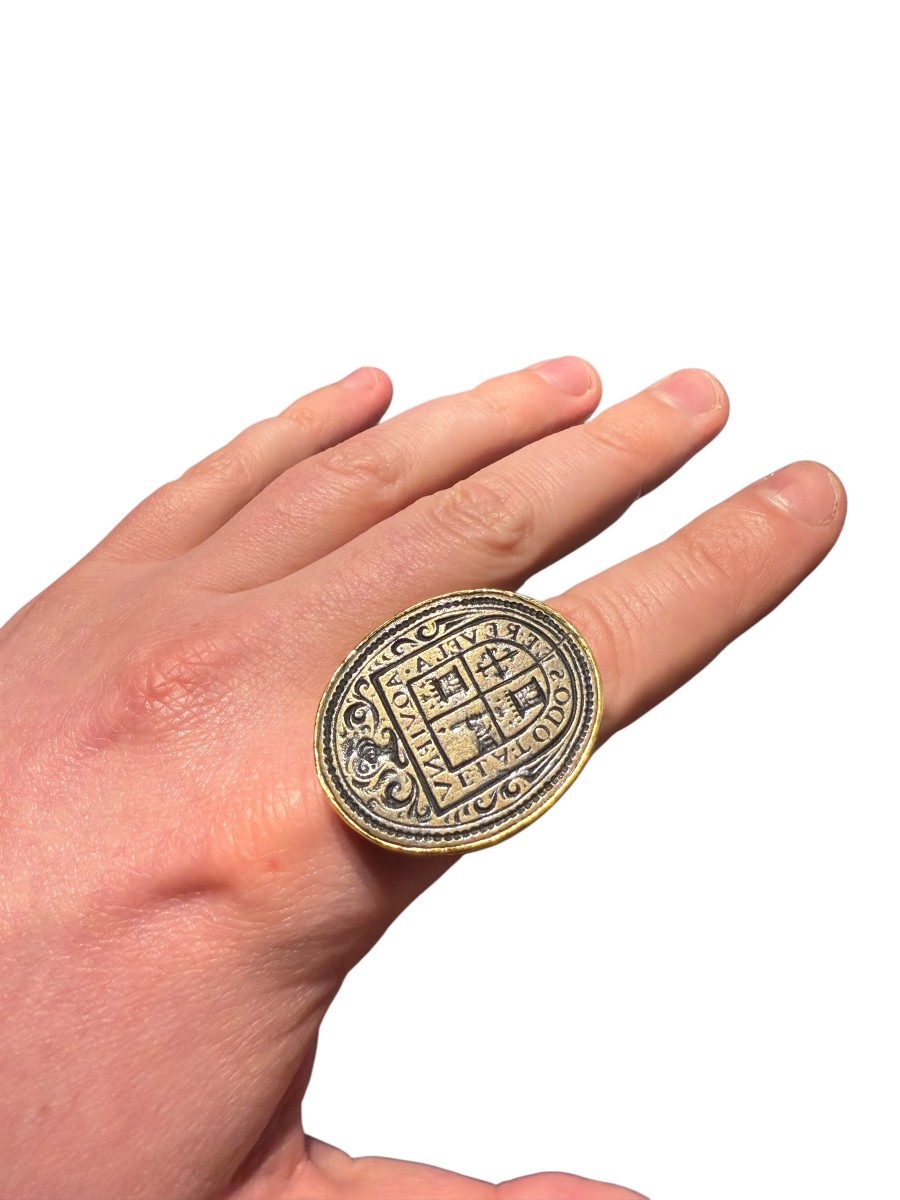
Overglove rings are designed to be worn over a glove, implying public visibility and a wearer with a representative role (court, military, administration). The exceptional weight (51.6 g) and large seal bezel place this piece among the highest class of such rings.
3.2. Sealing function
The intaglio engraving of the coat of arms is intended for making impressions in wax. In this context, signet rings function not merely as jewelry but as legal instruments and markers of identity, especially among elites required to authenticate documents in their own name or official capacity.
4. Origin and context: Portugal and possible colonial use
Based on the vernacular inscription in archaic Portuguese spelling, the heraldic composition (quartered arms with helmet), and the European late-Renaissance/early-Baroque engraving style, the most consistent origin hypothesis is:
Portuguese workshop production for a member of the secular elite.
A second, compatible possibility is use in a Portuguese colony (for example Brazil or the Estado da Índia). In the 16th–17th centuries, such prestige objects were typically manufactured in the mother country and carried abroad by administrators, officers, or high nobles. This helps explain why such rings, even when belonging to the upper elite, cannot always be easily linked to a specific family in modern databases: seal variants could be personal, and archival records are incomplete.
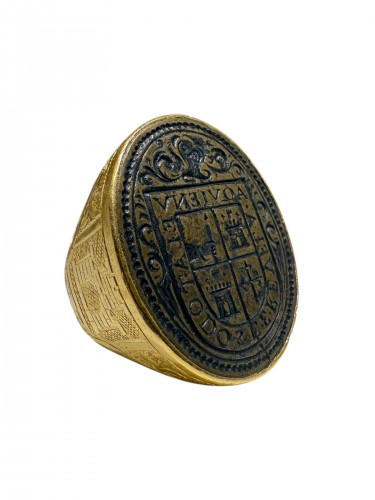
Monumental Portuguese overglove signet ring in high-carat gold (tested >18 kt), 51.6 g, ring size 22.5 mm, with oval seal bezel measuring 30.3 × 36.6 mm. Engraved quartered noble coat of arms with stylized knight’s helmet above. Surrounding devotional inscription in archaic spelling: “VEI IVOA · ELA TODOS EEREVELA · DEUS”, to be understood as an archaic epigraphic form of “… TODOS SE REVELA · DEUS” (“God reveals Himself to all”). Rich engraving on shoulders and shank, late-Renaissance to early-Baroque, consistent with ca. 1550–1650.
Delevery information :
Small objects are always carefully packed and shipped fully tracked and insured via FedEx, UPS, or DHL Express.
For larger items, specialized transport can be arranged by mutual agreement.