Offered by Limburg Antiquairs
REQUEST INFORMATION
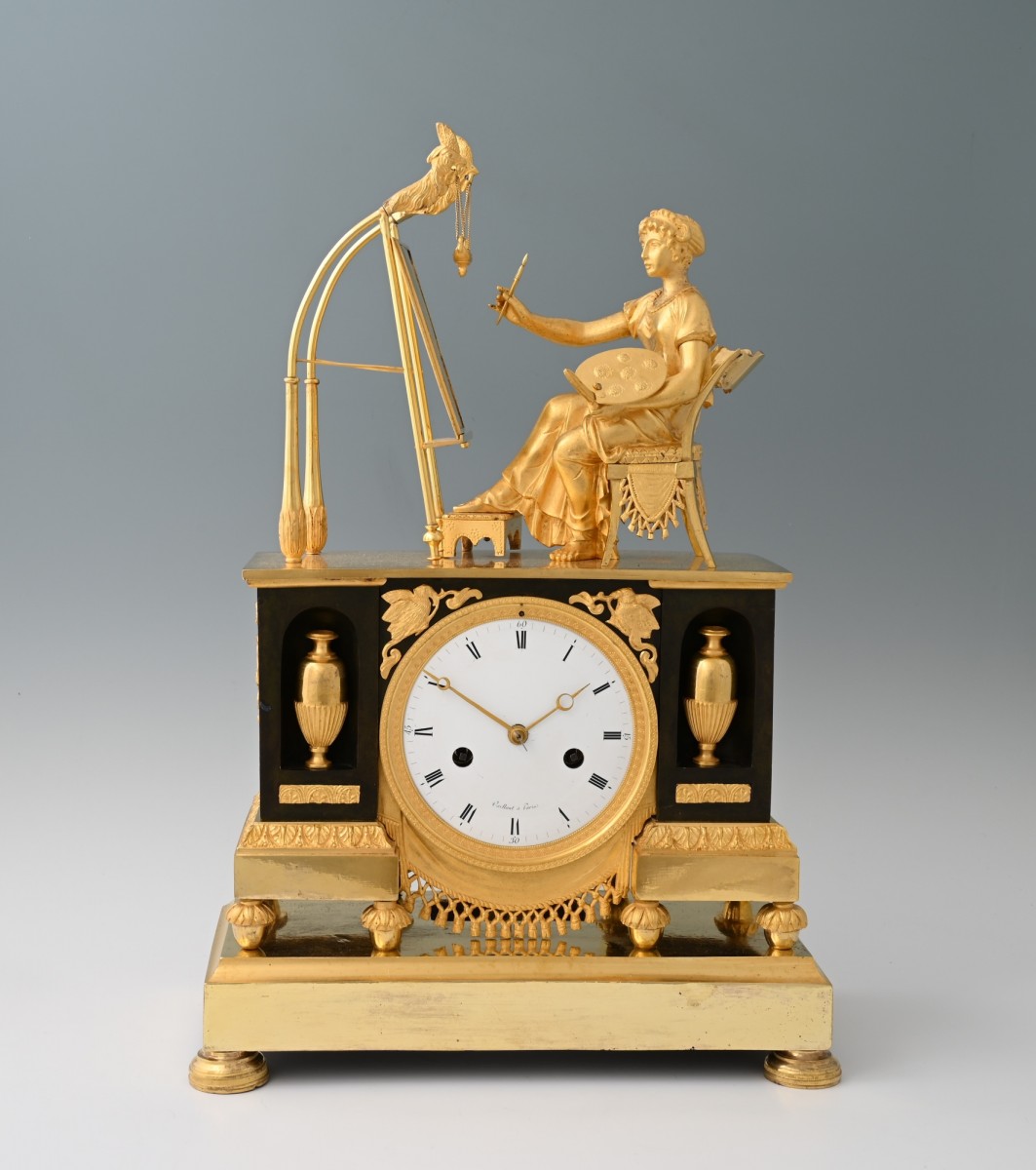
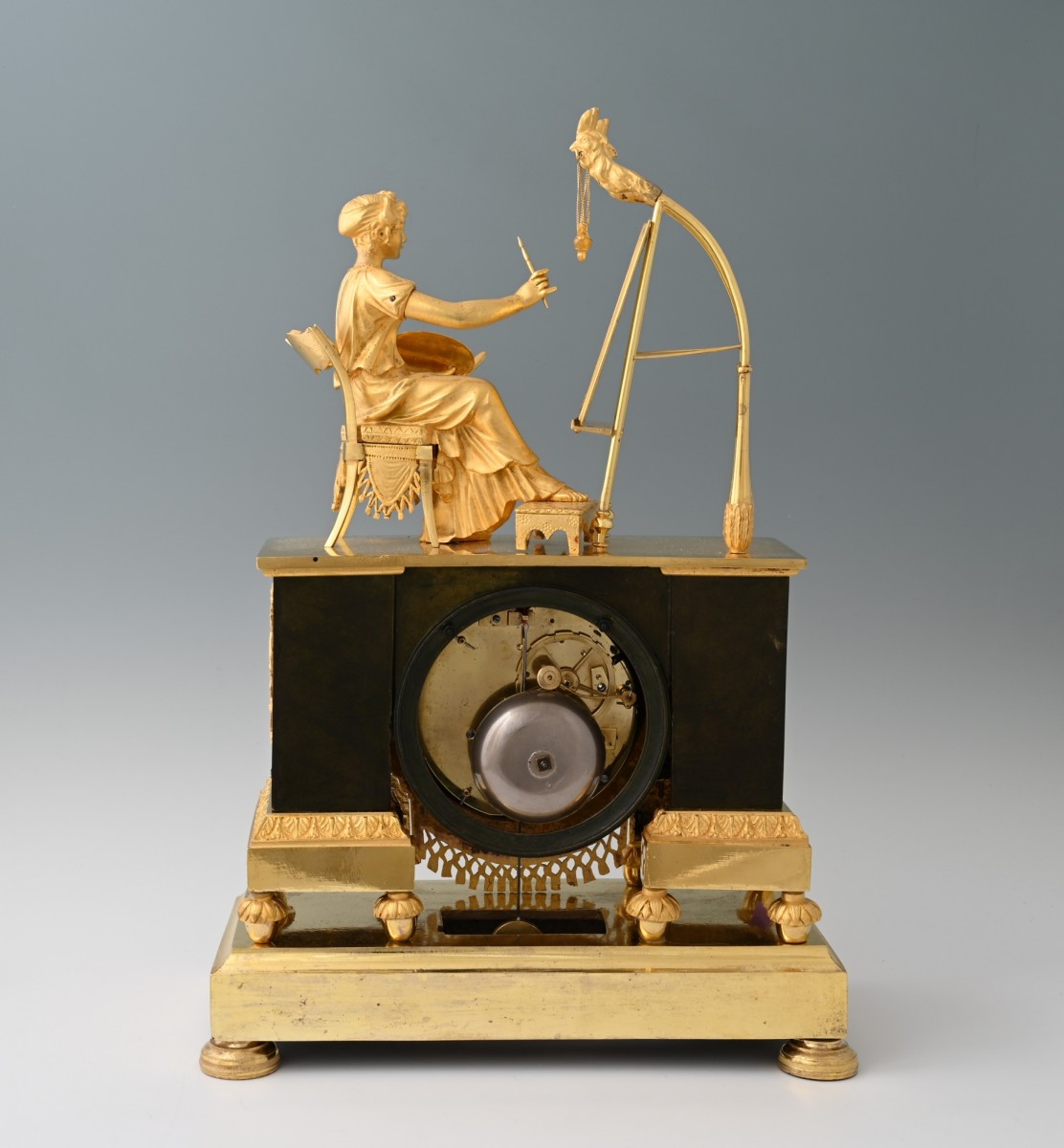
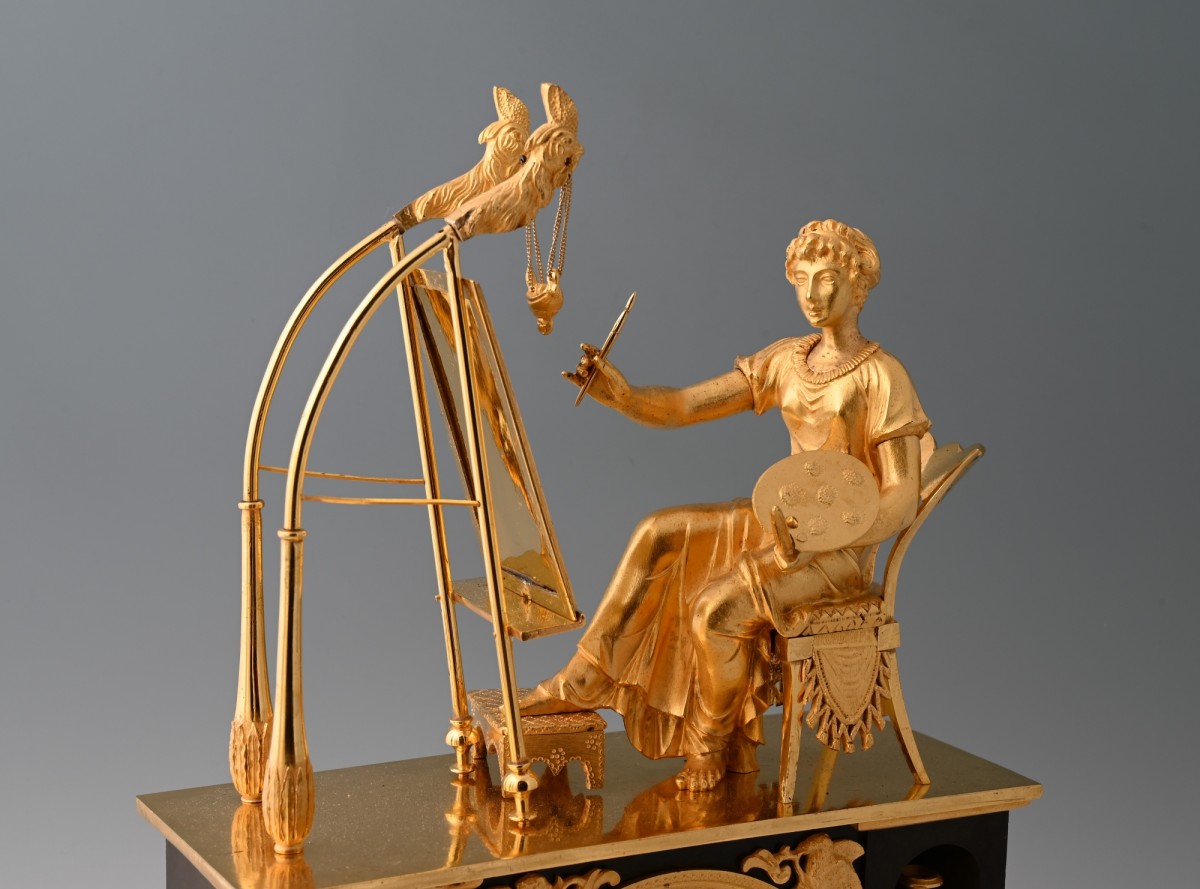

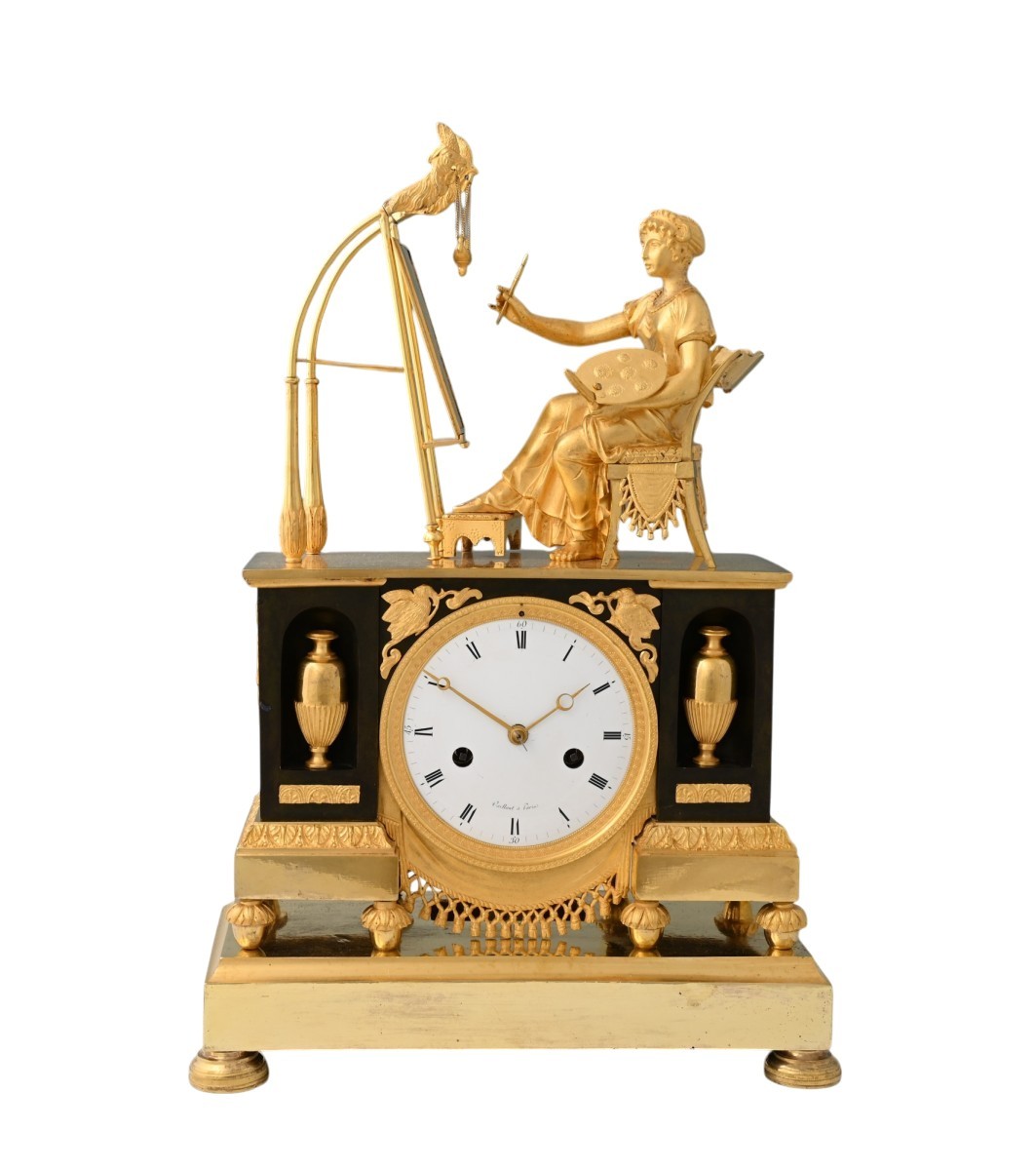
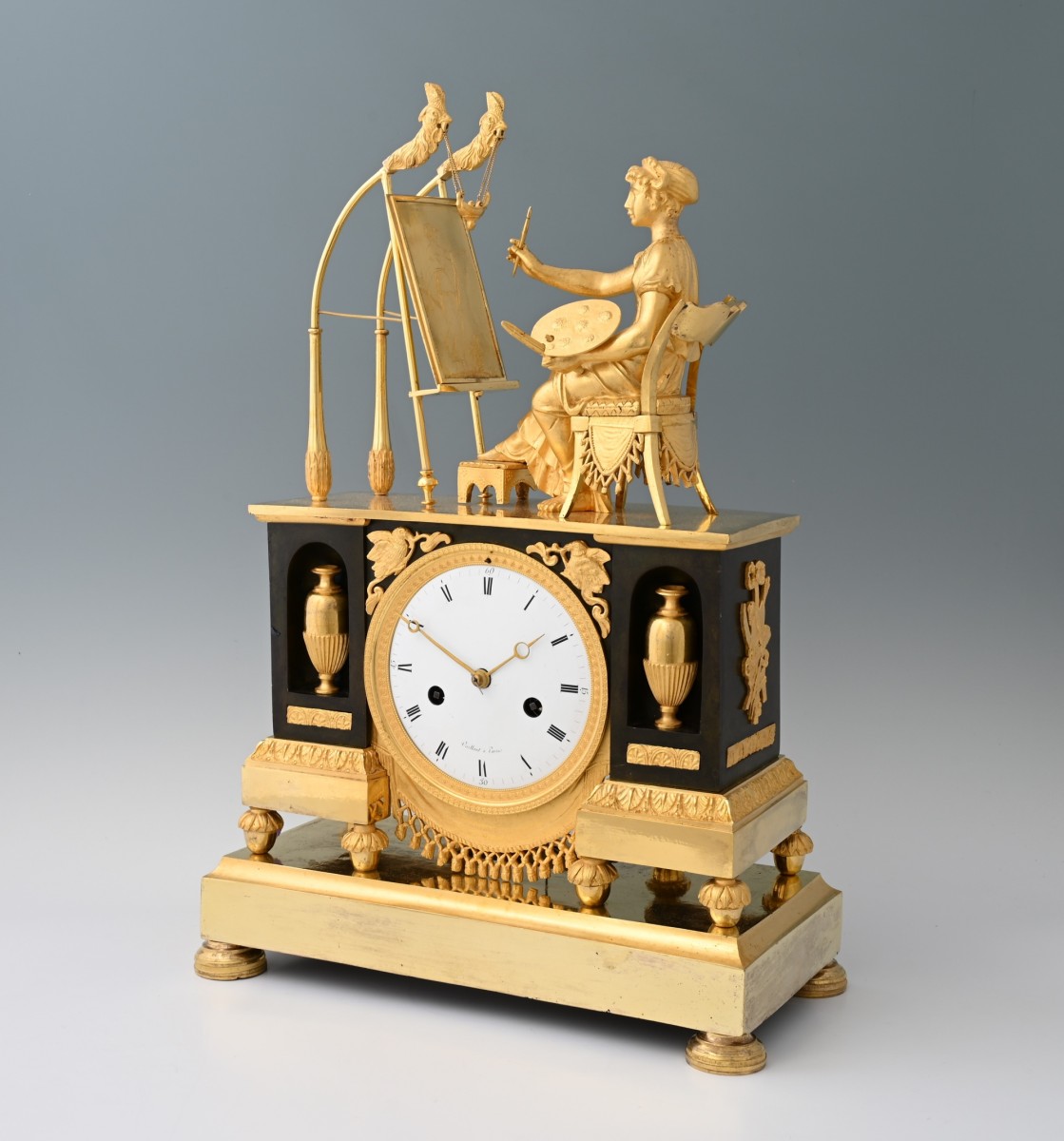
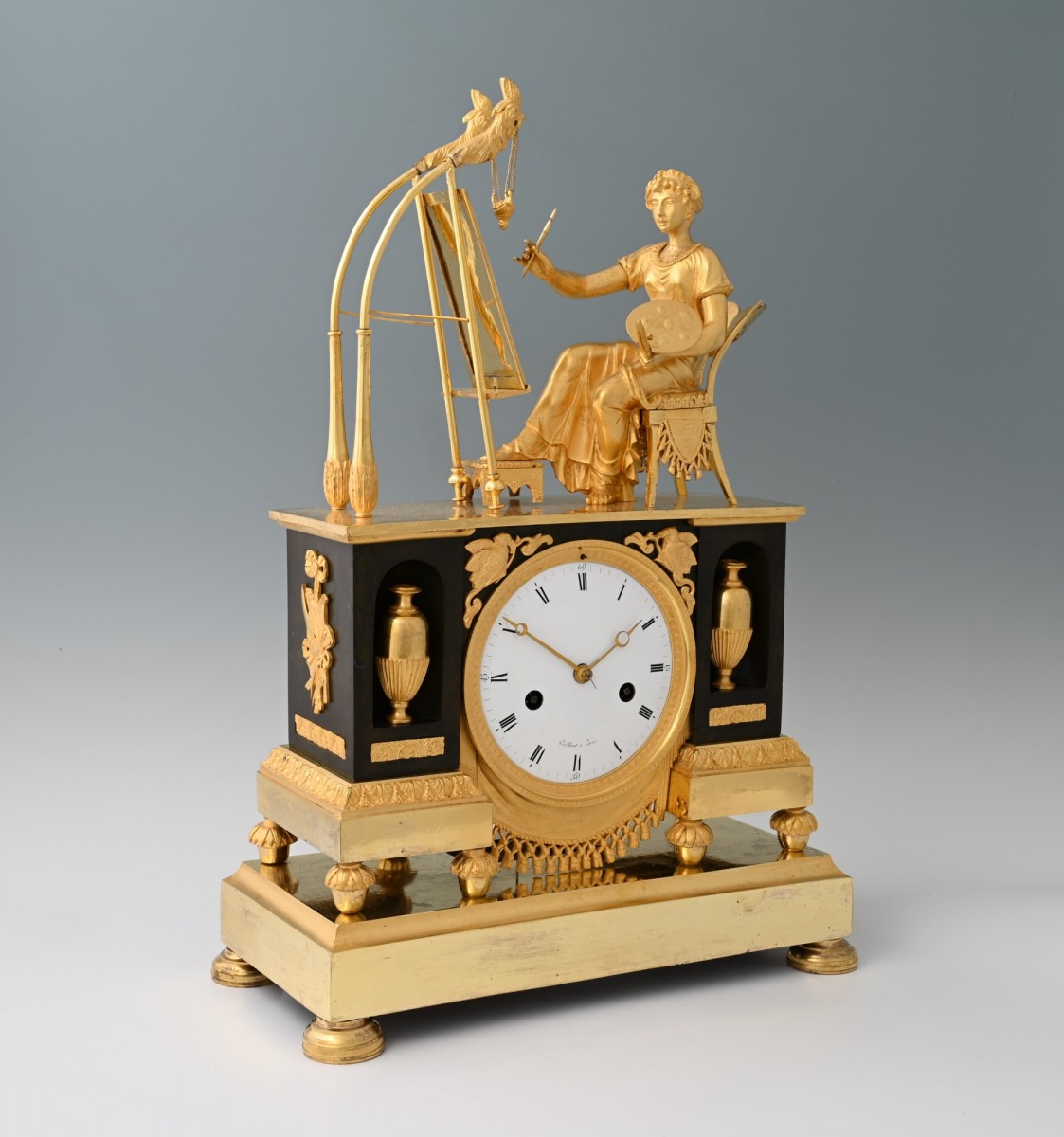
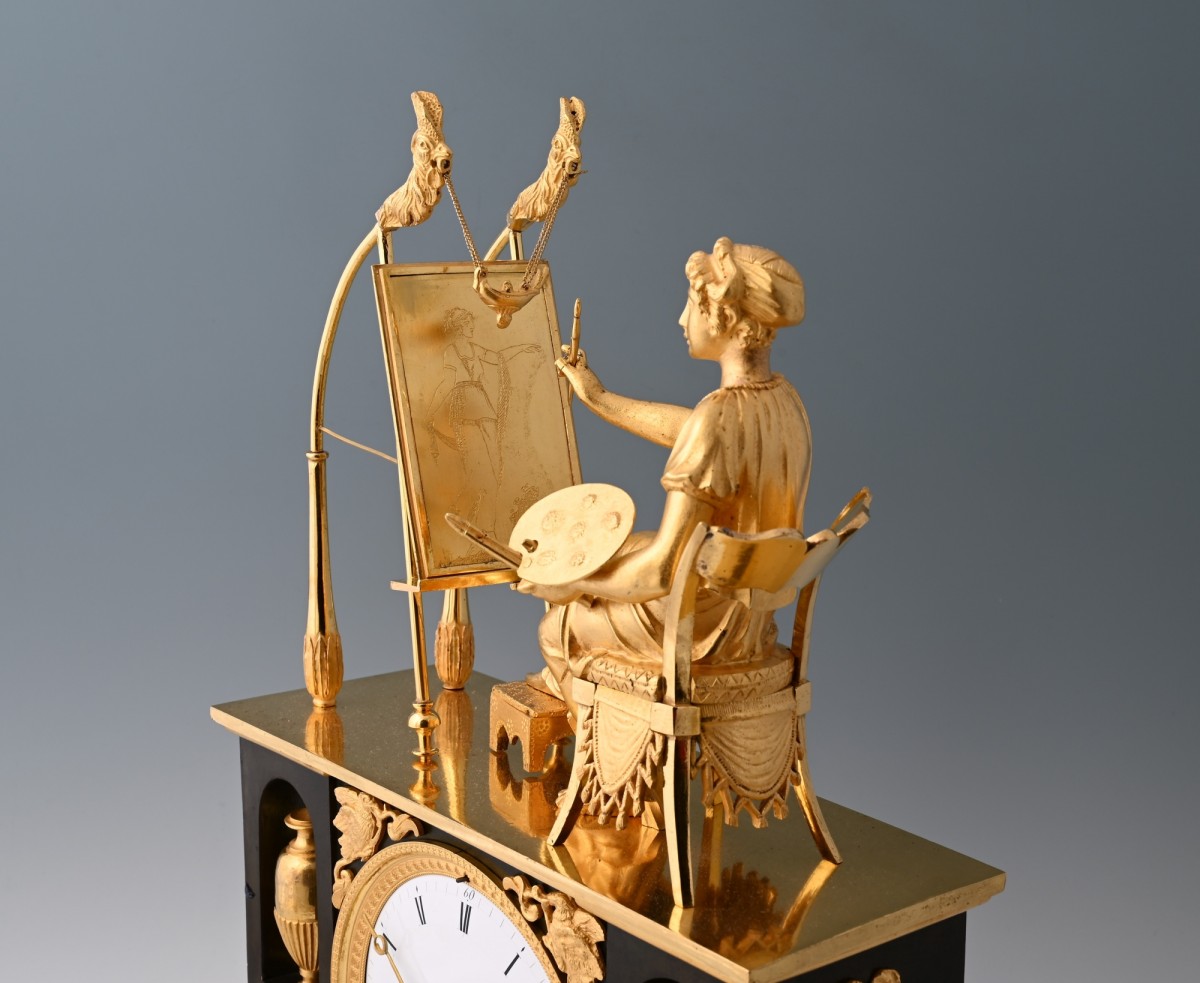
This young woman in front of her easel symbolises the enthusiasm that arose at that time for the arts, particularly painting.
In the 19th century, there was an increase in the number of artists, both men and women, participating in the Salons.
These exhibition spaces were known for attracting large numbers of visitors, especially female audiences, who were looking for 'precious' paintings for their salons or boudoirs.
The roosters on top of the easel, announcing the sunrise with their crowing, can be seen as a symbol of the awakening of culture, in this case specifically painting.
The footstool and chair with sabre legs and a seat back decorated with fringes - an ornament that also recurs under the dial - are very representative of the taste of the time.
Rich decoration with fringes and tassels in all shapes and sizes was an essential part of the interior design of a room in the home in the 19th century.
Everything was made to individual taste.
It was indispensable for the desired effect of the interior.
Finally, we should mention the classicist nature of the niches in which the vases stand.
Literature:
Pendules du Mobilier National 1800-1870 by Marie-France Dupuy-Baylet, Editions Faton, Dijon, 2006, page 71
France, Empire period, circa 1810
Delevery information :
Please note that packing and shipping costs are not included in the price of the objects.