Offered by Galerie Francesco De Rosa
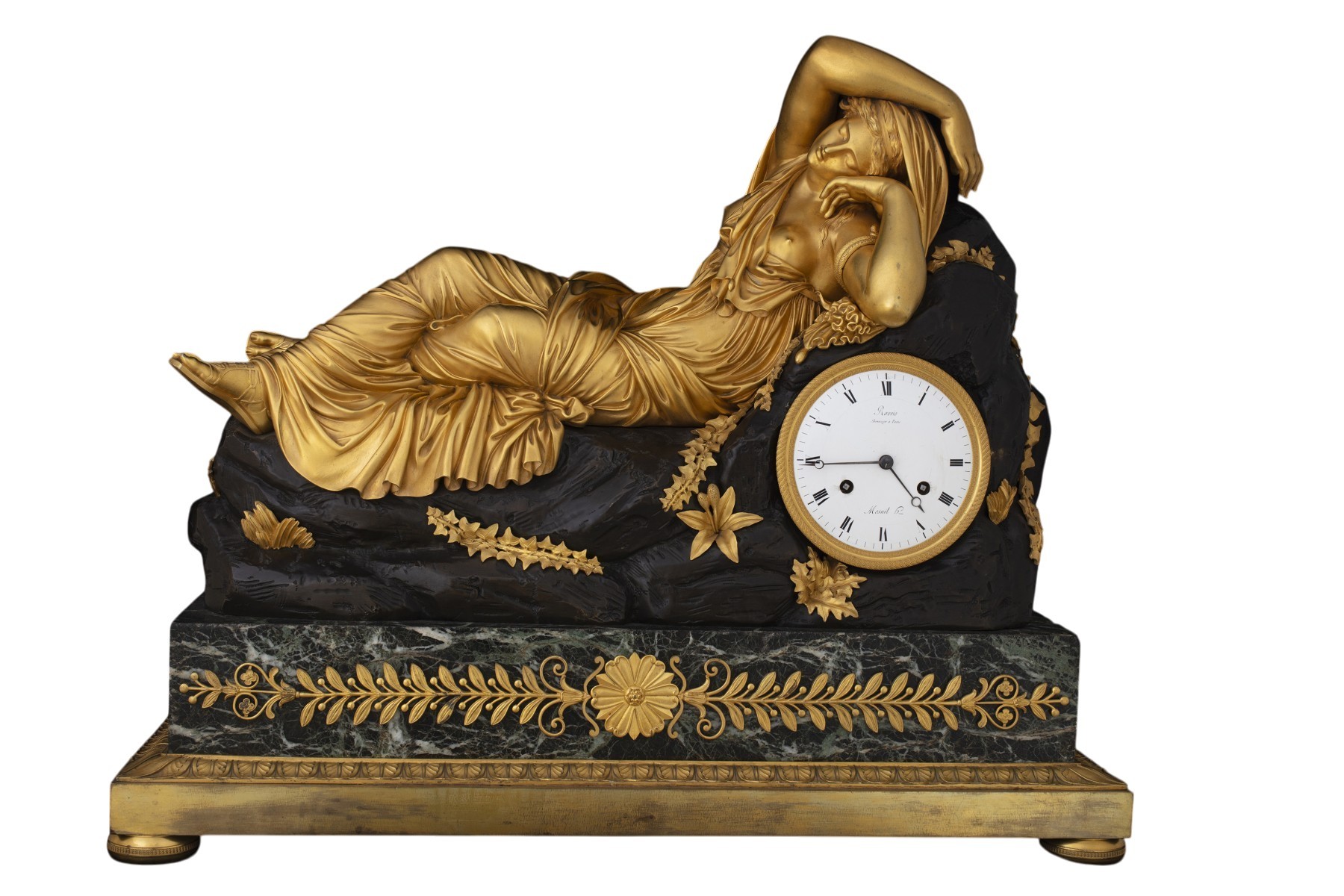
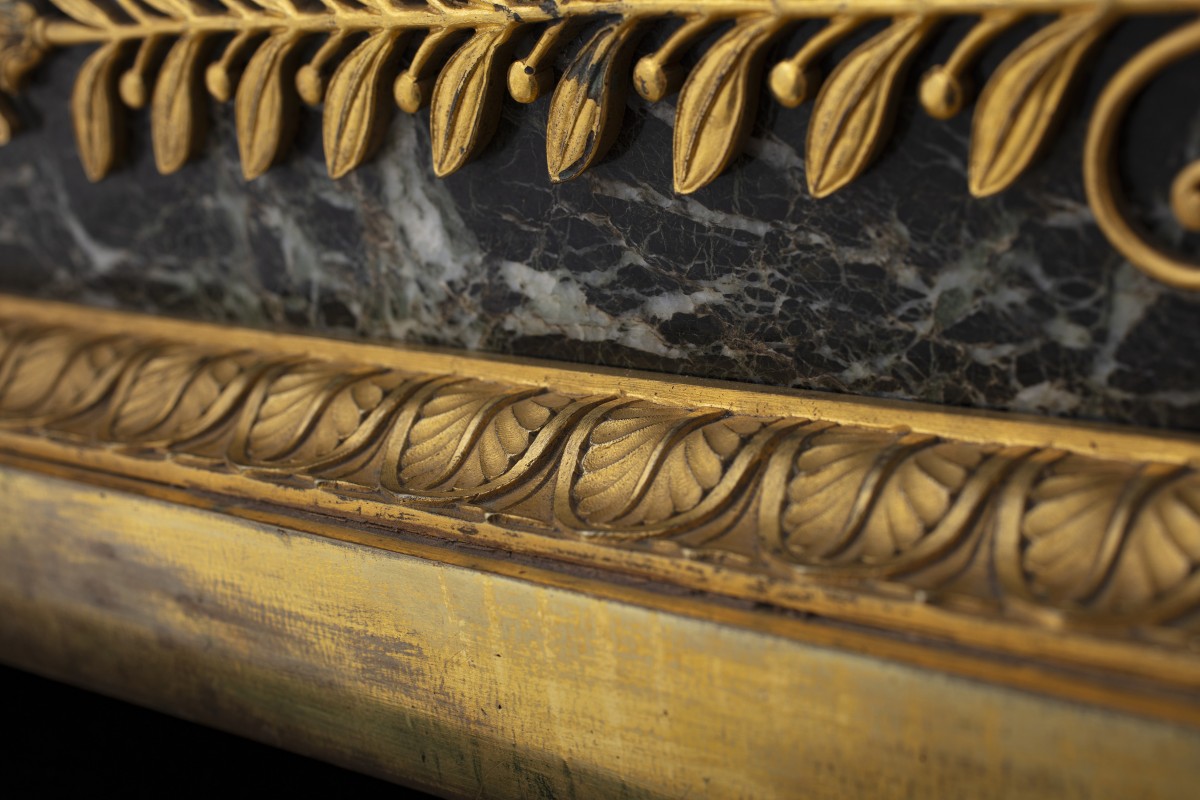
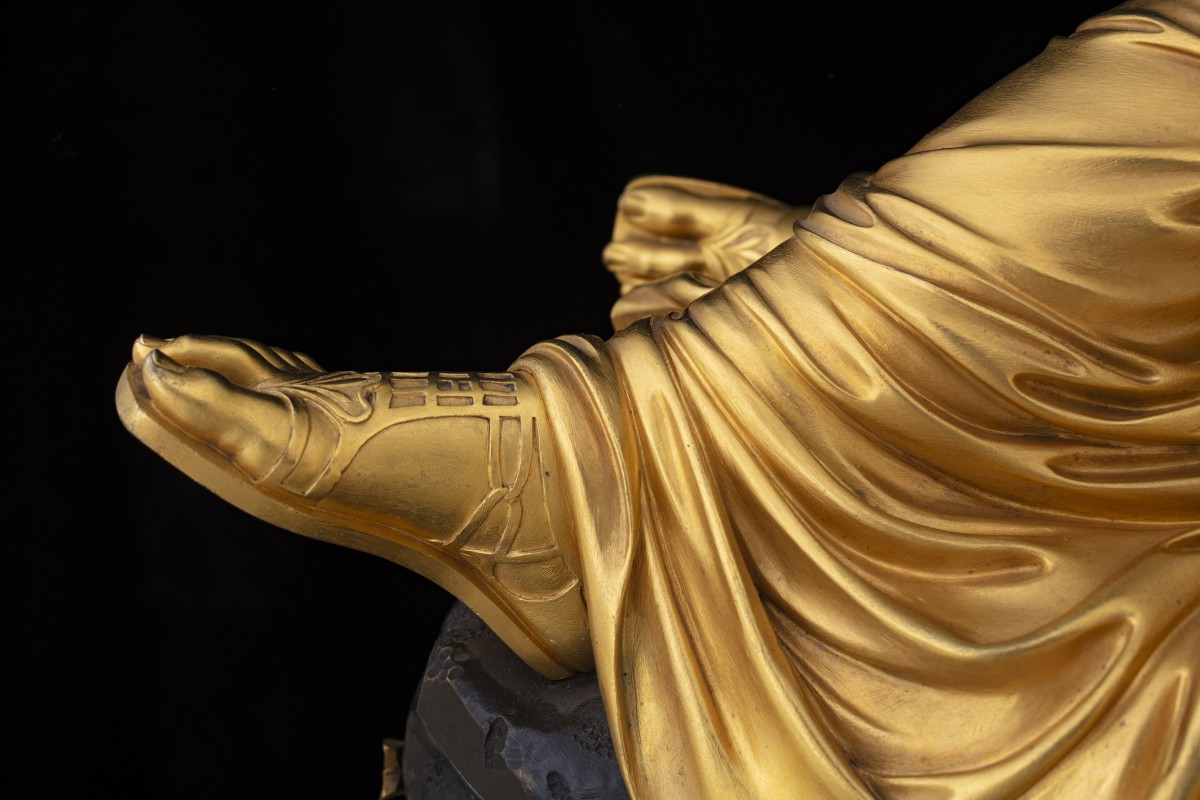
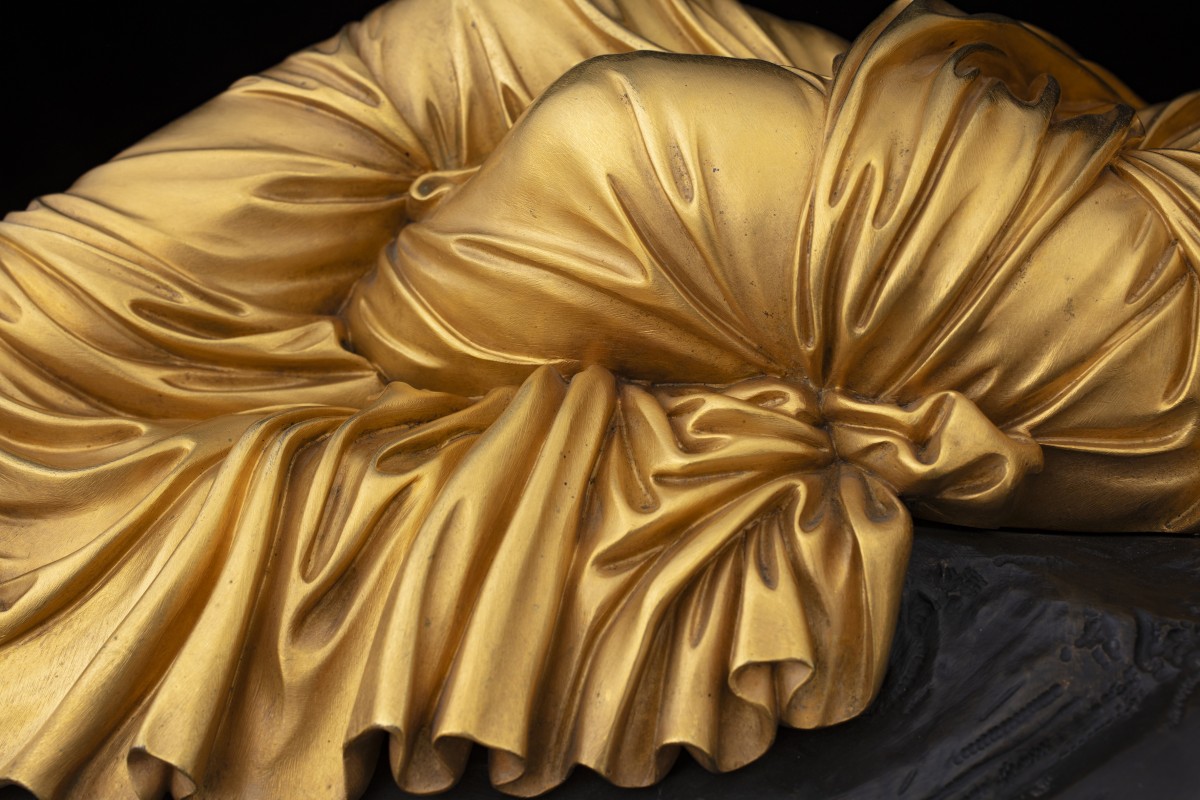
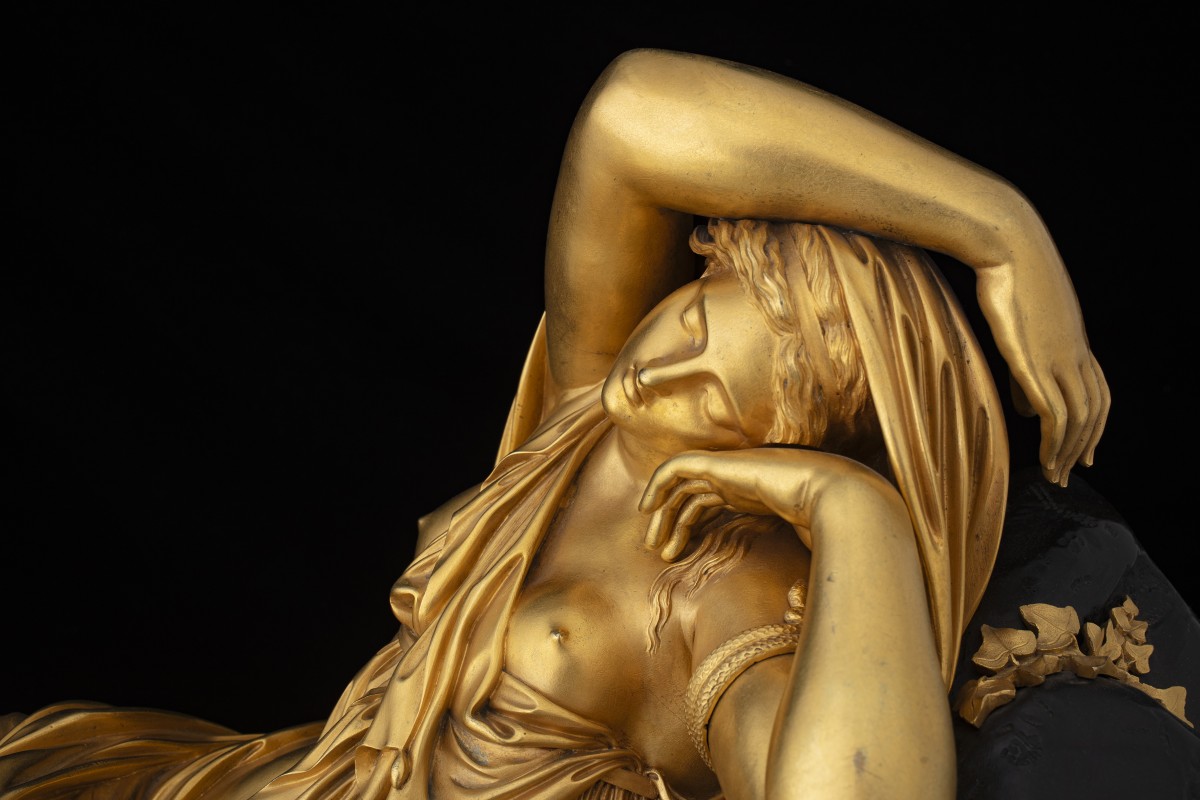

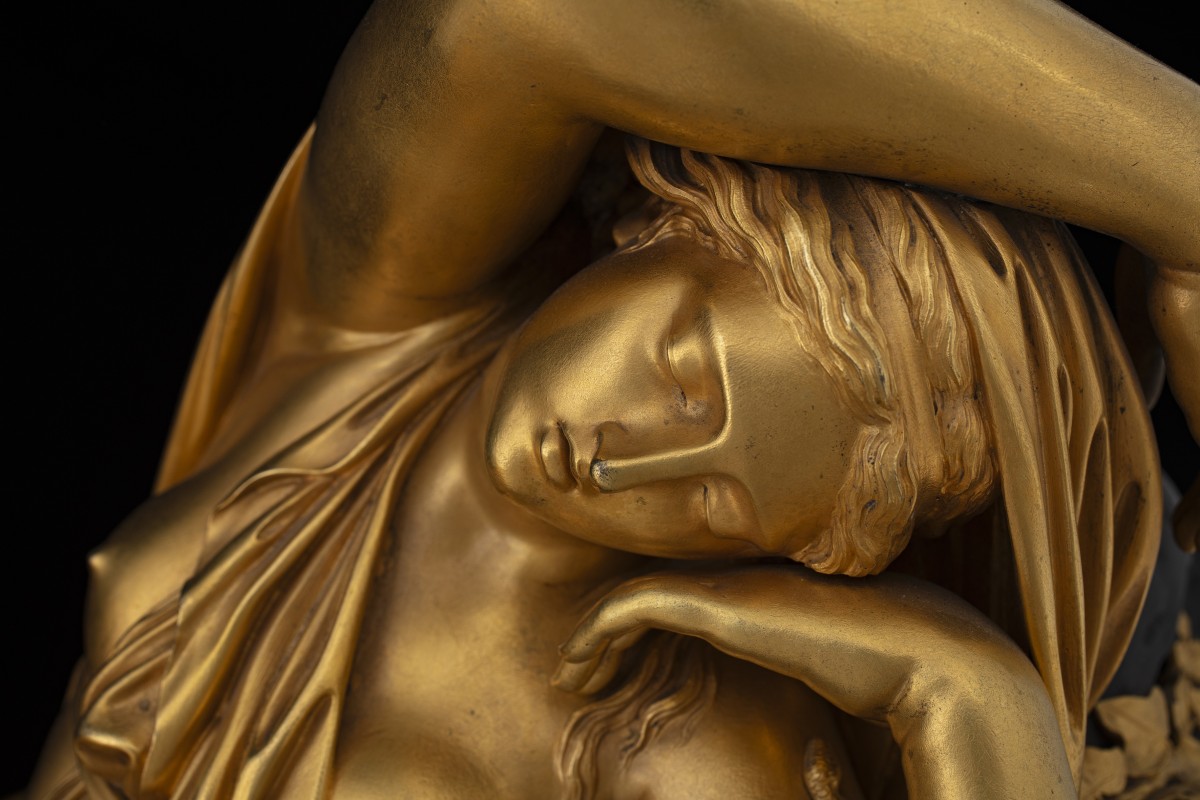
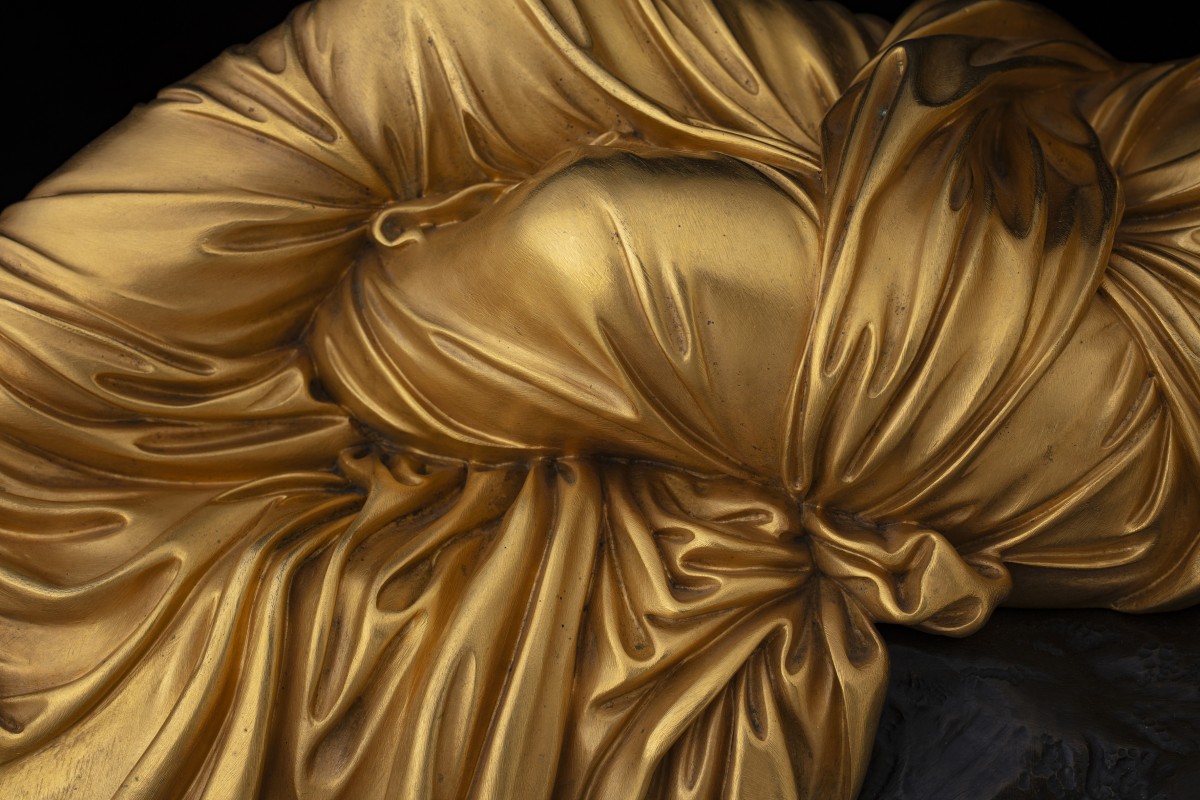
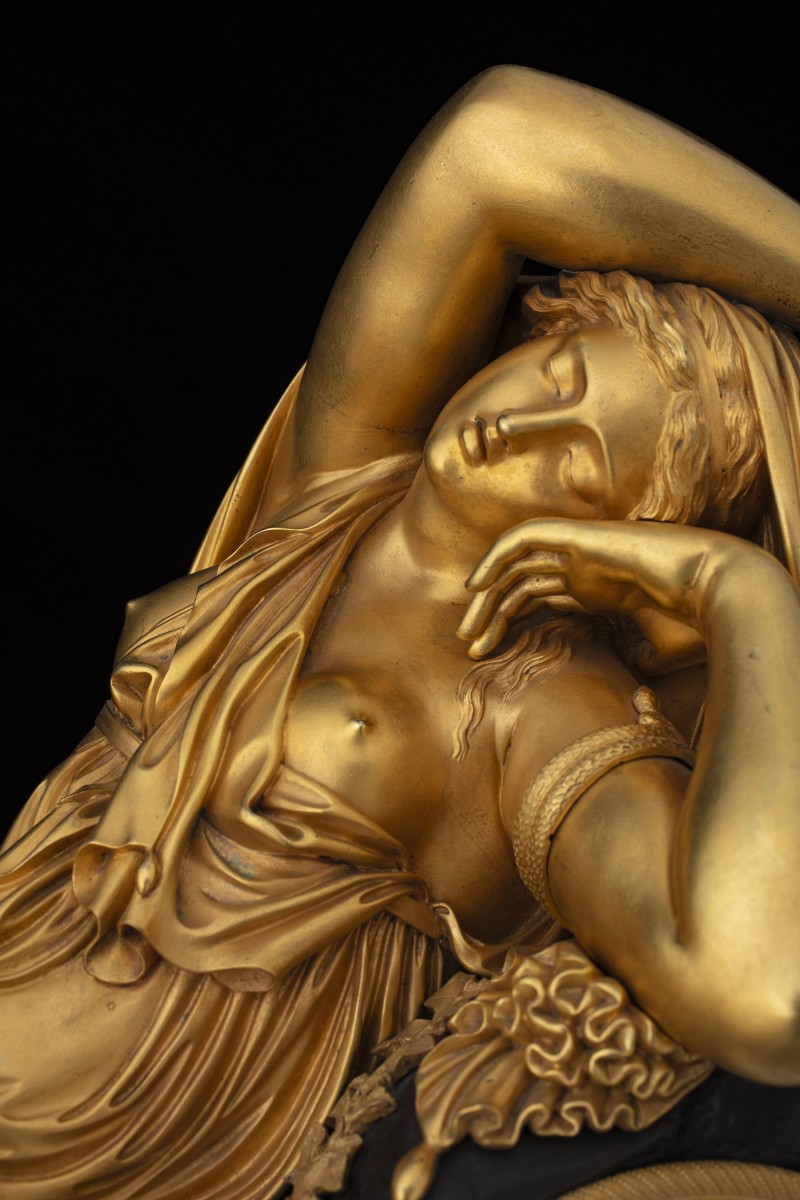
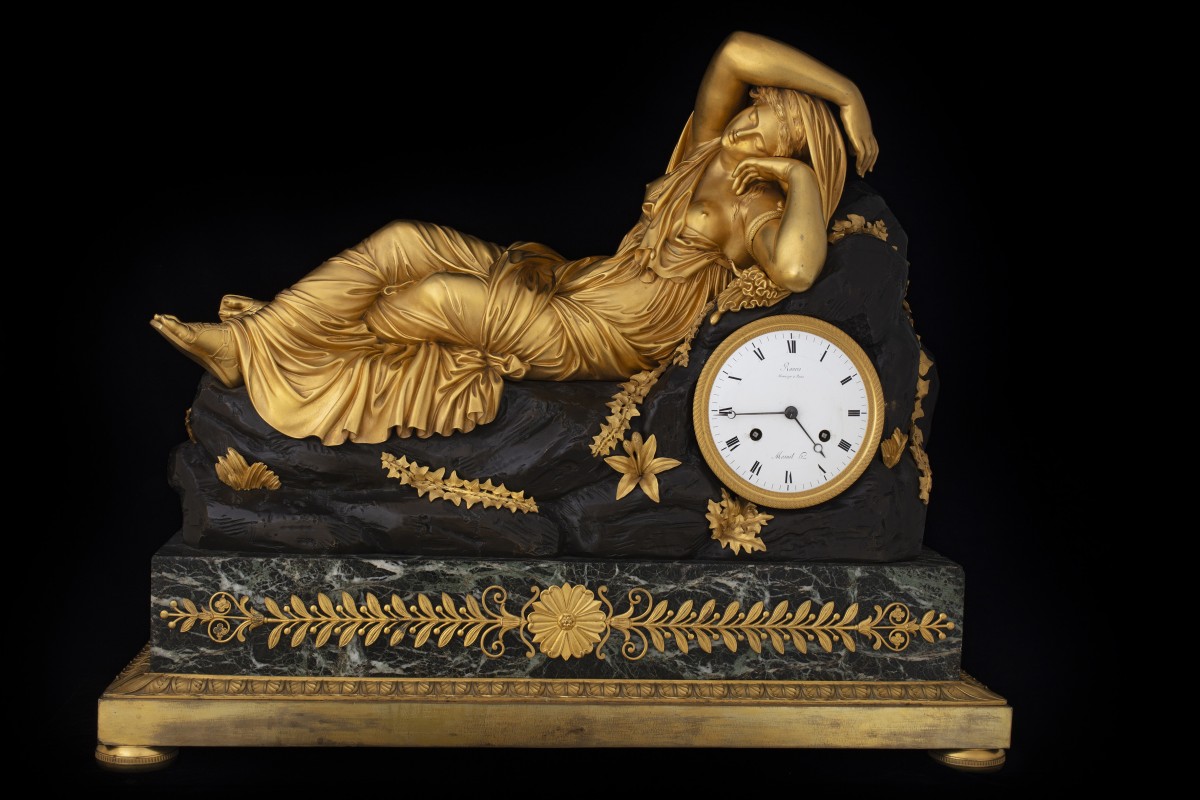
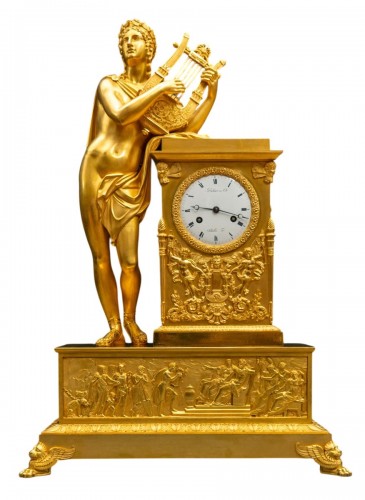
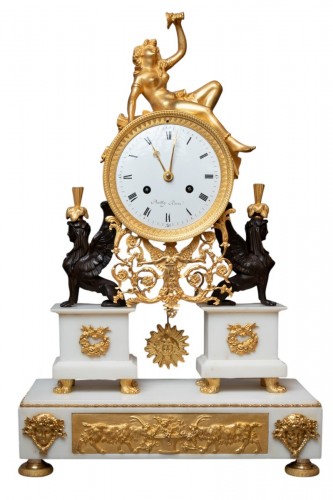
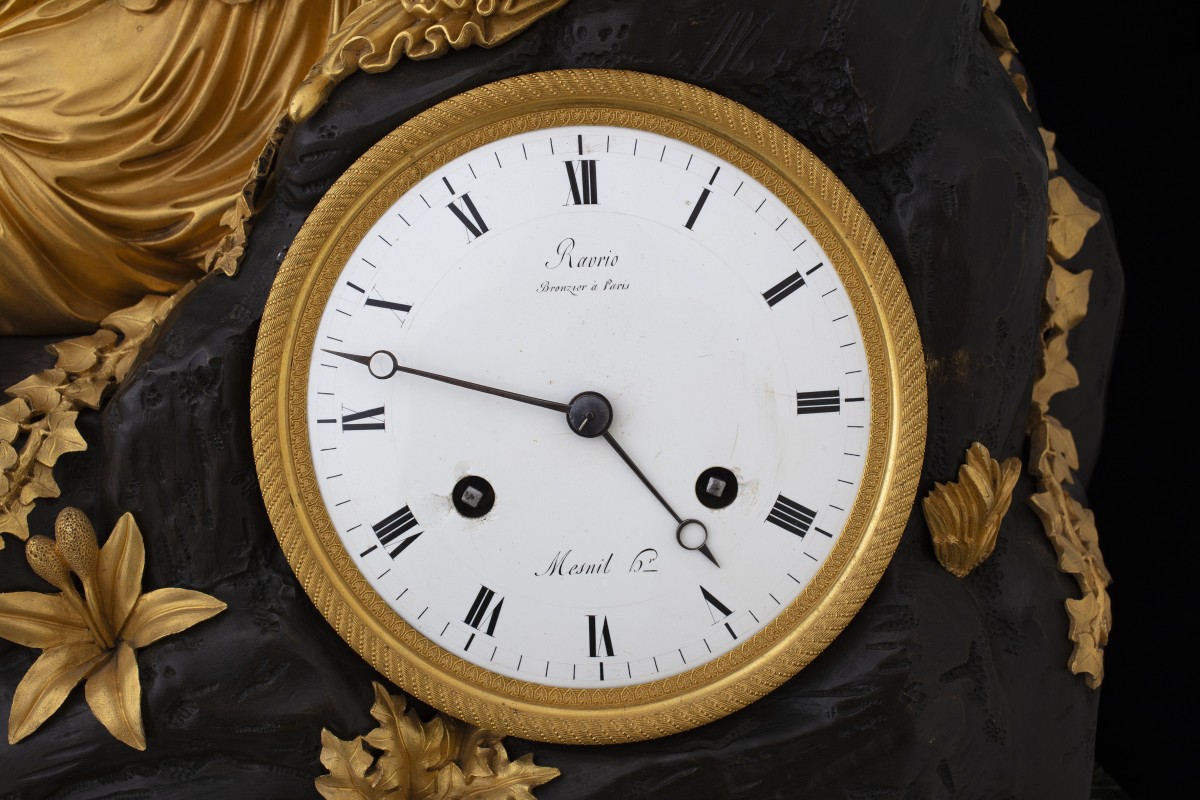
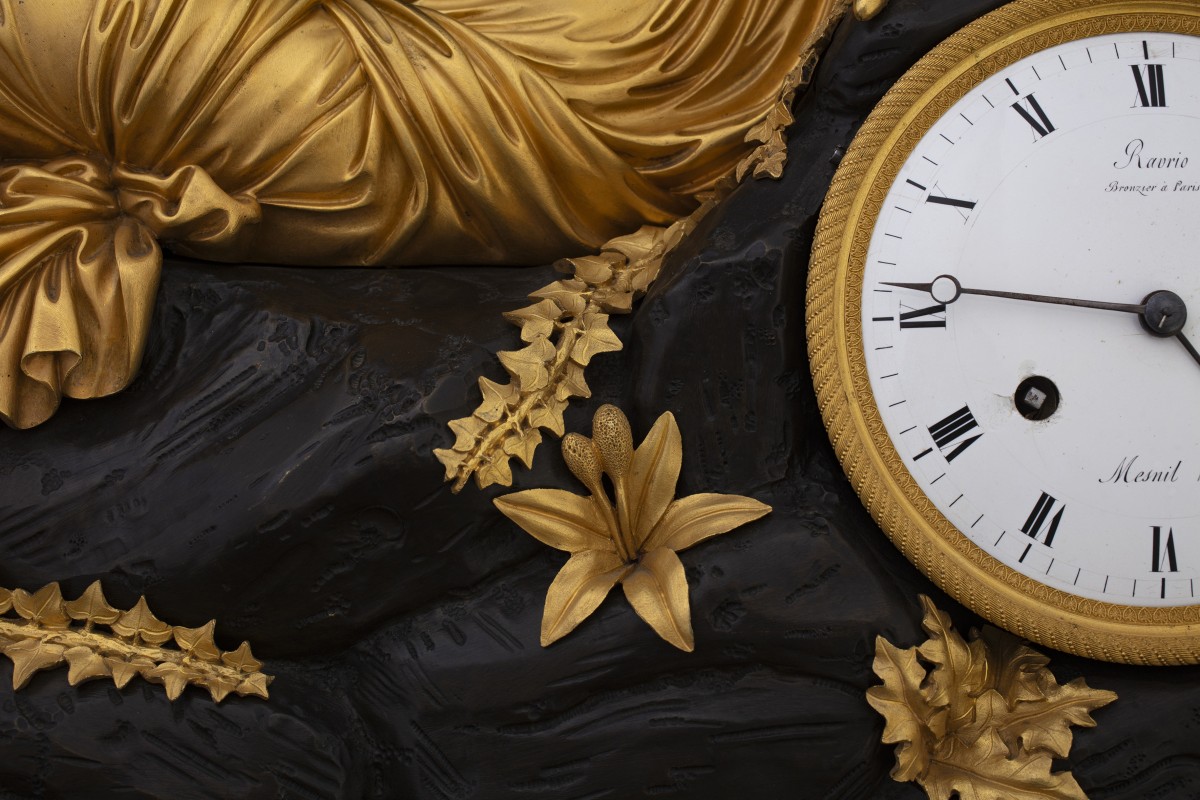
Exceptional burnished bronze clock, finely chased and mercury-gilded, with a dial signed RAVRIO bronzier á Paris - Mesnil horloger. France. Period: Empire. HxWxD: 56x66x29 cm.
ARIADNE (Mythology)
The myth of Ariadne and Theseus is told in various versions. One says that Ariadne fell in love with Theseus when he arrived in Crete to slay the Minotaur in the labyrinth. Ariadne gave Theseus a ball of wool (the proverbial Ariadne's thread) to mark his path through the labyrinth and thus escape easily. Theseus, having accomplished his mission, escaped from the labyrinth, and Ariadne fled with him and the other Athenians by ship to Athens. But Theseus abandoned her sleeping on the island of Naxos, where they had stopped.
According to Plutarch, Ariadne gave Theseus "only the famous thread" and not a ball.[3]
Ariadne awoke and saw Theseus' ship sailing away and was in despair, but the pain of abandonment was short-lived, for at that moment the god Dionysus arrived on a chariot drawn by panthers, accompanied by his entire retinue of Bacchantes and satyrs. Dionysus wanted to marry Ariadne, in a hierogamy attended by the Olympian gods. For the wedding, Dionysus gave Ariadne a golden diadem created by Hephaestus, which, when cast into the sky, formed the constellation Corona Borealis.
From the loves of Dionysus and Ariadne were born Thoas, Staphylos, Oenopion, Latramides, and Tauropolis.
According to another version, it was Dionysus himself who fell in love with the sleeping Ariadne and ordered Theseus to leave her. In other versions, the goddess Athena orders Theseus to abandon Ariadne. There is another version of the tradition according to which Dionysus ordered Artemis to kill Ariadne on the island of Naxos. Finally, there is another tragic version according to which Ariadne, overwhelmed by grief at the loss of Theseus's love, is said to have thrown herself into the sea and committed suicide. The various versions are united by Theseus's seemingly inexplicable misconduct, suggesting that part of the original myth has been lost.